
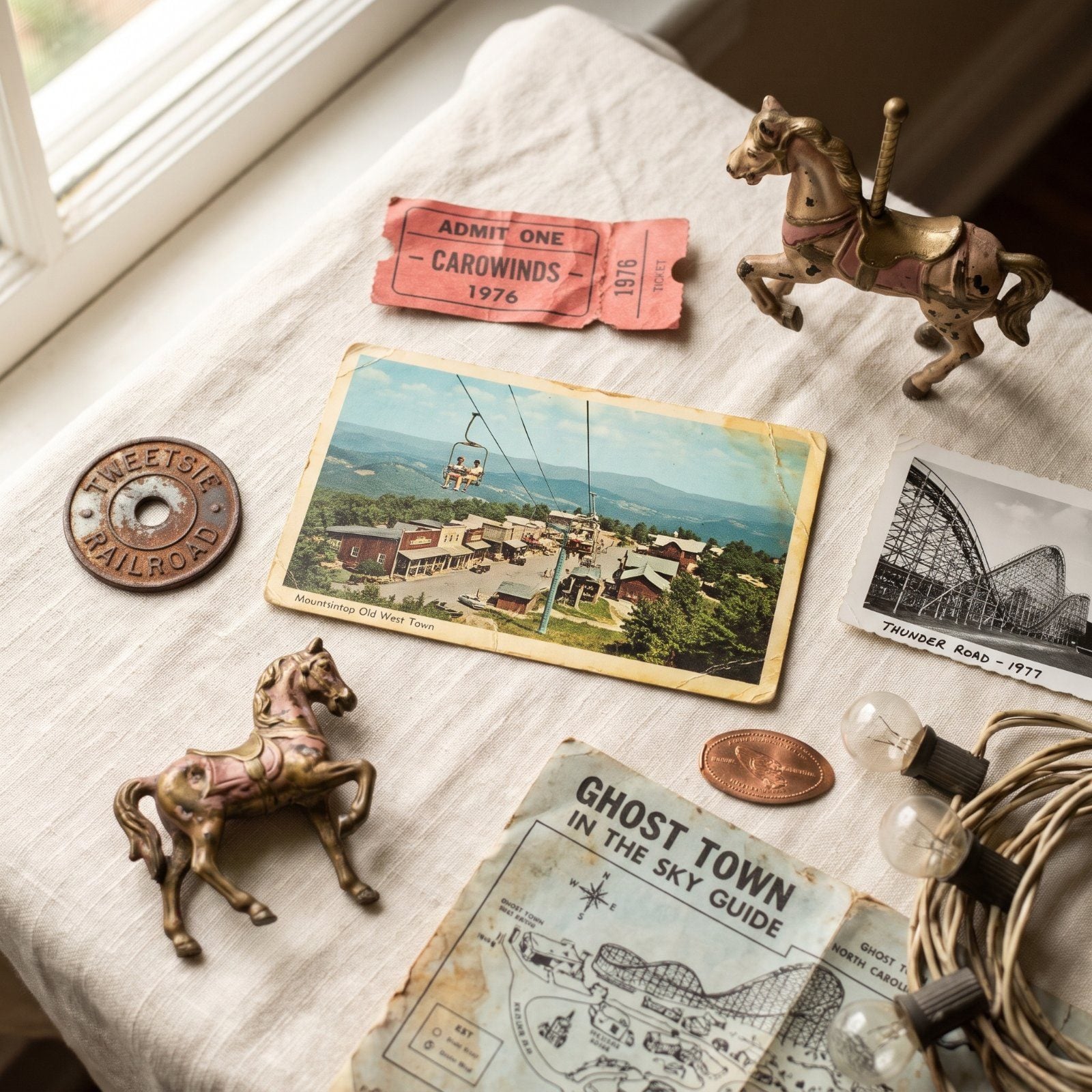
The chairlift broke, and that was the end. A few days after it stopped carrying anyone up Buck Mountain, Ghost Town in the Sky shut its gates. Plywood saloons, staged gunfights at high noon, a wooden coaster that rattled your fillings loose.
North Carolina used to be lousy with these places. Old West towns bolted to mountaintops, trolley parks sitting at the end of streetcar lines, electric pavilions glowing out over the surf. Most are gone. But the yellow brick road is still up there, and a carousel from 1912 keeps turning in Raleigh. Here’s what we lost, and here’s what you can still go find.
14. Ghost Town in the Sky, Maggie Valley
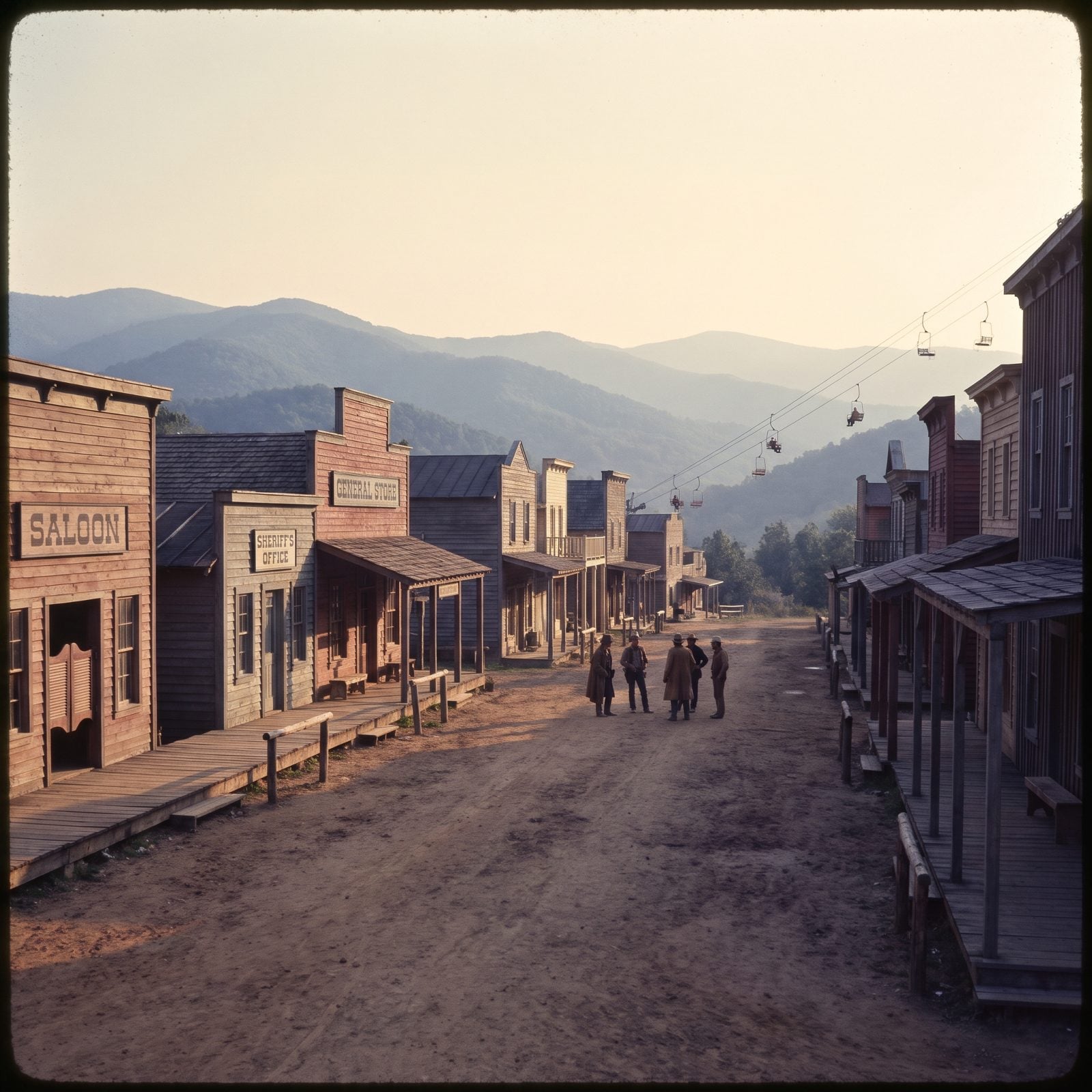
R.B. Coburn bolted a whole Old West town to the top of a mountain in June 1961, and for a while it worked. Crowds rode up by incline railway or chairlift, both climbing thousands of feet up Buck Mountain, to watch gunfights crack off in the street and ride the Red Devil coaster with forty-odd replica buildings crowded around them.
The whole stretch of Soco Road grew up around it. Motels, diners, gift shops shaped like teepees. Then the park closed in 2002, the same summer the chairlift broke down and stranded riders. Brief reopenings flickered in 2007, 2009, and a short one in 2014. It sits dark today, still perched up there against the ridgeline.
13. Land of Oz, Beech Mountain
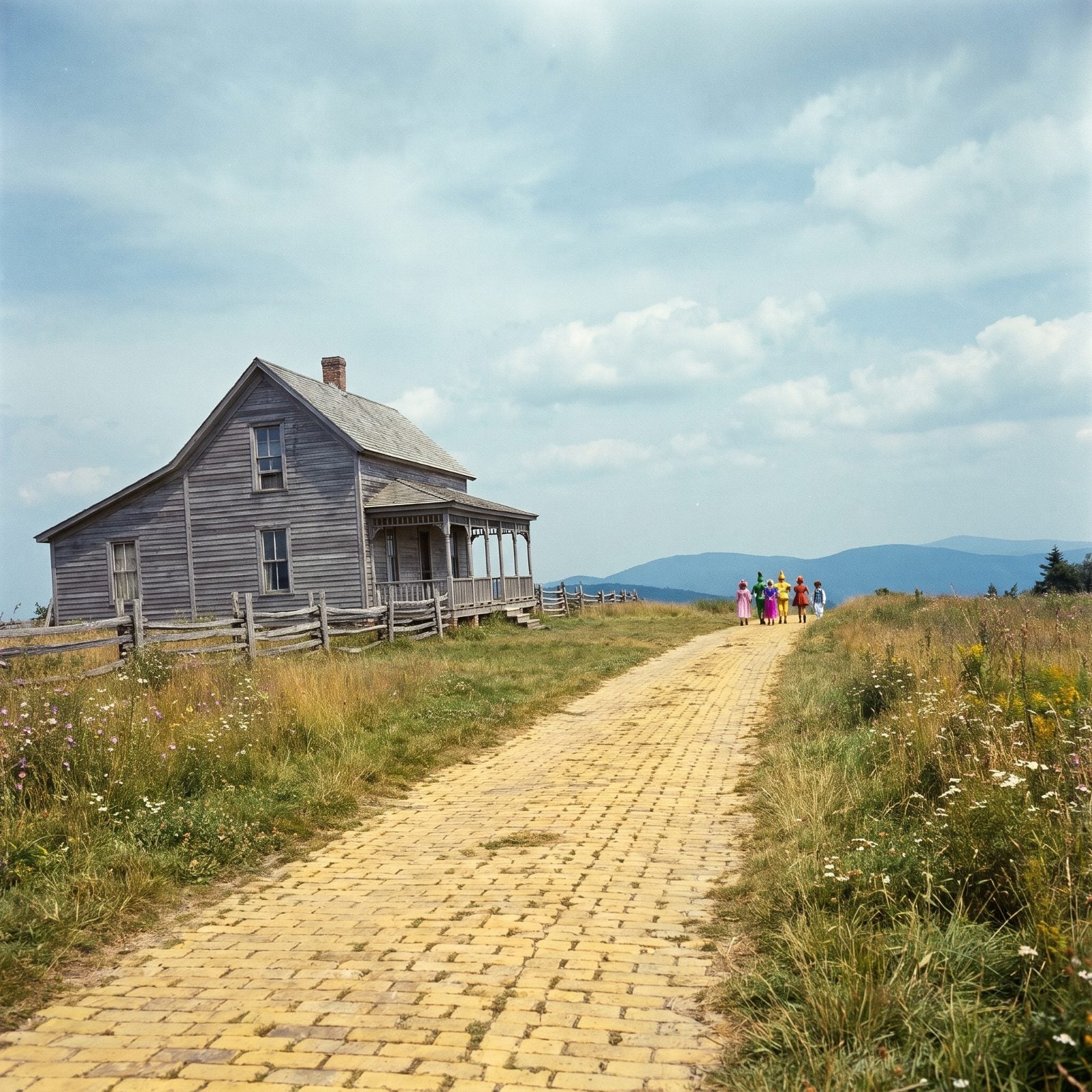
Dorothy’s road still runs across the top of Beech Mountain. The Robbins family, who also owned Tweetsie, opened Land of Oz on June 15, 1970, and Debbie Reynolds showed up for the opening with her teenage daughter, a girl named Carrie Fisher who’d later have a galaxy of her own. The park claimed a big first season.
Then December 1975 went sideways. Thieves made off with movie memorabilia, including a gingham dress Judy Garland had worn, and a fire took out the theater and a shop. The gas crisis thinned the crowds. After 1980, the gates shut.
But the Yellow Brick Road survived, and so did the Kansas farmhouse. Since 1993 the Autumn at Oz festival has run most falls, though it was canceled in 2025 after Hurricane Helene. You can still walk it. Recent years have put the festival across a few September weekends — check landofoznc.com for next year’s dates before you drive all the way up that mountain.
12. Frontier Land, Cherokee
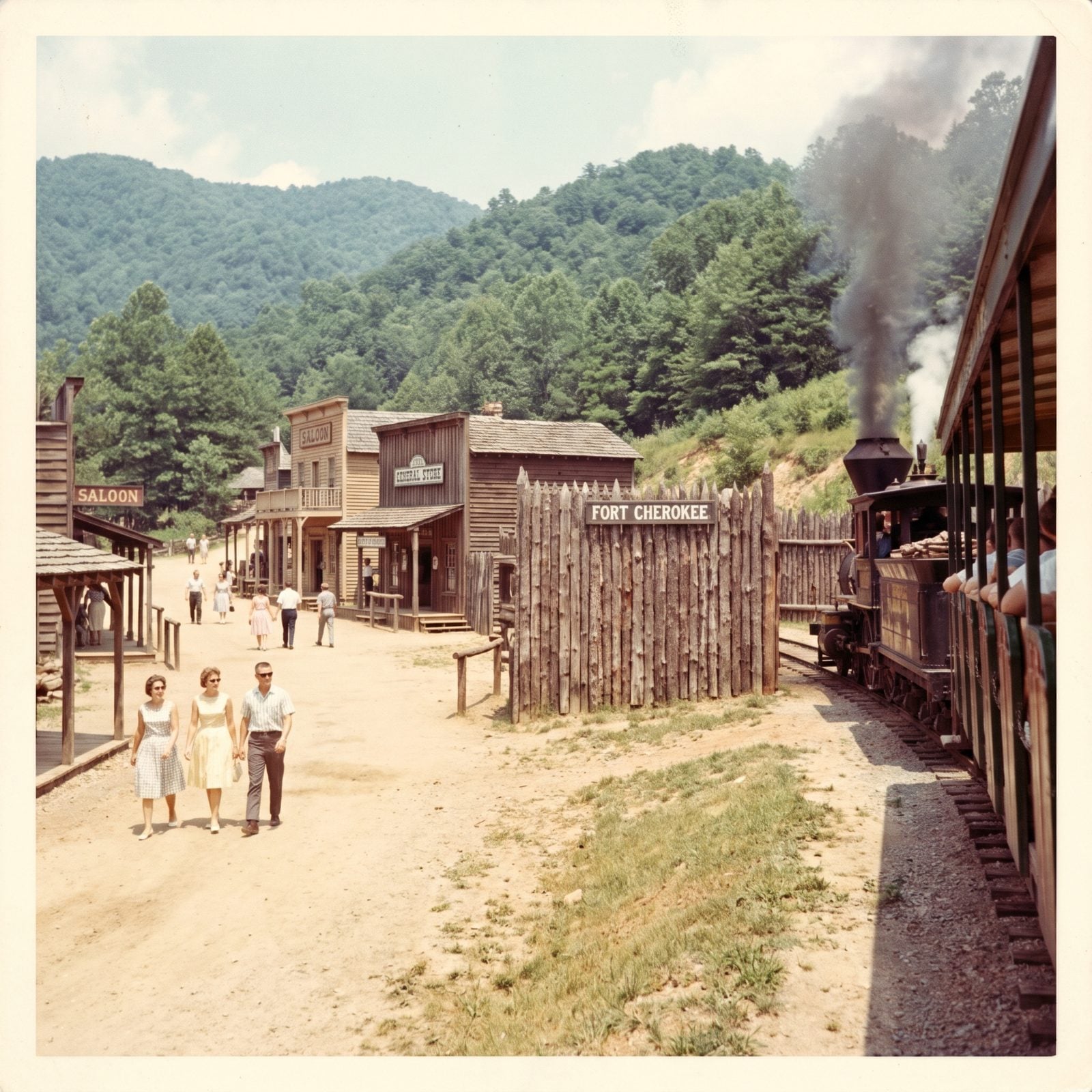
Two bucks for adults, a dollar for kids, and you arrived by wood-burning steam train or gondola. Frontier Land opened in Cherokee in 1964 across 140 acres, another R.B. Coburn project cut from the same Old West cloth as Ghost Town. Three areas in all: Indian Territory, Fort Cherokee, and the 1860s town of Deadwood Gulch.
Dan Blocker — Hoss from Bonanza — worked the whole grand-opening week. That’s about as big a draw as a 1964 Western park could land.
In 1983 it became Water World, a water park that lasted until 1986. The land didn’t stay quiet for long. Harrah’s Cherokee Casino has stood on the site since 1997, which is a strange thing to picture over the bones of old Deadwood Gulch.
11. Cherokee Wonderland, Cherokee
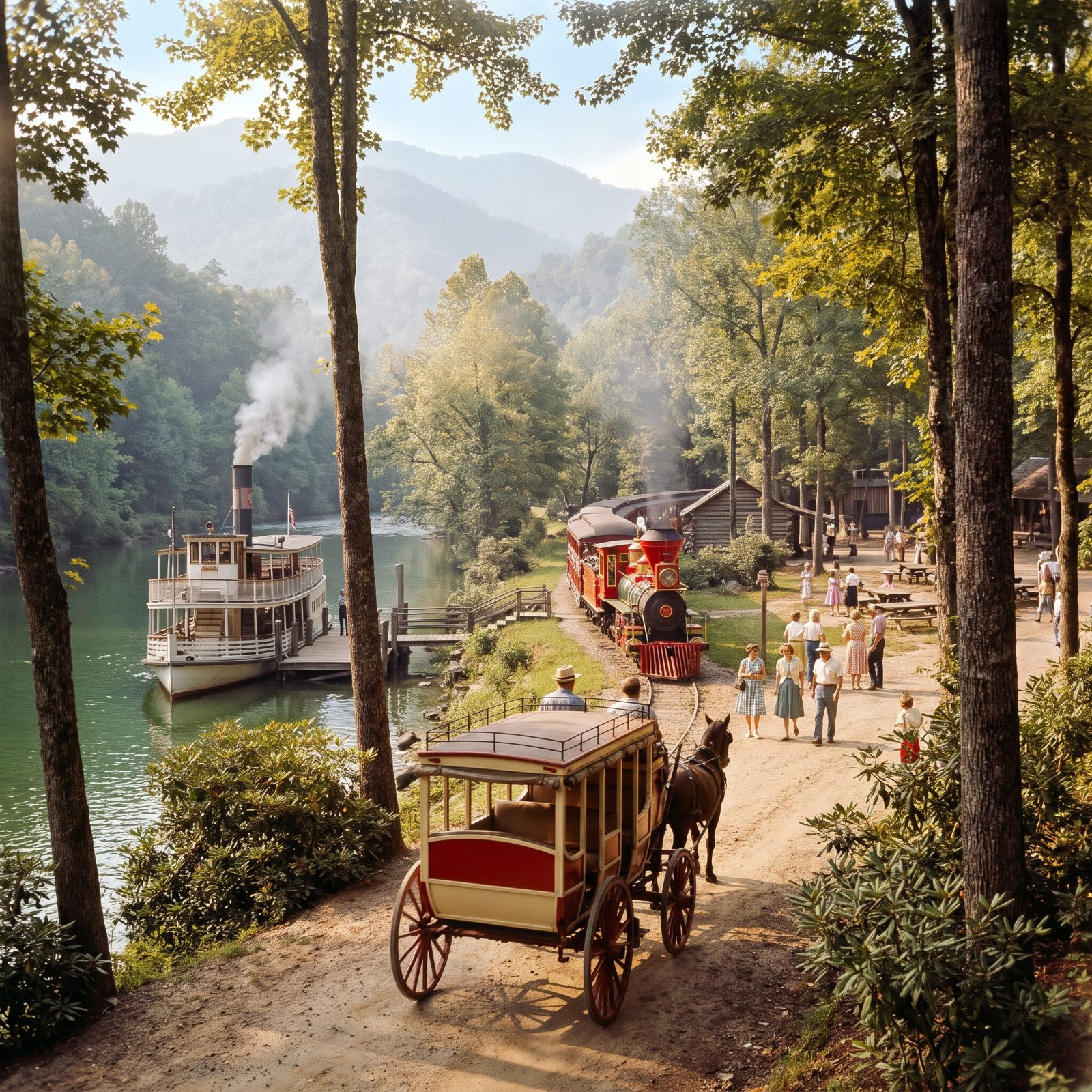
Of all the parks on this list, this one barely got a chance to breathe. Cherokee Wonderland opened in 1961 on 98 acres by a bend in the Oconaluftee River near downtown Cherokee. Stagecoach, train, a little steamboat puttering on the water.
Bigger plans sat on paper: a Cherokee Historama exhibit, pirate- and space-themed rides, the works. None of it got far. The owners leased the land from members of the Eastern Band of Cherokee Indians, disputes curdled into lawsuits, and the park shut down in 1964. Three seasons, give or take, then gone.
10. Gold City, Franklin
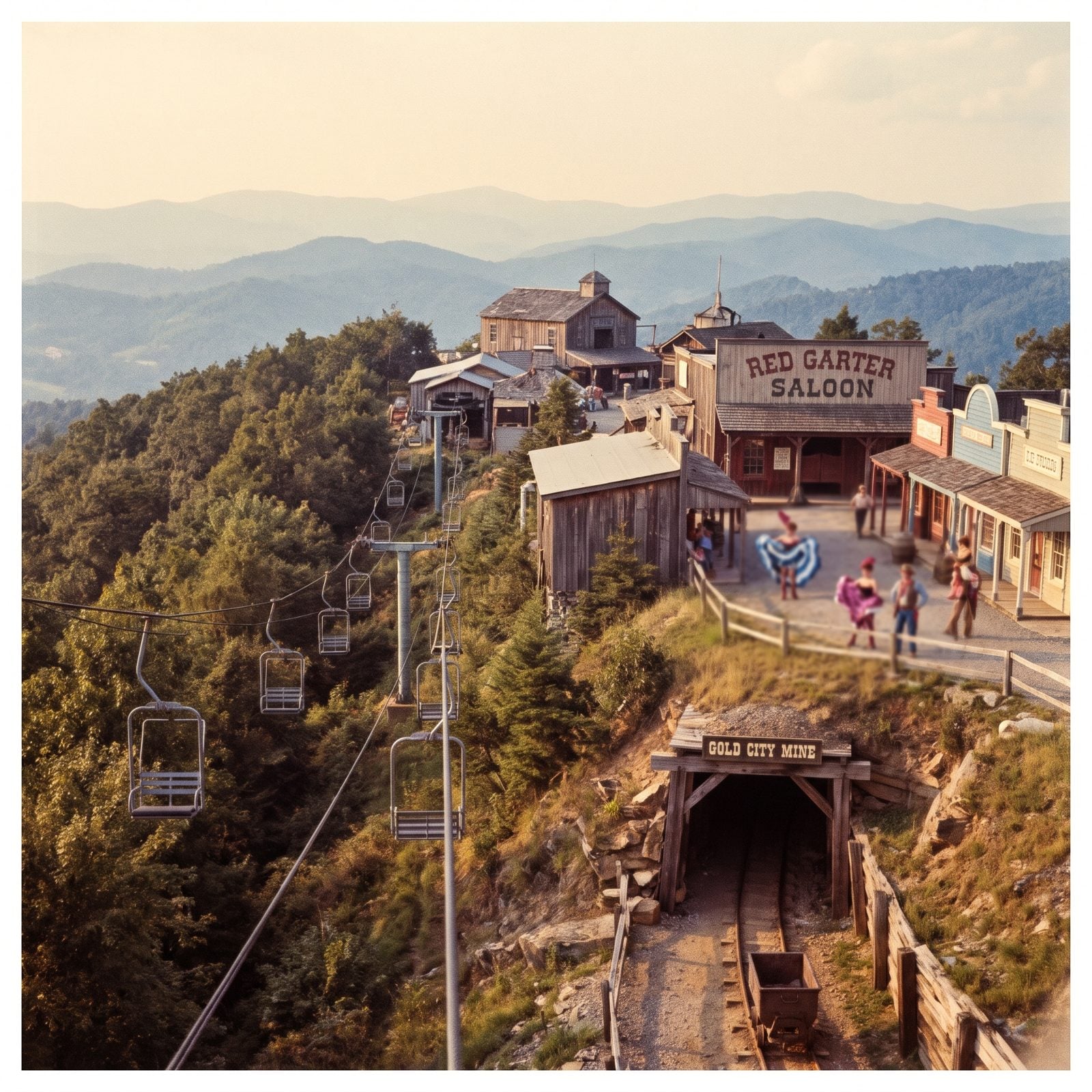
You rode a chairlift to the top for this one. Gold City opened in 1965 on a mountaintop straddling the Macon-Jackson county line, starting life as a supposed 16th-century Spanish village before giving up the pretense and settling into a mining town. Mine tour, rides, hourly gunfights, and can-can dancers kicking at the Red Garter Saloon.
Archie Campbell of Hee Haw was a big early investor, which tells you exactly what era this was. The park went bust in the late 1980s.
And here’s the survivor. Gold City Gem Mine still operates at the base of the old site, at 9410 Sylva Road, where you can sit at a flume and sluice for gemstones below the slope the chairlift used to climb. We’ve killed an afternoon at one of these mountain gem flumes before, and it’s weirdly hypnotic — you keep telling yourself you’ll quit after this one scoop.
9. Bloomsbury Park, Raleigh
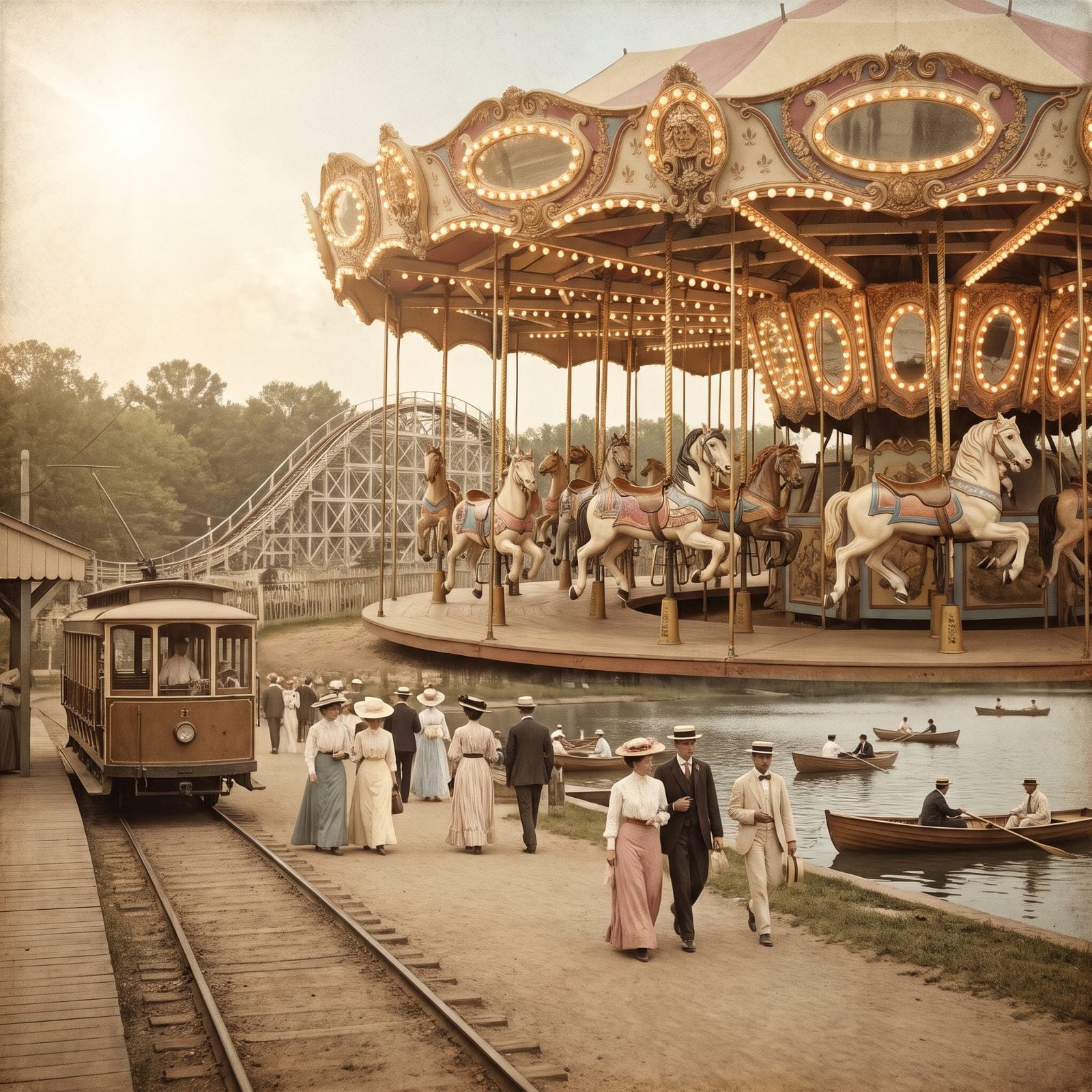
Eight thousand electric light bulbs. That was the pull of Bloomsbury Park when it opened in 1912 at the end of CP&L’s Glenwood Avenue streetcar line in northwest Raleigh. A carousel, a roller coaster, a penny arcade, a boating lake, all of it lit up like a vision back when electric power was still a novelty worth paying to gape at.
It didn’t last. The park had gone dark by 1920. But its Gustave Dentzel carousel moved to Pullen Park in 1921, and it’s still turning there today, more than a century on. Pullen Park calls itself the fifth-oldest operating amusement park in the country.
Go ride it. Just know the carousel closes for annual maintenance, so check raleighnc.gov before you make the drive for it specifically. An old stone trolley stop still stands on Glenwood near Hayes Barton, too, if you like hunting ghosts.
8. Brookside Park, Raleigh
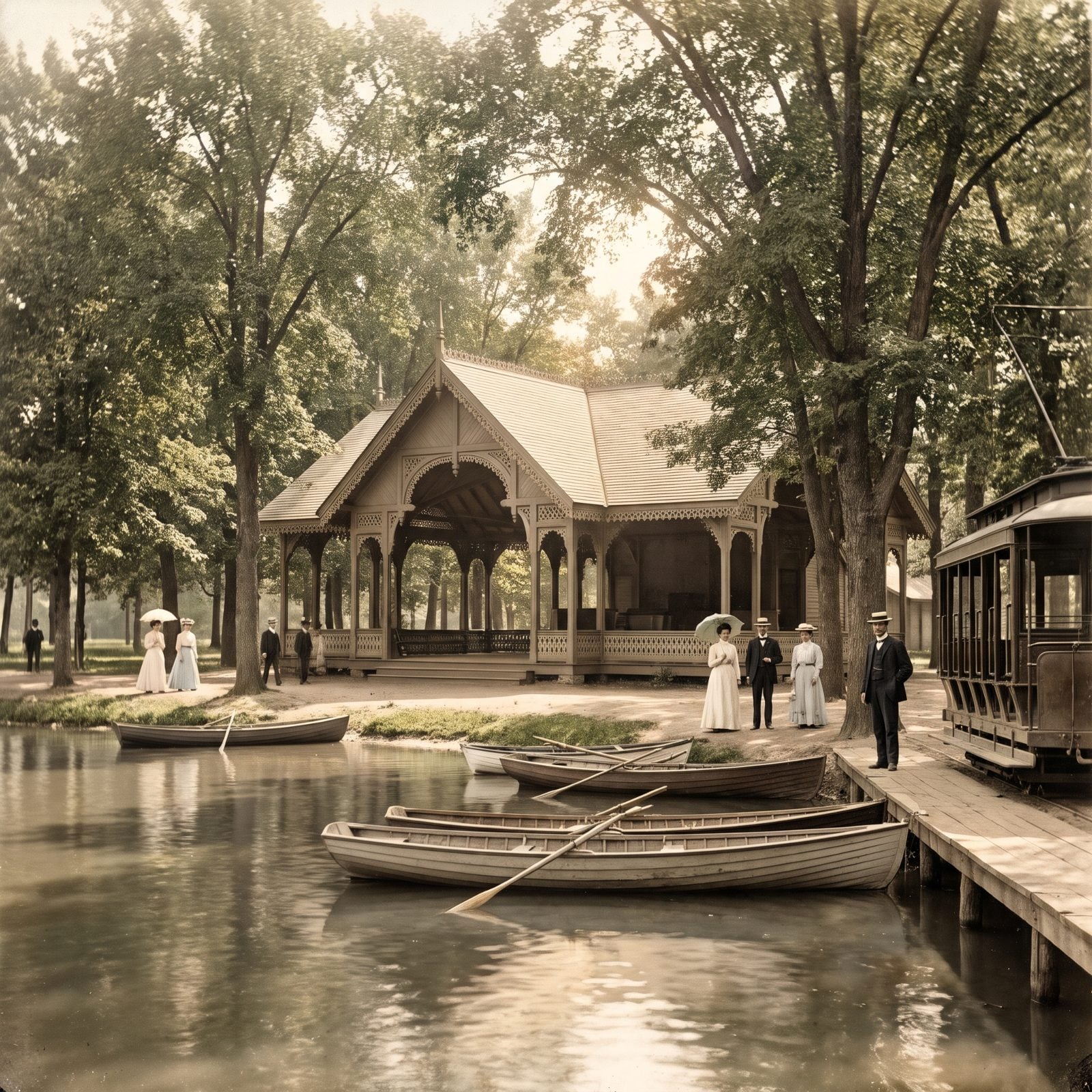
This one goes back further than almost any of them. Brookside Park opened in 1892 just north of Oakwood Cemetery, at the end of a Raleigh streetcar line, and NCpedia calls it one of the state’s earliest amusement parks.
The fun ran quieter here. A dance pavilion. A lake where you could rent a rowboat and pull out onto the water on a Sunday afternoon. No coaster, no gunfights — just a streetcar ride out to the edge of town and a whole day away from it.
Not much survives in the record, which happens with these oldest ones. Sometimes the park is the memory and nothing else.
7. Lakewood Park, Durham
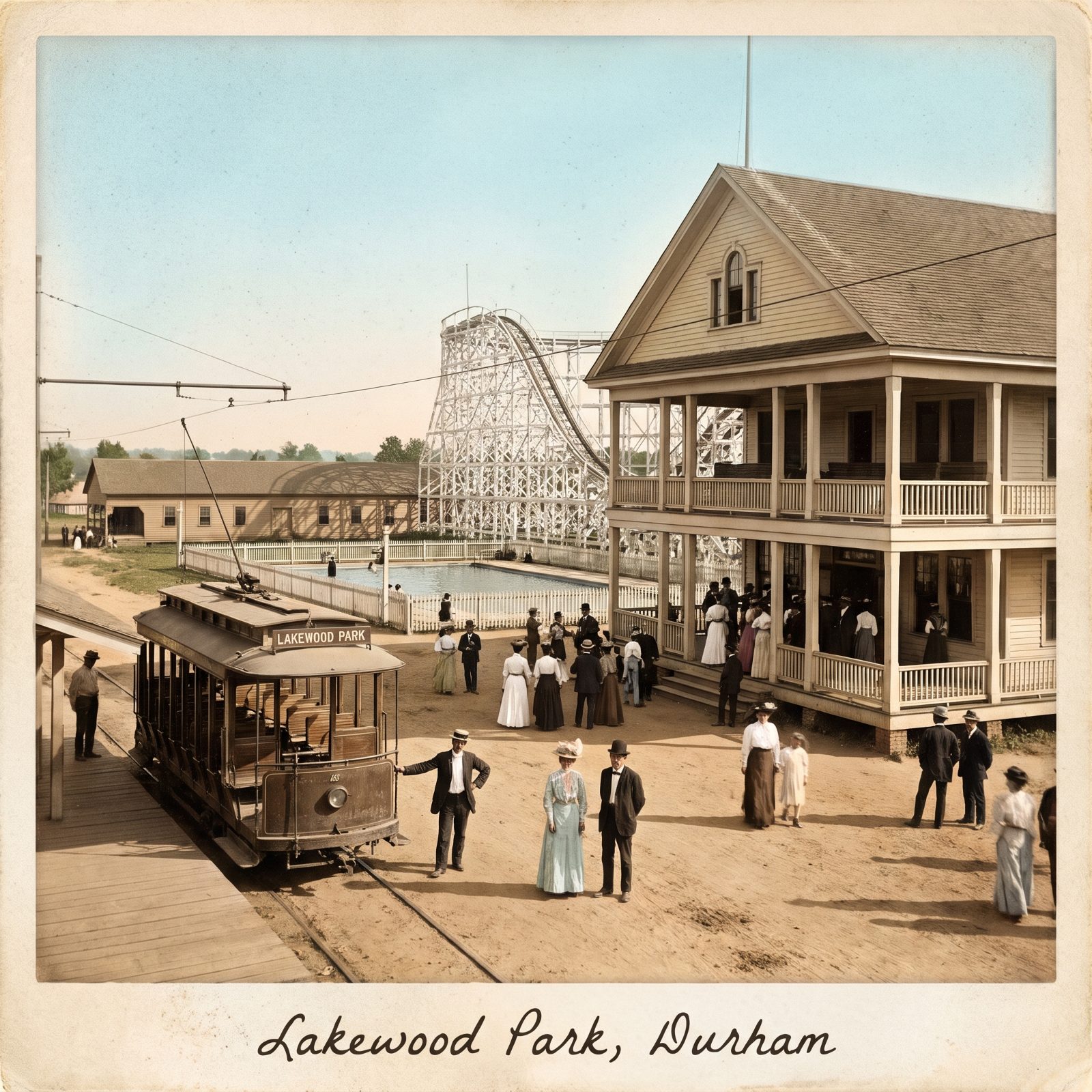
A roller coaster about 65 feet tall, a ride for a quarter, waiting at the end of the Durham streetcar line. Richard H. Wright’s traction company built Lakewood Park on Chapel Hill Road and opened it on July 20, 1902. The Casino theater, a bowling alley, a swimming pool — just about everything a summer day could ask for.
These trolley parks all ran on the same simple trick: the streetcar company built the fun so you’d ride the streetcar to reach it. Then cars took over in the 1920s and the streetcars faded, and with them went the whole reason the park existed. Lakewood closed for good in 1932.
Lakewood Shopping Center went up around 1962, and the neighborhood is still called Lakewood-Tuscaloosa. The name outlasted the coaster by ninety years and counting.
6. Lakewood Park, Charlotte
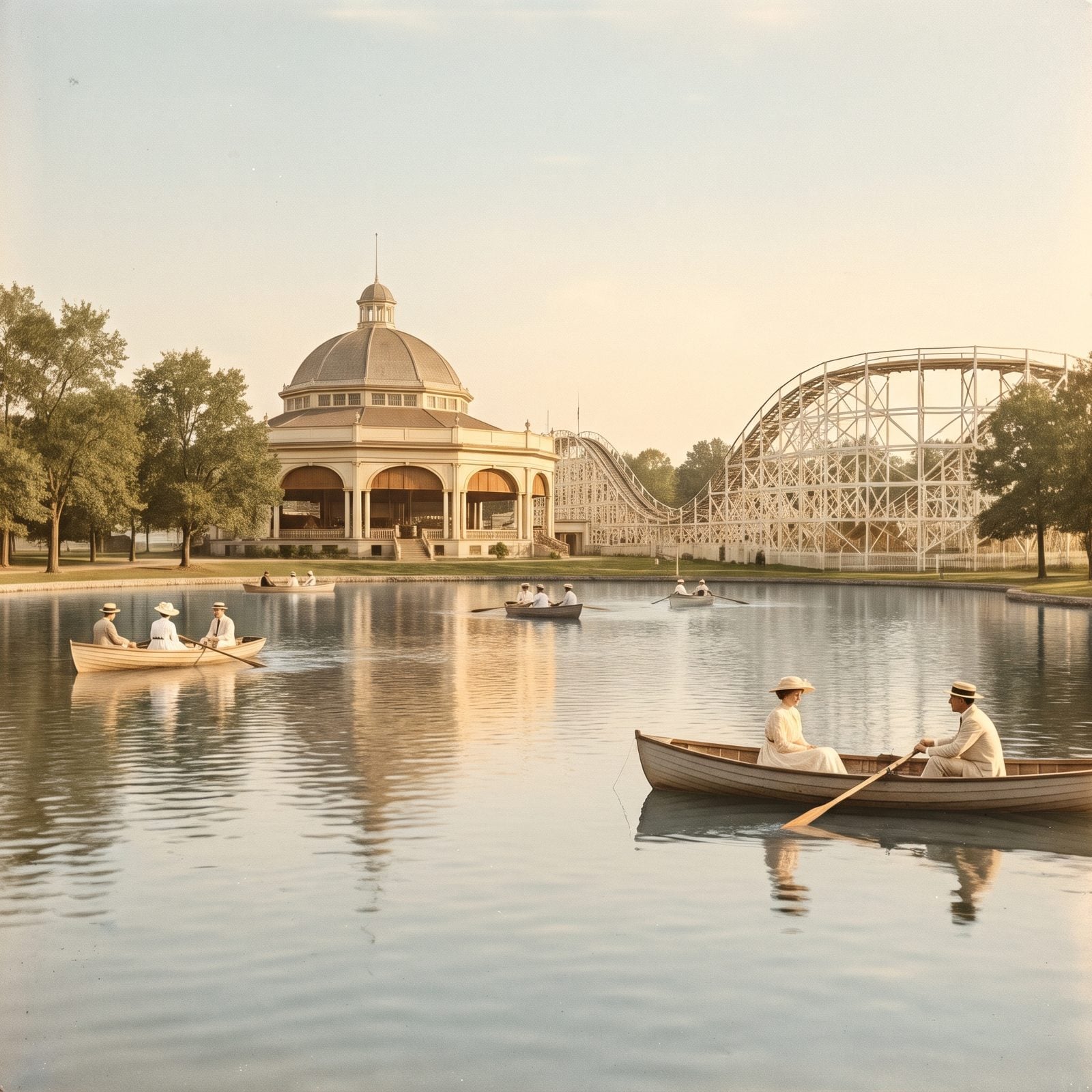
Charlotte’s first amusement park opened in 1909 about three miles northwest of Uptown, built by Edward Dilworth Latta around a man-made lake. It grew to roughly 100 acres, with a roller coaster that opened in July 1910, an 800-seat entertainment hall called the Air Dome, and a petting zoo. Duke Power ran the place until 1933.
It carried the ugly rule of its time, admitting only white visitors except for Black people working or performing there. Better to name that plainly than tuck it away.
A 1936 tornado finished what the decline started. The dam went, the lake drained, and the land became a mill village. The sources quarrel over a couple of the dates — which is what happens when a place has been gone almost ninety years.
5. Riverside Park, Asheville
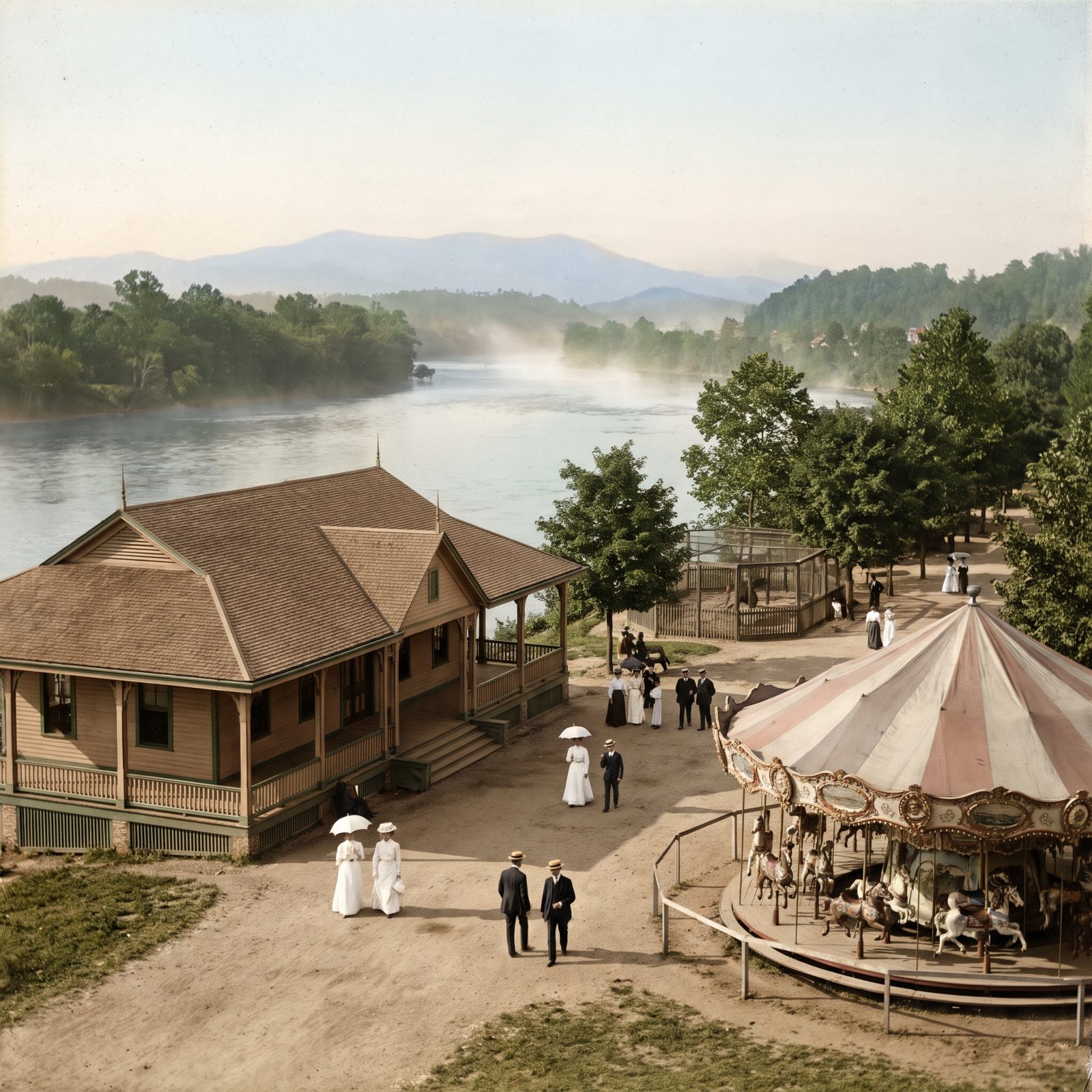
The French Broad took this one. Riverside Park ran along the river in Asheville in the early 1900s, built by the Asheville Electric Company in the same trolley-park tradition as the rest. One researcher’s dig through old newspapers puts a Casino opening in 1901 and a merry-go-round starting up on June 12, 1902, plus a small zoo tucked along the bank.
Then came the Great Flood of July 16, 1916. The French Broad rose and washed the park clean away, and nobody rebuilt.
There’s a hard echo here. More than a century later, Helene put that same river through Asheville again in 2024. These rivers hand the parks their pretty setting and then, every few generations, take the whole thing back.
4. Lumina, Wrightsville Beach: The Electric Pavilion That Lit Up the Dark
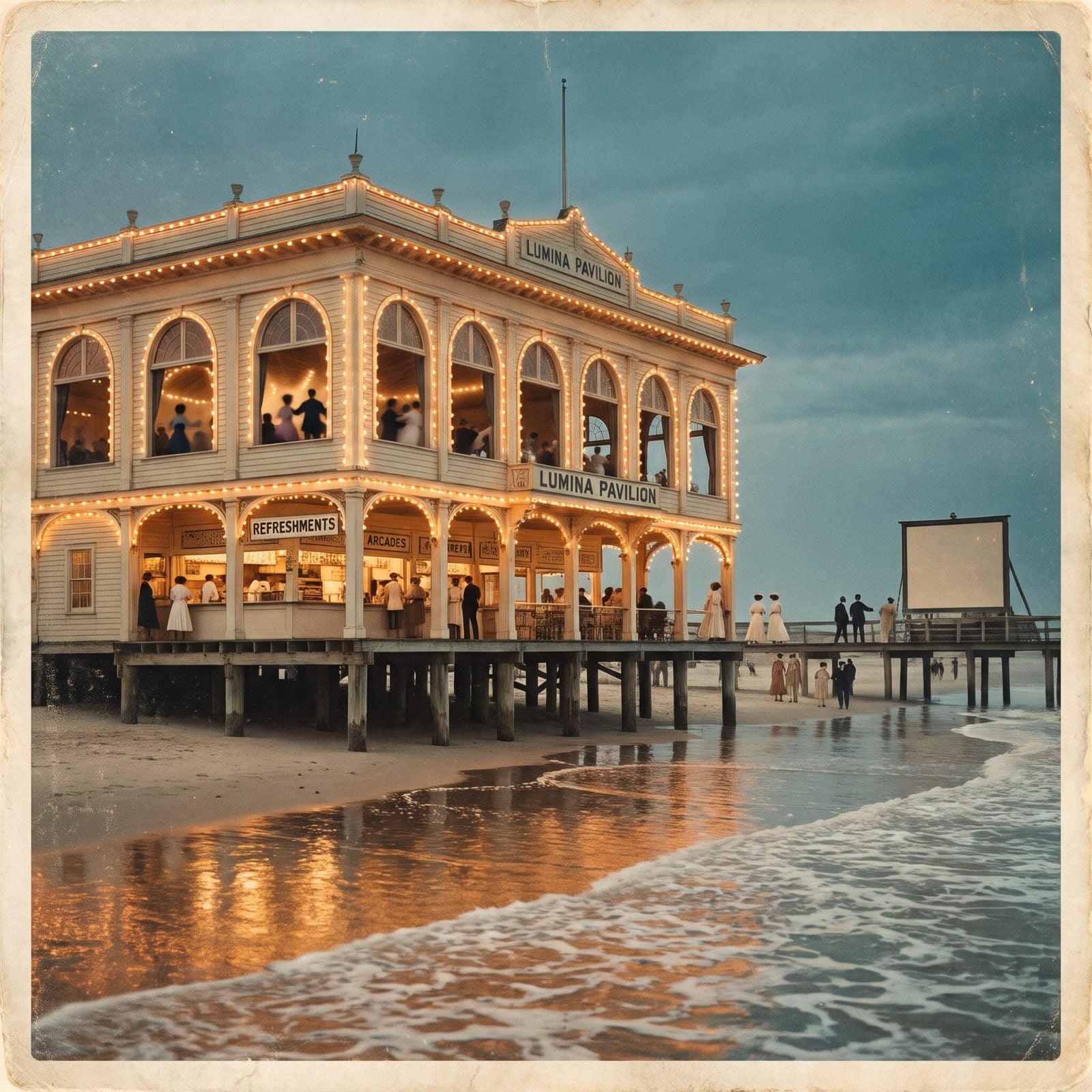
Picture the beach at Wrightsville after dark in 1905, the whole shoreline black except for one building burning with electric light. Lumina opened June 3 of that year, and its owners billed it as the Fun Spot of the South. Those lights weren’t decoration. Hugh MacRae’s Consolidated Railways, Light & Power Company built the place to get riders onto the beach trolley and to prove electricity was something you wanted in your life.
Downstairs, refreshment stands. Upstairs, a dance floor and a bandshell, and out on the sand below, silent films flickered across a screen propped up on pilings. You watched a movie with your feet in the surf.
Hurricane Hazel battered it in 1954. It limped on as a skating rink, got condemned in February 1972, and came down in April 1973.
Nothing of the building survives, but state highway marker D-97 stands on Waynick Boulevard between Nathan and Iula Streets. Stop and read it. It’s the only ticket left.
3. Jubilee Park, Carolina Beach: The Boardwalk Rides That Moved Up the Street
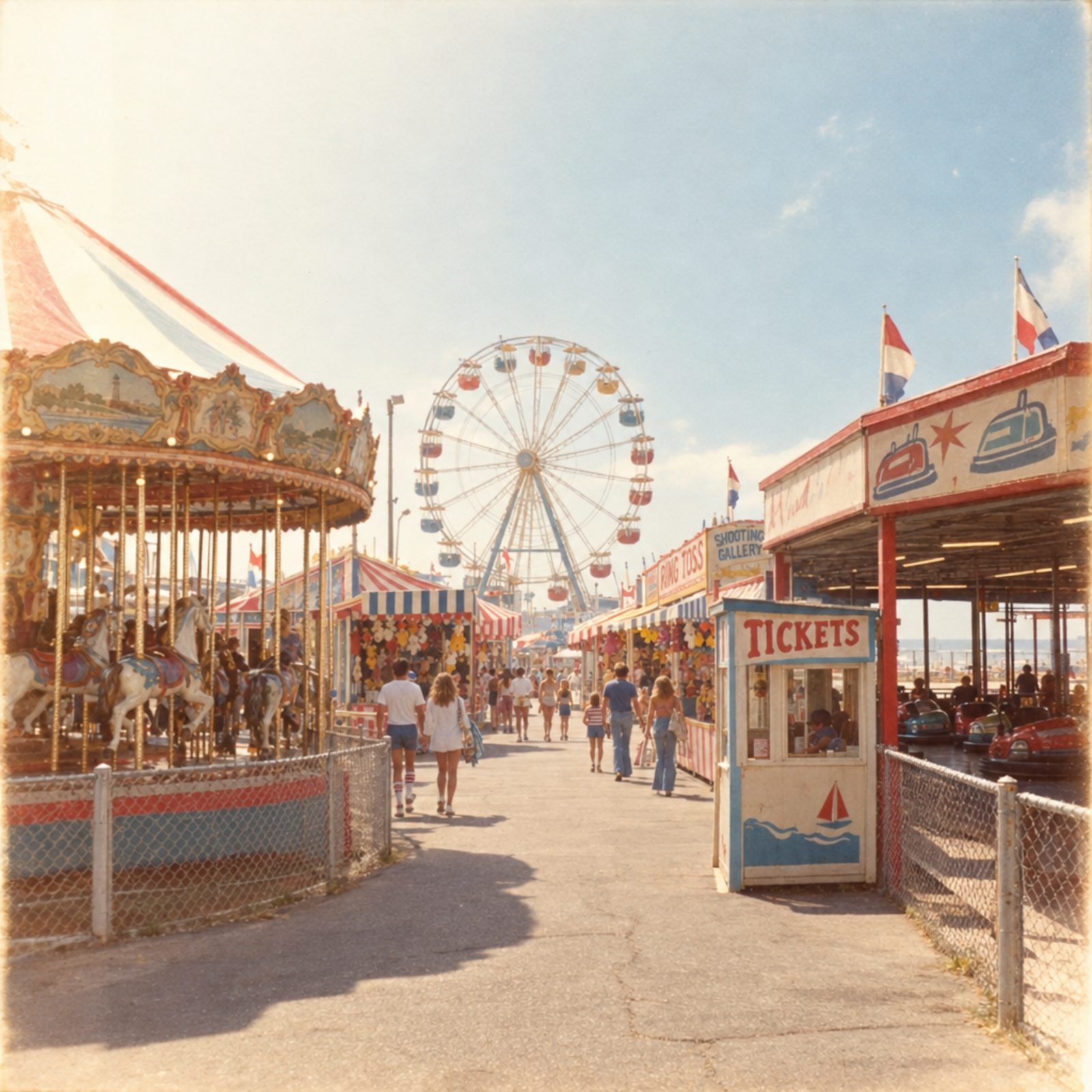
Rides have a way of migrating. Jubilee Park didn’t stay put. Its roots were on the Carolina Beach Boardwalk, at the old Sea Shore Amusement Park, and in 1978 those rides, carousel included, got hauled to the north end of town and set back up on North Lake Park Boulevard as Jubilee Park, a few blocks back from the beach.
Just over six and a half acres of Ferris wheel, bumper cars, and midway games, the kind of place where a summer night got measured in ride tickets. Its last season was 2004. In June 2005 the games and rides went to auction, and by 2008 most of what stood had been torn down.
And here’s the part that undoes the sad ending. In 2009, rides came back to the Carolina Beach Boardwalk, same beach, roughly the same spot where the whole thing began. You can still ride a Ferris wheel there on a summer evening with the ocean right behind you.
2. Dowdy’s Amusement Park, Nags Head: The Wooden Coaster on the Bypass
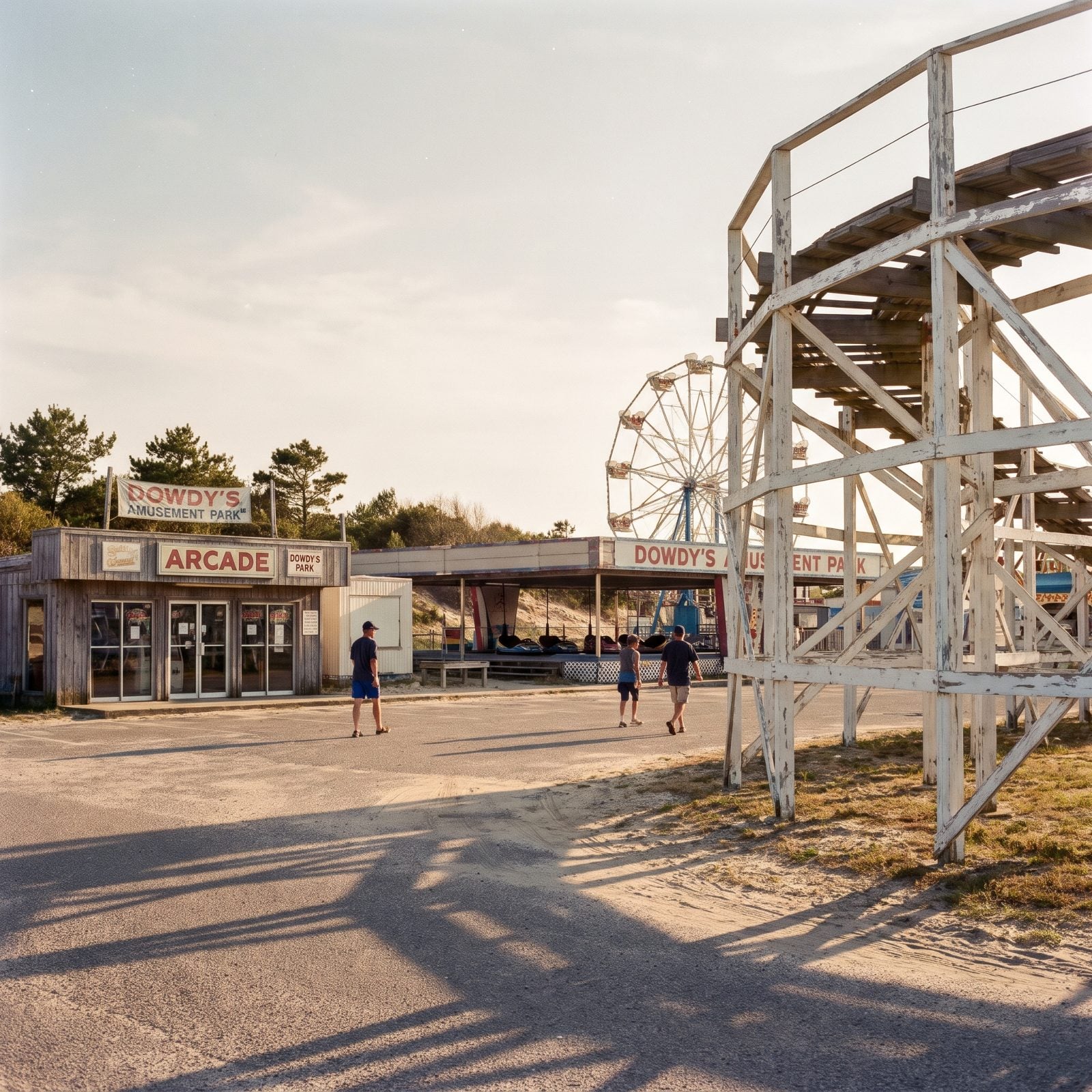
Every Outer Banks kid of a certain age knows the sound of Dowdy’s roller coaster rattling over the bypass. Small, family-run, no pretense. A Ferris wheel, bumper cars, that coaster, and an arcade where you blew your quarters before the beach. It closed in 2005.
What happened next is the good news. The Town of Nags Head took the site and turned it into Dowdy Park, which opened in May 2017. Five acres at 3005 S. Croatan Highway, open daily from an hour before sunrise to an hour after sunset, with summer farmers markets, free events, and room to run.
We’ll admit it’s a strange feeling, standing where a coaster used to roar and hearing nothing but a bluegrass trio and somebody selling tomatoes. But the land is still working. Beats letting it go to weeds.
1. Lindley Park, Greensboro: The Trolley Ride to Vaudeville and an Electric Fountain
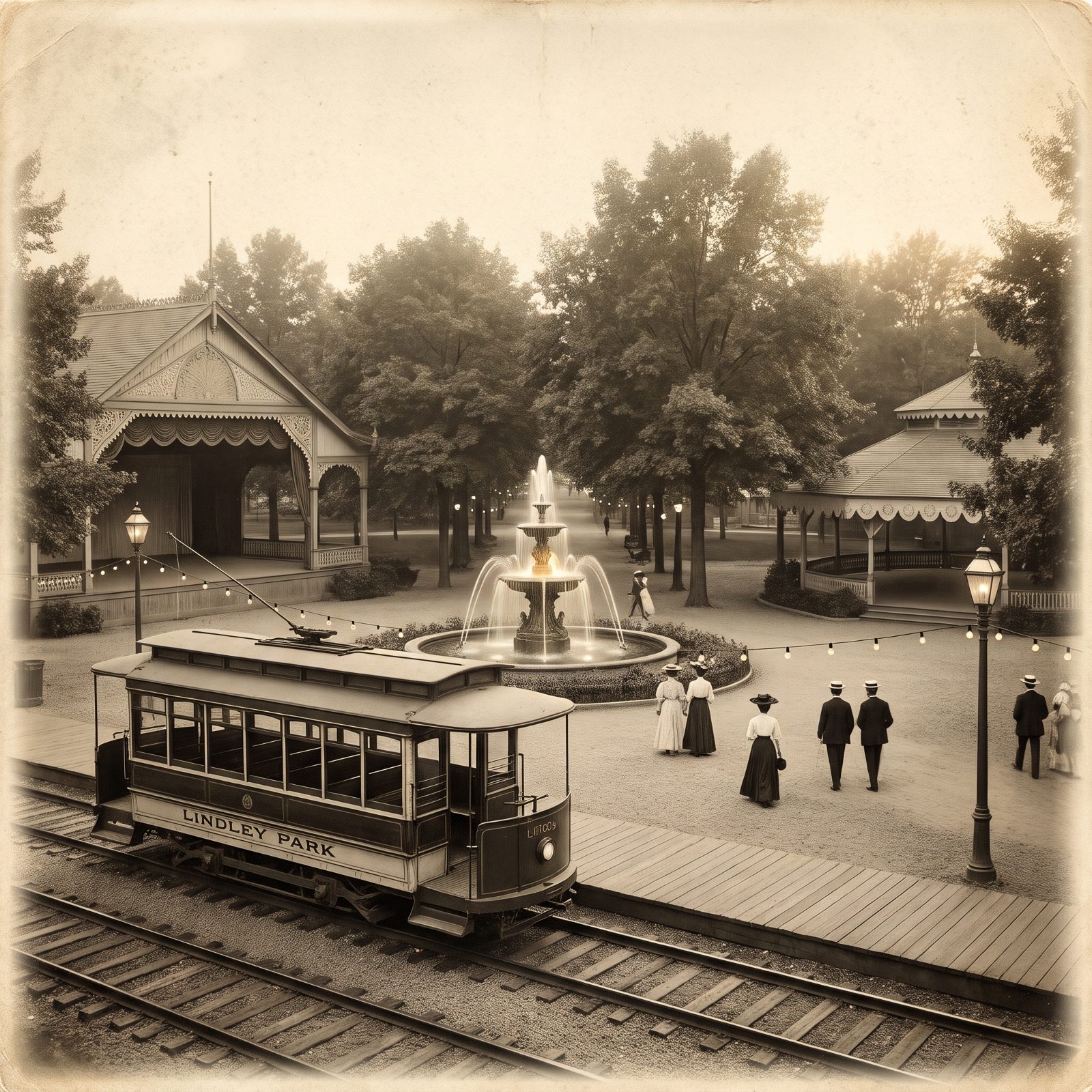
Before Greensboro’s Lindley Park was a neighborhood, it was a reason to ride the trolley west. Starting in 1902, you’d board the streetcar for the vaudeville theater, the glowing fountain, and the dance pavilion waiting at the end of the line. Local histories say the amusement park ran from 1902 until it closed in 1917.
That’s the whole life of the early American trolley park packed into one little stretch of track. The power company ran the line, the park gave people somewhere to go, and the fares paid for both. When the trolleys faded, so did the park.
Nothing’s left to ride. But the name held on, carried forward by the Lindley Park neighborhood in west Greensboro and the city park that still wears it. Drive through and you’re rolling over the old route to the fountain, whether the street signs tell you so or not.
Please note that some of the imagery in this article were created with the aid of AI image generators.