

You leave after breakfast and you’re home before the porch light matters. That’s the whole trick of North Carolina. A state this wide gives you a swinging bridge a mile above the sea, a colonial port town that still smells of salt, and a pottery road where the studios outnumber the stoplights. We packed this list with places that hand you a full-vacation feeling on a single tank of gas. Mountains, waterfalls, wild horses, steam trains. Pick a direction, drive, and come back changed. These are the trips worth leaving early for.
14. Blowing Rock: The High Country’s Oldest Overlook
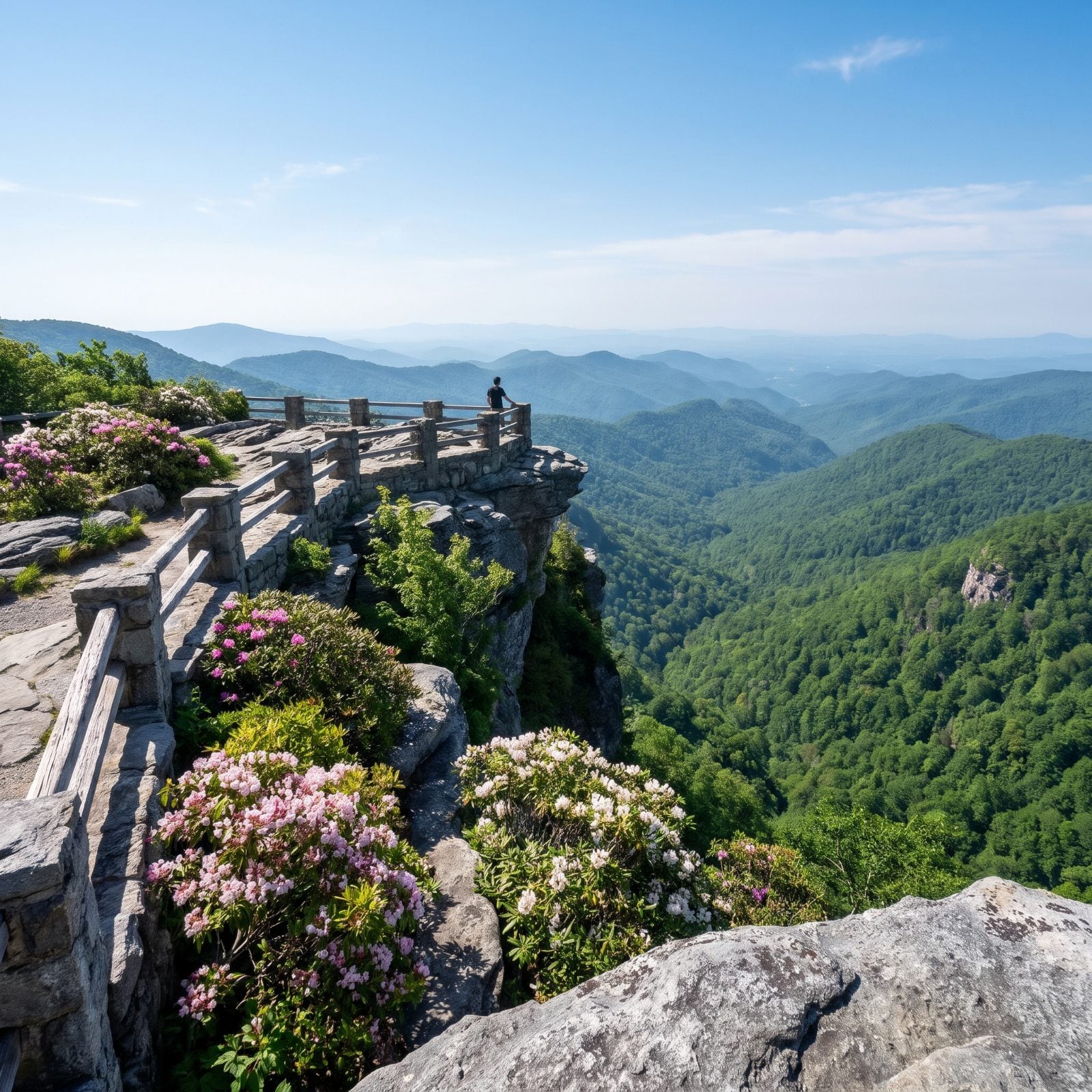
Open since 1933 and billed as North Carolina’s oldest travel attraction, The Blowing Rock earns the hype with a gimmick that happens to be true. The gorge below funnels wind straight up the cliff face, hard enough that light things tossed over the edge tend to come back. That’s the whole legend, and it’s a good one.
At 432 The Rock Road you get gardens, an observation area, and a view of the High Country that runs for miles. Pair it with Moses H. Cone Memorial Park just up the Parkway, where Flat Top Manor from 1901 anchors acres of carriage trails and Bass Lake. Then walk the downtown shops before you point the car home.
13. Grandfather Mountain: Crossing the Mile High Swinging Bridge
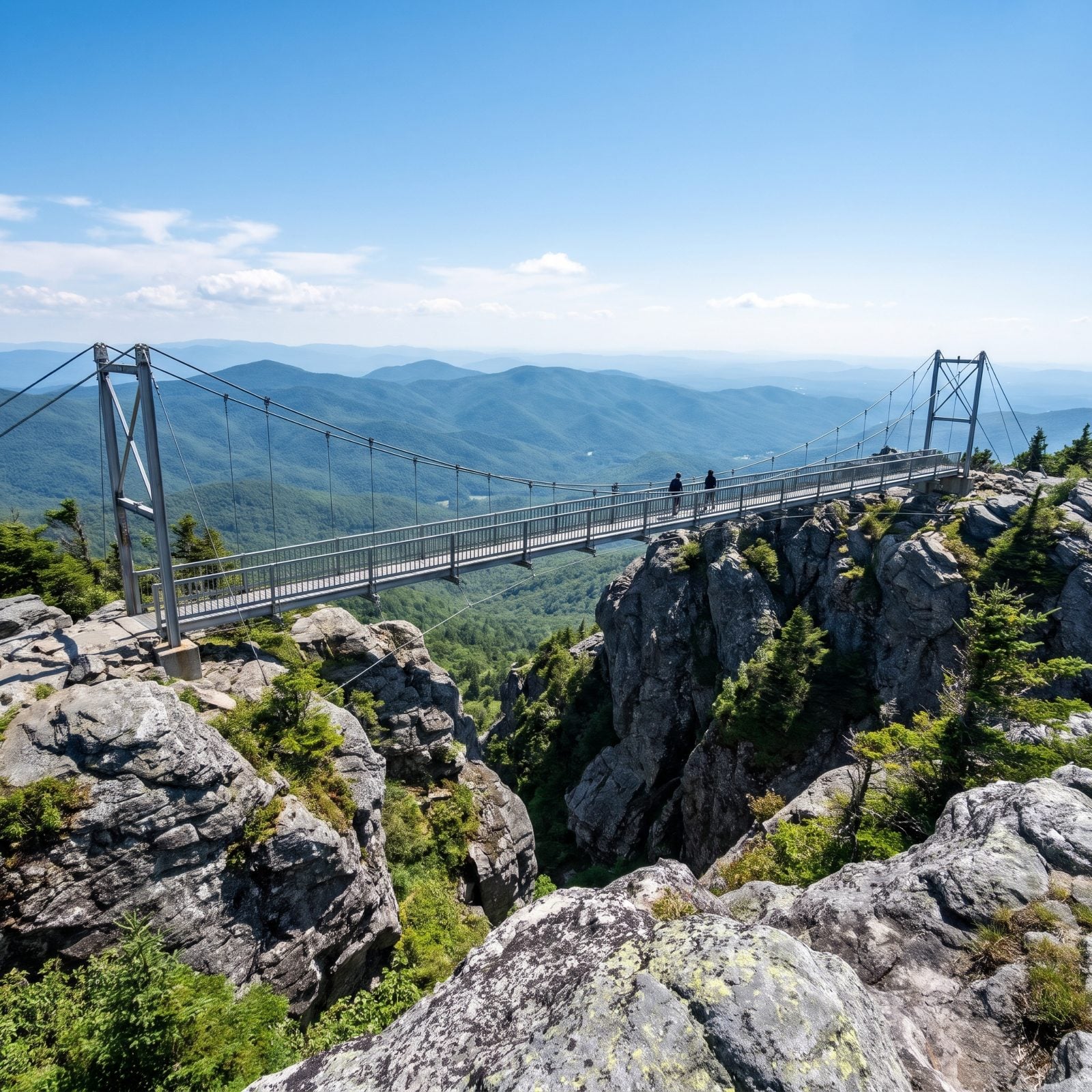
The Mile High Swinging Bridge sits more than a mile above sea level, billed as America’s highest suspension footbridge, and people have been walking across it since 1952. It moves a little in the wind, and that’s part of the thrill. Wind comes through the steel grating, you grip the cable, and the whole Appalachian spine spreads out around you like it’s showing off.
Not a fan of heights? The short Bridge Trail starts at the Black Rock parking area and runs underneath the span, which hands you the view without the walk across it. There’s a nature center and wildlife habitats too. Buy tickets online ahead of time — they recommend it for a reason, and so do we. Figure roughly 75 miles north of Asheville.
12. Chimney Rock: A 535-Million-Year-Old View, Reopened and Waiting
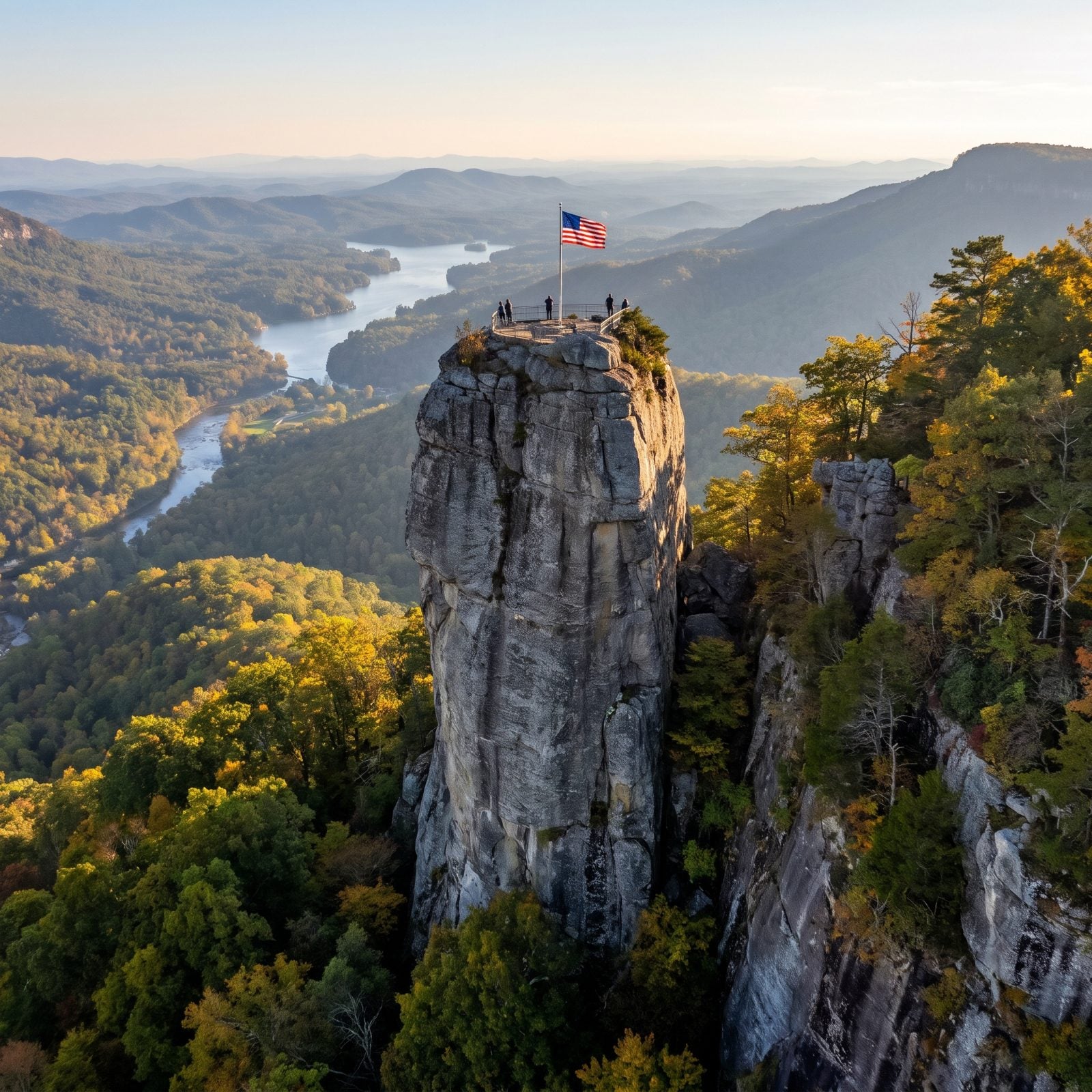
Chimney Rock reopened on June 27, 2025, nine months after Hurricane Helene tore through Hickory Nut Gorge. That reopening matters more than most. This stretch of the mountains took a brutal hit, and standing on that ancient formation again, looking out across a view that reaches dozens of miles, feels like a small act of defiance.
The main access runs seven days a week. Reserve ahead for busy weekends, holidays, and every October weekend, when the color turns and everybody in the state has the same idea at once. One caveat, said plainly: Eagle Rock Access is still closed until further notice. Check the park’s site before you leave, because the recovery is ongoing.
11. DuPont State Forest: Three Waterfalls in One Easy Walk
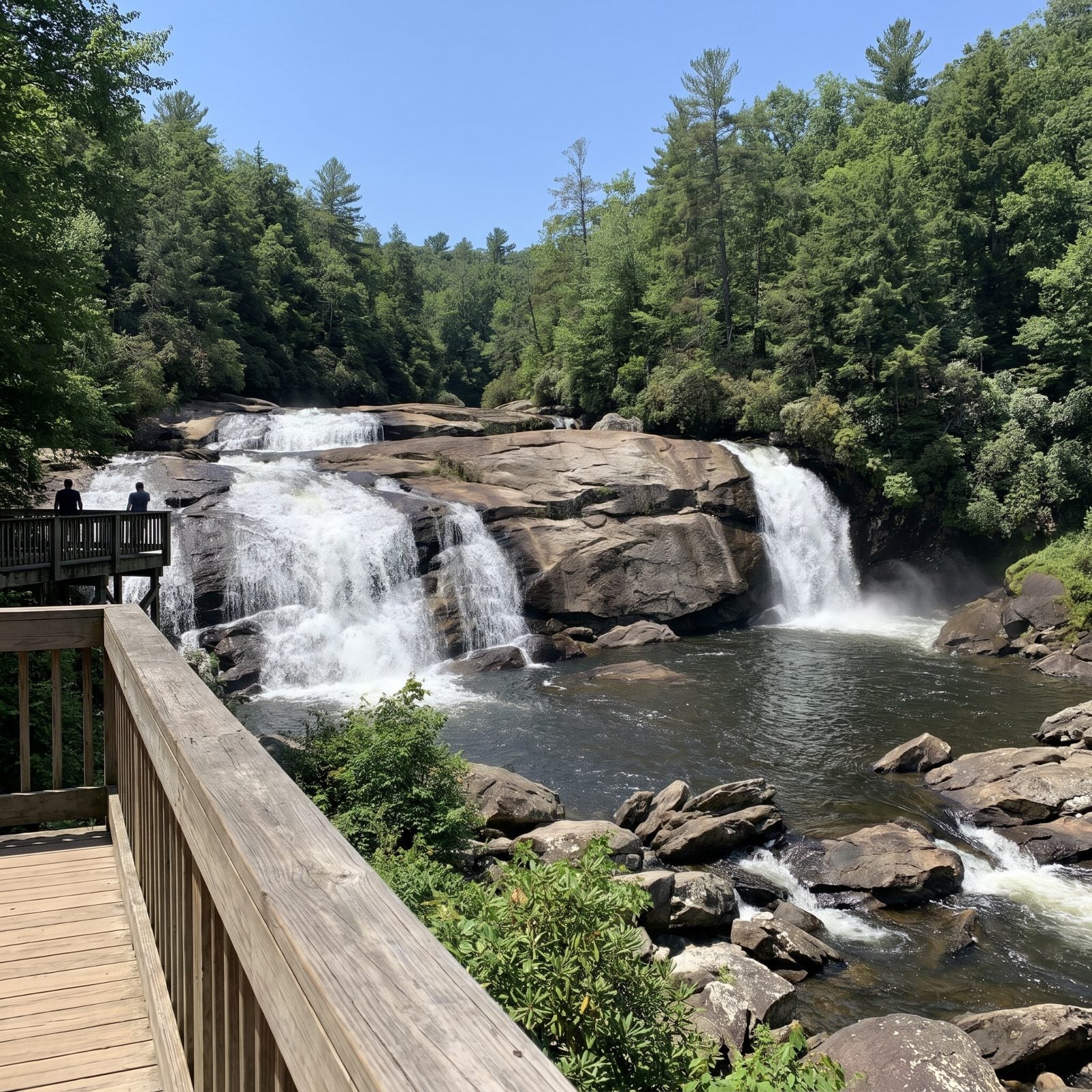
Thousands of acres between Brevard and Hendersonville, miles and miles of trails, and one stretch that hands you three waterfalls back to back. From the Hooker Falls Access Area you can link Hooker Falls (wide, with a swimming pool that packs out by July), Triple Falls, and High Falls, which drops something like 150 feet.
The honest state of things as of an August 2026 visit: the main waterfall trail and the Triple Falls overlook were open, but the staircase down to the Triple Falls rock shelf was still closed after Helene damage. You can still get a close look at the lower cascade from a short, rocky side trail to its base, and the overlook shows all three tiers, but the middle shelf is off-limits. Set your expectations accordingly, and bring good shoes regardless.
10. Great Smoky Mountains Railroad: A Steam Train Out of Bryson City
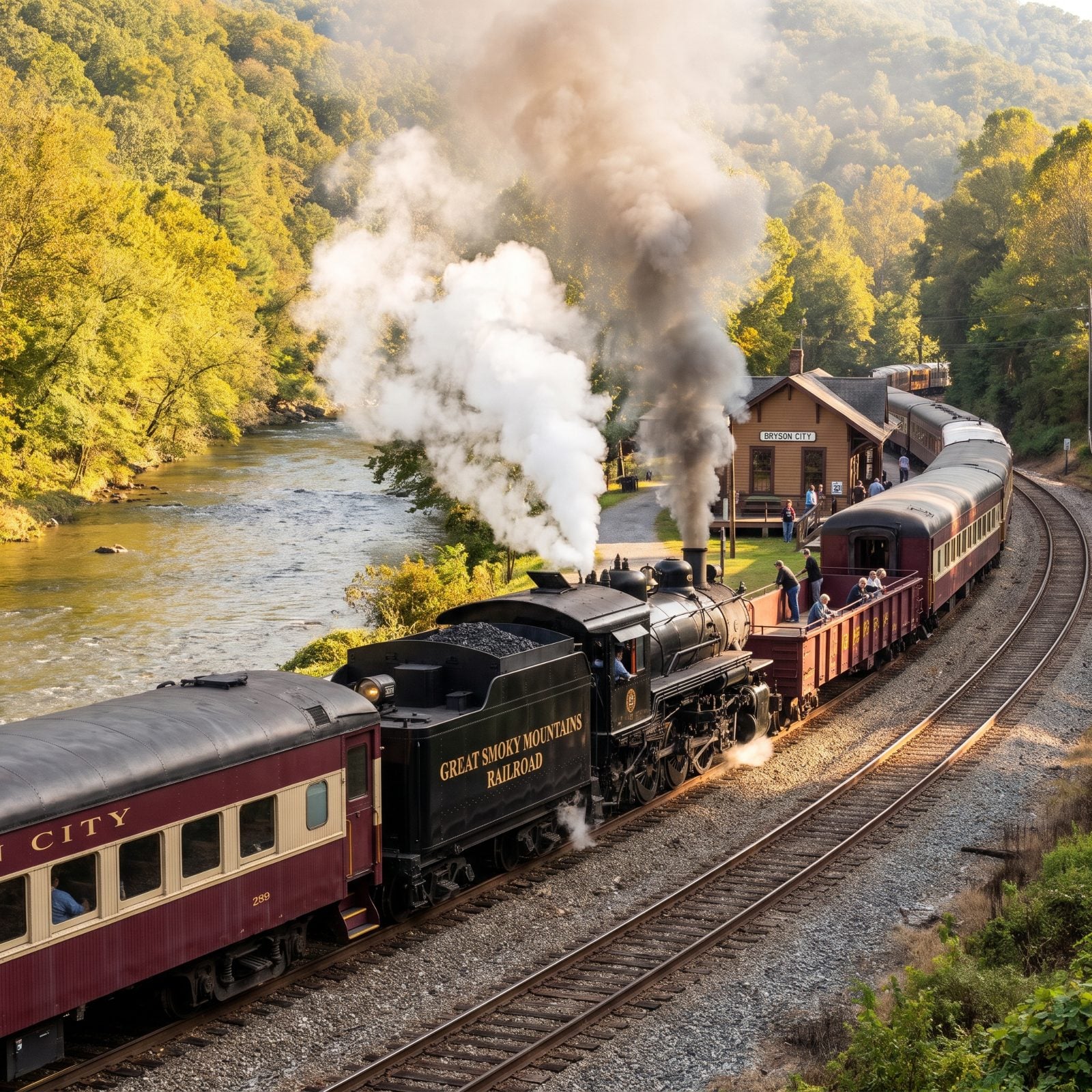
Everything leaves from the depot in downtown Bryson City, which keeps the logistics refreshingly simple. The Tuckasegee River Excursion is a four-hour round trip to Dillsboro and back, rolling through the 836-foot Cowee Tunnel and past the spot where The Fugitive staged its train wreck. Movie buffs, yes — that’s the real location.
The Nantahala Gorge run crosses Fontana Lake and hugs the Nantahala River. That’s the scenic pick if you’ve got the hours to give it. Routes follow seasonal schedules, and for 2026 the steam trips run from late May through the end of December. Dates and prices shift around, so check gsmr.com before you commit to anything.
9. Hanging Rock: Cliffs, a CCC Lake, and a Loyalist Hideout
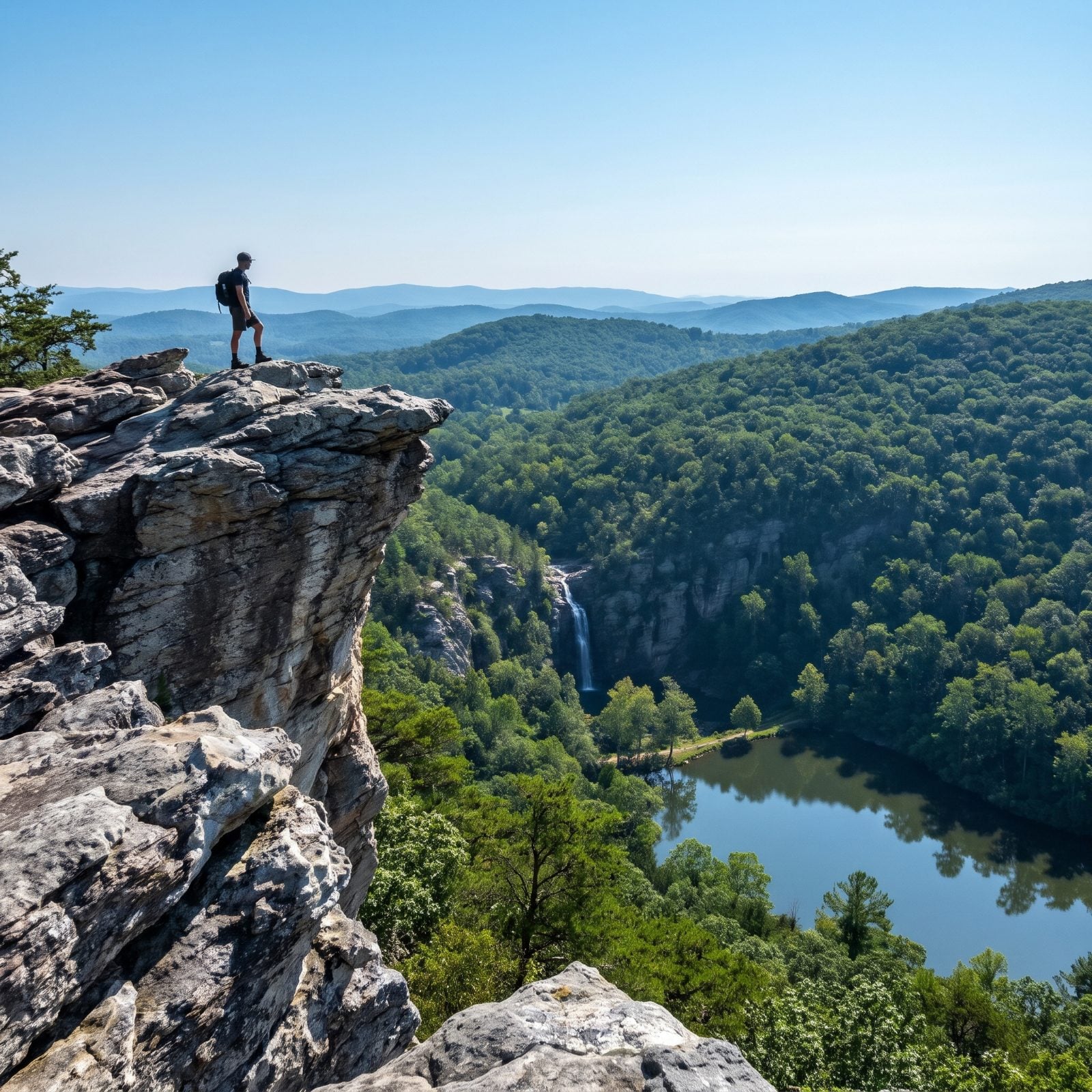
About 30 miles north of Winston-Salem, Hanging Rock crams a lot into one park. Trails climb to mountain views, rock outcrops, waterfalls, and a genuine mountain cave. There’s a swim lake, there are campgrounds, and you can paddle the Dan River if you want to stretch it into a full day.
The lake and its bathhouse were built by the Civilian Conservation Corps, and that bathhouse landed on the National Register of Historic Places in 1991. Here’s the odd historical footnote: hike out to Tory’s Den, a rock outcrop that Loyalists supposedly used as a hideout during the Revolutionary War. The Piedmont rarely feels this rugged.
8. Mount Airy: Walking Through the Real Mayberry
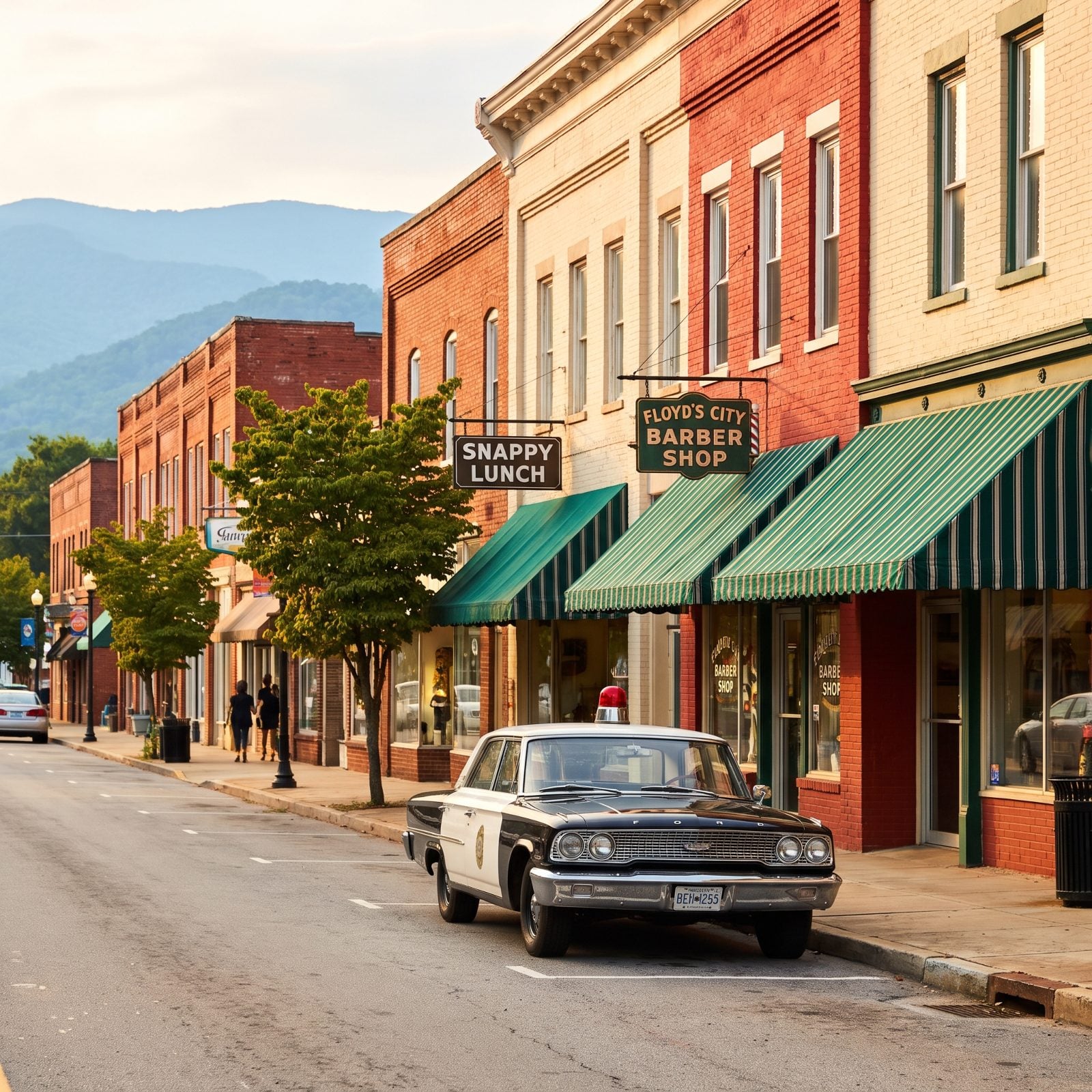
Mount Airy is Andy Griffith’s hometown and the real-life model for Mayberry, and the town leans all the way into it. Walk the downtown, poke through the shops, and feel the black-and-white rerun you grew up on quietly come to life around you.
Don’t let the nostalgia fool you into thinking that’s the whole show. This is a small Blue Ridge town with real mountain character, and the Yadkin Valley wineries sit close enough to turn a Mayberry morning into a tasting afternoon. Two moods, one day.
7. Old Salem: A Moravian Village Beside Modern Winston-Salem
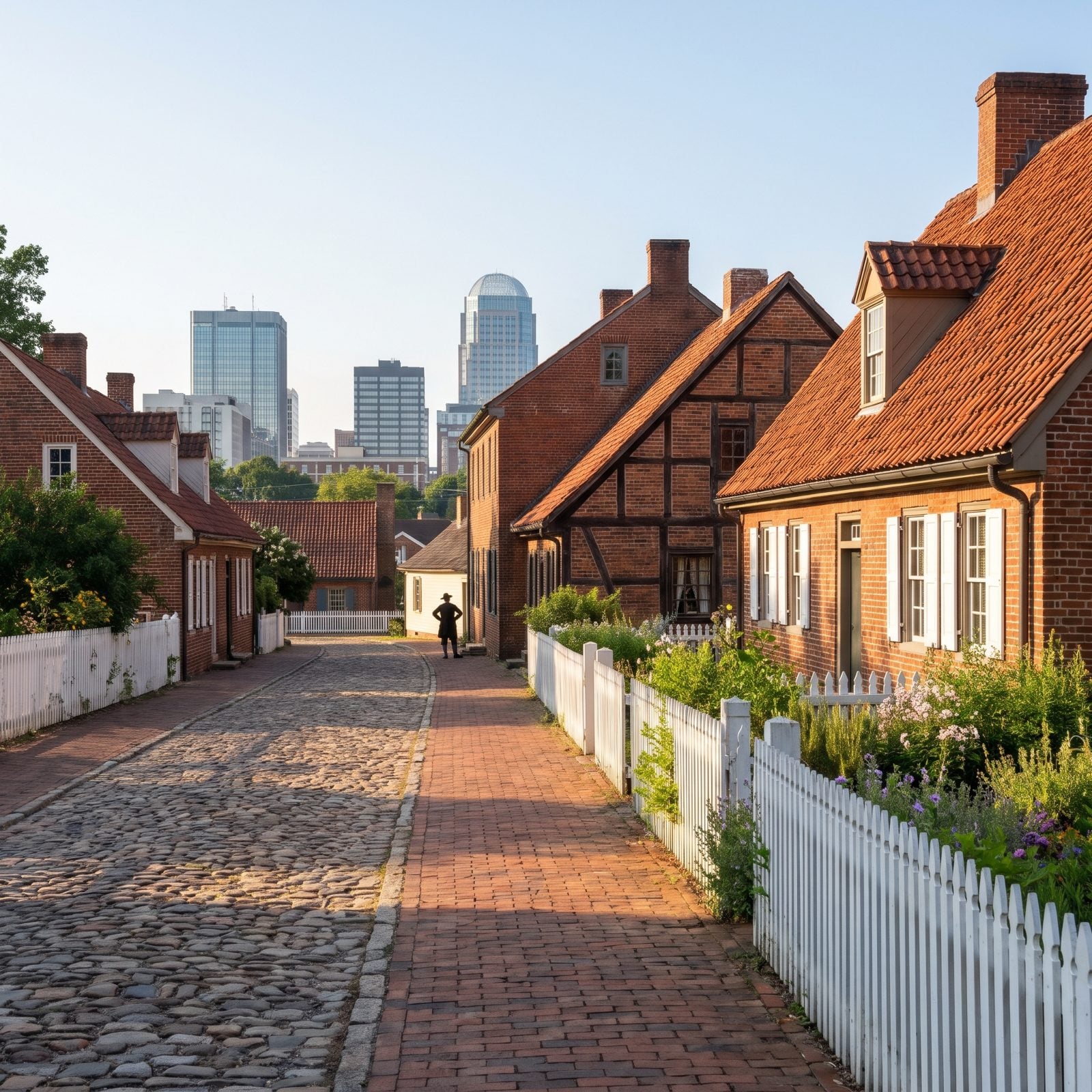
Called one of America’s most comprehensive living history attractions, Old Salem tells the story of the early South with real honesty. It centers on North Carolina’s Moravians and, just as importantly, on the enslaved people who lived and labored in the same place. That dual focus makes the visit feel truthful instead of scrubbed clean.
What surprises most first-timers is the geography. The preserved village and its heritage gardens butt right up against modern downtown Winston-Salem, so you step off a cobbled 18th-century street and into the present inside of two blocks. History and the right-now, sharing the same sidewalk.
6. Seagrove: The Pottery Capital You Can’t Finish in a Day

Dozens and dozens of pottery shops and studios are scattered across Seagrove and its neighboring hamlets, which carry names you’ll want to say out loud — Erect and Whynot among them. Way too many to see in one visit, and nobody around here pretends otherwise. This is the pottery capital of the country, and the pottery highway earns every bit of the title.
Family studios like Ben Owen Pottery and Chrisco Pottery pull the crowds. But half the fun is turning into a place you’ve never heard of and leaving with a mug nobody else on earth owns. Pick a few stops, accept that you’ll miss the rest, and come back another day. You’ll want to.
5. Edenton: A Colonial Capital Still Sitting on the Water
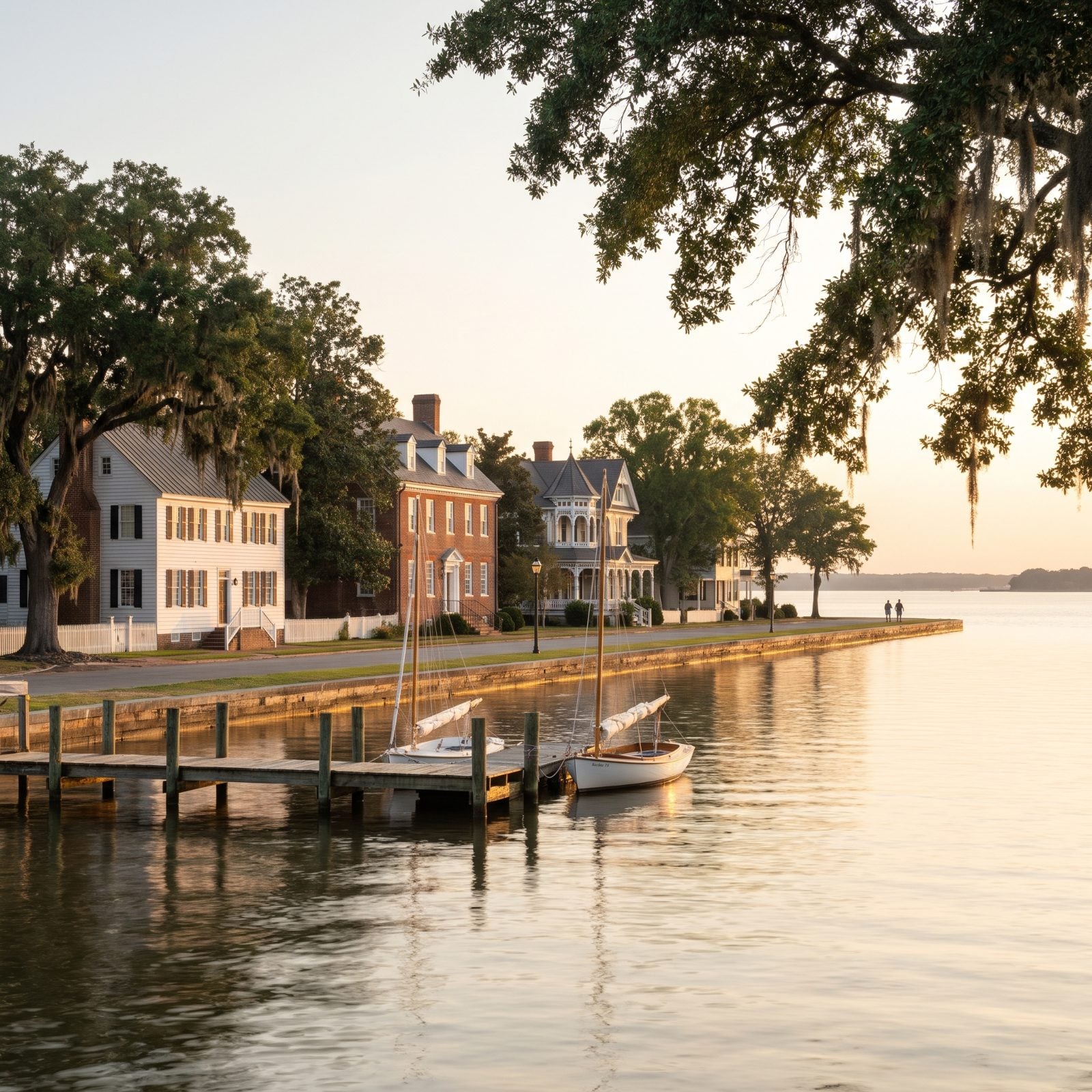
A former colonial capital sitting right on the water, Edenton keeps its history out in the open instead of behind glass. Start at the Historic Edenton Visitor Center, housed in the Victorian-era Ziegler house, and let the walkable streets do the rest. The preserved buildings here are the real draw, not reconstructions.
Grab your seafood at The Herringbone on the Waterfront and eat it where ships once loaded up for open sea. Back in colonial days the now-closed Roanoke Inlet gave vessels a straight shot to Edenton’s port — the whole reason a town this far inland on the sound ever mattered. It’s one of the slowest, prettiest days on this list.
4. Beaufort and Shackleford Banks: A Colonial Port, Then Wild Horses by Noon
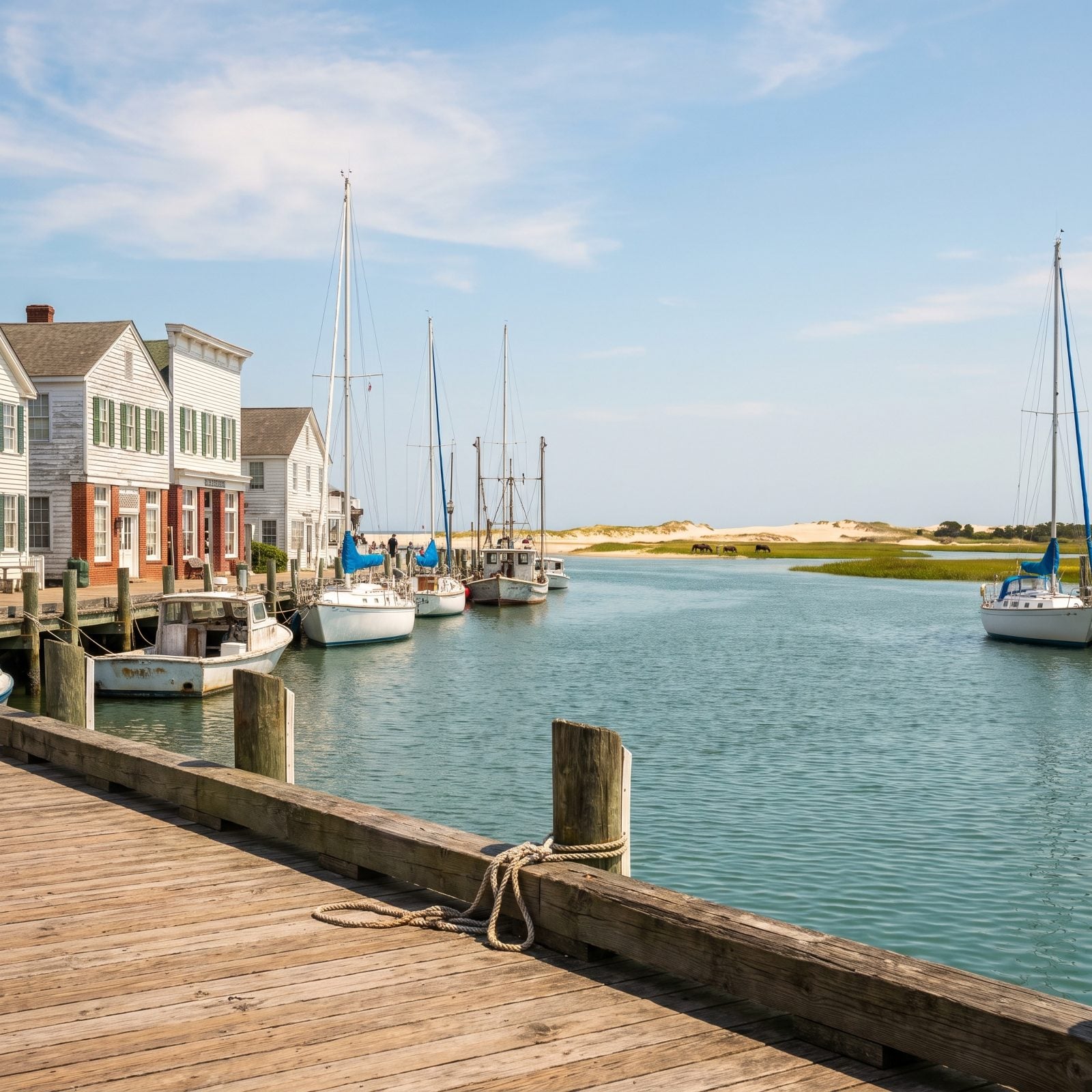
Start on the boardwalk in downtown Beaufort, where the historic waterfront keeps its galleries, boat tours and restaurants close enough to walk between in flip-flops. Duck into the North Carolina Maritime Museum first. It holds actual artifacts hauled up from Blackbeard’s flagship, the Queen Anne’s Revenge, which sank off this coast. You’re looking at the real thing, not some fiberglass stand-in, and that distinction hits harder than you’d expect.
Then catch a ferry from Beaufort or Harkers Island out to Shackleford Banks. Wild horses, open shelling beaches, no development. Prefer the horses without committing to the full boat trip? The Rachel Carson Reserve sits right off town with a small herd of its own, which makes a tidy afternoon add-on.
3. Ocracoke Island: Reached Only by Ferry, Which Is Half the Point
You don’t drive to Ocracoke so much as earn it. The free Hatteras to Ocracoke vehicle ferry drops you at the island’s north end. Want to leave the car behind? The seasonal Ocracoke Express passenger ferry runs straight from Hatteras into Silver Lake Harbor, a crossing of about 70 minutes, and children 3 and under ride free.
Schedules narrow outside peak season and service shifts around with the calendar, so check before you go. Nobody enjoys learning that at the dock.
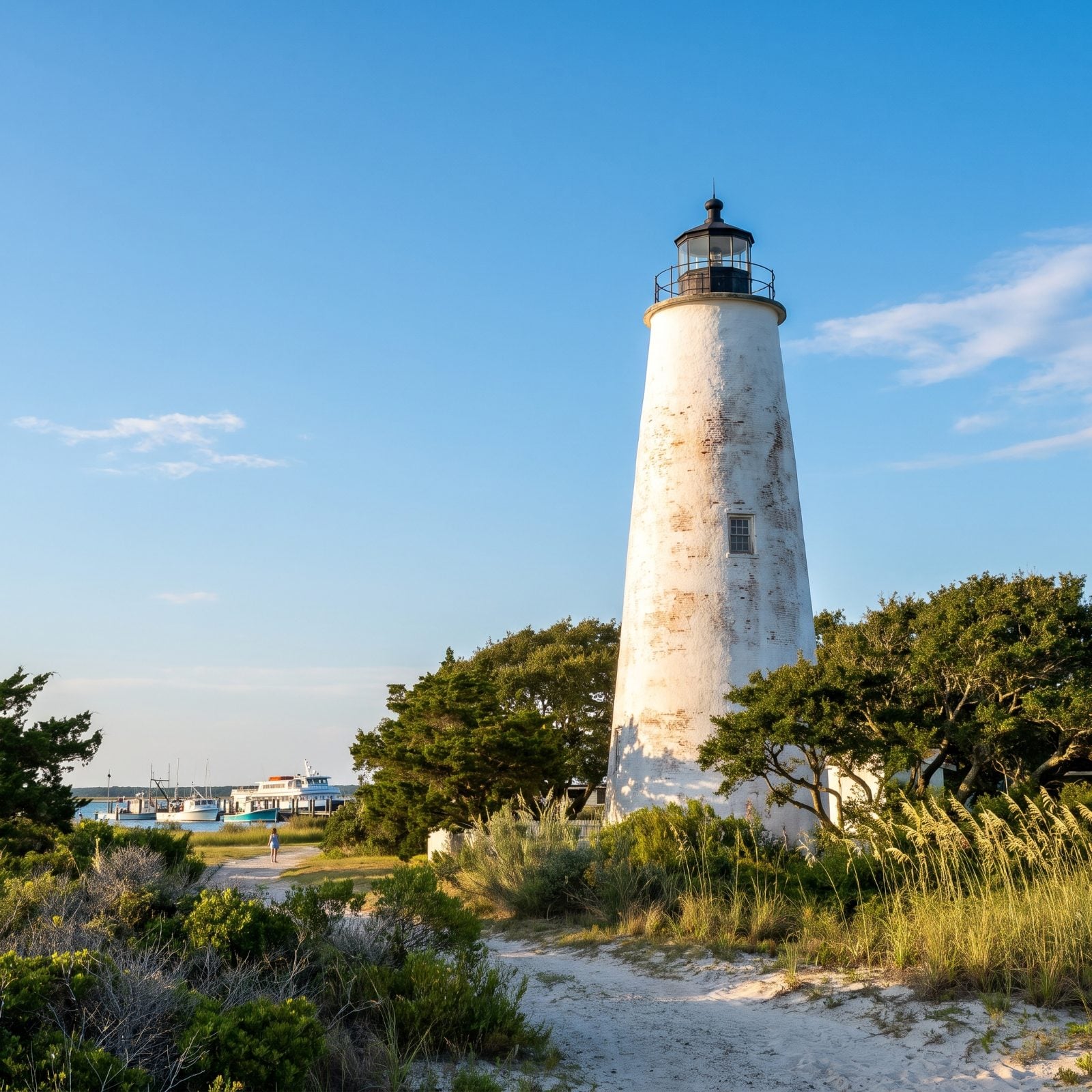
Once you’re on the island, go see the Ocracoke Lighthouse. Built in 1823, 75 feet tall, it’s North Carolina’s oldest operating lighthouse. You can’t climb it. But the grounds stay open all the time, and standing at its base at golden hour is reason enough to make the trip over.
2. Bald Head Island: Leave the Car in Southport, Grab a Golf Cart
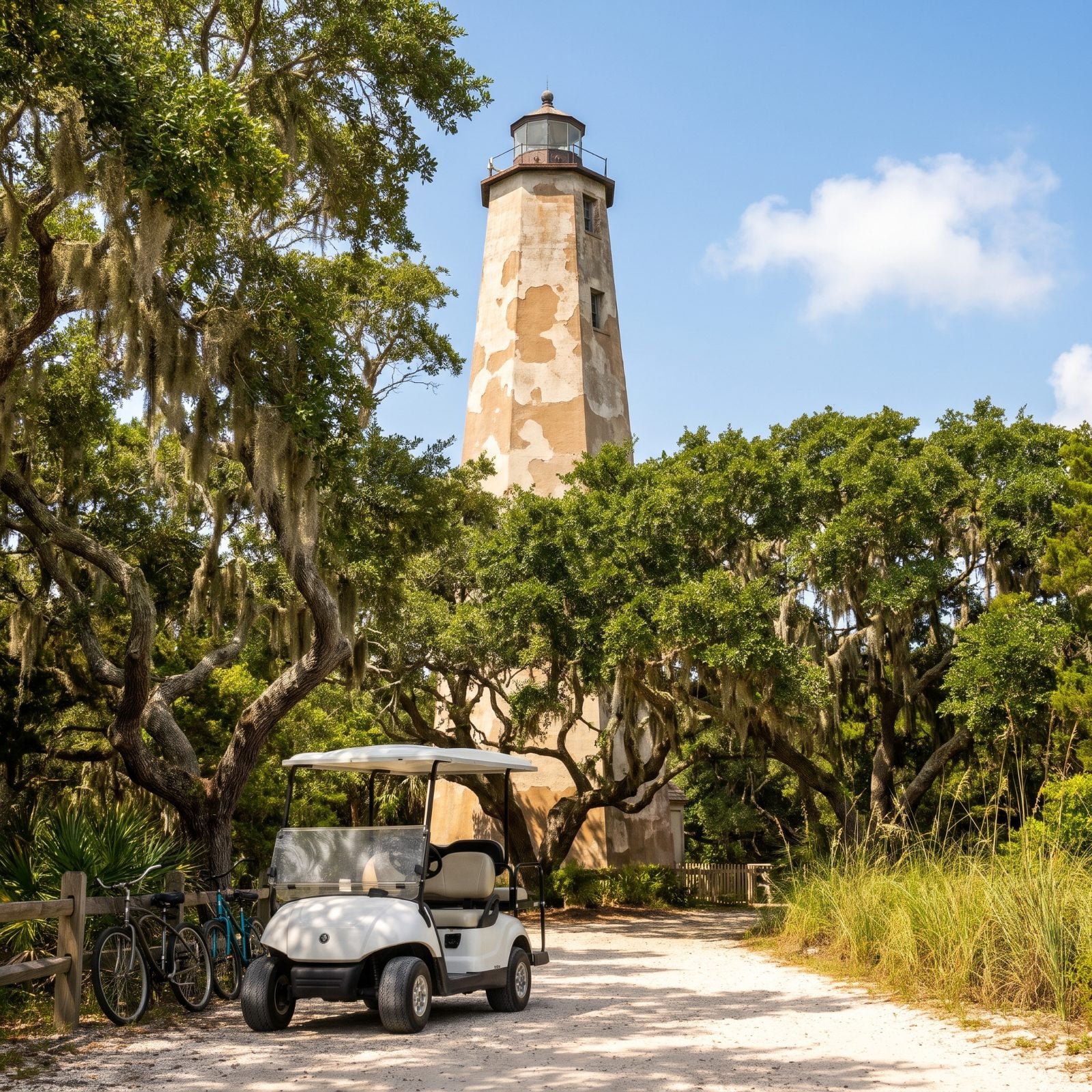
No cars. That’s the whole ethos of Bald Head Island, and it changes how a day feels within about five minutes of arriving.
You park in Southport and take the passenger ferry from Deep Point Marina, roughly 20 minutes across the water. From there it’s golf carts, bikes and your own two feet. The quiet sneaks up on you — no engines, no honking, just cart tires on sandy lanes and wind working through the live oaks.
Old Baldy, the historic lighthouse, anchors the island, with protected coastal habitat spreading out around it. The ferry is passenger-only, so pack light and leave the cooler in the trunk back in Southport.
One honest note: fares online go stale fast. Check baldheadislandferry.com for current ferry prices before you build your whole morning around an outdated number.
1. Kure Beach and Fort Fisher: Sharks, Civil War Earthworks and Empty Sand
Three different moods on a single stretch of road. The North Carolina Aquarium at Fort Fisher runs a saltwater tank big enough that you can stand nose-to-glass with sharks before lunch.
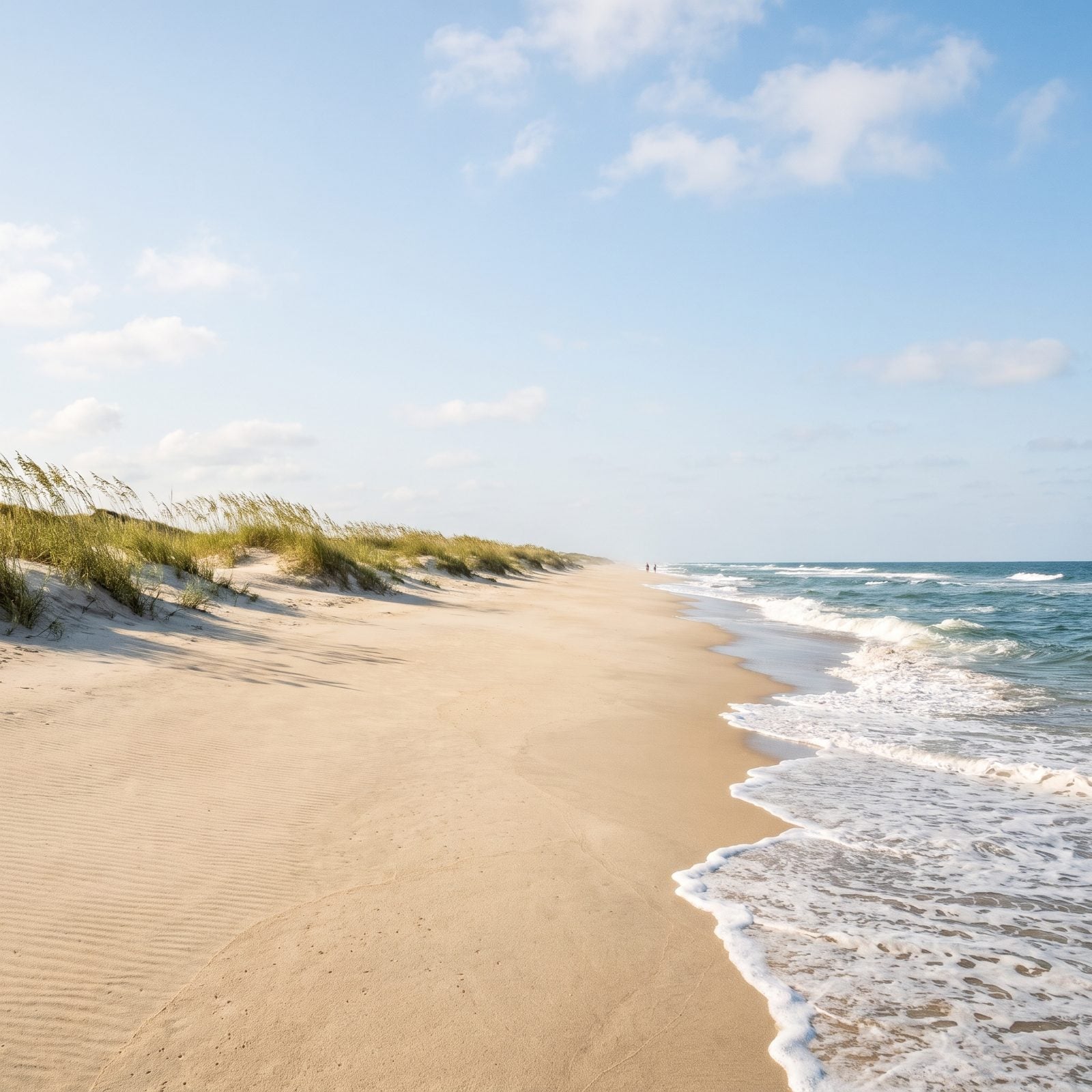
Then walk the Civil War earthworks at Fort Fisher State Historic Site before heading out to Fort Fisher State Recreation Area, where miles of undeveloped beach wait. No boardwalk shops, no high-rises, just sand and surf the way the coast used to look. There’s a lifeguarded beach and picnic grounds too, in case you’d rather not hike for your swim.
Traveling with younger kids? Point the car at Kure Beach’s Ocean Front Park instead. The pirate-ship playground and pavilion give the little ones somewhere to burn off the car ride while you sit in the shade and catch your breath.
Please note that some of the imagery in this article were created with the aid of AI image generators.