
The ground remembers what the textbooks skim past. Picture a horseshoe bend of the Deep River where a house still wears its bullet holes, or a patch of Johnston County where the largest Civil War battle in the state played out over three days in March 1865. North Carolina is thick with these places, and most of them are free, quiet, and nowhere near as crowded as they deserve to be. We pulled together the battlefields, forts, and freedom memorials that reward a slow, respectful visit, with the real hours, the real context, and the stops you’d regret skipping.
20. Guilford Courthouse National Military Park, Greensboro
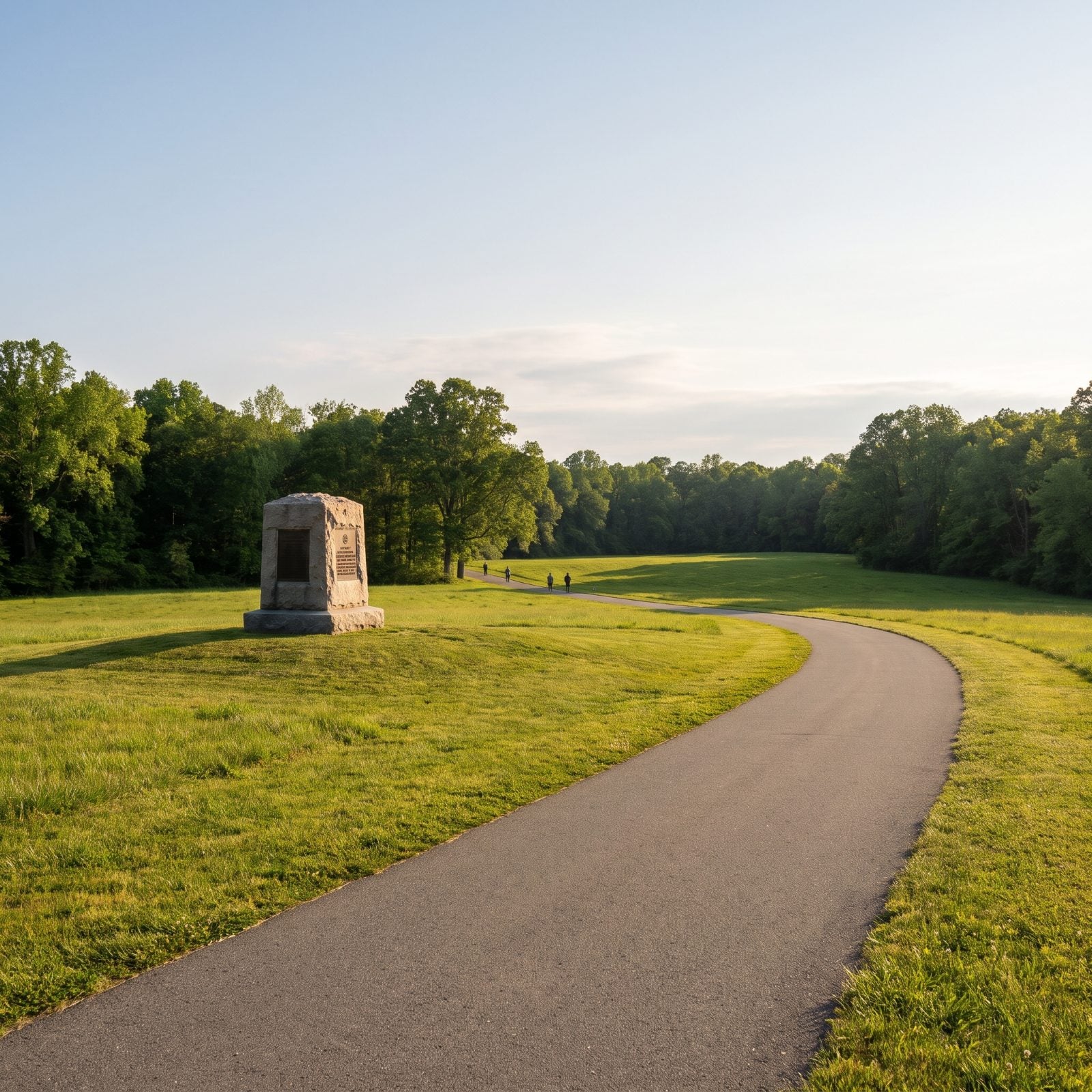
The Americans technically lost this fight on March 15, 1781. They also wrecked Cornwallis so thoroughly that he limped toward Virginia and, eventually, Yorktown. A loss that won the war. That’s the strange math of Guilford Courthouse.
The battlefield tour road makes eight stops, and you can drive it or bike it. Cars get the grounds daily 8:30 a.m. to 5 p.m., while walkers and cyclists have it from dawn to dusk. The visitor center and its museum run Wednesday through Sunday, 9 to 5, and entry costs nothing.
Give it two hours minimum. Give it five if you actually want to walk Hoskins Farm and read every marker, which I’d argue is the whole reason you drove out here.
19. Moores Creek National Battlefield, Currie
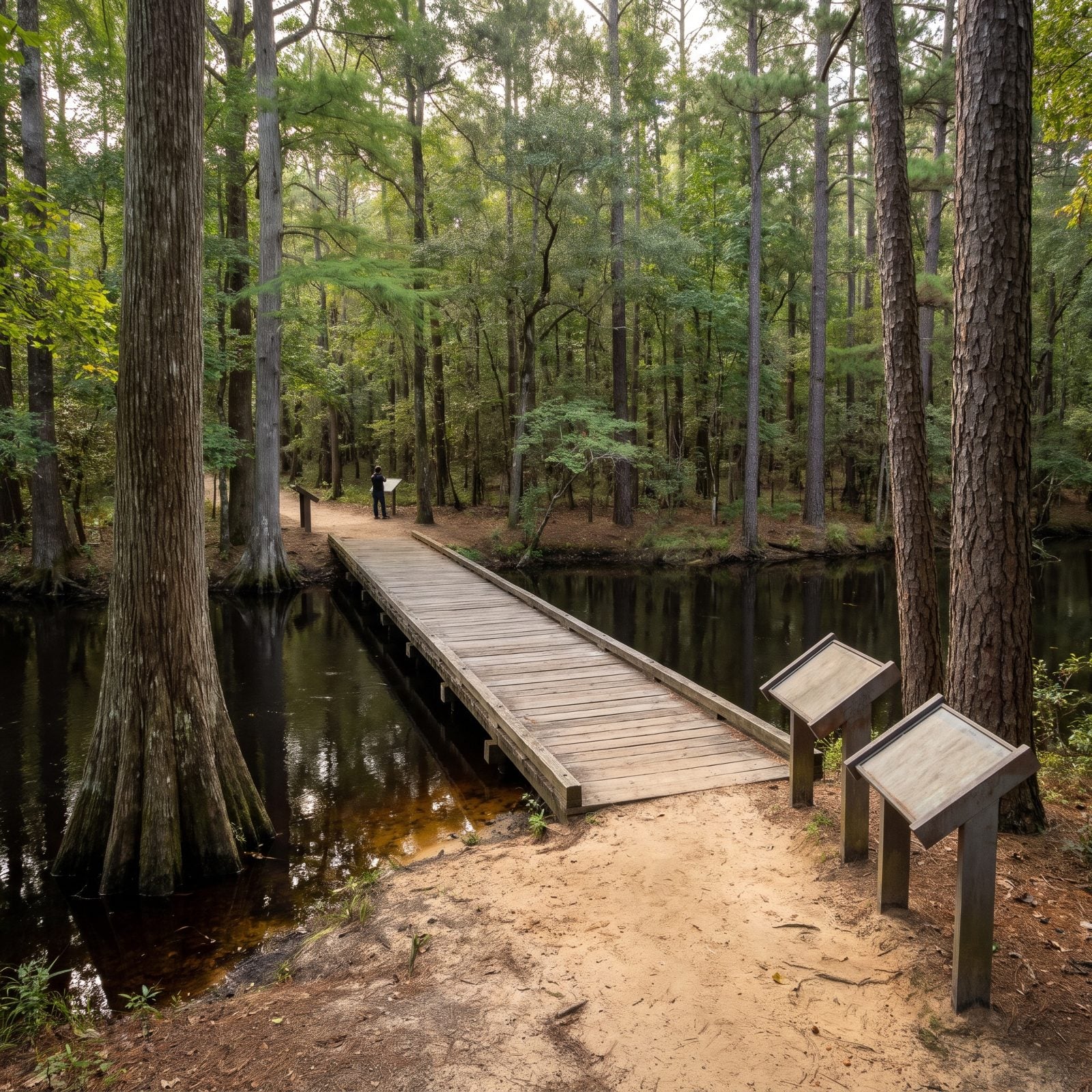
The whole thing lasted minutes. On February 27, 1776, Patriots held the bridge over Moores Creek and ended royal authority in North Carolina for years to come. One of the shortest decisive fights you’ll ever read about.
The visitor center runs Tuesday through Saturday, 9 to 5, closed on federal holidays. Start with the 10-minute film, “In the Most Furious Manner,” then walk the grounds and let the small museum fill in the rest.
It’s an easy half-day pairing with Wilmington, 20 miles south. Don’t rush it just because the battle was fast.
18. Bentonville Battlefield State Historic Site, Four Oaks
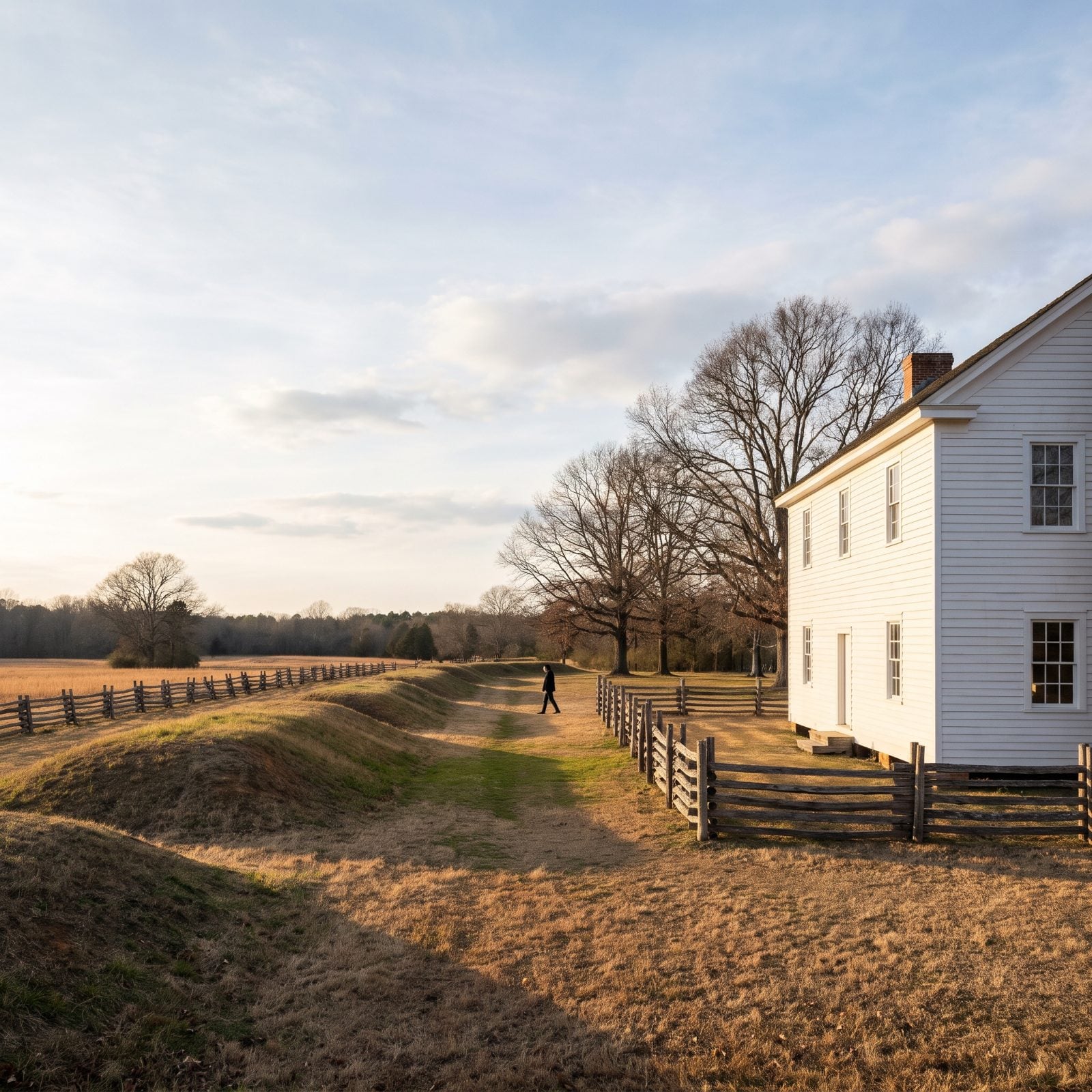
This was the biggest Civil War battle fought in North Carolina, three days of it, March 19 through 21, 1865, and the last real Confederate swing at Sherman’s march north. The Harper House still stands, pressed into service as a field hospital during the fighting.
The site at 5466 Harper House Rd sits open Tuesday through Saturday, 9 to 5, and closes Sunday, Monday, and state holidays. Guided Harper House tours leave the visitor center at 10 a.m., noon, 2, and 4, though those times shift around, so call ahead.
What Our Readers Say
- In Journey Junket readers’ heart votes, photos showing a landmark or town got hearts 83% of the time, compared with 76% for the other images in the same articles.
- When our readers loved a travel photo and told us why, the top reason was that it felt nostalgic, followed by having been there themselves.
From Journey Junket reader polls and votes.
17. Fort Fisher State Historic Site, Kure Beach
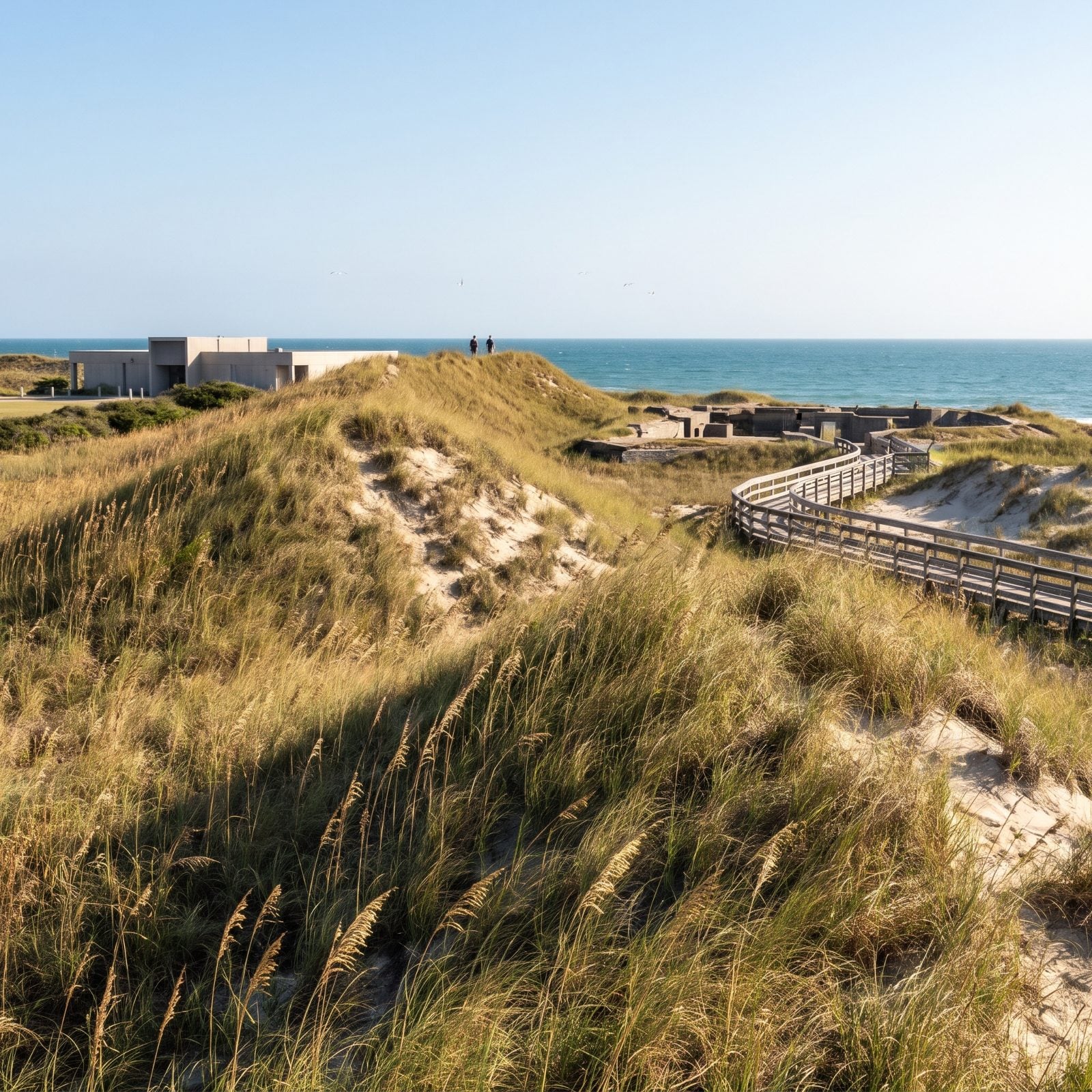
They called it the “Gibraltar of the South,” and for most of the Civil War it earned the name, guarding the last open port supplying the Confederacy at Wilmington. Then US forces took it in January 1865 and the back door slammed shut.
A new visitor center opened in October 2024, which is reason enough to go if you remember the old cramped one. Hours are Tuesday through Saturday, 9 to 5, and both admission and parking are free.
Named a National Historic Landmark in 1961. Walk the earthworks with the ocean at your back and the scale of the thing lands.
16. Wright Brothers National Memorial, Kill Devil Hills
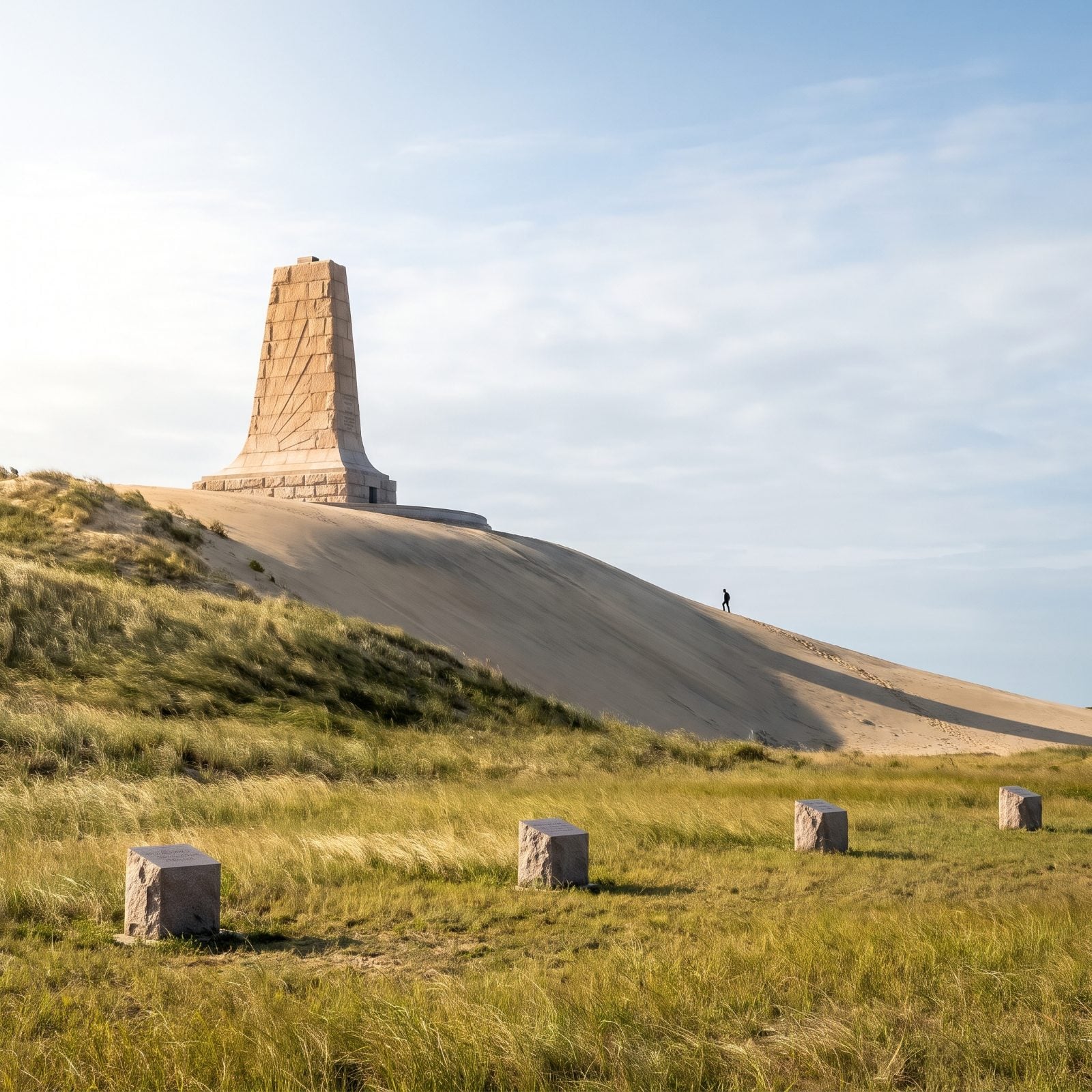
Twelve seconds. Hundred and twenty feet. That’s the first flight, December 17, 1903, and the stone markers in the field still show you exactly how far each of the four attempts carried. You can walk the distances yourself. Most people underestimate how short that first one was until they’re standing on the spot, looking back at where the Flyer touched down.
The 60-foot monument shaped like an airplane tail sits at milepost 7.5 on US 158, 1000 N Croatan Hwy. Hours are 9 to 5. Adults pay $10, good for seven days, and kids 15 and under get in free. The reproduction of the 1903 Flyer in the exhibit hall is worth lingering over.
15. Alamance Battleground State Historic Site, Burlington
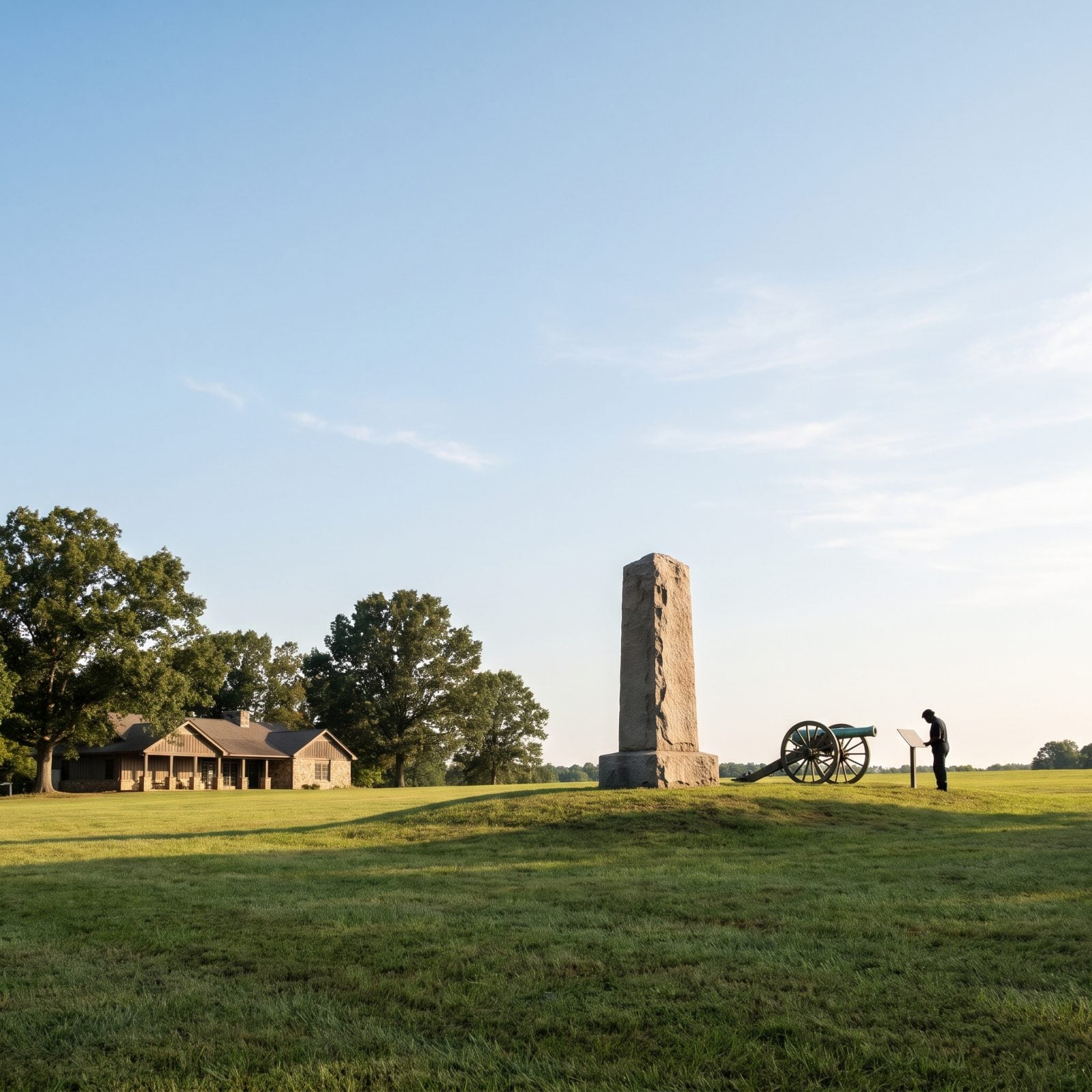
Before Lexington, before Concord, there was Alamance. On May 16, 1771, Royal Governor William Tryon’s militia crushed a backcountry protest movement called the Regulators here. Some historians call it the opening salvo of the Revolution. Others argue that’s a stretch. Go decide for yourself.
The site runs 44 acres. Inside the visitor center you’ll find exhibits, films, and artifacts dug from the ground itself, including a powder horn a soldier carried into the fight. Out on the grounds sit a 3-pounder cannon and granite monuments.
It’s one of the lesser-visited sites on this list, which is exactly its charm.
14. Bennett Place State Historic Site, Durham
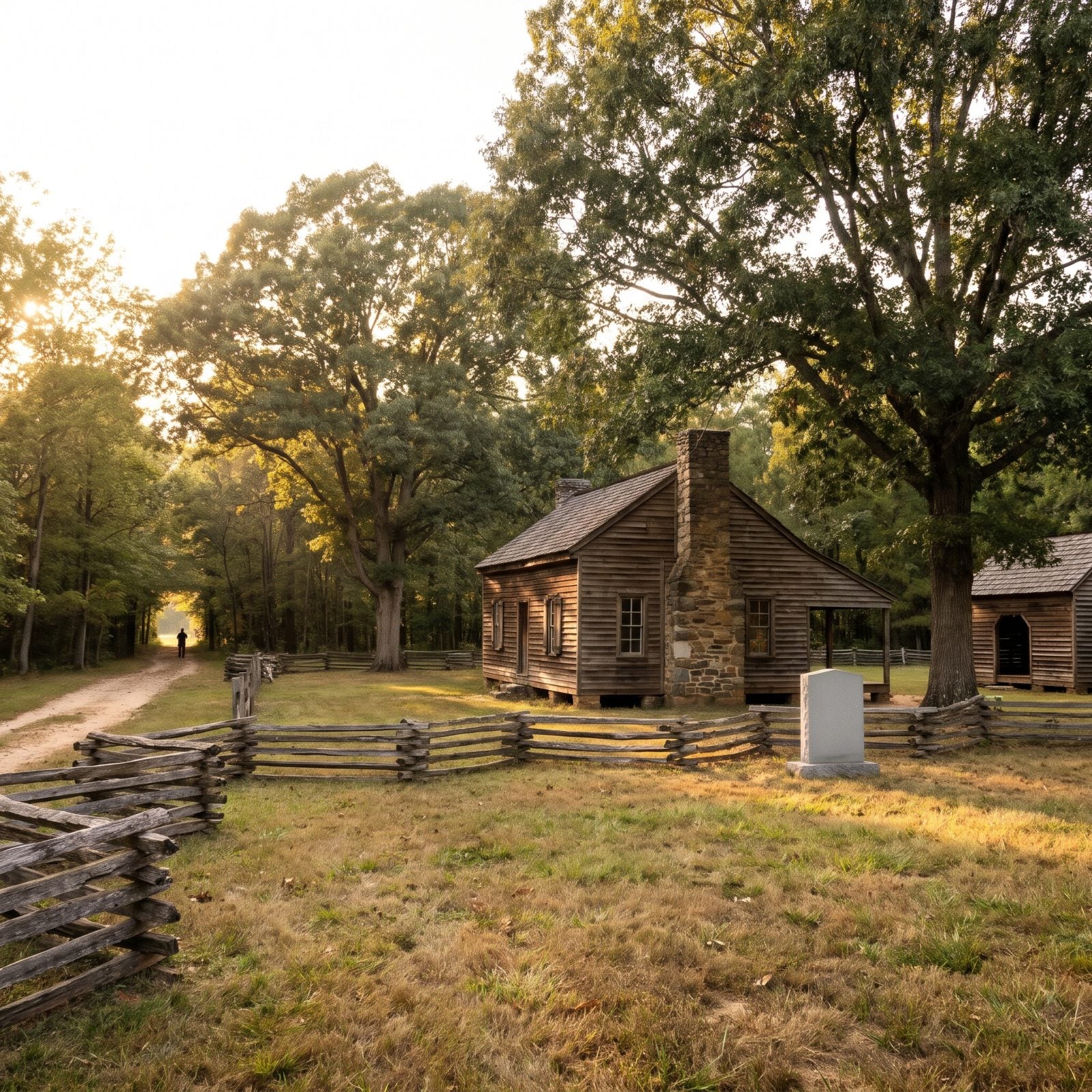
Appomattox gets the headlines. This modest Durham farmhouse saw the bigger surrender. In April 1865, Confederate Gen. Joseph E. Johnston gave up to Gen. William T. Sherman right here, and the terms covered the armies in the Carolinas, Georgia, and Florida. The largest troop surrender of the war, and almost nobody talks about it.
The address is 4409 Bennett Memorial Road. The visitor center and nature trails are free; guided tours cost a small fee. Reconstructed 1960s buildings, rebuilt from wartime sketches and photographs after a 1921 fire, sit on the grounds, and living-history events run through the year, including an anniversary commemoration each April.
An ordinary farm family lent its home to history, then watched four years of war end on its front steps.
13. Fort Macon State Park, Atlantic Beach
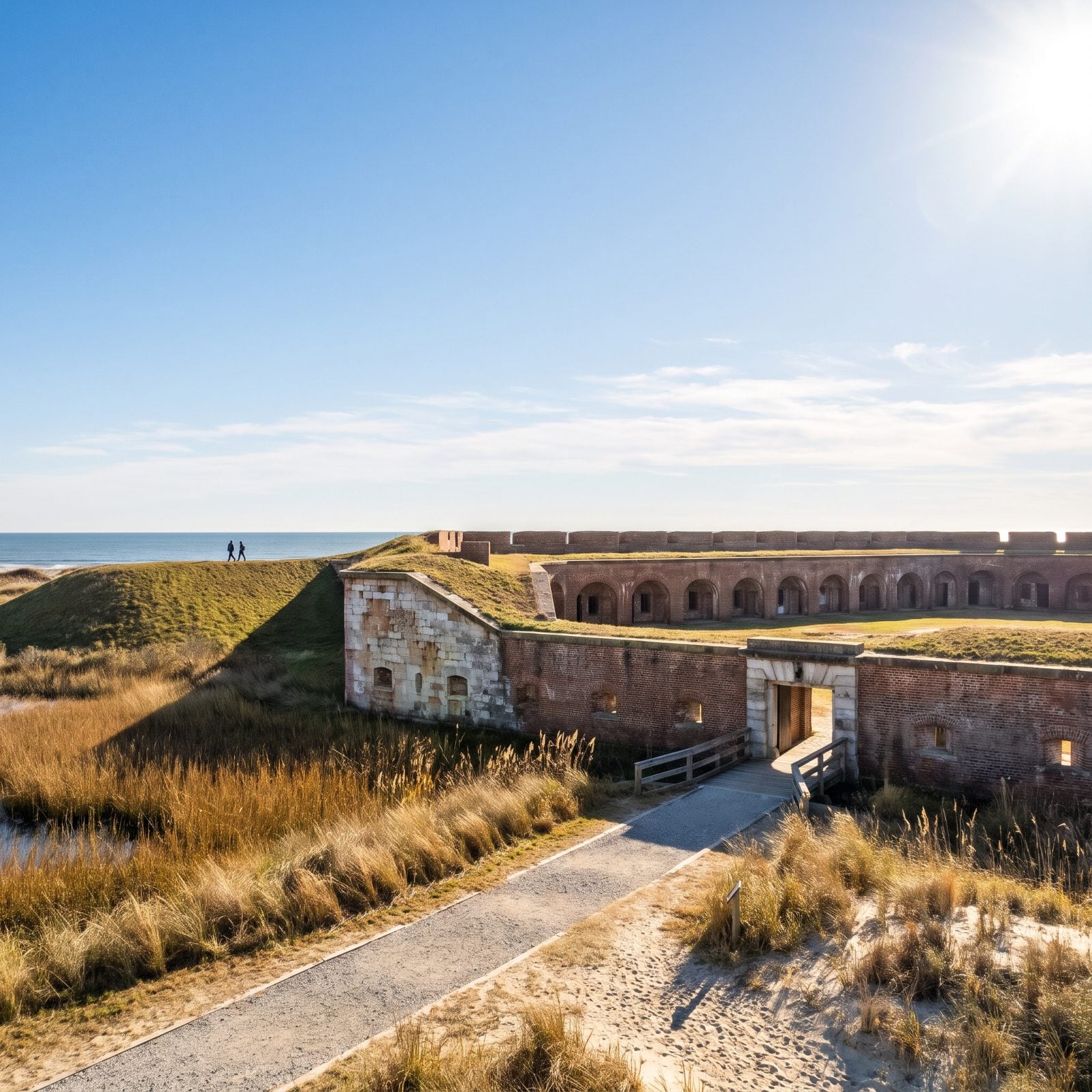
You get two parks in one here. A restored pre-Civil War brick fort with daily guided tours and regular cannon and musket demonstrations, plus a swimming beach and trails threading salt marsh and dunes. Families split up well: history for some, sand for others.
The fort opens daily 9 to 5, and the park closes only on Christmas Day. It sits in Carteret County, 39 miles southeast of New Bern, so pair it with a coast trip.
12. Battleship North Carolina, Wilmington
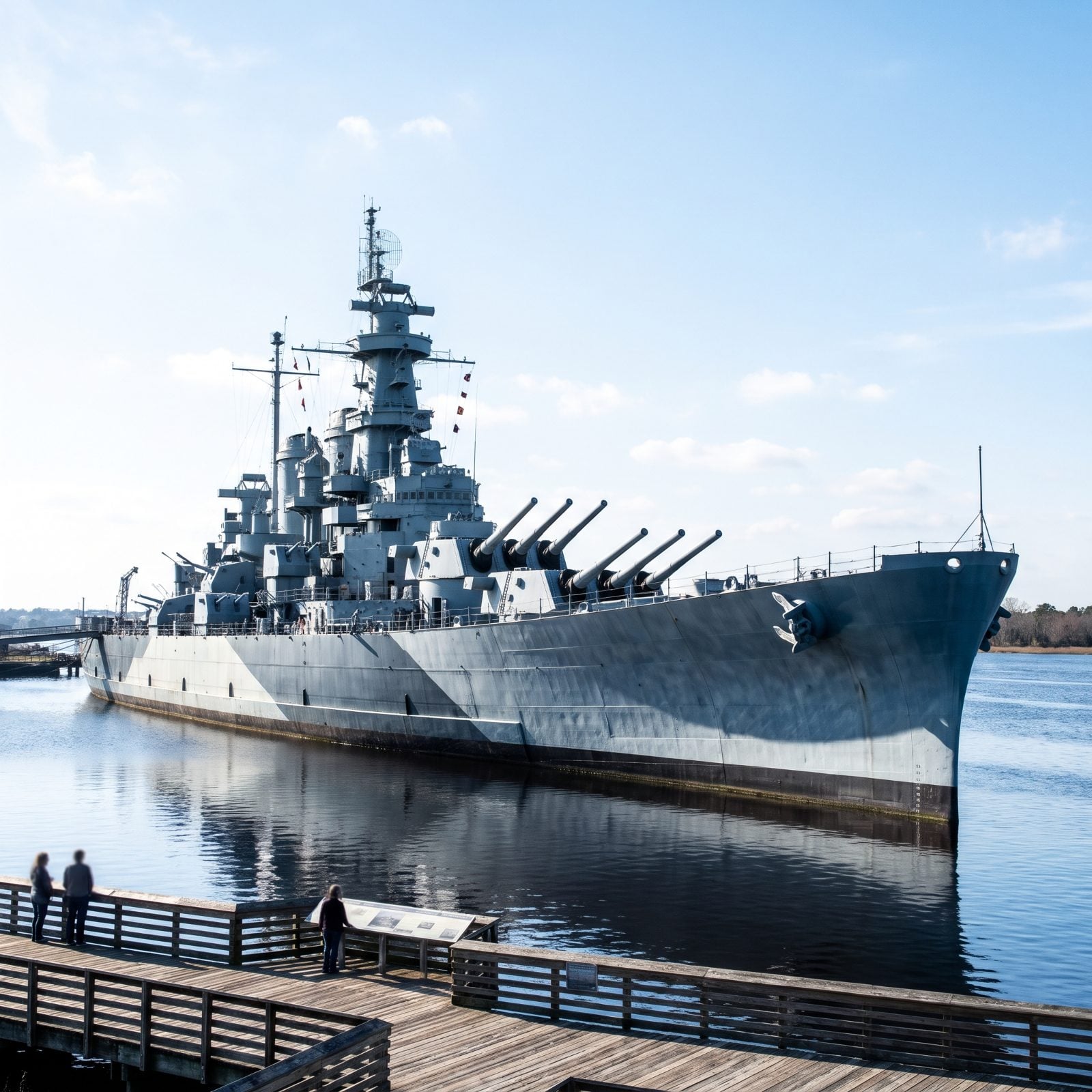
Commissioned in 1941, and it never retired, exactly. The ship is now the state’s official World War II memorial, docked permanently in Wilmington to honor the “Immortal 11,000” North Carolinians lost in the war.
Open daily 8 to 5, holidays included, rain or shine. Admission covers a self-guided tour across nine levels of the ship. Plan at least two hours, and wear shoes you can climb ladders in. A Memorial Day ceremony runs every year.
I’ll admit I went in expecting a half-hour walkthrough and spent most of an afternoon down in the engineering spaces. Nine levels is not a figure of speech.
11. New Bern Battlefield Park, New Bern
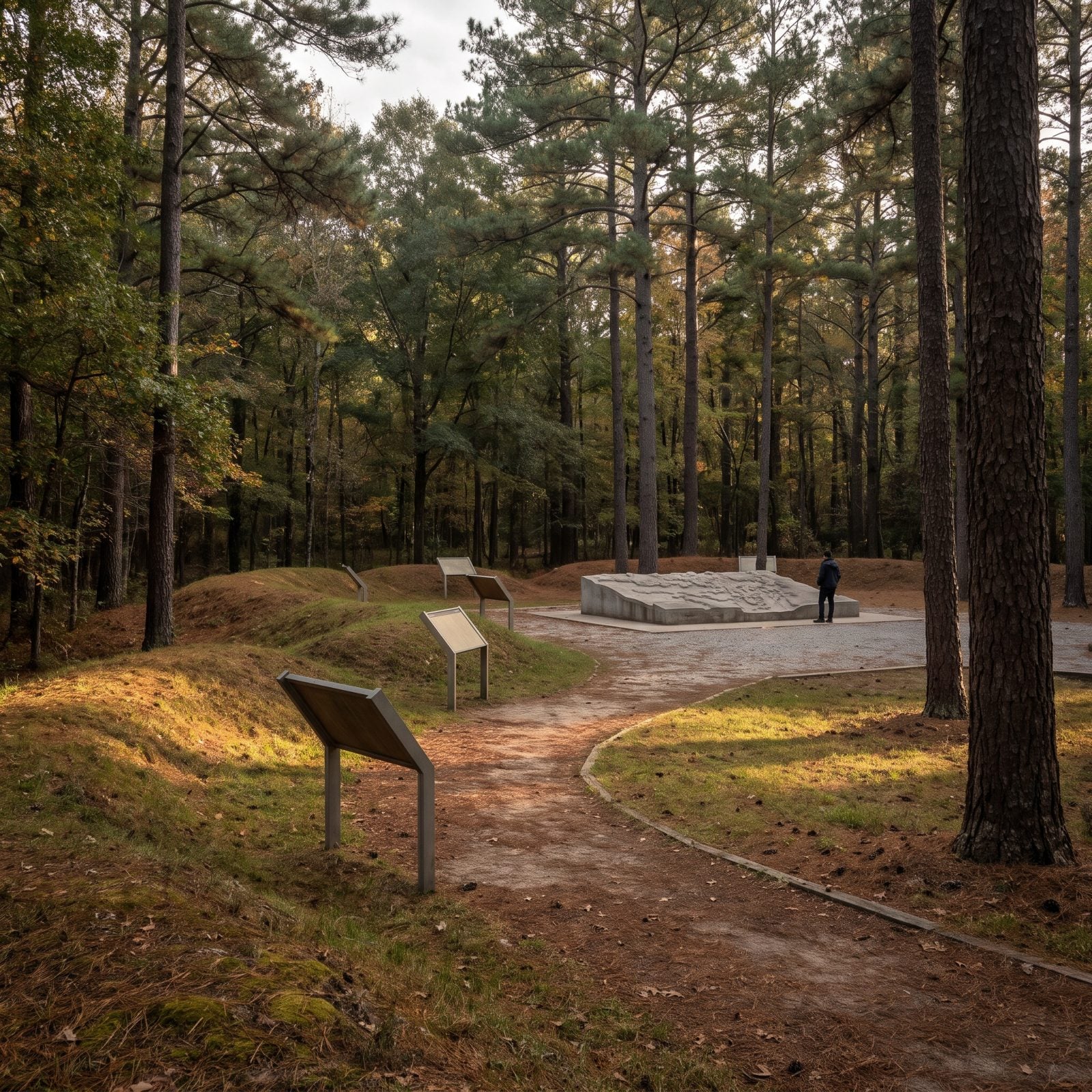
The First Battle of New Bern, March 14, 1862, pitted a Confederate force against a much larger Union one. The numbers tell you how it went. The park preserves the ground and the earthworks either way.
Open during daylight hours all year. Reach it via Taberna Way off US 70 East, then Battlefield Trail. Walk the one-mile loop with the brochure, read the interpretive panels, and stand over a concrete battle map laid out large enough to read on your feet. An audio tour app came online in 2021.
It’s part of North Carolina’s Civil War Trail, which links Bentonville, Kinston, Fort Macon, and Fort Fisher. Treat it as one stop in a longer thread rather than a destination of its own.
10. Brunswick Town/Fort Anderson, Where a Burned Port and a Civil War Fort Share the Same Ground
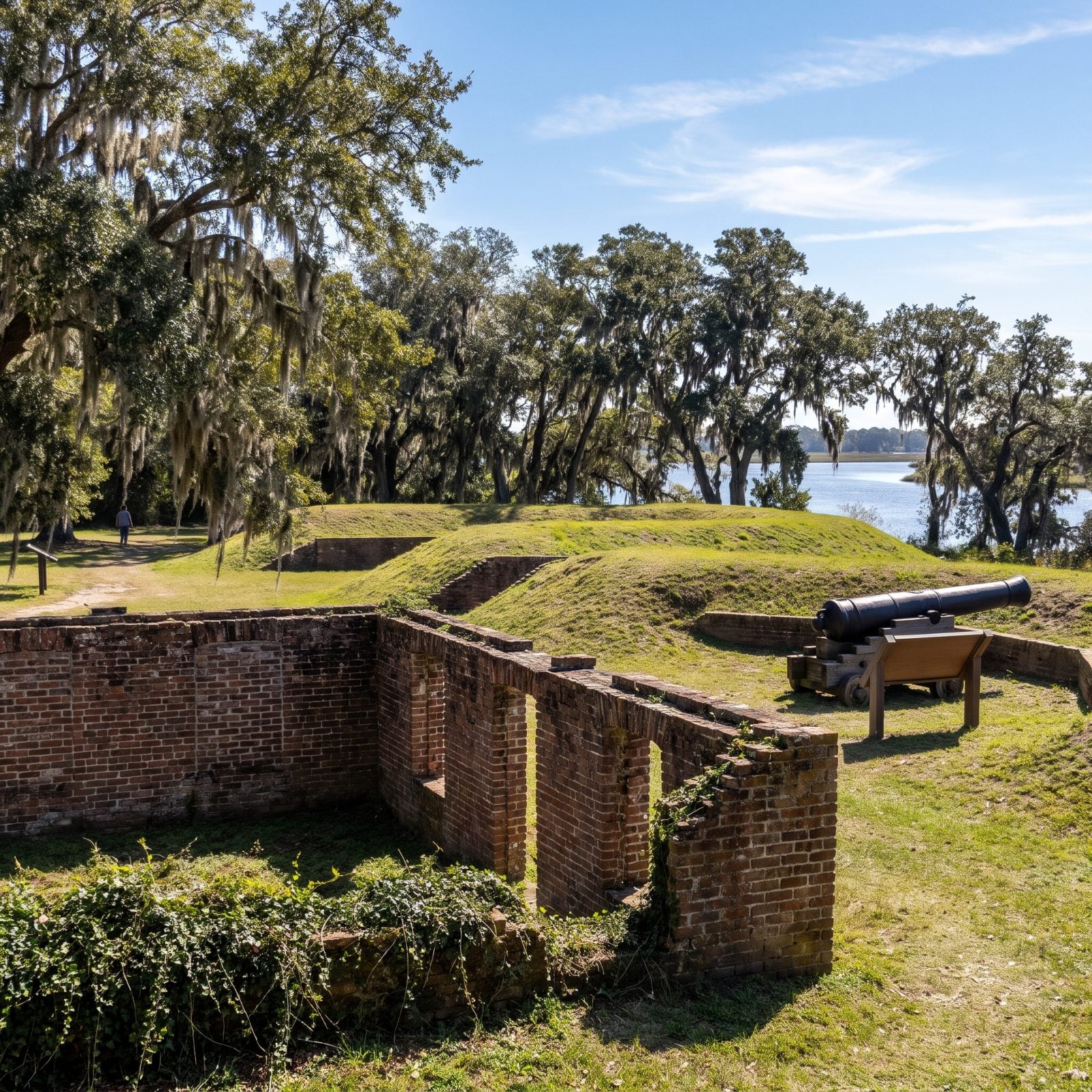
Two wars stacked on one riverbank. The British burned the colonial port of Brunswick in 1776, and decades later Confederate soldiers heaped Fort Anderson’s earthworks right on top of the old town’s foundations. Walk it and you’re stepping over 1776 to reach 1865.
You’ll find it south of Wilmington at 8884 St. Phillips Rd SE. The renovated visitor center has a recreated bombproof shelter and exhibits on torpedo warfare, which is a stranger phrase than you’d expect for the era. The roofless ruins of St. Philips Anglican Church still stand, and they fire a working 32-pounder cannon for demonstrations.
Usually open Tuesday through Saturday, 9 a.m. to 5 p.m. Confirm before you drive out.
9. North Carolina Veterans Park in Fayetteville, the First State Park Built for Every Branch
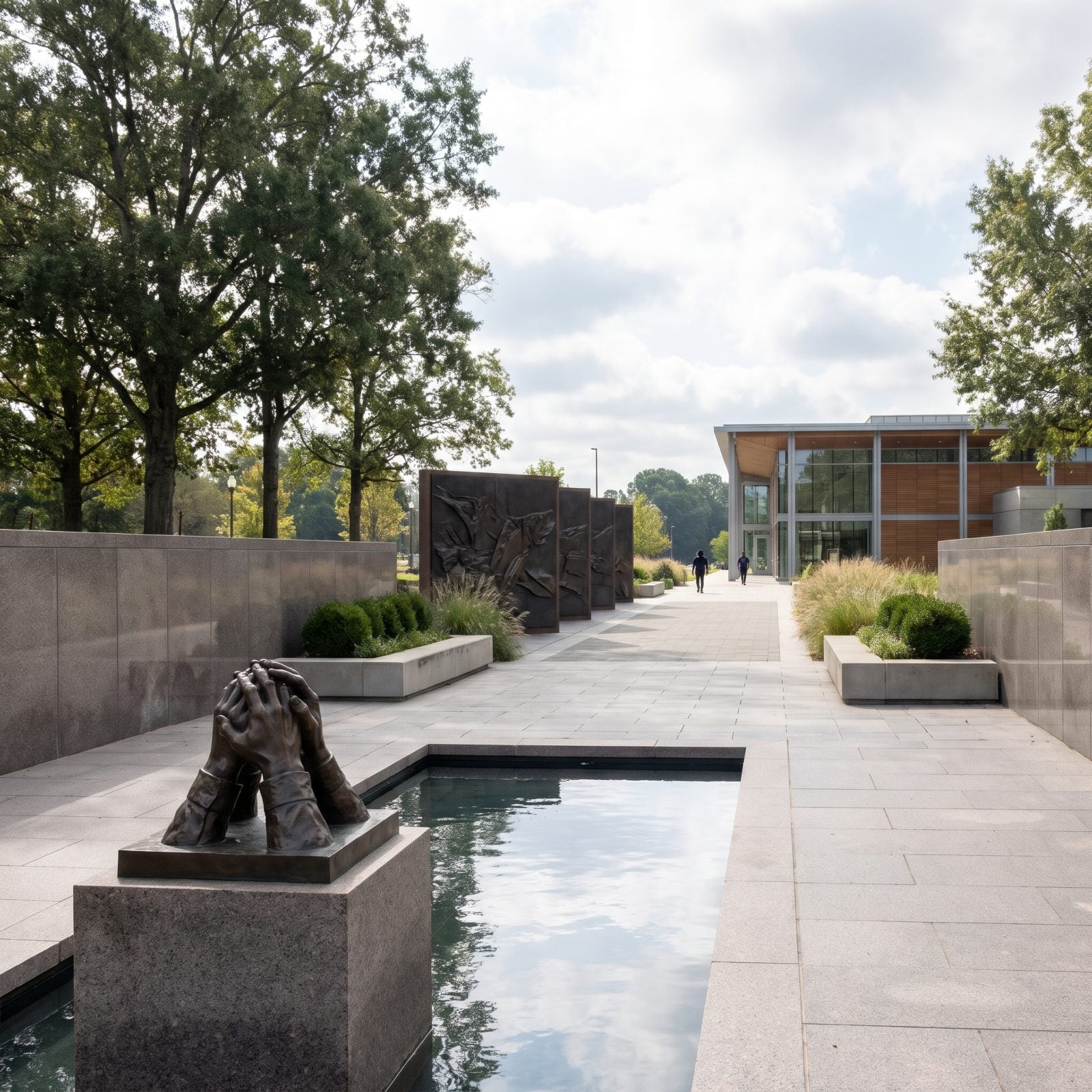
Fayetteville sits next to Fort Bragg, so a veterans park here isn’t a surprise. The scale of it is. This was the first state park in North Carolina dedicated to veterans of every branch — not one war, not one service.
Symbolic features honor veterans from all 100 North Carolina counties, which means most visitors find their own place represented somewhere in the stone. The address is 300 Bragg Boulevard, right downtown. Volunteers staff a visitor center with small exhibits, and the park reads best slow, on foot, reading as you go.
Every branch, every county. That was the whole idea, and the design keeps the promise.
8. The House in the Horseshoe, a 1772 Farmhouse Still Wearing Its Bullet Holes
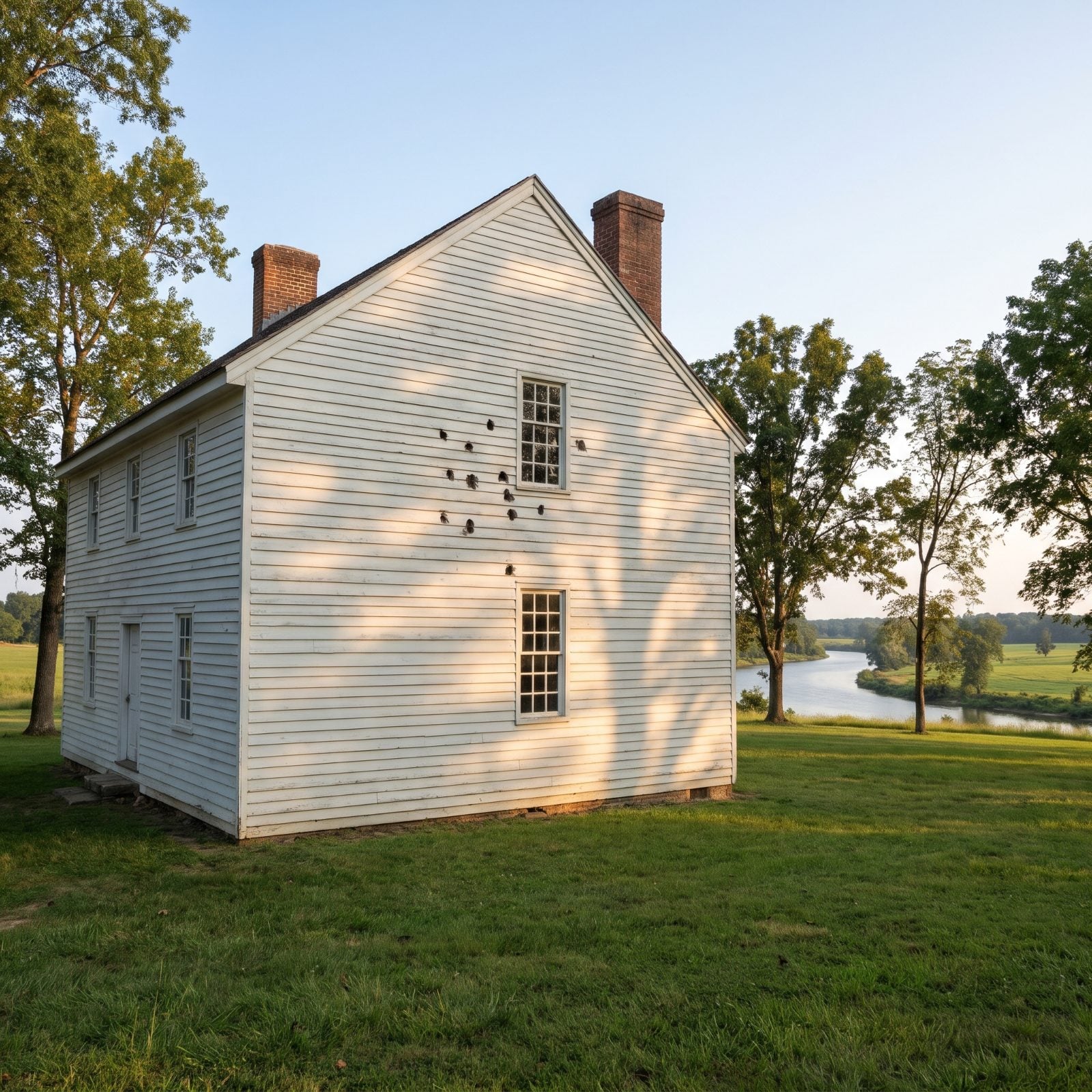
The bullet holes are the whole point. You can stand in the yard of the Alston House, reach up, and put your finger near marks left by a 1781 Revolutionary War skirmish — still showing on the exterior siding after all this time.
Built in 1772 on a horseshoe bend of the Deep River, which is where the name comes from, the house sits in Moore County at 288 Alston House Rd., Sanford. It became a state historic site in 1971. Note: the site closed in December 2025 so a new visitor center can be built and the house restored, with reopening expected in early 2027. Check before you go. No glass case here, no reproduction. Just old wood that took fire and kept standing, and that’s rarer than you’d think.
7. Fort Dobbs in Statesville, the State’s Only French and Indian War Battleground
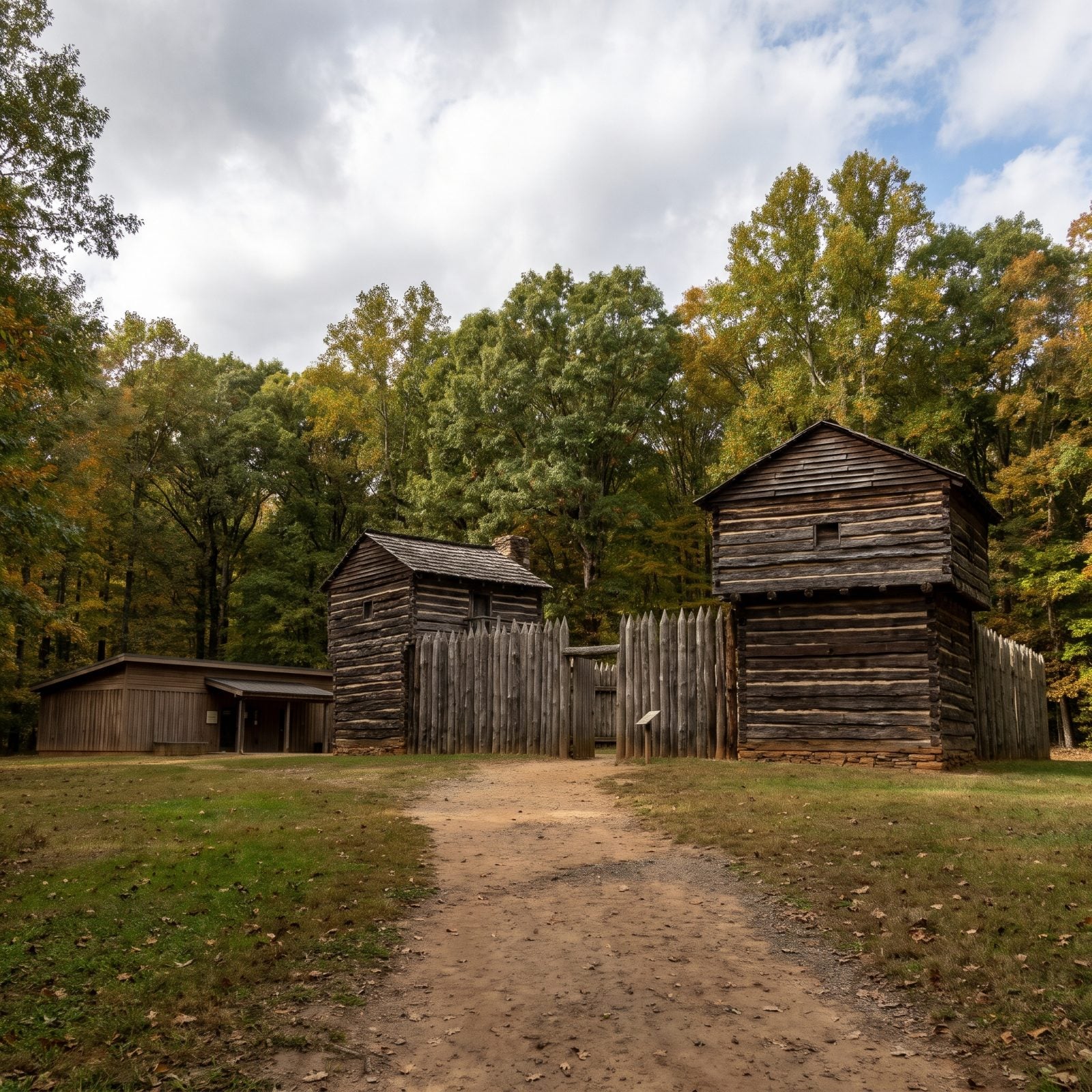
This is the only French and Indian War site the state runs, and the only ground in North Carolina where that war was actually fought, back in 1760. That alone earns Fort Dobbs a stop for anyone who thinks the state’s military story starts with the Revolution.
One update: the site closed briefly in early 2026 to move into a new visitor center, which opened to the public in April 2026. Work on the permanent exhibit is still going on, so check hours before you point the car toward Statesville.
6. Lejeune Memorial Gardens in Jacksonville, Four Memorials on One Quiet Hillside
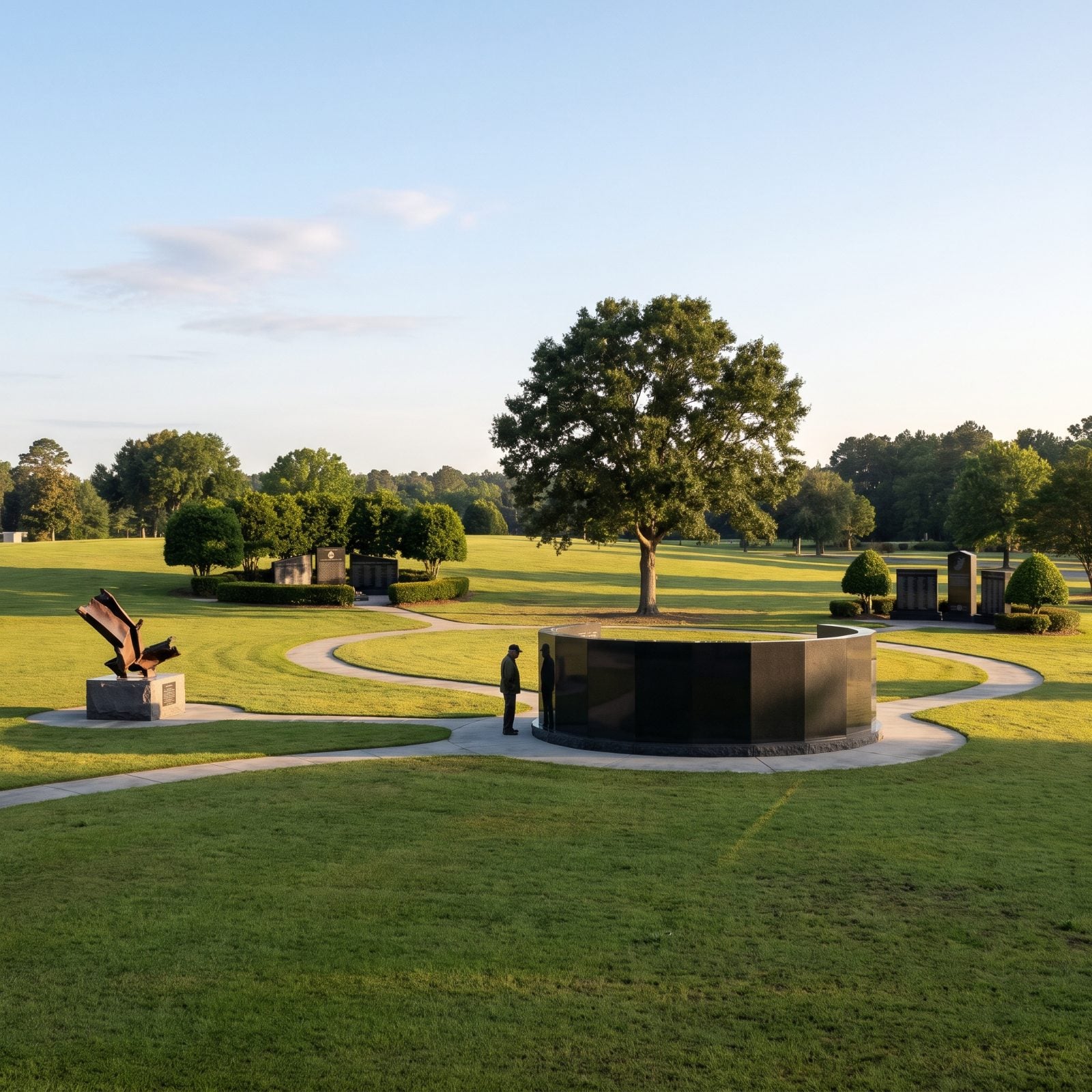
Four memorials, one site, and each one asks something different of you. Lejeune Memorial Gardens gathers the Beirut, 9/11, Vietnam, and Montford Point Marine memorials together at 109 Montford Landing Road.
The Beirut Memorial honors those killed in the 1983 bombing in Lebanon, a loss that still cuts deep in a Marine town like Jacksonville. Free parking sits on Montford Point Road. There’s a public observance every October 23 at 10:30 a.m. — and if the dates line up, that’s when the gardens stop being quiet and fill with people who remember it firsthand.
5. The Ocracoke British Cemetery, Four Royal Navy Sailors a German U-Boat Sent Ashore
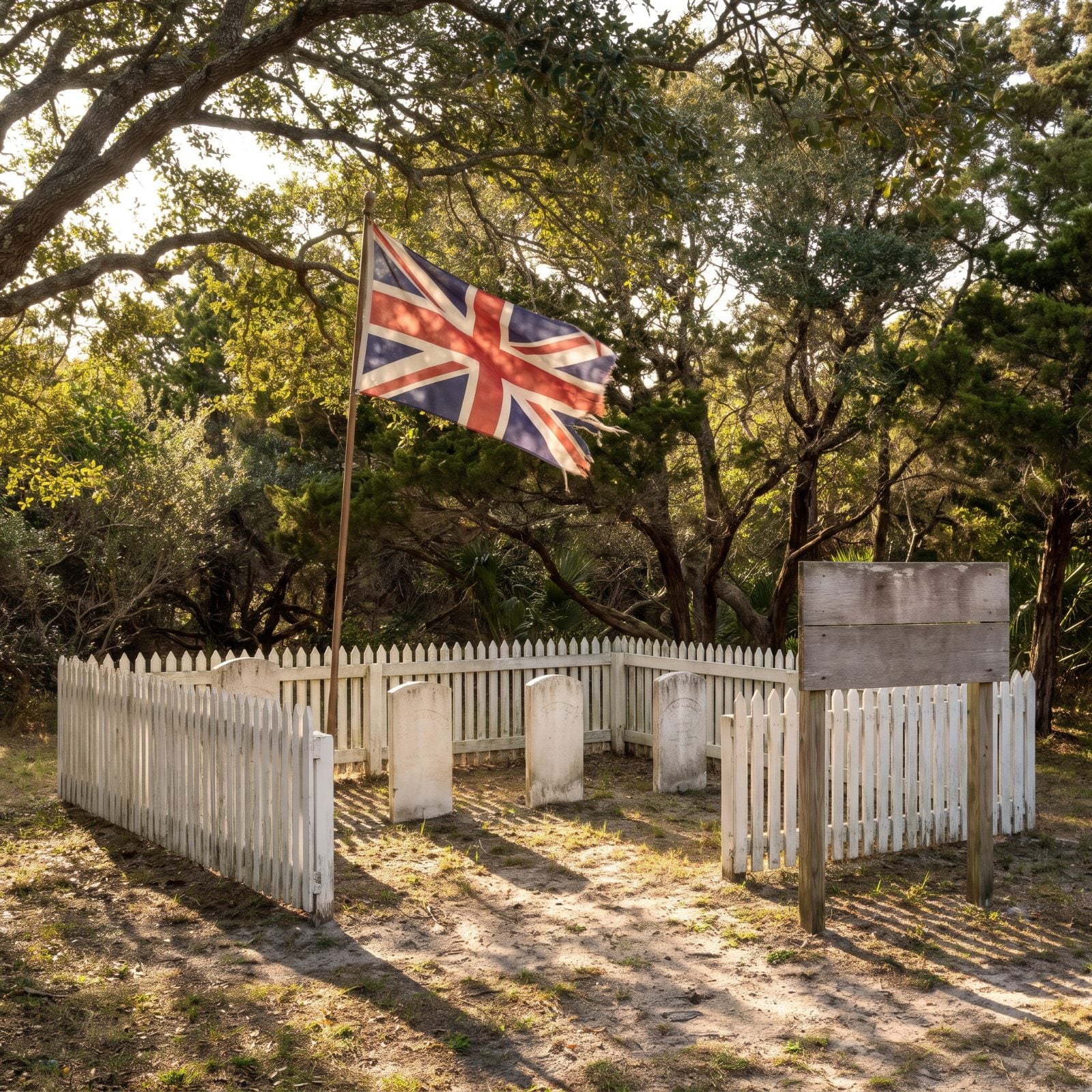
A German U-boat sank the British ship HMT Bedfordshire off this coast on May 11, 1942, and every one of the 37 Royal Navy sailors aboard died. The war came that close to the Outer Banks. Four bodies washed ashore on Ocracoke, and the islanders buried them.
That small act of decency became a lasting bond. Every year the National Park Service, US Coast Guard, and Royal Navy hold a ceremony at the cemetery — British and American hands tending the same four graves. There’s parking and interpretive signage, so you can visit on your own time, any day.
4. The 1898 Memorial Park in Wilmington, the Coup Most History Books Left Out
On November 10, 1898, white citizens overthrew Wilmington’s legally elected biracial government and killed an unknown number of Black residents. For decades it was miscalled a riot. It was a coup — the only one in American history to topple a sitting local government.
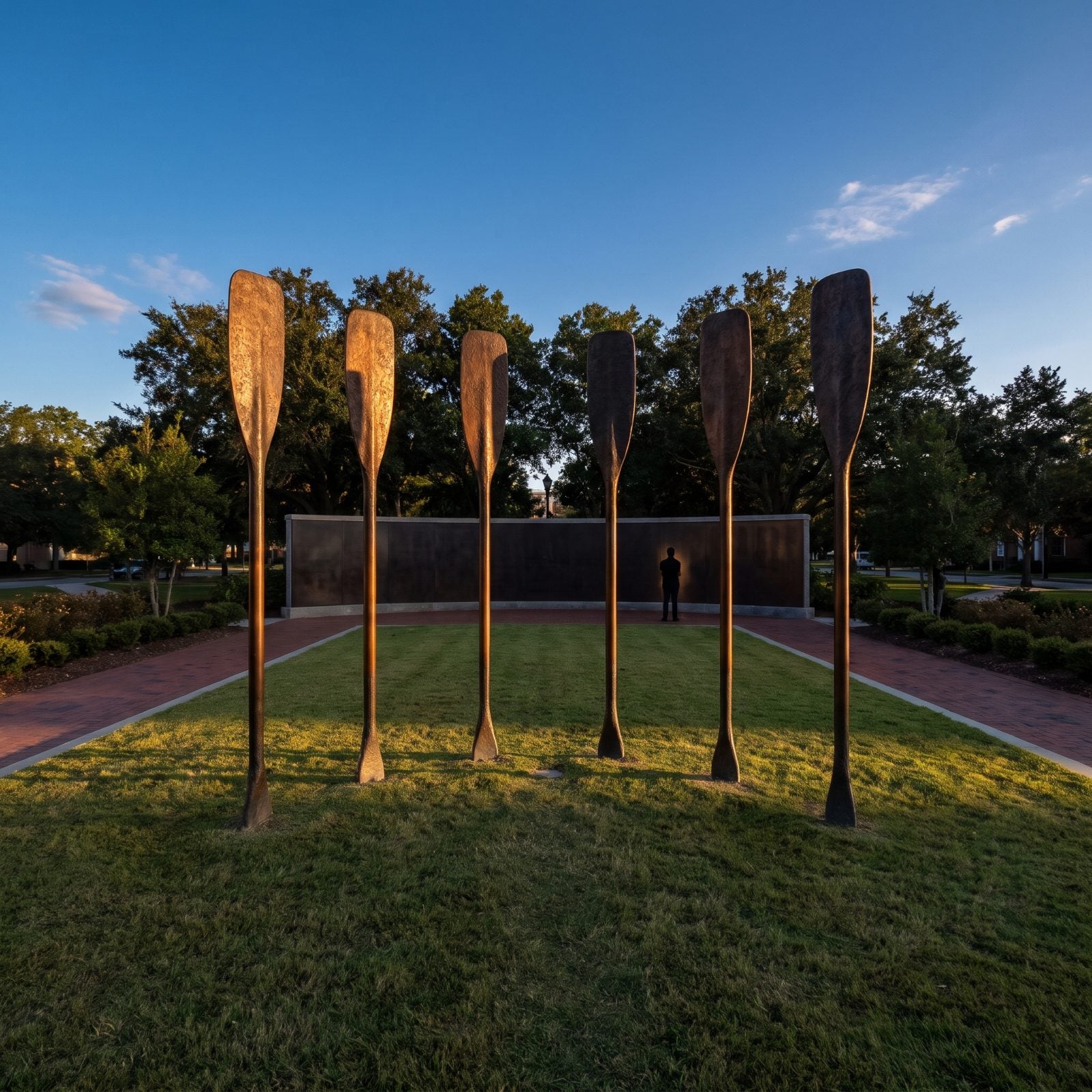
The park names it plainly. Dedicated on November 8, 2008, on N. 3rd St., the monument is an arc of six 16-foot bronze paddles standing before a bronze wall that tells the story. The paddles refer to the role of water in the spiritual belief systems of people from the African continent.
Some memorials celebrate a victory. This one insists you look at a crime the city spent a century not discussing.
3. Ramsour’s Mill Battlefield in Lincolnton, a Dawn Attack You Can Walk Across
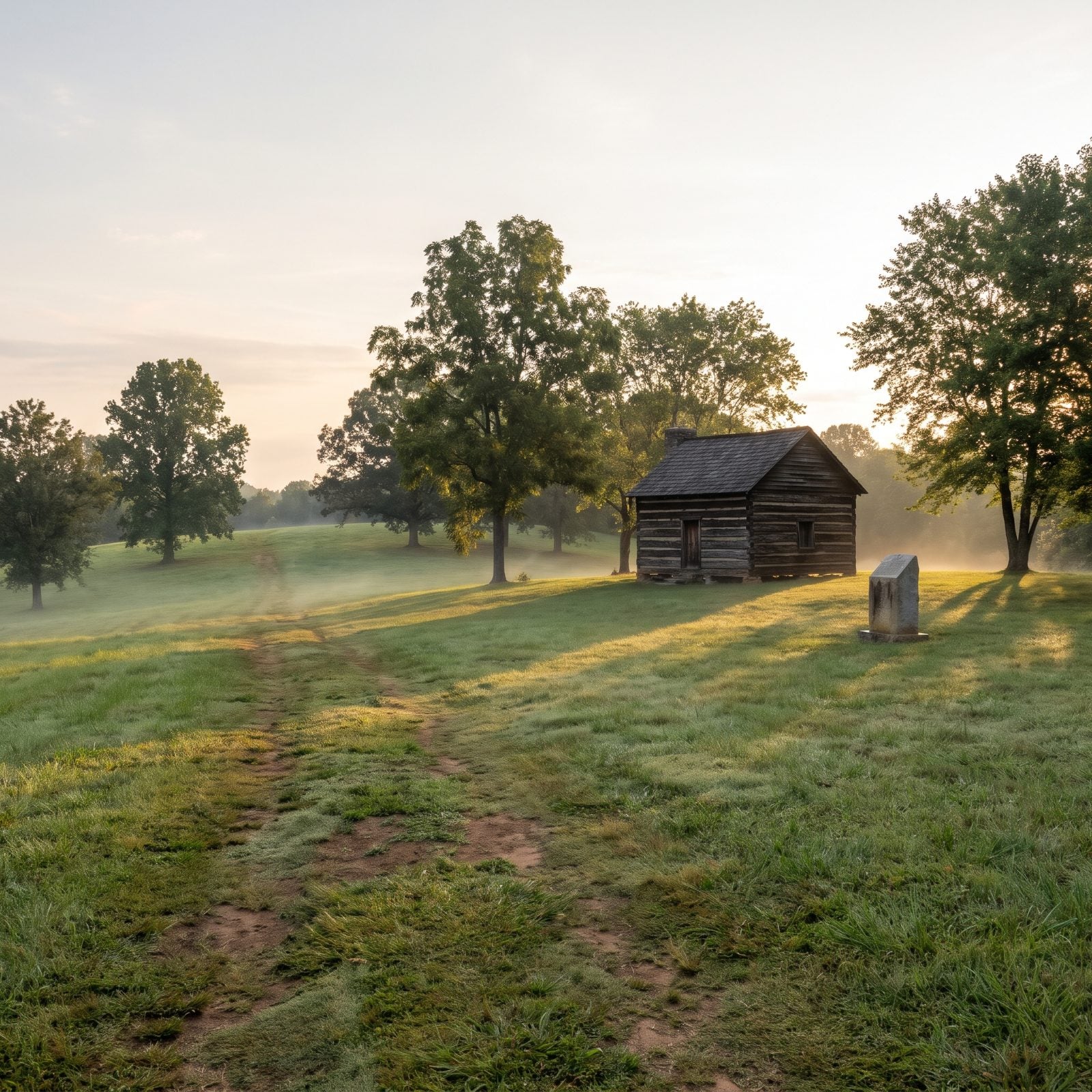
Early morning, June 20, 1780. Colonel Francis Locke’s 400 militiamen surprised roughly 1,300 Loyalists on this hill and beat them anyway. The numbers tell you how much surprise and a dawn charge were worth that day.
You can walk the ground where it happened, which is the draw. A cabin stands on the site. No grand visitor complex, no scripted path — just the slope itself and the quiet understanding that men fought and fell on this exact rise. Lincolnton keeps it simple, and the simplicity suits it.
2. Kinston Battlefield, Where 2,400 Confederates Stood Against 12,000 Union Troops
The First Battle of Kinston, December 14, 1862: about 2,400 Confederate soldiers against 12,000 Union troops. You read the odds and you already know how it went.
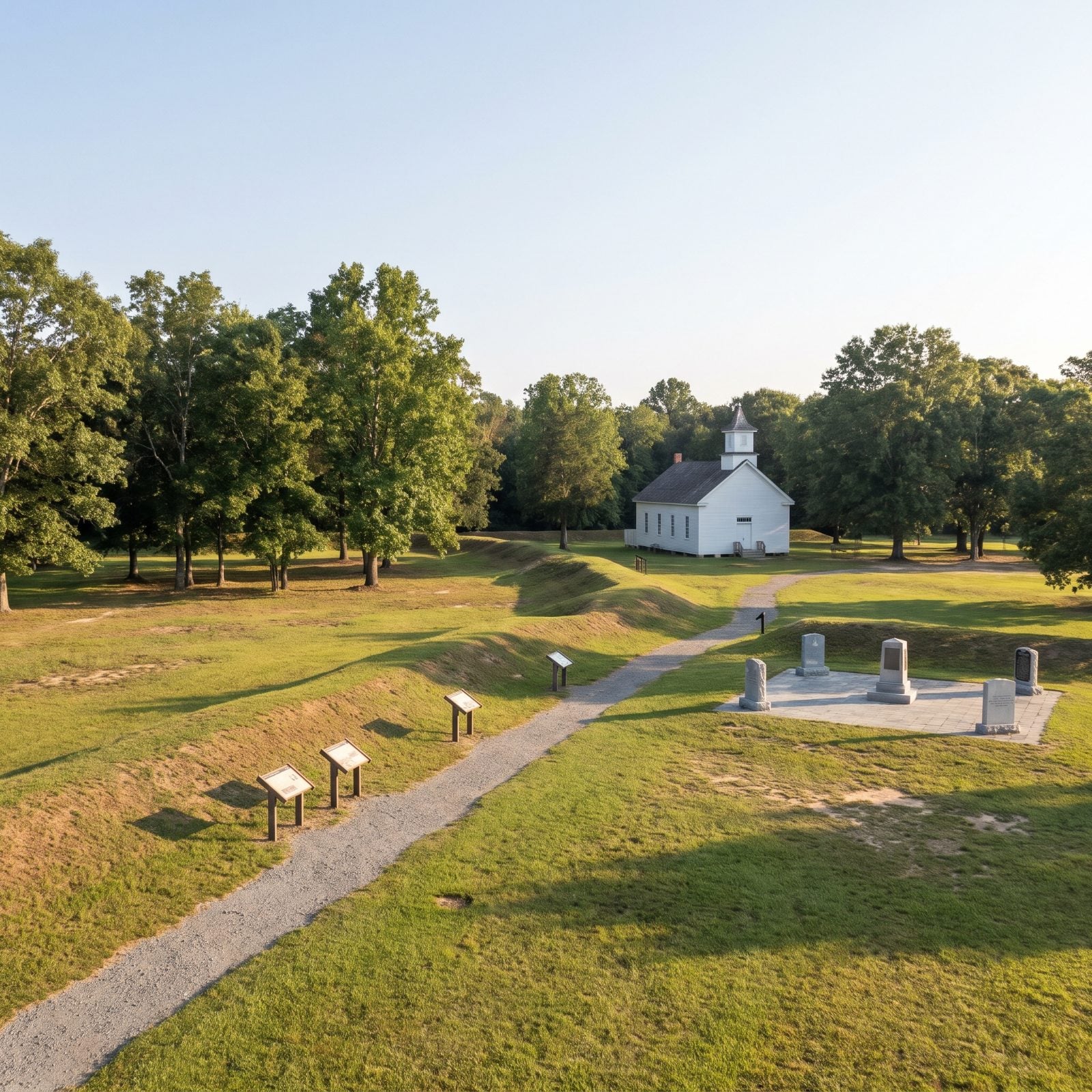
The park holds earthworks, interpretive markers, a plaza honoring the states whose soldiers fought, and an 1860s church that replaced Harriet’s Chapel, destroyed in the battle. Nearby sits the Wyse Fork battlefield, fought March 7 through 10, 1865, near the war’s end. Grab the self-guided driving tour brochure from the Kinston-Lenoir County visitor center before you start, and you’ll make sense of ground that otherwise just looks like fields.
1. Averasboro Battlefield & Museum: The Delaying Fight Outside Dunn
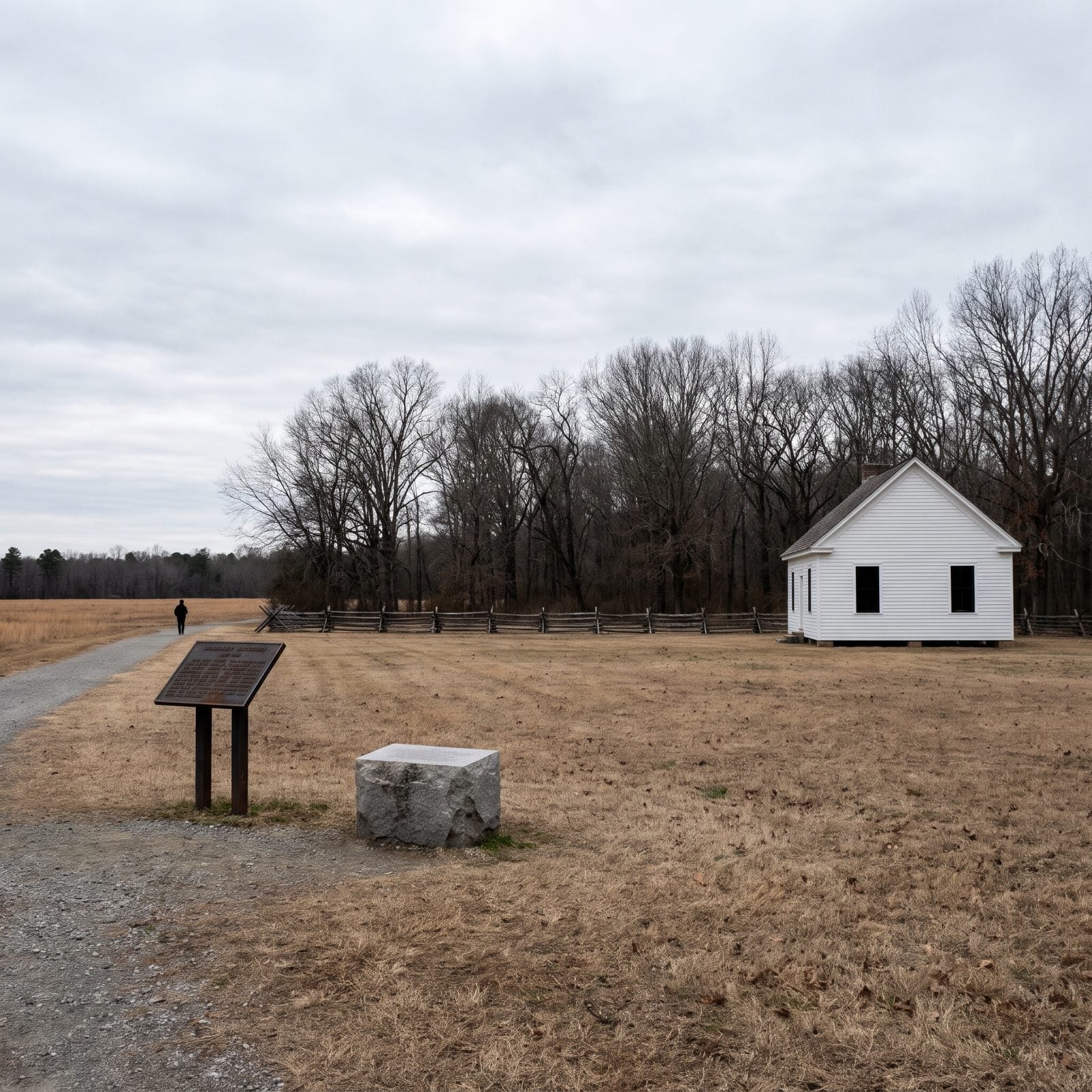
Fought March 16, 1865, three days before the bigger clash at Bentonville, this was the Confederate attempt to slow Sherman’s left wing as it drove north. It worked for a day. Then the numbers took over, like they always did by 1865.
You’ll find it at 3300 NC Hwy 82, a few miles east of I-95 Exit 71, where a small museum of Civil War artifacts sits right on the preserved ground so you can walk the field and read the context in a single visit. That pairing is rarer than you’d think.
Listed hours run Tuesday through Saturday, 10 a.m. to 4 p.m., plus Sunday afternoons, 1 to 4 p.m. Those come from a third-party listing, so confirm at averasboro.com before you drive out. Honestly, just call ahead. Small sites shuffle their schedules and nobody bothers to update the internet.
Please note that some of the imagery in this article were created with the aid of AI image generators.