
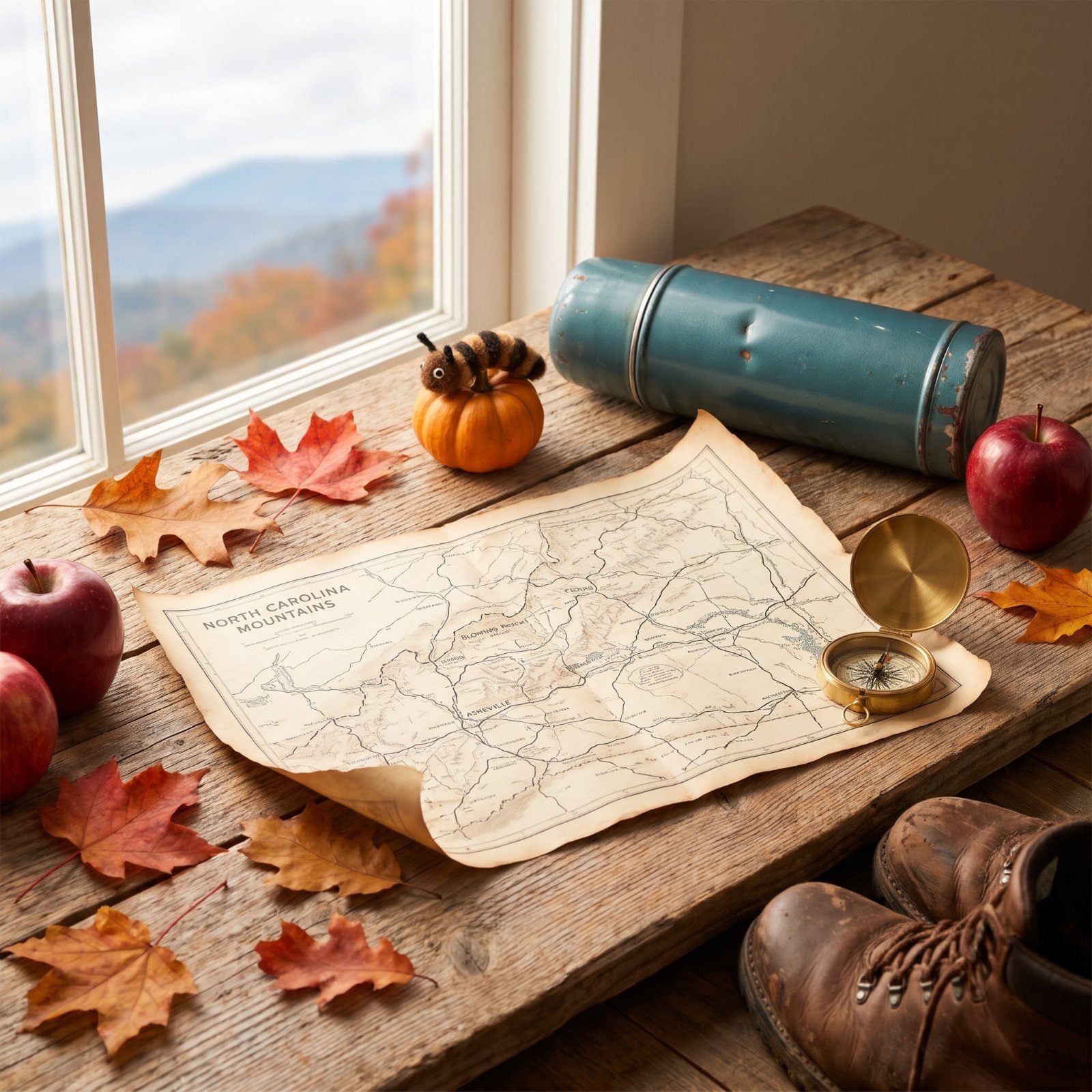
The leaves don’t turn all at once up here. That’s the thing nobody tells you. A mile of elevation change means Grandfather Mountain is already burning orange while Main Street in Brevard sits stubbornly green, so a single weekend can feel like three different seasons stacked on top of each other. These are the North Carolina mountain towns worth the drive, with the festivals, the overlooks, and the real timing. Helene recovery is still ongoing, and a few Parkway stretches remain closed. Check NPS and NC Parks before you load the car.
18. Blowing Rock: The Town That Turns Early, If You Know Where to Look
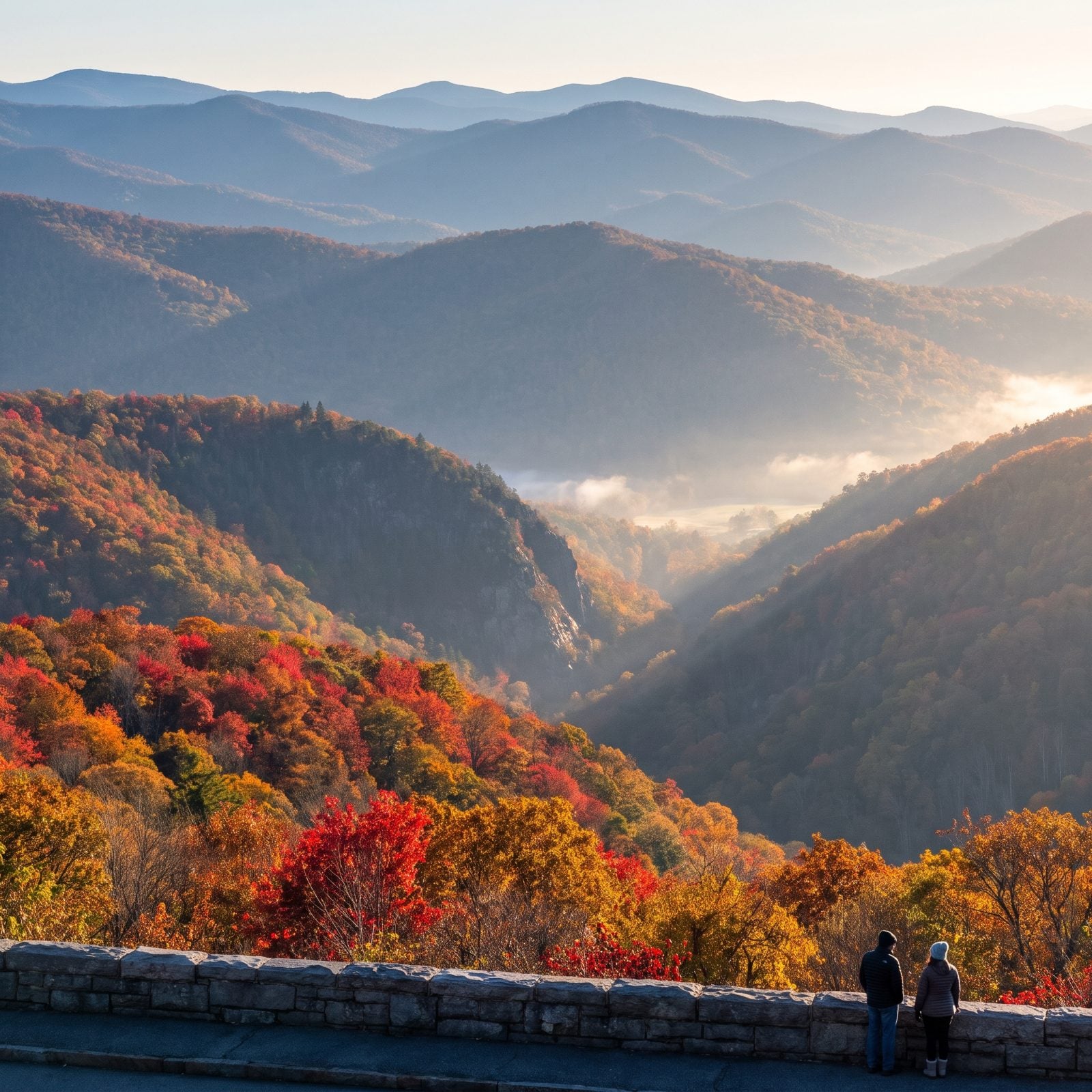
Here’s the local secret: color never arrives on schedule because the schedule changes by the mile. Blowing Rock sits right on the Parkway along the Eastern Continental Divide, with the Johns River Gorge yawning below, so the high slopes and the valley floor can turn weeks apart.
Start early in the season at Grandfather Mountain, where the peaks climb over a mile high and flip first. Then work your way down. The town’s own bucket list puts The Blowing Rock, the outcrop the place is named for, at the top for a reason.
17. Banner Elk: Where a Caterpillar Predicts the Winter
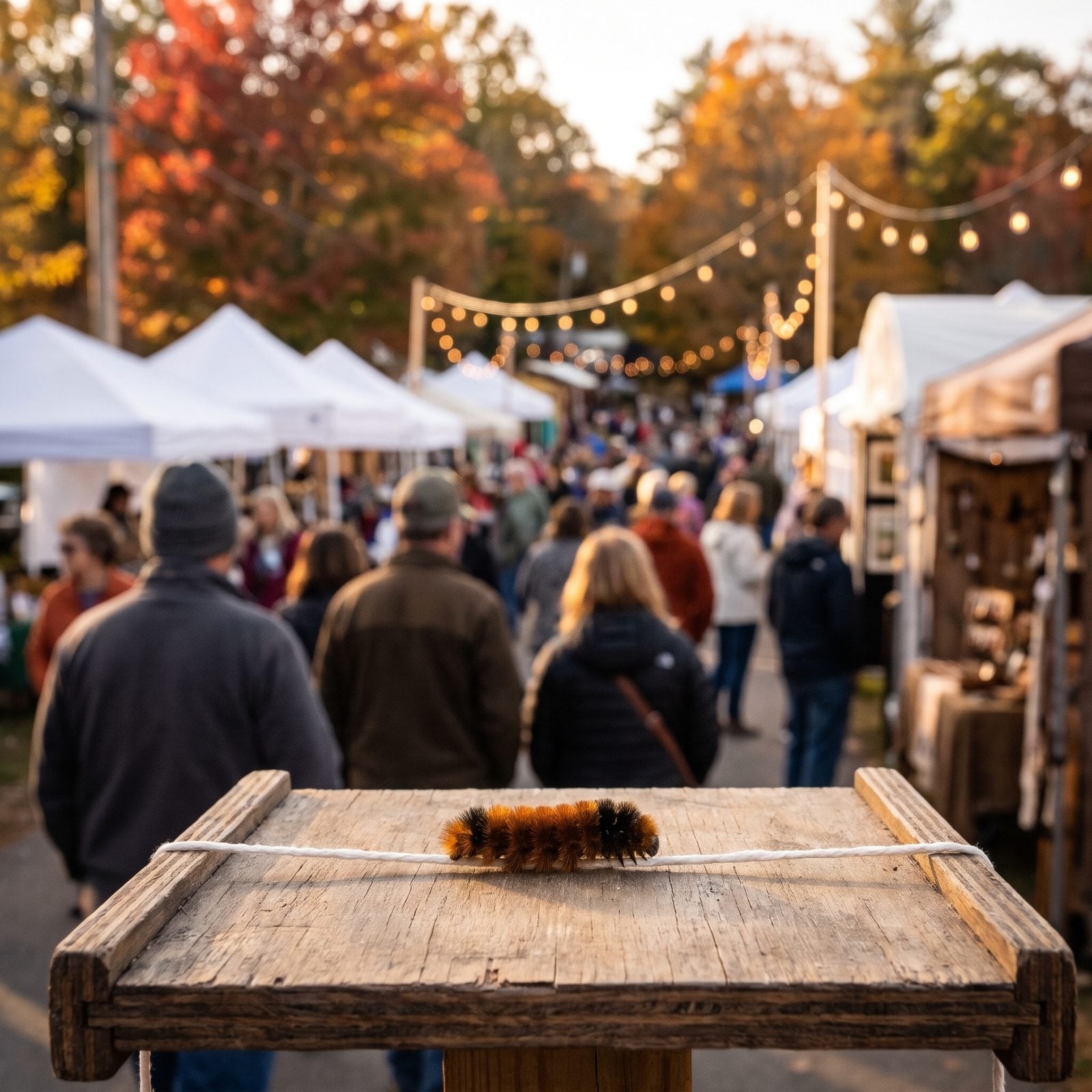
A caterpillar runs the local weather forecast, and a whole festival shows up to watch. The Woolly Worm Festival takes over Banner Elk the third weekend of October, and has since 1978.
The legend goes like this. A woolly worm has 13 bands, one for each week of winter, with brown meaning a mild week and black meaning cold and snowy. Races crown the official forecaster, and the winning worms earn their owners cash prizes.
Hurricane Helene forced the 2024 festival online. It came back in person the following year, which tells you plenty about how much this valley wanted its caterpillar back.
16. Boone: The Ski Capital of the South, Minus the Snow
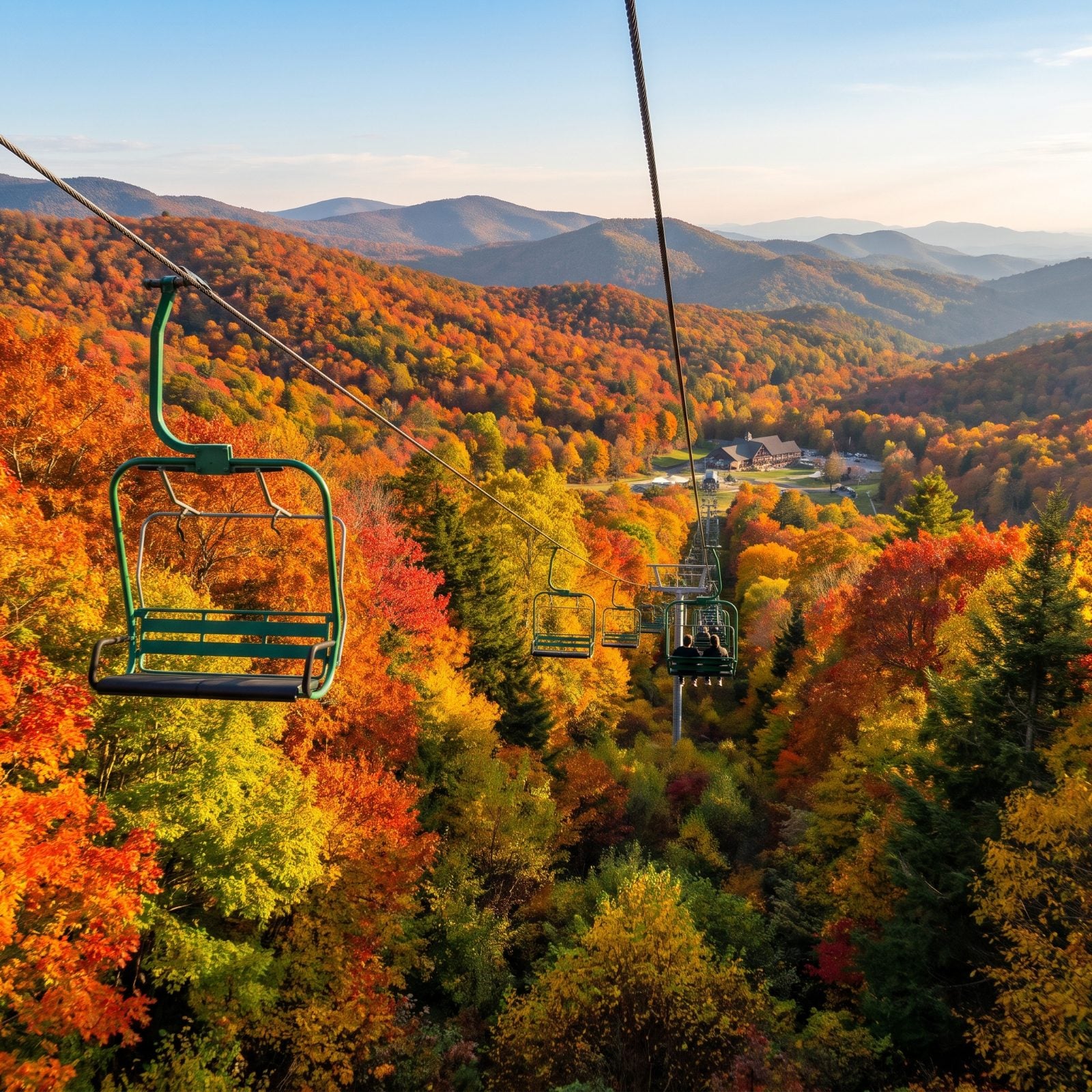
Explore Boone calls it the Ski Capital of the South, which sounds like a winter line. It’s actually your best autumn trick. Ride the ski-resort chairlifts in fall and watch the color roll out beneath your boots from the air, slope after slope lit up like somebody flipped a switch.
In a normal year Boone peaks around October 20, with the sweet spot running roughly October 16 to 24. Howard Knob and Elk Knob State Park reward the people willing to climb a little.
15. Valle Crucis: An 1883 General Store and a Church-Run Harvest Fair
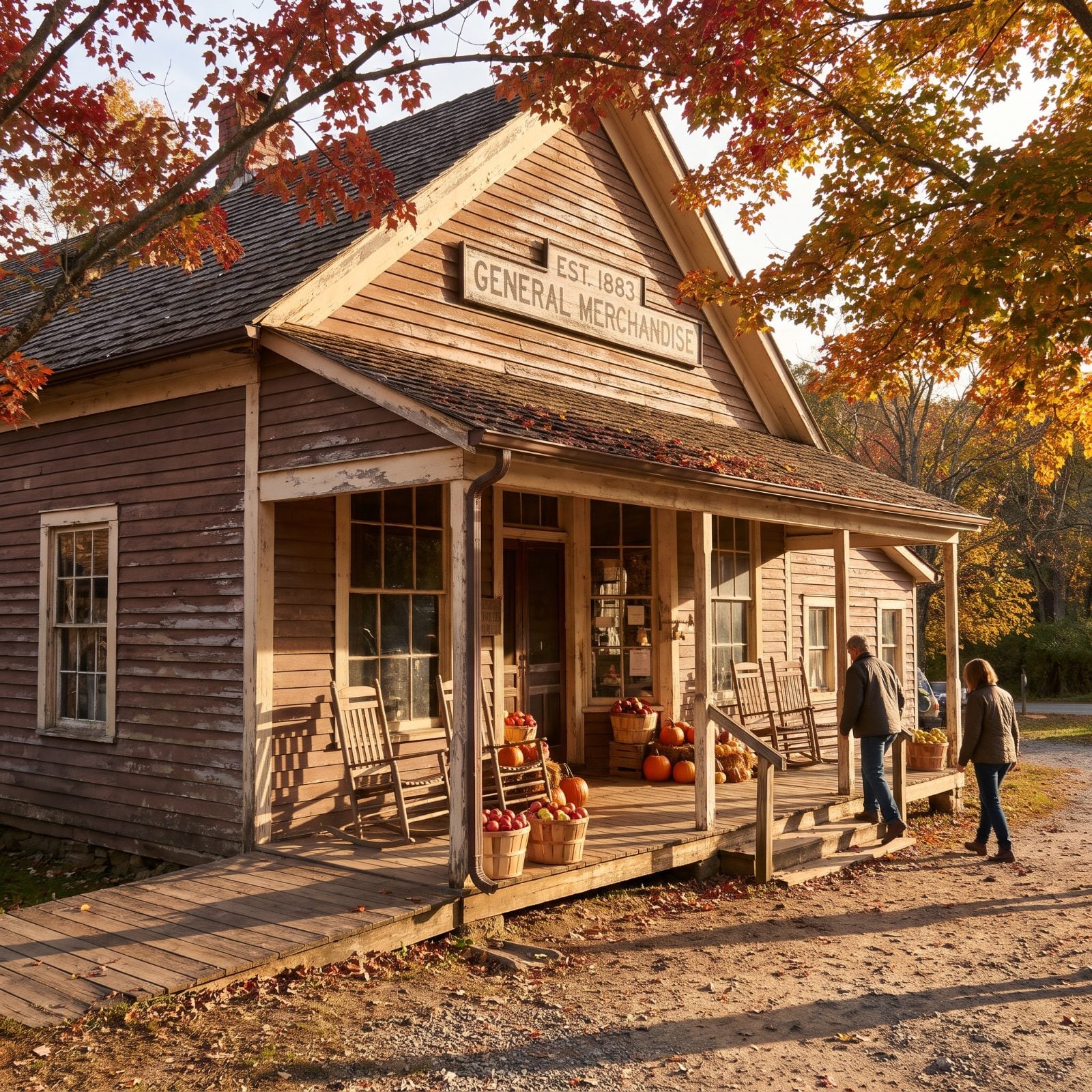
The original Mast General Store has stood in Valle Crucis since 1883. It’s on the National Register of Historic Places, and the floorboards have the kind of soft worn creak you just can’t fake.
Time your visit for the Valle Country Fair, the harvest event Holy Cross Episcopal Church has run for decades: handmade crafts, home cooking, mountain music under turning trees. Helene canceled it in 2024. It came back the next year on pure volunteer muscle, and in 2026 the 48th fair landed on Saturday, October 17.
14. Little Switzerland: The Parkway Stretch That Just Came Back
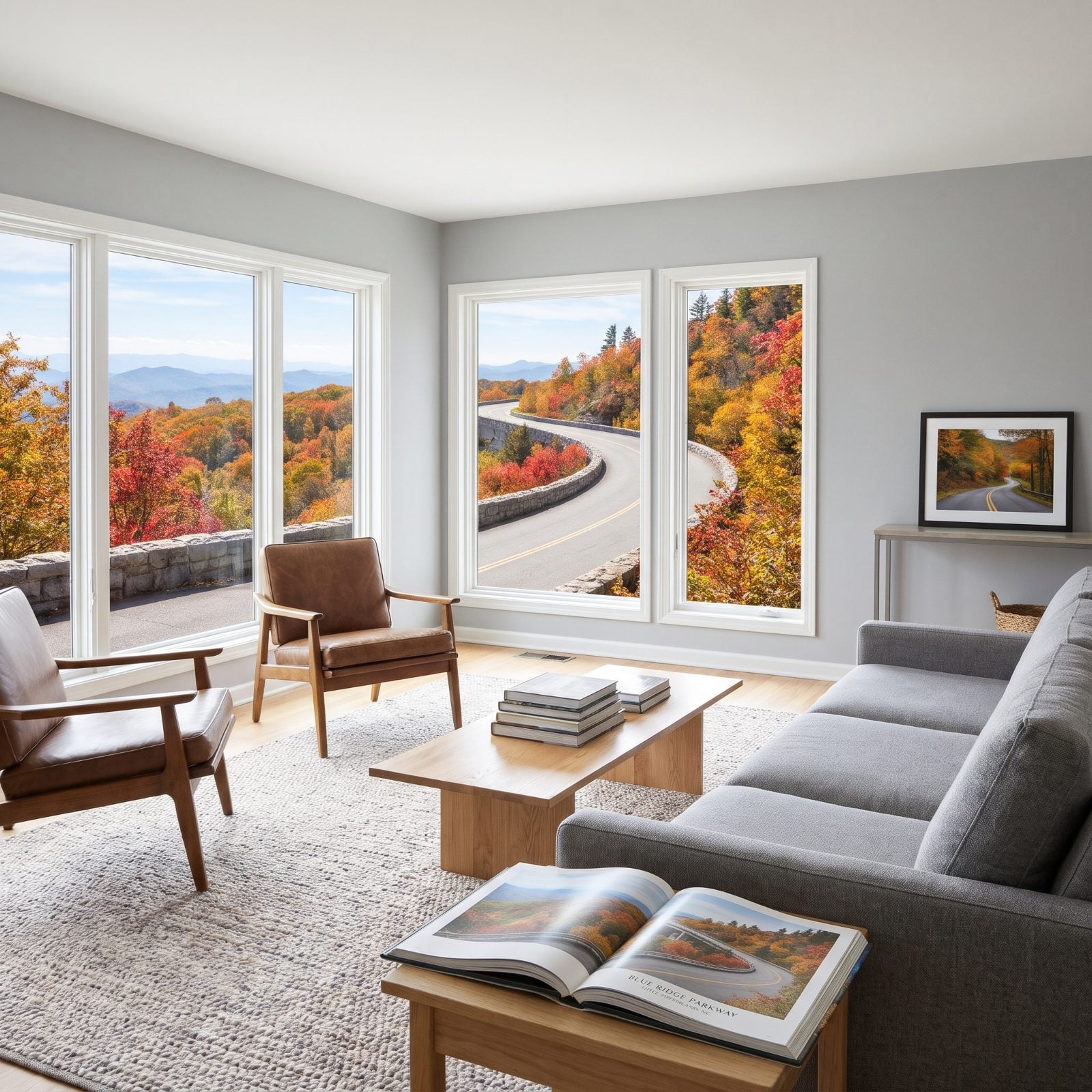
For most of two years after Helene, you simply couldn’t drive this piece of the Parkway. In early October 2026 the stretch from Little Switzerland (milepost 333.9) to NC-80 (milepost 344.1) reopened for the first time since the storm.
The section south of Linville Falls came back too. That means an uninterrupted run from the James River in Virginia all the way down to NC-80 near milepost 344, and a lot of color with no detour.
13. Burnsville: Gateway to the Highest Peak East of the Mississippi
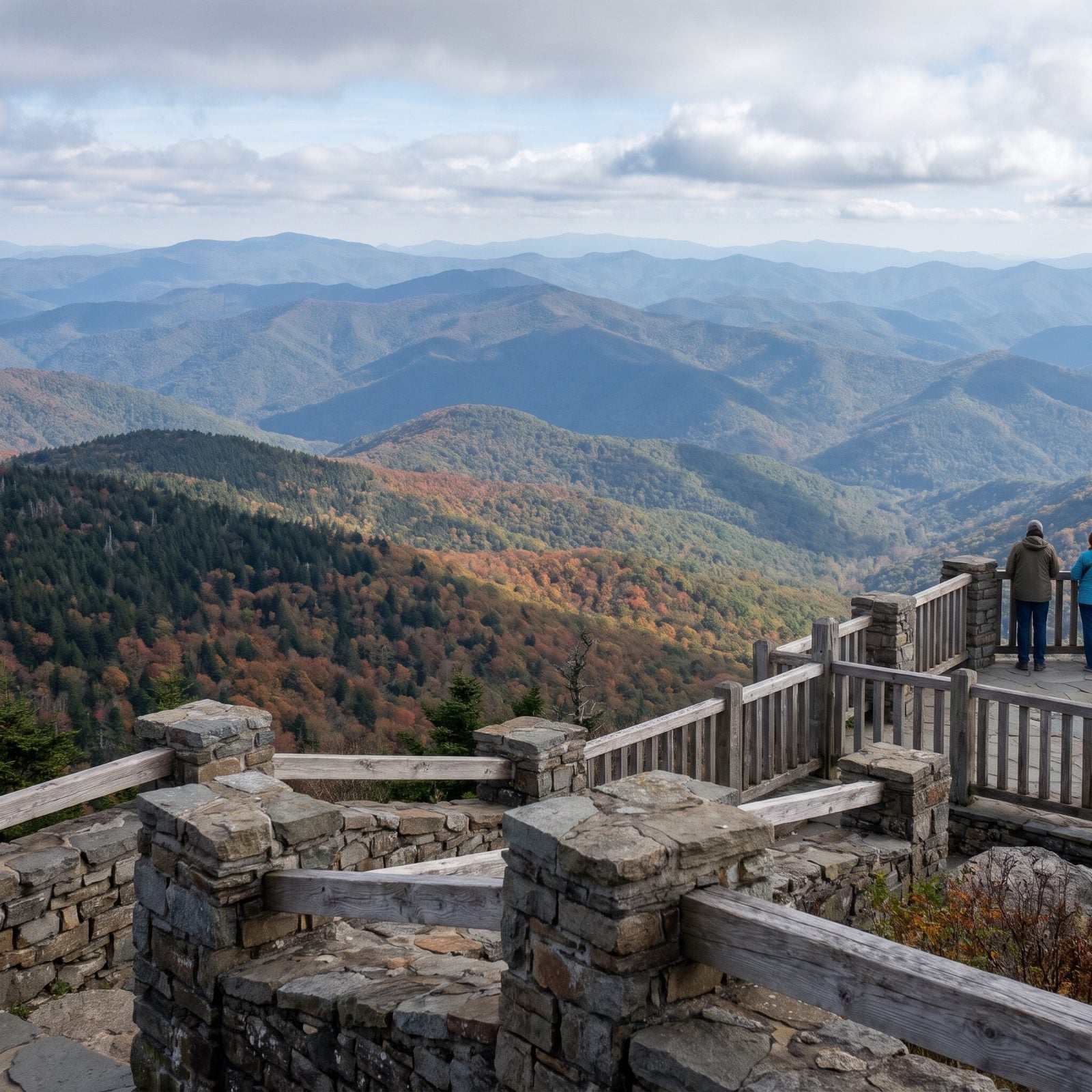
At 6,684 feet, Mount Mitchell is the highest peak east of the Mississippi and North Carolina’s very first state park. Up here the air is noticeably thinner and colder, the trees shorter, the season running ahead of everything below.
The park reopened September 15, 2025, alongside the Parkway section between Asheville (milepost 382) and milepost 355. One heads-up: the campground stays closed through the 2025 and 2026 seasons for a new water line, and with mileposts 344.2 to 355.3 still shut in fall 2026, you had to reach the summit from the Asheville side. Worth every switchback.
12. Black Mountain: An Arts Town With a Festival That Moves
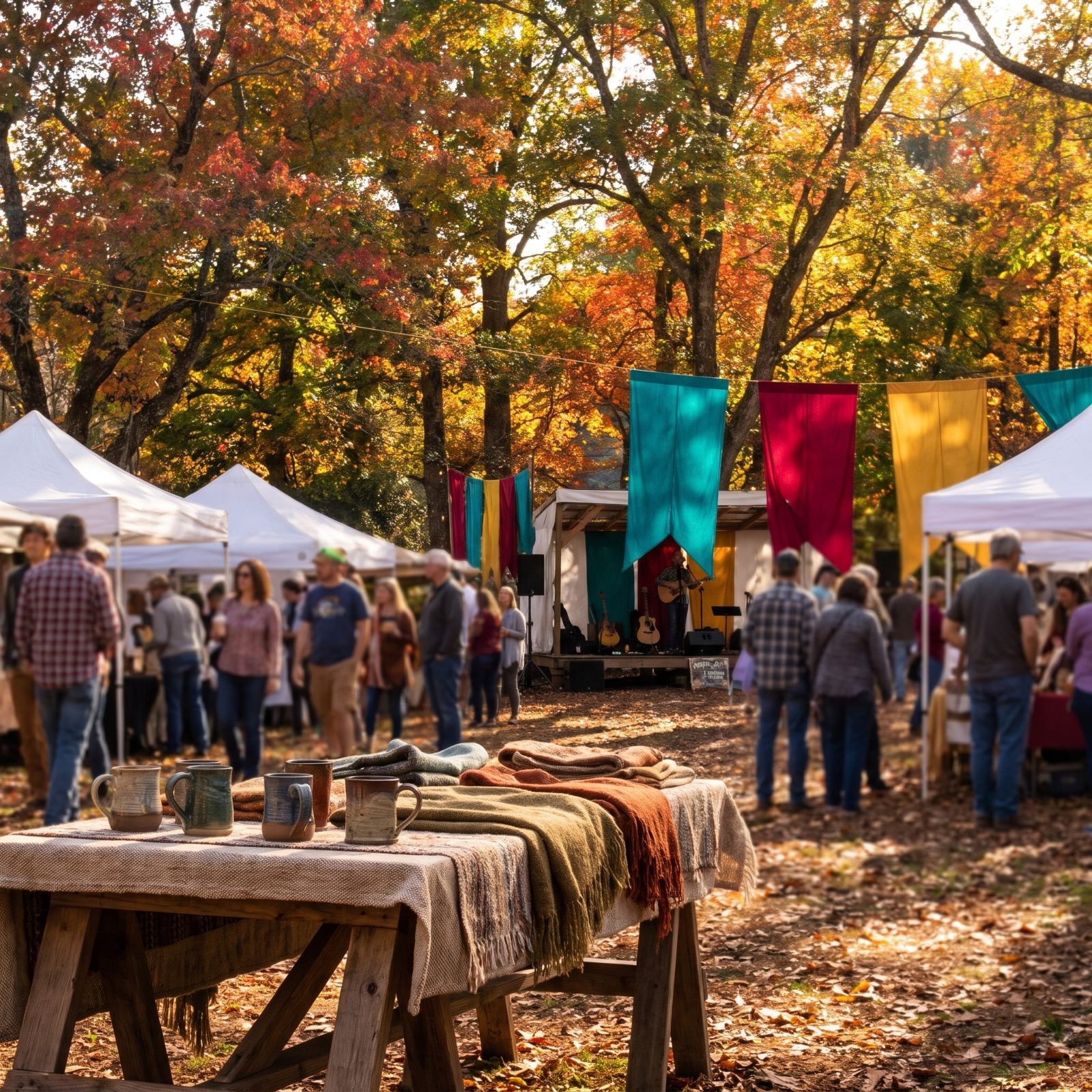
Black Mountain earned its creative streak partly through the experimental Black Mountain College, and the town still leans hard into it. Come fall, the LEAF Festival (Lake Eden Arts Festival) brings music, dance, and art from around the world over a mid-October weekend.
Confirm one thing before you go. Explore Asheville listed the 2026 fall festival at a new location still to be announced, so don’t assume it’s at Lake Eden, the longtime home. Check the official page so you aren’t driving to an empty field. It’s a deflating feeling.
11. Hendersonville: Where 80 Percent of the State’s Apples Come From
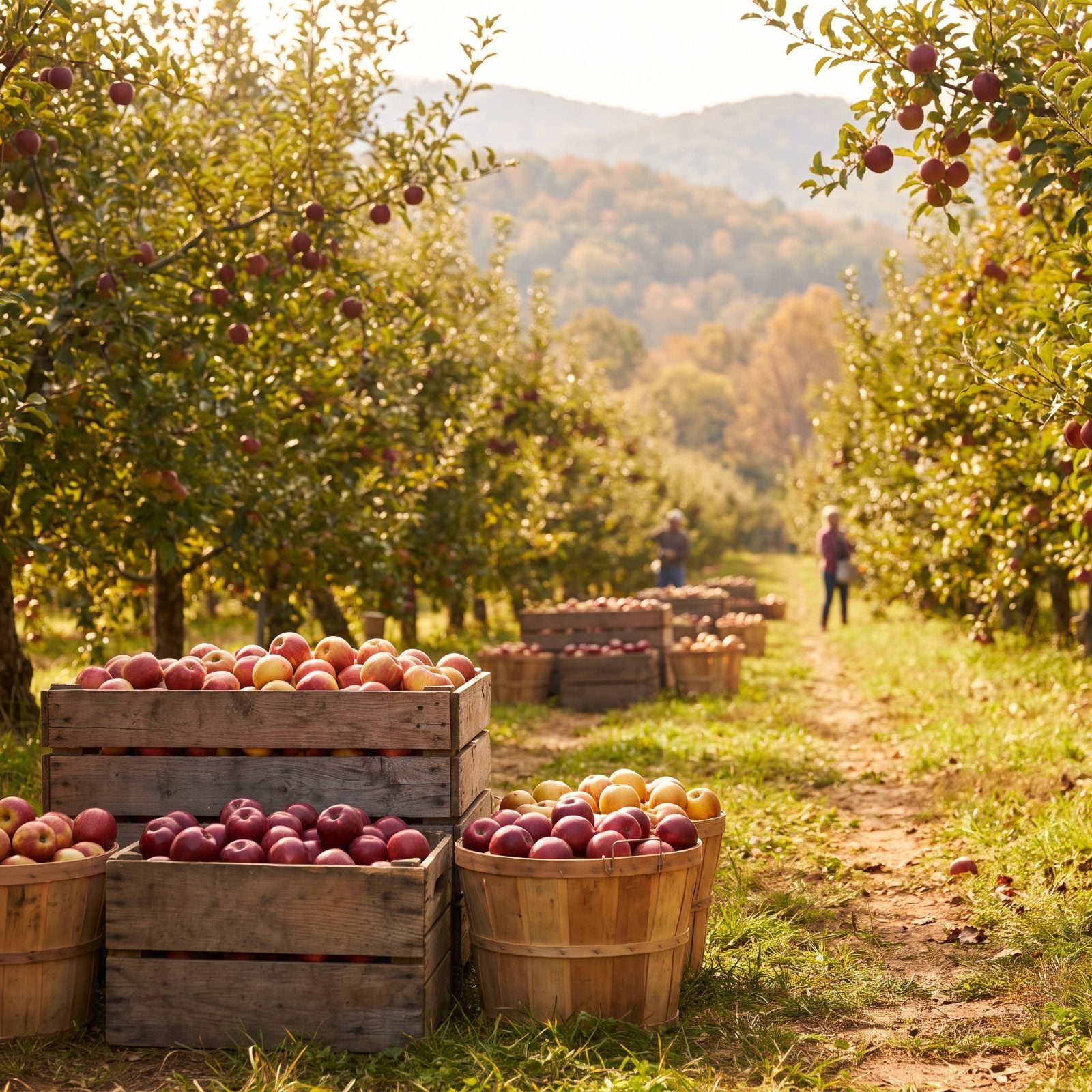
Henderson County grows more than 80 percent of North Carolina’s apples, and harvest runs from late August clear through the end of October. That’s a long window to go fill a bag.
Downtown Hendersonville throws the four-day North Carolina Apple Festival every Labor Day weekend, so the celebration actually starts before the color does. Out in the orchards, J&M Farms off Chimney Rock Road grows more than 50 varieties, and Grandad’s runs a corn maze on fall weekends.
10. Lake Lure and Chimney Rock: A Gorge That Fought Its Way Back
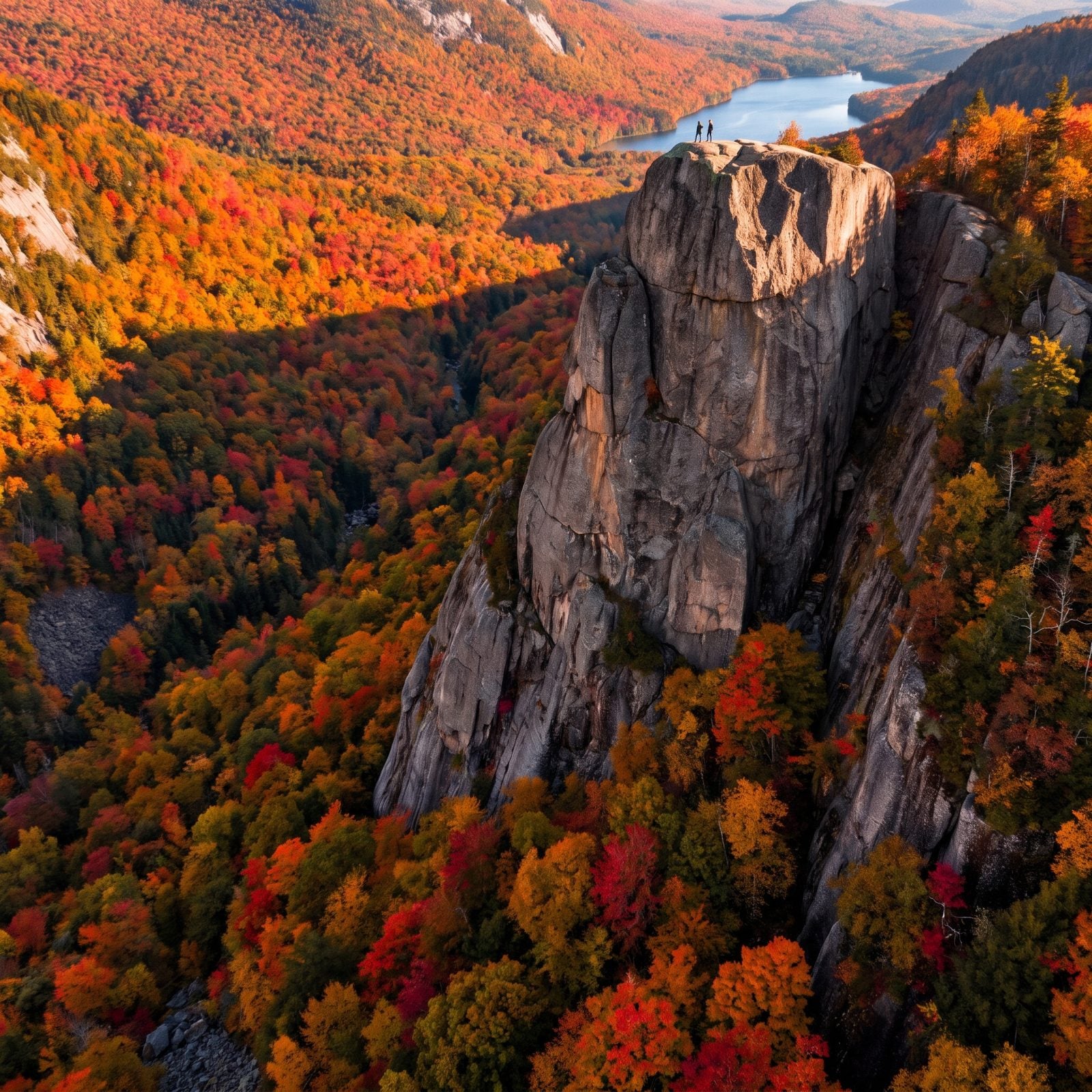
No corner of these mountains took Helene harder, and few comebacks feel this earned. Chimney Rock State Park reopened in 2025 after its long Helene closure, and Lake Lure has been working through its own recovery. Check the town’s site for current lake access before you go.
The rock itself is a 315-foot freestanding spire standing guard over Hickory Nut Gorge. Seen from above, with tiny figures standing on its summit, the view rearranges your whole sense of scale.
9. Brevard: 5,000 Feet of Elevation, So the Color Lasts for Weeks
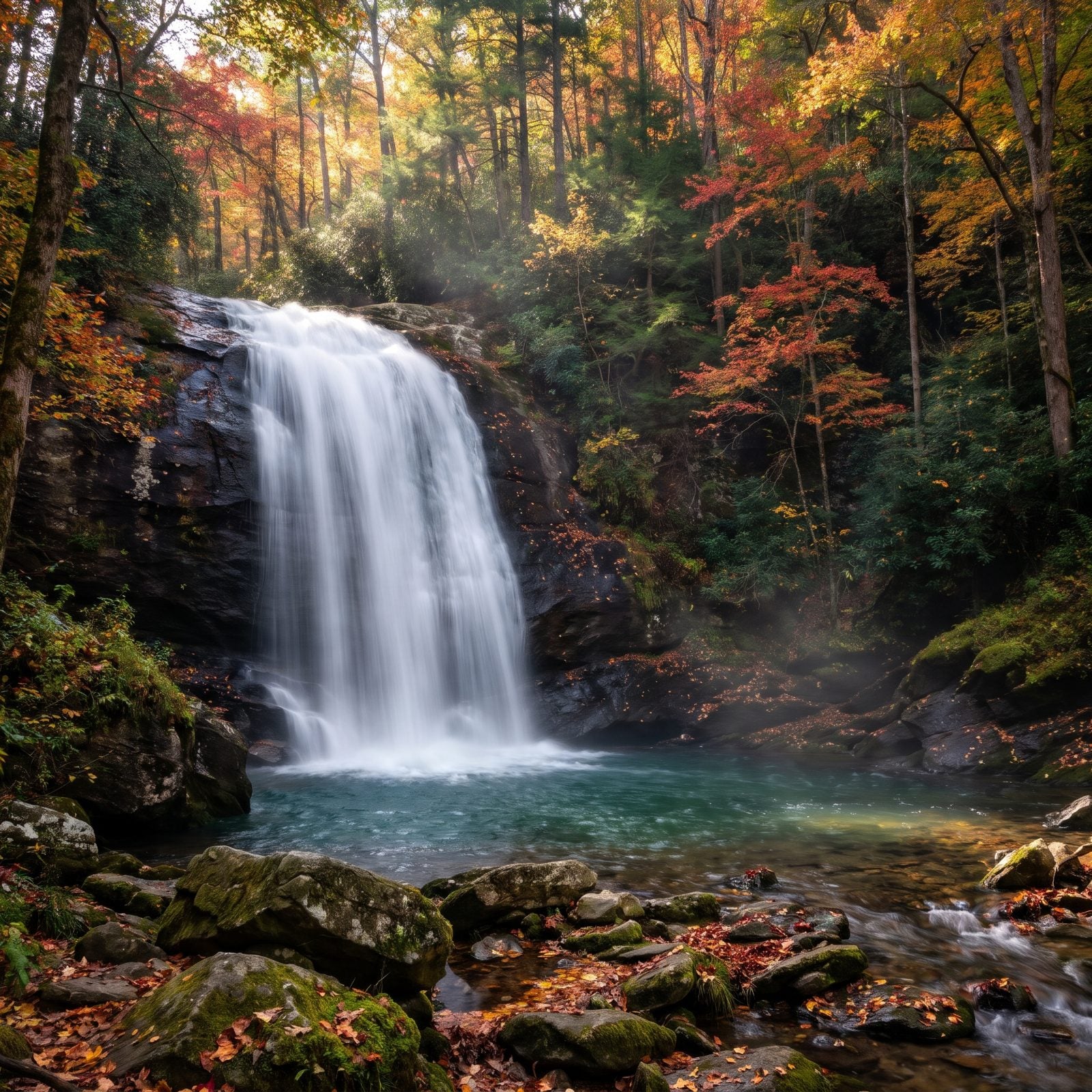
Transylvania County swings almost 5,000 feet in elevation, and that’s the whole trick. It stretches Brevard’s color from late September into early or mid-November.
Drive the Transylvania County Loop and you’ll find good color at nearly any point in the season. Devil’s Courthouse at 5,720 feet turns first, the Cradle of Forestry sits lower at 3,343, and downtown Brevard at 2,200 holds on latest. The Parkway near Graveyard Fields and the Fryingpan Lookout Tower go early.
For waterfalls, 60-foot Looking Glass Falls in Pisgah is the famous one, with Bridal Veil and Wintergreen tucked into DuPont State Recreational Forest. Go chase the color down the mountain. It’ll wait for you.
8. Highlands: Where a Bear Walks Across the Valley at Dusk
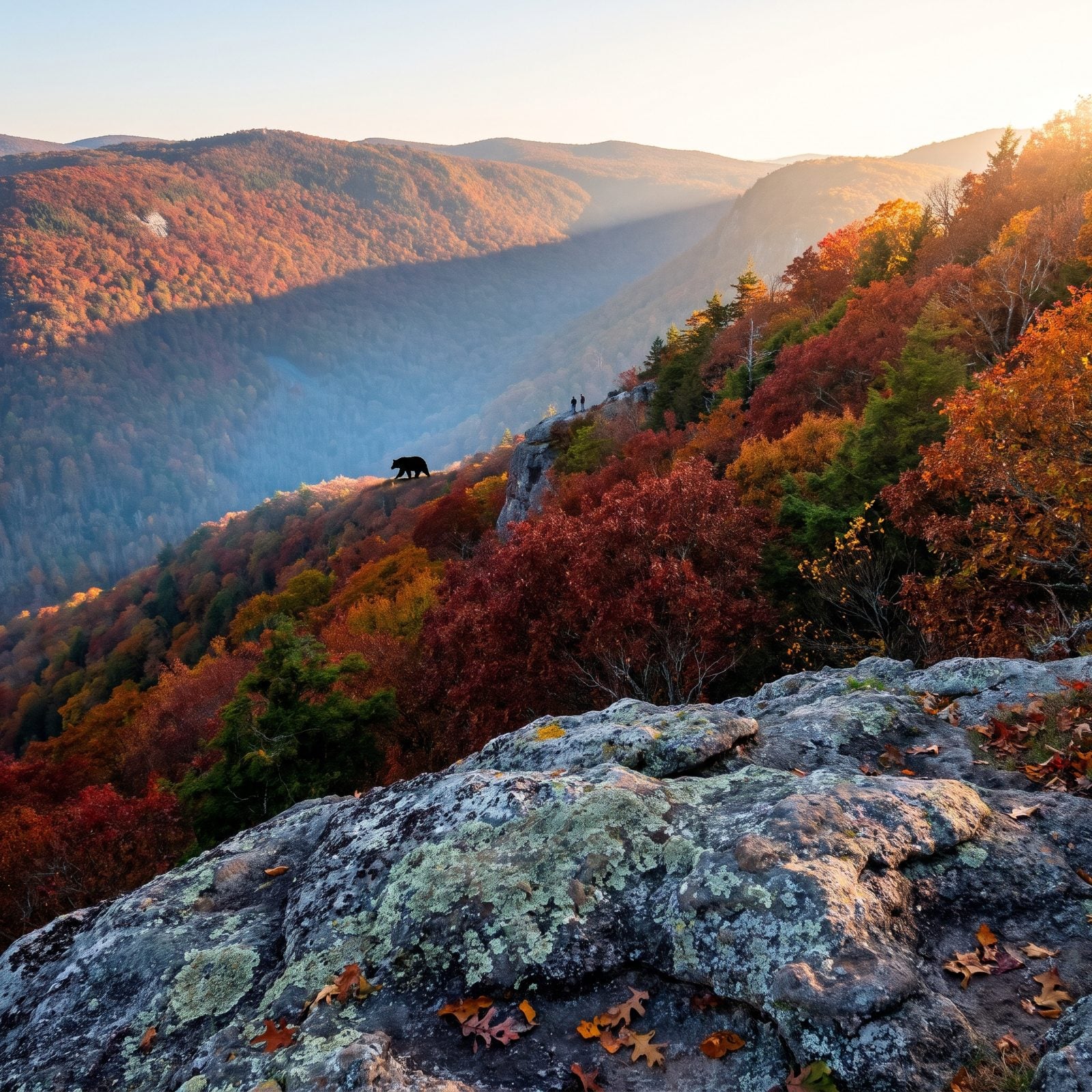
Highlands sits high enough that the air bites a little even on a sunny October afternoon, and peak color usually lands around the middle of the month, with stragglers hanging on into early November.
Here’s the trick nobody mentions to first-timers. Late on an October evening, scan the slopes from Rhodes Big View, and you may catch an actual black bear lumbering along a sunlit ridge across the valley. You wait for it. You see it. Then you feel slightly ridiculous about how pleased you are.
Want daylight instead? Sunset Rock in Ravenel Park is a short hike off Main Street. Whiteside Mountain loop, Dry Falls, Bridal Veil Falls, and the drive through Cullasaja Gorge fill out a full day without ever getting in the car for long.
7. Cashiers: A Free Craft Fair on the Village Green
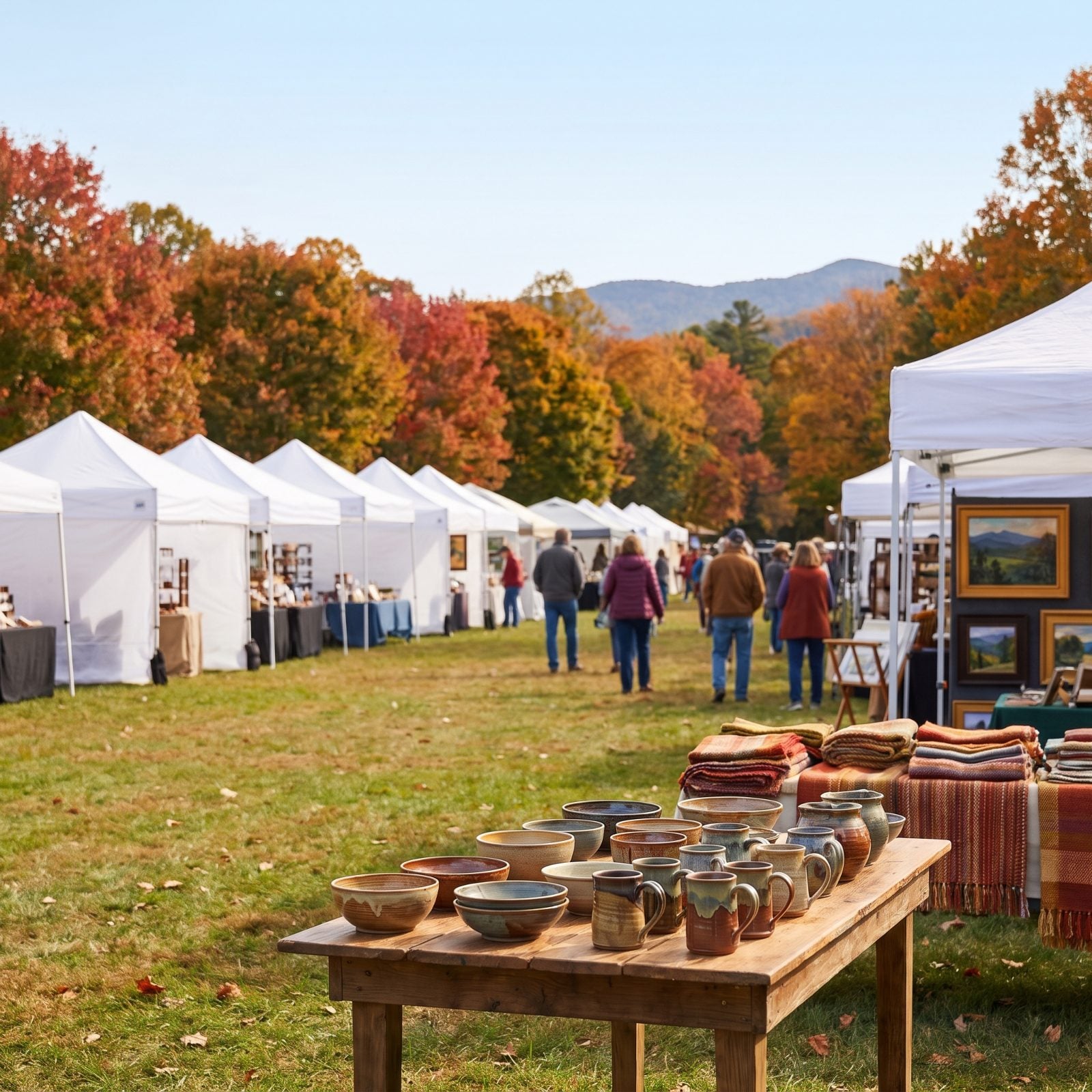
A full weekend, scores of artisans, and not one dollar to get in. The Cashiers Valley Leaf Festival runs on the Village Green in early October, with handmade pottery doing the heavy lifting among the paintings, jewelry, and fiber work.
Parking costs nothing either. For a small mountain town, that’s a generous setup — you can wander the whole thing with a coffee, buy a mug from the person who threw it, and still have the afternoon left for a drive into the hills. Free admission at a juried craft show is rarer than it sounds, and the folks running this one seem to know it.
6. Franklin: Pumpkins Racing Down Main Street
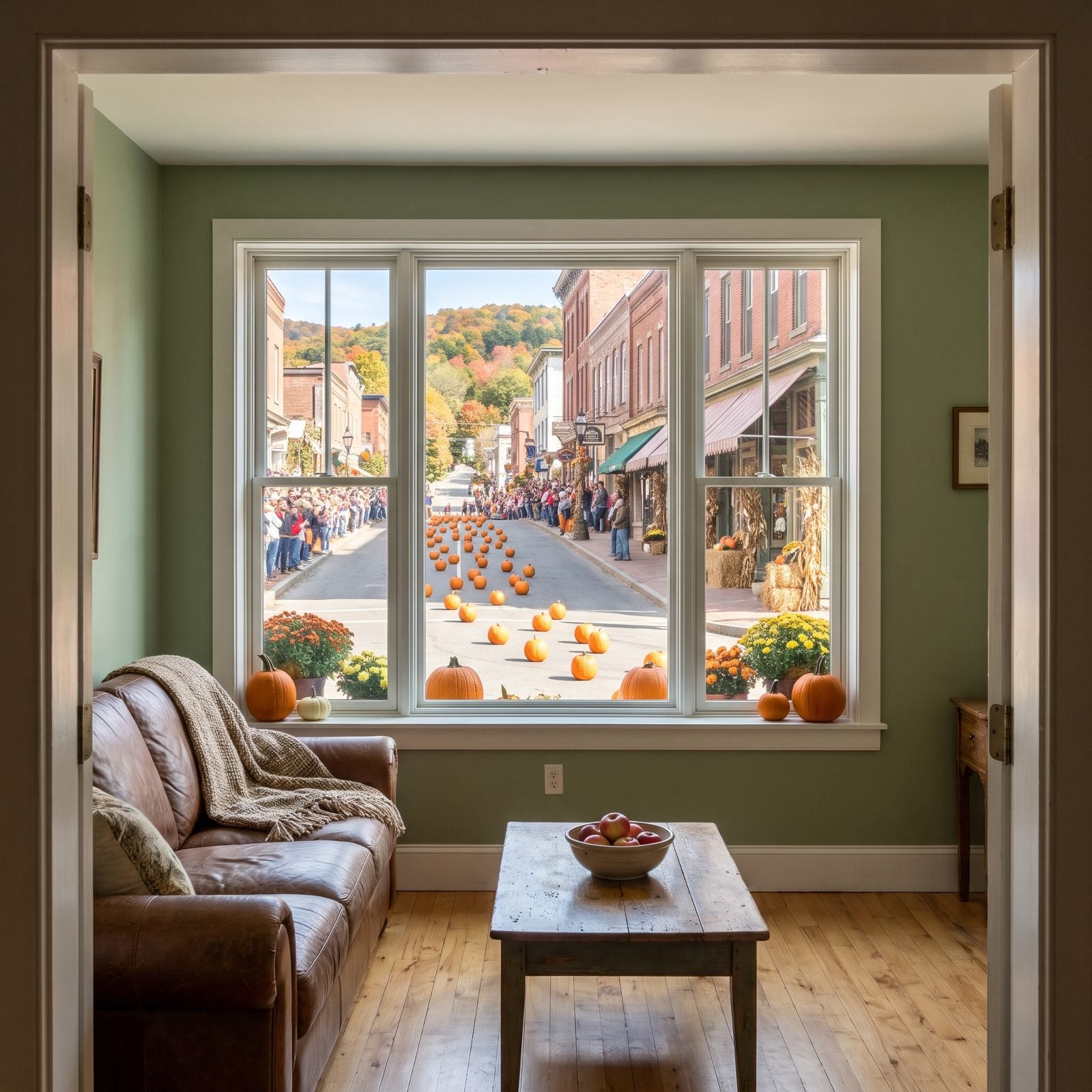
A pumpkin rolling down a steep street at speed is a genuinely funny thing to watch. Franklin leans all the way into it.
PumpkinFest takes over downtown on a Saturday in October, rain or shine, free to attend. The centerpiece is the World Famous Pumpkin Roll, where gourds race down the town’s hilly streets. Entering a pumpkin costs a dollar. There’s a costume parade for kids and dogs, plus a crowd of vendors besides.
Do yourself a favor and drive up to Wayah Bald for fall color before or after. The festival is a hoot, but the view is the reason you’ll remember the day.
5. Bryson City: A Steam Train Through the Nantahala Gorge
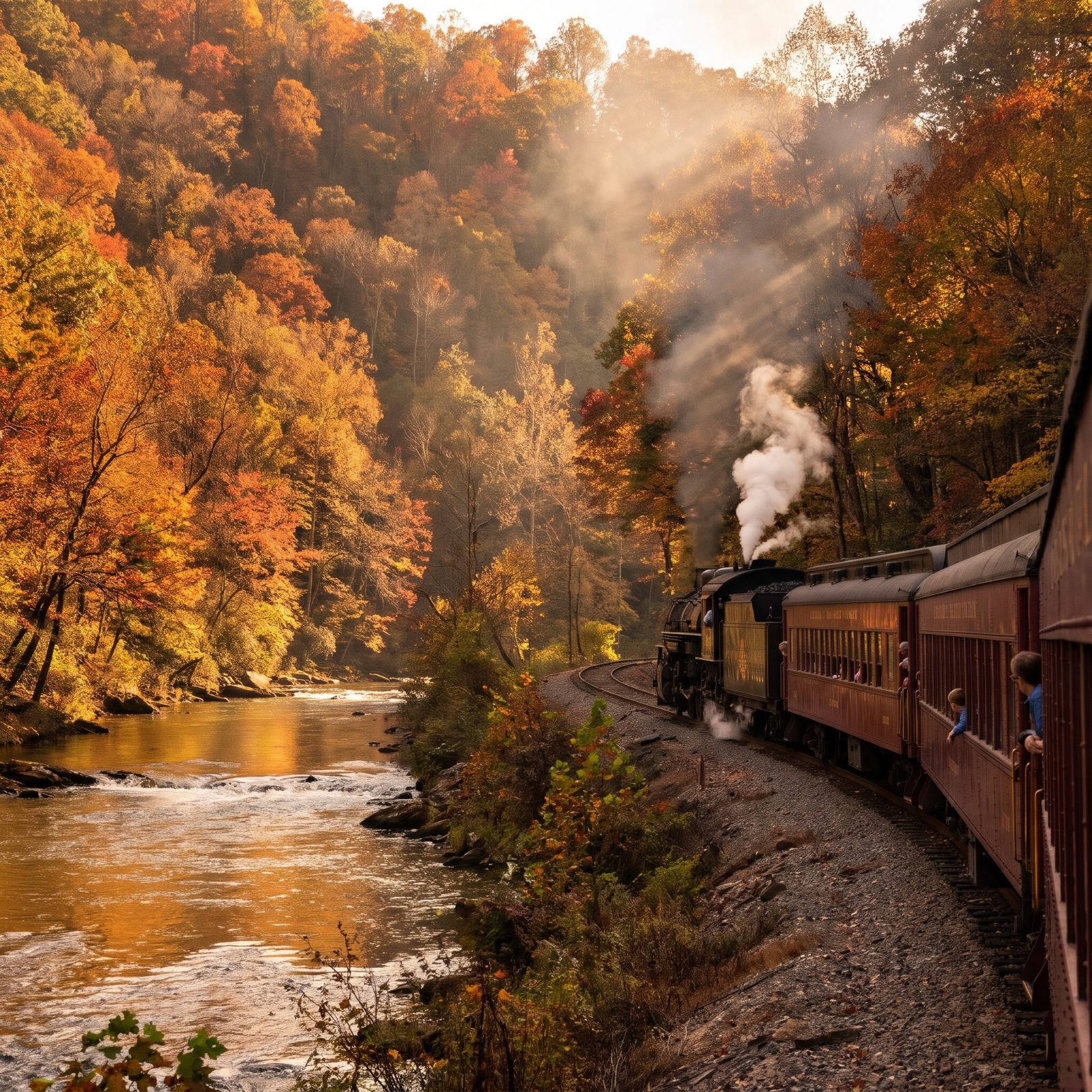
Some of the best fall color in these mountains hides where no road goes. The Great Smoky Mountains Railroad leaves from the depot in downtown Bryson City and carries you into exactly that country, along the Nantahala Gorge and the Tuckasegee River.
The autumn schedule includes gorge excursions, some pulled by steam engines — and that’s the detail that turns a nice ride into something you book twice. Steam has a smell and a rhythm a diesel can’t fake.
Round it out with a hayride to the pumpkin patch at Darnell Farms, or point yourself into Great Smoky Mountains National Park for hiking and the scenic drives the park does better than anywhere.
The best leaves are often the ones you can only reach by rail.
4. Sylva and Dillsboro: Pottery on the Street and Pumpkin Beer at the Bar
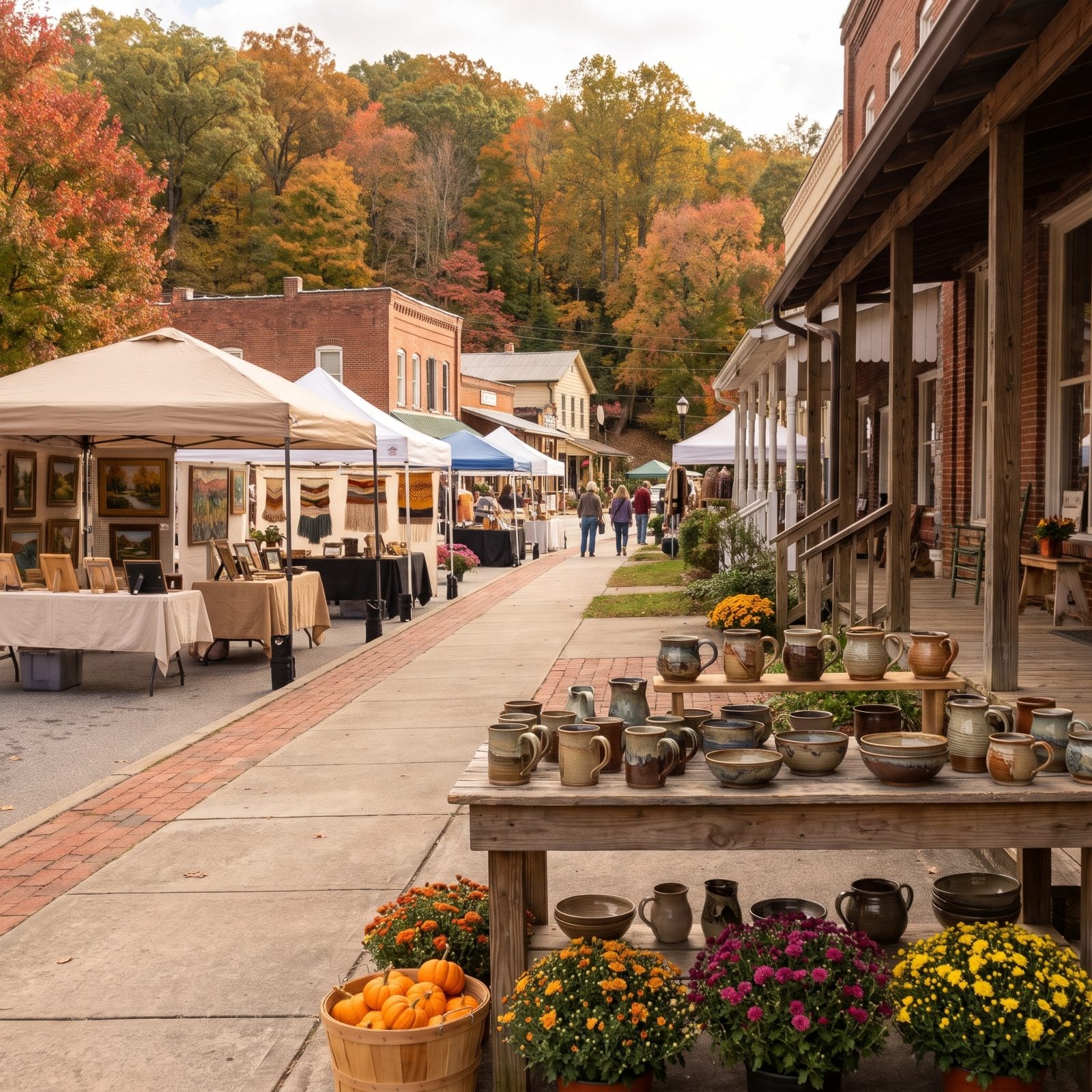
Two towns, one easy afternoon. Every October, historic Dillsboro holds Colorfest! Arts & Crafts, with regional artists selling pottery, paintings, fiber art, and jewelry right out on the streets.
When your feet give out, Innovation Brewing has taprooms in both Sylva and Dillsboro and pours seasonal beers like Apple Butter Brown Ale and Pumpkin Chai. If you have a weakness for a good pumpkin beer, these earn their spot. For a sit-down meal in downtown Sylva, Lulu’s on Main and Ilda are the ones to know.
3. Maggie Valley: Bull Elk Bugling in Cataloochee at Dawn
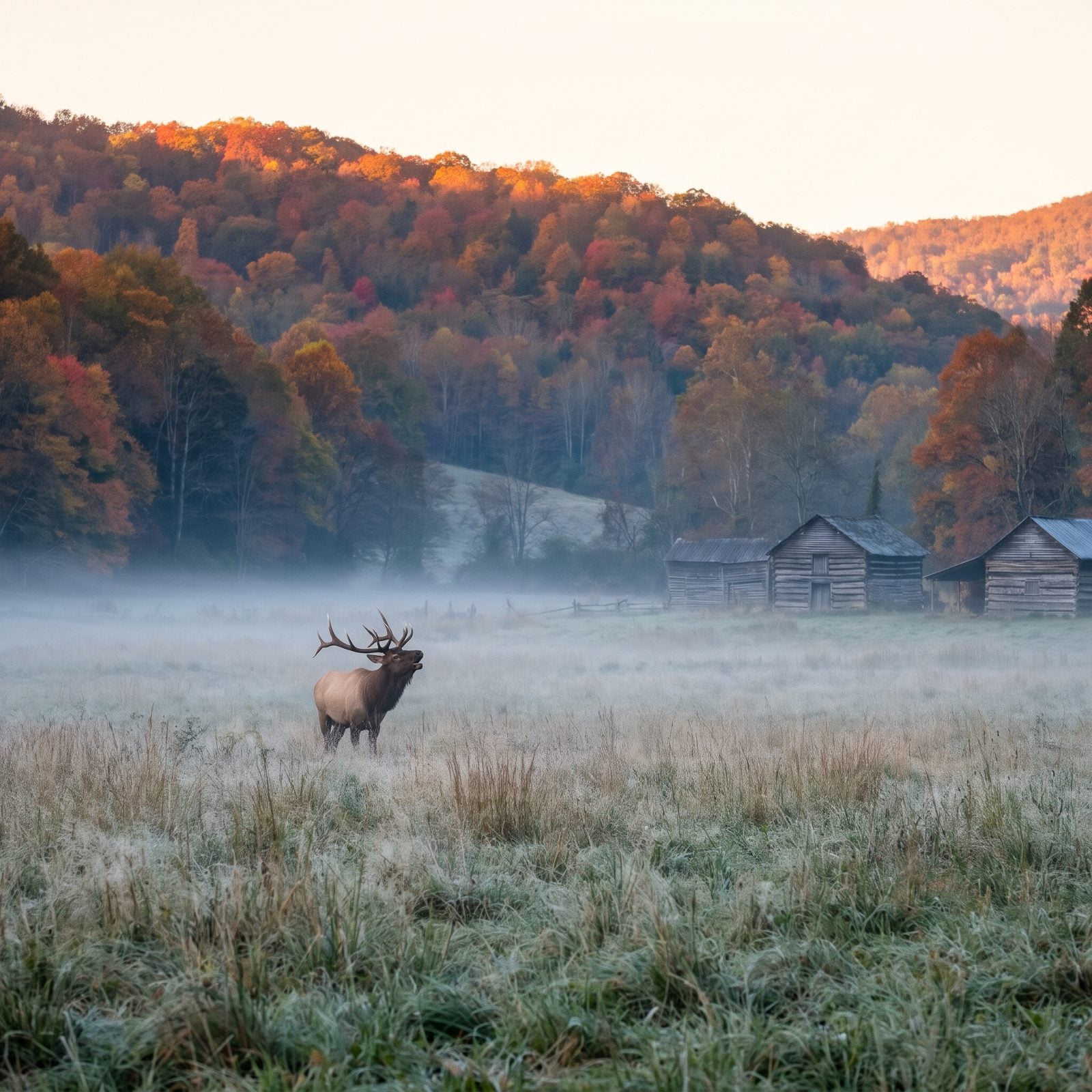
Maggie Valley gives you the closest easy access to Cataloochee Valley, tucked into the southeastern corner of Great Smoky Mountains National Park. Elk were brought back here after being wiped out of the region, and in fall the valley belongs to them.
The rut runs from roughly early September into mid-October. Bulls bugle and spar, and they’re busiest at first light and again at dusk. Bring binoculars. Keep your distance. Never approach or feed them — and I mean that flatly: these are large wild animals doing serious business, not a photo op.
Get there at dawn. The fog, the gold slopes, and that eerie bugle carrying across a frosted meadow make a morning you don’t forget.
2. Waynesville: Bagpipes and 100-Plus Craft Booths on Main
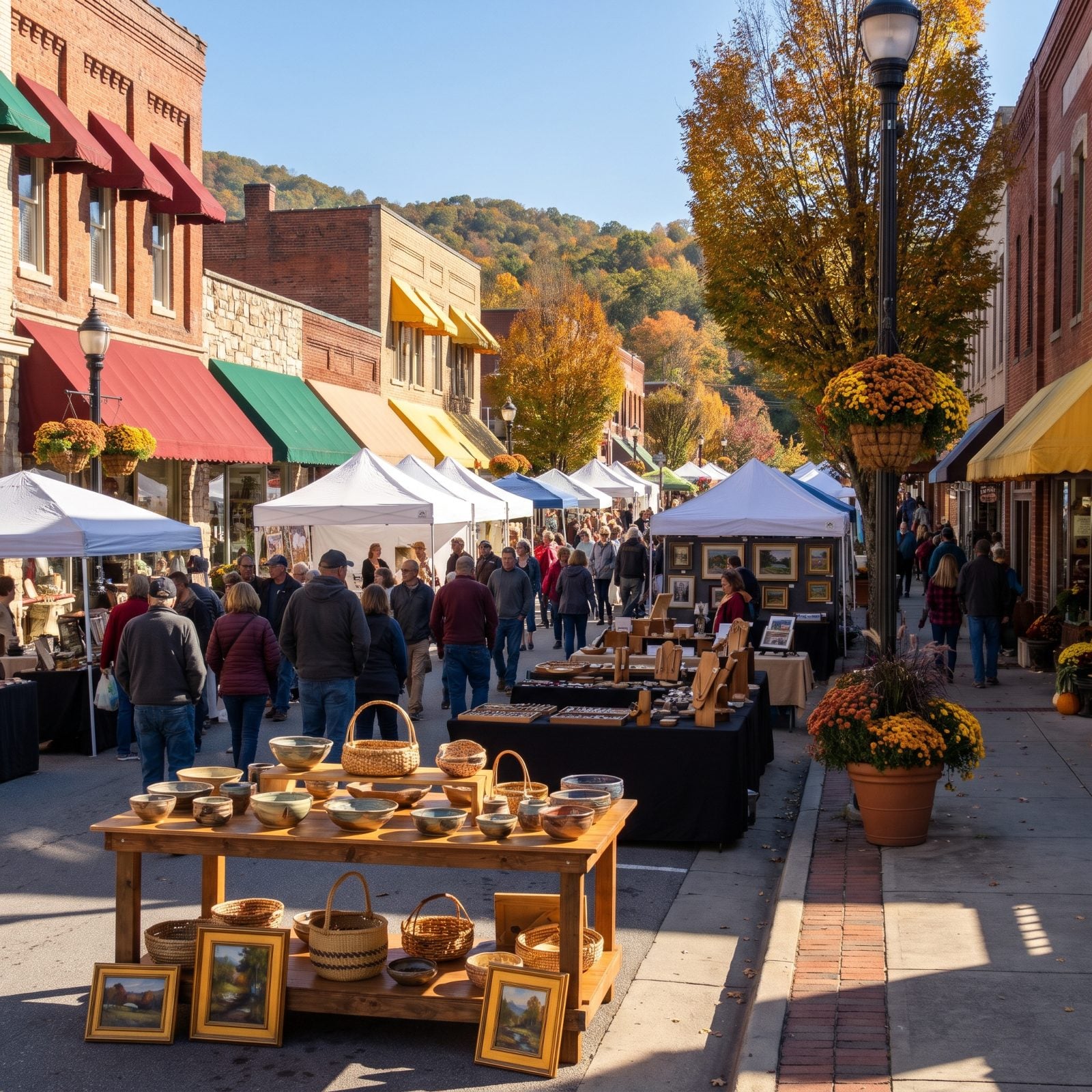
The Church Street Art & Craft Show takes over Main Street every October, and it’s a big one: scores of vendors selling handmade work, the only juried art show downtown Waynesville runs, and one of its longest-running fall traditions. It’s been around for decades.
Live music, dance groups, and bagpipes — which somehow suits a mountain town in a Scots-Irish part of the world. Here’s the smart move: pair the show with a dawn run out to Cataloochee Valley to hear the elk, then roll back into town for coffee and pottery.
1. Brasstown: Woodcarvers and a Folk School That Turns 50
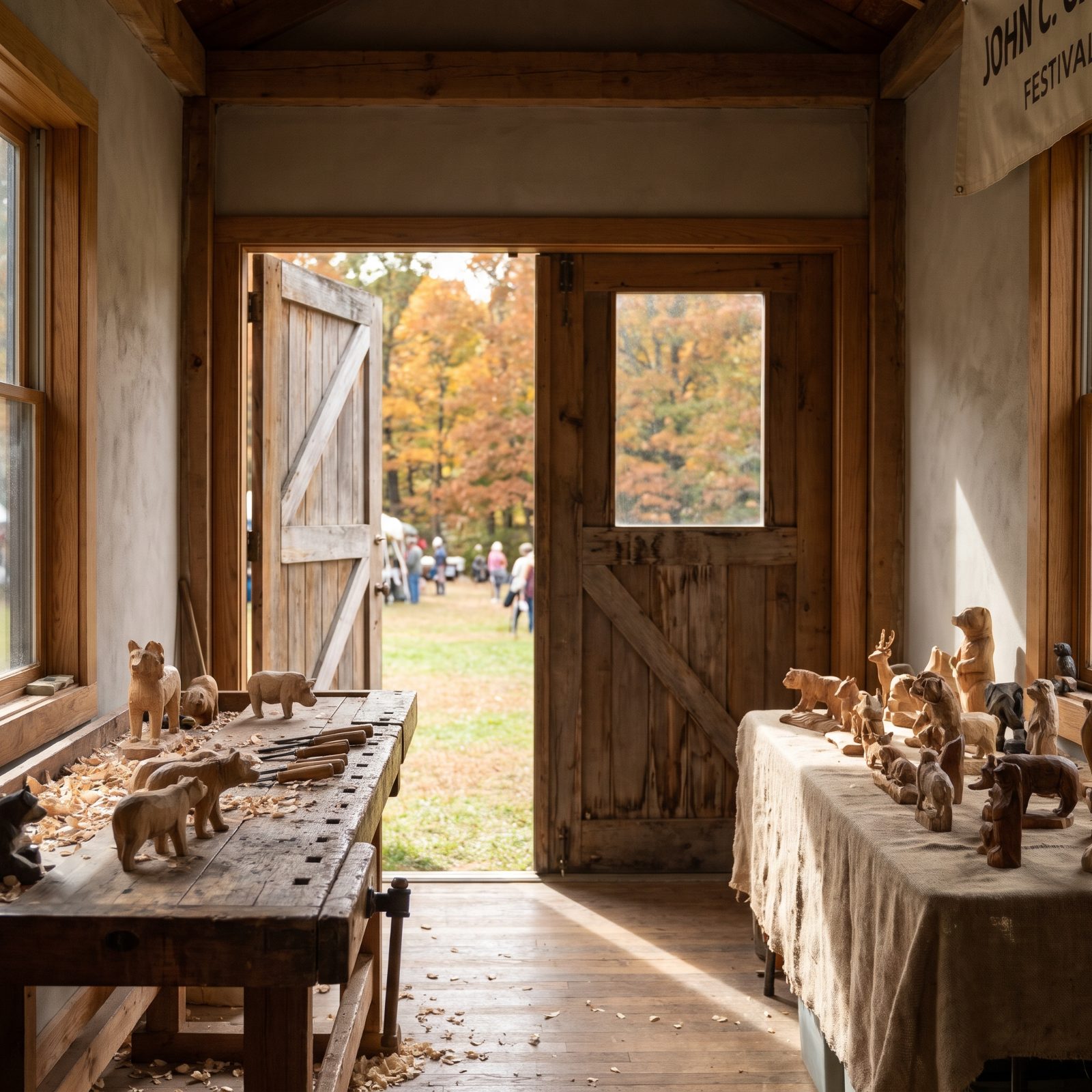
Brasstown is small and quiet, and it’s worth the drive for one place: the John C. Campbell Folk School. Its Fall Festival hit its 50th year in early October, pulling in visitors from across the Southern Appalachians.
The Brasstown Carvers work and sell their pieces in the Woodcarving Studio, and watching a block of wood become a figure under someone’s hands is slow, satisfying theater. Half a century is a long run for any gathering. It tells you this corner of the mountains has been making beautiful things by hand for generations, and has no plans to stop.
Please note that some of the imagery in this article were created with the aid of AI image generators.