
The waterfall where Daniel Day-Lewis fought his way through The Last of the Mohicans still thunders down a gorge in Rutherford County. The ballpark where Kevin Costner delivered the Bull Durham speech still hosts travel-ball tournaments. North Carolina has doubled as the Catskills, District 12, rural Georgia, and a town called Ebbing, Missouri — all without leaving its own borders. Some of these spots got knocked flat by Hurricane Helene and clawed their way back open. We rounded up the ones worth the drive, with the real places and the productions that found them.
17. Chimney Rock State Park: The Cliff Where The Last of the Mohicans Ended
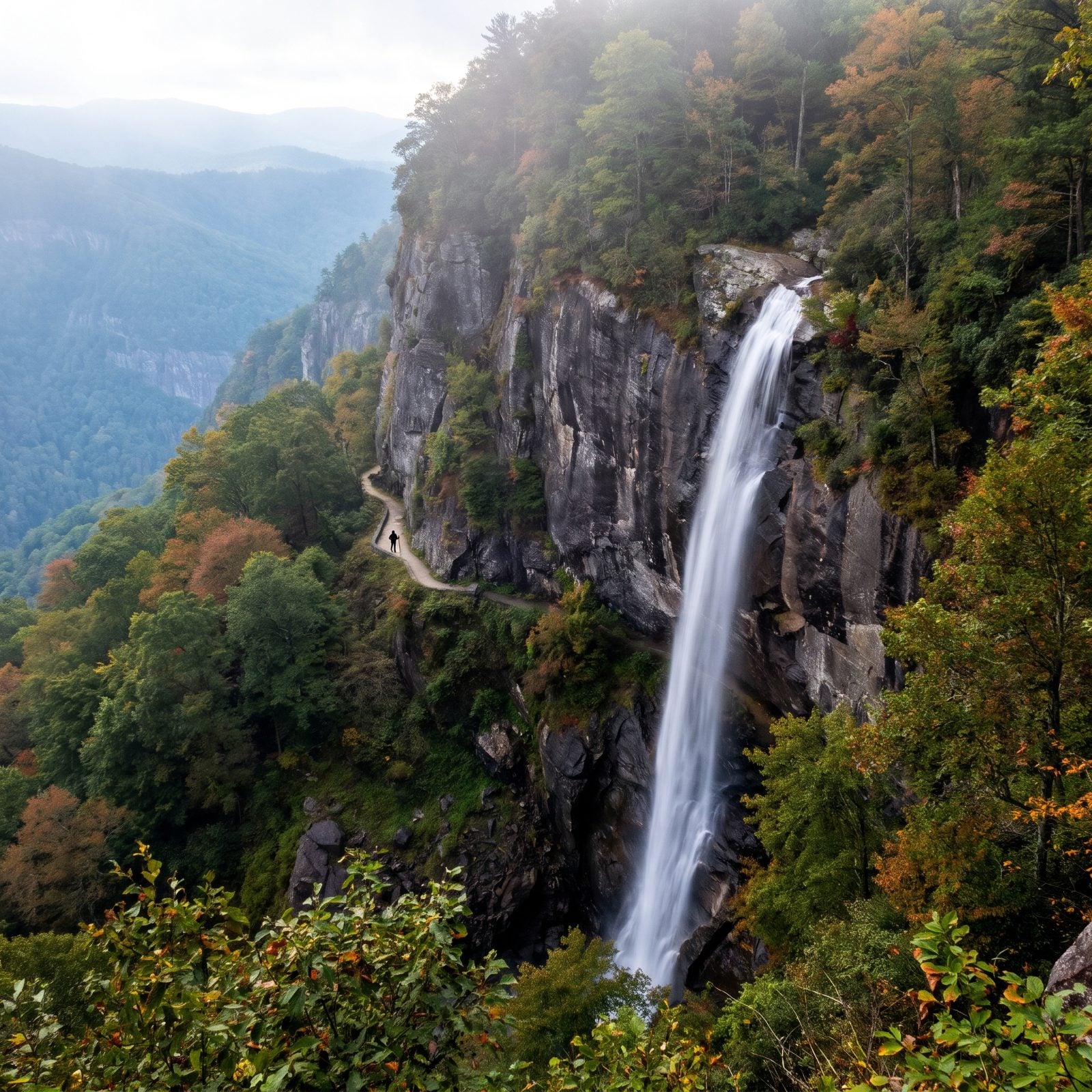
Daniel Day-Lewis fought his final battle at the top of these falls in 1992. The climactic sequence of The Last of the Mohicans was shot right along the Cliff Trail, with the falls standing in for a wild frontier that never existed anywhere but here. The water plunges hundreds of feet into Hickory Nut Gorge, and it looks every bit as cinematic in person as it does on film.
Hurricane Helene closed the park hard. It reopened June 27, 2025, running only Friday through Monday at first, reservations required. Don’t just show up. Check chimneyrockpark.com for current hours and which trails are actually open before you make the drive.
16. Lake Lure: The Water Behind Dirty Dancing’s Most Famous Lift
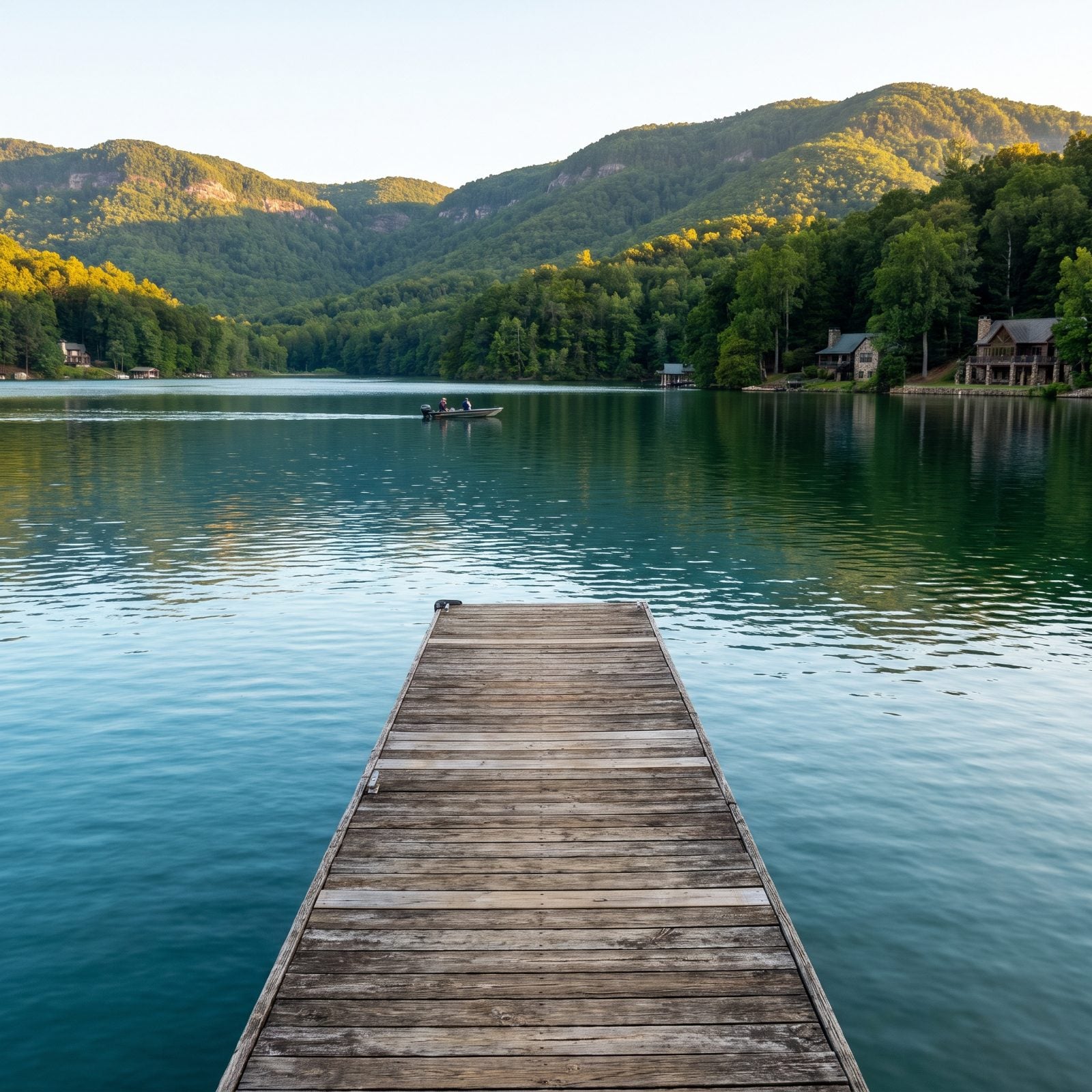
Everyone pictures the Catskills when they think of Dirty Dancing. In truth the crew shot many of the film’s signature scenes right here at Lake Lure. Filming started in September 1986 because the New York resorts had already shut for the season, so North Carolina got the call.
Baby asks her father for money at the golf course at nearby Rumbling Bald Resort. The town leaned into its brush with fame and started holding a Dirty Dancing celebration back in 2010.
Helene closed the lake for the better part of two years. It reopened to boaters and swimmers the weekend of May 16, 2026. Stand on the shore now and you can feel how hard that recovery was won.
15. Biltmore Estate: Richie Rich’s Mansion and Forrest Gump’s Running Road
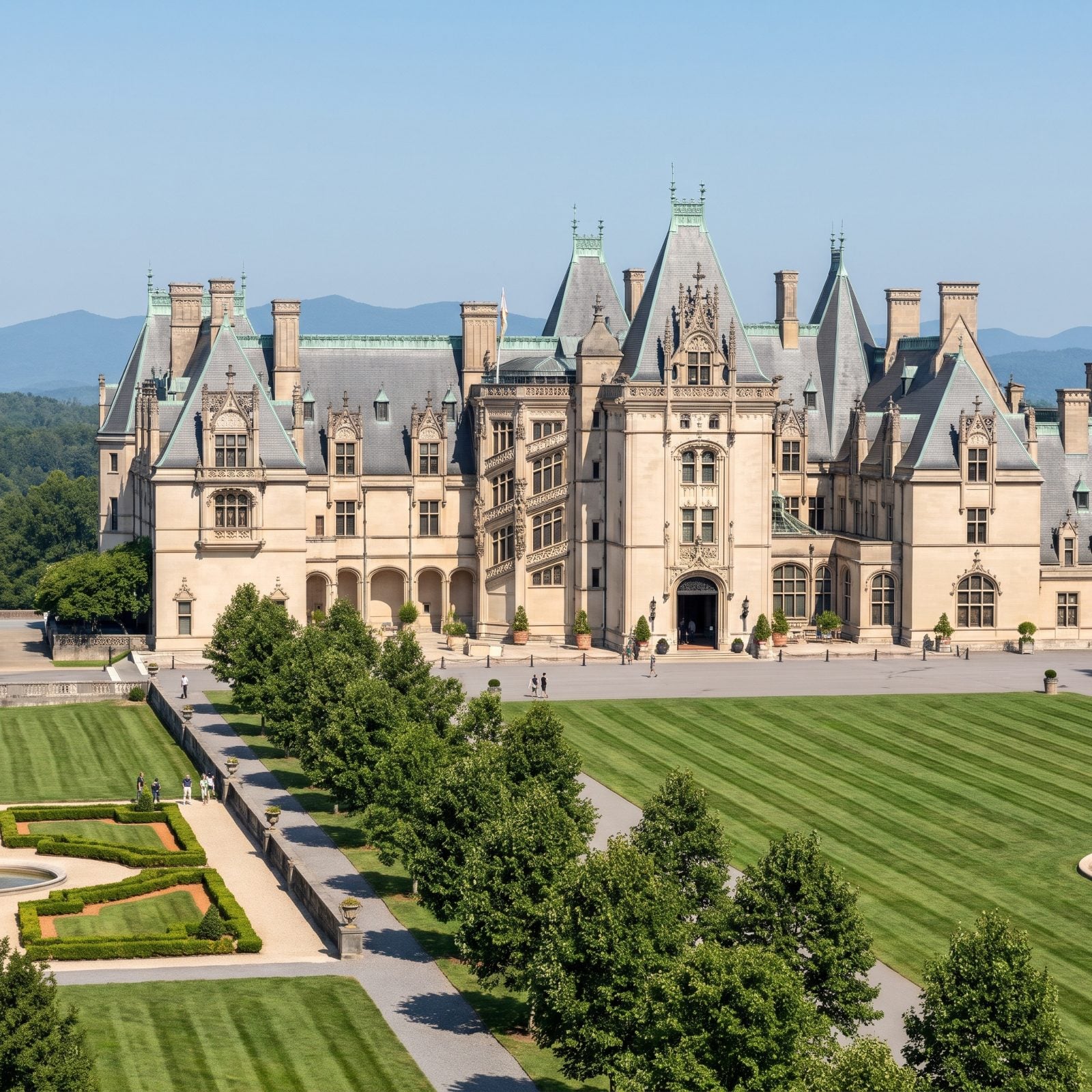
The estate sprawls across thousands of acres and has played the backdrop for more than a dozen feature films — a résumé most actual actors would envy. Biltmore House stood in as the mansion of the world’s richest comic book family in Richie Rich in 1994. And in one of Forrest Gump’s cross-country running montages, Forrest is on the estate road leading to The Inn on Biltmore Estate and Antler Hill Village.
The list keeps going: Being There, The Last of the Mohicans, Hannibal. There’s something fitting about America’s largest private home moonlighting as every filmmaker’s shorthand for old money. It doesn’t have to act. It already looks the part.
14. DuPont State Recreational Forest: Triple Falls and The Hunger Games
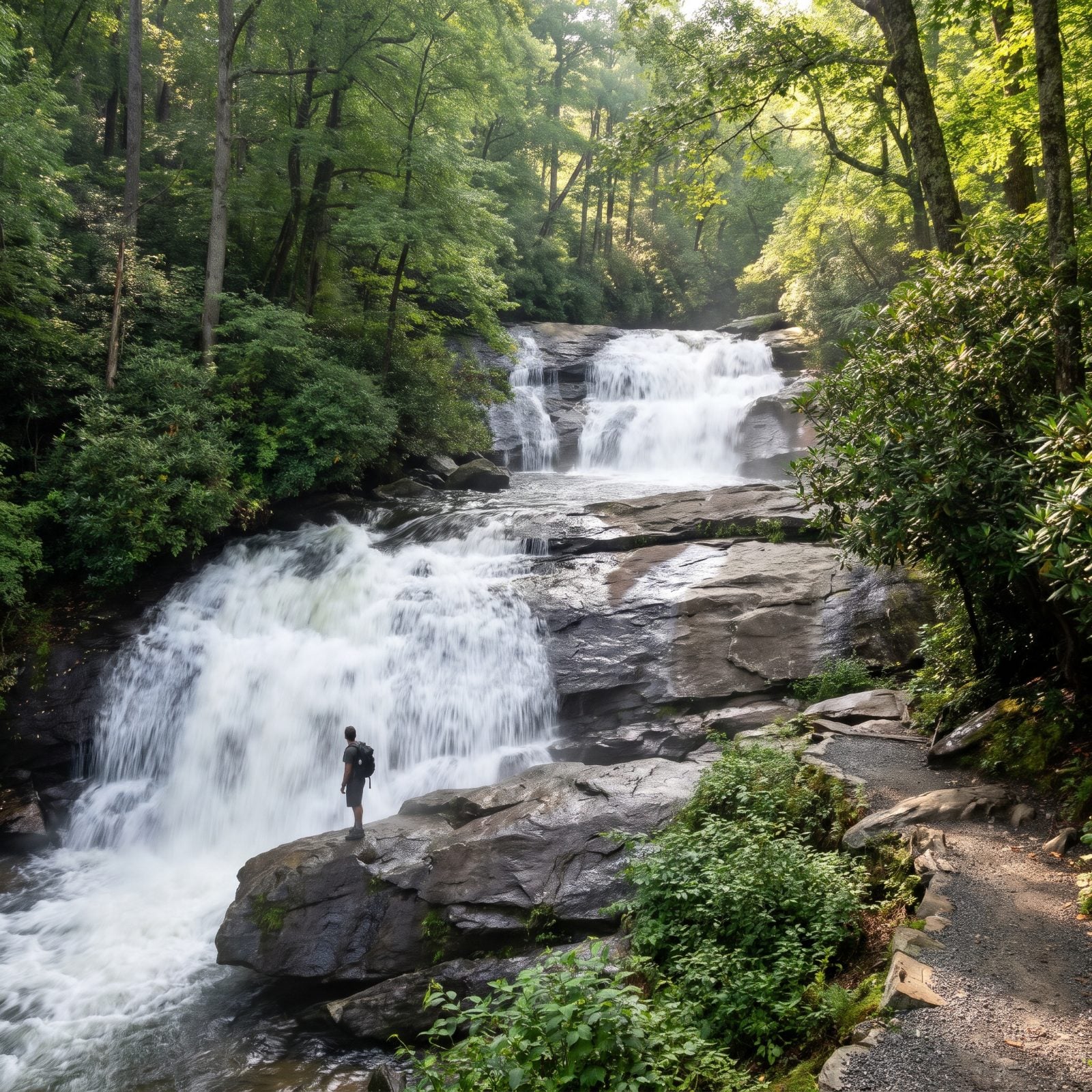
Triple Falls tumbles down three broad tiers of rock on the Little River, and if it looks familiar, you probably caught it in the first Hunger Games movie in 2012. The forest covers more than ten thousand acres and holds four major waterfalls, less than an hour south of Asheville near Cedar Mountain.
The foot-traffic-only Triple Falls Trail reopened May 21, 2025, after temporary repairs following Helene. Staff will tell you to come on a weekday. Weekends pack out fast, and nobody drives an hour to share a waterfall with a hundred strangers.
13. Henry River Mill Village: The Real District 12
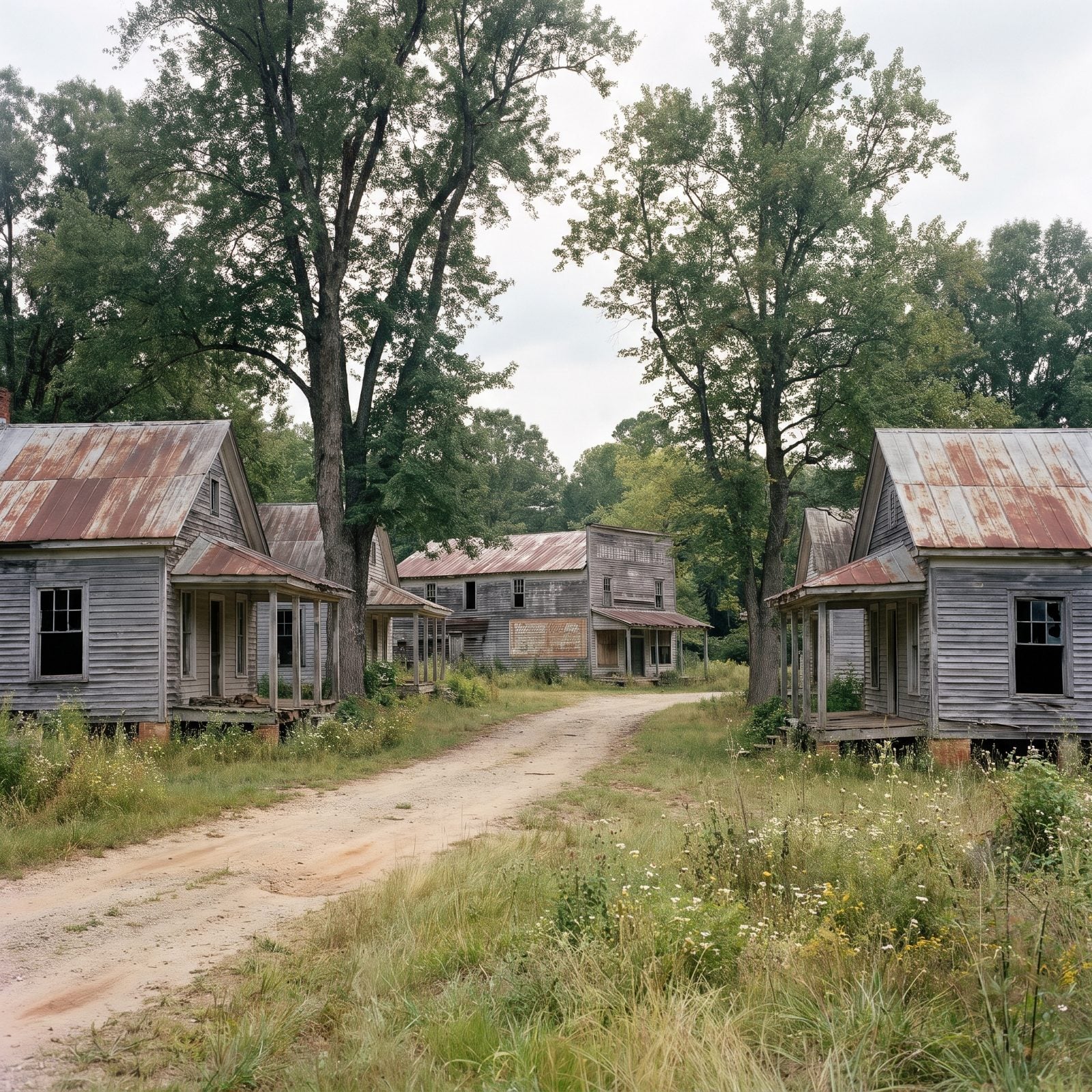
This old cotton mill village became District 12 in the first Hunger Games — the grim coal town Katniss calls home. It sits just outside Hildebran, on the Burke County side of the line near Hickory, a cluster of weathered houses that looked post-apocalyptic before anyone ever pointed a camera at them.
Here’s what people get wrong about it: the place is privately owned, so you can’t just wander in. Visitors come through on history tours, events, and paranormal tours, one of those ghost tours already on the calendar for April 2026. Book ahead. You can drive through on Henry River Road, but the buildings are private property, so stay on the road unless you’re on a booked tour.
12. Lake James State Park: Where They Built Fort William Henry
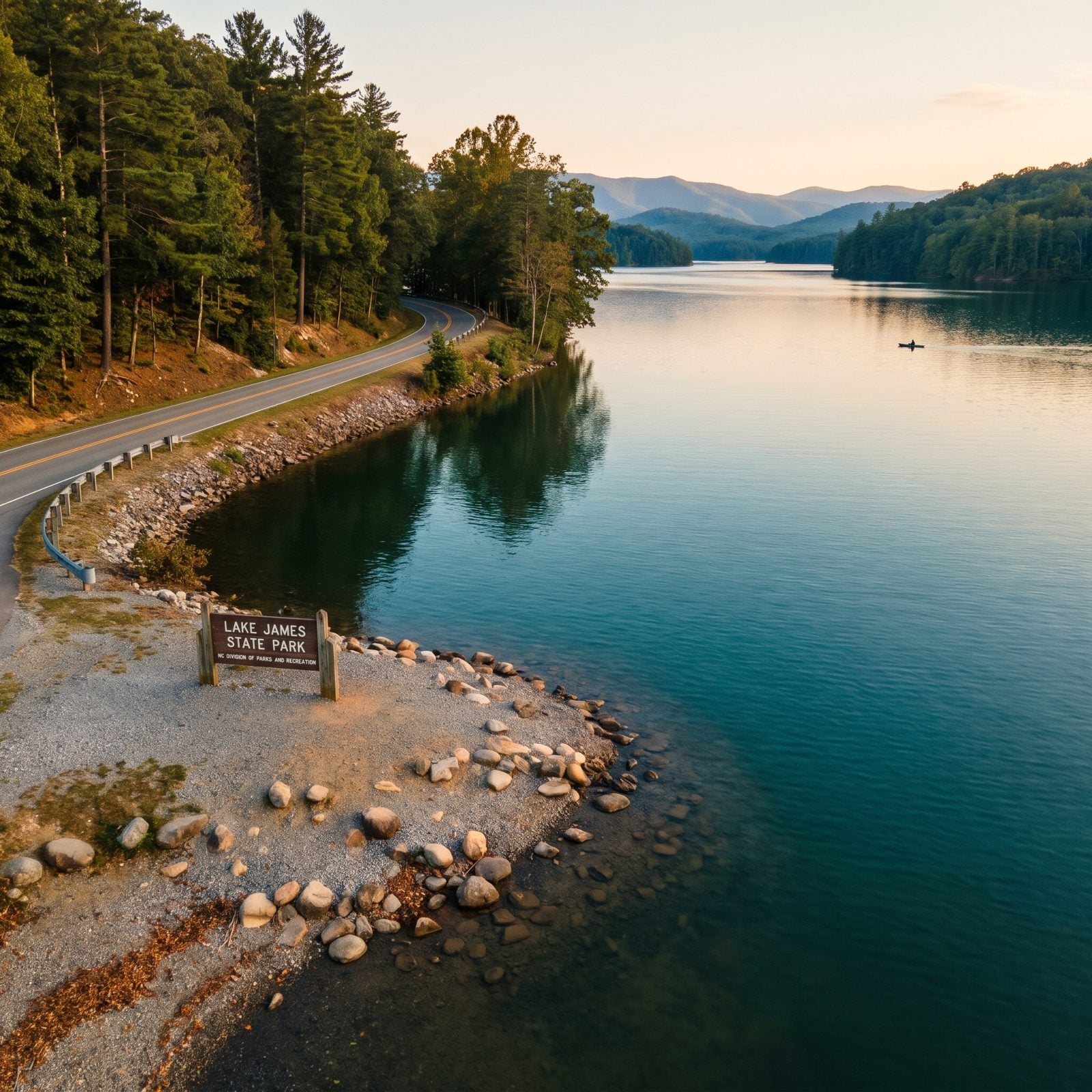
The Last of the Mohicans was shot in three main North Carolina spots, and Lake James was one of them. The film’s Fort William Henry — a recreation of a real fort from upstate New York — went up right along the shore here, north of I-40 and about 40 miles east of Asheville.
The set reportedly stood at the northernmost point of the lake, where NC 126 bends along the water. The fort is long gone. What stays is the shoreline, plus a brown wooden sign reading “Lake James State Park” from the NC Division of Parks and Recreation, standing on the gravel shore of this reservoir straddling Burke and McDowell counties.
11. Grandfather Mountain: Forrest Gump Curve, Blink and You Miss It
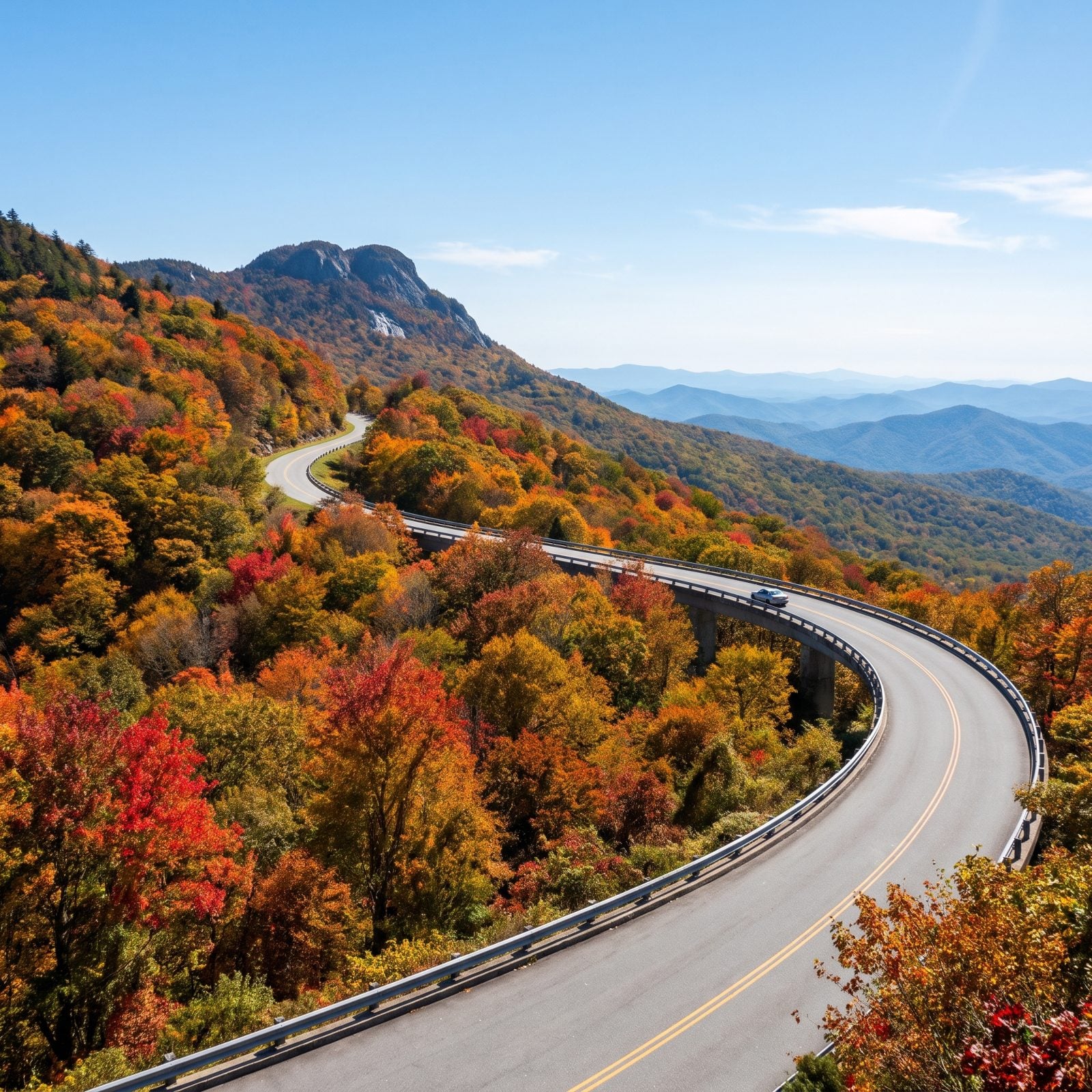
In Forrest Gump, Forrest runs up a stretch of Grandfather Mountain now officially called Forrest Gump Curve, on the main road to the summit, between the Wilson Center for Nature Discovery and the Mile High Swinging Bridge. It comes a little after the halfway mark of the famous running montage, the moment a crowd of followers falls in behind him.
Fair warning: the shot lasts about five seconds. And here’s the fact that ruins it for some people — Tom Hanks isn’t even the runner in this scene. Blink and the whole thing’s over. But the curve itself, with the mountain rearing up behind it, is worth the stop no matter how brief its screen time.
10. Durham Athletic Park: The Original Home of Bull Durham
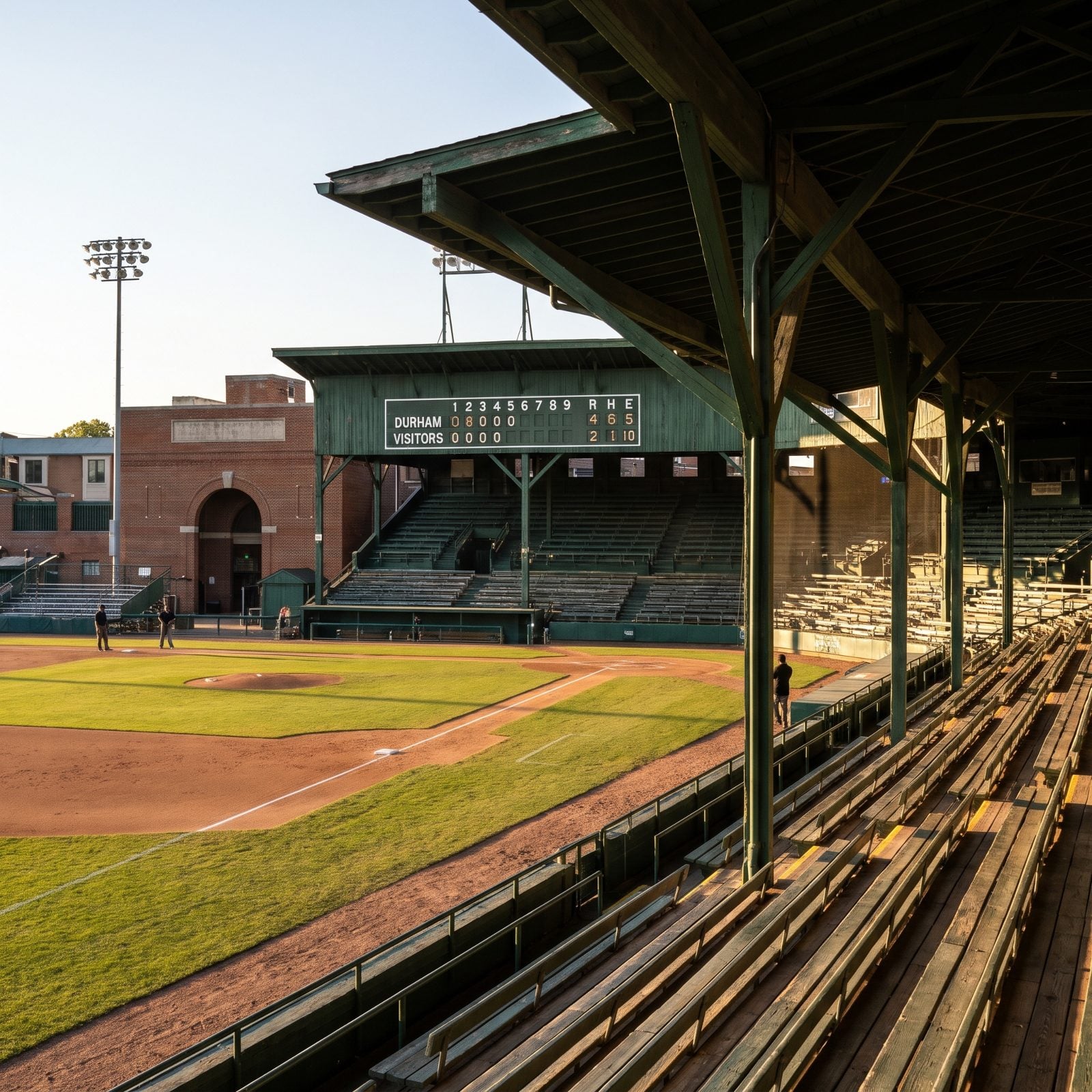
Bull Durham was filmed here in 1987 (it hit theaters in 1988), and if you’ve seen the movie, you already know these stands. The park dates to 1926 and served as the Durham Bulls’ home field until 1994, when the team moved to the newer Durham Bulls Athletic Park downtown.
It never got mothballed into a shrine, which we kind of love. High school teams and travel-ball tournaments still play on it. The City of Durham has been weighing what to do with the park long-term, so its future is an open question. For now it’s exactly what it always was — a working ballfield that happened to host one of the best baseball movies ever made.
9. McCormick Field: Babe Ruth Played Here, So Did Bull Durham
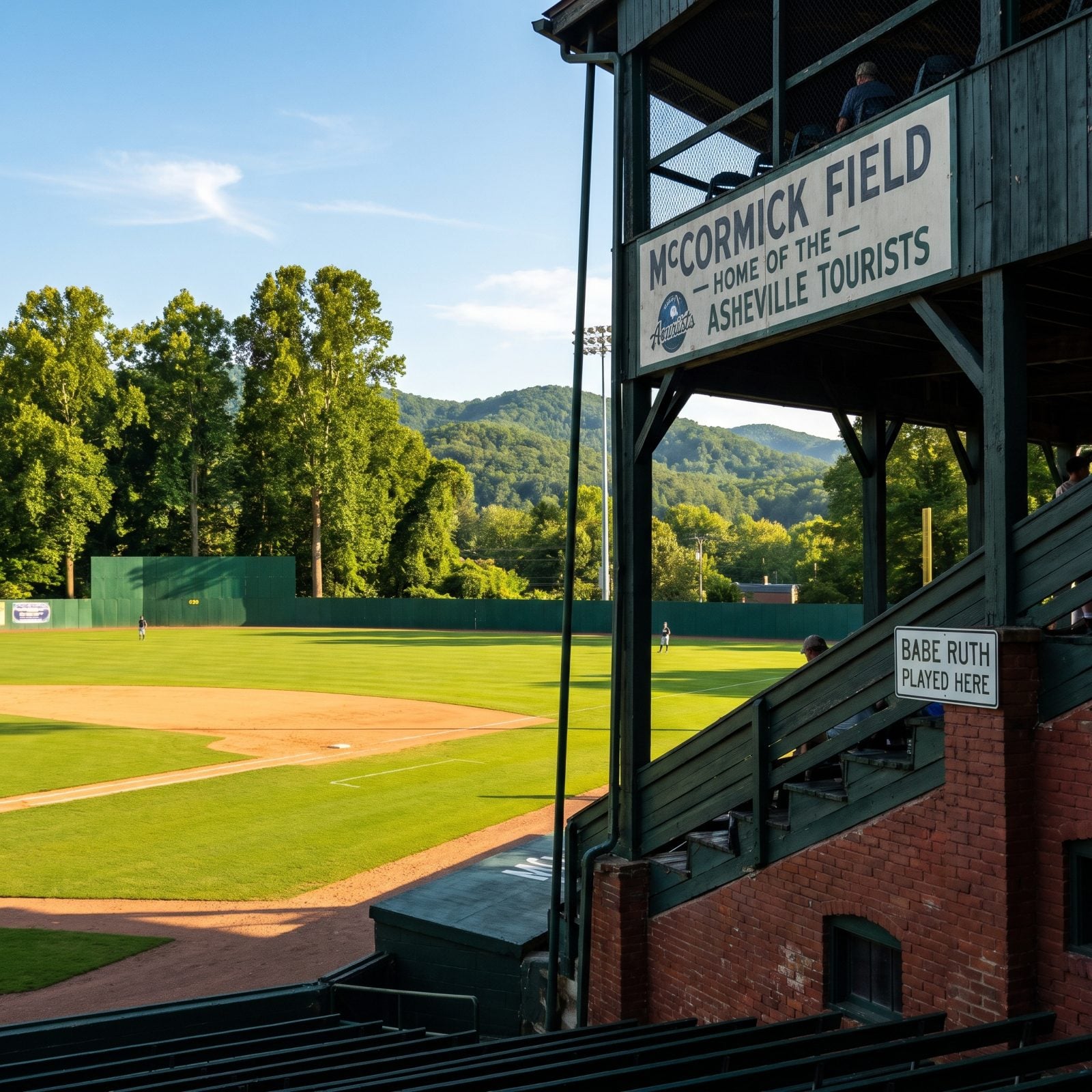
Bull Durham didn’t shoot all its baseball in Durham, and McCormick Field in Asheville (renamed HomeTrust Park in April 2026) was one of the other North Carolina ballparks it used. The park opened in 1924, putting it among the oldest in the minor leagues, and Babe Ruth himself played here.
It’s still owned by the City of Asheville and still home to the Asheville Tourists, so unlike a lot of film sites, you can do more than squint at it from the road. Buy a ticket. Sit in the stands at 30 Buchanan Place during the season and watch actual baseball in the same park where Costner and company shot a classic.
8. Downtown Sylva: The Town That Became Ebbing, Missouri
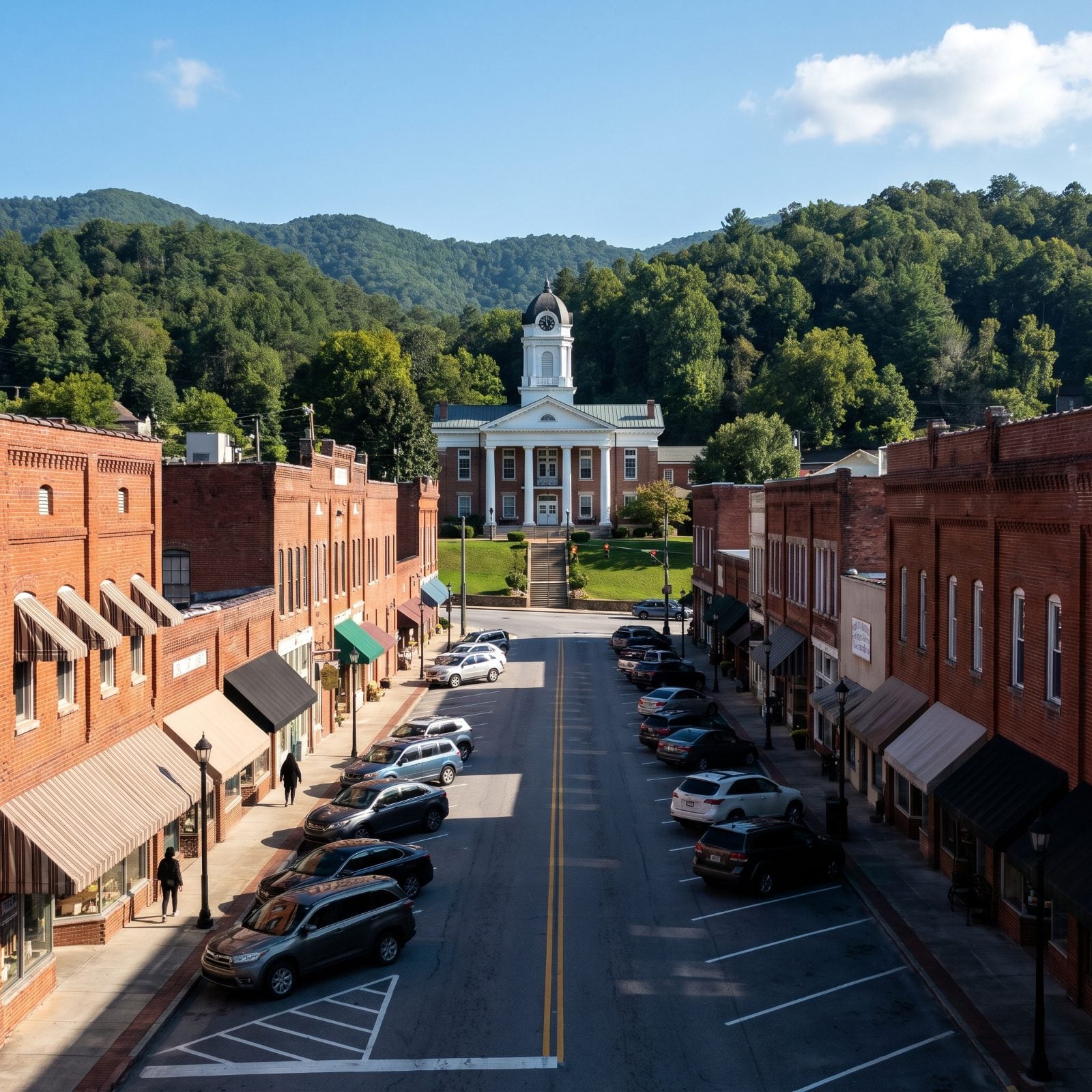
From May 2 to 21, 2016, this mountain town turned itself into the fictional Ebbing, Missouri, for Three Billboards Outside Ebbing, Missouri. Downtown Sylva carried the bulk of the shoot, and the disguise held up well enough to anchor an Oscar-winning film.
The movie’s Ebbing Police Station is actually Sassy Frass Consignment at 581 W. Main Street. Sylva’s real police station sits two blocks away near the courthouse — its own little joke if you know where to look. Jackson County’s tourism office puts out a printable guide to the filming locations, so you can walk the whole thing on your own.
Of everything here, Sylva might be the easiest to actually experience. A real downtown you can wander. No tour ticket, no reservation, no five-second blink of fame. Just a main street that once pretended to be somewhere worse off than it is.
7. The Fugitive Train Wreck Still Rusting Near Dillsboro
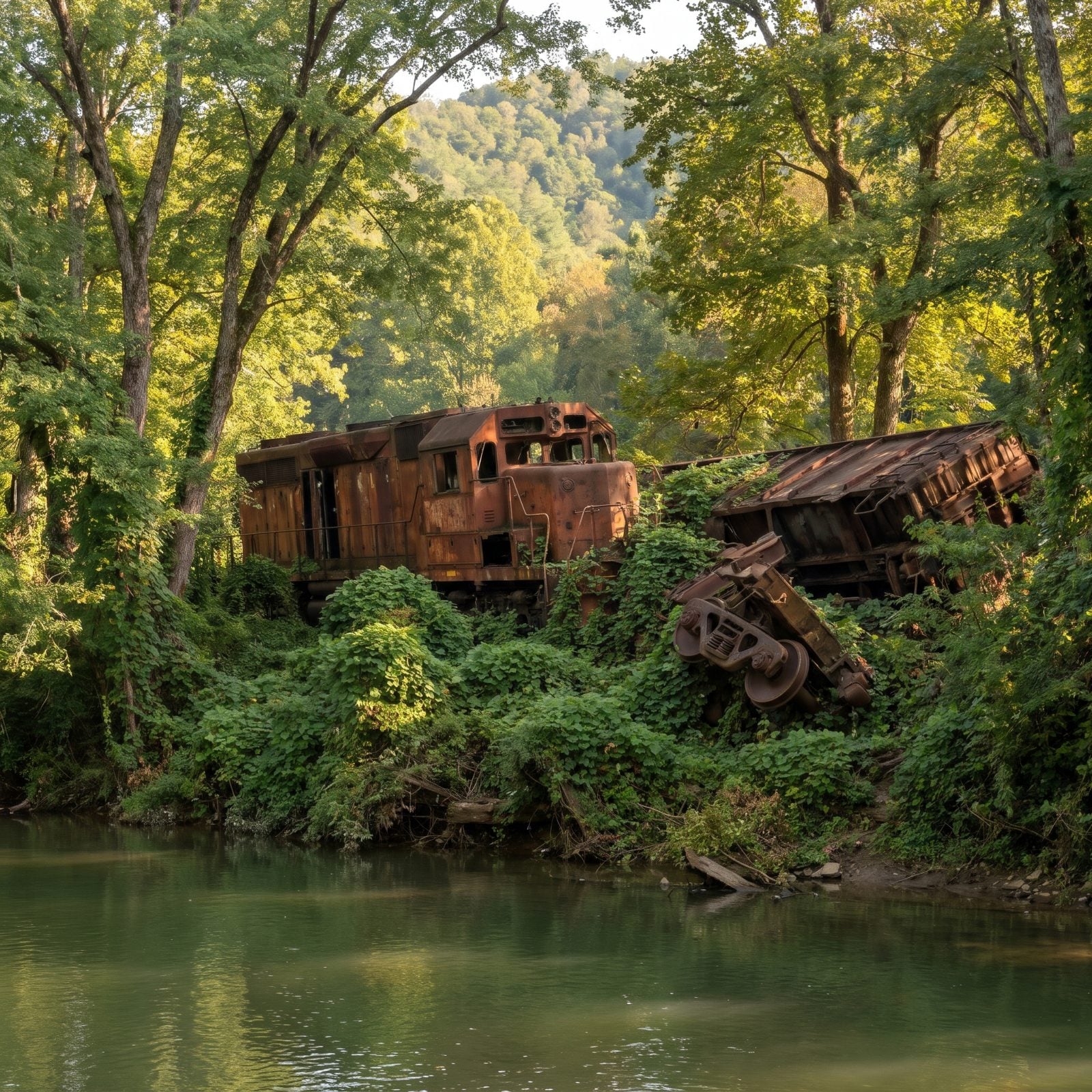
Most movie sets get struck the day filming wraps. This one never did. The train crash in The Fugitive (1993) was a real collision between locomotives and a prison bus staged in Dillsboro, and the wreckage is still out there, rusting into the hillside above the Tuckasegee River.
You can’t walk up to it — it sits on private land owned by the Great Smoky Mountains Railroad, best seen from the Tuckasegee River Excursion train, which rolls past but never stops. The railroad plans to leave it right where it is. Thirty years of rust, and it’s become one of the best accidental monuments in western North Carolina.
6. Cheoah Dam, Where Harrison Ford Took the Leap
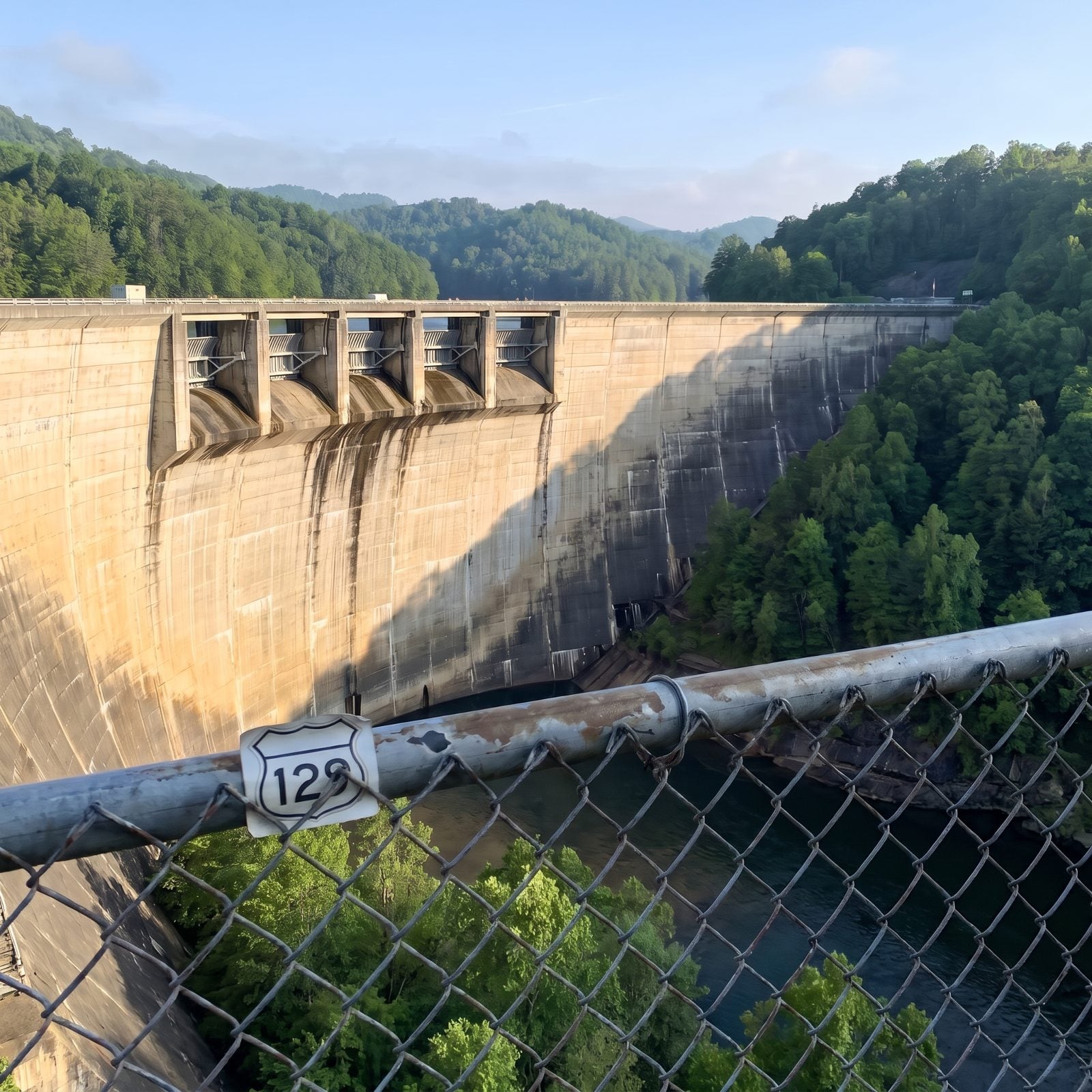
Two hundred twenty-five feet of concrete, and a stunt dummy went off the top of it. Harrison Ford’s character jumped from Cheoah Dam in The Fugitive, one of the most quoted escapes in action-movie history. The dam is real, finished in 1919, sitting on the Little Tennessee River in Graham County about 40 miles west of Bryson City.
You don’t need to hunt for a way onto it. US 129 runs right past the dam, near the southern end of the Tail of the Dragon, and the view you want comes from the fenced roadside overlook beside it. Motorcyclists already know this stretch of pavement by heart — now you know what else is parked at the end of it.
5. Southport, the Safe Haven Town That Hollywood Keeps Coming Back To
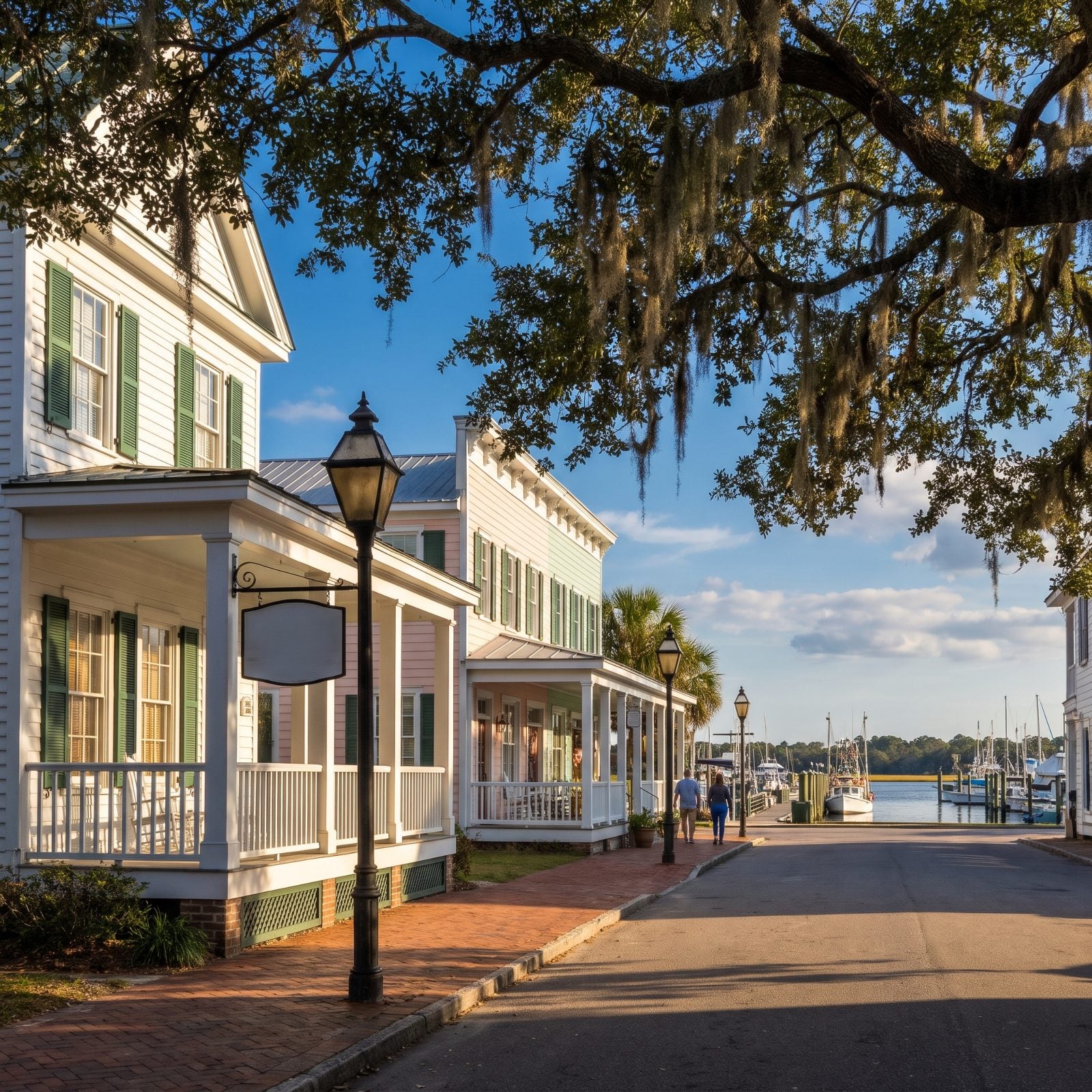
You’ve seen Southport even if you’ve never set foot in it. The town stood in for the setting of Safe Haven (2013).
And it didn’t stop there. Southport also turns up in Firestarter, Crimes of the Heart, A Walk to Remember, and I Know What You Did Last Summer. Something about the live oaks and the marsh views keeps location scouts circling back, decade after decade.
4. Airlie Gardens in Wilmington, the 67-Acre Backlot
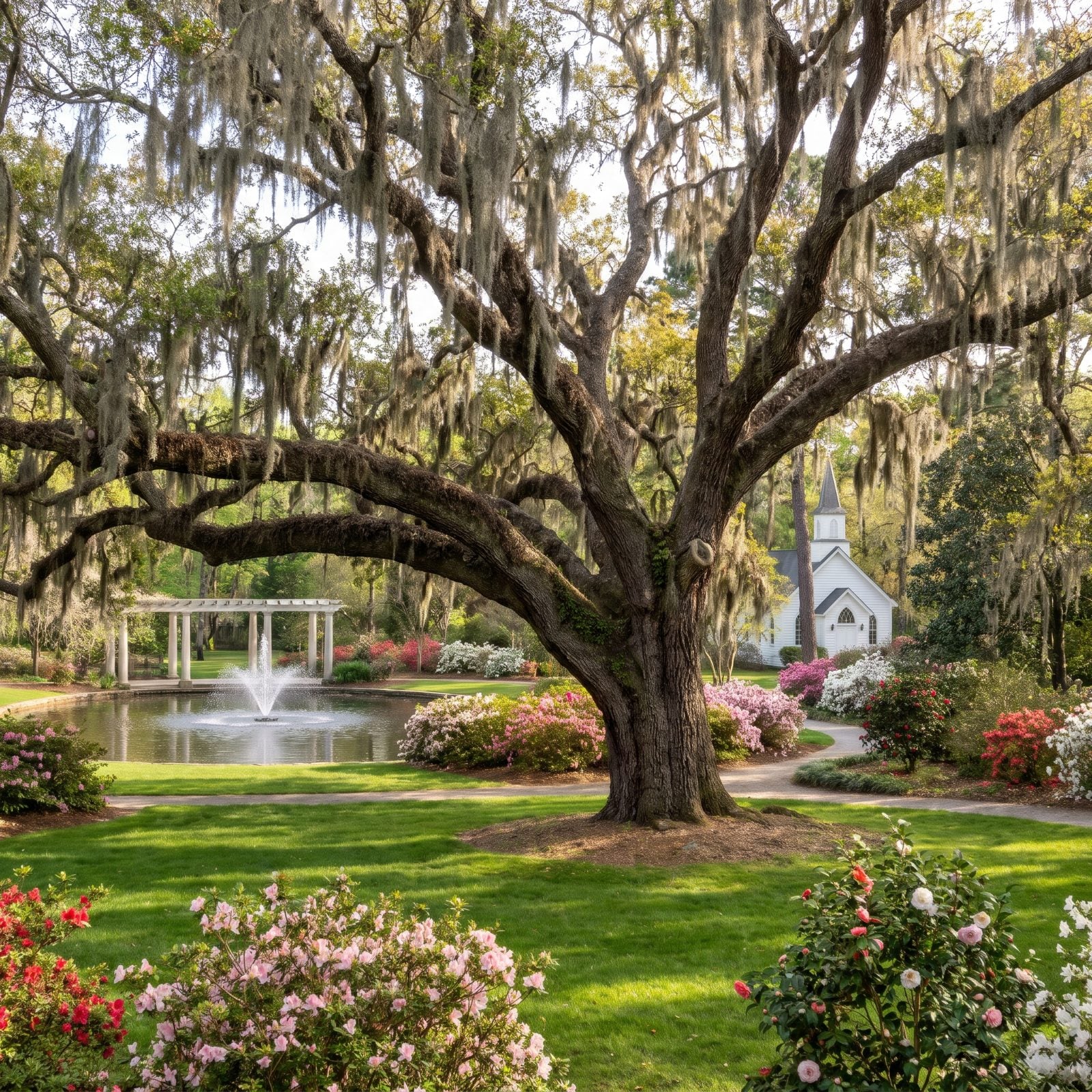
Sixty-seven acres of live oaks, fountains, and bloom. Airlie Gardens in Wilmington has quietly been one of North Carolina’s busiest film sets for decades.
The list runs long. King Kong Lives, Black Knight, and Nicholas Sparks’ The Choice, which filmed its wedding sequence right here. The Pergola Garden showed up in One Tree Hill and Dawson’s Creek, and the Mount Lebanon Chapel played the exterior of St. Henry’s Parish in TV’s Sleepy Hollow. Download Airlie’s “Filmed at Airlie” brochure from the gardens’ website for a self-guided walk. Go in spring if you can — the azaleas don’t act, but they steal scenes anyway.
3. Rodanthe, the Hatteras Island Village That Got Its Own Movie
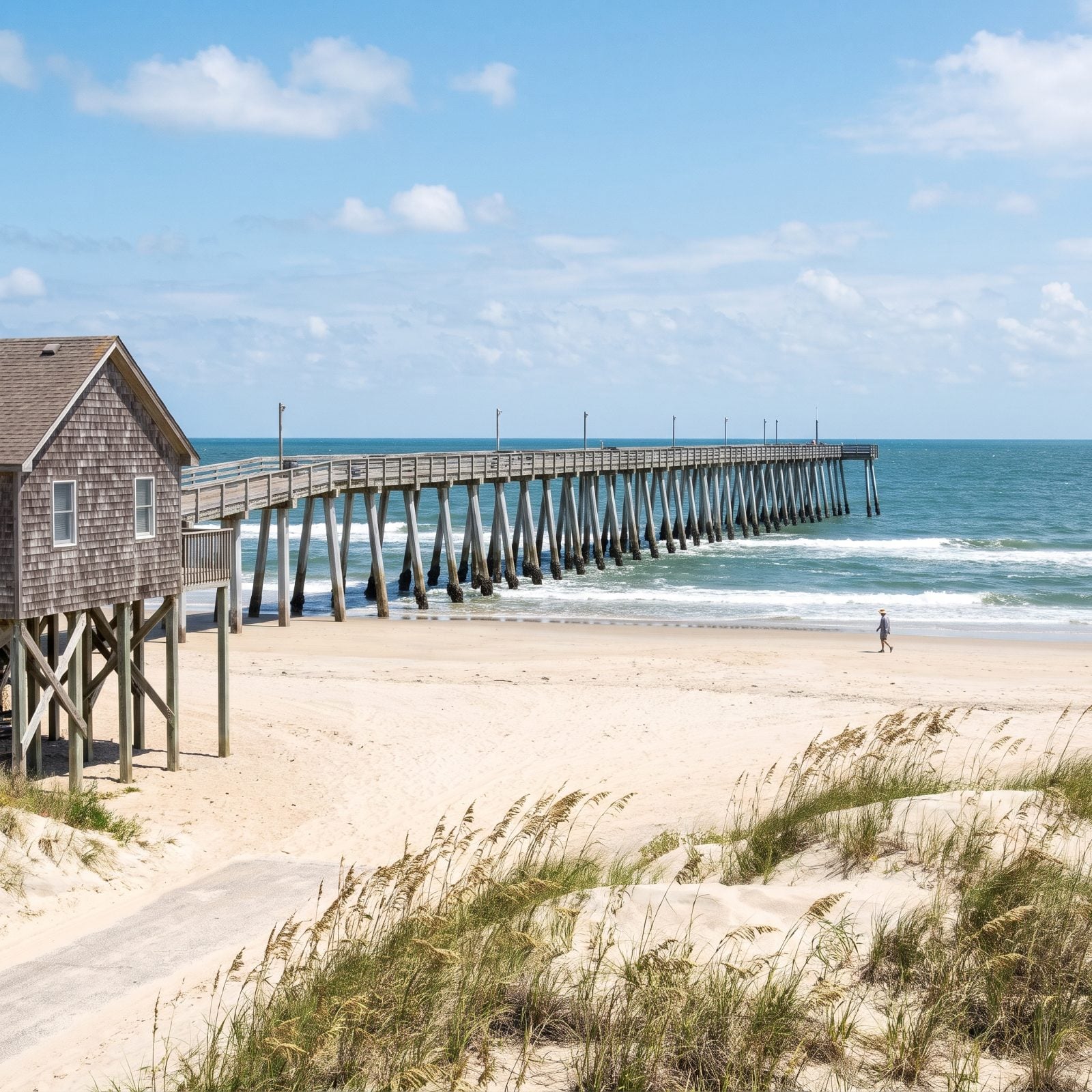
Nicholas Sparks named a book after this place, and the movie actually shot here. Almost all the outdoor scenes in Nights in Rodanthe (2008) were filmed in the village itself, out on Hatteras Island where the road runs thin and the Atlantic does most of the talking.
Rodanthe Pier, at 24251 Atlantic Drive, is where the villagers throw a party after the storm in the film. Richard Gere and Diane Lane stayed up the coast at the Tranquil House Inn on the Manteo waterfront during the shoot, with some interiors done at Wilmington studios. The village is small, windblown, and real. No set dressing could fake that.
2. Charlotte Motor Speedway in Concord, Where the Racing Movies Race

If a movie needed real stock-car racing, it came to Concord. Charlotte Motor Speedway shot many of the racing scenes in Days of Thunder (1990), back when Tom Cruise and Nicole Kidman were tearing up the banking.
Most of the racing in Talladega Nights (2006) was filmed here too, including the “invisible fire” scene, when the track still carried the name Lowe’s Motor Speedway. Then there’s Logan Lucky (2017), shot during the actual Coca-Cola 600 — which means some of what you see on screen is a genuine crowd at a genuine race. The speedway sits at 5555 Concord Pkwy S. Catch a race in season and you’re sitting in the same stands the cameras used.
1. Wadesboro and Anson County, the Real Place Behind The Color Purple
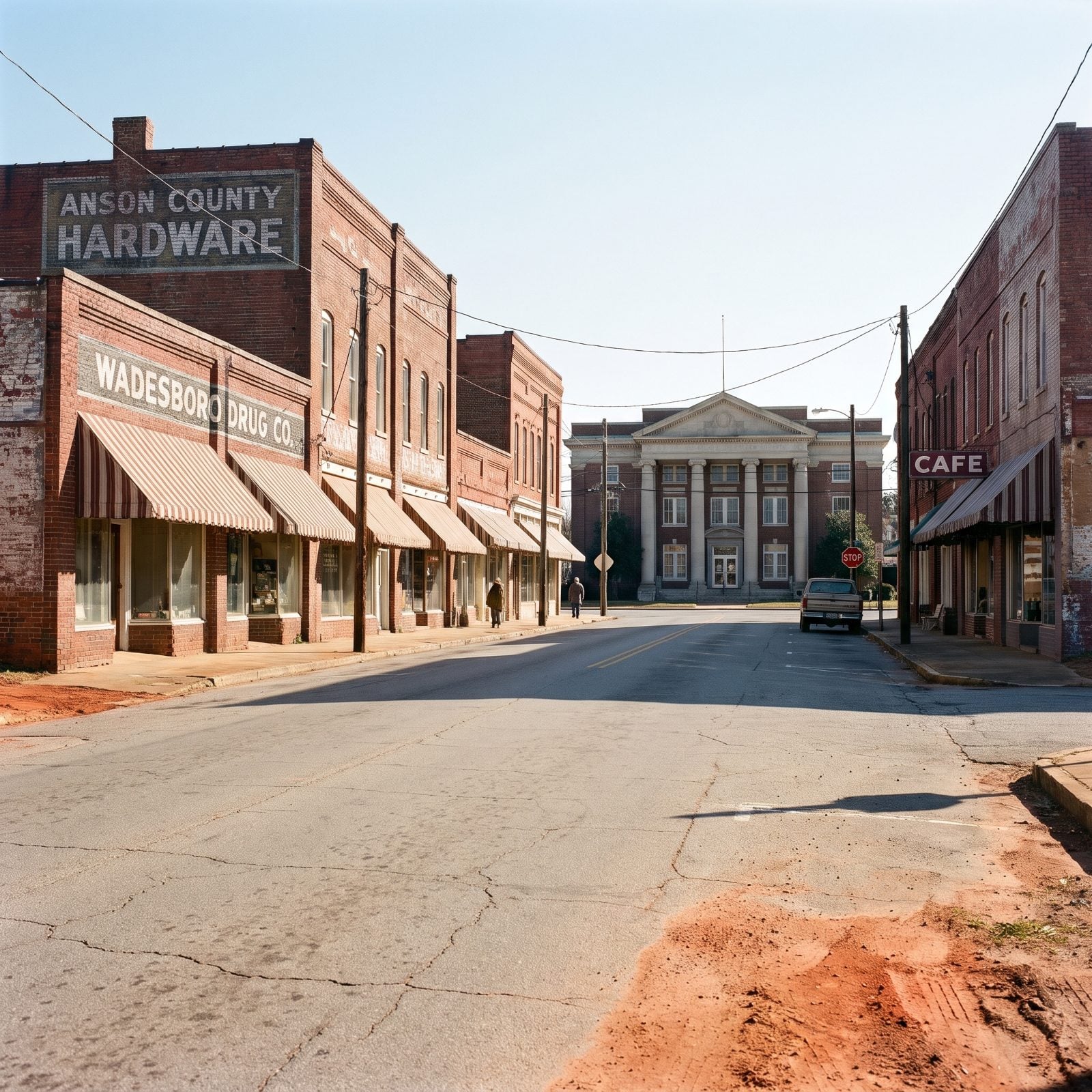
Everyone assumes The Color Purple was shot in Georgia. It wasn’t. Steven Spielberg filmed the 1985 picture across Anson and Union counties in North Carolina.
The immigration office scene, where “Mister” goes looking for answers, was filmed at the Anson County Courthouse, 114 N. Greene Street in Wadesboro. The town scenes went up the road in Marshville, where the crew poured red clay over the paved streets to turn 1980s North Carolina into the rural South of the film. Celie’s farmhouse is the Huntley house near Lilesville, privately owned, so you only look from the road. And here’s one more credit for the county ledger: Evil Dead 2 was shot around Wadesboro and Lilesville in 1986, the year after Spielberg packed up.
They poured clay over paved streets to make one decade pretend to be another. That’s the whole trick of a filming town.
Please note that some of the imagery in this article were created with the aid of AI image generators.