
Richard Morris Hunt stood where the Swannanoa meets the French Broad, looked at the hills, and said this is the Loire Valley. He wasn’t wrong. North Carolina keeps doing this. A grassy bald that reads as Scotland. A tasting room that smells like Tuscany. A Dravidian temple tower rising over Cary traffic, and a patch of English soil in a seaside cemetery that will stay England forever. You can drive the whole state and feel like you’ve knocked out five countries in a long weekend, and the gas runs cheaper than a plane ticket. Here are the places that pull it off.
17. Biltmore Estate, Asheville: A French Chateau That Wandered Into the Blue Ridge
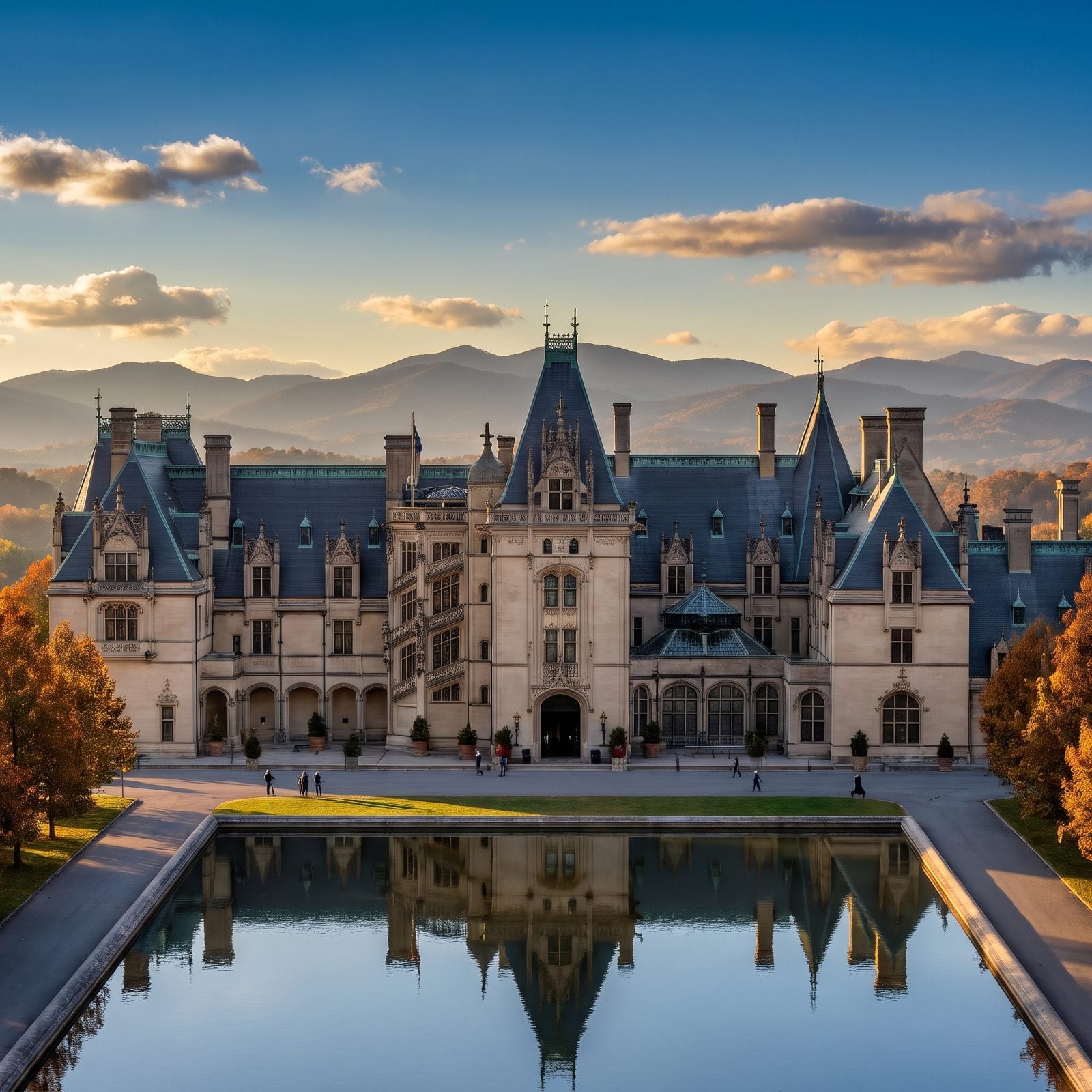
Two hundred and fifty rooms. Thirty-five bedrooms. Dozens of bathrooms in an age when most Americans were still sharing an outhouse. Biltmore opened its doors on Christmas Eve 1895, and it’s still billed as the largest home in America, with more than four acres of floor space under one roof.
The Loire Valley comparison isn’t marketing fluff. Hunt and George Vanderbilt genuinely looked at the French Broad valley and saw France, which is why you get a Francis I chateau instead of a Southern plantation house. Real Renoirs and Sargents hang on the walls, and there are enough fireplaces to heat a small village, because mountain winters don’t care how rich you are.
16. Jockey’s Ridge State Park, Nags Head: The Sahara on the Atlantic
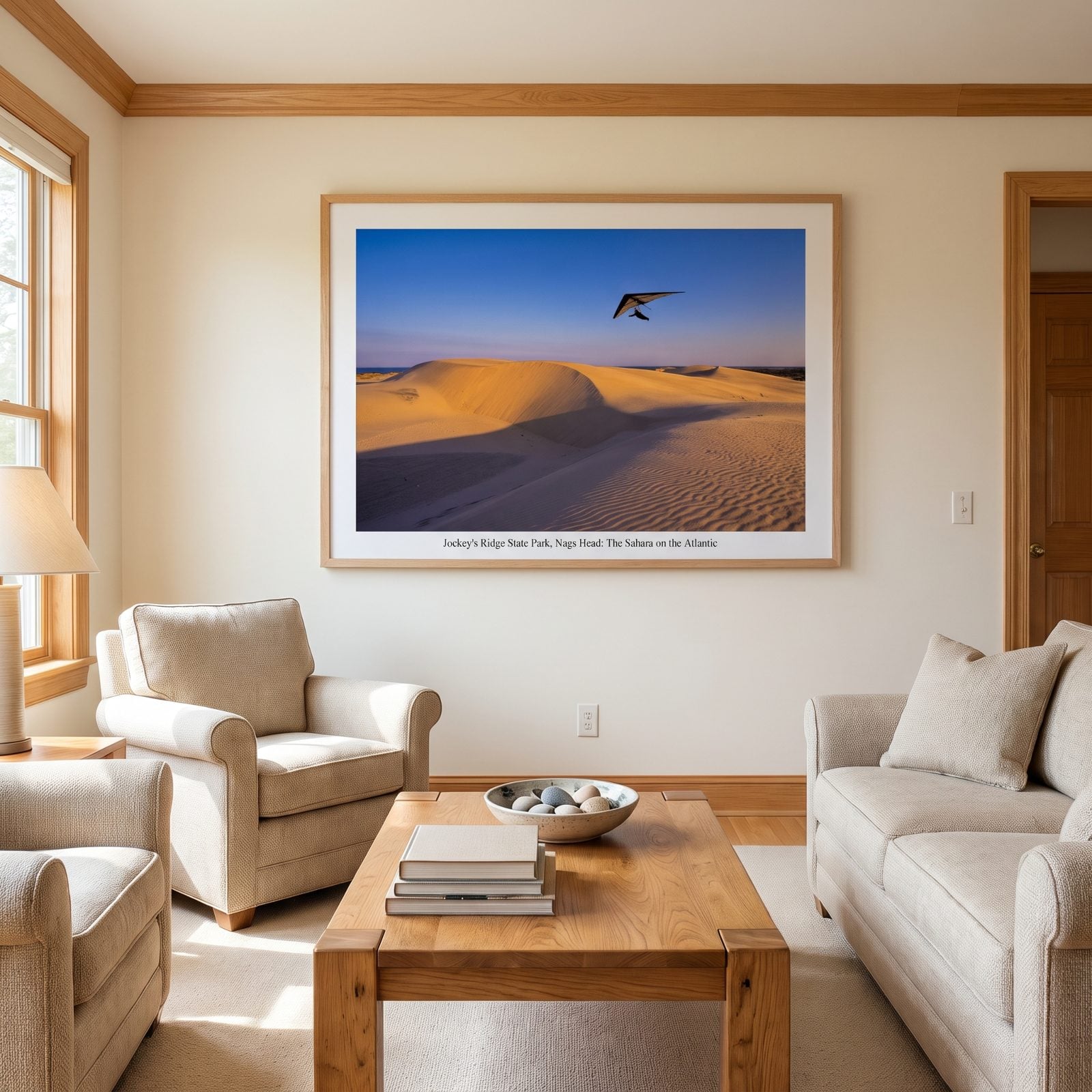
Climb to the top of the big dune and you’ll swear you walked into North Africa. This is the tallest living sand dune system on the Atlantic coast, a desert dropped onto a barrier island in Dare County, and the sand shifts enough that the official height changes with the wind.
Hang gliding is the signature move, and it needs registration. Sandboarding doesn’t, so grab a board from the concessionaire and point yourself downhill. The paddlers, kiteboarders and windsurfers all head for the second access area on Roanoke Sound.
15. Raffaldini Vineyards, Ronda: Tuscany Parked in the Yadkin Valley
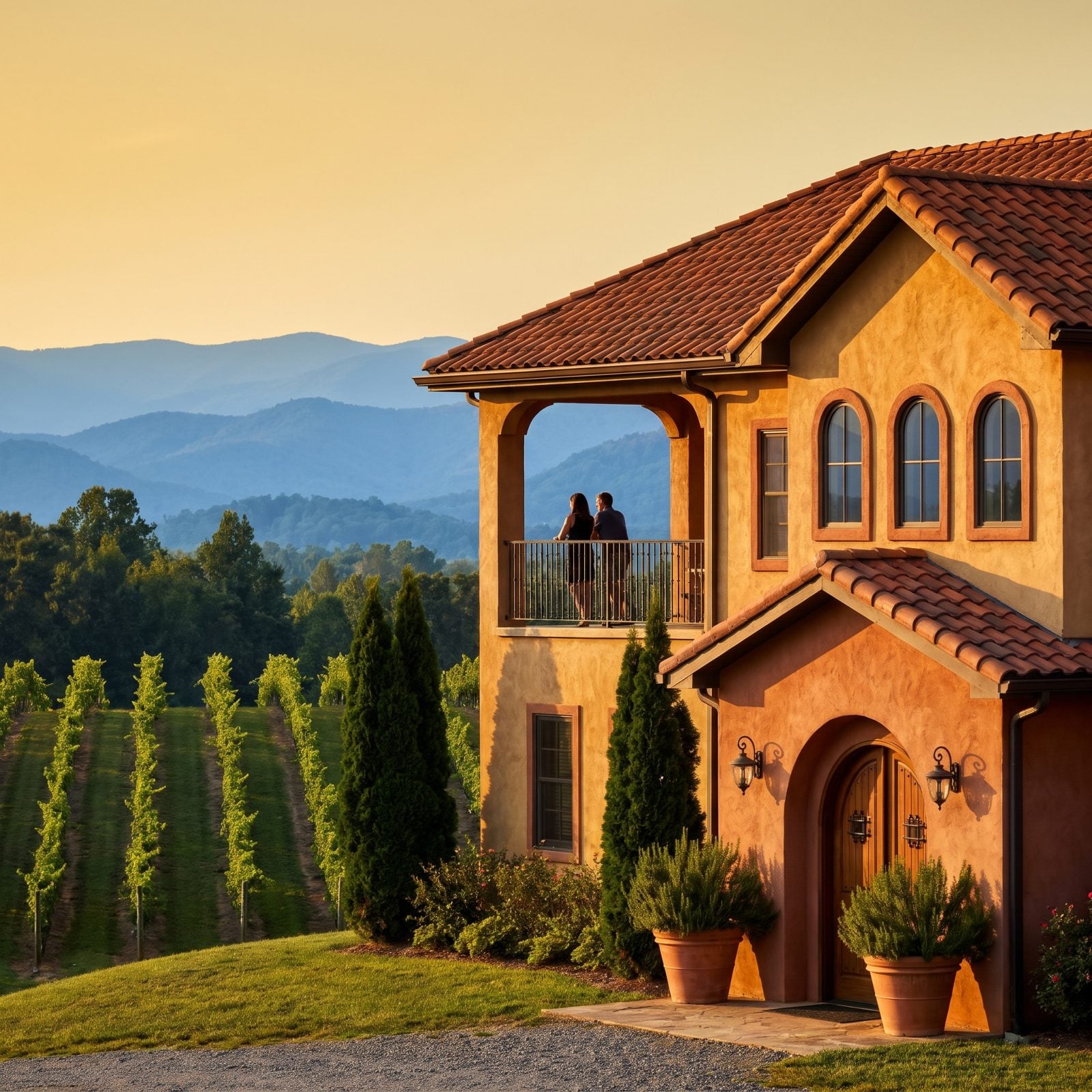
You park the car, climb to the second-floor balcony, and the Blue Ridge rolls out in front of you like you ordered it off a menu. Visit Winston-Salem calls it a taste of Tuscany, and for once the tourism copy is restrained. The tasting room was built to look like a Tuscan country villa, and it does the job without showing off.
Find it at 450 Groce Road near Ronda. Reserve ahead, especially on weekends, because the balcony fills up fast and the view does half the selling. Every September brings Festa Italiana, the big one on the calendar. And don’t write it off as a summer stop: the covered patio gets enclosed in winter.
14. Old Salem, Winston-Salem: A German Moravian Village That Never Left 1766
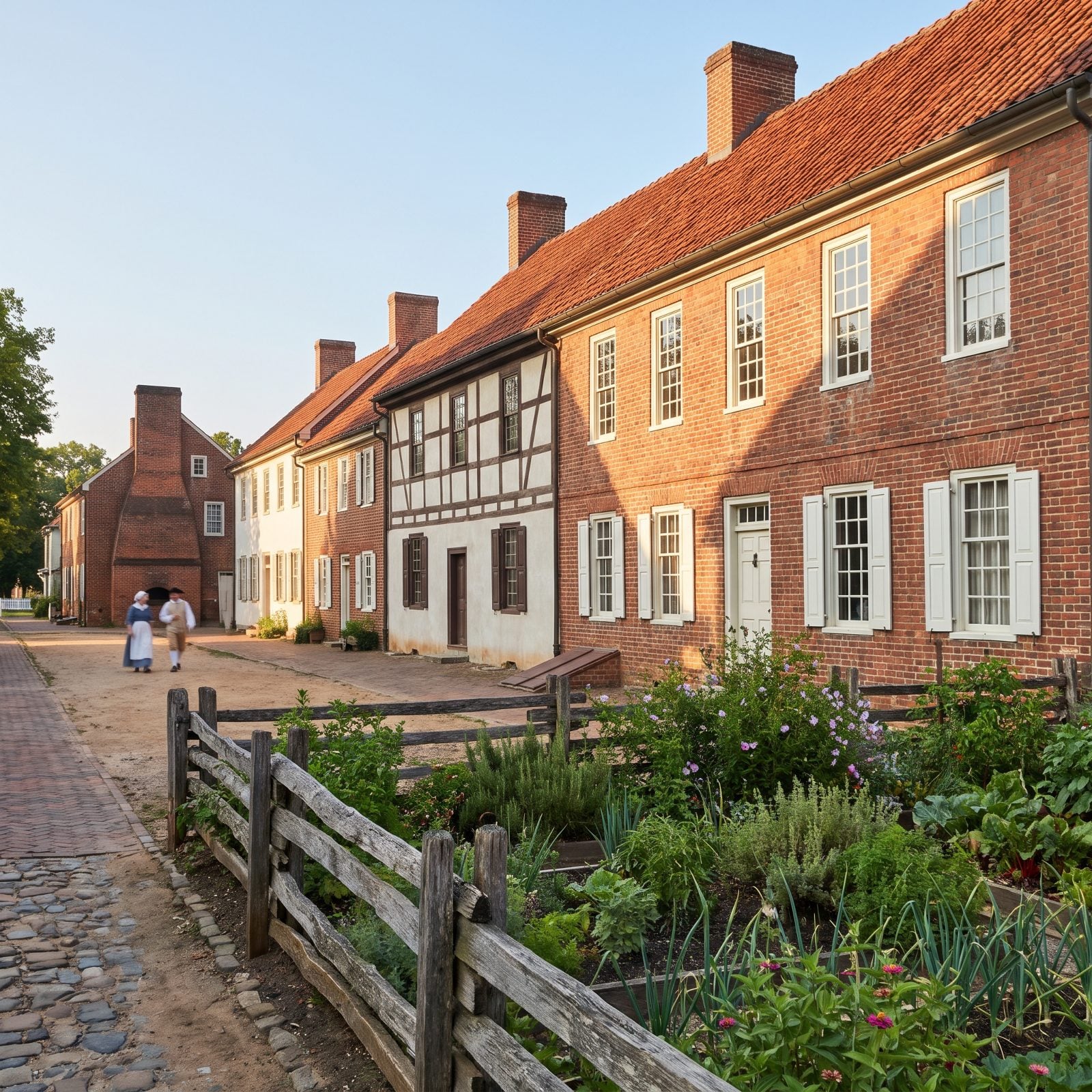
German-speaking Moravians founded Salem in 1766, and the restored village still feels more Central European than Carolina. Nearly 100 acres, close to 100 restored buildings, many of them over two centuries old, and costumed interpreters working the trade shops the old way, with their hands.
Winkler Bakery, open since 1799, calls itself the oldest operating bakery in the country. It still turns out Moravian sugar cake, lovefeast buns, and those paper-thin Moravian cookies that disappear faster than you can buy them. No gate on the village, so you can wander the streets anytime. The interpreted buildings run Wednesday to Saturday, 10 to 4, and need a ticket, so check current hours before you drive out.
13. The British Cemetery, Ocracoke: A Corner of England on a Carolina Island
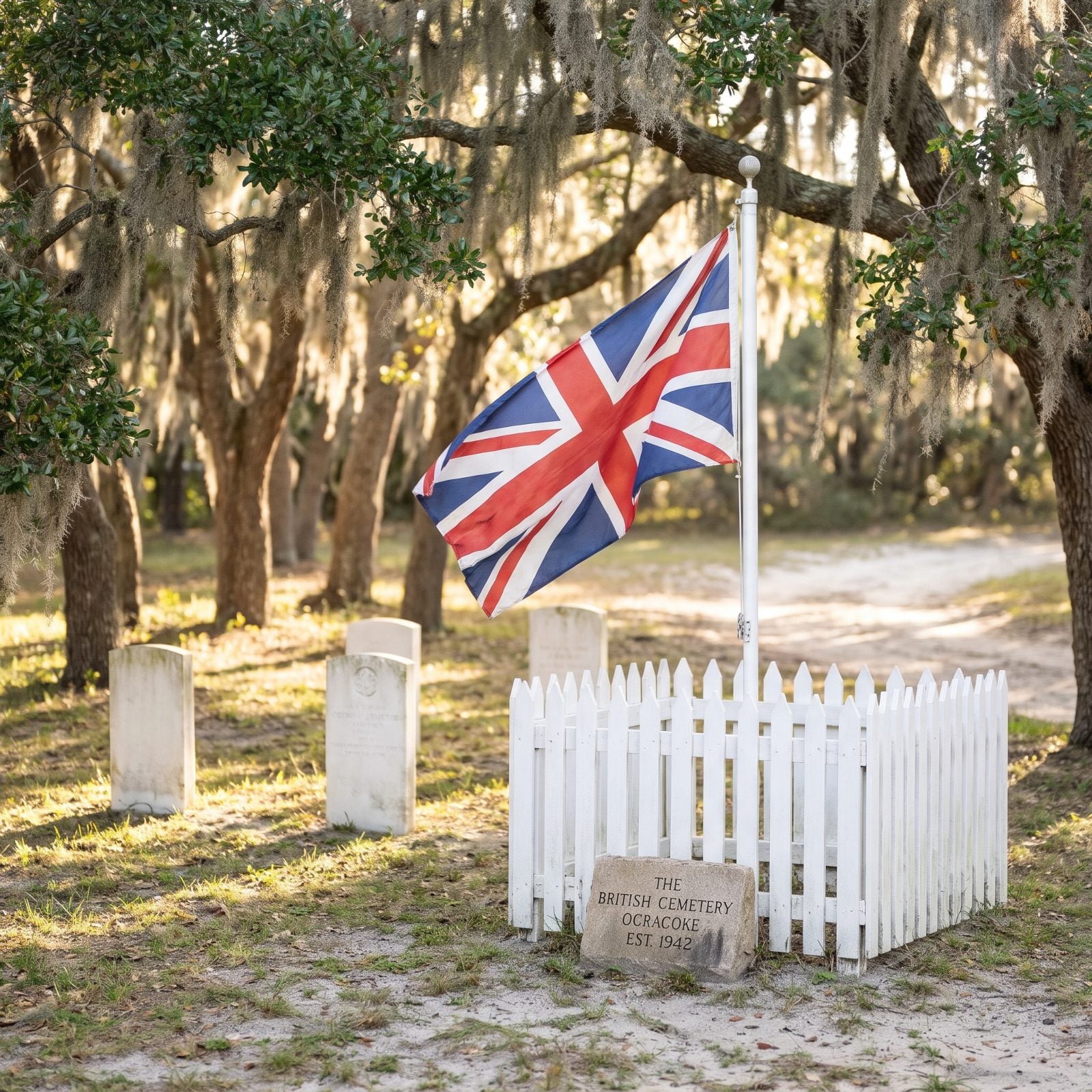
On May 11, 1942, a German submarine torpedoed the British armed trawler HMT Bedfordshire off the Outer Banks. Every one of the 37 British sailors aboard died. Only a handful of bodies washed ashore on Ocracoke.
Islanders gave up a small plot of ground, and the men were buried under the Union Jack. The site is still consecrated, still flies the flag, and is known simply as “forever England.” British soil, tended by a Carolina fishing community that didn’t have to do any of it.
Every May, sailors from the U.S. Coast Guard, U.S. Navy, British Royal Navy and Canadian Navy gather here. Bagpipes. A 21-gun salute. Wreaths laid on the grass. It’s the most English place in North Carolina, and it got that way for the worst possible reason.
12. Sri Venkateswara Temple, Cary: An 87-Foot South Indian Tower Over the Triangle
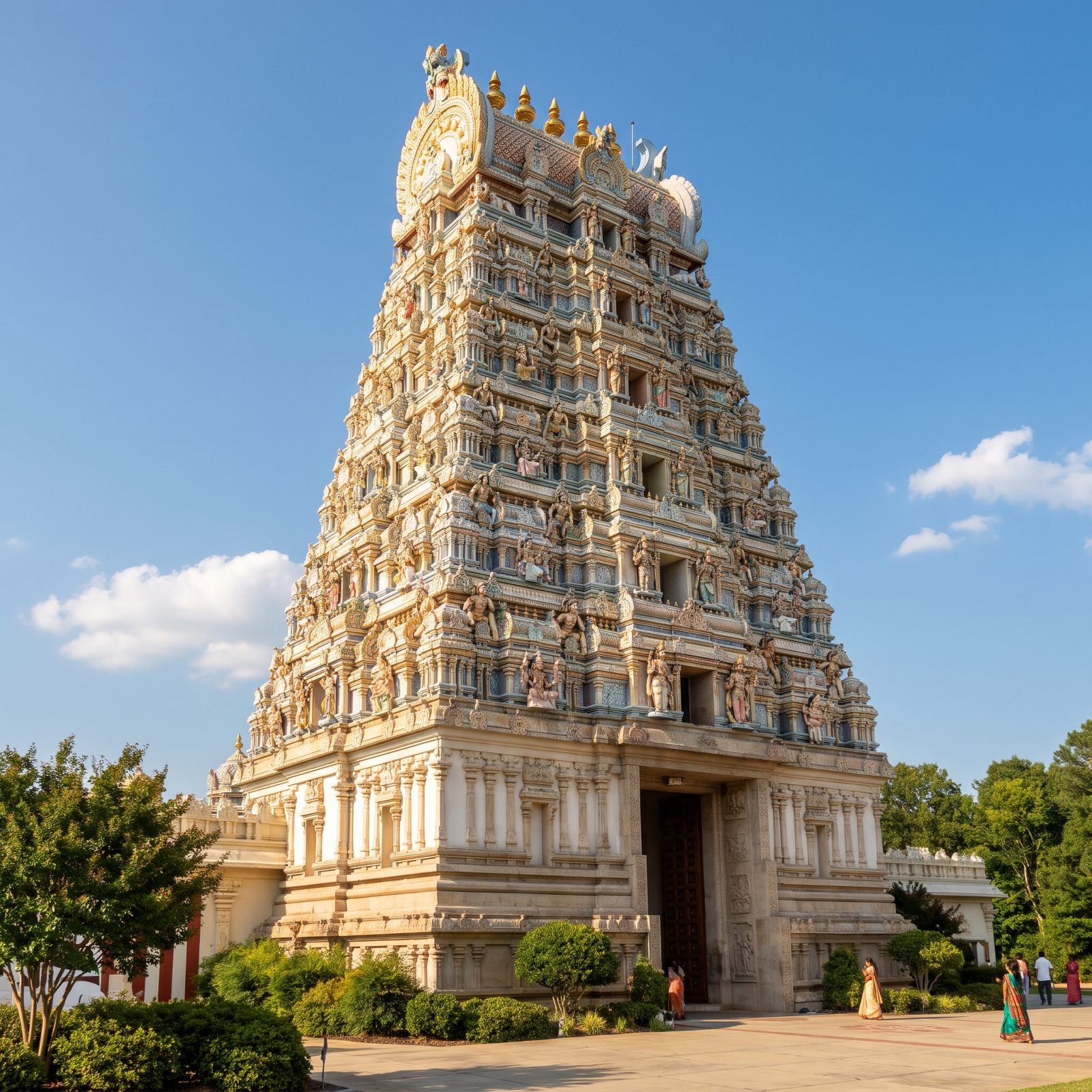
Turn a corner in Cary and an 87-foot South Indian tower rises out of nowhere. The temple at 121 Balaji Place is built in the Dravidian style, modeled on the famous Sri Venkateswara Temple in Tirupati, Andhra Pradesh.
Finished in May 2009, the temple carries an entrance tower, the Rajagopuram, built by artisans brought over from India, which is why every carved deity on it reads as authentic rather than approximate. Governor Roy Cooper inaugurated the tower in October 2022.
11. Wat Carolina Buddhajakra Vanaram, Bolivia: A Thai Monastery in the Coastal Plain
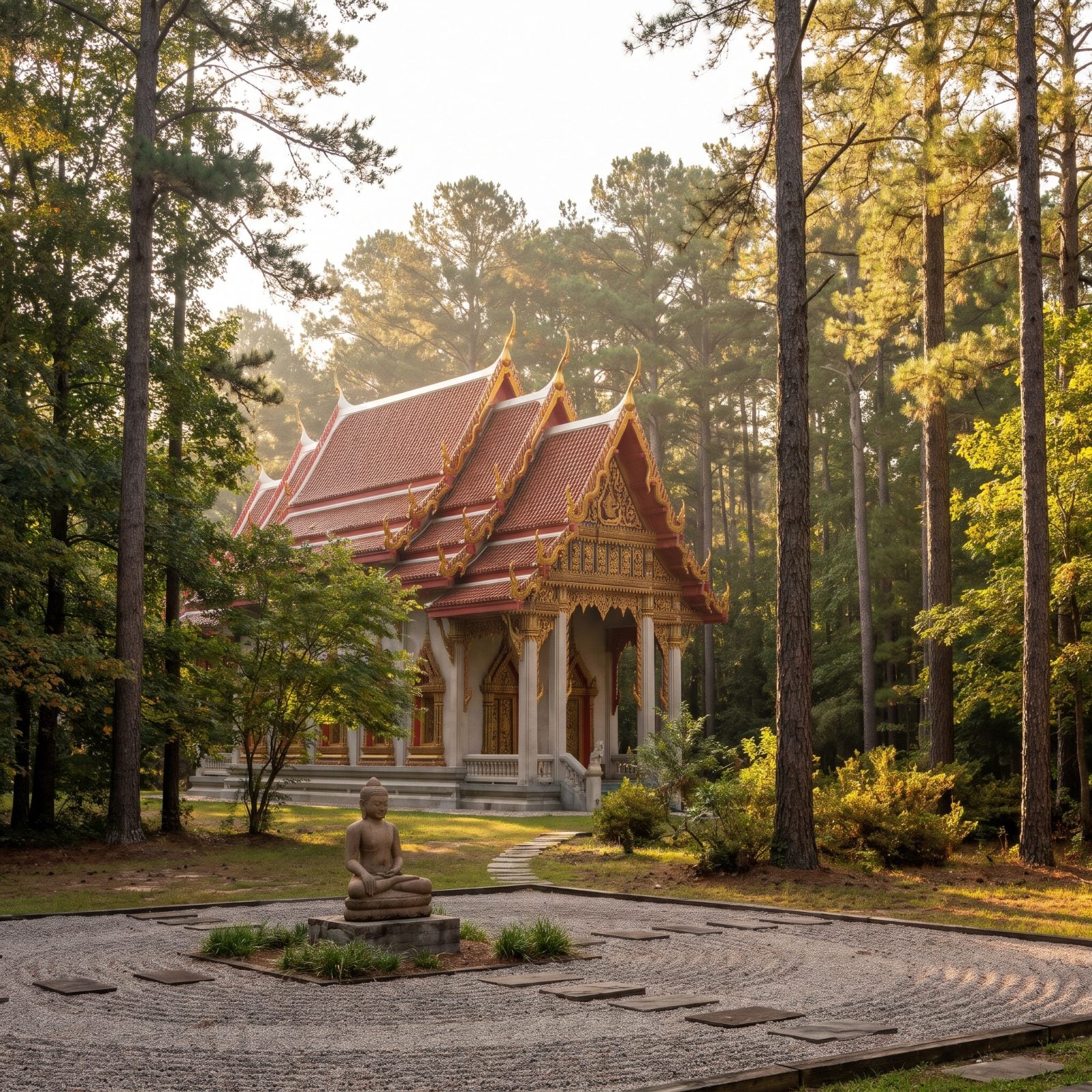
About 20 miles west of Wilmington, tucked into the pines at 1610 Midway Rd SE in Bolivia, sits a Thai Buddhist monastery that most people driving by would never guess was there.
It took root in the late 1980s, after the founding monk’s siblings donated 21 acres of land. The monastery’s own website says people of any religion are welcome, and there are spaces set aside for meditation and prayer. Quiet, genuine, and a long way from any tourist brochure, which is exactly why it feels like somewhere else entirely.
10. Little Switzerland: Swiss Chalet Rooflines on the Blue Ridge Parkway
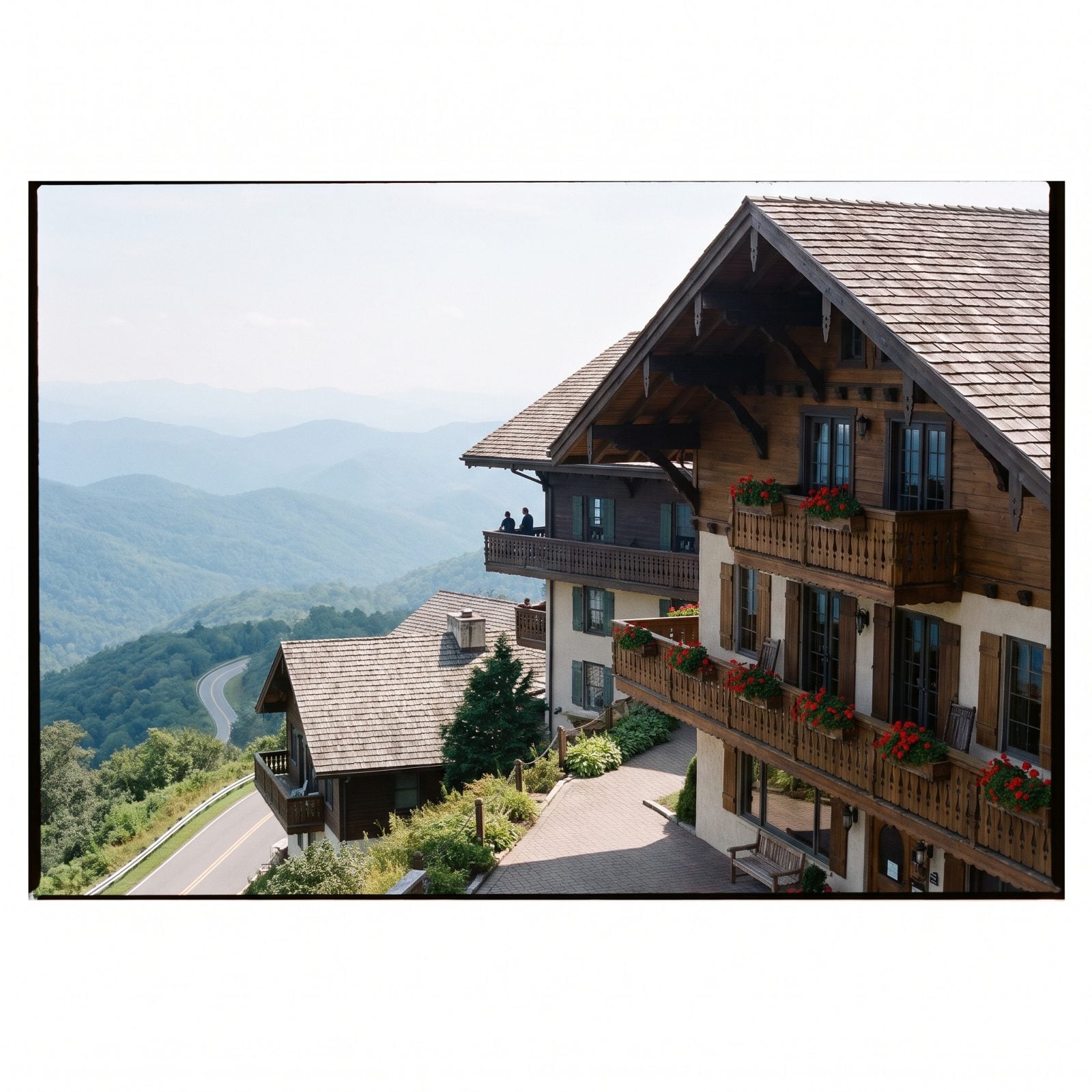
The name isn’t a joke. Somebody looked at these ridges and genuinely saw the Alps, and the town leaned all the way in. The buildings wear Swiss styling, and the town sign reads, with admirable honesty, “Population 46.”
It sits right off the Blue Ridge Parkway at Milepost 334, where you’ll find the Switzerland Inn and its Chalet Restaurant looking out over the mountains. Here’s the catch, and it’s a real one: this is a seasonal town. Most businesses close in winter and reopen in April. Show up in January and you’ll have alpine views and a locked door, so plan accordingly.
9. Tryon Palace, New Bern: A Georgian Governor’s Mansion of British Carolina
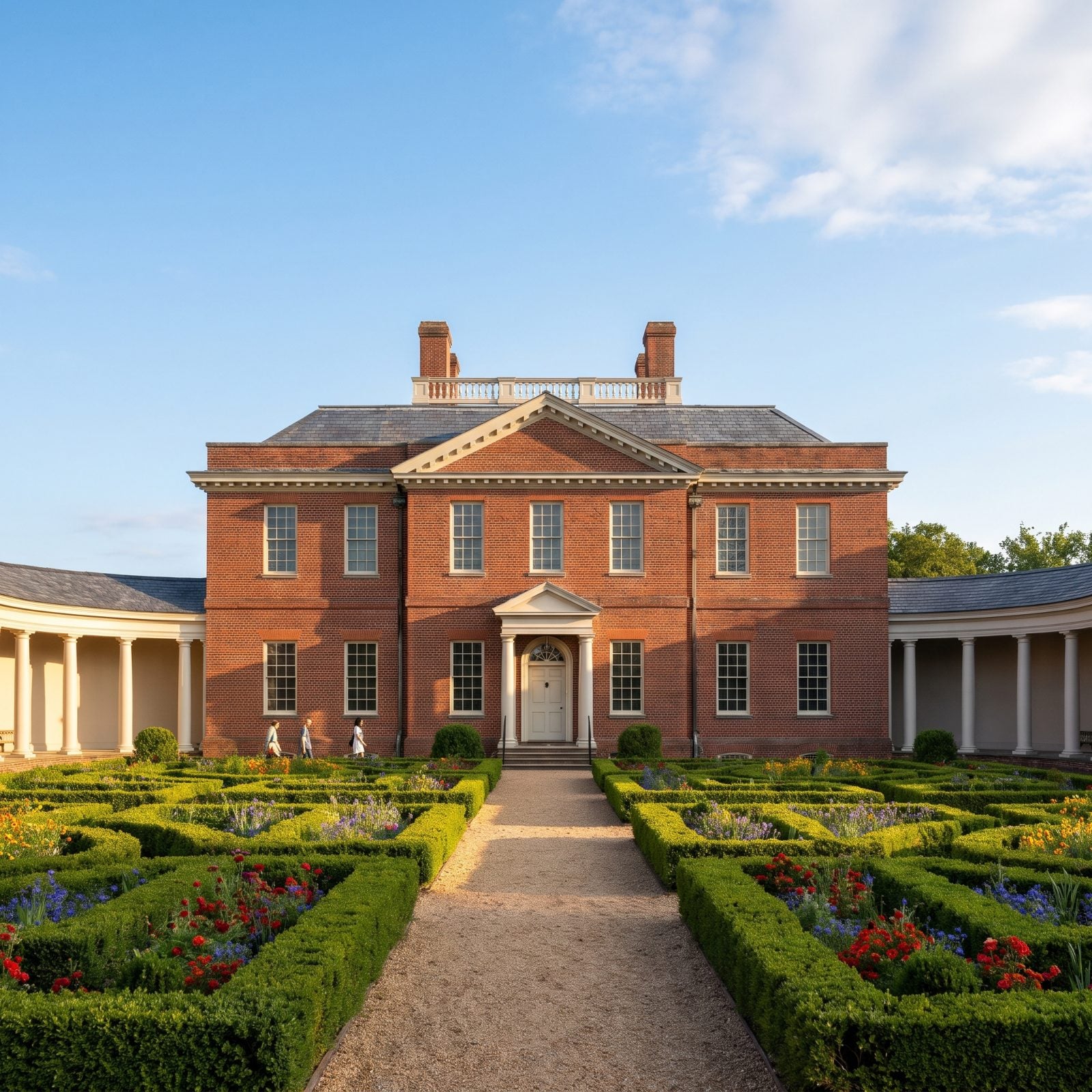
Before there was a United States, there was a British colonial governor sitting in a Georgian mansion in New Bern. Tryon Palace is a faithful reconstruction of the 1770 residence designed by architect John Hawks for North Carolina’s royal governors.
The original burned in 1798. Crews rebuilt it on the original grounds in the 1950s, opened it as a house museum in 1959, and now it’s a state-owned historic site at 529 South Front Street. The recreated 18th-century gardens sprawl across 16 acres of clipped hedges and period planting, the kind of orderly English formality the Revolution eventually swept out. Walk it and you get a straight look at the Carolina that still answered to London.
8. The Elizabethan Gardens, Manteo: A Renaissance English Garden on Roanoke Island
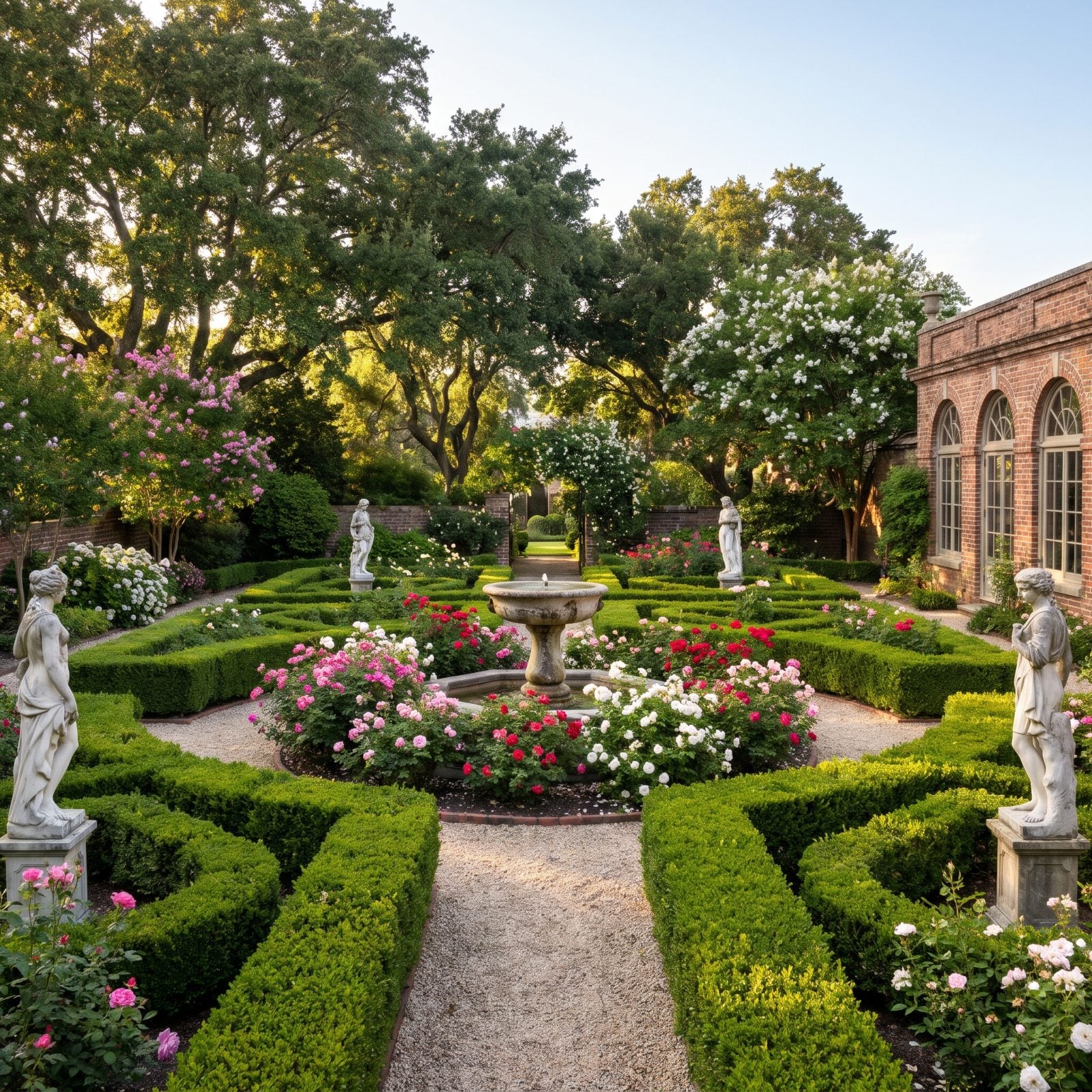
Roanoke Island was where England first tried to plant itself in the New World, and the colony vanished. The Elizabethan Gardens are the answer to that, a Renaissance English garden built as a memorial to Sir Walter Raleigh’s 1587 Lost Colony. The Garden Club of North Carolina pushed it forward in the 1950s.
You get a 16th-century-style orangery, a Shakespearean herb garden, the Queen’s Rose Garden, a sunken garden, and real Italian Renaissance statues and fountains. Find it at 1411 National Park Drive in Manteo. The whole place feels like it was lifted out of Tudor England and set down beside the sound, which is roughly the point. A colony that disappeared, remembered with a garden that refuses to.
7. The Japanese Garden Hiding Inside Duke’s Backyard: W.L. Culberson Asiatic Arboretum
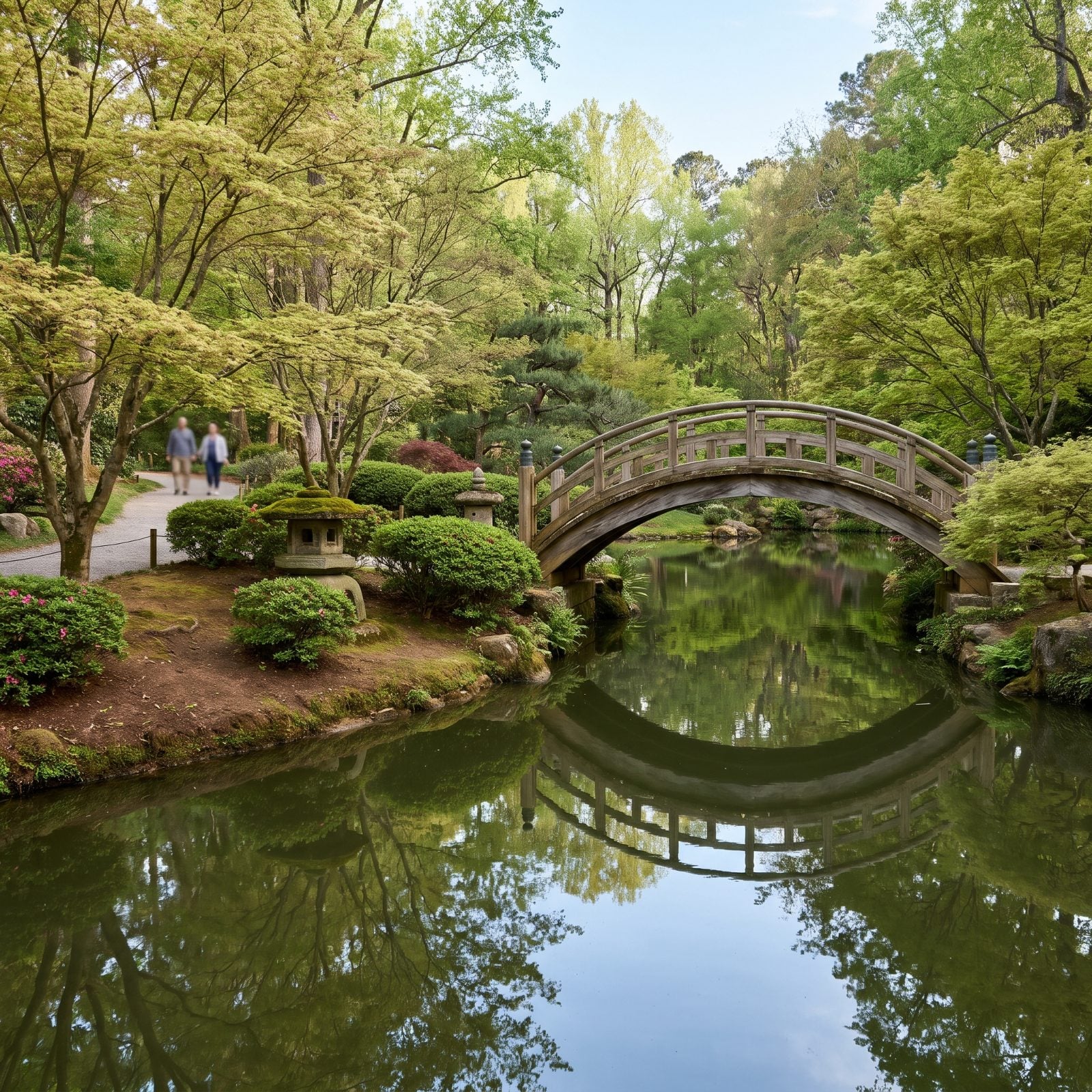
You walk past the formal terraces, down a gravel path, and the whole mood shifts. Eighteen acres of eastern Asia drop you somewhere closer to Kyoto than Durham, with the Meyer Bridge curving over the pond in that unmistakable arc. For a minute the Research Triangle just evaporates.
This is the Asiatic Arboretum, a slice of Sarah P. Duke Gardens devoted to the plant diversity of East Asia. In April 2024, the wife of Japan’s prime minister and North Carolina’s first lady sat here for a traditional tea gathering — which tells you how convincingly the place holds its illusion.
6. Oxford on Chapel Drive: Duke Chapel’s Collegiate Gothic Spire
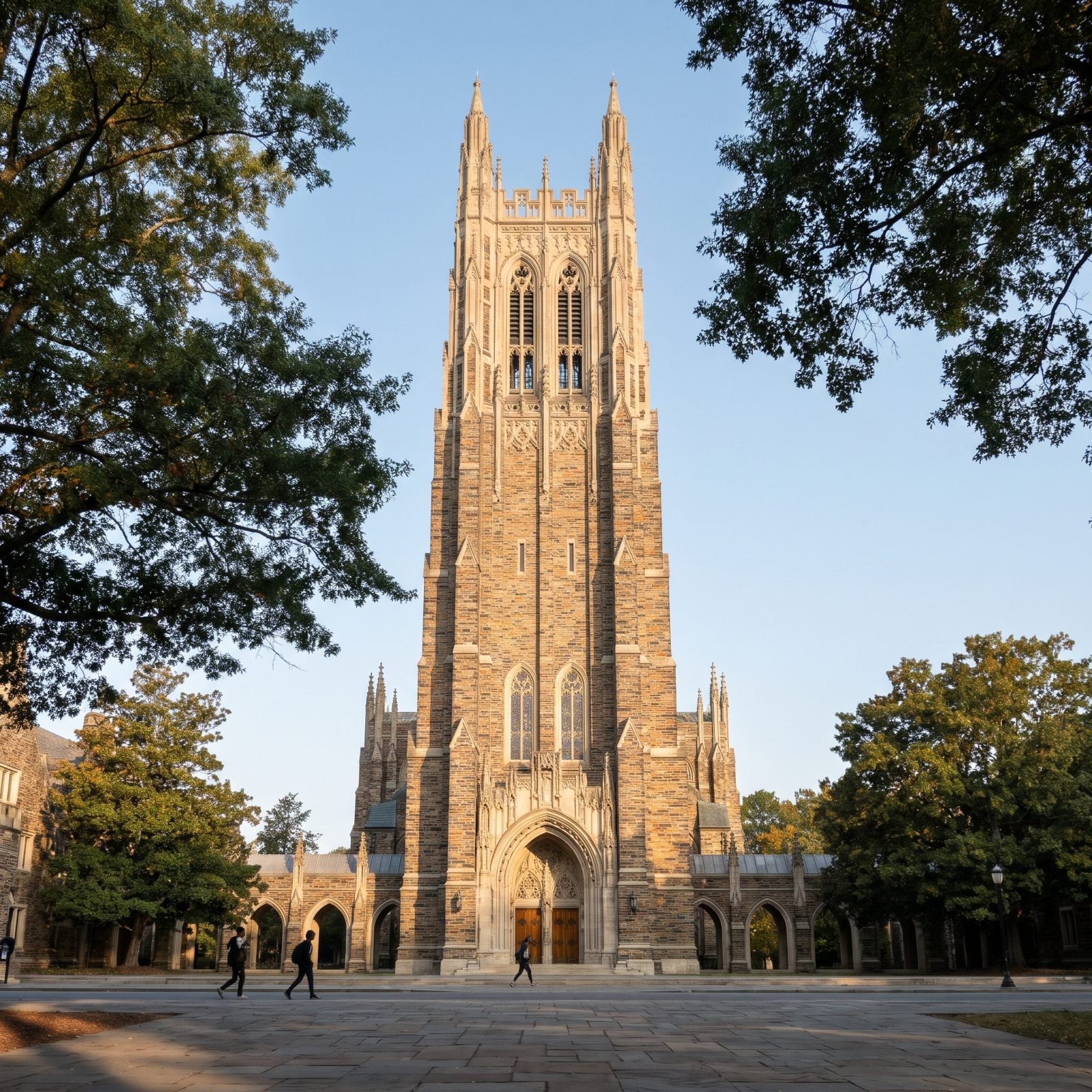
If you’ve ever stood in a quad at Oxford or Cambridge, Duke Chapel will play a trick on your memory. The pointed arches, the soaring vaults, the stone tower climbing 210 feet into the Carolina sky — it all reads like England borrowed and dropped onto a Durham hill.
Finished in 1932, the chapel ranks among the last great Collegiate Gothic buildings in America, that whole look of the old English universities. Julian Abele and Horace Trumbauer gave it a 50-bell carillon that rings out over West Campus. Abele, one of the first academically trained Black architects in the country, designed a cathedral the Old World would recognize instantly.
Stand under the tower at noon when the carillon plays, and you could swear you took a wrong turn somewhere over the Atlantic.
5. A Spanish Architect’s Masterwork in Asheville: Basilica of Saint Lawrence
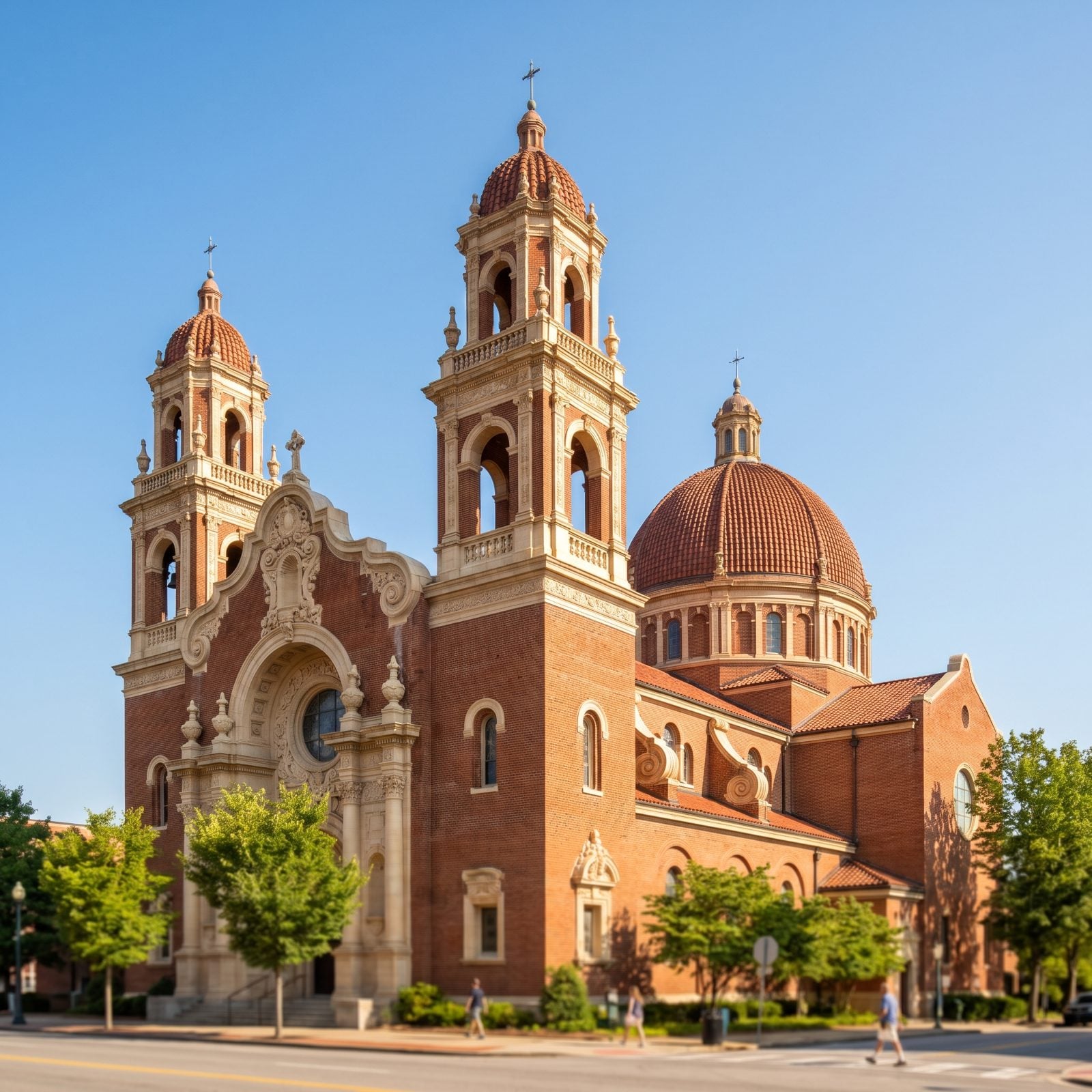
No steel. No wood frame. Just tile, brick, and stone holding up a dome that spans 58 by 82 feet. That’s the largest freestanding elliptical dome in North America, and it sits in downtown Asheville of all places.
Rafael Guastavino designed and built it — the Spanish-born architect whose tile-vaulting shows up in Grand Central Terminal and the Boston Public Library. People count this Spanish Renaissance church among his finest work, and he’s buried in a crypt at the back of the chapel. You stand inside and feel Seville, not the Blue Ridge.
4. The Patch of Canada on Top of Mount Mitchell
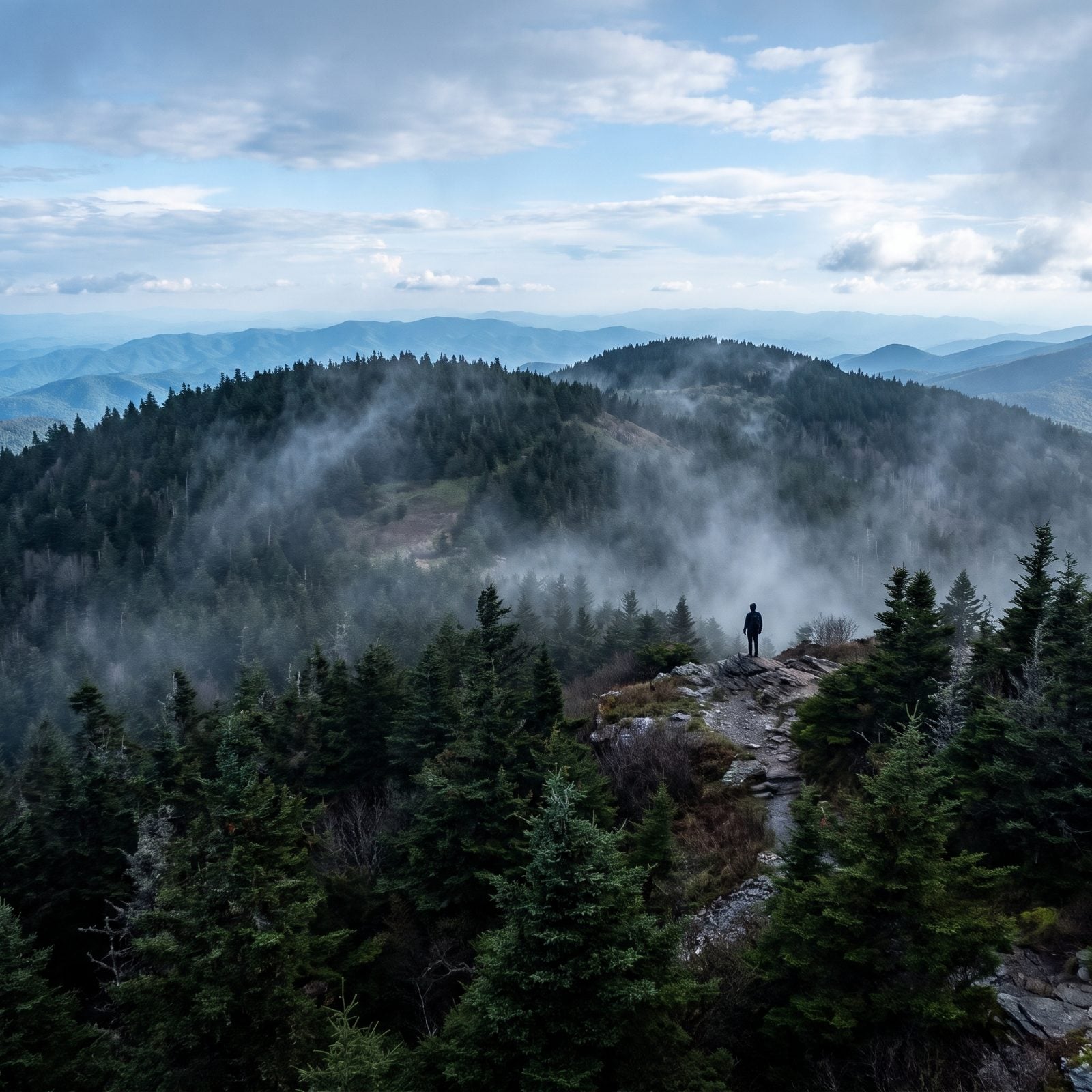
Drive up Mount Mitchell and the thermometer drops the whole way. By the time you reach 6,684 feet — the highest ground east of the Mississippi — the hardwoods are gone and you’re standing in spruce and fir that smells like a Canadian campground. Feels like one too.
This Southern Appalachian spruce-fir forest is a leftover from the last Ice Age, stranded on the high peaks when the climate warmed. It survives on barely 100 square miles anywhere on earth, which makes it one of the most endangered ecosystems in the country. Want the hardcore route? That’s a 12-mile round trip from Black Mountain Campground, climbing roughly 3,600 feet out of warm hardwood valley and into cold boreal forest.
3. The Scottish Highlands Without the Passport: Black Balsam Knob
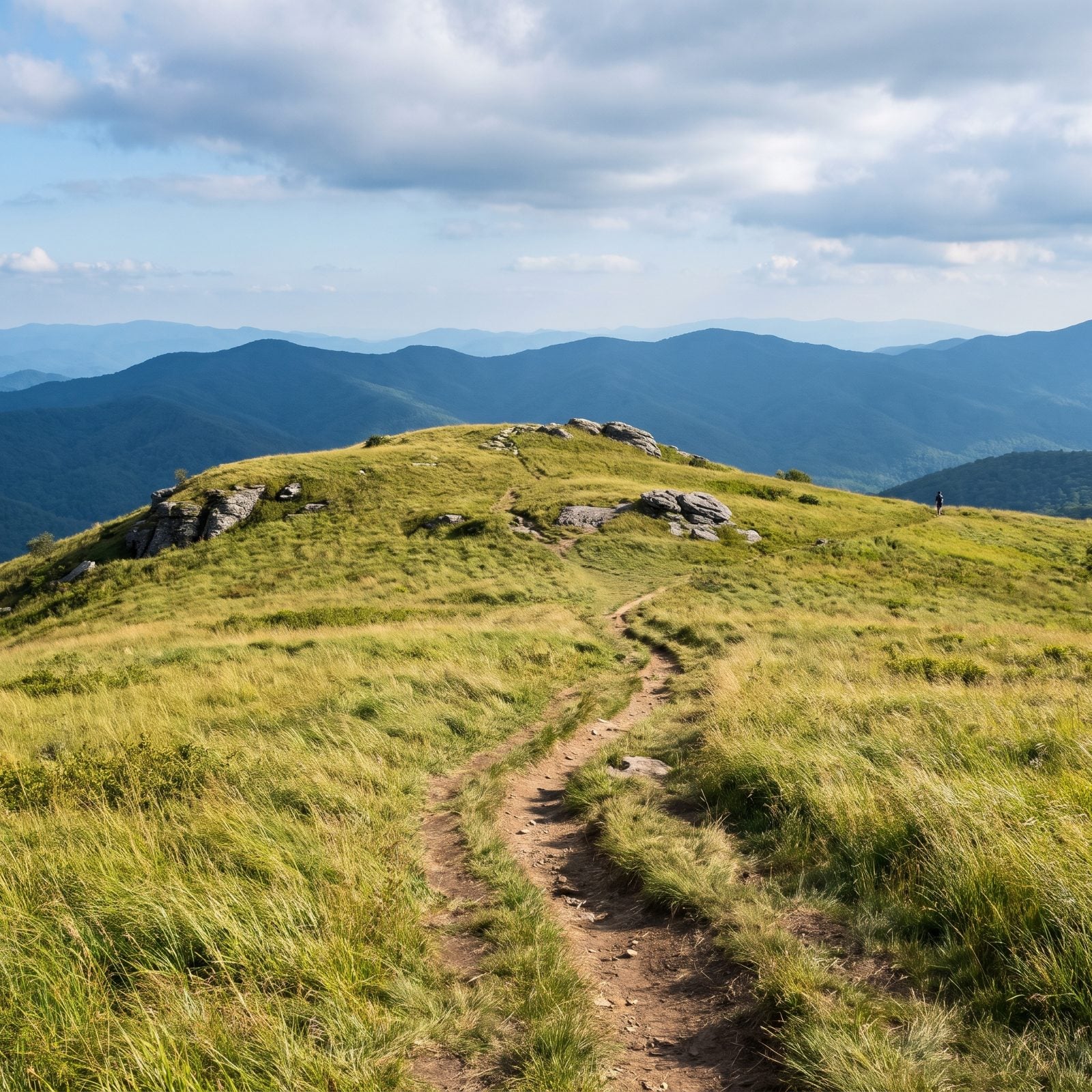
Treeless, grassy, wind-raked. Black Balsam Knob looks like someone sheared the top off a mountain and seeded it with the Scottish Highlands. At 6,214 feet, this open bald in the Great Balsam Mountains hands you big empty sky in every direction.
Best part: the hike barely asks anything of you. It’s 1.4 miles with 354 feet of gain, starting right off the Blue Ridge Parkway — Highlands-grade scenery for a stroll most people could manage in sneakers. We’d still wear real shoes, though, because that grass hides ankle-twisting rock.
2. An Alpine Meadow on the Appalachian Trail: Max Patch
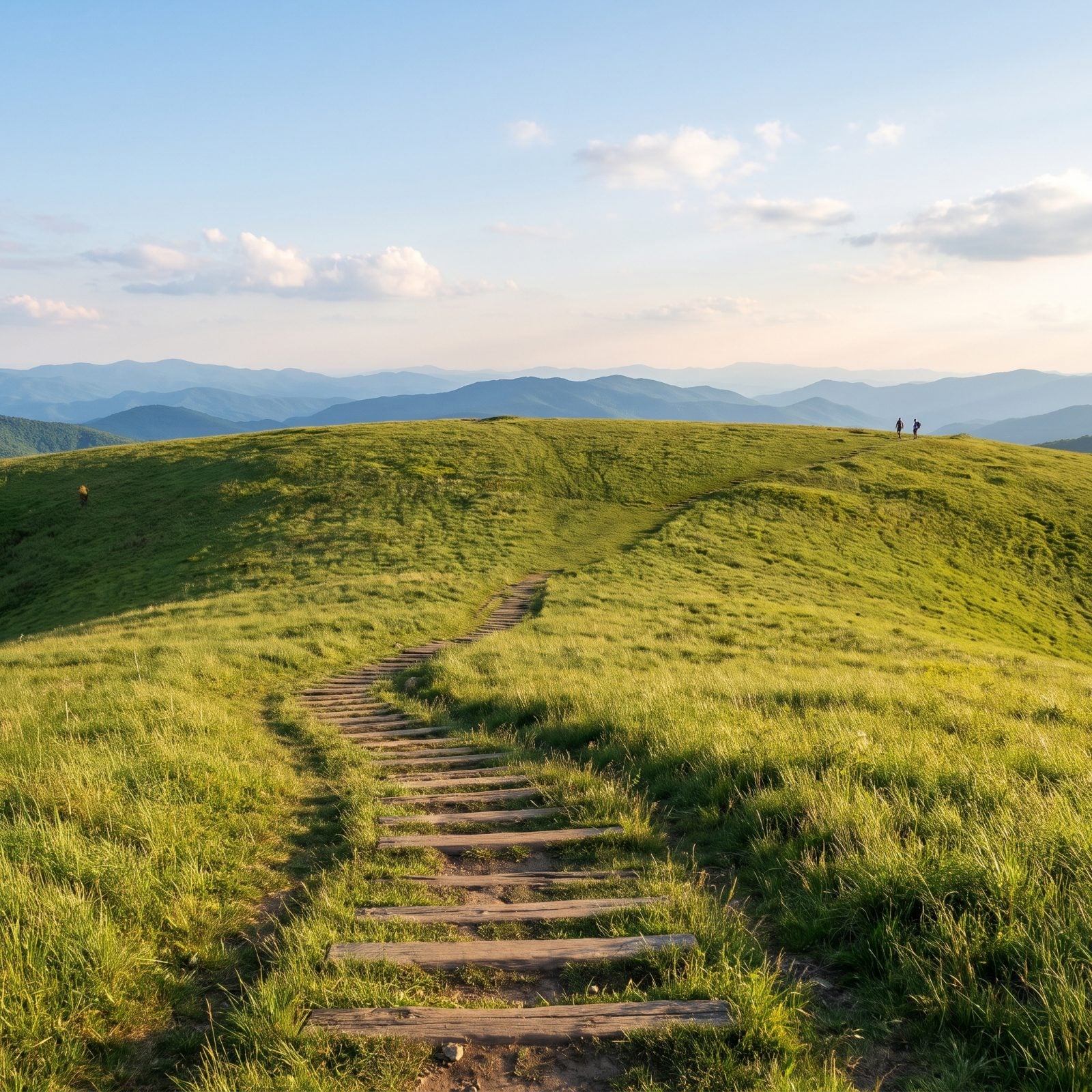
You top out on Max Patch and the view just doesn’t stop. Grass in every direction, mountains stacked to the horizon like paint samples in blue — the kind of open Alpine meadow you’d expect somewhere in Switzerland, not near Hot Springs.
No surprise it’s one of the most visited spots on the whole Appalachian Trail. The A.T. climbs the bald on log steps, crosses the grass, and hands you a full 360. A moderate 1.5-mile loop from the parking area gets you up.
1. Bagpipes, Kilts and Clan Tents: The Grandfather Mountain Highland Games
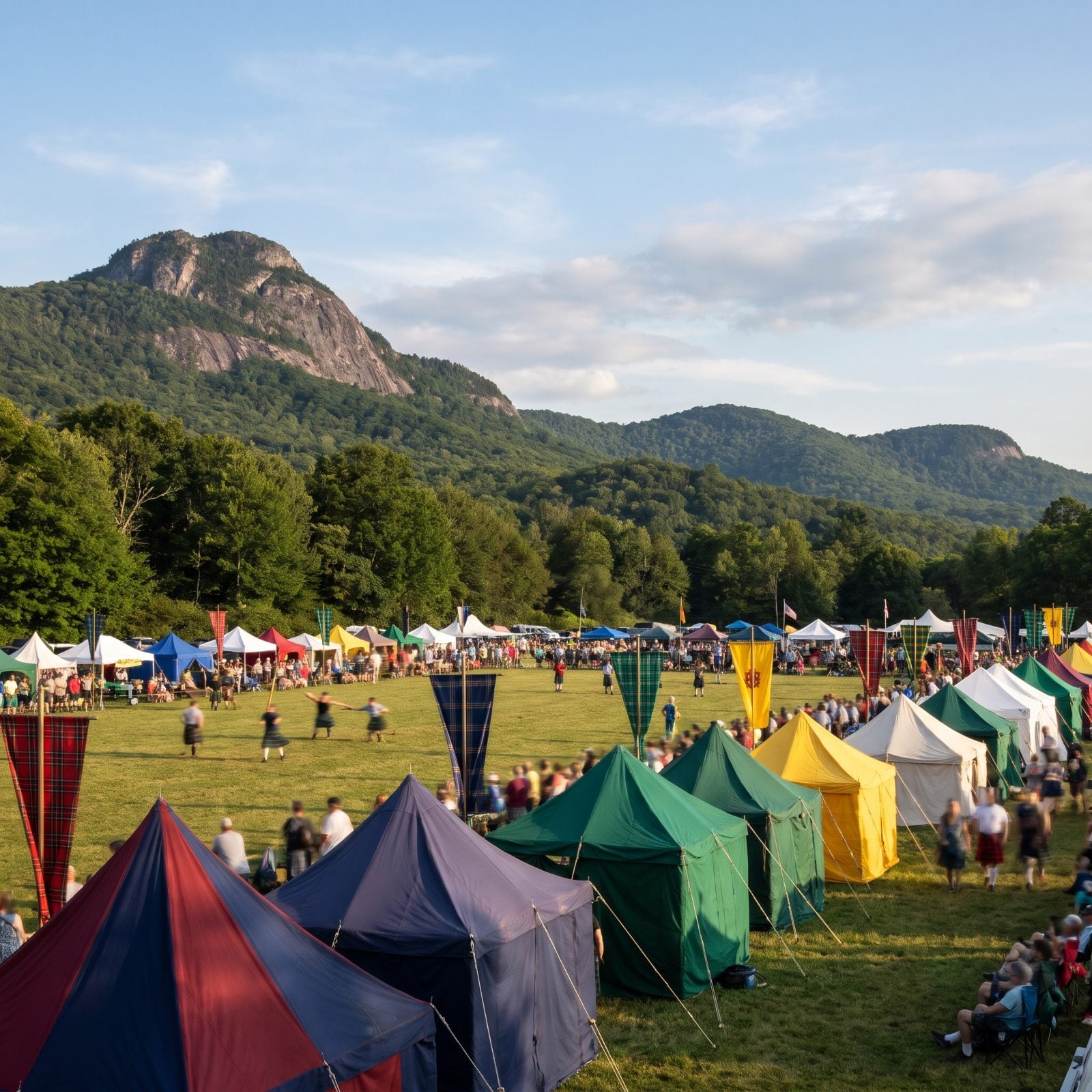
Every summer, MacRae Meadows below Grandfather Mountain fills with tartan, the skirl of pipes, and clans gathered from across the country. These Highland Games have been held since 1956 — one of the longest-standing Scottish gatherings in America.
Live music plays in the Scottish Cultural Village Tent. Celtic Jam concerts run Friday and Saturday nights, and the opening ceremony at dusk is a torchlight affair, each clan sending a representative into the dark field. Dates shift year to year, so check before you plan. And bring a folding chair. You’ll want it.
Please note that some of the imagery in this article were created with the aid of AI image generators.