
A good main street tells you everything before you’ve parked. How wide the sidewalks run, whether the shop fronts still carry their original transom windows, and whether the courthouse anchors the block or the railroad does. North Carolina has towns that never bulldozed any of it. Some sit on sounds and creeks older than the republic, and some cling to one street beside a train track and flat refuse to change. We rounded up the ones where you can leave the car, lose a whole afternoon on foot, and stumble into another decade by accident. Lace up.
22. Blowing Rock: The High Country’s Front-Porch Main Street
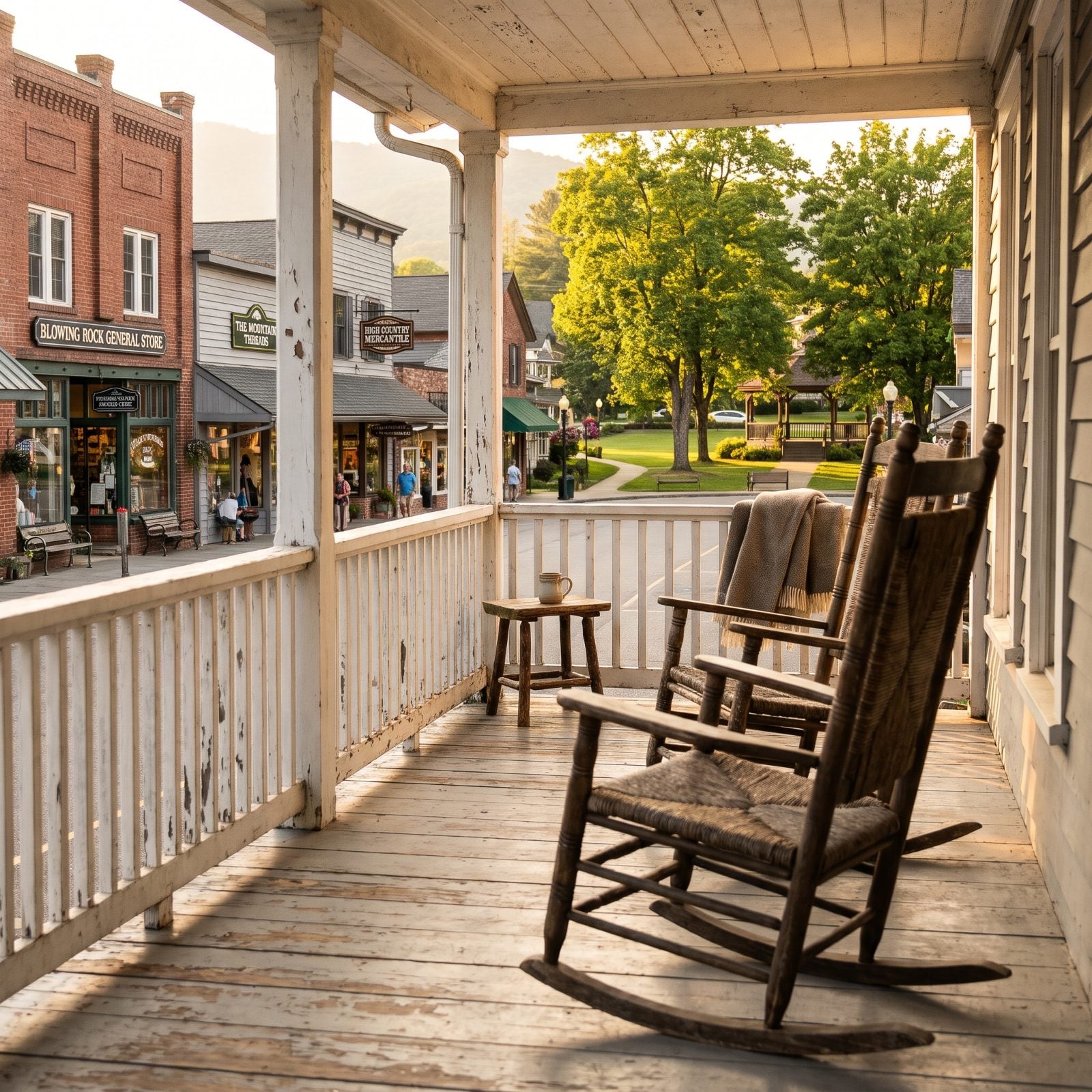
Park once and you’re done. Blowing Rock’s whole downtown fits in a few blocks of Main Street, and Memorial Park sits right in the middle of it at 1036 Main — lawn, gazebo, and a playground for the kids who got dragged along.
The Chamber hands out a self-guided historic walking tour if you want names and dates. Stop at the 1888 Museum at 1094 Main, the last cottage standing from the old Watauga Hotel. And if your knees still work, the Glen Burney Trail drops from Annie Cannon Gardens down into a ravine full of waterfalls. The steep parts are no joke, so pack accordingly.
21. Beaufort: The Third-Oldest Town, and It Acts Like It
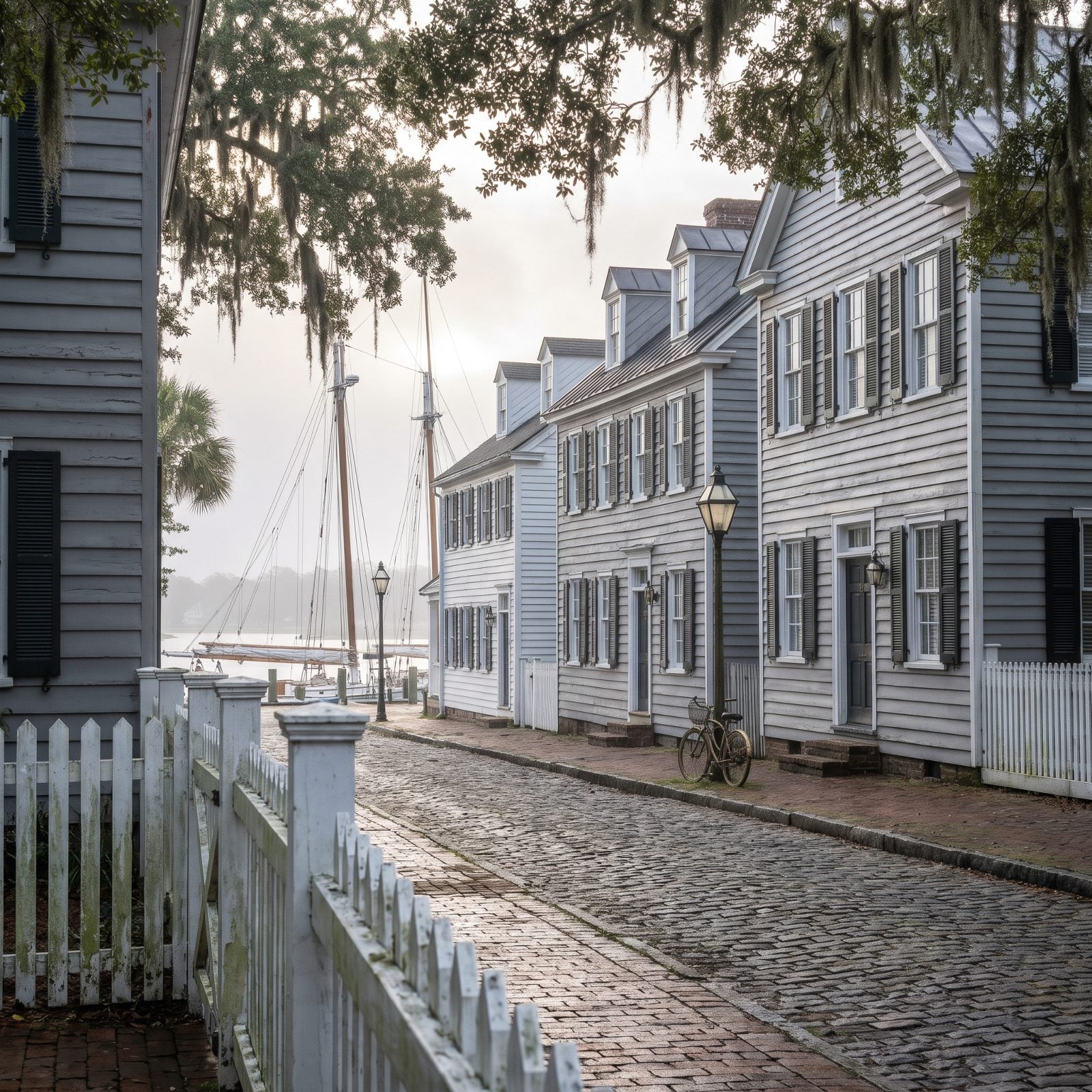
Founded in 1709. That makes Beaufort the third-oldest town in the state, and the twelve-block historic district downtown wears every year of it. Front Street runs along Taylor’s Creek, and little signs and plaques flag the old homes as you walk.
The North Carolina Maritime Museum is right there and free. The Beaufort Historic Site runs guided tours of restored 1700s and 1800s buildings, plus rides on a vintage English double-decker bus — a strange and wonderful thing to find on the Crystal Coast. Boats leave from the waterfront for Shackleford Banks, where the wild horses live.
20. Edenton: The First Capital, Hiding in Plain Sight
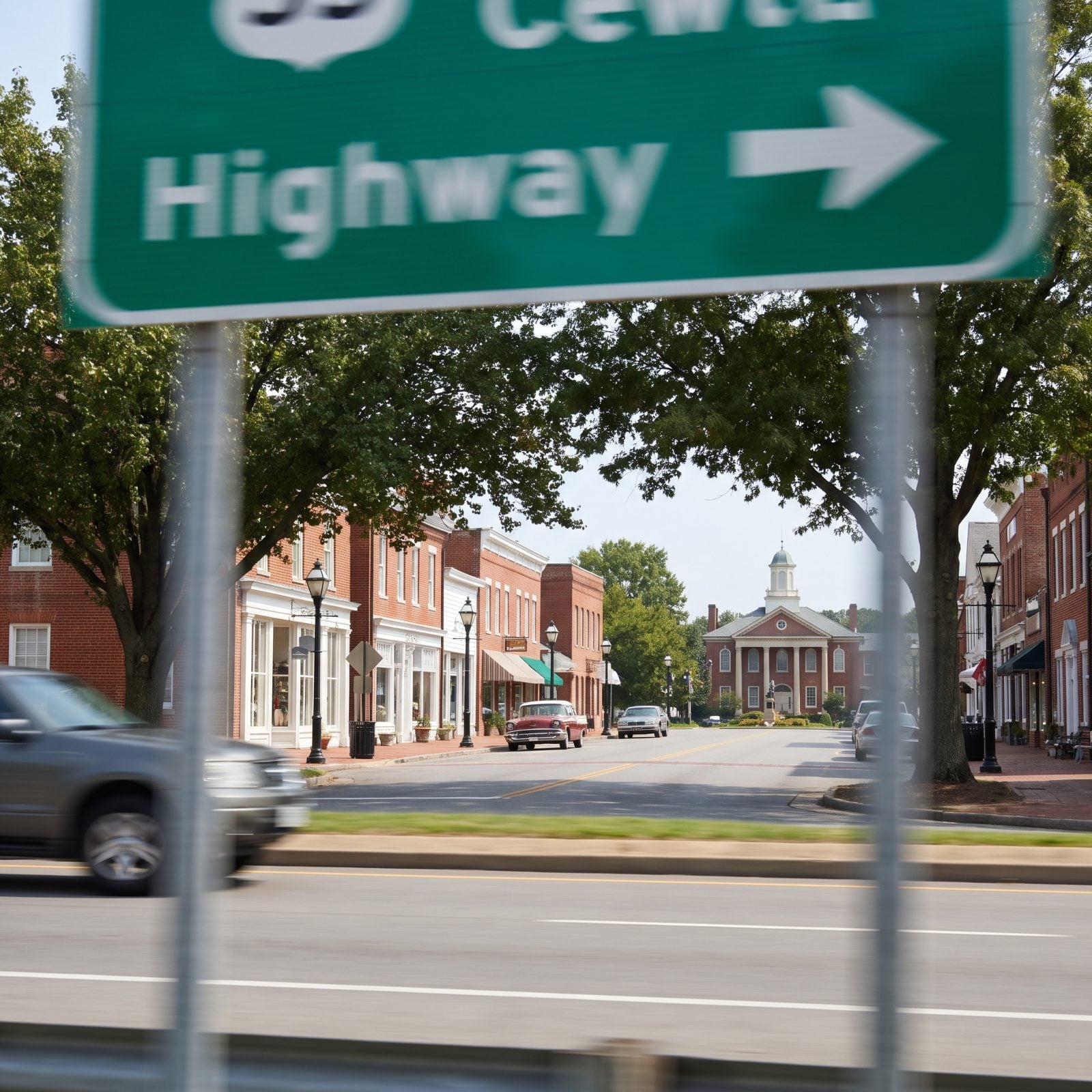
Most people blow past Edenton on their way to the Outer Banks and never know what they skipped. Founded in 1722 on the Albemarle Sound, it was North Carolina’s first colonial capital.
Broad Street is short and points straight at the water, a short stroll from the 1767 Chowan County Courthouse and the restored 1886 Roanoke River Lighthouse. That lighthouse is a screw-pile cottage design, open for tours, and it photographs like a dollhouse someone propped up on stilts. Guided walking tours start at the Historic Edenton visitor center. The Harriet Jacobs tour needs a reservation, so call before you count on it. Trolley tickets sell at the Penelope Barker House Welcome Center.
19. Hillsborough: Colonial Bones a Few Minutes From Durham
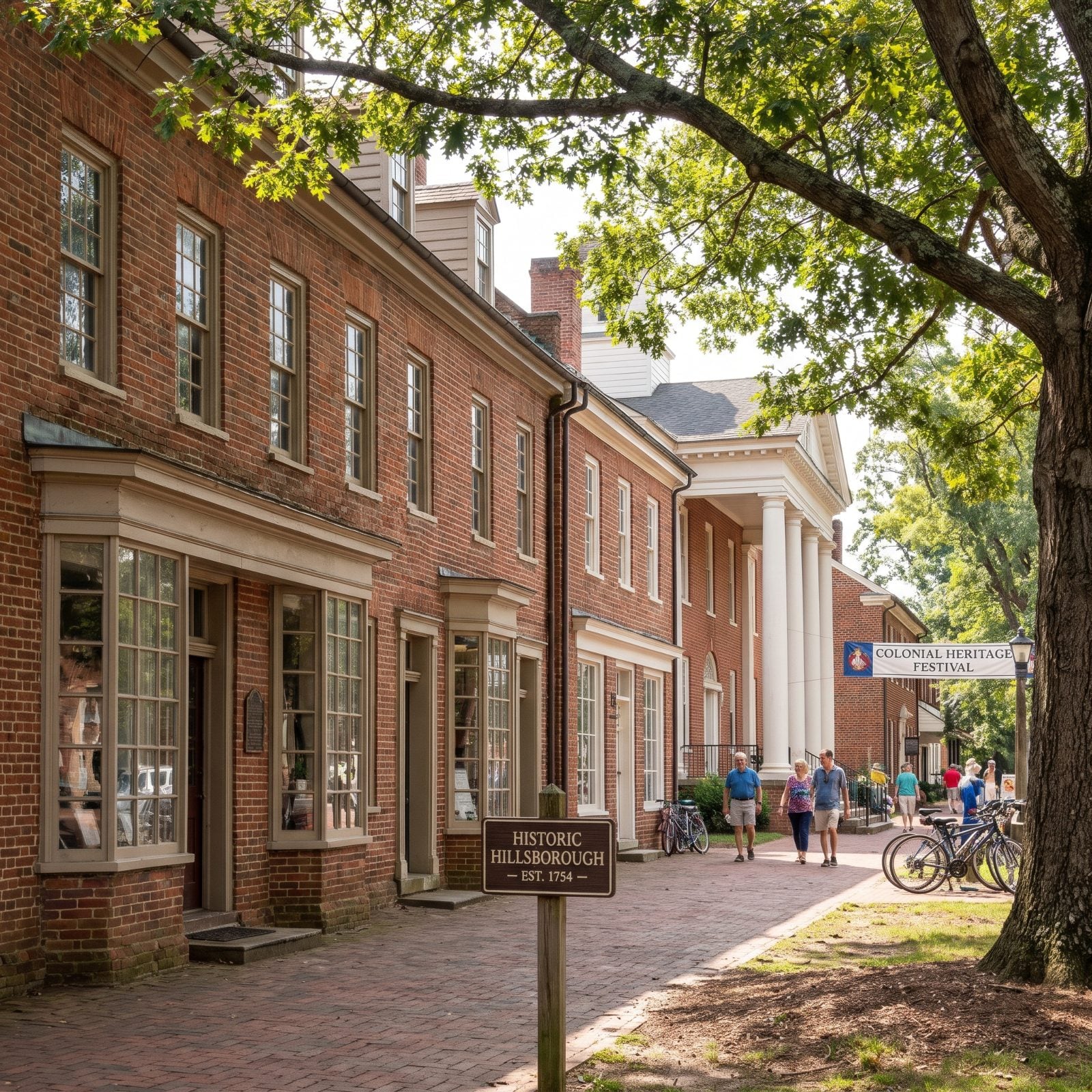
Established in 1754 as the Orange County seat, and the Revolution left fingerprints all over downtown. You can walk the whole thing in an afternoon.
The Visitors Center sits in the Alexander Dickson House at 150 E King St, built around 1790. Guided downtown walking tours start there. When you’ve had enough history, the Riverwalk along the Eno just south of downtown gives you an easy nature stroll to cool off. Durham and Chapel Hill are both a short hop, which makes Hillsborough an easy add to a longer Piedmont day.
18. Saluda: One Street, One Railroad, No Hurry
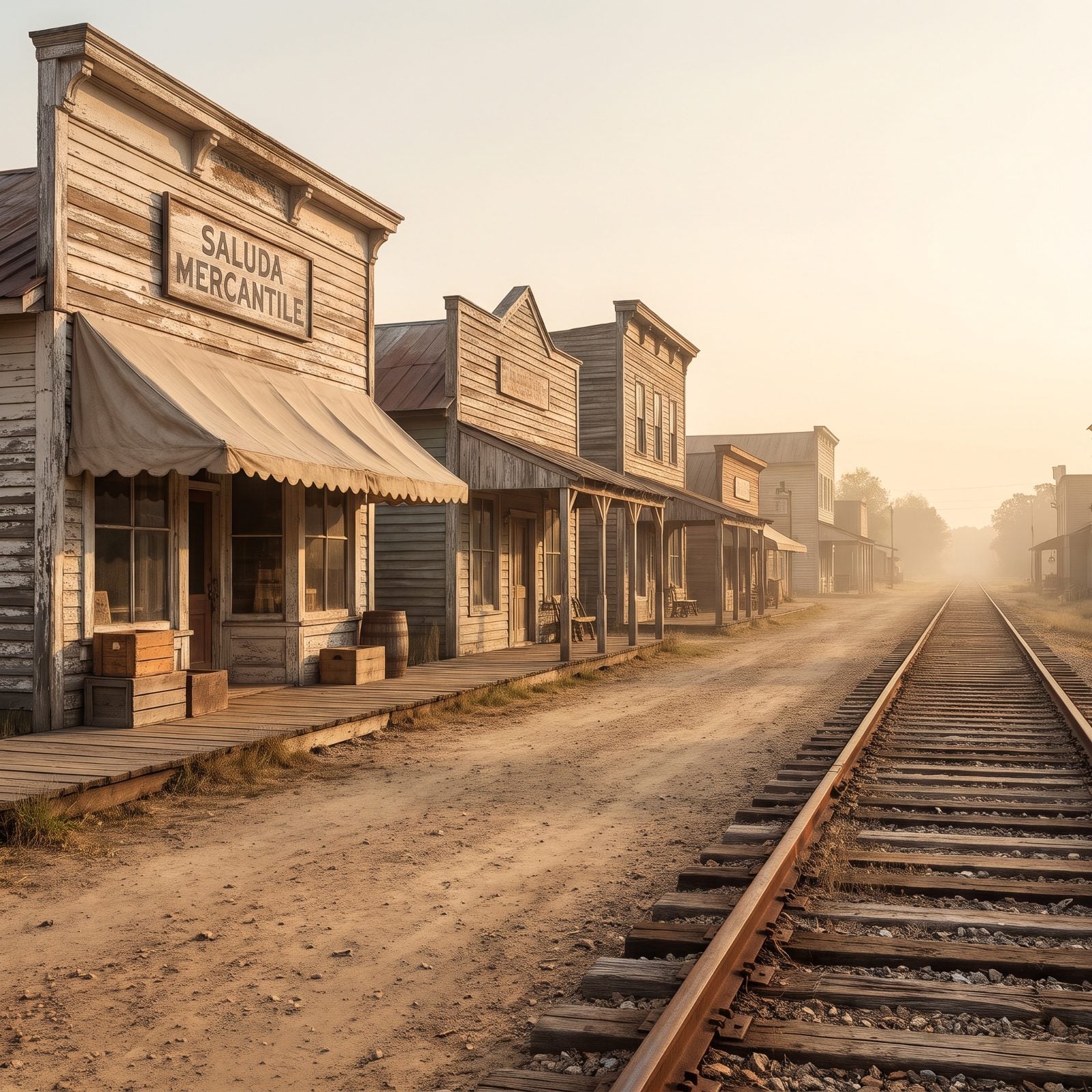
Saluda has one downtown street, and it has barely budged since the town went up in 1881. A few hundred people live here year-round, and come summer the number swells, though it still isn’t much.
The town grew at the top of the Saluda Grade — the steepest standard-gauge mainline track in the eastern U.S. So the layout makes sense once you see it: shops on one side, railroad tracks on the other. The Main Street historic district is on the National Register. Thompson’s Store has been feeding locals and visitors for generations and still does. Nothing here asks you to hurry, and that’s exactly why people come.
17. Mount Airy: Walking Through Mayberry Without the Costume
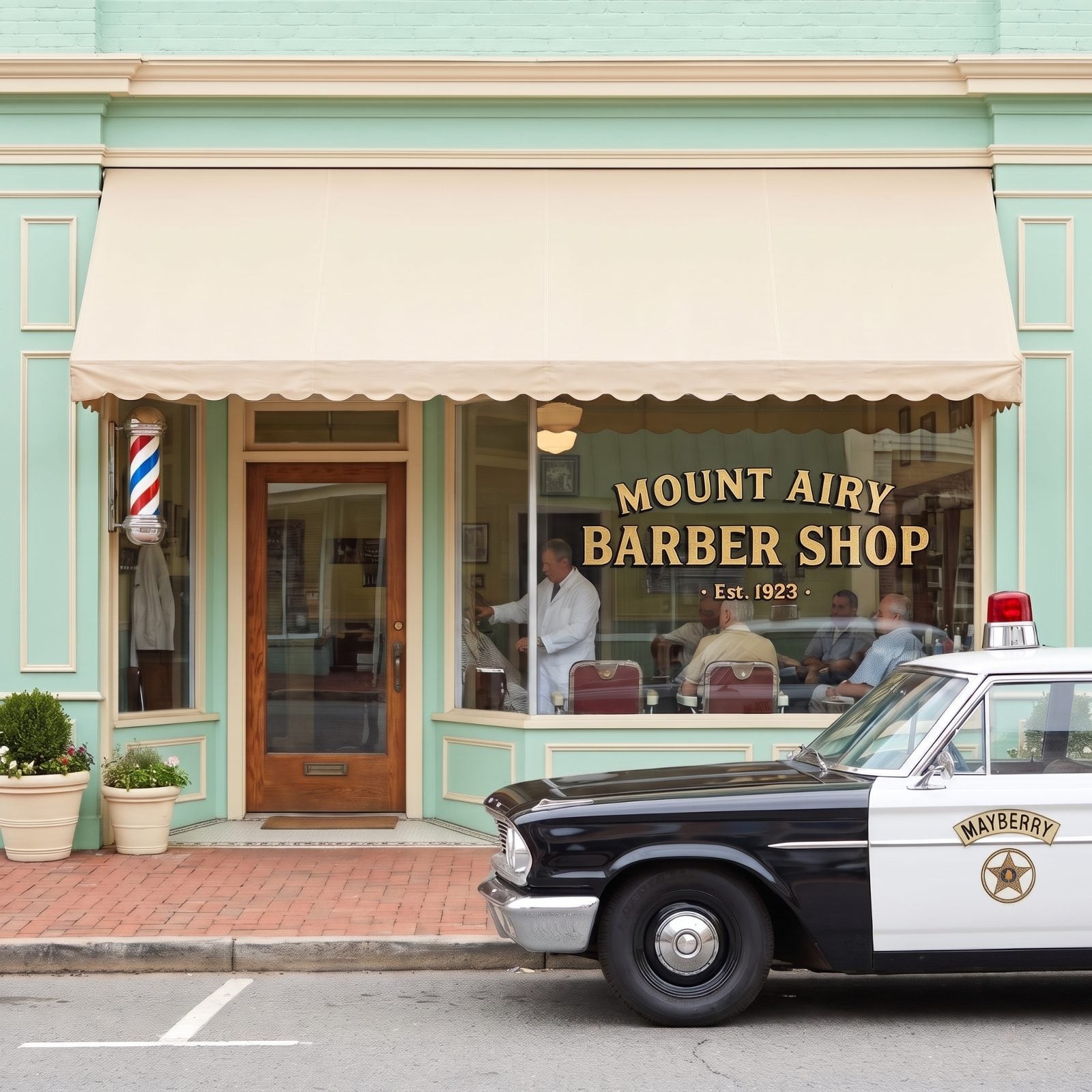
Andy Griffith grew up here, and the town became the blueprint for Mayberry. The tourism folks know it and lean in hard — honestly, so should you.
Main Street is compact and made for walking. Snappy Lunch, Floyd’s City Barbershop at 129 N Main, a self-guided mural walk, all packed into a few blocks. The Andy Griffith Museum holds hundreds of pieces from his career, props and costumes from the show and from Matlock both.
16. Brevard: The Town Where the Squirrels Are White

About forty minutes southwest of Asheville, right at the door to Pisgah National Forest, Brevard pulls a trick few towns can match: the squirrels are white.
The city is a designated sanctuary for them, and the Visitor Center at 175 E Main even houses the White Squirrel Institute. The 1881 Transylvania County Courthouse holds down a walkable downtown. Want the full spectacle? White Squirrel Weekend is a free downtown festival every Memorial Day weekend. Mark your calendar for May 22 through 24 in 2026.
You’ll burn more time than you expect trying to photograph one. They do not cooperate.
15. Highlands: A Flat Main Street at 4,000 Feet
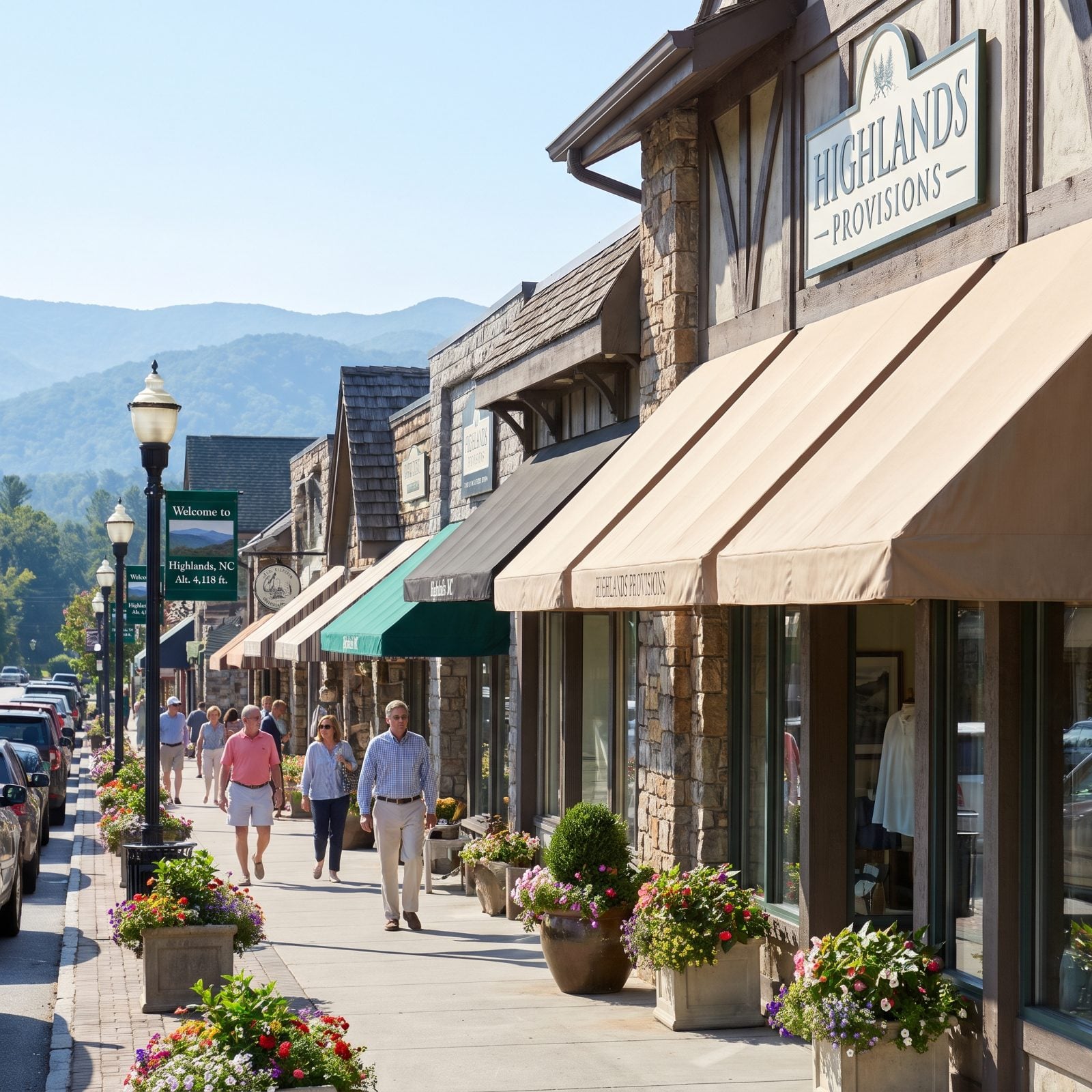
Highlands sits on a plateau above 4,000 feet, which does something unexpected for a mountain town: Main Street is flat. The Chamber calls it very walkable, and they aren’t exaggerating. Most shops and restaurants line that one level stretch.
Some side streets pitch hard, though, so pay attention if you wander off the main drag. A short walk from downtown gets you to the Highlands Plateau Greenway trails and the Highlands Botanical Garden, where the walking stops feeling like errands and starts feeling like a hike. The air up here runs cooler than anything down the mountain, and you feel it the second you step out of the car.
14. Waynesville: Brick Sidewalks on the Way to the Smokies
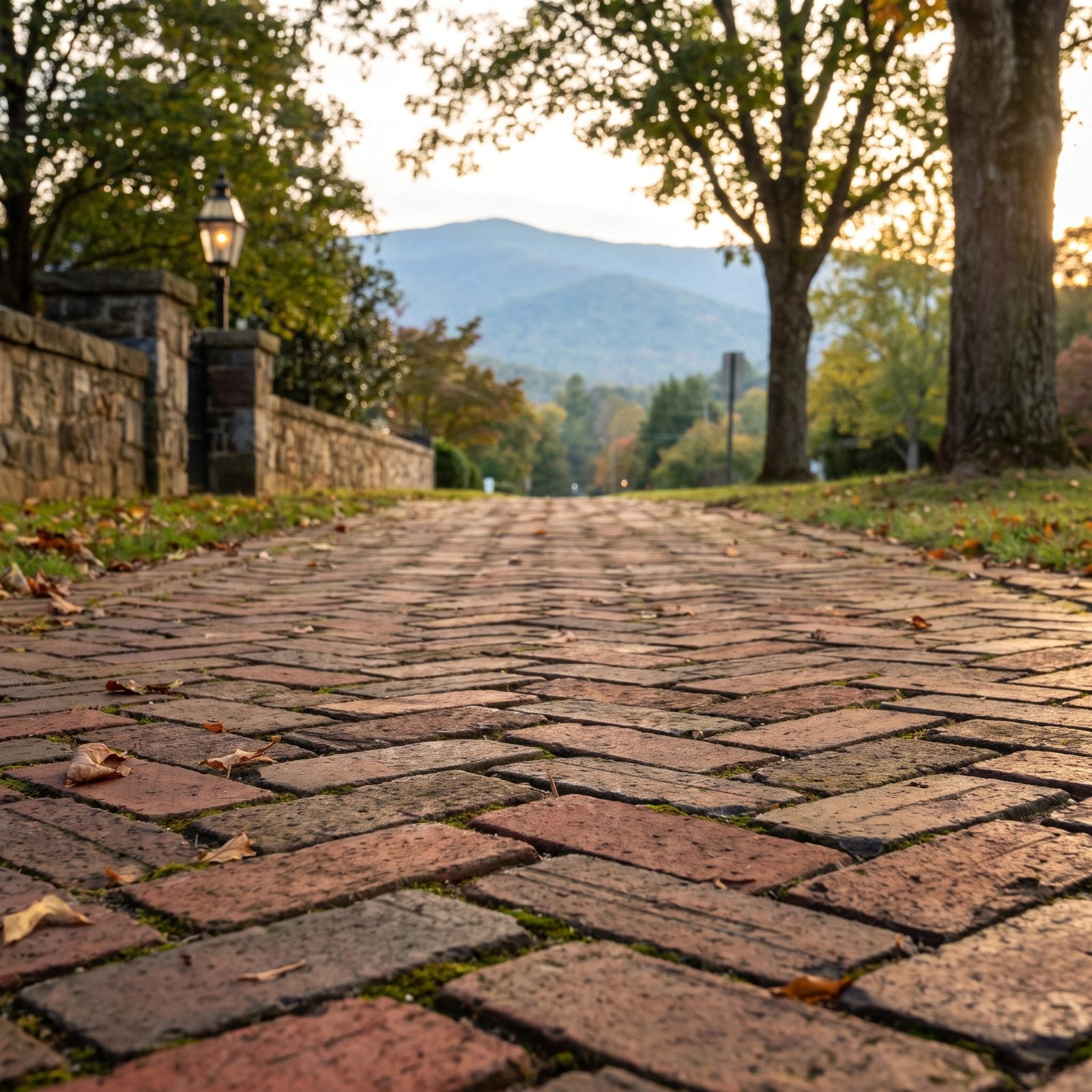
Founded in 1809, Waynesville has been a stop on the road to the Smokies for over two centuries. The whole downtown is walkable — shops, restaurants, galleries and breweries strung along Main Street with brick sidewalks underfoot and restored historic buildings on either side.
There’s a Mast General Store, which in these mountains counts as a landmark. Parking around Main Street is free, which matters far more than it sounds like it should. The Gateway to the Smokies Archway returned to Main Street in 2024. Walk down the hill to the Historic Frog Level District once you’ve exhausted the top of town.
13. Bath: The Oldest Town in the State, Still Quiet as Ever
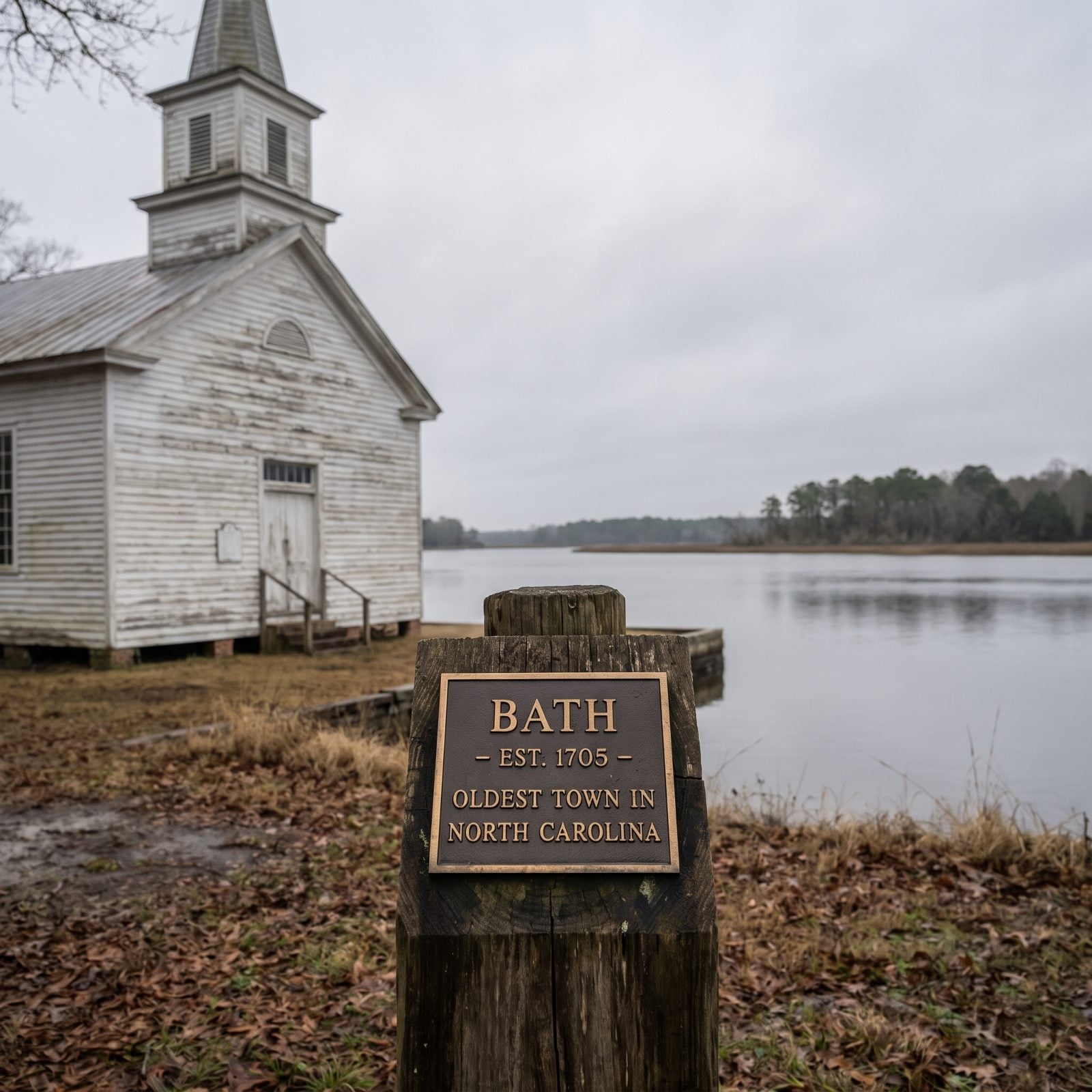
Bath is the oldest town in North Carolina, established in 1705, and the state highway markers at the Historic Bath visitor center say so plainly. It sits on Bath Creek near the Pamlico River and has stayed small the entire time.
St. Thomas Episcopal Church, built of brick in 1734, is the oldest standing church in the state, which is hard to wrap your head around standing in front of it. The Palmer-Marsh House dates to around 1751 and ranks among the oldest houses still standing in the state. Guided tours also take in the 1830 Bonner House. This is the quietest town on the list, and that’s the point.
Generations of Sunday mornings in one old brick church by the water. You feel it before anyone tells you the date.
12. Manteo: Boardwalk Loops and a Lighthouse You Can Tour for Free
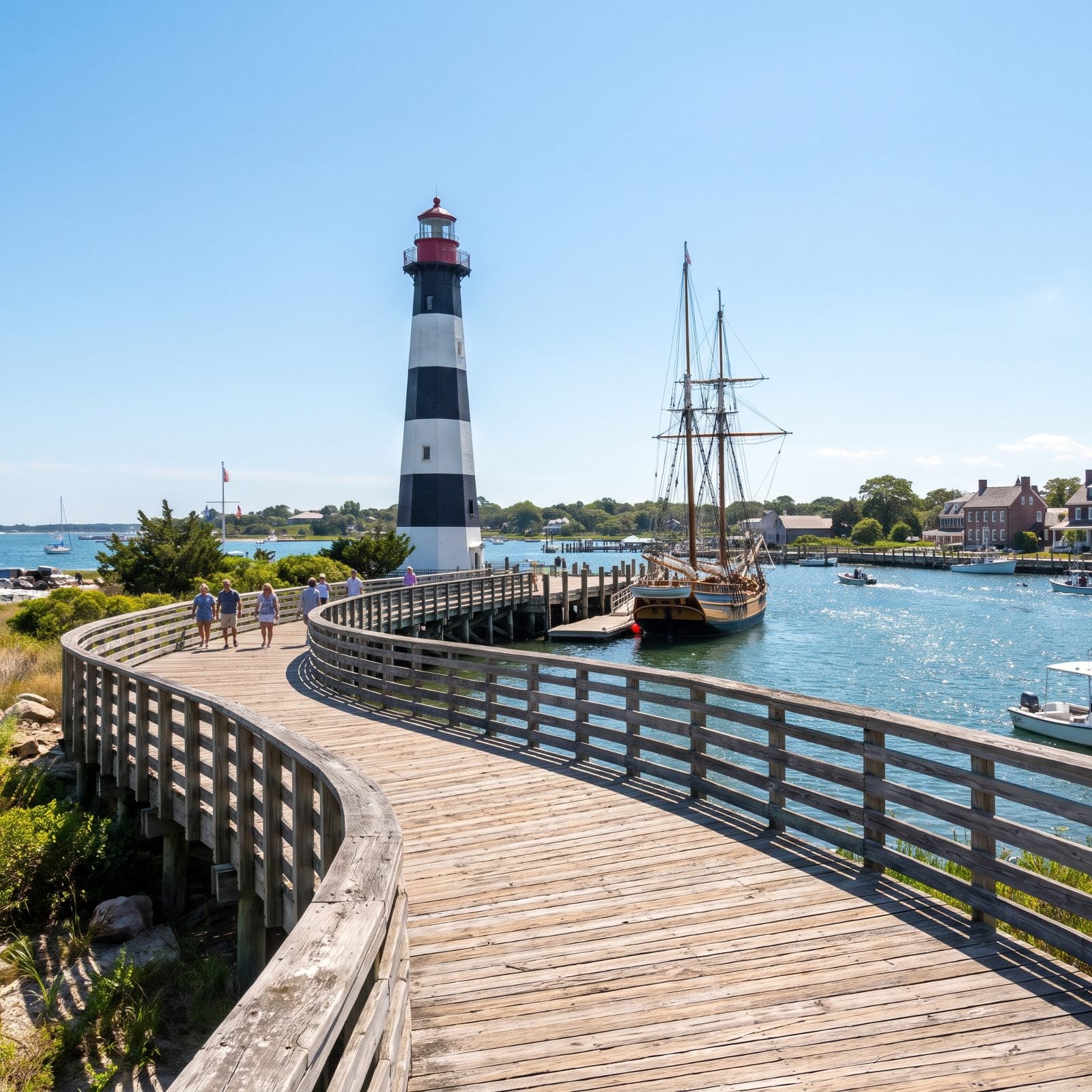
Park at Roanoke Island Festival Park where a three-masted tall ship sits moored, then walk the bridge into town. That one move spares you the downtown parking shuffle and hands you a view before you’ve even bought a coffee.
The boardwalk hugs Shallowbag Bay and strings together the shops, restaurants, and little pocket parks along the way. Both the Roanoke Marshes Lighthouse, a screw-pile cottage on the waterfront, and the Roanoke Island Maritime Museum let you wander at your own pace for nothing. Free is rare out here. Take it.
11. Ocracoke Village: A One-Mile Island Town Wrapped Around Silver Lake
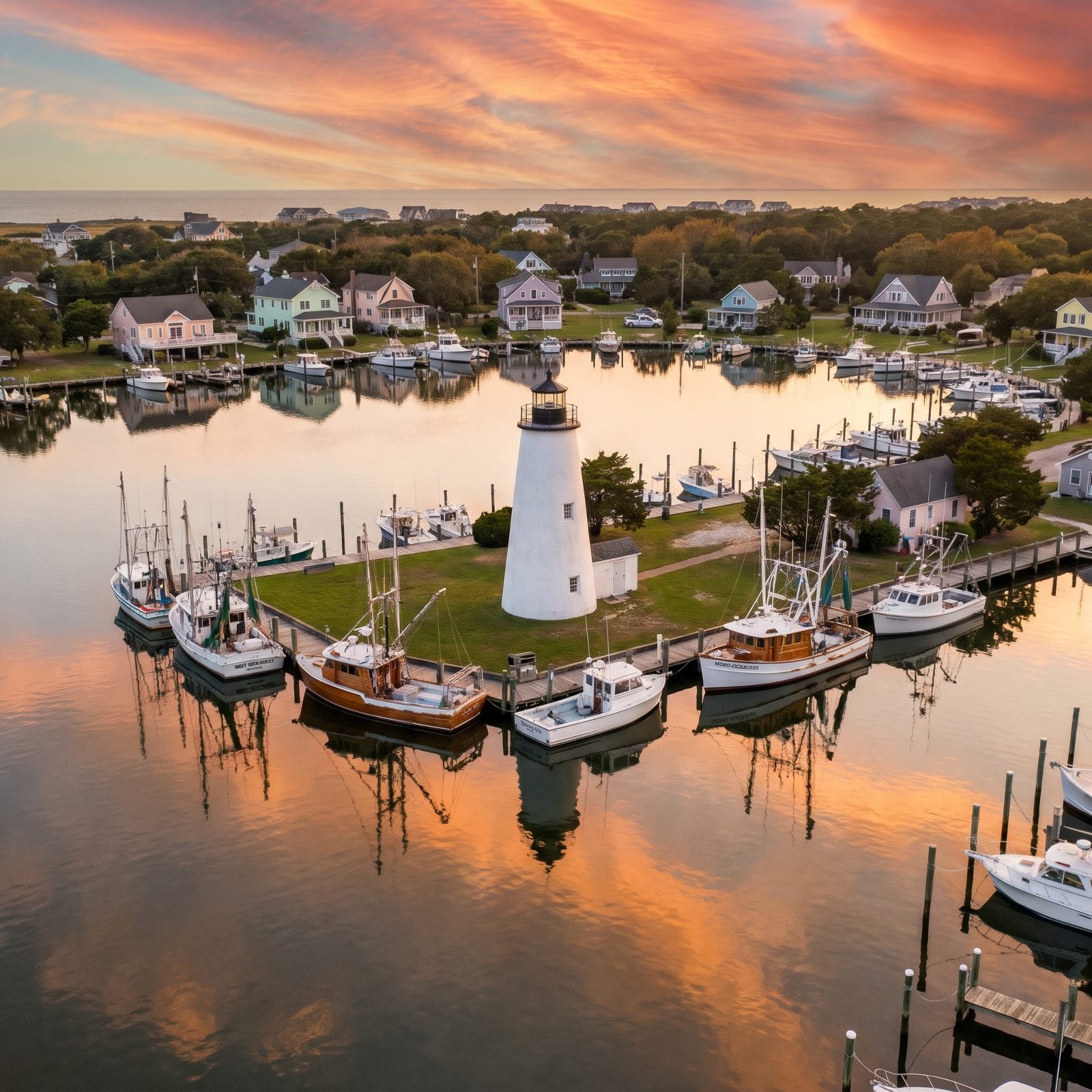
You earn Ocracoke. There’s no bridge, so most people roll off a ferry across Hatteras Inlet that takes about an hour or a little more, and in summer a passenger-only express runs too.
The village is about a mile across in any direction, which means you can leave the car and not look back. The Ocracoke Lighthouse stands just a few hundred feet from the boats on Silver Lake, right at the edge of the harbor. No climbing it, but you can walk right up and photograph it, and a paved path heads a couple of miles out to Lifeguard Beach. Bring a bike. This island rewards anyone willing to slow down on purpose.
10. Southern Pines: Broad Street, Split Down the Middle by the Tracks
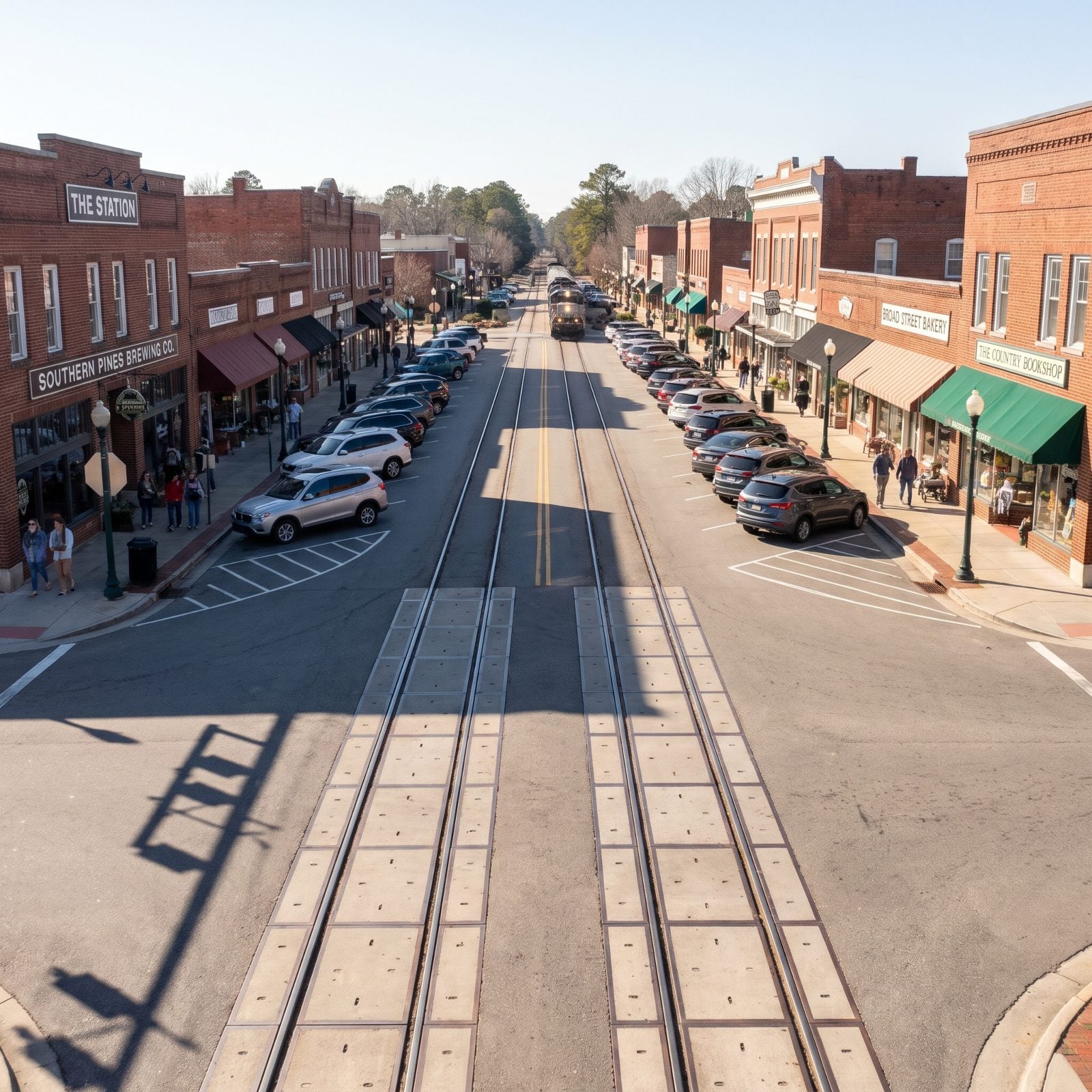
The railroad doesn’t run beside downtown here. It barrels straight through the heart of it, splitting Broad Street into two sides between Connecticut and Indiana avenues. And the train still comes. Watching it slice through the middle of a shopping district never gets old.
Start at the Welcome Center at 235 NW Broad Street, then drift the galleries, cafes, courtyards, and flower-filled corners. A short hop away sits the Weymouth Center for the Arts and Humanities, once the home of writers James and Katharine Boyd. This is one of the bigger towns on this list, so it carries more shops than you’d guess from the lazy pace of the sidewalks.
9. Swansboro: The Friendly City by the Sea at the Mouth of the White Oak
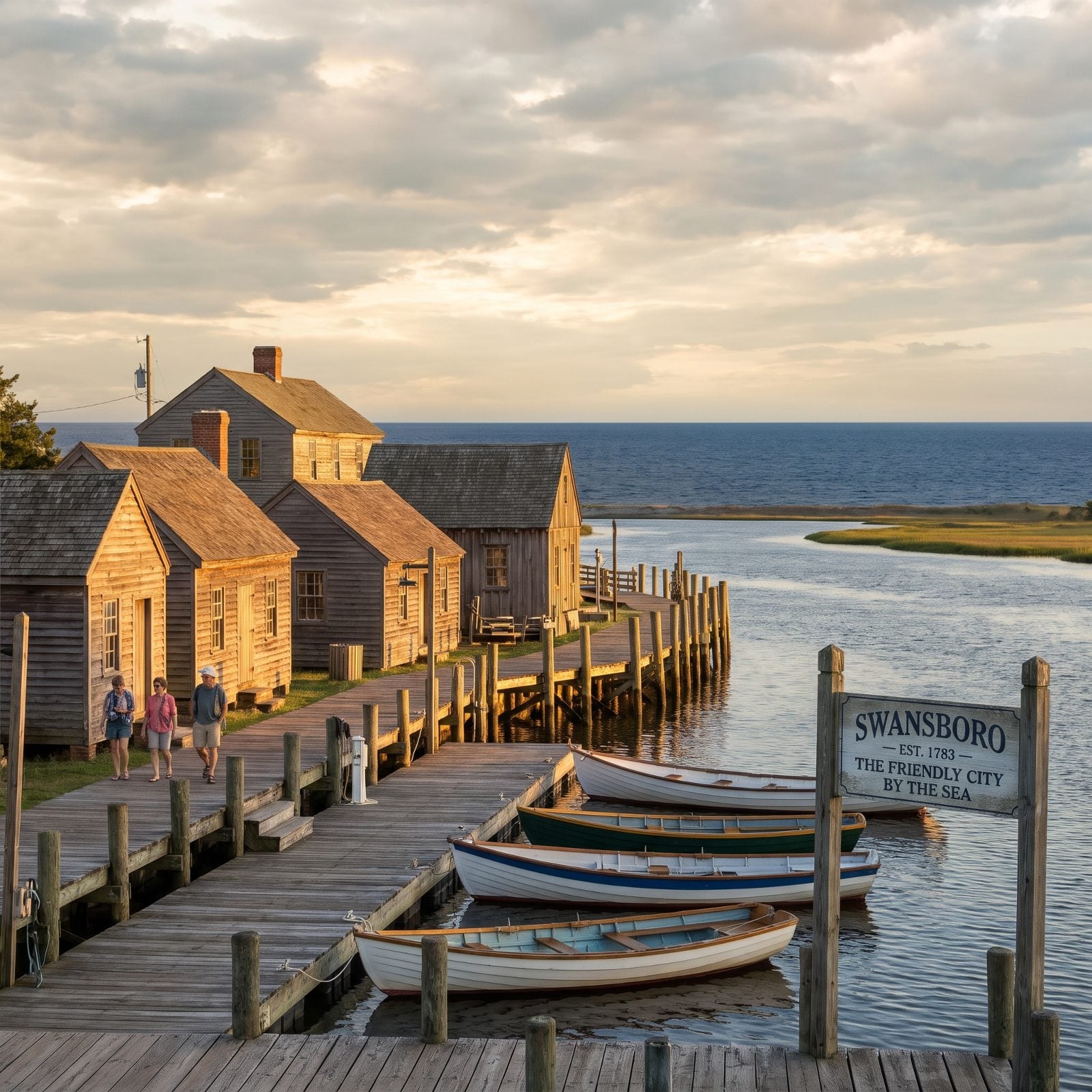
Founded in 1783 at the mouth of the White Oak River, Swansboro calls itself the Friendly City by the Sea and mostly earns it. The downtown is compact, and the river does the heavy lifting, with Front Street running right along the water.
Antique shops, galleries, and boutiques fill the old buildings. When you want sand instead of sidewalk, undeveloped Bear Island at Hammocks Beach State Park is reachable by a seasonal passenger ferry. Seasonal is the word to watch. Check the schedule before you count on it.
8. Oriental: Eight Hundred People, a Whole Lot of Sailboats
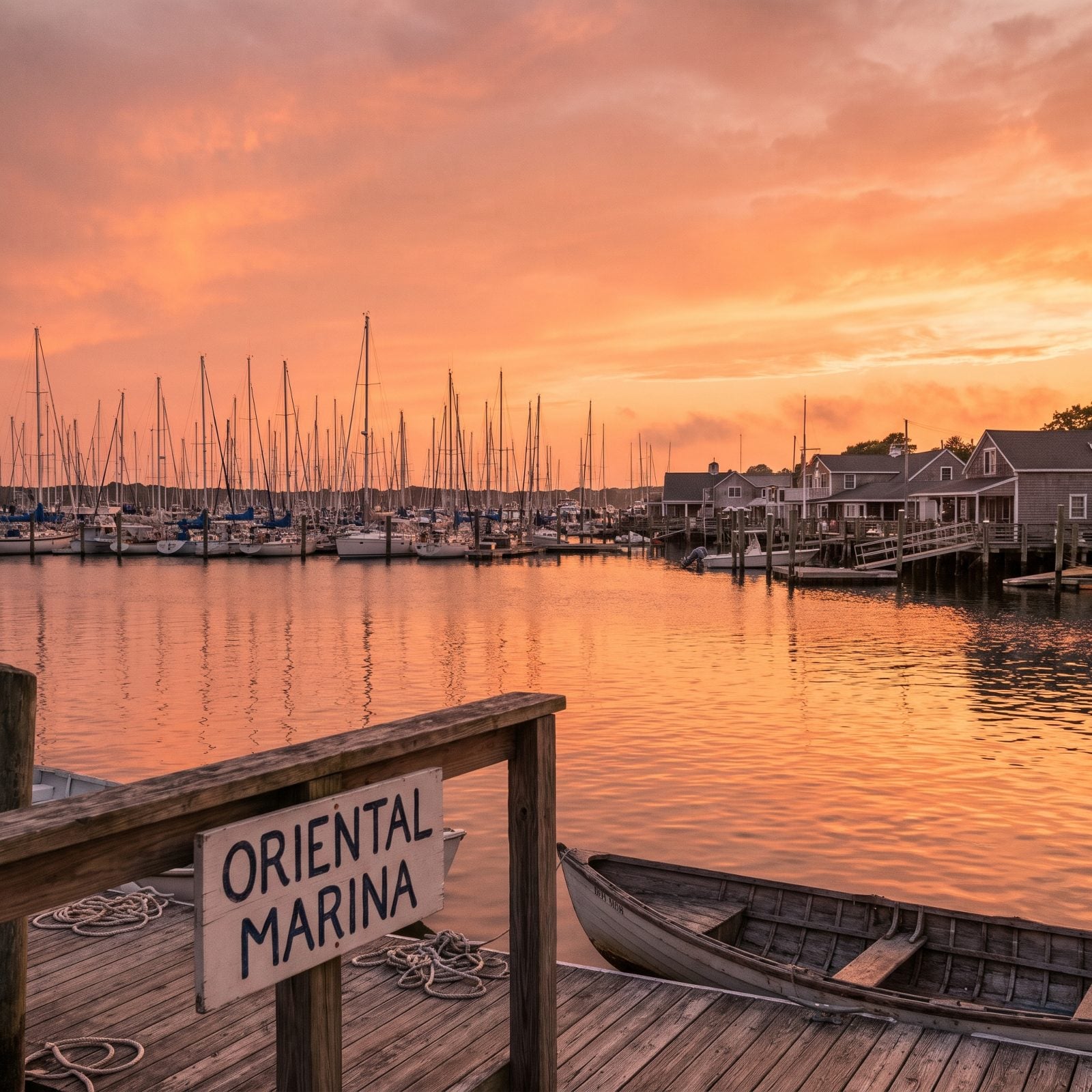
Around eight hundred residents at last count, and more sailboats than you can tally on a good afternoon. Oriental calls itself the Sailing Capital of North Carolina and doesn’t blink saying it.
The town perches on the Neuse River and the Intracoastal Waterway at Mile 181, roughly halfway between New York and Florida for cruising boaters. The town dock gives visiting boats two days of free docking, which tells you everything about the place. Walk the waterfront, watch masts come and go, and understand that the harbor is the show here while the shops are a footnote.
7. Tryon: The Town Watched Over by a Wooden Horse Since 1928
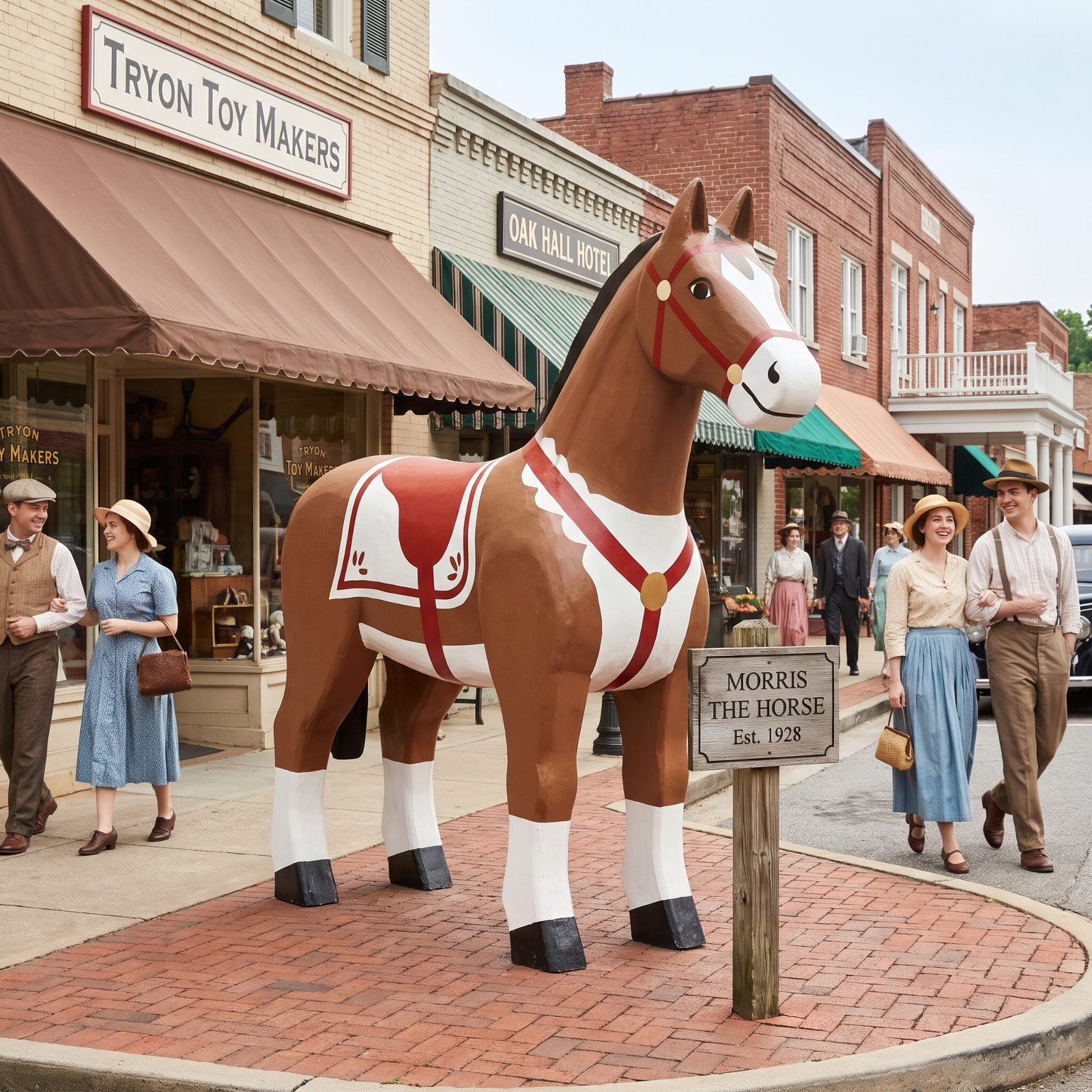
A giant wooden horse named Morris stands at the corner of Trade and Pacolet streets, and some version of him has represented Tryon since 1928. That’s the year the first Morris was built to promote a local horse show, not the town’s founding; Tryon is considerably older. He nods to Tryon’s horse culture and to the little wooden toy horses once made in town, the sort of civic mascot you won’t find anywhere else, and the town leans into him without apology.
Downtown stacks up art galleries worth a slow lap. Just outside, you’ve got Pearson’s Falls, local wineries, and a horse-show scene that runs deep in the foothills. Come for Morris, stay for the galleries, leave planning the horse shows.
6. Black Mountain: Rocking Chairs on Main, Fifteen Miles East of Asheville
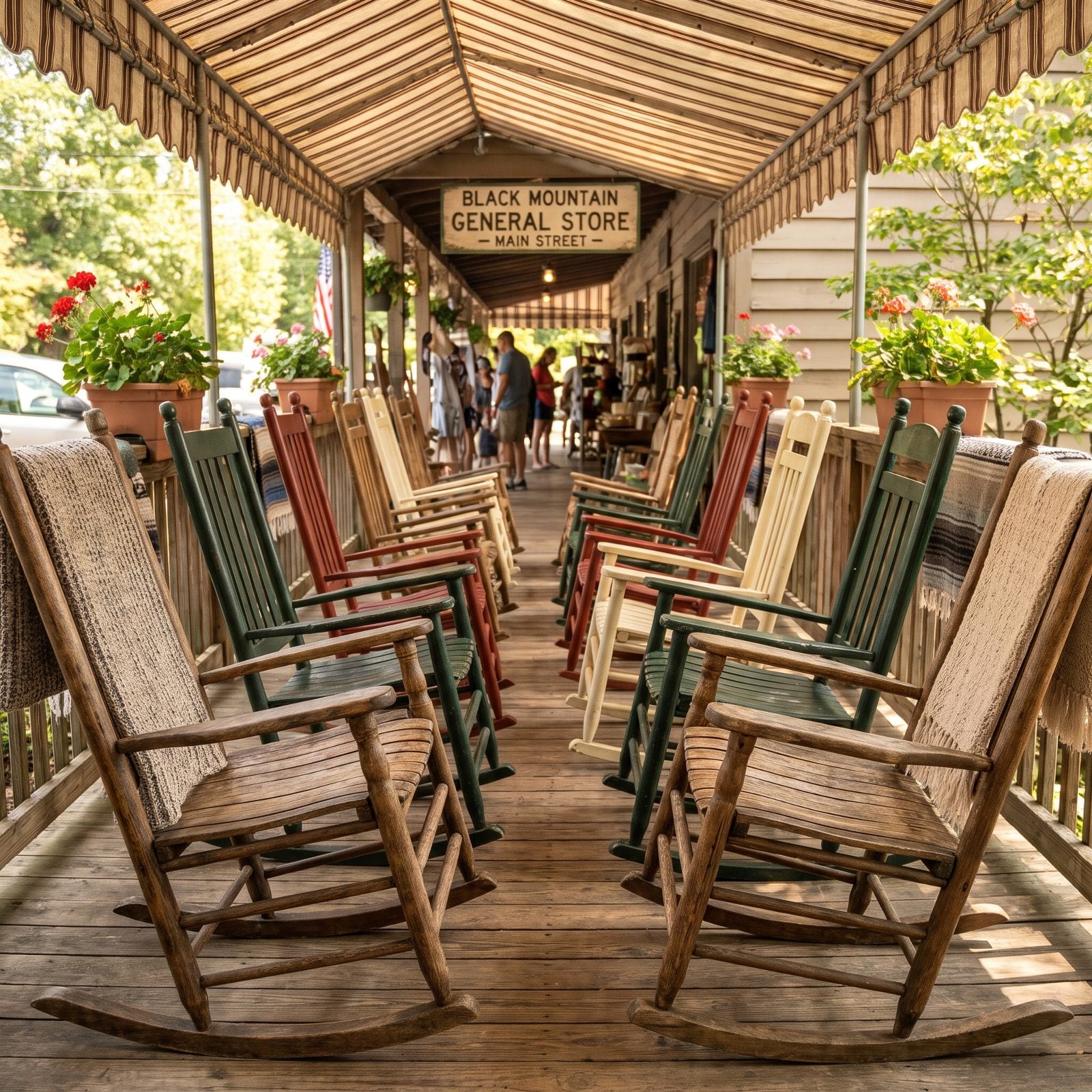
About fifteen miles east of Asheville in Buncombe County, Black Mountain keeps its shops bunched into a walkable historic downtown. There are rocking chairs on Main Street, which should tell you the speed the town runs at.
A few blocks off, Lake Tomahawk Park has a half-mile loop trail with views of Graybeard Mountain, a flat and easy stretch of legs between shops.
One honest note. Western North Carolina took a hard hit from Hurricane Helene in 2024, and Black Mountain has been recovering since, so check on current hours and access before you drive out. The town wants you there. Just confirm the shops you’re after are open.
5. West Jefferson: A Dozen-Plus Murals and Squeaky Cheese Curds
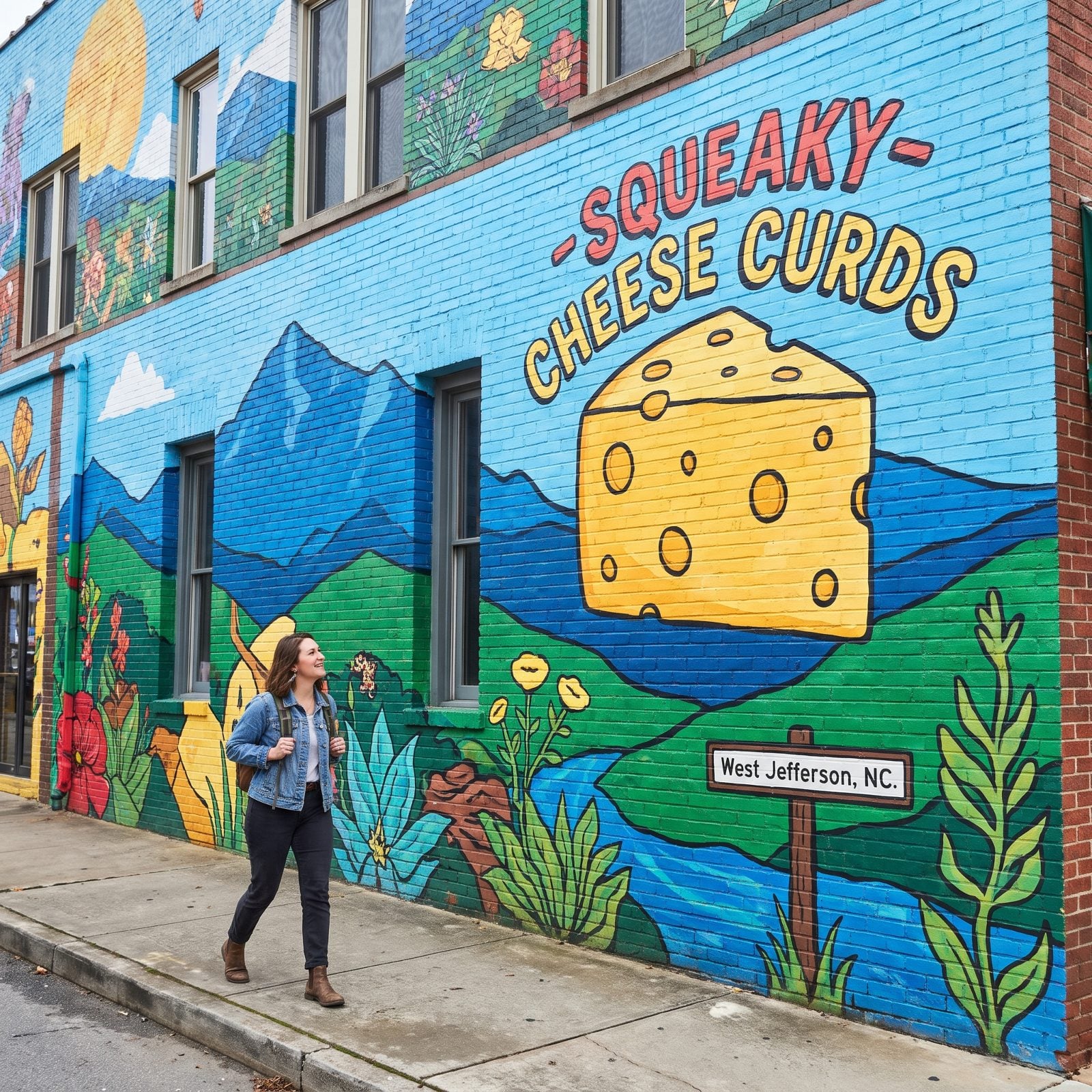
West Jefferson is a small place, and the walls do a lot of the talking. More than a dozen murals dot downtown, several of them on the Appalachian Mural Trail, so the stroll doubles as an open-air gallery you never paid admission for.
Step inside and you’ll find art galleries by the dozen plus craft shops and restaurants. The signature stop is Ashe County Cheese, where the dairy tanks out front are painted like black-and-white cows and the squeaky curds are reason enough to drive here. Buy them fresh. The squeak fades over a day or two, and the squeak is half the fun.
4. Elkin: A Trail Town Where Three Big Trails Collide on Main Street
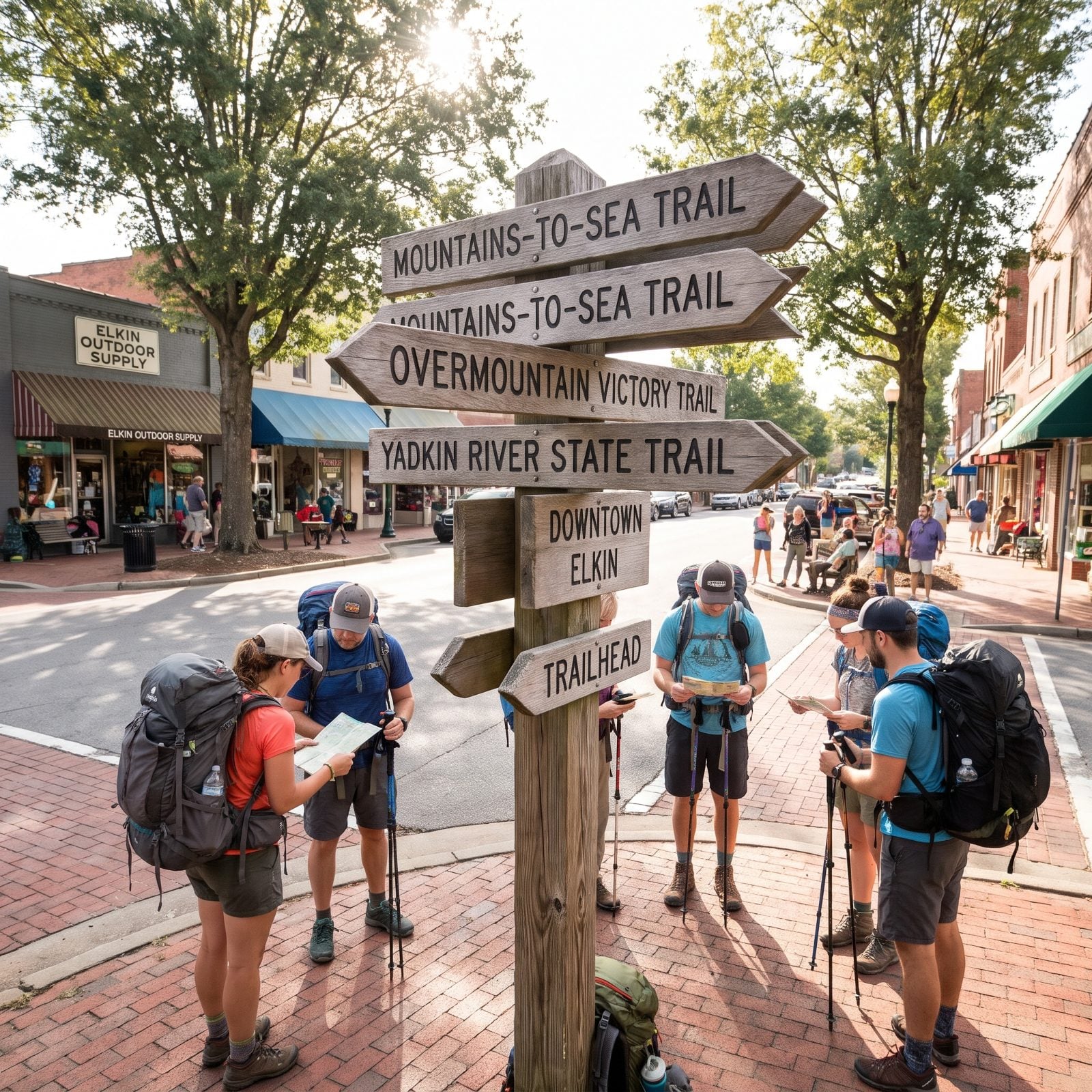
Three trails meet in the middle of this town. Elkin’s Main Street sits directly on the NC Mountains-to-Sea Trail, right where it crosses paths with the Overmountain Victory Trail and the Yadkin River. A rare intersection, and Elkin built its whole identity around being a trail town.
The Visitor Center is at 257 Standard Street. Downtown runs on restaurants, coffee, galleries, and murals, and the restored Reeves Theater on Main hosts live music. Its downtown historic district is on the National Register of Historic Places, and the town sits ringed by Yadkin Valley vineyards. Hike in the morning, wine in the afternoon, music at night. That’s a day.
3. Bryson City: A Downtown Built Around a Railroad Depot
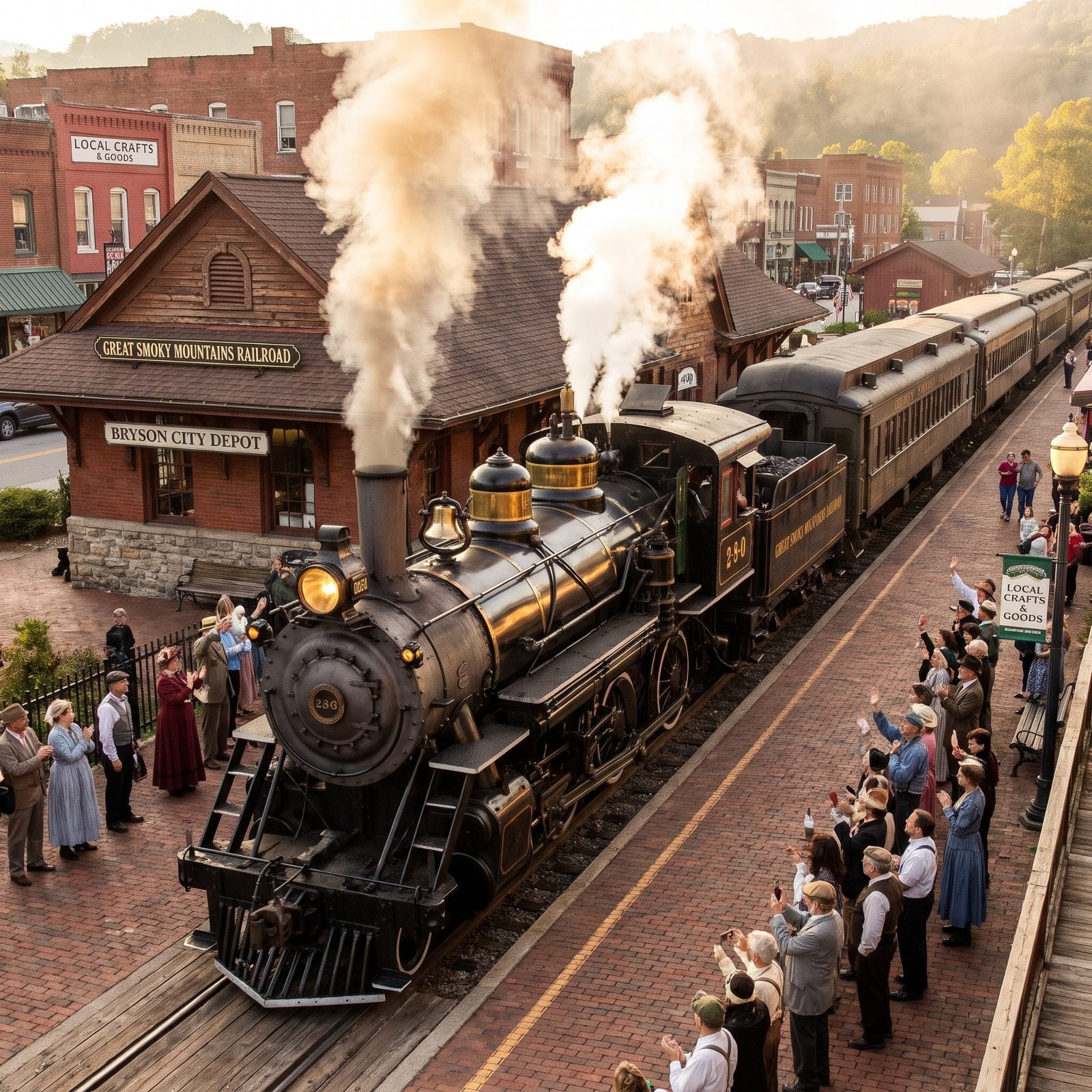
The whole downtown orbits the Great Smoky Mountains Railroad depot, where excursion trains pull up beside the platform. You hear the train before you see it, and that sound sets the rhythm for the entire town.
Across the street from the depot sit brick storefronts with striped awnings, with sidewalk access to most of it. The Tuckasegee River runs through town, and the Deep Creek entrance to Great Smoky Mountains National Park is minutes away.
The town is a major gateway to the Smokies. Confirm the train schedule and your lodging directly before you lock in dates.
2. Dillsboro: Two Blocks of Tuckasegee River Charm
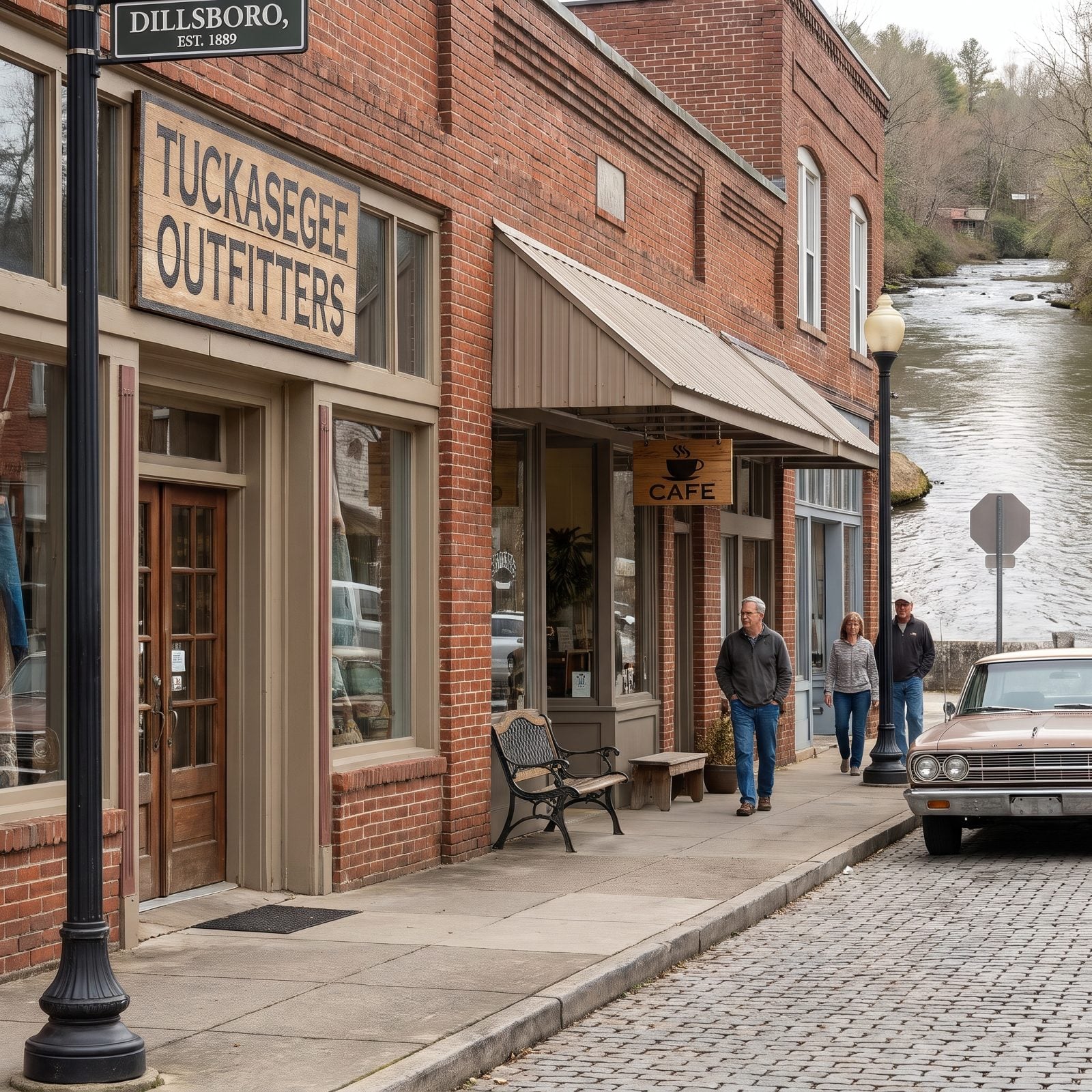
Blink on the drive through and you’ll miss it. Dillsboro covers roughly four-tenths of a square mile, with a main street that runs two whole blocks before it gives up. Small is the pitch, and small is exactly why it works.
The anchor is Dogwood Crafters at 90 Webster Street, a cooperative tucked inside a log store that shows work from dozens of regional artists. It has been in business since 1976. You’ll find pottery, quilts, carved wood — the made-by-hand kind of stuff that feels rarer every year.
The Tuckasegee runs right alongside, and Sylva sits under three miles up the road, so you can knock out both towns in an afternoon and still have time to dawdle.
1. Sylva: Climb 107 Steps to the Most-Photographed Courthouse in the State
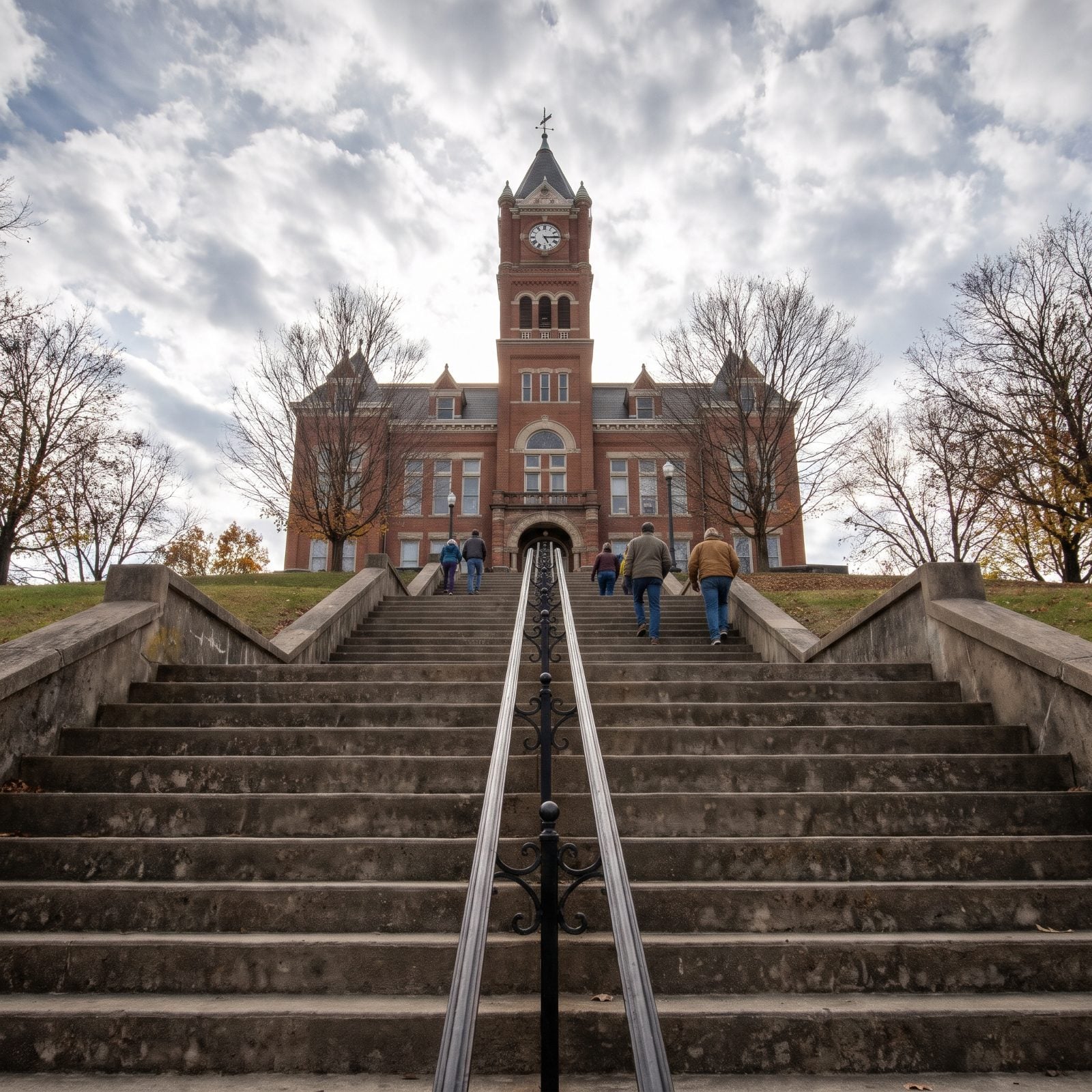
Locals will tell you it’s the most photographed courthouse in North Carolina, and once you see it, you stop arguing. The Jackson County Courthouse sits at the head of Main Street — white-painted brick, with a domed clock cupola rising into a big open sky like a backdrop someone painted on purpose.
You have to earn the view, though. A hundred and seven steps climb from downtown up to the landing, and what you get for the burn in your calves is a look back over the rooftops, bare trees framing the whole thing.
Down at street level, everything flattens out and goes pedestrian-friendly. Bookshops, outfitters, a brewery or two — the kind of Main Street that still has its own personality. Pair it with Dillsboro three miles off and you’ve got a full day in Jackson County without the highway stealing half of it.
Please note that some of the imagery in this article were created with the aid of AI image generators.