
🔥 Would you like to save this?
The gate agent announces a delay and half the terminal groans in unison. The other half already knew. They checked the inbound plane an hour ago, they’ve got a rebooking flight picked out, and they’re calm because they built a buffer nobody else can see. A smooth travel day almost never comes down to luck — it comes down to a handful of odd little routines experienced flyers swear by and everyone else has never heard of. These are worth stealing. Some sound fussy. All of them work.
39. Scan the Departures Board for Backup Flights to Your Destination
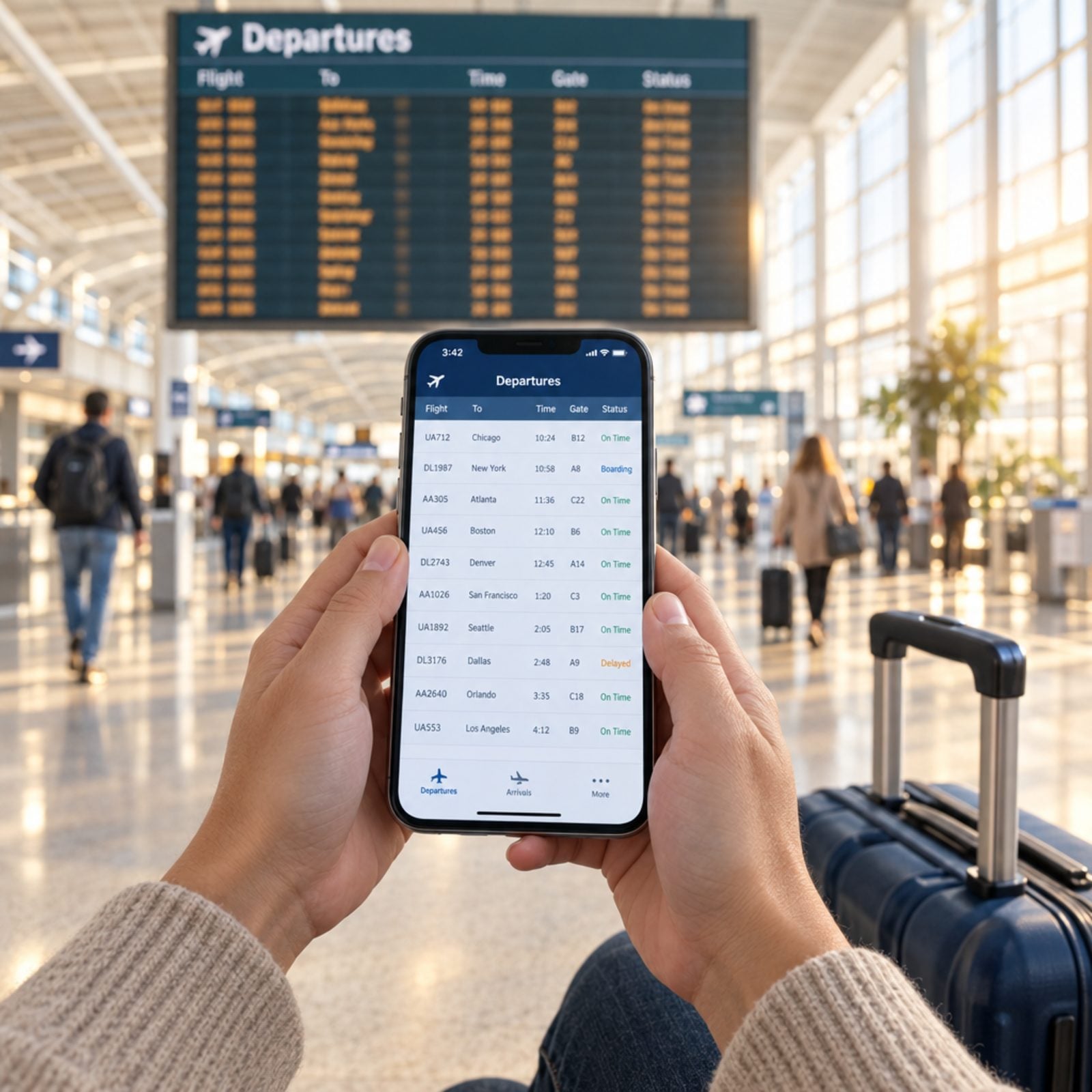
Most people learn their options only when the cancellation hits and the rebooking line is already forty deep. Smart flyers do the homework before they leave the house. Pull up every flight going to your destination that day, note the times, note the airlines, and jot down two backups.
Then, when the delay comes, you walk to the counter already knowing what you want. “Put me on the 4:15, seat on the aisle.” The agent loves you for it while the people behind you are still frantically Googling.
38. Track the Inbound Aircraft Before You Even Leave Home

Your plane doesn’t materialize at the gate out of nowhere. It flies in from somewhere else, and if that somewhere else is running late, so are you. The board might still read on time an hour before your flight even when the aircraft meant to carry you is two states away and circling.
Free flight-tracking apps let you follow the specific tail number assigned to your trip. Spot it stuck three airports back and you’ve got your answer before the airline will admit it. Slow down. Grab a real breakfast. Skip the rush. Nobody at the gate knows what you know.
37. Map Your Exact Connection Route Before the First Flight Boards
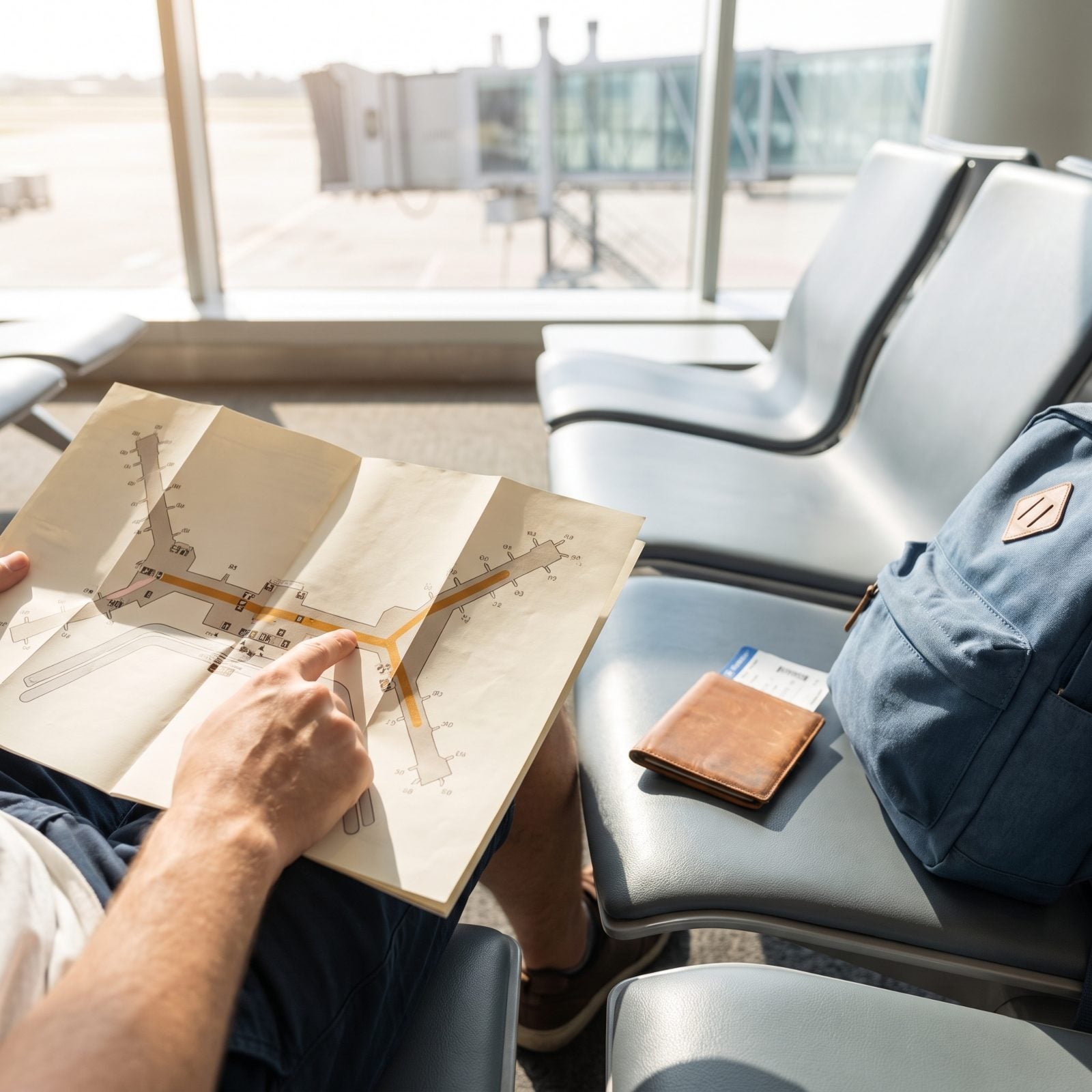
A ninety-minute layover feels generous — right up until you land at the far end of Terminal E and your next gate is a train ride, an escalator, and a twelve-minute walk away in Terminal A. Tight connections aren’t tight because of the clock. They’re tight because of distance, and distance is something you can know ahead of time.
So look up both gates while you’re still at home, or at least before the first flight pushes back. Figure out whether you need the shuttle, whether there’s a security re-check, whether the terminals even connect airside. Then the jog, if it comes, is a planned jog instead of a panicked one.
36. Research the Food Past Security Before Picking Your Checkpoint

Big airports often have more than one security checkpoint, and they don’t all dump you into the same stretch of terminal. Pick wrong and you land in a wasteland of vending machines and one lonely pretzel stand. Pick right and the decent restaurants are twenty steps from the scanner.
A two-minute look at the airport’s own map tells you which checkpoint feeds you into the good concourse. You still clear security once — you just clear it next to the places you’d actually want to eat. Hunger makes a lousy traveling companion. Don’t invite it along.
35. Duck Into the Airport Chapel for a Genuine Reset

Nearly every major airport has one, and almost nobody uses it. The interfaith chapel is often the only room in the whole building without announcements, gate chatter, or a TV bolted to the wall. You don’t have to be religious to sit for ten minutes in a space built for stillness.
After a missed connection or a four-hour delay, your nervous system is begging for somewhere that isn’t blaring. A chapel is free, usually empty, and almost always open. Ten quiet minutes there beats an hour doom-scrolling in a plastic chair under a flickering flight board.
34. Hunt Down an Outdoor Terrace Before You Board

Recycled cabin air, buzzing fluorescents, the hum of a thousand strangers. By the time you board, your body has already spent hours indoors under conditions it hates. And here’s the part nobody mentions: a growing number of airports have outdoor terraces, rooftop decks, or open-air gardens, and hardly anyone goes looking.
Ten minutes of real sunlight and moving air does more for a long travel day than any amount of airport coffee. Daylight also nudges your body clock, which helps on long hauls and big timezone jumps. Can’t find a terrace on the map? Ask at an information desk. The answer surprises people.
33. Walk the Airport Art Trail During a Long Layover

A three-hour layover is a punishment if you spend it staring at a gate. Treat it like a free museum and it turns almost pleasant. Plenty of major airports commission serious public art — murals, sculptures, rotating exhibitions, some of it genuinely worth seeing.
Many airports even publish a self-guided art map on their website. Walking it kills the time, gets your legs moving after a cramped flight, and quietly lifts your mood. You arrive at the next gate having actually seen something instead of memorizing the carpet pattern at B14.
32. Visit Your Gate First, Then Go Find Food
Gates change. The board said C22 when you landed, but by the time you’re back from lunch it quietly slid to C47 and nobody paged you. Wandering off for food without first laying eyes on the actual gate is how people end up sprinting the wrong direction with a sandwich in hand.
Walk to your gate first. Confirm it’s real, confirm the time, clock how long the trip takes from the food court. Then go eat. Now you know exactly how much slack you’ve got, and the walk back is a stroll instead of a scramble.
31. Set Your Alarm for Gate-Closing Time, Not Departure Time
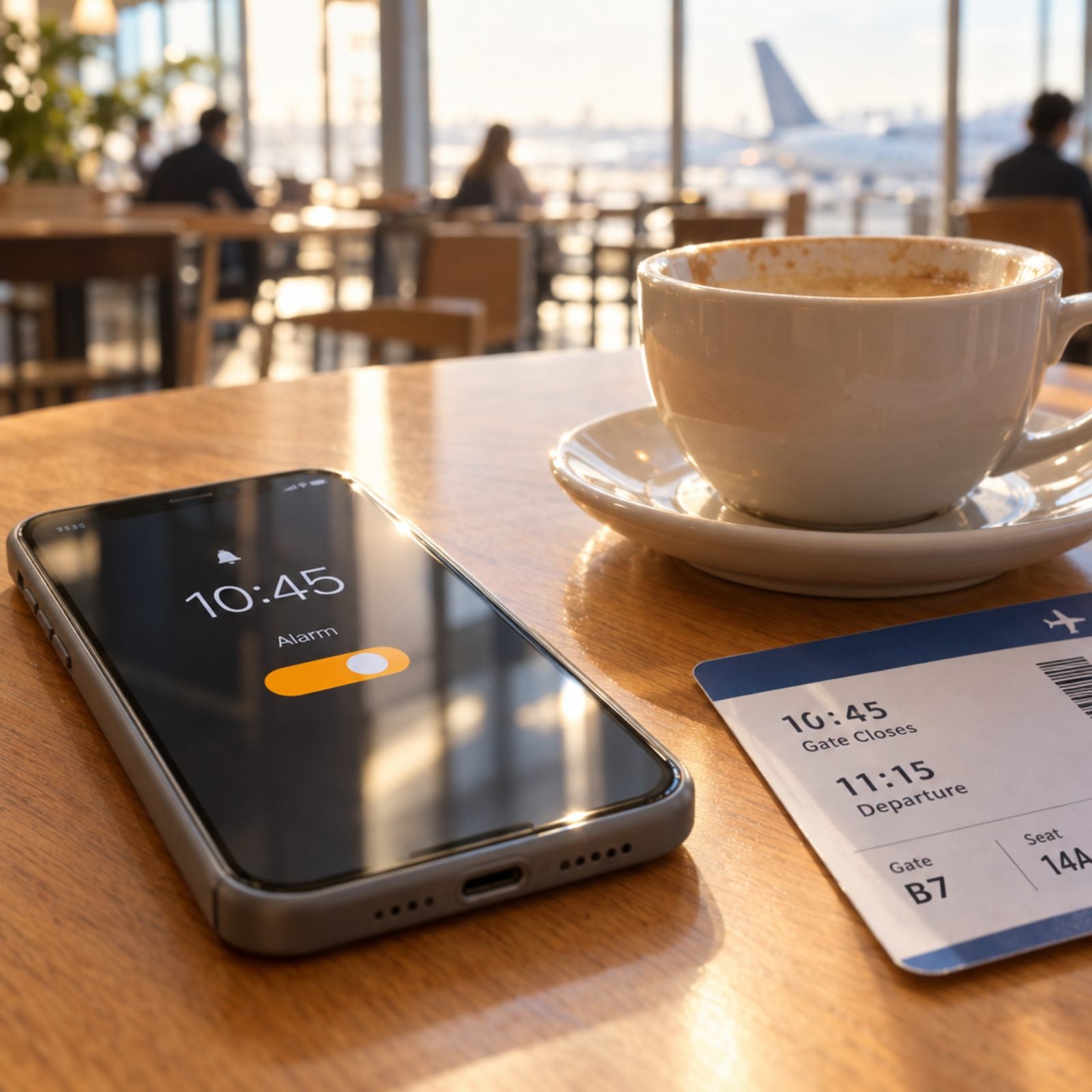
Here’s the trap. The departure time on your ticket is not when you need to be at the gate. The door usually closes ten to fifteen minutes before the plane leaves, and once it’s shut, pleading gets you nowhere. People miss flights they were “on time” for constantly.
So set your alarm — your mental deadline, whatever you watch — for the gate-closing moment, not the departure moment. Build the buffer right into the number you’re tracking. A small mental shift, and it quietly erases a whole category of heartbreak at the jet bridge.
30. Camp Out at a Less Crowded Neighboring Gate
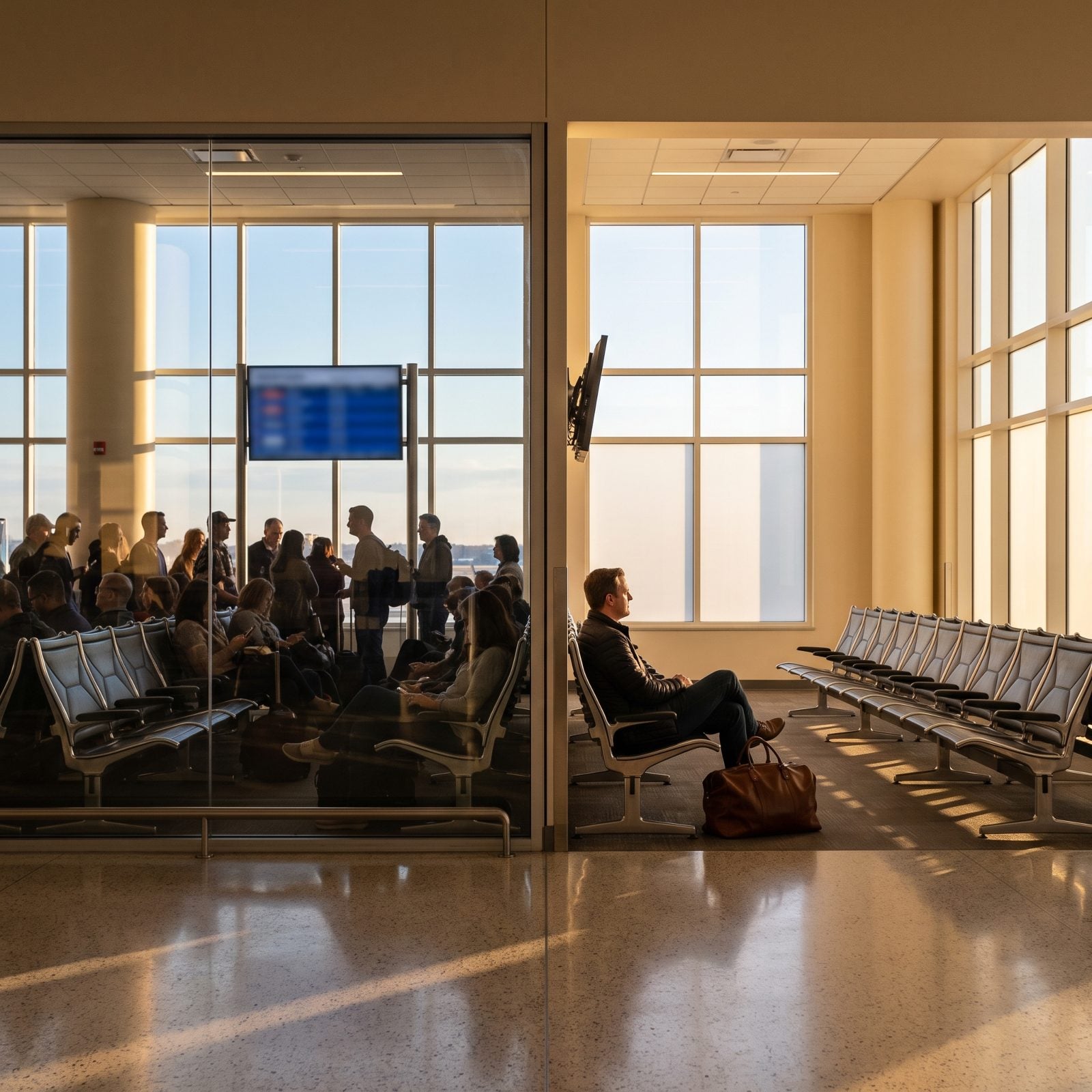
Your gate is a scrum. Every seat taken, people standing, outlets claimed, a stroller wedged across the aisle. Meanwhile the gate next door — a flight that already left, or one that doesn’t board for three hours — sits practically deserted.
Sit there instead. You get a real seat, an open outlet, room to breathe, all while keeping your own gate’s monitor in sight so you don’t miss a thing. When boarding starts, you stroll the thirty feet over. The crowd wonders how you stayed so relaxed. Go find the empty one.
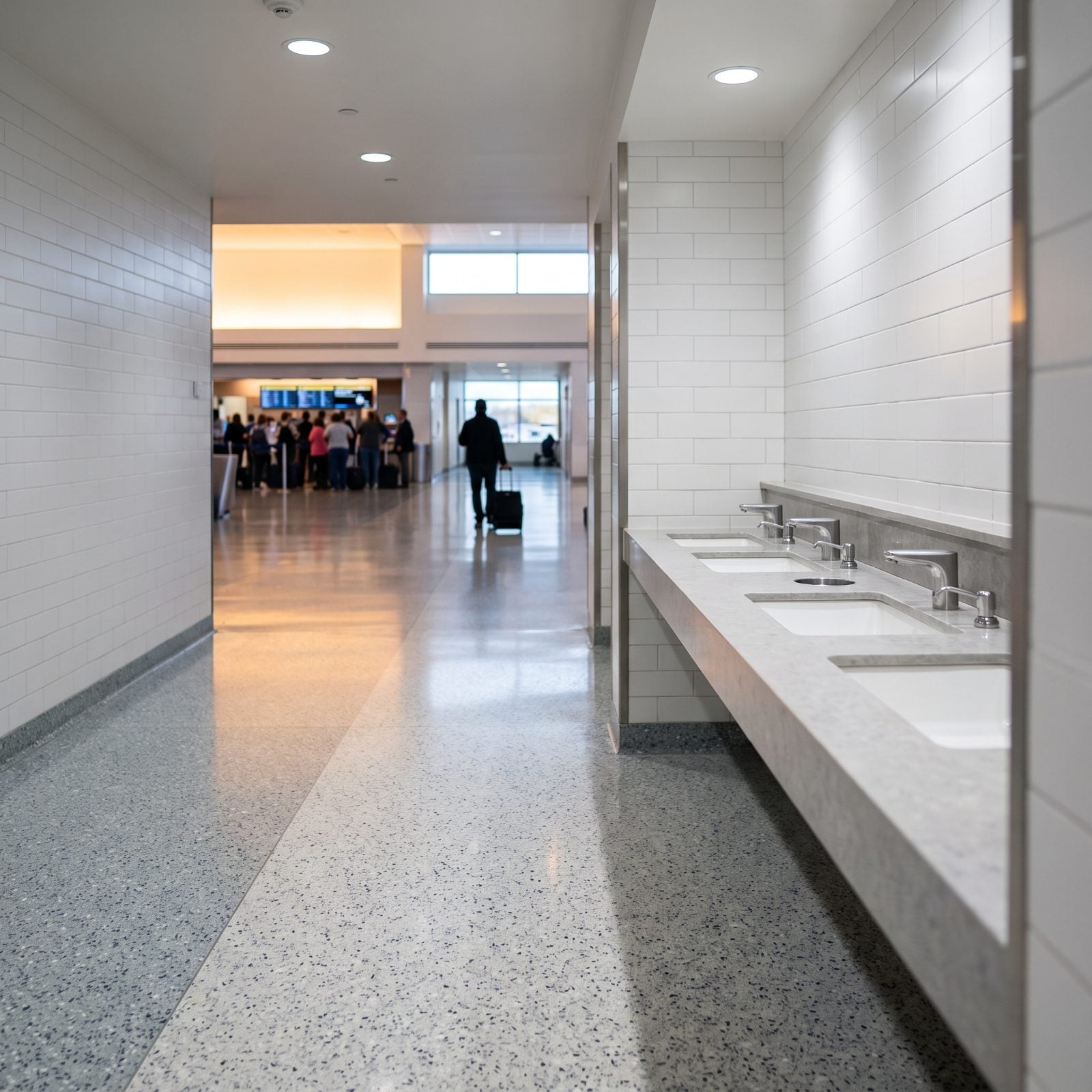
29. Use the Restroom One Gate Beyond the Crowded One
🔥 Would you like to save this?
The restroom nearest the security exit is always the busiest one in the building, because everyone finds it the same way at the same moment with the same full bladder. Walk thirty more steps toward the gates and the next one sits half empty.
Same water pressure, same soap, and no line snaking past the hand dryers while a kid does a slow dance at the sink. This is the single easiest stress cut on the list — it costs you nothing but a short stroll you were going to take anyway.
28. Choose a Security Line by Bag Complexity, Not Length
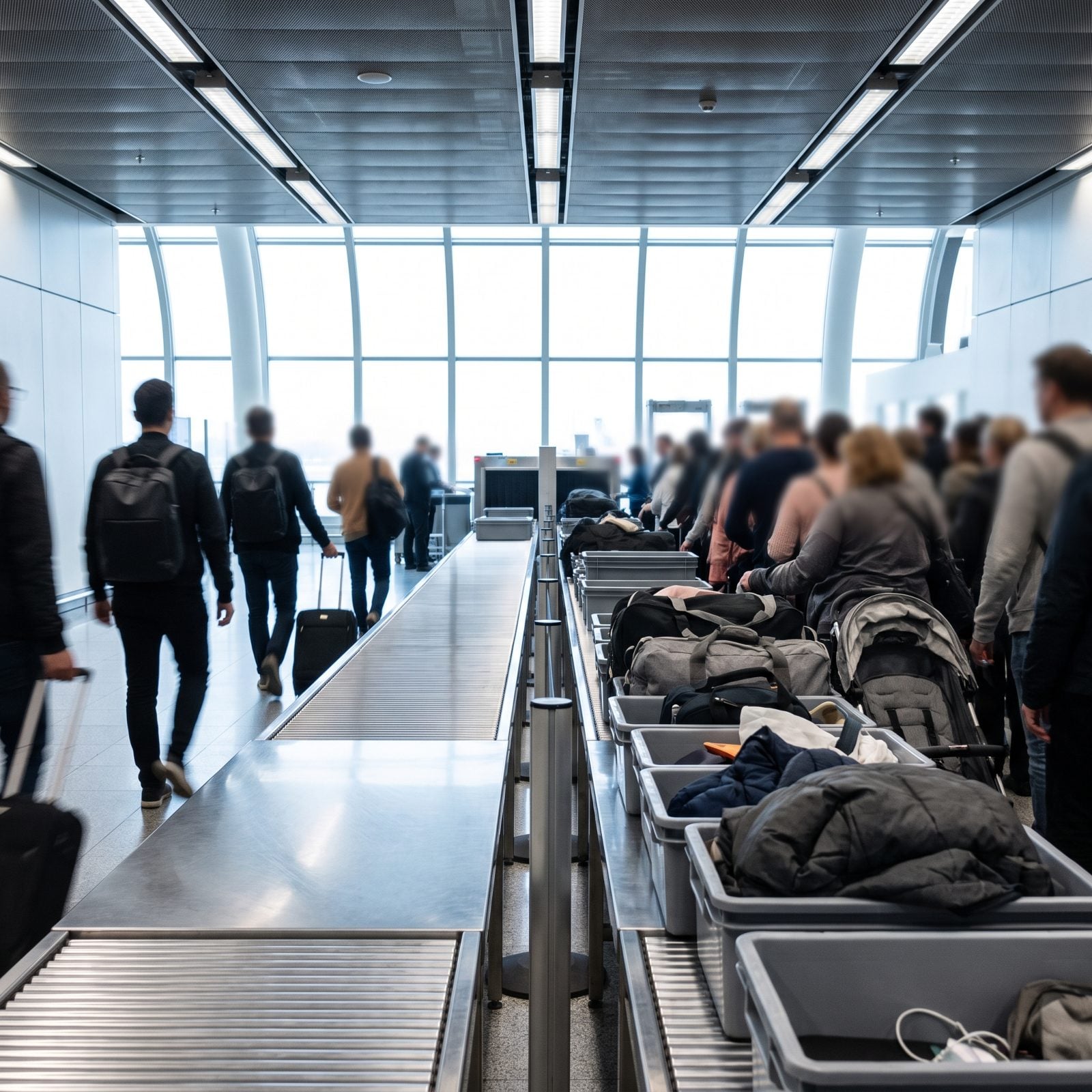
You’ve been picking the shortest line your whole life. Wrong instinct. Six business travelers with one slim bag each will clear faster than three families hauling strollers, snacks, and a toddler who needs his shoes re-tied twice.
Scan the bags, not the heads. Laptop sleeves and slim roller cases are your friends. What you want to avoid is the line with the loose paperwork, the overstuffed duffels, and the guy still fishing a tablet out of his backpack when he reaches the belt.
27. Empty Every Pocket Into One Zipped Pouch Before Screening
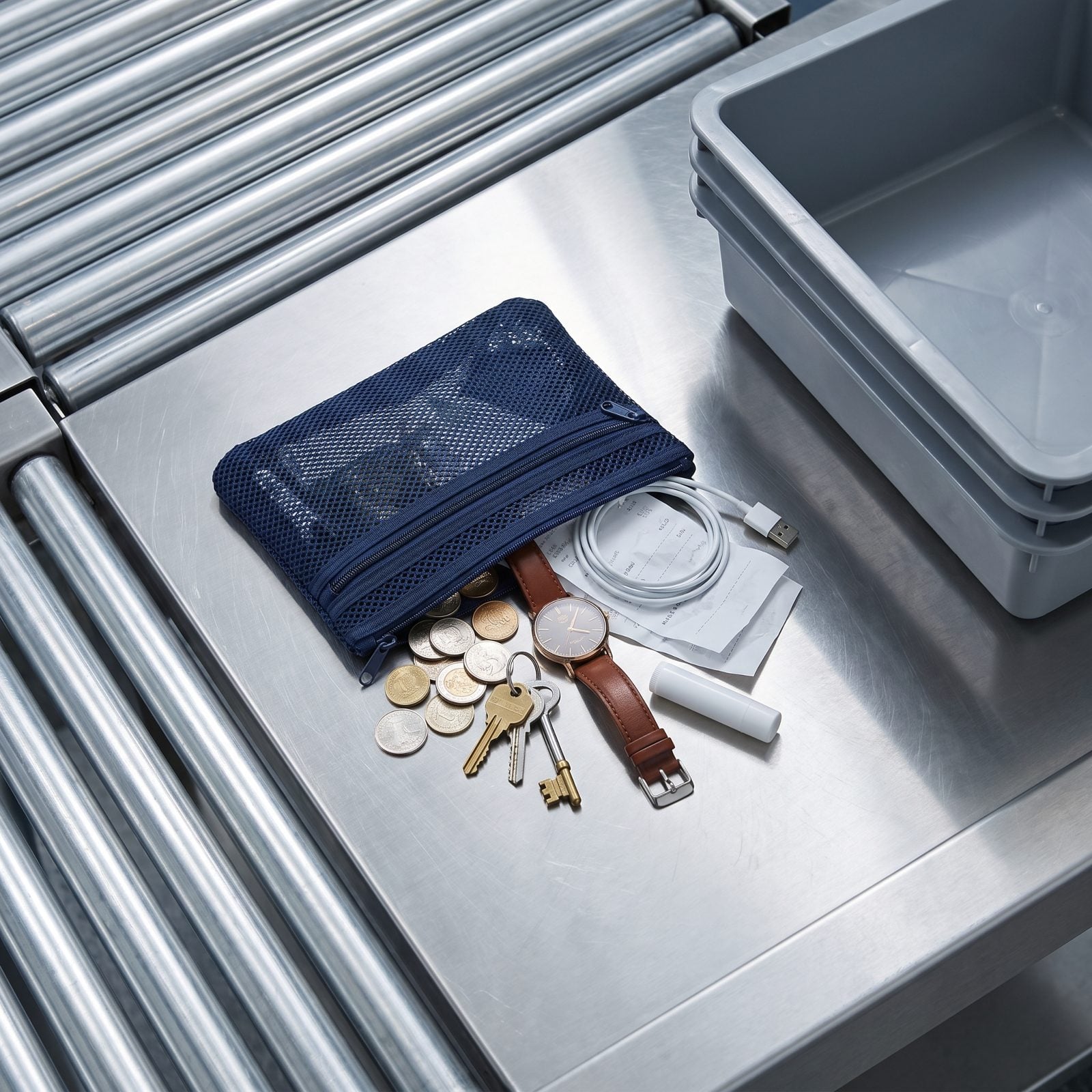
The metal detector doesn’t lose your things. You do, in the scramble. Coins in the dish, keys in the jacket, phone in a bin, chapstick rolling toward the X-ray belt — and then you’re stuffing it all back in a panic while the next person’s bin nudges yours forward.
Before you ever reach the checkpoint, sweep every pocket into one small zipped pouch — and actually zip it. Left open on the rollers beside an empty bin, it spills coins, keys, your watch, lip balm, receipts and a charging cable across the belt, and you’re right back in the scramble. Zipped, it goes in the bin whole, comes out whole, and drops back in your bag in one motion. Nothing rolls away. Nothing gets left in the dish. You walk off with everything you arrived with.
26. Wash Hands Immediately After Handling Security Bins
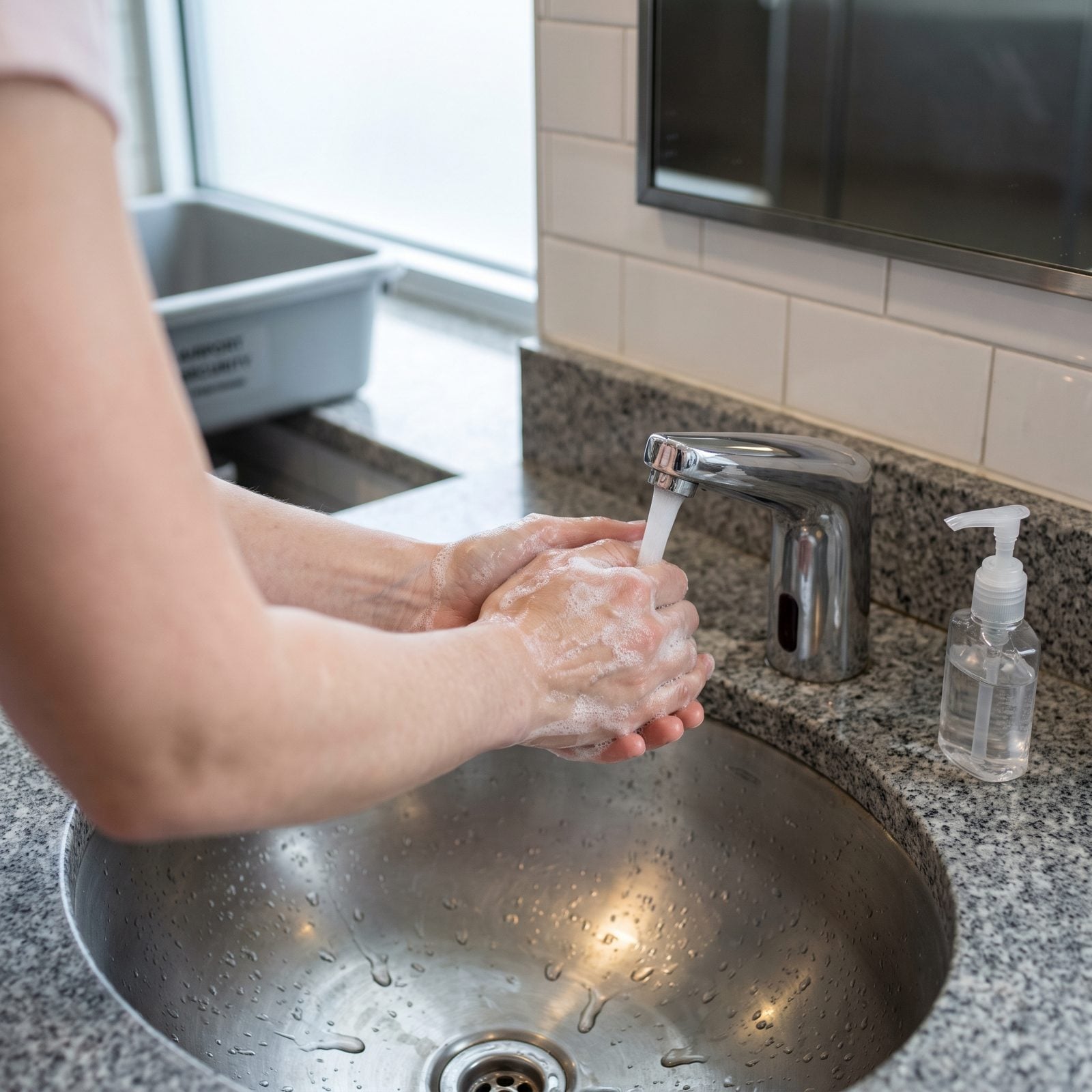
Those gray bins? Dirtier than anything else in the building. Not the bathroom. The bins. Thousands of travelers a day drop shoes, phones, and bare hands into the same trays, which get wiped down far less often than you’d ever want to think about.
So hit the restroom right after you reassemble yourself past the checkpoint — a proper wash, not a dab of sanitizer. Nobody mentions this step, and it’s the one that keeps a head cold from being the souvenir you carry home from gate B14.
25. Photograph the Exact Parking Row and Elevator Marker
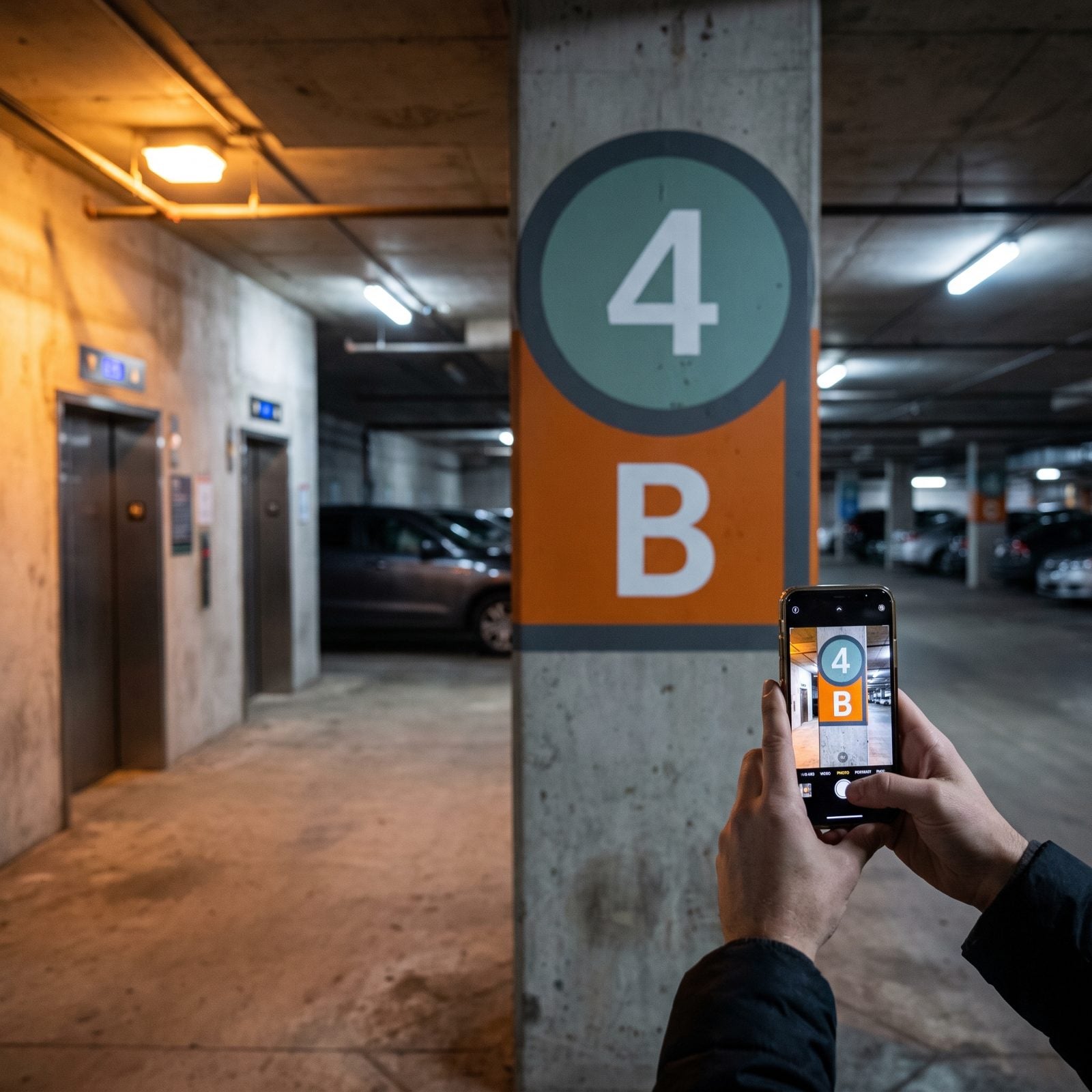
Picture it. You land near midnight, exhausted, hauling a bag, and you step out of the elevator into a sea of identical concrete. Level three? Blue section? The one near the stairs? Now you’re wandering two floors in the cold while your phone battery dies.
Thirty seconds earlier in the day fixes all of it. When you park, snap a photo of the nearest painted column marker and the elevator you used. The picture remembers what your travel-fried brain won’t.
The cheapest insurance in air travel is a photo of a parking column you’ll never look at unless you need it.
24. Photograph the Checked Bag With Its Claim Tag Visible
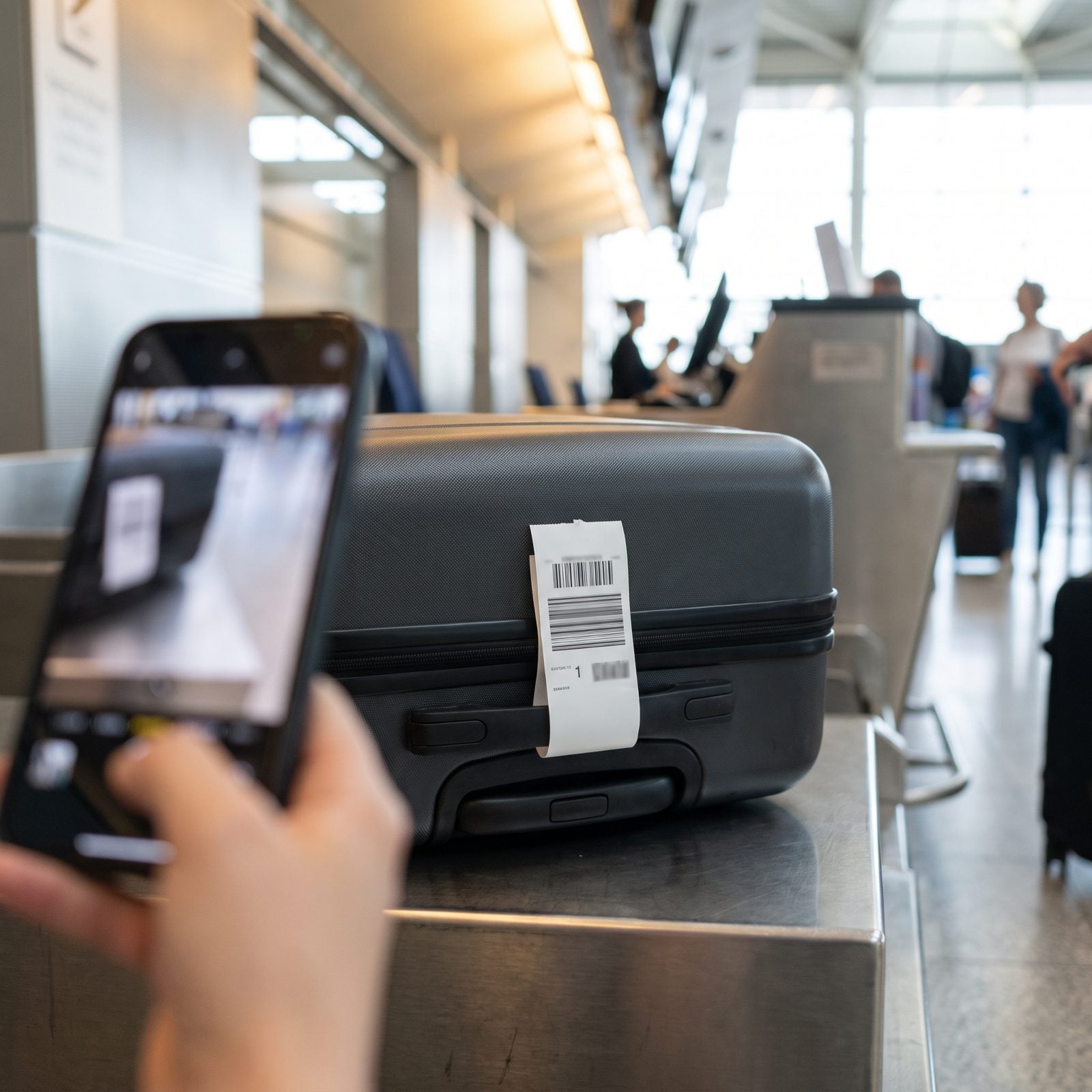
When a bag goes missing, the agent’s first question is what it looks like, and “black roller” describes half the carousel. A clear photo of your exact bag — paper claim tag and barcode in frame — turns a vague description into a trackable record.
Shoot it at the counter before the bag disappears down the belt. You capture the color, the brand marks, the stickers, and the tag number all in one go. That’s the difference between a shrug and a found suitcase.
23. Remove Every Old Barcode Sticker From Checked Luggage
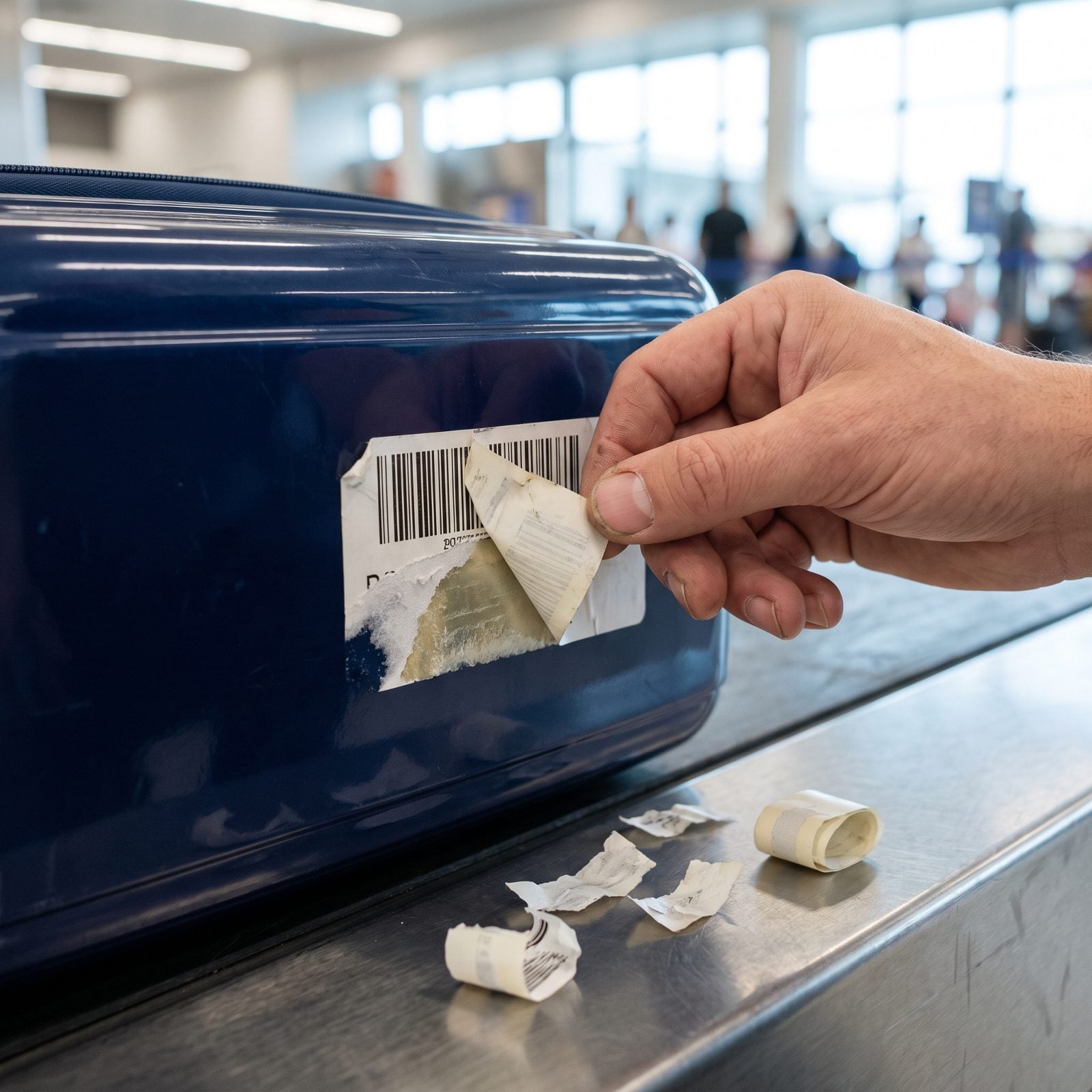
Every flight leaves a barcode sticker on your bag, and over time they pile up like rings on a tree. The automated sorting scanners read whichever one they catch first. A three-year-old tag for a city you’ve long since forgotten can route your suitcase straight to the wrong plane.
Peel them all off before you check in. Ten seconds of scraping removes a genuine source of misrouted bags that most travelers never think about. Clean shell, one fresh tag, one correct destination.
22. Place a Contact Card Inside the Suitcase
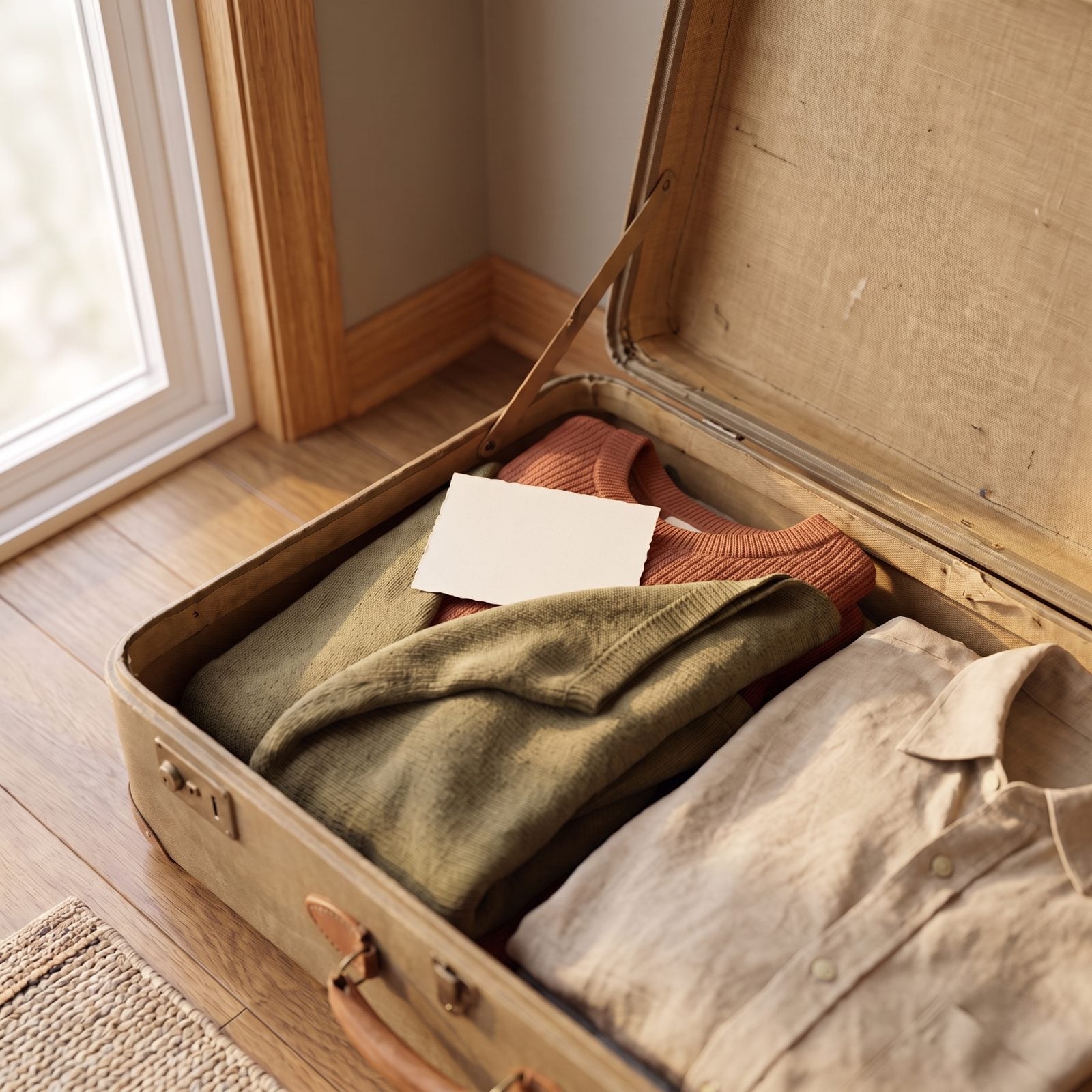
Luggage tags fall off. They snag on belts, tear at the loop, and vanish somewhere between the plane and the carousel. A card tucked inside can’t.
Write your name, phone number, and email on a card and drop it right on top of your clothes. If the outside identification is gone and a baggage handler opens the bag hunting for the owner, that card is the first thing they’ll see. Leave off your home address, though — the card only needs to reach you, not advertise an empty house to a stranger.
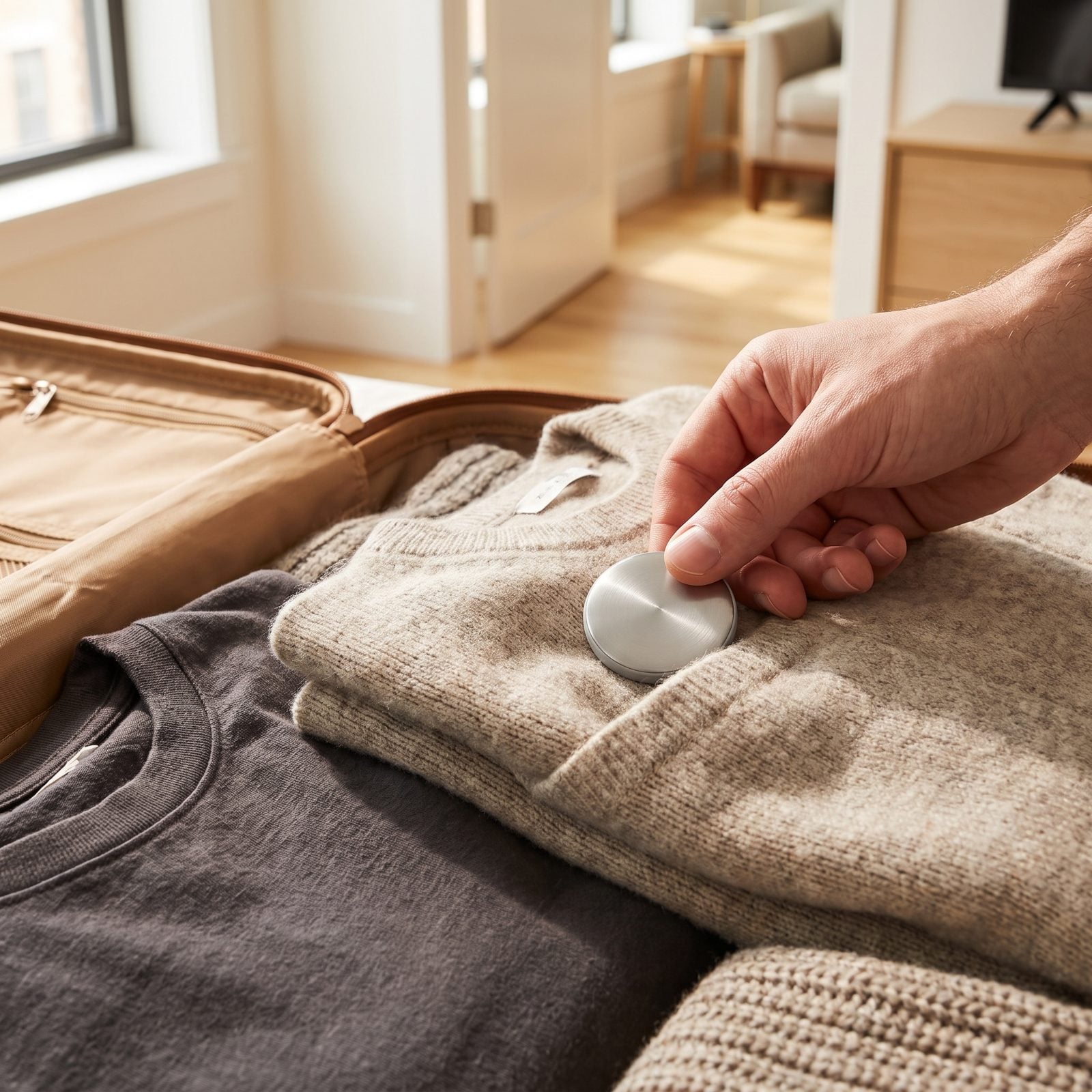
21. Put a Luggage Tracker Deep Inside the Checked Bag
🔥 Would you like to save this?
A tracker clipped to the outside gets noticed, and anything noticed can be removed. Bury it in the middle of your packed clothes instead, where it rides out the whole trip unseen.
When the airline tells you your bag is “in transit” with no detail, the tracker on your phone tells you it’s actually still parked at your departure airport. That one fact changes the whole conversation at the service desk. You stop asking and start pointing.
20. Confirm the Destination Code on a Through-Checked Bag
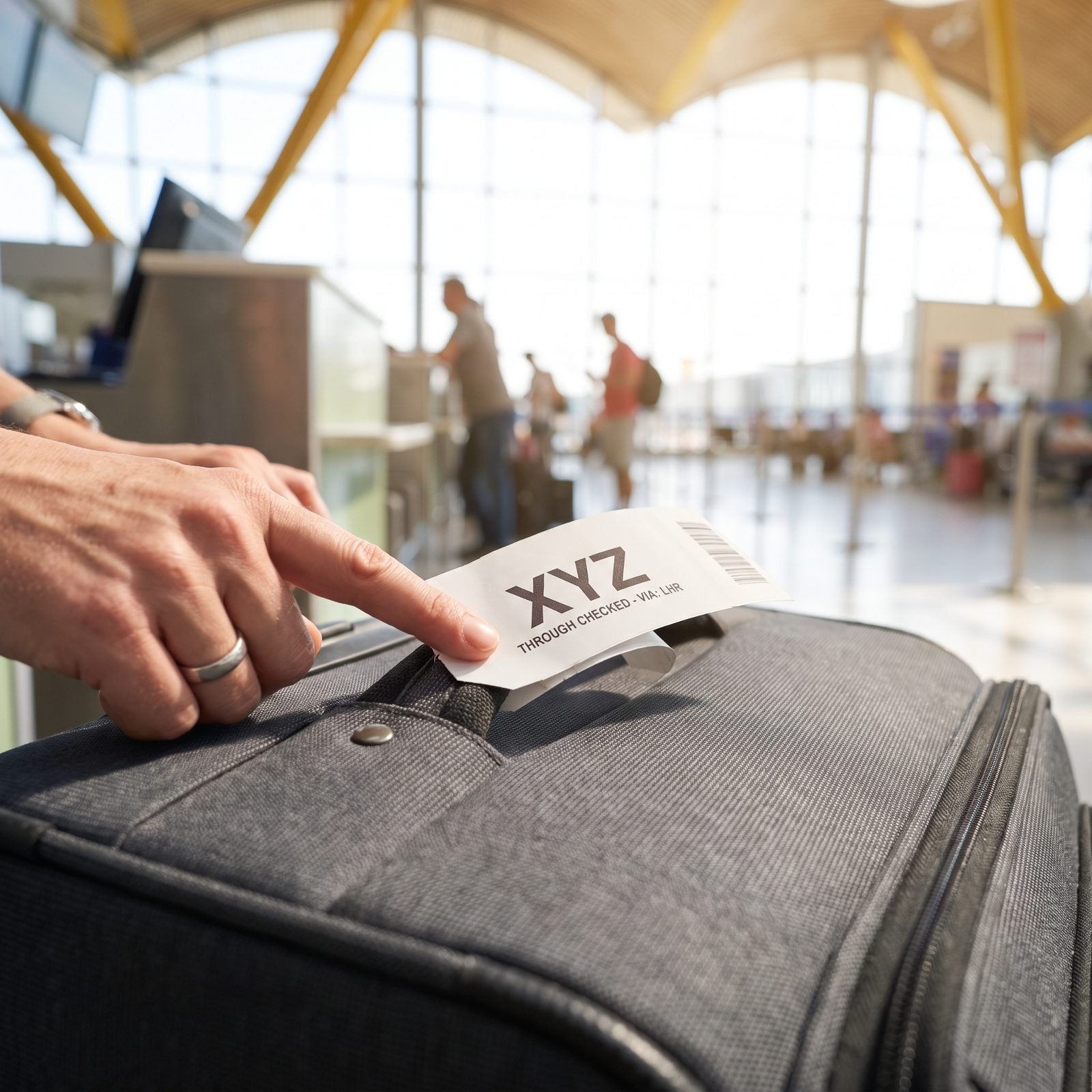
When you connect through another city, your bag gets one tag that’s supposed to route it all the way to your final stop. But agents are human. They occasionally key in the connection airport instead of the destination, and your suitcase cheerfully hops off where you were only meant to change planes.
Before you walk away, read the three-letter code on the printed tag out loud and match it against your actual destination. Five seconds. It’s your last chance to catch a mistake before the belt carries that bag out of reach.
19. Ask Whether a Gate-Checked Bag Comes Back Planeside or at Baggage Claim
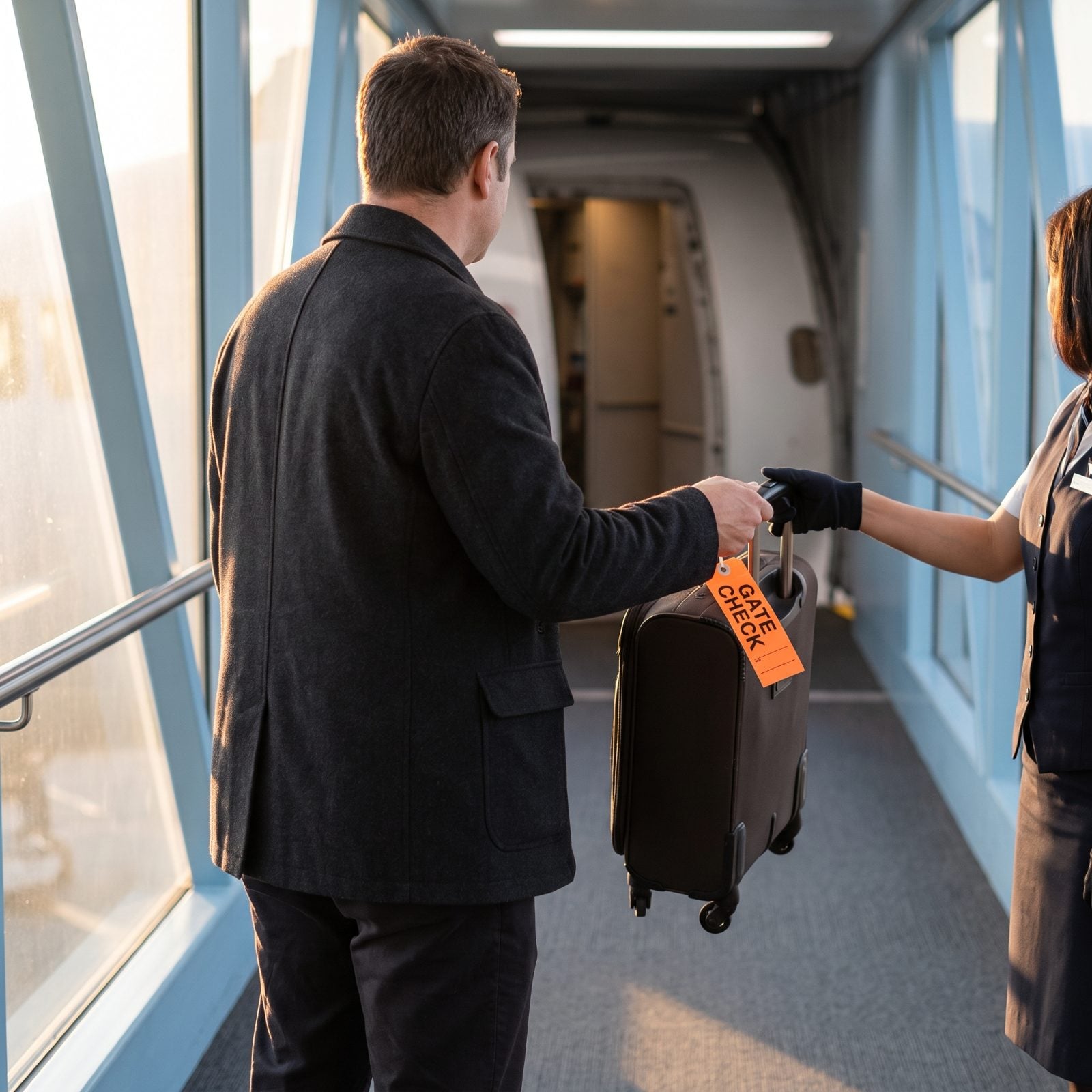
Not every gate-checked bag comes back to the jet bridge. Some get routed all the way to baggage claim, and nobody tells you which until you’re standing at an empty carousel wondering where your bag went.
Ask the agent at the door before you hand it over. Three words: planeside or claim? If it’s returning to the jet bridge, you wait at the arrival door. If it’s going to claim, you skip the twenty minutes of hovering by the aircraft for something that was never coming.
18. Pull Your Essentials Before You Volunteer to Gate-Check a Carry-On
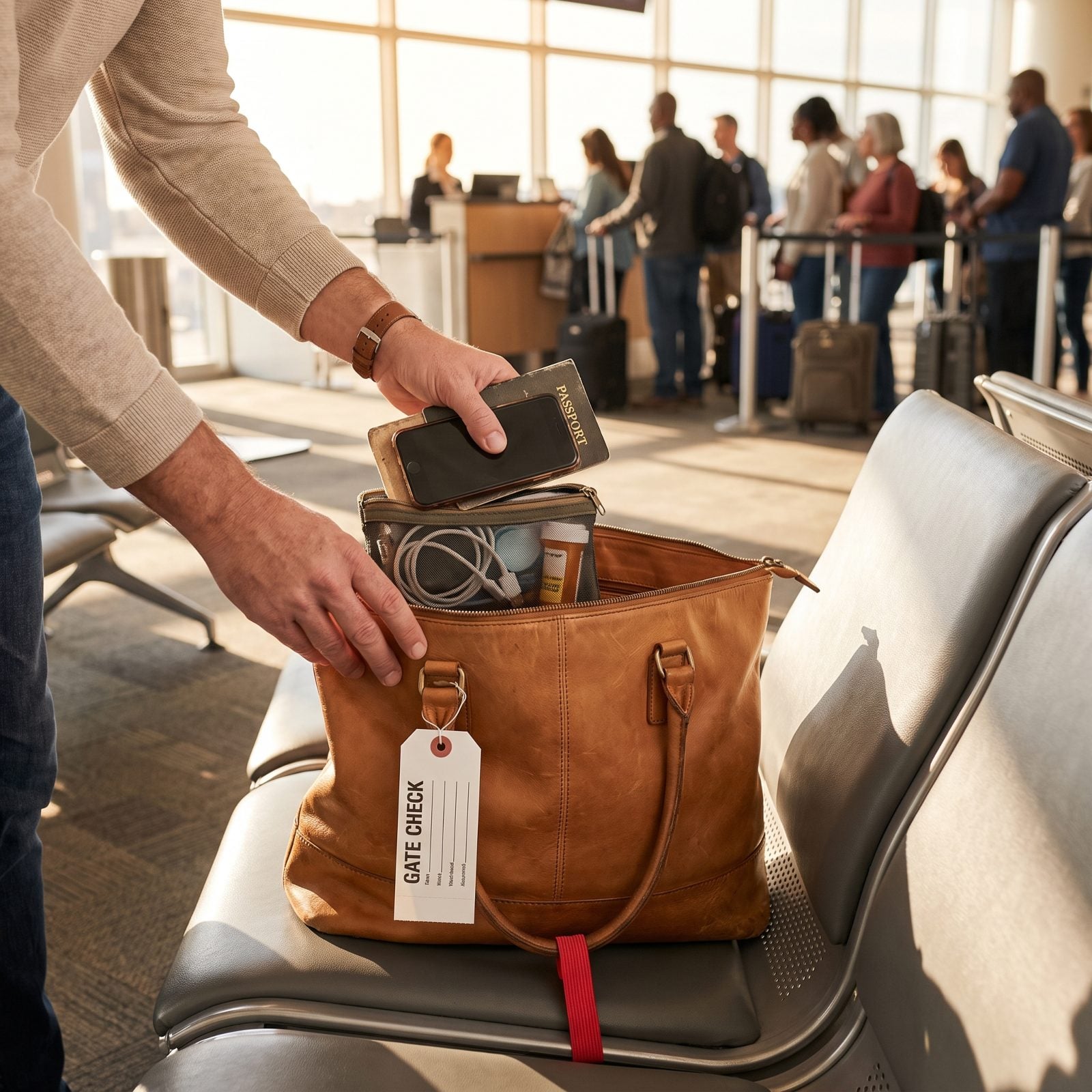
When the gate agent asks for volunteers to check carry-ons, people hear “free” and raise a hand before they think. Then the bag disappears with their passport, phone charger, medication, and headphones still zipped inside.
Take ten seconds. Pull the passport, meds, keys, and anything you’d hate to lose, then stuff them in a jacket pocket or a slim personal item. Your bag can ride below — your prescriptions and documents should never leave your reach.
17. Stand Back From the Carousel Until Your Bag Actually Appears
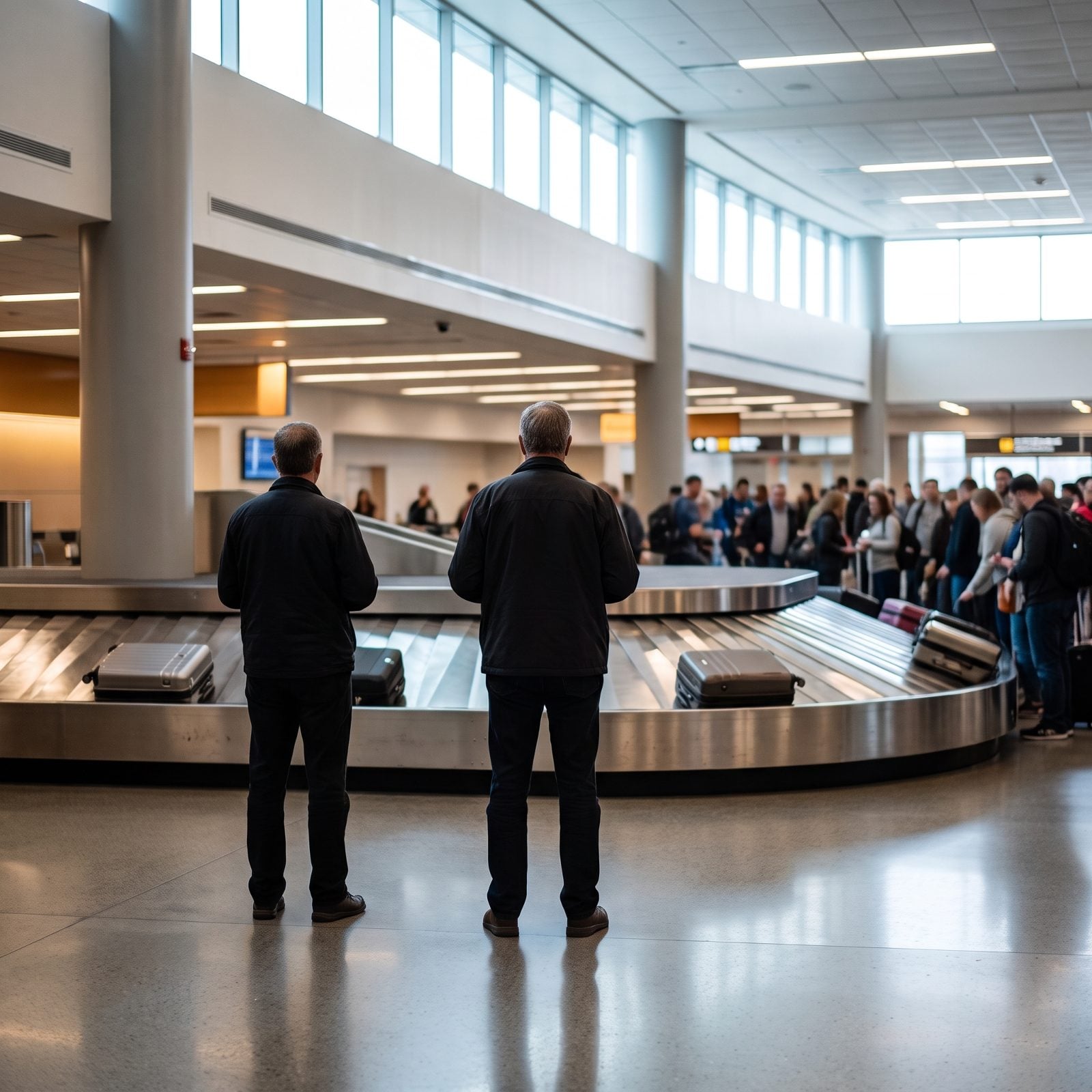
Everyone crowds the belt — elbows out, leaning in, blocking each other’s view of the very bags they’re waiting for. It’s a scrum that helps nobody.
Stand back six feet. From there you see the whole carousel, spot your bag as it rounds the corner, and step in with time to grab it clean. The folks pressed against the belt are staring at one small slice of it, which is exactly how bags slip past and have to loop around again. Patience here is faster than aggression. Odd, but true.
16. Match the Claim-Tag Number Before You Walk Off With a Lookalike
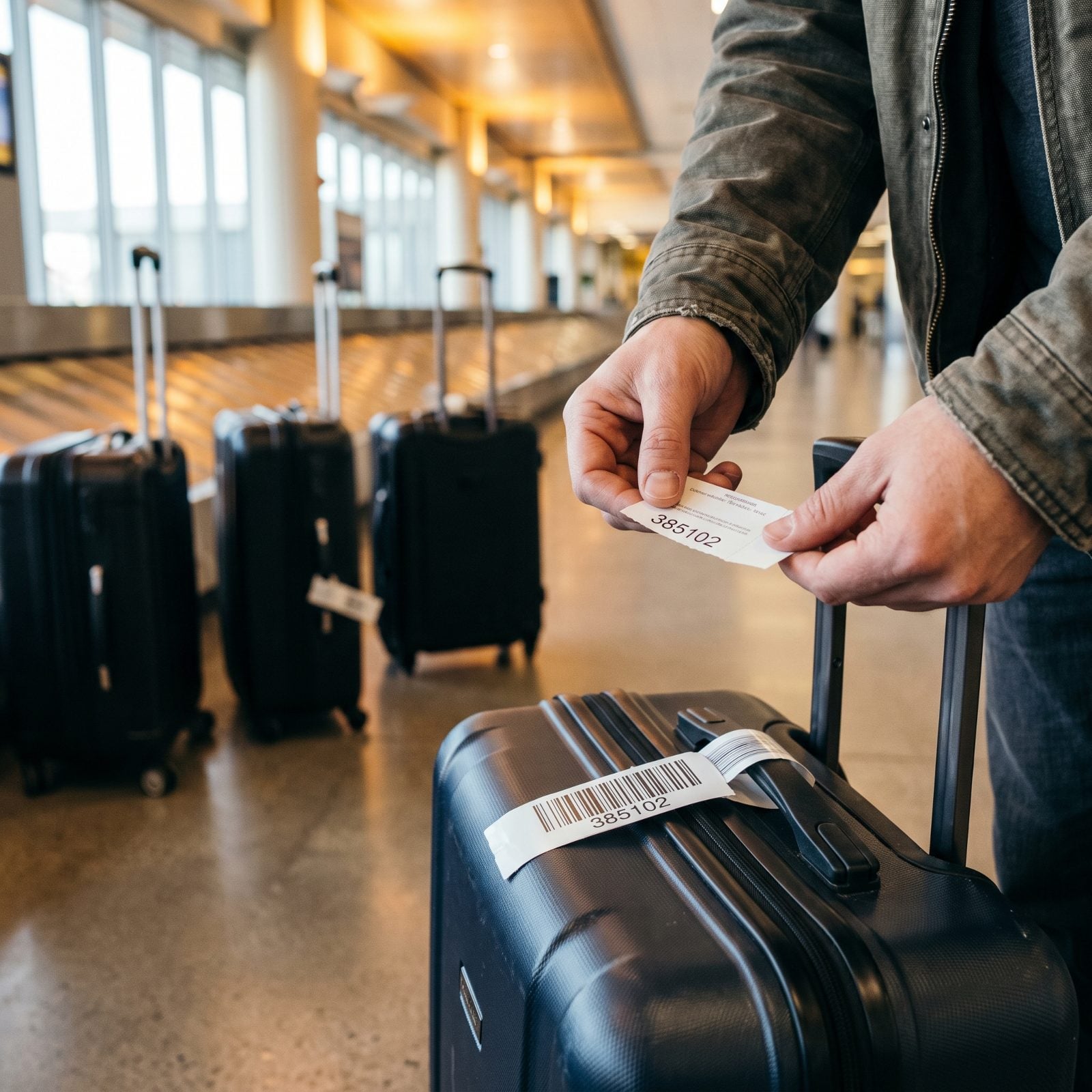
Black four-wheeled suitcase. You own one. So does half the plane. Lost-and-found rooms everywhere are stuffed with bags grabbed in good faith by someone who just wanted to get home.
The claim-tag stub the agent stuck to your boarding pass has a number, and the tag wrapped on the bag handle has the same one. Match them before you roll away. Five seconds now beats a frantic phone call from the rental car lot an hour later.
15. Return the Passport to the Same Zipped Pocket. Every Single Time.
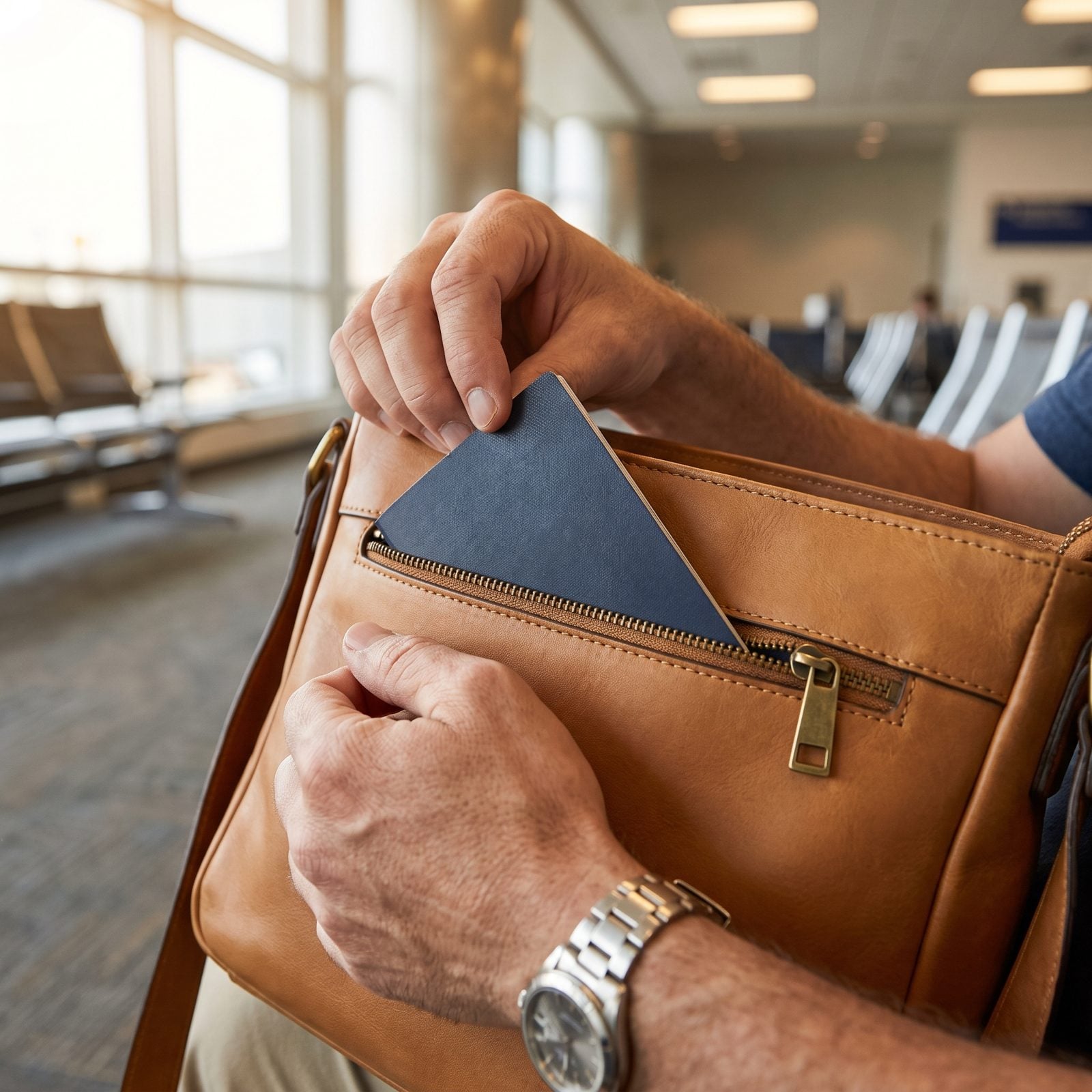
The passport panic is universal. You’ve felt it — that cold flush when your hand hits a pocket and finds nothing, and your brain starts replaying every surface you set it on since security.
Give the passport one home. The same zipped pocket, every time, no exceptions, even when you’re rushed. After a few trips your hand goes there on its own and the panic never gets a chance to start. The trick isn’t being careful. It’s removing the decision entirely so there’s nothing left to forget.
14. Run a Phone-Wallet-Passport Check at Every Transition
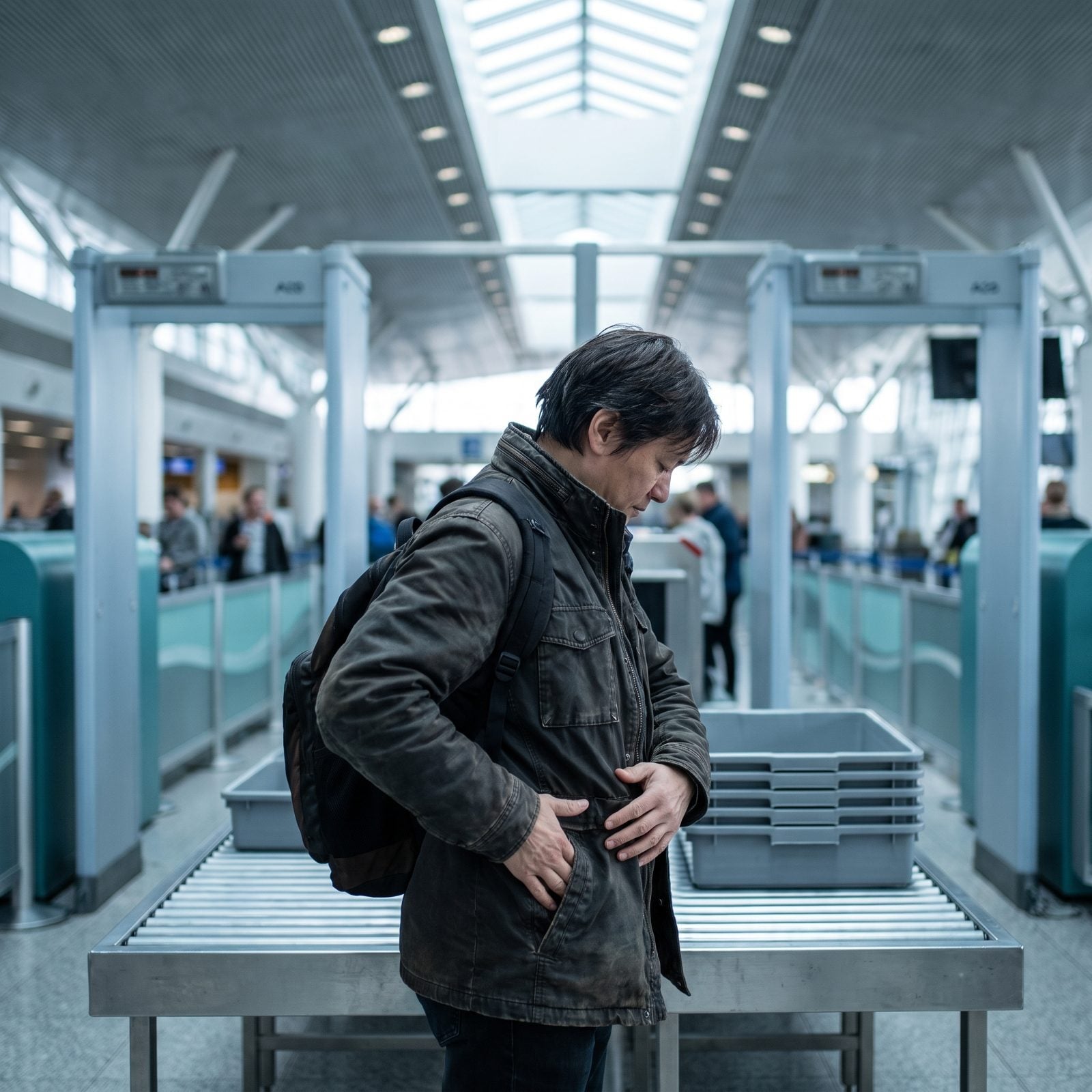
Most things get left behind at transition points. Off the plane, out of the security bin, up from the gate seat — those few seconds of movement are when phones and wallets slip out of mind.
Build a three-tap ritual: phone, wallet, passport, patted at every transition. It feels silly for about one trip. Then it becomes invisible and bulletproof.
- Leaving security: tap all three before you walk off.
- Leaving the gate seat: tap again before you stand.
- Off the plane: tap once more in the aisle.
13. Make the Boarding Pass Your Phone’s Lock Screen
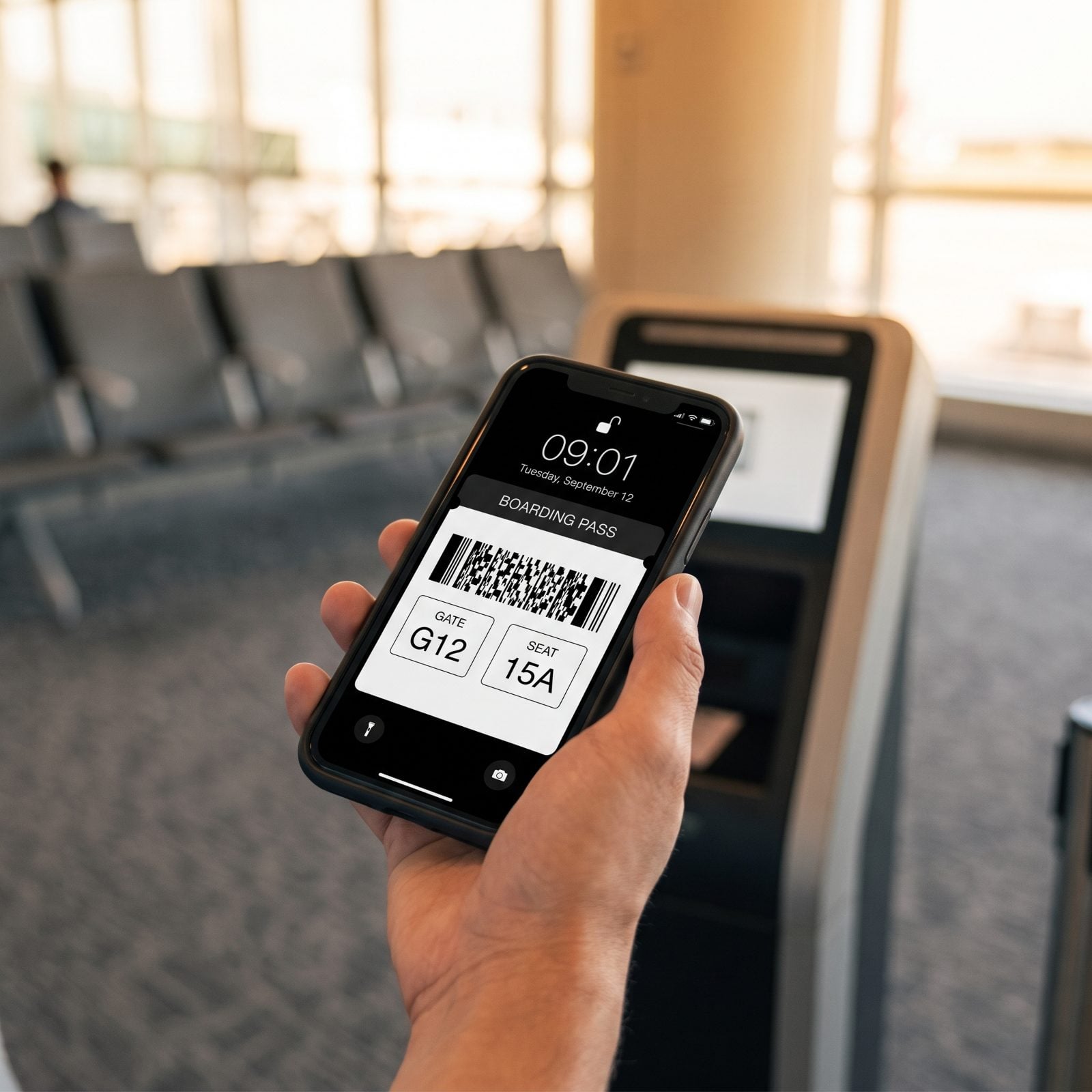
Screenshotting your boarding pass and setting it as the lock screen sounds fussy until you’re at the scanner with a dying phone, a bad signal, and a line building behind you.
On the lock screen, the barcode scans without unlocking, without opening an app, without hunting through your photos. Bonus: it shows your seat and gate at a glance every time you check the time. Apps crash at the worst moment. A lock-screen image just sits there, ready.
12. Cross-Check the Airline App Against the Airport Monitors
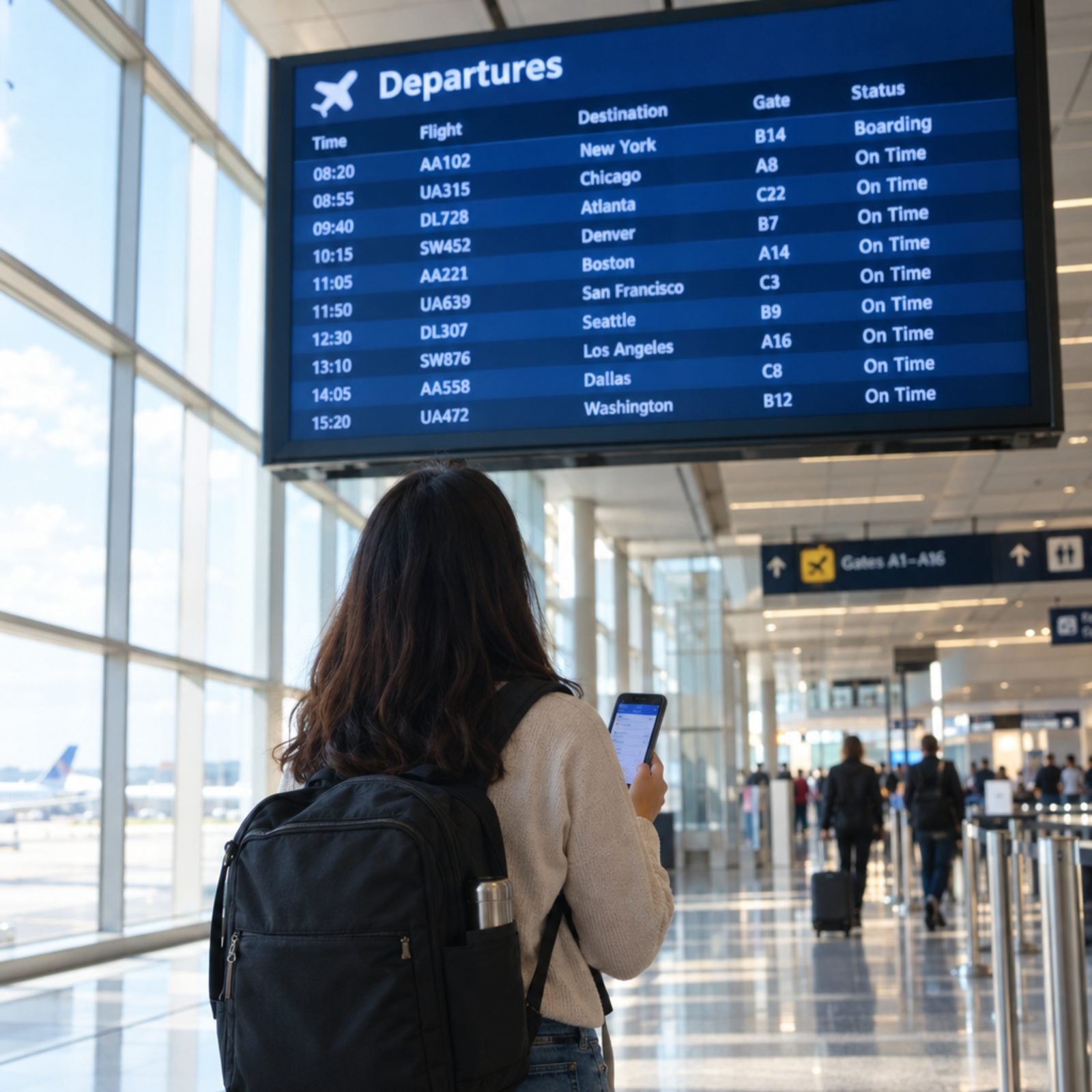
Apps lag. A gate change can hit the airport monitors before the notification ever buzzes your phone, and sometimes the app clings to old information for reasons nobody can explain.
Trust neither one alone. Check the app, glance at the nearest departure board, and if they disagree, believe the board and confirm with a gate agent. People miss flights all the time sitting at the gate the app told them to sit at while their actual plane boards three gates down.
11. Set a Phone Timer So You Never Abandon a Charging Cable
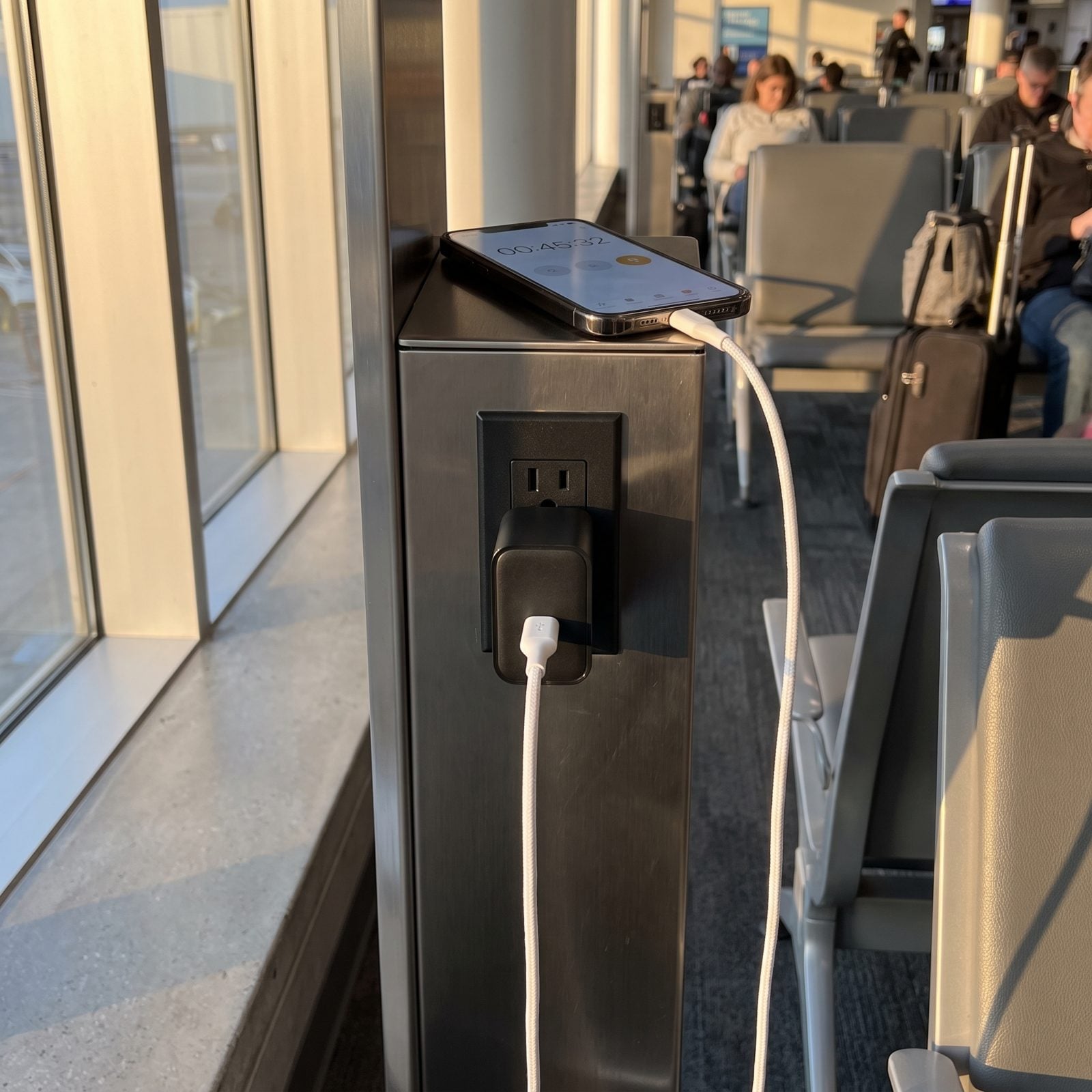
Charging cables are the most forgotten object in air travel. Plugged into a wall near the gate, perfectly invisible the moment boarding starts and your attention jumps to the line, the overhead bins, the seat.
Set a timer for a few minutes before boarding. When it goes off: unplug, coil, pocket. The cable comes with you because the phone told you to grab it. A one-dollar habit that spares you the walk of shame back to an empty outlet you’ll never find again.
10. Preorder Terminal Food While You Walk to the Concourse
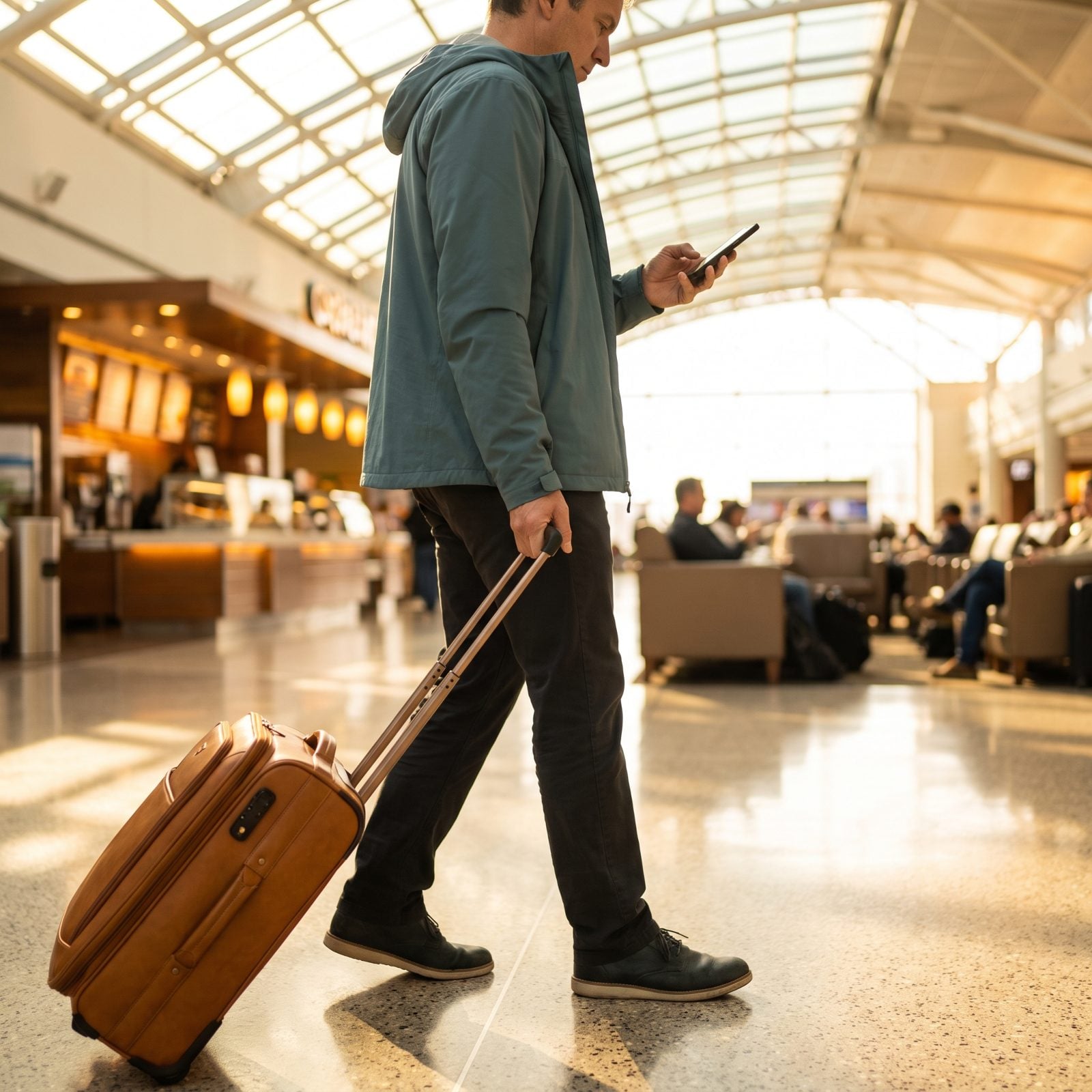
The food line at the gate is where boarding time goes to die. You stand there watching the clock, trapped between hunger and the fear of missing the plane.
Order on the way. Most terminals now let you pay from your phone and pick up a bag at the counter — no line, no wait. You eat a real meal instead of overpriced crackers, and you board without that stomach-churning gamble over whether the sandwich is worth the door closing on you. The best airport meal is the one waiting for you when you arrive.
9. Mix Your Electrolyte Powder Only After You Clear Security
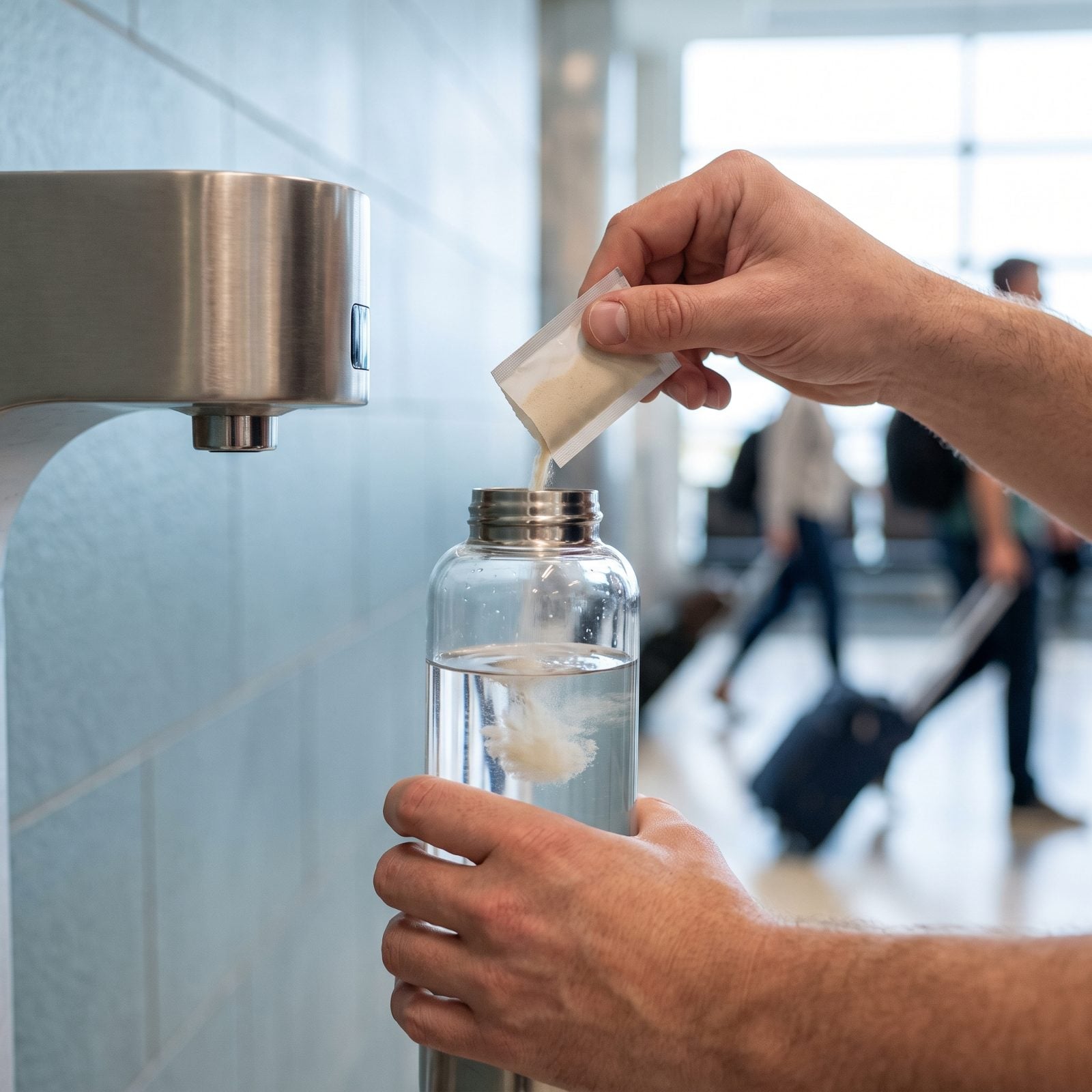
Powder it up before the checkpoint and you’ve just handed the TSA bin a bottle of mystery liquid. Dump it, refill it, mix it on the far side. That’s the whole trick.
Cabin air is drier than most deserts, and plain water alone doesn’t always keep up. A pinch of sodium and potassium holds the water where your body needs it. So mix it at the post-security fountain, drink half before boarding, then top it off at the gate.
8. Walk One Full Loop of the Terminal Before You Sit Down
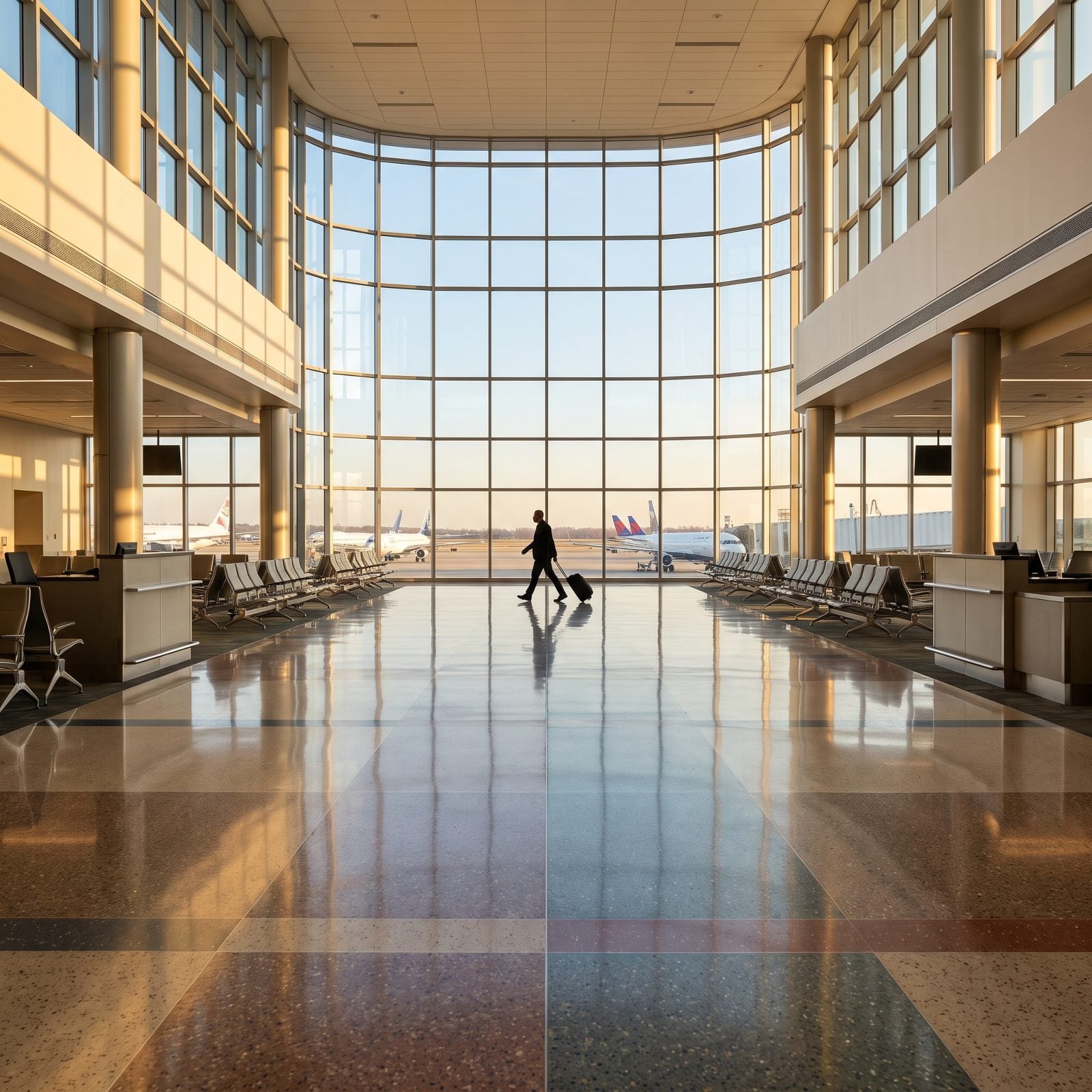
Most people find their gate and collapse into it like the seat owes them something, then sit for ninety minutes, board a tube, and sit for five more hours. The legs never stood a chance.
Before you settle in, walk the length of the terminal and back. You’ll scout the real food instead of the first sad kiosk, clock the actual bathroom situation, and bank some circulation before a long immobile stretch. Clotting risk climbs with hours of stillness, and a loop of the concourse is free insurance.
7. Do Calf Raises While You’re Reading the Departure Board
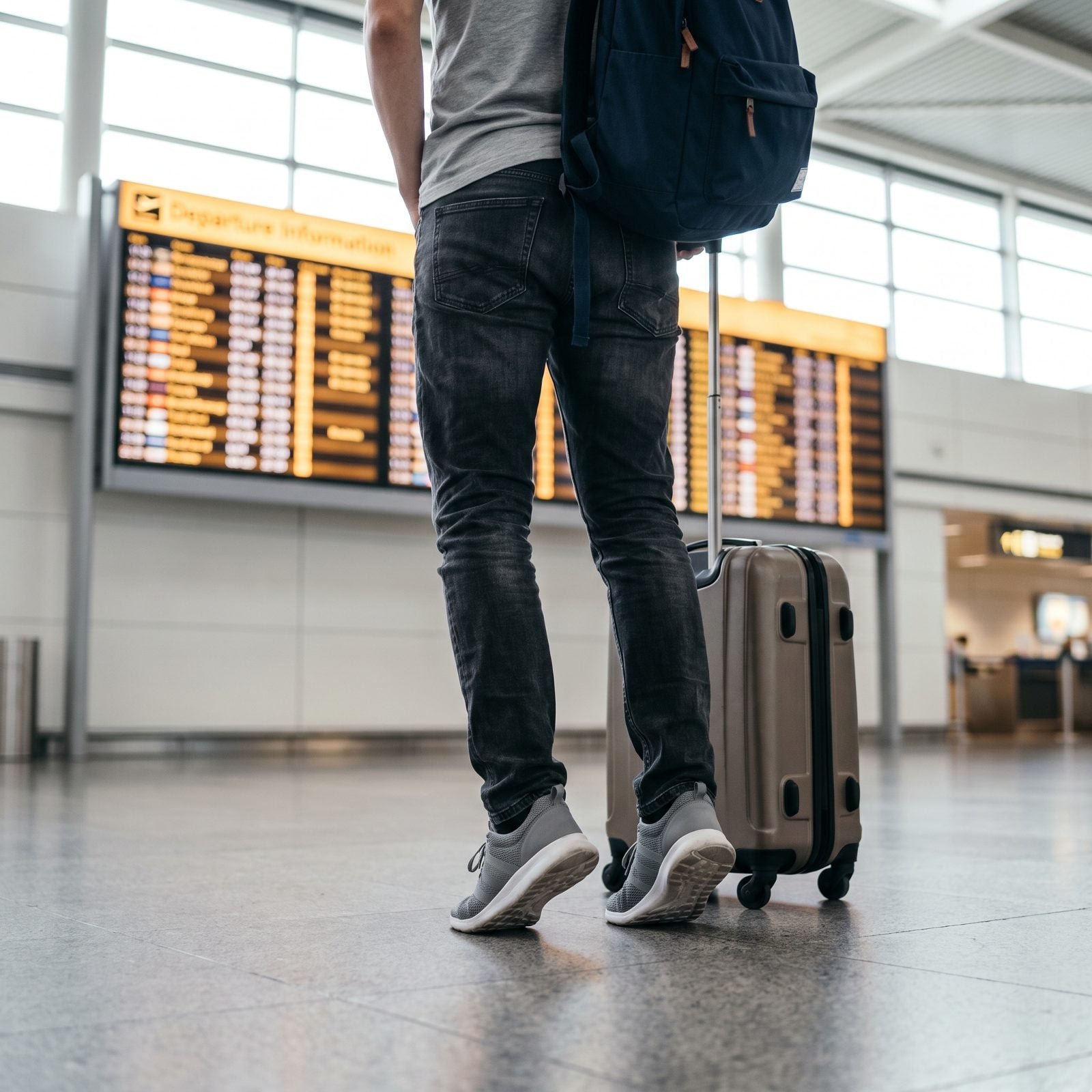
Standing in front of the board anyway? Good. Rise up onto the balls of your feet, hold a beat, lower down. Do twenty. Nobody notices, and your calves are the pump that pushes blood back up your legs while you’re vertical and bored.
This is the least glamorous thing on the list and the one seasoned travelers do without thinking. Dead time becomes working time.
6. Pull On Compression Socks After the Checkpoint, Not Before
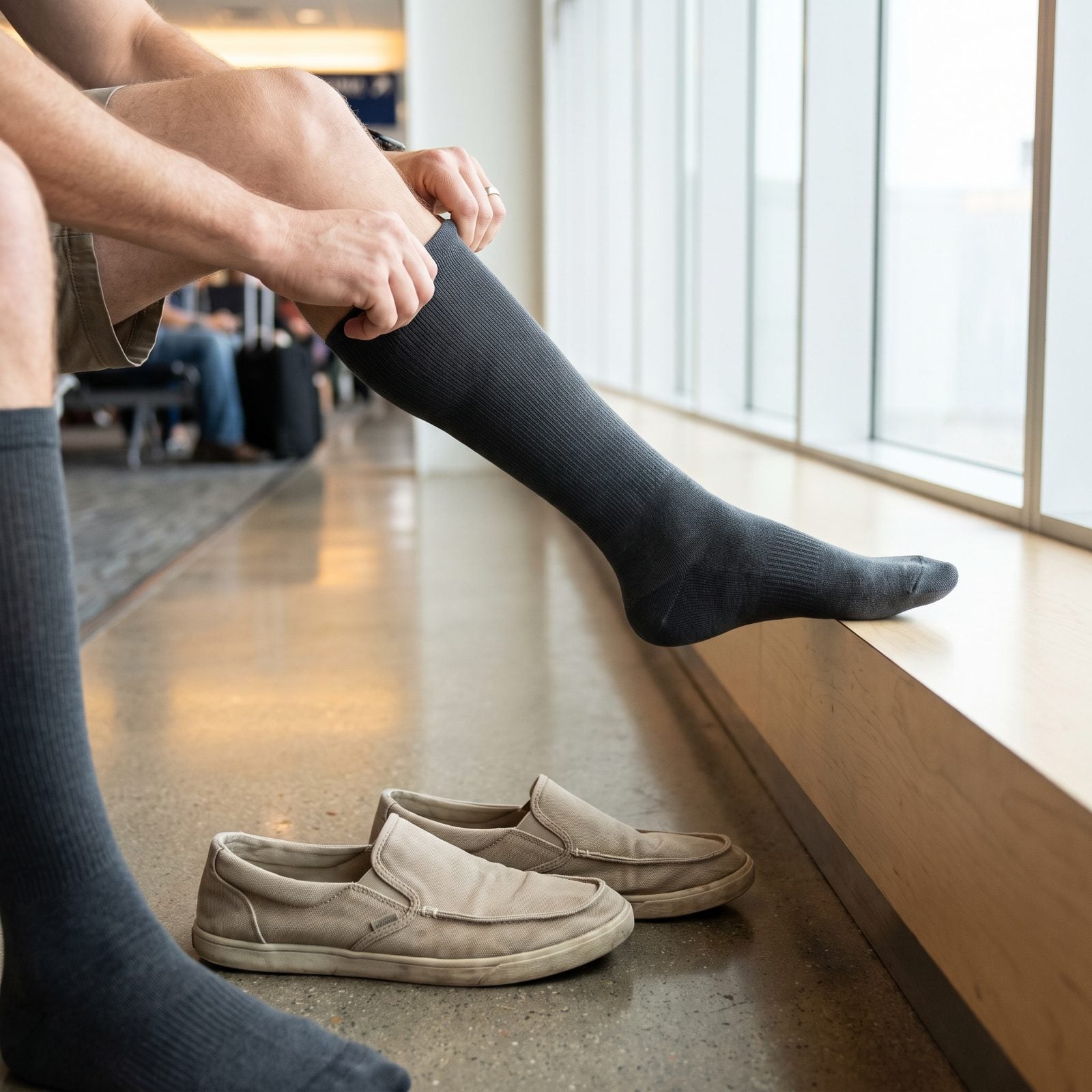
Graduated compression socks squeeze hardest at the ankle and ease up toward the knee, nudging fluid upward instead of letting it pool in your feet over a six-hour flight. Anyone who’s landed with shoes that no longer fit knows exactly why this matters.
Put them on after security. Slip-on shoes get you through the checkpoint faster, and wrestling tight socks back on while balancing against a wall is a problem you don’t need before you’ve even found coffee. Do it once, seated, at the gate. graphite compression socks in a light grade are plenty for most travelers.
5. Hit Your Nose With Saline Spray Before You Even Board
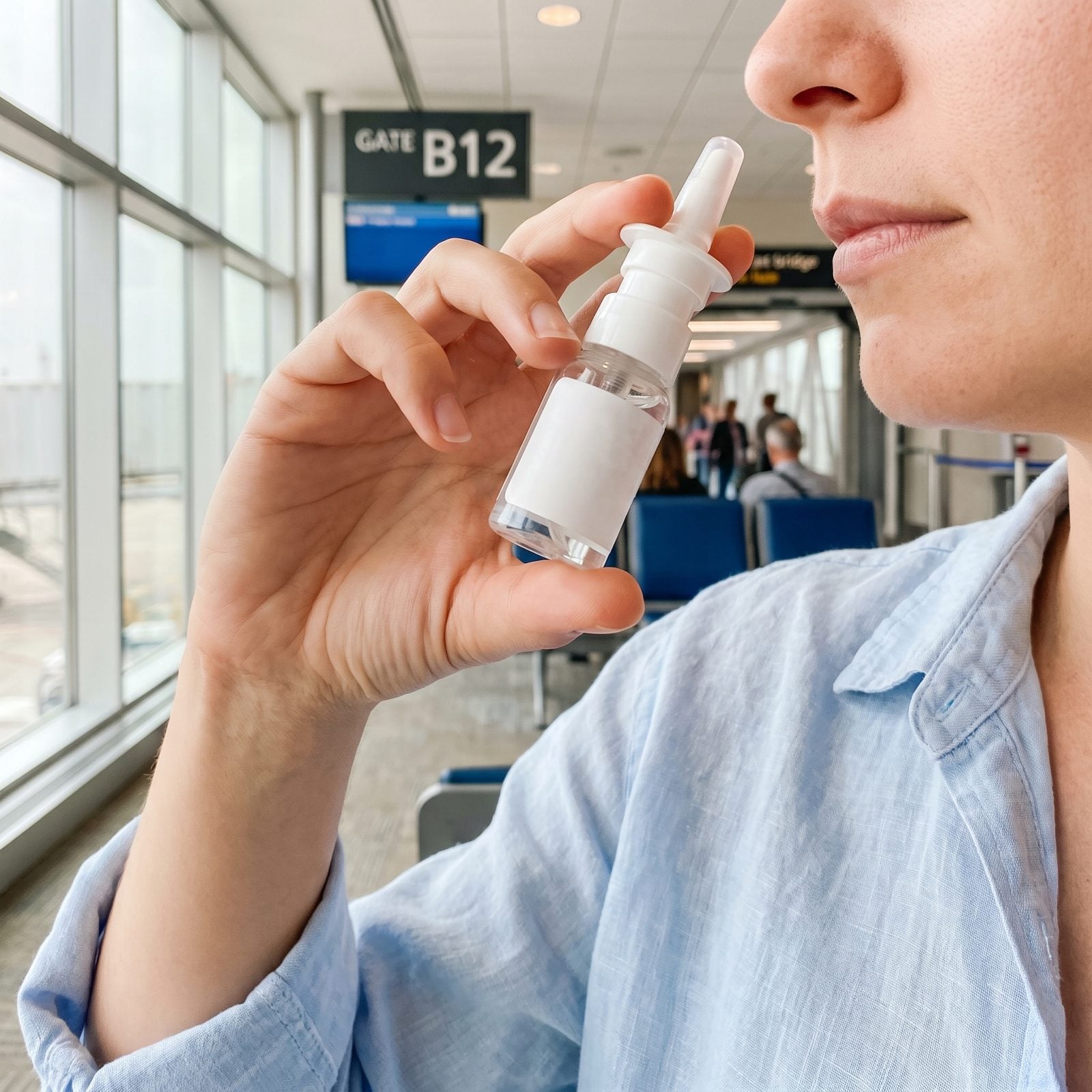
Dry cabin air cracks the mucous membranes that are supposed to trap whatever the person two rows up is coughing out. A dried-out nose is an open door. A couple of saline spritzes before you step onto the jet bridge keeps that lining moist and doing its job.
Plain saline, not a medicated decongestant. Reapply once midway through a long haul. It’s the single cheapest thing a frequent flyer does to show up at the other end without the scratchy throat that becomes a three-day cold.
4. Pick the Gate Seat That Faces the Information Display
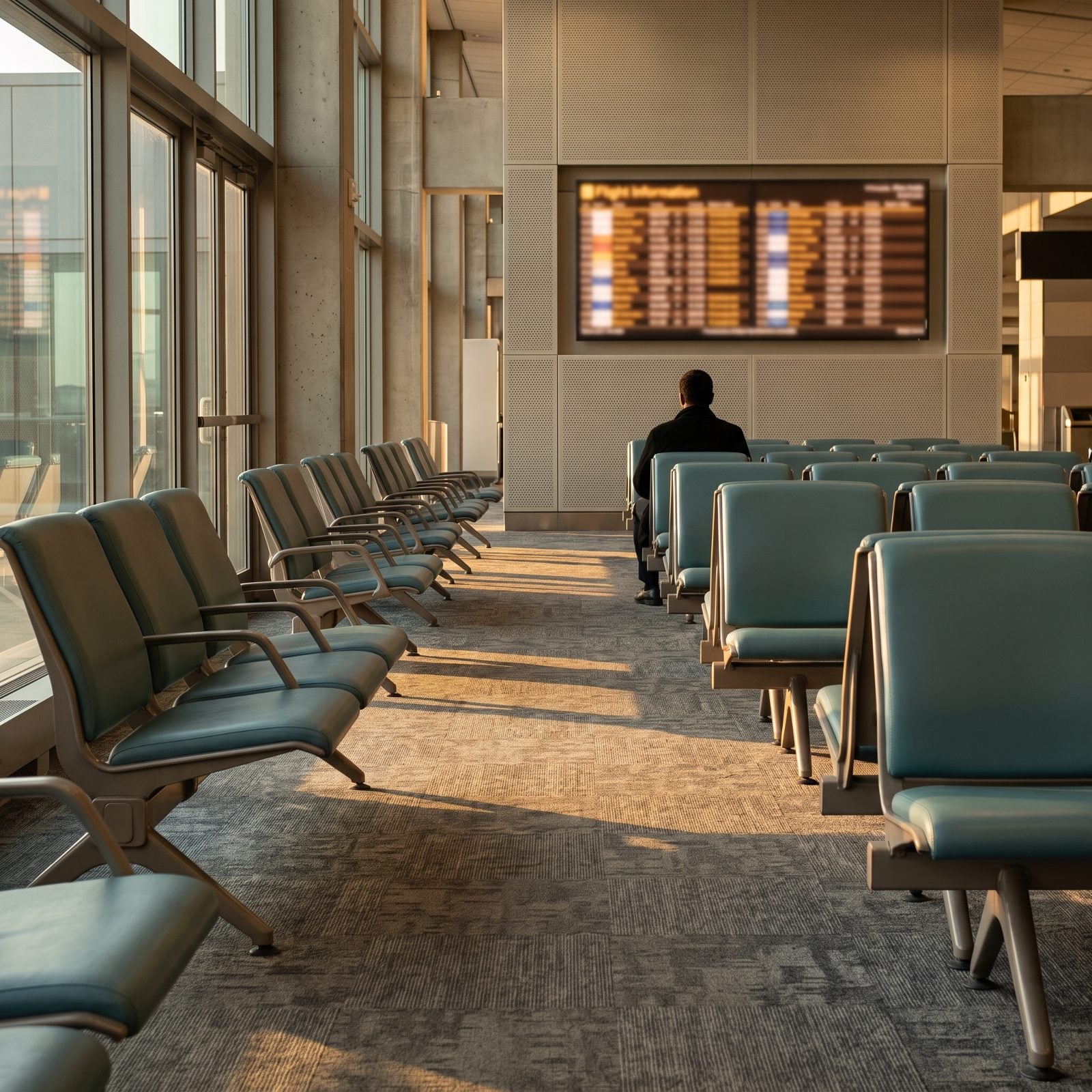
Sit with your back to the board and you become the person who misses the gate change — craning around every three minutes, jolting up at every garbled announcement. Face it instead and your status updates passively while you read, nap lightly, or answer email.
Gate changes and delays flash on that screen before anyone says a word over the speakers. Face it and you’ll know before the crowd starts moving.
3. Check the Seat Map Again Once Upgrades Start Clearing
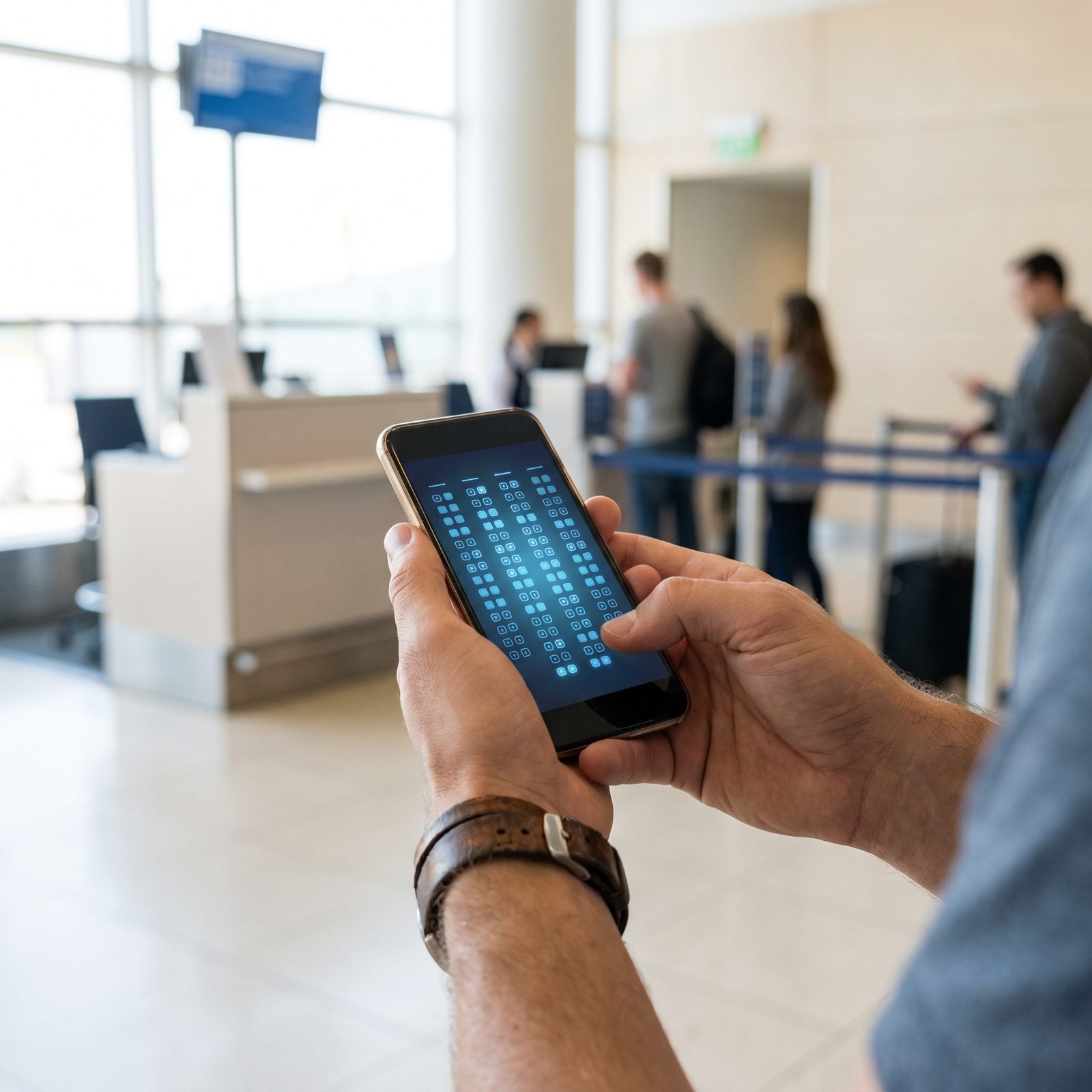
About an hour before departure, the upgrade list clears and the whole cabin reshuffles. That middle seat someone booked next to you gets vacated when they jump to first. The exit row opens up. The map you saw at booking is already stale.
Open it one more time before boarding and move yourself into the gap. Most airlines let you change for free right up to the door. The travelers who do this end up with empty neighbors, and they didn’t pay a cent extra for the elbow room.
2. Time Your Boarding Around the Overhead Bin, Not the Line
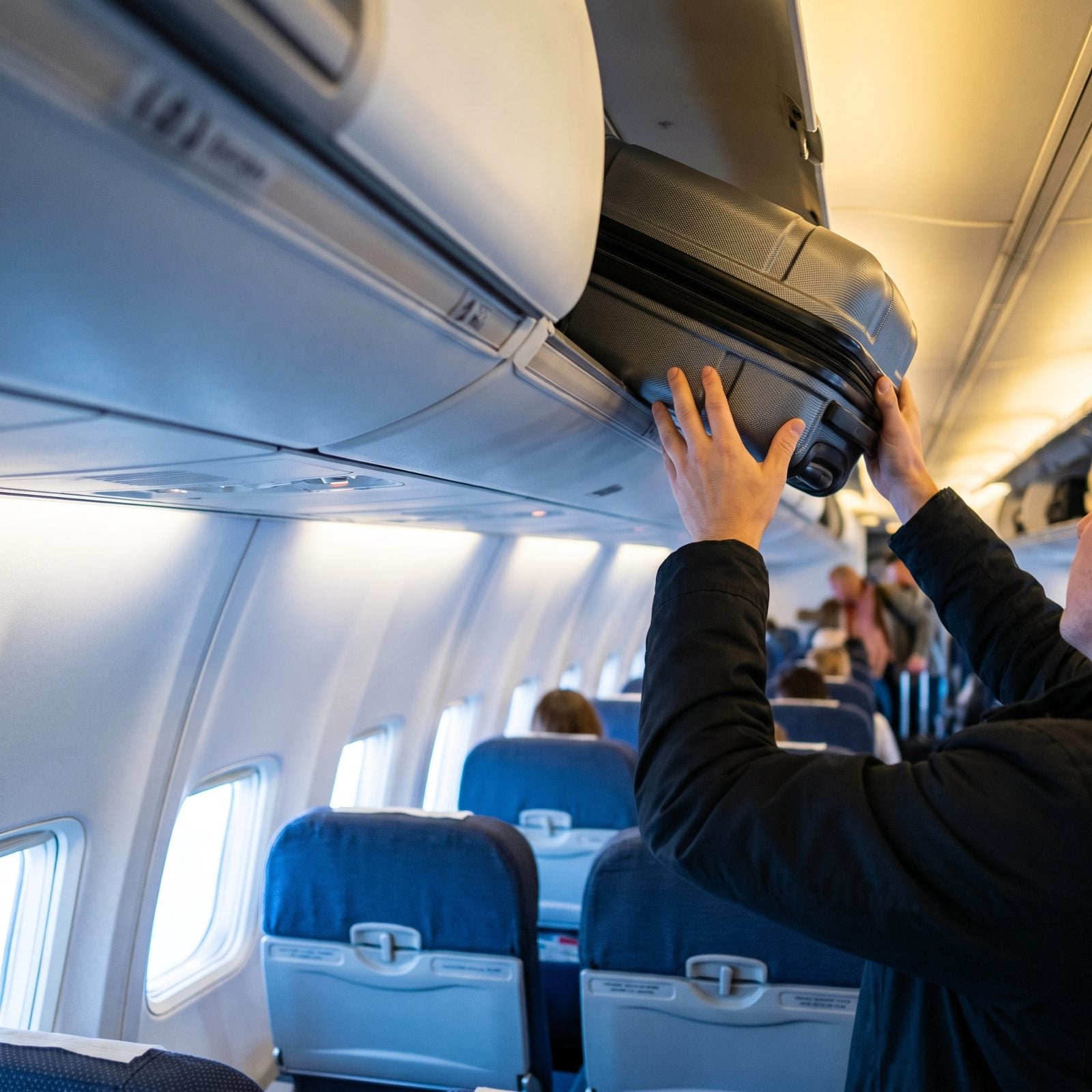
The decision splits cleanly. Got a big roller bag you need overhead? Board early, the moment your group is called, because bin space runs out and late boarders get their bags gate-checked into baggage-claim limbo.
Traveling with just a small bag that tucks under the seat in front of you? Do the opposite. Stay seated, finish your coffee, and stroll on last. You skip twenty minutes jammed in the jet bridge inhaling recycled air, and you lose nothing.
Matching your boarding time to your luggage, instead of to the crowd, is the kind of small call that separates people who travel often from people who travel once a year.
1. Count the Rows Between Your Seat and the Nearest Exit
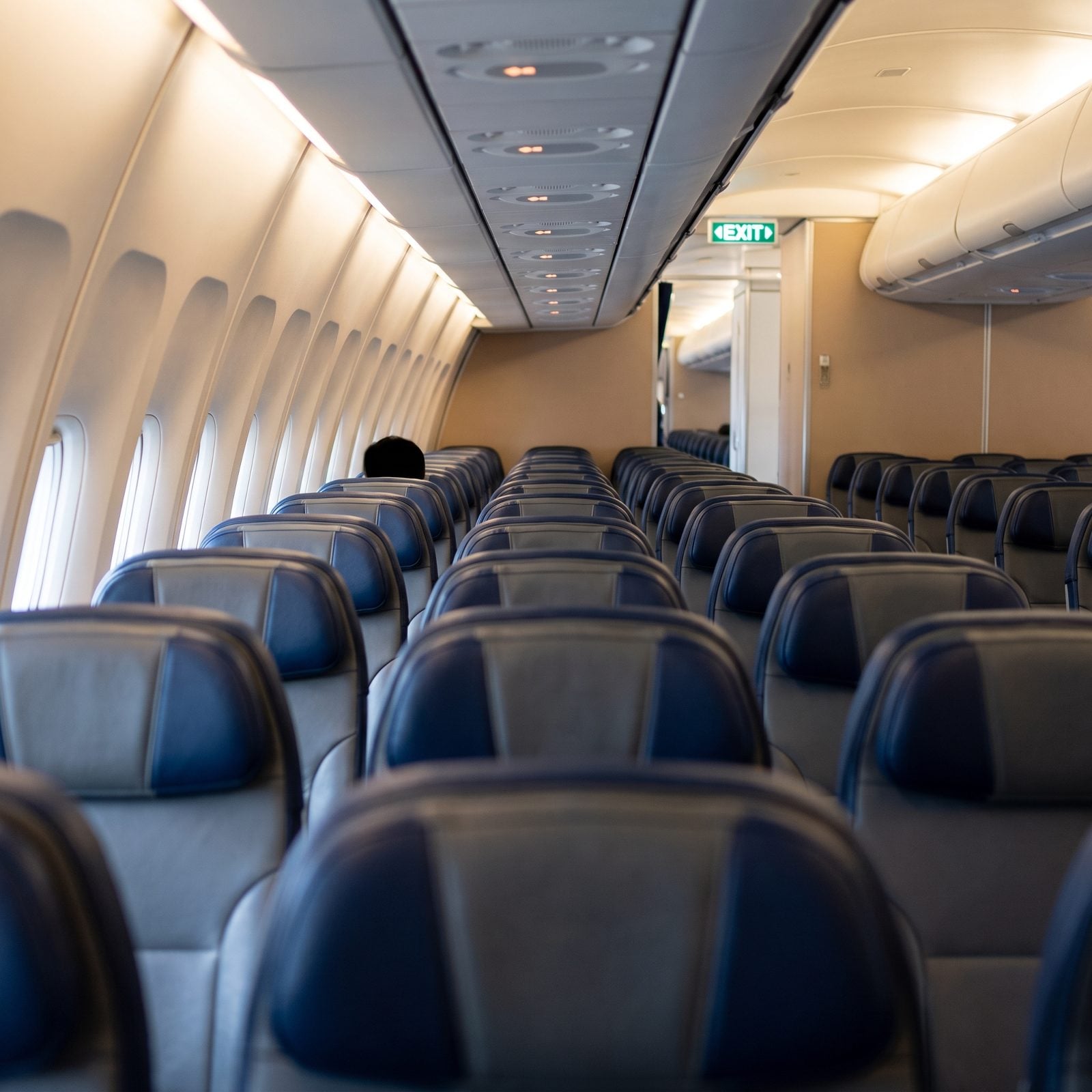
The safety card tells you to locate your nearest exit. Almost nobody counts the actual seat rows to it — and that’s the one detail that matters if the cabin fills with smoke and you can’t see the signs you were told to find.
Count once, forward and back, note which is closer, and forget it. Ten seconds, and you’ll probably never need it. That’s the whole idea. The people who’ve flown for decades do this on every flight out of pure habit, the same way they count their bags before they stand up. Tiny ritual. Enormous payoff on the one day it counts.
🔥 Would you like to save this?
Please note that some of the imagery in this article were created with the aid of AI image generators.