
🔥 Would you like to save this?
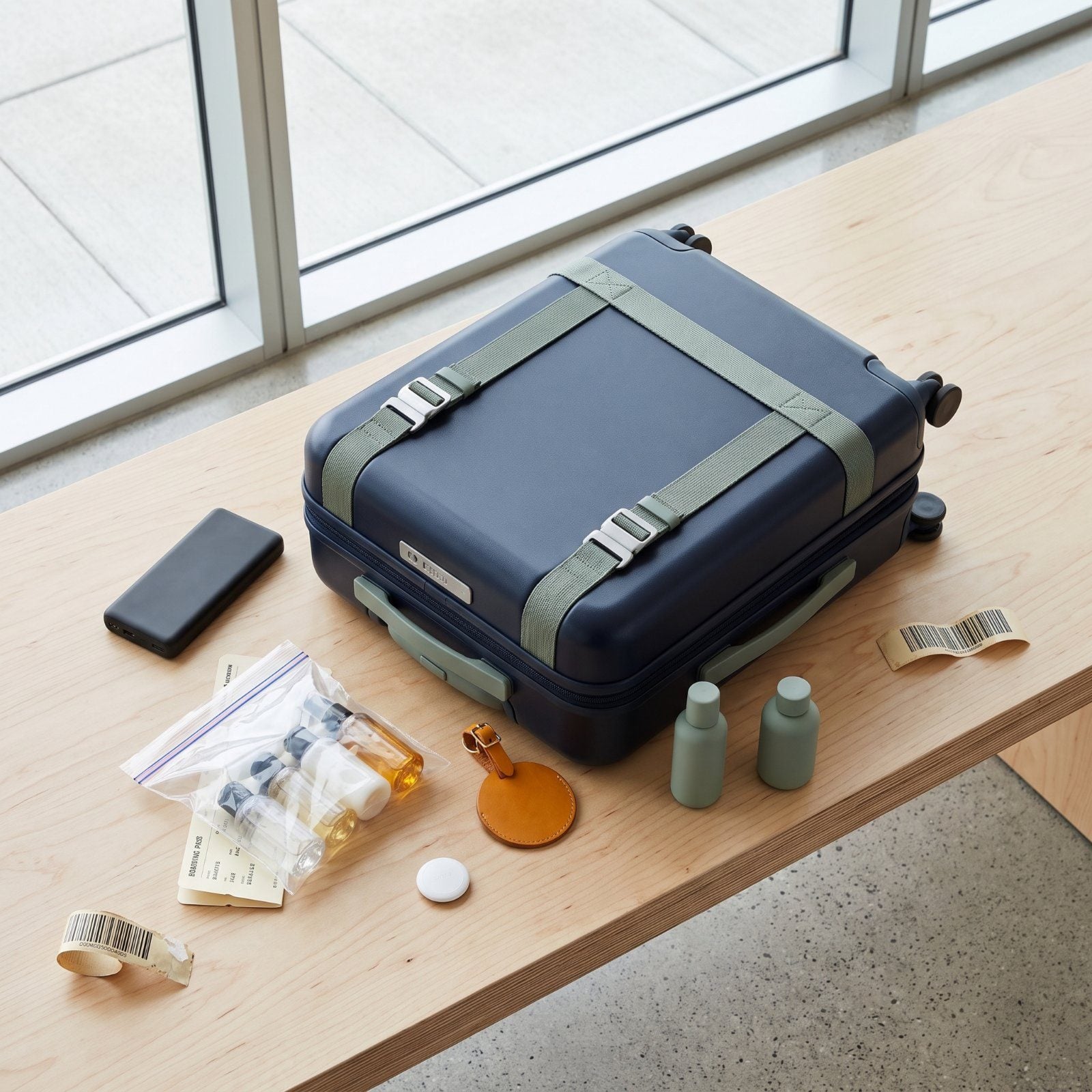
Most of these mistakes don’t feel like mistakes at all. They feel like sensible packing: a power bank tucked where it’s handy, a camping stove rinsed and folded away, an old bag tag you never bothered to peel off. Then the belt stops at the scanner, a gloved hand reaches into your carry-on, and the line behind you starts to sigh. Each fix takes about thirty seconds. The ones below are the errors that cost people their calm, their cash, and sometimes their gear.
41. Leaving a Power Bank Inside a Bag That May Get Gate-Checked
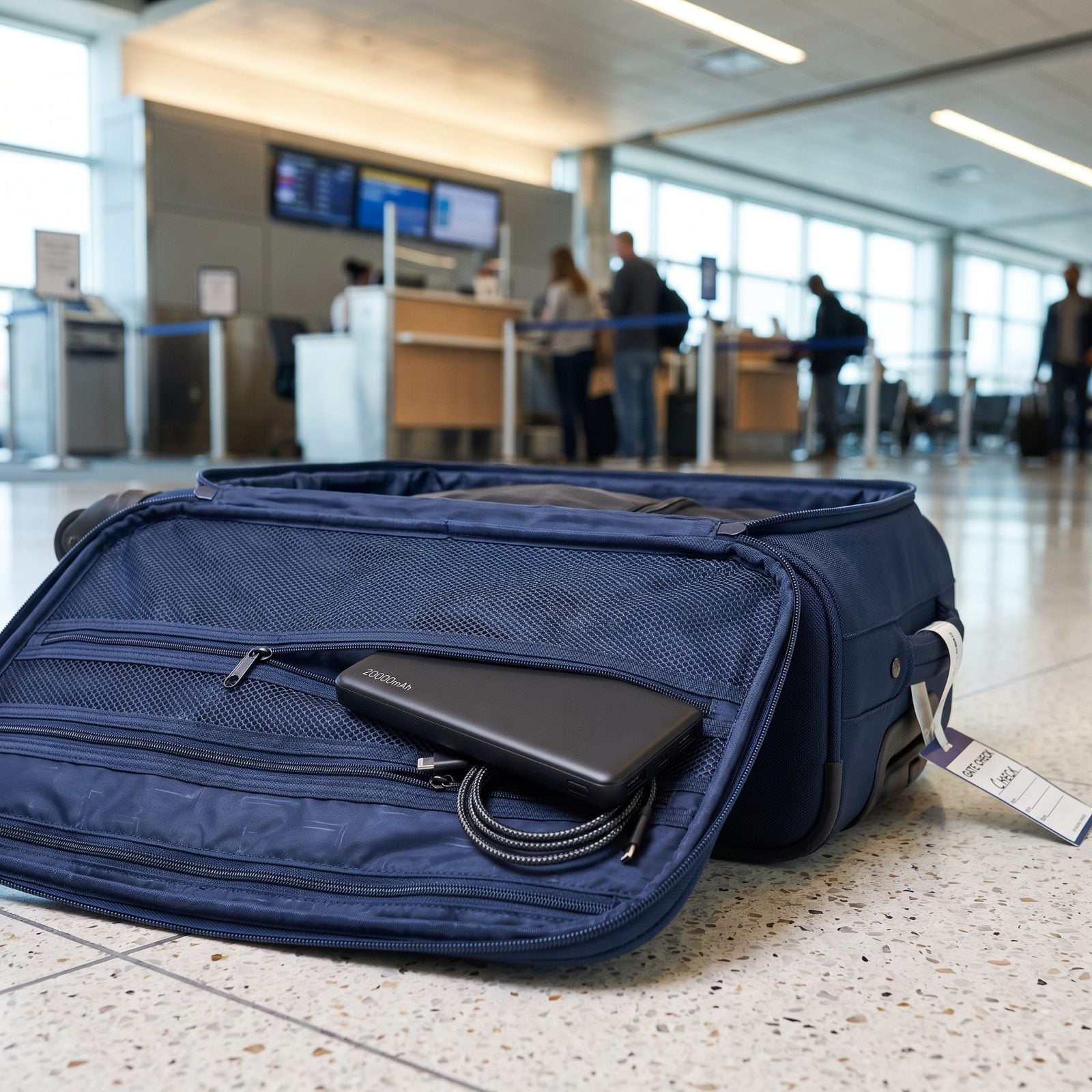
Lithium power banks are forbidden in the cargo hold. Always. That spare battery in your carry-on is perfectly fine riding in the cabin, but the second your roller gets gate-checked because the bins filled up, the whole bag heads below deck with the battery still inside.
Best case, a gate agent catches it and you hold up the line digging through pockets at the jet bridge. Worst case, it flies illegally and nobody’s happy once it’s found.
So pull your power bank, phone charger brick, and any loose battery into a small pouch you keep on your person before boarding. If gate-checking looks likely because the flight’s packed or the plane’s a small regional jet, do it preemptively. Thirty seconds at your seat beats a scramble at the door.
40. Never Peeling Off the Old Airline Barcode Stickers From Checked Luggage
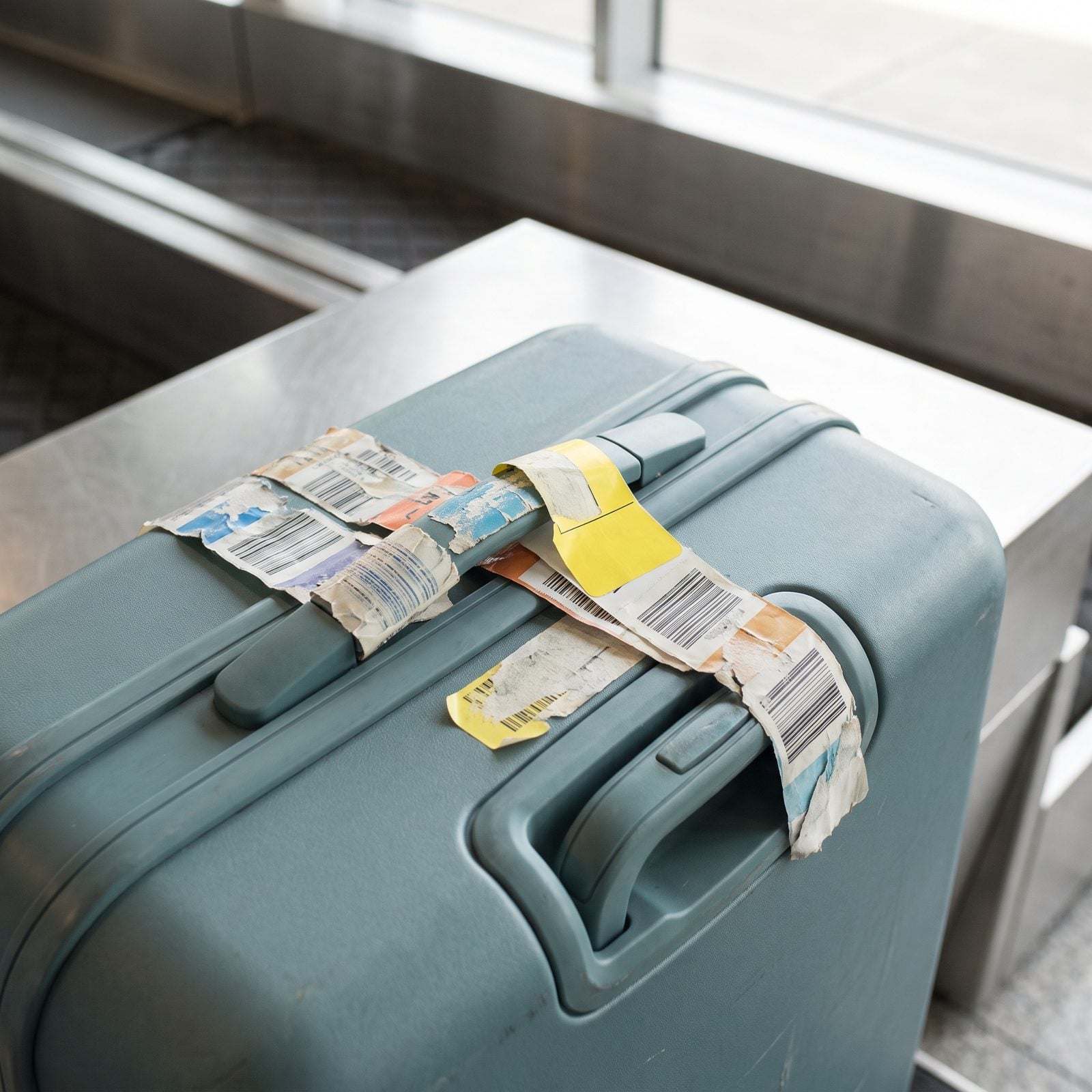
Those old barcode tags look harmless. They aren’t. Automated sorters read whatever stripe they catch first, and a two-trip-old sticker can route your bag to the wrong plane entirely.
You land in Denver, your suitcase lands in Detroit, sorted by a ghost from a flight you took last spring, and now you’re filing a claim instead of finding dinner.
Strip every old tag before you arrive. Peel the paper loop off the handle, scrape away any sticky residue, and start each trip with a clean bag. A minute at the kitchen table saves you a very long night at a baggage services desk.
39. Packing Duty-Free Liquids Wrong for a Connecting Security Check
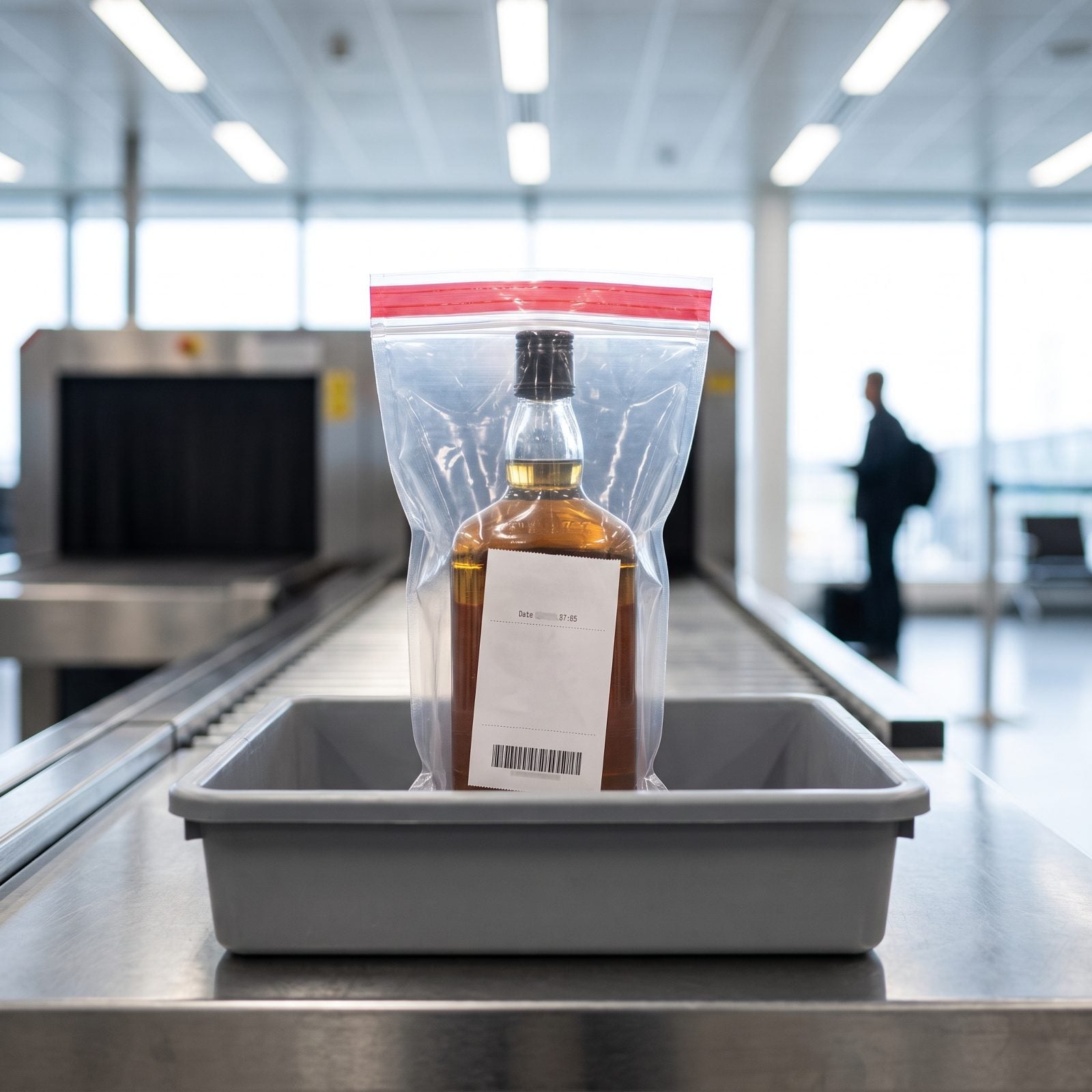
That bottle of whisky or perfume you bought airside counts as a liquid over 100ml. It clears your next checkpoint only if it stays inside the tamper-evident sealed bag with the receipt still visible.
Open the bag on the plane for a peek, or stuff the bottle into your carry-on at the connection, and the exemption evaporates. Security takes it. No refund, no appeal.
Leave the sealed pouch untouched until you reach your final destination, and keep the receipt tucked inside it rather than in your wallet. If your layover is somewhere with stricter rules than wherever you bought it, assume confiscation is on the table and consider buying at your last stop instead.
38. Bringing Smart Luggage With a Battery You Can’t Remove
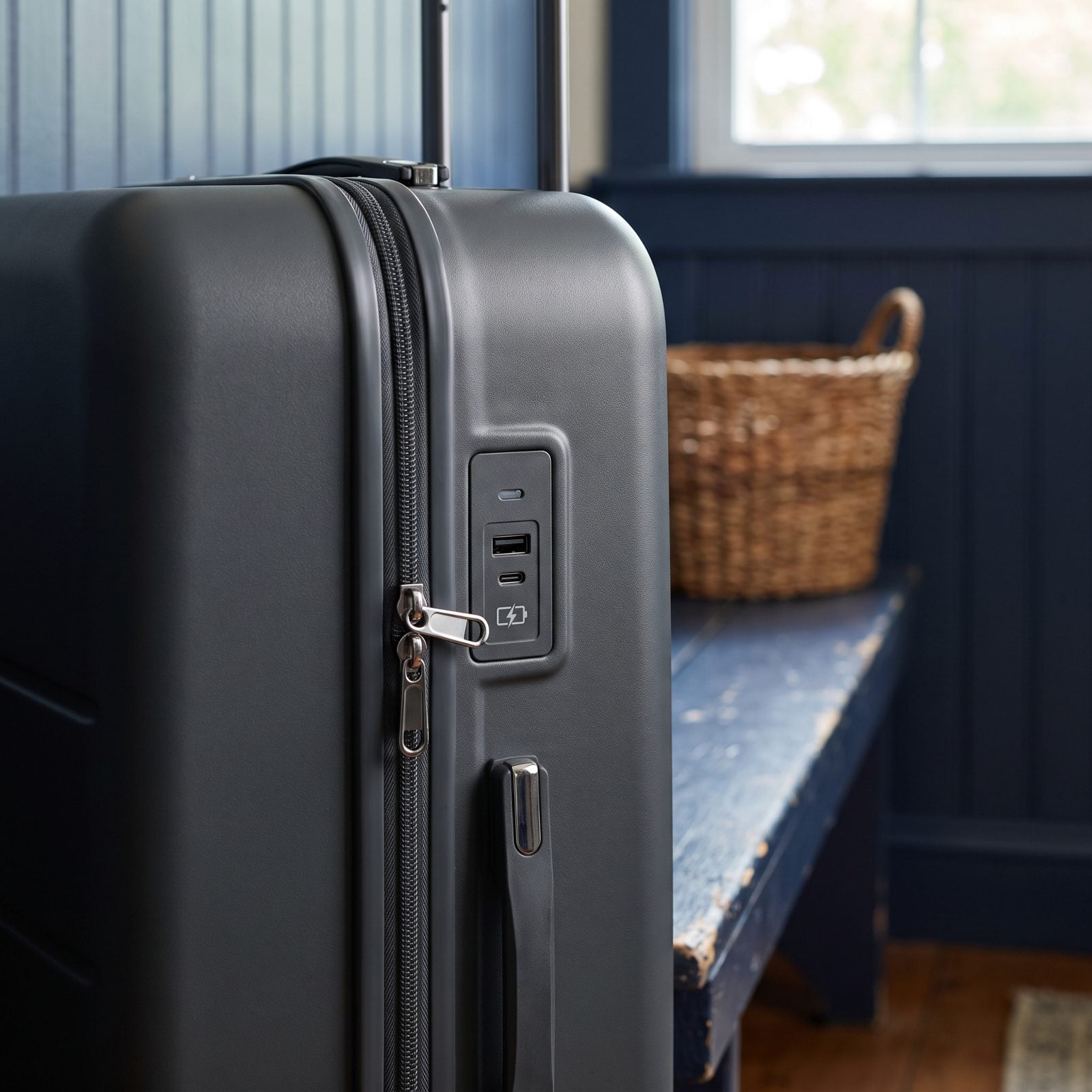
Smart bags with built-in GPS and phone charging were everywhere a few years back. Then airlines drew a hard line. If the lithium battery can’t come out, the bag can’t fly checked, and many can’t fly at all.
Show up with a sealed-in battery and the gate agent has no good options for you. You either surrender the bag or miss the flight repacking into something else at the counter.
Check whether your battery pops out before you buy, or at the very least before you pack. If it does, carry it in the cabin and check the empty case. If it’s permanently sealed, leave that bag home and use a plain suitcase. Fancy charging ports aren’t worth getting stranded at the desk.
37. Hiding a Tracker in an Outer Pocket That Can Tear Away
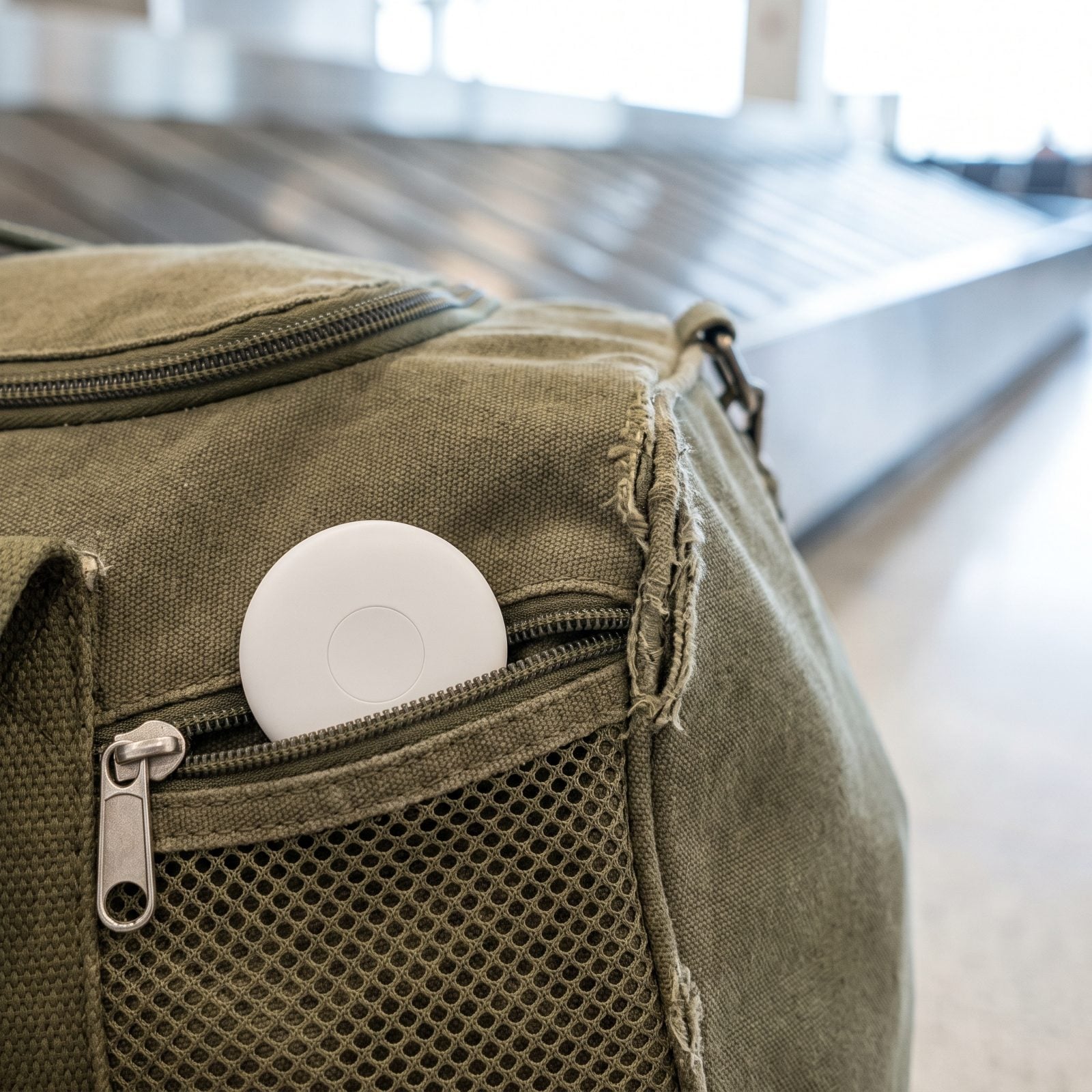
A tracker only helps if it stays with the bag. Clip it to an outer zip pocket or dangle it from a strap, and the first rough conveyor belt can rip it clean off, leaving the tracker on a sorting floor in Atlanta while your bag heads who knows where.
You bought it to find a lost bag. Now you’ve lost the finder.
Drop it deep inside the main compartment instead, buried in clothing near the center. It survives the handling, it’s harder for anyone to pull, and it transmits perfectly well through fabric. The outer pockets are the one place it should never live.
36. Packing a Camping Stove That Still Reeks of Fuel
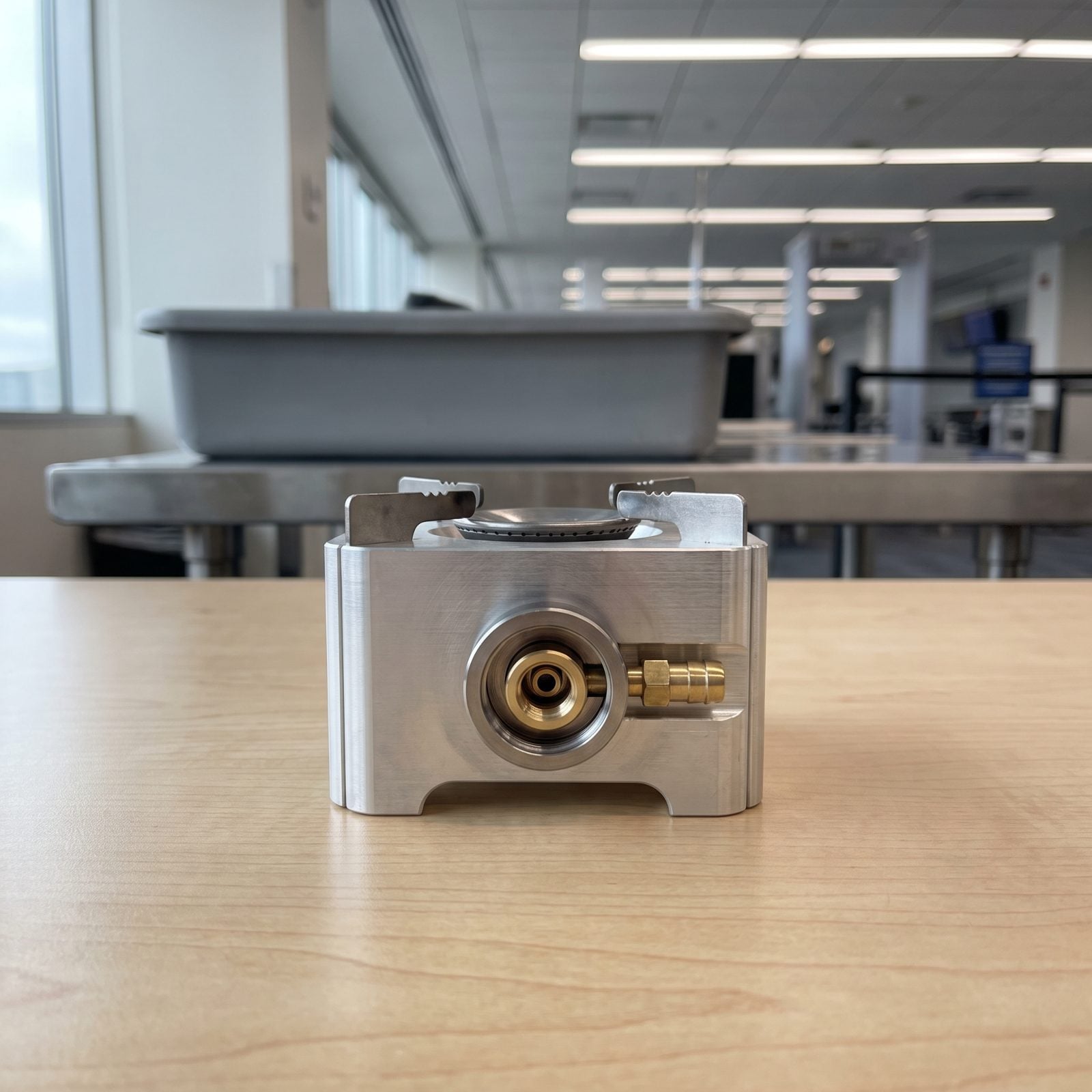
Empty your camping stove and most airlines will let it fly. Leave even a whiff of fuel on it and screeners treat it as a hazard, because to the trace-detection swab it reads exactly like what they’re trained to catch.
You pass the main scanner. Then a swab test pings, your bag gets pulled, and you’re explaining backpacking gear to a supervisor while your flight boards.
Run it until bone dry, then air it out for a day or two before packing. Remove the fuel canister completely, since compressed fuel can’t fly either way, and wrap the stove in a clean cloth so no residual odor transfers. If it still smells like a campfire, it isn’t ready.
35. Packing Self-Heating Meals With the Heating Element Still Inside
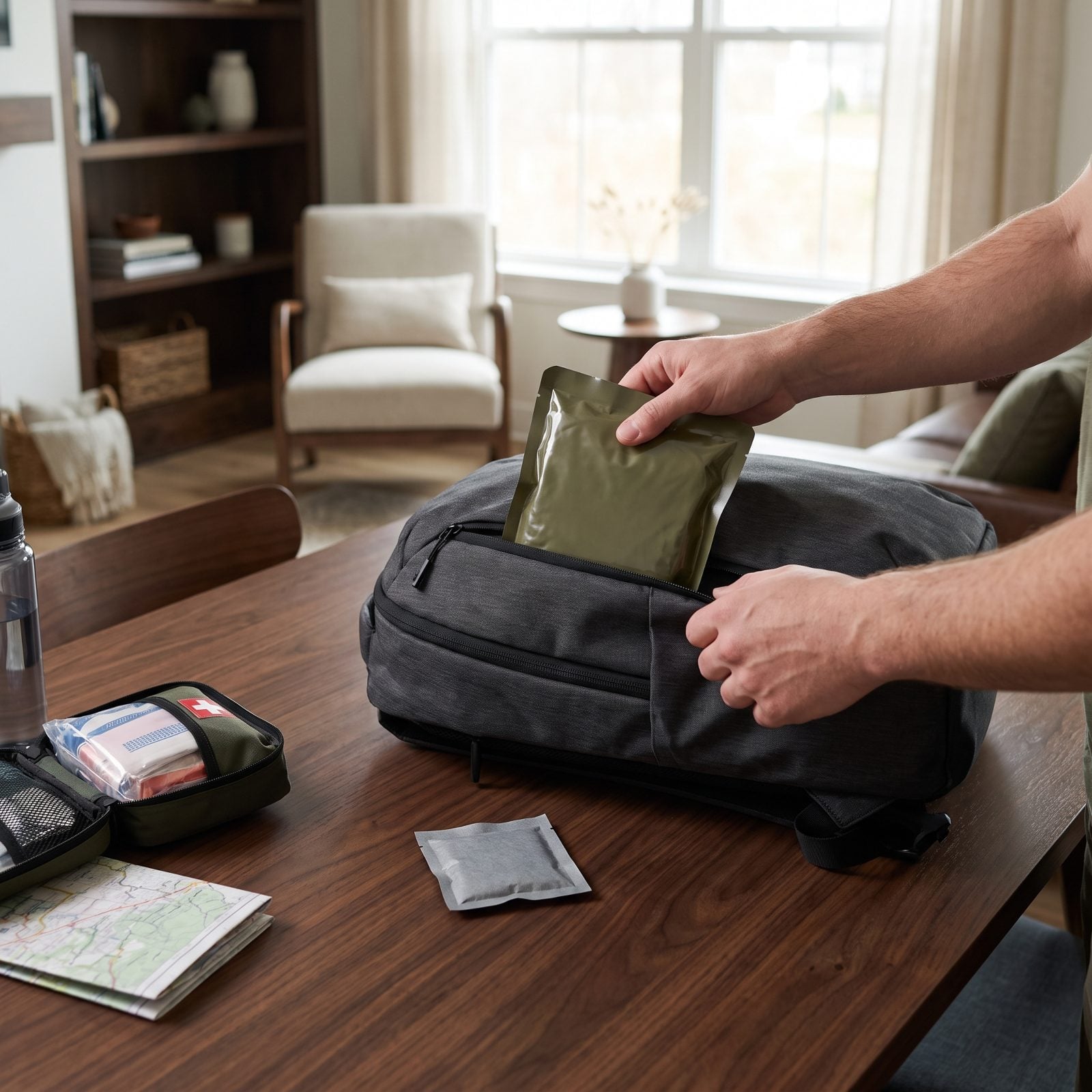
Self-heating meals seem like genius travel food until the flameless ration heater inside trips a rule. Those heaters run on a chemical reaction, and plenty of airlines restrict or outright ban them because of what they can do in a confined cargo hold.
The meal itself is usually fine. It’s the heating element that’s the problem, and screeners will pull the whole package to separate the two.
Pack the food and ditch the chemical heater, or check your airline’s hazardous-materials list before you fly. Want a hot meal when you land? Bring the pouch and heat it with hot water at your destination. This particular shortcut isn’t worth a confiscation at the belt.
34. Bringing an Avalanche Airbag Pack Without Checking Airline Rules First
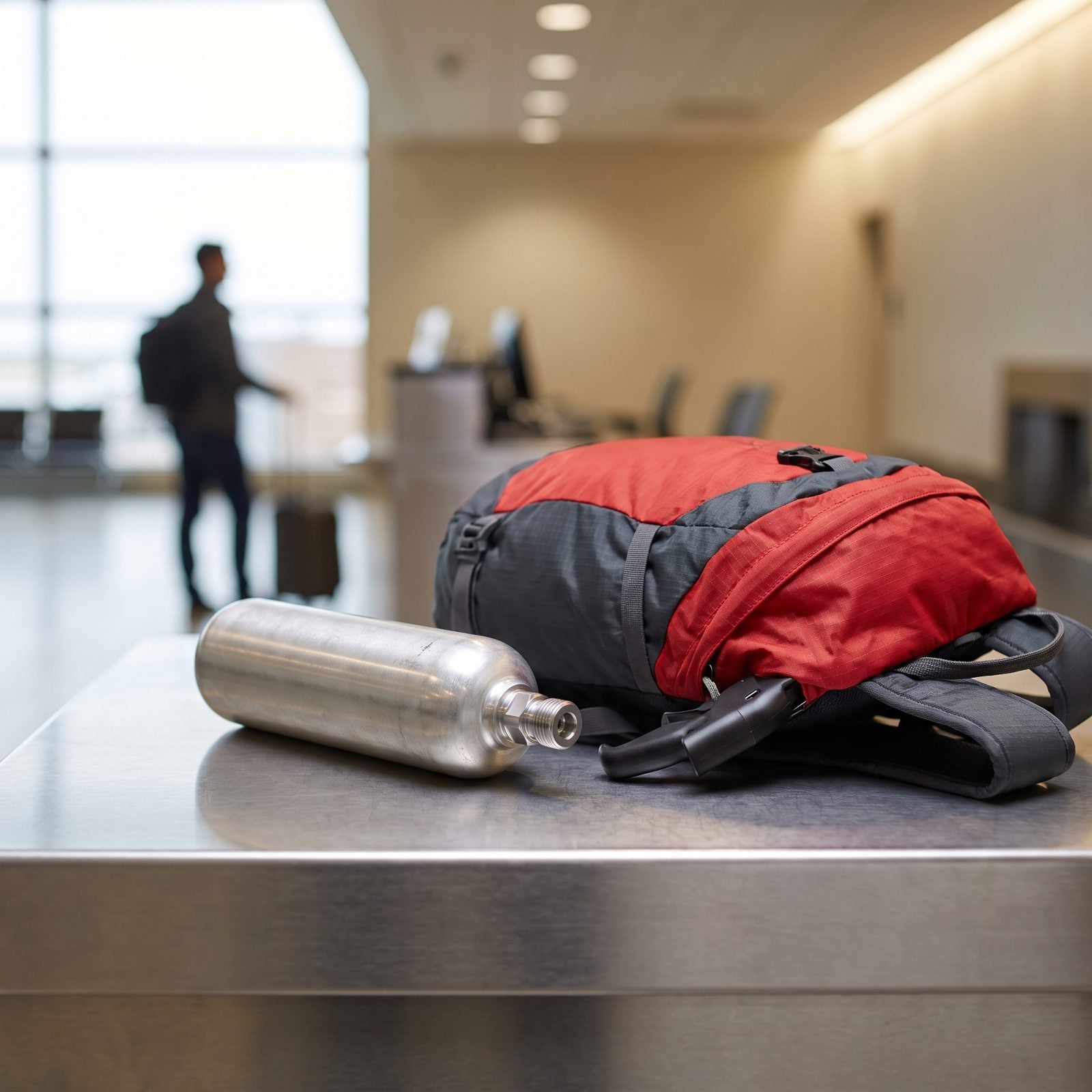
Backcountry skiers know this gear saves lives. Airline cargo managers know it holds a compressed-gas cylinder and sometimes a pyrotechnic trigger, which lands it squarely in dangerous-goods territory.
Rules vary wildly between carriers. One airline waves it through with the cylinder emptied and the trigger documented; another refuses it flat out. Guess wrong and your pack doesn’t board, leaving you to ski a glacier without the one thing designed to keep you alive.
Call the airline days ahead, not at the counter. Ask specifically about the cartridge type, compressed air versus pyrotechnic, whether it has to be discharged, and what paperwork they want. Carry the manufacturer’s safety documentation too. A little homework beats arguing hazmat policy with a check-in agent while your group taps their boots waiting.
33. Putting an E-Cigarette or Vape in Your Checked Luggage
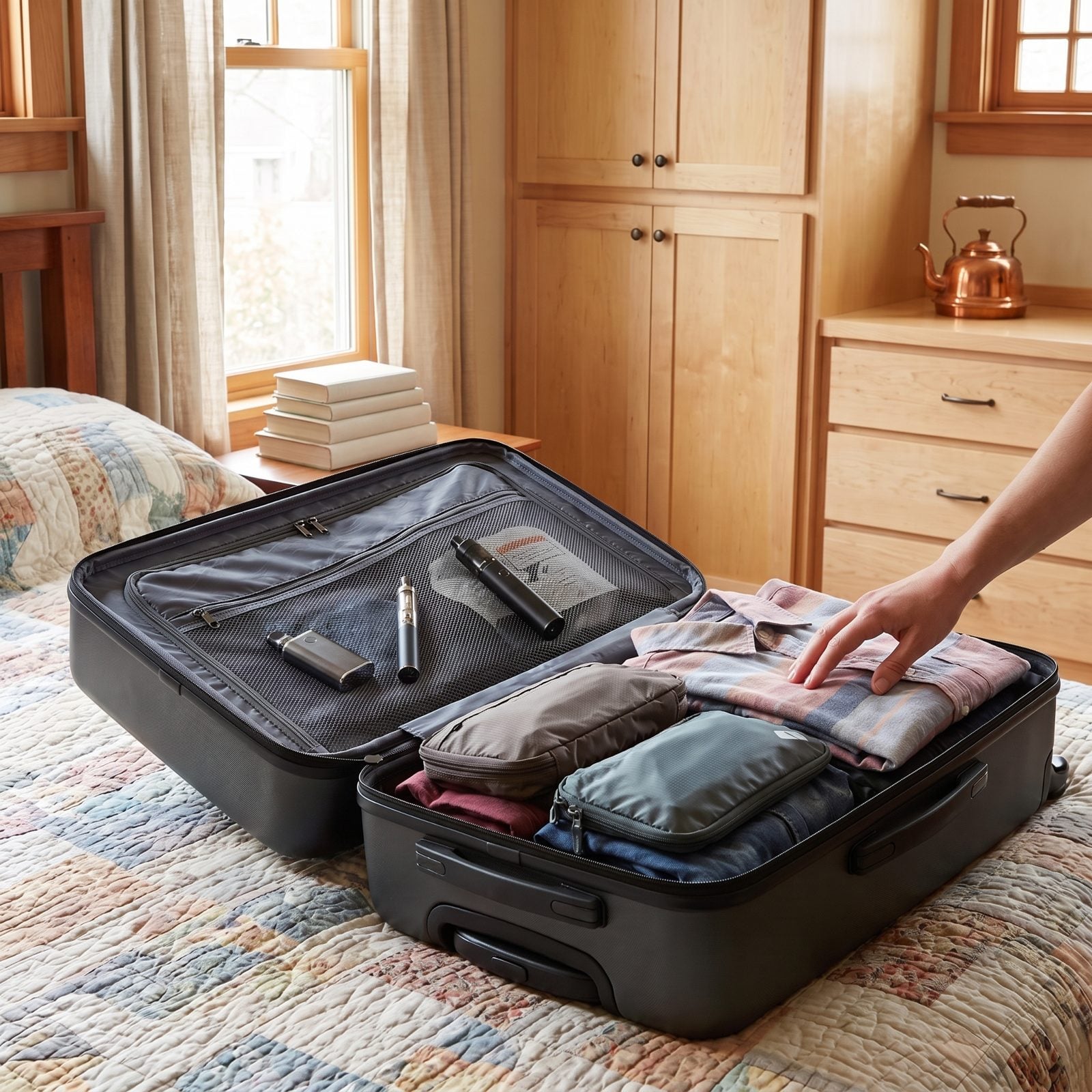
Vapes run on lithium batteries, and lithium batteries are banned from checked bags, full stop. Pack your vape in the suitcase you check and you’ve broken a safety rule that exists because these devices have overheated in cargo holds.
Flag the bag and screeners pull the vape, so you lose it. Worse, a device can activate under pressure and smolder below deck where nobody can reach it.
Instead, keep every vape, e-cigarette, and spare pod in your carry-on, powered off, and send them through the carry-on security checkpoint, not tucked into the lid pocket of a checked suitcase. On board, cabin crew can respond if something goes wrong. Don’t vape in the terminal where it’s prohibited, and never charge it on the plane. The cabin is the only place these belong.
32. Packing Spare Lithium Batteries With Their Terminals Exposed

Loose spare batteries rolling around a bag with bare terminals is the error screeners dread most. When two terminals touch metal, whether it’s keys, coins, or another battery, they short-circuit, heat up, and in the wrong case catch fire.
That’s why a pull-aside over loose batteries can turn into a serious conversation and a repack right there on the table.
Tape over each terminal with electrical tape, or slot every spare into its own compartment in a battery case. Keep them all in your carry-on, never checked. The little clear cases that hold four AA or two 18650 cells cost a few dollars and end the whole problem before it starts.
31. Packing Dry Ice Without Venting, Labeling, or Airline Sign-Off
🔥 Would you like to save this?
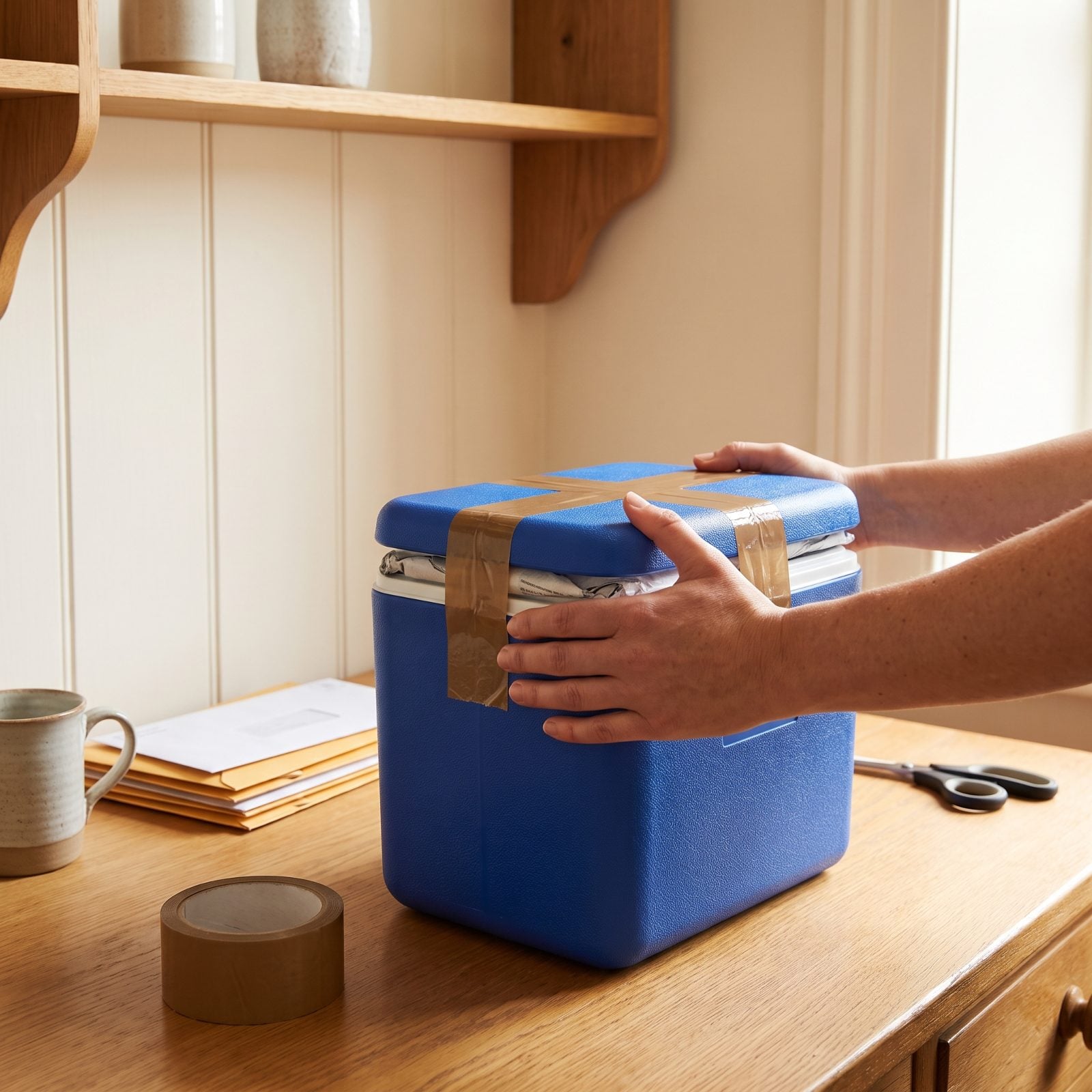
Dry ice feels like a clever trick for keeping fish or medication cold. But it’s also sublimating carbon dioxide, and airlines treat it like exactly that — a regulated item with rules you don’t get to improvise around.
Toss a slab into a sealed cooler and two things go wrong at once. The gas has nowhere to escape, so pressure builds, and screeners who spot an unmarked frozen mass pull the bag apart while you watch the minutes drain away.
Most carriers cap dry ice at around five and a half pounds per passenger, require a vented container, and want the package marked “Dry Ice” with the net weight. So call ahead. Get the approval, label it clearly, and leave the lid loose enough to breathe.
30. Trusting Gel Packs That Turn to Liquid Before You Reach the Scanner
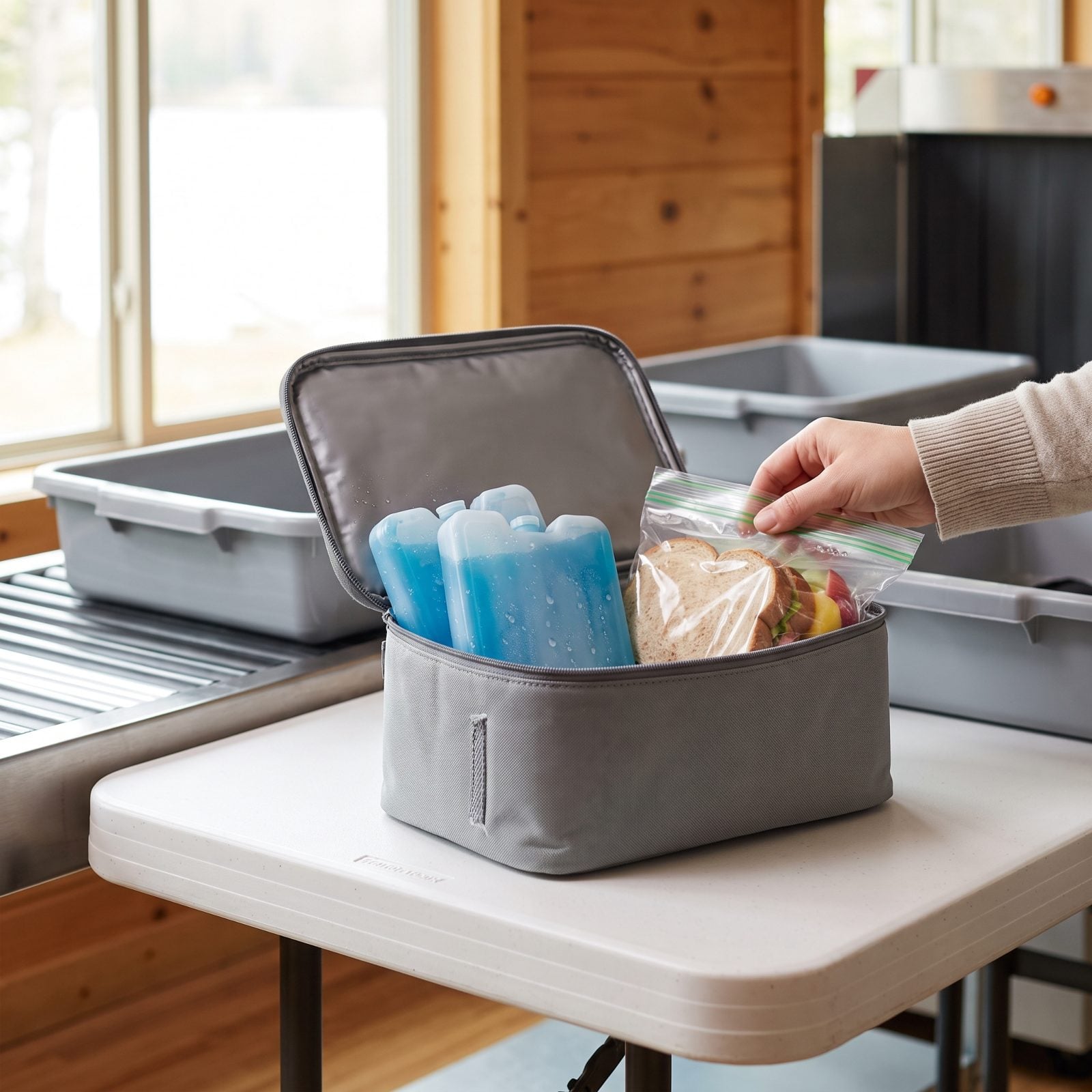
Frozen gel packs sail through security. The catch is that one word: frozen.
A gel pack that’s gone soft and slushy reads as a liquid, and liquids over 3.4 ounces come out of the bag for the familiar back-and-forth with a screener. You packed it rock solid at dawn, and three hours later at the checkpoint it’s a squishy blue blob — now it’s your problem.
Keep the pack as solid as you can. Deep-freeze it overnight, pack it against other cold items, and if you’re carrying it on, plan to clear security fast. In a checked cooler, gel packs beat loose ice every time. In a carry-on, a frozen one buys you time only as long as it stays frozen.
29. Mistaking Snow Globes and Spreadable Foods for Solid Items
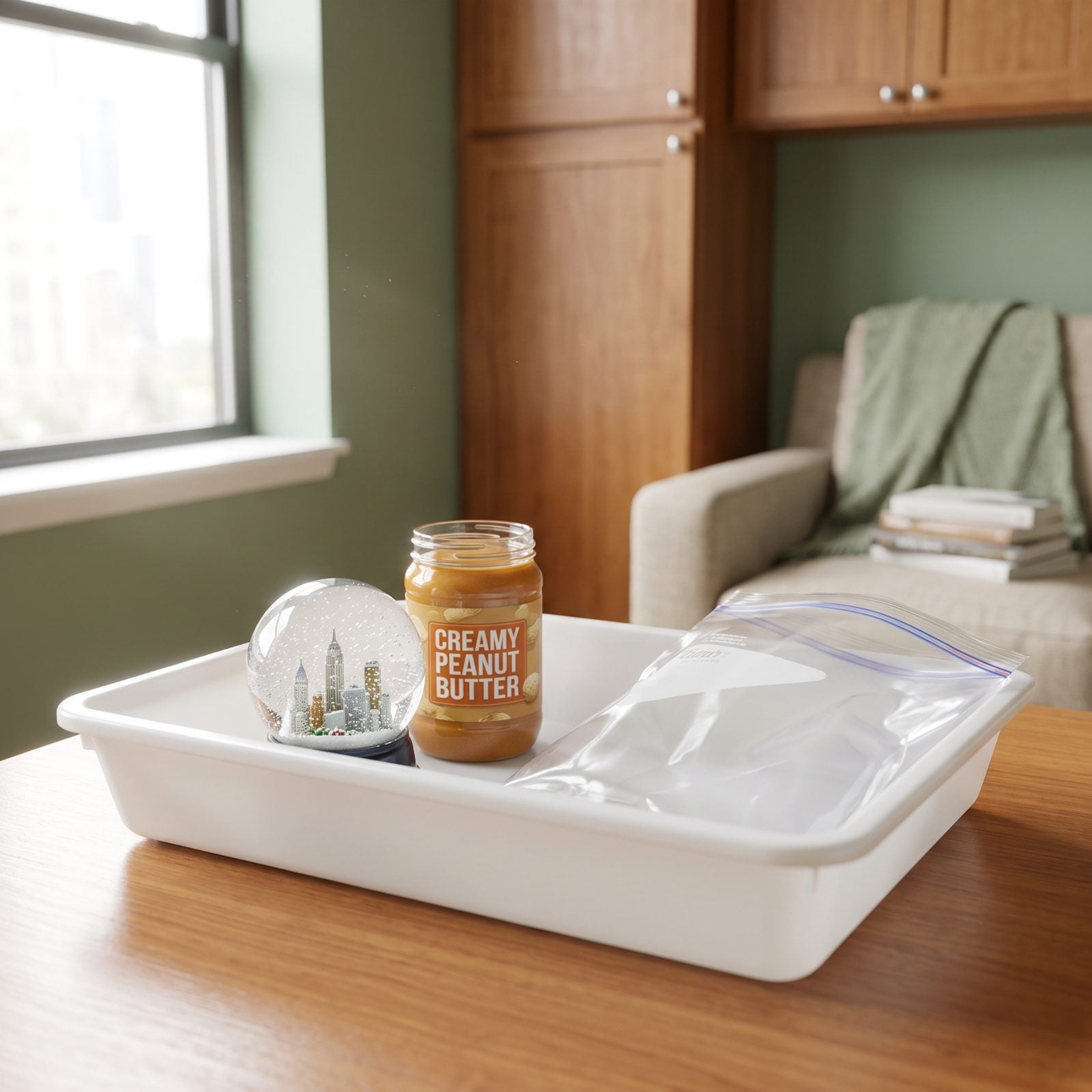
You’ve stood at a checkpoint and watched someone insist a snow globe is obviously a souvenir, not a liquid. The screener has heard that one a thousand times, and the screener always wins.
Snow globes, peanut butter, jam, soft cheese, hummus, yogurt — the rule couldn’t care less whether you can pour it. If it spreads, oozes, or sloshes, it’s a liquid. A full-size jar or a globe bigger than a tennis ball gets surrendered at the bin.
For carry-on, anything spreadable has to fit the 3.4-ounce limit inside your quart bag. Bigger globes and full jars ride in the checked bag, wrapped well. And because handing over a gift at security genuinely stings, decide its fate before you leave the house, not at the conveyor.
28. Burying a Big Powder Container Where Nobody Can Reach It
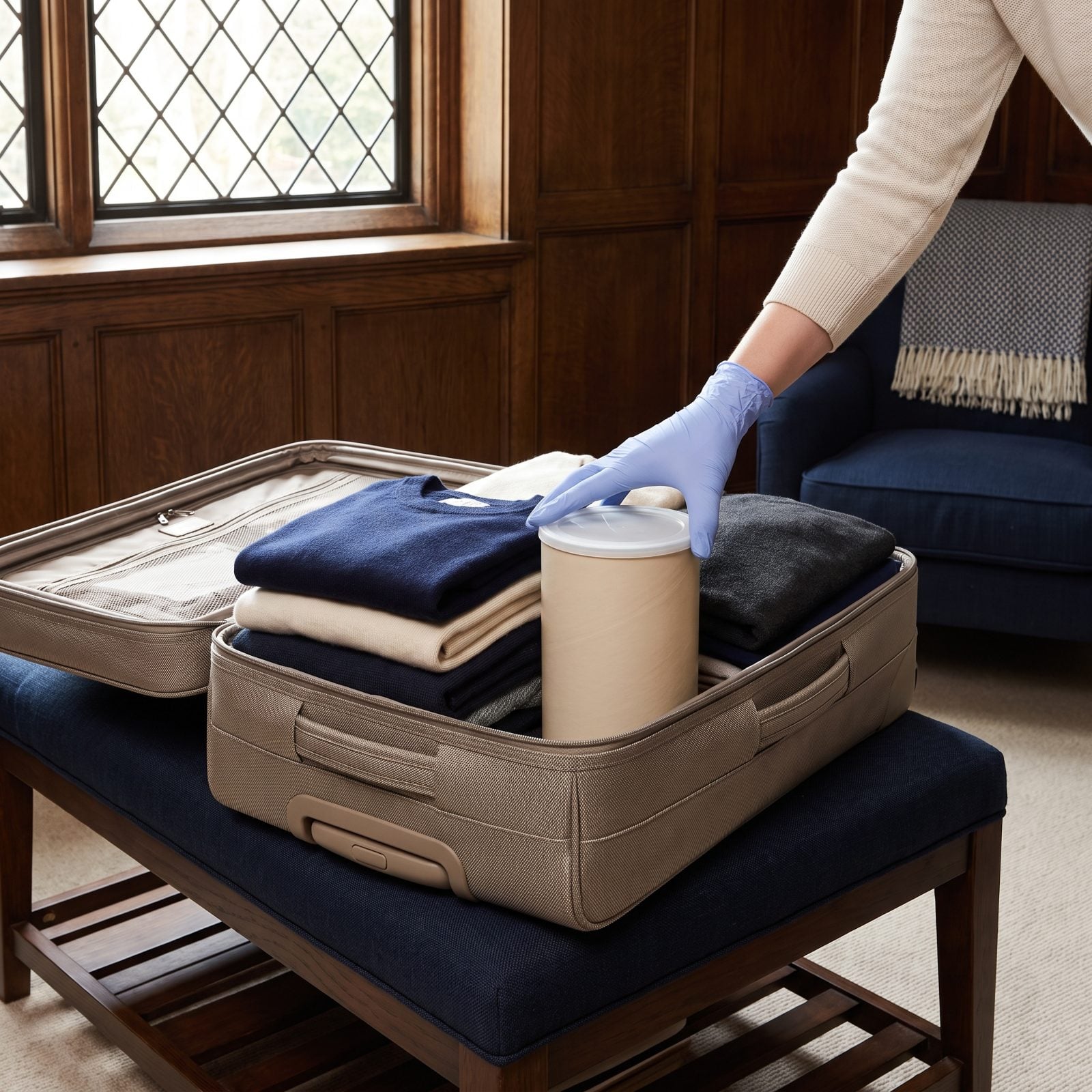
Powders in containers of 12 ounces or more get pulled for extra screening, and sometimes opened on the spot. Stand that big tub of protein powder or coffee upright beside your folded layers, in plain view and within easy reach, and you’ve spared yourself the slowest version of the whole ordeal. Bury it at the bottom of a jam-packed carry-on, and you’ve volunteered for it.
What follows a buried tub is a full unpack on the inspection table while the line behind you grows restless. If the powder can’t be cleared, it may not fly at all.
So pack large powders near the top — or better yet, in your checked bag, where the limit doesn’t even apply. If a powder has to come on board, keep it under 12 ounces when you can and leave it somewhere a screener can lift it out in one motion.
27. Leaving Straps and Compression Webbing Flapping Loose
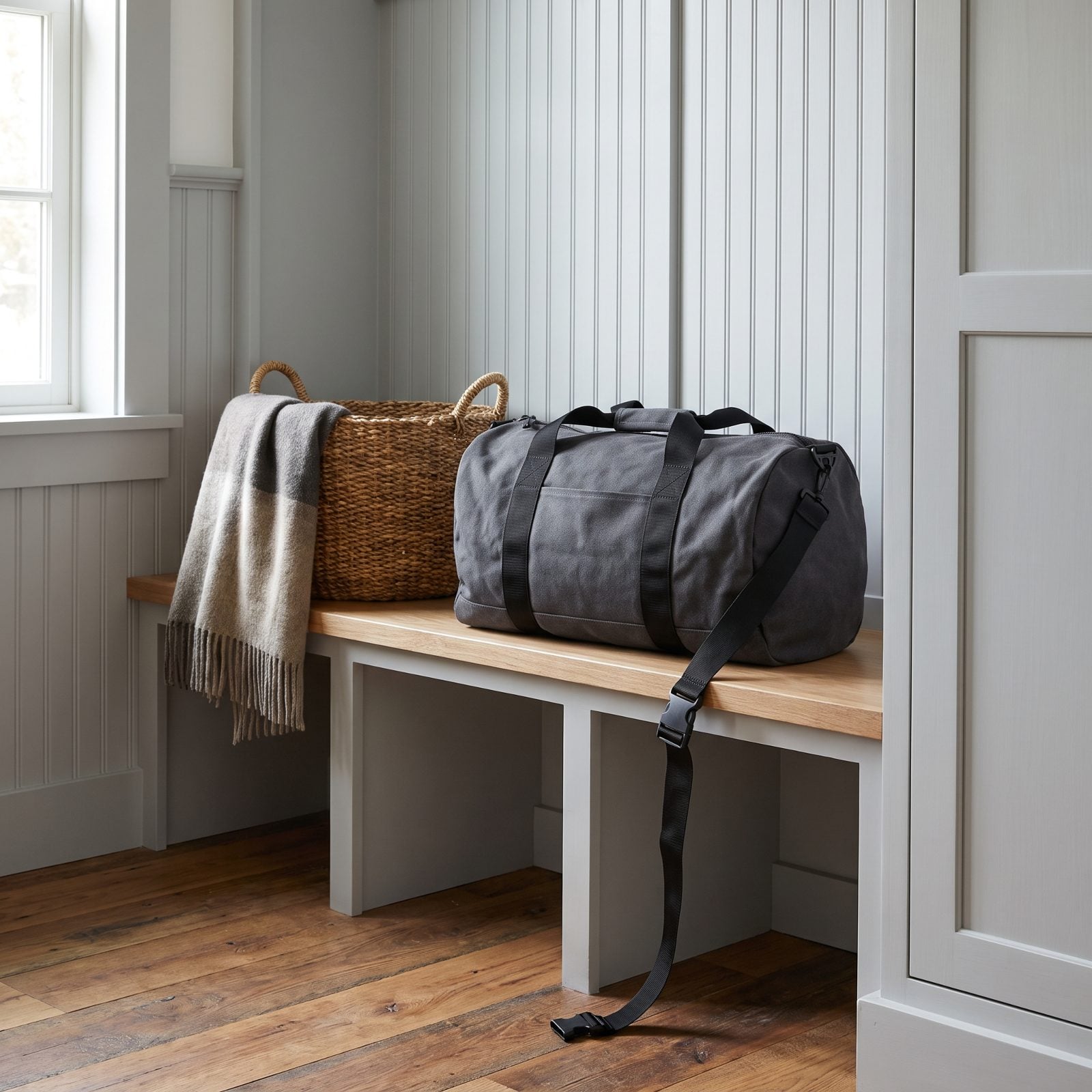
Conveyor belts and sorting machines are brutal to anything that hangs. A dangling shoulder strap or a loose compression buckle catches on a roller, and suddenly your bag is jammed, torn, or shunted off to the oversize-and-damaged pile where luggage goes to suffer.
The fix takes thirty seconds. Clip every buckle, cinch every strap, and tuck the long shoulder straps into the bag or wrap them down tight. A lot of travel packs have a stowaway panel built for exactly this — zip it shut before you hand the thing over.
26. Clipping Two Bags Together and Calling It One
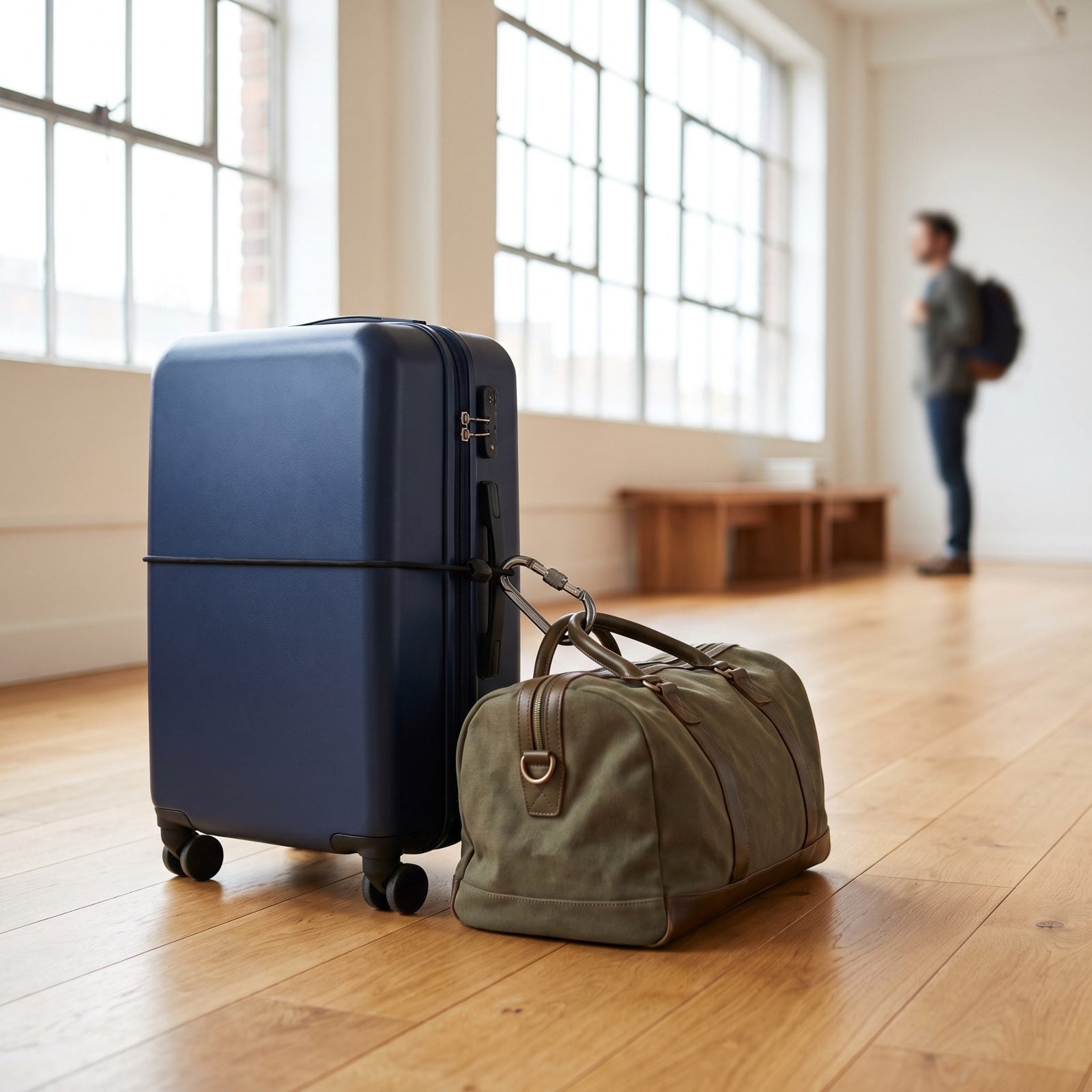
It seems so efficient. Two bags, one carabiner, and suddenly you’ve got a tidy little train rolling along behind you. The sorting system does not share your enthusiasm.
Automated handling reads each bag as a single scanned item. Clip two together and the machine chokes, the pair gets kicked to manual handling, and one of them may never make your connection. There’s also the small matter of an excess-bag fee when the agent counts two where you’d hoped for one.
Every checked bag goes solo. One tag, one bag, one trip through the system. And if you need to haul them through the terminal together, grab a folding luggage cart, then peel them apart the second you reach the counter.
25. Popping the Expansion Zipper Before You’ve Even Left
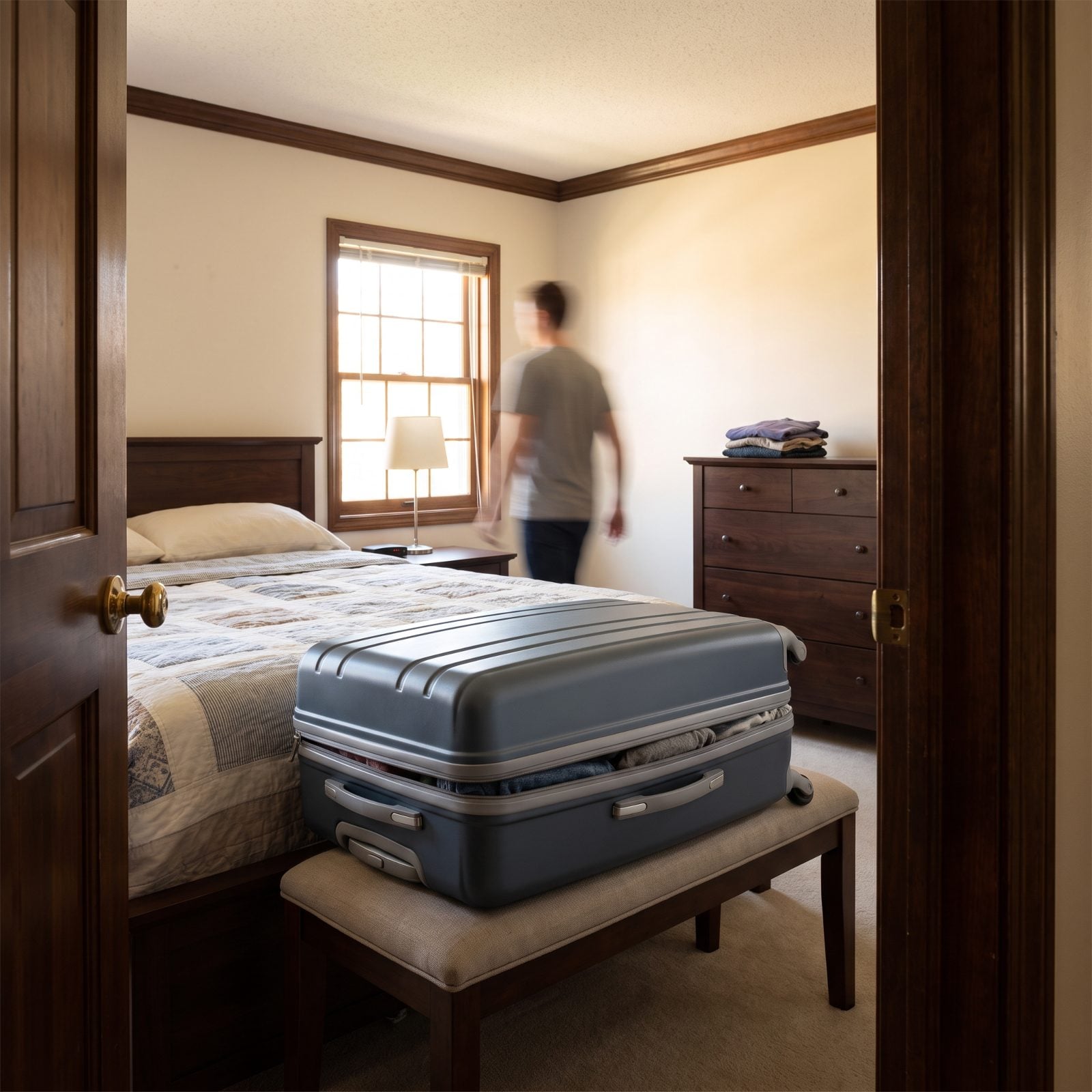
That expansion zipper adds an inch or two of depth, and it’s a gift on the trip home when you’ve bought more than you meant to. Use it on the way out, though, and you’ve quietly turned a compliant carry-on into one that may not fit the sizer.
At the gate, a bulging bag that won’t drop into the frame gets gate-checked, often with a fee riding along. You wanted the overhead bin and you end up at the baggage carousel.
Leave the expansion panel zipped shut heading out. Pack within the smaller footprint. The extra depth is for the return flight, once you’ve already filled your souvenir allowance and the bin is somebody else’s concern.
24. Measuring Your Carry-On and Forgetting the Wheels and Handle
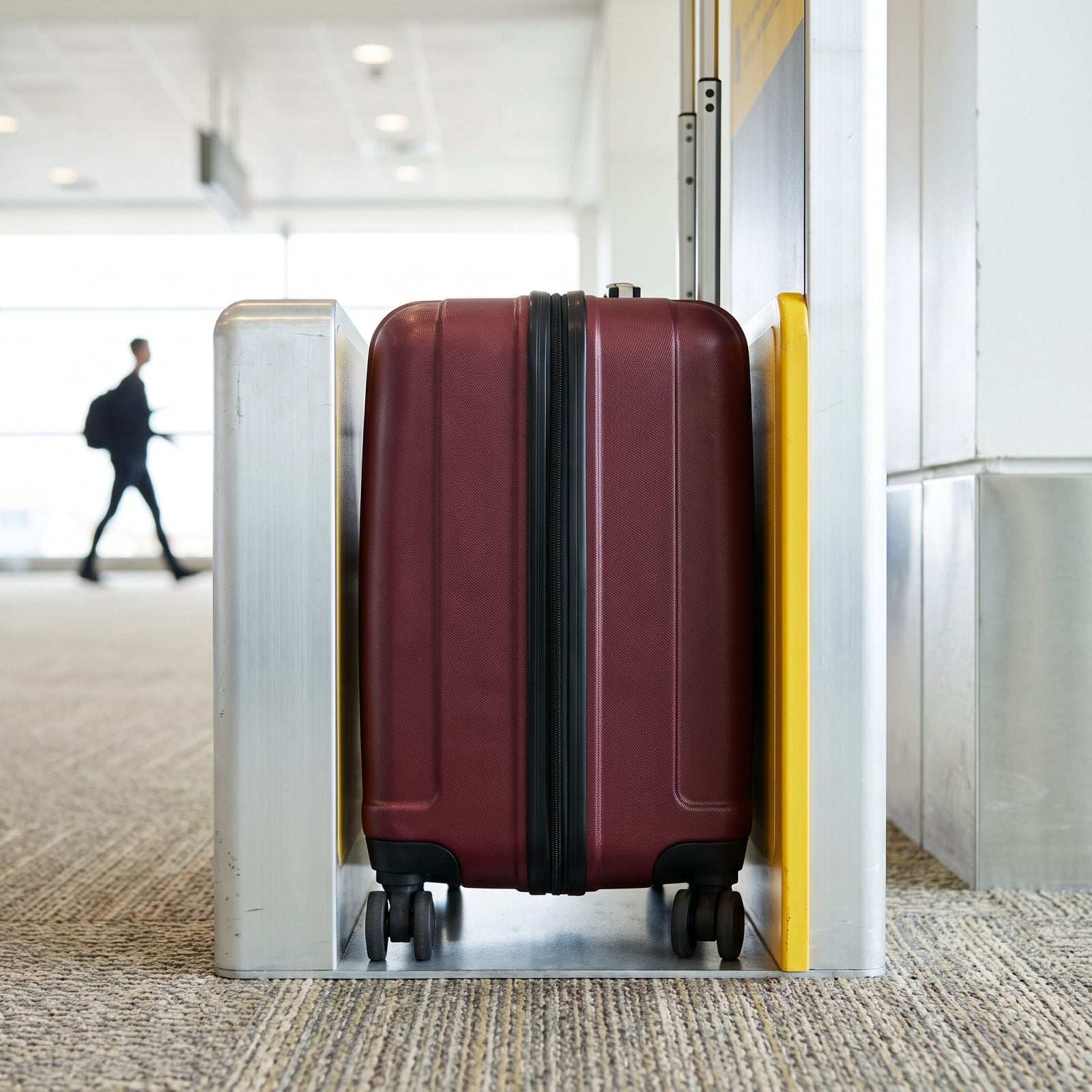
The tag promised 22 by 14 by 9. The manufacturer measured the body of the bag. The airline measures the whole animal — wheels, handle, feet, bumpers, every protruding bit of it.
That gap is why a bag the box swore was legal suddenly refuses to slide into the gate sizer. Usually it’s over by an inch or two, and an inch is all it takes to get gate-checked.
Measure your own bag at home with a tape. Floor to handle top, wheel edge to wheel edge, then hold that number against your airline’s published limit. Over by a hair? Pick a smaller case or plan to check it. The sizer frame is not in a bargaining mood.
23. Betting a Stuffed Neck Pillow Will Never Count as a Bag

🔥 Would you like to save this?
Here’s the old traveler’s dodge: unzip the neck pillow cover, cram it full of socks and a sweater, and smuggle a whole outfit right past the bag count. Clever — until it isn’t.
A neck pillow swollen to the size of a small duffel stops reading as a comfort item. A gate agent counting bags can simply call it a bag, and on a basic fare with no free carry-on, that’s a fee or a gate-check.
Keep the pillow actually pillow-shaped. If you want to sneak in a little extra, stash a light layer or a spare pair of socks — not your entire week’s laundry. A pillow that looks like a pillow slips right through. One that looks like a stuffed duffel invites questions.
22. Showing Up With a Pile of Loose Extras You Can’t Carry
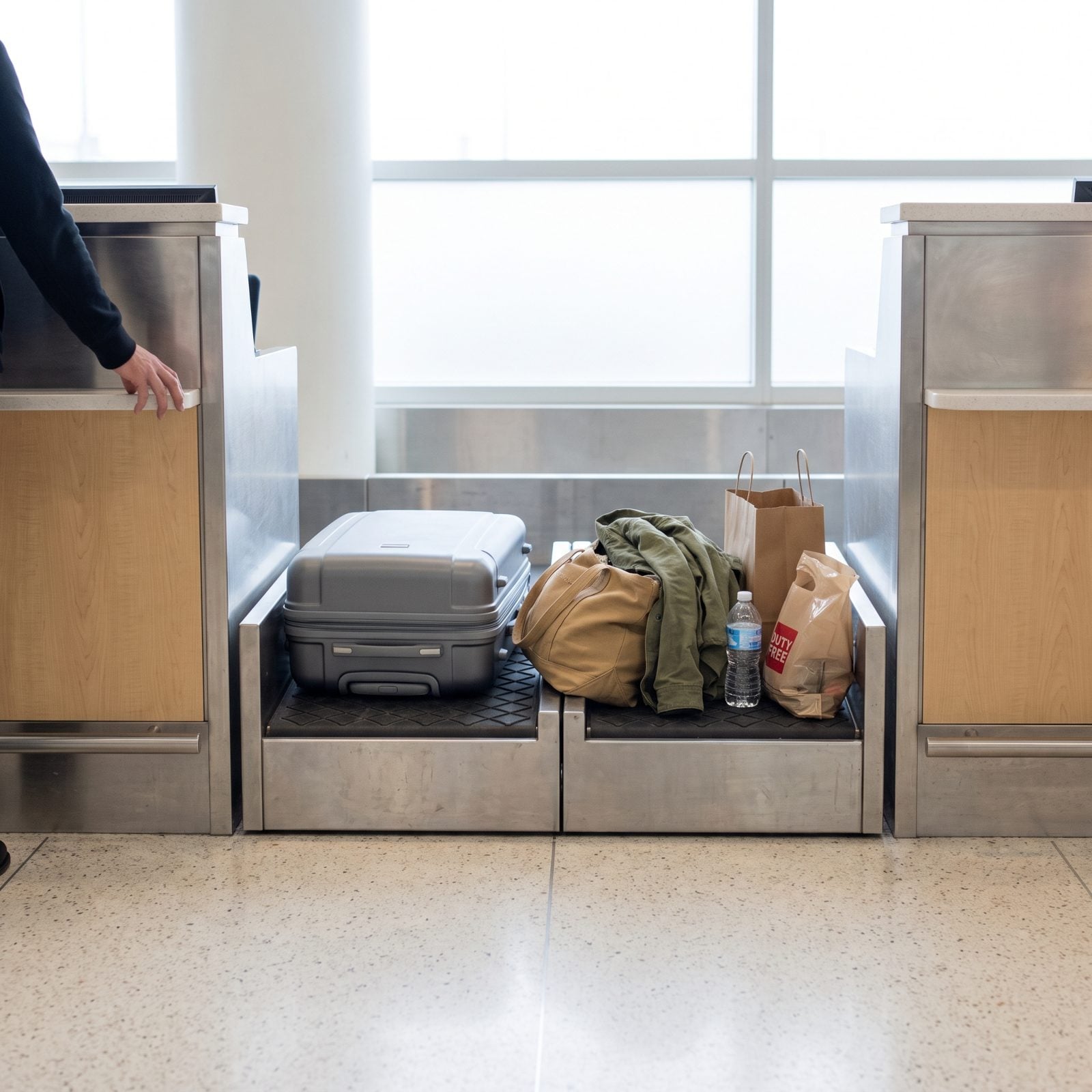
You roll up with a carry-on, a personal item, a duty-free bag, a jacket over the arm, a water bottle, and a tote from the gift shop. On paper that’s one allowance. To the agent’s eye it’s a parade.
Most fares cover one carry-on plus one personal item, and everything past that is fair game — an excess-item fee, or a demand to consolidate right there while the boarding line piles up behind you.
So consolidate before you ever reach the counter. Collapse the loose bags into your main carry-on or personal item, wear the jacket, finish the water or drop the bottle inside a bag. Walk up looking like two items, not seven. Nobody tallies what isn’t dangling from your fingers.
21. Checking the Dimensions but Ignoring the Carry-On Weight Limit
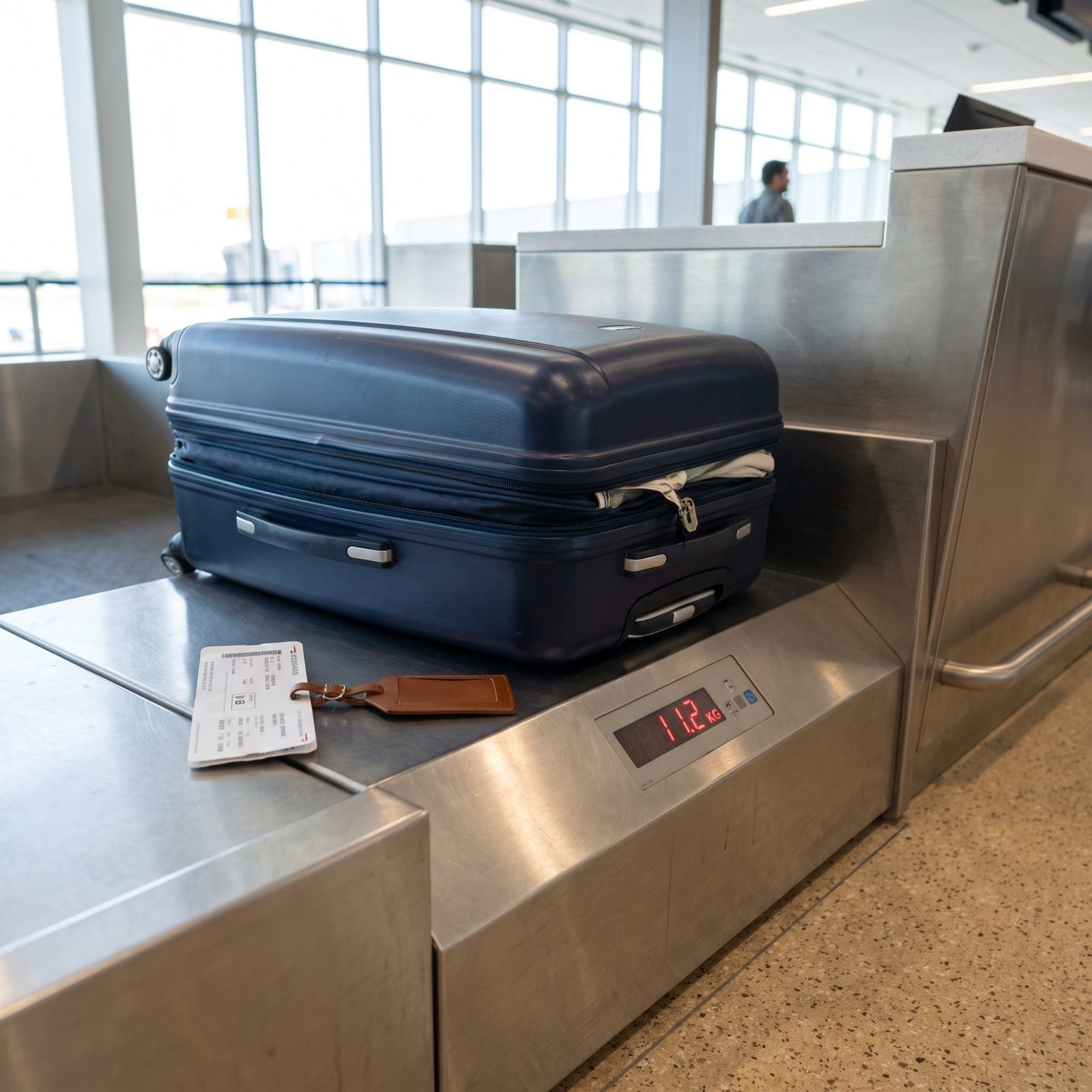
You measured the bag. You slid it into that little metal sizer at the gate and it fit like it was made for the slot. Then the agent set it on the scale, and your morning went sideways.
Plenty of airlines, especially the budget carriers across Europe and Asia, cap carry-ons at 7 to 10 kilos — and dimensions only tell half the story. A bag that fits but weighs too much gets pulled, tagged, and billed right at the gate, which is exactly where the fees run highest.
So weigh it at home. Stand on the bathroom scale holding the bag, step on again without it, subtract. Thirty seconds, and you spare yourself the one indignity nobody enjoys: unpacking your socks onto a counter while the whole line watches.
20. Vacuum-Packing Your Clothes With No Room Left to Repack
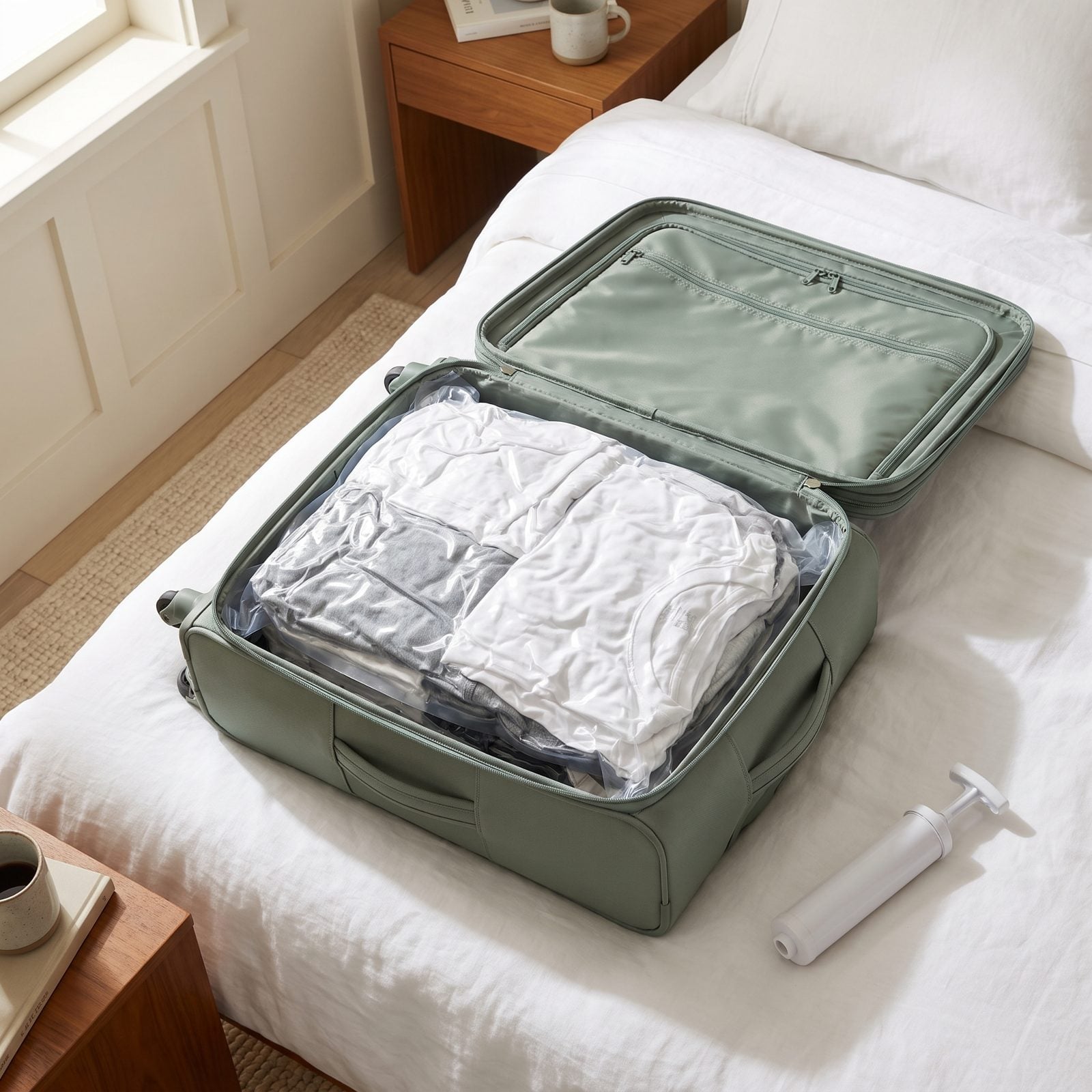
Vacuum bags feel like a magic trick. You suck out the air, your sweaters flatten to the thickness of a magazine, and a week of clothes vanishes into almost nothing. The trouble shows up on the way back.
Security opens the bag for inspection, or you’ve worn and re-folded everything, and now the air is back and the clothes flatly refuse to go in. Picture yourself kneeling on a hotel bed, wrestling wrinkled laundry down with a pump you may well have left at home.
Pack to about seventy percent and leave one bag empty for the return. Honestly, skip the full vacuum seal and use roll-top compression cubes — they squeeze things down and still open and close without a machine.
19. Packing Replica or Realistic Toy Weapons in Your Carry-On
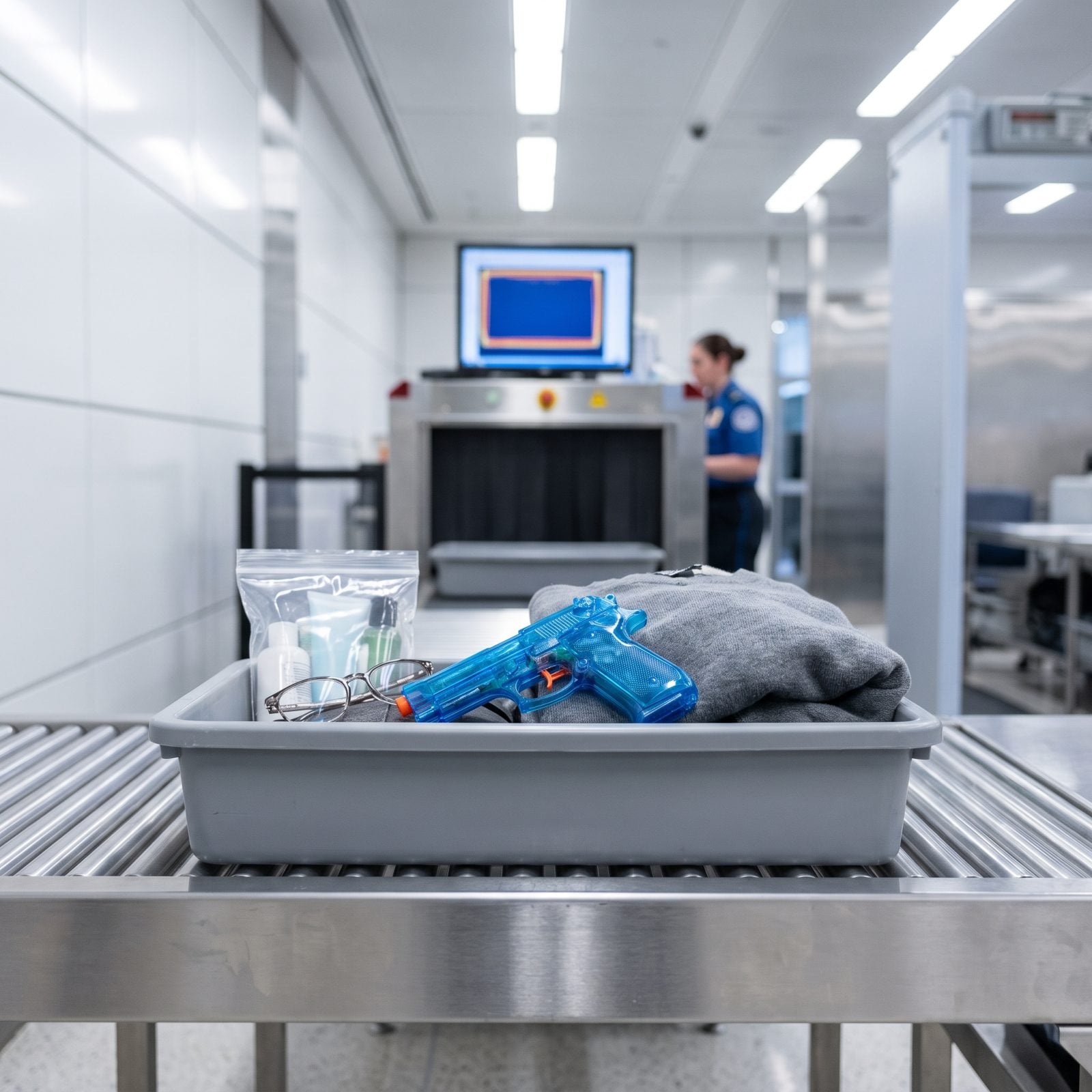
A souvenir cap gun from a theme park. A grandchild’s toy blaster. A film-prop replica that looked harmless on the shelf. On the X-ray screen the operator sees a weapon shape, and the color of the plastic means nothing to the machine.
Realistic replicas — and even obvious toys shaped like firearms — routinely trigger bag searches, and in stricter airports, a conversation you really don’t want to have. The delay is real, and it holds up the whole line behind you.
Put anything gun-shaped in your checked bag, toy or not. Buying a replica abroad? Keep the receipt and pack it deep in the checked case, wrapped so it reads as a solid block rather than an outline.
18. Forgetting an Empty Casing or Ammo Souvenir in a Jacket Pocket

You spent an afternoon at a shooting range on vacation, or pocketed a polished casing as a keepsake, and it slipped into a jacket pocket and stayed. Months later it rides through the X-ray and lights up the screen.
Even a single empty casing or a loose round — completely harmless — can mean a secondary search, questions, and in some countries a genuine legal headache. Ammunition rules abroad are far stricter than most travelers assume.
Before any trip, turn every jacket and bag pocket inside out and run your fingers along the bottom seams. Pockets are where small metal things go to hide, and the checkpoint is the worst possible place to rediscover them.
17. Trying to Walk Trekking Poles Through the Checkpoint
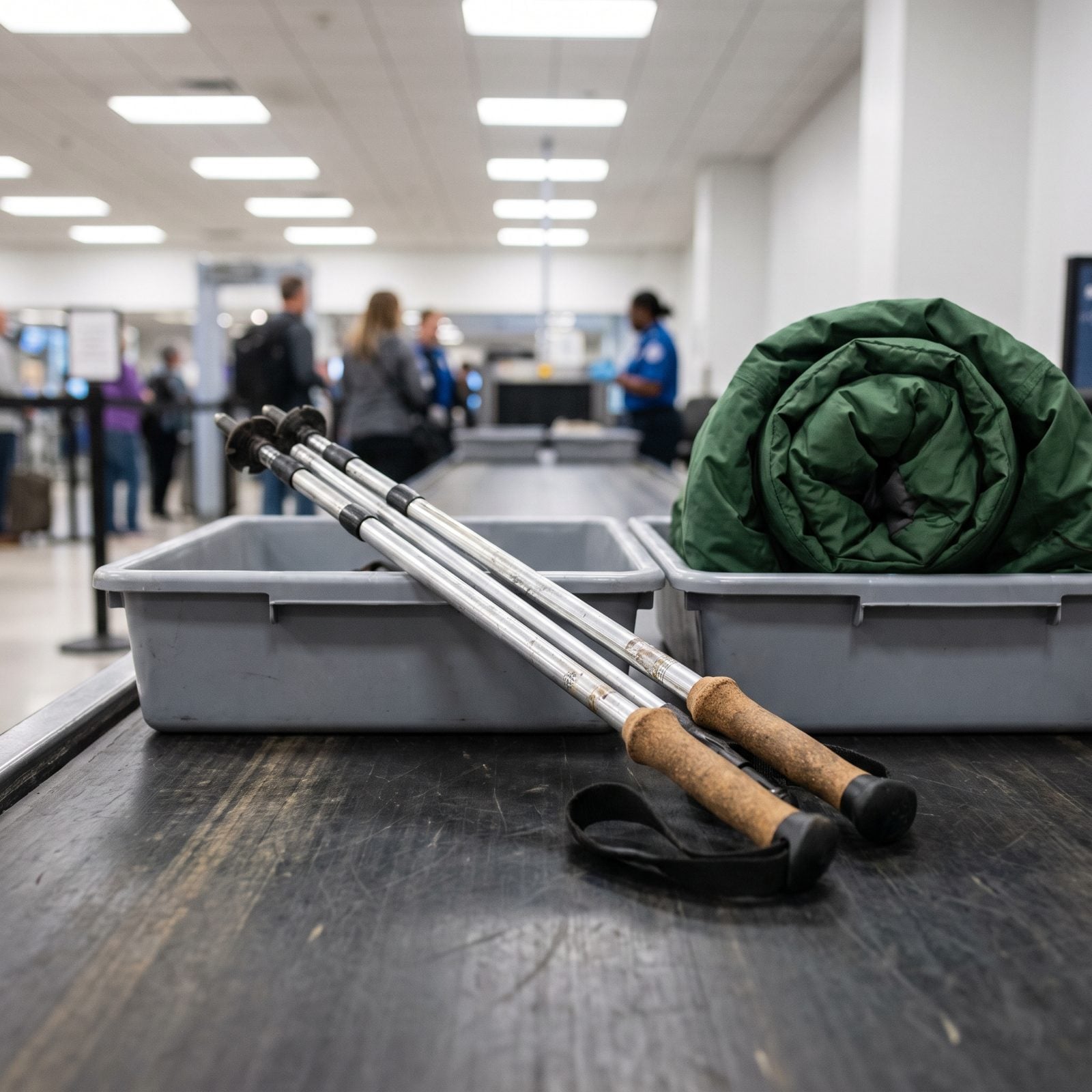
Hikers hate this one. Trekking poles are light, they fold down small, and it feels absurd that they can’t ride in your carry-on. But security sees a rigid pointed shaft and files them alongside ski poles — cabin’s off limits.
Show up with them at the checkpoint and you’ve got a choice nobody wants: surrender them, sprint back to check a bag, or lose your place in line. None of it is quick.
Check them. Collapse the poles, run them down the center of a checked bag, and pad the tips with a sock so they don’t punch through the lining. Your knees will thank you on the trail either way.
16. Not Rechecking the Side Pocket for a Forgotten Pocketknife
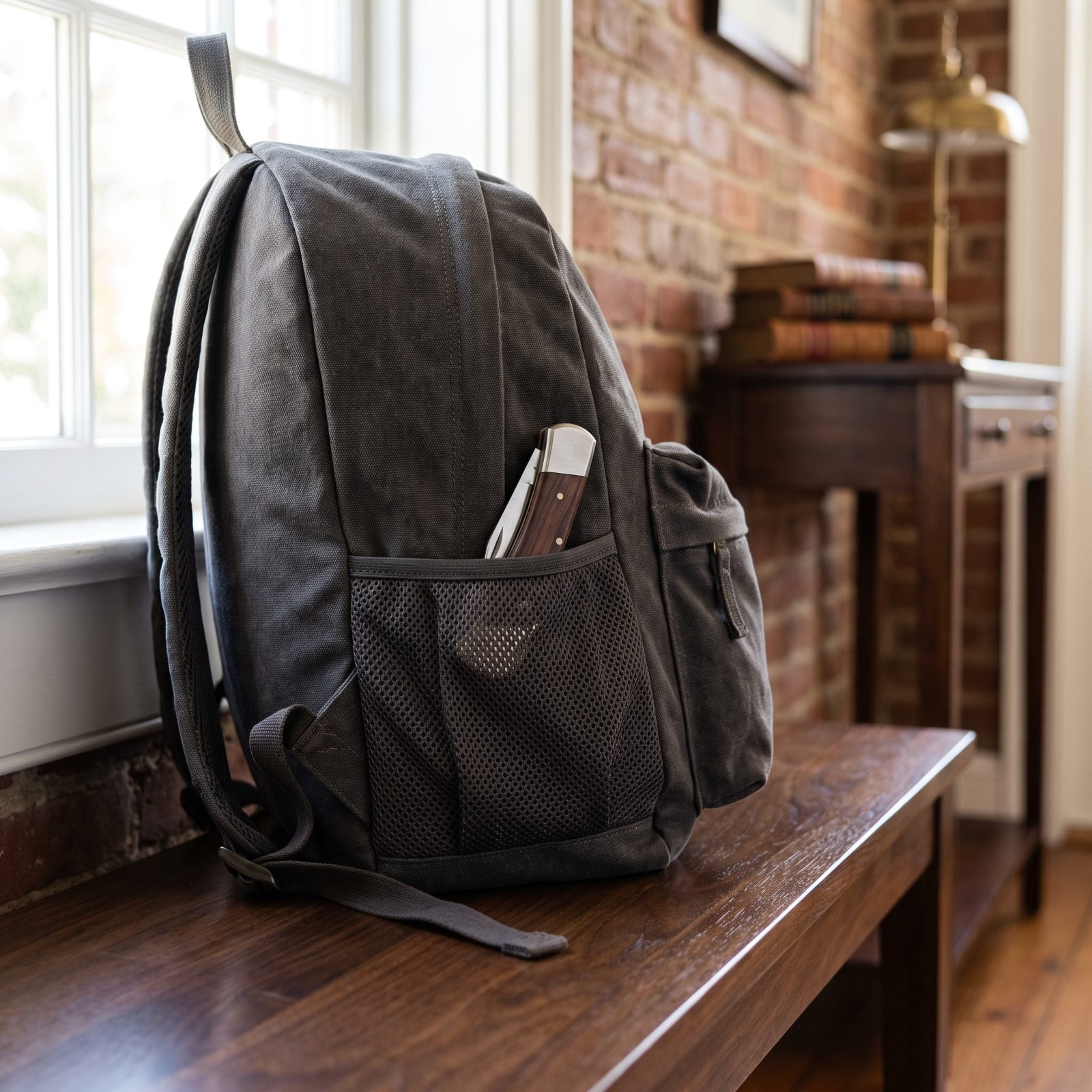
This is the single most confiscated item at checkpoints, and it’s almost never on purpose. A small folding knife lives in the side pocket of your everyday bag for a camping trip or a picnic, and then that same bag becomes your carry-on without a second thought.
The knife gets flagged, the bag gets pulled, and now you’re surrendering a blade you may have carried for twenty years — or missing your flight while you mail it to yourself from the airport post office.
Empty every pocket of the bag you’re taking. Not glance into. Empty. The one you forget is always the one that costs you.
15. Leaving Loose Razor Blades Rattling Around Your Toiletry Kit
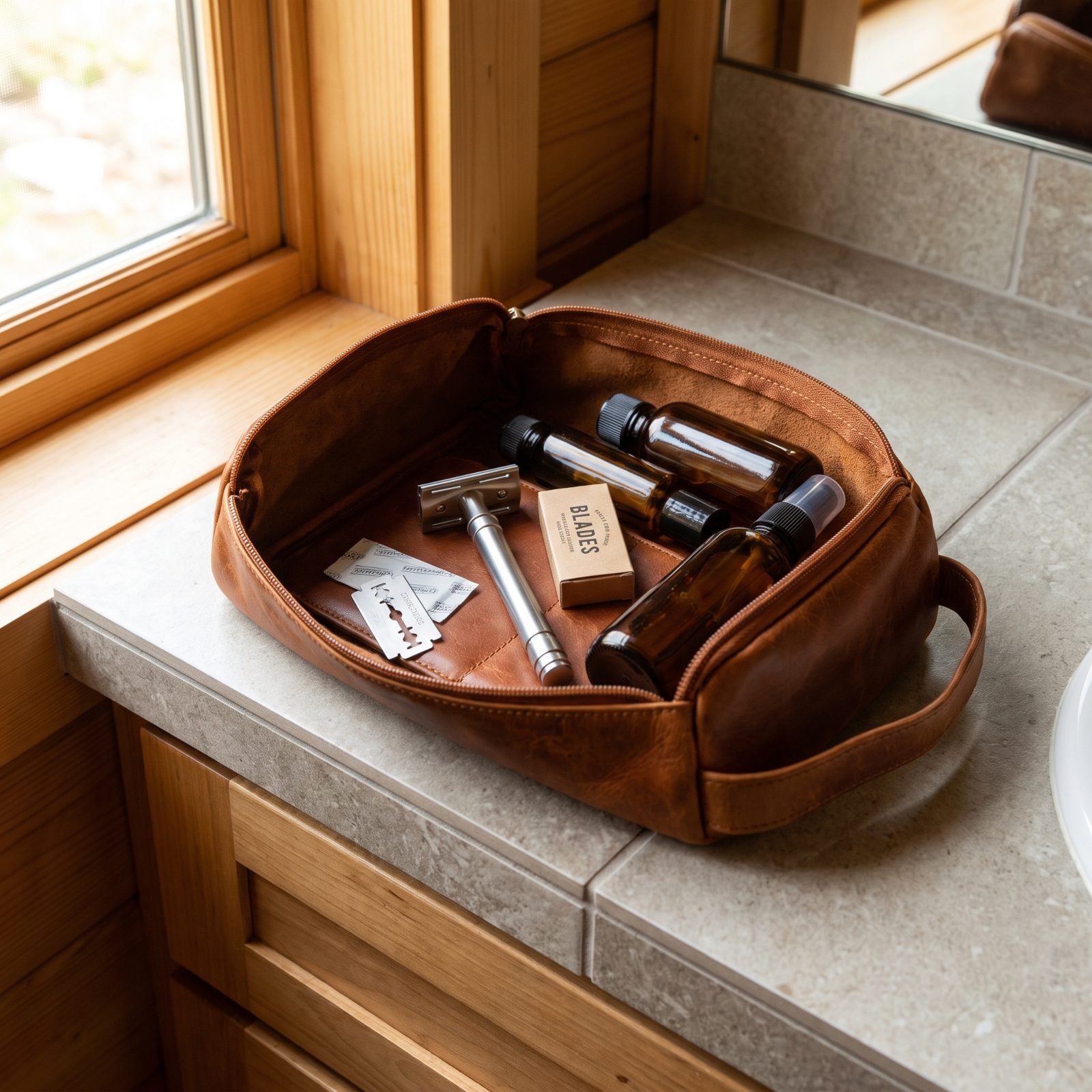
Disposable razors and cartridge razors sail through security without a thought. The trouble is the loose double-edge safety blades — the kind you pop out and swap — left rattling bare in the bottom of a kit.
Those count as prohibited in the cabin all on their own, so a quick scan becomes a hand search while the officer fishes them out one at a time. Slow. Awkward. Entirely on you.
Keep spare blades in their original paper sleeve and pack them in checked luggage. Cabin bag only? Leave the loose blades home and bring disposables. A clean shave abroad isn’t worth the holdup.
14. Leaving a Compressed Gas Canister Hiding in Your Camping Gear
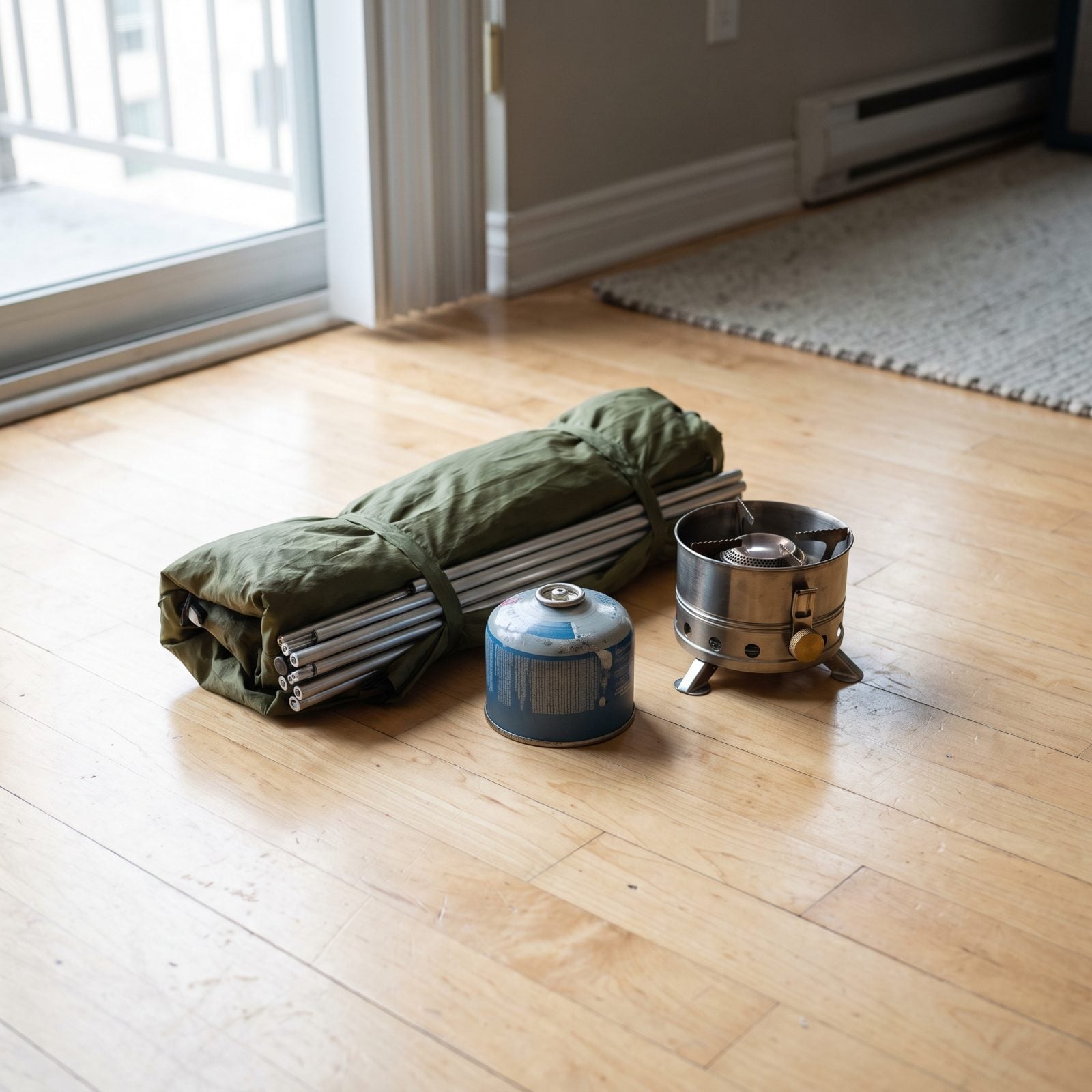
Camping gear keeps secrets. You cram the stove, the tent, and the cookset into a bag after one trip, and the little gas canister tucked inside a pot tags along all the way to the airport.
Compressed fuel canisters are banned in carry-on and checked luggage alike — full stop. If one turns up in the scanner, that bag is coming out, and the canister is going nowhere with you.
Unpack camping gear completely before you fly, and shake out every pot, stuff sack, and corner. Fuel is cheap and sold just about anywhere outdoorsy people gather, so buy it at your destination and leave the canisters behind.
13. Packing Aerosols With No Cap Over the Release Valve
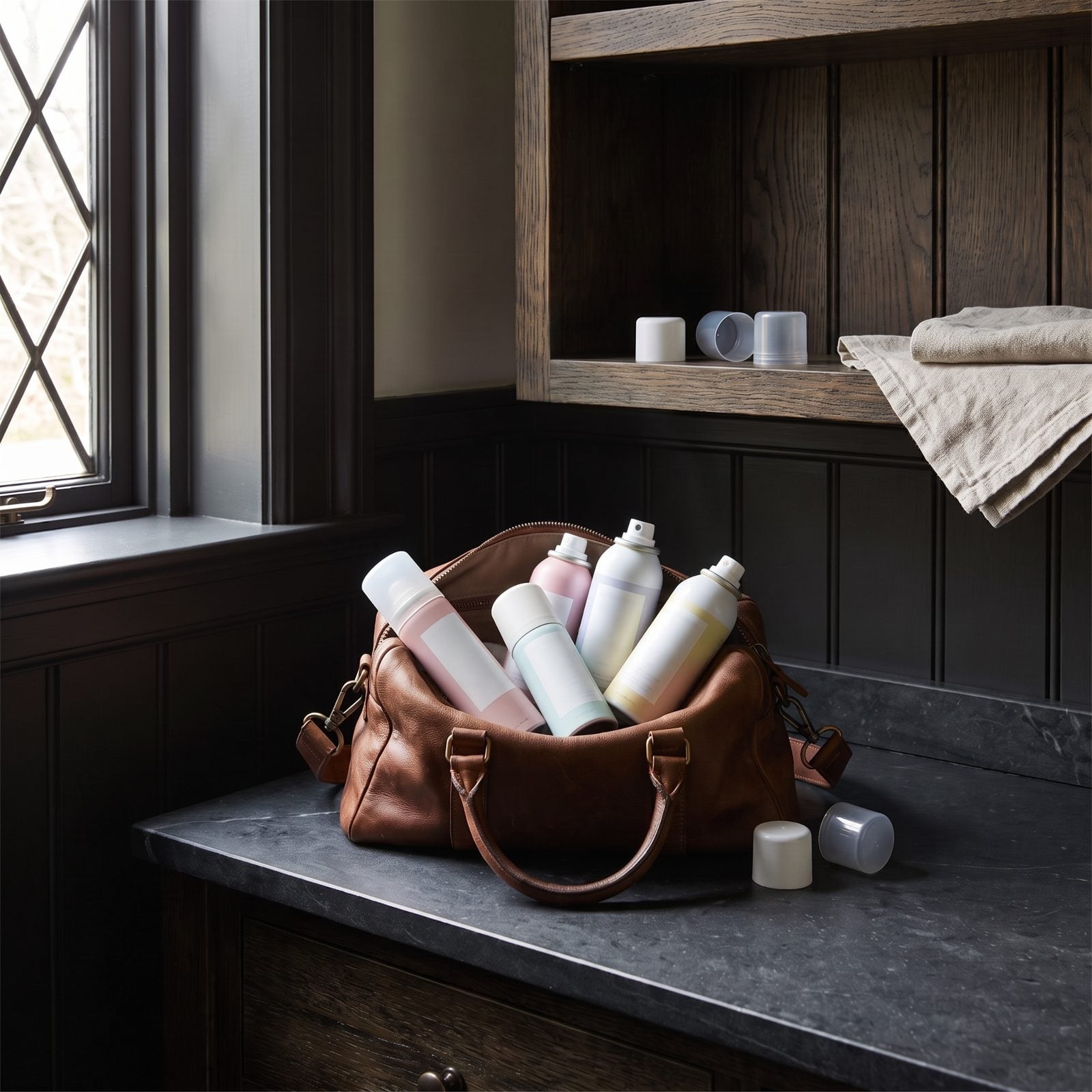
An uncapped aerosol in a packed bag is a pressed button waiting to happen. A folded shirt, a shoe, the shift of the bag down in the hold — any of it can depress that nozzle and empty the can into your luggage.
Then baggage claim arrives and you’re opening a suitcase that reeks of deodorant and drips with product. Cue an unplanned laundry session and a couple of ruined shirts. Not a confiscation — just plain misery.
Snap the protective cap over every valve. Missing a cap? Tape over the nozzle, or seal the whole can in its own zip bag. Thirty seconds of caution against a suitcase that smells like a locker room for the rest of the trip.
12. Wrapping Gifts Before Screeners Have Had a Chance to Inspect Them
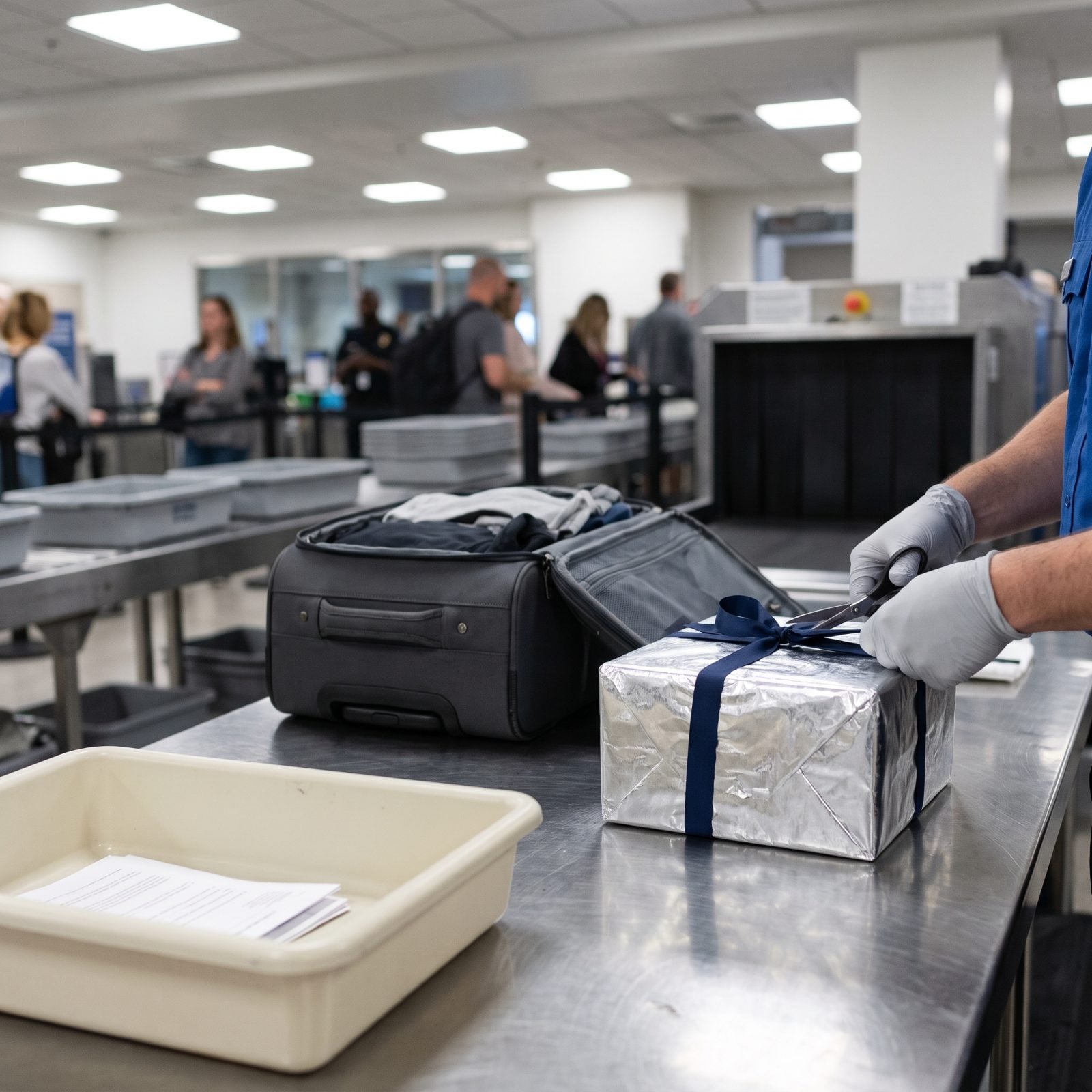
You spent the night before your flight wrapping that boxed gift with sharp corners and a bow that finally cooperated. Then a screener flags it, and the whole thing gets unwrapped on the table while the line watches.
Here’s the problem. Anything that blocks a clear scan can be opened, and wrapping paper hides the contents, so the box gets flagged, slit, and inspected before you ever reach the gate.
Pack it unwrapped and tuck the paper, tape, and ribbon somewhere in your bag. Wrap it at the hotel, or mail the present ahead, or just grab gift bags that lift open in a second.
11. Burying the Liquids Bag Beneath Clothes and Packing Cubes
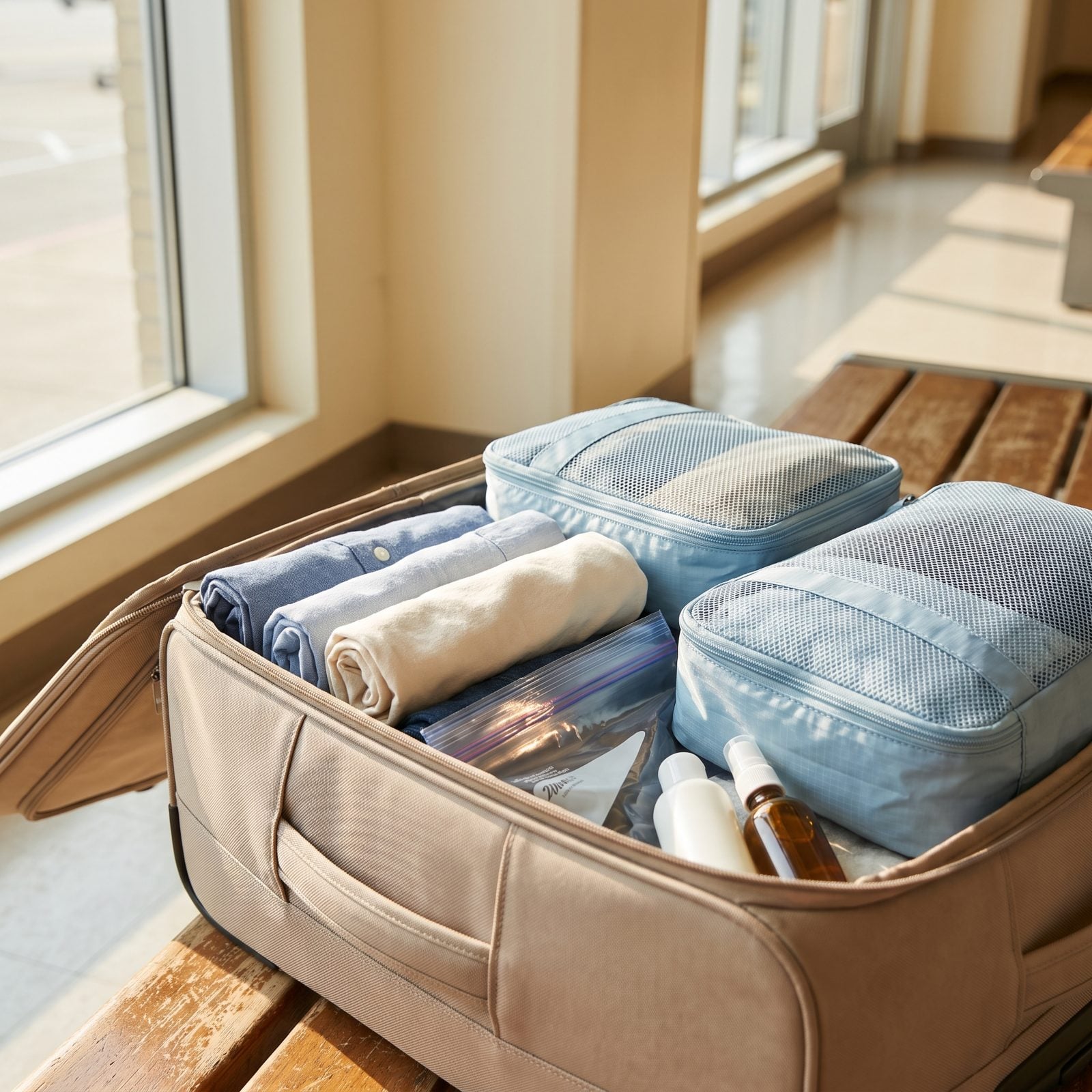
The clear bag only helps if you can reach it. Keep it at the top front of the case so you are not the person kneeling at the belt, yanking everything out while the bins stack up behind you.
A buried liquids bag means you hold up the line, repack in a panic, miss the bin, and trigger a secondary scan anyway.
Keep the quart bag in an outer pocket or at the very top, where one zip pull gets it out. Grab a bin, pull the bag, drop it straight in. Done.
10. Using an Oversized Toiletry Bottle Even When It Is Almost Empty

The bottle is nearly empty, so it feels harmless. Security reads the container, not the contents. A 12-ounce shampoo bottle with an inch left in the bottom is still a 12-ounce container, and into the bin it goes.
That nearly empty bottle gets confiscated exactly like a full one, and you lose it at the belt.
Decant into 3-ounce refillable bottles before you leave. Silicone travel tubes squeeze clean and won’t leak the way a loose cap will.
9. Forgetting to Empty a Reusable Water Bottle Before Security

You filled the bottle at home, took two sips in the taxi, and walked up to the scanner with it half full. The belt stops. A screener pulls your bag over a suspicious pocket of liquid they can’t identify.
A full or partly full bottle buys you a bag search and a dumped bottle, and you lose minutes you didn’t have.
Drink it or dump it before you reach the line, carry the empty through, then fill it at a refill station on the far side. You save money and skip the four-dollar bottle at the gate.
8. Burying a Laptop Beneath Clothes Instead of Keeping It Accessible
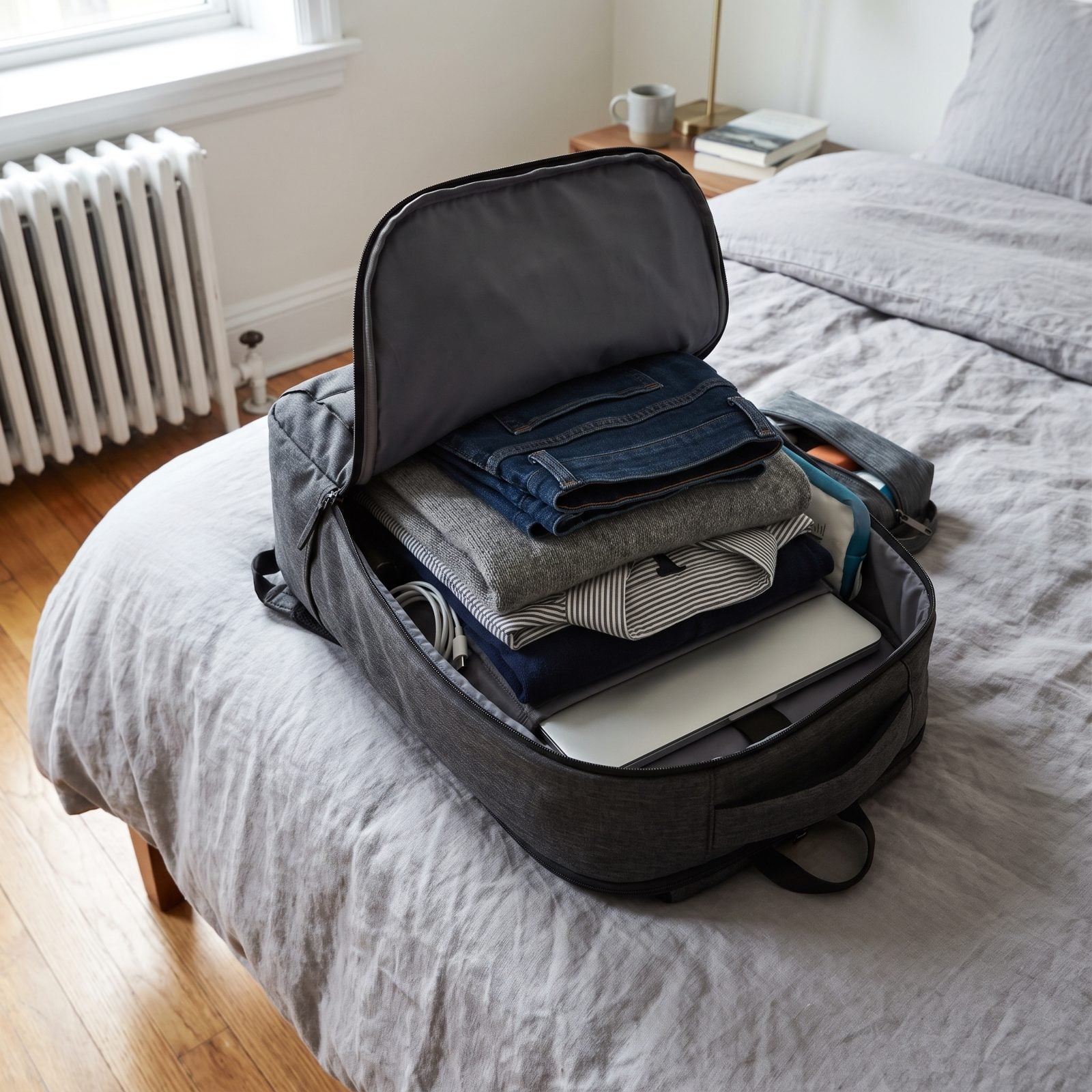
Laptops almost always come out for their own tray. Pack yours flat at the bottom of a stuffed carry-on and you’re the one excavating under rolled shirts while the belt waits and your stuff tumbles together.
A buried laptop means fumbling, stalling the line, and sometimes leaving the thing behind in the bin when you scramble to repack.
Get a bag with a laptop pocket near the outside so it slides straight out. A few checkpoint-friendly bags let the machine stay put, but unless yours is one of them, pull it early and lay it in its own bin.
7. Packing a Checked Bag Without Any Identification Inside It
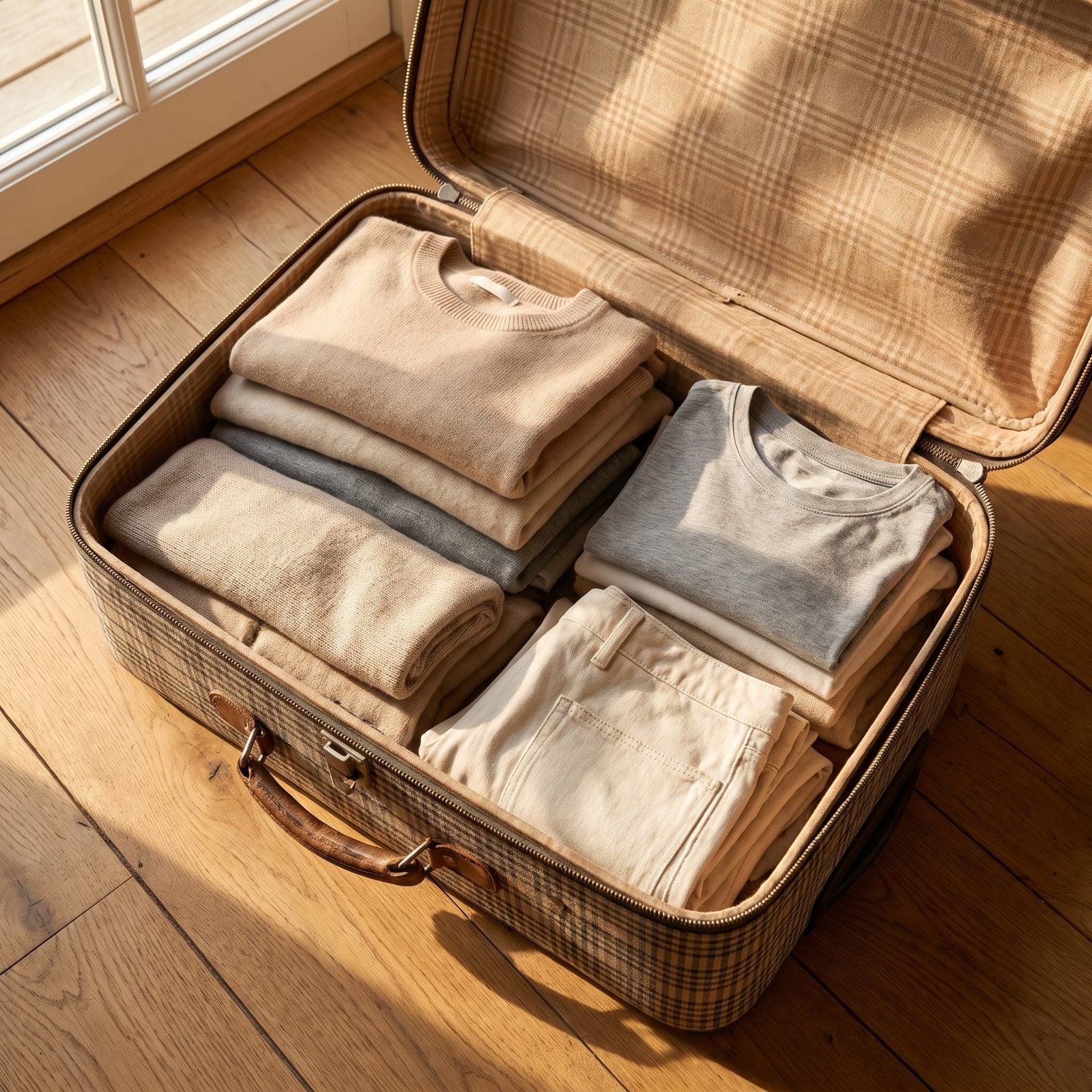
The outside tag is the first thing to tear off a conveyor. When a bag goes missing and that tag is gone, nothing inside connects it to you, and it lands in the lost-luggage warehouse with all the other orphans.
No internal ID means a delayed bag may never find its way home.
Drop a card inside with your name, phone, and email, and tuck in a printout of your itinerary while you’re at it. Airlines routinely open unclaimed bags hunting for an owner, and an interior card is what actually gets yours back to you.
6. Displaying a Full Home Address on the Exterior Luggage Tag
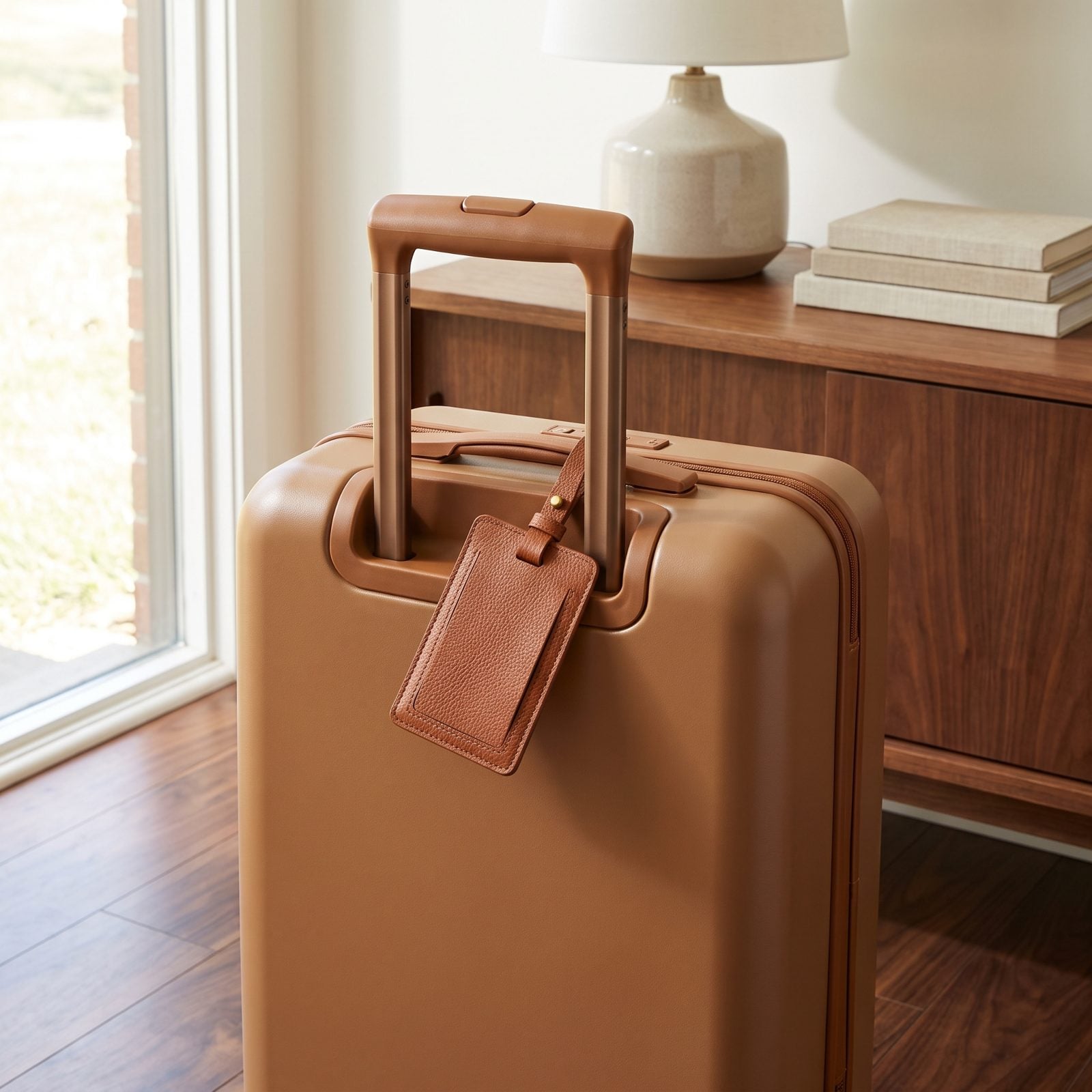
An open tag with your street address, flapping where anyone in the terminal can read it, is basically an announcement: this house is empty right now, and here’s where it lives.
Luggage thieves read those tags. So do worse people. Broadcasting an empty home for the whole length of a trip is a risk you simply don’t need to take.
Use a covered tag where the details sit behind a flap, and list a cell number and email instead of your home address. A work address does the job too. The airline only needs to reach you, not map your front door.
5. Using an Identical Black Suitcase Without a Distinctive Marker
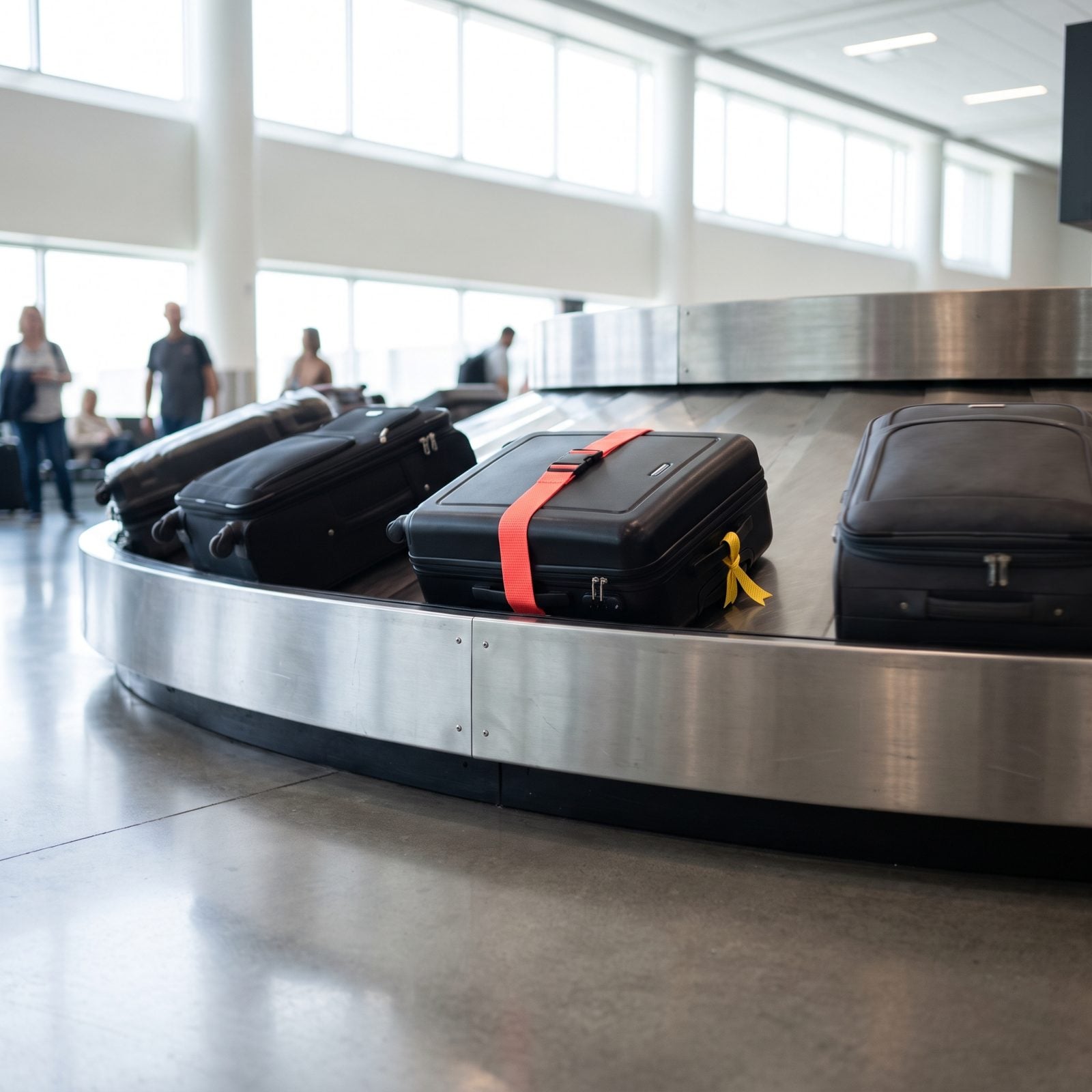
Black roller bag, four wheels, same size as every third bag on the carousel. You grab yours, wheel it to the taxi, and find out at the hotel it belongs to a stranger in seat 14C.
Identical luggage leads to wrong grabs, an awkward scramble to swap bags back, and sometimes a bag that someone else simply walked off with for good.
Tie on something loud. A bright strap, a ribbon, a patterned cover, anything that reads from across the hall. The ugliest tag on the belt is the one you spot first, and honestly, that’s exactly what you want.
4. Securing Checked Luggage With a Lock Screeners Cannot Open
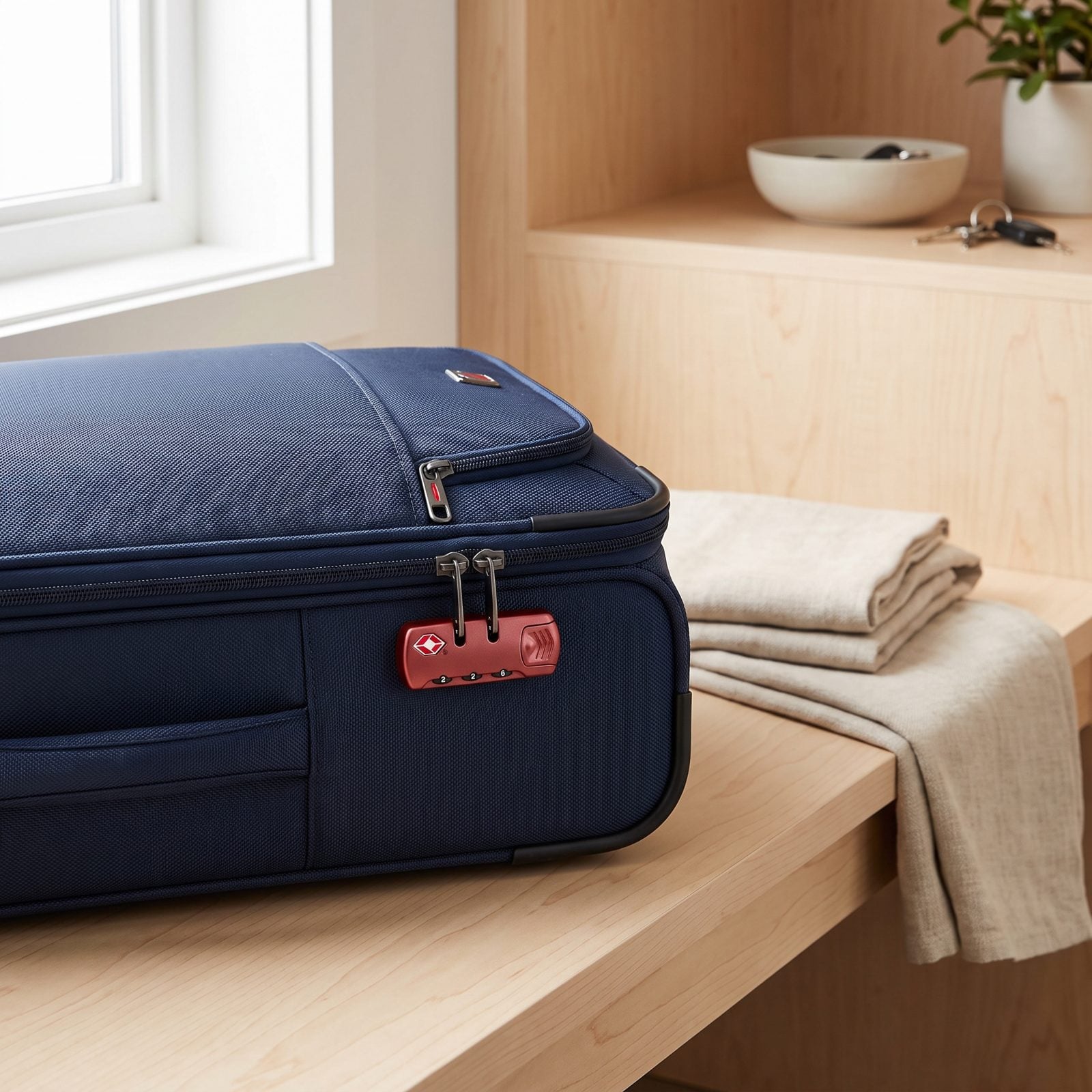
You clamp a heavy padlock on the zippers to feel safe, then check the bag. If security needs to inspect it and can’t open the lock, they cut it off. You get the bag back pried open and the lock in pieces.
A non-approved lock gets destroyed during inspection, and the bag may ride the rest of the way unsecured.
Use a TSA-approved lock, the kind marked with a small red diamond. Screeners carry a master key for those, so they open it, inspect, and relock, and your zippers stay shut for the rest of the trip.
3. Putting Medication, Travel Documents, Cash, or Jewelry in Checked Luggage
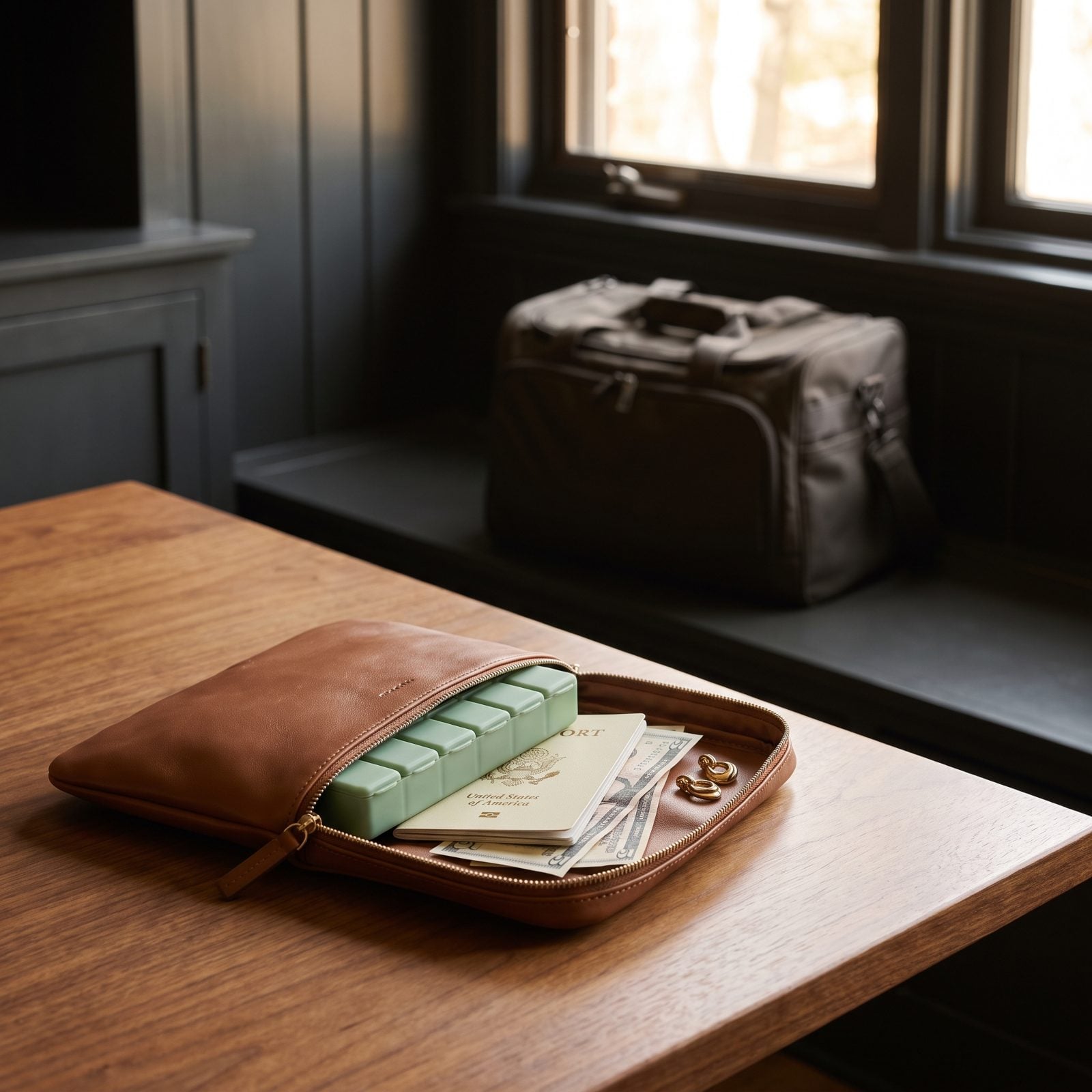
Checked bags get delayed, misrouted, and occasionally rifled through. Put your blood pressure pills, your passport, your cash, or your grandmother’s ring in one of them, and a lost bag turns from a nuisance into a genuine crisis.
If the bag is late, you’re on day three of a trip with no medication. If it never shows, the jewelry and cash are gone for good, and airlines rarely cover either one.
Everything irreplaceable rides in your carry-on or on your person. Medication in its labeled bottle, documents in a slim pouch, valuables close. A delayed suitcase is annoying. A delayed suitcase holding your heart pills is something else entirely.
2. Packing Every Change of Clothing in the Checked Suitcase
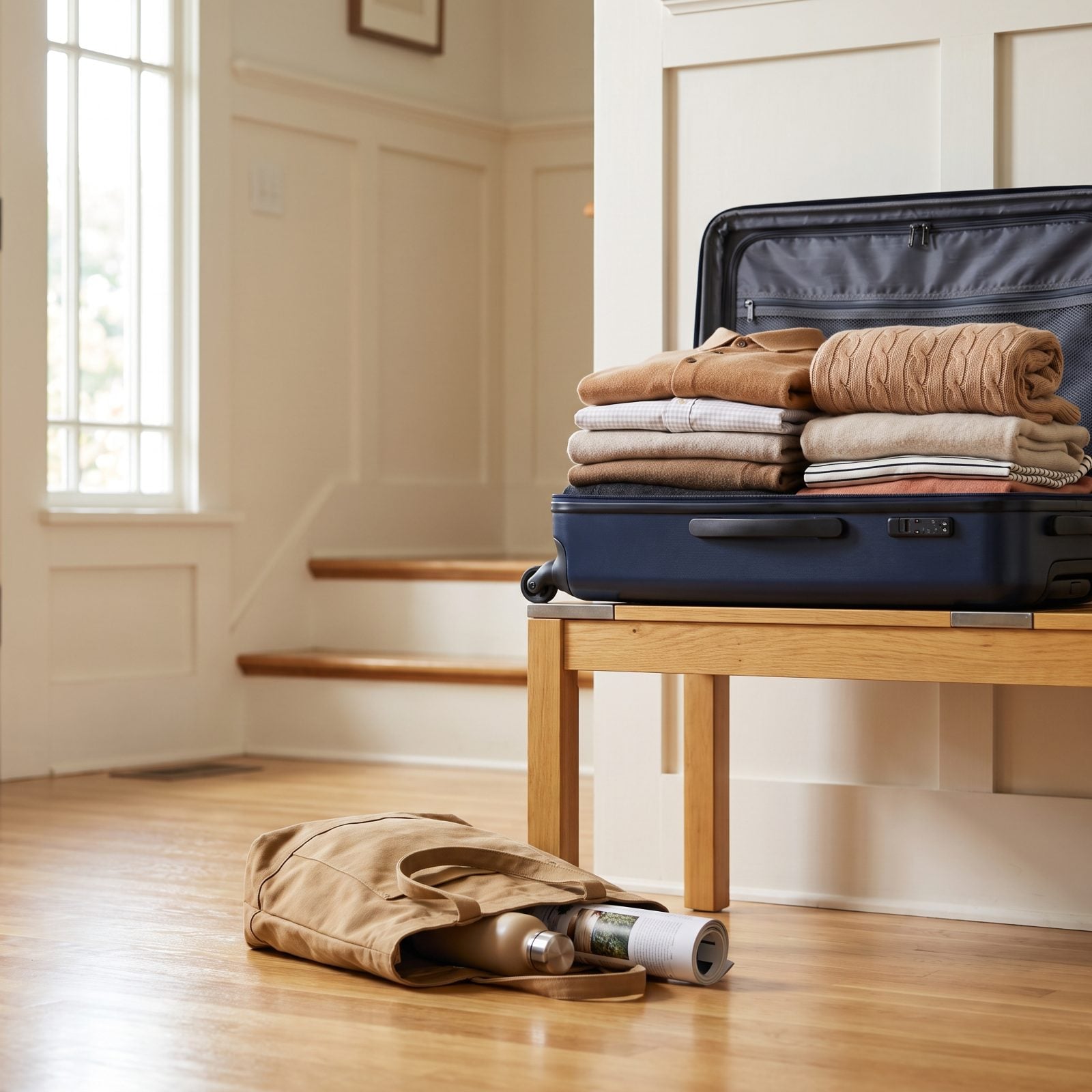
The bag goes under the plane, and you keep your passport and your phone and nothing else. Every shirt, every pair of socks, the suit you bought special for the wedding — all of it rides in the belly of the aircraft with people you’ll never meet.
Then it doesn’t show up on the carousel. So there you are at a counter, wearing the same travel clothes you’ve had on for nine sweaty hours, filling out a report while the wedding ticks closer to its ten o’clock start. Airlines lose track of bags all the time, and a single lost day always seems to land exactly when you can least afford it.
Pack a full day into your carry-on. One change of clothes, clean underwear, a toothbrush, whatever medication you take, and the one outfit the whole trip hinges on. If the checked bag decides to tour another city for twenty-four hours, you’re annoyed — not stranded in a strange airport with nothing but a boarding pass.
1. Packing Toiletries Without Tight Caps or Leakproof Seals
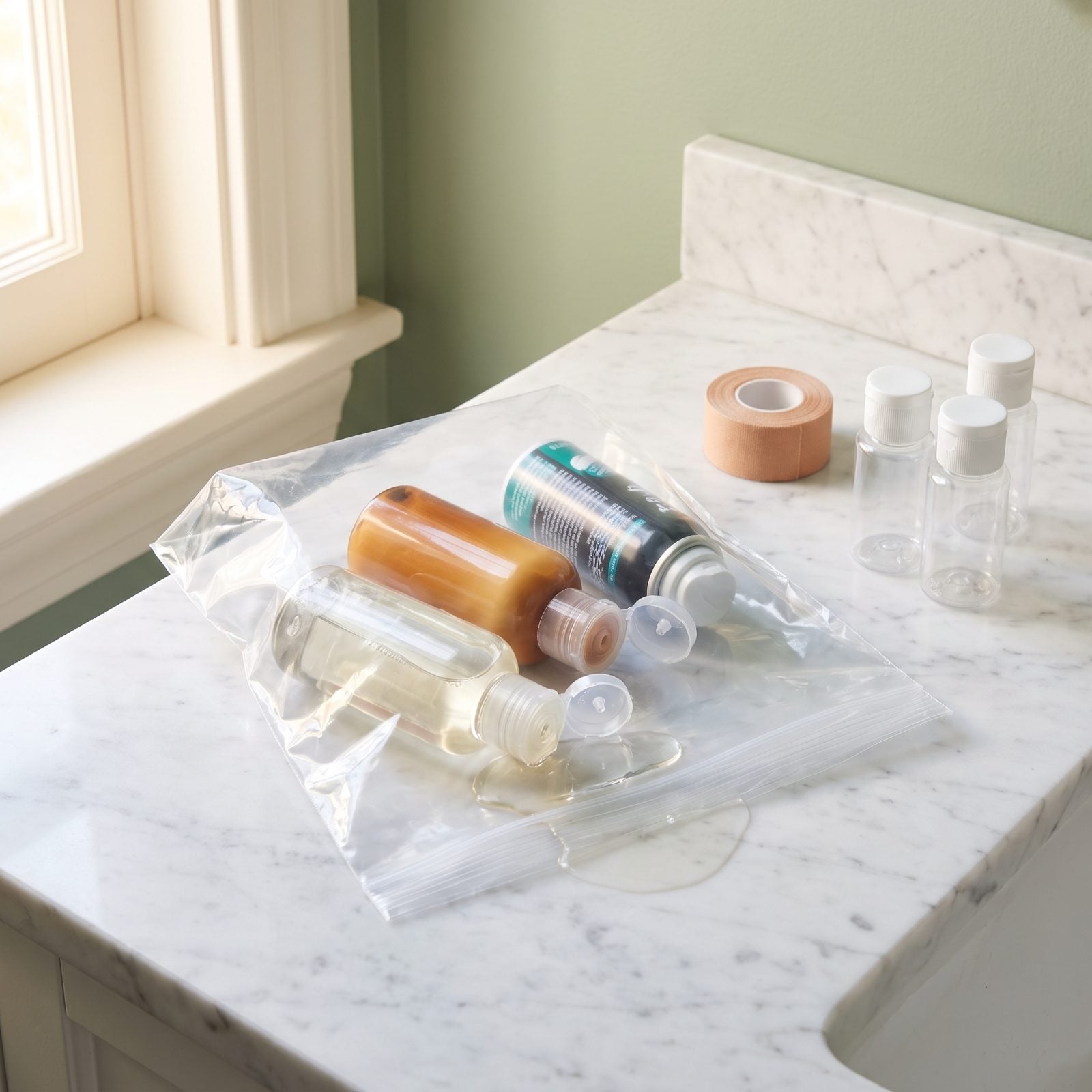
You twist the cap halfway, drop the bottle in the bag, and zip it shut. The lid feels fine. And it is fine — right up until cabin pressure drops and that half-sealed bottle of conditioner decides to express itself all over your folded clothes.
Here’s what’s happening up there: altitude pushes liquids out through any cap that isn’t screwed down all the way, and you open the bag to a greasy slick across your shirts. Then you’re repacking at the gate, or worse, wiping lotion off your passport.
Two fixes, both free. Squeeze the air out of each bottle before you seal it so there’s less inside to expand, then crank the cap down hard. Anything that already leaks or has one of those flimsy flip-tops? Lay a square of plastic wrap over the opening before the lid goes on. Catches what the cap misses.
🔥 Would you like to save this?
Please note that some of the imagery in this article were created with the aid of AI image generators.