
🔥 Would you like to save this?
The car is loaded. The playlist is ready. You’re two hours out when someone realizes the sunscreen is in the trunk under everything else, the snacks are stale, and nobody packed the phone charger that actually works. Road trips don’t fall apart at the destination. They fall apart in the details, the stuff you threw in at the last minute or assumed someone else handled. What follows are the packing mistakes that turn a great drive into a grinding one, and exactly what to do about each.
19. Letting Everyone Eat Whatever They Want at Whatever Hour They Want
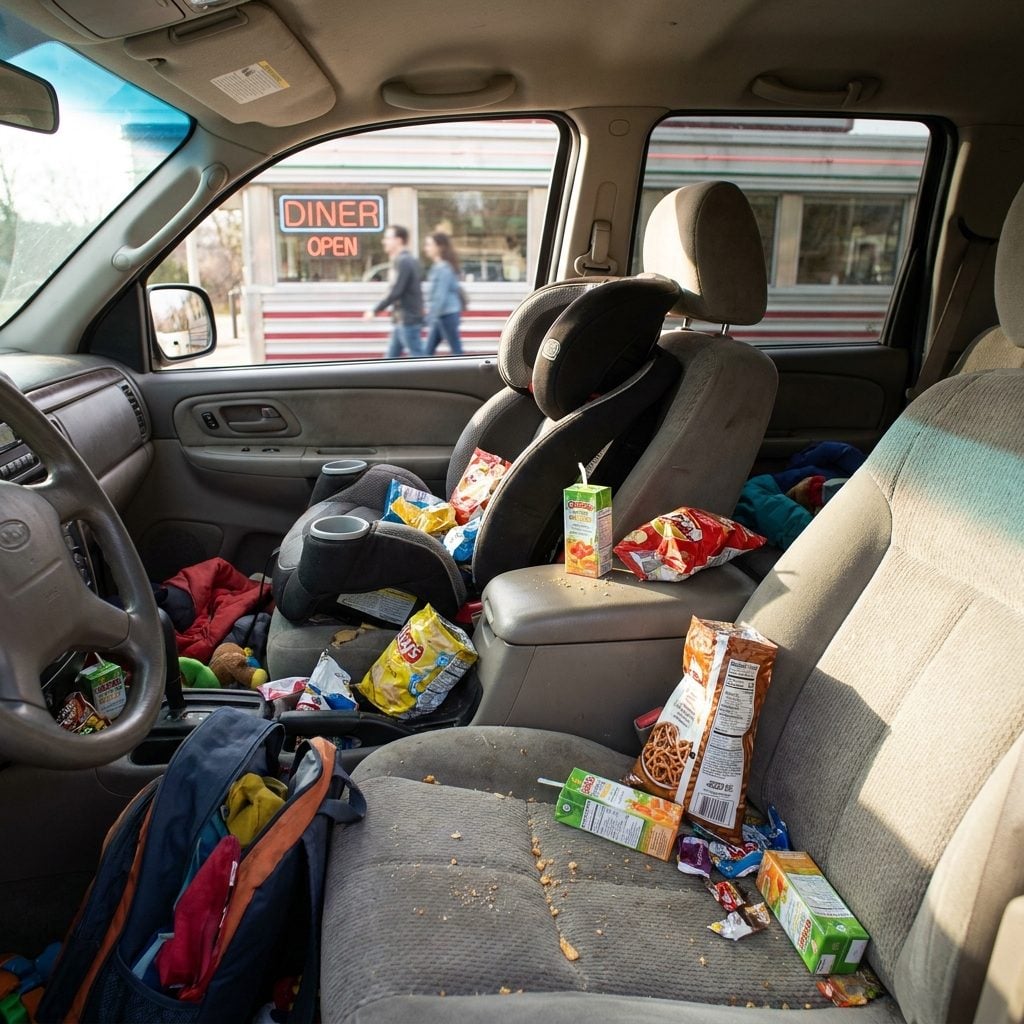
When everyone grazes on different snacks at different times, nobody is actually hungry when you stop for a real meal, and then someone is starving again forty-five minutes after you’ve pulled back onto the highway, and the whole car becomes a hostage negotiation about the next exit.
Set loose meal anchors before you leave. Not a rigid schedule, just rough agreements: we’ll stop for breakfast around 9, we’ll do a real lunch stop, snacks stay light between them. It sounds like overplanning until it isn’t, which is approximately two hours into the drive when the snack situation starts making decisions for you.
18. Packing Your Bag So It Takes Twenty Minutes to Find Anything

The bag that seemed perfectly packed at home becomes a mystery box after one night in a motel. Your phone charger is under the jeans which are under the rain jacket which is under everything you moved at 6am in the dark.
Packing cubes are not a luxury item. They’re the difference between a bag you can actually use on the road and one you have to fully unpack every time you need a clean shirt. Use one cube per category: clothes, electronics, toiletries. The cubes don’t compress your packing, they just mean you can find things without dismantling the whole operation in a motel bathroom at dawn.
17. Skipping the Car Check Because You Just Had It Serviced Six Months Ago
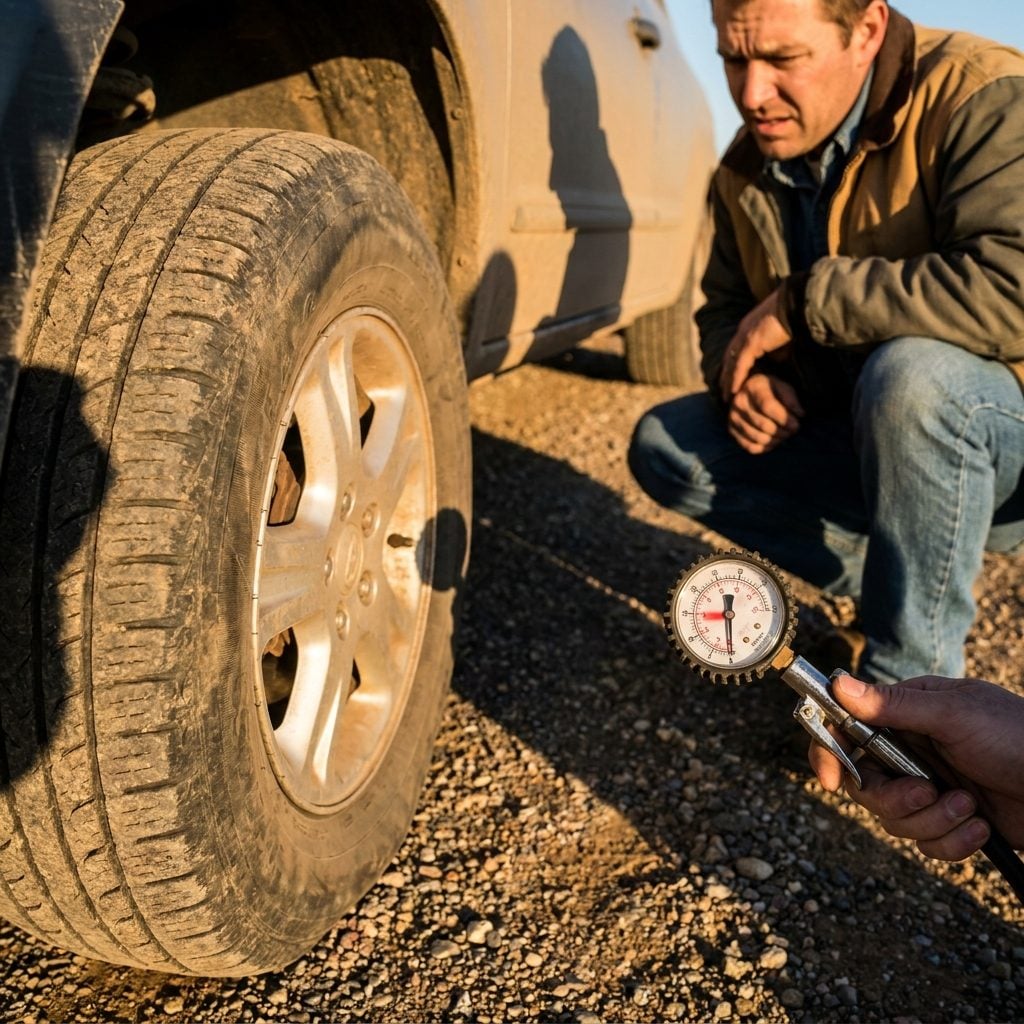
Six months and four thousand miles are the same thing to a tire losing pressure slowly. Tires, oil, wipers, and coolant don’t care when the last service was. They care about right now, before you load the car and head out.
The pre-trip check takes fifteen minutes and costs nothing. Tire pressure (including the spare), oil level, coolant level, wiper condition, and all four lights. Run the air conditioning for five minutes and make sure it’s actually cold. These are not mechanical mysteries, they’re simple visual checks anyone can do in the driveway.
The breakdown that strands you on the interstate in August is almost always the one that was obvious the week before you left.
16. Bringing Full-Size Everything Because You Deserve Comfort

Full-size shampoo, full-size conditioner, the big bottle of face wash, the backup body lotion, and somehow a candle. Then the bag won’t close and half the trunk is cosmetics for a long weekend.
Decant everything into small refillable bottles before you leave, and not the flimsy squeeze bottles that leak into your bag on the first warm afternoon. Small aluminum or glass bottles with screw tops weigh almost nothing and hold enough product for a week. The real test: lift the toiletry bag with one hand. If you can’t, you’ve packed for a different kind of trip than the one you’re taking.
15. Planning Every Stop in Advance and Leaving Zero Room to Wander

The overplanned road trip has a specific failure mode: you spend it watching the clock instead of the window. You miss the roadside sign for homemade pie because stopping would put you seven minutes behind a schedule that only existed in a spreadsheet.
Block your driving days by general region, not by exact hour. Know the destination for that night, know roughly when you want to arrive, and leave the middle open. The best road-trip moments in history, the ones people still tell at dinner tables decades later, were almost never on the itinerary.
14. Leaving the Car’s Emergency Kit at Home Because ‘We’re Not Going That Far’
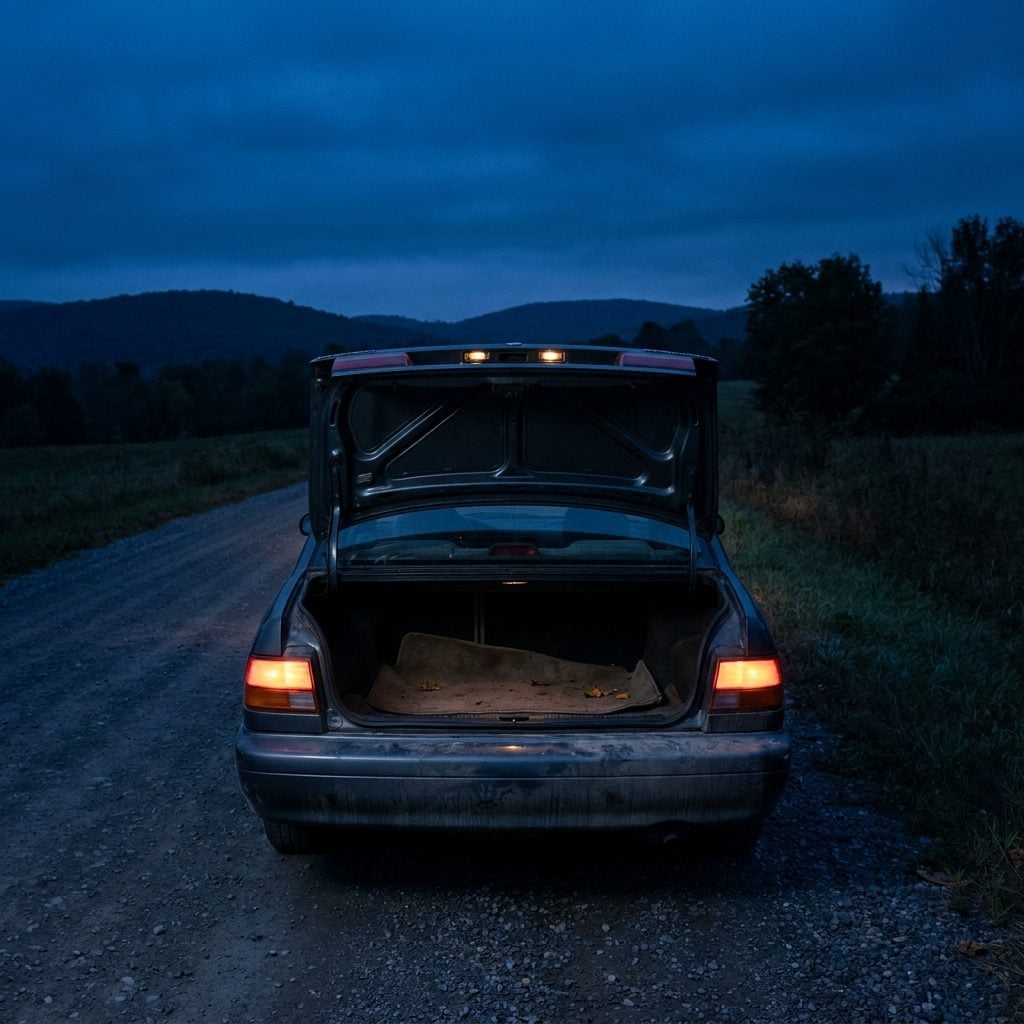
Distance is not the variable that determines whether something goes wrong on the road. A blown tire doesn’t care if you’re forty miles from home or four hundred. The odds are the same per mile driven either way.
A compact emergency kit, jump starter, tire inflator, reflective triangle, basic first aid, a flashlight, fits in a bag the size of a lunch box and lives permanently in the trunk. You never think about it until the one moment it matters completely. That’s exactly the right arrangement.
13. Relying on Streaming Playlists With No Offline Backup
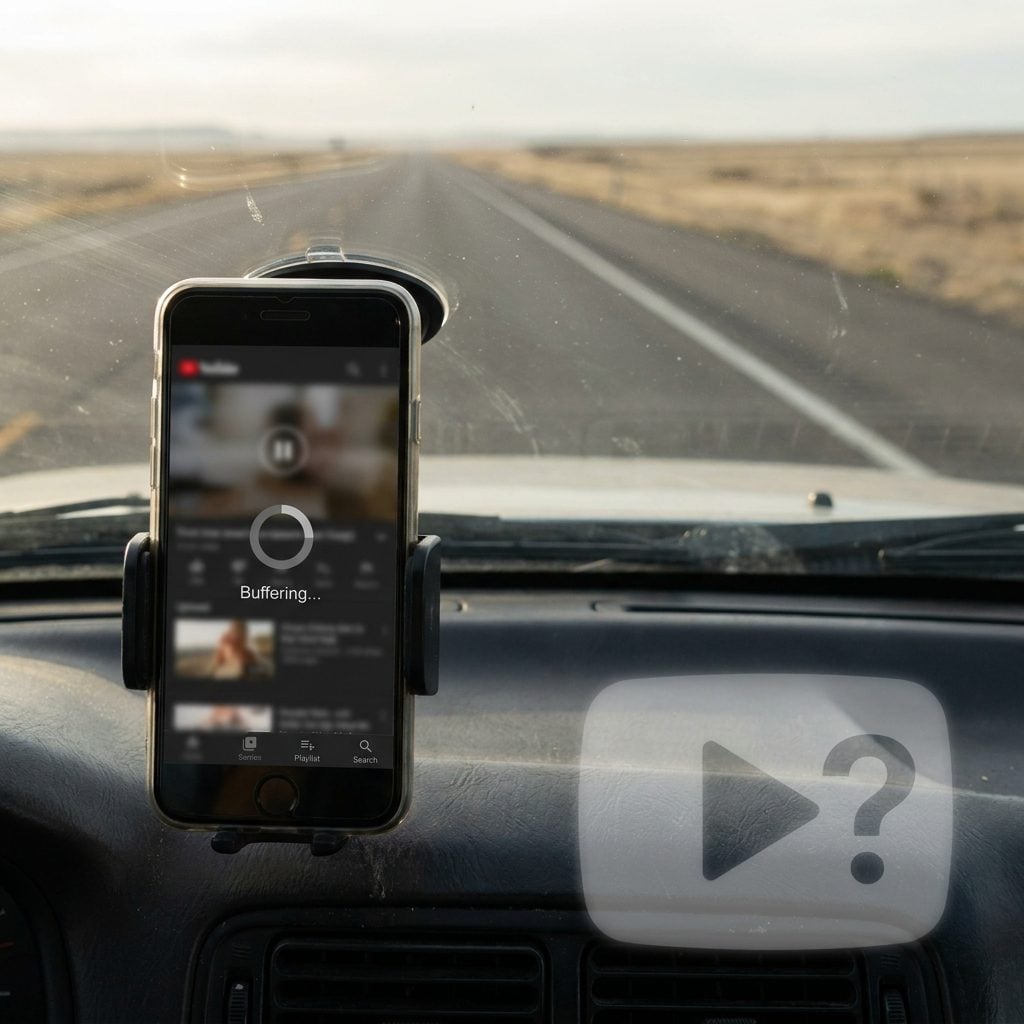
Two hours into Nevada or West Texas or the stretch of I-70 through eastern Colorado, the signal dies. The playlist stops. Someone starts scrolling for anything downloaded and finds nothing. The next ninety minutes are whatever radio station you can halfway pull in, which turns out to be an agricultural report from 1998.
Download the playlists before you leave. Spotify, Apple Music, and Audible all allow offline storage, it takes about four minutes and requires remembering to do it the night before. That’s the whole fix. Four minutes of foresight for hours of uninterrupted driving.
12. Forgetting That a ‘Light Jacket’ Is Not a Weather Strategy
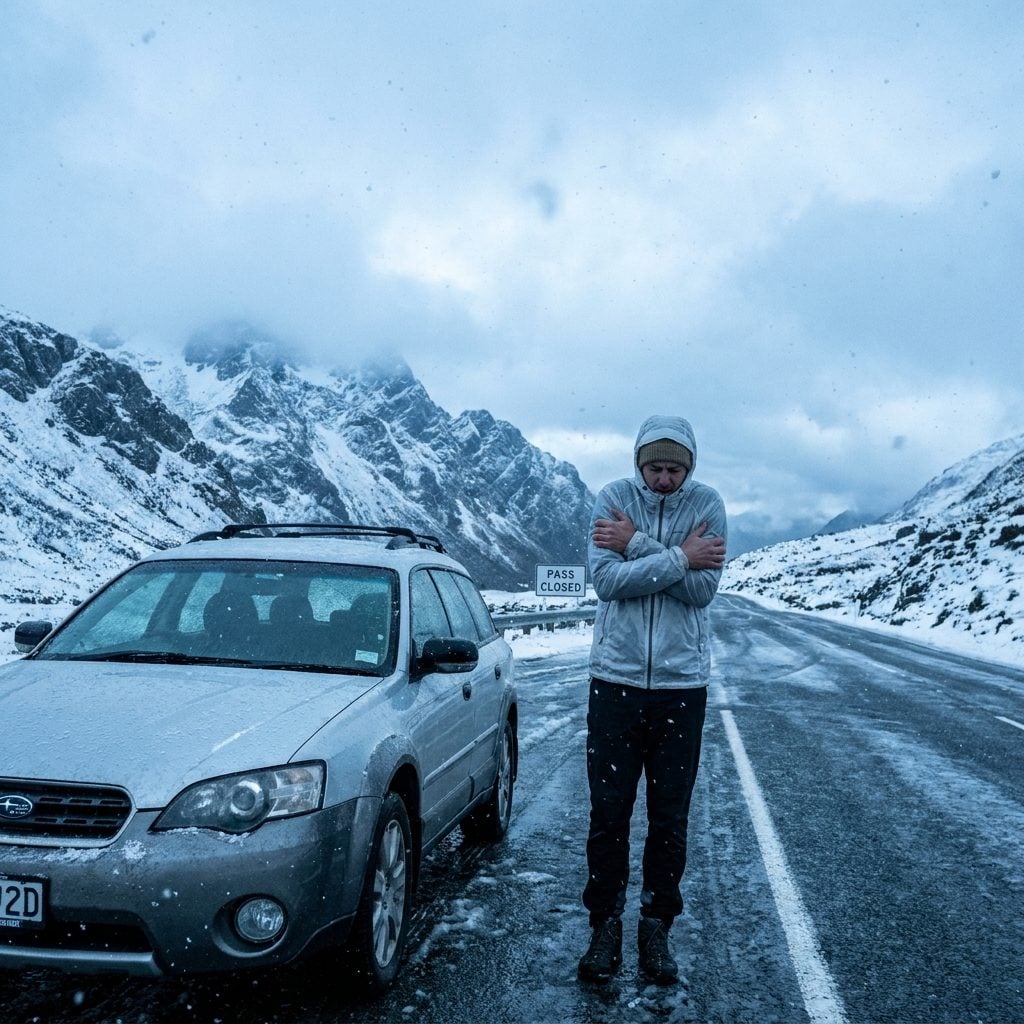
The light jacket goes in because it fits and because everyone assumes the weather they left in is the weather they’ll drive through. Then the mountain pass happens, or the afternoon thunderstorm, or the air-conditioned diner that appears to be refrigerating the entire Southwest.
One mid-weight fleece and one packable rain shell take up almost no space and cover every realistic scenario between May and October. Pack for where you’re going, not where you started. Weather changes faster than driving speed on most American road trips.
11. Skipping the Physical Map Because the Phone ‘Has GPS’
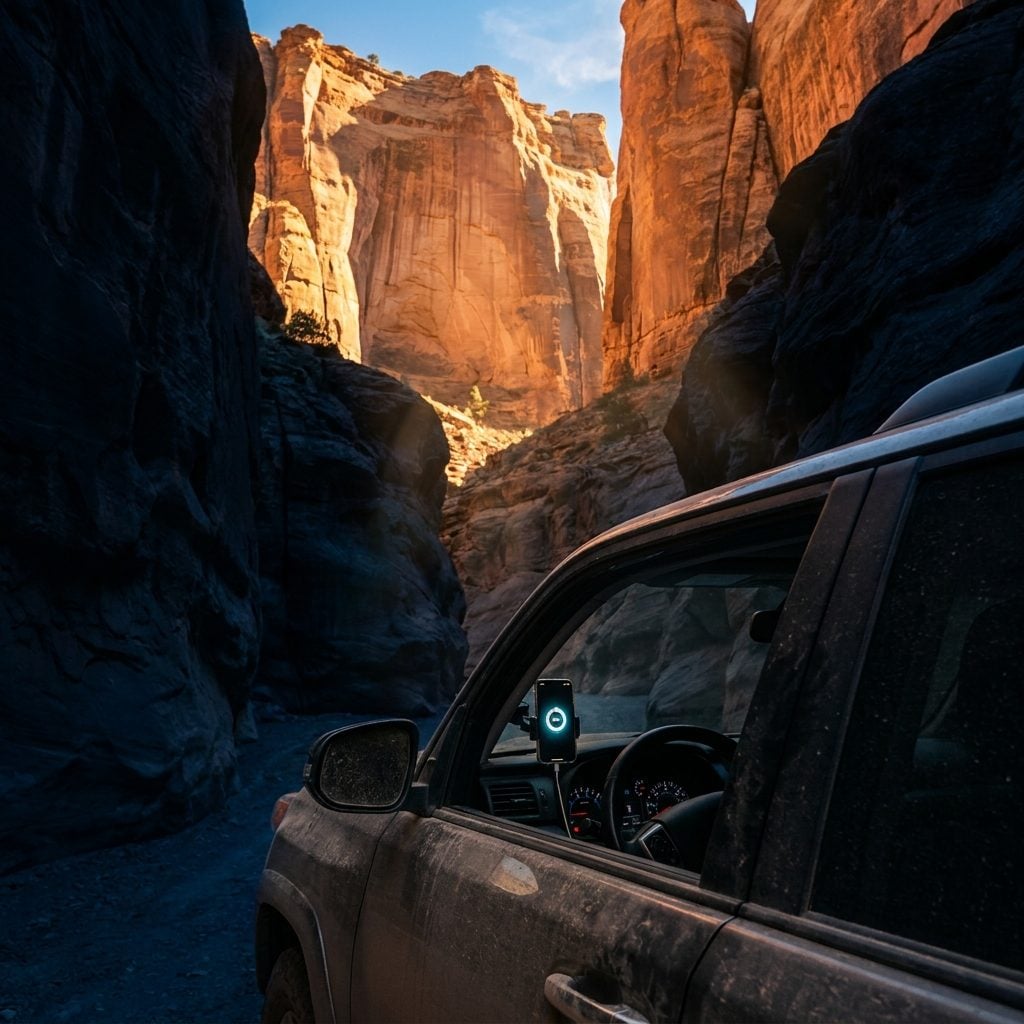
Signal drops in canyons, in national forests, in entire states where coverage is technically available but effectively theoretical. A phone with no signal is a black rectangle. A paper map is always on.
AAA still prints state road maps and they’re free with membership. Gas stations sell them. They fold up and live in the door pocket or the glove box without taking up space or requiring a charger. This isn’t sentiment, it’s the same logic as a spare tire. You carry the backup because the main thing can fail.
10. Bringing the Giant Suitcase for a Three-Night Drive
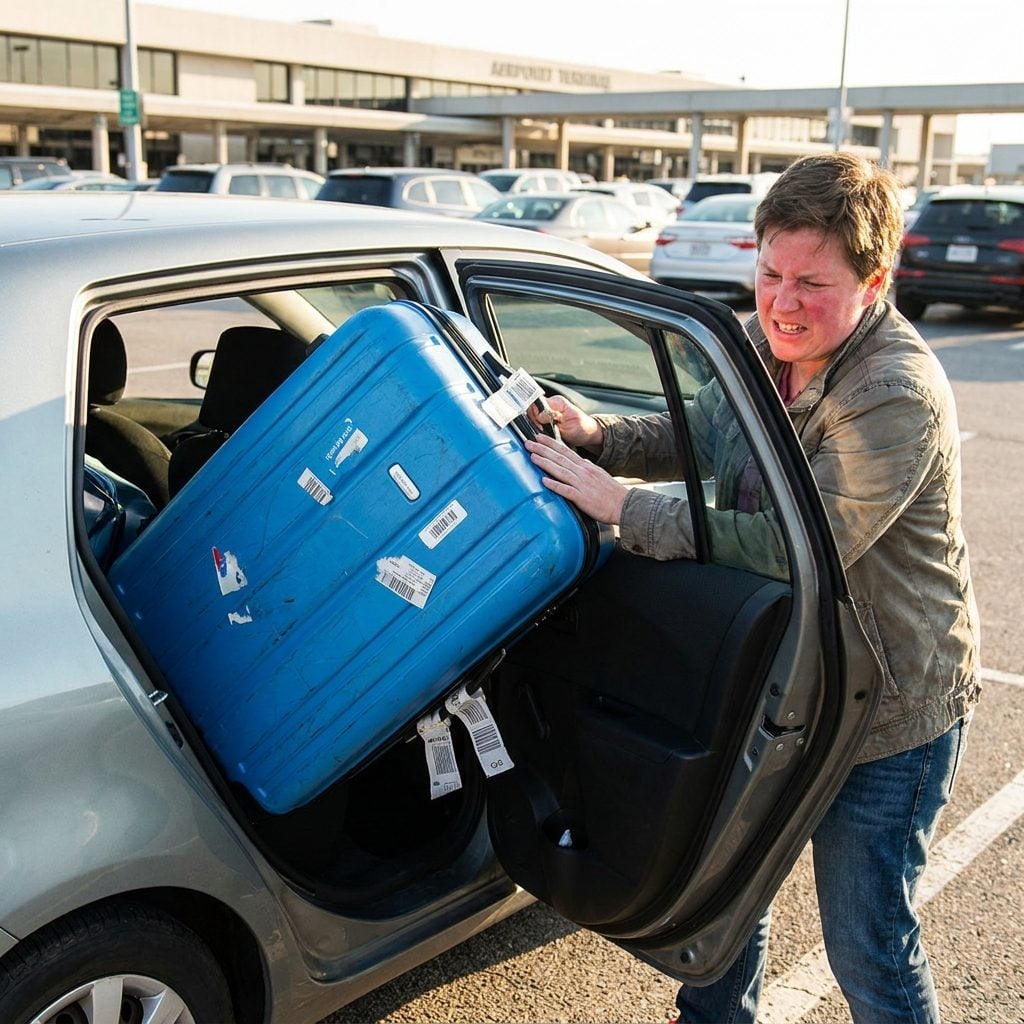
Hard-shell suitcases are designed for airports, where they roll on flat surfaces and go under a plane. They are designed against road trip trunks, where they eat space, don’t bend to fit around the cooler, and mean someone has to lift forty-five pounds out every night just to get to the bag underneath.
Soft duffel bags compress, stack, and shove into irregular spaces. A medium duffel for each person and one shared bag for supplies is the math that actually works. The giant rolling suitcase can wait for the next flight.
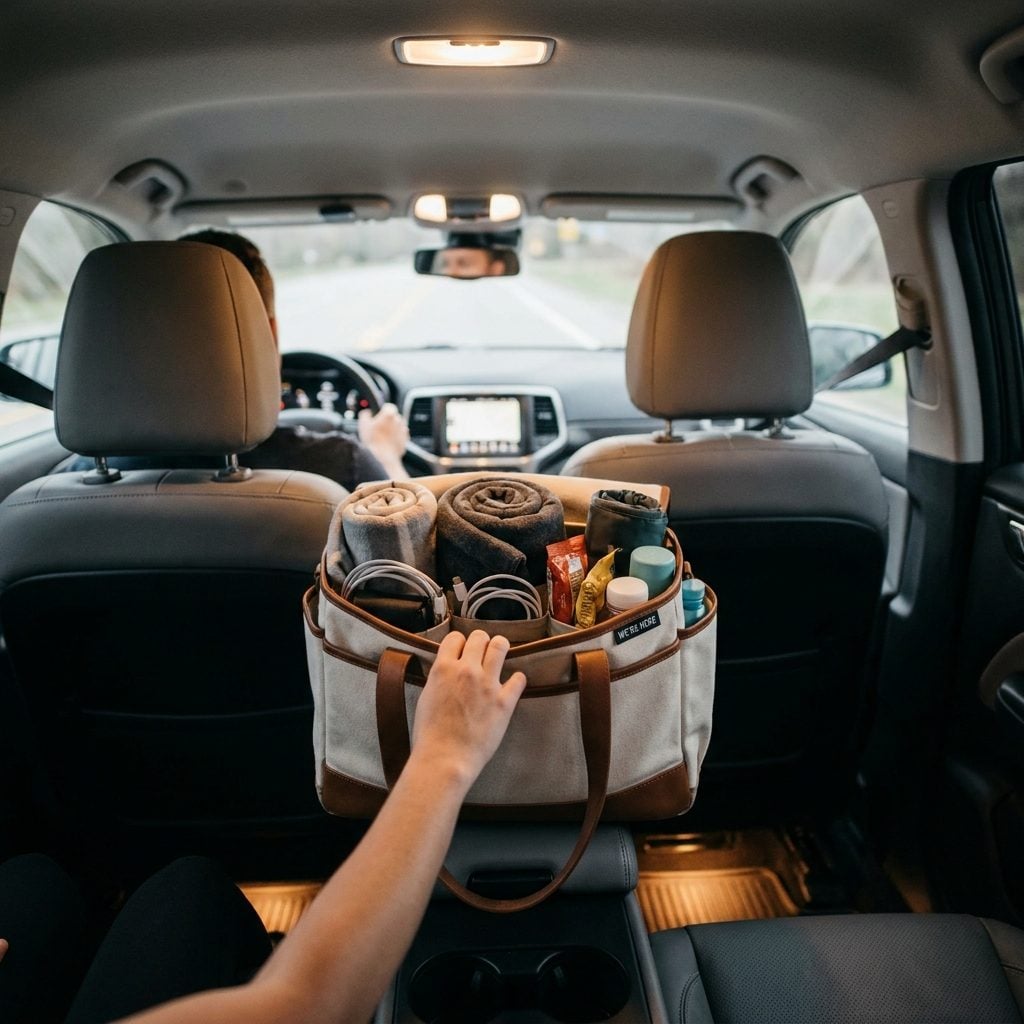
9. Not Leaving a ‘We’re Here’ Bag Within Arm’s Reach of the Back Seat
🔥 Would you like to save this?
Everything the car needs is either in the trunk or in a bag that’s technically accessible if someone pulls over and unbuckles and twists around and hope for the best. Three hours in, everyone’s slightly dehydrated and irritable, and the snacks are underneath the spare tire blanket.
A dedicated reach-back bag lives on the back seat floor or the middle seat from the first mile to the last: water, snacks, phone charger, a book or two, tissues, maybe a light layer. Whatever gets needed in motion goes in there. It’s a small shift in how you pack that changes the whole rhythm of the car.
8. Packing the Cooler Last and Loading It First
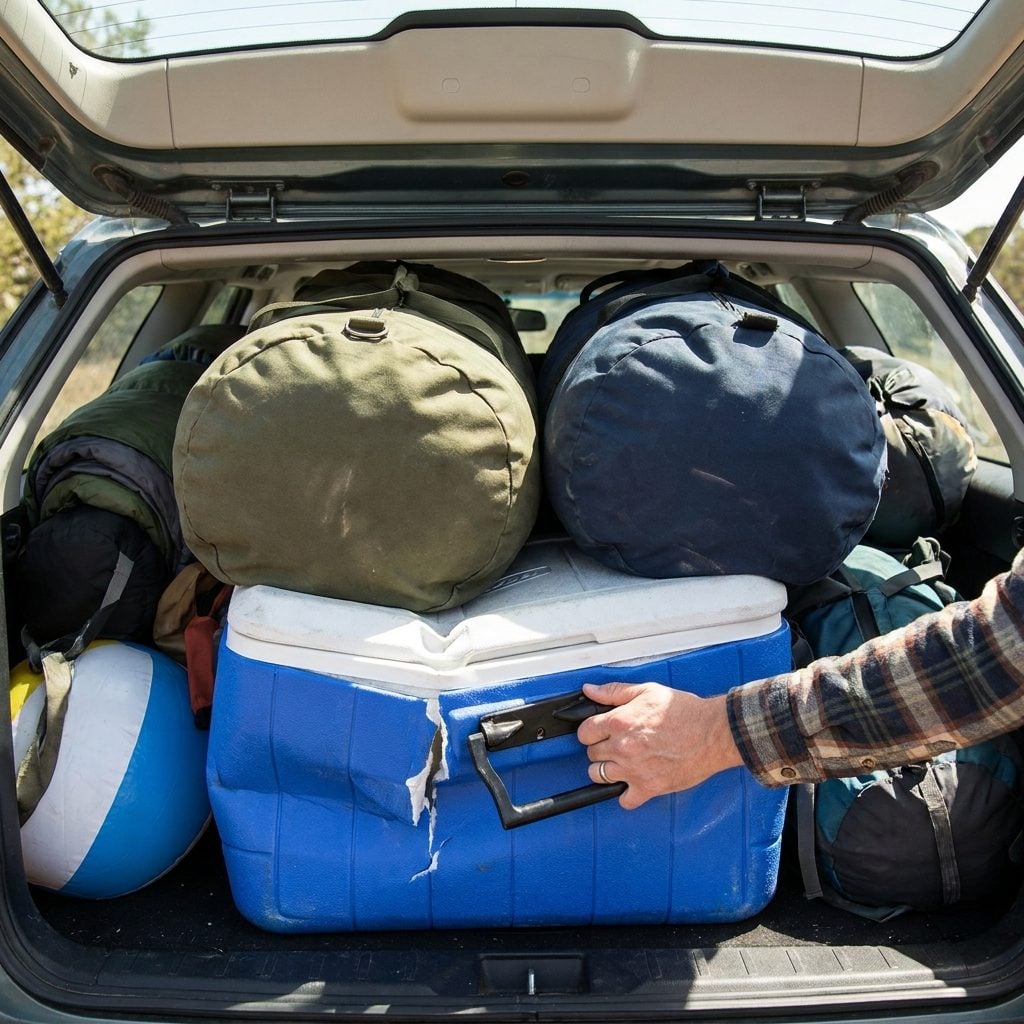
The cooler is heavy, rigid, and almost impossible to ignore once the car starts moving. Put it on top of soft bags and it crushes them. Stand it sideways and it shifts at every turn. Bury it against the back seat and you will be moving half the trunk before the first drink stop.
Give it a permanent spot before anything else goes in. Set it flat on the trunk floor near the rear hatch, where the weight stays low and the lid can open without unloading the car. Build the softer bags around it rather than balancing them underneath it. The goal is not simply to make the cooler accessible. It is to stop forty pounds of ice, cans, and sandwiches from reorganizing the trunk every time you take an exit ramp.
7. Forgetting That Your Phone Mount Is Doing Three Jobs at Once
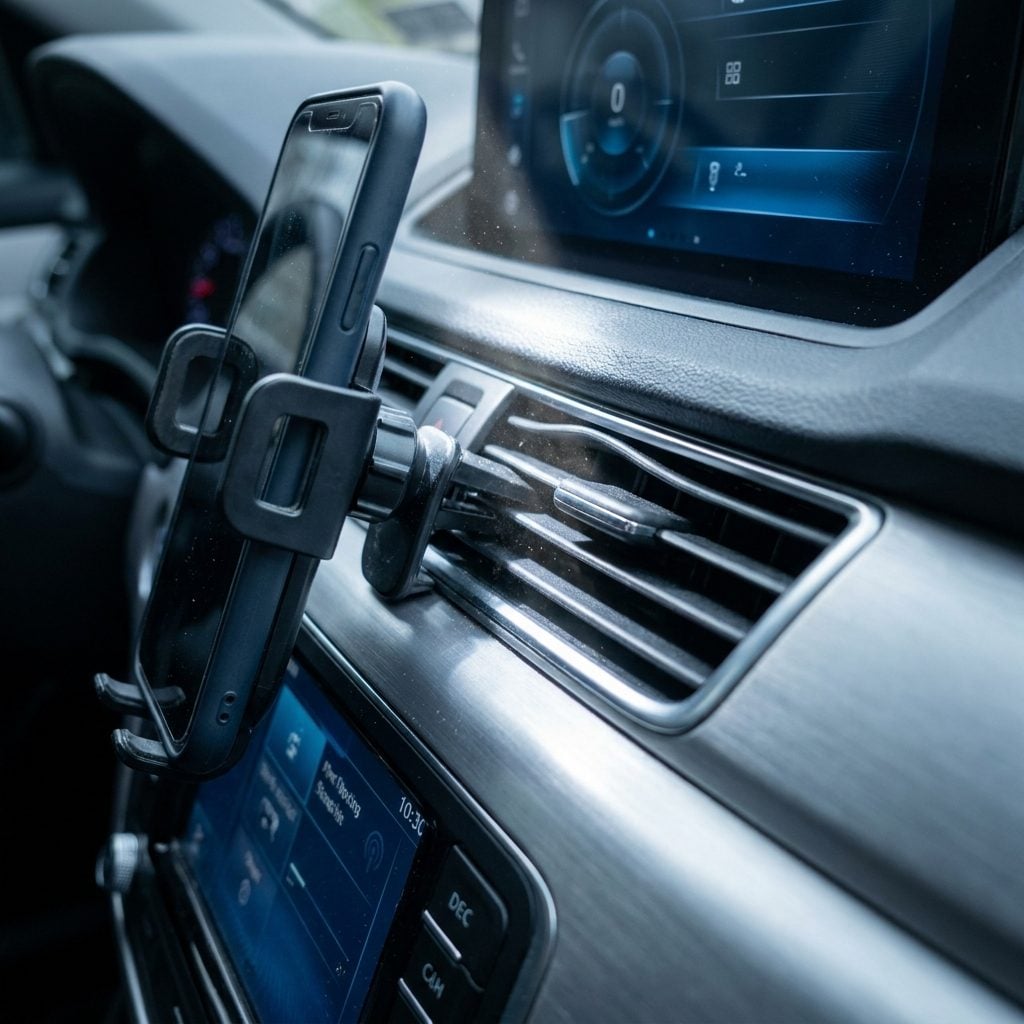
The vent-clip phone mount is blocking airflow to the passenger seat, slowly bending the vent slats it’s clipped to, and will drop your phone onto the floor mat the first time you hit a construction-zone bump. That’s three problems, and people accept all three because the mount cost eleven dollars.
A dashboard or windshield suction mount with a locking arm holds the phone at eye level without torturing your HVAC. Spend twenty-five dollars before you leave. It is a miserable thing to realize you need a better mount when you’re already two states from home.
6. No Dedicated Spot for the Documents You Need Every 200 Miles
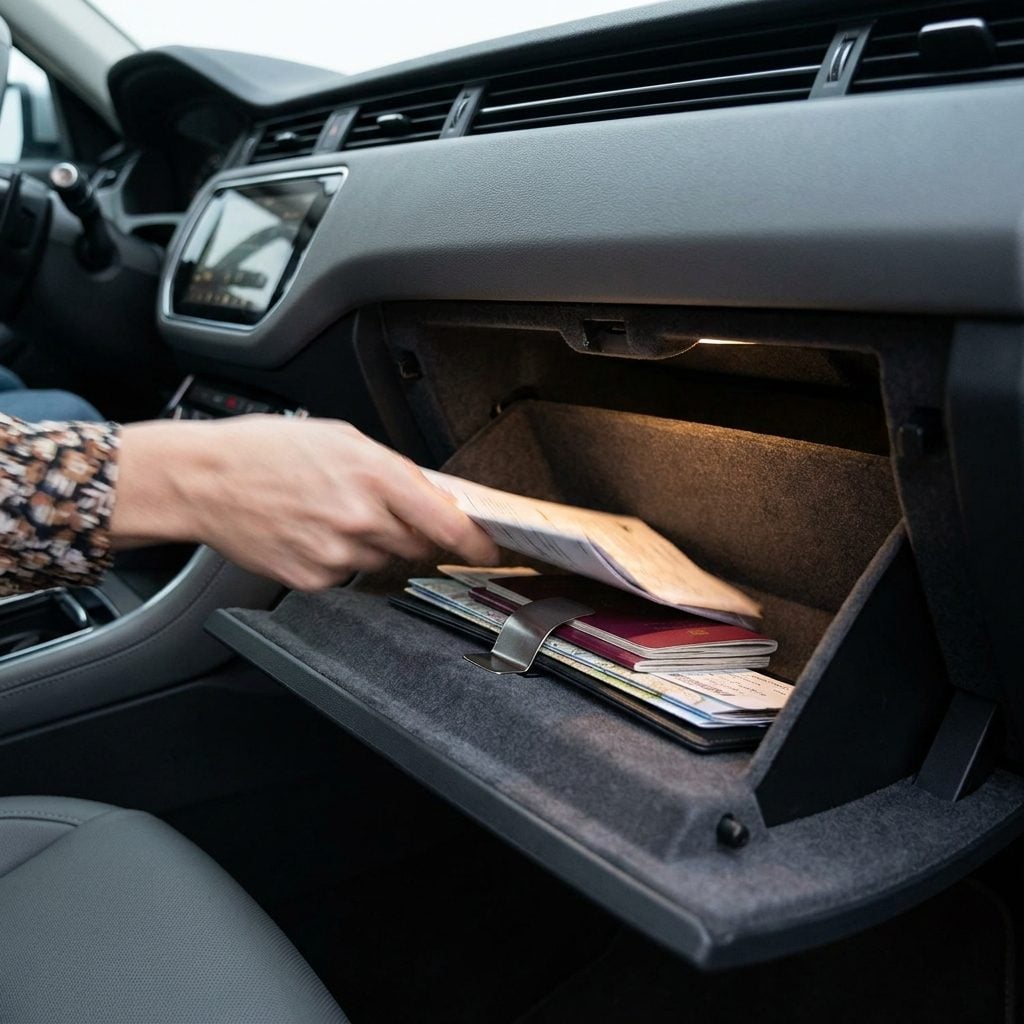
Registration, proof of insurance, roadside assistance card, you need these fast when you need them, which is exactly when you can’t find them because they’re buried under a manual you’ve never opened, three crumpled receipts, and a tire gauge from 2009.
A slim document sleeve, the kind that holds everything flat and zips shut, lives in the glove compartment and contains exactly those three things. Nothing else. When a trooper asks for your paperwork, you hand it over in four seconds. That is the entire win.
5. Letting the Kids Pack Their Own Bags Without a Single Guideline
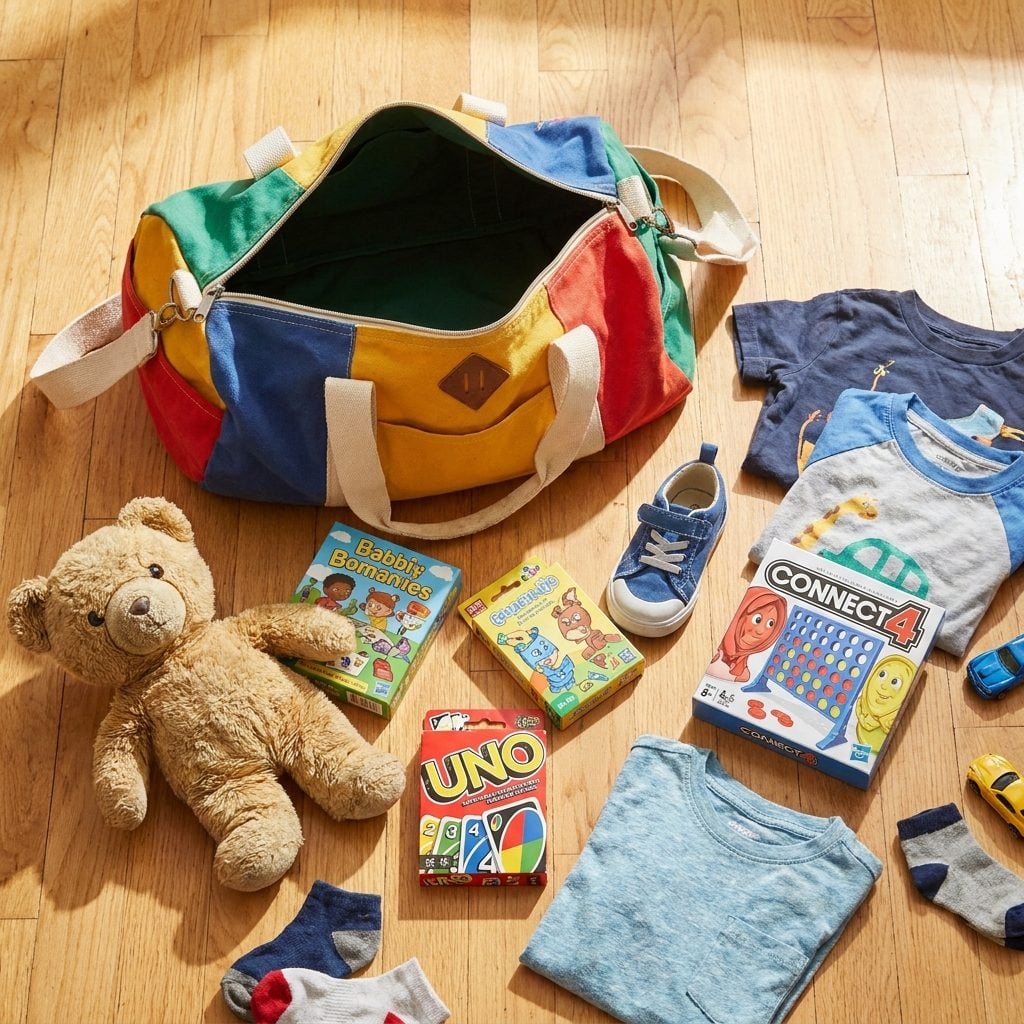
The nine-year-old will pack one stuffed animal, two board games, zero clean underwear, and a single shoe. This is documented fact. And then they’ll ask for the screen time limit to be waived because they forgot their book.
Give them a packing list, not a suggestion, a list. Three days of clothes, one entertainment item, one comfort item, charger, and whatever snacks they negotiated. They pack from the list, you do a fast check before the bag zips. Five minutes of oversight saves an argument in every state you drive through.
4. Assuming You’ll Find a Good Place to Eat Whenever You’re Hungry
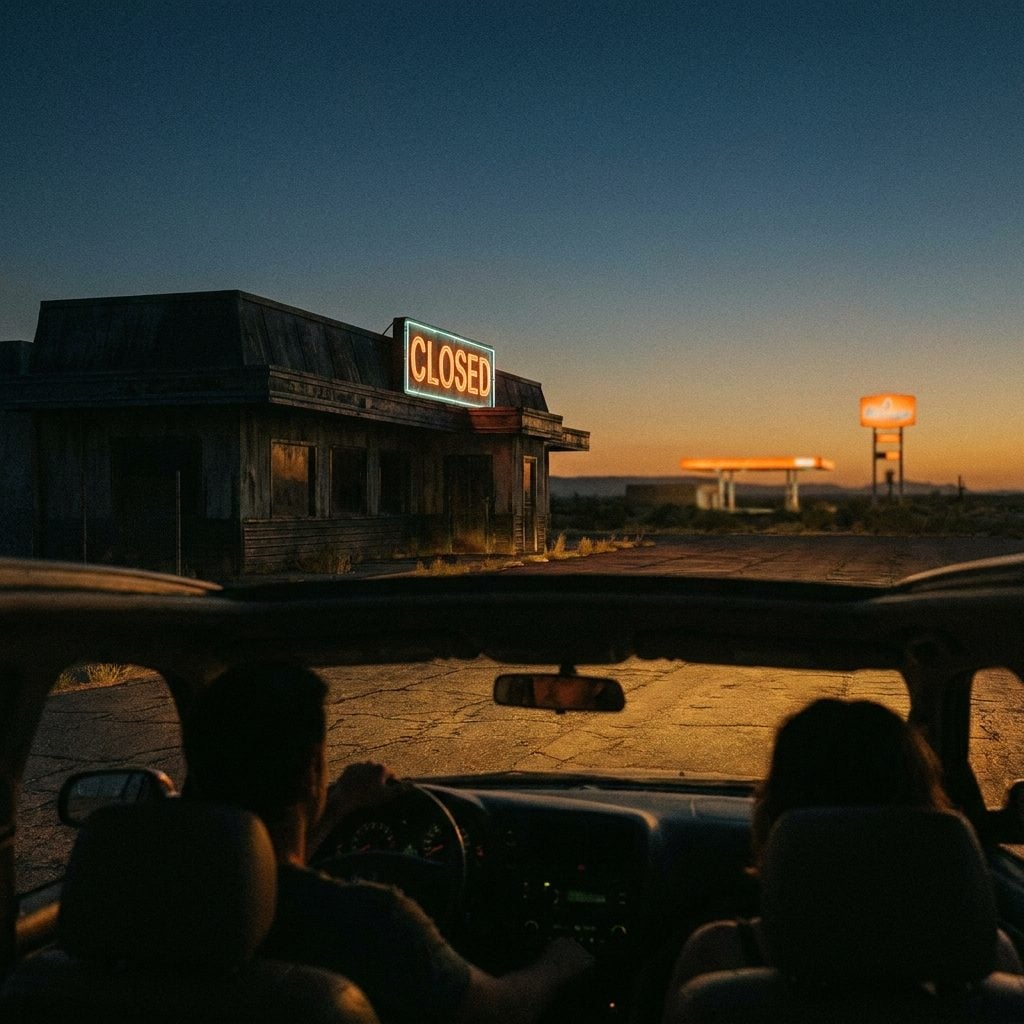
There is a specific kind of hunger that sets in when the last town was forty minutes ago and the next one is a gas station with a hot dog roller that’s been running since Tuesday. Everyone in the car is now a different, worse version of themselves. Decisions made in this state are bad decisions.
Download a copy of your route and mark two or three solid lunch options before you leave. Apps like Roadtrippers or even a simple Google Maps search along the corridor take ten minutes and save the kind of argument that echoes for the rest of the drive. Know where you’re eating before you’re hungry. It sounds obvious until the third trip in a row where you didn’t do it.
3. Packing the Cooler Like a Game of Tetris Nobody Wins
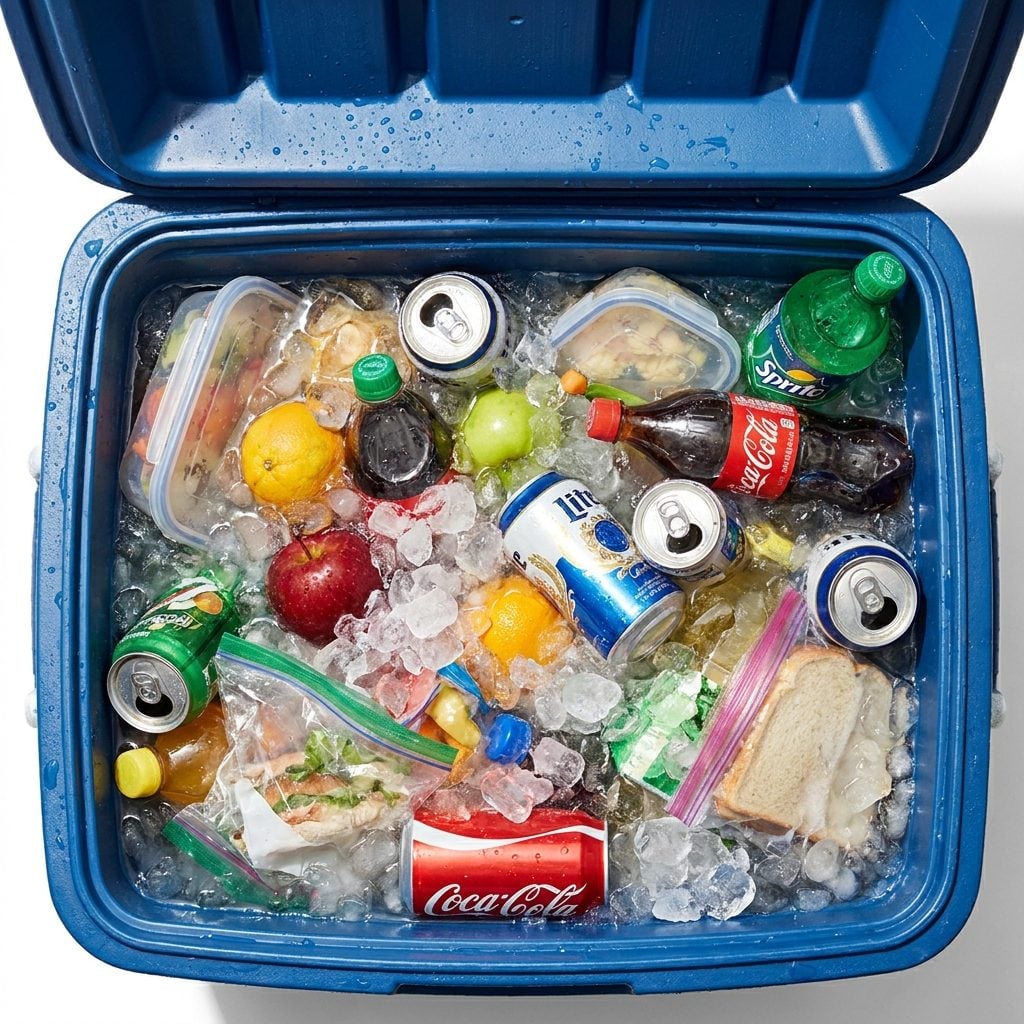
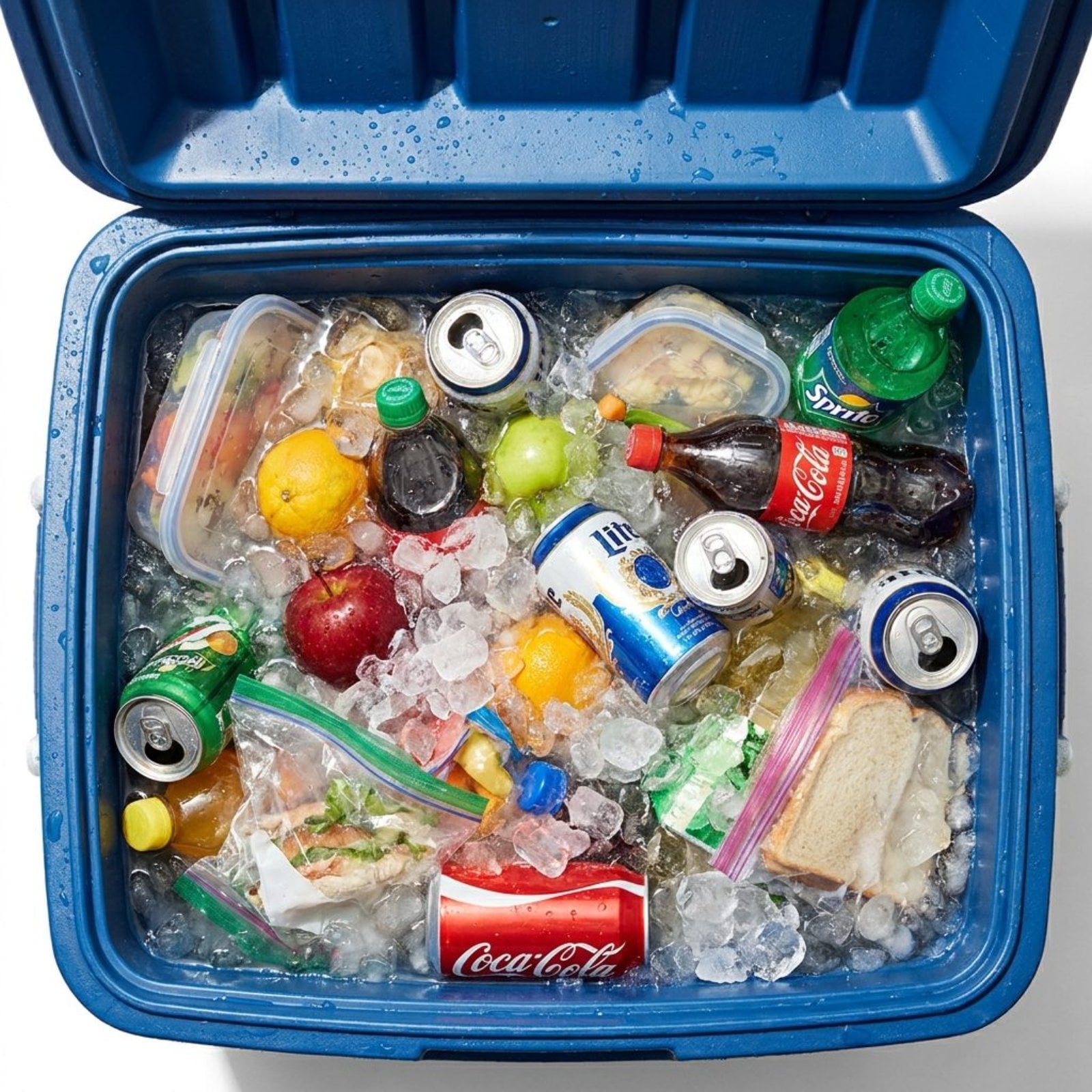
Most people toss everything into the cooler in roughly the order they packed the car, which means the thing you want at noon is under the thing you want at dinner, buried under ice that has already started melting into a cold soup of everything.
Pack it like you’ll actually eat it. Drinks go in last and on top. Food you need first goes near the opening. Block ice lasts three times longer than loose cubes and doesn’t turn your sandwiches into a wet mess. If you’re driving more than a day, a second small cooler just for drinks means you’re not excavating the main one every forty-five minutes and draining it of cold air every time.
2. Leaving the Medicine Bag in the Suitcase in the Trunk
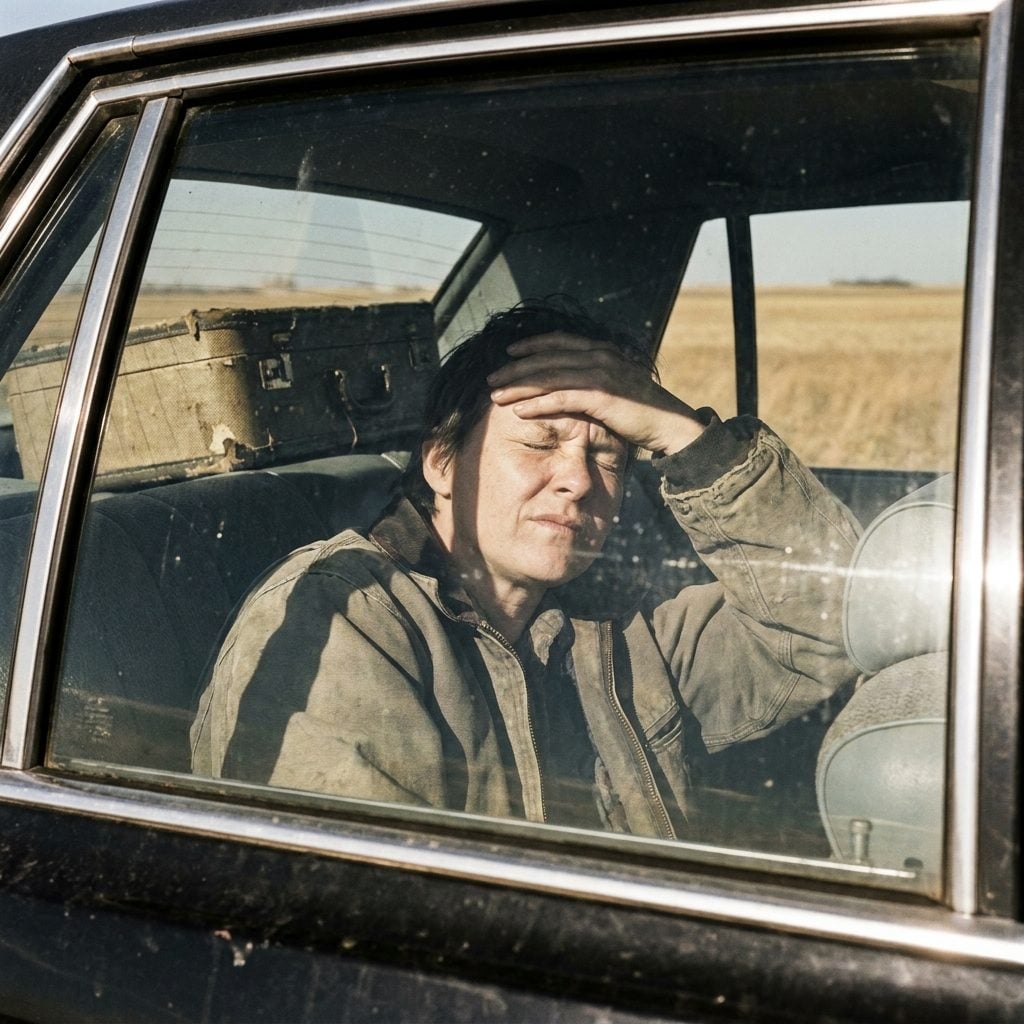
A headache that starts somewhere in rural Kansas at 2pm is not improved by knowing that the Advil is absolutely in there somewhere, probably in the red toiletry bag, definitely underneath the duffel with the broken zipper, in the trunk. You’ll drive another hour telling yourself it’ll pass.
Keep a small pouch in the cabin. Not a full pharmacy, just the basics you reach for on a bad day: pain reliever, antacids, allergy tabs, a few bandages, lip balm. Fits in a quart-size bag. Costs nothing extra. And the difference between a headache you handle in ten minutes and one that ruins the whole afternoon is usually just that you could actually reach the thing.
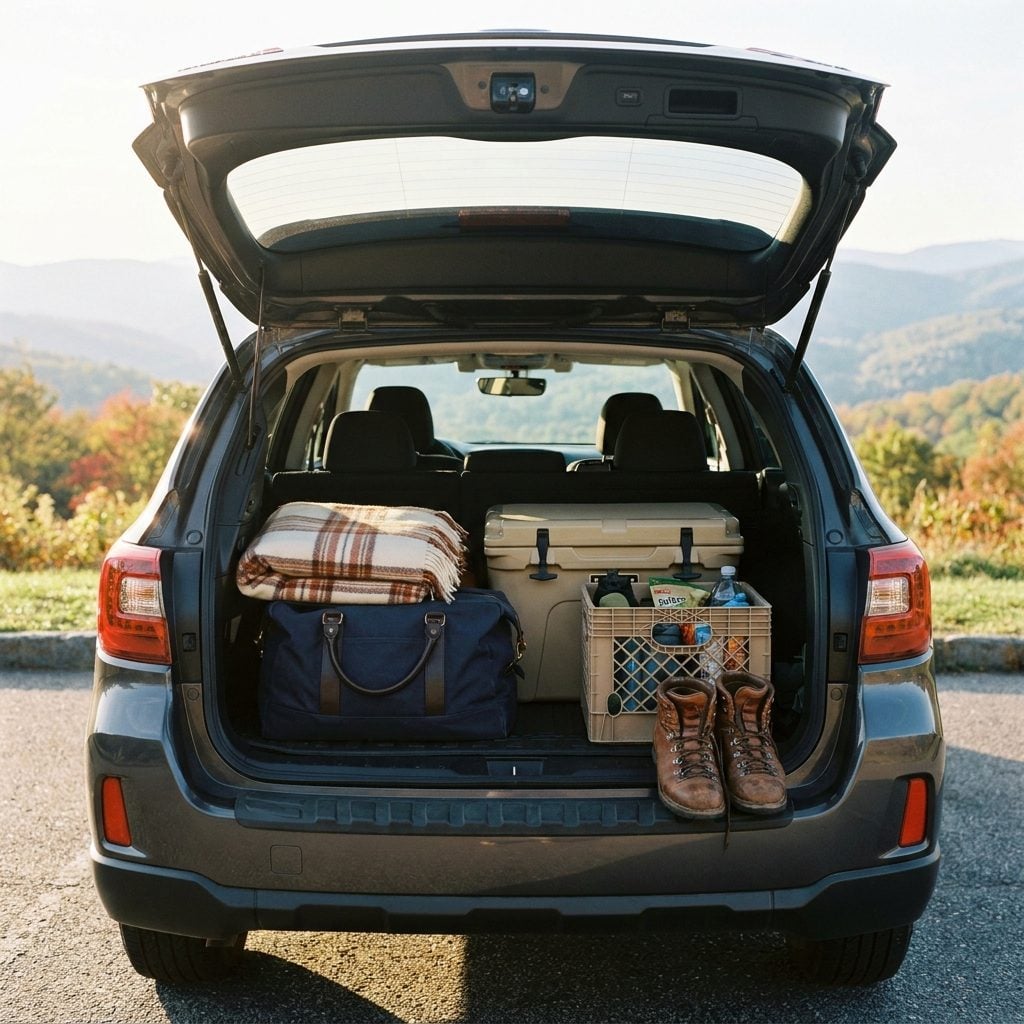
1. Treating the Trunk Like a Bottomless Pit Instead of a Puzzle You Have to Solve Twice a Day
🔥 Would you like to save this?
You loaded the car in the driveway like you had all the time in the world — big bag on the bottom, cooler wedged sideways, jackets tossed on top, and a paper bag of snacks buried somewhere nobody can now locate. It looked fine at 7 a.m. By lunch it looks like a landslide.
Here’s the trouble. A trunk gets unpacked and repacked at every stop, and a pile that held together in your driveway becomes a game of Jenga in some gas-station lot off the interstate, with you rearranging luggage in the sun while the ice quietly gives up.
Load in zones. Overnight bags in one corner so they come out clean at the hotel. Cooler and snacks near the tailgate for easy reach. Jackets and blankets in a soft bag riding on top of the hard stuff. Anything you need on the road goes last in, first out. Ten minutes of thinking at the driveway buys you back an hour of digging over three days — probably more, if the weather turns.
🔥 Would you like to save this?
Please note that some of the imagery in this article were created with the aid of AI image generators.