
🔥 Would you like to save this?
Open any suitcase five minutes before a trip and you’re looking at a psychological confession. The rolled shirts. The empty corner nobody filled. The plastic bag of medications for symptoms you don’t currently have. None of it is random. Every packing habit you’ve defended as “just practical” is actually your nervous system negotiating with the unknown.
We’ve watched thousands of travelers zip their bags shut at the gate, and the patterns are almost embarrassing once you see them. The person who packs three days early isn’t organized. The one-bagger isn’t just efficient. The snack stasher is running a program written long before airports existed.
These packing personalities hold quiet truths about how you handle control, fear, hope, and the person you’re secretly hoping to become on the other side of the flight. Find yourself below. You won’t be able to unsee it.
The Person Who Packs Three Days Early (And What Their Brain Is Actually Trying to Control)
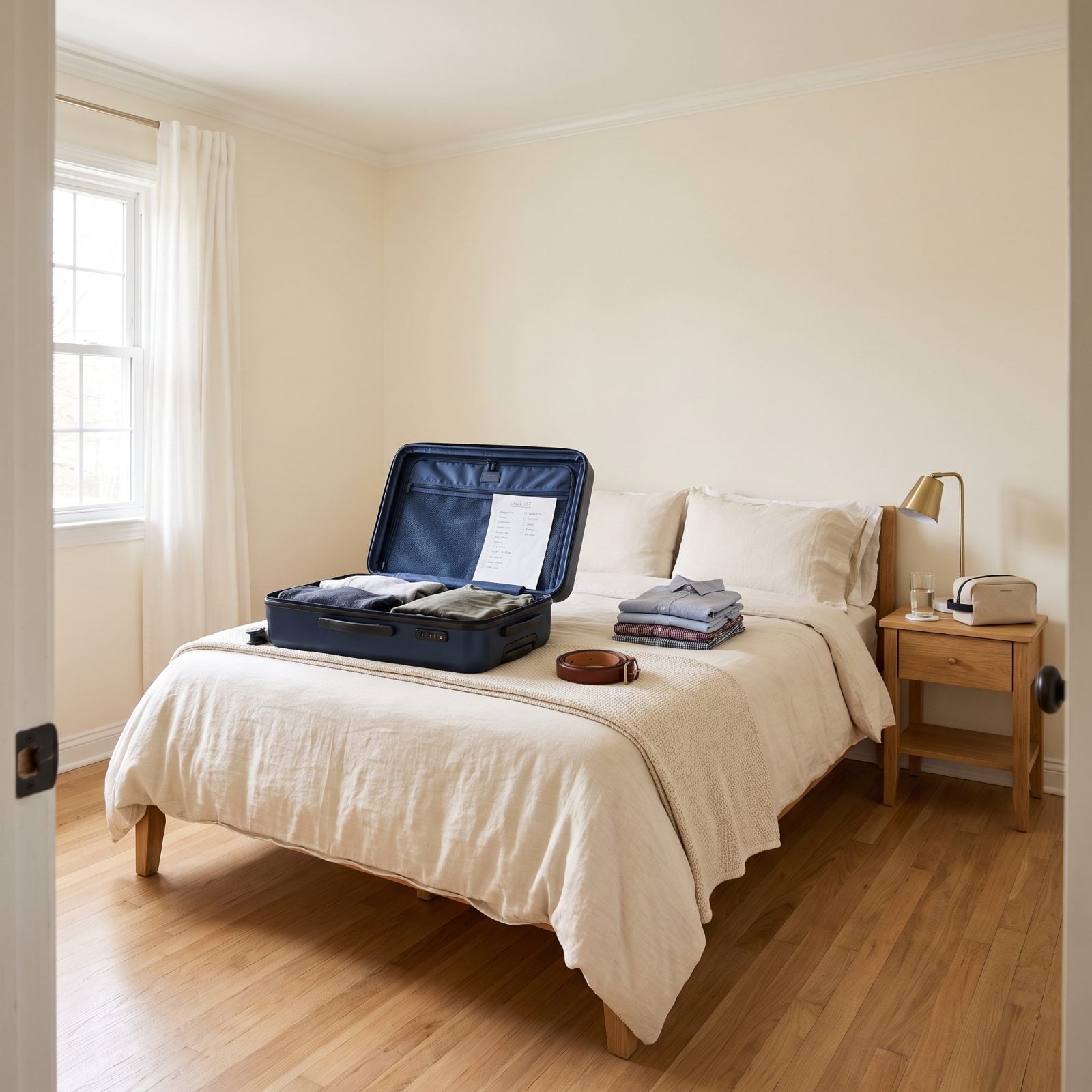
The suitcase comes out on Tuesday for a Friday flight. Half-packed, sitting open on the guest bed, a running list taped to the lid. You know this person. You might be this person.
Packing early looks like discipline. Underneath, it’s often something quieter. Clinical work on control-based anxiety suggests that the people who prepare hardest tend to be highly capable folks who’ve quietly convinced themselves the preparation, not their own competence, is what keeps things from falling apart. Source
Travel is the perfect storm for that wiring. A clinical psychiatrist at George Washington University put it plainly: travel drops routine-loving people into a place where they can’t predict or control everything, and for anyone used to a set routine, that’s genuinely hard. Source
So the early packer isn’t controlling the trip. She’s controlling the days before it, because those are the last days she still can.
Why the Rolled-vs-Folded War Isn’t About Wrinkles at All
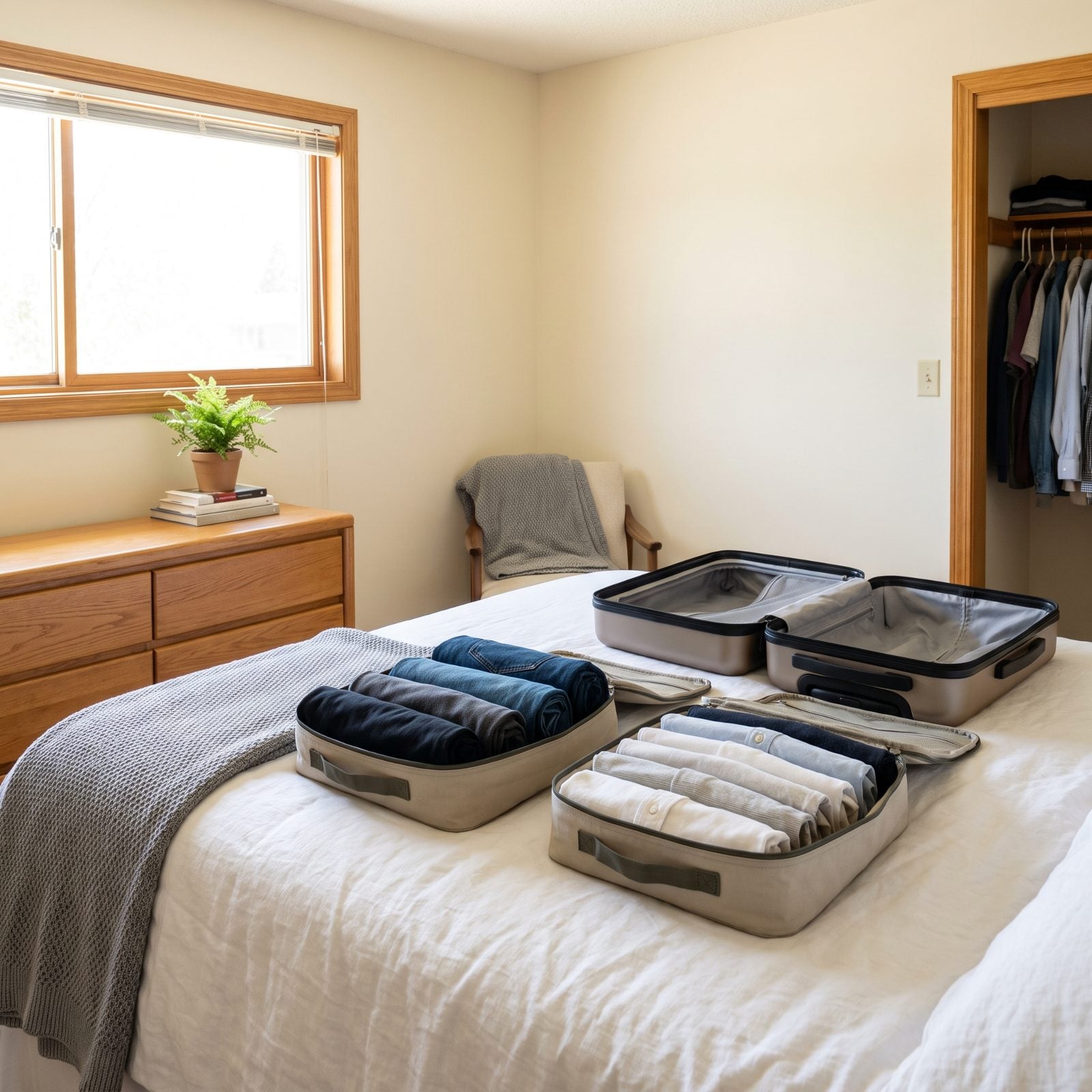
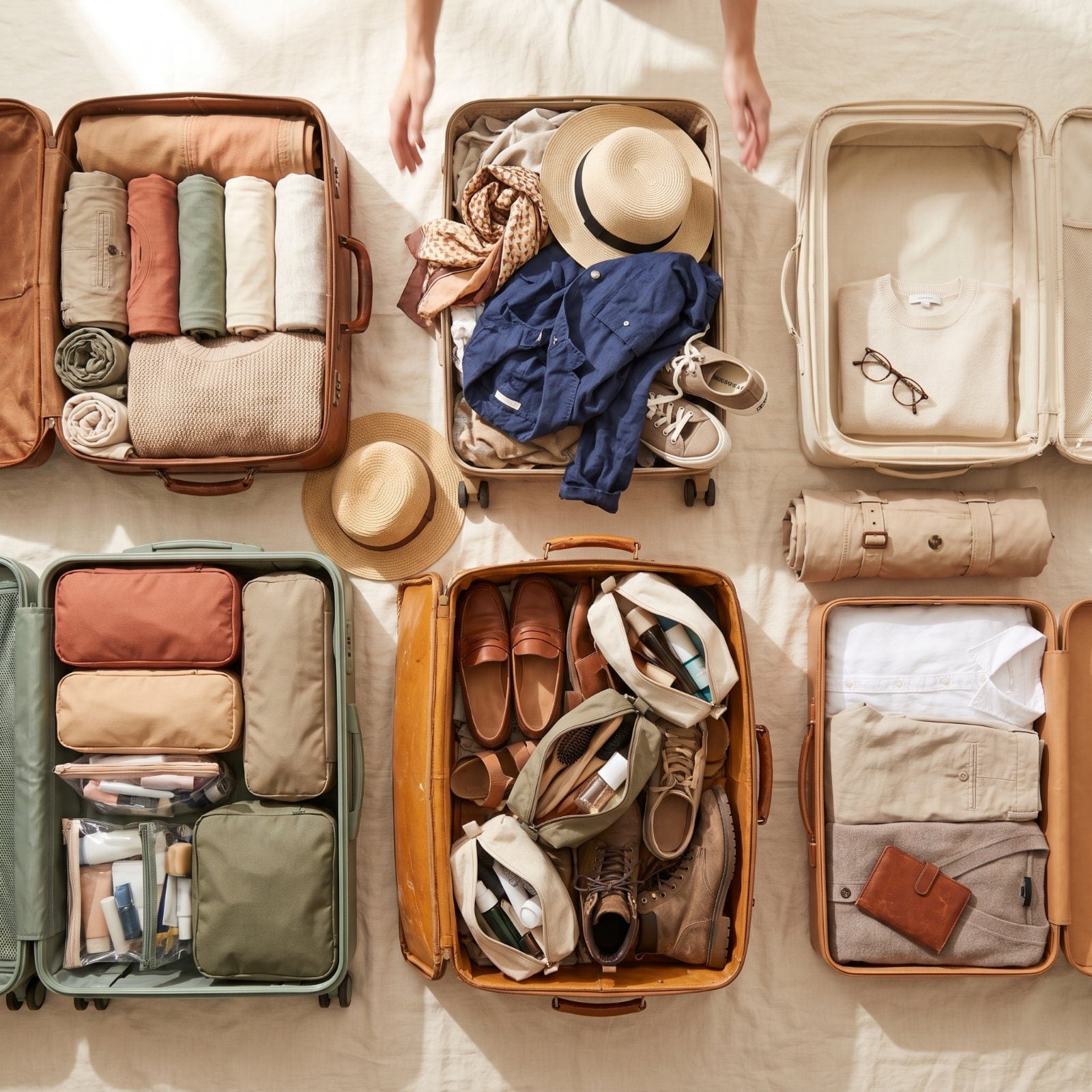
Ask a table of six travelers how they pack a suitcase and you’ll start a debate with the heat of politics. Rollers swear by it. Folders think rollers are chaos agents. Nobody in that argument is really talking about wrinkles.
What you’re watching is two different relationships with control and space. Rolling gets sold as the wrinkle fix and the space-saver, the little bit of extra wiggle room everyone wants. Source But researchers who study packing habits point at something under the technique: our packing and unpacking choices tend to mirror broader traits, whether we lean toward control, routine, efficiency, or freedom. Source
The folder likes a visible order, a flat stack she can read at a glance. The roller likes density, options, the sense that she squeezed more possibility into the same box. Same suitcase. Two different answers to the same quiet question: how much do I need to see to feel ready?
Neither one is right.
The Suitcase With Room to Spare, And the Quiet Optimism Hiding in the Empty Corners
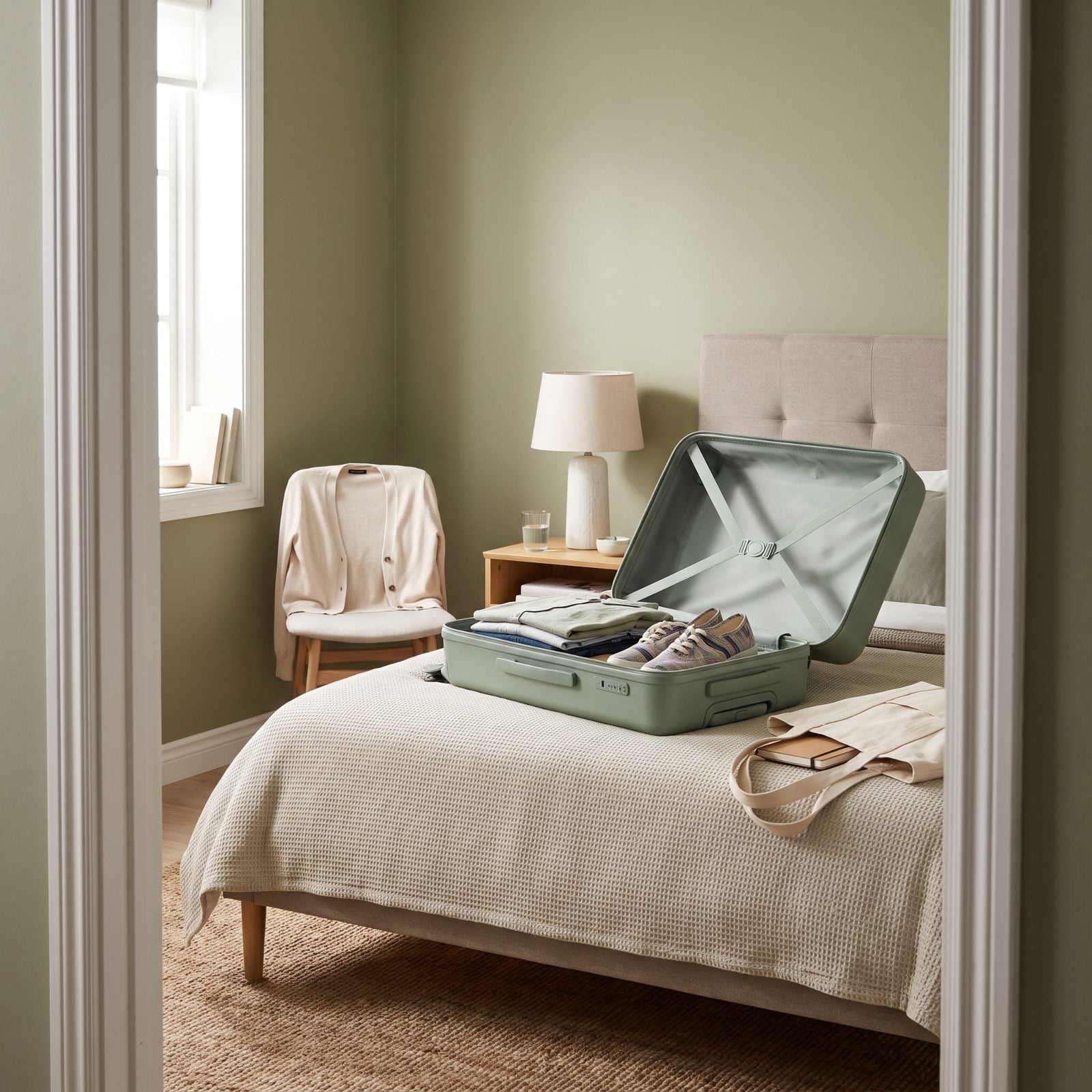
Some people pack a bag and leave a third of it empty on purpose. Not by accident, not because they forgot things. On purpose. That empty corner is doing real psychological work.
The half-full suitcase is a bet on the trip. It says: I will find something worth bringing home. A market scarf, a bottle of wine, a book from a shop I haven’t walked into yet. Packing researchers frame our luggage as a physical record of who we are before we even land, and the person who leaves space is quietly telling you she expects the destination to give her something. Source
There’s also a flexibility trait underneath it. The travelers who resist over-structuring tend to travel to experience rather than to manage, comfortable with change and unfamiliar rooms. Source
The over-packer fills the bag against fear. The room-to-spare packer leaves the bag open to possibility. One’s guarding against a bad trip. The other’s making space for a good one.
What the ‘Just In Case’ Overpacker Is Really Afraid Of (It’s Never the Weather)
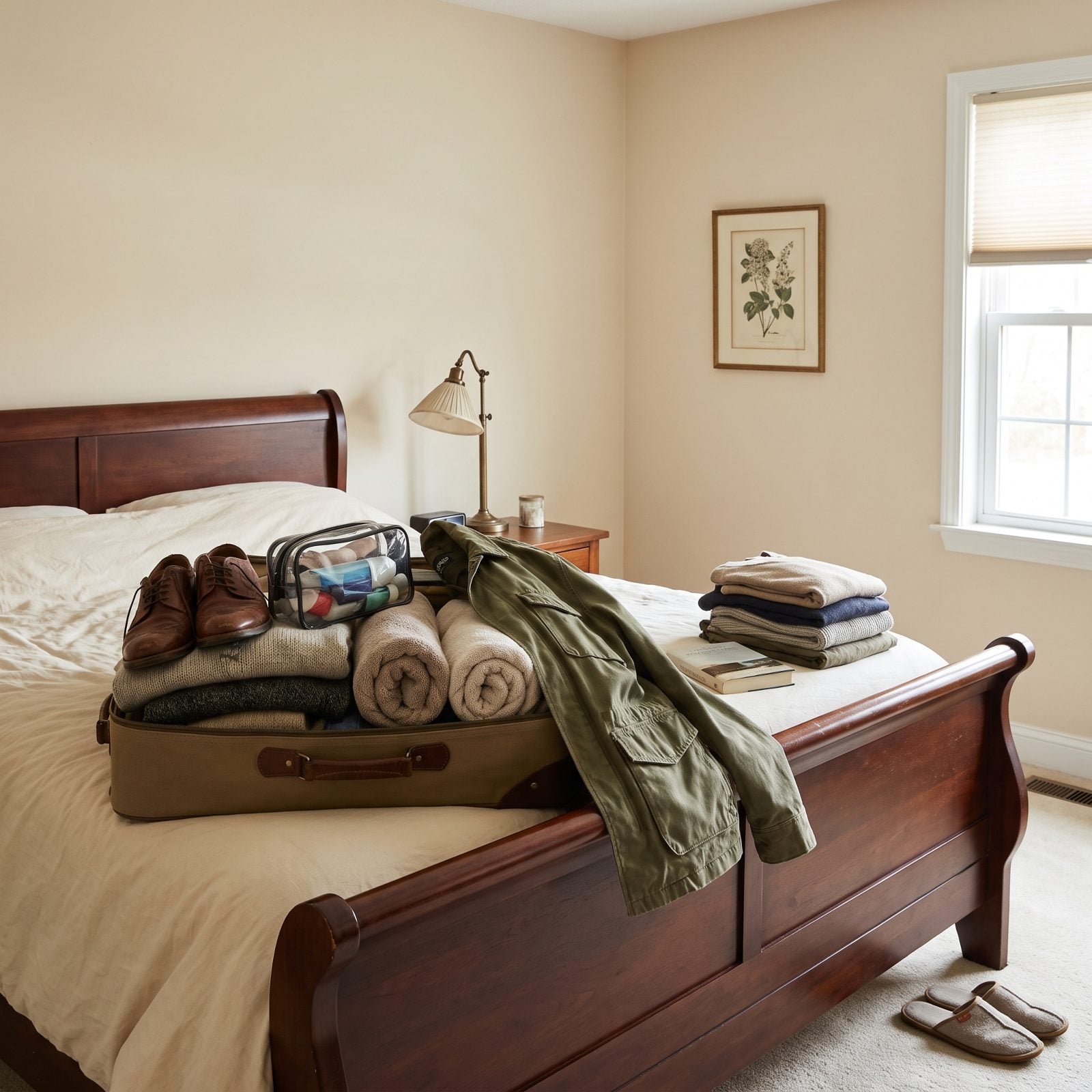
The third pair of shoes. The backup cardigan for the cardigan. The little zip pouch of things nobody has needed since 2009. The ‘just in case’ pile has its own gravity, and it is never actually about rain.
Psychologists keep landing in the same place on this. Overpacking is often a comfort behavior, a covering-all-the-bases move that people run to feel secure. Source Dig one layer down and it’s frequently rooted in fear of the unknown, the anxiety of walking into a situation you can’t fully predict. Source
There’s a tidier name for the mechanism too: loss aversion. The brain hates the imagined regret of needing a thing and not having it far more than it minds the deadweight of carrying it. Source
Here’s the quiet joke of it. Surveys of what actually gets used find that around a quarter of the average suitcase comes home untouched. Source The overpacker isn’t packing for the weather. She’s packing against the feeling of being caught unprepared, and that fear travels in every bag.
The One-Bag Traveler and the Psychology of People Who Refuse to Be Slowed Down
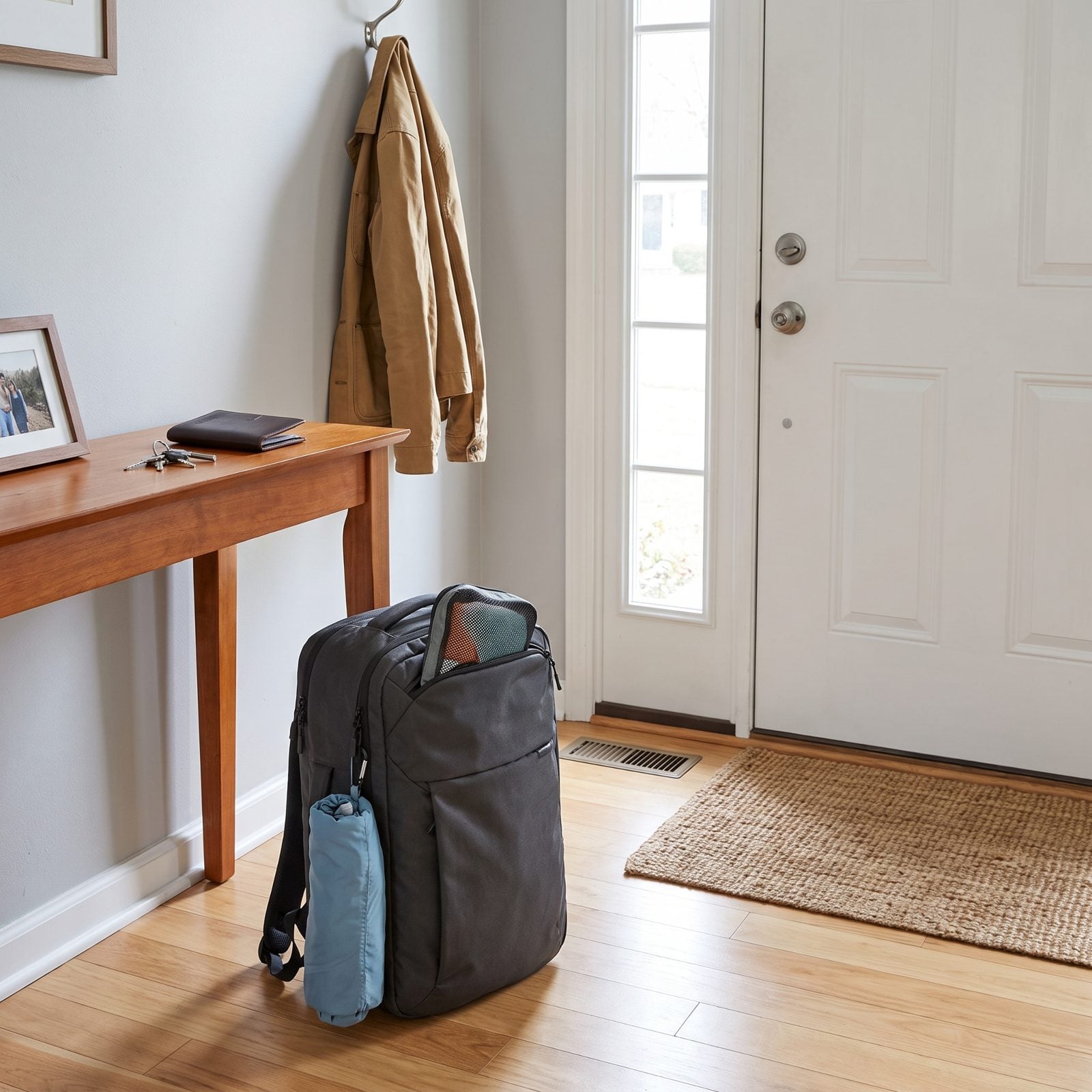
One bag. Wheels optional. Straight past baggage claim while everyone else stands watching the carousel. The one-bag traveler has made a whole identity out of not being slowed down, and it’s worth asking what that identity is protecting.
Part of it is pure trust. Minimalist travel coaches describe packing light as less a space trick and more a bet on yourself, a decision that you can adapt to whatever the road hands you instead of pre-solving it. Source
And it reads on the personality maps. The traveler who wants efficiency and freedom over routine and control tends to be the one who packs light and stays loose, more comfortable with unfamiliar environments than the average bag-hauler. Source
Here’s the honest part most one-baggers won’t say out loud. Some of that minimalism is control wearing a different costume. Carrying nothing is its own way of never being stuck, never dependent, never the person waiting. Freedom and fear of being trapped are closer cousins than either would like to admit.
The Ziploc-Bagged, Color-Coded Cube System That Says More About You Than Any Personality Quiz
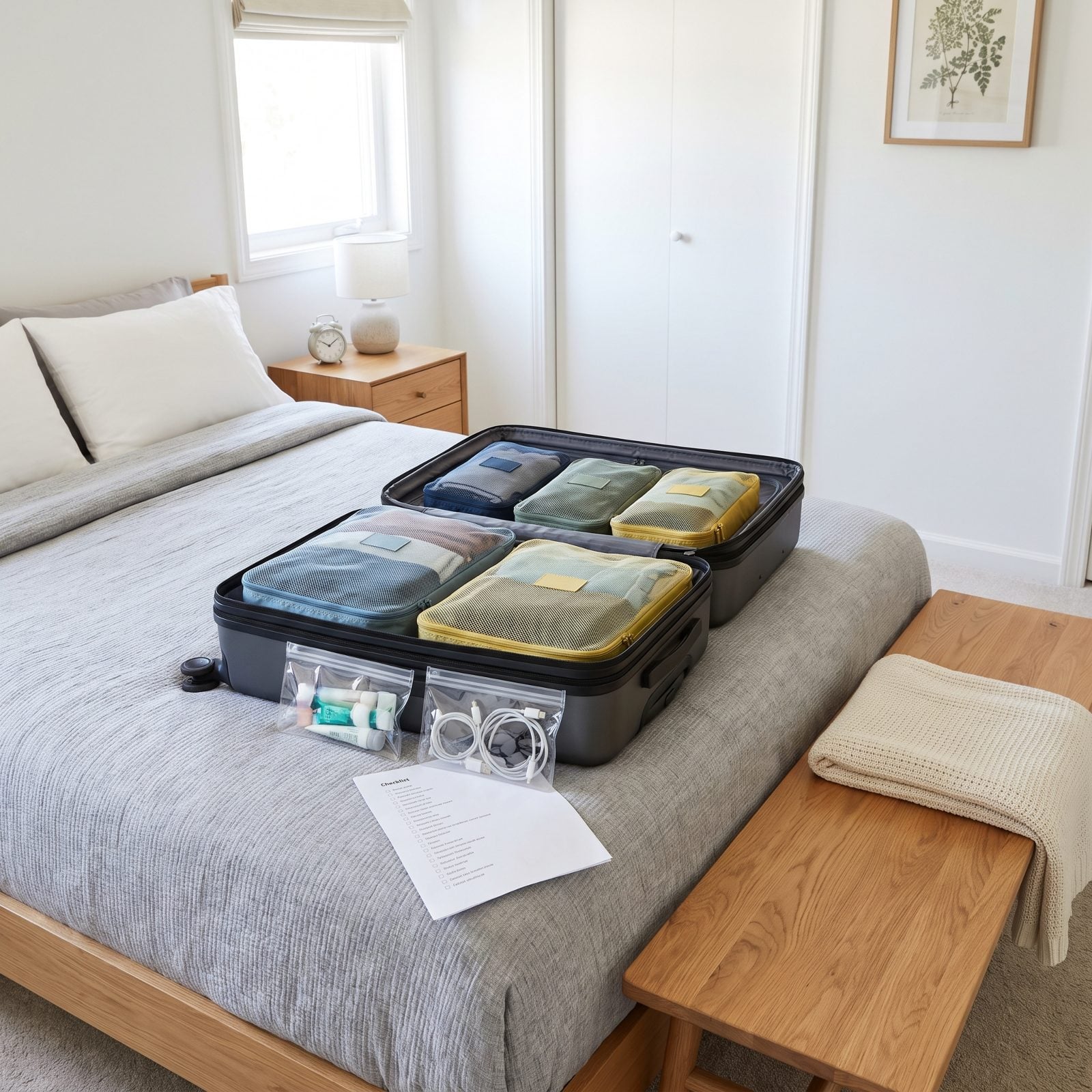
The socks live in the blue cube. Chargers in a labeled zip pouch. Everything sorted, categorized, checked off a list drawn up well in advance. Open this suitcase and you’re looking at a filing cabinet that happens to hold clothes.
Packing researchers file this person under meticulous planner: everything has its place, folded, categorized, done early, and it lines up with a broader organizing personality that likes hard-cased order and plans out every detail. Source
Three quiet things the cube system is really doing
- It turns a stressful, open-ended task into a closed system with visible rules. Order in the bag, order in the head.
- It externalizes memory. You don’t have to hold the whole list in your mind if the cubes hold it for you.
- It gives high-conscientiousness people the thing they actually crave, which isn’t neatness. It’s the certainty of knowing exactly where everything is at 2 a.m. in a strange hotel.
This is a coping system as much as an aesthetic. And an effective one. The color-coding isn’t fussiness. It’s a person who’s learned that a small predictable structure carries her through big unpredictable days.
Why Some People Pack Their Comfort Object First, and What That Says About How They Handle the Unknown
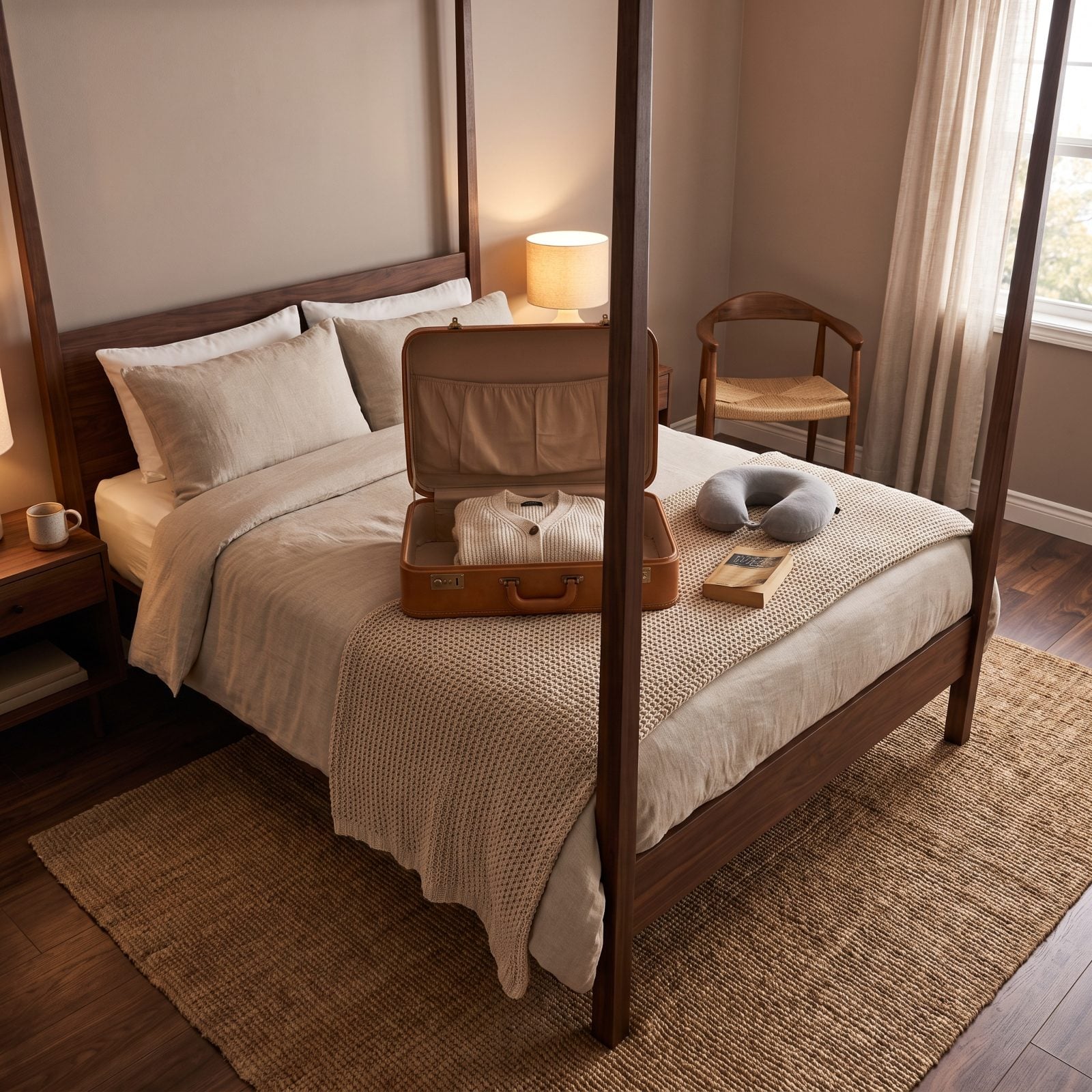
Before the shirts, before the shoes, the worn cardigan goes in. Or the small pillow. Or the paperback that’s already been read twice. Some people pack the comfort item first, and that ordering is not random.
Psychologists call these transitional objects, and they don’t stop working when you grow up. Adults reach for familiar items during stress, uncertainty, and time away from home, and the mechanism is simple: a familiar texture or scent helps calm the nervous system and reduce emotional overload. Source The presence of a beloved object has even been linked to lower cortisol and activation of the brain’s reward and positive-emotion regions. Source
Here’s the counterintuitive part, and it reframes the whole thing. Studies of young children in unfamiliar rooms found that an attachment blanket sometimes outperformed the mother at encouraging a child to explore and play. Source The comfort object doesn’t make you timid. It gives you a stable base to venture out from.
So the person who packs the soft thing first isn’t afraid of the trip. She’s building the anchor before she leaves the harbor.
The Last-Minute Frantic Packer and the Surprising Cognitive Style Behind the Chaos
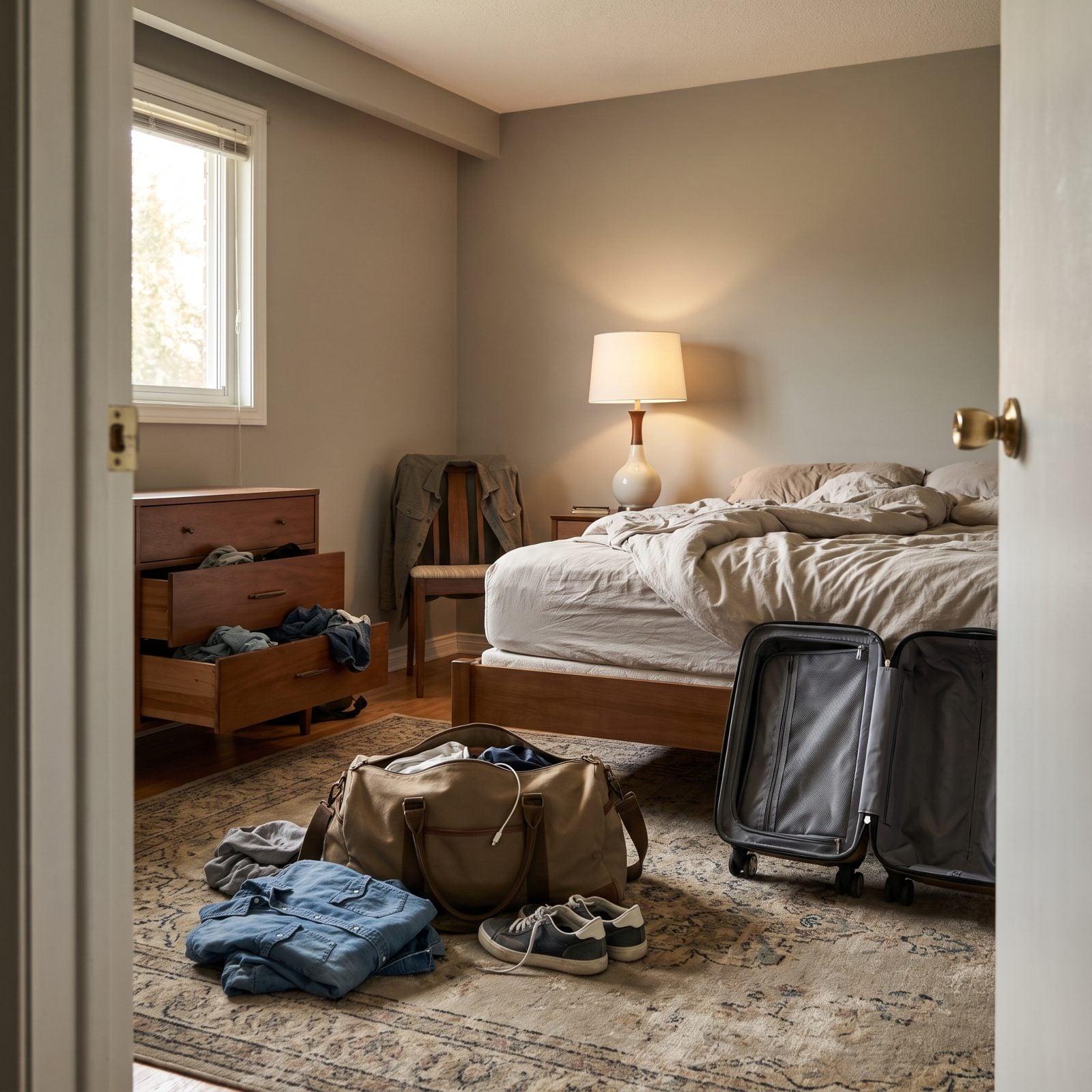
Bag on the floor at 11 p.m. the night before. Drawers open. Everything happening at once, at speed, with a flight in the morning. It looks like a mess. It may be something more interesting than that.
Researchers who study delay have started pushing back on the lazy read. One argues the so-called procrastinator holds information in working memory, reflects on it, and is driven to finish by emotions that only activate under limited time, so much so that he’d rather retire the word “procrastinator” for “deadline driven.” Source
There’s a specific flavor here called arousal procrastination: the motivation that comes from the thrill of the last minute, the person who genuinely works best when the stakes spike. Source For some, the task doesn’t become fully possible until the pressure gets high enough to generate the arousal their brain needs to lock in. Source
The frantic packer isn’t disorganized. She’s running a different engine, one that only fires hot. The chaos is the cost of a system that, annoyingly, keeps working.
The Outfit-Planner Who Maps Every Day Before Leaving (And the Need It Quietly Satisfies)
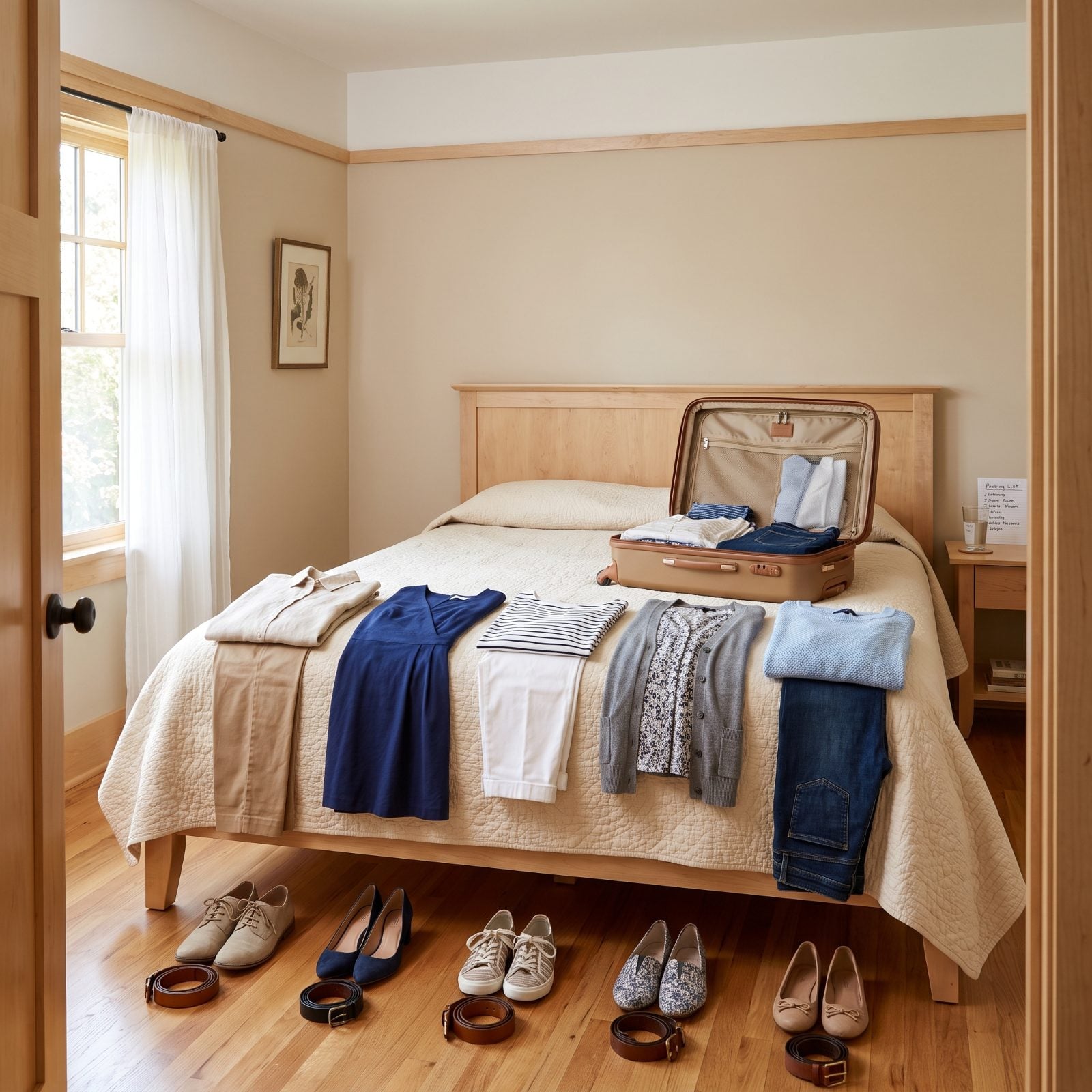
You know the one. Seven days, seven outfits, each one laid out on the guest bed the night before with the shoes lined up underneath like they’re waiting for a bus. Sometimes it’s a photo on the phone. Sometimes it’s a little numbered list. Either way, the trip is already lived before the suitcase closes.
This isn’t fussiness. It’s a nervous system finding a place to put itself. Travel journalists have watched packing styles for years and keep landing on the same read: the person who maps every outfit is buying certainty in advance. Source. The suitcase is one of the few things about a trip you can fully control, and controlling it feels like controlling the whole thing.
Here’s what nobody says out loud. Mapping every day is a way of pre-deciding, so the vacation version of you never has to stand in a hotel room at 8am feeling unsure. Whether that’s foresight or a small flinch away from the unknown is the question this whole list keeps circling.
What the Meticulously Folded ‘Nice Clothes’ at the Bottom Reveal About Who You Think You’ll Become on This Trip
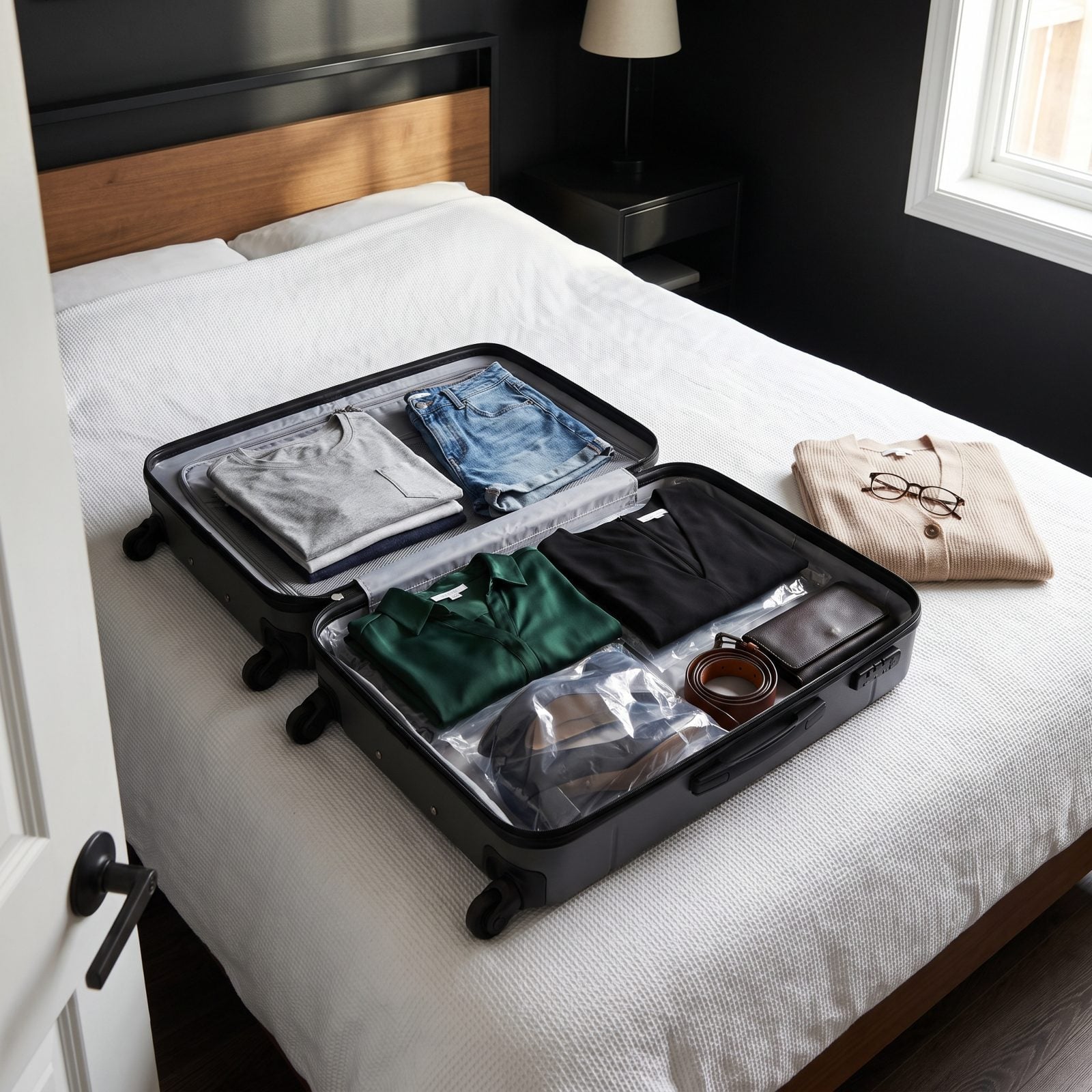
Down at the bottom, under the T-shirts and the sensible walking sandals, there’s a layer that never quite makes sense: the silk blouse, the good dress, the heeled shoes wrapped in a plastic bag. The clothes for the dinner you haven’t been invited to yet. The version of the trip where you get dressed up and go somewhere.
Psychologists have a name for the person wearing those clothes. Hazel Markus and Paula Nurius called them possible selves, the future versions of ourselves we carry around as hopes and pictures rather than facts. Source. A possible self doesn’t have to be likely to feel real. The dress-up-and-go-out self rarely materializes. She gets packed anyway.
That bottom layer is the most optimistic thing in the whole bag. It says you still believe this trip might turn into something. And most of us fold those particular clothes more carefully than anything else, because we’re not really protecting the fabric. We’re protecting the idea.
The Snack Stasher and the Deep Evolutionary Wiring Behind Packing Food You’ll Never Eat
🔥 Would you like to save this?
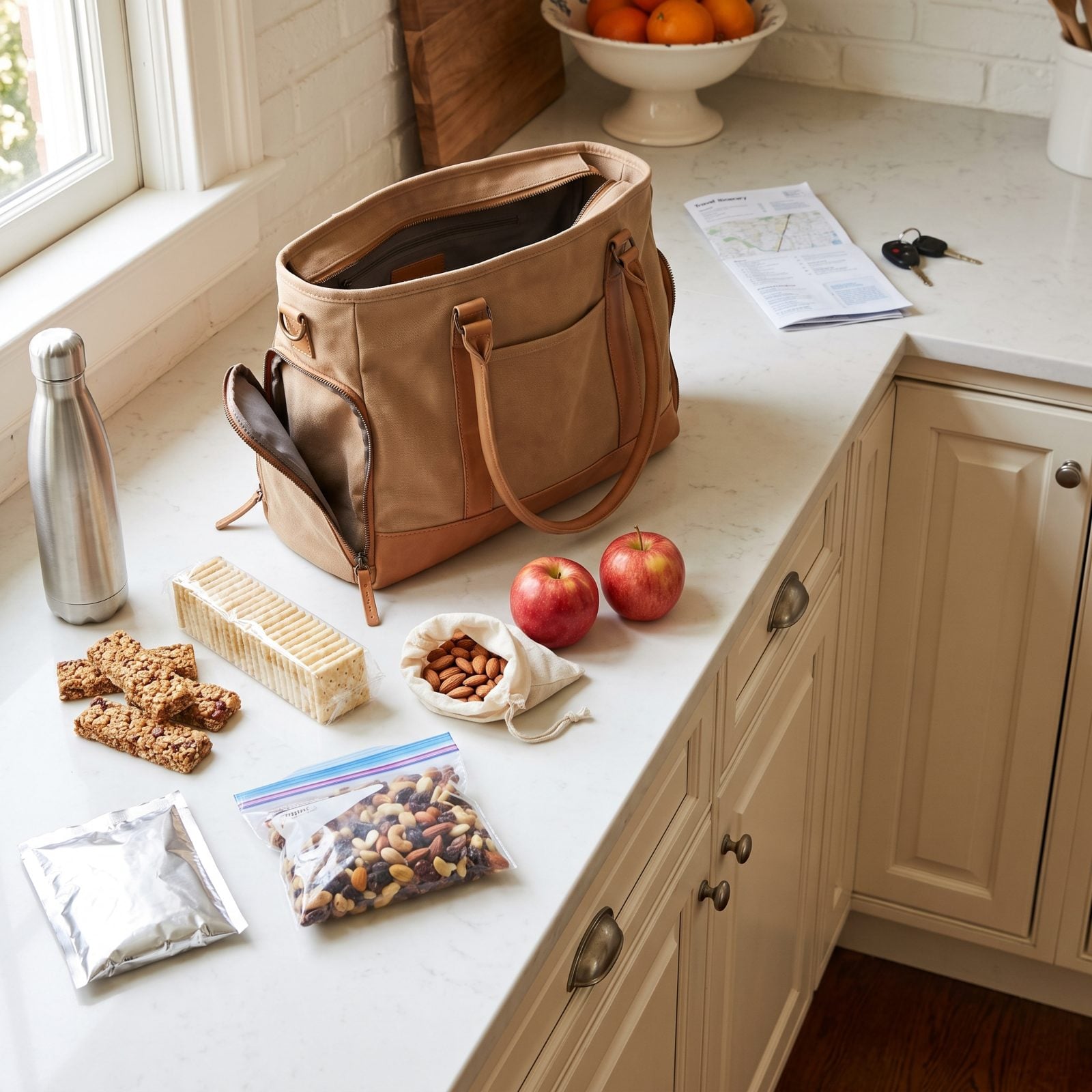
Granola bars in the side pocket. A sleeve of crackers. Two apples that will bruise by day three. A bag of almonds you bought specifically for a trip to a country famous for its food. You will not eat most of it. You pack it every single time.
This one runs deeper than habit. Food hoarding is old wiring, the same instinct that has animals stashing seeds against a winter that may or may not come. One Psychology Today piece traces the impulse straight back to caching behavior seen across birds and mammals, and argues it’s baked into our inherited brain biology. Source. The chipmunk with packed cheek pouches and you with a granola bar in your carry-on are running the same ancient program.
There’s a second gear, too. When resources feel scarce, even briefly, we grab calories we don’t need. Source. A trip is a small controlled scarcity. You don’t know when the next meal is, or whether it’ll be good, or whether they’ll have anything you like. So you pack the almonds. The almonds are insurance against a hunger you’re not even sure will happen.
The Reason Frequent Flyers Pack Almost Nothing, and Nervous Travelers Pack Everything
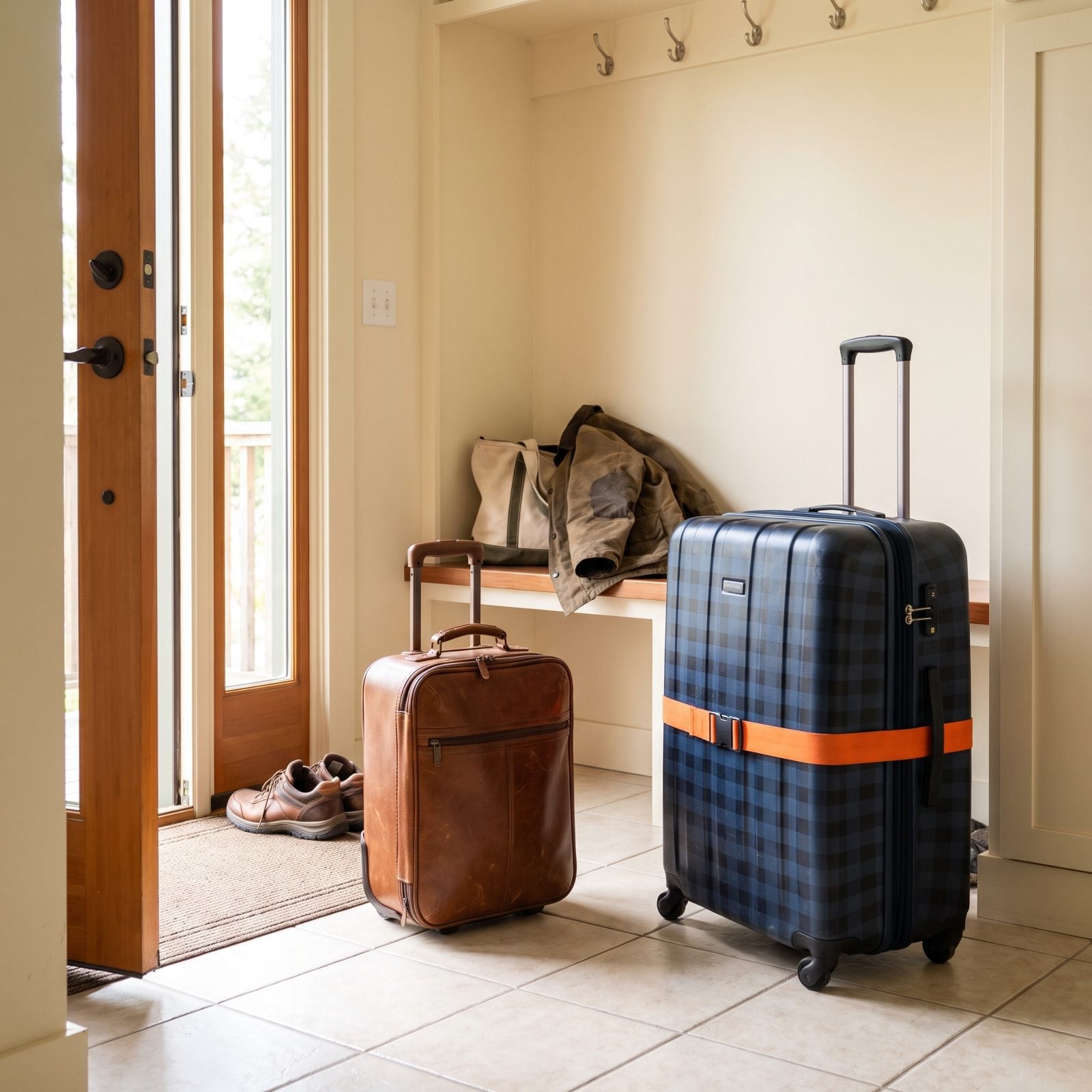
Two suitcases sit side by side at the gate. One is a battered carry-on that fits a two-week trip with room left over for gifts. The other is checked, heavy, and holds three of everything. The people who own them will never fully understand each other, and both are being perfectly rational.
The light packer has flown enough to learn a quiet truth: almost nothing you forget is a catastrophe. You can buy it, borrow it, or do without. Travel writers describe the seasoned carry-on type as organized, self-contained, and slow to hand control to anyone else. Source. Experience taught them the world is mostly fine.
The heavy packer is running a different calculation. Options are reassurance. Researchers describe over-packing as bringing backup for every possibility, so that if plans shift, you already hold the thing that fixes it. Source. Neither one is wrong. One trusts the destination. One trusts the bag. What separates them isn’t discipline. It’s how much they believe the unknown will take care of them.
The Person Whose Toiletry Bag Is a Full Pharmacy (And the Anxiety It’s Actually Soothing)
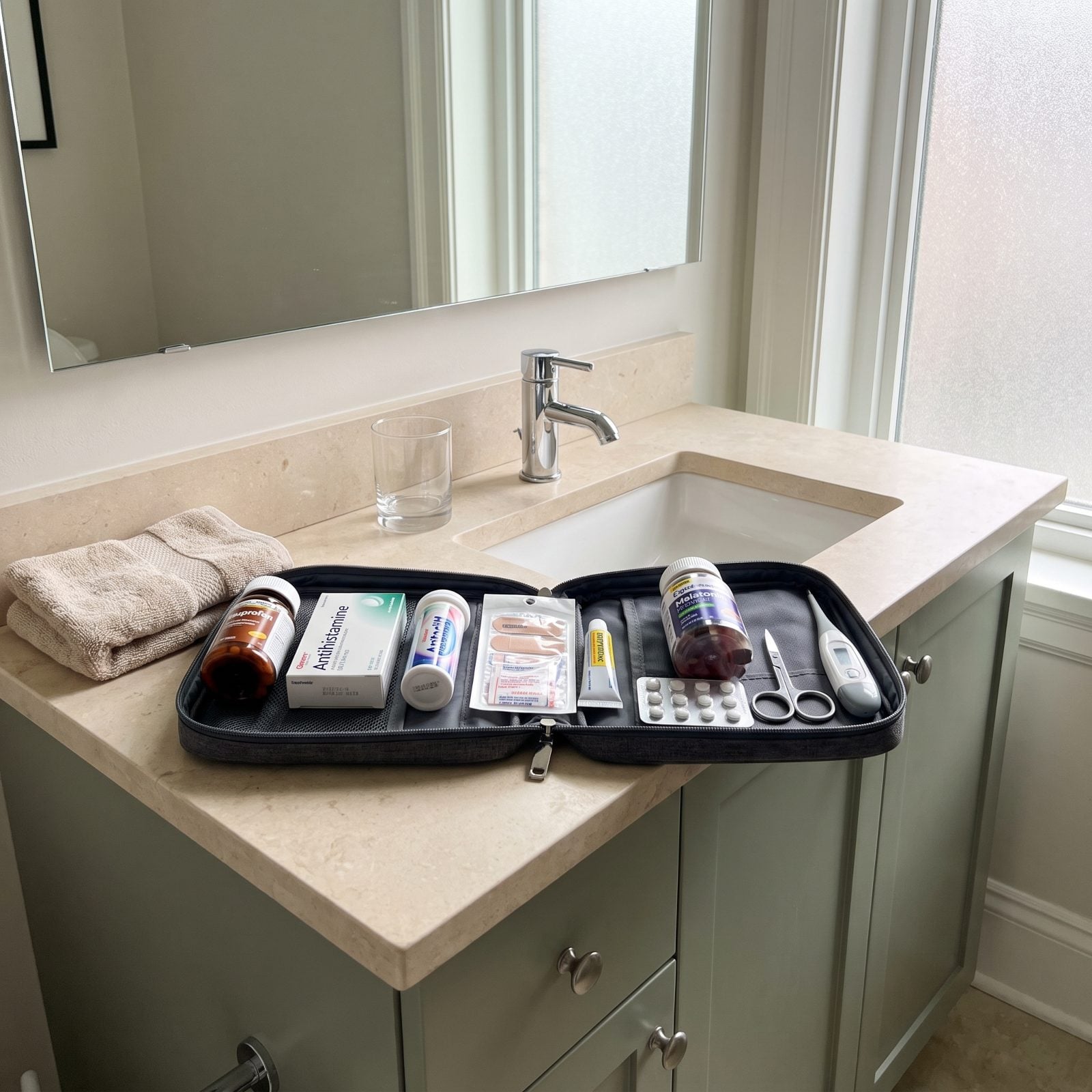
Unzip it and it unfolds like a field hospital. Ibuprofen, antihistamine, antacid, bandages, the antibiotic cream, the motion-sickness pills, the melatonin, the little scissors, the thermometer. Enough to treat a headache, a blister, an allergic reaction, and a mild existential crisis, all before lunch.
Here’s the tender part. That bag isn’t really about medicine. It’s about tolerating not knowing what will go wrong. Psychologists call the underlying trait intolerance of uncertainty, and they describe the packing-and-preparing it drives as safety behaviors: actions taken to reduce the anxiety of a perceived threat, whether or not the threat ever shows up. Source. Assembling the pharmacy is soothing precisely because it turns a vague dread into a zipped pouch you can hold.
The catch, and researchers are clear on this, is that safety behaviors give short-term relief while quietly keeping the worry alive. Source. The full pharmacy calms you tonight. It also whispers that the trip is dangerous enough to need one. Nobody’s saying leave the bandages home. Just notice what the bag is really carrying.
Why the ‘I’ll Buy It There’ Packer and the ‘I Packed It All’ Packer Will Never Understand Each Other
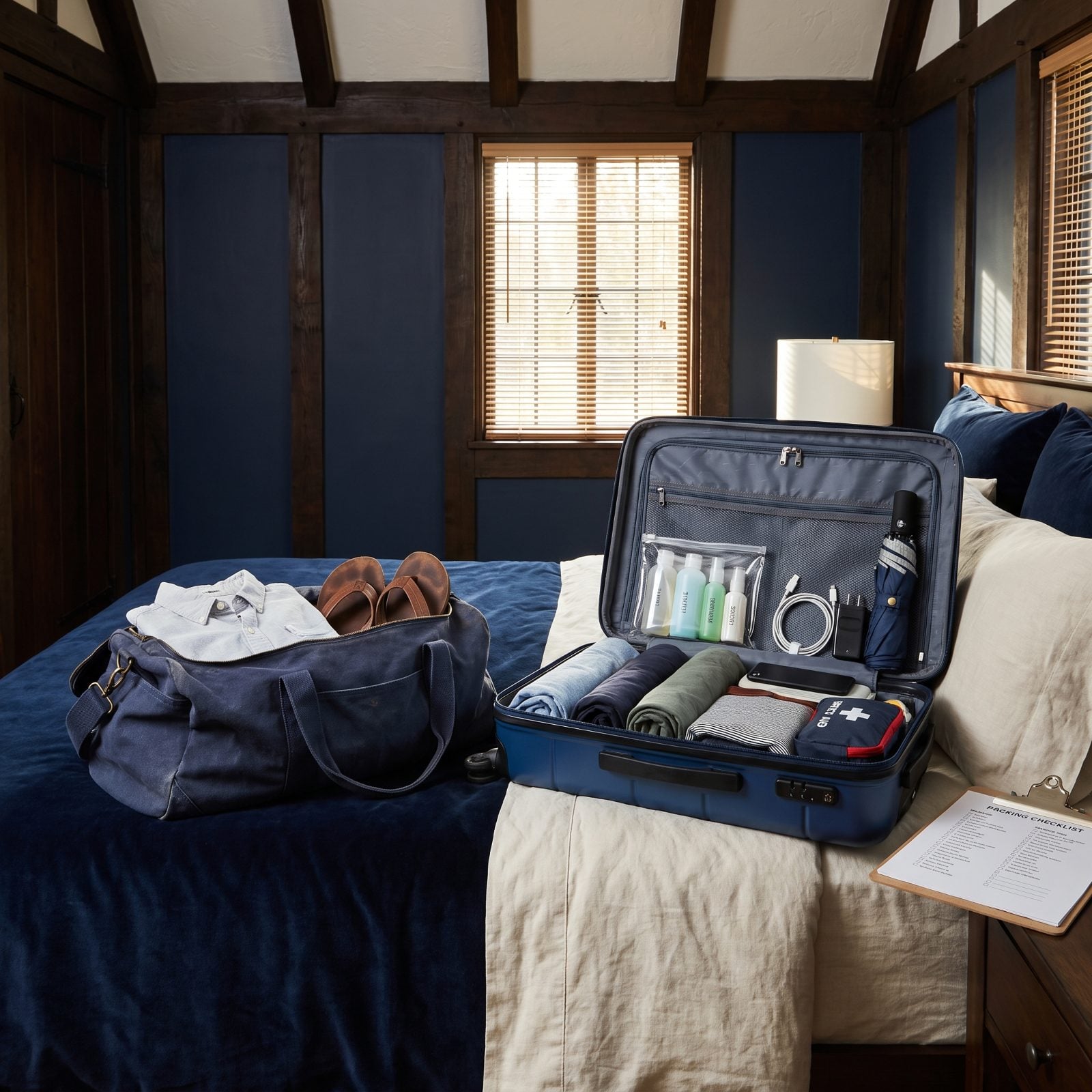
Picture two people the night before a flight. One zips a half-empty bag and shrugs: whatever I forgot, I’ll grab there. The other has the shampoo decanted into travel bottles, the phone charger, the backup charger, and the backup for the backup. Put them in the same house and one of them will lose their mind.
The clash runs deeper than tidiness. Packing is one long chain of trade-offs, and each person weighs the trade-offs against a different set of values, fears, and past regrets. Source. The buy-it-there packer values lightness and trusts the world to provide. The packed-it-all type has been burned before, needed something they didn’t have, and swore never again.
One is packing for freedom. The other is packing for regret they’ve already lived.
So they’ll argue at the door about whether to bring the umbrella, and they’ll both be right, and neither will convert the other. Because the argument was never about the umbrella. It’s about whether you meet the unknown with open hands or a full bag. This whole list has been circling that one question, and here’s the honest answer: there isn’t one. There’s just which kind of traveler you’ve quietly decided to be.
The Bottom Line
Here’s what your suitcase knows: how much of the unknown you trust yourself to handle. Every extra sweater, every empty corner, every pharmacy-sized toiletry bag is a measure of how safe you feel when you can’t control what happens next, the overpacker braces for a world that lets them down, the one-bagger bets on their own adaptability. Next time you pack, notice what you reach for first, and ask whether you’re preparing for the trip or protecting yourself from it.
🔥 Would you like to save this?
Please note that some of the imagery in this article were created with the aid of AI image generators.