
🔥 Would you like to save this?
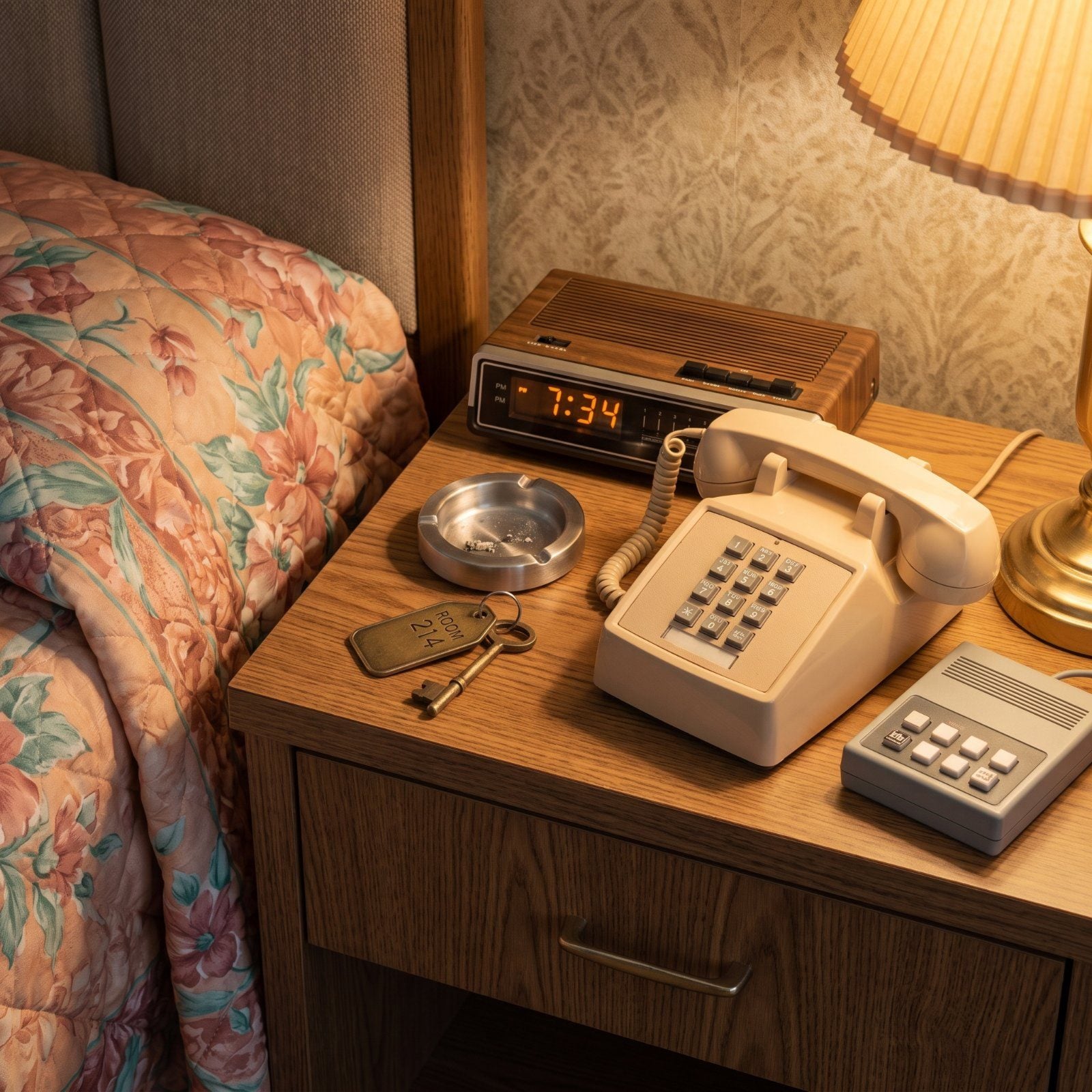
The door clicked shut behind you, and there it was. The floral bedspread. The remote bolted to the nightstand like it might make a run for it, and under everything, the faint smell of carpet cleaner and someone else’s cigarette, trapped in polyester for the ages.
Checking into a motel back then came with its own catalog of objects, each one doing a job your phone now handles alone. We’ve gathered the ones that lived in every room off every interstate in America, waiting for you after a long day of driving.
33. The Wood-Grain Television Parked in a Bulky Cabinet
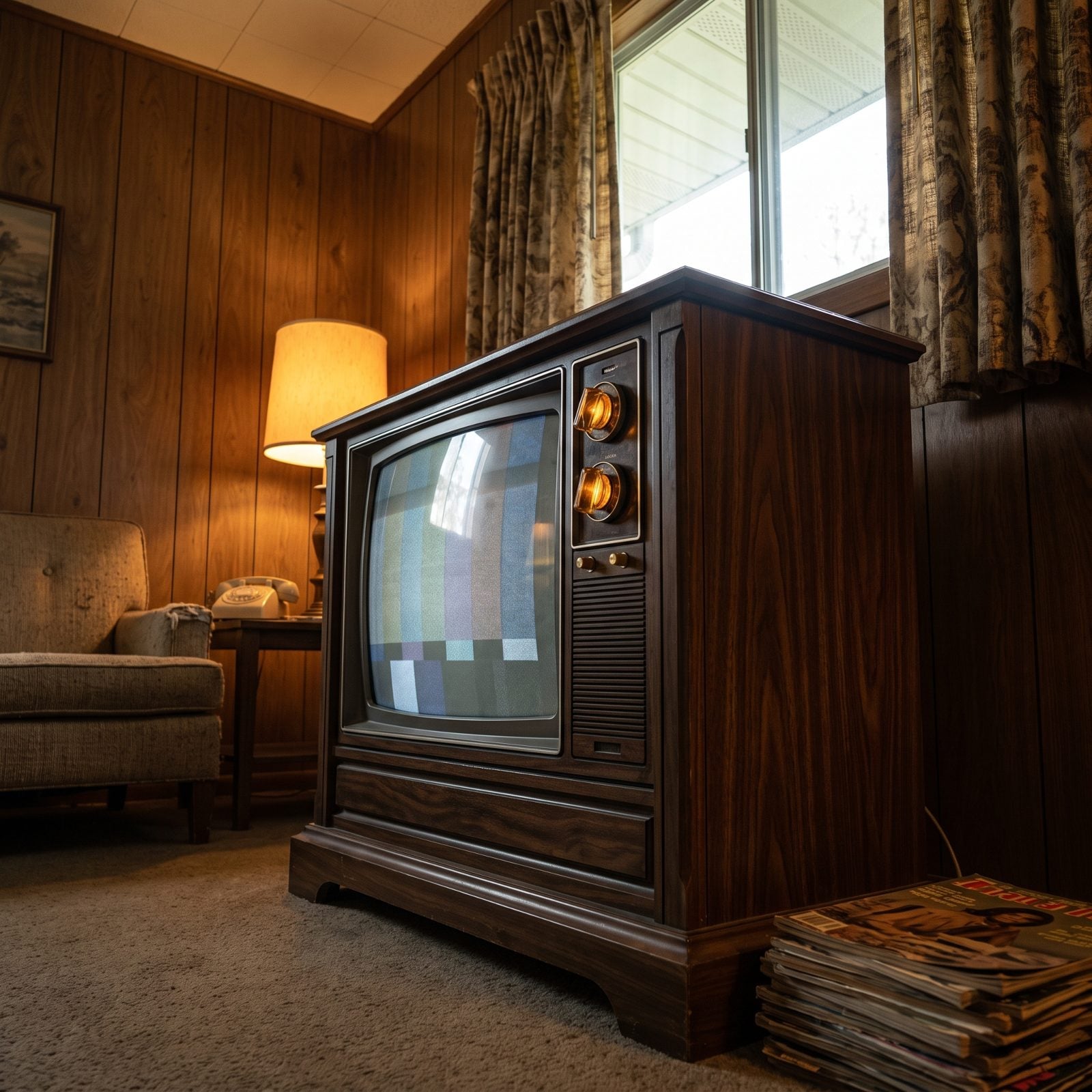
It weighed as much as a small refrigerator and had maybe twelve channels, four of which came in clear. The wood-grain plastic shell was meant to pass for furniture, because in 1984 a television basically was furniture.
You turned it on by hand, and the picture took a second to warm up, blooming out from a bright dot in the center of the glass before you discovered the color had been tuned to a shade of green that no human face has ever worn.
Half the time it swiveled on a bolted stand so you could angle it toward the bed. The other half it sat trapped inside a cabinet that doubled as a dresser, blocking one of the drawers for no good reason.
32. The Floral Polyester Bedspread That Never Got Washed
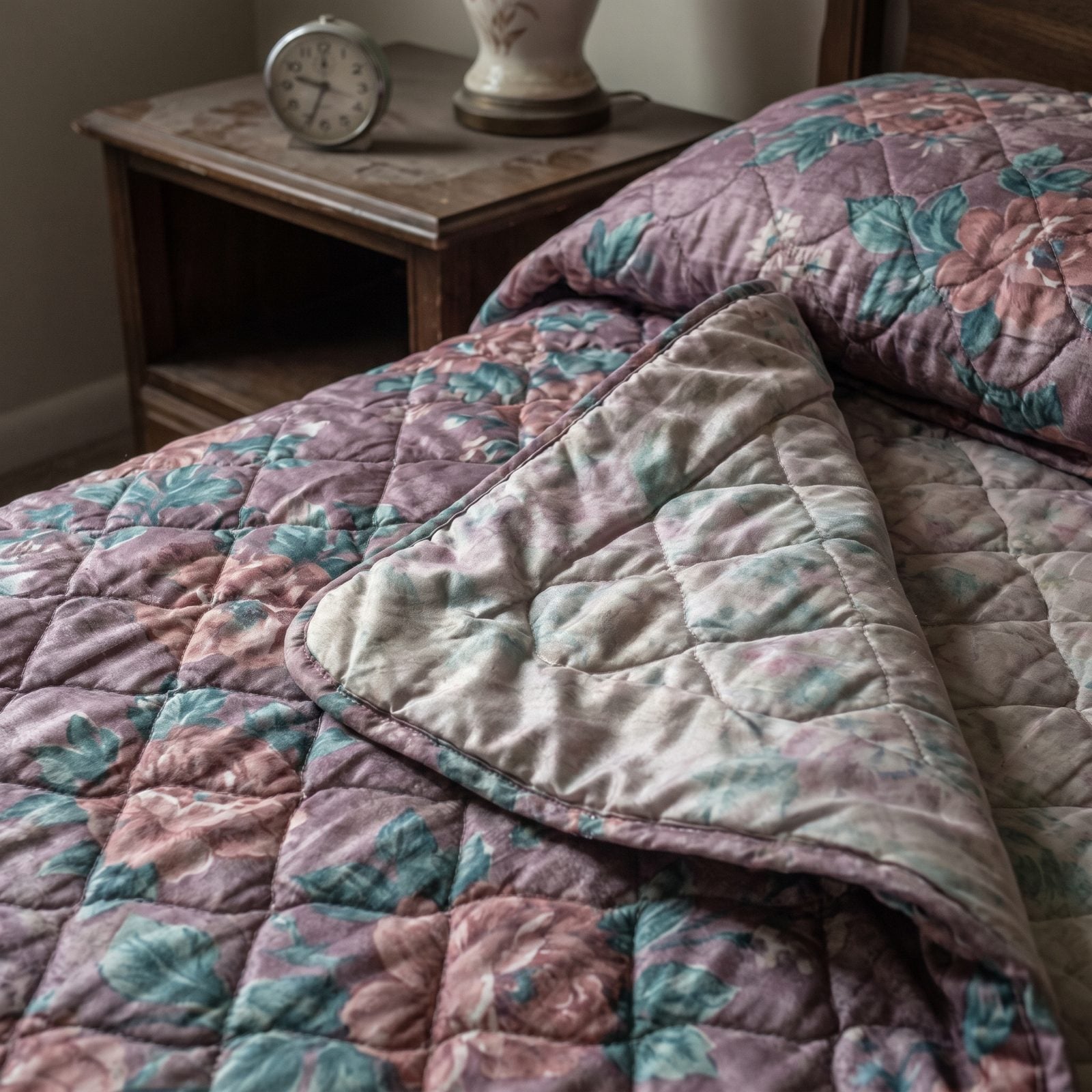
You knew, even at twelve, not to get under it. The bedspread was the layer you threw back and avoided, a slick quilted thing that had never seen the inside of a washing machine and never would.
The pattern was always flowers. Big ones, in peach and dusty rose and that particular 1980s seafoam green, arranged in a repeat that matched the curtains and sometimes the wallpaper too, so the whole room dissolved into one soft floral haze that followed you into the bathroom and back.
Polyester, so it caught the light with a faint plastic sheen and felt cool and slightly slippery under your hand. Pull it back and the real sheets waited underneath, the part they actually cleaned.
31. The Metal Room Key Chained to a Giant Plastic Fob
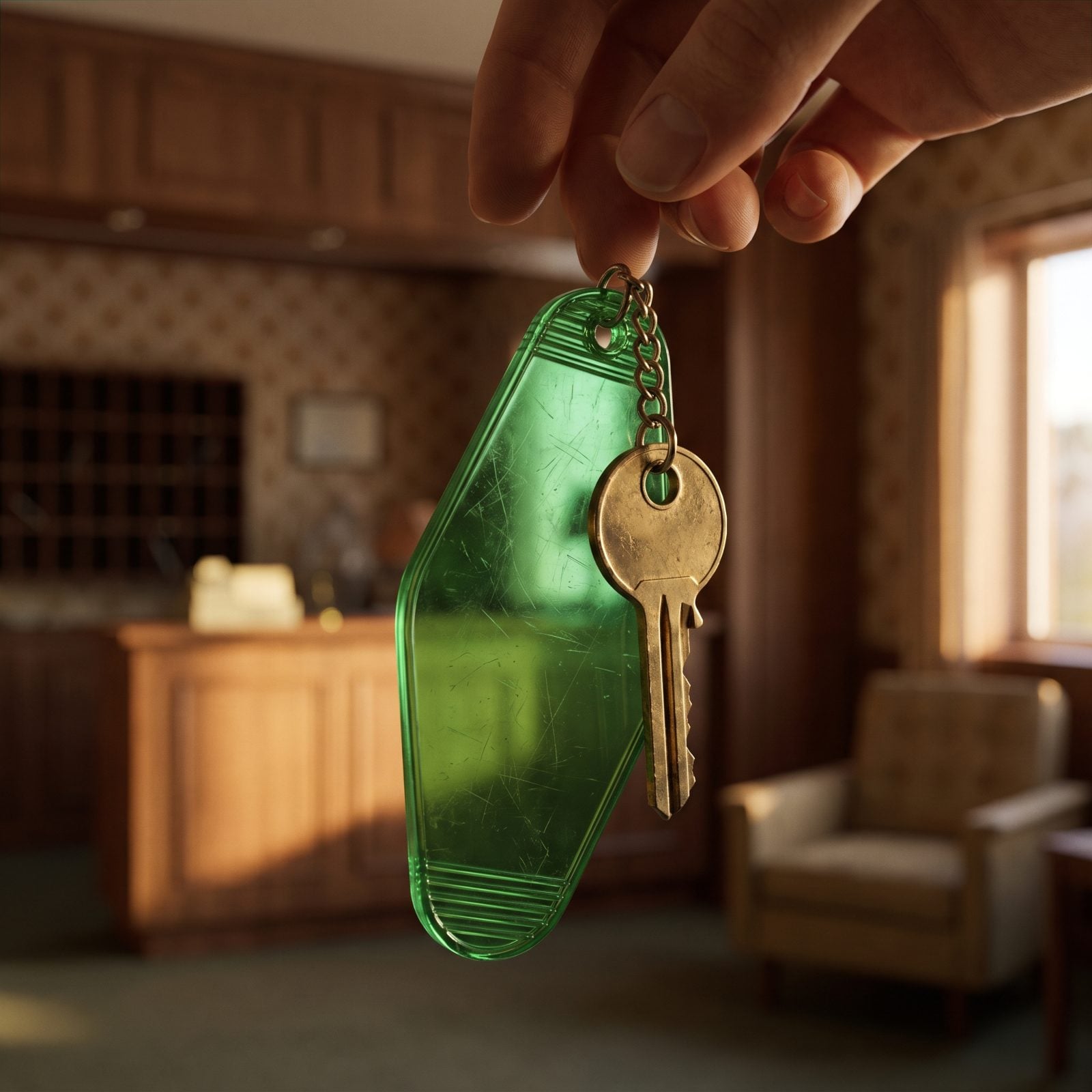
It sat in your pocket all day like a hand grenade. The fob was enormous on purpose, a slab of plastic or a diamond-shaped plaque big enough that you’d never forget it was there and drive off.
Stamped right into it: the room number, and a line asking you to drop it in any mailbox if you wandered off with it. Postage guaranteed. The honor system, by post.
The key itself was real brass, worn smooth by a thousand hands, and it stuck in the lock every single time until you learned the little jiggle. You don’t get to jiggle a key card.
30. The Chrome Ashtray Waiting on Every Flat Surface
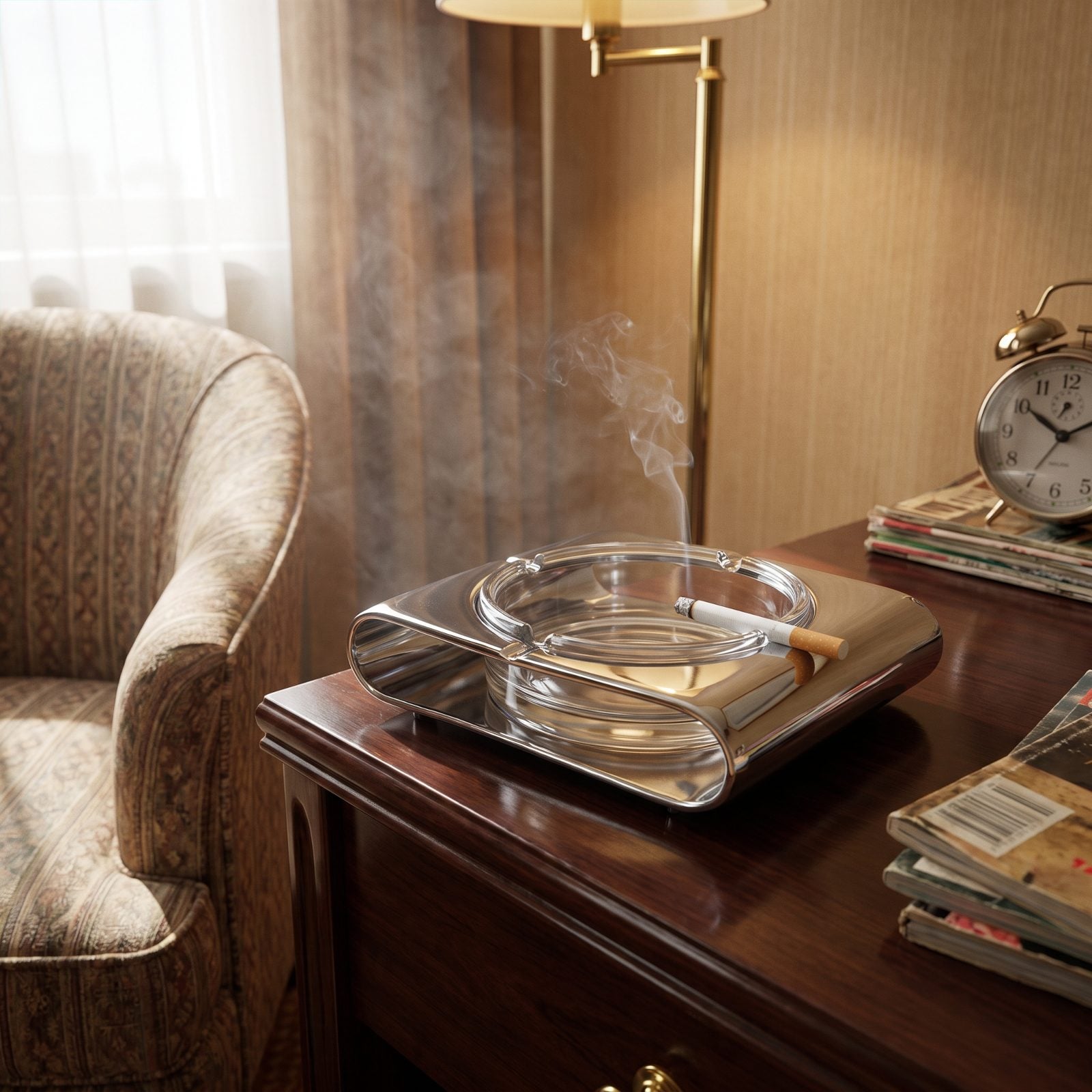
One on the nightstand. One by the TV. One in the bathroom, even. The ashtray was standard equipment, as expected as a Gideon Bible, sitting polished and empty on every flat surface you could find.
They were heavy glass or brushed chrome with those little notched grooves on the rim to park a cigarette between puffs. Nobody asked if you smoked. The whole room simply assumed you did.
You could request a non-smoking room if you knew enough to ask, but the ashtray stayed anyway, a small chrome reminder that the past did things differently.
29. The Wall-Mounted Hair Dryer With the Vacuum Hose
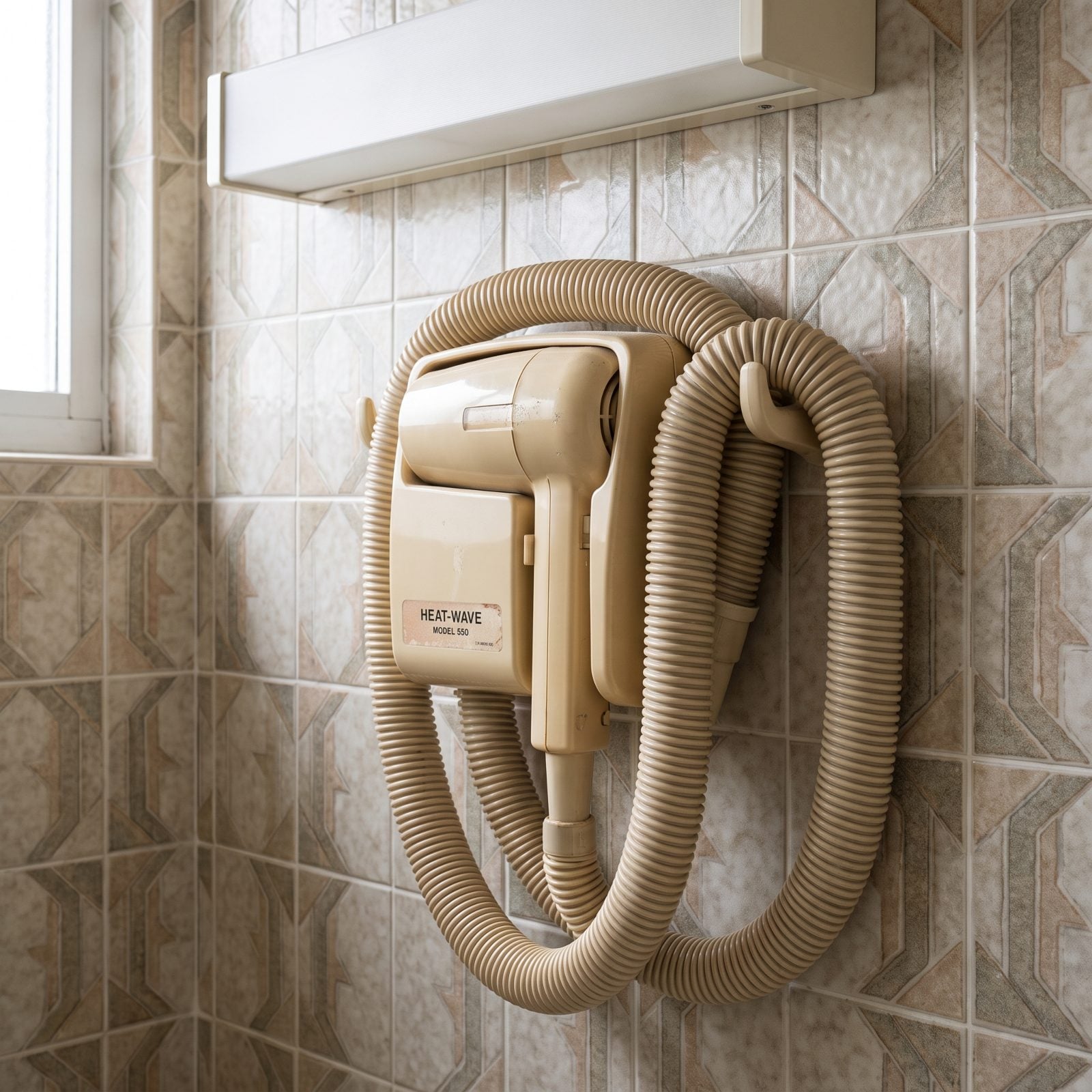
It was less a hair dryer and more a small central vacuum running in reverse. Bolted to the bathroom wall, this almond-colored contraption fed air through a ribbed accordion hose with a nozzle on the end.
You held the button down to keep it running. Let go and it died. So there you stood, pinning the button with one thumb and aiming the weak warm trickle at your head with the other hand, bent sideways because the hose only reached so far.
The air came out somewhere between warm and lukewarm, moving at the pace of a window fan. A full dry took the better part of a sitcom.
28. The Remote Control Bolted Straight to the Nightstand
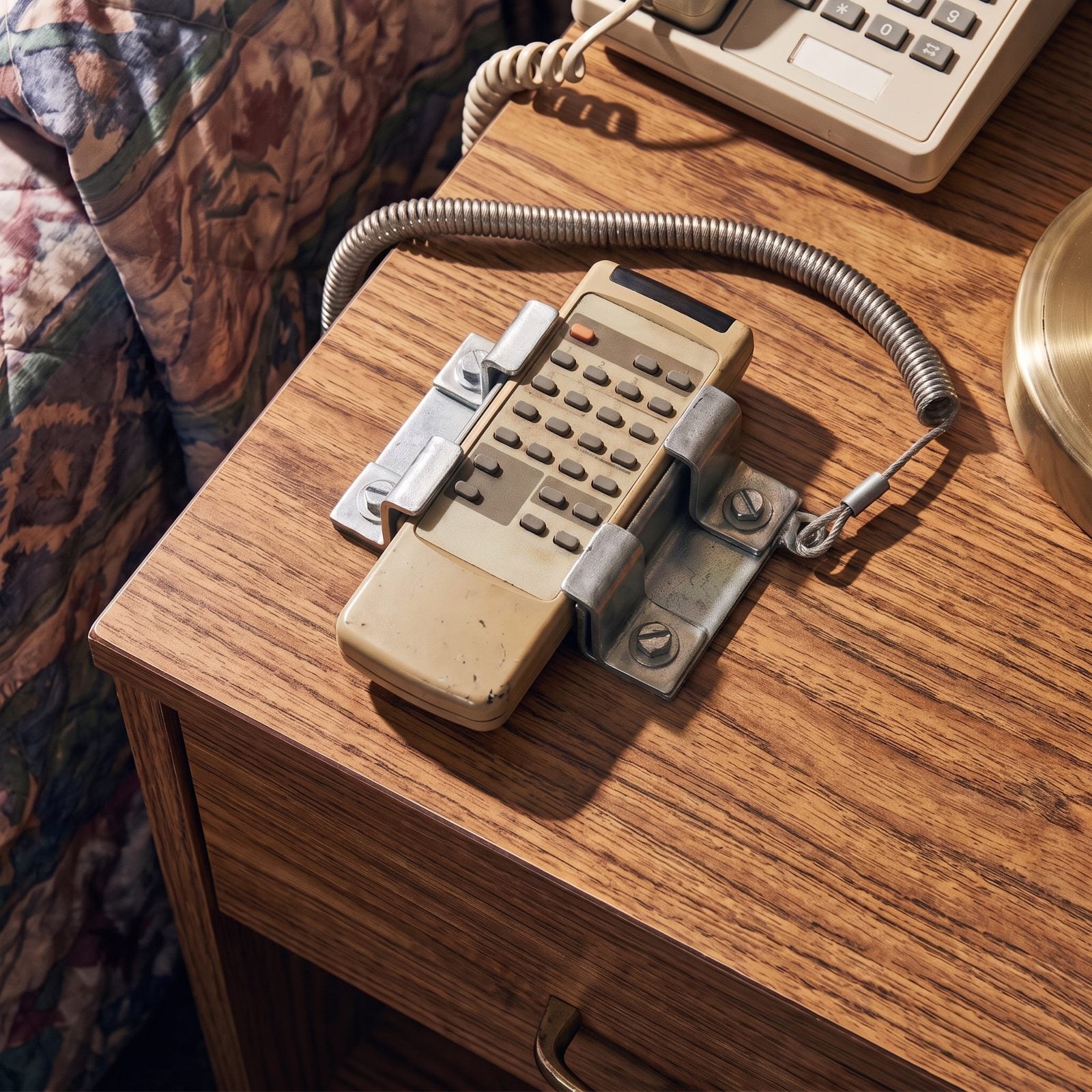
The remote didn’t go anywhere. It sat locked into a bracket screwed down to the nightstand, tethered by a short cord, because enough of them had grown legs over the years that the motel finally gave up and chained the thing in place.
Which meant you watched TV from exactly one position, or you lay there holding the whole bolted nightstand’s worth of weight at an awkward angle while your arm went numb. The buttons were little gray rounded nubs with a satisfying rubbery give.
Finding the remote was never the problem. Finding a comfortable way to use it was.
27. The Pay-Per-View Box With the Mysterious Push Buttons
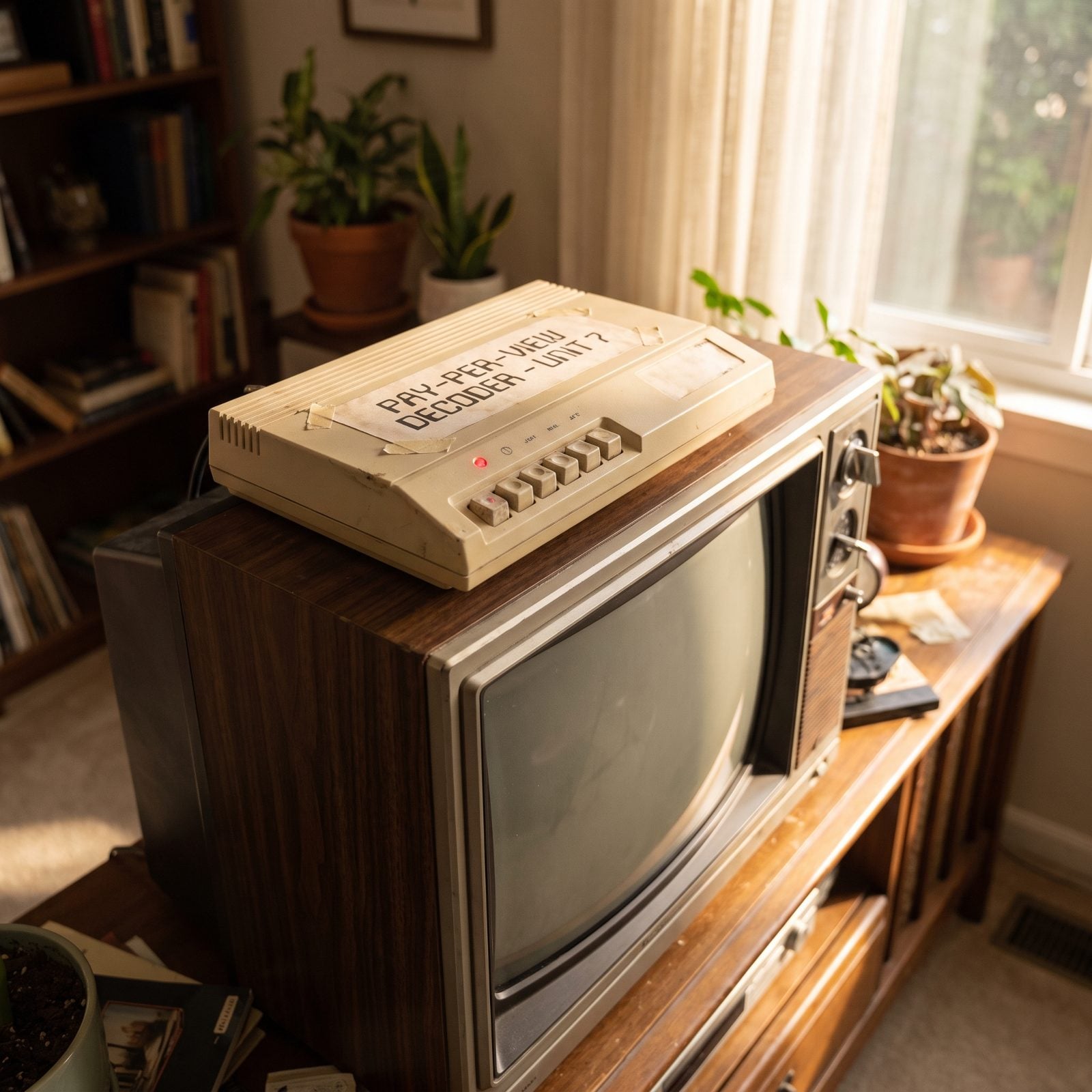
The forbidden box. A little beige unit perched on the TV with a row of push buttons and a printed card of titles, and pressing one meant a charge appeared on your bill under some innocent-looking code.
You could pay to watch a current movie, which felt like magic in 1986 when your only other option was a video store with a membership card. The box hummed. A light blinked. Somewhere a meter started counting, and nobody told you exactly how much it had cost until the morning.
Parents warned kids off it like it was a stove burner. Hit the wrong button and Dad’s checkout bill had an extra charge he’d be squinting at down in the lobby.
26. The Clock Radio With the Flip-Number Display
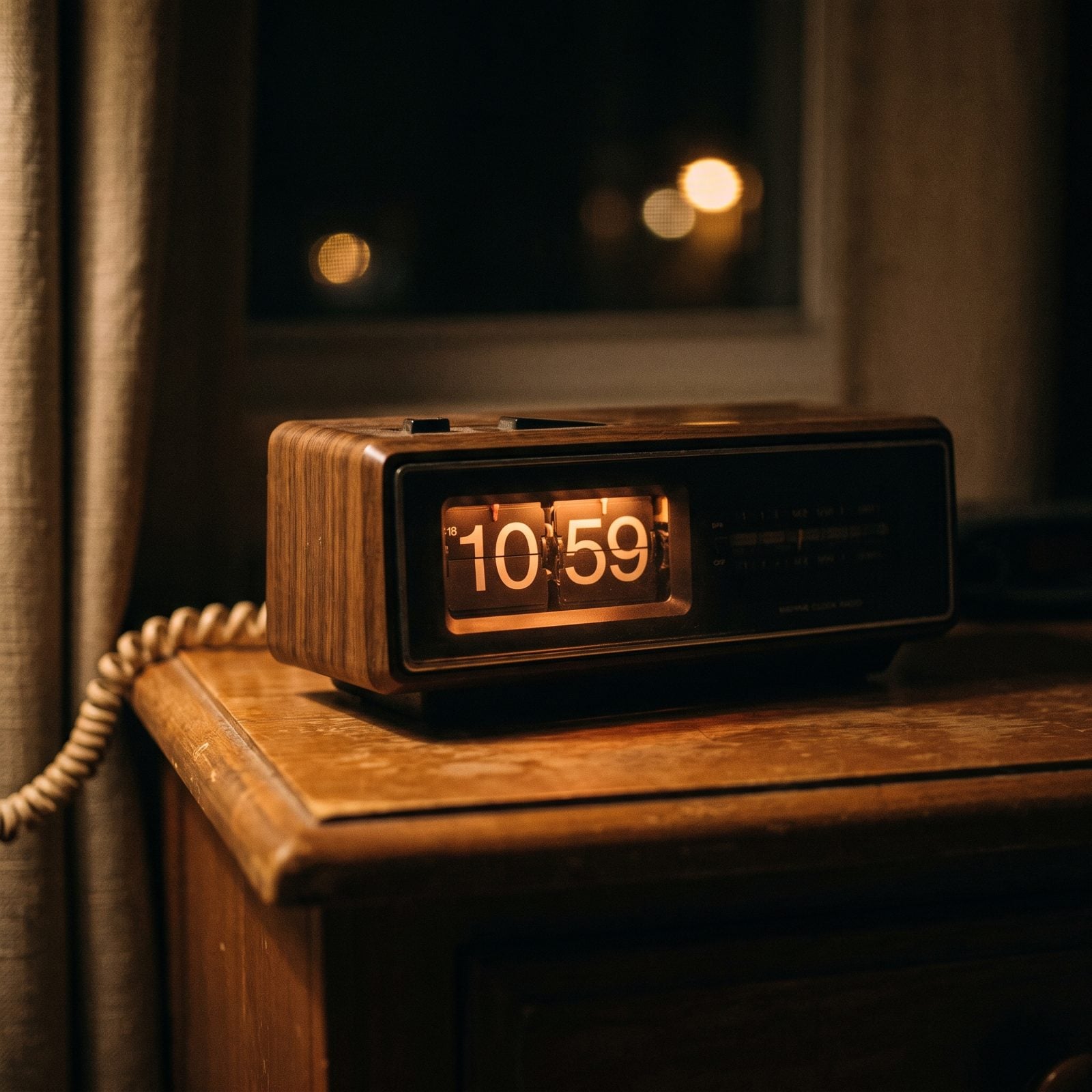
You remember the sound before the look. A soft mechanical flip in the dark, the minute card dropping over with a quiet tick, over and over all night long.
The numbers were printed on little split cards that rotated on a drum, so the display didn’t glow — it moved. Setting the alarm meant working a stiff little lever on the side and then hoping, as you drifted off, that you’d actually armed the thing.
It woke you with whatever station the last guest left it tuned to, usually a blast of static or a man reading farm reports. And it was always, always set to the wrong time.
25. The Telephone With the Printed Dialing Instruction Card
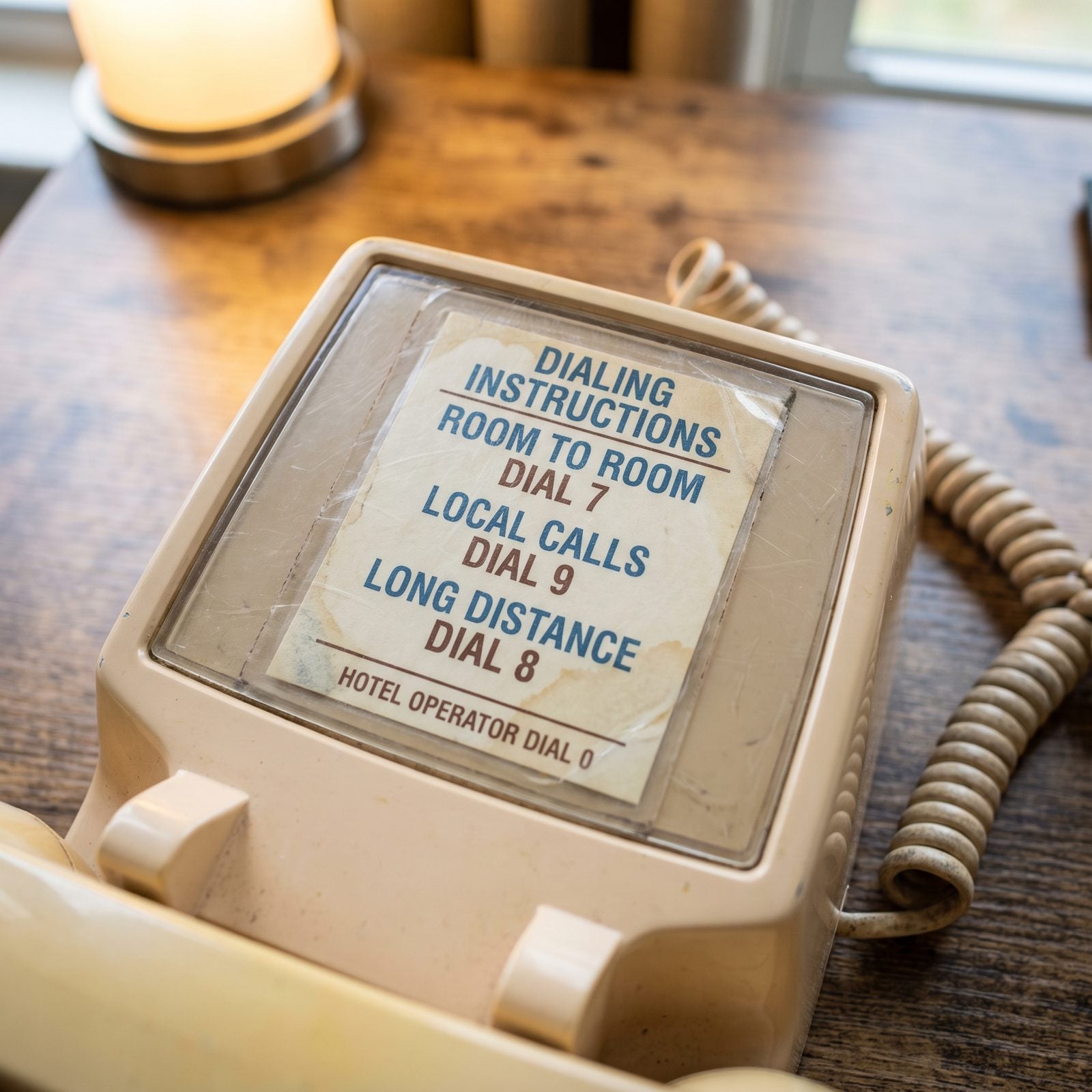
Right in the middle of the phone, under a little clear plastic window, sat the card that explained the entire universe of making a call. Dial 9 for an outside line. Dial 0 for the operator. There were lines for the front desk, for housekeeping, for another room down the hall.
Nobody could just pick up a hotel phone and know what to do with it. The 9 was the famous one, gatekeeper to the outside world, and forgetting it meant a confused few seconds of silence before you tried again.
Long distance came with a warning in small print about surcharges, which is where a lot of checkout-counter heart attacks were born.
24. The Wake-Up Call You Had to Ask a Human For
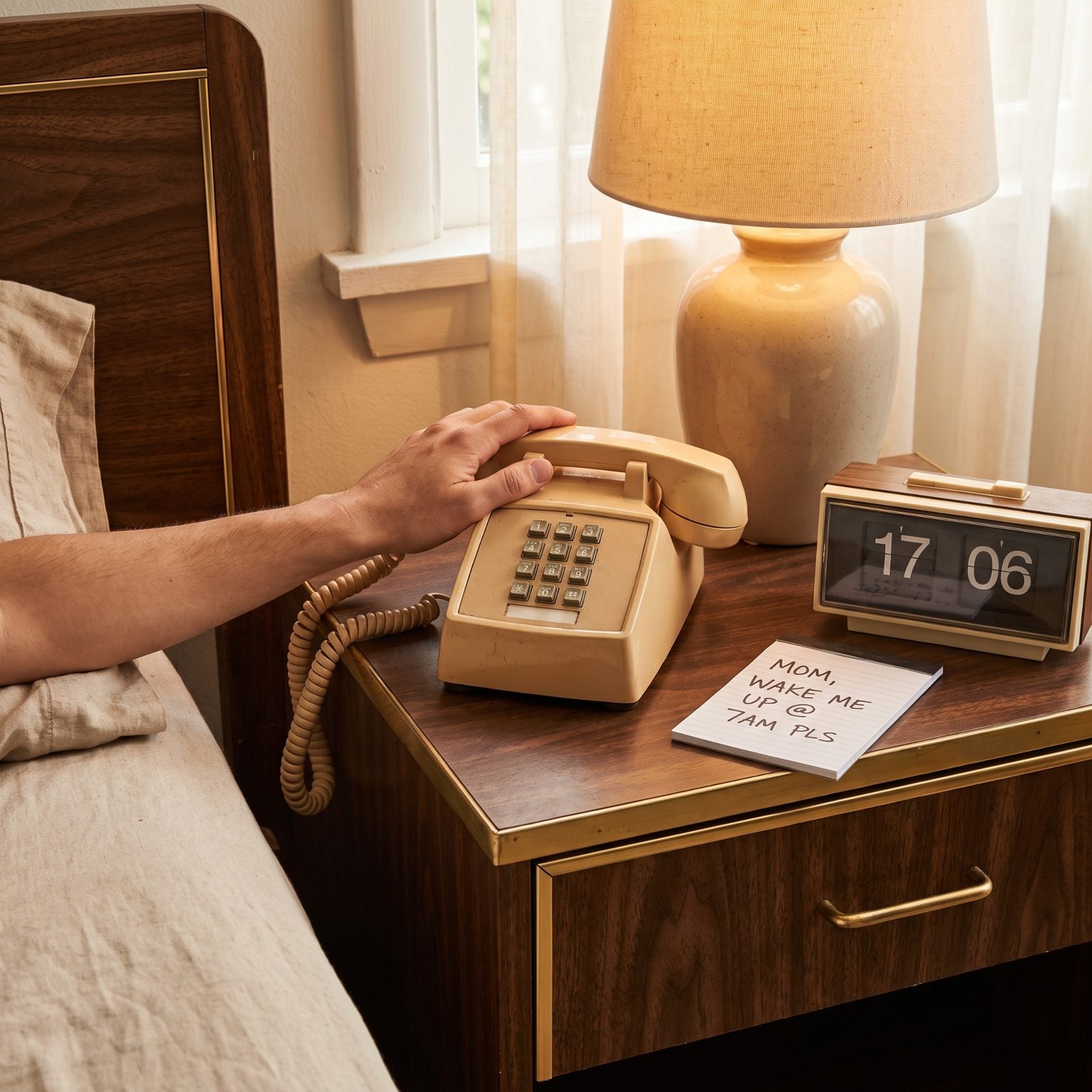
There was no app for this. You picked up the phone the night before, told a human being you needed to be up at six, and then trusted that it would actually happen.
Someone at the front desk wrote it down — on paper, into a card system, or on a clipboard by the switchboard. Come morning the phone rang at six on the nose, and a tired voice said good morning, this is your wake-up call, and that was the whole service, start to finish.
It worked almost every time. That’s the part worth sitting with. A stranger you’d never see again kept a promise to wake you up, a promise made over the phone the night before.
23. The Channel Guide Printed on a Stiff Plastic Card
🔥 Would you like to save this?
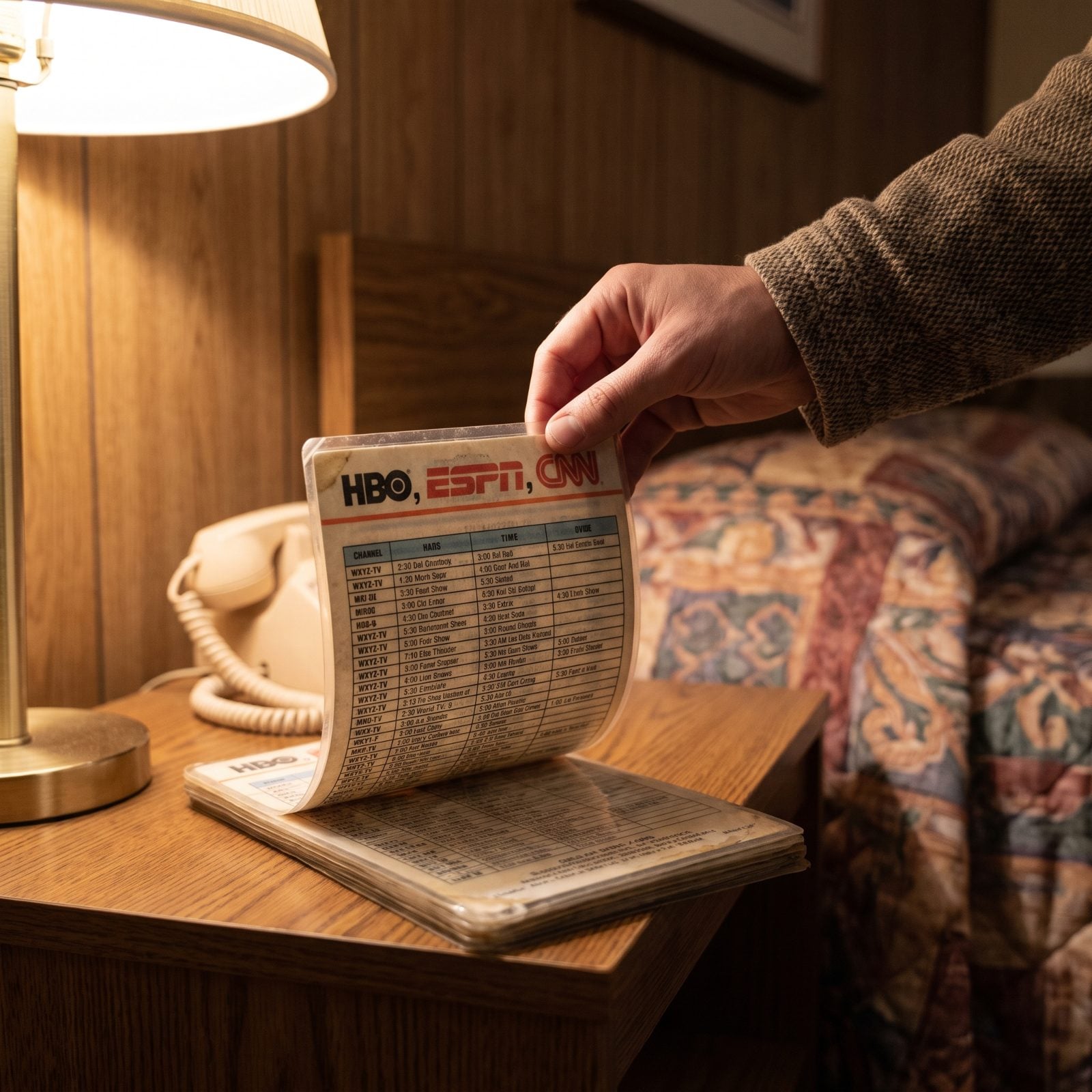
You flipped it over looking for HBO. Maybe you found it. Maybe the hotel only sprang for the basic tier and you watched the news instead.
This little card lived propped against the TV or tucked under the lamp — a grid of channel numbers printed on plastic so it could survive a thousand damp hands. Channel 3 was the front-desk information loop, Channel 8 was the local affiliate, and somewhere in the twenties was the movie you’d pay four dollars to watch on your folio.
22. The Local Yellow Pages Fattening Up the Nightstand Drawer
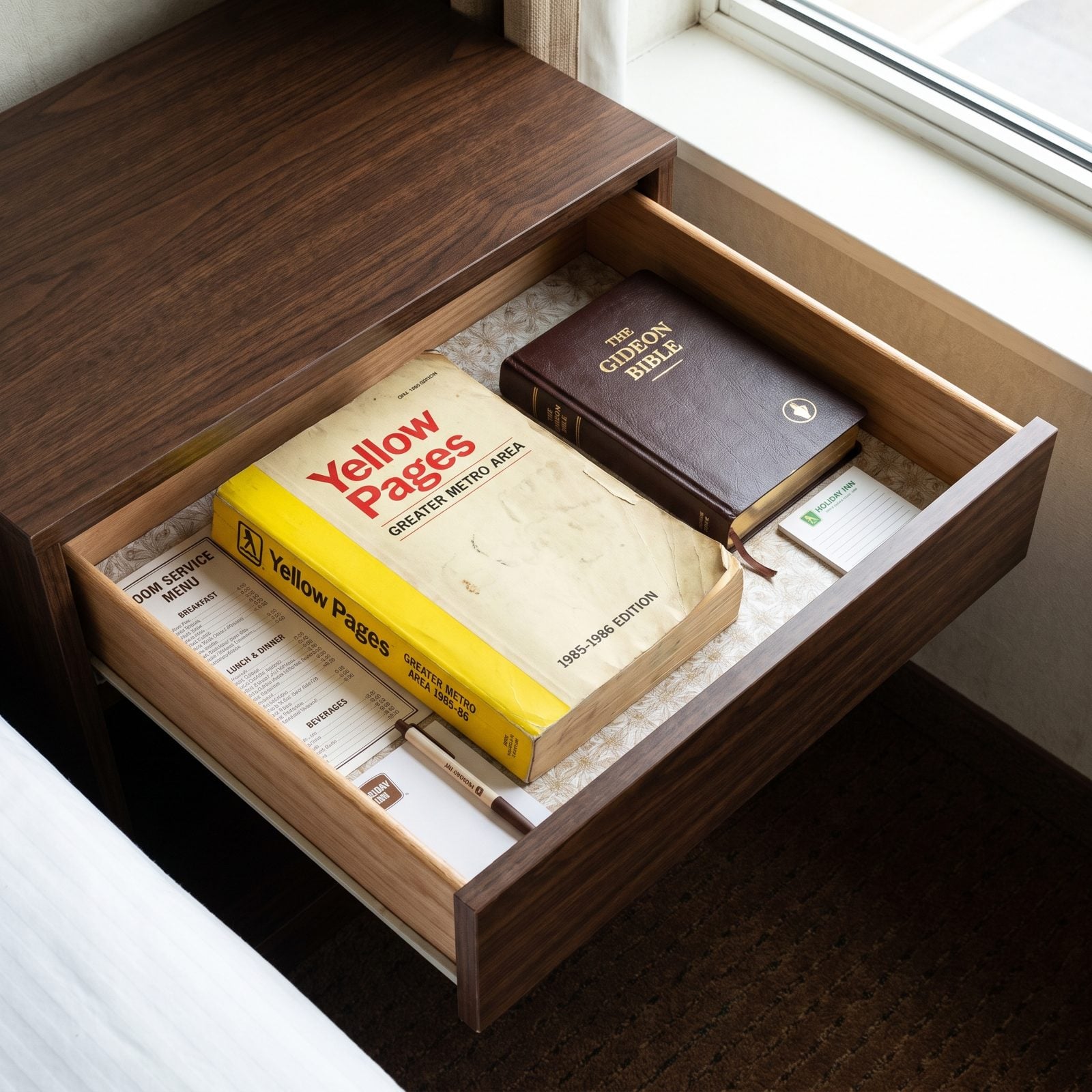
Heavy as a cinder block, and nobody traveled to read it. But there it sat in the nightstand drawer beside the Gideon Bible — a full phone directory for a city you’d be gone from by Tuesday.
You cracked it open when you wanted a pizza delivered, or a cab, or the number of a diner that stayed open past ten. The pages were thin as onion skin and the ink came off on your thumb. It assumed you had nowhere else to look, and in 1983, you didn’t.
21. The Ballpoint Pen Chained to the Desk
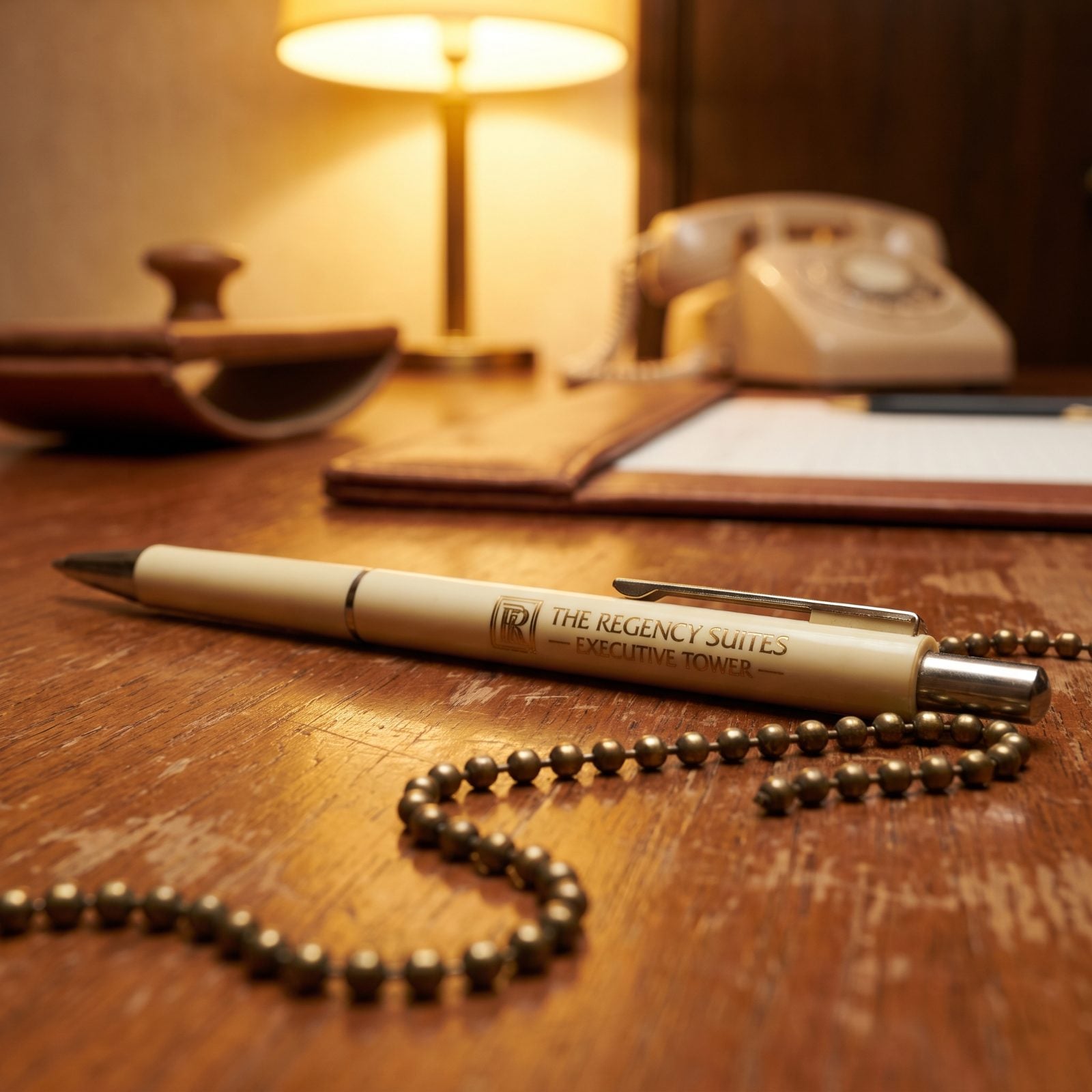
The pen that couldn’t leave. You’d pull it toward you to jot a number and the little chain yanked back, reminding you it belonged to the desk and not to you.
Hotels chained pens because guests pocketed them by the hundred — which is funny, because the pen itself was worth about four cents and skipped on every third stroke. The real prize was the pad of letterhead underneath. Nobody chained that down.
20. The Room-Service Menu Slid Into a Sticky Vinyl Folder
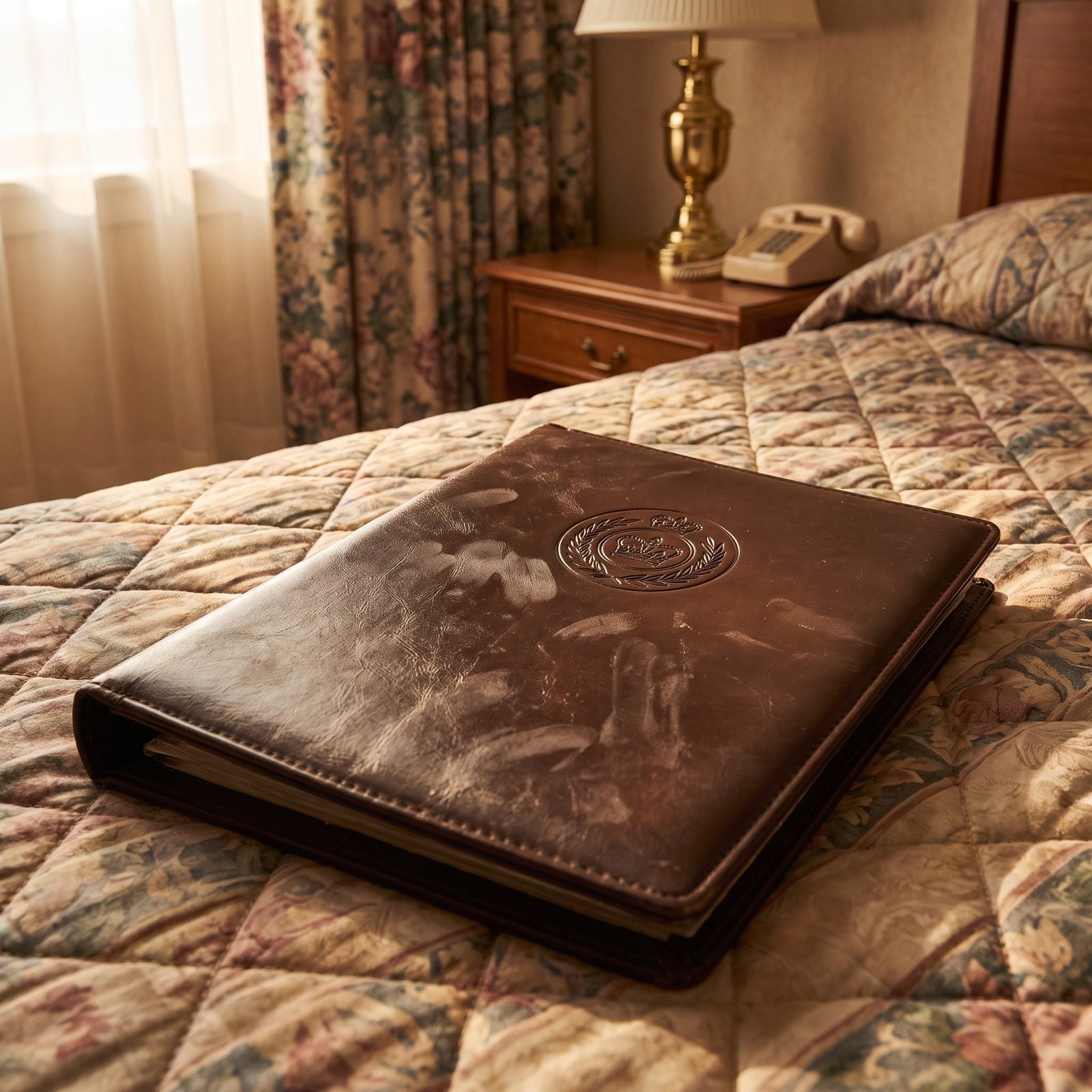
You know the feeling of that vinyl folder. Slightly tacky, a little warm, the kind of surface that held onto fingerprints and the faint memory of every breakfast ordered before yours.
Inside, a single printed page promised a club sandwich for a price that made you do math, plus a continental breakfast you hung on the doorknob the night before. The folder was padded to feel fancy. The prices made sure you knew it was.
19. The Postcard Showing the Hotel From Its Best Possible Angle
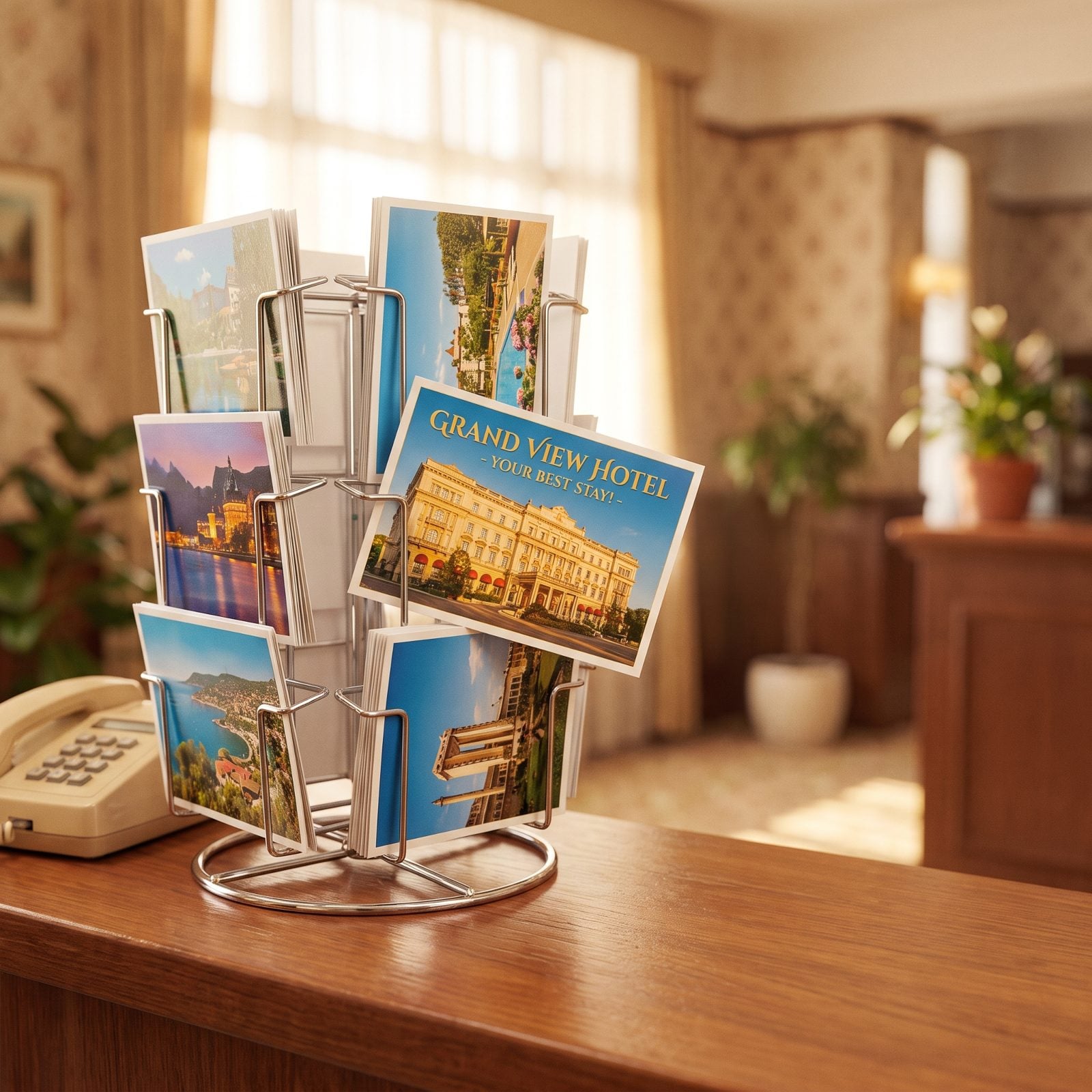
Every hotel wanted you to mail proof you’d been there. The postcard lived in a little rack by the phone, free for the taking, the building shot from the one angle that hid the highway behind it.
The sky was always impossibly blue, and the cars in the lot were always from three years back, because the photo was. You’d scribble “wish you were here” to your mother, drop it in the lobby box, and arrive home two days before it did.
18. The Plastic Ice Bucket and Its Stack of Matching Cups
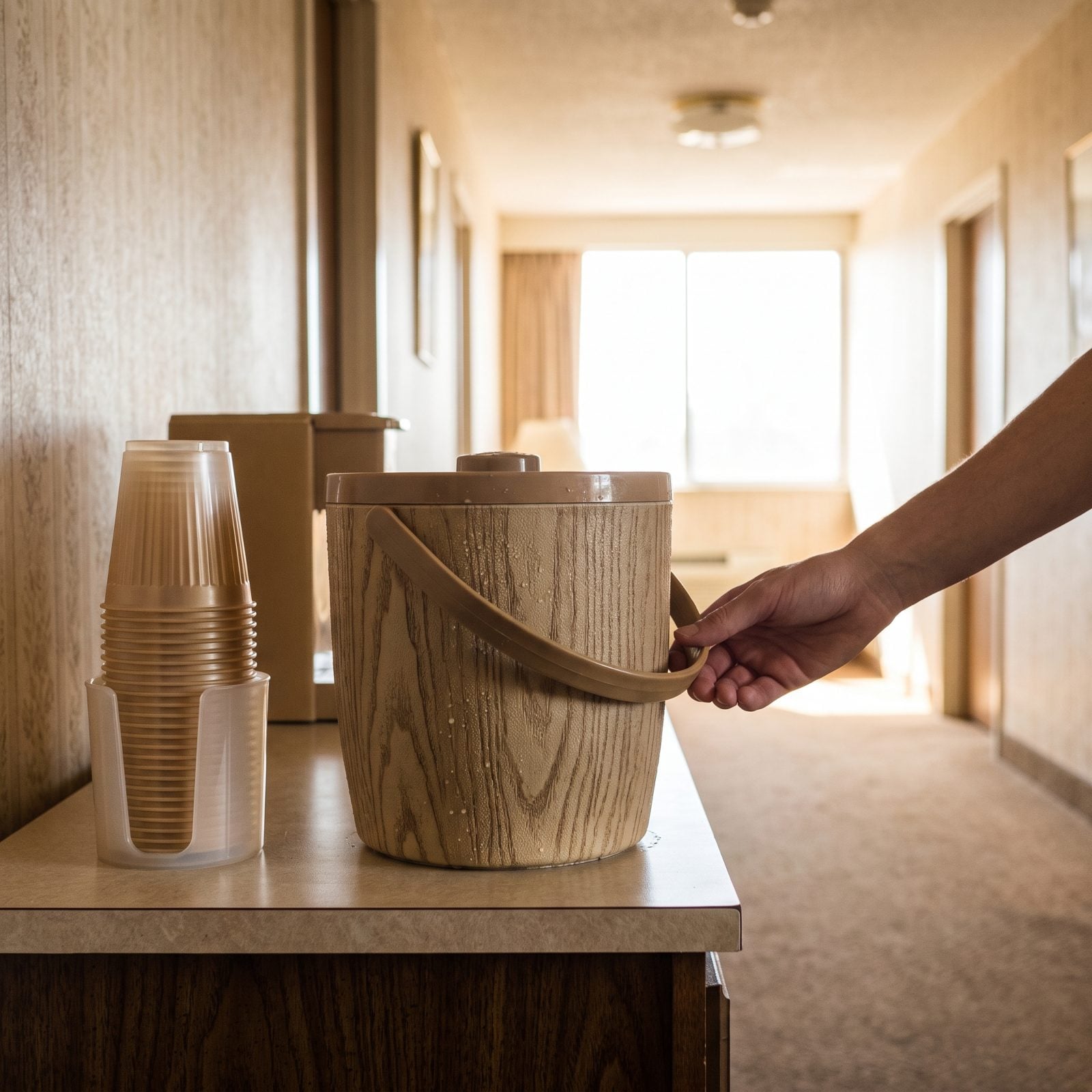
The ice run was a ritual. You grabbed the bucket, padded down the hall in your socks, and fed the machine until it coughed out a landslide of cubes. That hum at the end of the corridor is burned into anyone who traveled in the 80s.
Back in the room, you stacked the matching plastic cups, cracked a soda from the vending machine, and felt briefly like you were running a small hotel of your own. The bucket had a faux-marble swirl. The cups never quite stacked right.
17. The Metal Bottle Opener Screwed Into the Bathroom Wall
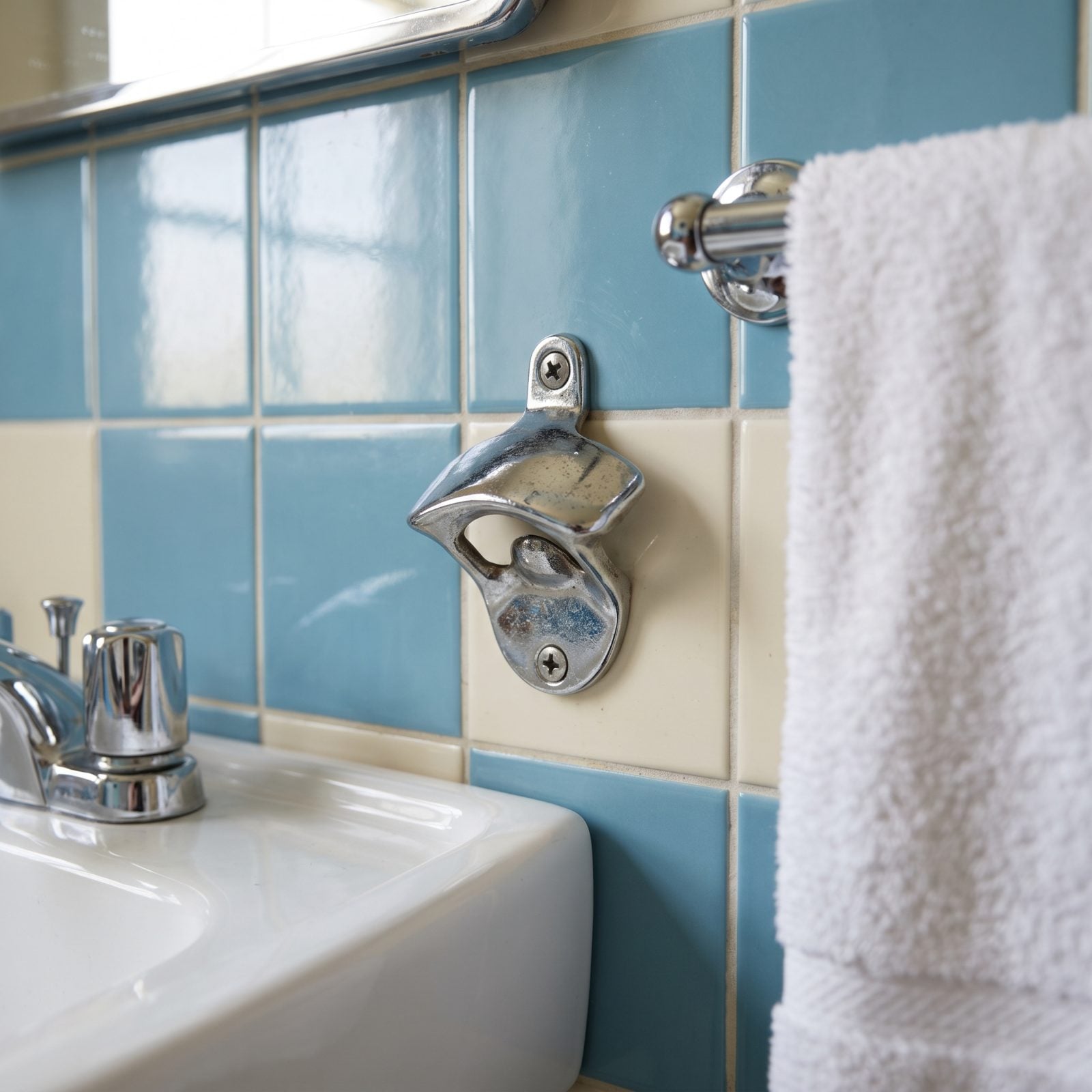
A relic of a thirstier era, bolted to the wall between the sink and the towel bar. Before twist-off caps conquered everything, a cold glass bottle needed a tool — and the hotel provided one you couldn’t carry off.
You popped the cap, the bottle hissed, and the metal cap rattled into the sink or onto the floor. By the late 80s it was already quaint, a little chrome fossil nobody bothered to remove.
16. The Shoe-Shine Cloth Printed With the Hotel’s Name
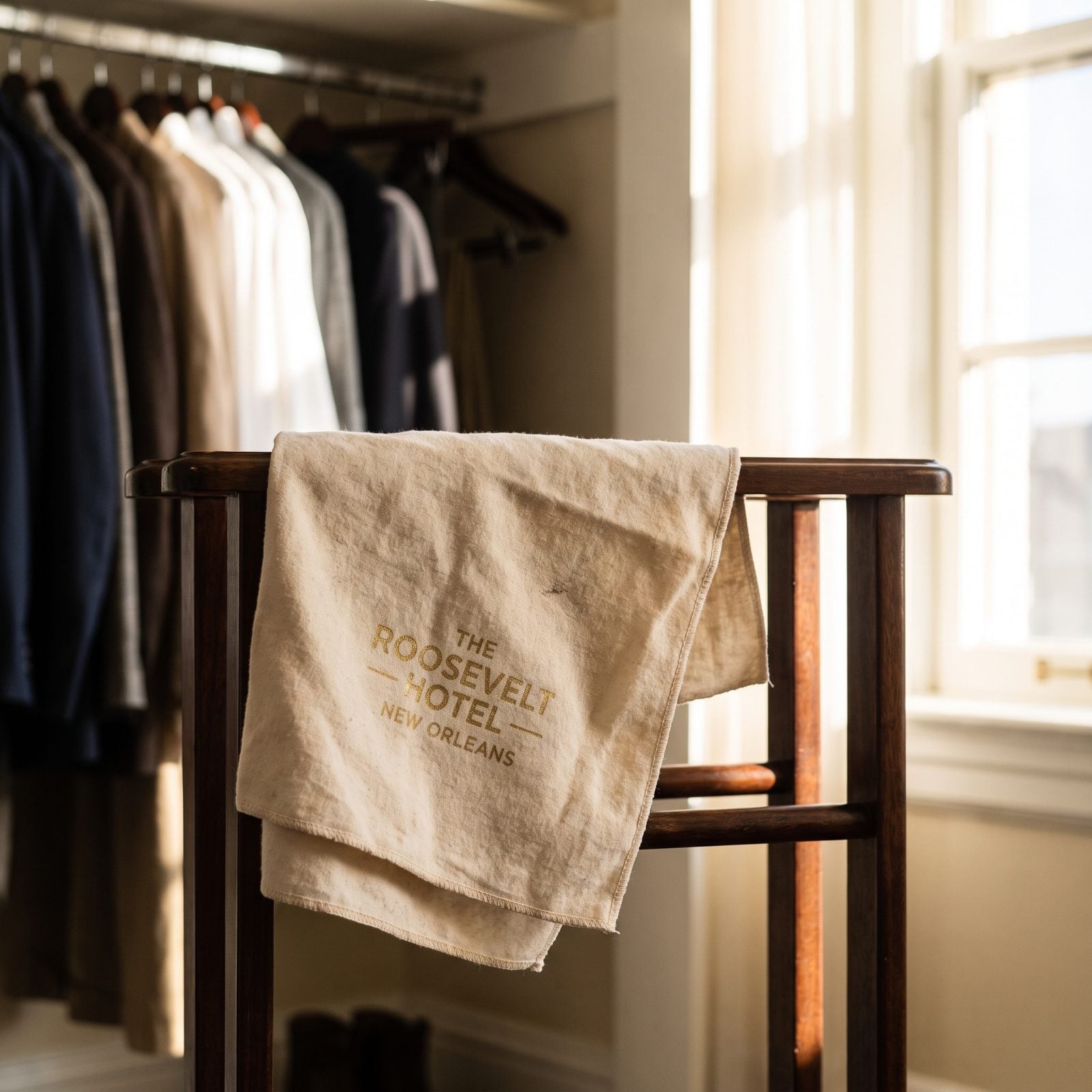
Tucked in the closet or draped over the valet stand, a soft cotton cloth stamped with the hotel name in gold, meant for buffing your wingtips before a morning meeting.
Half the people who found one used it to wipe a smudge off a mirror or clean their glasses instead. It assumed you traveled with leather shoes and cared how they looked, and in an era of dress codes and business travel, plenty of guests did. You folded it, kept it, and found it in your suitcase a month later.
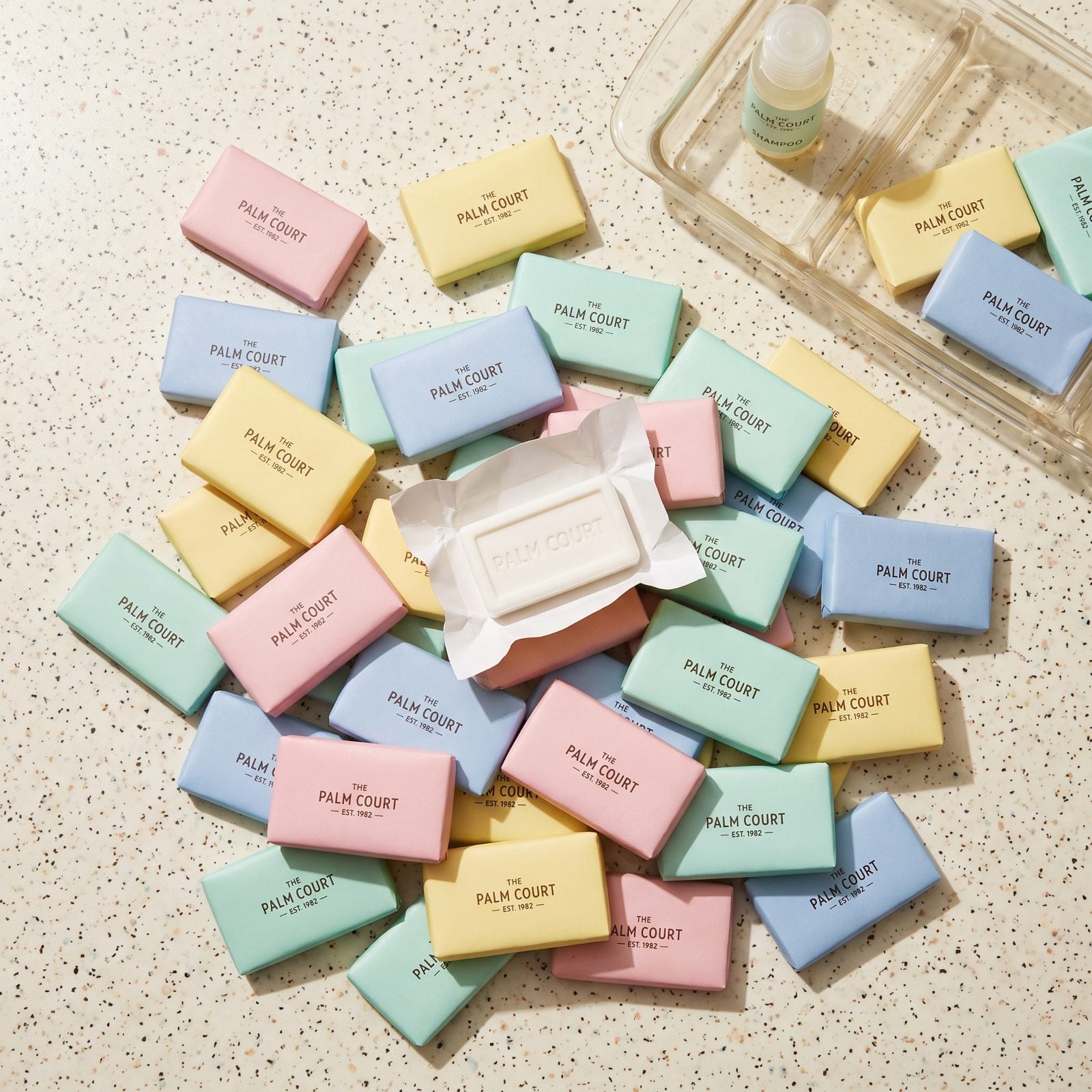
15. Individually Wrapped Bars of Hotel Soap You Couldn’t Resist Pocketing
🔥 Would you like to save this?
Everyone took the soap. Don’t pretend you didn’t. Those tiny paper-wrapped bars were the one amenity you were practically invited to pocket, and generations of travelers stocked their home bathrooms this way.
They were barely big enough to last a shower, embossed with a brand name you’d forget, smelling faintly of cheap floral or nothing at all. The wrapper had a little crest. You tucked two in your dopp kit and found them, mysteriously multiplied, years later in the back of a drawer.
14. The Bathroom Drinking Glass Sealed in a Little Paper Sleeve
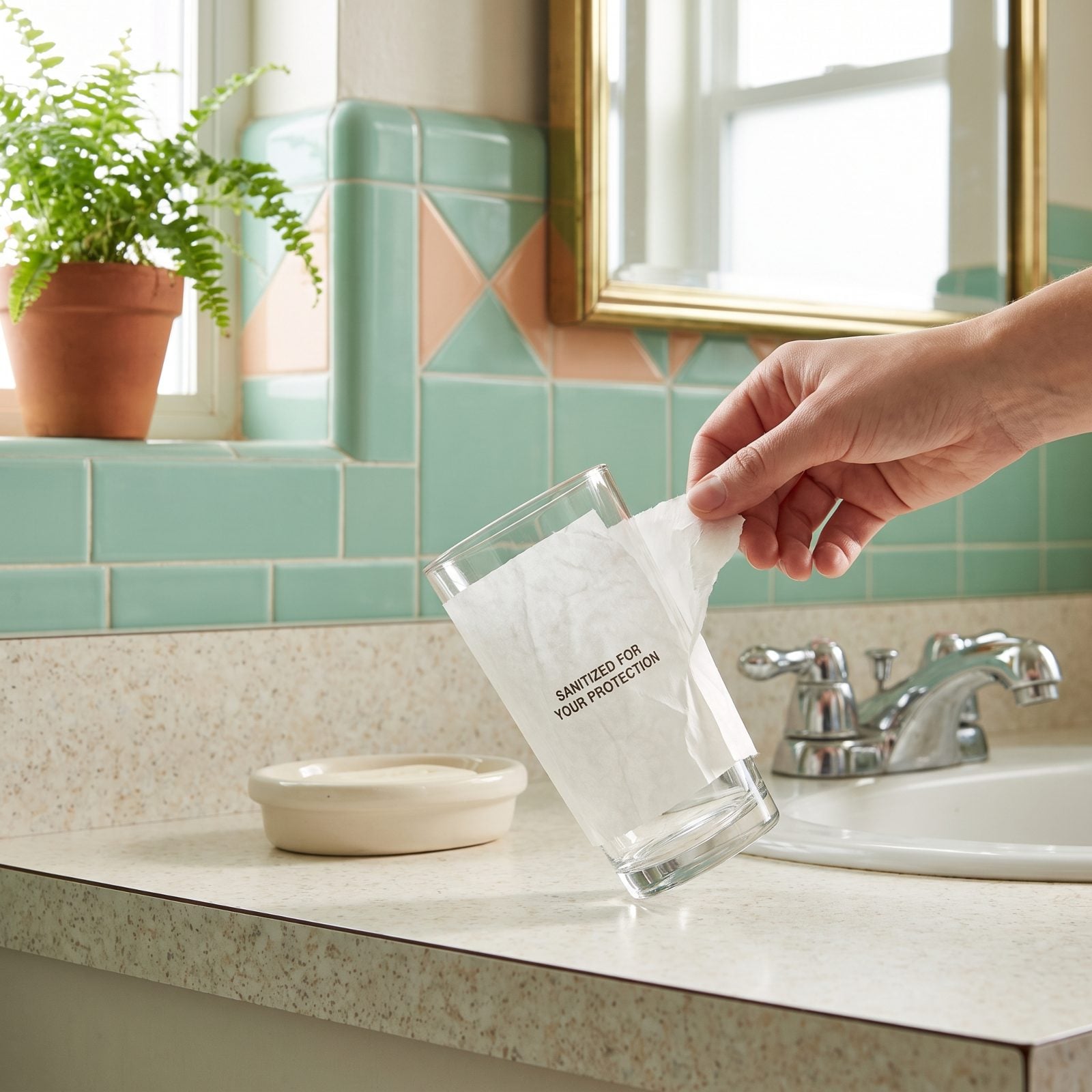
Real glass, capped with a paper sleeve that promised it had been sanitized for your protection. You slid the sleeve off, and for a second you felt looked after, like someone had thought about your morning.
Then came the news exposés in the late 80s showing housekeeping wiping those “sanitized” glasses with the same rag they’d used on the mirror, and the paper cap started to feel less like a promise and more like a dare.
Plastic-wrapped cups eventually took over. But the real glass with its little paper hat is what we remember — the last amenity that pretended your hotel room was a little bit like home.
13. The Sanitized Paper Band Stretched Across the Toilet Seat
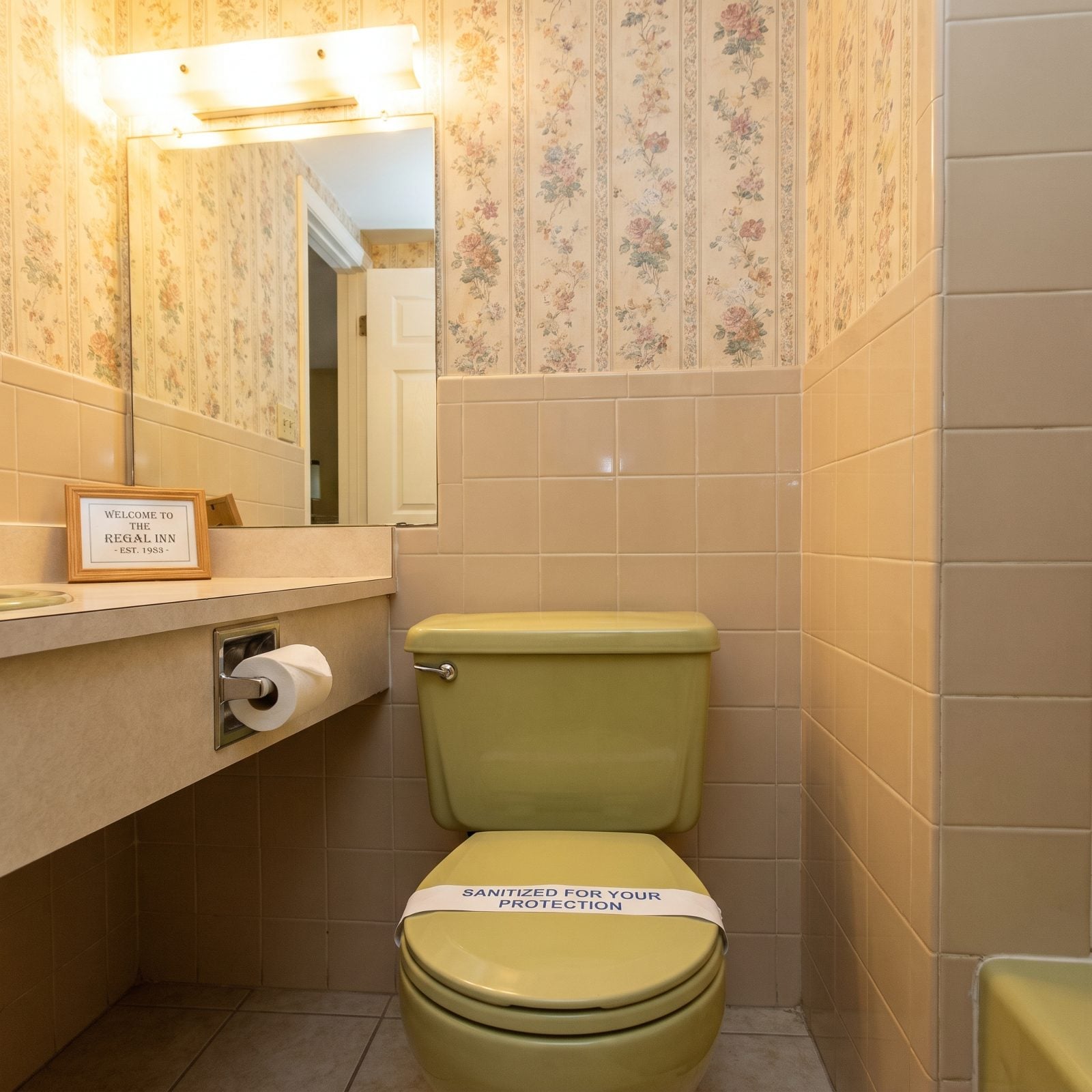
You walked into the bathroom, flipped on the light, and there it was: a strip of paper pulled taut across the seat like crime-scene tape for cleanliness. The little printed promise. Sanitized for your protection.
Breaking it was oddly satisfying. One nudge, the band split with a soft paper tear, and some part of your brain registered that you were officially the first person to use this room. Nobody asked for proof the seat had actually been scrubbed. The band was the proof, and the ritual of breaking it did the convincing.
12. The Razor-Blade Disposal Slot Hiding in the Medicine Cabinet
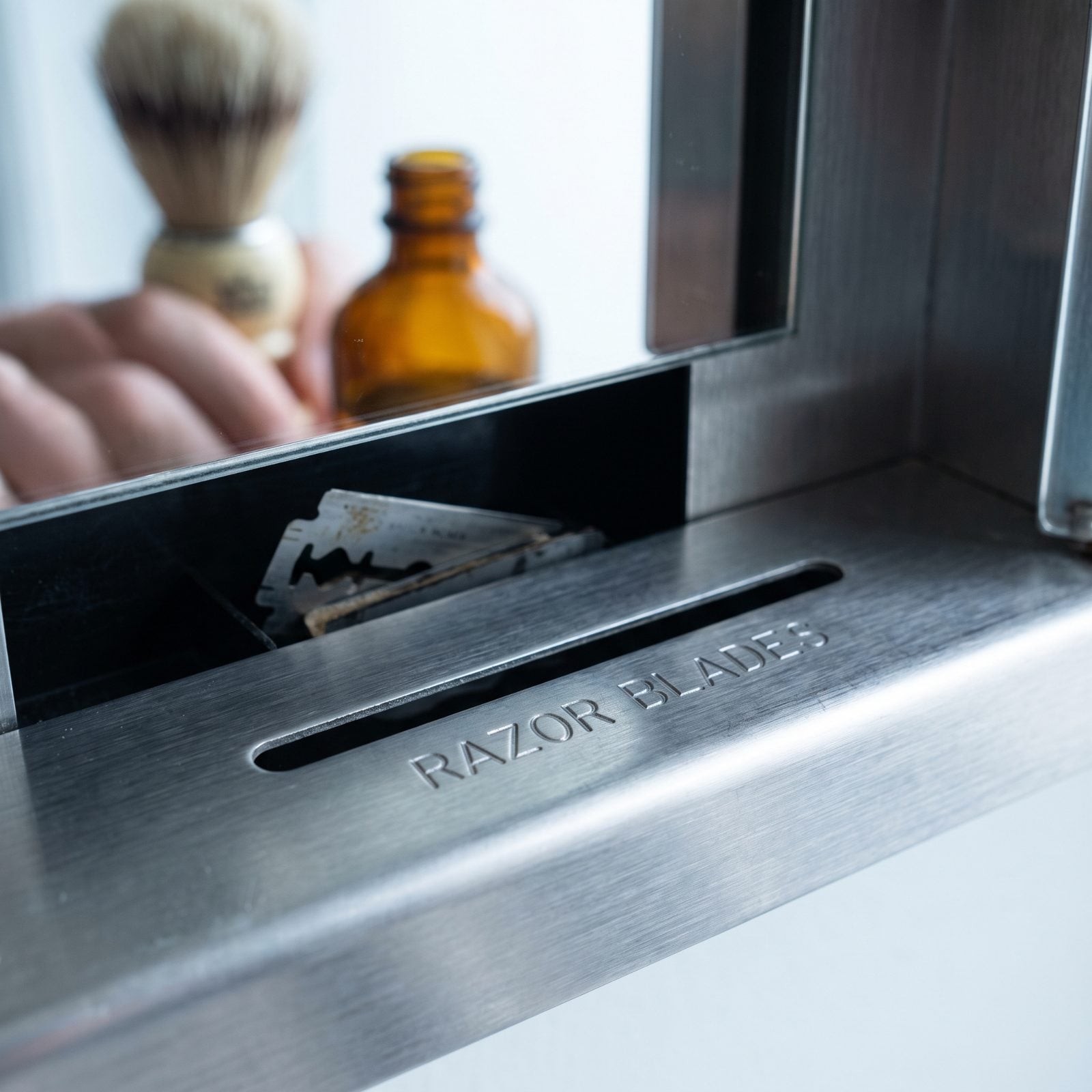
Behind the mirror, down near the bottom of the metal cabinet, was a slim slot the width of a double-edged blade. You probably never used it. But you read the little stamped label and understood, with a small chill, where every used razor blade in the building’s history had gone.
It emptied into the wall cavity. No bin, no retrieval, just a one-way trip into the stud bay between you and the next room. Demolition crews still find those blades by the hundred when old motels come down — a quiet archaeology of a thousand morning shaves.
11. The Mirrored Vanity Ringed in Round Globe Bulbs
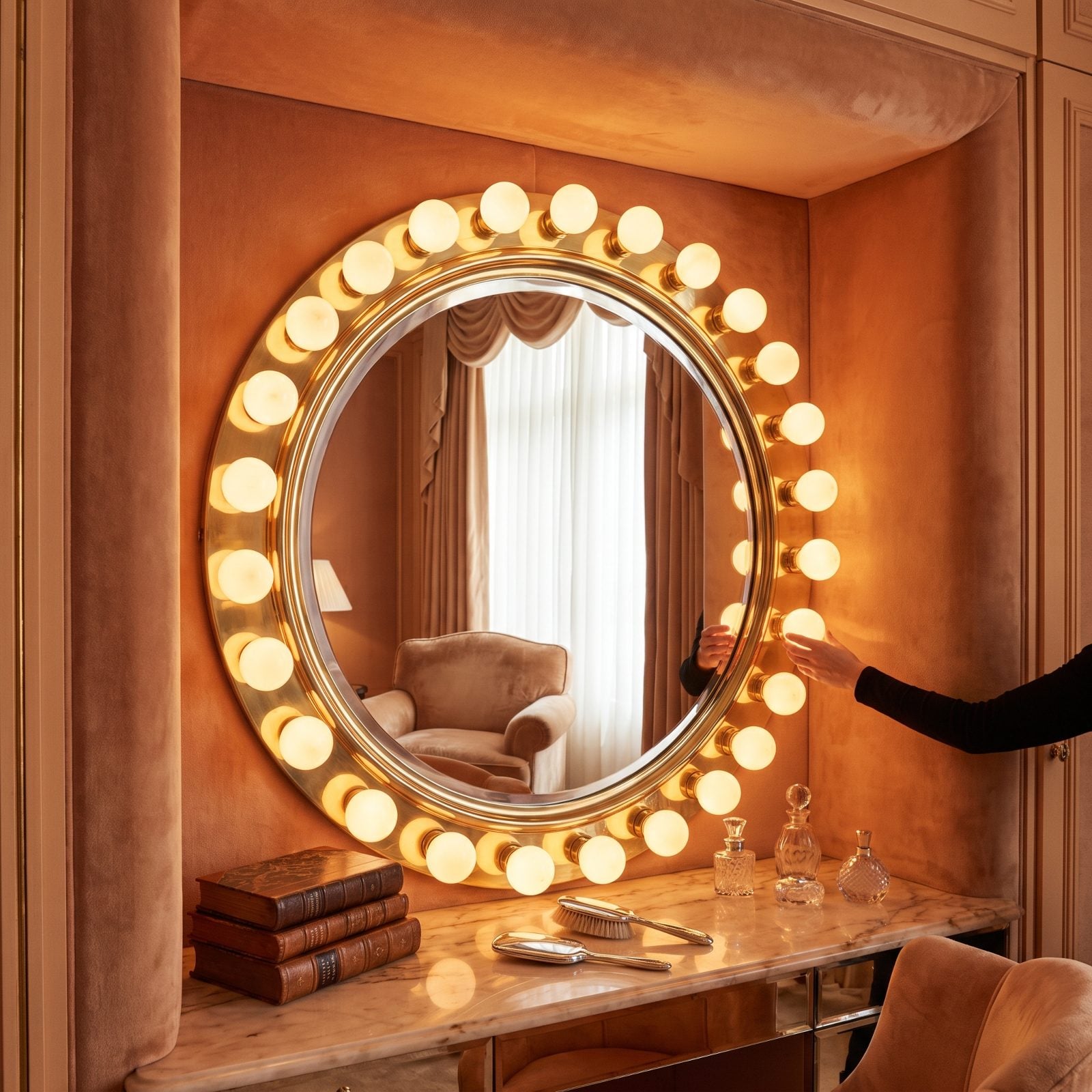
Every vanity wanted to be a Broadway dressing table.
A big mirror, usually set in its own little alcove just outside the bathroom, framed with a row of round frosted globes that threw warm light onto your face from every angle. You did your makeup there. You shaved there. And you stood too close, inspecting a sunburn under lighting that was, honestly, far kinder than anything at home.
The separate vanity was a smart hotel trick too — one person could get ready out here while another used the actual bathroom. Those globe bulbs ran hot and burned out constantly. But they made a basic motel room feel like it had a touch of showbiz.
10. The Scratchy Wool Blanket Pressed Between Two White Sheets
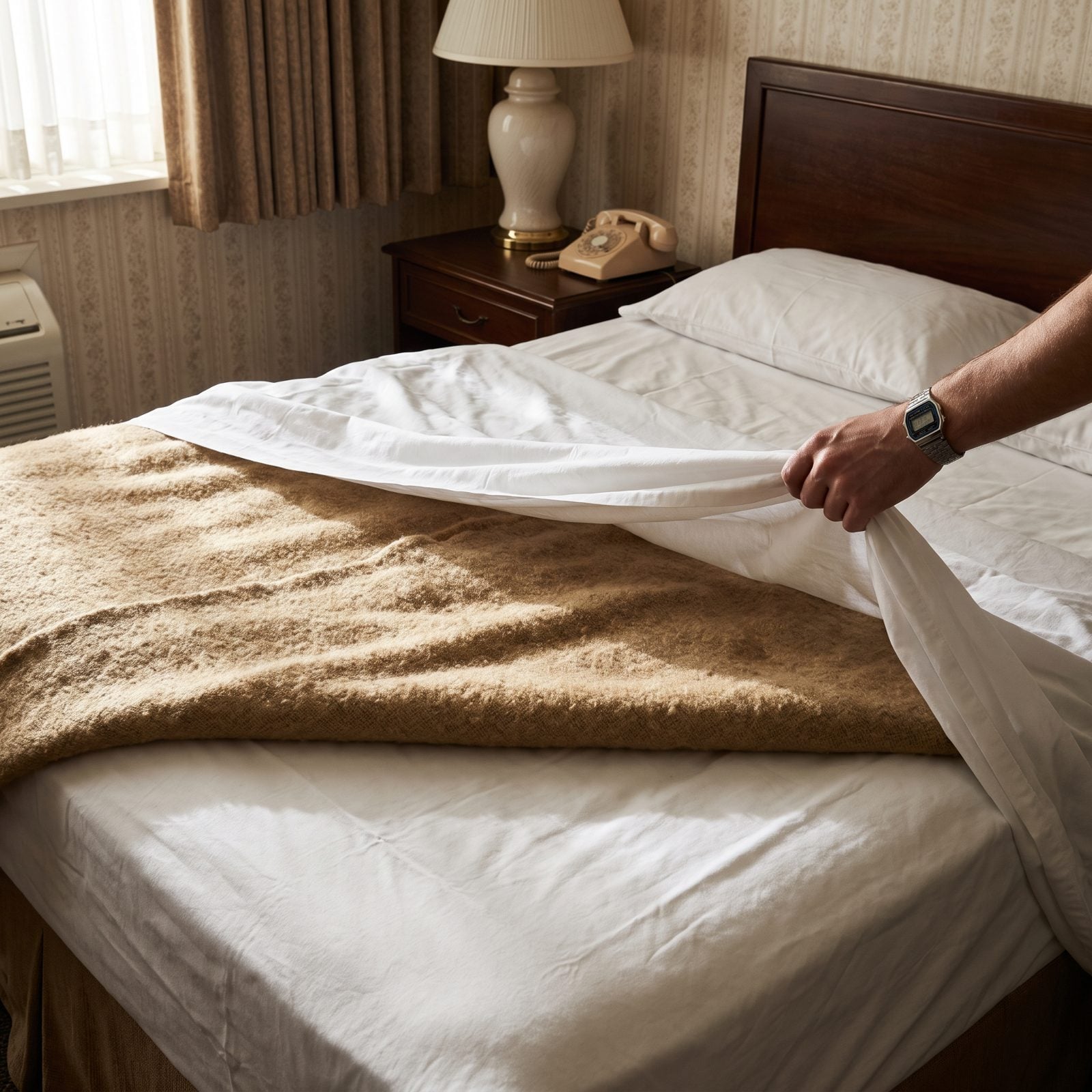
The bed was made so tight you had to pry it open. And when you did, you found the layering underneath: sheet, then a thin wool blanket, then another sheet, the whole thing tucked under the mattress with corners sharp enough to bounce a quarter.
That blanket was scratchy if your foot found a bare patch, and it was never quite warm enough on its own, which is why you cranked the under-window heater until the room smelled like hot dust. No duvets. No white-on-white spa bedding. Just that reliable sandwich of cotton and wool that generations of travelers wrestled loose at two in the morning.
9. The Floor-Length Drapes You Opened With a Plastic Pull Wand
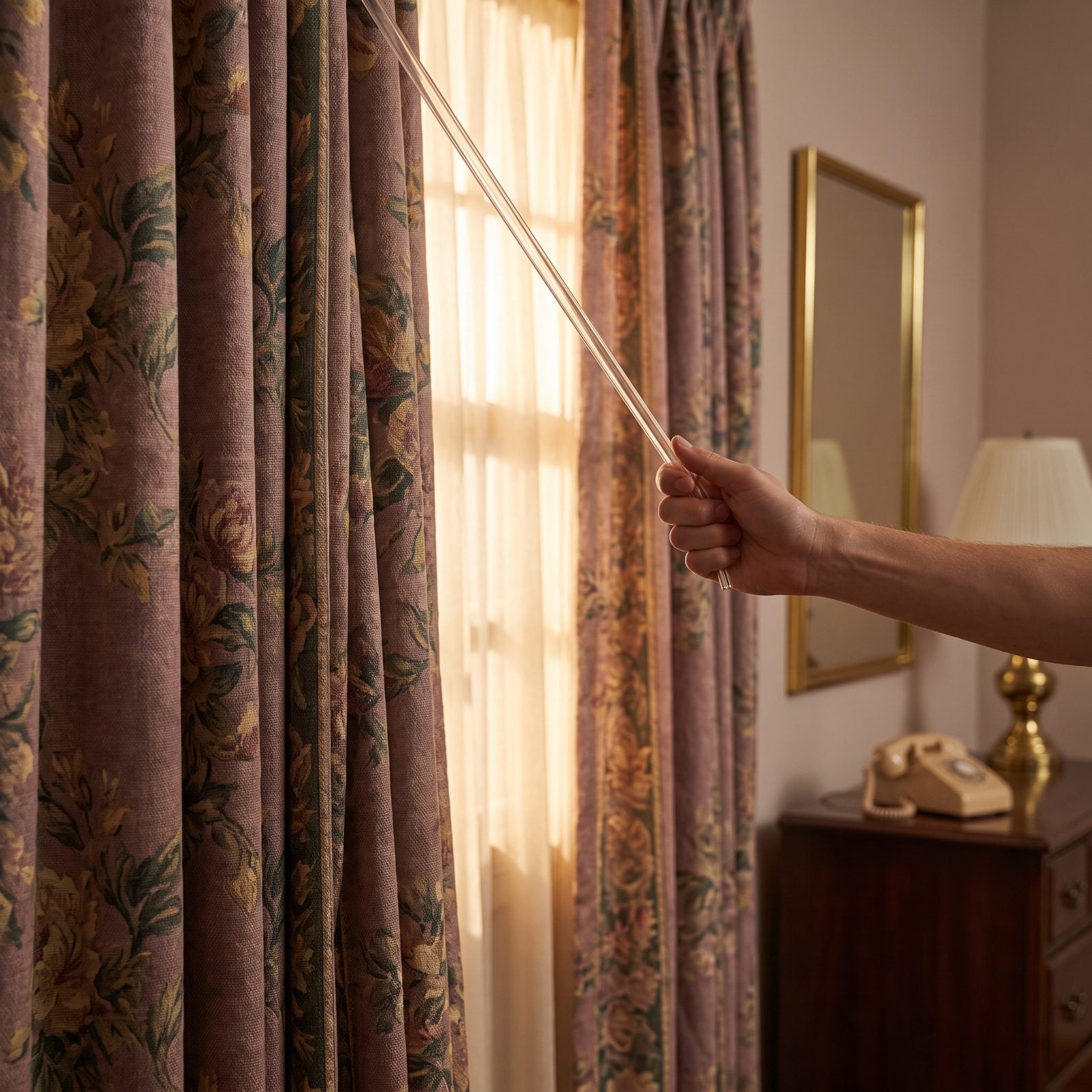
No cords to yank. You grabbed the thin plastic wand hanging beside the window and twisted-pushed the panels across the track, and the heavy fabric dragged along the carpet with a soft whump.
These drapes were built to black out a room completely, which mattered when your window faced a parking lot and a buzzing sign. The fabric was thick, lined, usually some dignified gold or rust with a muted pattern, and it weighed a ton. The wand was the civilized touch — it kept your hands off the fabric so it stayed clean, and it let a short person reach a tall rod. Little luxuries, quietly worked out by somebody in a planning office somewhere.
8. The Sliding Glass Door That Opened Straight Onto the Parking Lot
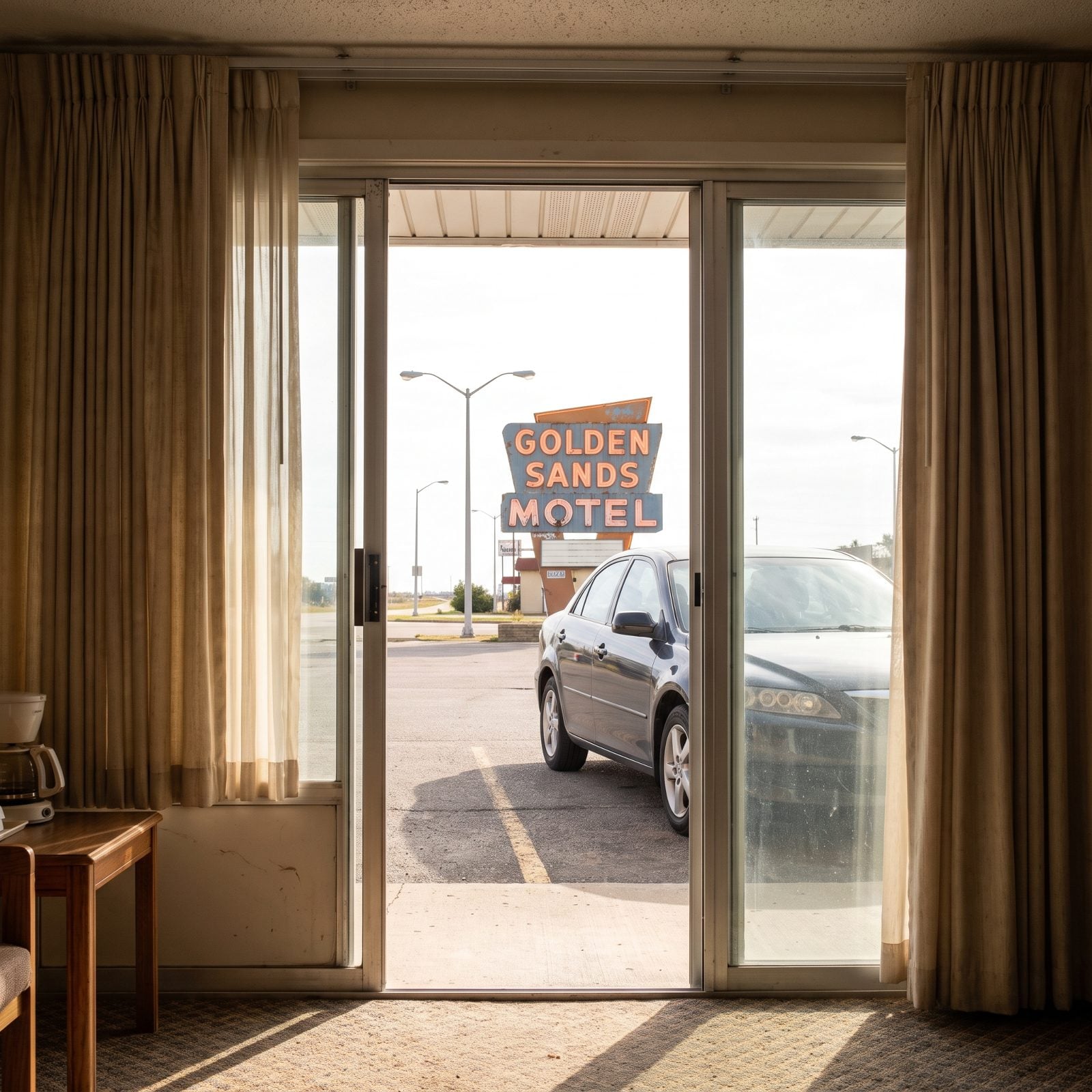
Ground-floor rooms came with a feature that seems almost quaint now: a sliding glass door that opened directly onto the lot, so you could park your car ten feet from your bed and haul the suitcase in without walking a single hallway.
That was the whole appeal of the motor court, descended straight from the roadside motels of the fifties. Pull up, unload, pull the sheer curtain, done. You felt the warm asphalt heat roll in when you cracked that door at dusk, and you could keep an eye on the car — convenience and a thin pane of glass between you and everyone else driving past.
7. The Door Chain You Slid Into a Little Brass Track
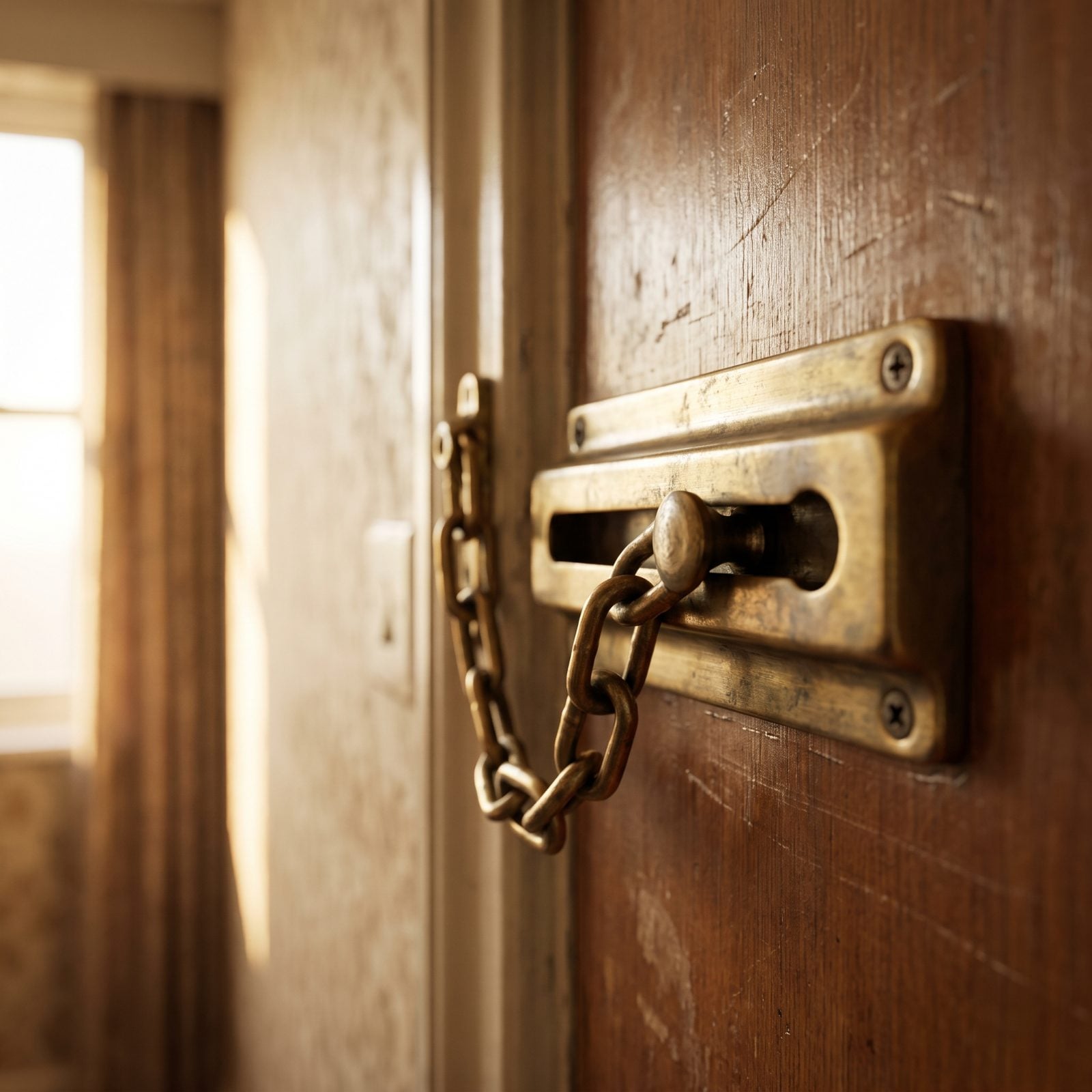
Before swing-bar latches, there was the chain.
A short length of brass-colored links bolted to the frame, with a knob you slid into a little slotted track. You did it every night out of habit, that satisfying rattle-and-slot as you locked up. It let you crack the door a few inches to see who was knocking before you committed.
It also, famously, would not have stopped much. A good shove popped the screws right out of the jamb, which is exactly why hotels eventually switched to the heavy U-shaped swing bar. But that chain rattling into place was the sound of settling in for the night, and it did its real job: it made you feel locked in.
6. The Trouser Press Standing Guard in the Closet
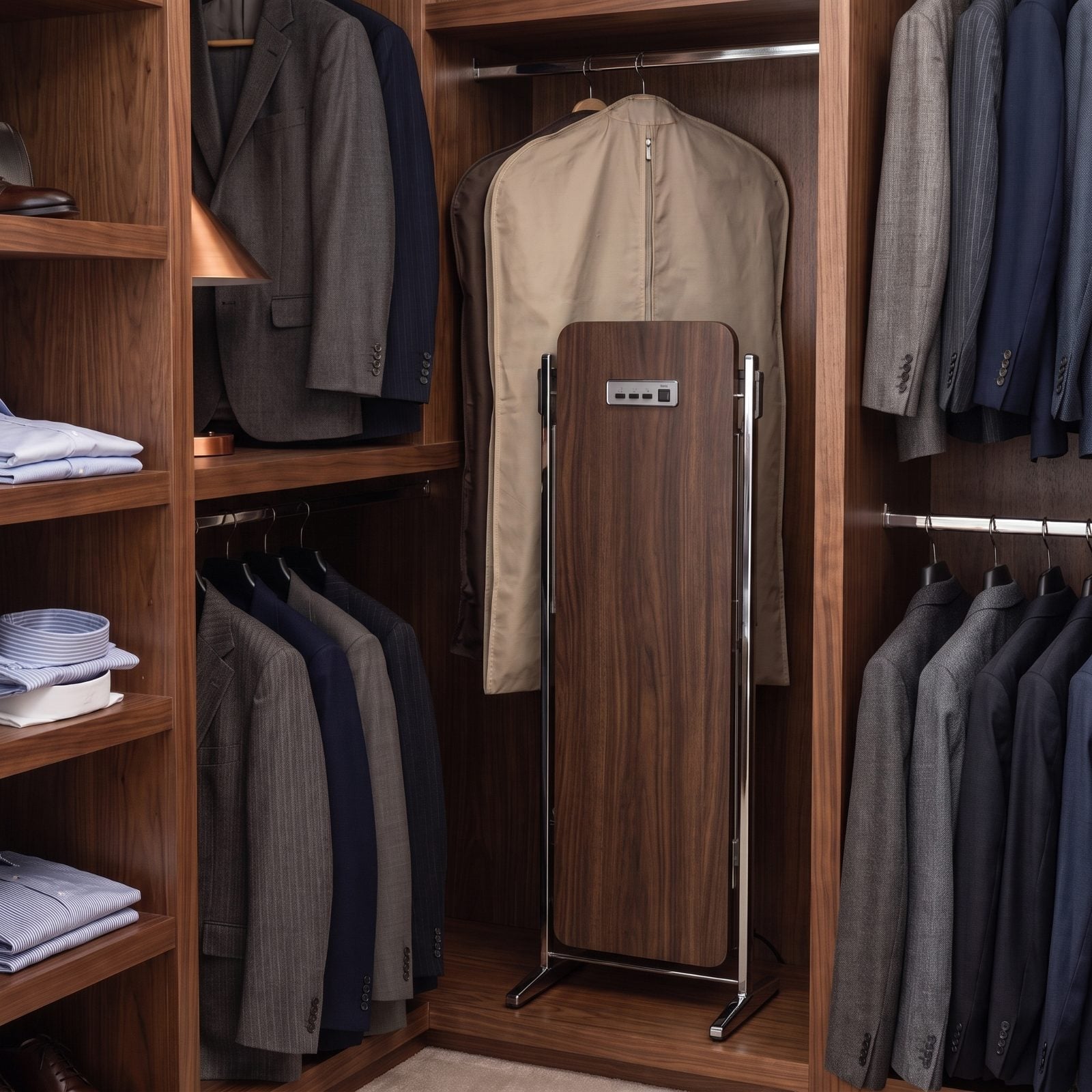
You opened the closet expecting hangers and found a strange upright contraption with a clamping panel and a row of control buttons. The trouser press. You laid your slacks flat inside, closed the lid, flipped the switch, and in the morning the crease was sharp enough to slice bread.
It was the hallmark of a business-traveler hotel, back when a man packed one suit and needed it to look pressed for three meetings. Corby was the famous name. The things hummed warm all night and smelled faintly of hot fabric, and if you’d never seen one, you stood in the closet genuinely puzzled for a minute.
5. The Formica Coffee Table With the Permanently Cool Top
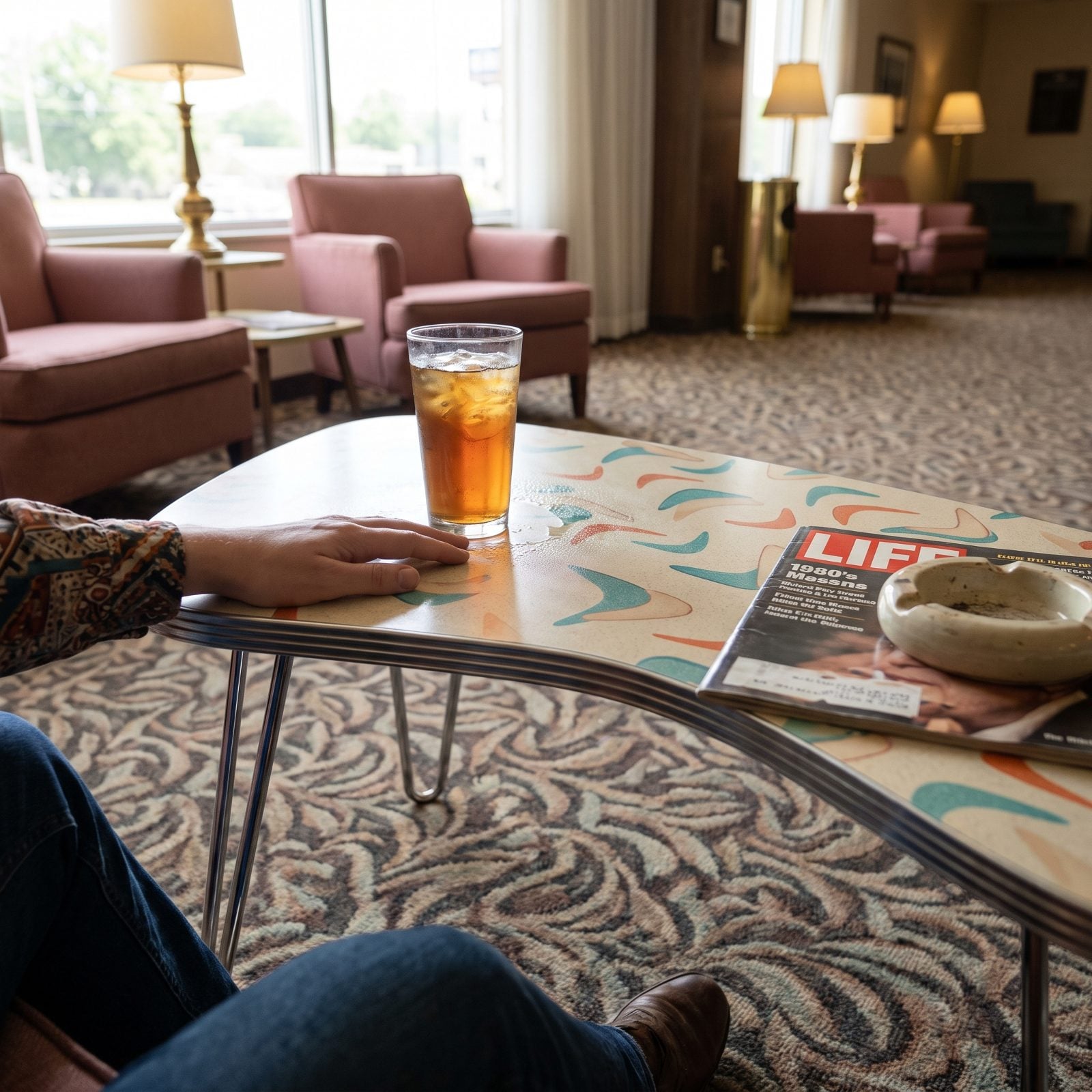
Low, light, and nearly indestructible. The laminate top always felt slightly cool to the touch no matter the room temperature, and it shrugged off cigarette burns, coffee rings, and ice buckets without a complaint.
That was the point. Formica was the workhorse of the budget-to-mid room because housekeeping could wipe it clean in two seconds and it never showed its age the way real wood would. This is where you dumped your keys, spread out the takeout, and read the glossy guest directory while the ice bucket sweated a ring onto a surface that genuinely did not care.
4. The Swag Lamp Dangling From a Chain in the Corner
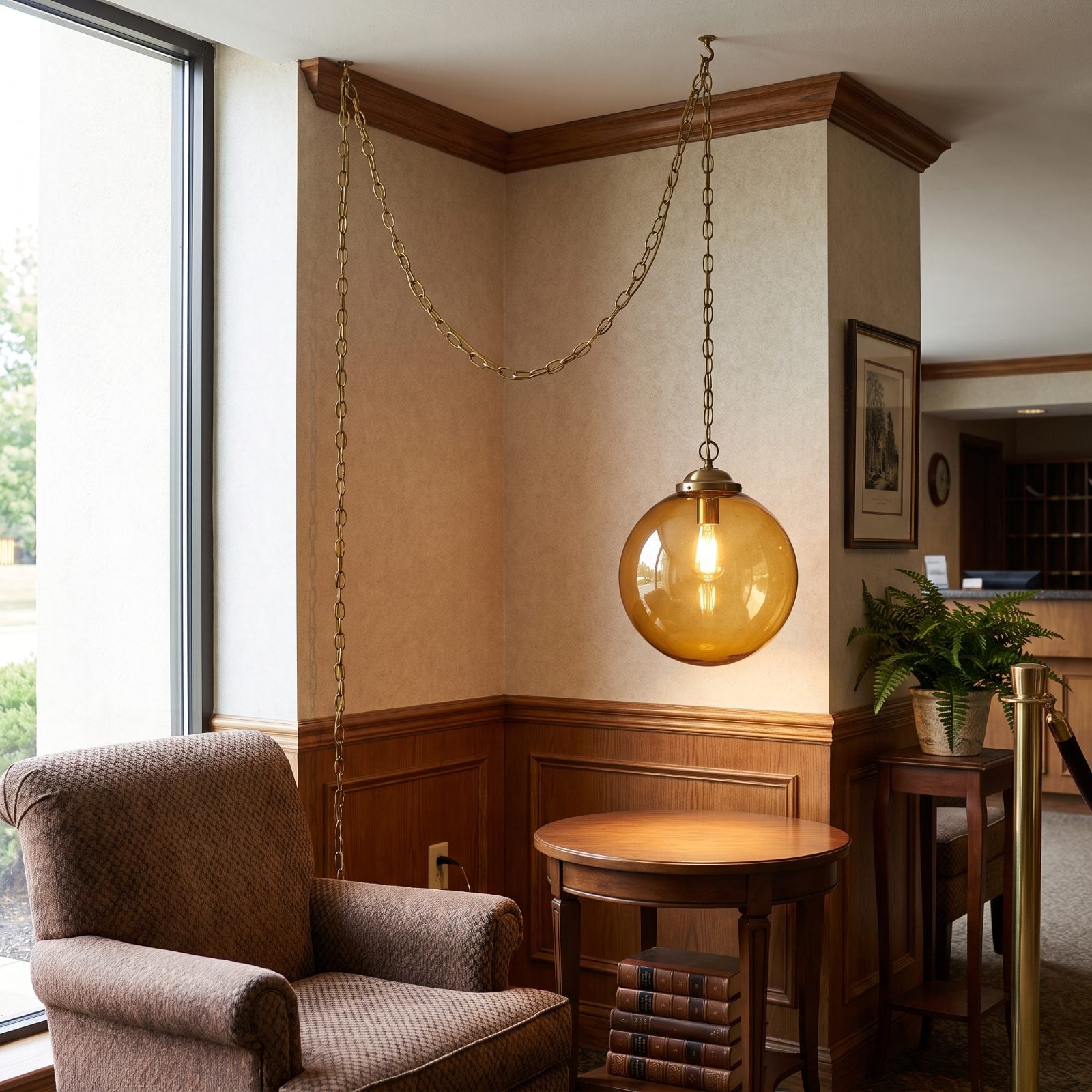
It hung from the ceiling on a brass chain that swooped across to a hook and then down the wall to a plug, throwing a warm amber pool of light over the little seating corner. The swag lamp. No lamp table needed, no cord to trip over, just a glowing globe floating where you wanted it.
They were everywhere in the late seventies and into the eighties because they were cheap to install and read as cozy and a little fancy. The shade was usually some pebbled amber glass or a macramé-adjacent texture, and the light it gave was forgiving and golden. Click it on and the room stopped being a rental. It started being a place to settle in for the night.
3. A Book of Hotel Matches Beside the Ashtray
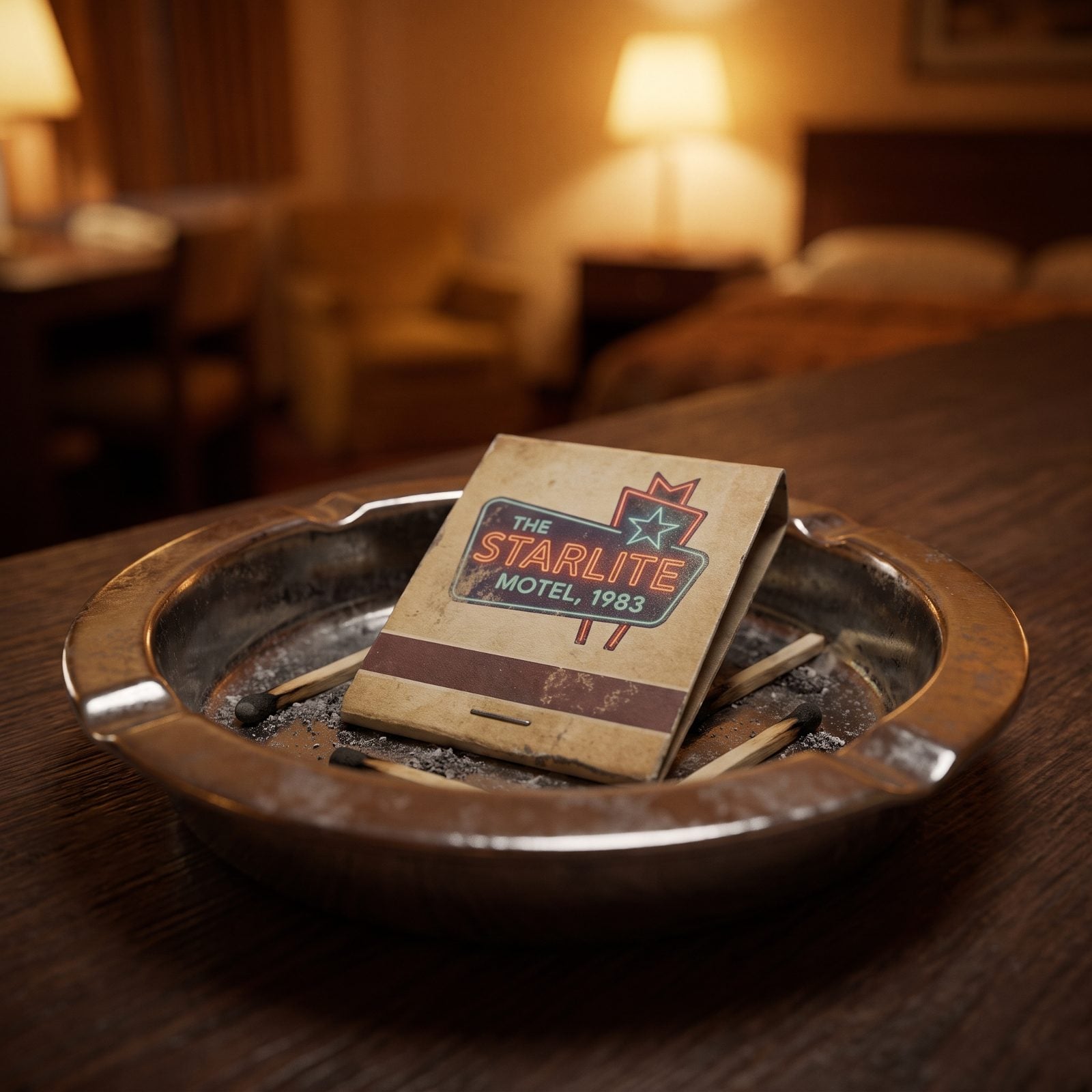
Maybe you didn’t smoke, but you took the matches anyway. Everyone did. They sat in the ashtray on the nightstand, a slim cardboard book with the hotel’s name in gold across the cover and the striking strip already fraying at one corner. Free, yours, a tiny souvenir of a place you’d probably never see again.
Hotels printed them by the million. This was advertising you carried home in your coat pocket, surfacing weeks later in a kitchen drawer with a phone number and a logo from a city you only half-remembered. Some people kept a whole bowl of them — each one a different stop on some trip they’d long since stopped telling stories about.
The ashtray went too. Heavy amber glass, nearly a weapon, wiped down by housekeeping and set back dead center on the nightstand every single day.
2. A Bedside Control Panel for Lights and Television
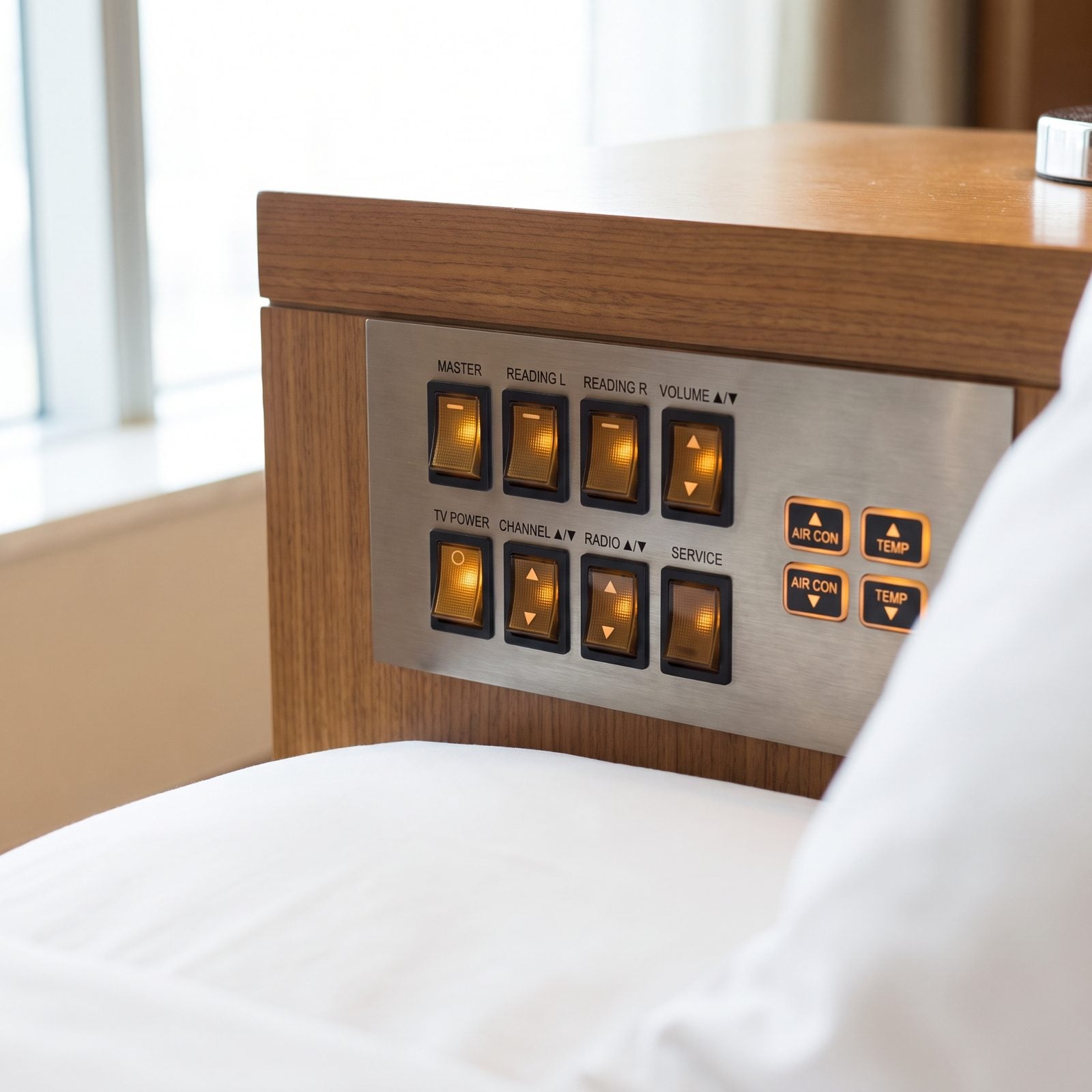
Flat on your back, without lifting your head off the pillow, you could kill every light in the room. That was the whole promise, and in 1983 it felt like the future had arrived and tucked itself right into your nightstand.
The panel was a brushed-metal plate set into wood-grain casing, studded with chunky amber-lit rocker switches, each labeled in tiny letters: MASTER, READING L, TV POWER. Some had a radio dial built in, a little numbered strip you’d twist until a station came through clear enough to drift off to. The switches clicked when you hit them, and the plastic held a faint warmth.
You hunted for the right switch in the dark, clicked the wrong one, flooded the room with light, swore, and tried again.
The TV usually sat across the room on its own swivel stand — a heavy cabinet model — and running it from bed without straining against a tethered remote felt like a luxury. Just a rocker switch at your fingertips, wired straight into the wall.
1. A Coin-Operated Magic Fingers Vibrating Bed
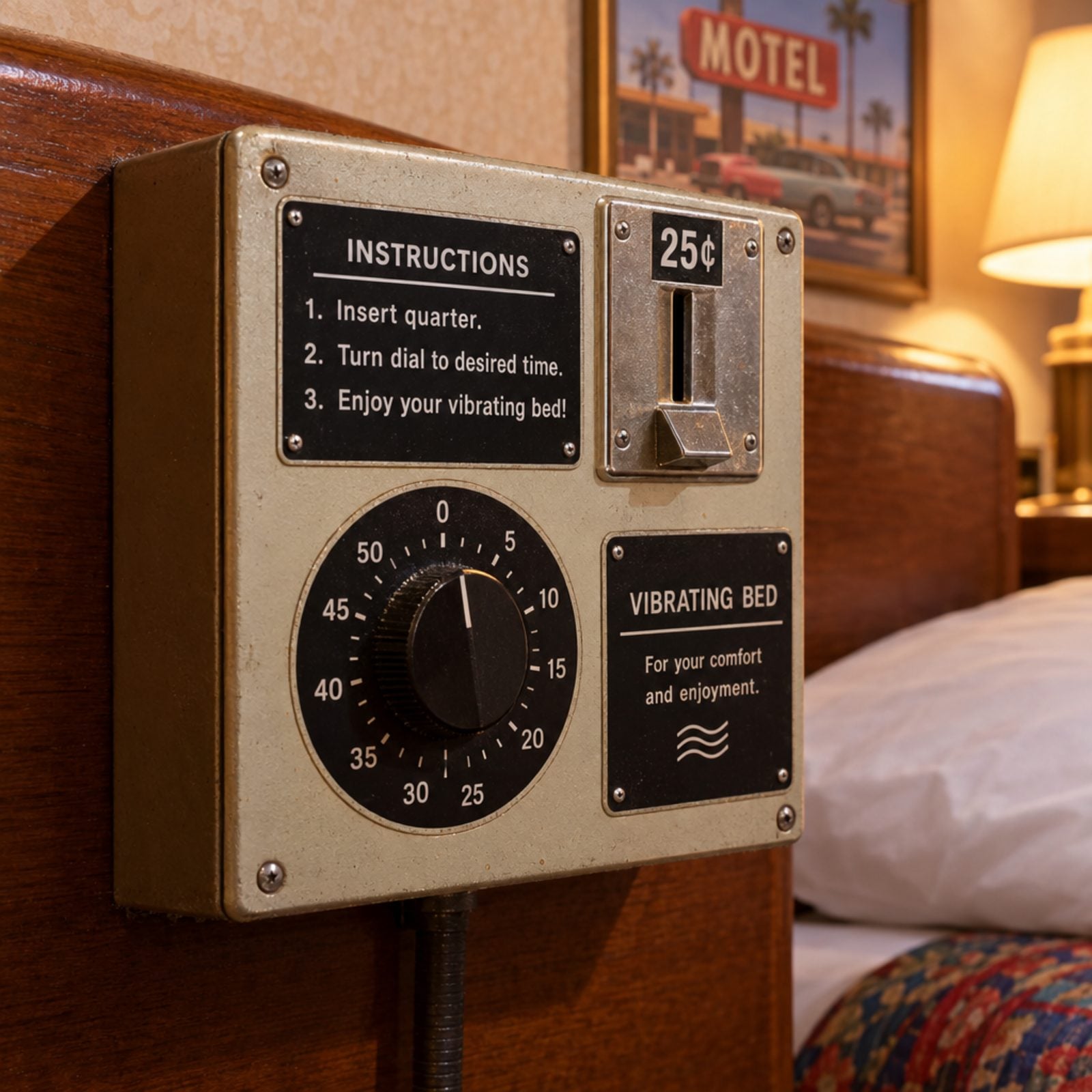
A quarter bought you fifteen minutes of a bed that buzzed. For a certain stretch of American road travel, that pitch was simply irresistible.
The box sat bolted to the headboard, a little beige metal unit with a coin slot, a timer dial and VIBRATING BED stamped across the front. You dropped in your quarter and the whole mattress started humming and jittering, and for a quarter-hour you lay there on a bed that felt like it was trying to drive off without you. Then it sputtered out and went still, and somebody always went digging for another coin.
Kids loved it most. Parents fed it quarters to buy themselves twenty minutes of quiet. Pure roadside Americana — the kind of thing that turned a budget motel off the interstate into an event instead of just somewhere to crash for the night.
🔥 Would you like to save this?
Please note that some of the imagery in this article were created with the aid of AI image generators.