
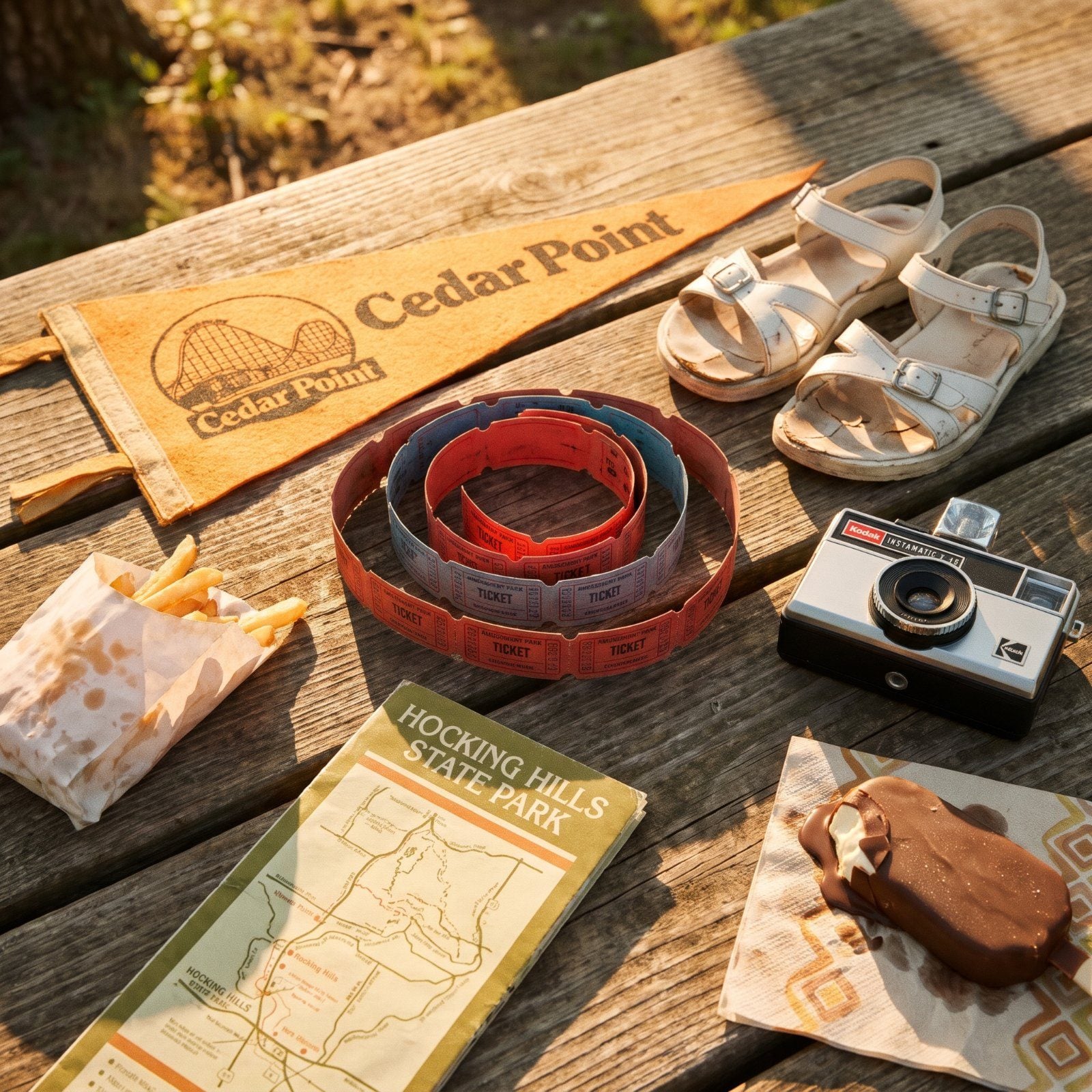
The smell hits first. Hot asphalt, spun sugar, two-stroke exhaust from the go-kart track, all baked together under a July sun that could blister a vinyl car seat. Nobody read a safety brochure. Nobody signed a waiver. You handed over a strip of paper tickets, climbed aboard whatever was spinning, and trusted a bored teenager with a lever to keep you alive. We loved every minute of it, and we survived it, which is a sentence that gets more astonishing the longer you look at the pictures below.
37. One Lap Bar Securing an Entire Coaster Row
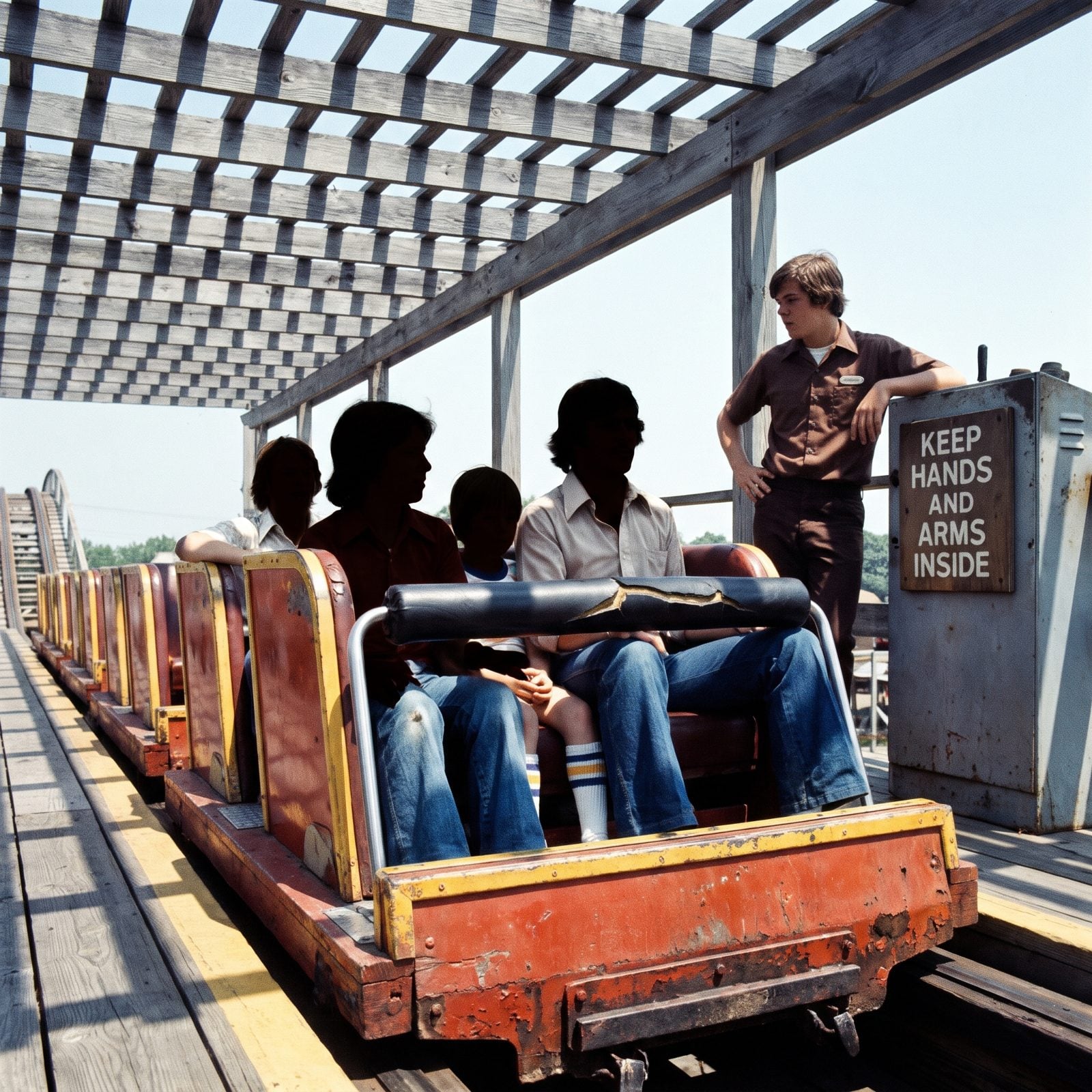
You slid into the bench next to a stranger and a padded bar came down across all of you at once. One bar. One whole row. And if you were the skinny kid on the end, there was daylight between the vinyl and your knees, and you spent the first hill learning exactly how much daylight.
The physics never bothered anyone. That bar was a suggestion, a gentleman’s agreement between you and gravity. Individual restraints, molded body-contoured harnesses, seat-belt backups came later. Back then you gripped the bar with both hands because gripping the bar was the safety system, and every kid on that bench knew it in their bones.
36. Children Riding on a Parent’s Lap
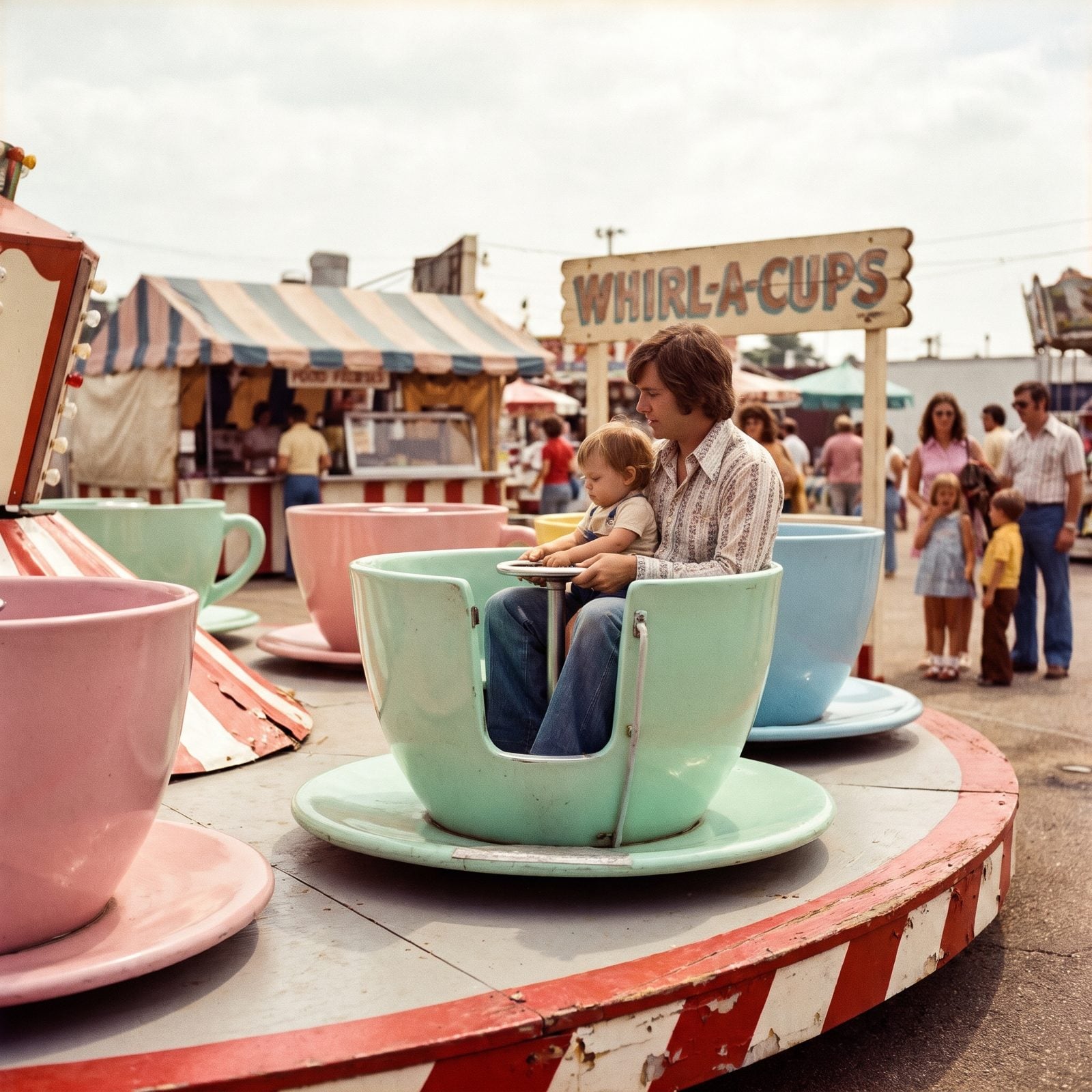
No weight limit. No height stick. No separate seat. Your kid climbed onto you, and that was the restraint plan for the whole ride.
It happened everywhere, on the teacups, the slow coasters, the train rides, the gentle aerial carousels. A toddler too small for the bar simply rode on a lap, held by one arm while the other steered. Parents treated their own grip as a certified safety device, and for the mellow stuff it mostly worked. There’s a tenderness in those photos that no padded five-point harness has ever managed to capture.
35. Open Ferris Wheel Gondolas With Waist-High Sides
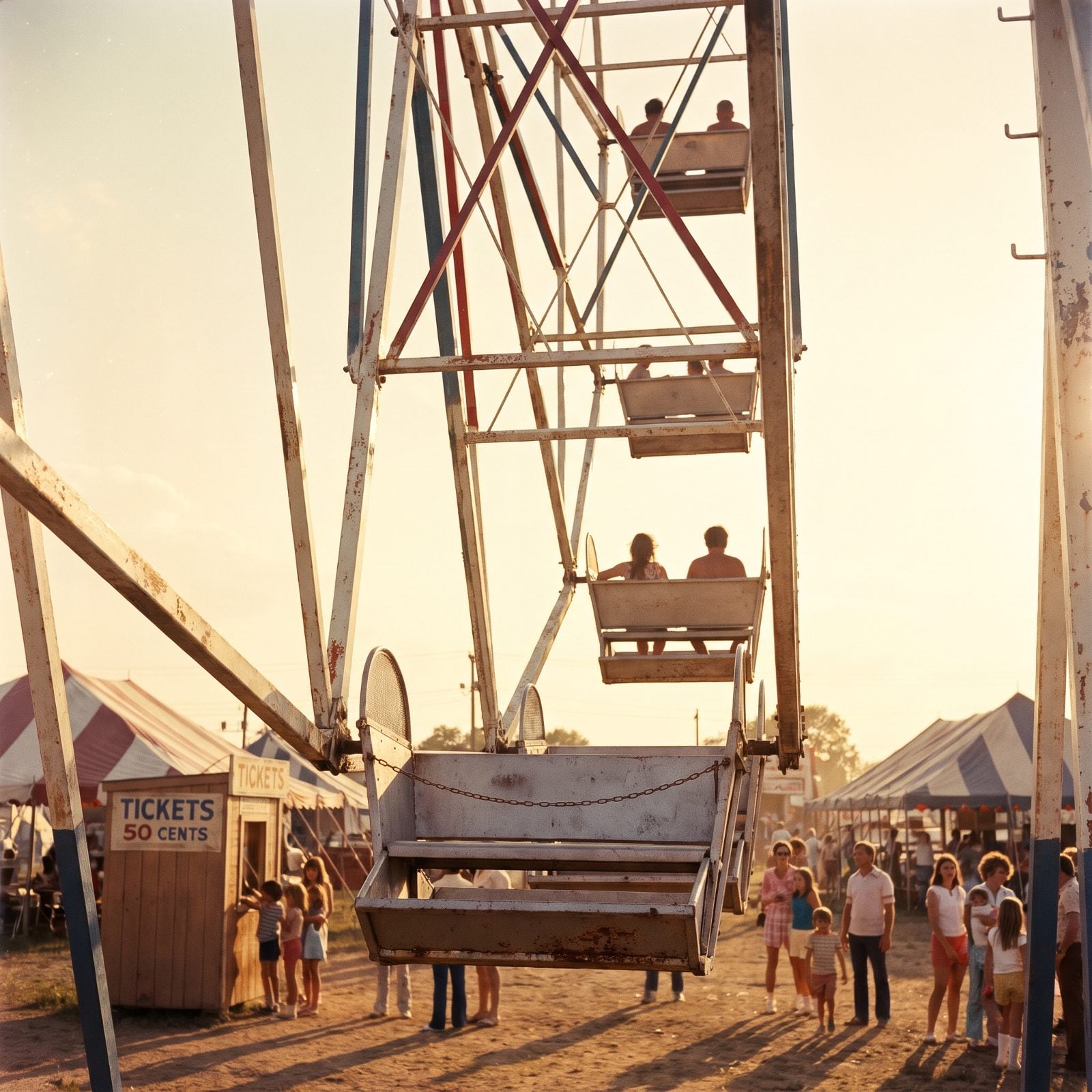
The gondola was a park bench bolted to a wheel sixty feet in the air, sides coming up to about your waist, and slung across the top of the seat back a thin chain with a latch a determined raccoon could have popped open.
Here’s the part that defined the whole thing. When the operator stopped to load the car below you, your bench rocked. On purpose, if you had a sibling with bad intentions. You leaned, it swayed, your stomach dropped, and the entire horizon tilted around a chain no thicker than a dog leash.
The rocking wasn’t a malfunction. It was the ride.
34. Chairlift Sky Rides With Dangling Feet
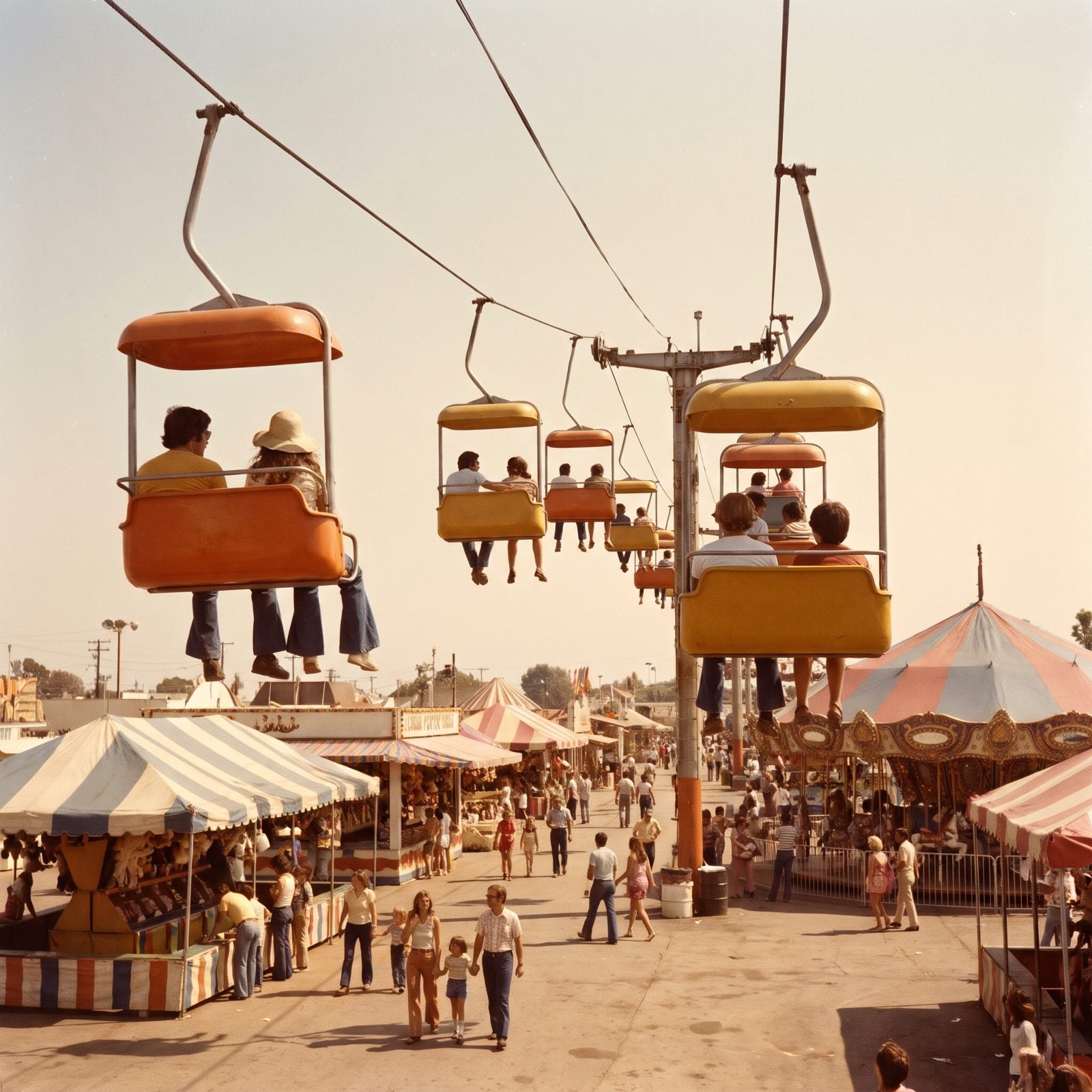
Picture a ski lift running the length of a crowded midway in August. That was the Sky Ride. You sat two across on an open chair, one bar across your legs, feet swinging into open air above the funnel-cake crowd.
People dropped things. Sunglasses, hats, the occasional flip-flop, and, in the annals of park legend, somebody’s car keys. The chair swayed every time the cable crossed a tower. You could see the whole park from up there, which was the point, and you could also see exactly how far down the asphalt sat, which was not.
33. Parachute Drop Rides With Open Metal Cages
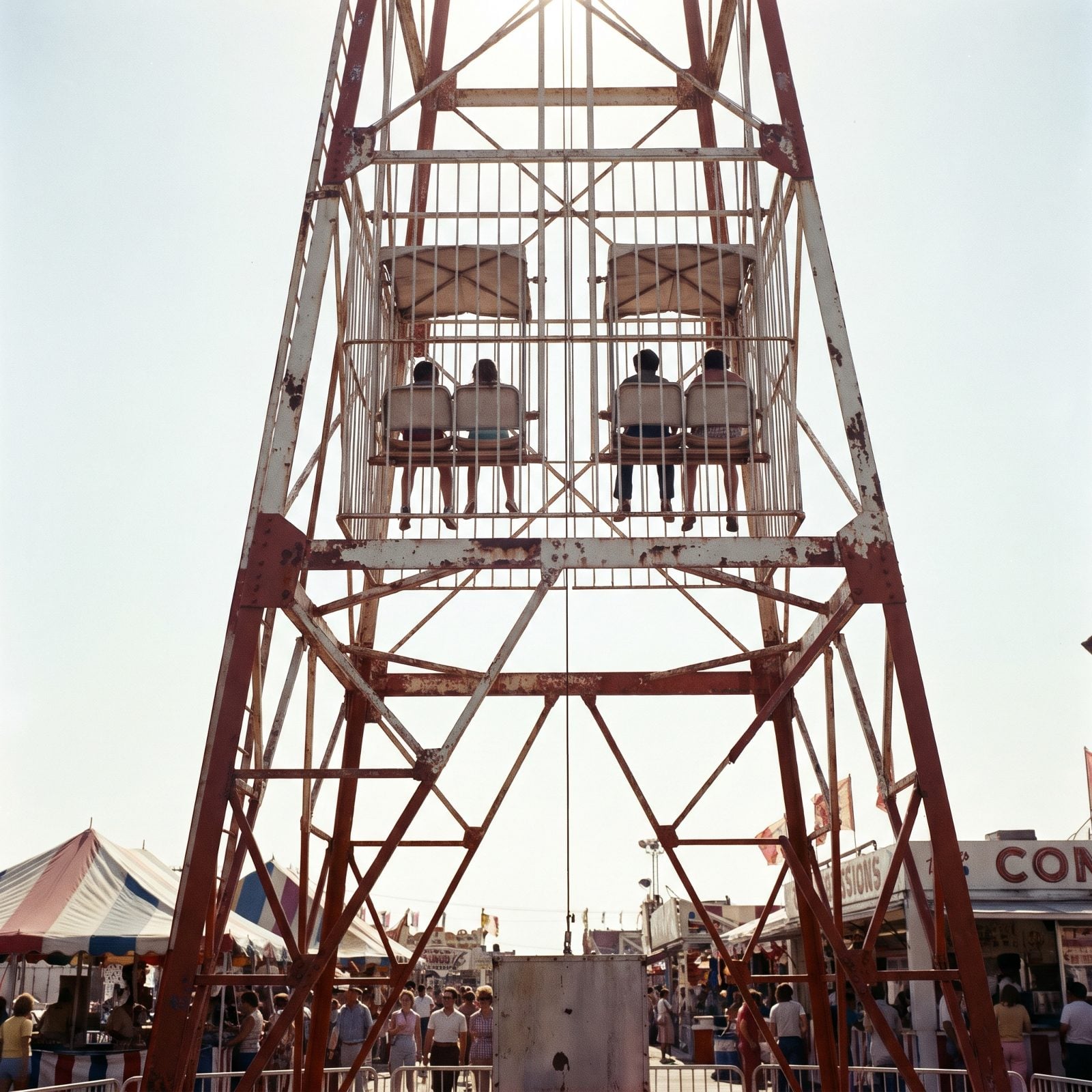
They winched you up a tower taller than anything else in town, under a canopy that was supposed to act like a parachute on the way down. The seat was a thin bar and a cage of metal rods spaced wide enough to lose a sneaker through.
The anticipation was pure torture. That slow, clanking climb, the whole park shrinking beneath you, then the drop, the jolt of the canopy catching, your stomach somewhere around your knees. The cage wasn’t really there to hold you in. It was there to remind you where in was. Anyone who rode one still remembers the cable, that industrial groan no theme-park sound designer would ever sign off on today.
32. Rotor Rides That Pinned Children to the Wall
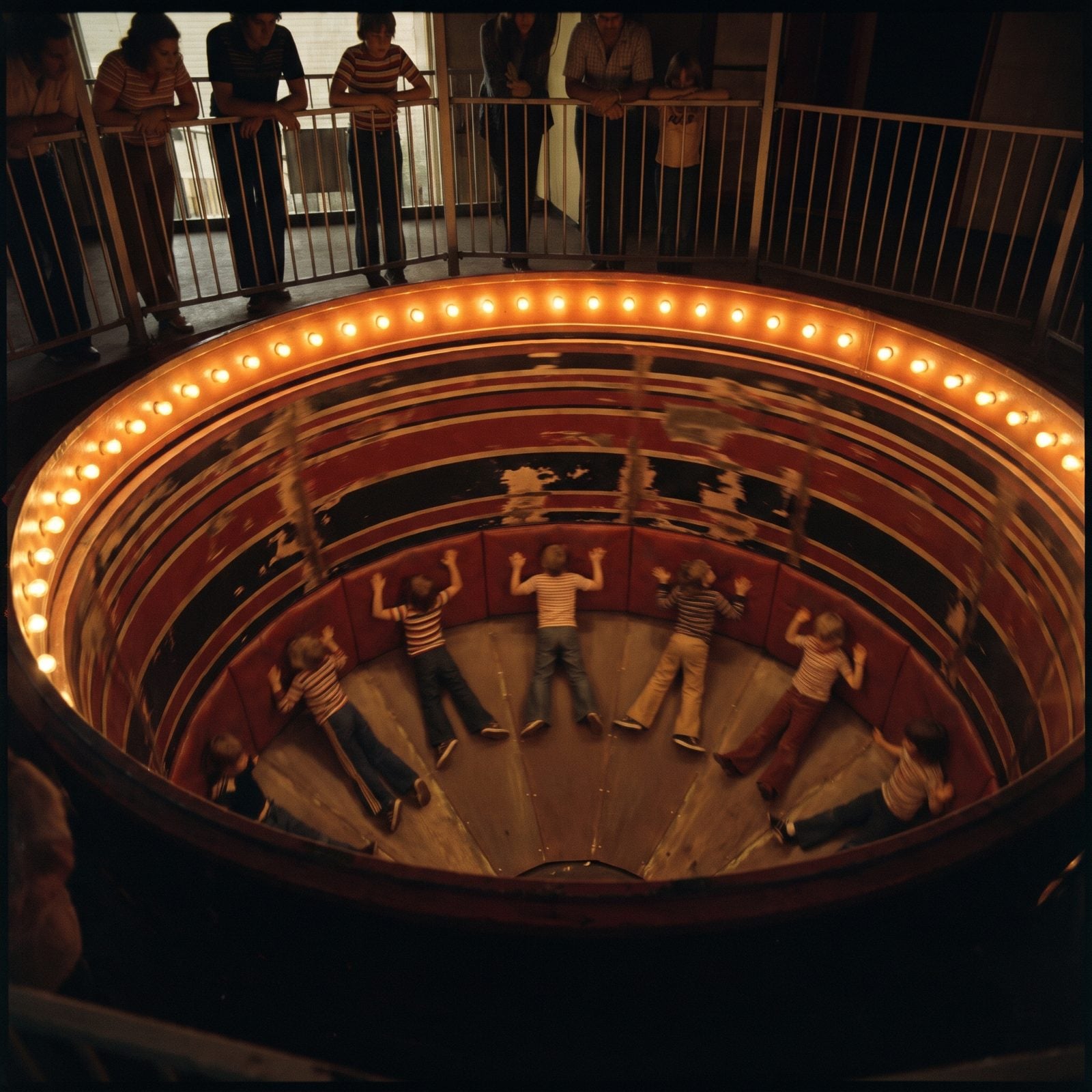
A giant drum spun until physics pinned you flat against its padded wall, and then the floor dropped away beneath your feet. No restraint at all. The only thing keeping you in place was speed and the laws of motion, and no teenager ever fully trusted either one.
The best part was the viewing gallery up top, where a crowd gathered to watch total strangers get pinned like butterflies. Kids would try to turn sideways. They’d reach both arms up over their heads. Then they’d slide a few inches up the wall and panic. It was part thrill ride, part public spectacle, and entirely dependent on a child understanding not to do anything clever once the bowl got spinning.
31. Giant Slides Ridden on Burlap Sacks
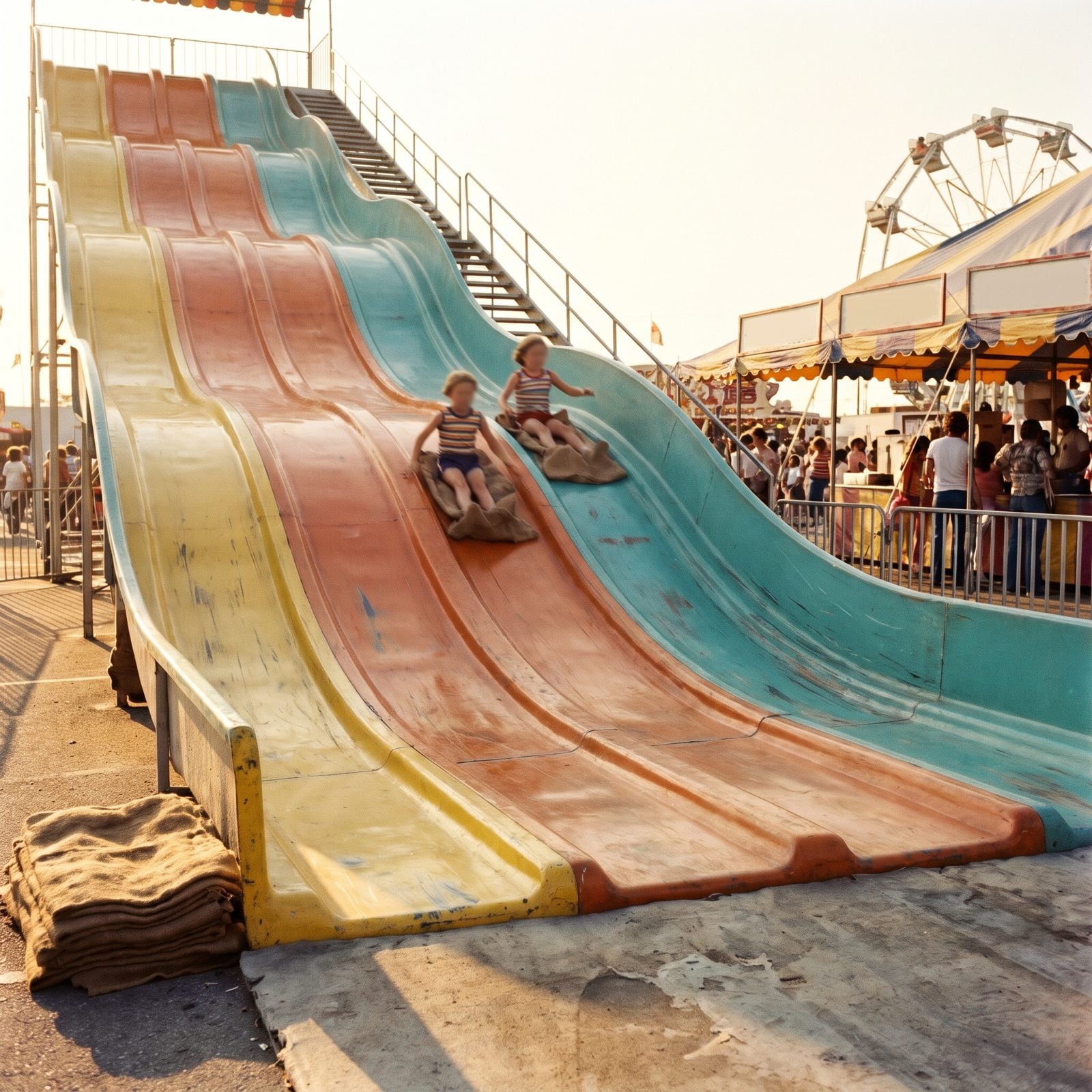
No seatbelt. No lane walls to speak of. Just a scratchy brown sack and a long fiberglass hill of humps that launched you airborne on every one.
You grabbed a burlap sack from the pile at the bottom, climbed what felt like a thousand metal stairs, sat down, and pushed. The sack reduced friction to roughly zero. Little kids caught serious air on the bumps. Big kids caught air on purpose. You landed hard on a thin pad, if a pad happened to be there, and walked off with rug-burn forearms and a grin.
30. Go-Karts Without Modern Roll Cages
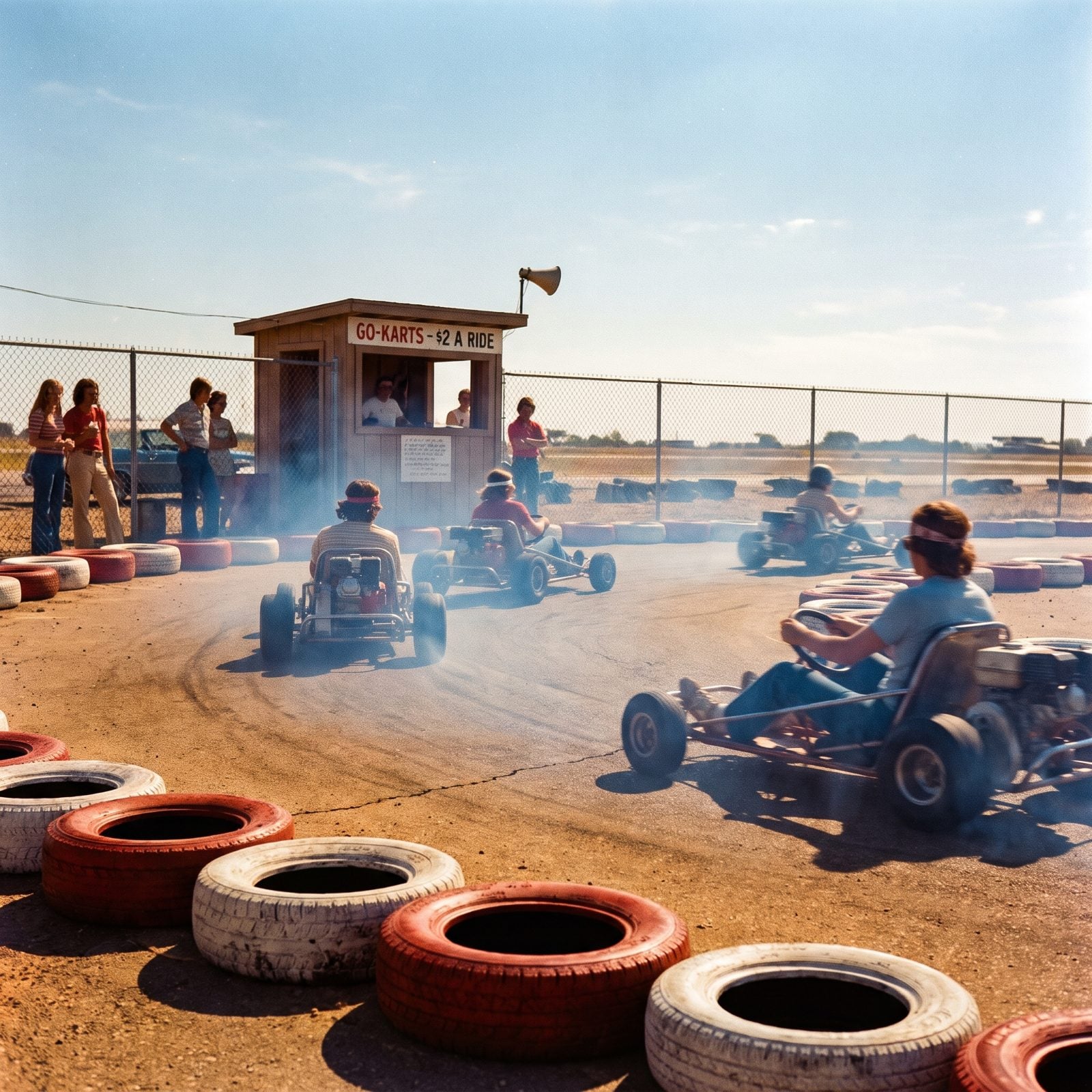
Low to the ground, open on all sides, a lap belt if you were lucky, and an engine that smelled like a lawnmower having a bad day. That was the go-kart, and you drove it like you’d stolen it.
Roll bars? Not a thing. Head protection was whatever hair you’d grown that summer. The track was ringed by a wall of old tires that served as both barrier and bumper, and bumping was absolutely encouraged by every twelve-year-old who ever gripped a wheel. That blue exhaust haze over the track is one of those smells that lodges in the memory forever, filed somewhere between popcorn and sunscreen.
29. Bumper Cars With Exposed Overhead Sparks
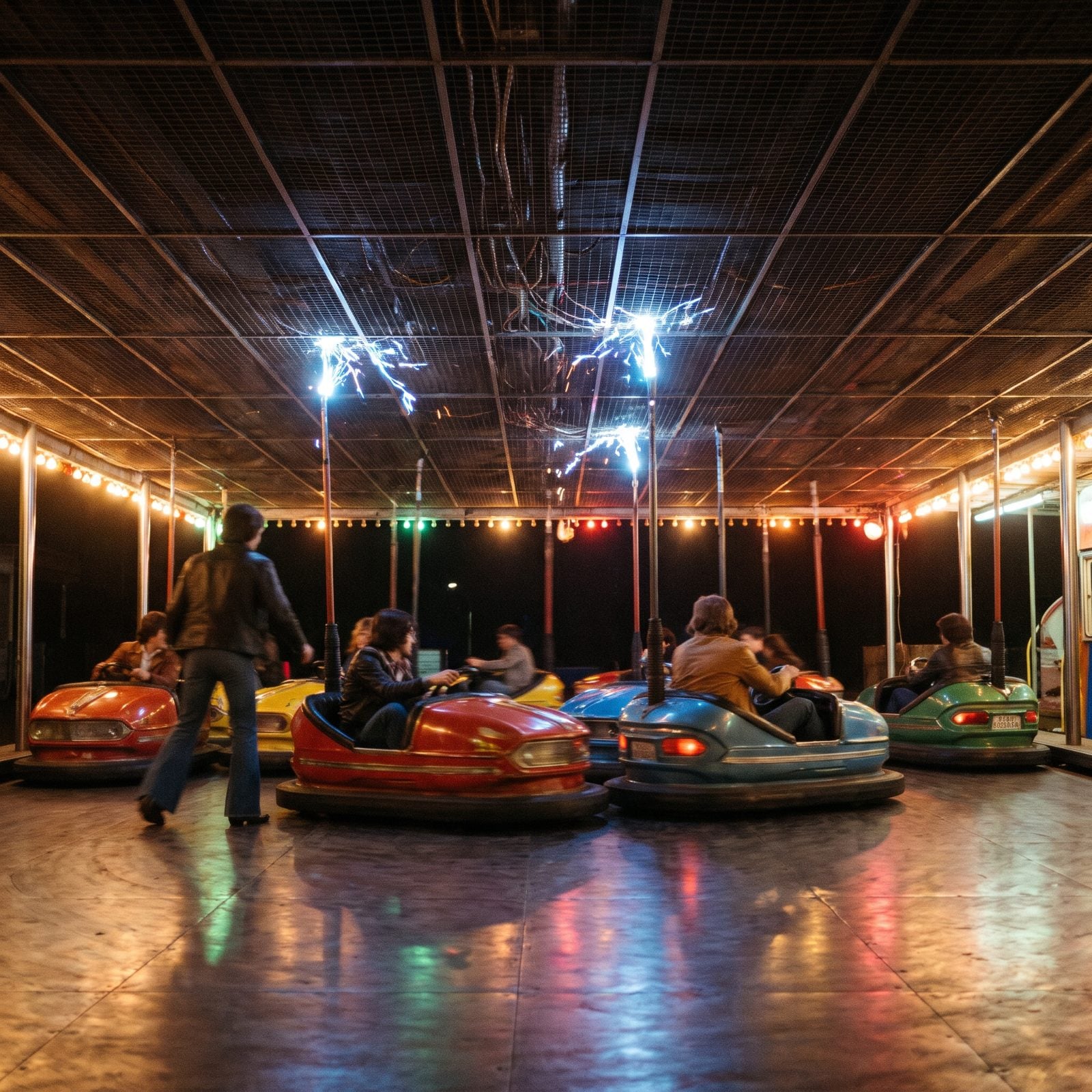
Look up. That was the thrill nobody put on the sign. Above the chaos of crashing cars, a ceiling of electrified wire mesh crackled and spat blue sparks every time a contact pole dragged across it.
The whole floor hummed with current and the smell of ozone. Kids craned their necks to watch the sparks instead of the road, which guaranteed more crashing, which was the entire economy of the ride. Picture open electrical contacts a few feet over a crowd of children. A modern inspector would need to go lie down somewhere dark.
28. Rowboats Available Without Child-Sized Life Jackets
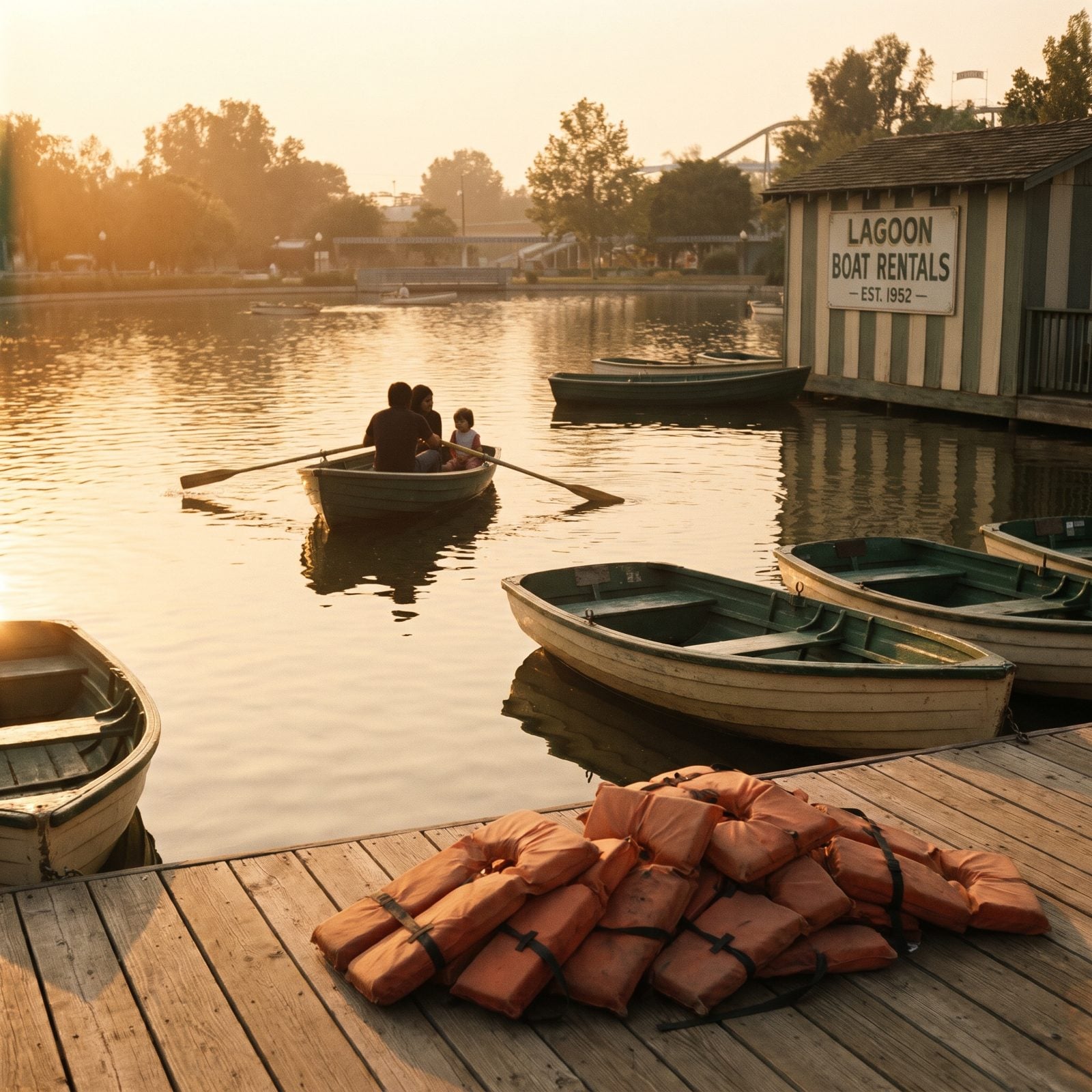
The boat lagoon was the calm part of the park, the place parents went to recover. The sign over the boathouse said “Lagoon Boat Rentals – Est. 1952,” and families rented the wooden rowboats, pushed off with a toddler in the bow, and floated. The life jackets, if there were any, came in one size, adult and orange, heaped in a soggy pile on the dock.
A small child wearing a grown man’s vest would have slipped straight out the bottom of it, so most kids wore nothing. Nobody thought twice. The water ran about four feet deep and the whole mood was pure Sunday afternoon. Of everything on this list, this one feels gentlest, and looked at squarely, maybe the most surprising, because the gap here wasn’t a thrill. It was the quiet assumption that everything would be fine, which, for a whole decade of summers, it mostly was.
27. Log Flumes With Open Bench Seats and Nothing to Hold You In
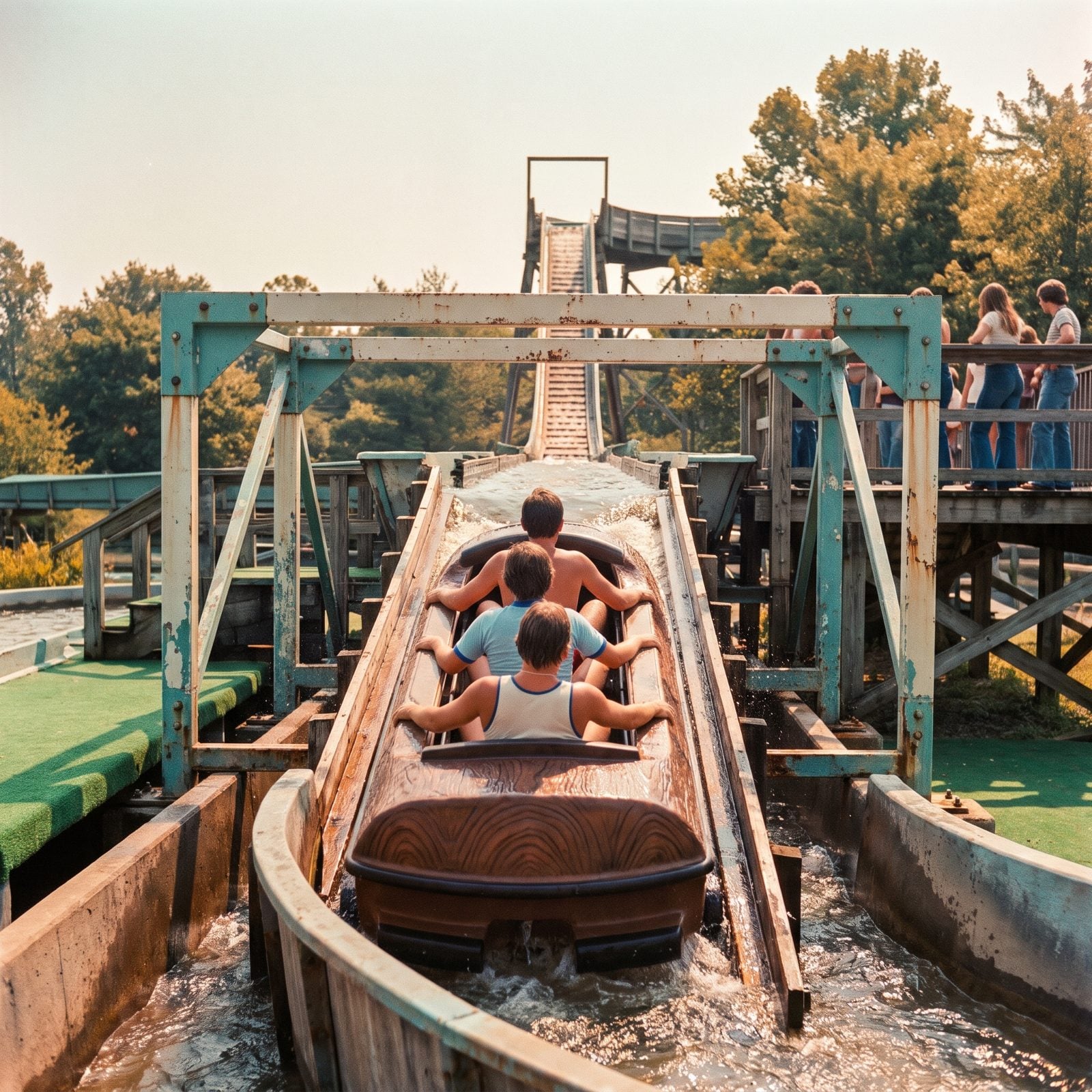
You climbed into a hollowed-out fiberglass log, sat on a wet bench behind a stranger, and that was the whole safety system. No lap bar. No belt. Just a low lip of molded plastic and your own grip on the sides.
At the top of the drop, everyone leaned back out of instinct, because nothing was holding you in but physics and good manners. Kids rode up front with their arms in the air, toddlers sat in laps, and the splash soaked you to the waist. That was the point.
26. Portable Rides Bolted Together Beside the Midway That Morning
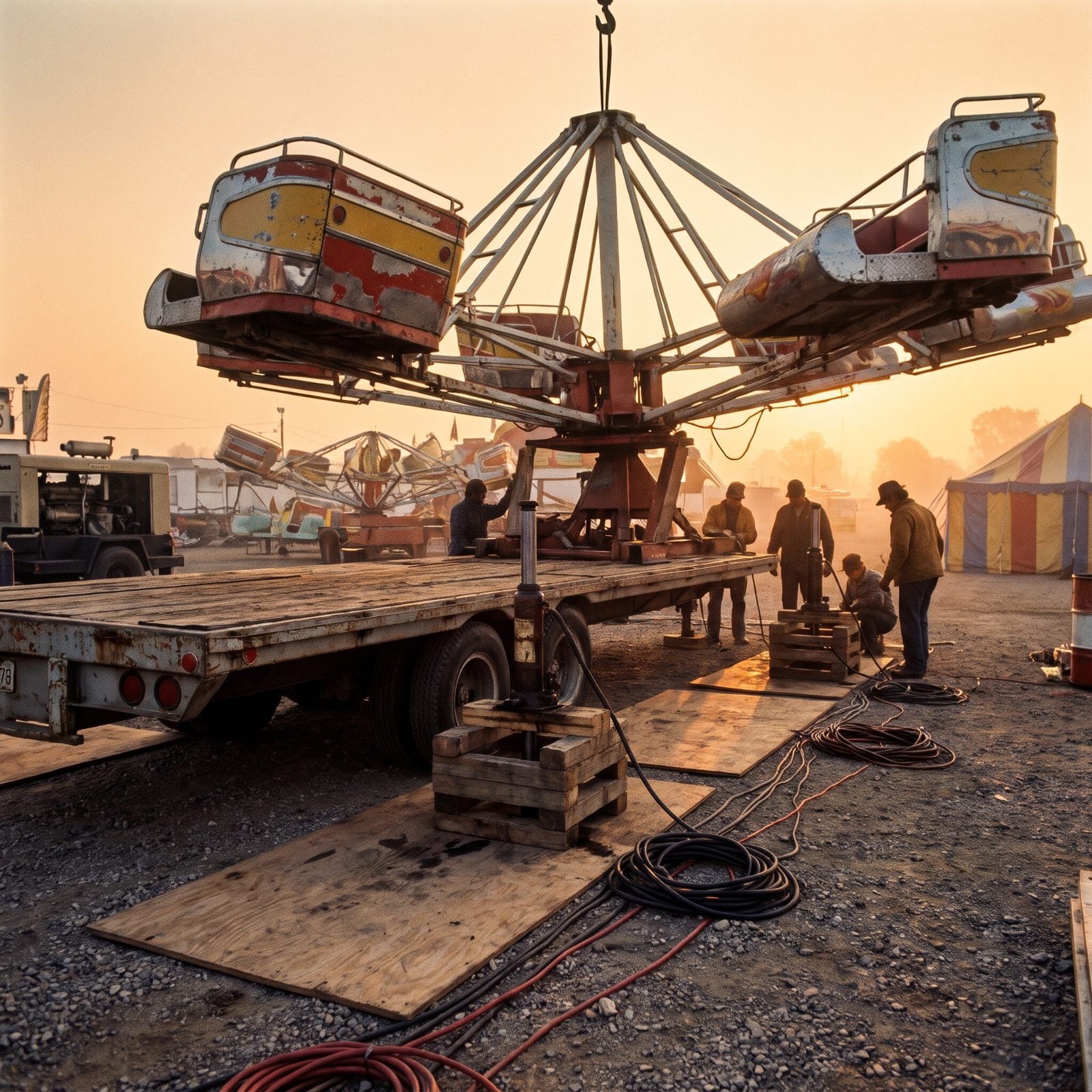
Traveling carnivals showed up Thursday night and were spinning kids by Friday afternoon. The whole ride folded onto a flatbed, got towed in, and went up on jacks resting on scraps of plywood laid over gravel.
You could watch a guy level a Scrambler with a crowbar and a bubble level. The same hands that collected your tickets had bolted the thing together that morning. Inspection, if it happened at all, was a clipboard and a quick walk-around.
Permanent parks had their problems. But the traveling midway operated on a different kind of faith entirely.
25. Loading Platforms That Never Stopped Moving Under Your Feet
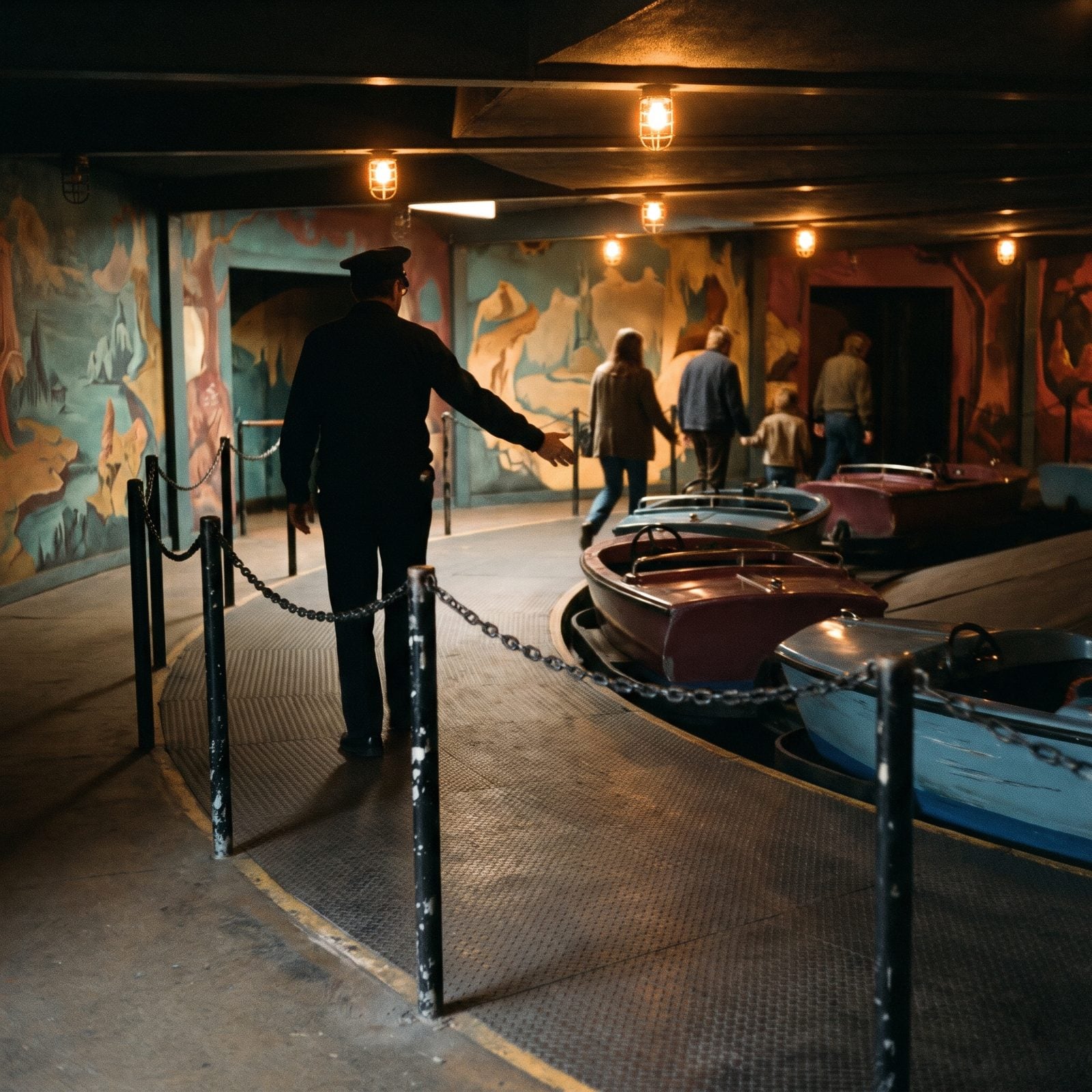
The platform was already turning when you got to it. Classic dark rides and some carousels loaded on the move, which meant you timed your step onto a rotating floor while a little boat-shaped car slid past at a steady crawl.
Grandparents hopped on. Kids got hoisted mid-rotation. There was a gap between the moving platform and the moving car, and you learned to mind it fast. The operator kept the line flowing and almost never hit the stop button, because stopping killed the capacity numbers.
24. Walk-Through Funhouses With Spinning Barrels Built to Knock You Down
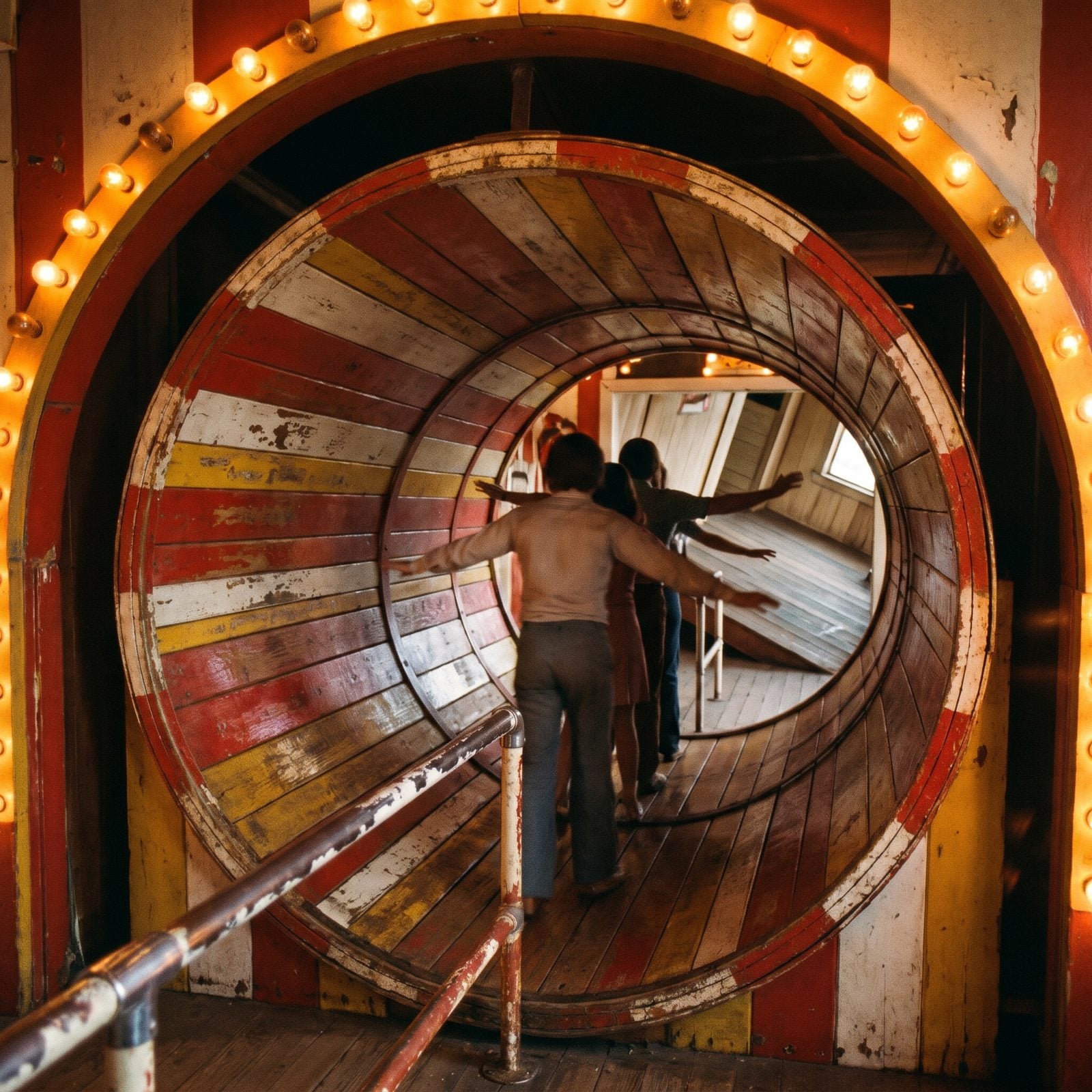
You walked into a giant spinning barrel and tried not to eat the floor. That was the whole attraction. The wooden cylinder rotated fast enough to pitch you into the wall, and the slats were polished glass-smooth from forty years of people falling against them.
Nearby you’d find tilted rooms, air jets under grates aimed at skirts, and padded mallets that actually smacked. Everyone came out with a bruise and a story.
23. Haunted-House Actors Who Reached Out and Grabbed You
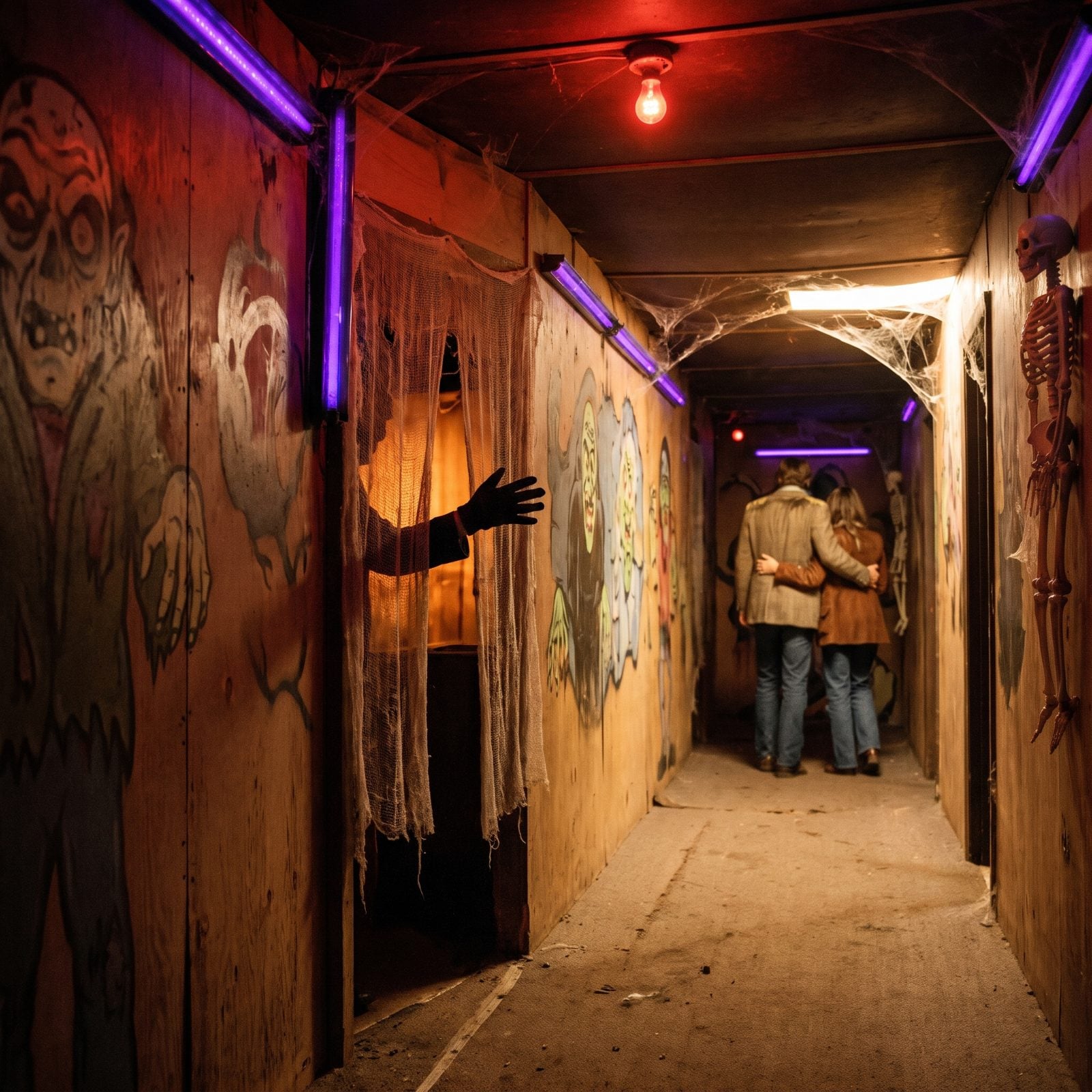
The scare wasn’t a jump out. It was a hand on your shoulder. Costumed actors in old-school spook houses were allowed, encouraged even, to physically grab guests, and someone would seize your arm in the dark, breathe down your neck, follow you a few steps.
Kids got genuinely terrified, which was treated as a feature. There were no “we won’t touch you” signs because touching you was the whole bit.
Parks eventually banned contact entirely. Turns out grabbing frightened strangers in the dark generates exactly the kind of incident reports you’d expect.
22. Shooting Galleries Firing Real Lead Pellets at Metal Targets
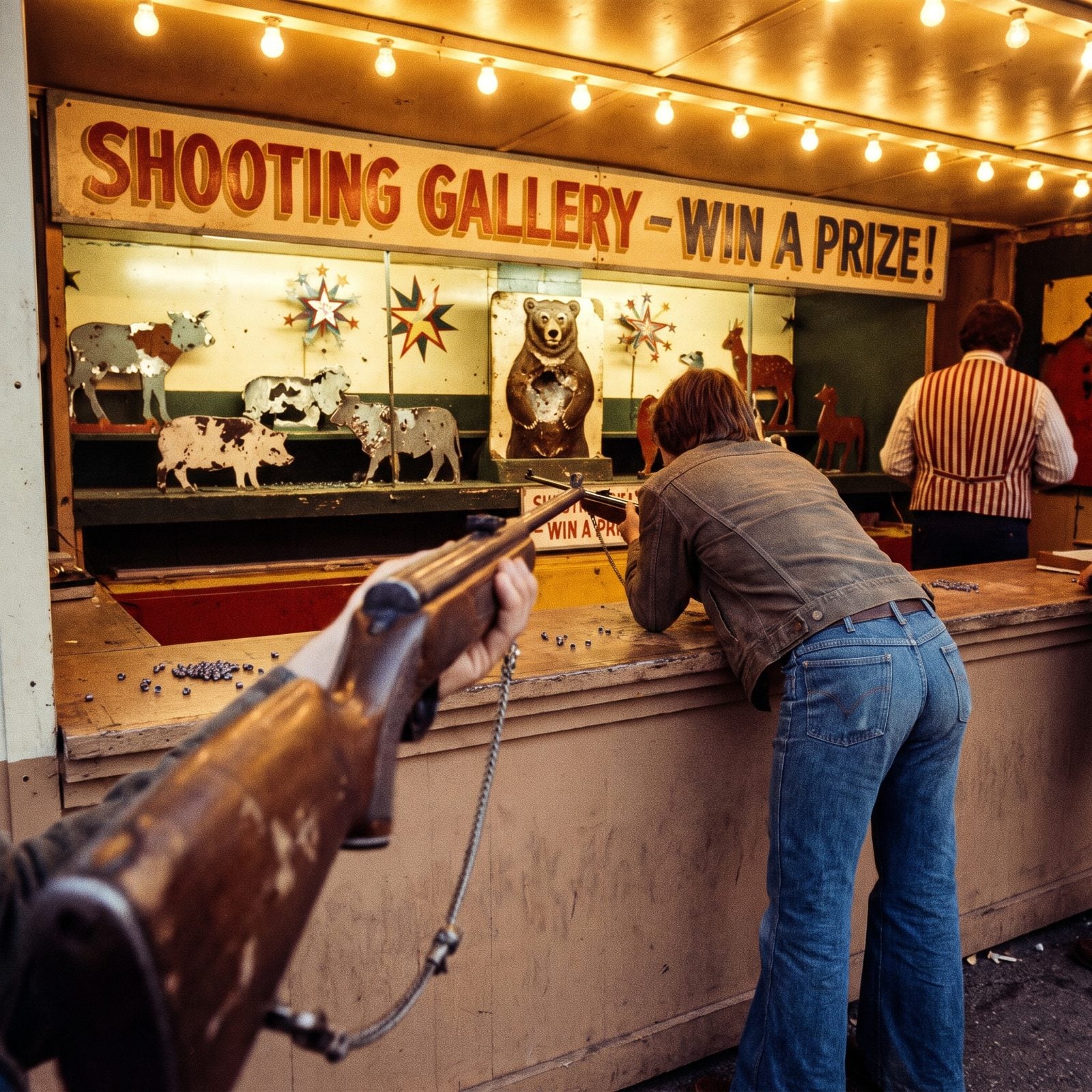
Those weren’t toy guns. The midway shooting gallery handed a nine-year-old a tethered air rifle loaded with actual lead pellets and pointed them at a backstop twenty feet away.
The targets clanged and spun when you hit them. Pellets ricocheted off the metal and ping-ponged around the booth. The only thing between you and the kid at the next rifle was a few feet of counter.
21. Carnival Games Where You Threw Sharp-Tipped Darts Over Kids’ Heads
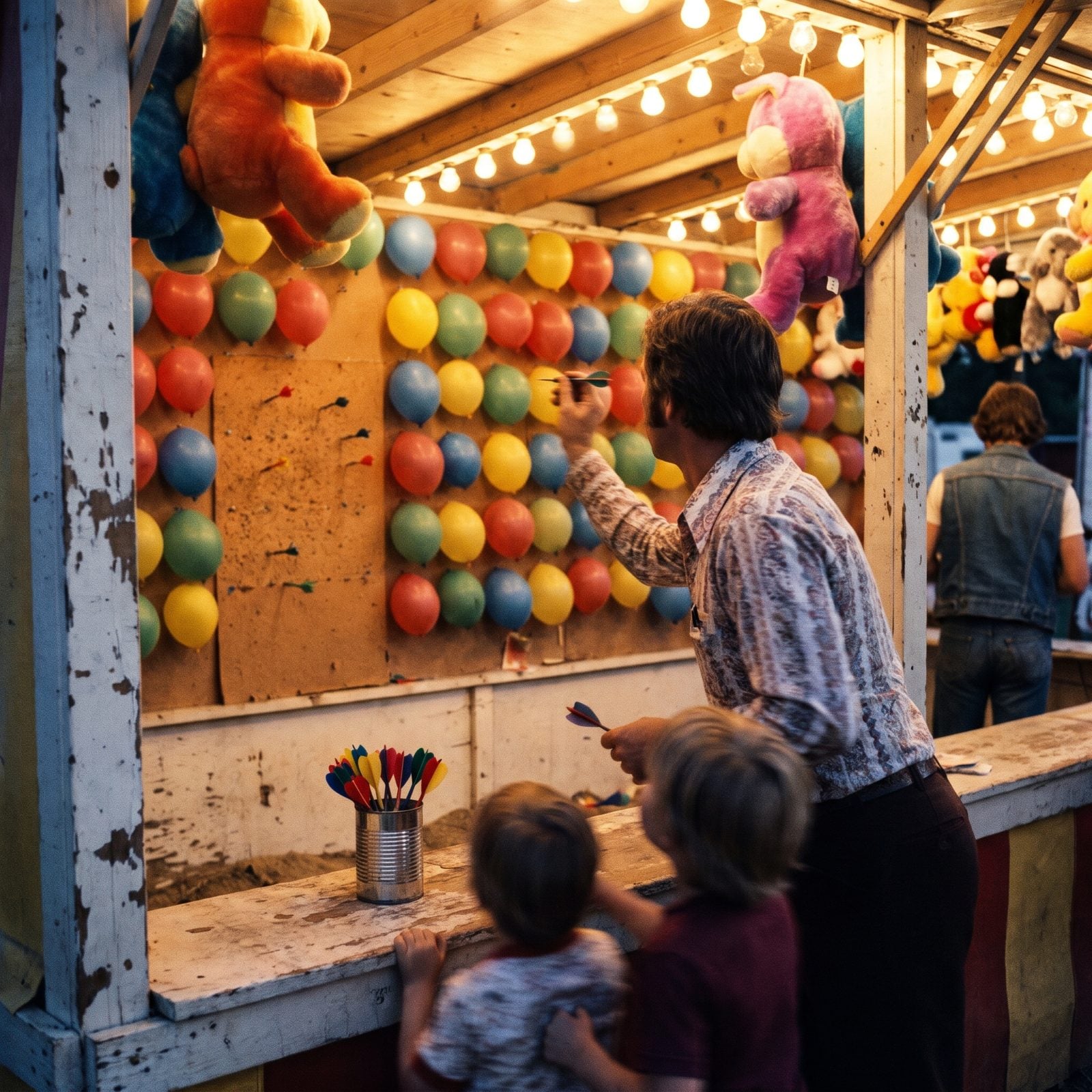
Metal darts, real points, hurled across a booth at a wall of balloons while short people stood right there at counter height. The dart game was a fixture, and nobody thought twice about handing a fistful of sharp steel to whoever had three tickets.
Stray throws happened. Kids reached for darts in the cup. The whole thing ran on the assumption that everyone would just be careful.
Plastic suction-cup and velcro versions eventually took over, which took most of the fun and all of the danger out of it at once.
20. Petting Zoos With a Knee-High Fence and a Lot of Optimism
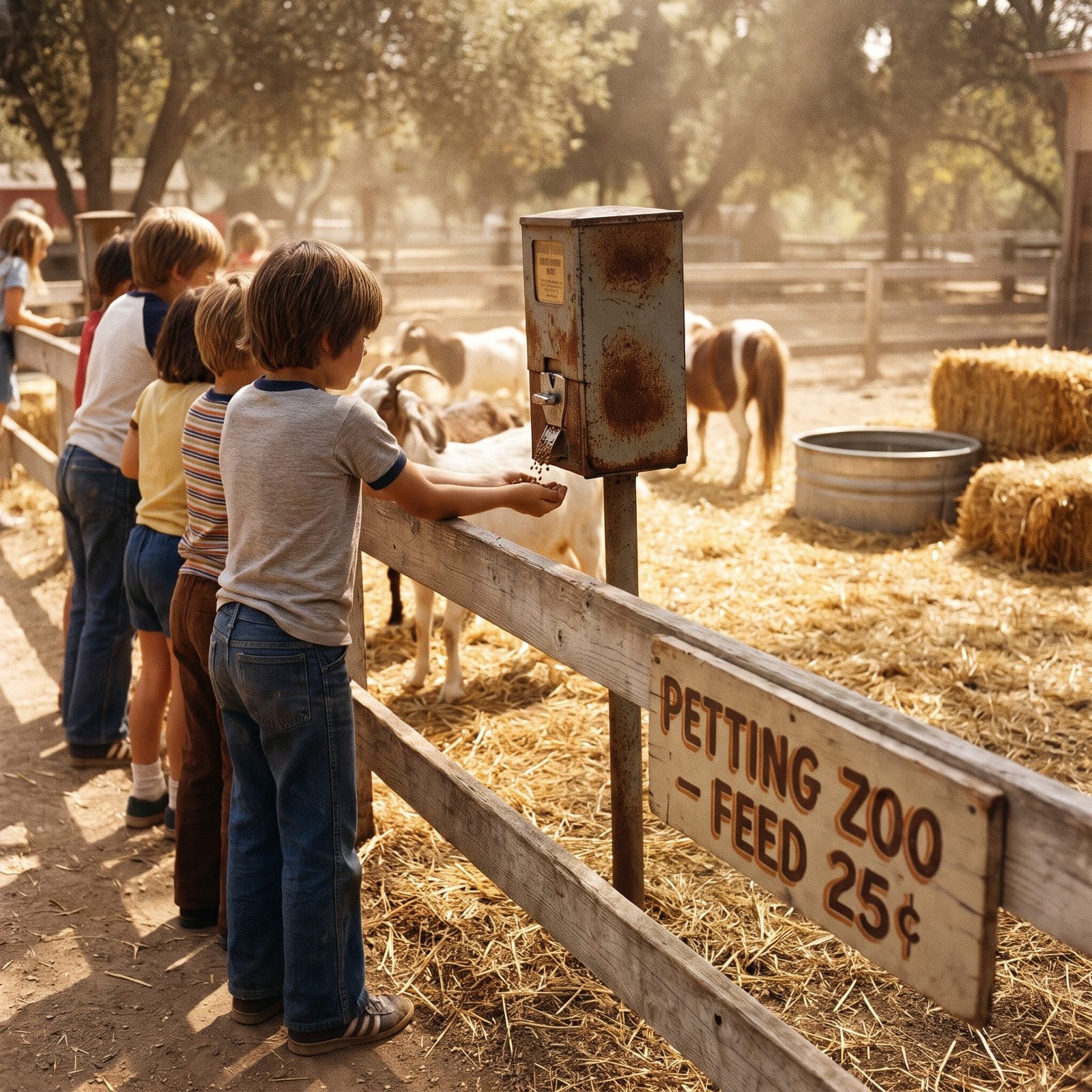
The barrier was a rail you could step over without trying. Park petting zoos kept goats, ponies, and whatever else right behind a fence built for looks, not containment, and kids climbed halfway in to feed pellets from a rusty gumball-style dispenser.
No hand-washing stations. No sanitizer, which didn’t exist. You fed a goat, wiped your palm on your shorts, and went straight to the french fry stand.
19. High-Dive Boards Towering Over Small Park Swimming Pools
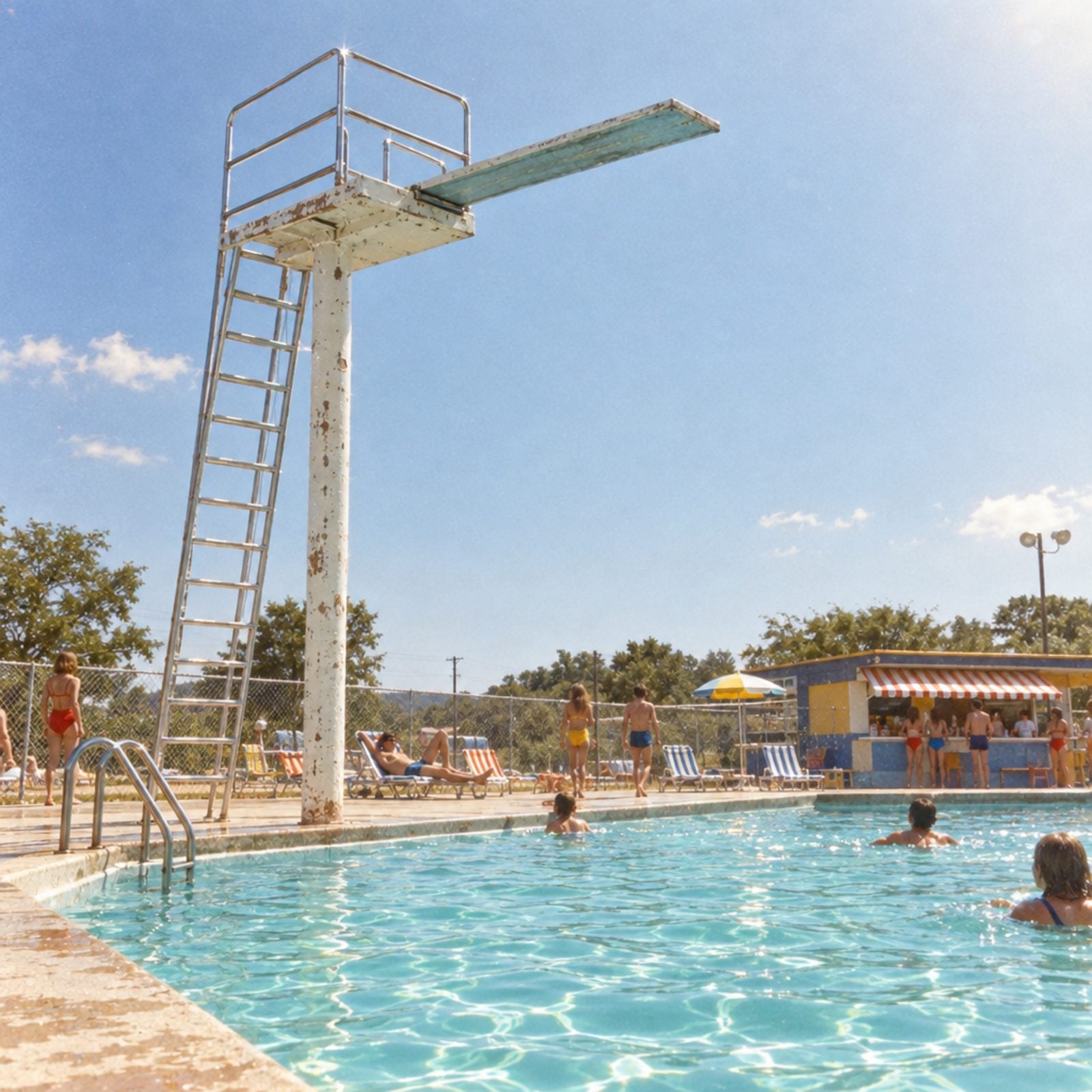
Plenty of smaller parks and resort pools had a high board that sent you plunging into water that wasn’t really deep enough for the height of the launch. The drop was thrilling. The depth was more of a suggestion.
Lines formed. Kids who’d never dived cannonballed off anyway. The lifeguard, if there was one, sat somewhere poolside and watched a dozen pools’ worth of chaos at once.
Most of these boards came down in the ’80s and ’90s, quietly, one park at a time.
18. Early Wave Pools Where You Lost Sight of the Kids in the Swell
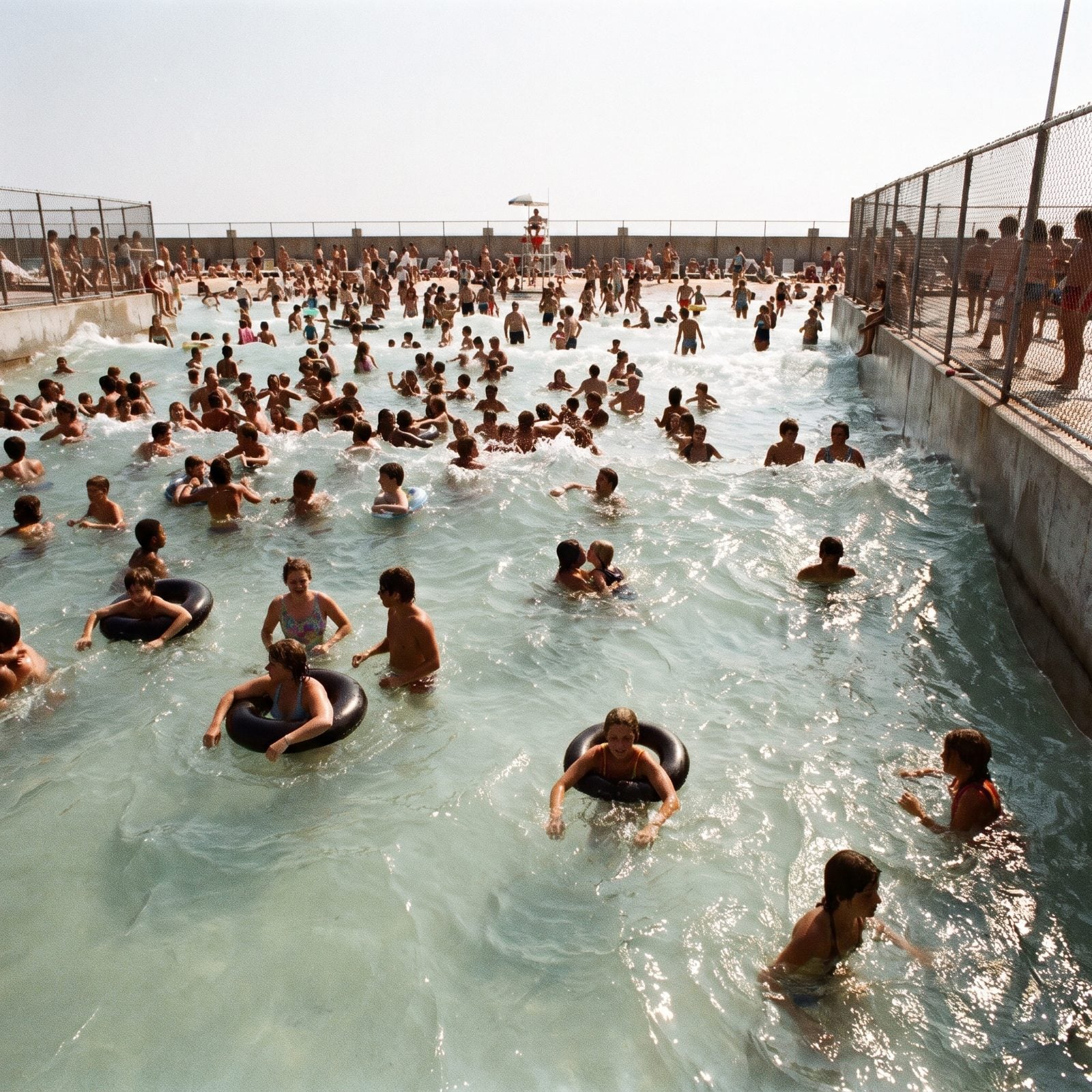
When the horn blew and the machine kicked on, calm water turned to churning in seconds, and a packed crowd disappeared into a chop you couldn’t see through. Early wave pools jammed hundreds of people into cloudy water with waves big enough to swallow a small kid whole for a few terrifying seconds.
Parents stood on the deck scanning a sea of bobbing heads and inner tubes, trying to keep one in sight. The water was too crowded and too murky to see the bottom.
Lifeguards worked these harder than any other spot in the park, and everyone knew it. The wave pool was the loudest, wildest, most heart-in-throat corner of a 1970s summer. We’d line up for the next horn anyway.
17. Rough Waterslides With Hard Seams and Turns
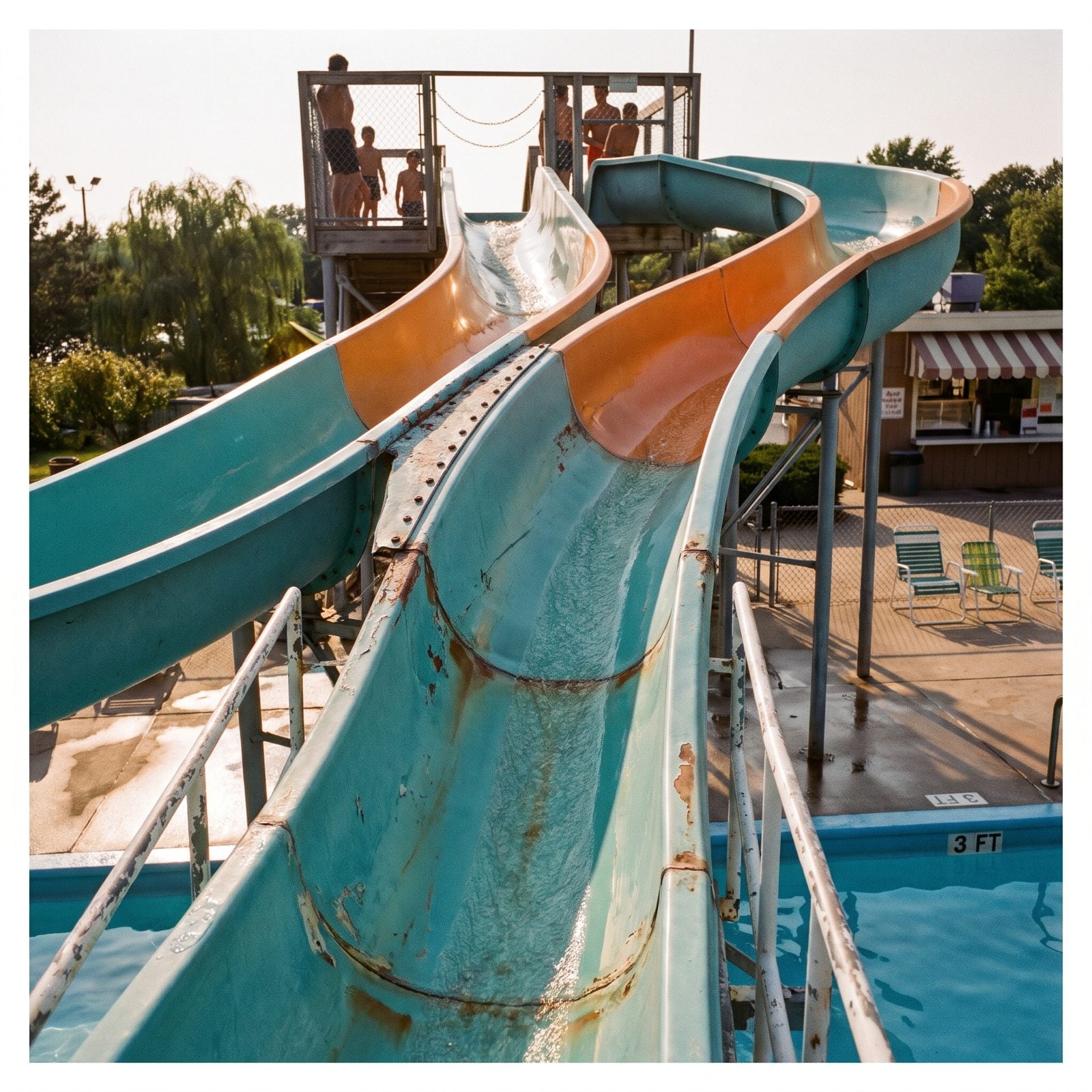
You remember the sound before you remember the ride — that squeak of wet skin dragging over fiberglass, then the little jolt every time you crossed a seam where two panels met. Nobody had invented the smooth, computer-molded flumes yet. These were bolted together in sections, and you felt every bolt.
The turns were the real event. They banked hard, threw you up the wall, and sometimes grabbed a shoulder or a hip on the way down. You stood up at the bottom with a pink stripe on your thigh and called it a good time.
16. Scorching Metal Playground Equipment
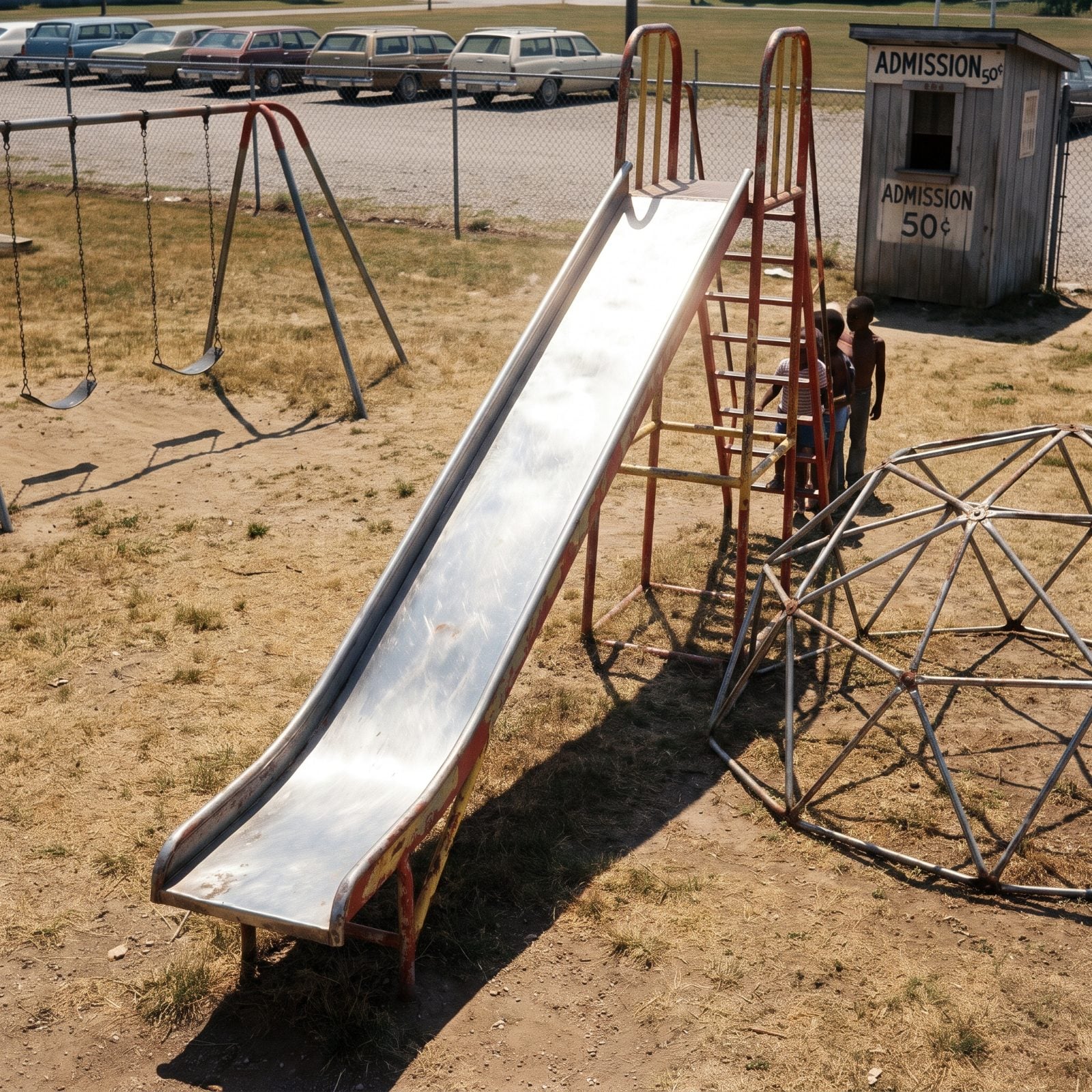
That aluminum slide was a griddle with a ladder. By two in the afternoon it had been cooking in the sun for hours, and you learned the hard way that a running start and a quick sit was the only survivable approach. Hesitate, and you got a burn stripe down the back of both legs.
The ground underneath was dirt. Just dirt, maybe a little gravel, packed hard by a thousand feet — no foam, no rubber mats, no wood chips. You fell off the monkey bars, you got up, you kept going. That was the whole system.
15. Low Fences Around Exposed Ride Machinery
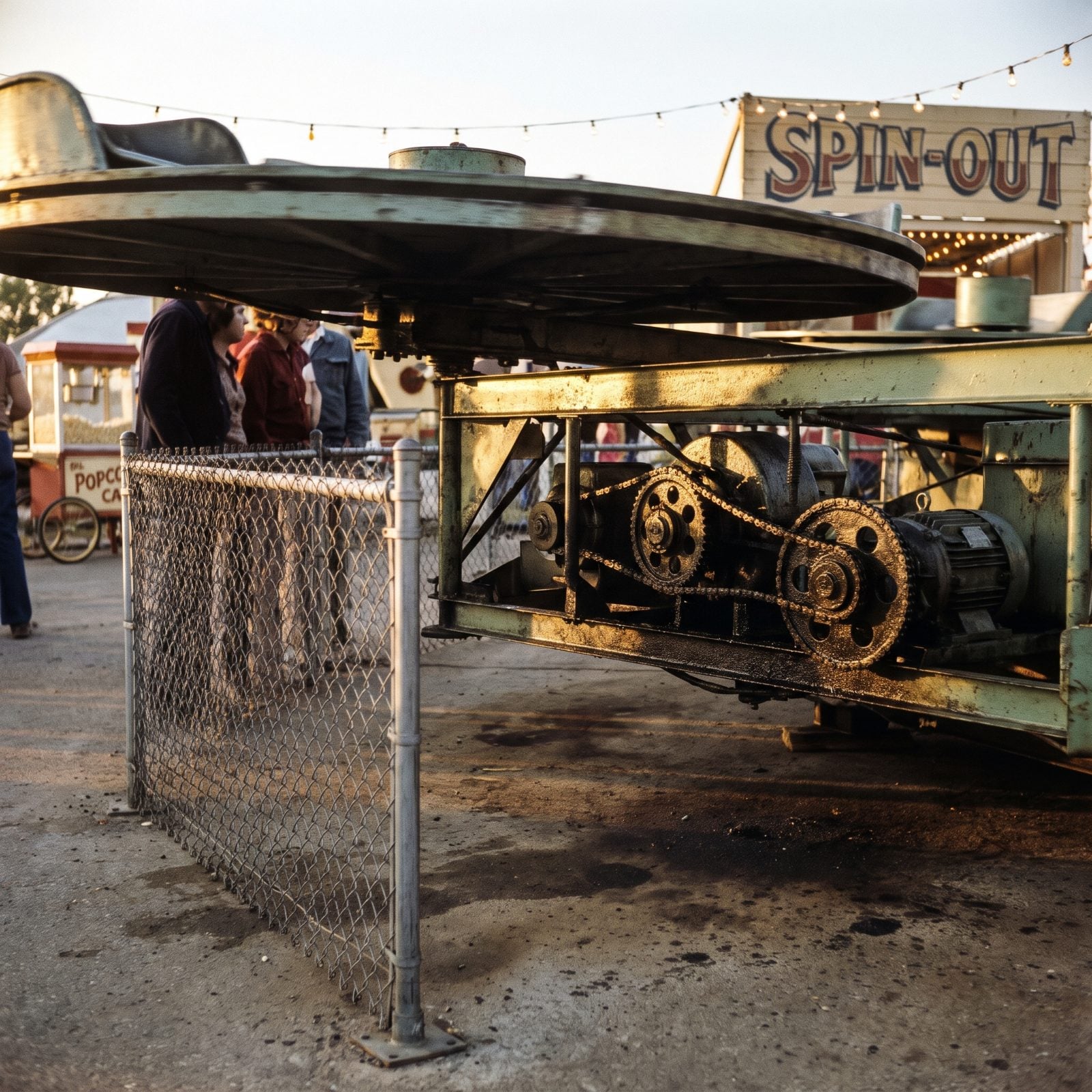
The fence came up to about your belt buckle, and behind it the whole working heart of the ride turned in the open air: greasy chains, spinning steel arms, a motor the size of a washing machine, all of it a long arm’s reach away from a curious kid.
You could stand there and watch the whole mechanism do its thing. Honestly, that was half the fun for a certain type of child. The machinery wasn’t hidden behind panels and plastic shrouds the way it is now. It was right there, dripping grease, doing its loud and visible work.
14. Waist-High Railings on Elevated Platforms
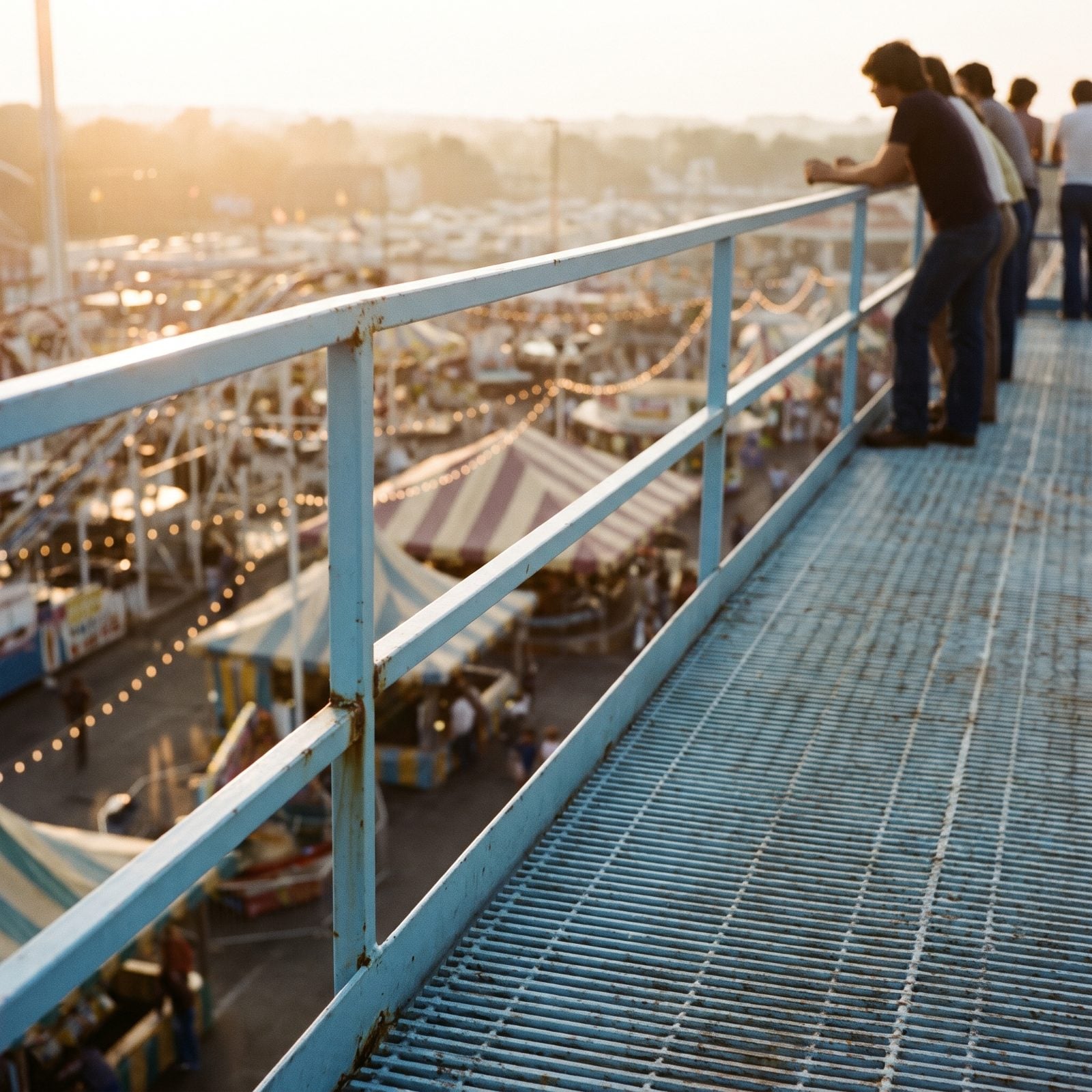
Up on the observation decks and loading platforms, the thing between you and a long drop was a single steel rail about as high as your hips. One bar on top, one in the middle, and a whole lot of open air underneath.
A grown adult could lean over it without trying. A small kid could slip right between the bars if a parent glanced away at the wrong second. The view was tremendous — the whole park laid out gold in the evening light. The railing just asked a lot of your judgment.
13. Teen Ride Operators Working With Minimal Supervision
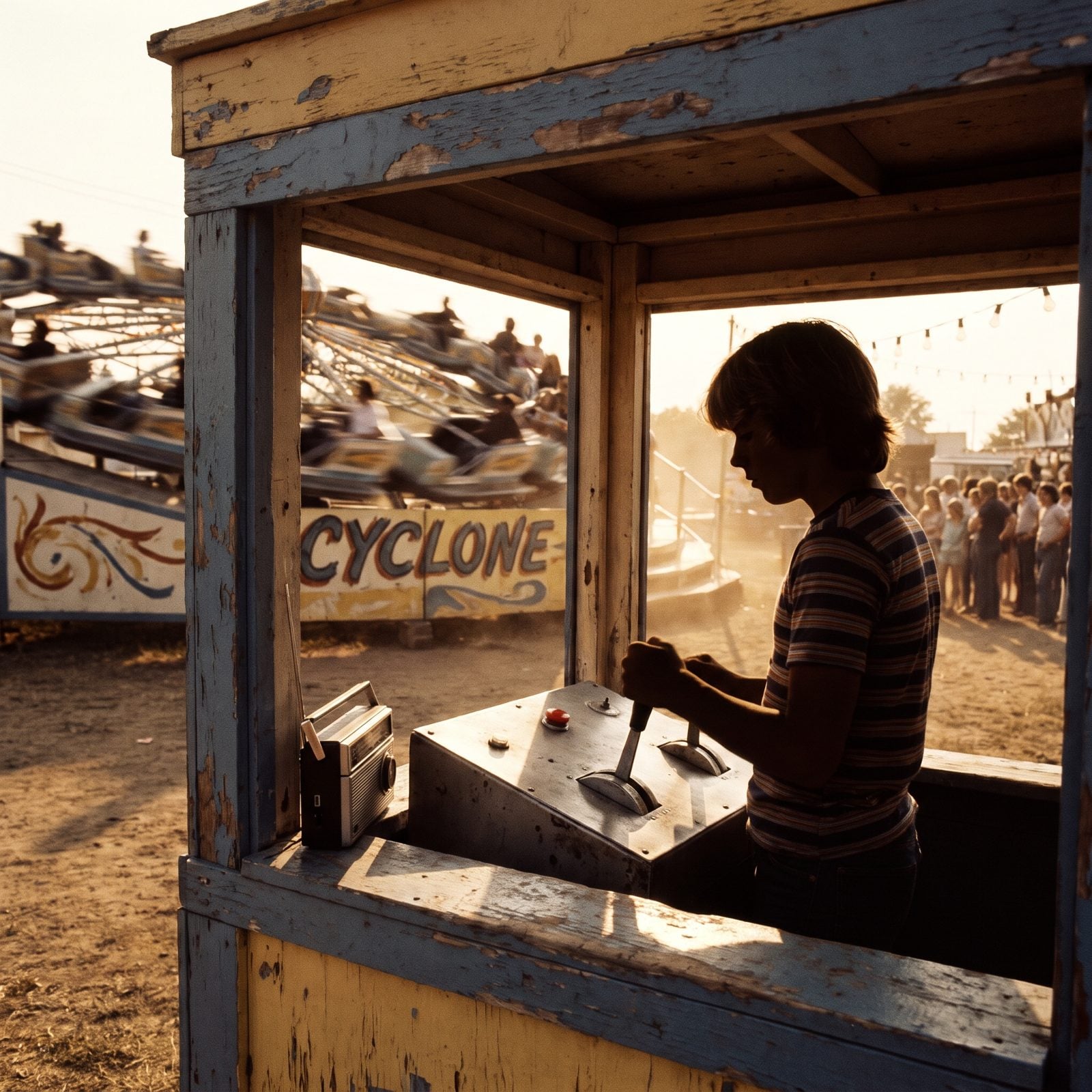
The kid running the ride was sixteen, maybe seventeen, with a transistor radio propped on the control ledge. He’d learned the job in an afternoon — push the button, watch the thing go around, push it again to stop. The supervisor was somewhere across the park, or on break, or had been for a while.
And nobody thought twice about it. A summer job at the park meant you got handed the controls of a machine that could toss a dozen people fifty feet in the air, and you figured it out. Most of them did it just fine. The margin, looking back, was thinner than anyone admitted.
12. Height Requirements Judged by Eye
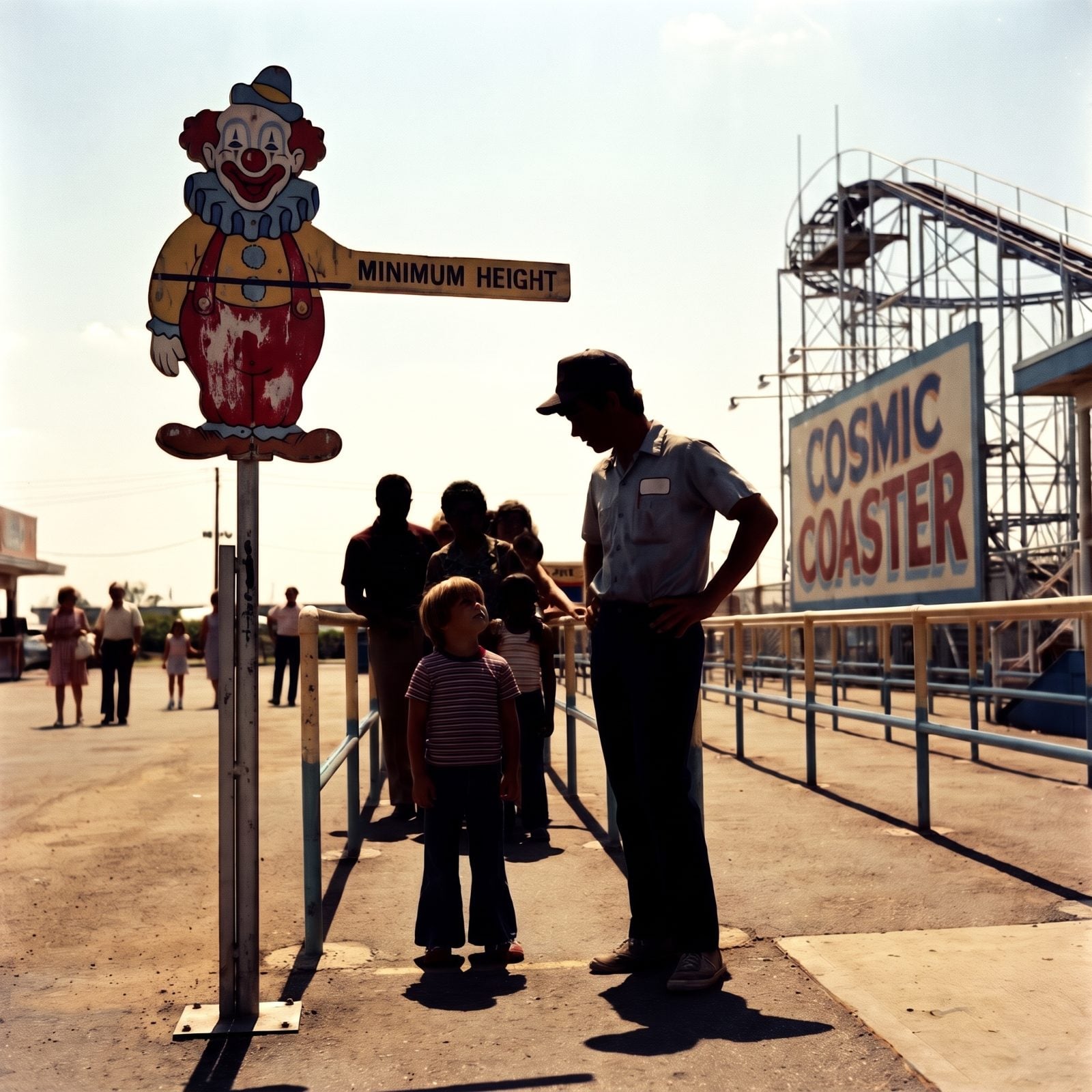
There was a sign. A painted clown with a line across its chest and an outstretched arm that said MINIMUM HEIGHT, mounted on a tall pole well above a kid’s head.
In practice, the attendant gave you a quick look up and down and made a call. A kid on tiptoe, a kid with a tall hairstyle, a kid whose parent gave a little nod — all of them got waved through plenty of times. The measurement was a suggestion filtered through a teenager’s mood and how long the line was. Some days you were tall enough. Some days, on the exact same ride, you weren’t. Nobody wrote any of it down.
11. Rides Operating as Storm Clouds Gathered
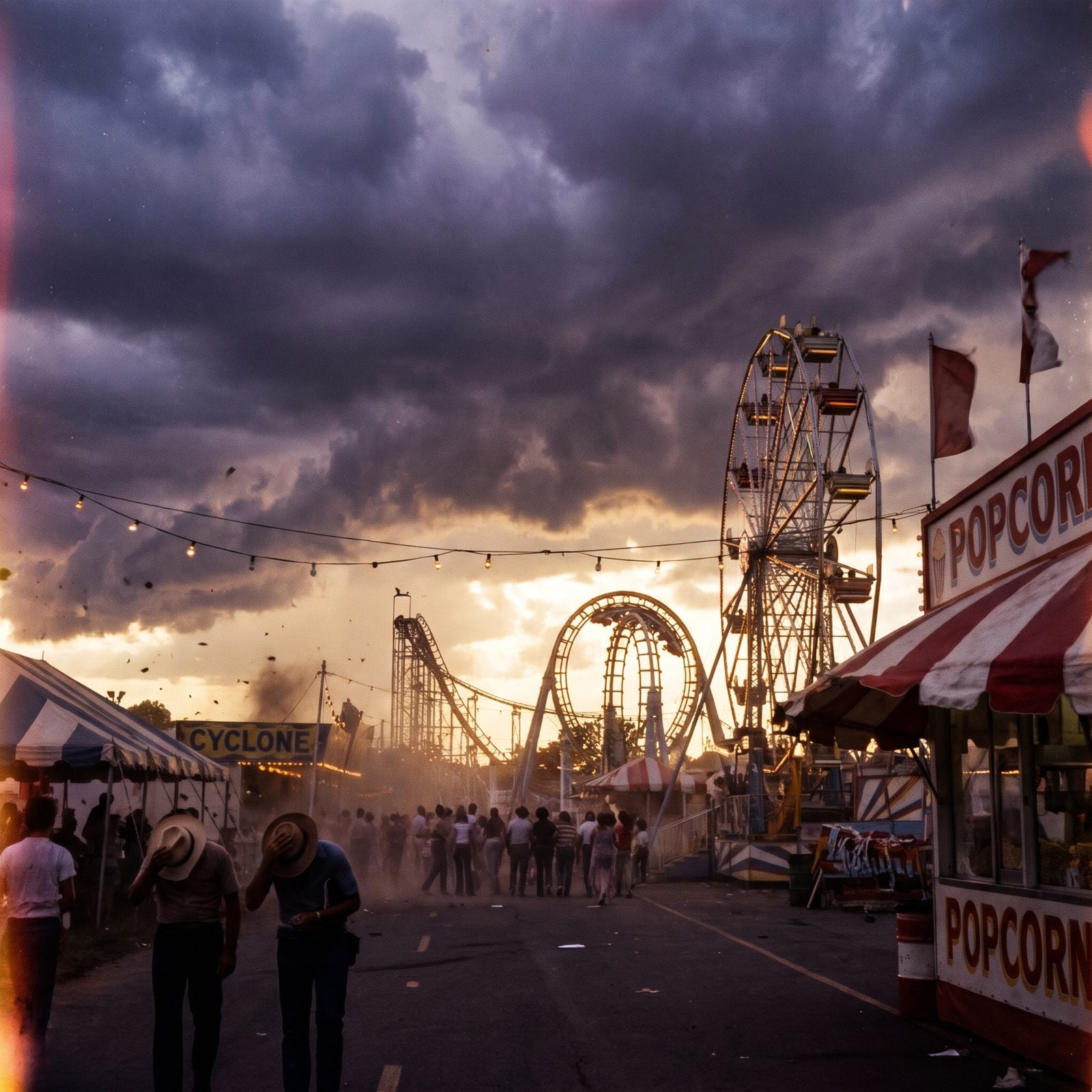
You could watch the sky turn that deep bruise color on the horizon while the rides just kept spinning. The Ferris wheel kept loading. The line didn’t move an inch toward the exits. Everybody waited for something official to happen, and mostly nothing did until the first fat drops actually hit.
Nobody had weather radar in a pocket back then. Whether to shut down came down to the ride operator squinting at the clouds and guessing how much time was left. More often than you’d want, the answer was: a little more.
10. Lost Children Identified Over the Public-Address System
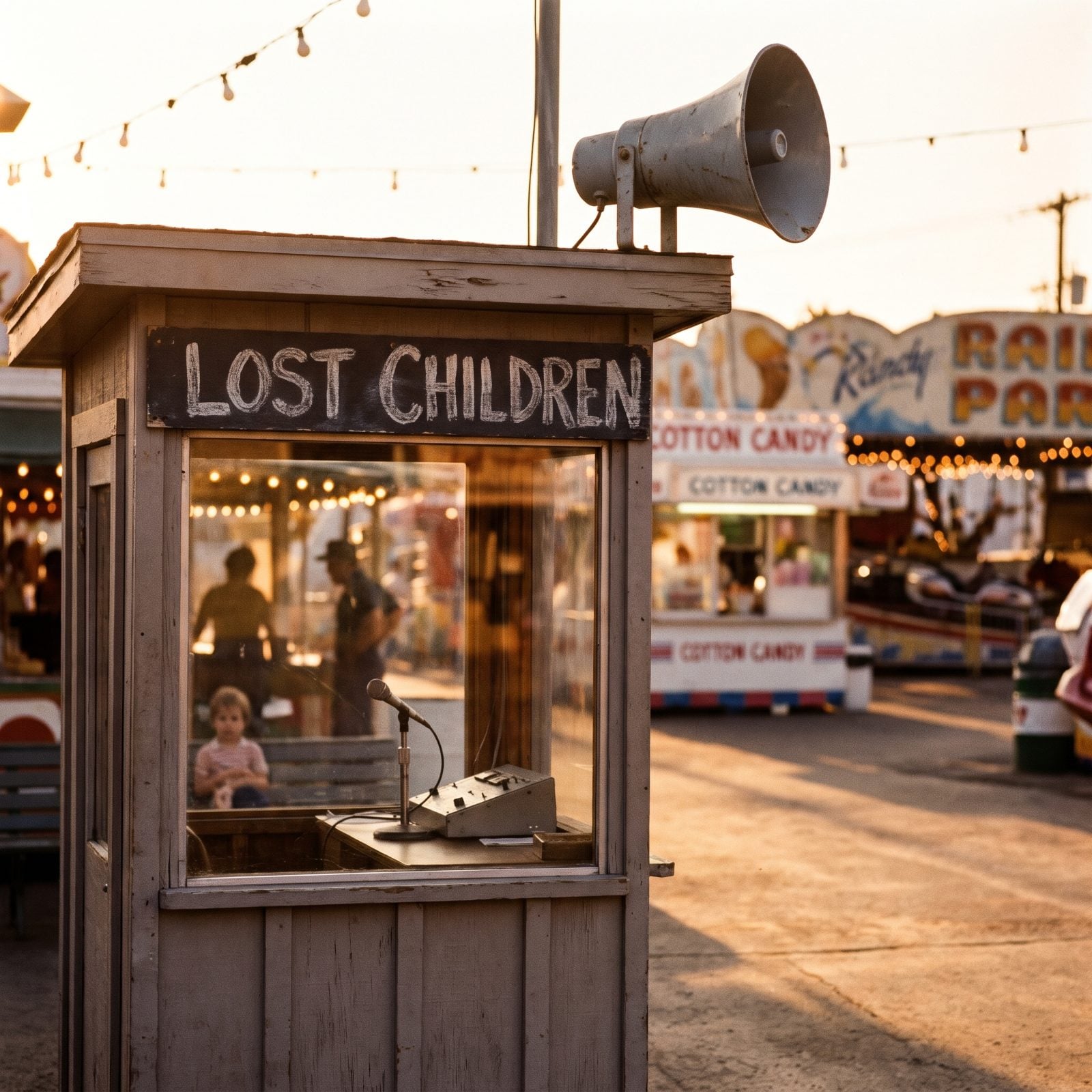
The speaker crackled, and the whole park heard it. A tired voice would come over the horn, asking the parents of a little boy in a red shirt to please come to the lost children booth near the main gate. Your name, your shirt, your general description, broadcast to five thousand strangers.
It worked, in its way. Everyone knew the booth by the gate. A lost kid got walked there, parked on a bench with a cup of something, and announced to the sky until somebody came. Low-tech, a little public, and a child’s full identity handed out over a loudspeaker to anyone within earshot.
9. Children Roaming Alone With “Meet at the Clock” as the Safety Plan
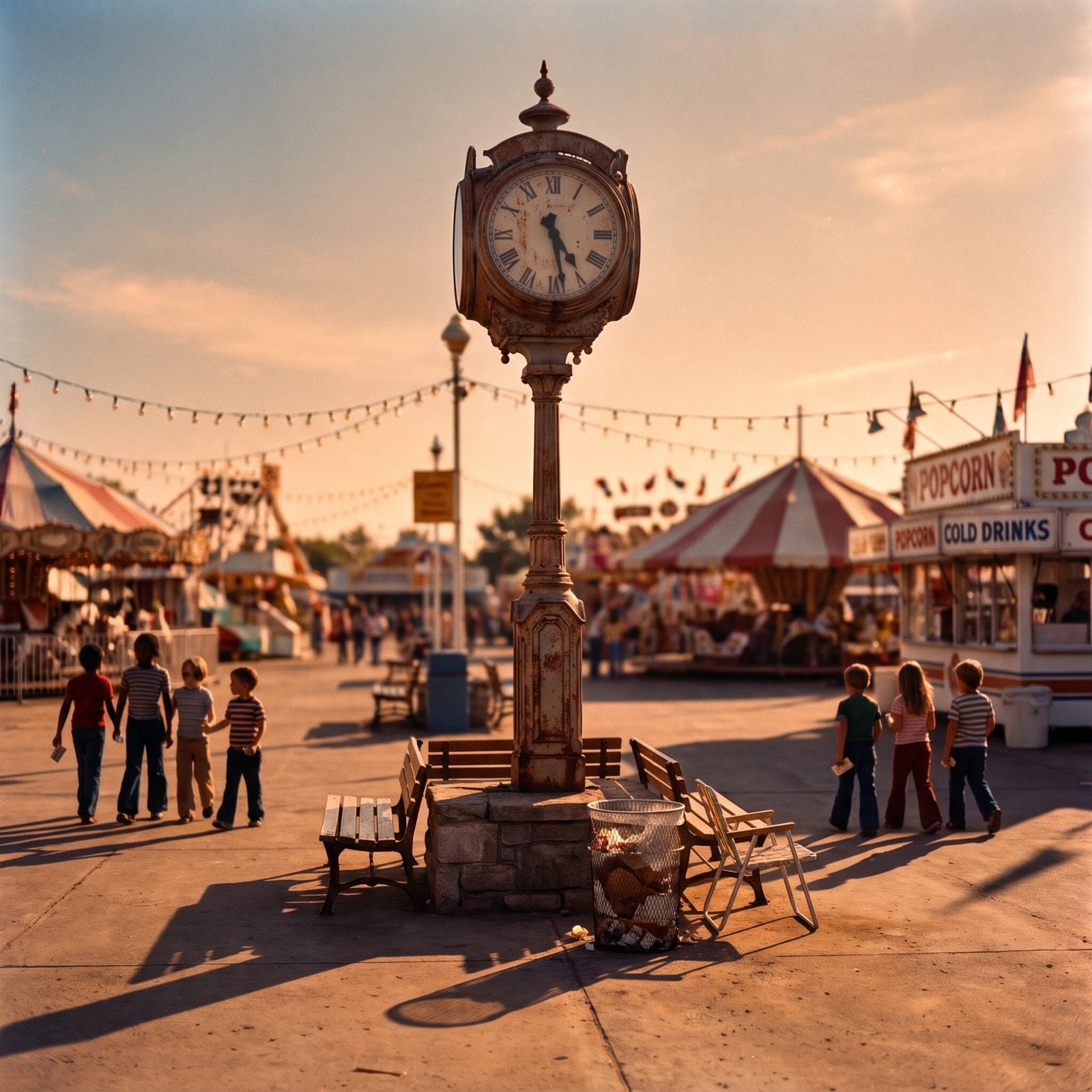
The whole plan fit in one sentence. Meet at the clock at five. That was it — the entire parental safety protocol for turning a kid loose in a park full of thousands of strangers for the better part of a day.
And it mostly worked. You wandered off with your friends and a fistful of tickets, rode what you wanted, blew your money on games, and showed up sweaty at the clock a few minutes before five because you knew what happened if you didn’t. There was a strange, real freedom in it that kids today just don’t get handed. I’m not sure we’ll ever see it come back.
No pager, no phone, no tracking app. Just a clock, a time, and the complete faith that you’d be there.
8. Open-Sided Parking Trams Without Seat Belts
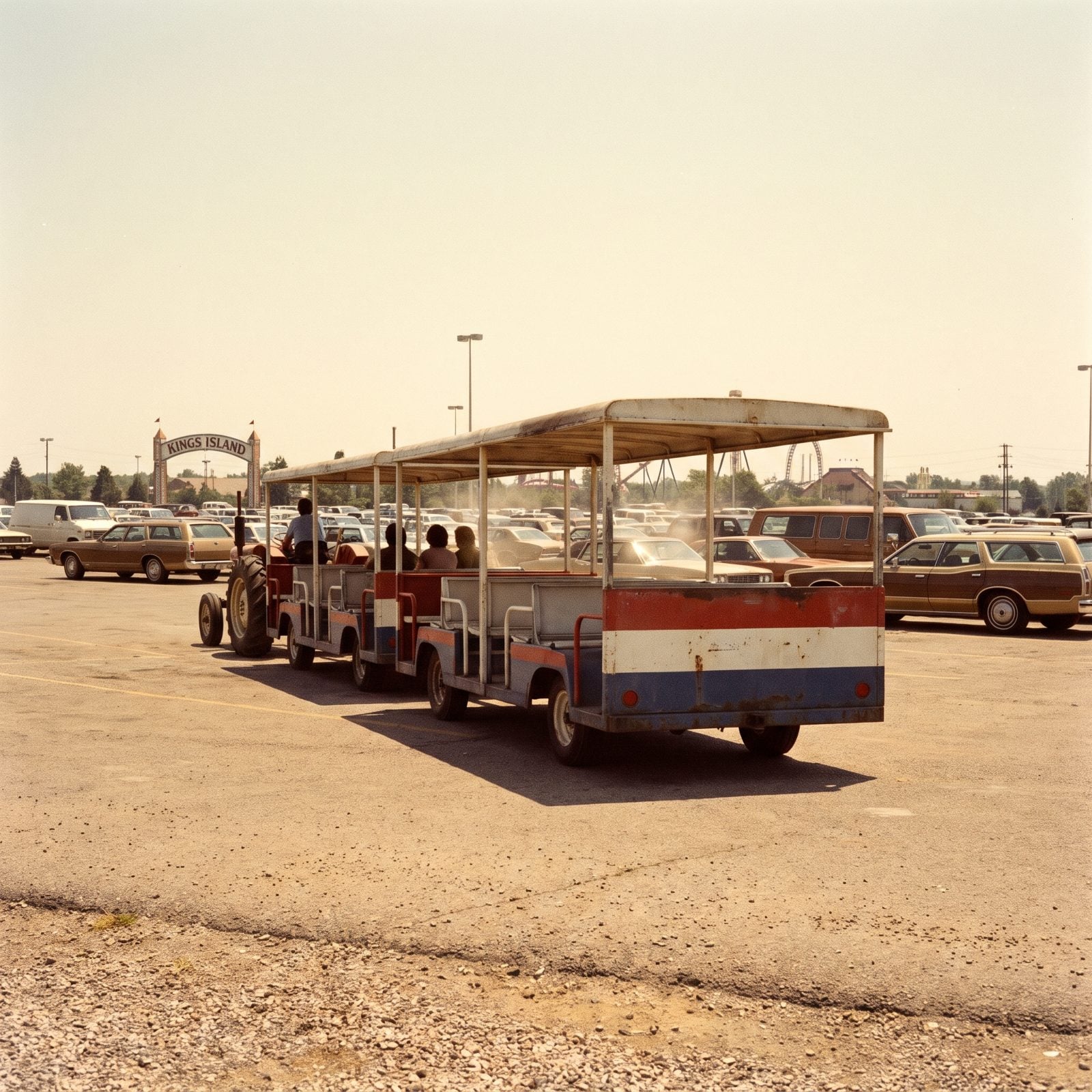
The tram hauled you from the back forty of the parking lot to the gate, and the sides were just open. Wide open. A bench, a canopy for shade, maybe a little chain across the gap, and your legs dangling out over the asphalt as the thing rolled along.
Kids sat on the outside edge because it was the best seat. The tram took the turns at the entrance a little fast, and you leaned into it and held the bench rail and nobody told you to sit still. Getting to the gate was practically a ride before the rides.
7. Lit Cigarettes in the Ride Line and at the Lunch Table
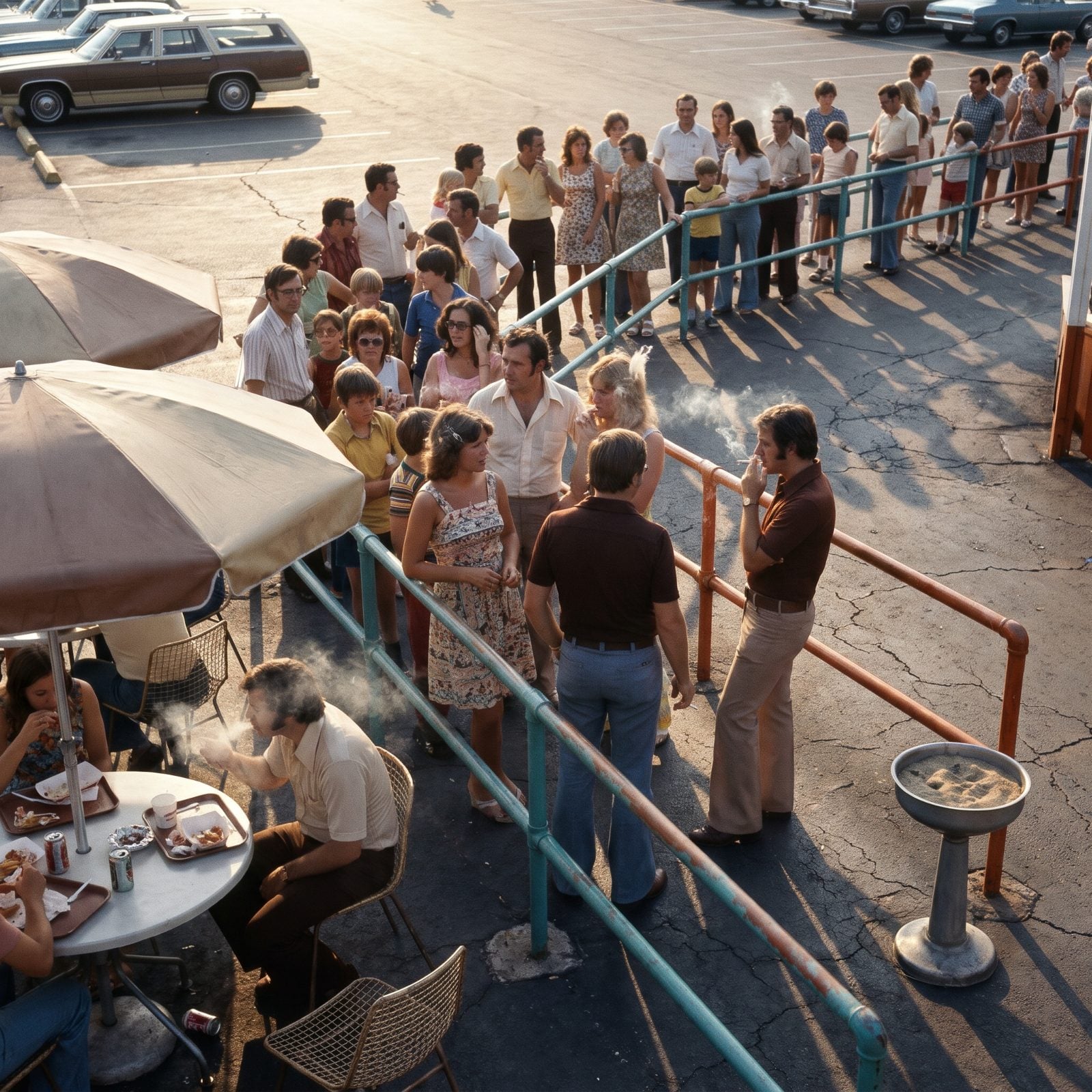
You could light up anywhere. In the coaster line, at the picnic table, in the covered queue where the breeze had nowhere to go — the air near a popular ride held a permanent blue haze, and nobody thought twice.
Sand-filled standing ashtrays sat at the end of every railing. Here’s the uncomfortable part: kids waited in line at adult hand height, which also happened to be cigarette height. Say that out loud and the math turns your stomach.
6. Glass Soda Bottles Carried the Whole Length of the Midway
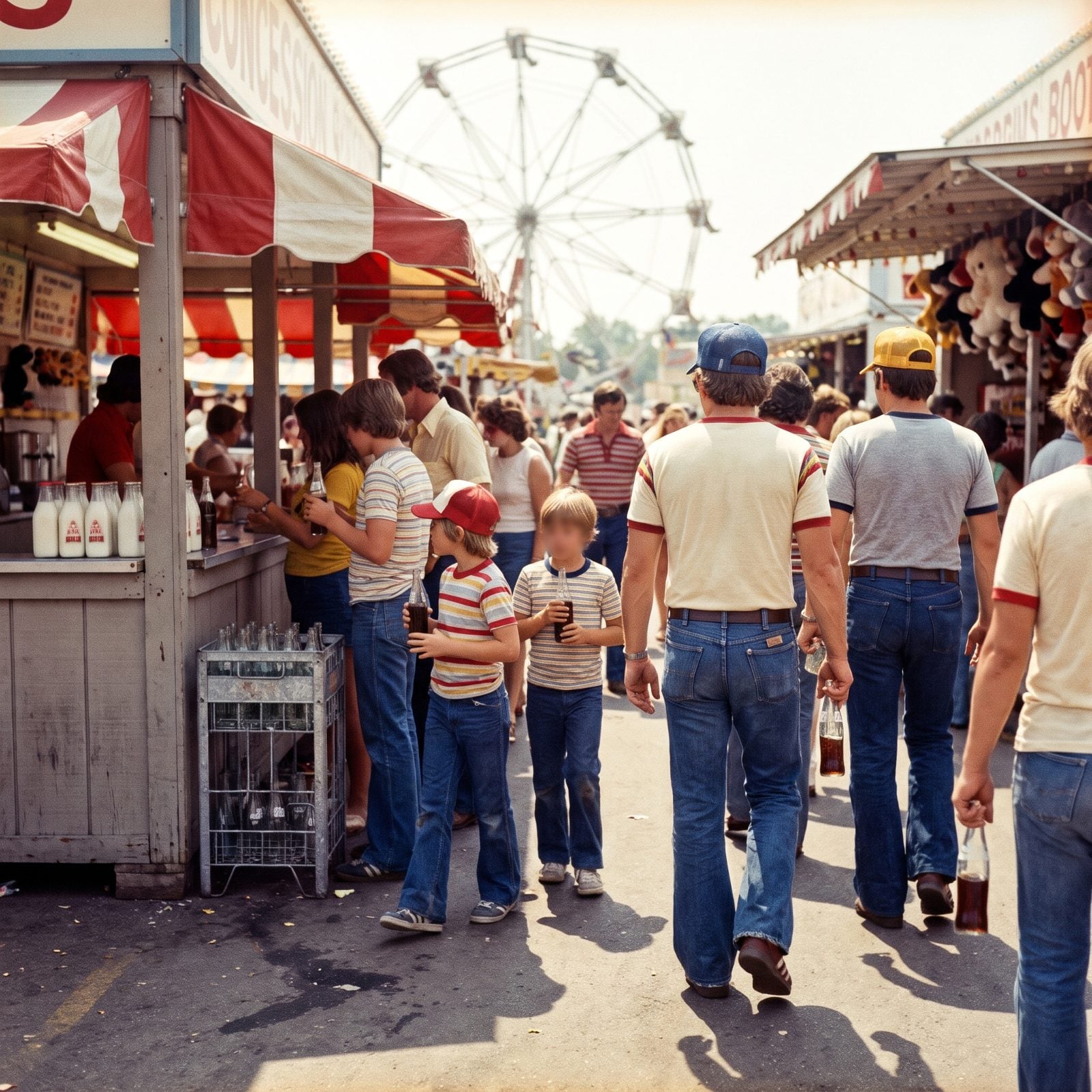
Soda came in glass, and glass went everywhere. Kids hauled full returnable bottles down the midway, swinging them by the neck, parking them on ride platforms, then dropping them on concrete and leaving the shards for the next barefoot soul.
The deposit was the whole safety system. You brought the bottle back for a nickel or two, and honestly that nickel is the only reason most of them ever made it home. Plastic cups and the plastic bottle wiped all of this out by the mid-1980s.
5. Cameras and Handbags Riding Shotgun on the Coaster
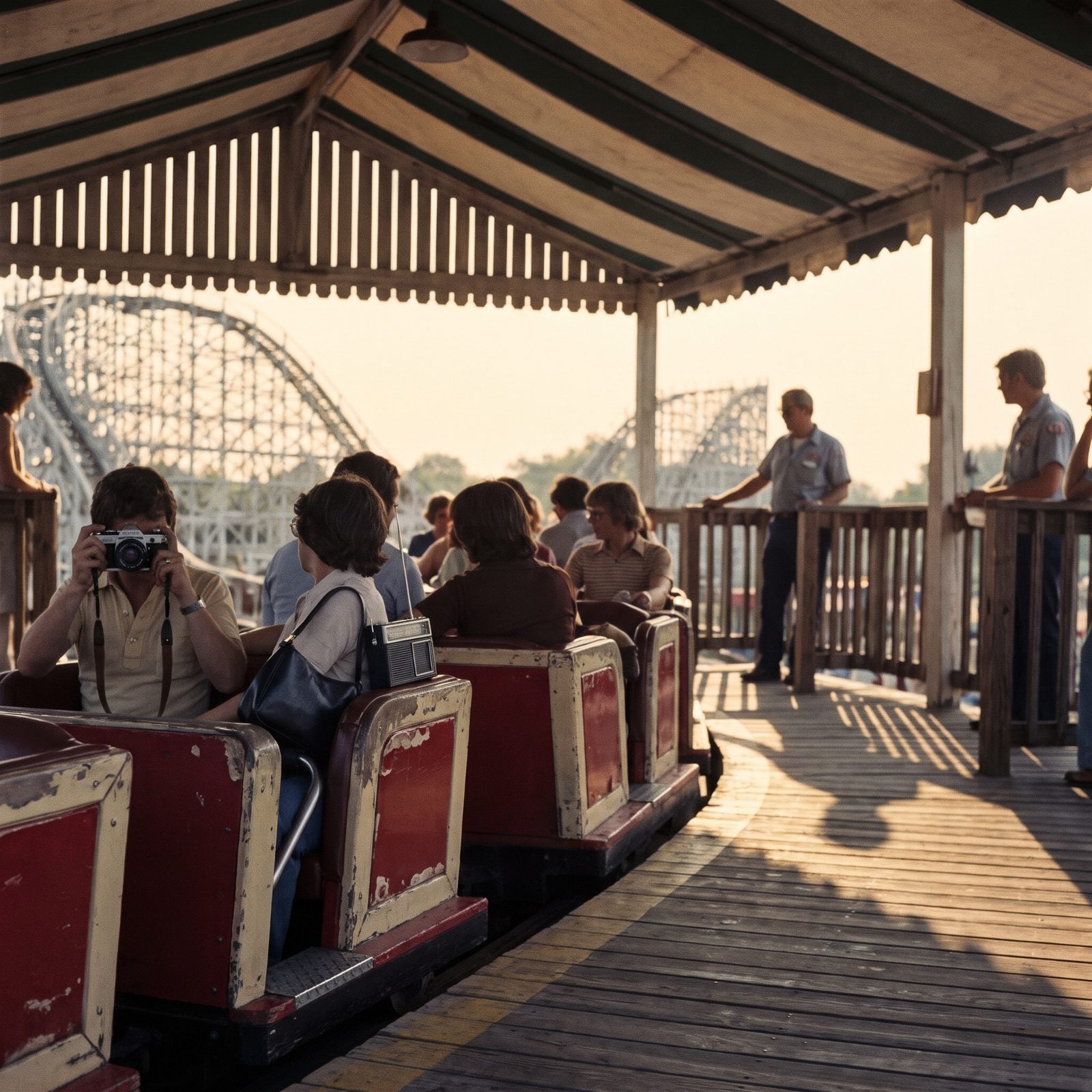
There were no loose-article bins — not a single one anywhere on the platform. So you carried your camera, your purse, your sunglasses and whatever else straight into the car and held on with your other hand.
Lap bars did all the work. Cameras flew off the first big drop, handbags launched into the woods, and the standard advice was to brace it against your stomach and pray. Anyone who’s watched a phone slip loose on a modern ride already knows exactly how this went.
4. Long Hair and Loose Sleeves Near Exposed Gears
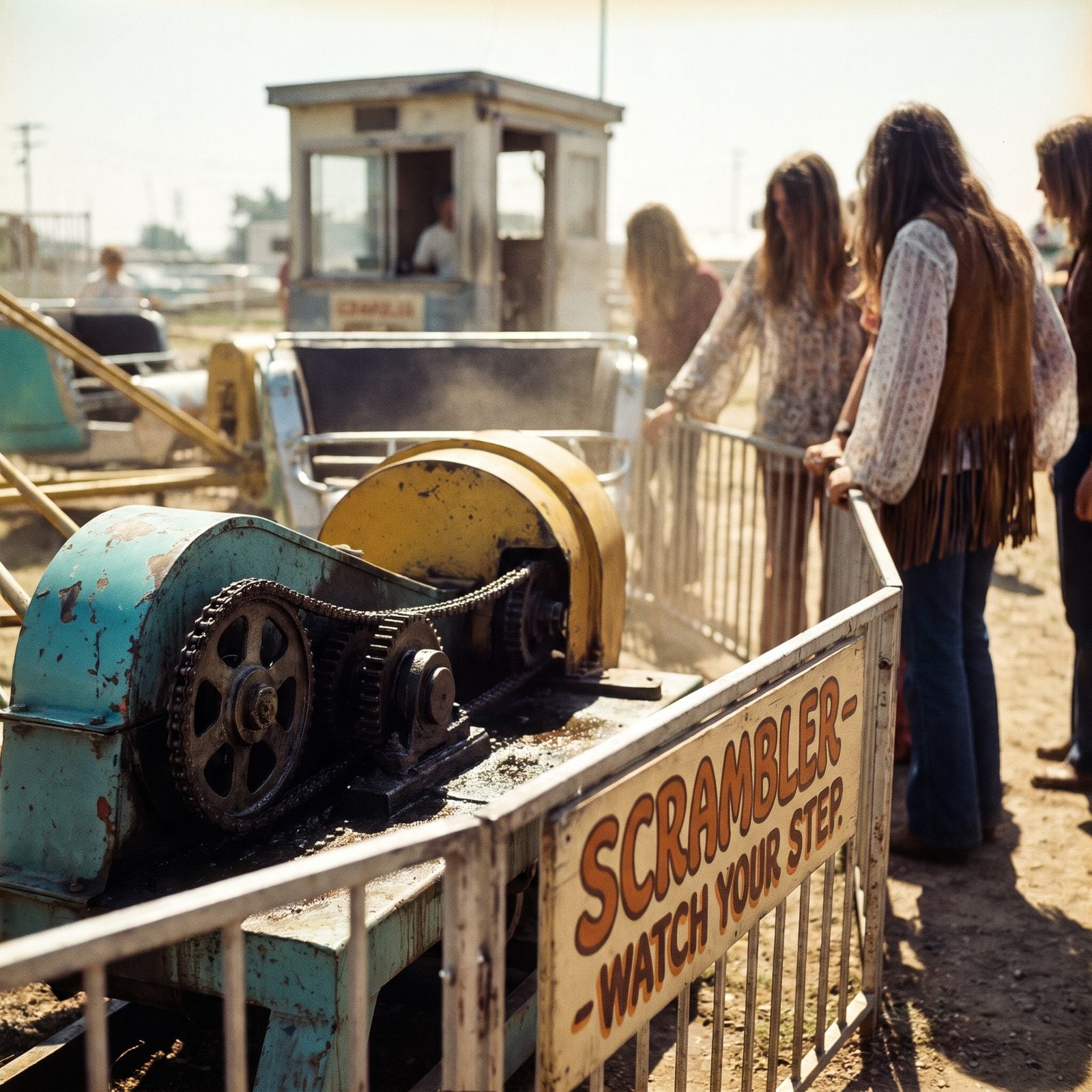
The decade ran on long hair, fringed sleeves, flowing scarves and macramé everything. The rides, meanwhile, ran on exposed drive chains, open hubs and guard fences that quit at the waist.
Nobody tied anything back. You’d stroll right up to a spinning mechanism with your hair loose and your bell sleeves flapping, and the only thing standing between the two was good luck and a bored operator in a booth.
3. Fireworks Fired Right Over the Crowd
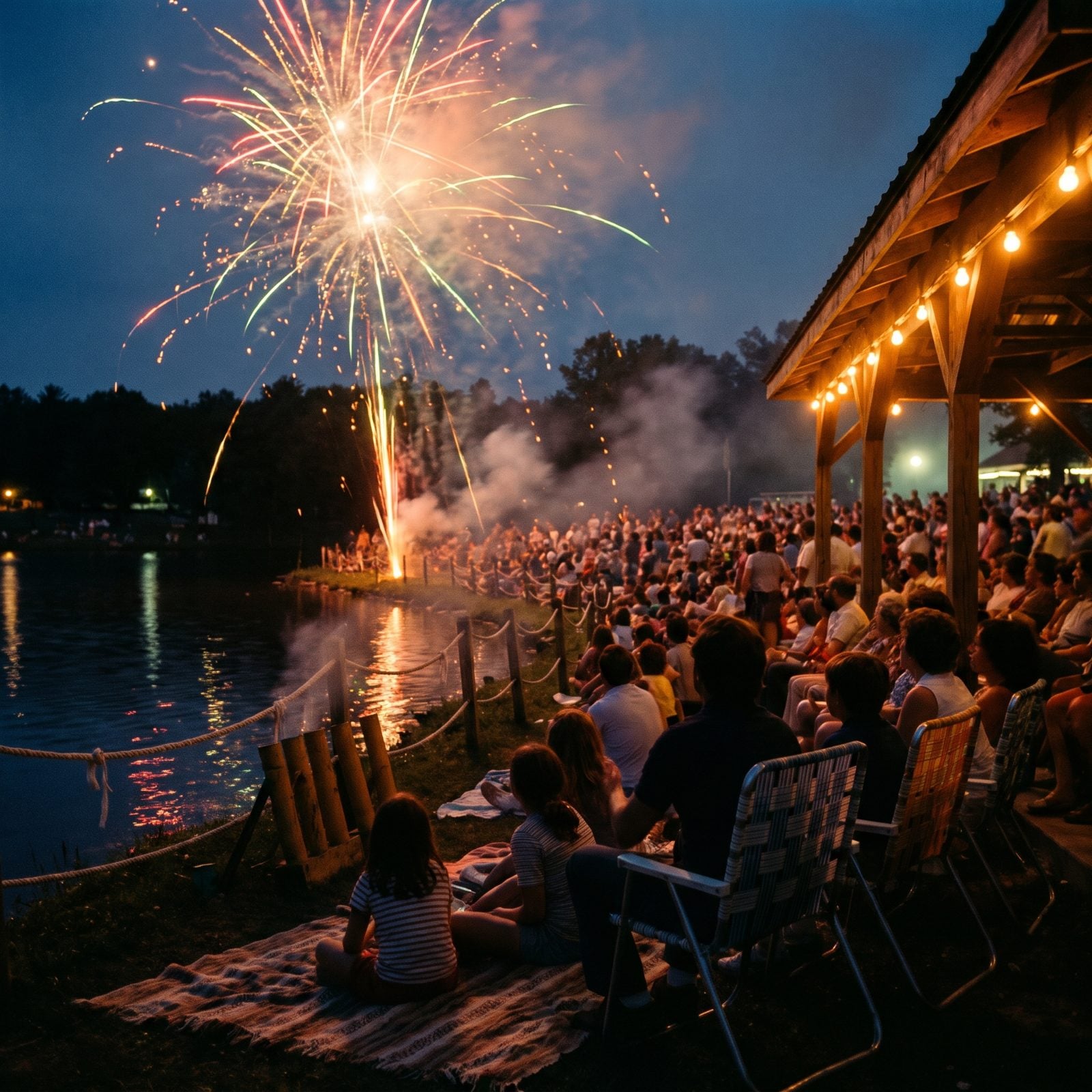
The launch site and the crowd were practically neighbors. Mortars went up from a spot just past a rope line, close enough that the audience felt the thump in their chests and caught the falling ash on their blankets.
Spent shells and glowing embers drifted back down over the lawn, and people watched from directly underneath. The clearances modern parks demand between pyrotechnics and spectators would have emptied half those viewing fields in a heartbeat.
2. Wild-Animal Acts a Few Feet From the Front Row
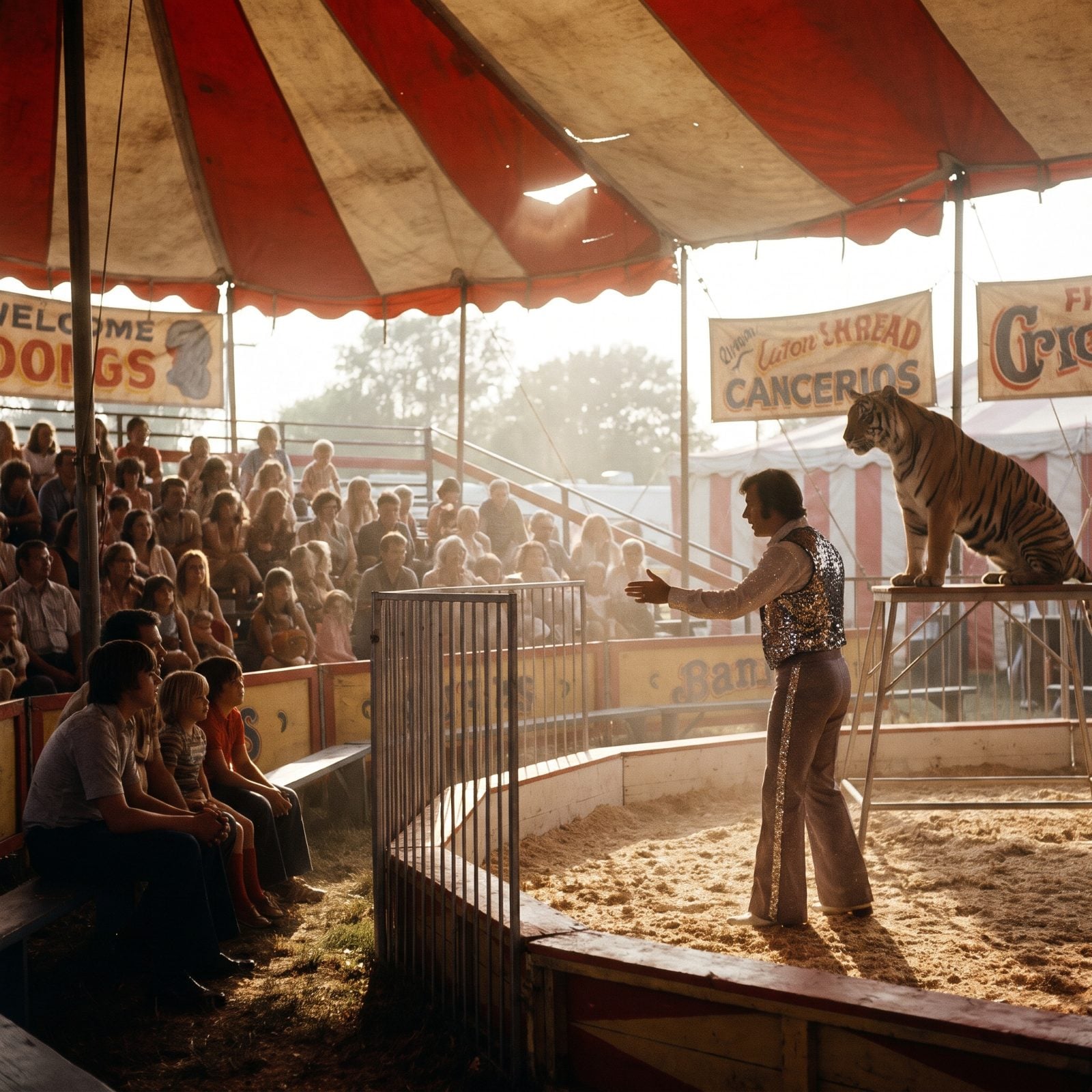
Big cats, bears and chimps performed in open rings separated from the front row by a fence you could rest your elbows on. Families packed the bleachers a few feet from acts that modern parks won’t stage at all, never mind that close.
That barrier was for show more than safety. Attitudes toward captive-animal entertainment shifted hard through the 1980s and 1990s, and most of these rings quietly closed. What reads as reckless now is simply the nearness of it.
1. The Alpine Slide Where You Were the Brakes
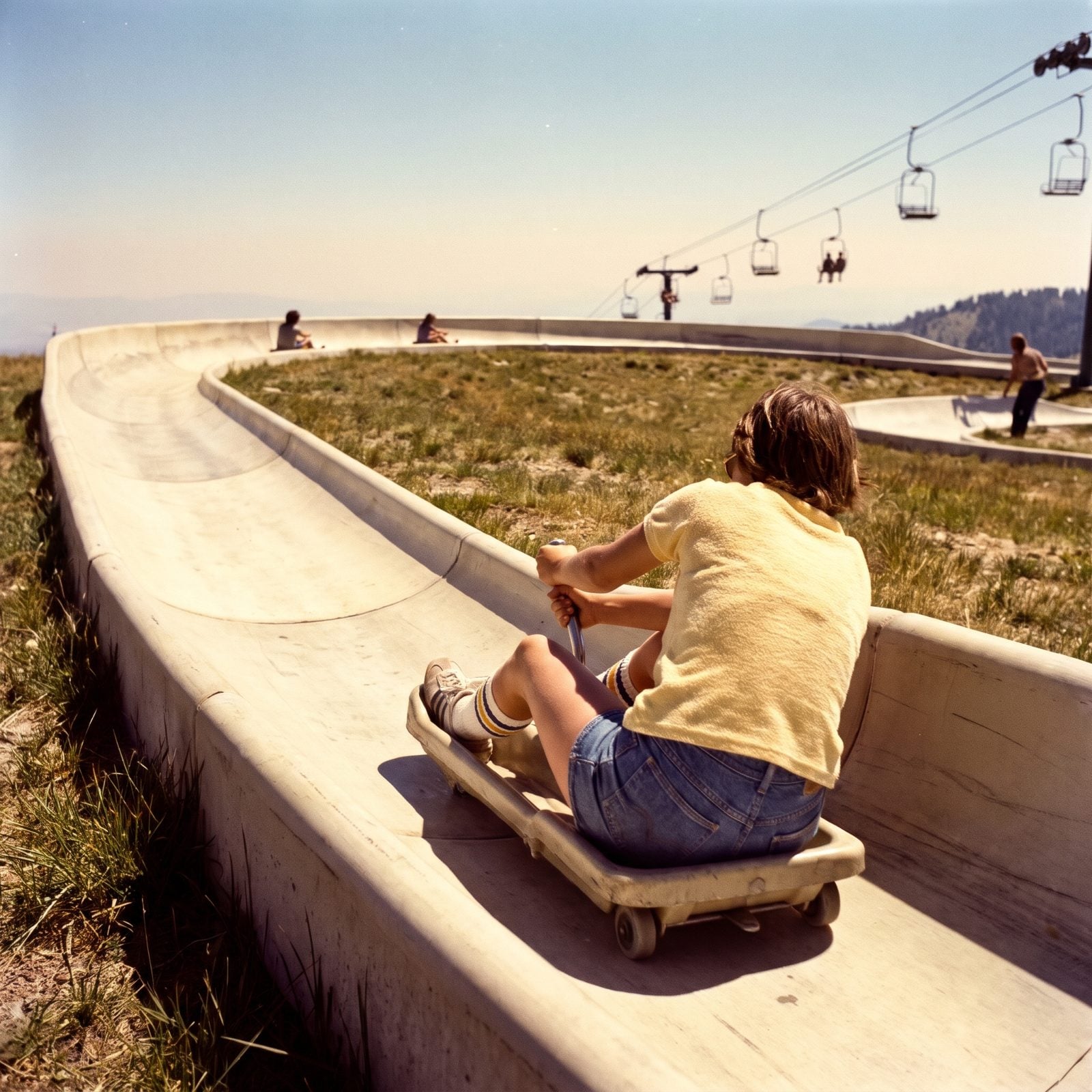
Picture the whole design: a long concrete trough down a ski slope, a plastic sled with little wheels, and one hand lever that was your entire braking system. Pull back to slow, push forward to go faster, and everything else came down to your own nerve.
The walls barely cleared your knees. Come out of the track and there was nothing between bare skin and concrete — and plenty of people found that out. It was a genuine thrill, which is exactly why riders kept shoving the lever the wrong way.
You were the throttle and the brakes and the crash-test dummy, all at once.
Most of these slides faded out by the 1990s once the liability caught up with them. Ask anyone who rode one. You’ll get a scar story within thirty seconds.
Please note that some of the imagery in this article were created with the aid of AI image generators.