
🔥 Would you like to save this?
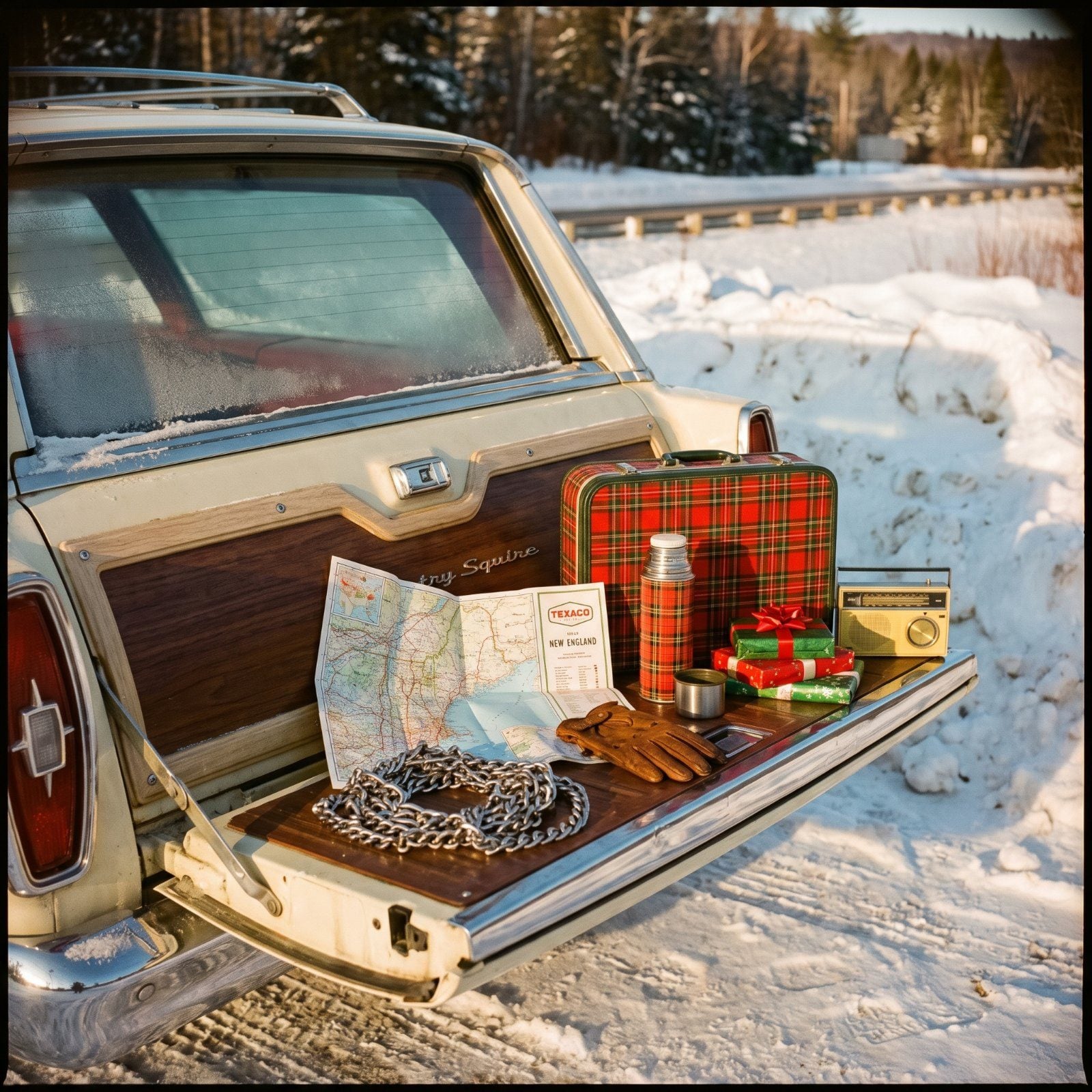
Four kids, two adults, a trunk full of wrapped boxes, and a dashboard ashtray already full before the county line. That was the holiday getaway in 1960. No seatbelt chimes. No climate-control arguments, no backup camera beeping at you in a snowstorm — just a full tank, a paper map, and the gas-station restroom key chained to a hubcap. The things we did on the road to Grandma’s house back then would turn heads now, and most of them you probably lived through yourself.
44. Babies Rode in Unsecured Carrycots on the Back Seat
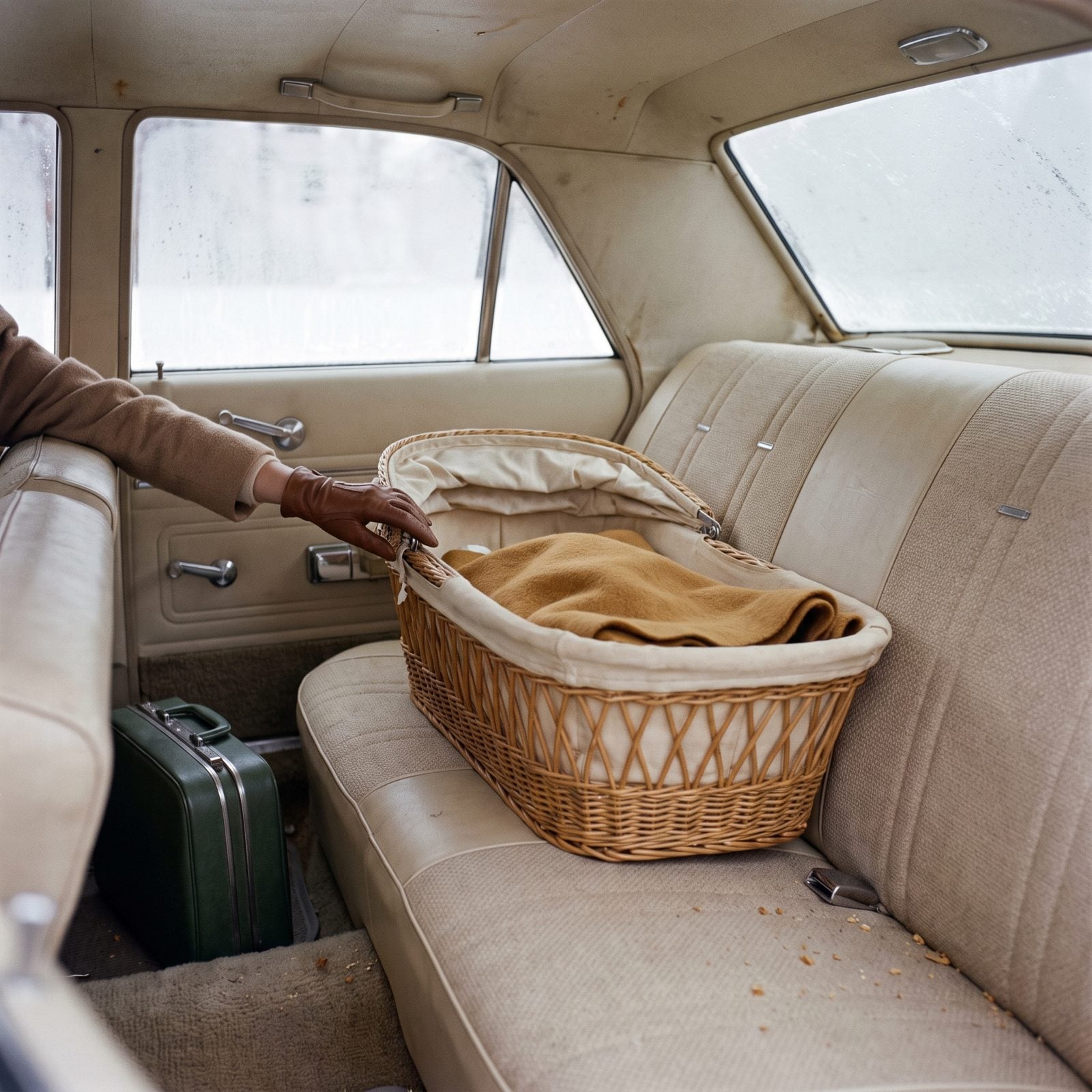
The baby traveled in a woven carrycot set right on the back bench, and that was simply how it was done. No straps, no base, no five-point anything. Mom rode in back with one hand resting on the handle at every stop sign, and that was the safety system.
On the long haul to Grandma’s for Christmas, the carrycot got wedged between two older siblings for company. A hard brake sent everyone lurching, and everyone learned to brace. We didn’t think twice about it. The crib came out of the car and went straight onto a spare bed the moment you arrived.
43. Children Slept Stretched Across the Rear Bench Seat
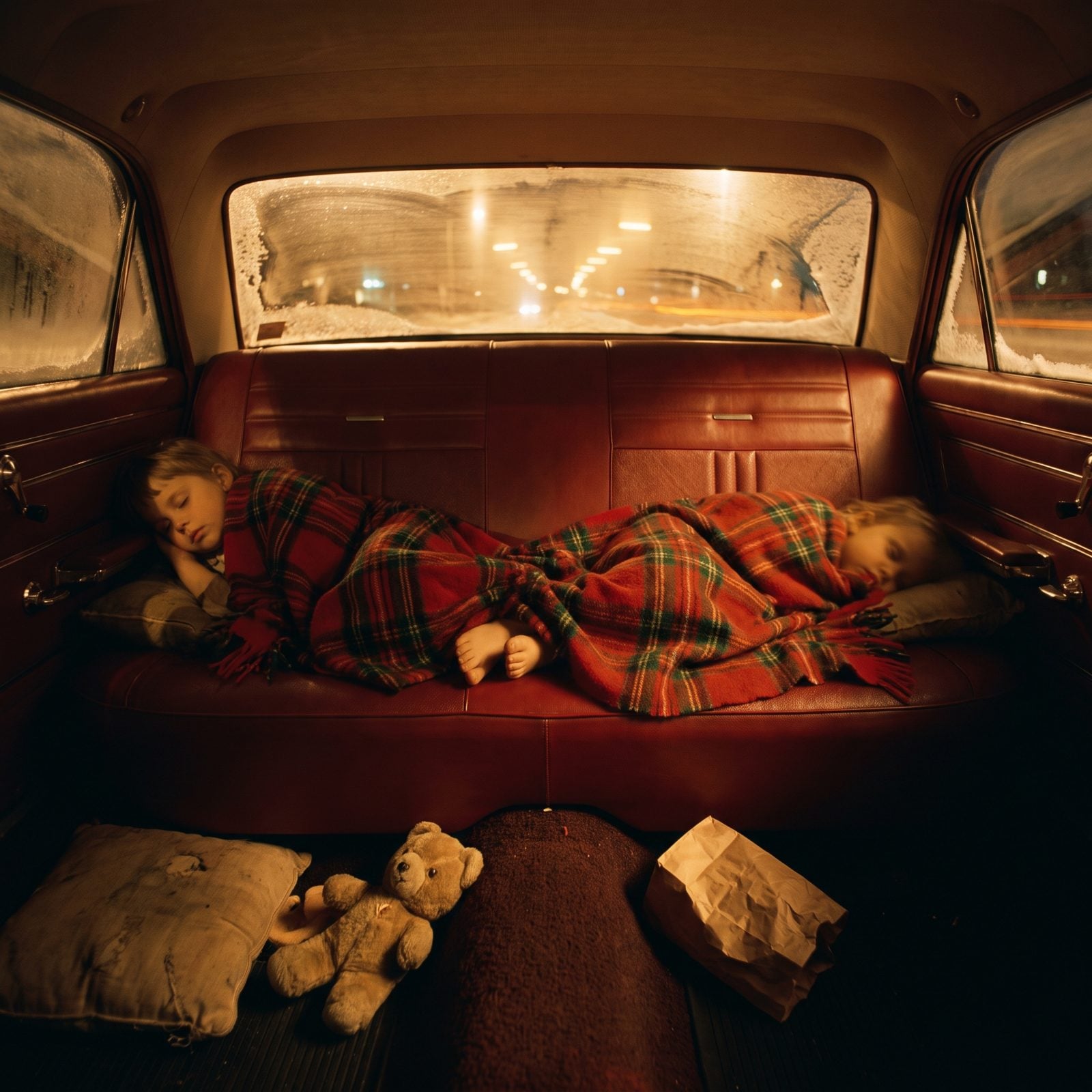
You fell asleep somewhere around the second rest stop and woke up in the driveway with no memory of the last hundred miles. The rear bench was long and flat, wide enough for two kids to sprawl head-to-foot under a scratchy wool blanket.
The dark highway rolled by, the heater hummed, and your parents’ low voices up front were the best lullaby ever recorded. Getting carried inside half-asleep, still in your coat, was the quiet payoff of every holiday drive. I’d trade a lot to feel that again.
42. The Station-Wagon Cargo Area Was a Rolling Playroom
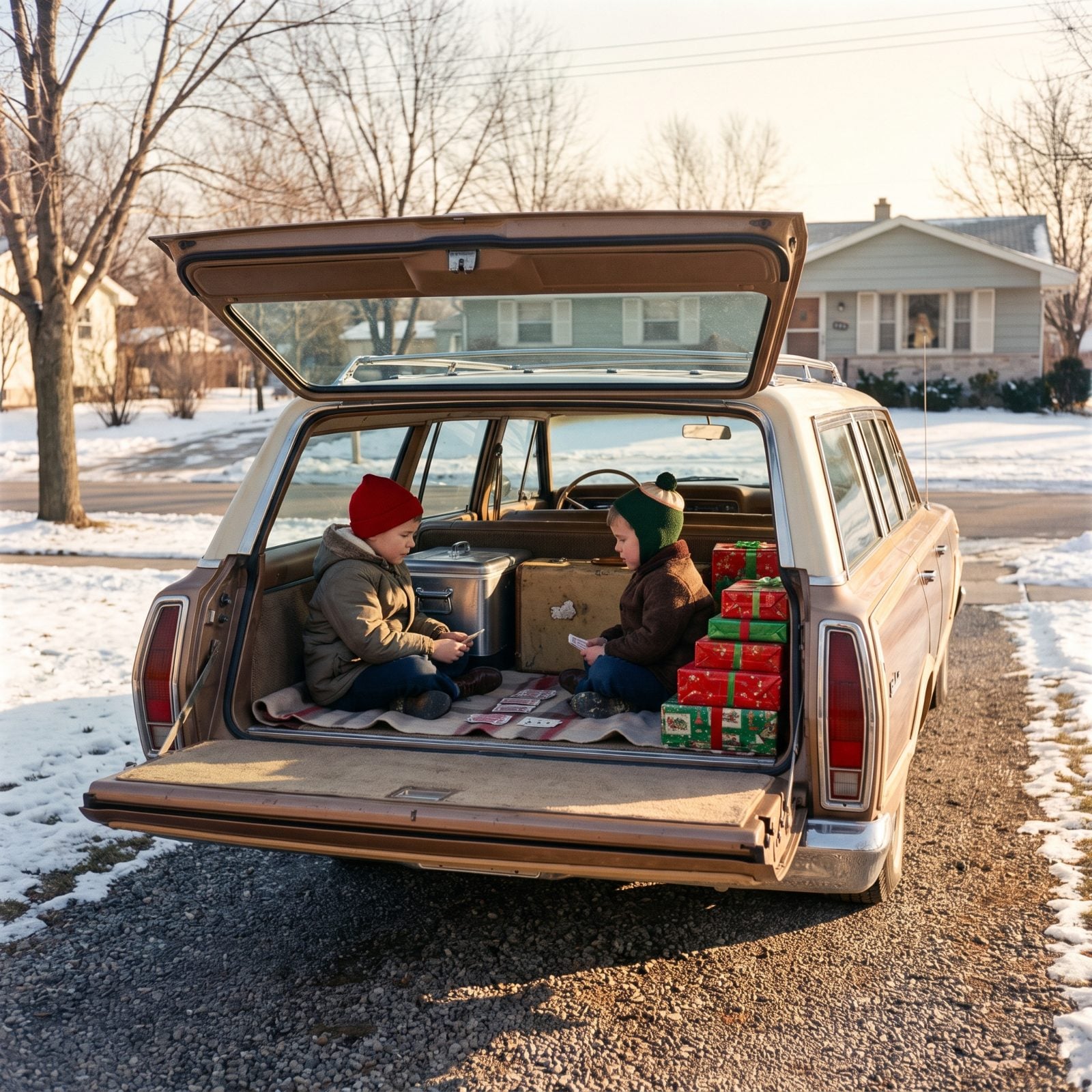
The way-back was the best seat in the house. Fold the rear bench down and the cargo area became a carpeted fort where you could lie flat, play cards, and wave at the drivers behind you.
Nobody was buckled to anything. You rode facing backward, watching the road unspool in reverse, surrounded by a wall of wrapped gifts and the family suitcase. On the drive home you’d nest into the blankets back there and claim it as your own private compartment.
Freedom on wheels, and it belonged to whichever kid called it first.
41. Families Navigated by Folding Paper Road Maps
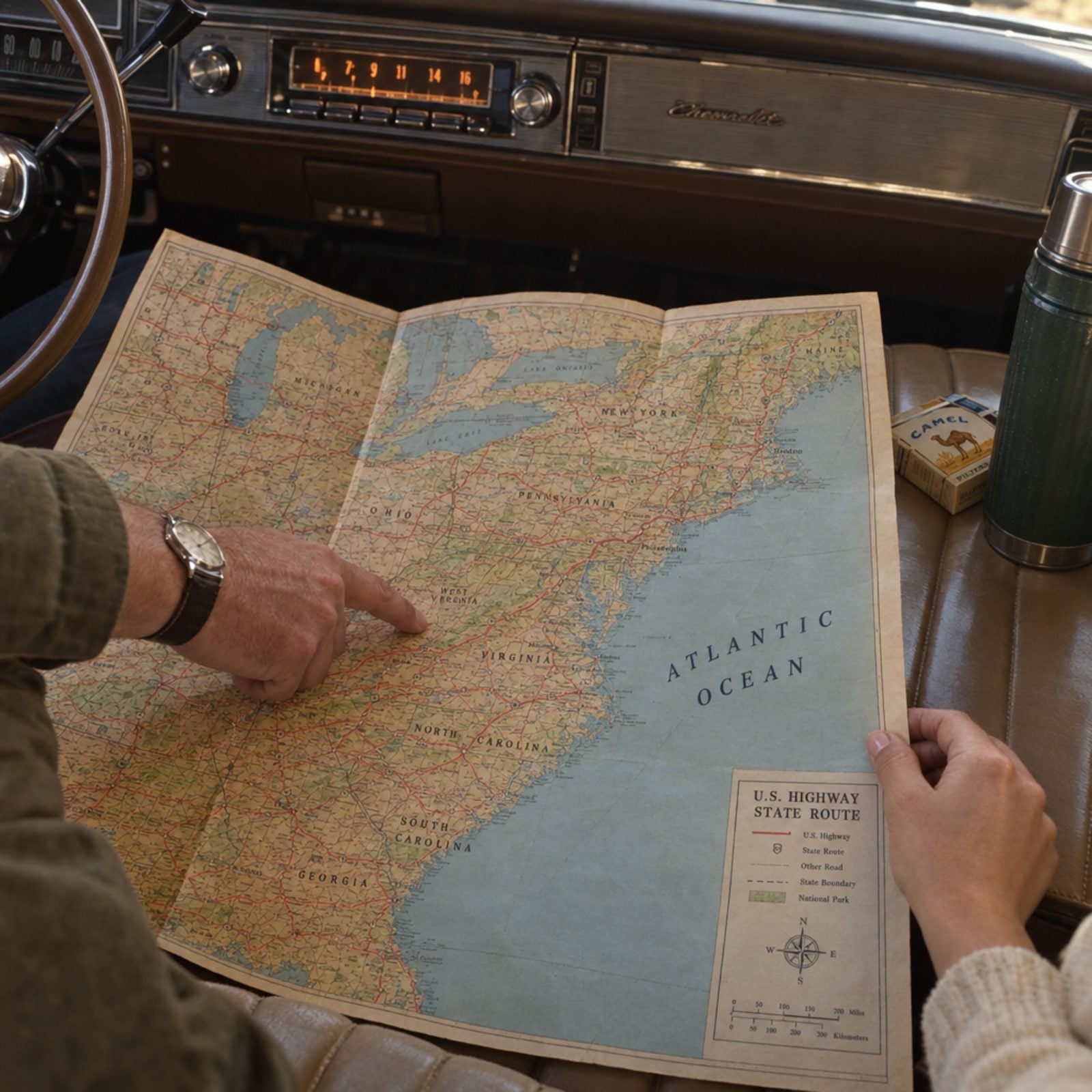
The glove compartment was stuffed with them, creased soft and refusing to refold the way they came. Getting from Ohio to your aunt’s place in Pennsylvania meant one adult drove and the other navigated, map spread across both knees, finger pinned to the current exit.
Miss your turn and there was no gentle voice saying “recalculating.” There was a U-turn, some muttering, and a renegotiation of who was supposed to be watching the signs. Gas stations gave the maps away free — a kind of generosity the road has forgotten.
40. Holiday Traffic Reports Crackled In Over AM Radio
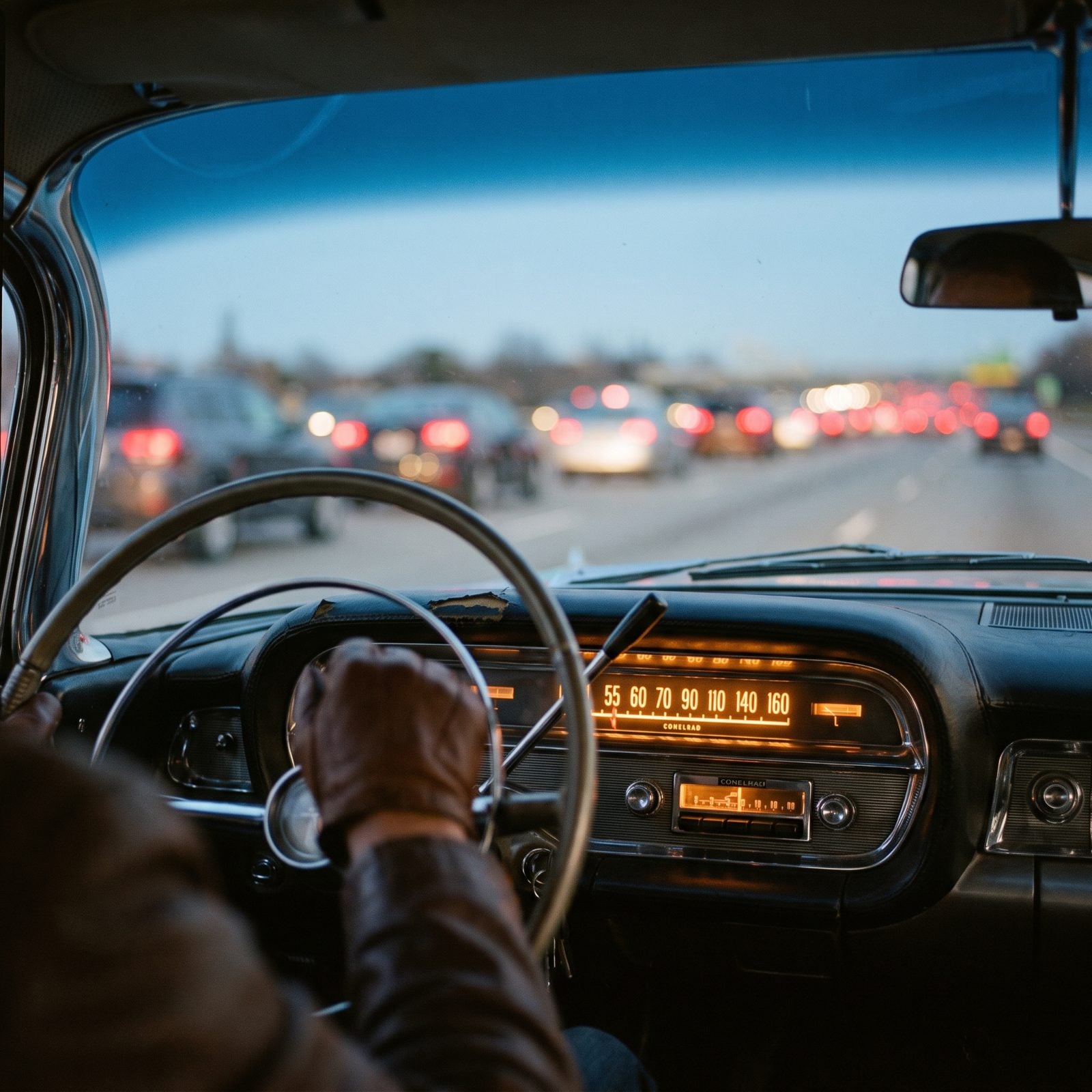
You turned the dial until the static cleared and a man’s voice read the backups like a weather report: turnpike slow past the toll plaza, an accident near the interchange, give yourself an extra hour. That was the whole traffic system — a stranger at a microphone describing roads you couldn’t see.
Between reports came the holiday music, Bing Crosby fading in and out as you passed under bridges. There was something steadying about it. One voice, one station, everybody on the road listening to the same thing at the same time.
39. Plenty of Cars Had No Rear-Window Defroster at All
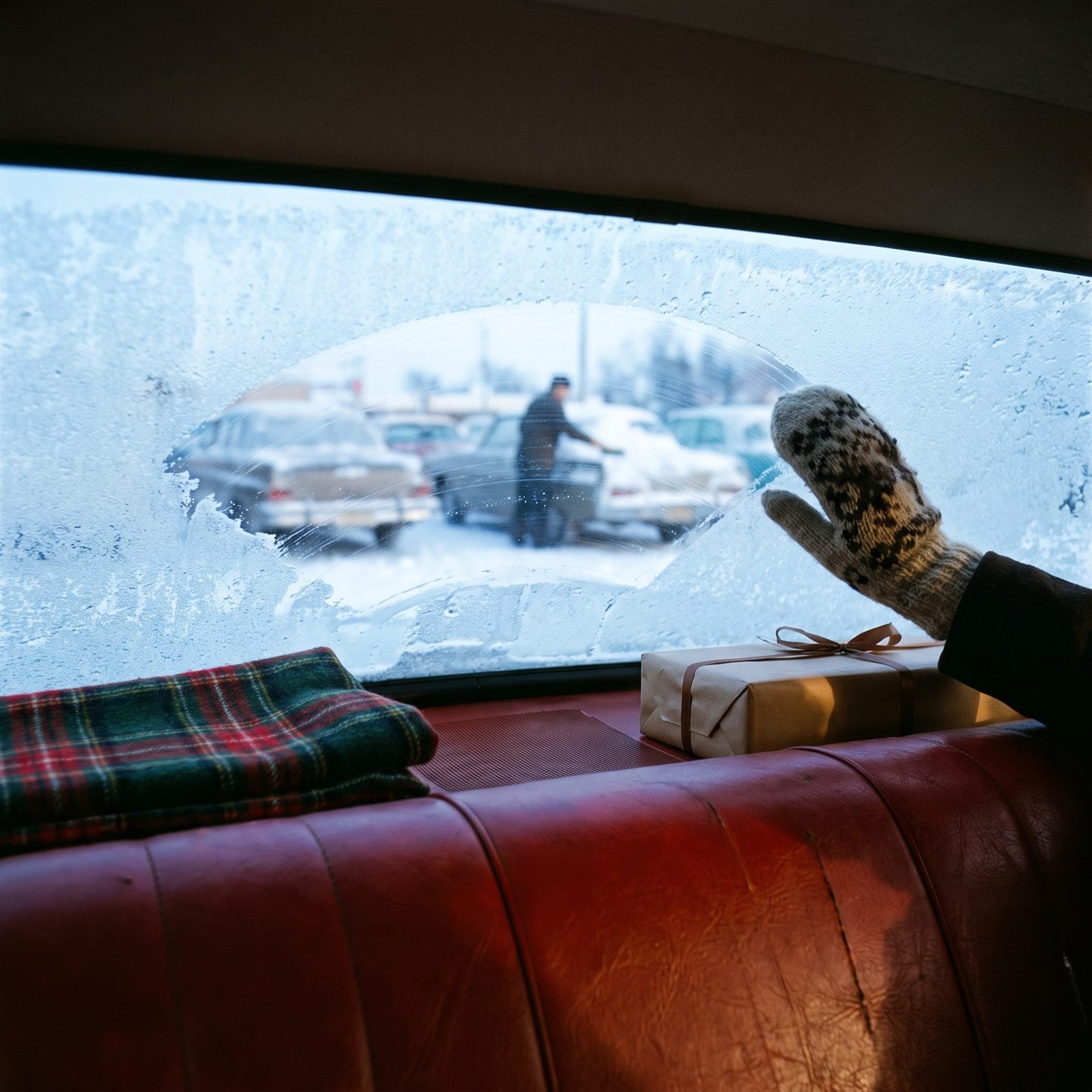
The rear window iced over and stayed that way. No grid of thin heating lines, no button to push. You either rolled a front window down a crack to kill the fog or someone reached back with a mitten and wiped a porthole clear.
Backing out of a snowed-in driveway on Christmas morning was a guessing game, done mostly by mirror and by faith. The ice scraper lived in the door pocket and earned its keep every single trip.
38. Snow Tires Got Bolted On Before the Winter Trip
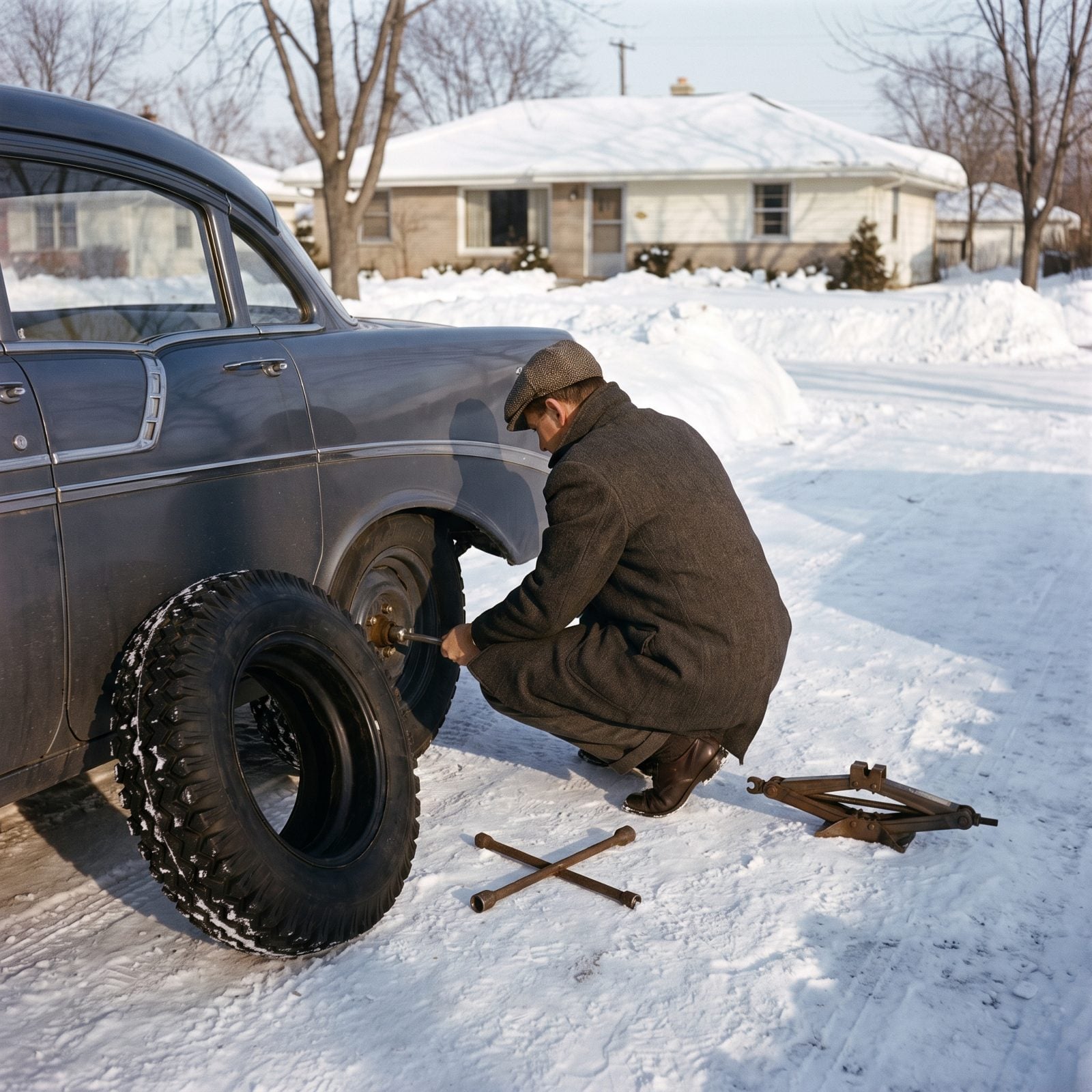
Come the first hard freeze, out went the summer tires and on went the snow treads — those knobby bias-ply tires that sang on dry pavement and gripped like a promise on ice. A Saturday chore, usually done in the driveway before the trip north.
Half the fun was the sound. Snow tires hummed a low drone at highway speed that told you exactly what time of year it was. You ran them all winter, then swapped them back come spring. Four tires living up in the garage rafters was just how a family got ready for the season.
37. Motorists Wrapped Tire Chains Around the Wheels by Hand
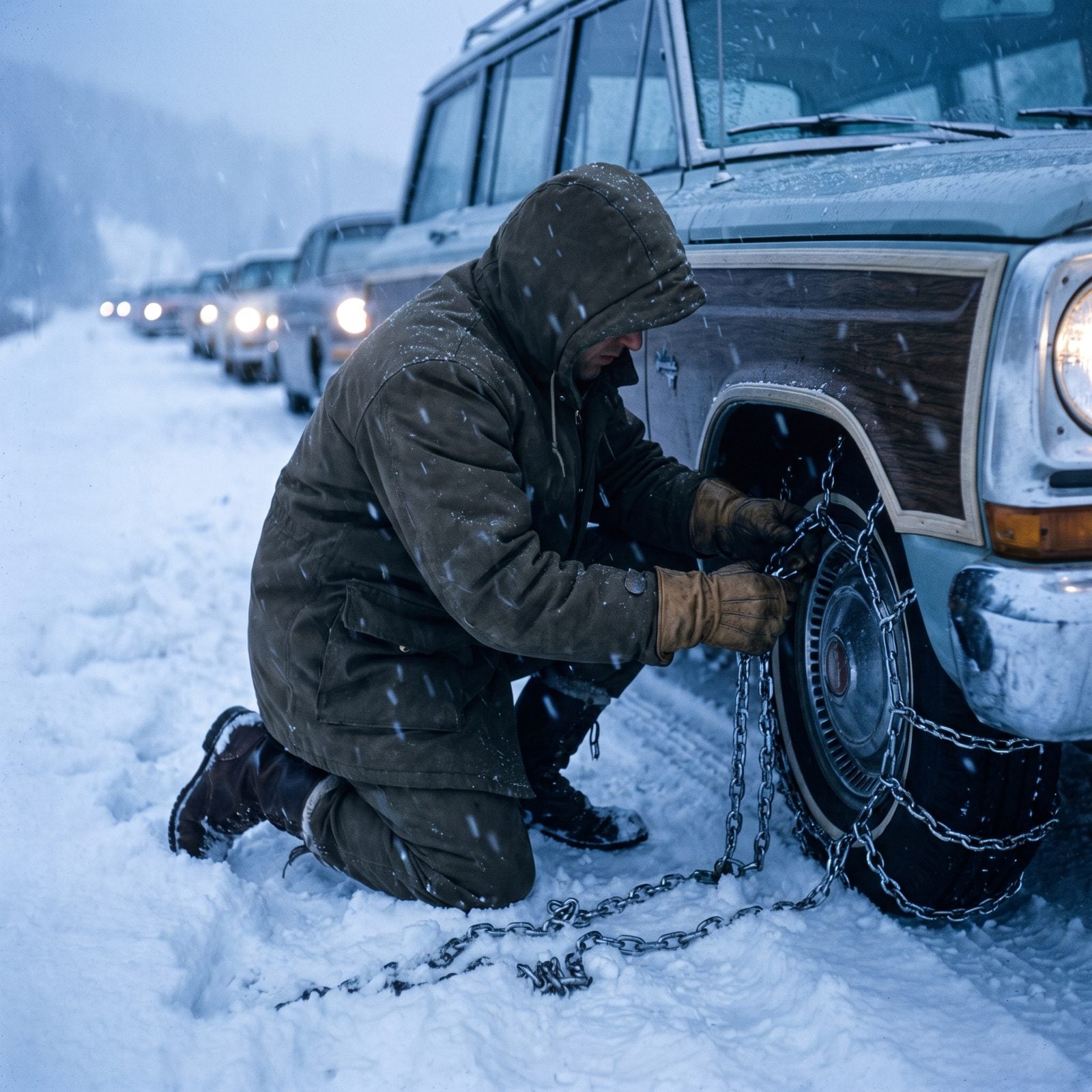
When the mountain pass demanded chains, you pulled over, knelt in the snow, and wrestled the steel links over the tire with frozen fingers. Drape them over, drive forward a few inches, fasten the hooks underneath. The instructions were never as simple as they sounded.
Everything got wet. The gloves soaked through, the knees of your trousers went stiff with ice, and the chains clanked and rang the whole rest of the way. But they got a family over a pass that would otherwise have turned them back, so you learned to do it and you didn’t complain. Much.
36. Flat Tires Got Changed Right Beside the Highway
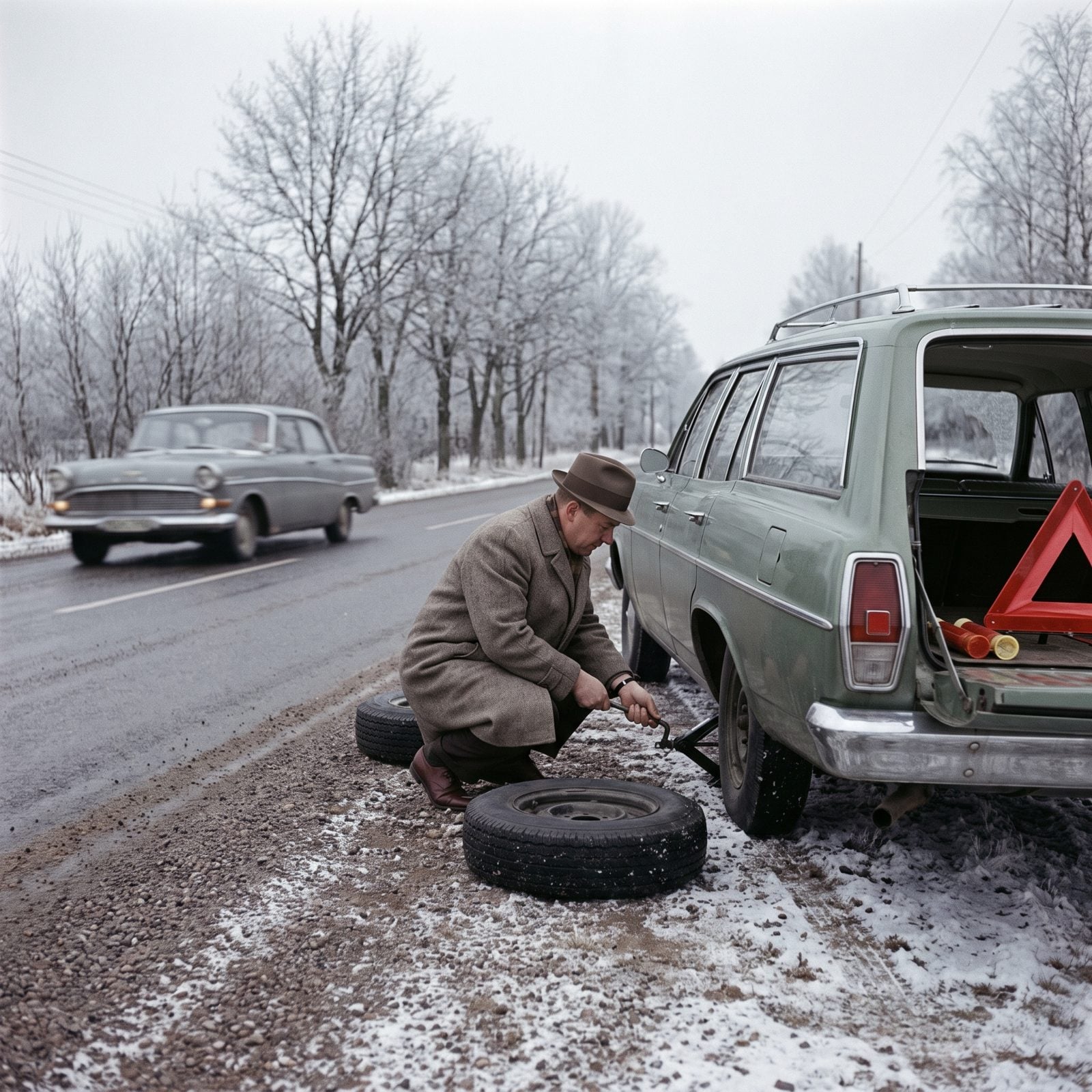
A blowout meant pulling onto the gravel shoulder with cars whipping past a few feet from your back. Out came the jack and the lug wrench, and Dad changed the tire on the shoulder while traffic buffeted the whole car with every truck that passed.
No roadside app. No number to call. You fixed it yourself or you flagged down a stranger — and strangers usually stopped. The spare went on, the flat went in the trunk to get patched later, and the holiday trip carried on with greasy hands and a story to tell at dinner.
35. Service-Station Attendants Pumped Your Gas and Checked Your Oil
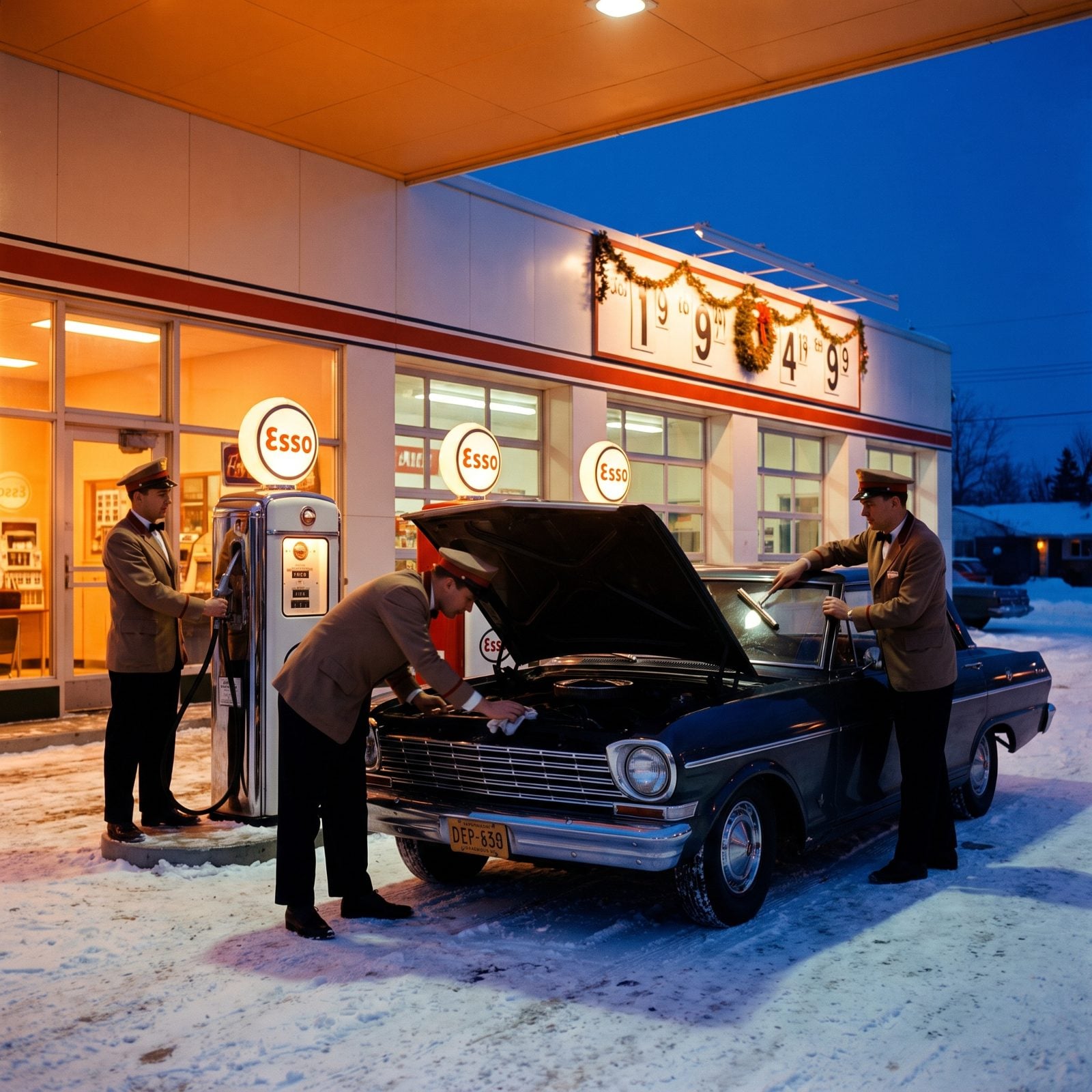
You rolled over the rubber hose, a bell dinged inside, and a man in a crisp uniform and bow tie came out before you’d even shut the engine off. “Fill ‘er up?” He pumped the gas while a second attendant lifted the hood, pulled the dipstick, topped off the oil, and ran a squeegee across every window.
You never left the car. On the long holiday drive it was a small ceremony of being looked after, a warm pocket of service in the cold dark. He’d hand you your change, slap the roof, and wave you back onto the highway toward home.
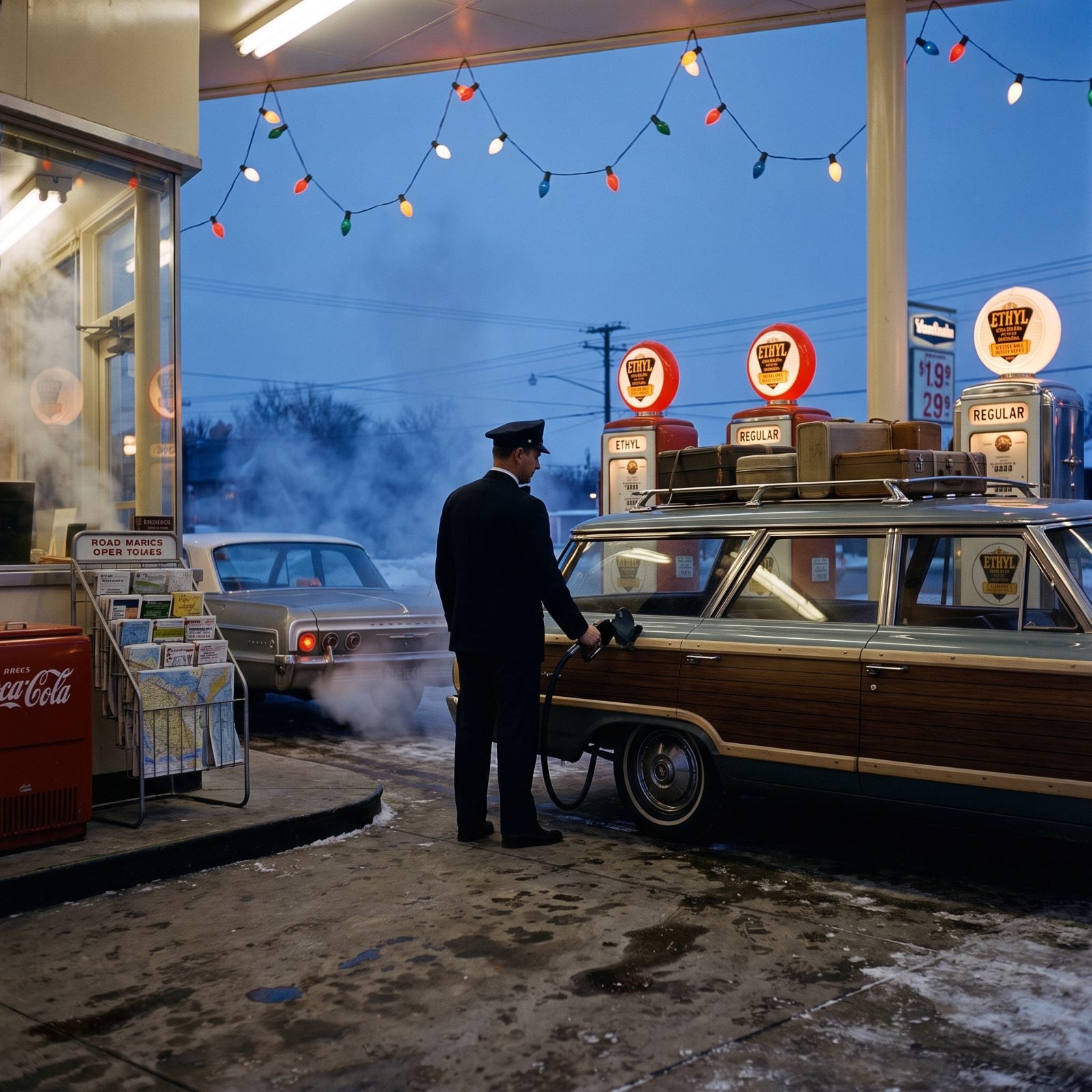
34. Leaded Gasoline Was the Standard Road-Trip Fuel
🔥 Would you like to save this?
The attendant pumped it, checked your oil, and squeegeed the windshield while you dug for cash. Every drop of it was leaded, and nobody thought twice. That was just gas.
Engines ran on it because the lead stopped the knocking, so the holiday road smelled faintly of it at every fill-up while families crossing three states for turkey burned through tankfuls without a care.
33. Rest Areas Could Be Little More Than Toilets and Picnic Tables
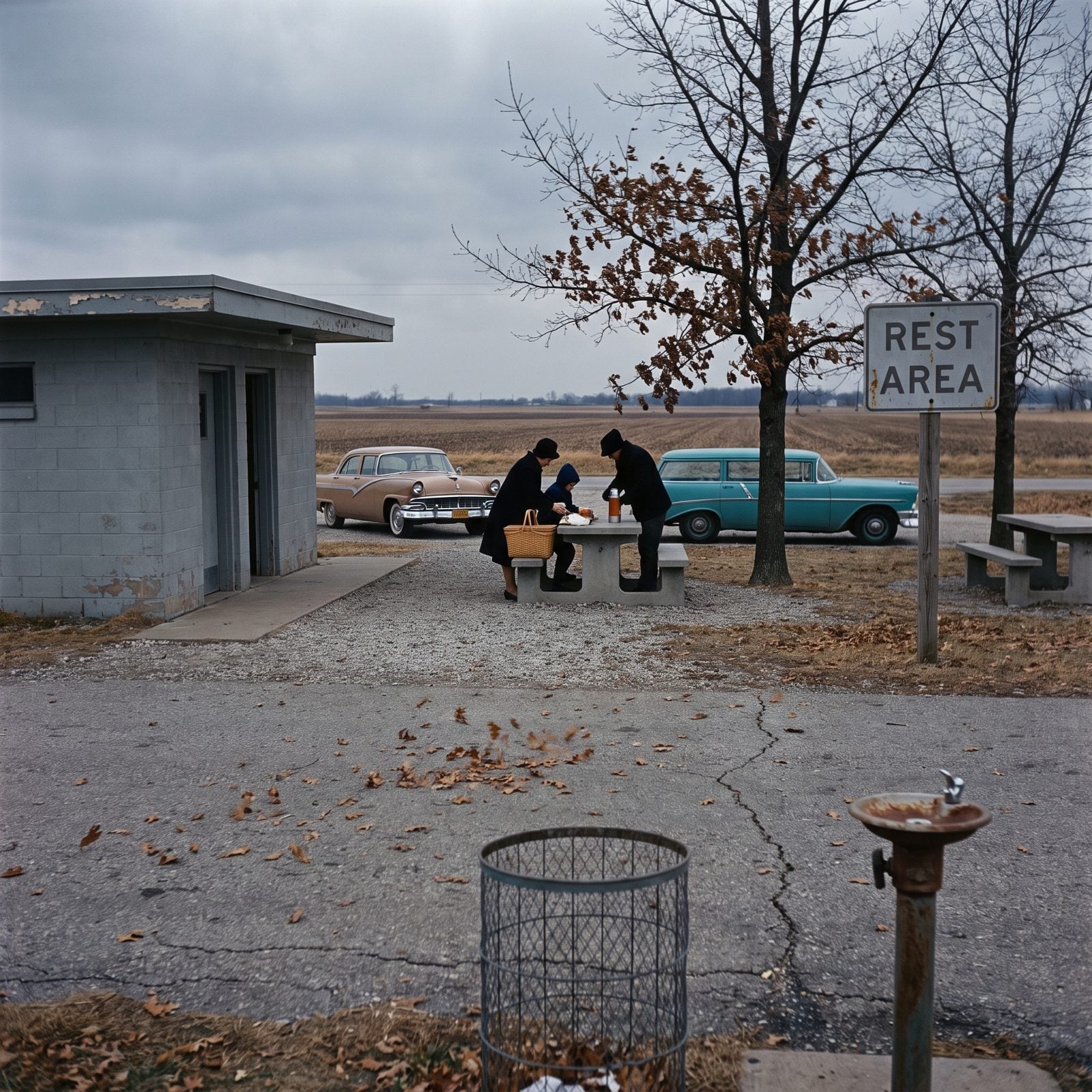
You pulled off, used the facilities — one cinderblock building, two doors — and spread the sandwiches on a concrete table whether or not it was 40 degrees out. That was the amenity. All of it.
No vending bank, no travel plaza, no gift shop full of pecan logs. If you were lucky there was a water fountain and a wire trash barrel that smelled like it hadn’t been emptied since Labor Day, and then you ate fast and got back in the car.
32. Turnpike Toll Collectors Made Change by Hand
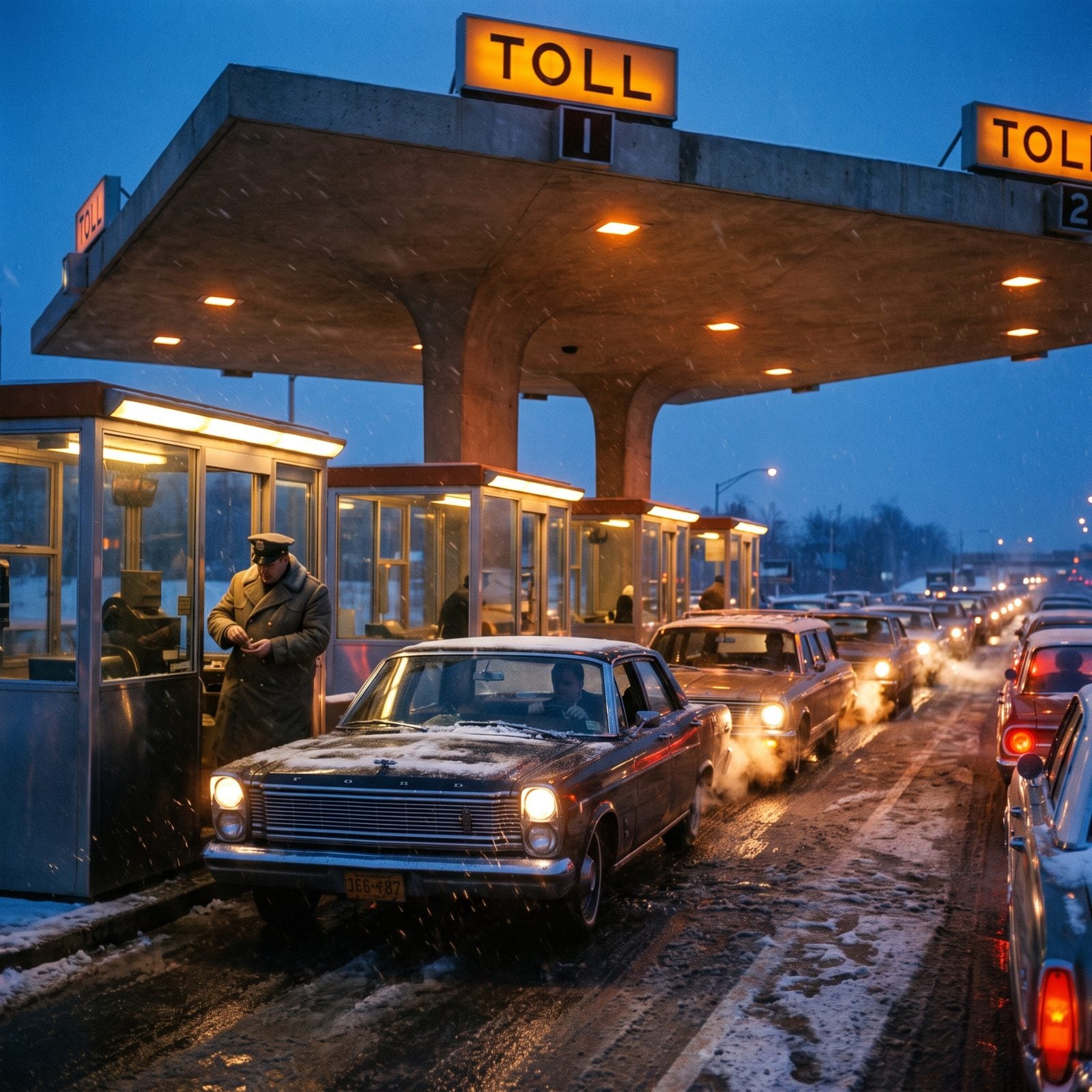
You rolled down the frozen window, handed over a crumpled bill, and the collector counted the change back into your palm coin by coin, from a metal holder strapped to his waist. On a holiday backup that line ran a quarter mile deep.
Every transaction happened by hand. No tokens flying into baskets, no transponders beeping you through — just a man in a cold booth making change a hundred times an hour while the car behind you leaned on its horn.
31. Major Highways Still Passed Through Busy Town Centers
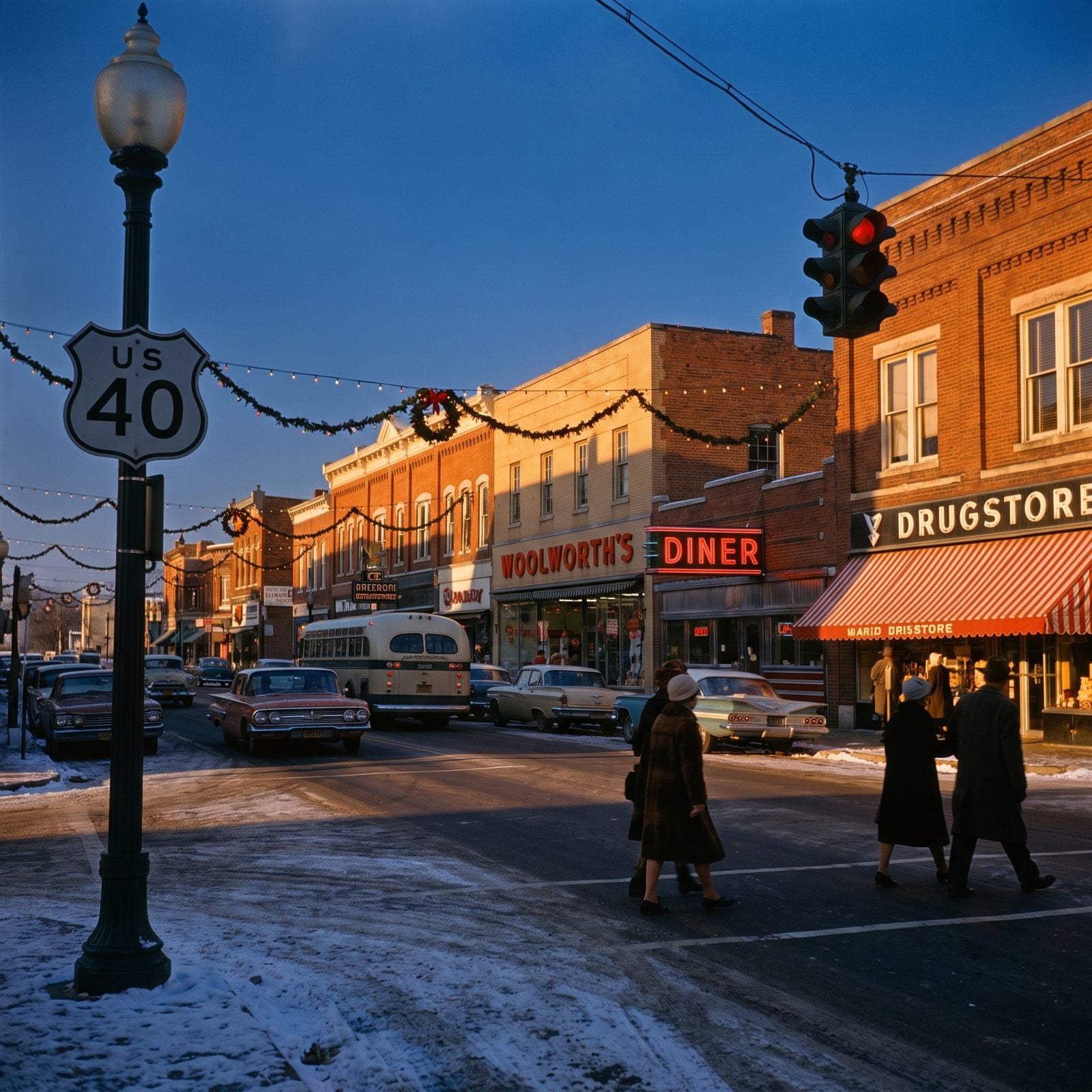
Before the interstate bypassed everything, the highway didn’t go around town. It went straight down Main Street, past the dime store and the diner and the traffic light hanging on a wire.
On a Christmas trip that meant crawling through three downtowns in a row, dodging shoppers and double-parked trucks with the garland strung overhead and the storefronts glowing. Slower, sure. But you saw the country instead of a sound wall.
30. New Interstate Segments Could End Without Warning
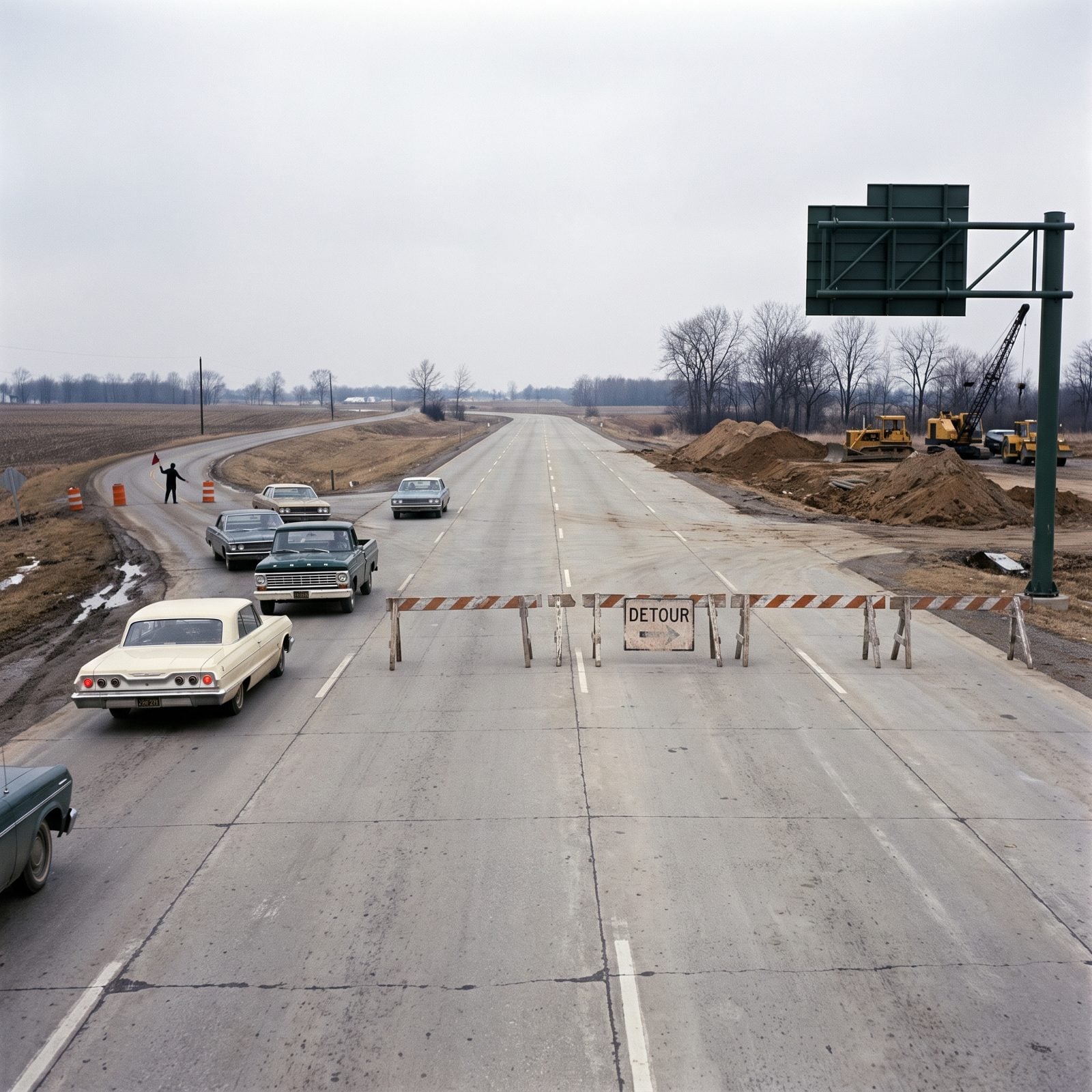
You’d be cruising along the new interstate at a glorious 70, and then it just stopped. A barricade, a DETOUR sign, and suddenly you were back on a county two-lane winding through someone’s soybean fields.
The whole thing got built piecemeal through the decade. A brand-new stretch might run forty miles and then dead-end into the old road — no warning, no transition, just striped sawhorses and a flagman waving you off into the countryside.
29. Roadside Billboards Advertised Motels Miles in Advance
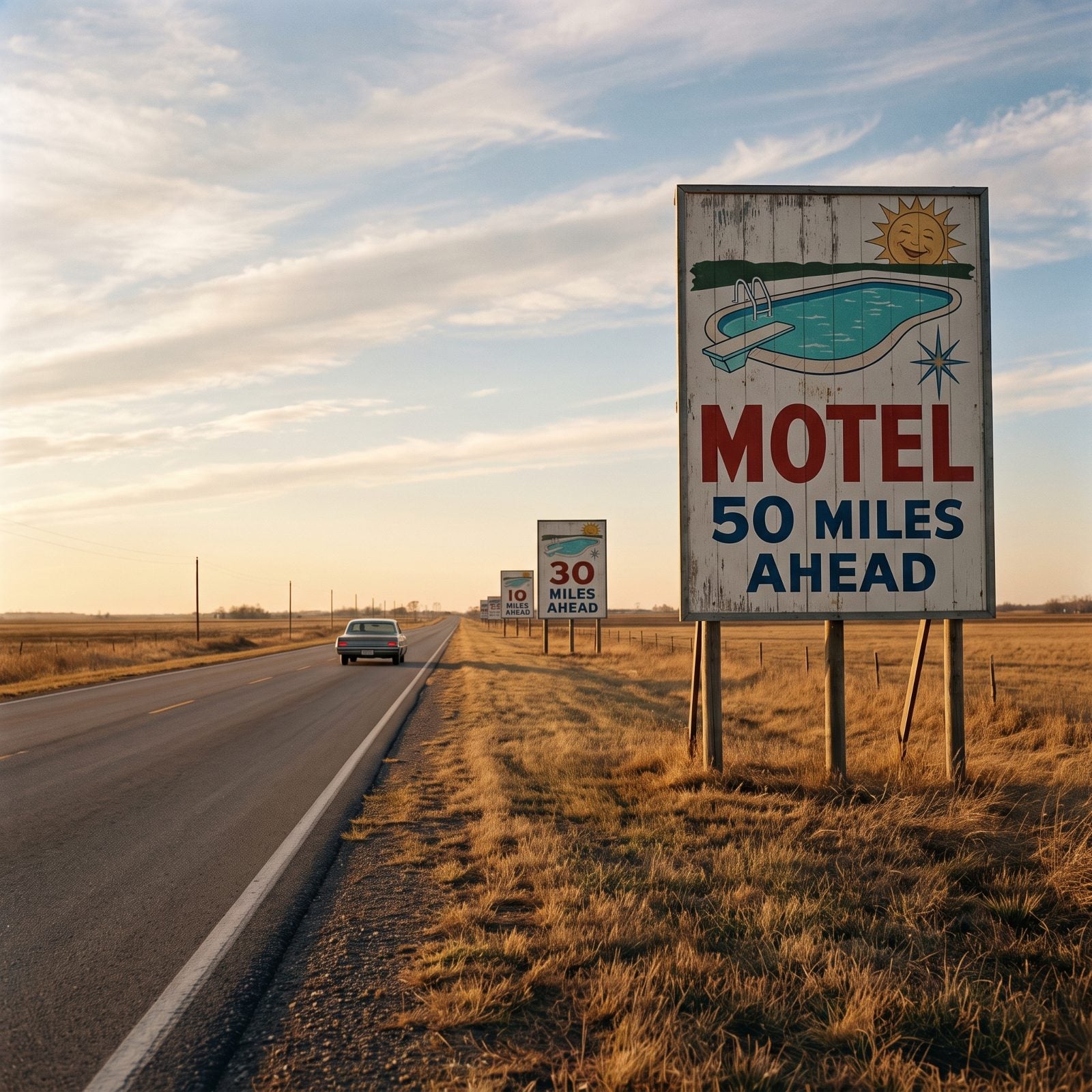
Fifty miles out, the first one appeared: a painted sun, a sparkling pool, big letters promising air conditioning ahead. Then another at forty miles. Then thirty.
The signs did the hard sell long before you were anywhere near a bed, and by the time the exit came up the kids had the place memorized. Anticipation marketing on a two-lane road, one hand-painted board at a time.
28. A Glowing VACANCY Sign Determined Where Families Slept
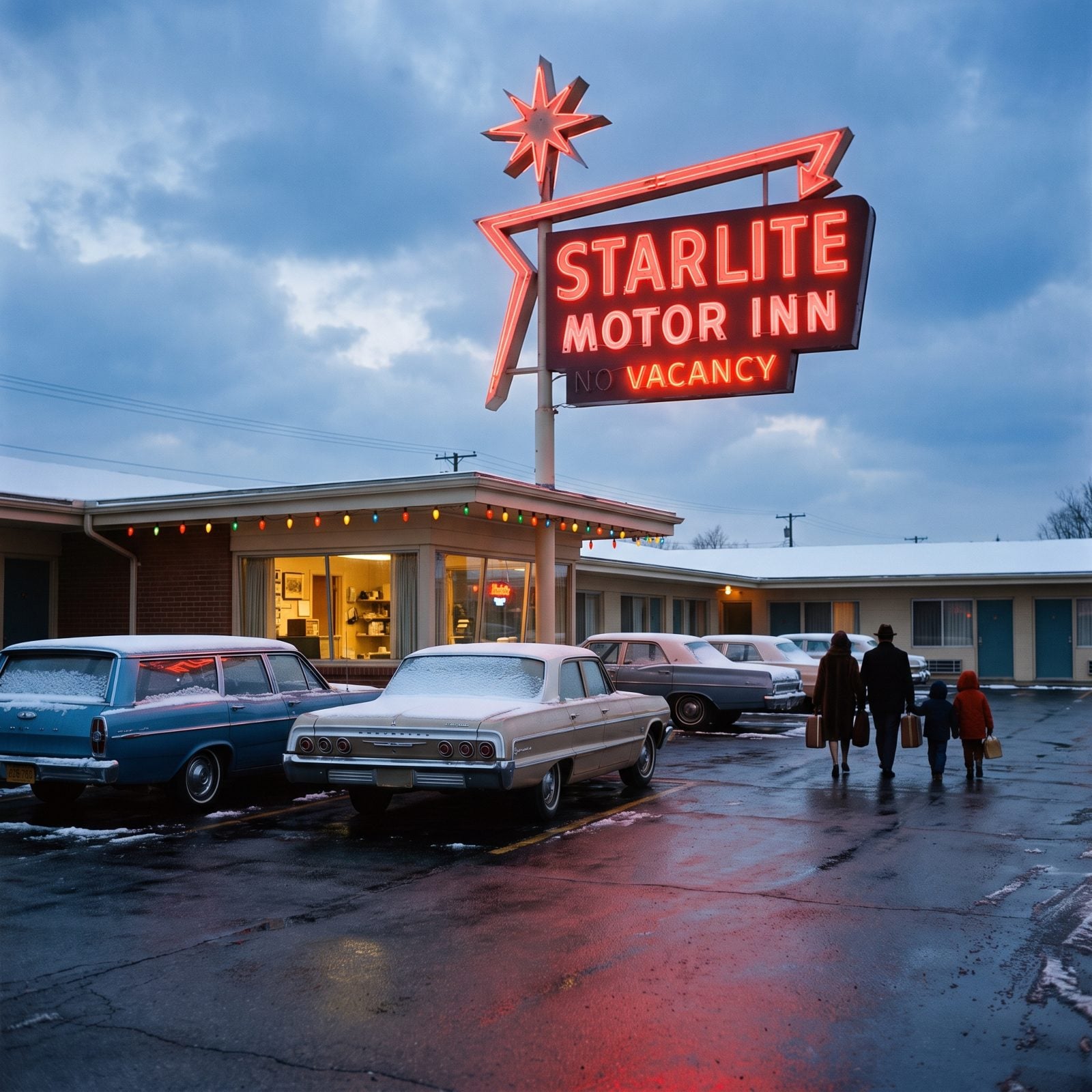
No reservation, no app, no guarantee. You drove until somebody in the back seat couldn’t take it anymore, and then everyone watched the roadside for one word glowing in the dark.
VACANCY meant you stopped. NO VACANCY meant you drove on, tired and cranky, hoping the next place had a room before midnight. On the two biggest travel weekends of the year, that red neon was the single most important thing on the horizon.
The whole night came down to one word buzzing in the dark, and whether the “NO” in front of it was lit.
27. Travelers Reserved Motel Rooms by Telephone or Telegram
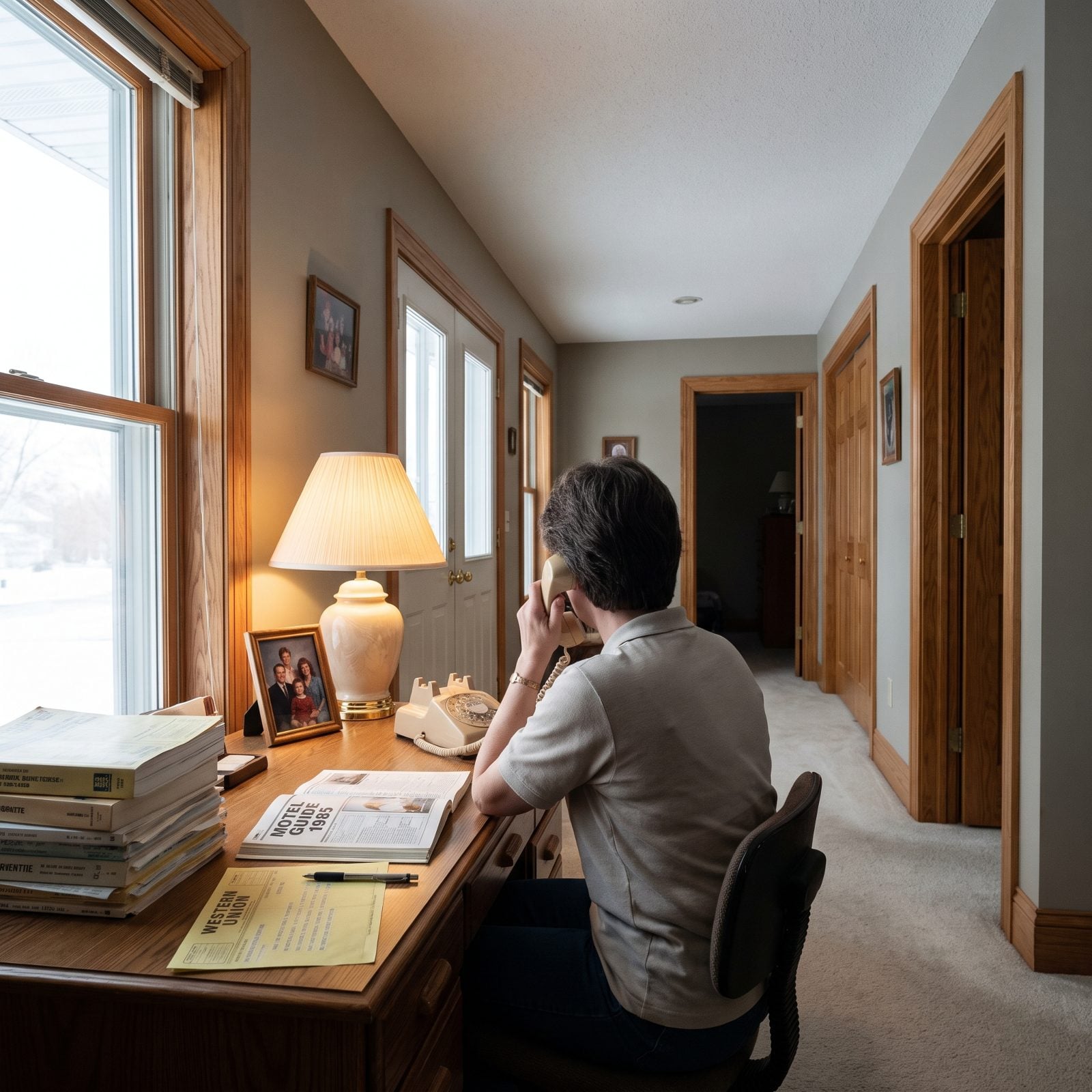
Want a room guaranteed for Christmas Eve? You picked up the phone weeks ahead and called the motel directly, or sent a telegram to hold it, and the clerk wrote your name in a bound register by hand.
No central reservation line existed for a mom-and-pop place on Route 40. You trusted a stranger’s penciled note in a ledger and hoped the room was still there when you rolled in at ten o’clock. Usually it was. Sometimes it wasn’t.
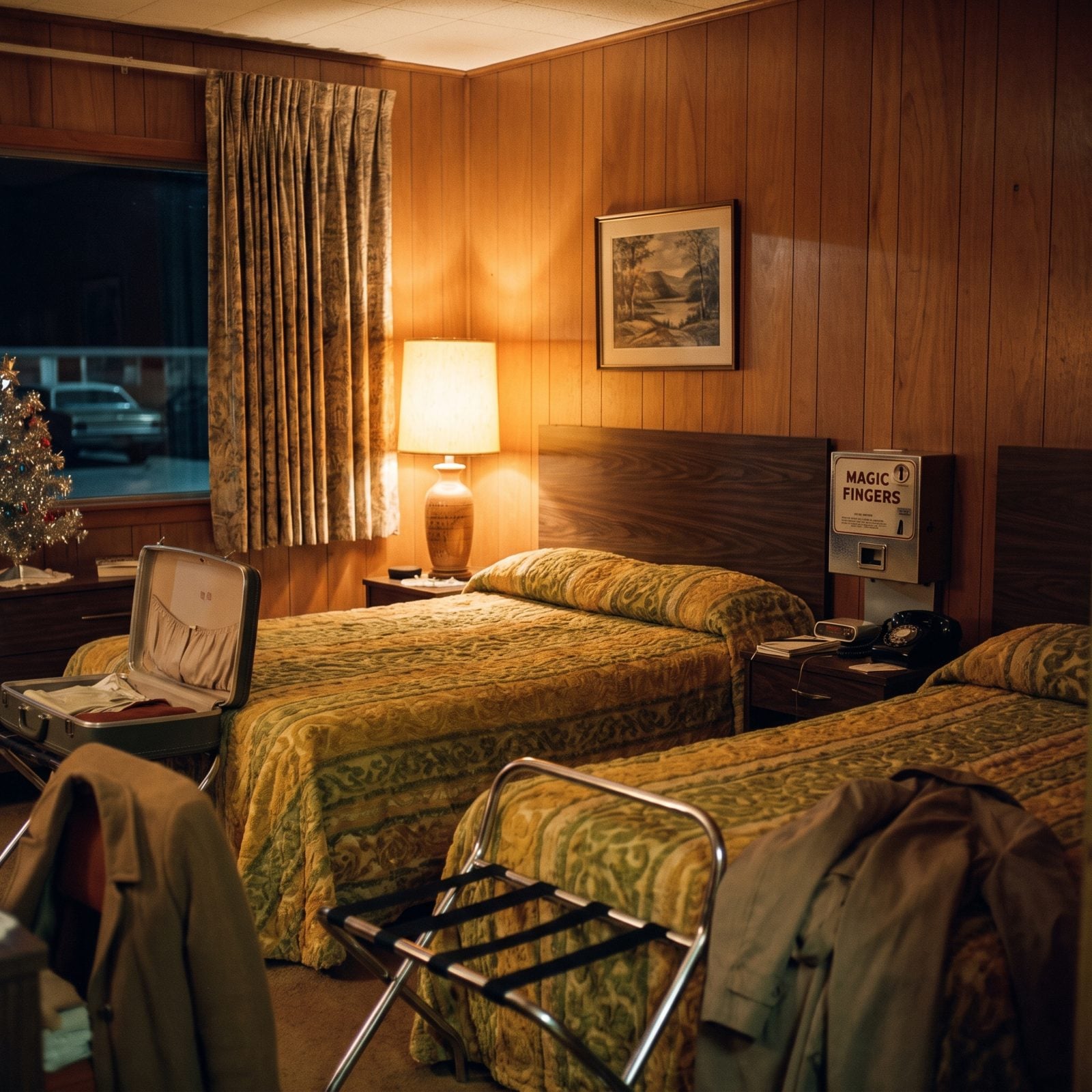
26. Motel Rooms Came With Coin-Operated Vibrating Beds
🔥 Would you like to save this?
A quarter in the slot and the whole bed buzzed. Magic Fingers, the box said, bolted to the nightstand, promising fifteen minutes of relaxation after four hundred miles of highway.
Kids fought over who got to drop the coin in. The bed hummed and shook and rattled the headboard against the wall, and when the time ran out it quit dead and everyone groaned for another quarter. For a wrung-out family on Christmas Eve, pure novelty.
25. Some Motels Advertised Color Television as a Luxury
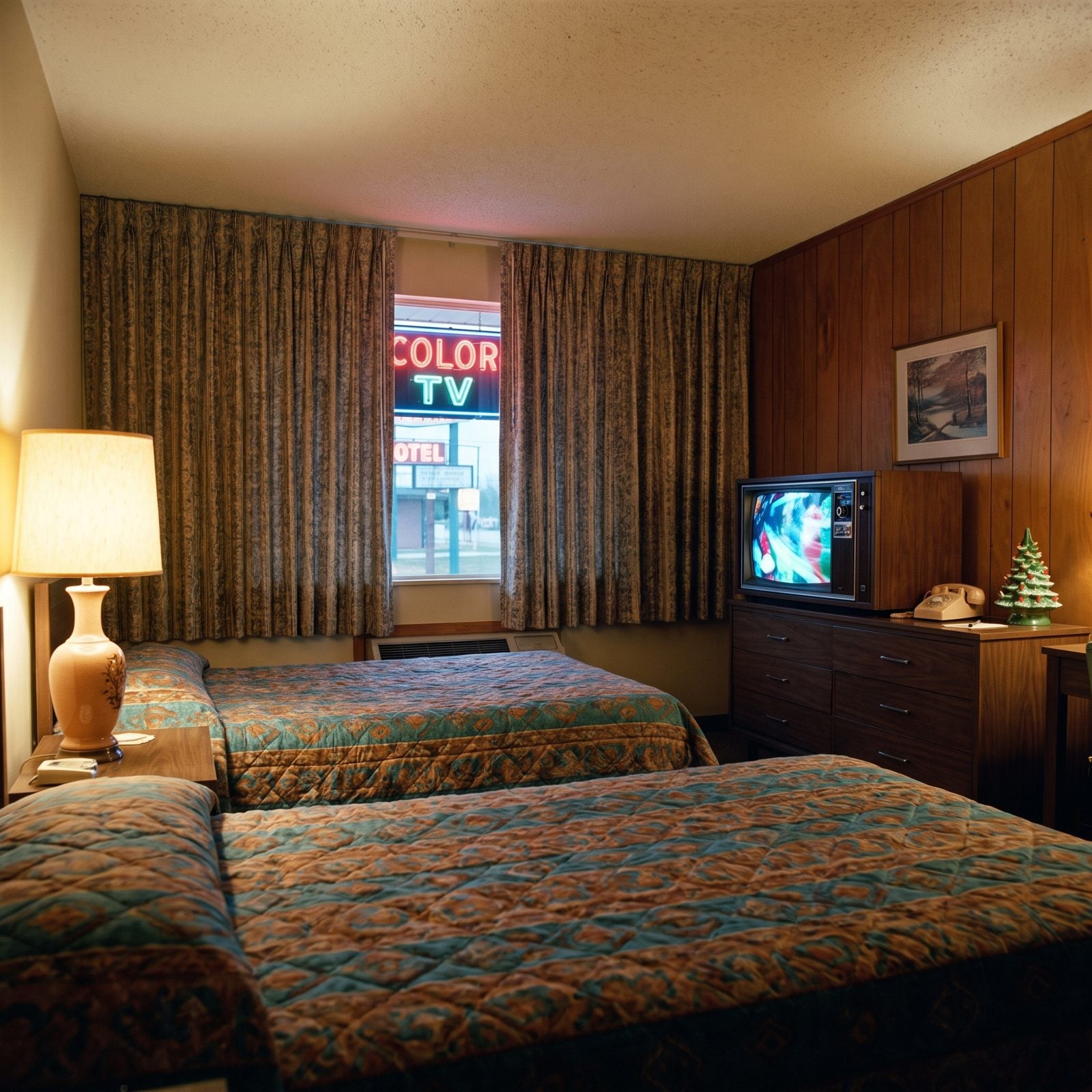
The sign out front didn’t just say TV. It said COLOR TV, in its own stretch of neon, because that alone was a reason to pick one motel over another.
Most families back home were still watching the Christmas specials in black and white, so the motel’s color set was a genuine draw. You crowded onto the bedspread and watched the parade in actual color — a small holiday treat before you climbed back in the car and finished the drive to Grandma’s in the morning.
24. Holiday Travelers Signed Paper Motel Registers by Hand
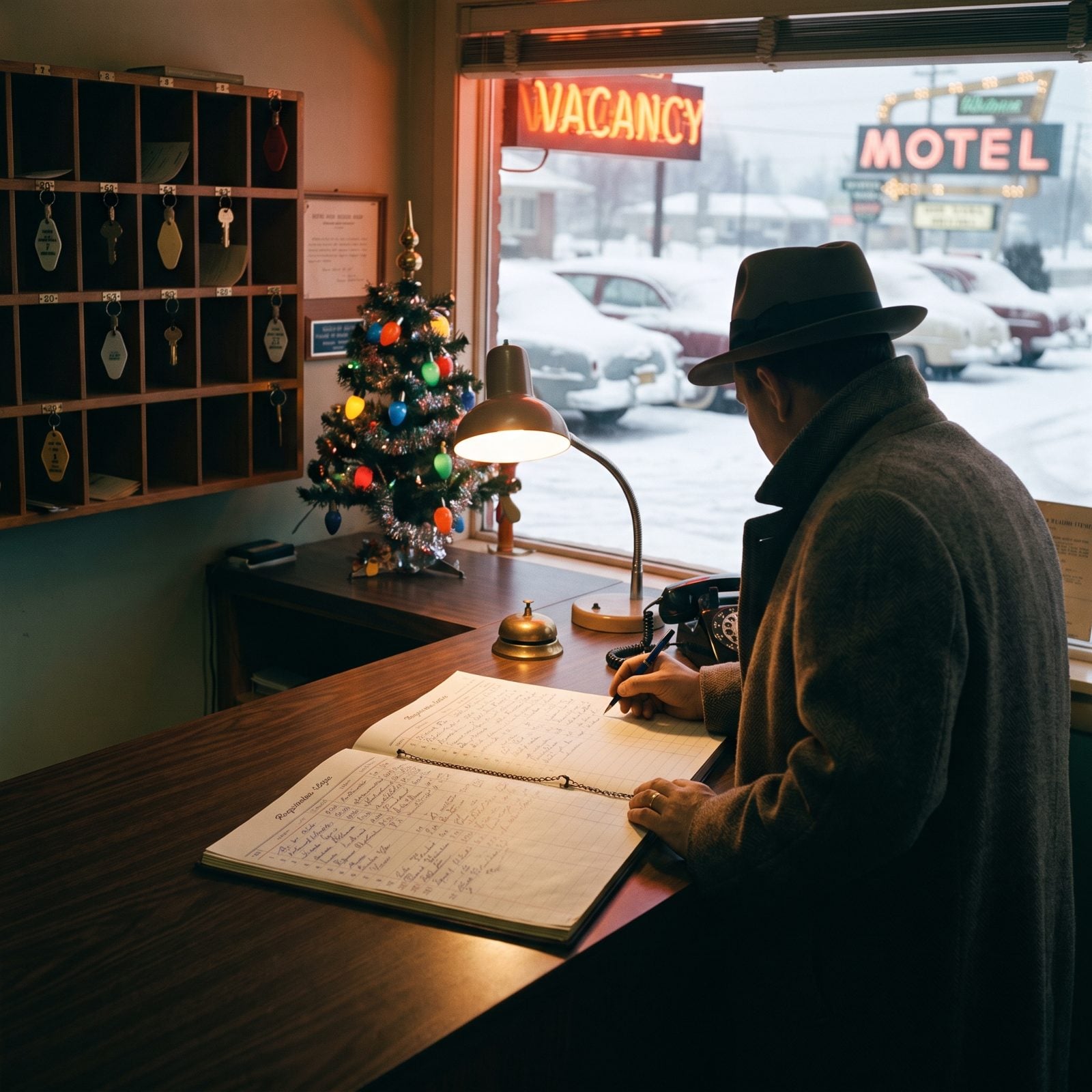
You walked in stamping snow off your shoes, and the first thing the clerk slid toward you was a ledger. A real book, ruled columns, your name in ink, your home address, your license plate, the make of the car — everyone’s business, right there for the next guest to read.
The pen was usually chained to the counter because people walked off with them. You wrote slow, your hand half-frozen. Then the clerk turned the register back around, squinted at your handwriting, and handed you a key.
23. Room Keys Came Attached to Plastic Fobs the Size of a Potato
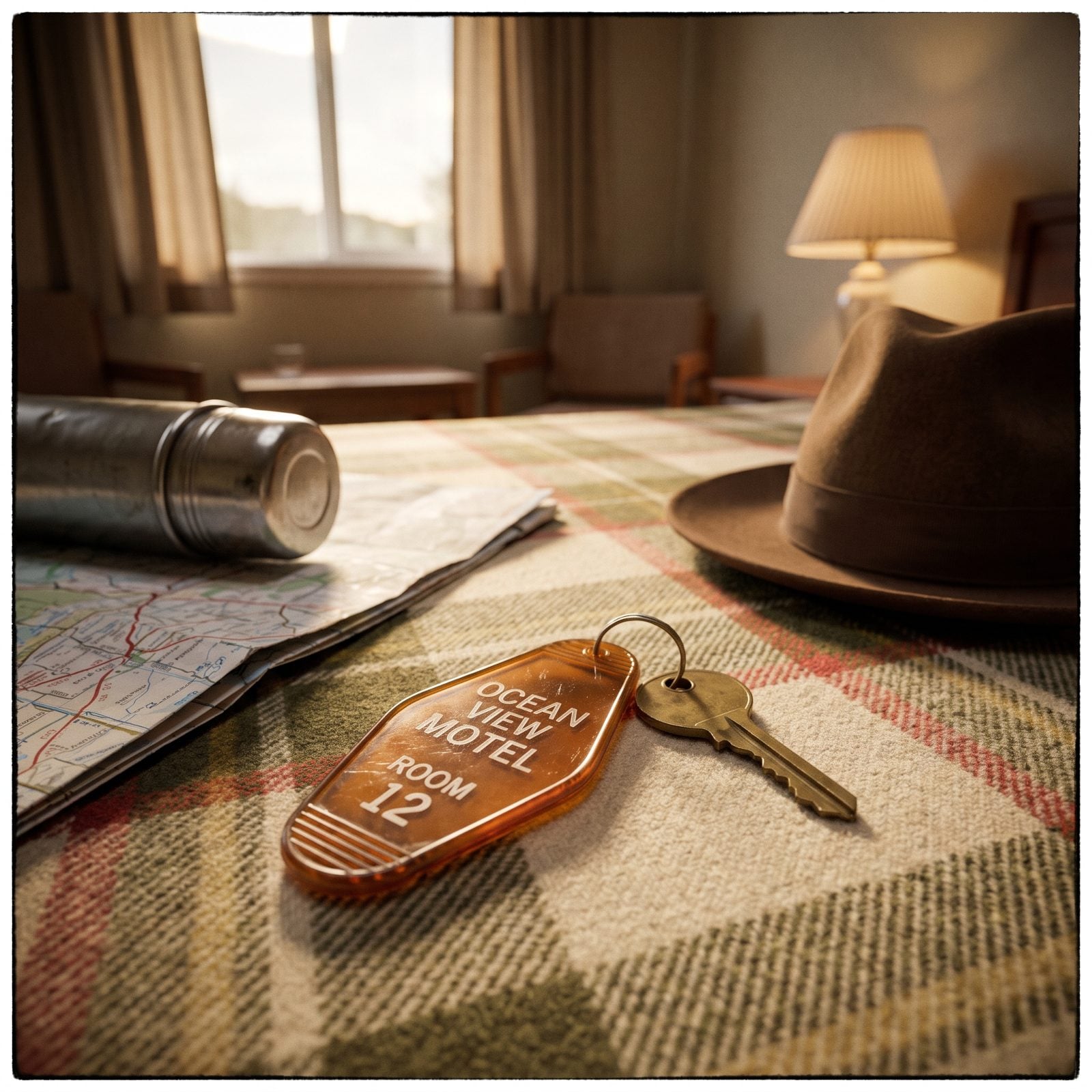
These were built to be a nuisance on purpose. The fob was so big and heavy you couldn’t forget it rode in your coat pocket, and that was the whole idea. Lose a key, the motel lost money. Make the key impossible to lose, problem solved.
Half of them said right on the plastic, “Drop in any mailbox, postage guaranteed.” You’d find one in a glovebox months later, in July — a little souvenir of a Christmas trip three states away. They clattered on the nightstand and weighed down a kid’s pocket like a toy. Then the magnetic keycard showed up in the seventies and the whole species went extinct.
22. Thermos Bottles Supplied the Only Hot Coffee for 200 Miles
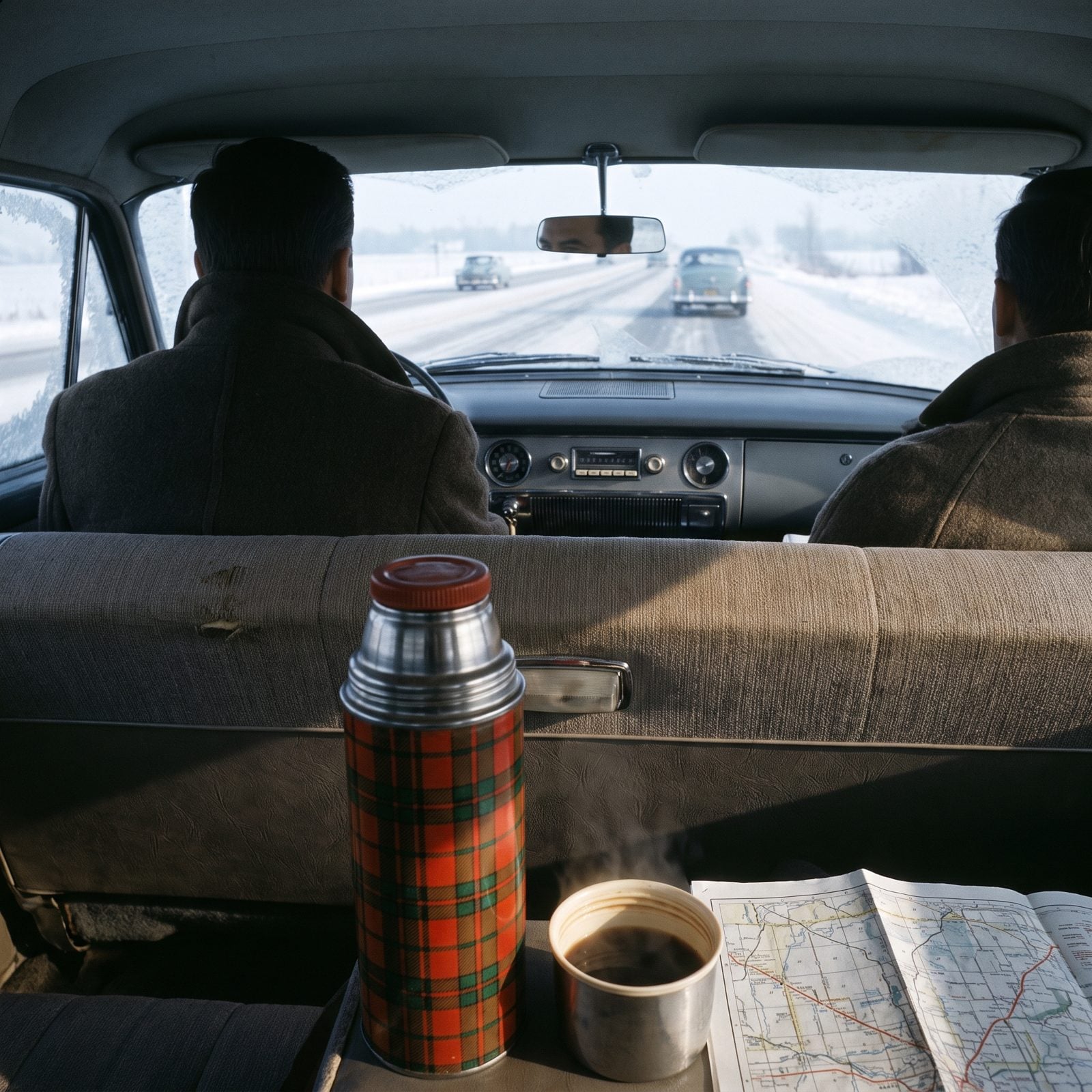
Coffee came from home, period. No drive-thru window, no cup holder, no paper cup with a plastic lid. There was a steel thermos, filled at six in the morning while the car warmed up, riding shotgun like a passenger.
You poured it into the screw-off cup and passed it around, and by the third hour the coffee had gone lukewarm and tasted faintly of the metal liner. Nobody complained. It was hot once, and that counted for a lot on a two-lane road with the heater fighting a losing battle against the floor vents.
21. Howard Johnson’s Was the Familiar Orange Roof You Pulled Off For
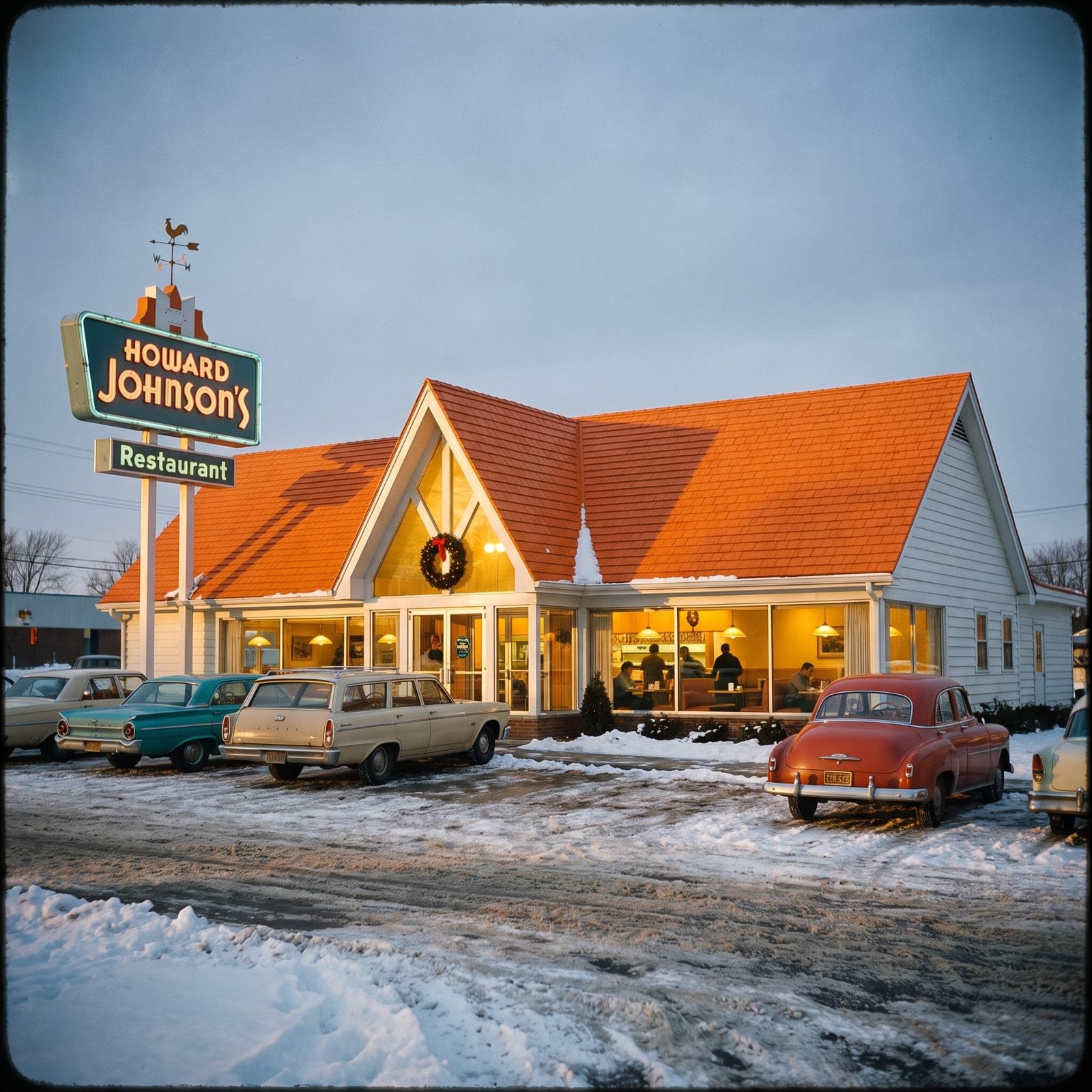
That orange roof meant you could stop now. Clean bathrooms, a booth, a menu you already knew by heart, and ice cream in flavors a kid could spend ten minutes choosing between. On a holiday drive it beat any road sign for sheer reliability.
Spot the gable from a mile off and the whole car relaxed. Grilled frankfurts, fried clams, turquoise countertops. For a lot of families the Thanksgiving trip ran on a rhythm of those stops, one every few hours, each one a near-copy of the last. The sameness was the comfort — you never had to wonder what you were walking into.
20. Families Mailed Christmas Gifts Ahead Instead of Hauling Them
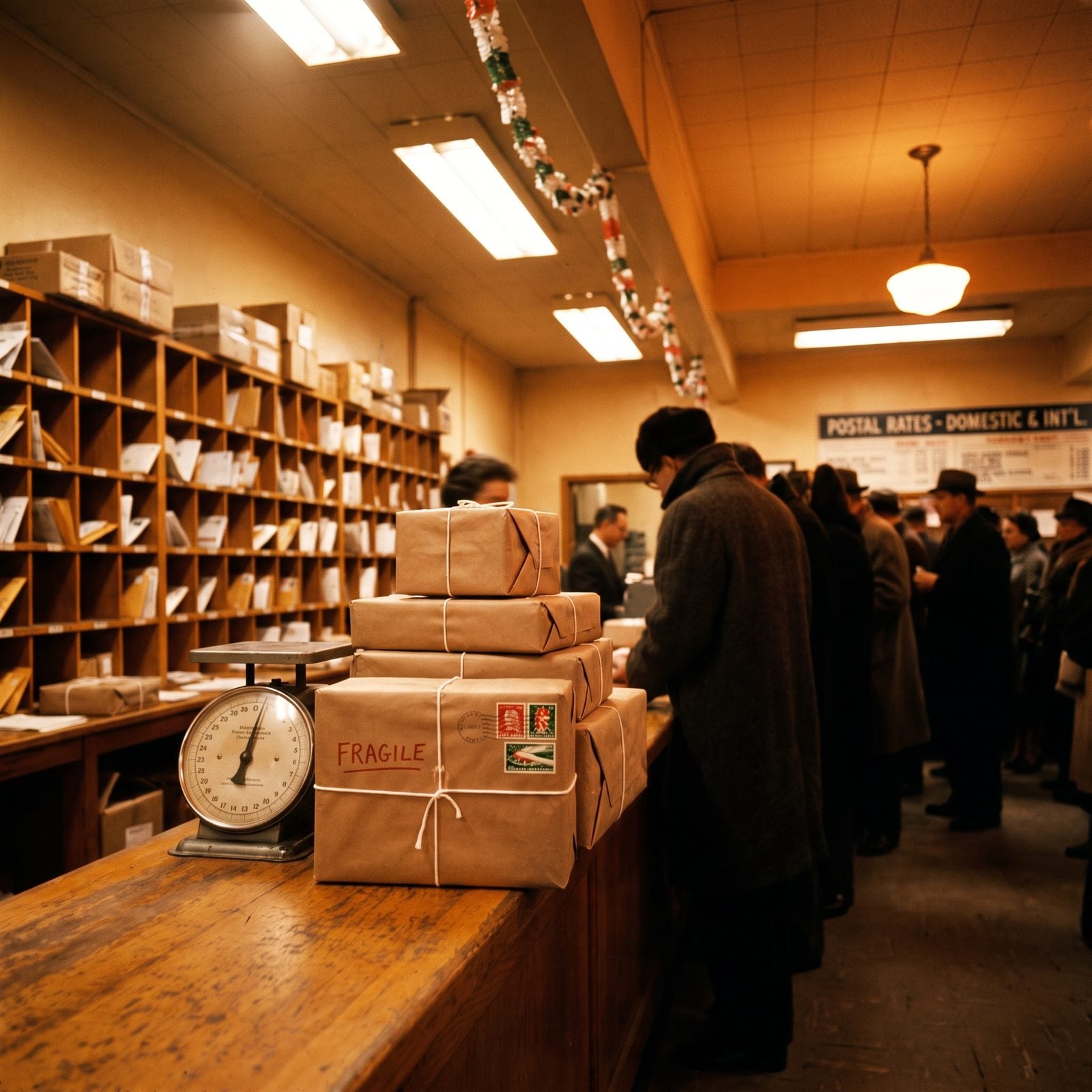
Not every present rode in the trunk alongside the suitcases. Plenty of families wrapped them in brown paper, tied them with string, lettered the address by hand, and stood in a post office line that wrapped around the lobby in mid-December.
The box got there before you did, and there was a small faith required in that — handing your carefully wrapped gifts to a clerk and trusting the whole machine to deliver them to Grandma’s porch intact. People wrote FRAGILE in big letters and hoped. Mostly it worked. And it meant the car had room for people instead of packages, which on a long cold drive mattered more than you’d think.
19. Cars Rode With Christmas Trees and Presents Lashed to the Roof
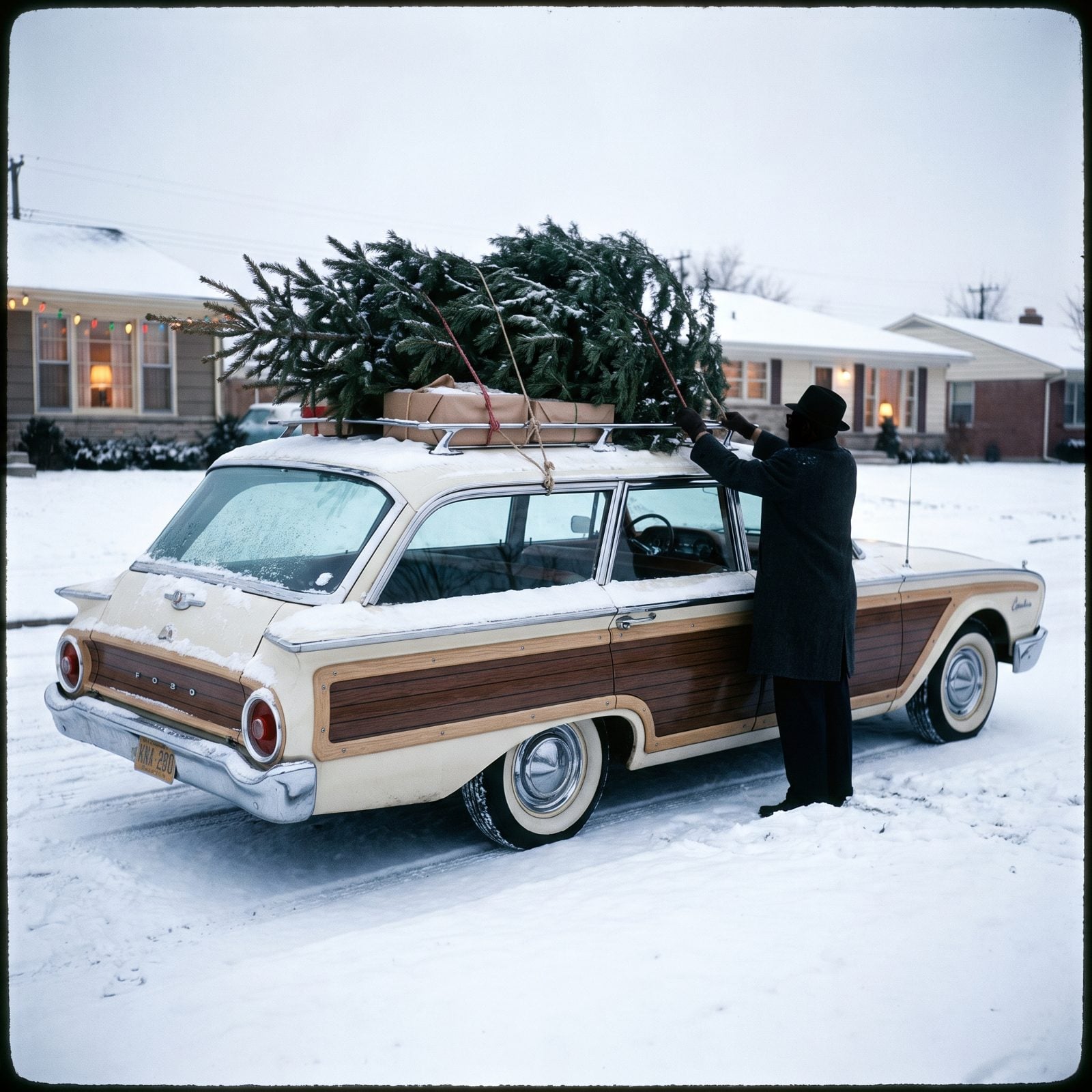
The tree went on the roof, and so did everything that wouldn’t fit inside. Clothesline run through the open windows, a couple of granny knots your father learned in the service, and a prayer at every highway on-ramp.
You could tell a holiday family on the road by the silhouette alone. Sagging rear bumper, roof piled high, a pine tree pointed into the wind shedding needles across two lanes. Every few hours somebody pulled onto the shoulder to re-tighten the rope that had, as promised, worked itself loose.
18. Holiday Luggage Was Heavy, Hard-Sided, and Had No Wheels
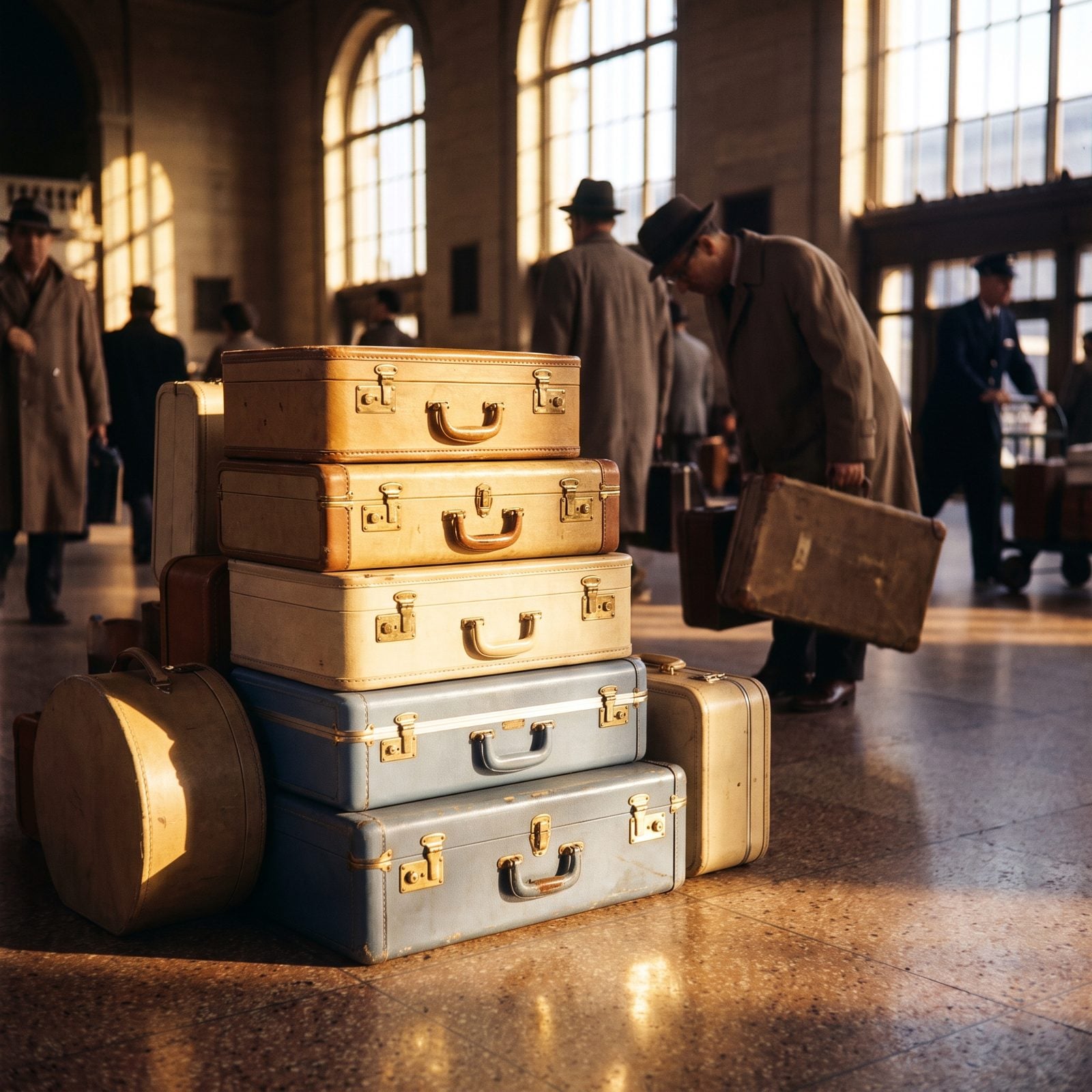
The suitcase was its own workout. Hard-sided, fiberboard under vinyl, chrome latches that pinched your fingers, and a single leather handle that cut a red line across your palm by the time you reached the gate.
Nobody rolled anything. You carried it, switched hands, set it down to rest, picked it back up. A packed case for a four-day holiday trip could weigh what a small child weighed. You see it in old photos — people listing slightly to one side, a case in each hand, trudging across a terminal floor. The wheeled suitcase existed as a novelty, sure, but it wasn’t standard for another two decades, so everyone’s shoulders just took it.
17. Airline Journeys Hinged on a Flimsy Paper Ticket You Couldn’t Replace Easily
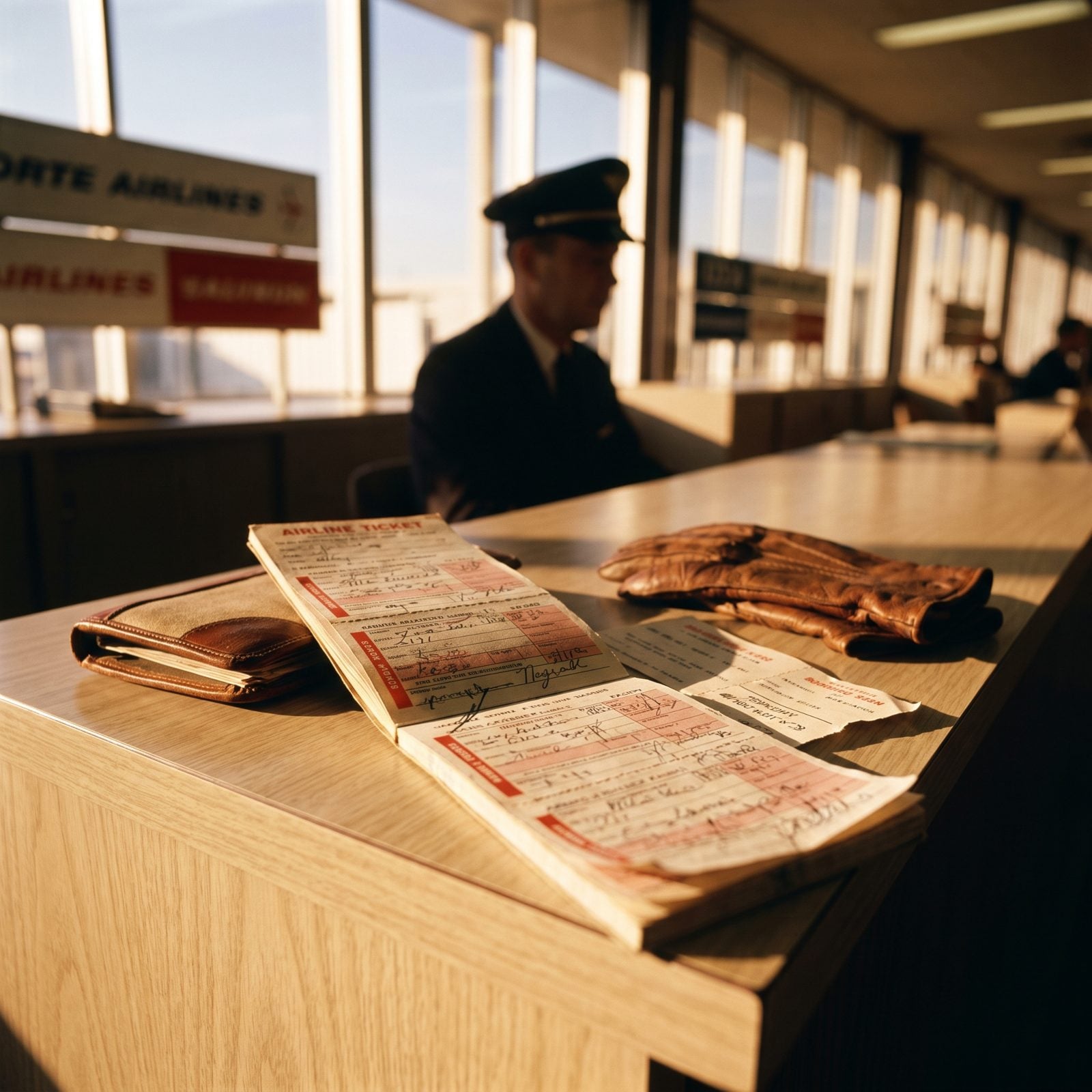
It was a little booklet of carbon-copy coupons, one flimsy page torn out at each leg of the trip. Lose it and you were buried in paperwork. No app, no lookup, no reprint at a kiosk. The paper in your coat pocket was the flight.
So you guarded it, tucked into a travel wallet, checked for the fifth time while standing in line. People at holiday departures patted the same breast pocket over and over, the way you’d check for a wallet. That ticket got soft and fuzzy at the folds by the time you boarded, worn from a full day of handling.
16. Flight Reservations Went Through a Travel Agent or a Downtown Airline Office
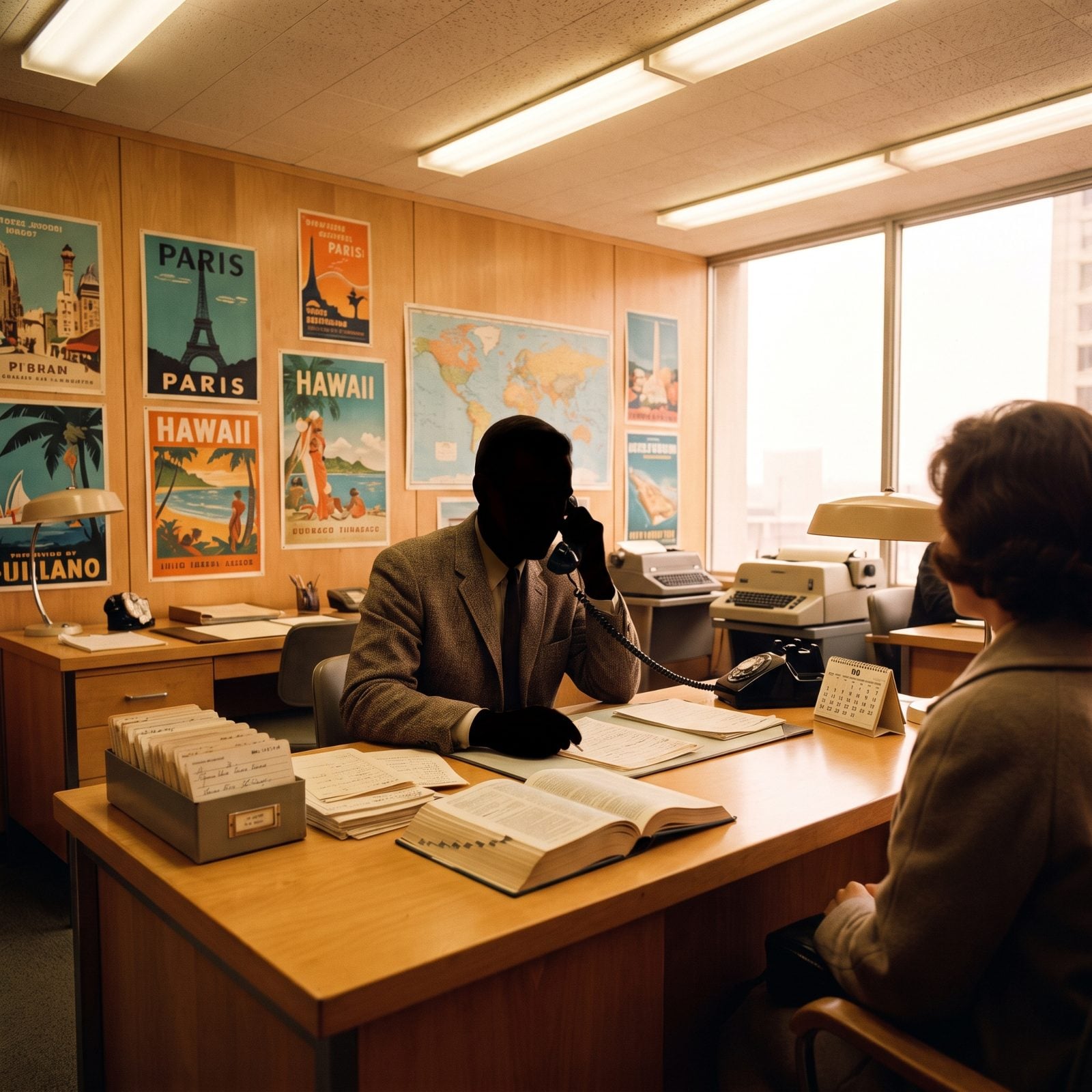
You picked up a phone with a cord, or you walked downtown. Booking a holiday flight meant talking to a human being who flipped through a thick printed airline guide and wrote your details on a card by hand.
The travel agent knew things. Which connection was tight, which flight filled up fast at Thanksgiving, which fare you could still get. You trusted their judgment because you had no other way to see any of it — no screen to compare prices on, just a person with a phone pressed to their ear, on hold with the airline, doing it for you.
15. Airport Departure Boards Clattered With Flipping Letters and Numbers
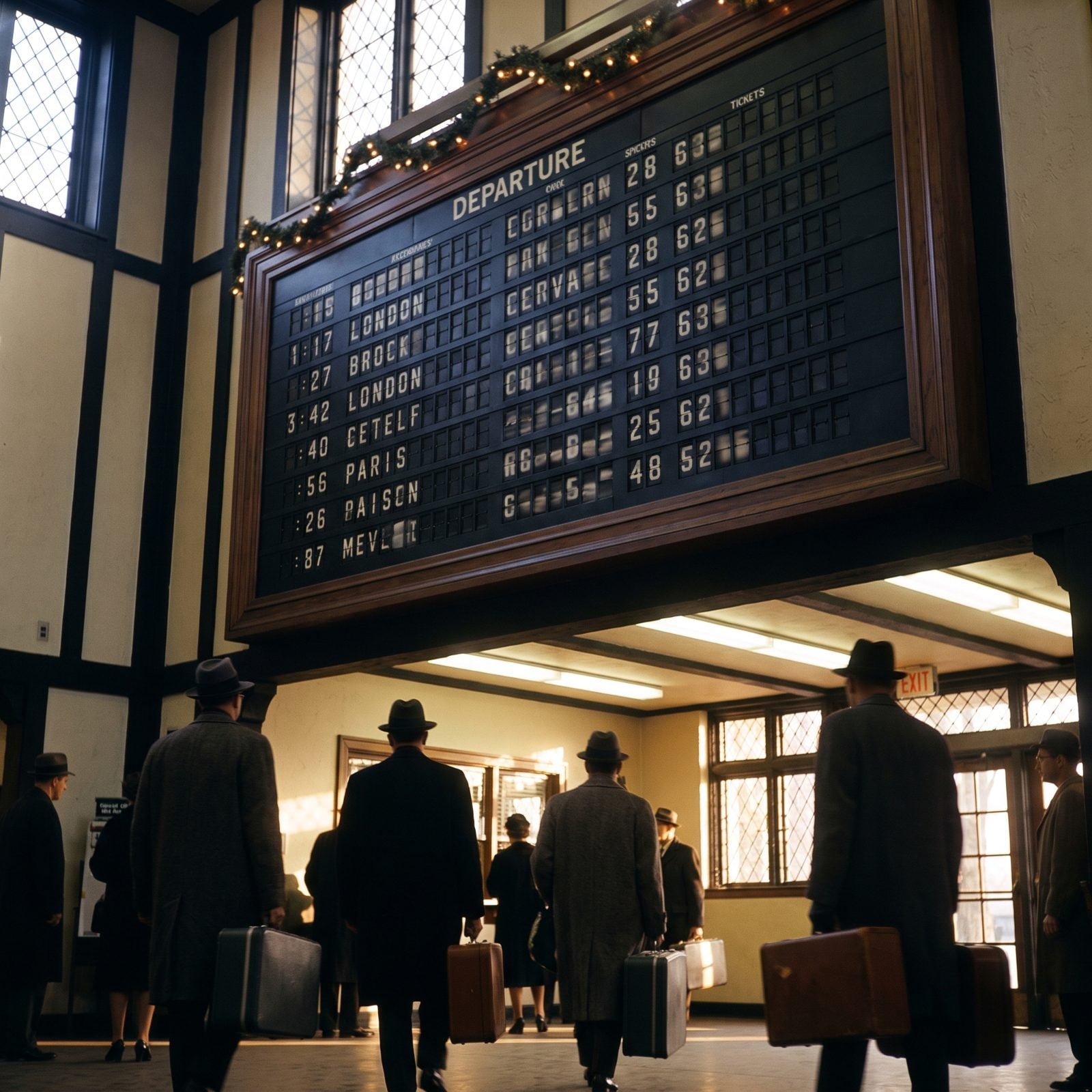
Before you saw your flight was delayed, you heard it. The whole board would ripple, a cascade of little tiles flipping over at once, a sound like distant applause or a deck of cards riffling through a hundred times.
Everyone in the terminal looked up when it started. On a packed Christmas Eve, with every seat in the gate area taken and coats piled on suitcases, that clatter meant something changed — new gate, new time, cancellation. You’d crane your neck and wait for your city’s row to settle. When it finally stopped and the numbers stood still, the whole crowd exhaled or groaned at once. The quiet screens that replaced it never gave you that.
14. Airline Seats That Felt Wider Than Half of Today’s Economy
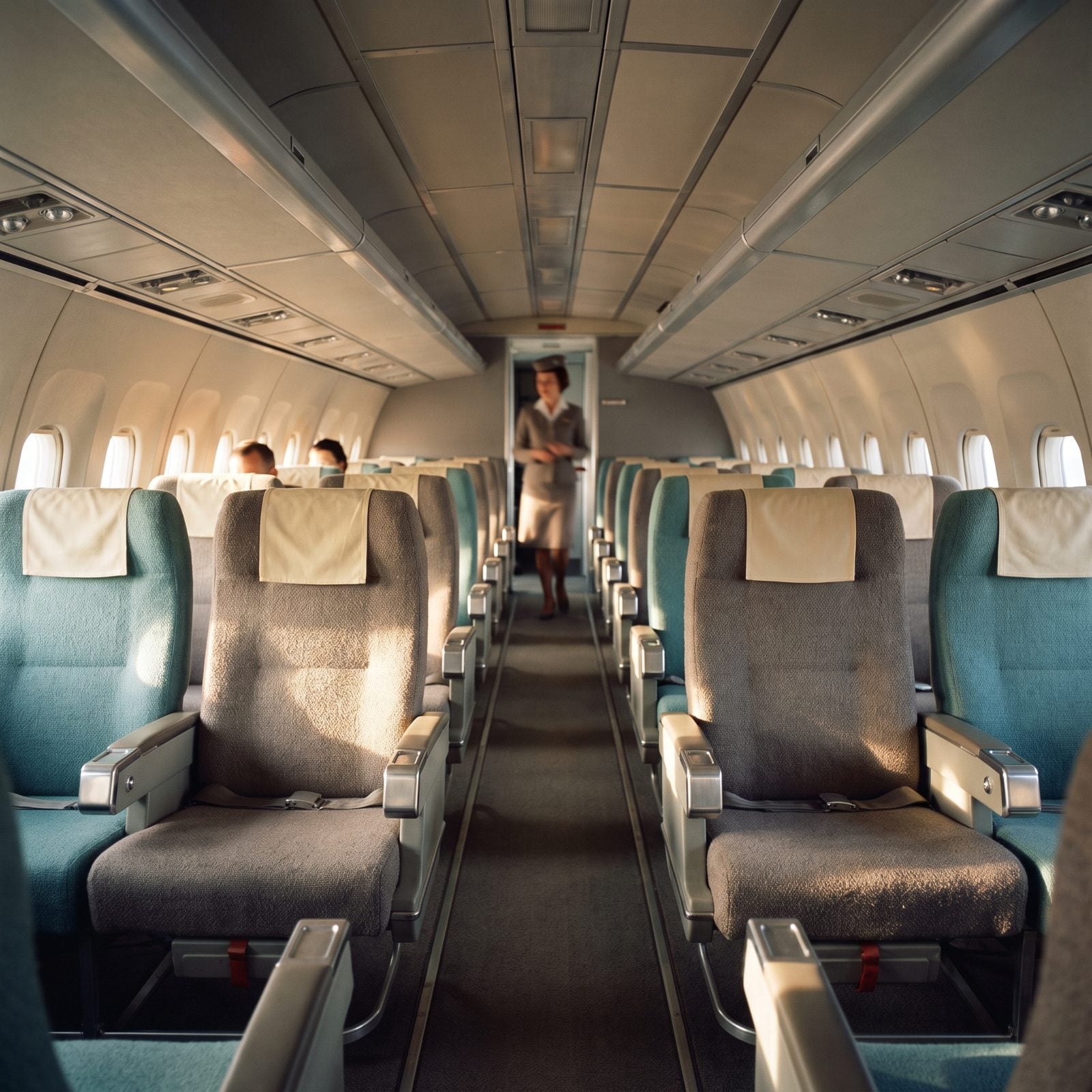
Slide into a 1960s coach seat and the first thing you’d notice is your knees. They weren’t touching anything. The seats ran broad enough that the armrest felt like a shared border rather than a battleground, and your legs had somewhere to go.
Airlines weren’t being generous out of kindness. Flying still cost real money, planes flew half-empty on plenty of routes, and nobody had yet figured out how to shrink the cabin into a grid of profit. The result? Room to breathe on the way to Grandma’s.
13. Coach Meals Arrived on Real China With Metal Forks
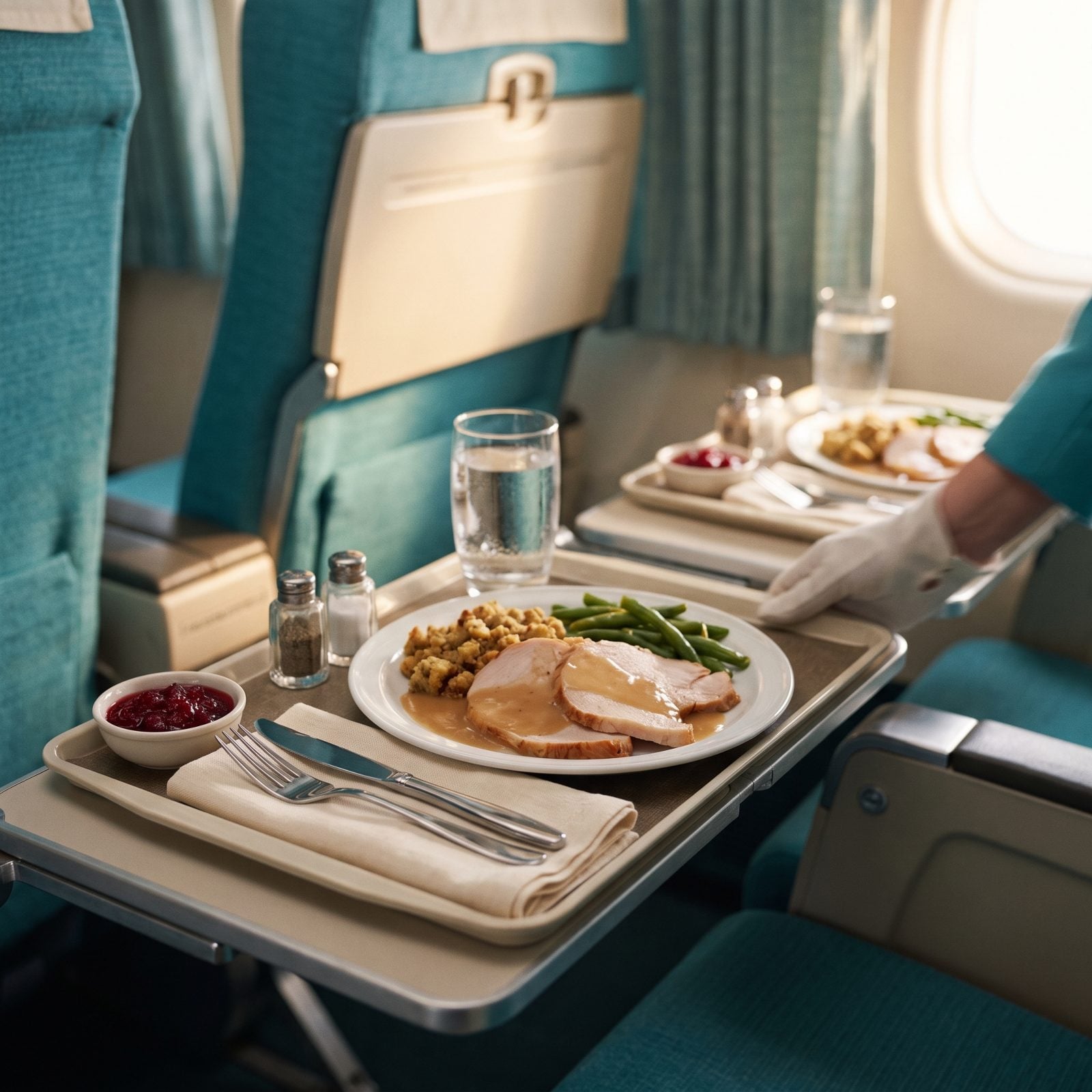
Lunch over the heartland came on a plate you could’ve put on your own table. Real porcelain. A metal fork with weight to it. A glass tumbler, not a crushable cup. On holiday routes the galley might send out sliced turkey with a dab of cranberry, served by a stewardess working the aisle with a rolling cart and a smile.
The whole thing had ceremony to it. You unfolded a cloth napkin and salted from a little glass shaker, and nobody tore open a foil pouch. Honestly, I’d trade three in-flight movies for one meal served like it mattered.
12. The Whole Cabin Could Light Up After Takeoff
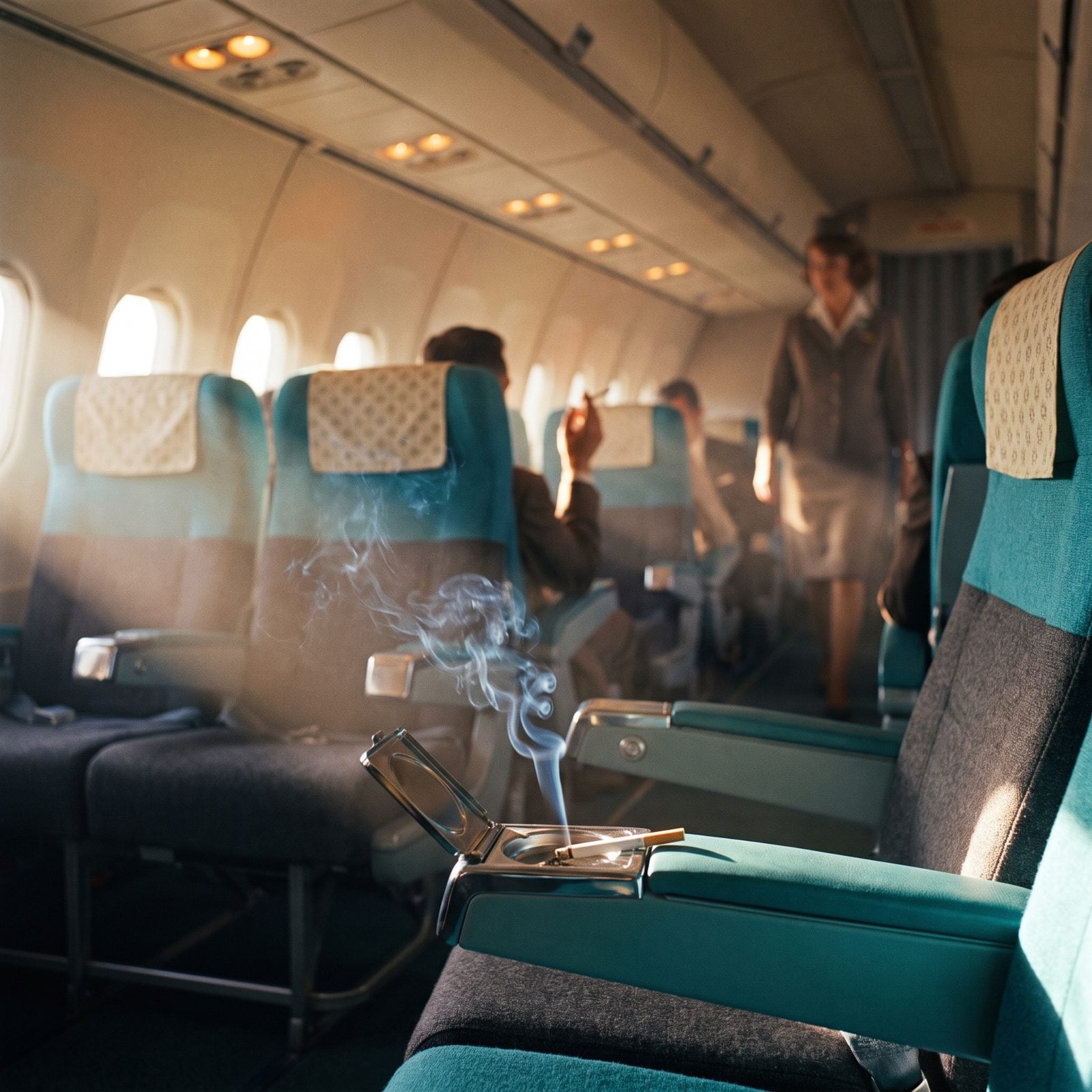
The seatbelt sign clicked off and the lighters came out. Nearly every armrest had its own little chrome ashtray built right in, flap and all, because smoking on a plane wasn’t a vice back then. It was just something you did, same as at the office or the dinner table.
Picture the cabin an hour into a Thanksgiving flight: a thin blue haze hanging near the overhead lights, tobacco mixing with coffee and jet fuel. Separate smoking sections didn’t arrive until the early 1970s, and even then the air didn’t much care where the invisible line was.
11. Everybody Dressed Like the Flight Itself Was the Occasion
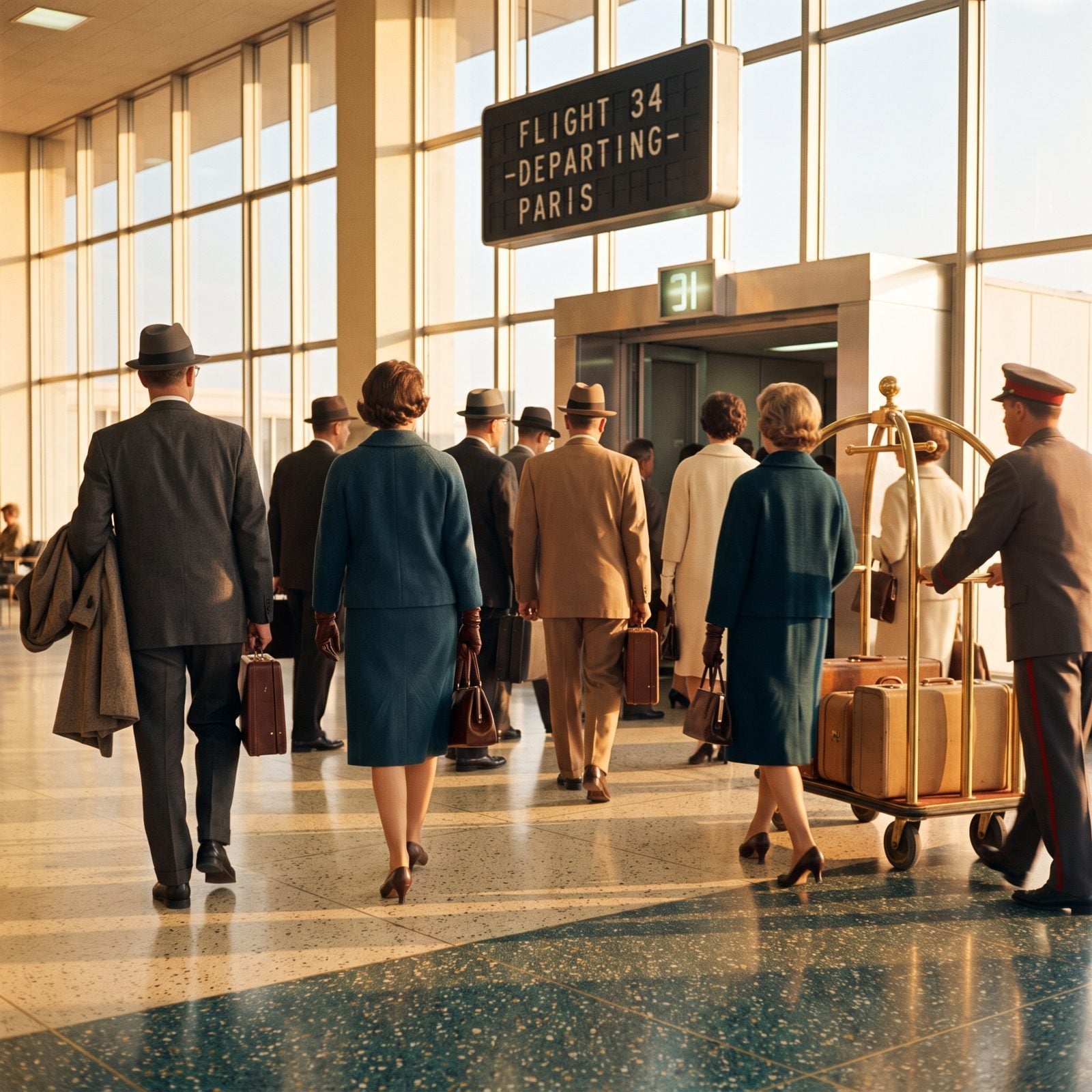
Flying home for Christmas meant your good coat. Men wore suits and a hat. Women traveled in fitted wool, gloves, and heels, hair set the night before, while the children got buttoned into their Sunday best and told, firmly, not to wrinkle anything before the plane even boarded.
There was a logic to it. A ticket was expensive and air travel still carried a whiff of occasion, so you rose to meet it. You weren’t just getting somewhere. You were being seen getting somewhere.
10. Kids Walked Off With Tin Pilot Wings and a Coloring Book
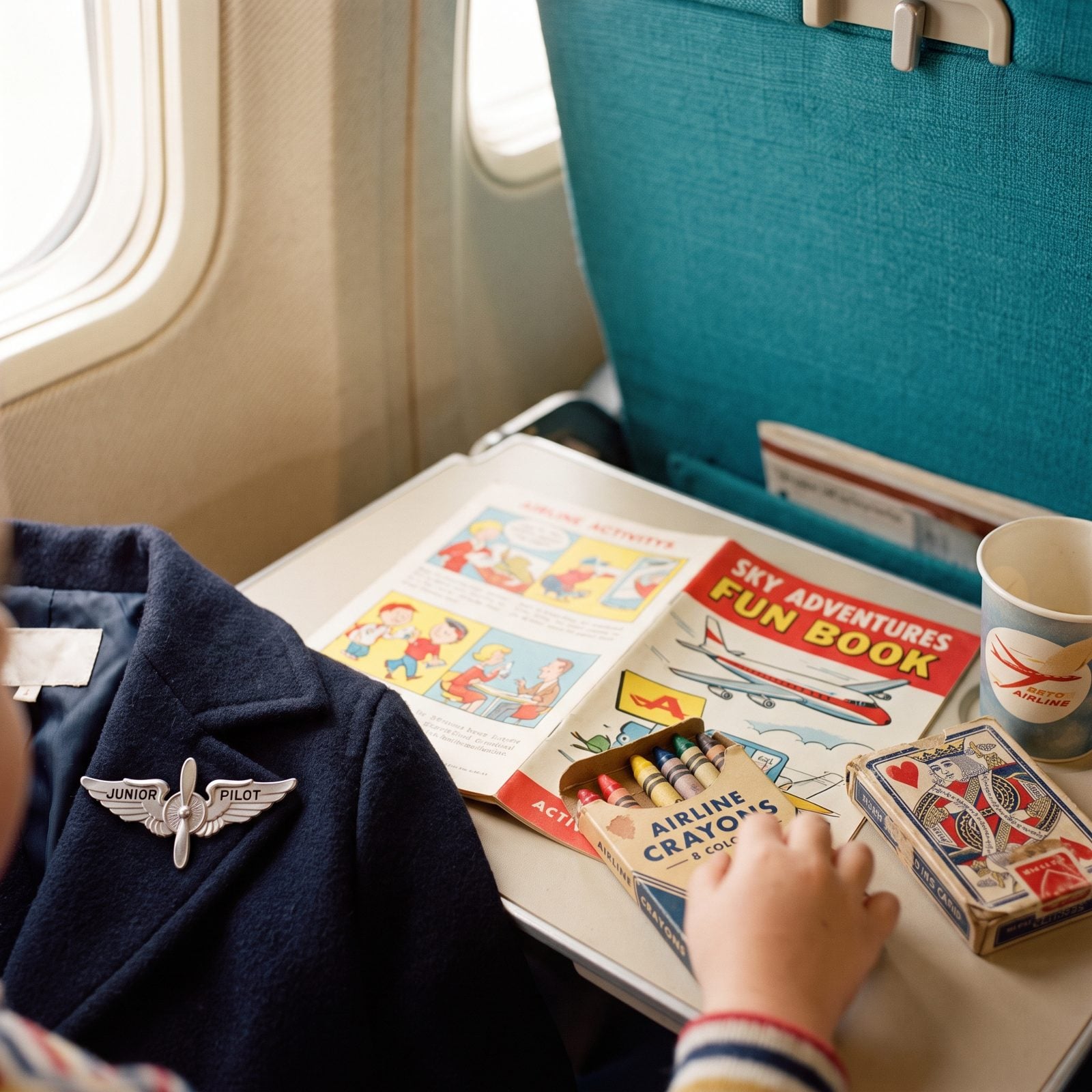
The stewardess leaned down, pinned a pair of shiny tin wings to your coat, and just like that you were an honorary member of the crew. For a kid on a holiday flight, that little badge was everything.
Along with the wings came the goods. A cardboard activity pack. A few crayons. Maybe a deck of cards or a cardboard cutout of the very plane you were riding in. Some lucky children even got a trip up front to meet the captain. It kept small hands busy over a long flight, and it worked a quiet kind of magic — you never forgot the airline that made you feel like a pilot.
9. Families Gathered on Open-Air Observation Decks to Watch the Planes
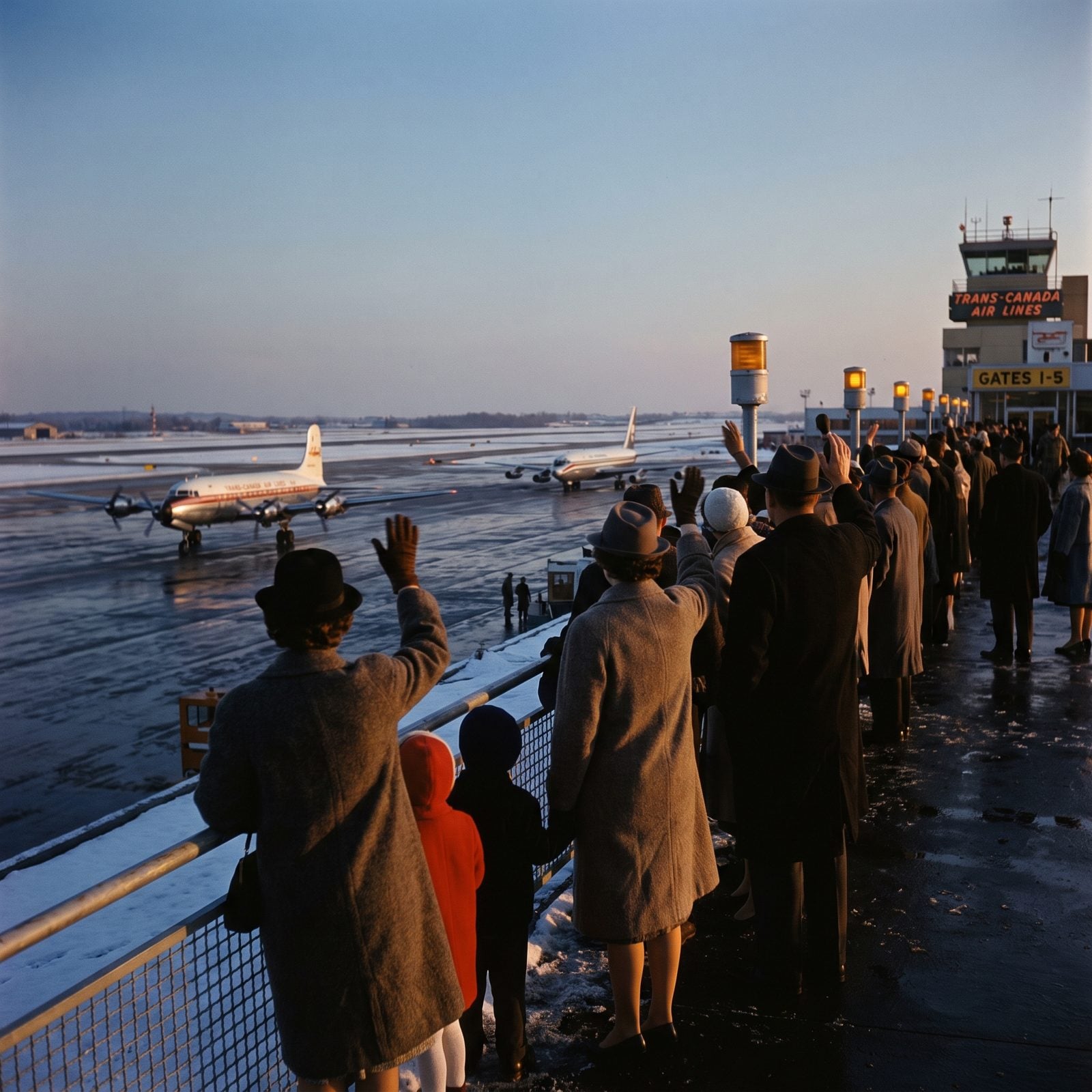
Before security turned airports into fortresses, you could ride an elevator to the roof and watch the whole show. Open-air observation decks let anyone stand at the railing, coats buttoned against the wind, and watch the big silver birds taxi and lift off.
Families made an afternoon of it. You’d drop someone at the gate, then rush up to the deck to wave at a plane you couldn’t possibly see your relative inside of. Nobody cared — the wave was the point. On a snowy Thanksgiving evening, with the runway lights coming on, it had the weight of a holiday ritual all its own.
8. Stepping Onto a Jet Still Felt Like Boarding the Future
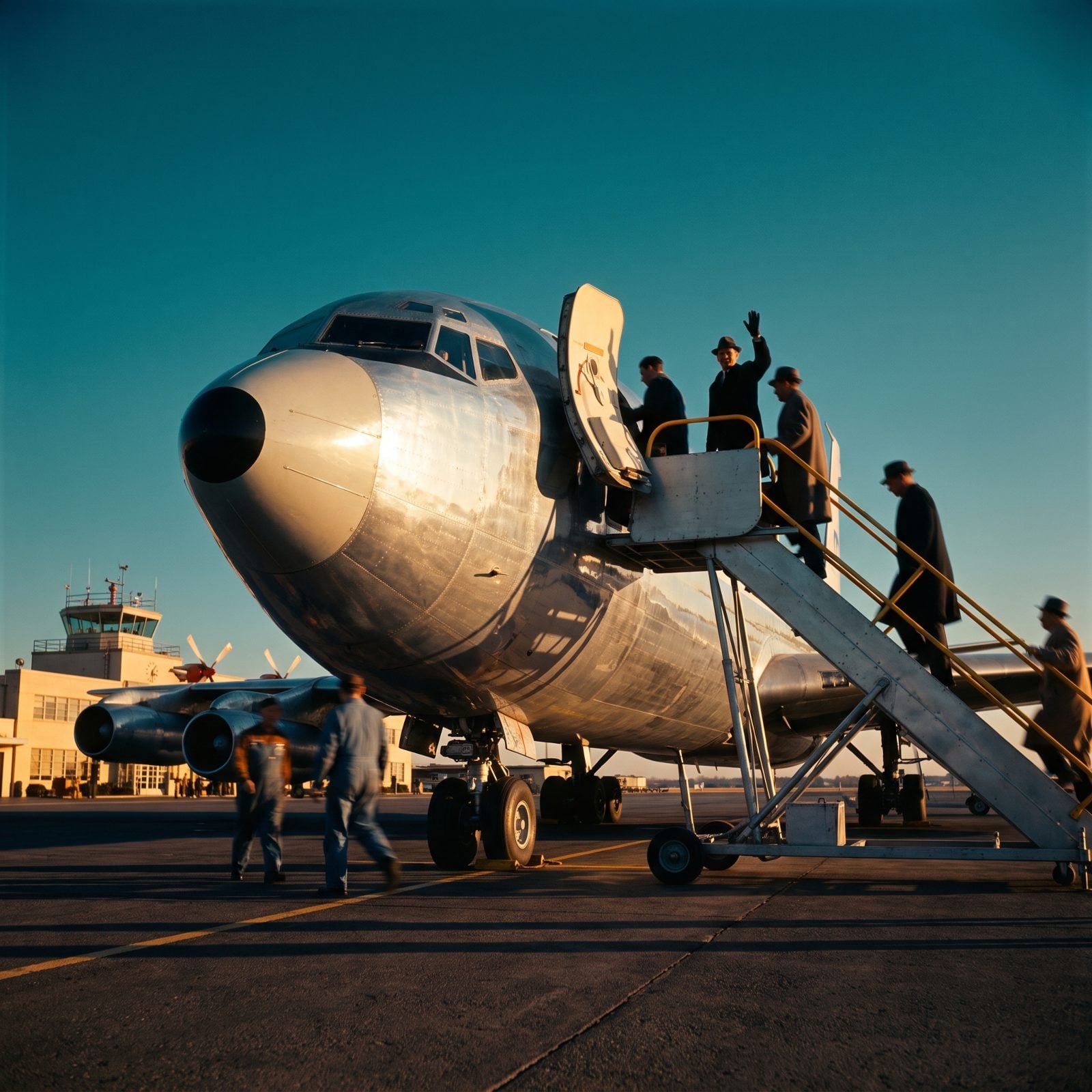
The jet age was barely a decade old, and it showed in how people talked about it. A 707 or a DC-8 wasn’t just transportation. It was proof the future had arrived, and you were living in it.
You’d cross the tarmac on foot, climb the rolling airstairs, and feel the whole thing tremble with power as the engines spun up. New York to California in hours instead of a day. For a family scattered across the country, the jet made showing up for Christmas suddenly possible in a way propellers never quite had.
7. Plenty of Holiday Routes Still Ran on Humming Propellers
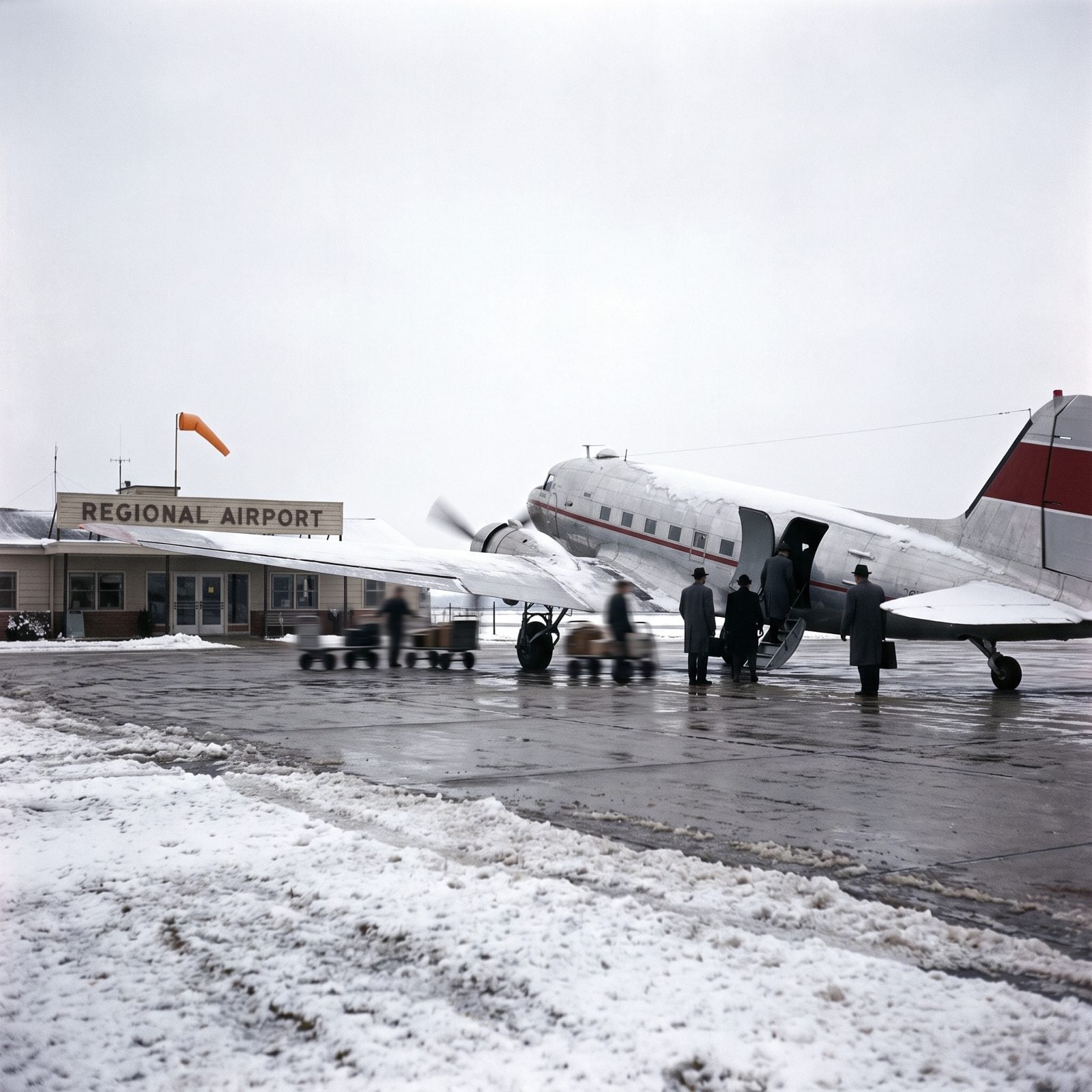
Not every holiday trip was jet-powered. Short hops and smaller cities still leaned on propeller aircraft, the DC-3s and Convairs that droned low and loud across the winter sky.
You felt every bit of the flight — the props buzzing in your chest, the plane bucking a little in rough air, the slow climb over a frozen landscape you could actually see out your window. It took longer and shook more than a jet. But there was a workhorse honesty to it, and these were the planes that got the small towns home for Thanksgiving.
6. Snow Delays Meant Finding a Pay Phone, Not Checking an App
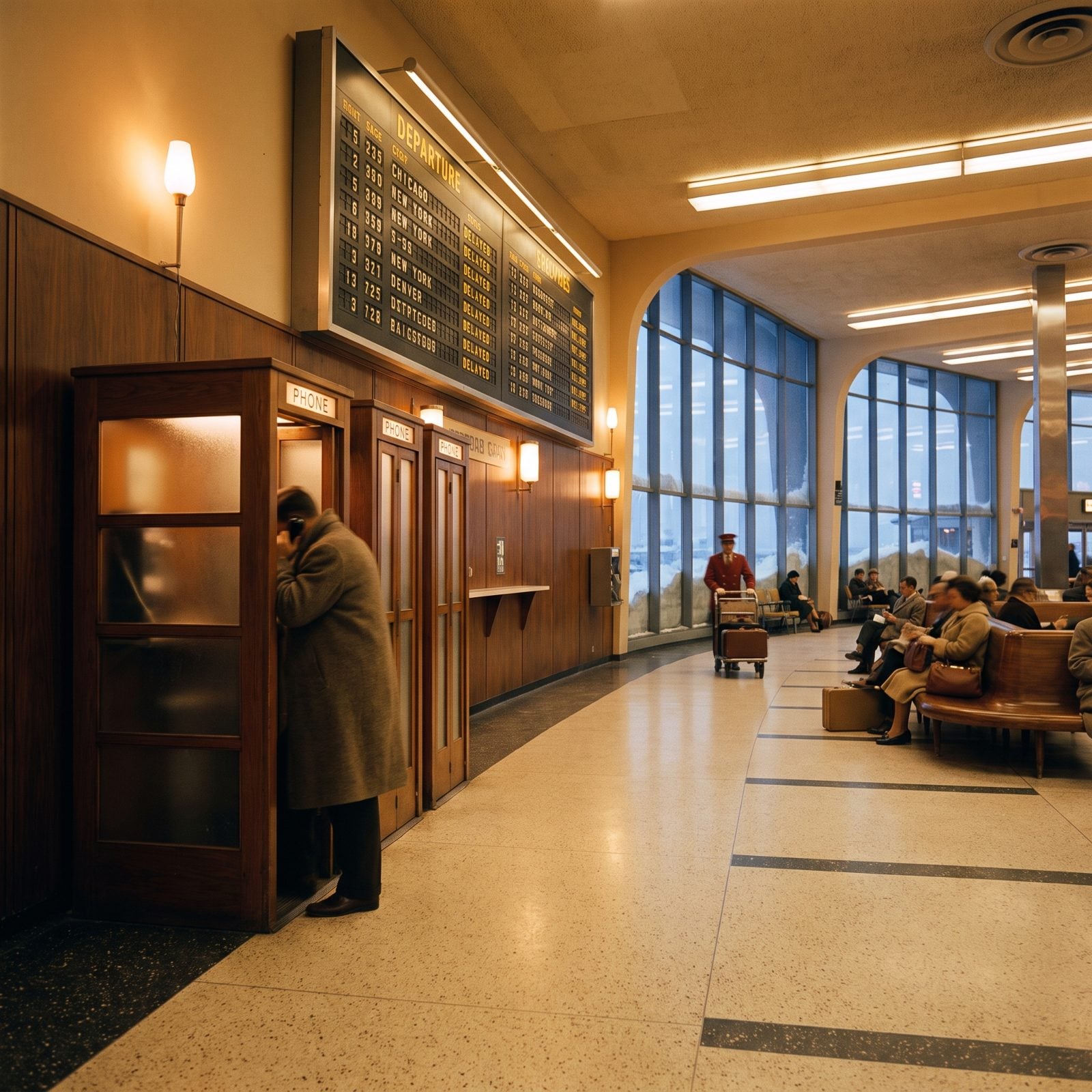
A December storm rolled in and there was no ping on your phone, no push notification, no rebooking link. Just a flip-board that clattered through its letters, a loudspeaker voice you strained to catch, and a line at the counter.
If you needed to reach the family waiting on the other end, you dug for change and claimed a phone booth. Delays were endured in person, with a cup of bad coffee and a newspaper, everyone watching the same board and waiting for the same letters to flip. You found out your flight was late by looking up, not by looking down.
5. When a Flight Got Canceled, You Lined Up and Pleaded Your Case
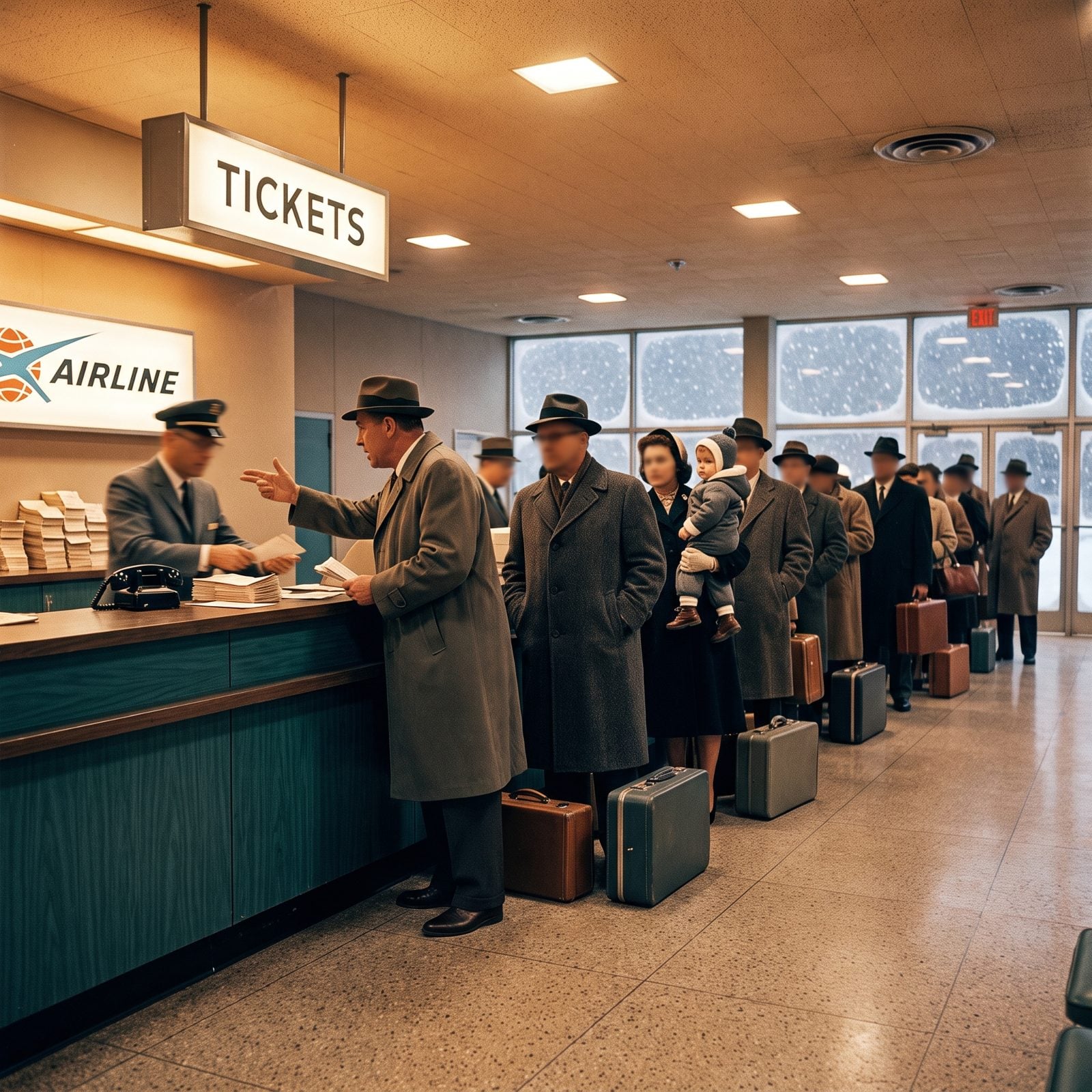
No phone tree. No chatbot. When the holiday flight got the axe, every solution stood behind one wooden counter, and every stranded passenger formed a line to reach it.
So you waited. You watched the agent work a paper ledger and a rotary phone, hunting for seats on anything leaving that night. Charm helped. Patience helped more. There was no self-serve escape hatch, which meant the whole thing came down to one tired agent, a stack of carbon tickets, and whether the next plane out had room for a family trying to get home for Christmas. When it worked, you thanked them by name. You remembered it.
4. Relatives Waited Beneath Giant Analog Clocks Without Live Arrival Tracking
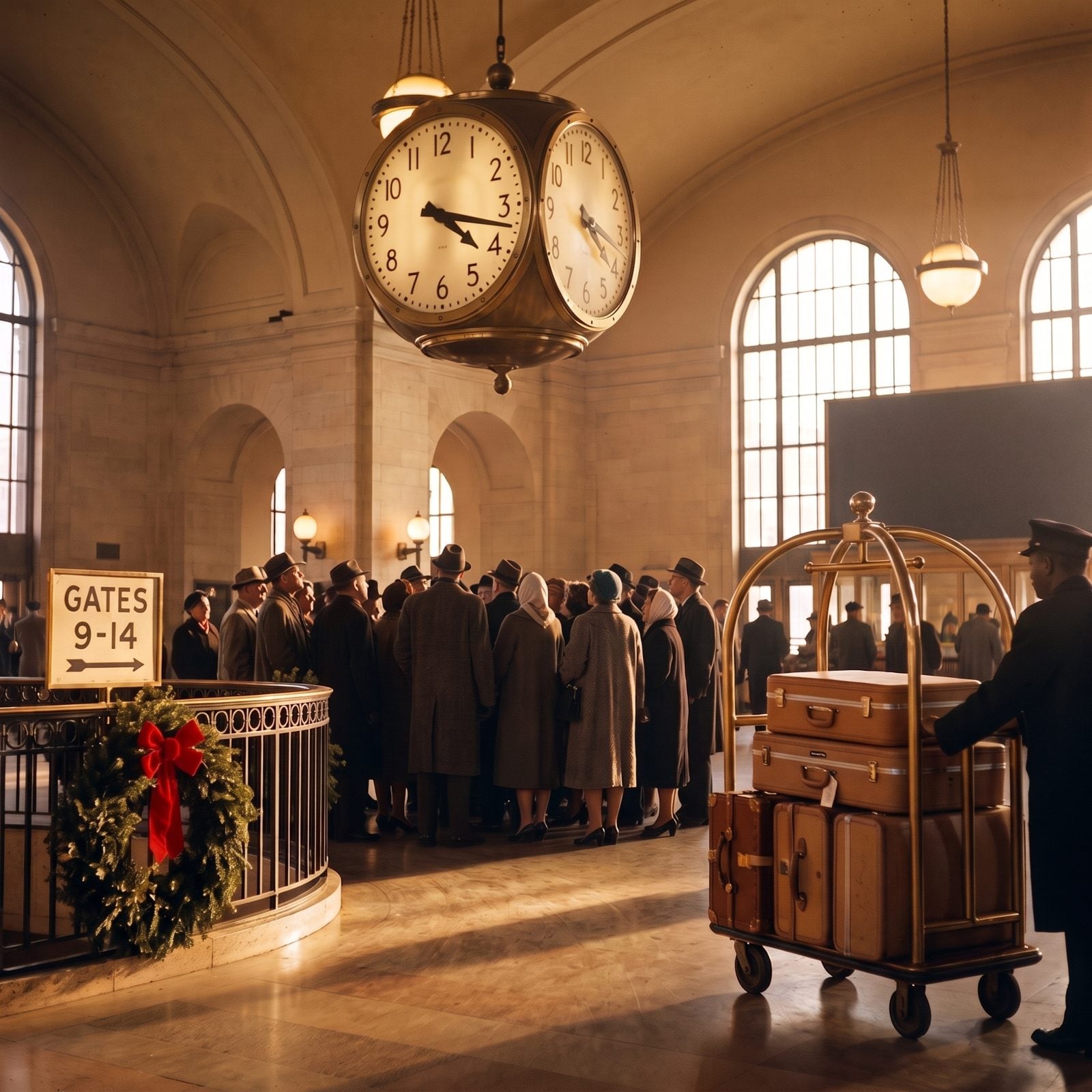
You picked a spot under the clock and you stayed there. That was the whole system. No phone buzzing with a tracking link, no little airplane icon inching across a map — just a big brass clock, a printed timetable, and the faith that the 4:15 would roughly resemble a 4:15.
Trains ran late around every holiday, and you had no way of knowing until they didn’t show. So you waited, read the departure board for the tenth time, bought a coffee from the counter, and rehearsed the hug with one eye on the gates. Then the doors opened and the crowd surged and you scanned every wool coat until you found the right one.
3. Long-Distance Calls Home Were Expensive and Brief
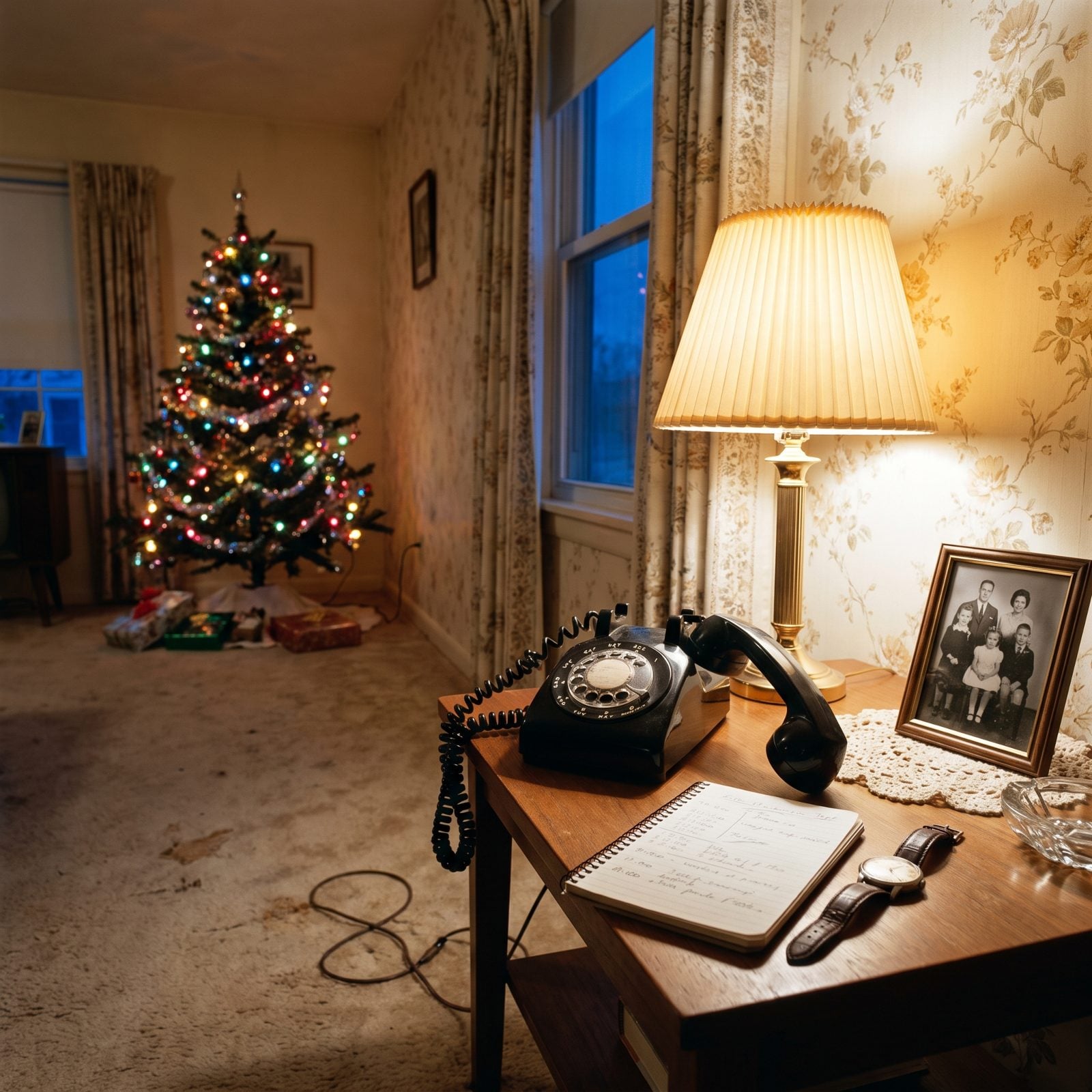
The call cost real money and everyone in the room knew it. Somebody watched the wristwatch. You led with the important news, skipped the small talk, and passed the heavy handset around so each person could shout a quick hello before the minutes stacked up.
Long-distance was a per-minute event priced like a small luxury, and families treated it exactly that way. You didn’t call to chat. You called to confirm — arrived safe, dinner’s at two, tell Grandma we love her — and then you hung up before the rate did any more damage.
2. Travelers Made Collect Calls From Coin-Operated Payphones
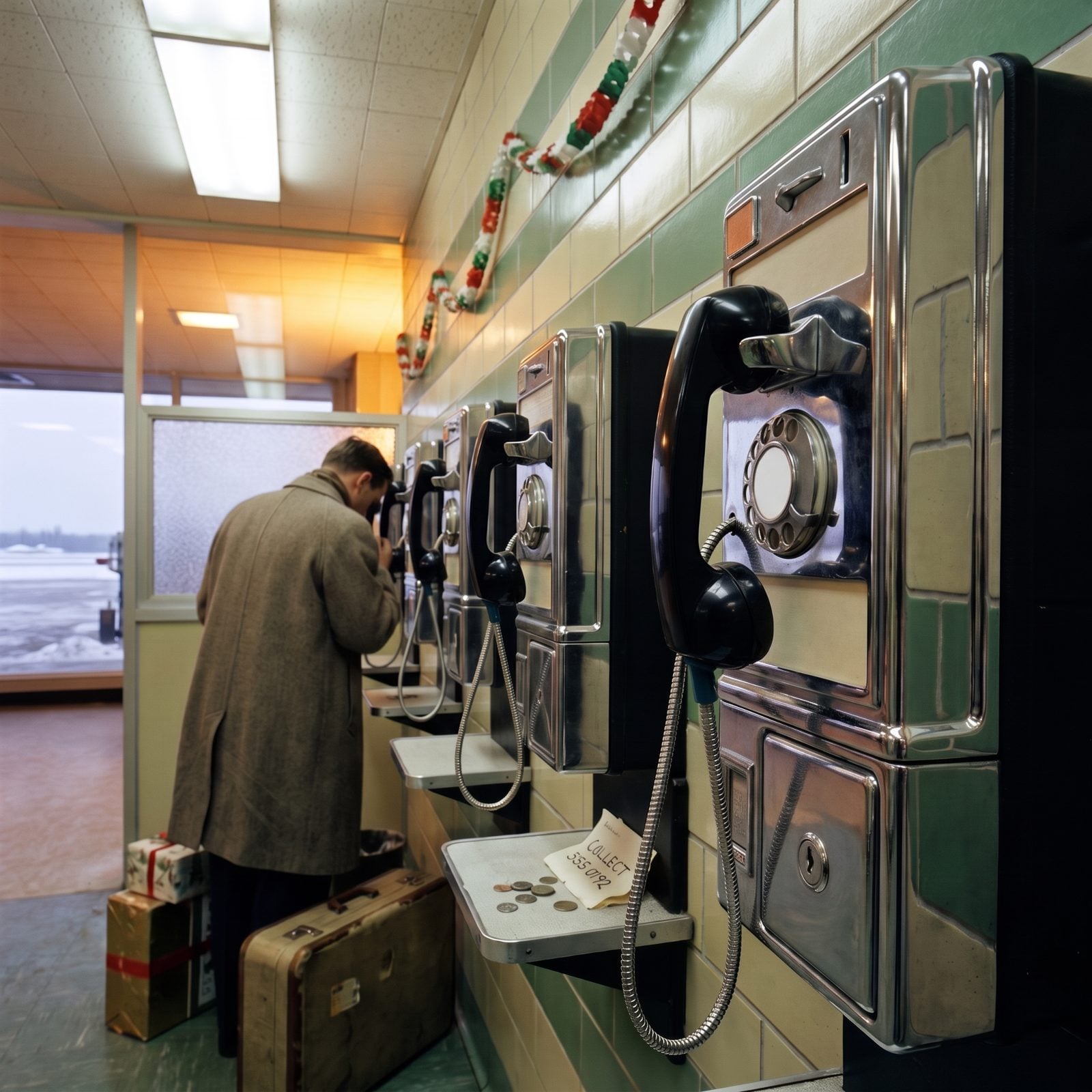
You didn’t need a pocket full of change if you knew the trick. Dial zero, tell the operator it’s collect, and when the phone picked up at home somebody said yes, we’ll accept the charges. The cost jumped to whoever you were visiting — which felt fair enough, since they’d invited you.
Clever travelers worked a code into the whole thing. Call collect, give your own name to the operator, and let the family refuse the charges on purpose. The refusal was the message: made it, don’t worry, no money spent. A free telegram disguised as a declined call.
1. Postcards Often Delivered the First Word of a Safe Arrival
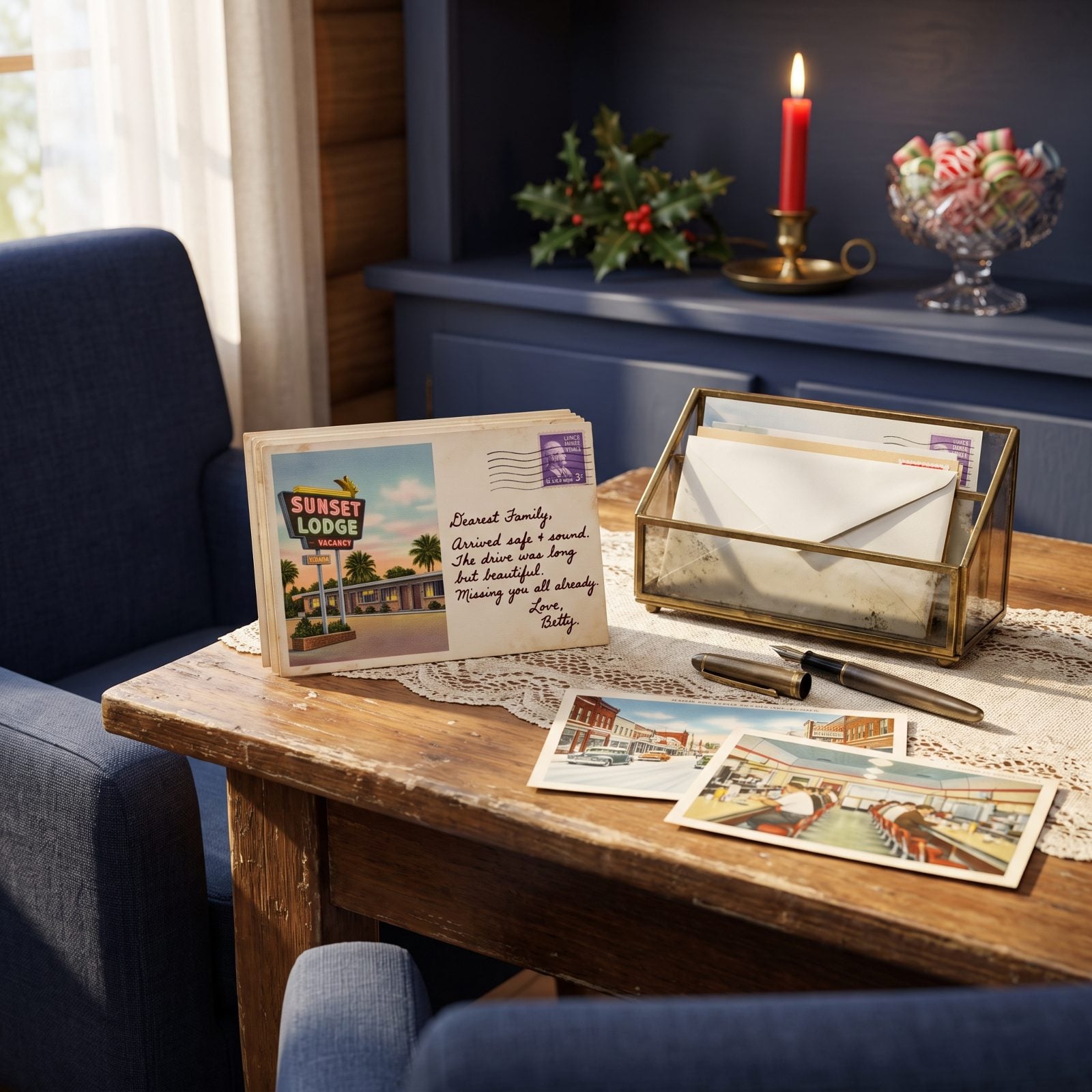
The call cost too much and the trip was long, so you mailed the news instead. From a motel desk somewhere along the route you grabbed a postcard off the lobby rack, scribbled four lines, and dropped it in the slot. Arrived fine. Roads clear. See you Thursday.
Now for the funny part. The card frequently got home after you did. You’d already be back — sunburned or snow-dusted, unpacked, telling the story in person — when the mailman delivered proof that you’d once been safe in Kansas. Nobody minded a bit. That card was half a report and half a souvenir, and it went in the shoebox with all the others.
🔥 Would you like to save this?
Please note that some of the imagery in this article were created with the aid of AI image generators.