
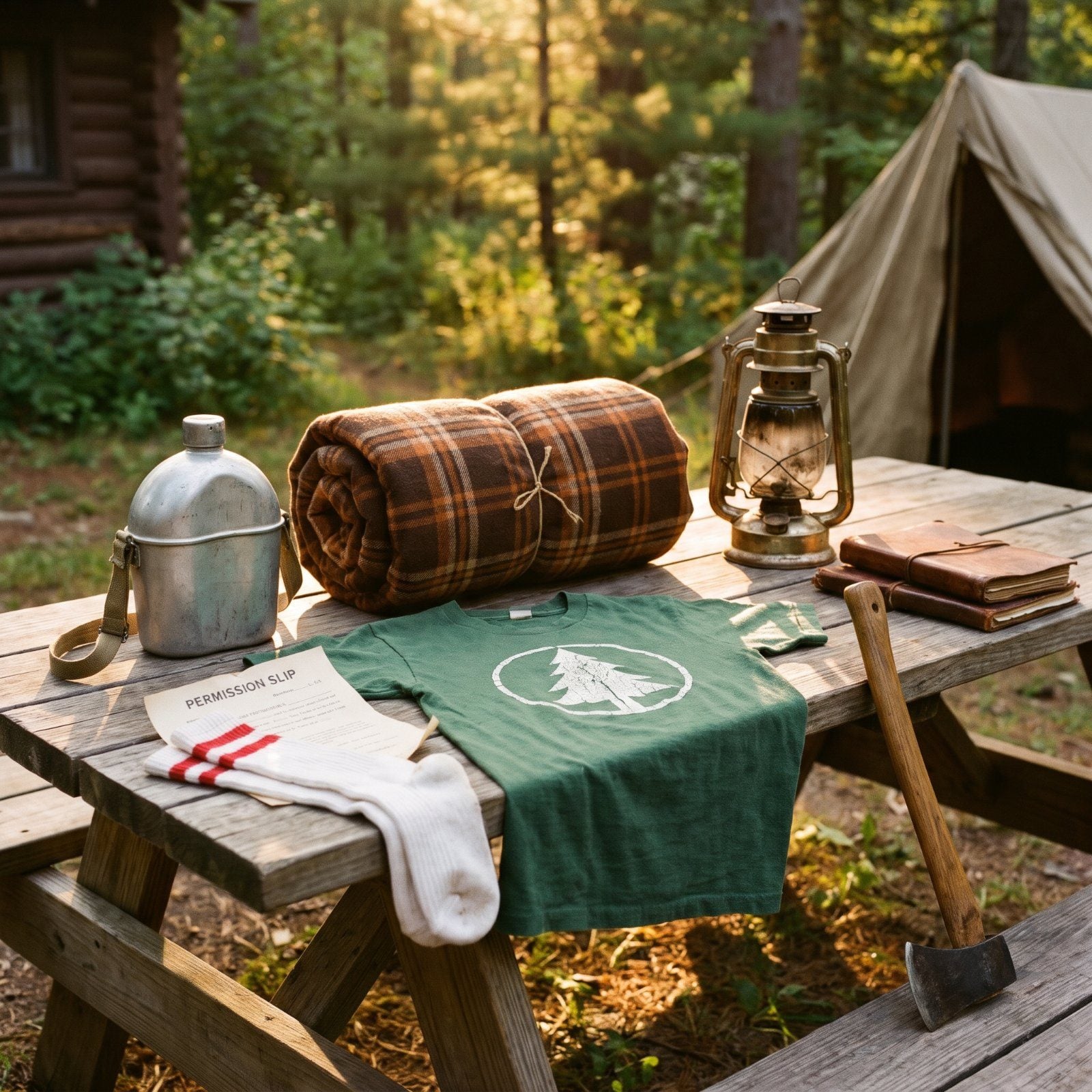
The permission slip was half a page. You signed it on the hood of the station wagon, dropped a kid off at a dirt lot full of idling buses, and drove home to a quiet house for weeks. No email updates, no live webcam, and no phone except the pay phone outside the mess hall with a line twelve kids deep.
We trusted the camp, and the camp mostly earned it. But some of what passed for normal back then would stop a modern parent cold in the parking lot. Here are the ones that hit hardest.
48. Campers Rode in the Beds of Pickup Trucks
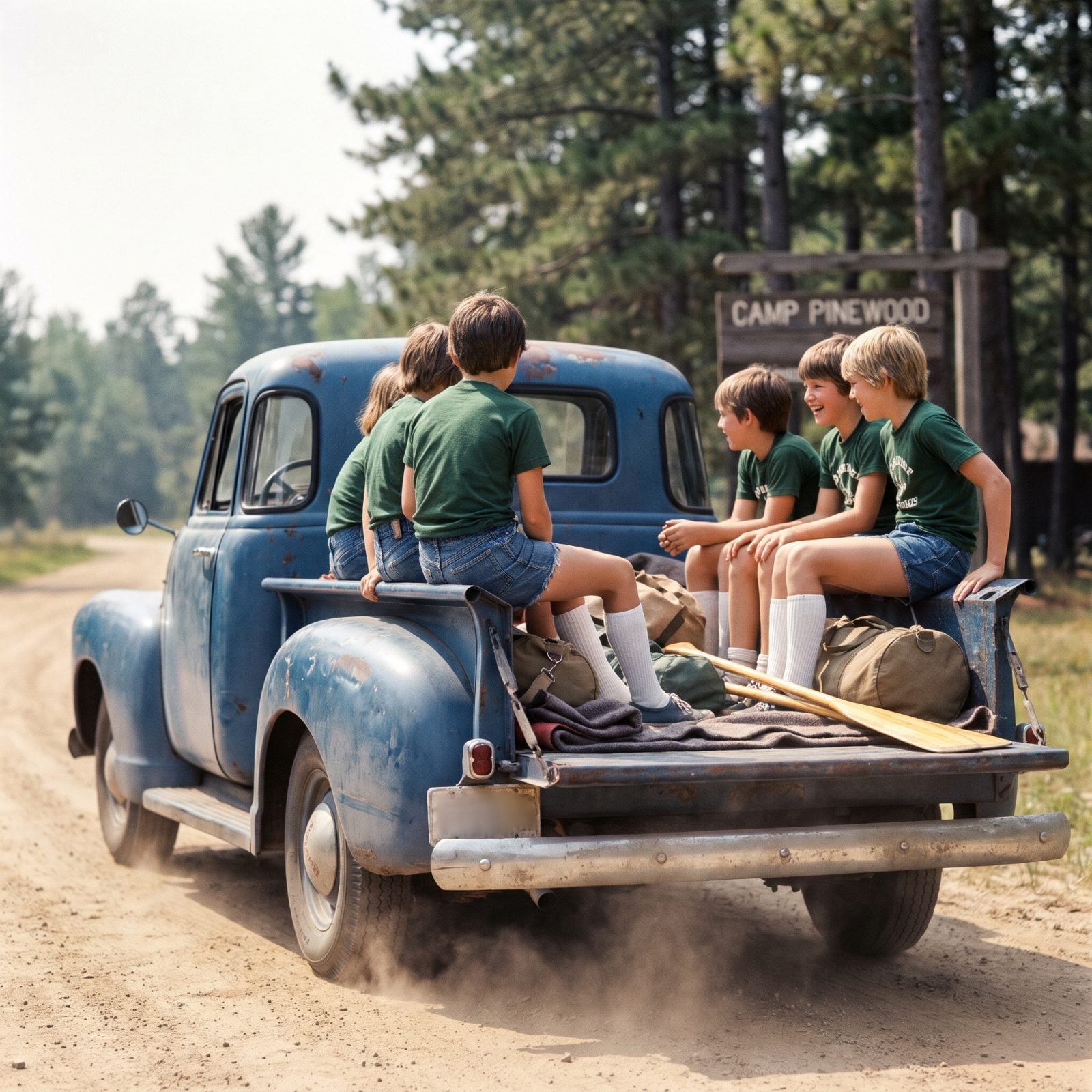
You climbed over the tailgate, found a soft spot on somebody’s duffel, and held onto the wheel well when the road got bumpy. The ride down to the far trailhead or the canoe launch happened in the back of whatever truck the camp owned. Wind, dust, the whole open sky above you.
Nobody thought twice. The driver went slow, the road was dirt, and the worst injury anyone remembers was a splinter from the truck bed. Try loading six kids into a pickup bed today and you’ll have a visit from someone official.
47. Camp Buses Had No Seat Belts
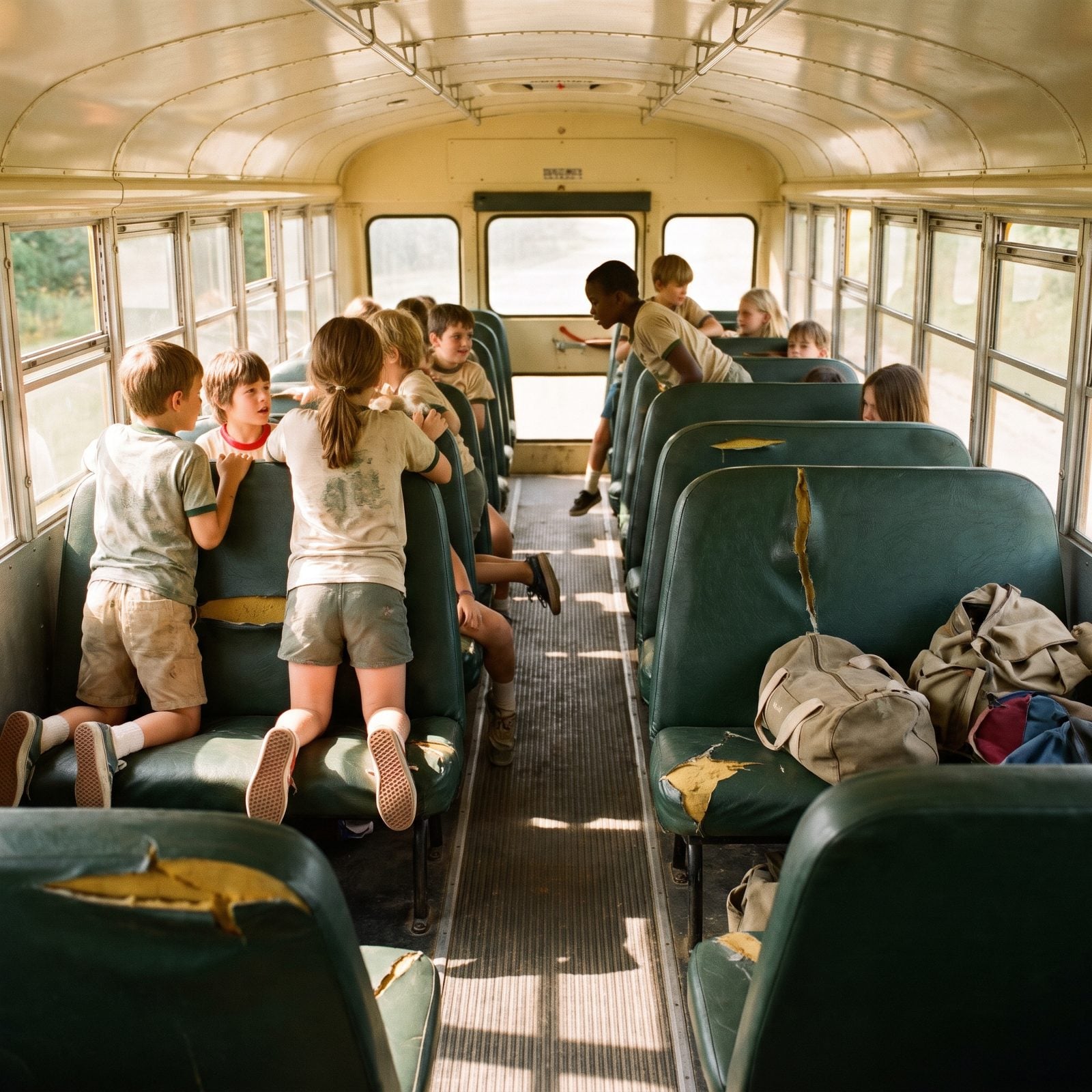
Thirty kids, no belts, and a driver who’d done this route for fifteen years. You slid across that slick green vinyl every time the bus took a turn, and the real entertainment was seeing how far you’d travel before you hit your seatmate.
School buses still don’t have belts across most of the country, so this one’s less a 1970s thing than a thing we’ve all quietly decided to live with. Back then nobody even noticed. The windows dropped all the way down, the aisle filled up with legs and duffel bags, and that was the whole safety plan.
46. Fourteen-Year-Old CITs Supervised Younger Campers
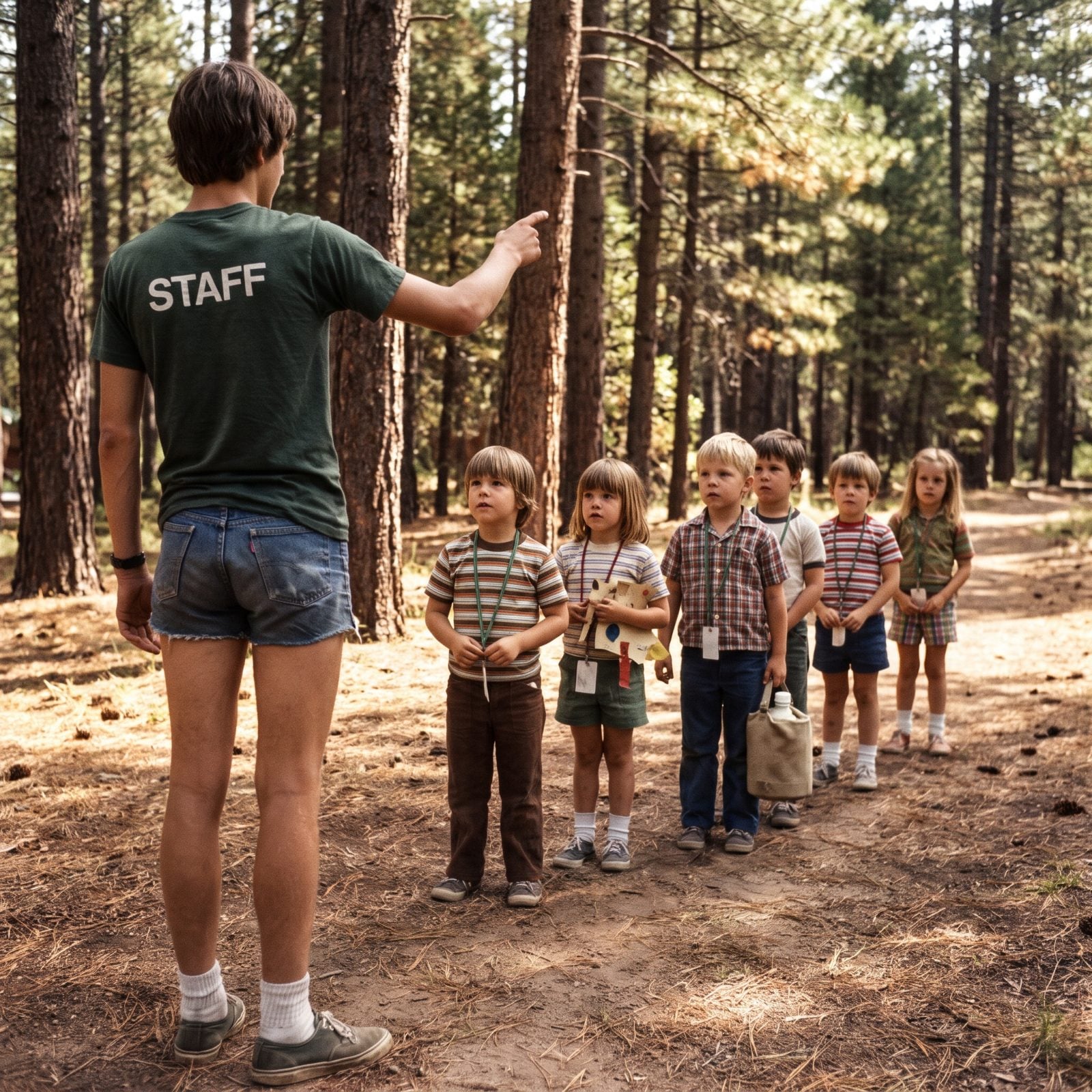
A kid barely out of middle school held the clipboard. Counselors-in-Training were often fourteen, sometimes thirteen, and they ran whole activity blocks, led trail hikes, and bunked with the little ones overnight. The CIT was the one you woke up when you had a nightmare.
Most of them were terrific, honestly. Responsible beyond their years and worshipped by the eight-year-olds. But the person standing between your child and a lake was, legally, still a child. That math stops a lot of parents in their tracks now.
45. Staff Screening Could Be Little More Than an Interview
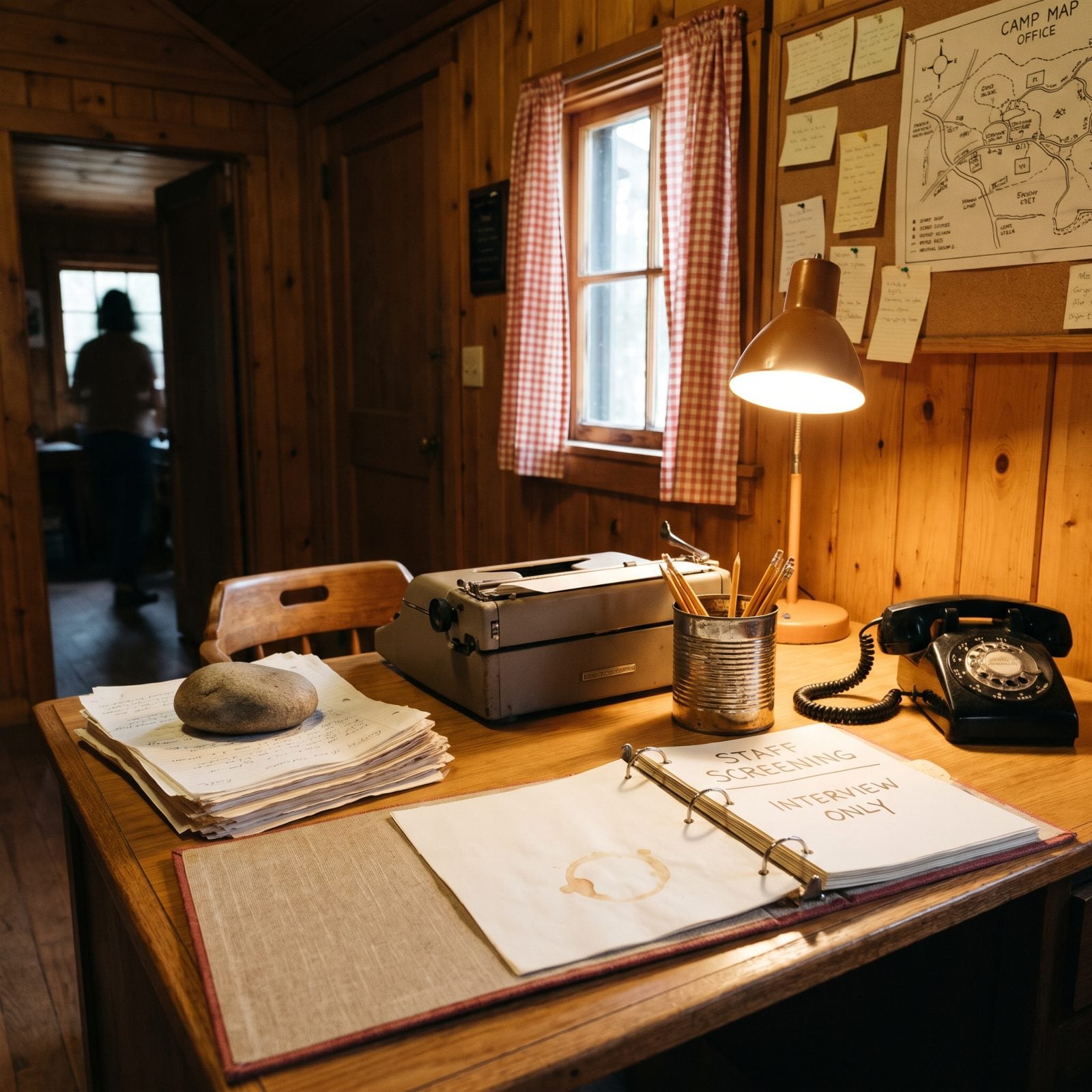
Background check? The background check was a firm handshake and whether the director liked the cut of you. Hiring ran on a conversation, a couple of references the camp may or may not have actually called, and the fact that your cousin worked there last year.
Fingerprinting, sex-offender registries, real reference verification — none of that was part of the process at most camps. The system ran on reputation and gut feeling, and it usually worked. The point is that “usually” was the whole safety net, and that’s the part that lands differently when it’s your own kid getting on the bus.
44. Top Bunks Had No Guardrails
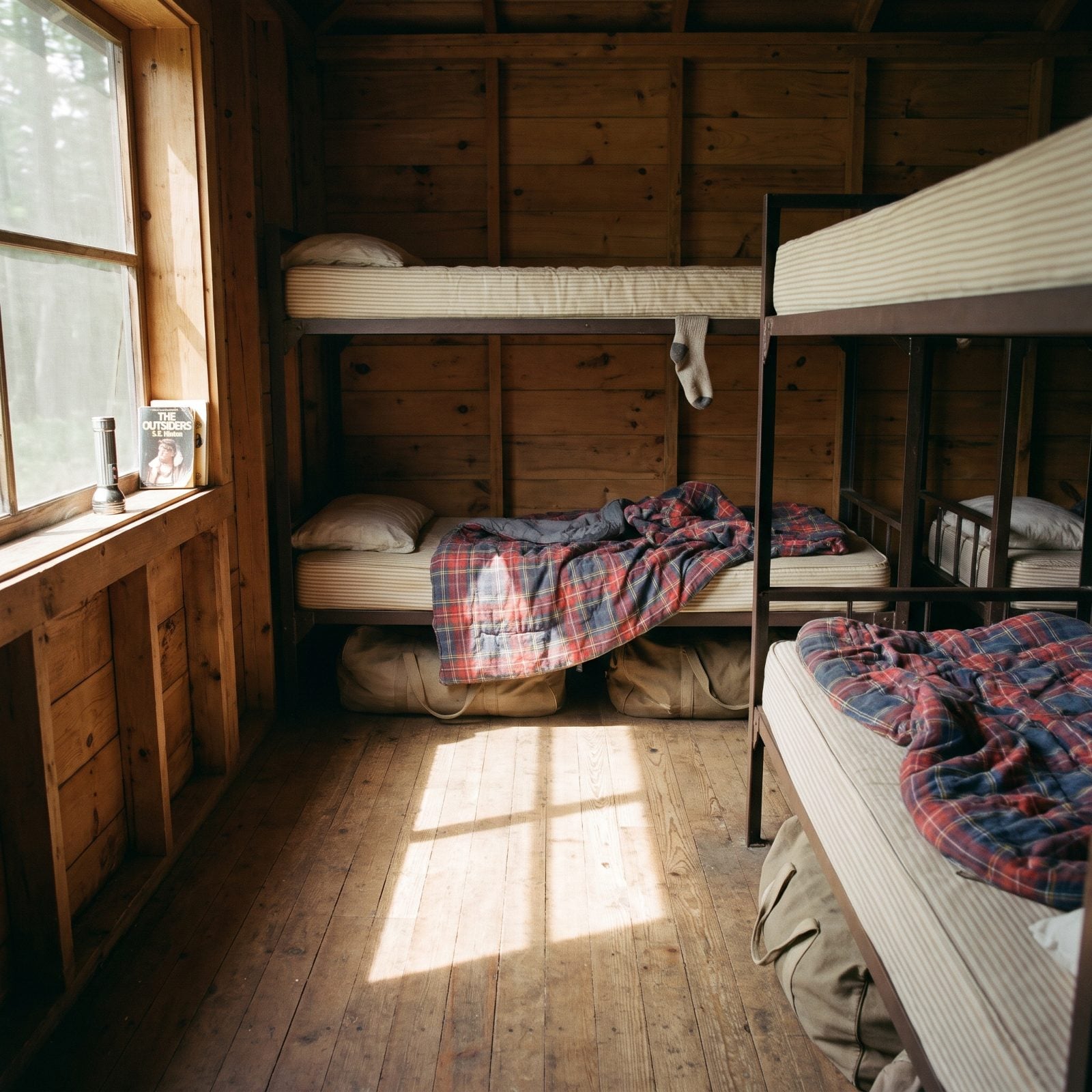
The top bunk was prime real estate, and it came with an open edge and a hard plank floor below. No rail, no net, nothing. You learned to sleep toward the wall or you learned the hard way.
Kids rolled off. It happened. You’d hear the thud, a groan, and then usually just a sheepish climb back up, though the occasional sprained wrist made it to the infirmary. We treated the whole thing as a rite of passage rather than a hazard to design around.
43. Wooden Cabins Often Had No Smoke Detectors
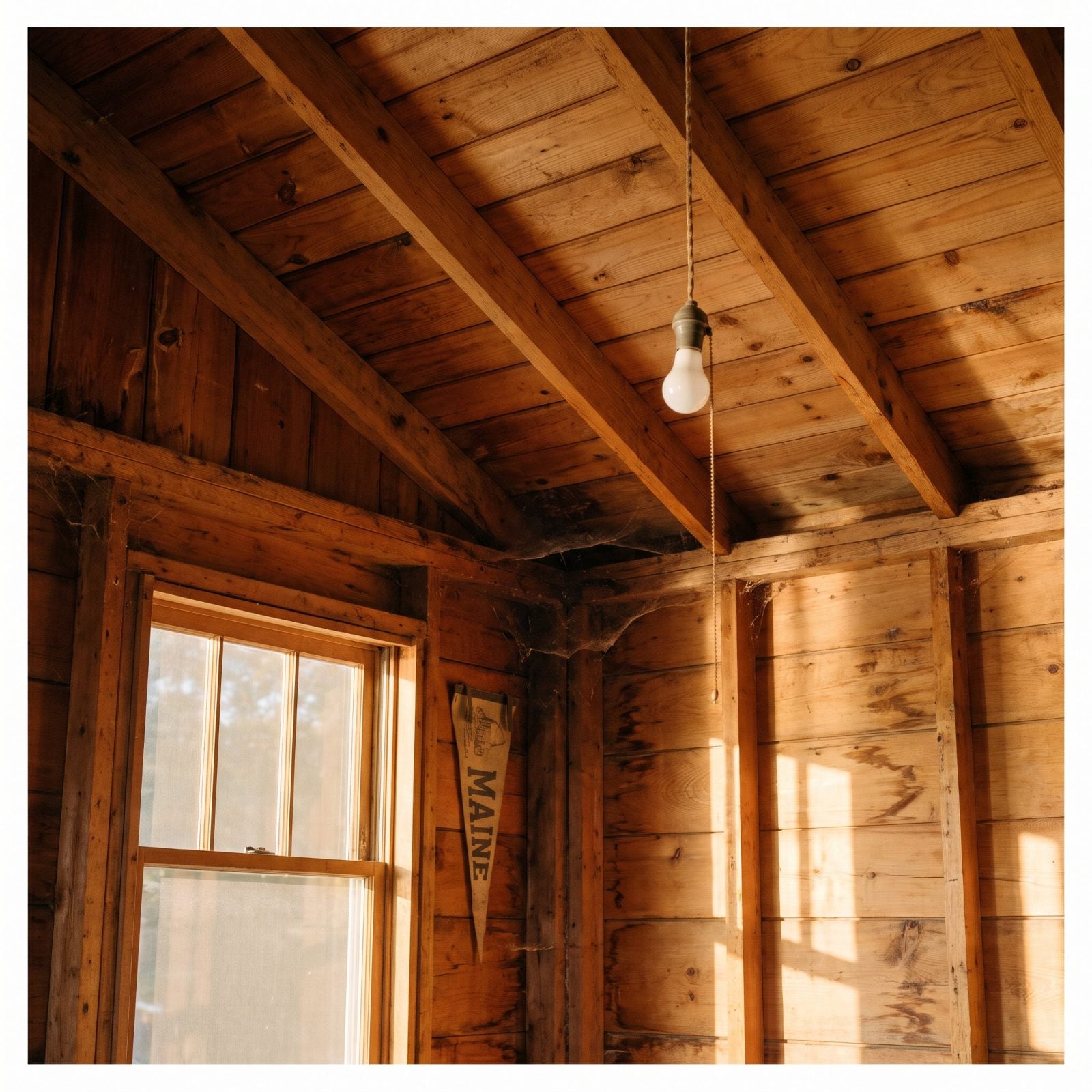
Think about what a camp cabin actually is. Dry pine, decades old, a dozen kids, a single bare bulb on a pull chain, and often a kerosene lamp or two for good measure. Now picture it with nothing on the ceiling but cobwebs and a wasp nest.
Smoke detectors weren’t standard in these buildings. The fire plan was a counselor who hopefully woke up and a door everybody knew how to reach. We’ll admit this one still makes us a little uneasy to think about, and we slept in those cabins.
42. Kerosene Lanterns Burned Inside Wooden Buildings
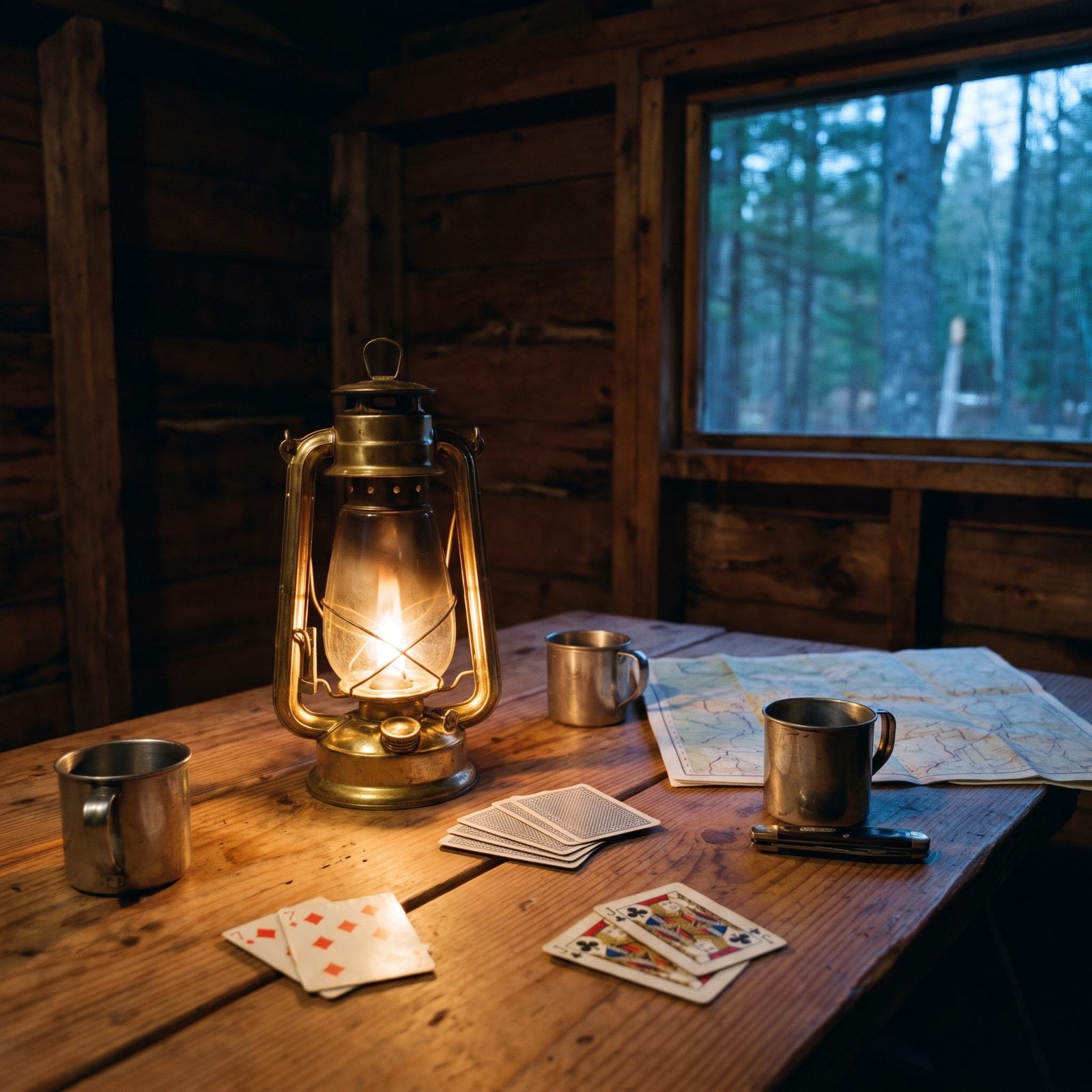
Lights-out at the farther cabins didn’t mean a switch. It meant someone turned down the wick on a kerosene lantern sitting on a wooden shelf in a wooden room full of kids in sleeping bags. The smell of it is still buried somewhere in your memory — warm, oily, a little dangerous.
Open flame, flammable fuel, dry timber, no detector. Spelled out plainly it reads like a dare. In the moment it was just the quiet orange glow that meant the day was over and ghost stories were about to start.
41. Prescription Medicines Sat Together in a Box
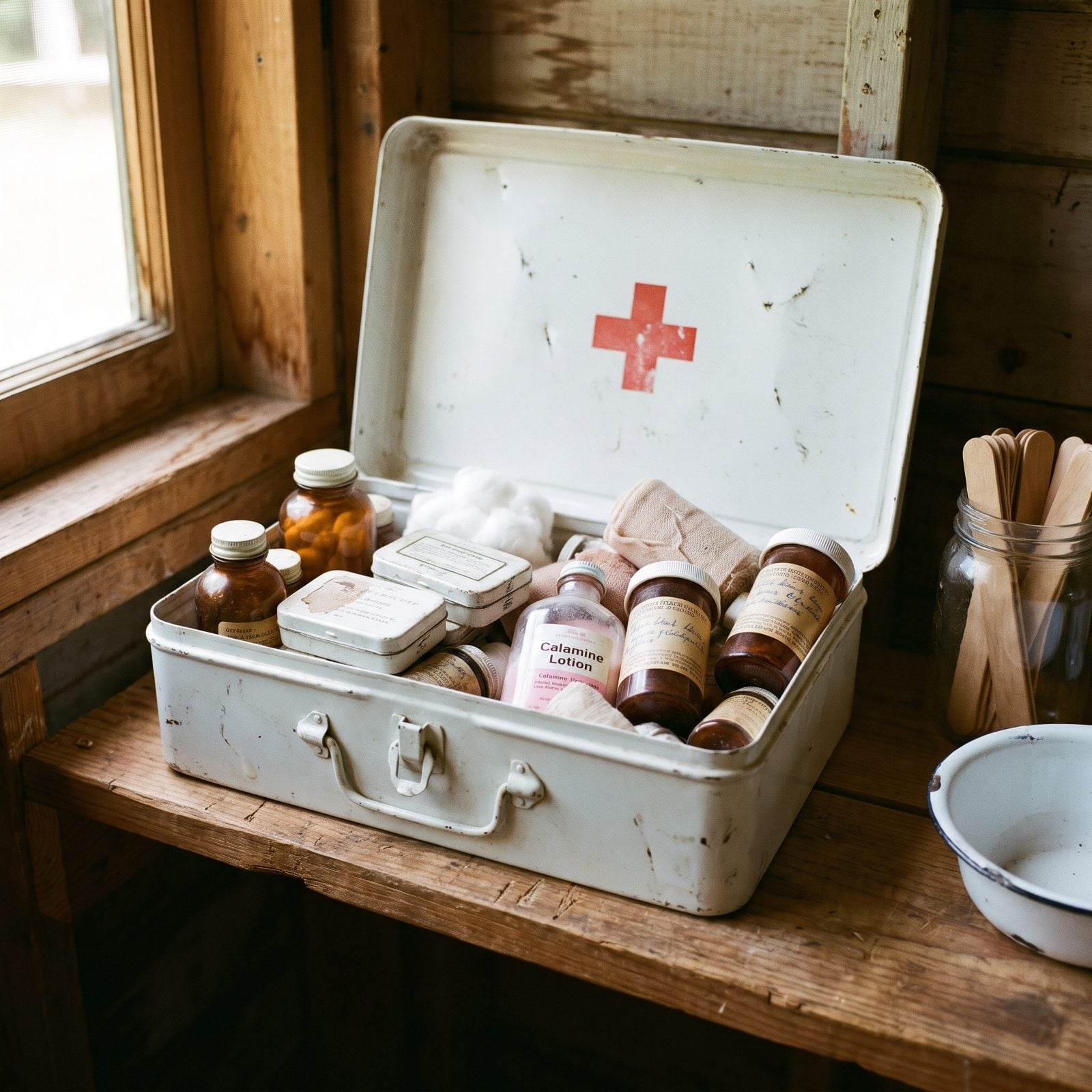
A camper’s daily pills went into the same box as everyone else’s. One dented metal first-aid kit, amber bottles rattling around loose, and whoever was running the infirmary that hour fishing out the right one by reading the label.
No locked cabinet. No one-camper-one-container system. Nobody logged who took what and when. Allergy medicine, asthma inhalers, and the occasional serious prescription all shared a shelf with the calamine lotion and the aspirin tin. It worked because people paid attention, not because anything was built to catch a mistake.
40. One Nurse Could Be Responsible for the Whole Camp
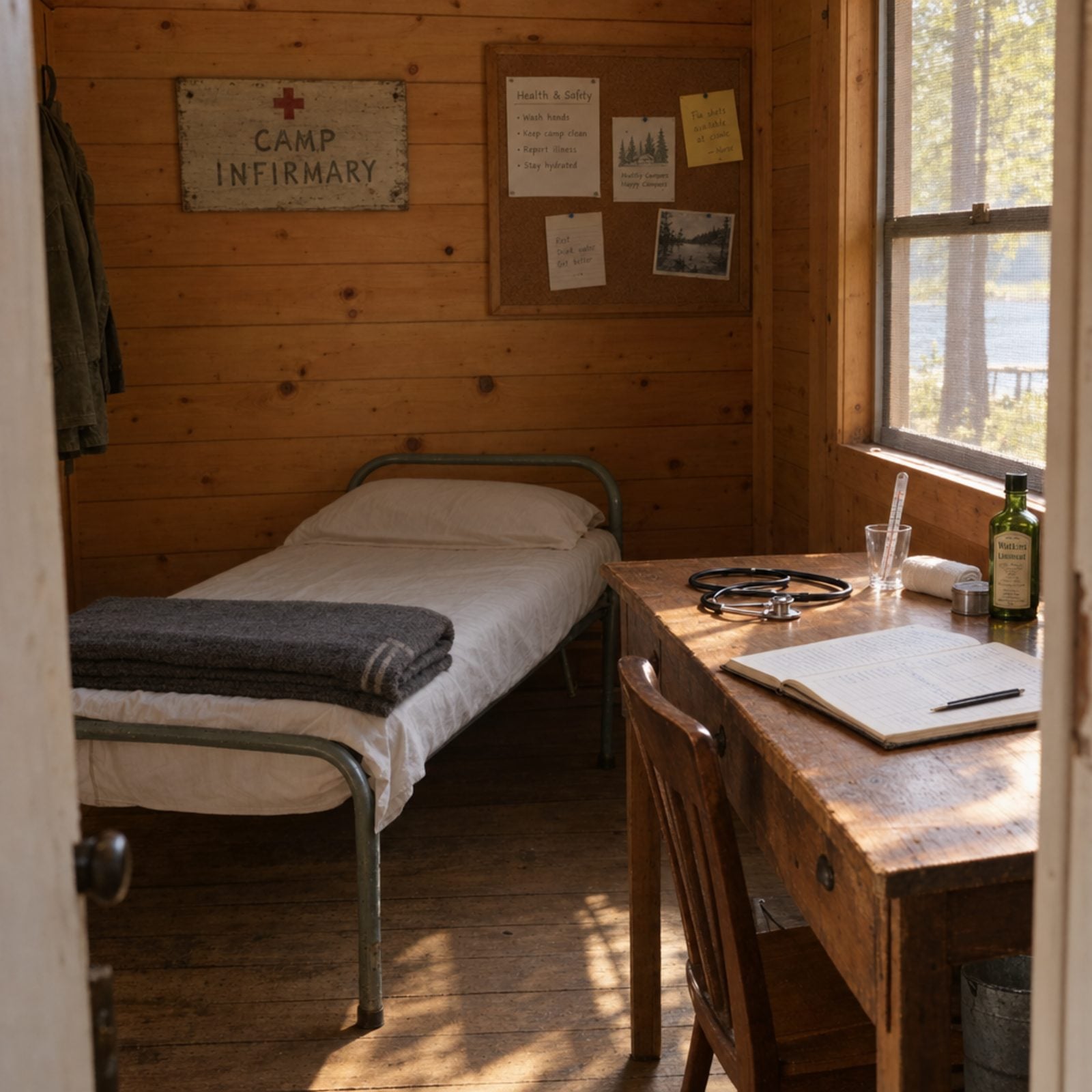
Two hundred kids, miles from town, and one nurse. Sometimes a nurse. Sometimes a counselor with a first-aid certificate and a steady hand. The nearest hospital could be a long stretch of winding road away.
She handled bee stings, poison ivy, homesick stomachaches, and the genuinely scary stuff, all from the same cot in the same little wooden room. If two kids got hurt at once, you prioritized. The whole operation ran on the competence and nerve of one person, and when that person was good, you felt completely safe. That’s a lot to hang on one cot.
39. Food Allergies Were Barely Tracked, and Peanut Butter Was the Backup Meal
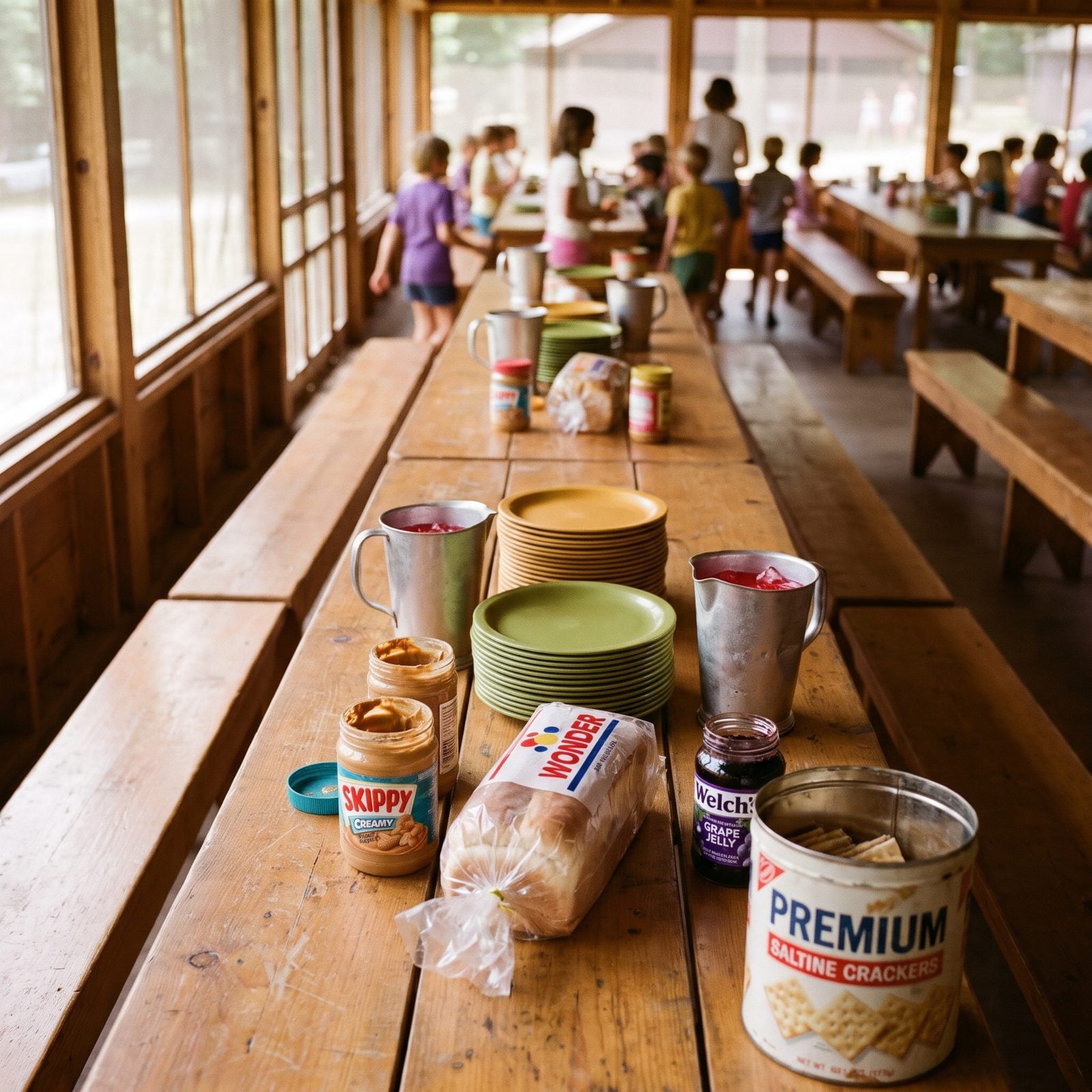
Didn’t like the mystery casserole? There was always peanut butter. The jar lived on every table, and “just make a PB and J” was the universal fallback for any picky eater or any kid who couldn’t stomach Thursday’s meatloaf.
Nobody was tracking allergies in any real way. A parent might mention something on that half-page form, and the kitchen might remember, or might not. A nut-free table, labeled ingredients, an EpiPen in the counselor’s pocket — none of it existed yet.
And here’s what stays with me. It wasn’t carelessness, exactly. The awareness just hadn’t arrived. We fed a dining hall of a hundred kids off a few open jars and a lot of luck, and most summers, the luck held.
38. Campers Shared Towels, Combs, and Toiletries
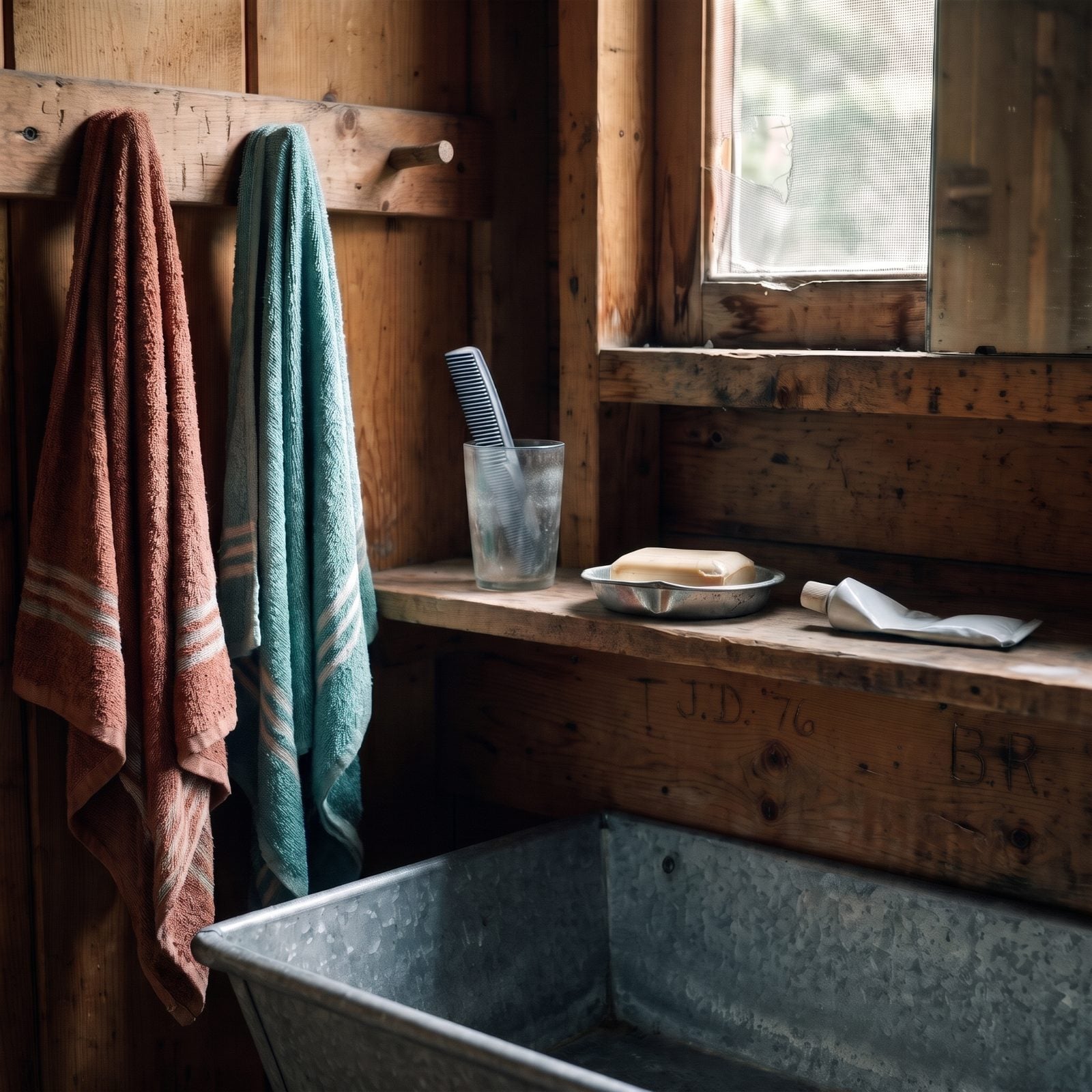
One comb lived on the shelf. It belonged to everyone and no one. You ran it through your hair, set it back in the cloudy glass, and the next kid did the same. By Thursday nobody could have told you whose towel was whose, and nobody was asking.
Head lice spread through a cabin like a rumor, and the fix was a bottle of something harsh plus a counselor combing through your scalp in the sun. Nobody panicked. Nobody emailed a lawyer. You itched for a few days and got on with it.
37. Everyone Drank Straight From the Same Camp Spigot
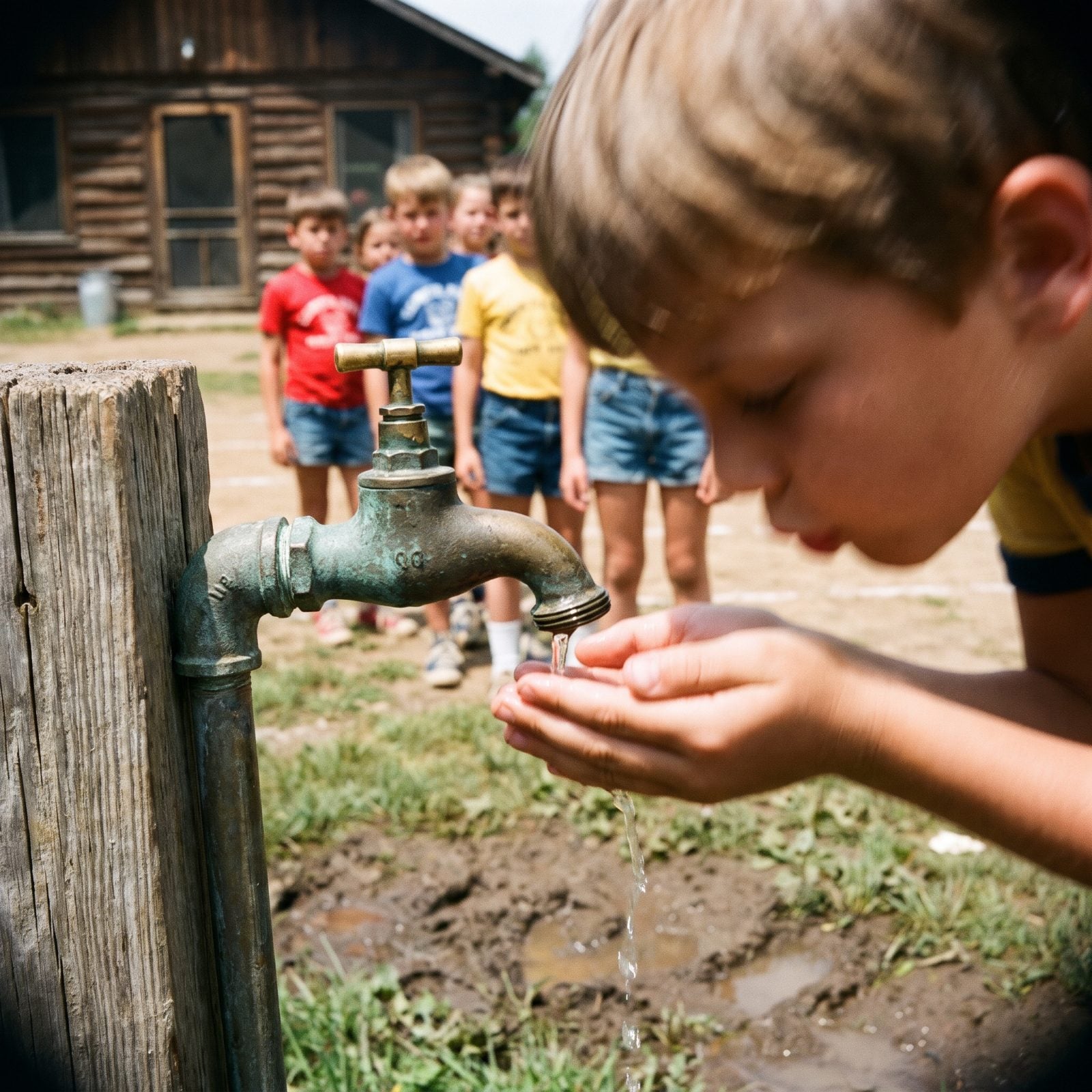
No fountain with a guard. No bottle you hauled around like a security blanket. Just a tap on a post, left running into the mud while you waited in line, and when your turn came you filled your cupped hands, stepped back, and drank. Fifty kids did it before lunch and fifty more after.
The water tasted like metal and whatever the pipes had been thinking about all summer, warm by noon and you didn’t care, because you were nine and you’d been running.
36. Hikers Sometimes Drank Untreated Creek Water
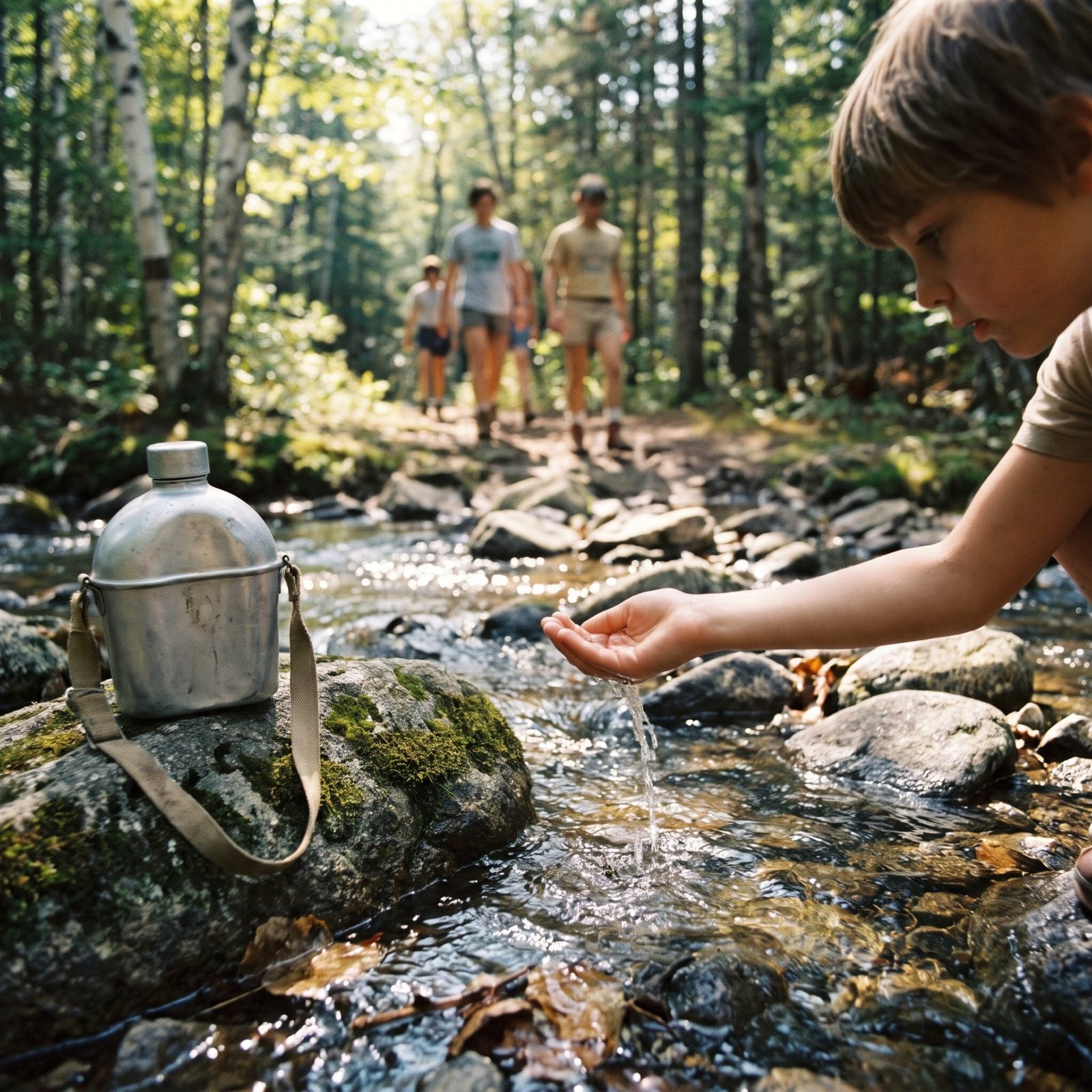
The counselor would stop at a creek, declare it “probably fine,” and down you went to fill your canteen straight from the current. Cold, clear, tasting faintly of stone and leaf. It felt like the most natural thing in the world because it was.
Giardia wasn’t in anyone’s vocabulary. The thinking went like this: moving water is clean water, and your stomach can handle a lot at that age. Most of the time it did. The times it didn’t made for a quiet, uncomfortable ride home that nobody connected to the creek.
35. Trail Lunches Sat Unrefrigerated in Backpacks All Day
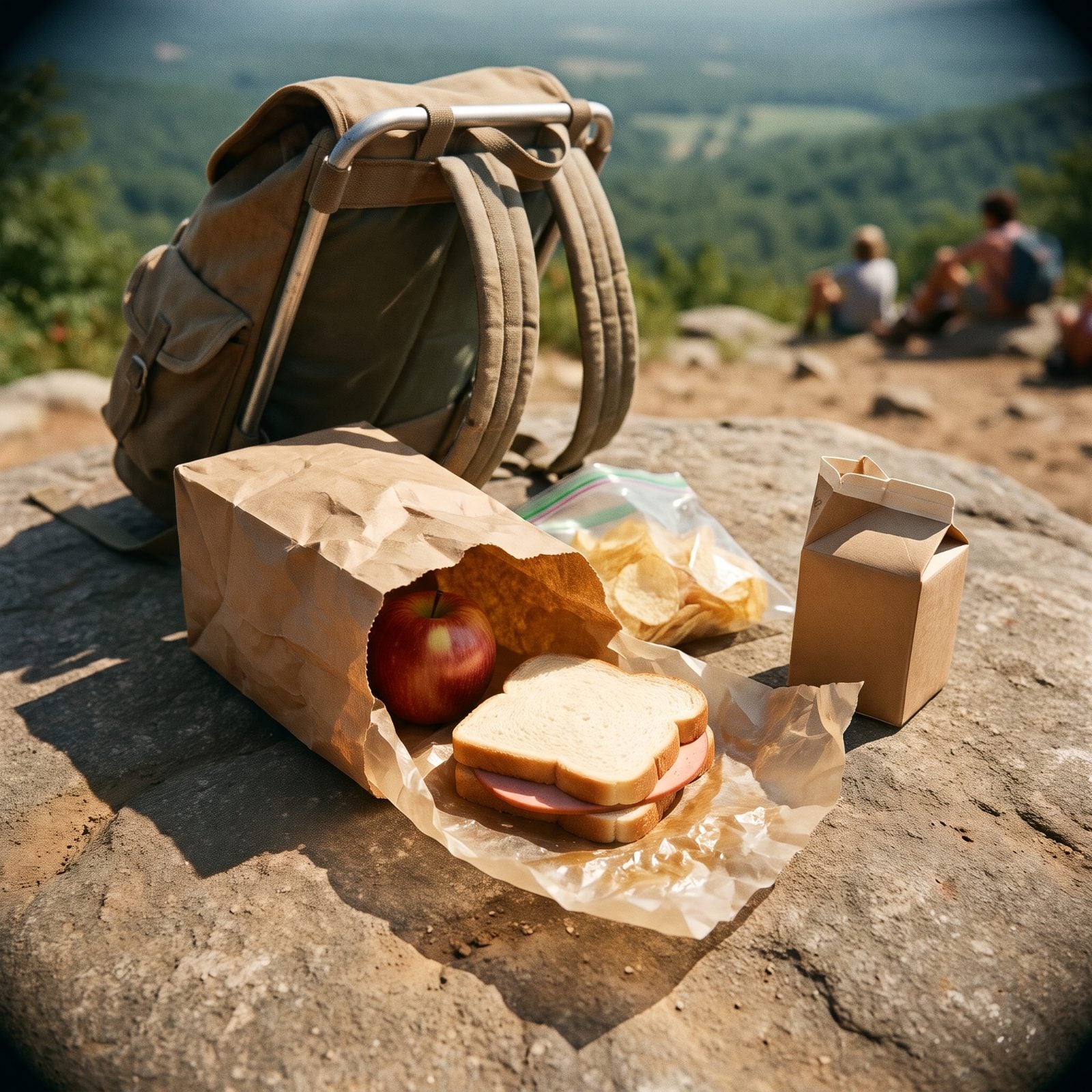
You packed the sack at seven in the morning and ate it at one in the afternoon. In between, it rode in a sweaty backpack through full July sun, the bologna reaching a temperature that would make a health inspector weep.
Warm milk. A sandwich gone soft and strange. Nobody blinked. You ate it, drank the milk, and kept walking. The ice pack hadn’t become a packing-list requirement yet, and somehow a whole generation survived the afternoon mayonnaise.
34. Campers Cleaned Latrines Without Gloves
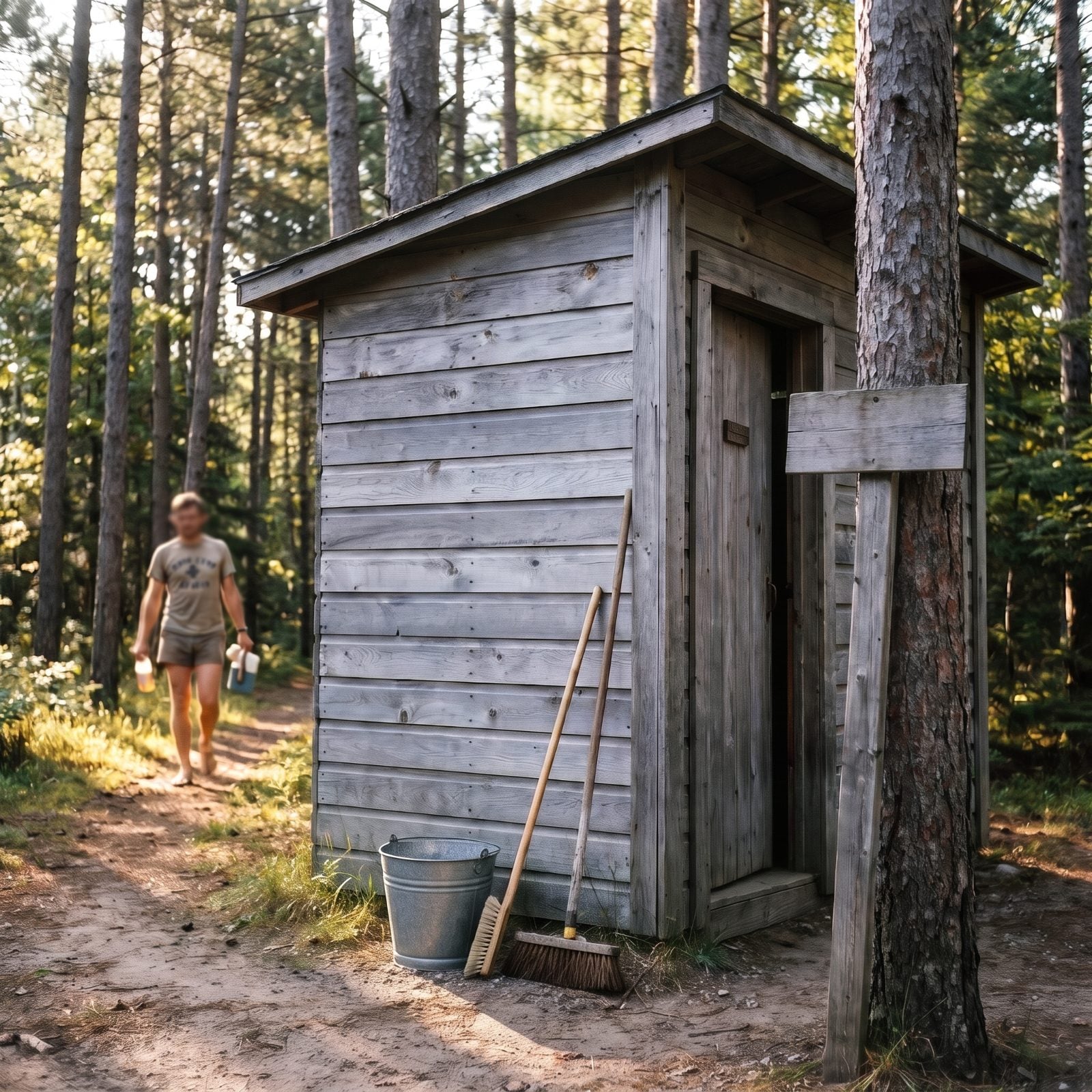
Cabin chore rotation meant somebody’s week was latrine duty. Bucket, brush, maybe a splash of Pine-Sol, and your own two bare hands. Gloves were for people who had gloves, and camp did not.
You scrubbed, you gagged a little, you scrubbed some more, and then you walked straight to lunch and ate with those same hands. It built character, or so the counselors insisted. Mostly it built a very casual relationship with germs.
33. Counselors Smoked Cigarettes Around Campers
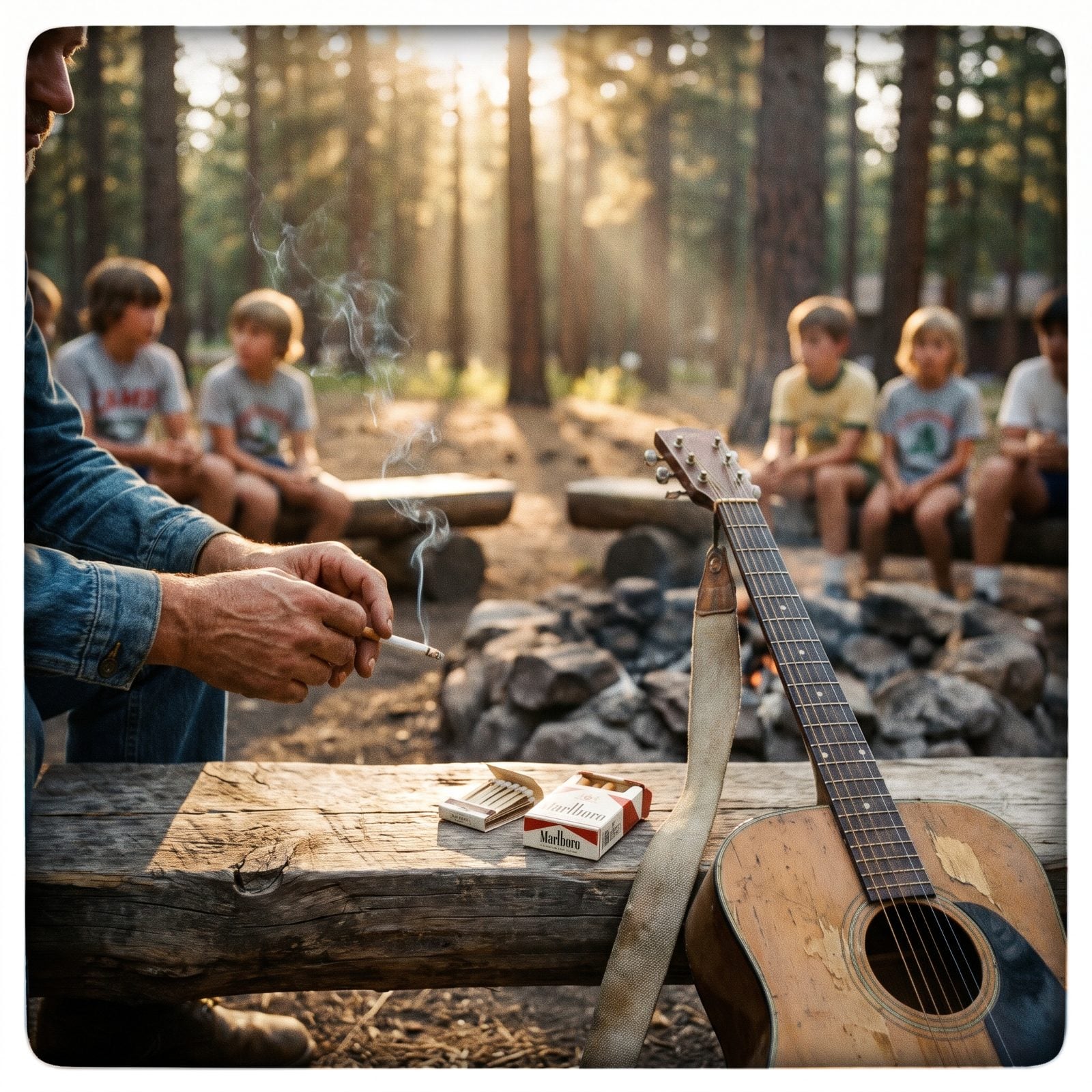
The counselors smoked. On the bench by the fire circle, on the dock between swim lessons, leaning against the craft lodge waiting for the bell. A pack of Marlboros counted as camp equipment, same as a whistle.
You learned the smell of secondhand smoke mixed with pine and lake water, and to you it just smelled like being fifteen and in charge of something. No one thought twice. The counselors were practically kids themselves, and the adults who ran the place were usually two trees over, lighting up too.
32. Cabin Raids and Humiliating Pranks Were Camp Traditions
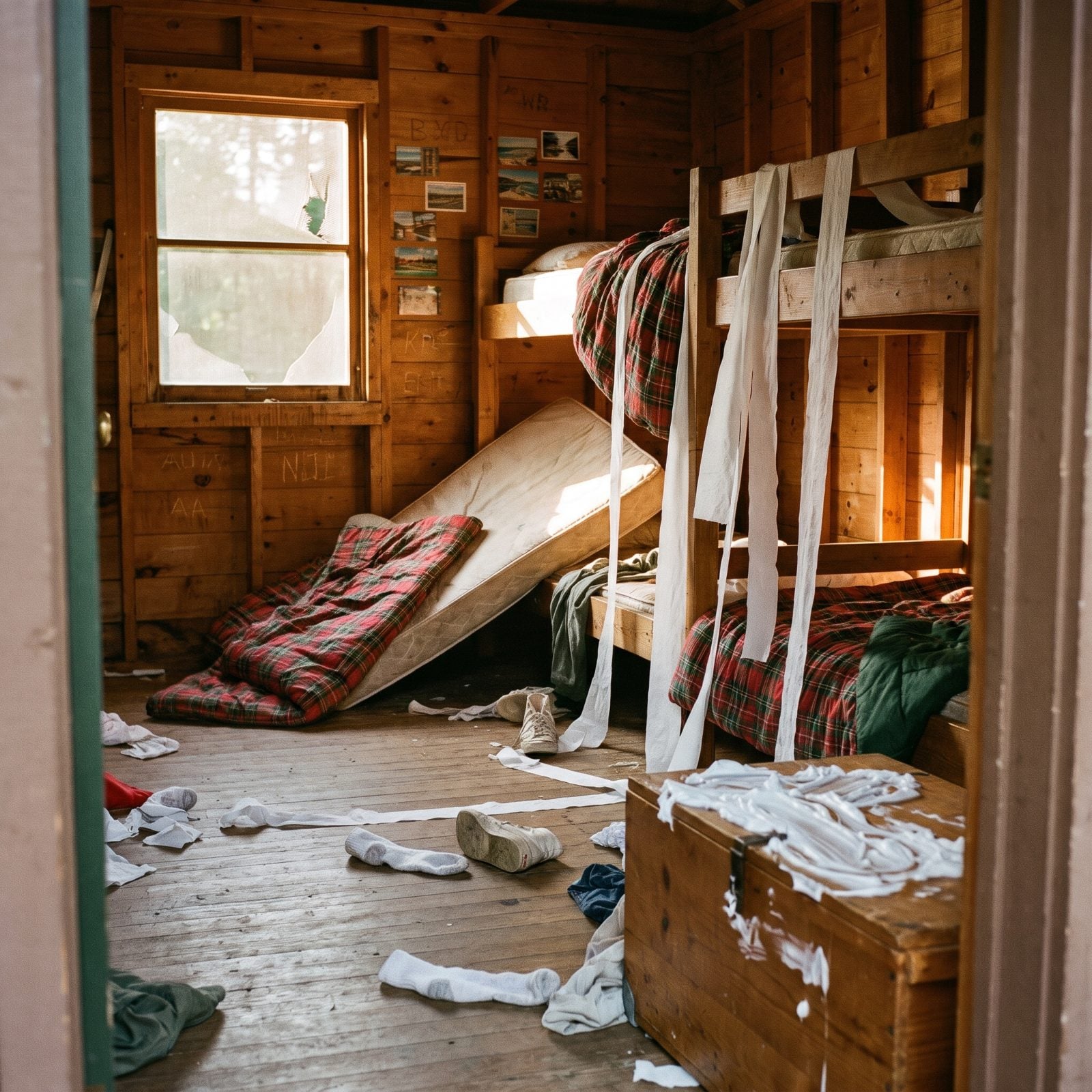
The raid came after lights out. A rival cabin crept over, flipped mattresses, short-sheeted bunks, drew on the sleeping with magic marker, and vanished into the dark. Come morning you were covered in shaving cream and already plotting revenge.
Some of it was funny. Some of it was genuinely cruel, and the line between tradition and torment shifted depending on whose turn it was to be the target. Counselors mostly looked the other way and called it “camp spirit.”
Half of camp was learning who had your back in the dark and who was holding the shaving cream can.
31. Children Roamed the Woods During Unstructured Free Time
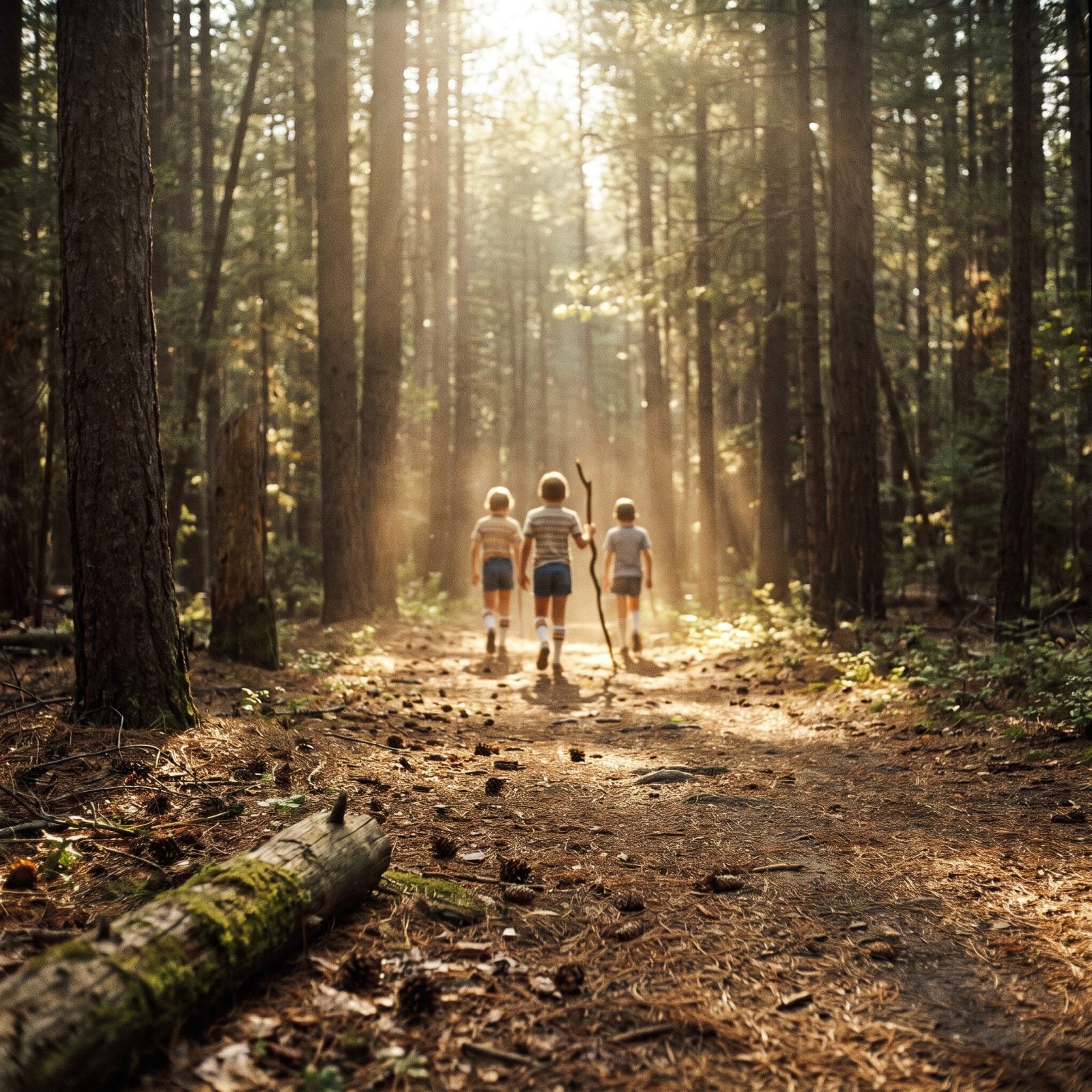
Free period meant exactly that. The bell rang, and you and whoever you liked disappeared into the trees for an hour with zero adult eyes on you. You built forts, hunted for crayfish, got pleasantly lost, and found your way back by the smell of the mess hall.
No one knew precisely where you were. That was the appeal, and also the thing that would turn a modern parent gray. We call it neglect now. Back then it was Tuesday.
30. The Buddy System Was Often the Entire Safety Plan
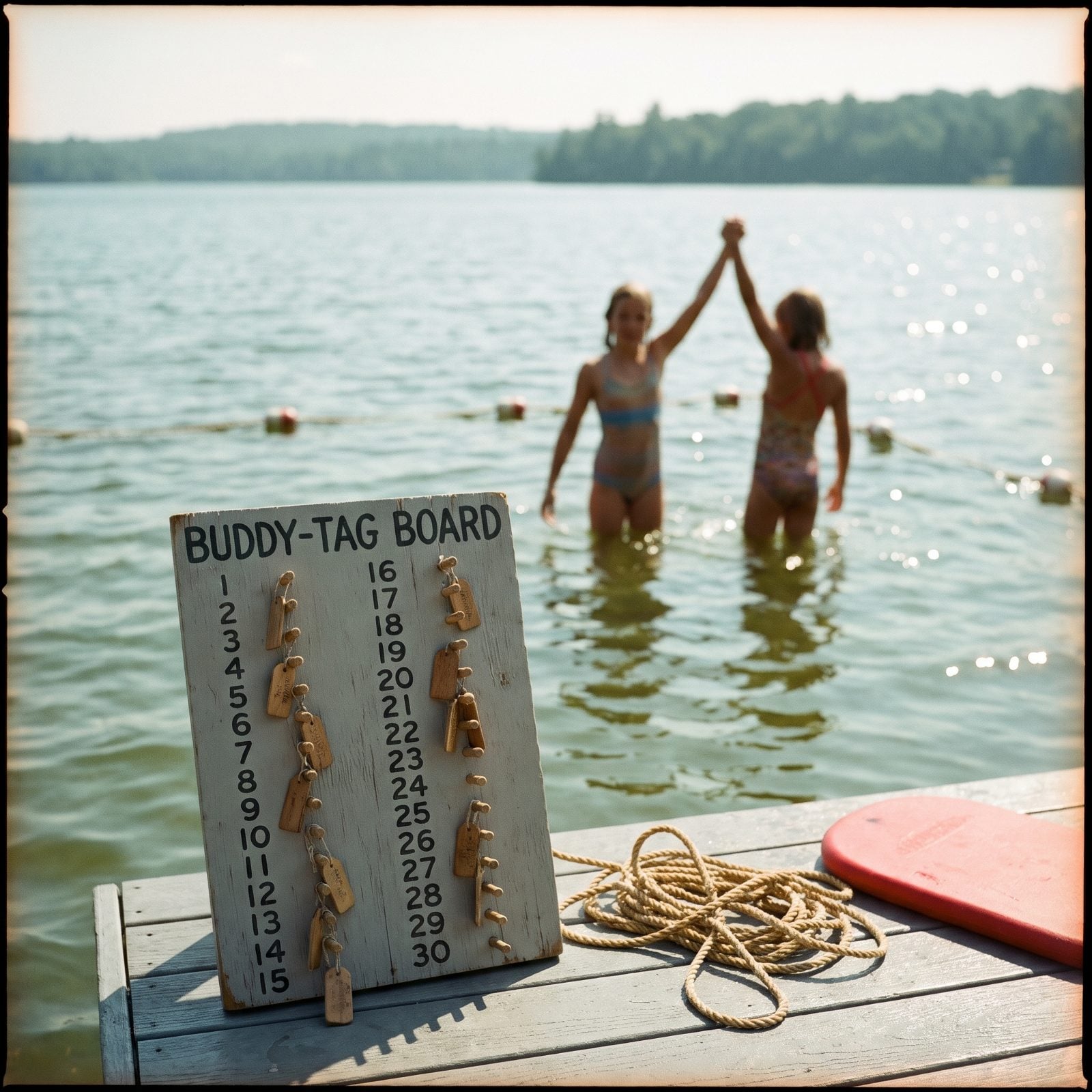
You got a buddy. You held hands up for the whistle. If your buddy was there, the system worked. That was it. That was the plan.
One lifeguard watched a lake full of thirty kids, and the real safeguard was the nine-year-old next to you remembering to look over. Sometimes the tag board had a peg missing and nobody noticed until roll call. Clever and thin at the same time, that whole arrangement.
29. Overnight Hikes Might Have Only One Young Counselor
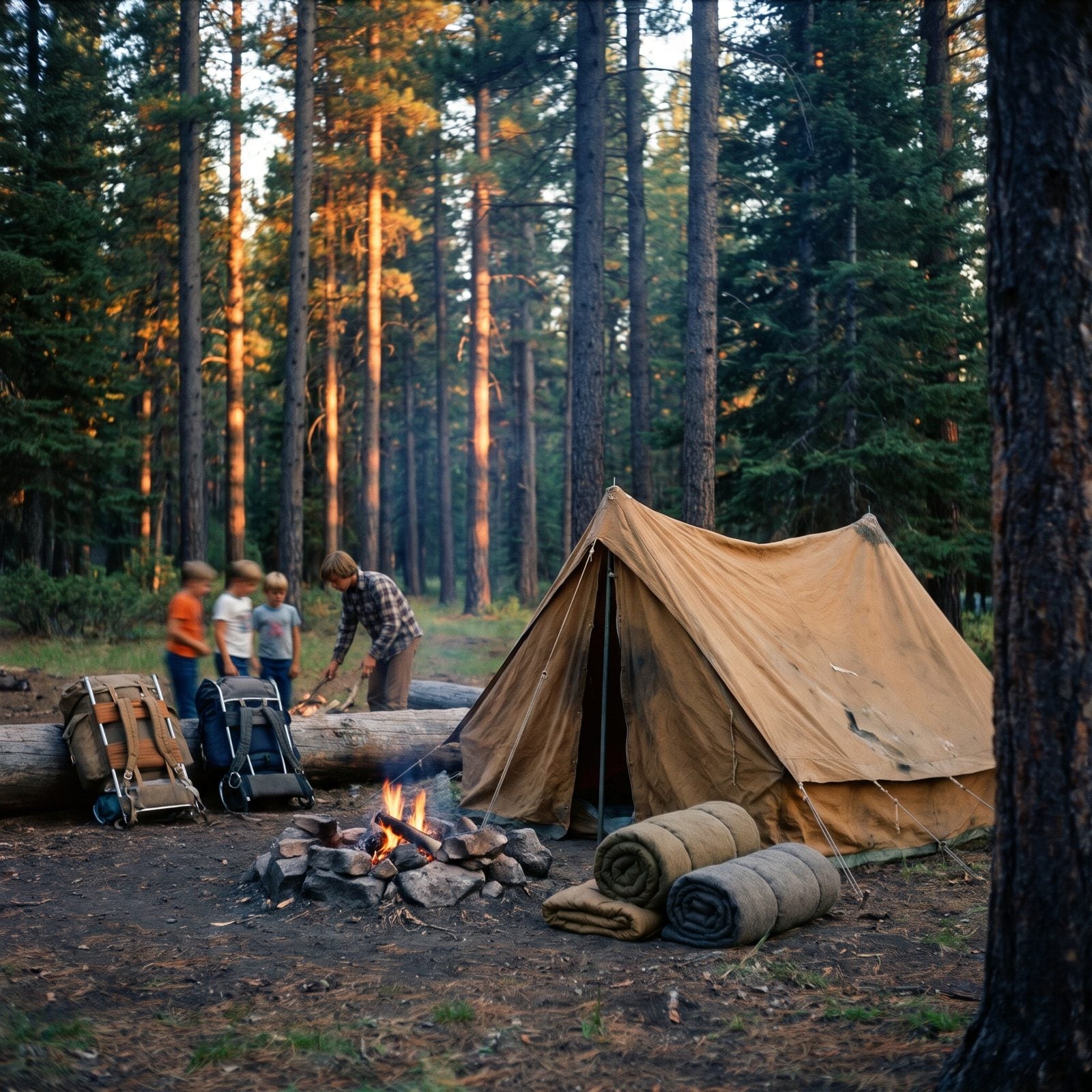
Eight kids, one map, and a seventeen-year-old counselor who’d done this exactly once before, now leading everyone miles into the backcountry for the night. No radio. No second adult. No way to call anyone if something went sideways.
And mostly nothing did. He got you there, built the fire, told the ghost story, and brought you home with the right number of campers. But the margin for error was a single kid who’d read a trail map wrong, and we trusted him completely anyway. Those nights under more stars than a city kid had ever seen are the ones you still remember, precisely because nobody was watching but each other.
28. Snacks Were Stored Where Bears and Raccoons Could Reach Them
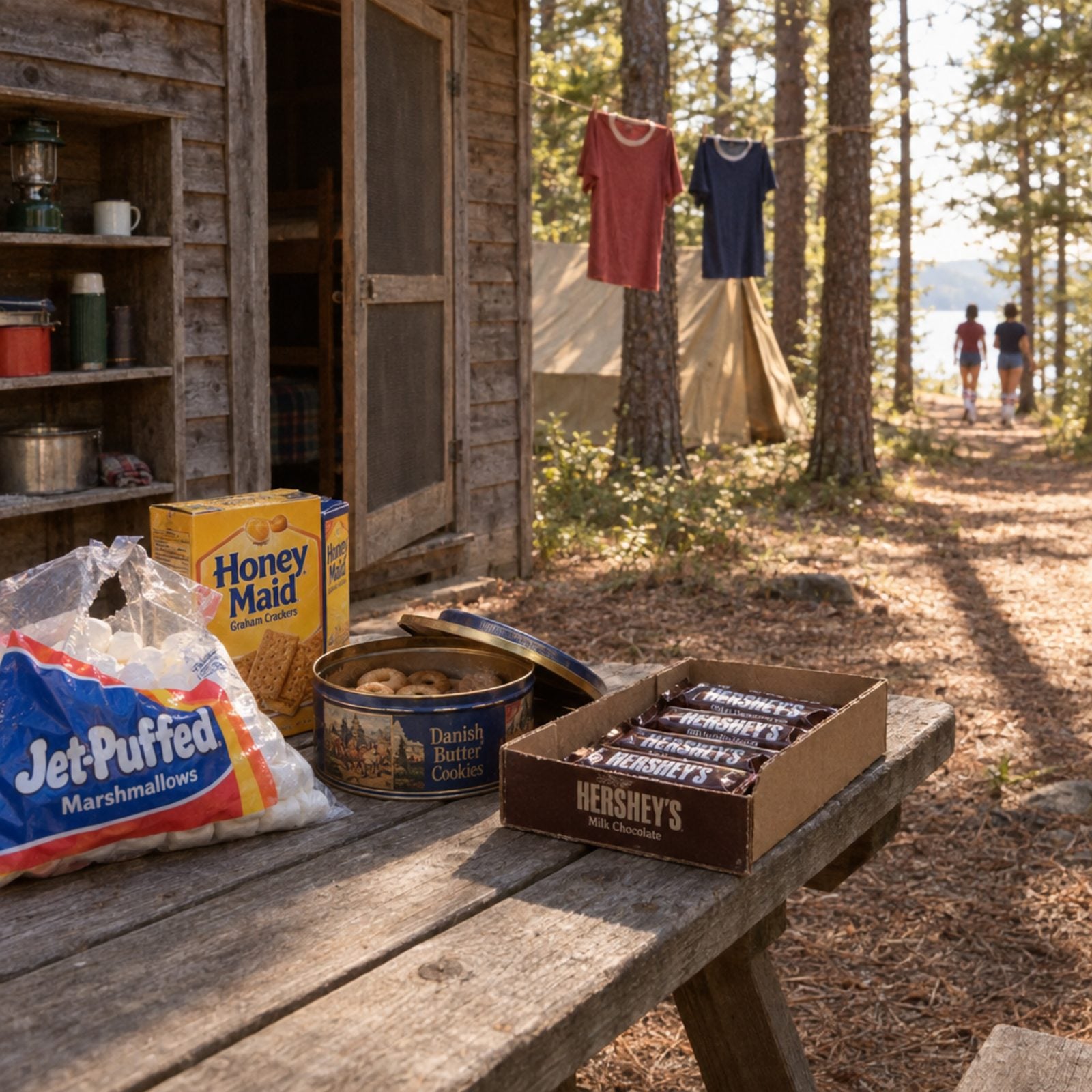
You left the good stuff right out on the picnic table — a bag of campfire marshmallows, a box of honey grahams, a tin of Danish butter cookies, maybe a box of Hershey’s bars someone’s mom mailed up. The cabin door was a screen and a hook, and the hook was mostly decorative.
Nobody talked about bear canisters. Nobody had one. The waterfront had a cooler and the mess hall had a back porch, and both were fair game to anything with a nose and some patience. You’d wake up to a shredded wrapper and a story.
27. A Battery Radio Was the Camp’s Weather Forecast
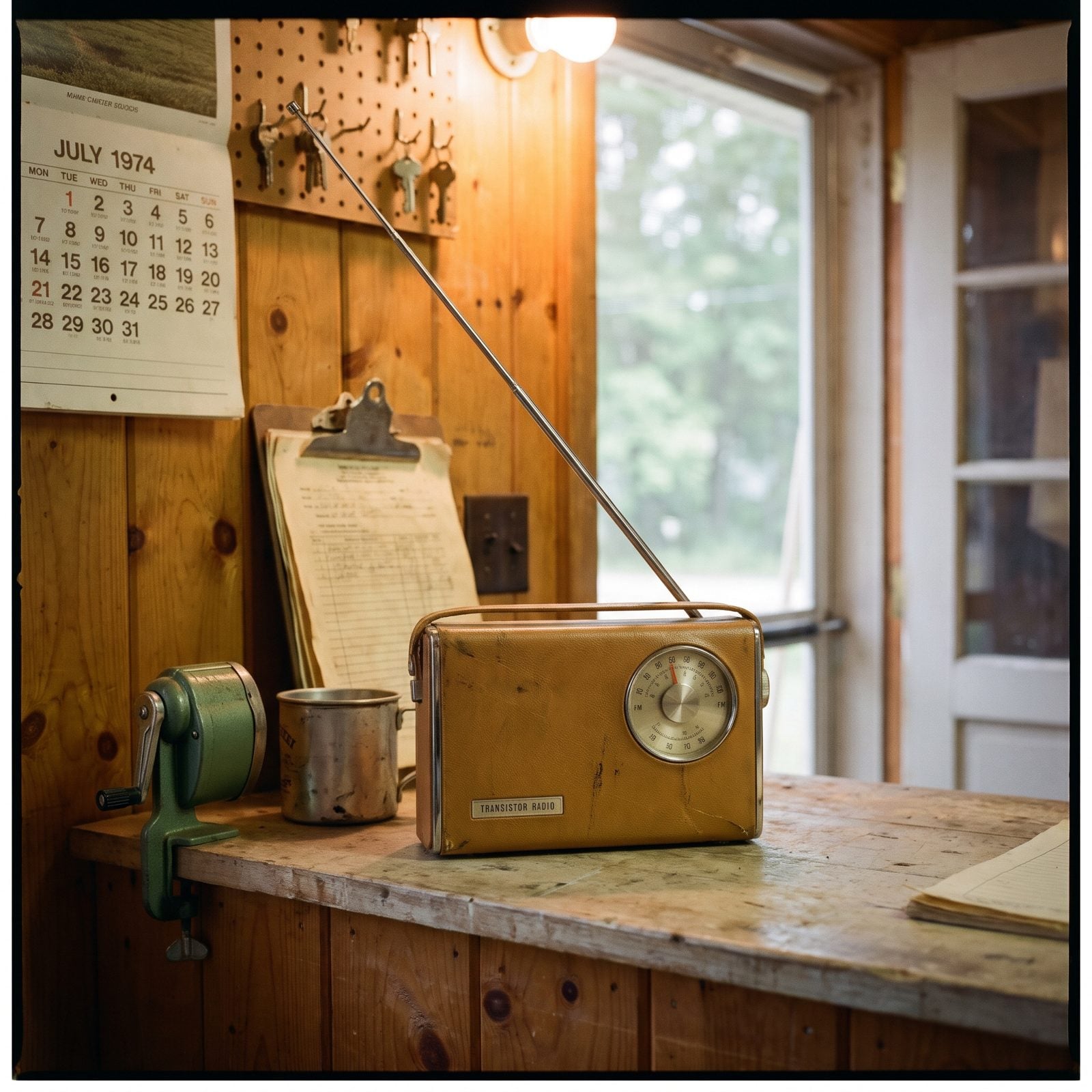
There was one radio that mattered, and the counselor who owned it guarded it like contraband. When the sky went that strange green-yellow in the afternoon, somebody turned the dial, held the antenna just so, and everyone went quiet to catch the crackle of the forecast.
That was the whole weather system. A nine-volt and a hunch — no app, no alert, no siren. If the batteries died, you read the clouds and hoped.
26. Storm Shelters Were Sometimes Just the Regular Cabins
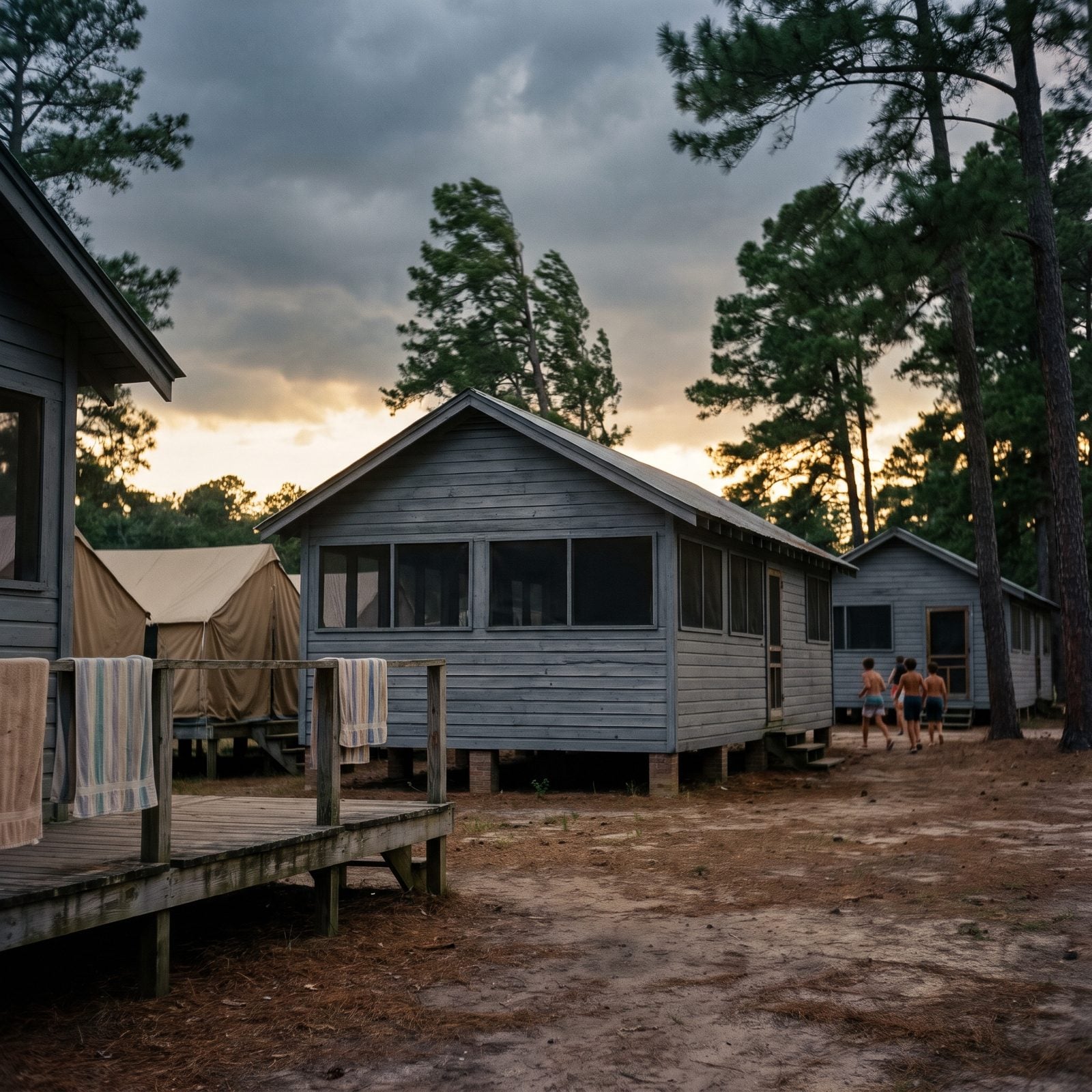
When the weather turned, the plan was usually to stay put. You sat on your bunk, listened to the rain drum on the shingle roof, and waited it out in a building held together with screen mesh and good intentions.
These cabins were built for sleeping and nothing sturdier. No basement, no reinforced room, no lower ground to run to. The counselor counted heads, cracked a joke to keep everyone calm, and that was the emergency protocol.
25. Baby Oil and Blistering Sunburns Were Summer-Camp Staples
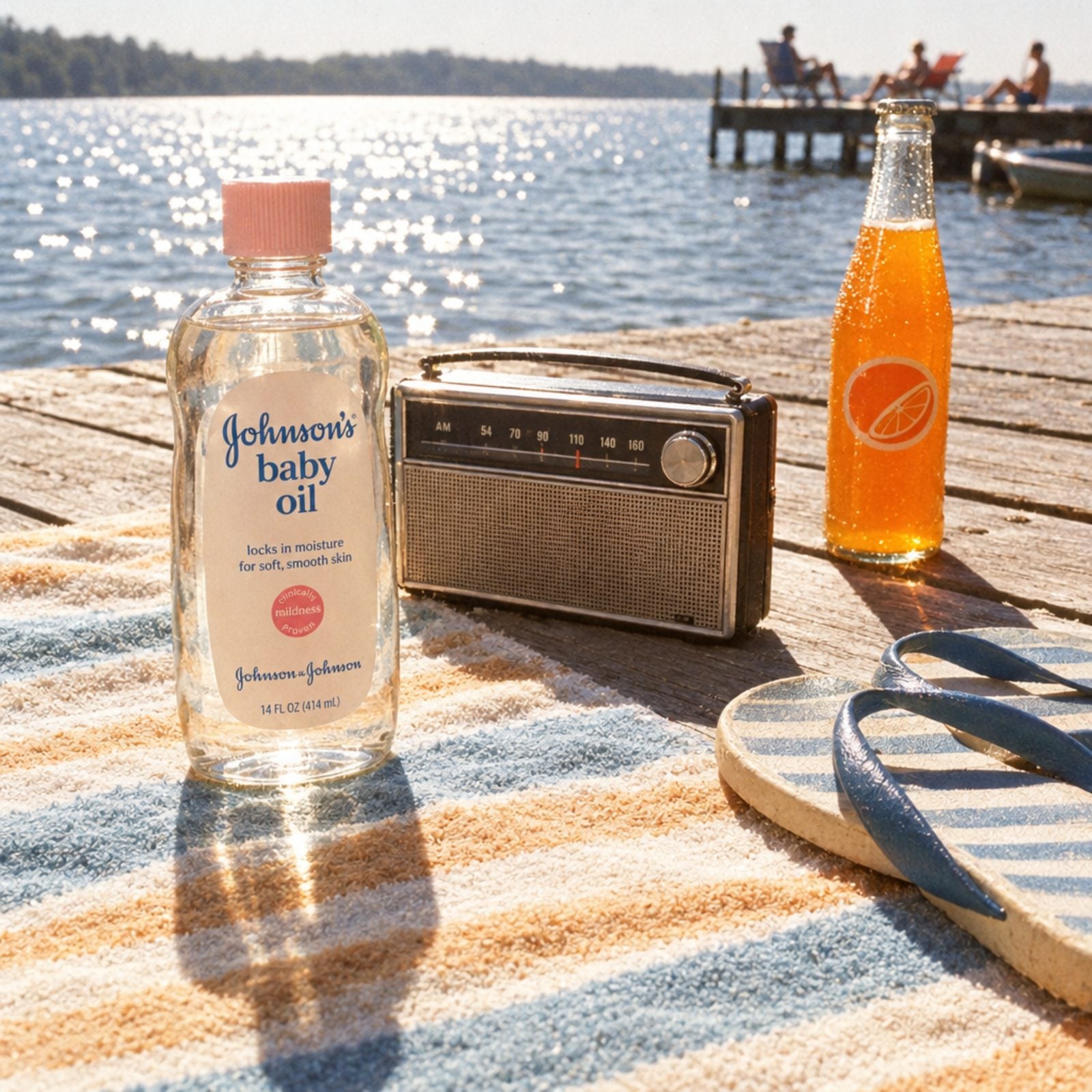
Sunscreen existed, but it was an afterthought. The real goal was a tan deep enough to brag about on the bus ride home, so out came the baby oil, slicked on at the waterfront to hurry the whole thing along.
By late July, half the cabin had shoulders the color of a brick and skin peeling off in long translucent sheets you’d pick at during flagpole. It stung in the shower. It stung in your sleeping bag. Nobody mentioned SPF, because nobody was counting.
24. Campers Went Barefoot Across Docks, Trails, and Playing Fields
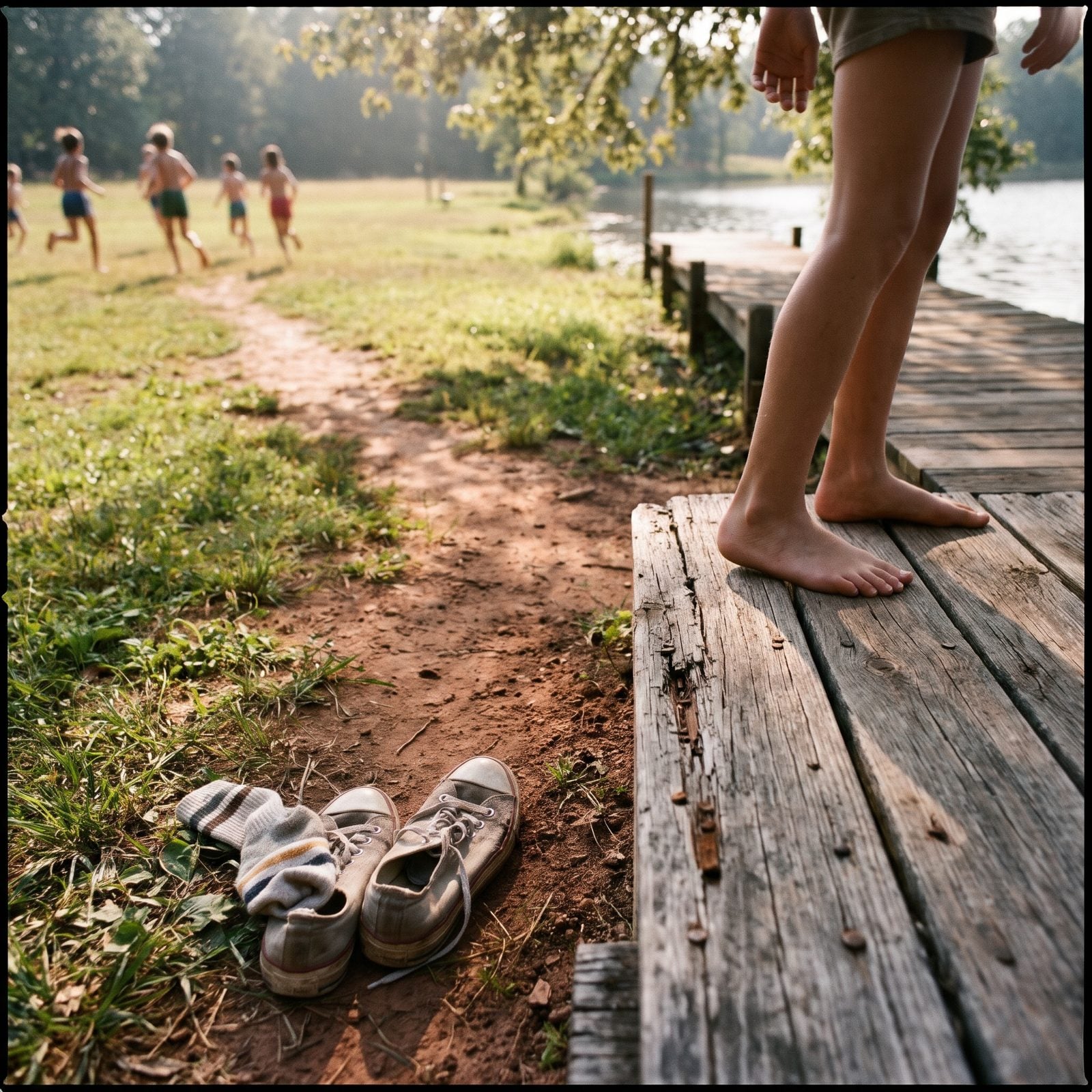
Shoes were optional, and most of the time you took the option. You ran the dock barefoot, crossed the gravel path barefoot, played capture the flag barefoot across a field nobody had checked for anything sharp.
By August your soles were leather. You crossed hot sand without flinching, pulled your own splinters, and kept going. The infirmary saw its share of stubbed toes and rusty-nail scares, but nobody saw a problem worth solving.
23. Daily Tick Checks Were Not Yet Routine
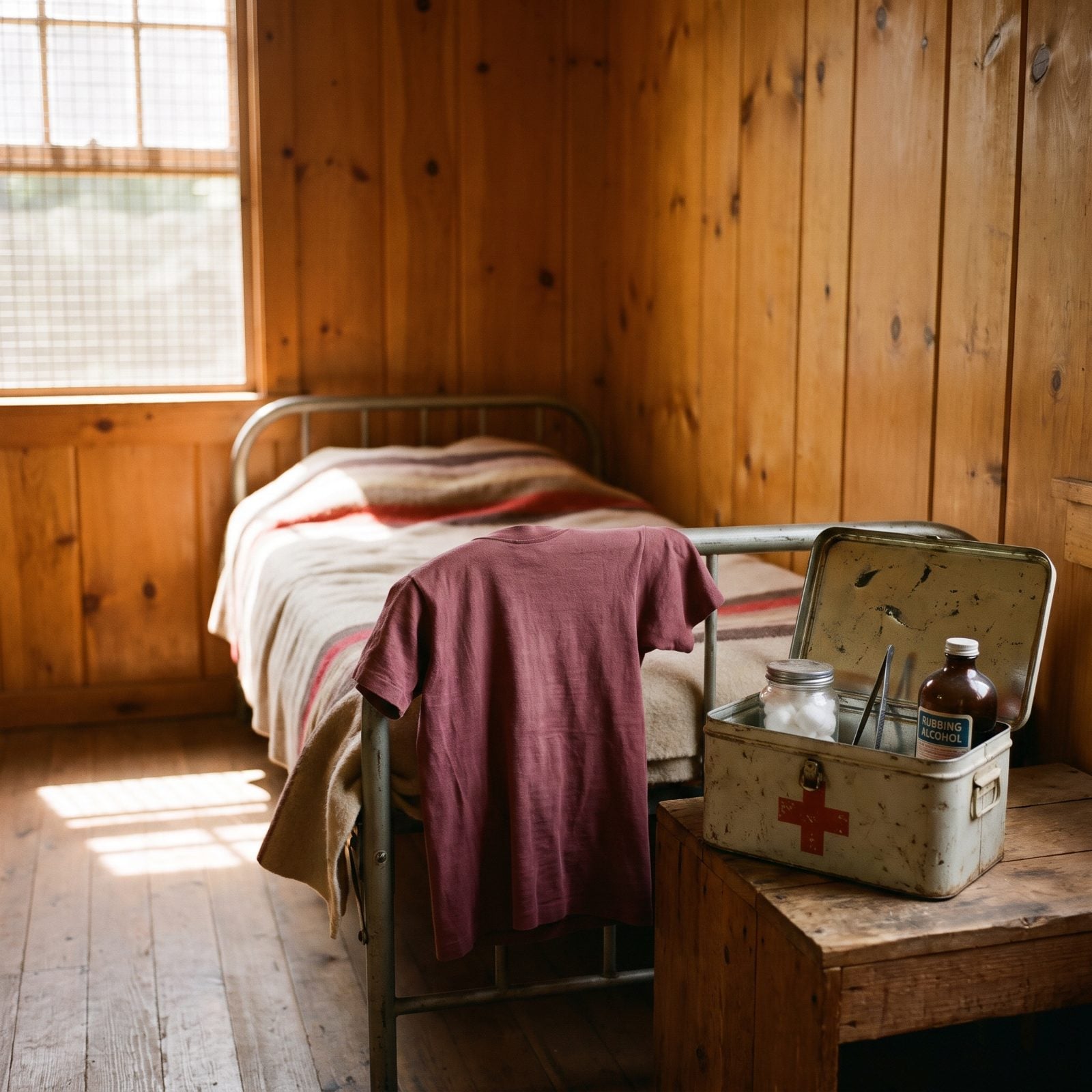
You’d come back from a hike through tall grass with grass stains, bug bites, and whatever else was hitching a ride — and nobody lined you up for an inspection. Tick checks as a nightly ritual just weren’t part of the routine yet.
Lyme disease didn’t have a name most families knew. You’d find one days later, pull it off with your fingers, and that was the end of the conversation. The woods were just the woods, and you lived in them all summer.
22. Insecticide Foggers Operated Close to Camp Activity Areas
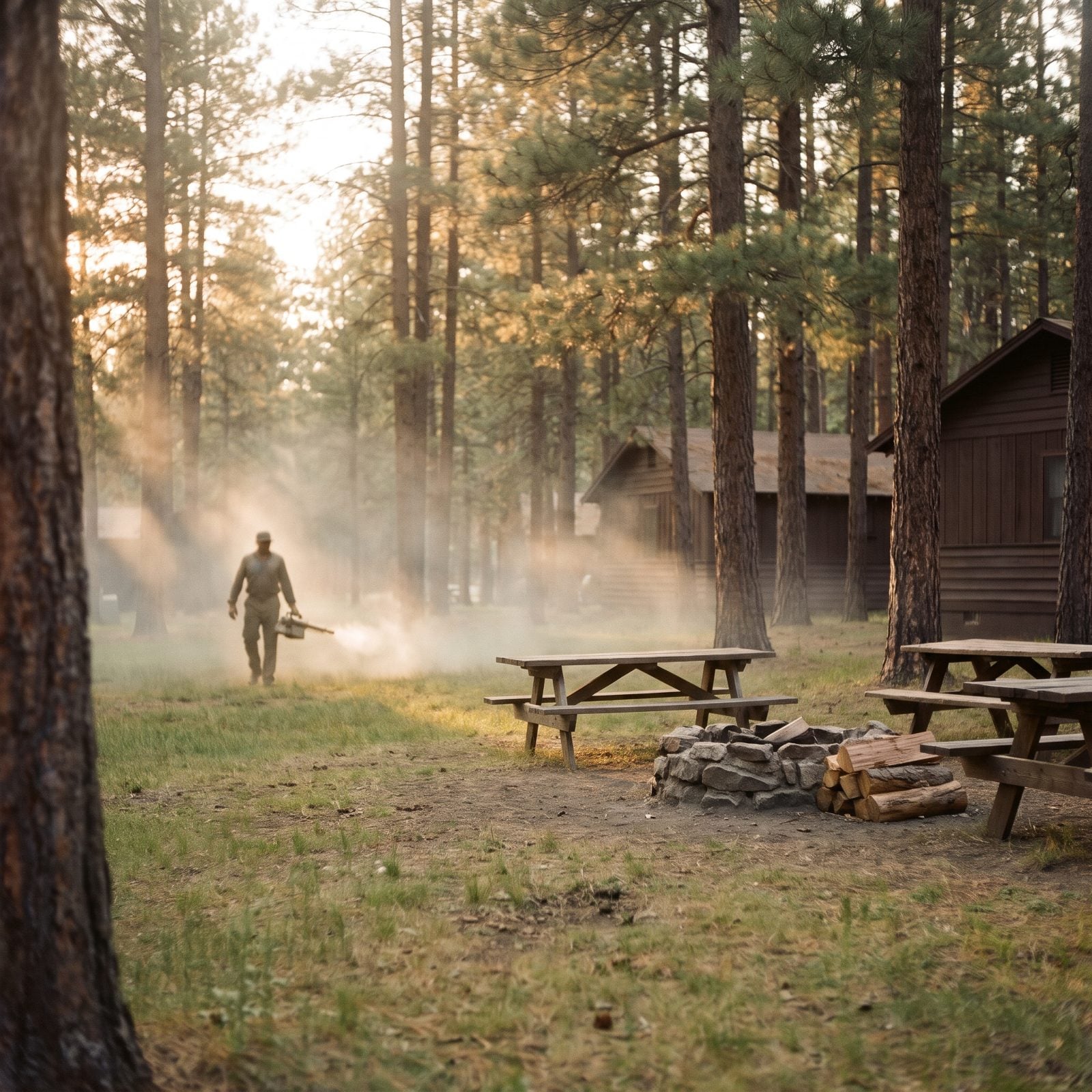
Right around dinner, you’d hear the machine fire up, and a cloud of bug fog would roll across the field while you were still mid-kickball. Kids ran through it. Some chased it on purpose, because a fog you could run inside was the best thing that happened all day.
Nobody cleared the area first. The fogger hit the mosquitoes and everything else in range, and you’d eat your hot dog in the lingering smell of it. The alternative was being eaten alive, so the trade felt fair.
21. A Quick Swim Test Determined Who Entered Deep Water
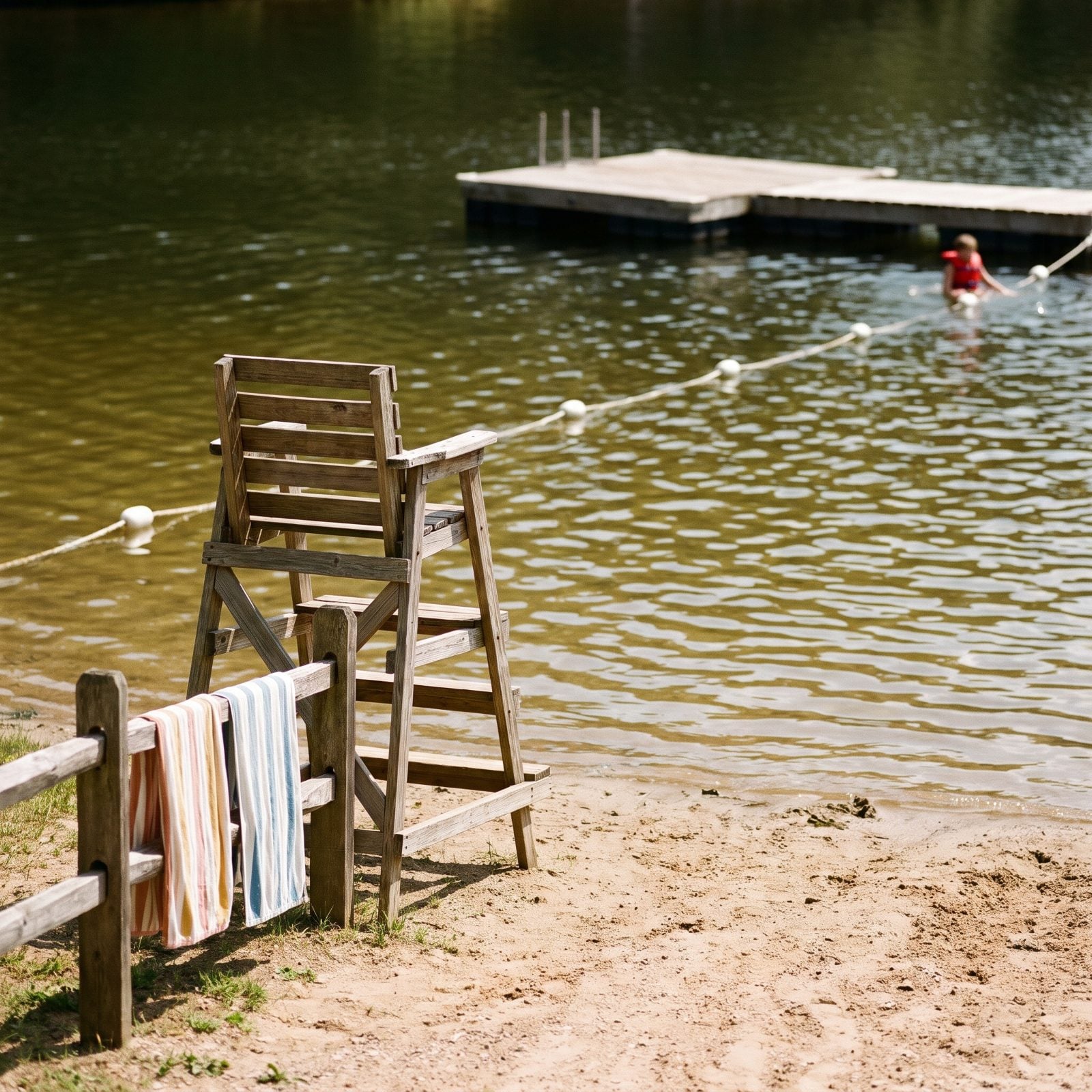
The test was fast and final. Swim out to the dock, swim back, tread water for a count nobody really timed, and you earned the deep end. Fail it, and you stayed behind the rope with the little kids — its own special humiliation.
One lap, one judgment call from a teenager in a whistle, and the rest of your summer was decided. Plenty of kids who could barely dog-paddle talked their way past that rope anyway.
20. Swimming Took Place in Murky Lakes With No Visible Bottom
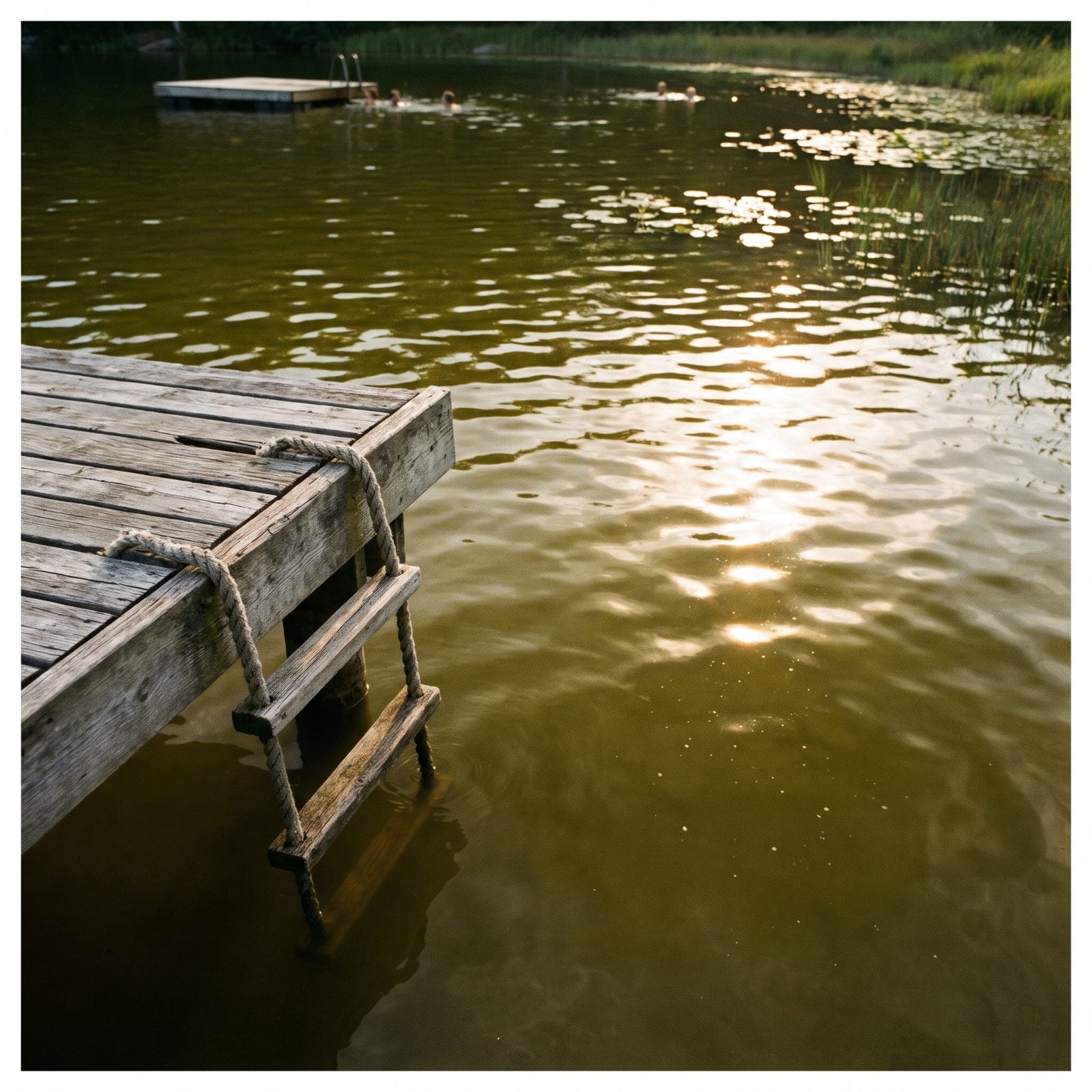
You jumped off the dock into water the color of weak tea and couldn’t see your own feet. Something brushed your leg and you decided, firmly, not to think about it. Fish, weed, the lost flip-flop of a camper from 1968 — who could say.
These were real lakes, not pools, with soft silty bottoms and no clear line to the deep end. You learned to swim in the murk, feeling for the drop-off with your toes, and you came out of August either a confident swimmer or a confident bluffer. Either way, you came out.
19. Campers Dove Headfirst From Wooden Docks
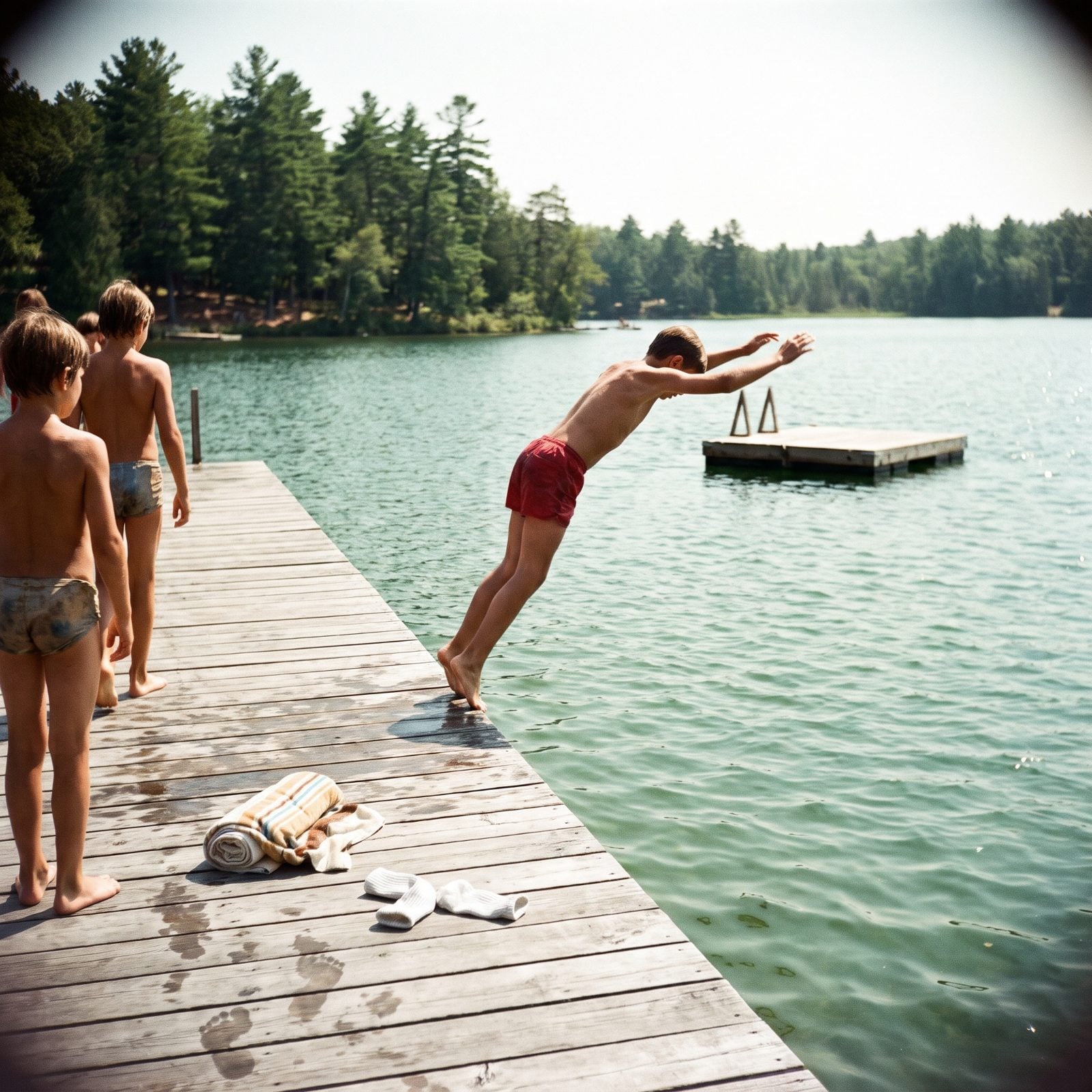
Nobody measured the water. You eyeballed it, took three running steps down the hot dock, and launched yourself headfirst into a lake nobody had surveyed since the Eisenhower administration.
The dive test was the deep end of camp social life. A clean entry with barely a splash earned you standing, while a belly flop got you heckled all week. As for the sandbar or sunken log that might be sitting a foot under the murk? That simply never came up.
18. A Fraying Rope Swing Counted as Waterfront Equipment
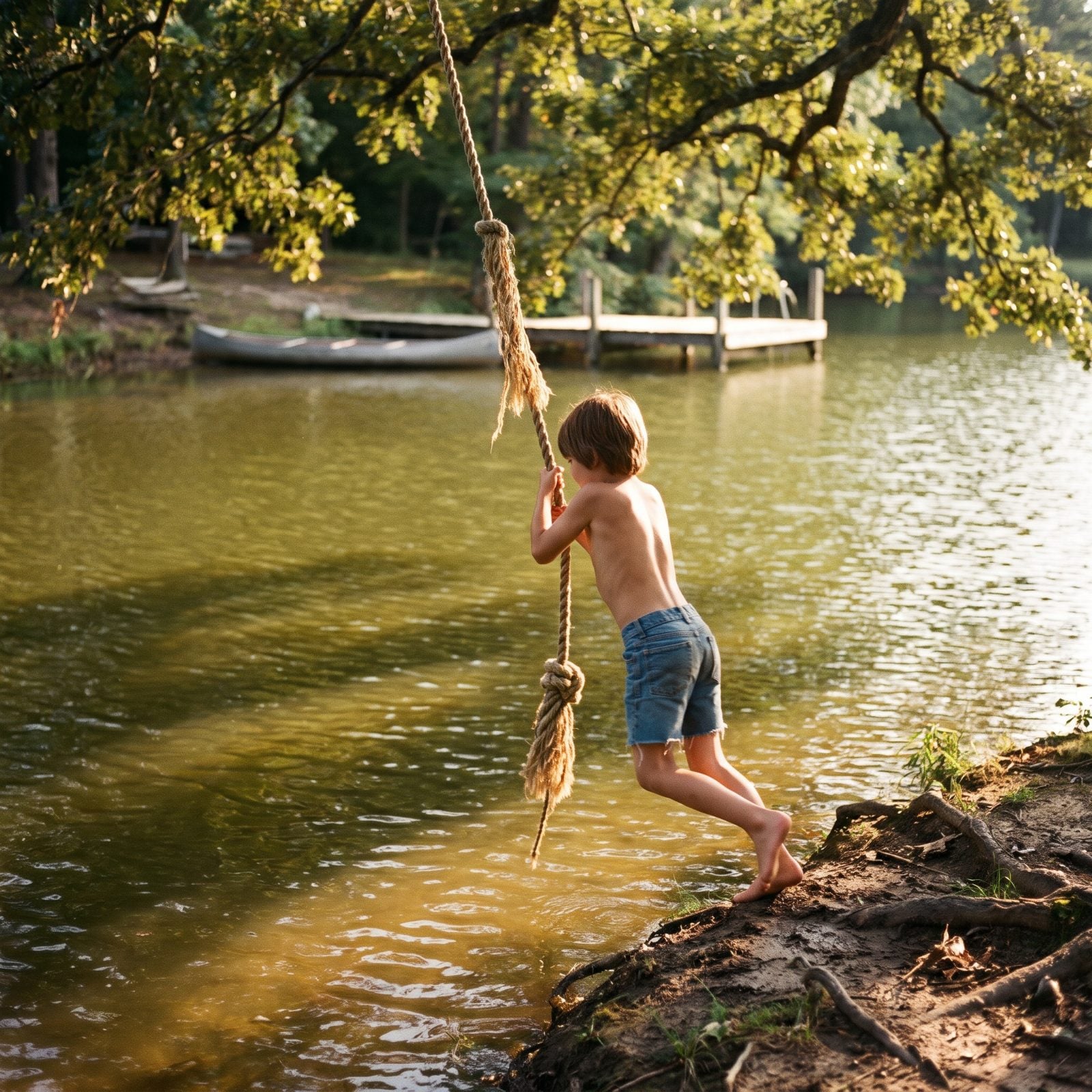
You’ve seen the rope. Thick manila gone gray and fuzzy, knotted at the bottom, hanging from a branch that bounced a little every time someone big grabbed on. That bounce was part of the fun and also, in hindsight, a warning nobody heeded.
The rig got “inspected” when a counselor gave it a hard yank and it didn’t come down on his head. That was the entire safety protocol. One unlucky fiber separated thrilling from catastrophic, and we swung on it all summer without a second thought.
17. Night Swimming Happened With Minimal Lighting
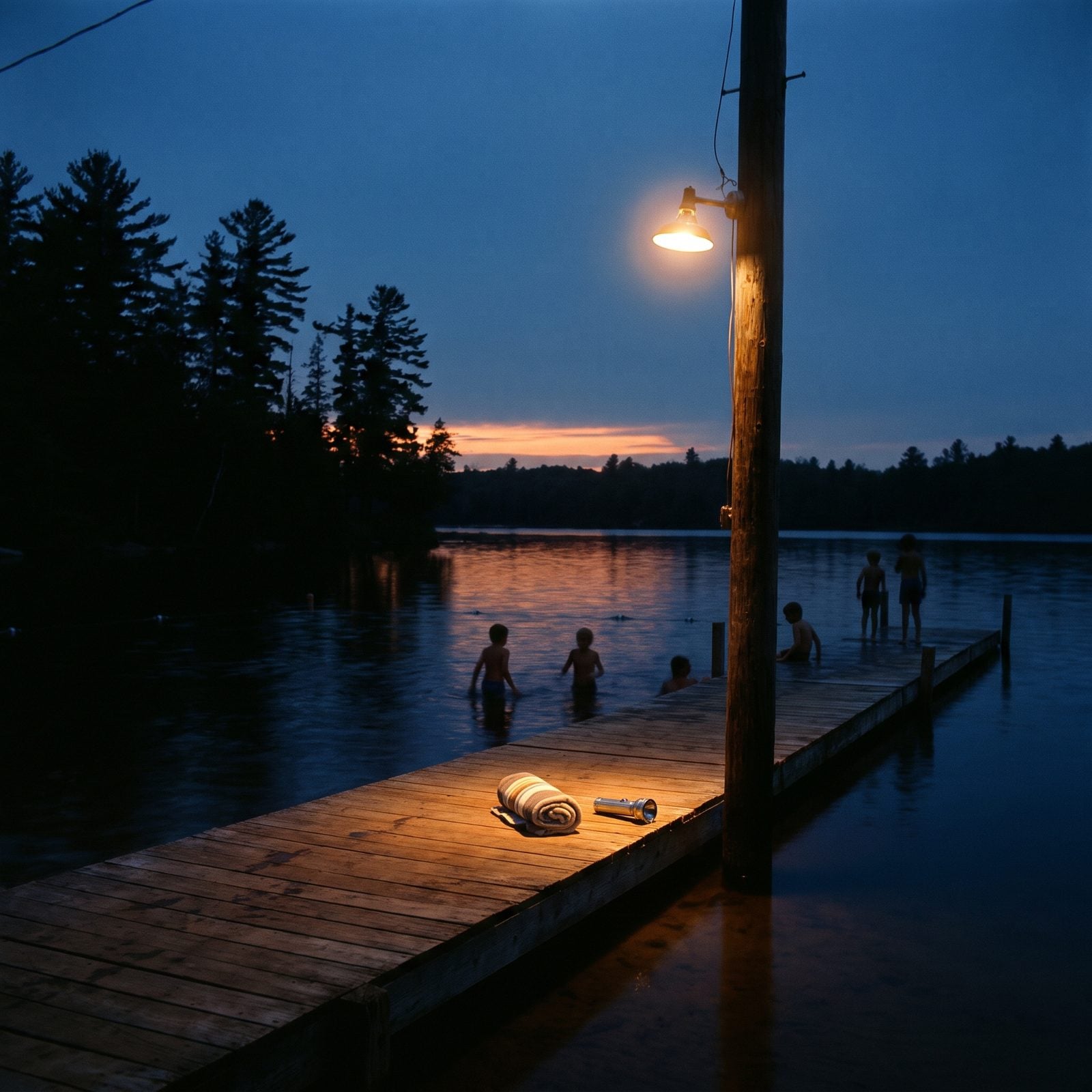
Night swim was a ritual, and visibility was negotiable.
One buzzing floodlight on a pole lit maybe a quarter of the swimming area. The rest was ink. Counselors did a head count by shouting numbers across the dark, and if the number came back right, you were cleared to splash around in water you could not actually see.
The buddy system was the whole plan. You grabbed a kid, held up linked hands when the whistle blew, and prayed your buddy hadn’t wandered off to the far raft. It worked because it mostly worked. The nights it didn’t are the ones that changed the rules.
16. Canoe Trips Relied on Bulky, Aging Kapok Life Vests
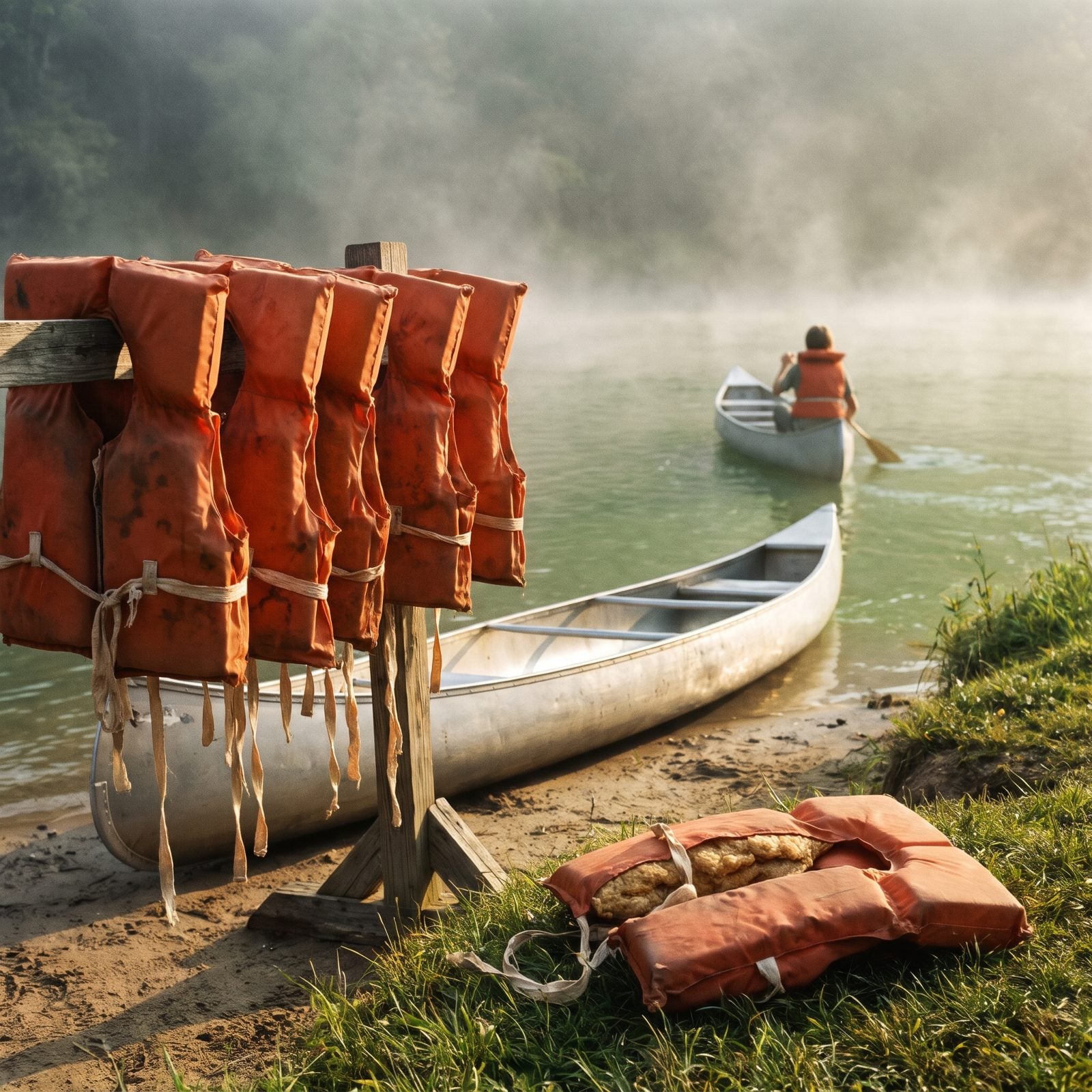
The kapok vest smelled like a wet basement and fit like a cardboard box. When the inner stuffing got waterlogged over the years, it stopped floating and started doing an impression of a sponge. Nobody weighed them to check.
You cinched the cotton ties, which had usually gone stiff and half-rotten, and pushed off for a two-day river trip. The theory was that an orange block of vintage buoyancy beat nothing. The theory was correct. The margins were thin.
15. Young Campers Took Small Sailboats Onto Open Water
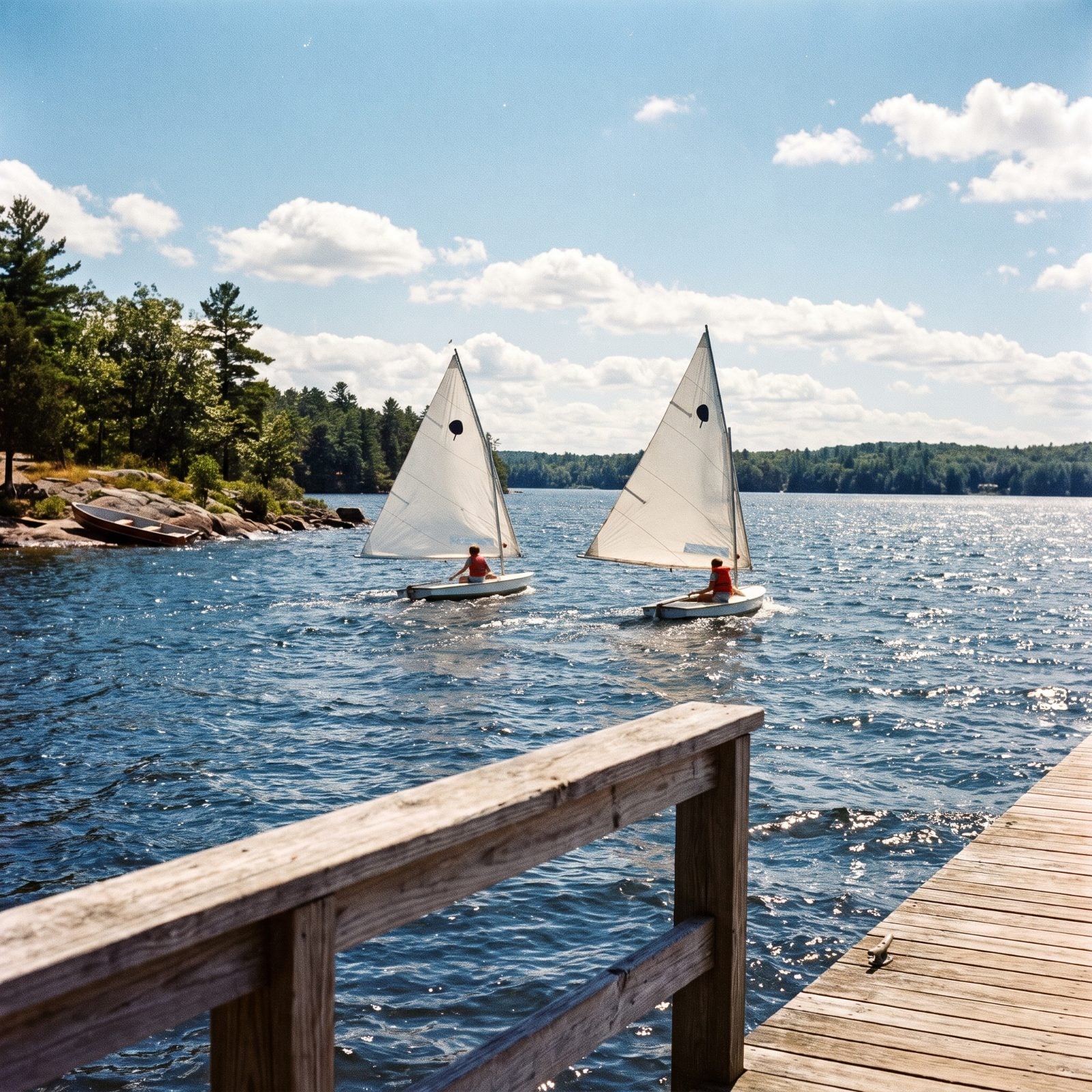
Ten years old, one sail, and a lake that got bigger the farther out you drifted.
Sailing instruction was a morning of theory and an afternoon of “go try it.” You’d rig the little boat, catch a gust, and suddenly be a quarter mile from anyone, learning to come about by trial and error and the occasional capsize.
There was usually a rowboat on rescue duty near the dock, powered by a counselor who may or may not have been paying attention. Solo kids on open water was not a scandal. It was Tuesday.
14. Horseback Riders Rarely Wore Helmets
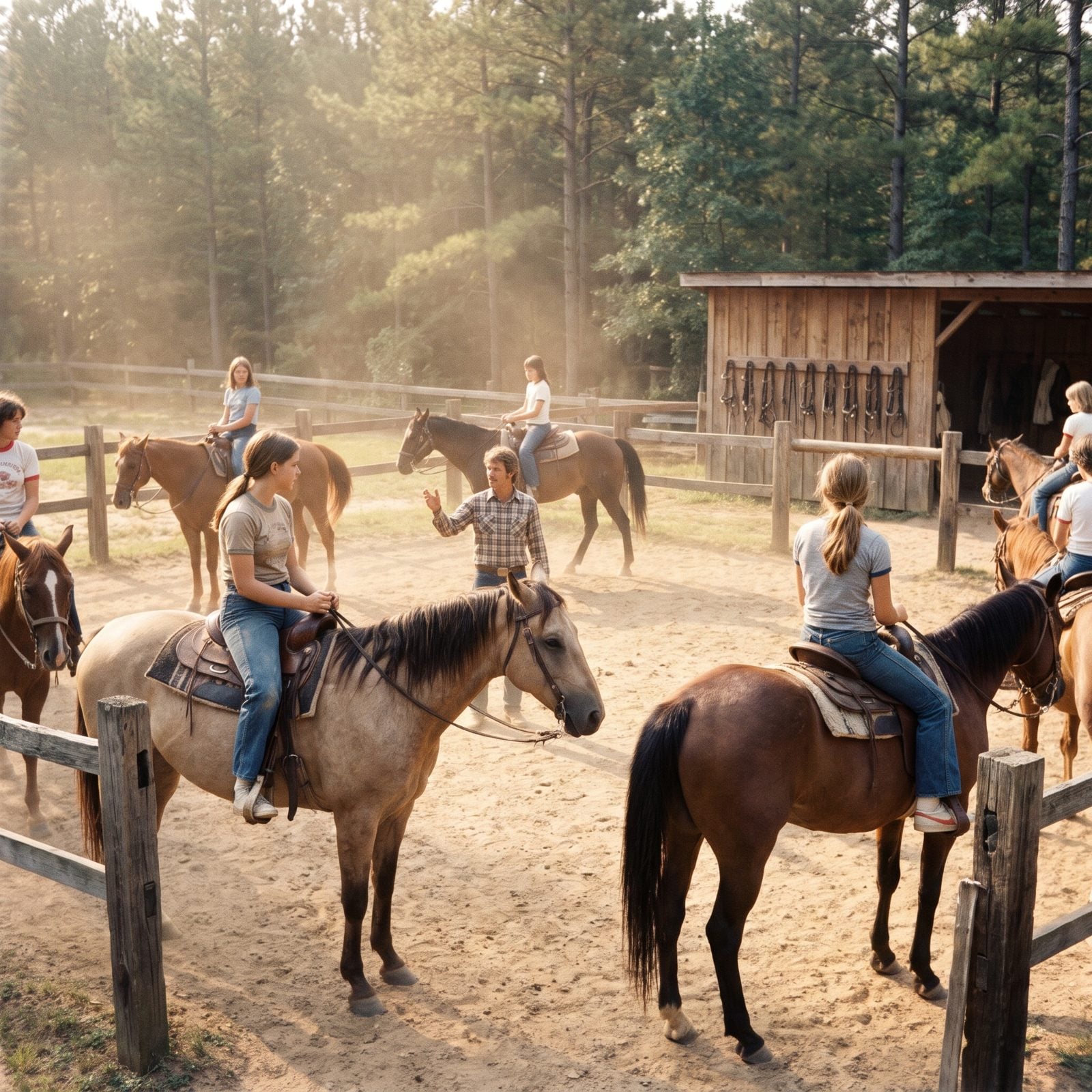
The gear list for riding was a pair of jeans and closed-toe shoes, and the shoes were negotiable. Helmets were for the kids who brought their own, which was almost nobody. You climbed onto a thousand-pound animal in a ponytail and hoped it was in a good mood.
These were usually gentle, half-asleep school horses who had seen a thousand nervous campers and cared about none of them. Mostly they plodded. But a horse is a horse, and when one decided to spook at a plastic bag on the fence, there was nothing between a kid’s skull and the hard-packed dirt.
13. Campers Rode Minibikes With Almost No Protective Gear
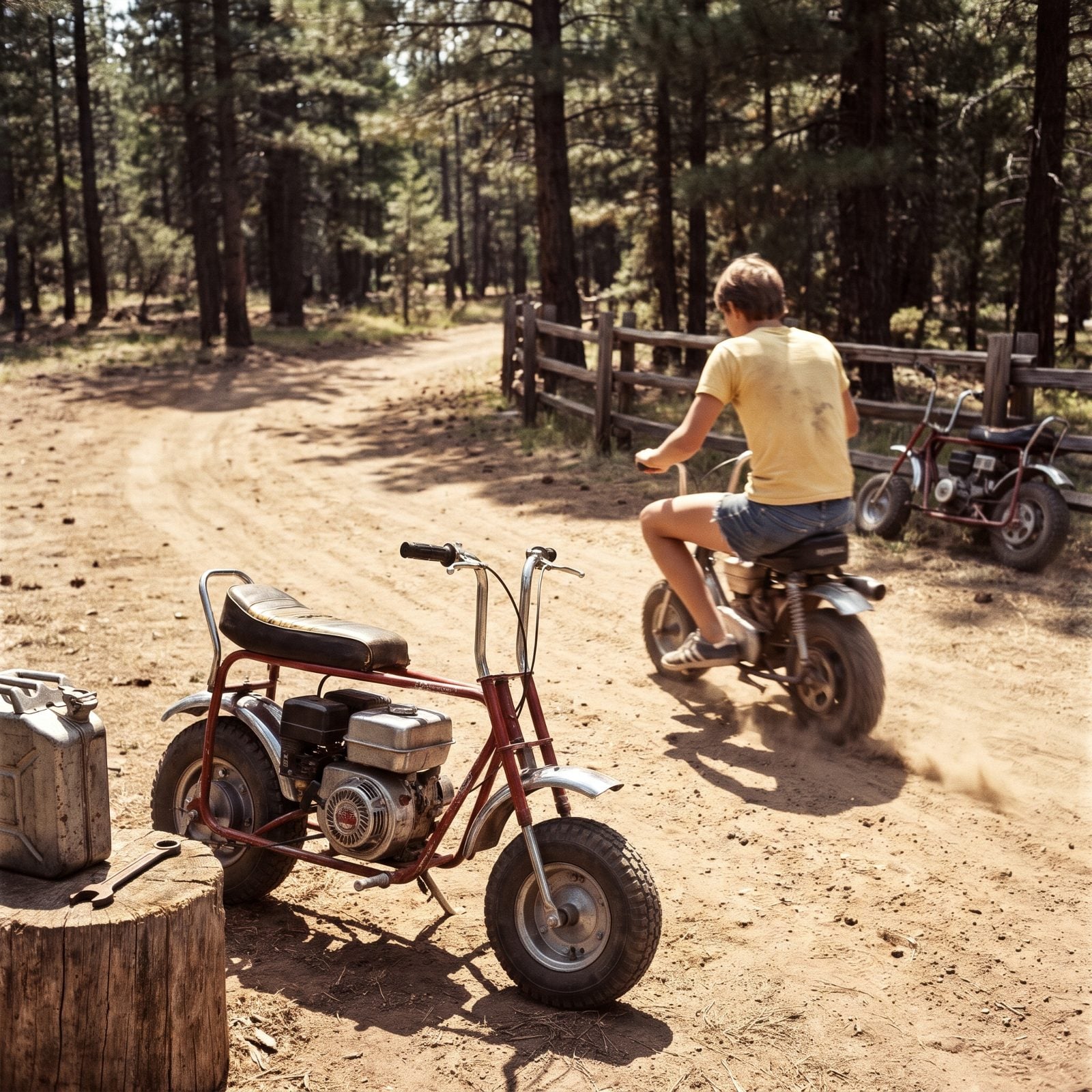
Some camps had a minibike. A little chugging machine with a lawnmower engine and no business carrying a kid at twenty miles an hour, which it absolutely did. The safety briefing was “squeeze the right one to go, the left one to stop,” and then the woods were yours.
Helmet? Maybe a borrowed one with a cracked shell and foam gone to crumbs. Long pants were encouraged and rarely worn, so you came back with your shins striped in exhaust-pipe burns, which everyone understood as the toll of admission. Nobody called home about it.
12. Trampolines Had Exposed Springs and No Safety Nets
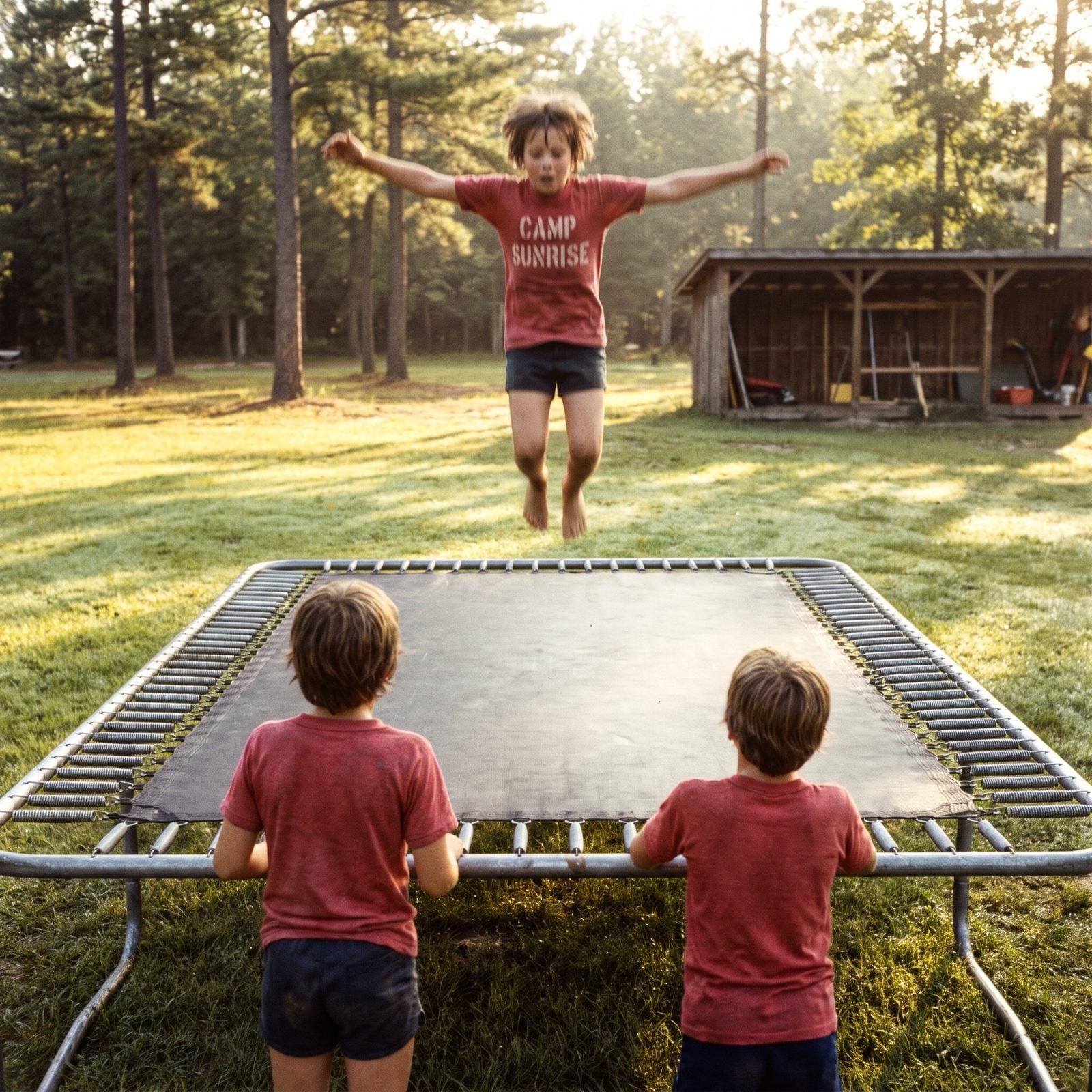
The springs were right there, naked and gleaming, waiting for an ankle.
No net, no spring pad, no spotter beyond a bored counselor on a lawn chair. You bounced as high as physics allowed while your friends hung on the bare frame waiting their turn, and everyone learned to read a jumper’s trajectory the hard way.
The real danger wasn’t the fall off the side, though that happened plenty. It was two jumpers on the bed at once, where the timing of the canvas could fling the smaller kid six feet sideways into the frame. We called that a wedgie bounce and thought it was hilarious, right up until it wasn’t.
11. Climbing Activities Used Basic Ropes and Improvised Belays
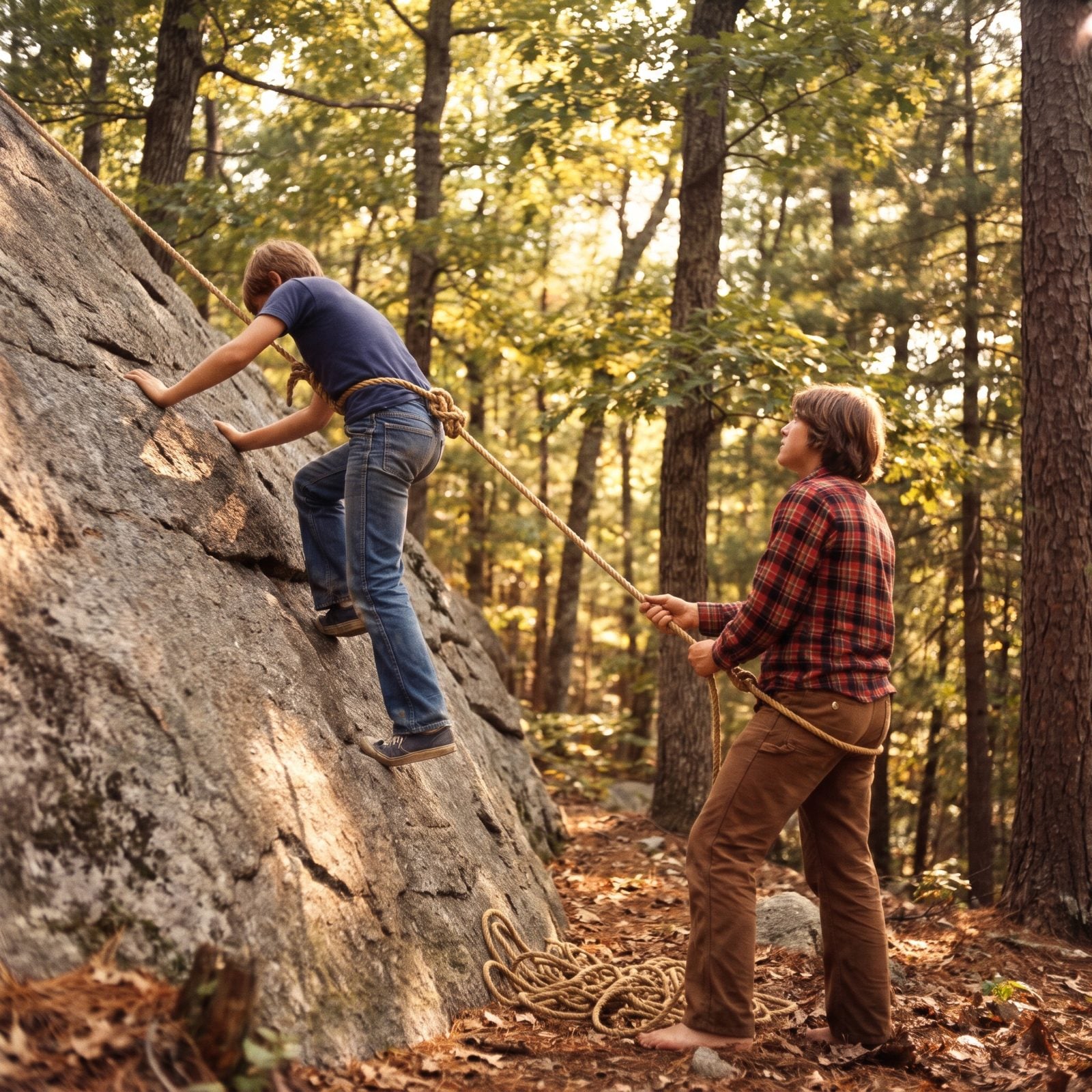
The harness was a rope tied around your waist with a knot a counselor swore he knew. The belay was a guy wrapping the line around his own hips and holding on with his bare hands, friction and grip the only things between you and the ground.
No helmets, no carabiners, no belay devices with that reassuring little click. If your belayer sneezed, you found out how good his reflexes were. Somehow the knots held and the counselors kept their grip, and a generation of kids learned to trust rope and gravity on blind faith.
10. Homemade Ziplines Appeared Between Camp Trees
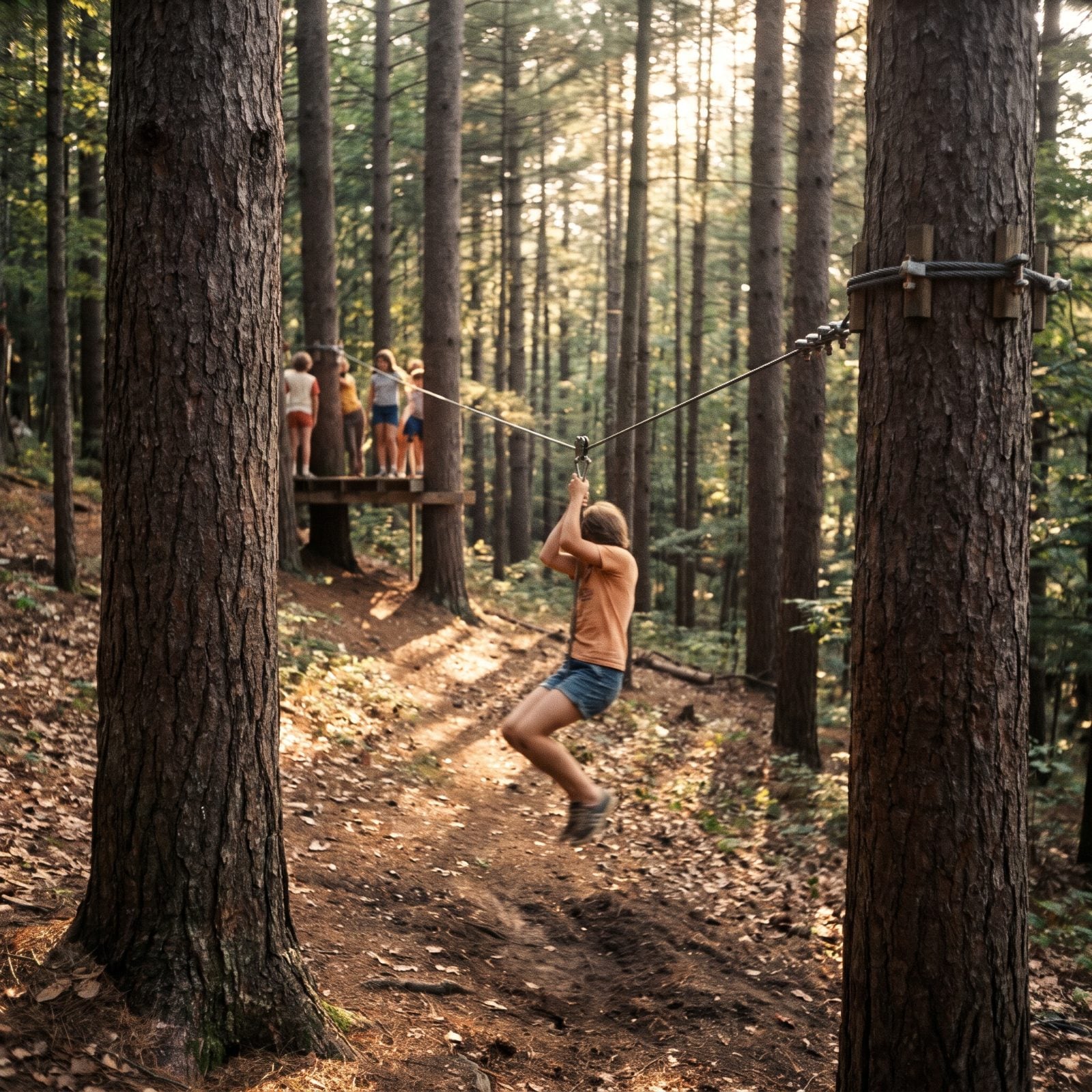
Somebody’s dad donated a steel cable, a counselor found two strong-looking trees, and a zipline was born. The anchor was a few cable clamps and optimism. You grabbed the metal pulley, lifted your feet, and trusted that the clamps had been tightened by someone who cared.
Nothing caught you if your grip gave out, which it did whenever the metal was wet or your hands were sweaty from the climb. The braking system? A knotted rope at the end, or a tree, or your own legs. The whole contraption was built on enthusiasm and held together by the fact that most of the time, enthusiasm was enough.
And you know what? We lined up for it anyway, every single day, hearts pounding at the launch deck.
9. Playgrounds of Splintered Timber and Slides That Branded Your Legs
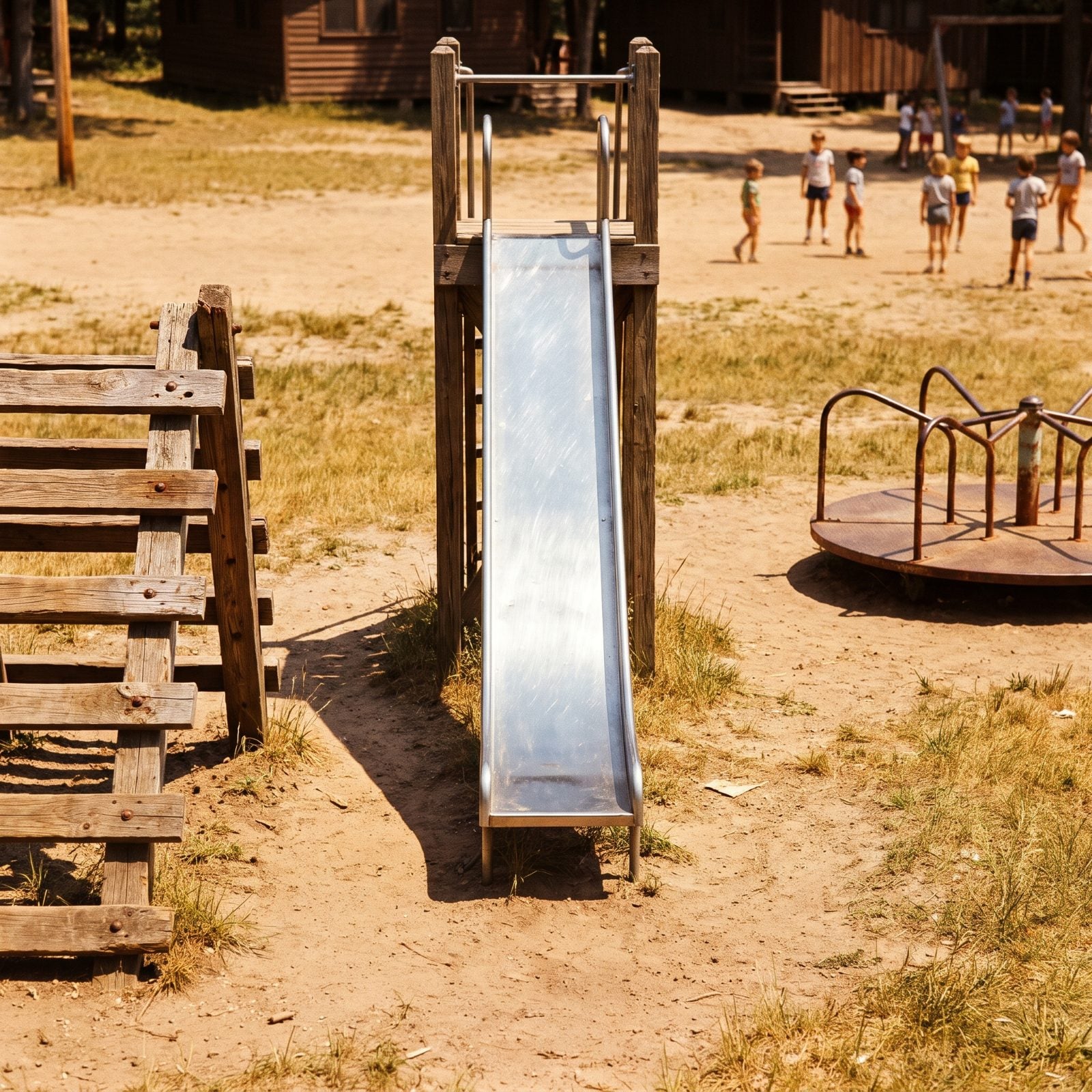
That metal slide sat in full sun all day, and by two in the afternoon it could cook the backs of your thighs through your shorts. You learned to test it with a palm first. You learned wrong plenty of times.
The climbing frame was raw timber, the kind that gave you a splinter the size of a toothpick if you grabbed it at the wrong angle. Underneath was dirt — packed, sun-hardened dirt, with maybe a few tufts of grass pretending to soften the landing. No rubber matting. No wood chips, no foam, no nothing.
And nobody was hovering. You fell, you got up, you went back. The scrapes were part of the deal.
8. Archery Practice With Barely a Rope Between You and the Line
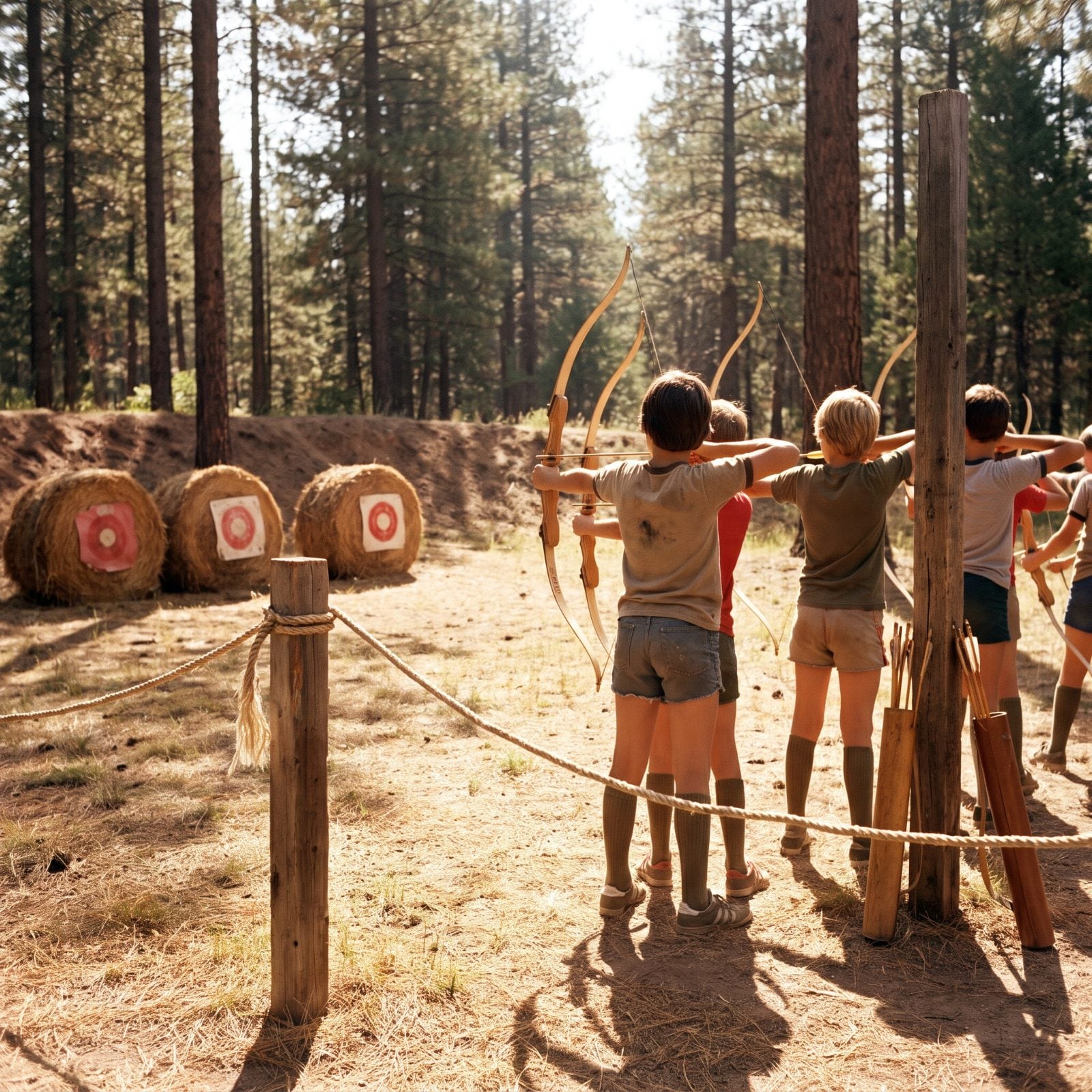
The whole safety system was one rope and one counselor saying “hold.”
Kids stepped up to a line marked by twine strung between two posts, nocked a real arrow, and let it fly at a hay bale forty feet off. The counselor stood to the side — usually a teenager themselves — and called the range hot and cold by yelling.
Retrieving arrows meant walking downrange while everyone else held their draw. Think about that for a second. You trusted the kid next to you not to loose early, and most of the time that trust held.
7. The Rifle Range Was Just Another Spot on the Daily Schedule
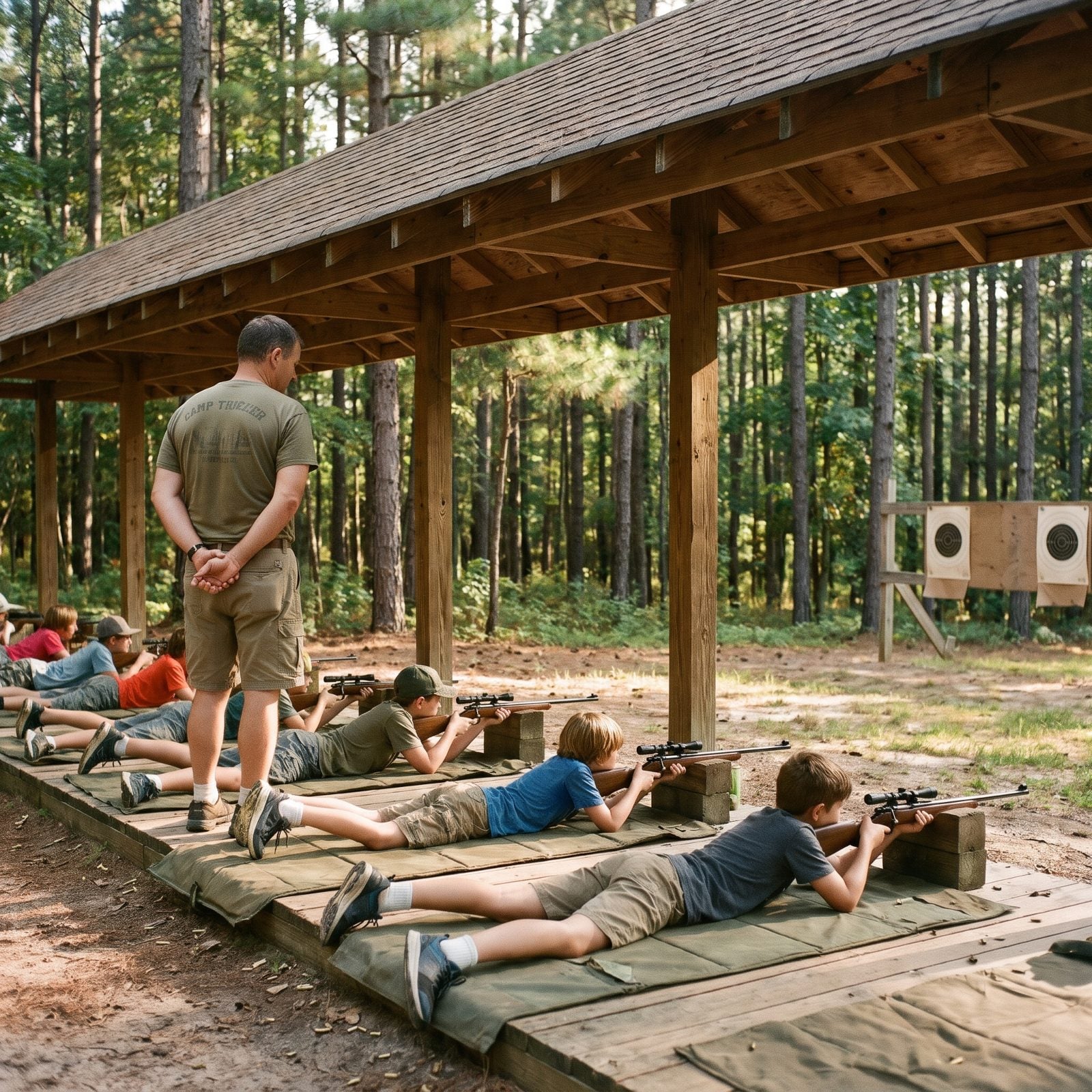
Marksmanship had its own slot between lunch and free swim, same as crafts or canoeing, and you earned patches for it. You lined up prone on a canvas mat, a bolt-action .22 in your hands, and plinked at paper targets while a counselor walked the line.
A camp keeping a rack of rifles and handing them out to ten-year-olds barely raised an eyebrow. It was a skill, like knot-tying. You cleaned the barrel afterward and turned your score card in at the office, same as you’d return a canoe paddle.
6. Hatchet Throwing and Wood Splitting as a Learnable Skill
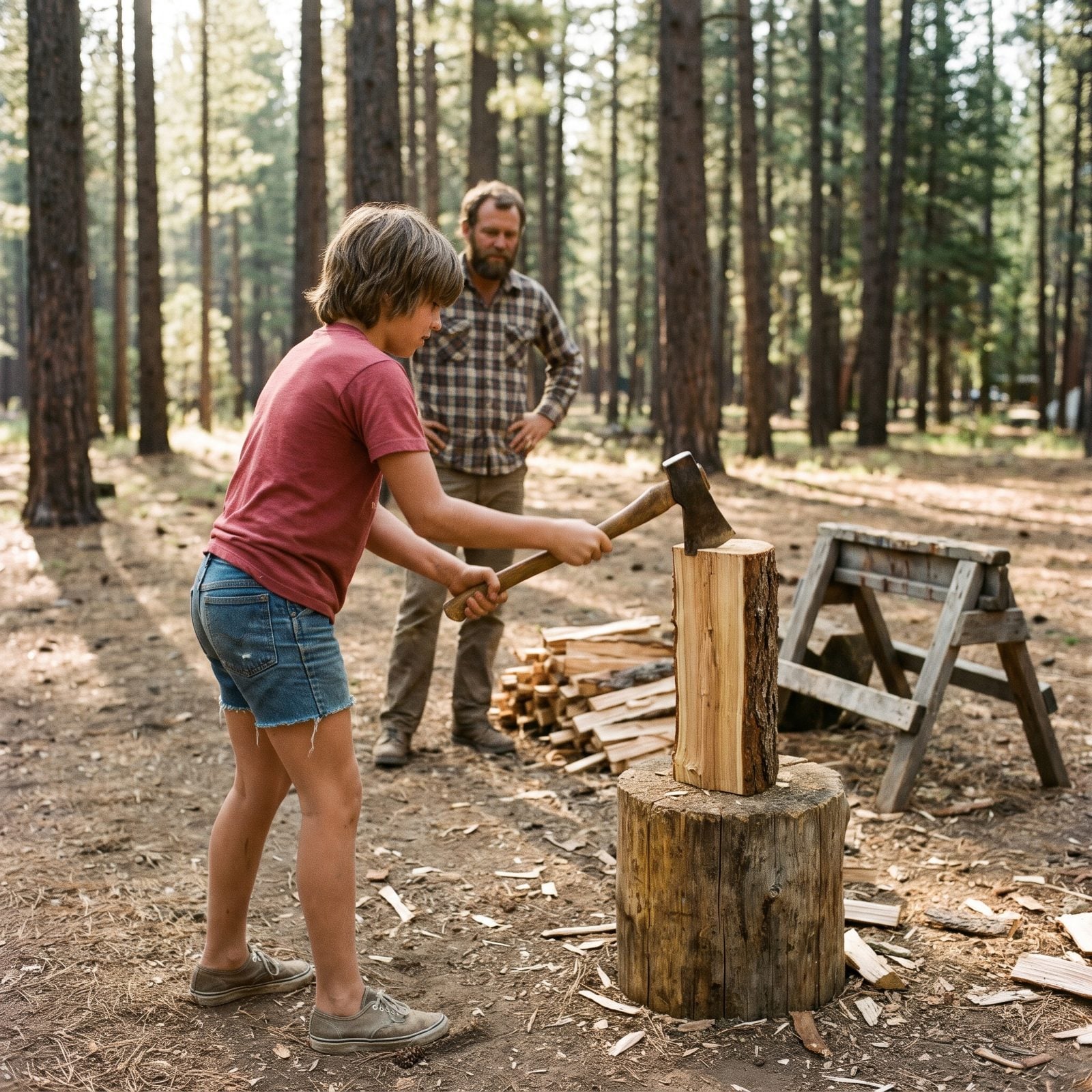
Splitting kindling was a merit badge, not a lawsuit waiting to happen. A counselor showed you the grip, the stance, the follow-through, then handed you the hatchet and stepped back a respectful few feet.
You’d set a log on the block, line up the blade, and swing. Some kids were naturals. Others buried the axe sideways and had to wrestle it free while everybody watched. But you learned to handle a tool, and the adults simply assumed you’d rise to it.
Honestly? Most kids did. There’s something about being handed a real responsibility that makes an eleven-year-old pay attention.
5. Campers Were Handed a Box of Matches and Told to Make Fire
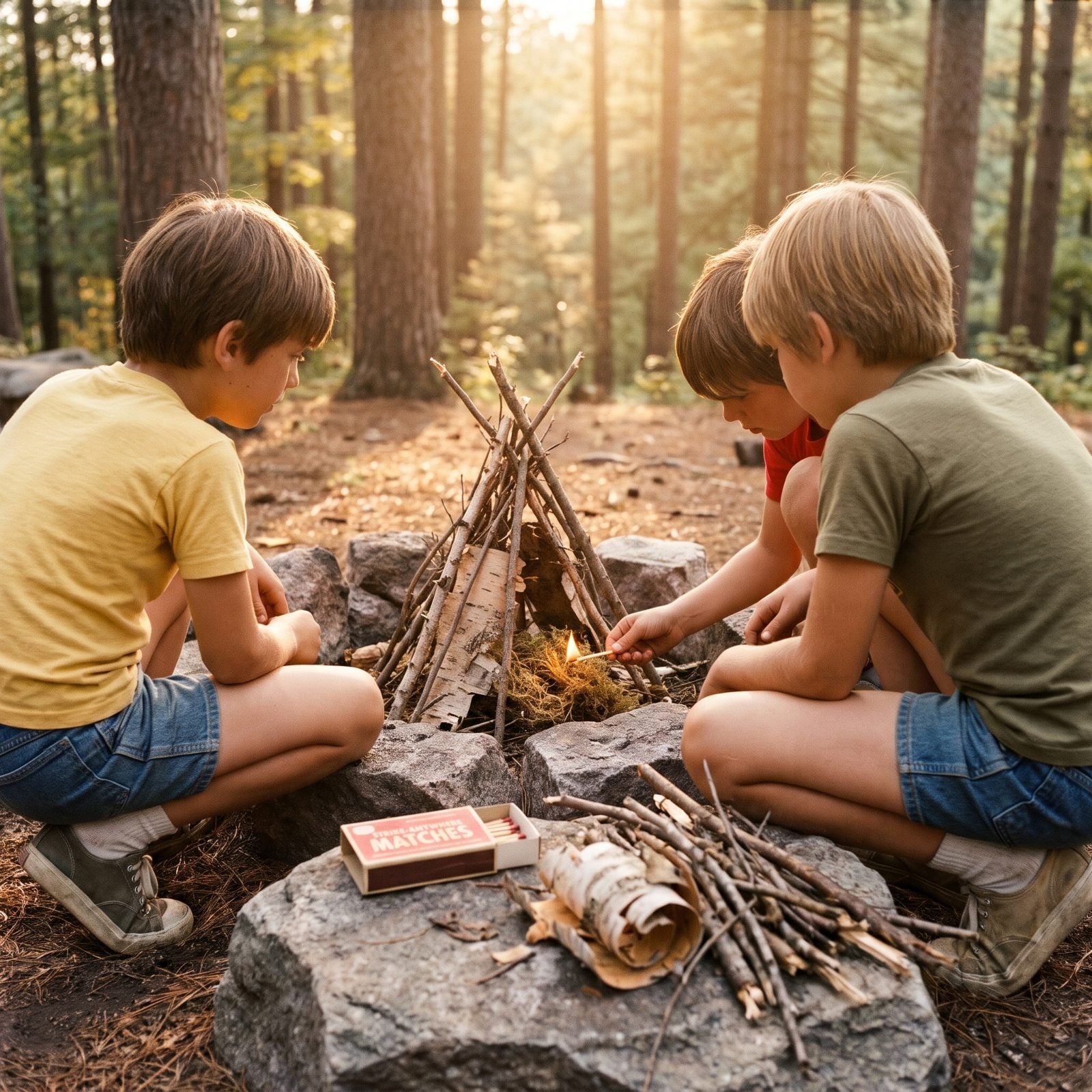
No lighter, no fire starter, no adult doing it for you.
You got a box of wooden matches, a lesson on building a teepee of tinder and kindling, and the expectation that you’d coax up a flame before the matches ran out. A good campfire builder was a camp celebrity.
Kids walked around with matchbooks in their pockets like it was nothing, because it was nothing. Fire was a skill you earned, practiced, and showed off at the evening circle. The smell of a struck match and damp bark catching — that one drops you straight back to being ten.
4. Craft Lodges Thick With Enamel Fumes and Industrial Glue
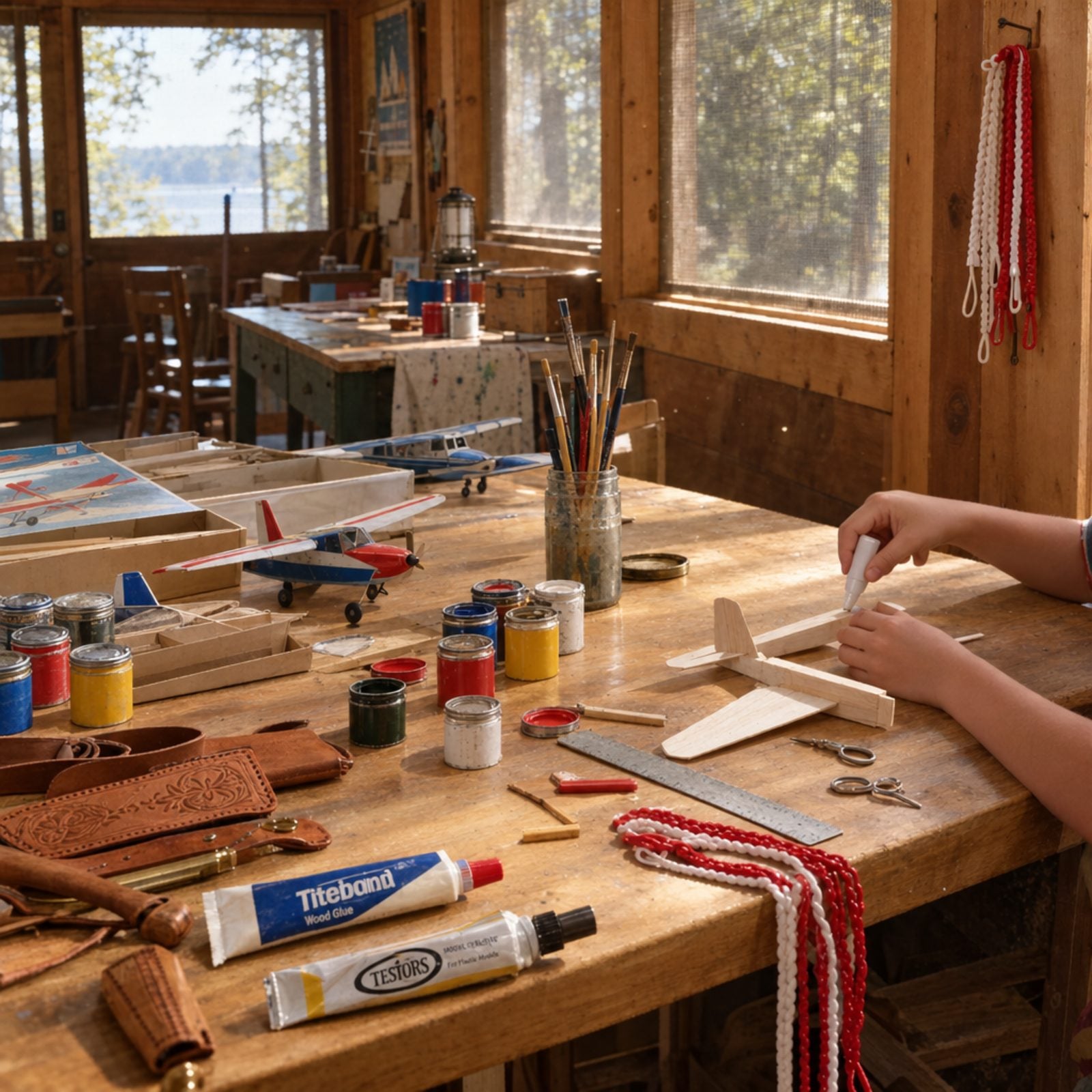
The craft lodge had a smell all its own — equal parts airplane glue, enamel paint, and whatever solvent cleaned the brushes. The windows had screens. That was the ventilation plan.
Kids huddled over balsa models with tubes of adhesive strong enough to bond a finger to a tabletop, painting tiny parts with lead-heavy enamel and breathing it all in for an hour after lunch. You left with a headache you assumed was just the heat. Nobody connected the two.
3. Sparklers in Small Fists on the Fourth of July
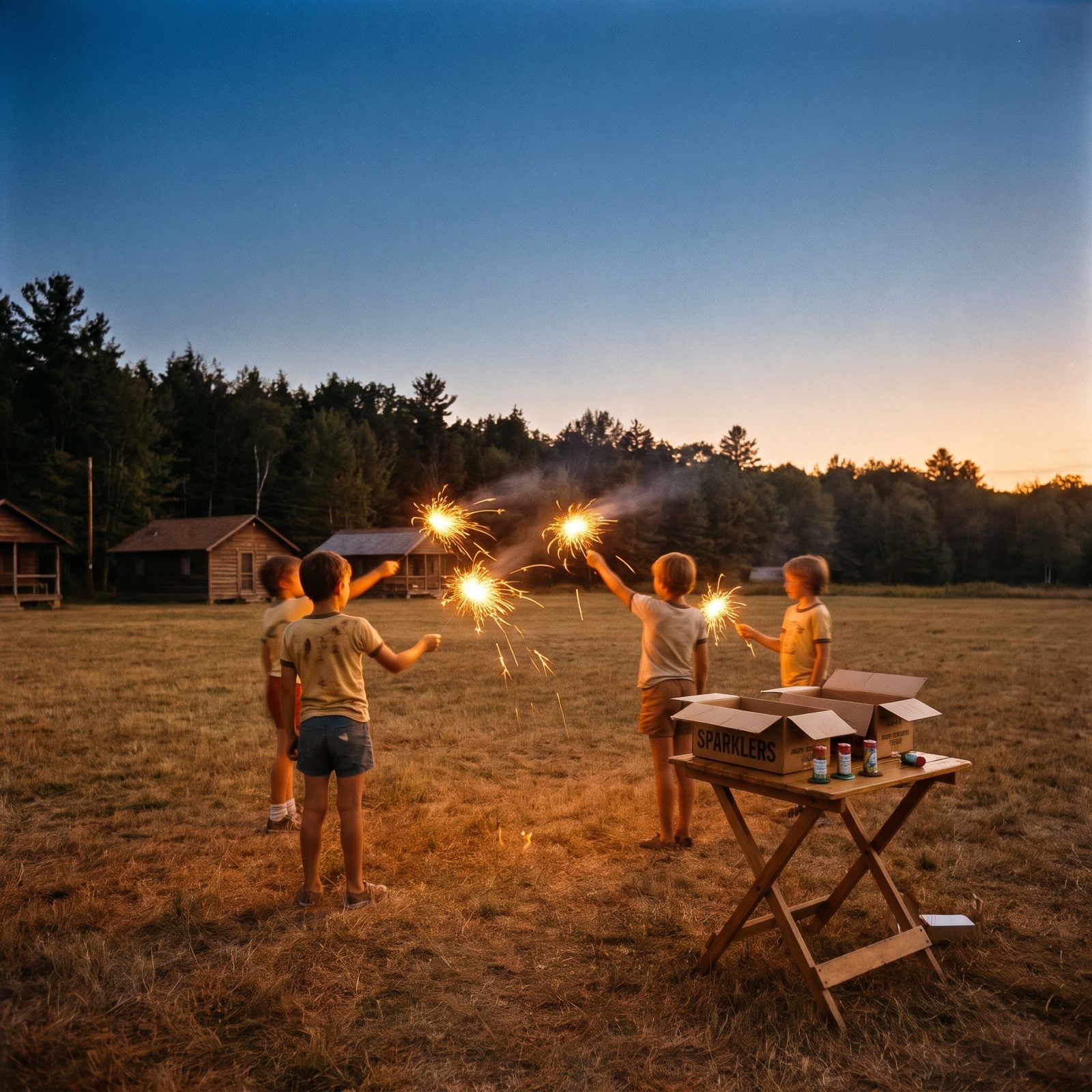
Independence Day meant a box of sparklers handed down the line, each kid lighting theirs off the next, waving them in loops and scrawling initials in the dark air. The tips burned hot enough to raise a welt. Everyone knew it, and everyone did it anyway.
Some camps went further, with small ground fireworks and fountains set off in a field while a counselor stood by with a bucket of water. That bucket was the entire safety protocol. The night smelled of sulfur and bug spray, and nobody wanted it to end.
2. The Camp Ambulance Was a Wood-Paneled Station Wagon
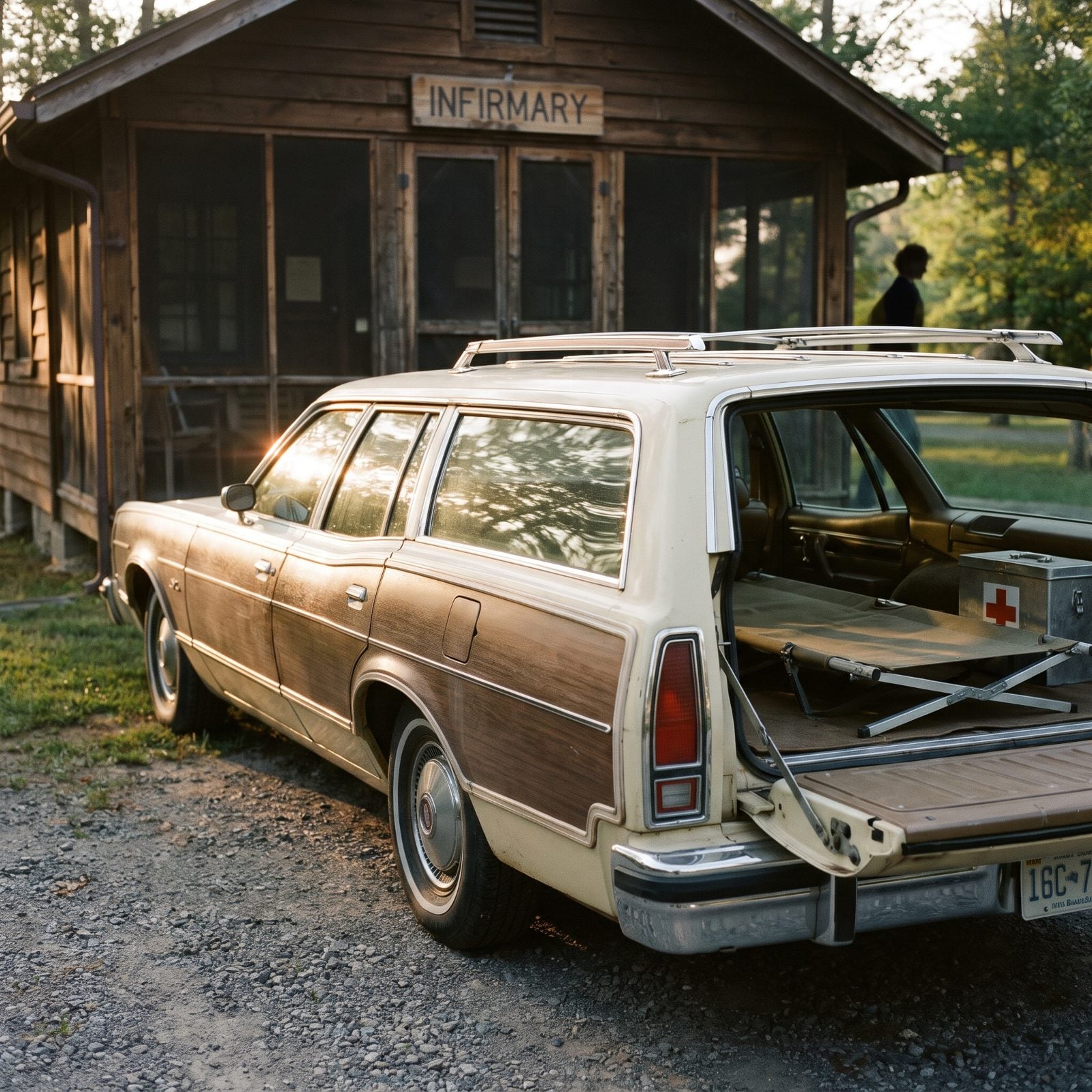
If a kid broke an arm on the ropes course, nobody dialed 911 and waited on a response time. You loaded him into the back of the camp’s wood-paneled wagon and the cook or the groundskeeper drove forty-five minutes of gravel road to the nearest town with a hospital.
The vehicle was whatever the camp happened to own — a Country Squire with faux-wood sides, a cot in the back, maybe a first-aid box rattling around the wheel well. It smelled of gasoline and old vinyl.
1. Headcounts Done by Cabin Nickname and a Hopeful Guess
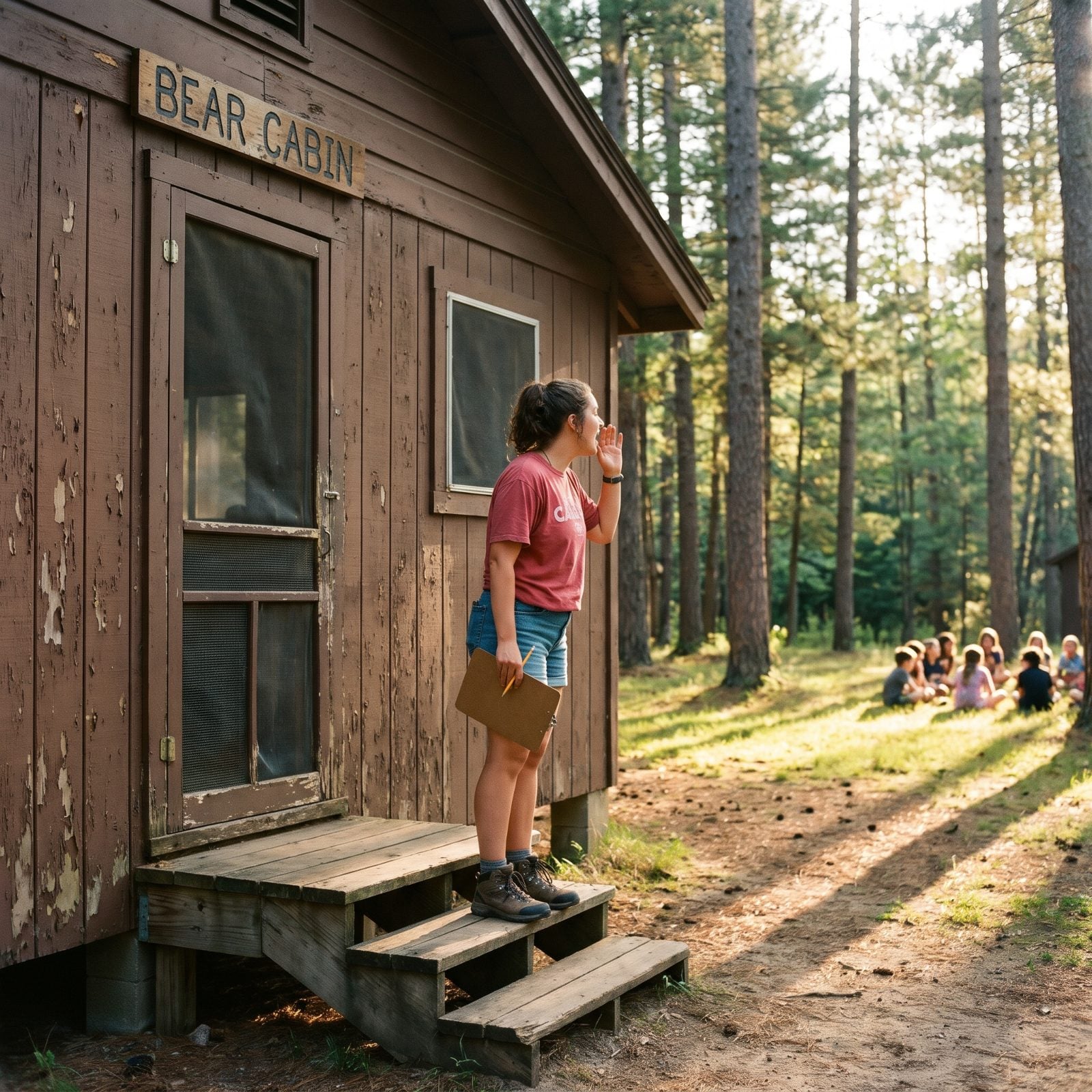
Counting kids was more art than science.
After free swim or a hike, a counselor would eyeball the cluster and call out by cabin nickname. “Bears all here? Chipmunks? Anybody seen the little Chipmunk with the glasses?” A vague chorus of yeahs was good enough to move on.
Kids drifted off to the woods, the waterfront, the snack shack, and the whole system leaned on everyone eventually wandering back for food. No radios. No list with photos. You knew the kids by face and by the cabin they belonged to, and most days that worked out fine.
The slack in it was real. It also gave a camp its particular freedom — the sense that your time between activities genuinely belonged to you.
Please note that some of the imagery in this article were created with the aid of AI image generators.