
🔥 Would you like to save this?
The seatbelt sign dinged off and someone lit a Winston three rows back. Up the spiral staircase, a man in a wide-lapel blazer ordered a Manhattan at a lounge that happened to be cruising at 35,000 feet. This was coach, sort of, back when flying was an occasion and Washington decided what everything cost.
The decade ran on handshake rituals, vending-machine policies, and cabins that doubled as cocktail parties. What follows brings back the strange, generous, maddeningly regulated world we used to board.
The Wurlitzer Electric Piano Bar in American Airlines’ 747 Coach Cabin
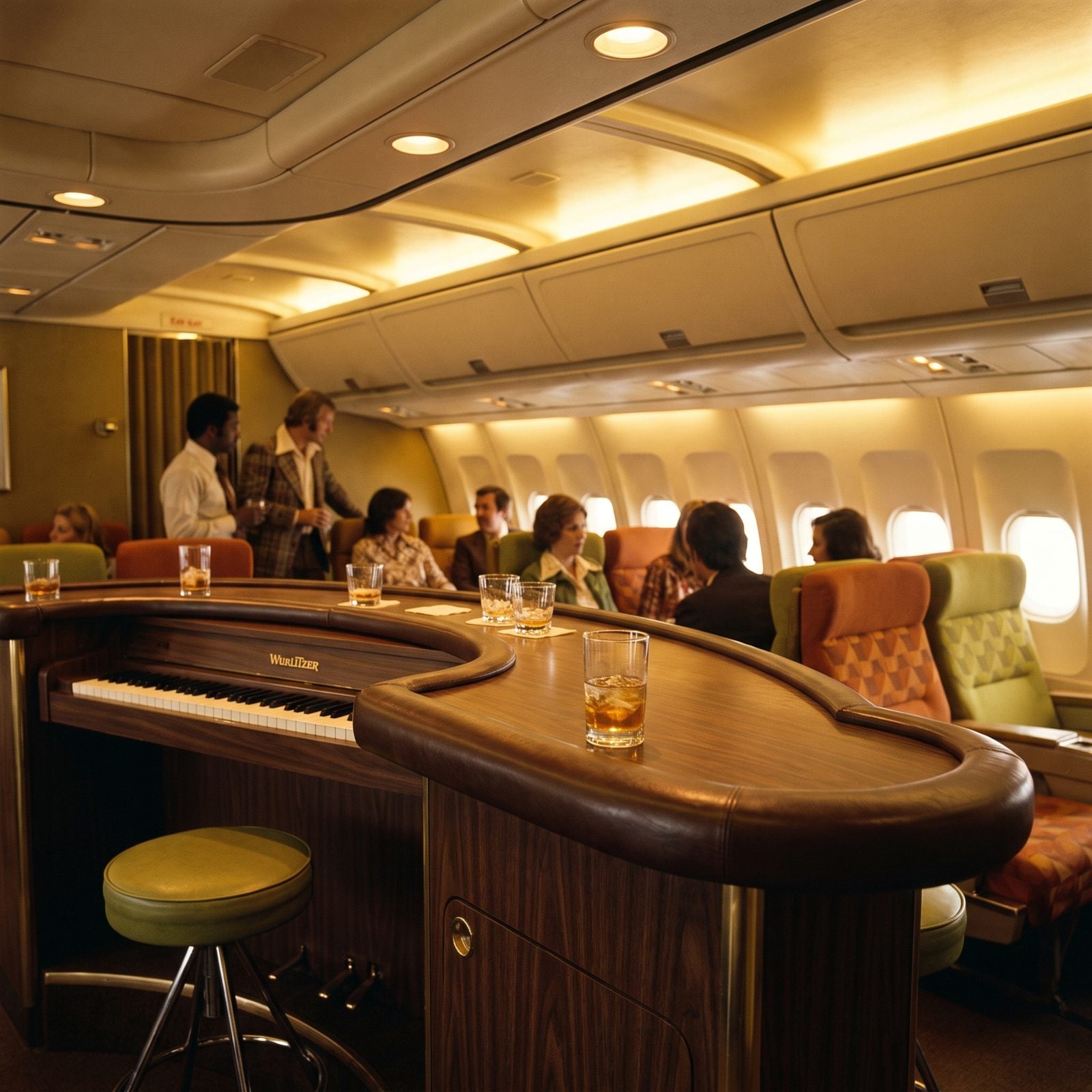
Picture ordering a drink at a piano bar, then remembering you’re over Kansas doing 600 miles an hour. American Airlines really did bolt Wurlitzer electric pianos into the coach lounges of its 747s, and coach passengers could wander back to a working bar for a Manhattan and a singalong.
The seats came out to make room for sociability. Carriers fought over who could cram the most charm into a cabin, because the government had already fixed the fares. You couldn’t win on price. So you won on whether your widebody had a piano.
Scheduled Helicopter Transfers Between Manhattan and the New York Airports
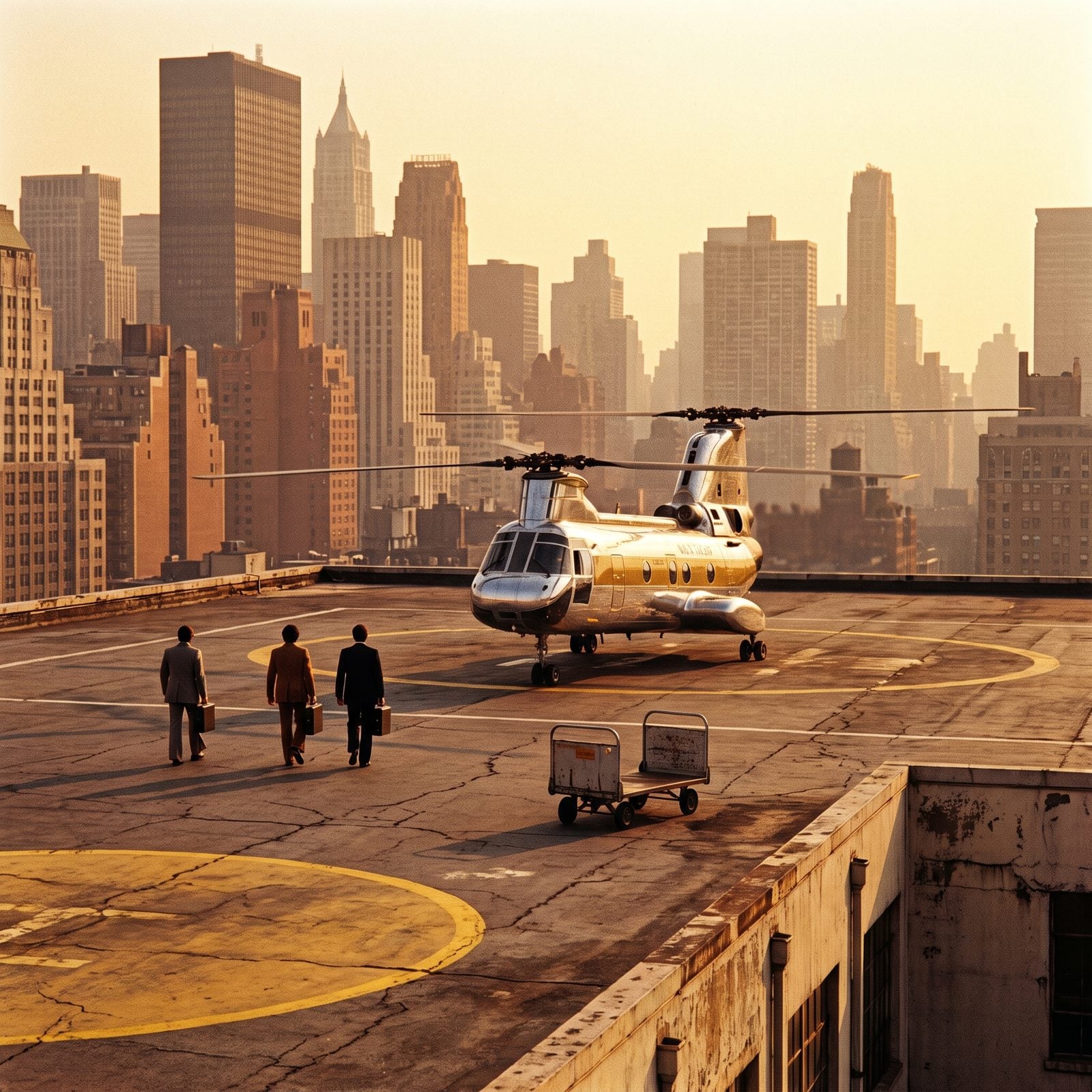
You wrapped a meeting in midtown, rode an elevator to the roof, and a helicopter whisked you to the airport before your coffee went cold. Scheduled chopper service linked Manhattan rooftops with JFK, LaGuardia, and Newark, turning a grinding cab ride into a ten-minute flight.
Expensive, and it felt it. The service came and went over the years, dogged by cost and a few tragic accidents that rattled public confidence. For a stretch of the decade, though, beating the traffic meant leaving the ground entirely.
The Flight-Insurance Vending Machines Standing Guard Near the Gates
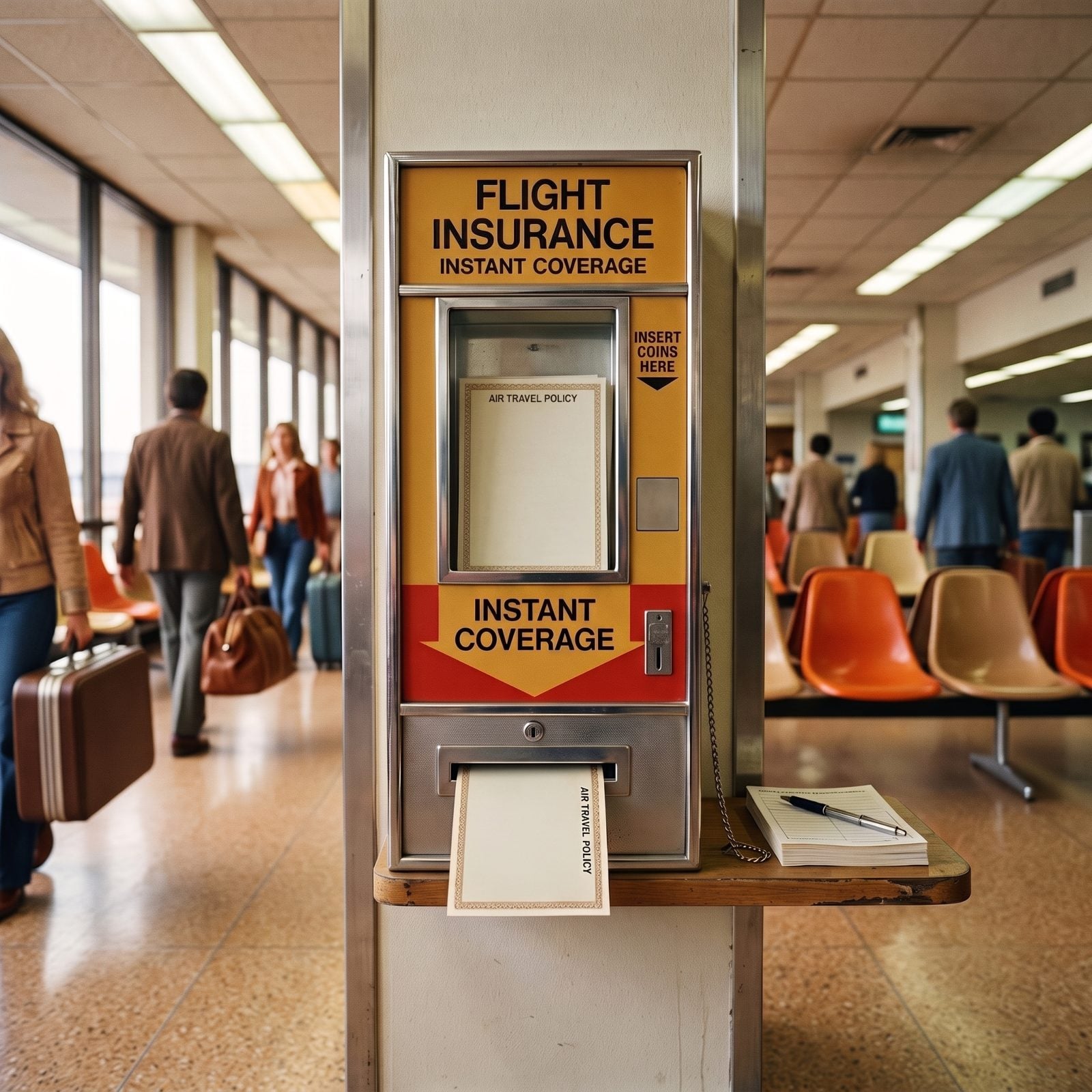
Right there by the gate, mounted on a pillar beside the rows of orange waiting-area seats, sat a machine that sold you life insurance by the coin. You fed it quarters, named a beneficiary, and bought a policy good for one flight before boarding.
The pitch worked on nerves. Air travel still felt risky enough that a machine selling peace of mind for pocket change made perfect sense to a lot of travelers. Cheap premiums, big possible payouts, the whole arrangement quietly folded as flying turned routine and the math stopped working.
Family-Plan Fares With Rules Written Like a Legal Contract
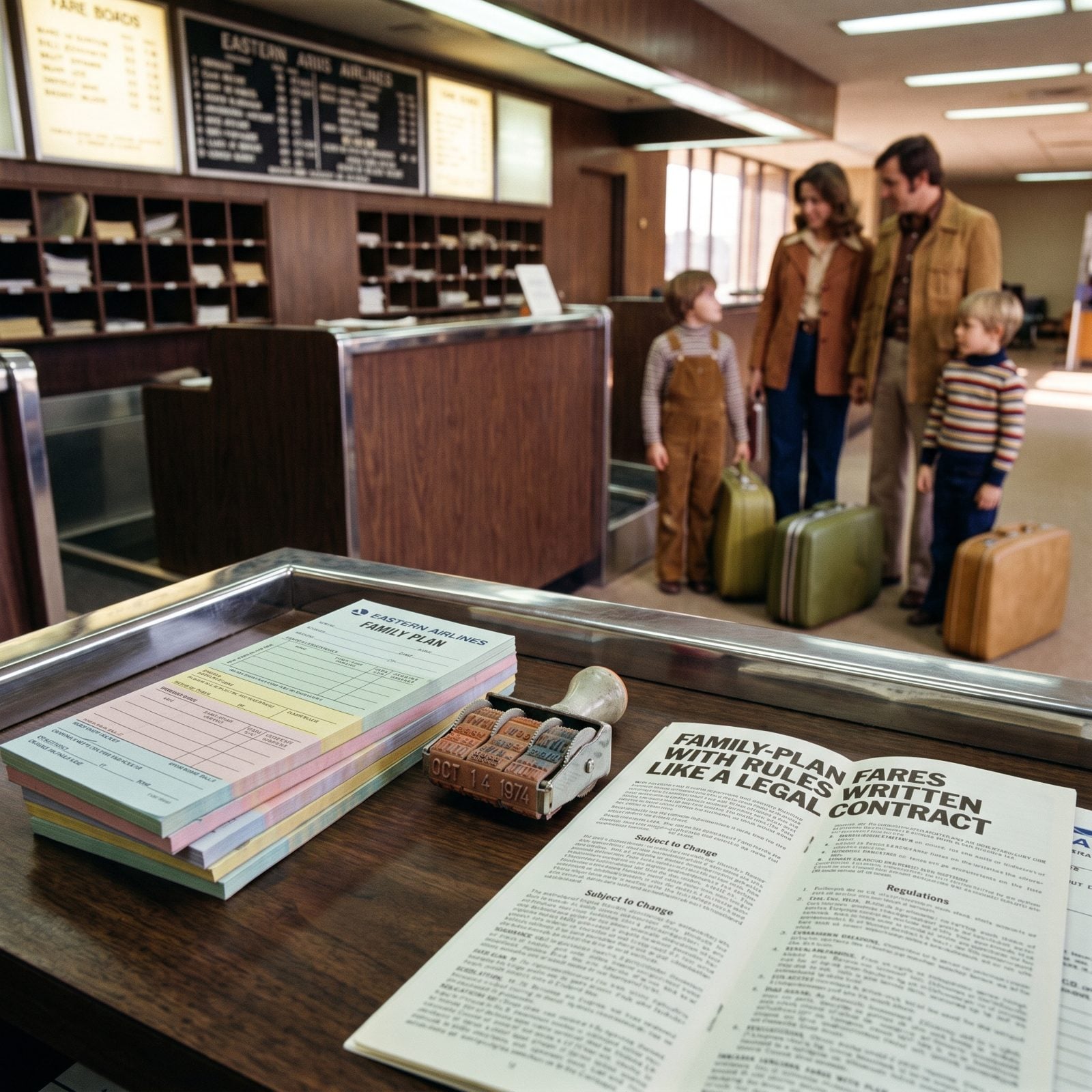
Fly the whole family and only Dad paid full fare. Everyone else traveled at a steep discount, provided you obeyed a thicket of conditions nobody could memorize without the brochure in hand.
The catch lived in the fine print: which days of the week qualified, how long you had to stay, when a kid’s birthday bumped them into a pricier bracket. Airlines couldn’t slash headline prices, so they cut them sideways with plans like this one. And there you’d stand at the airline ticket counter, suitcases at your feet and kids in tow, while a fare booklet thick with fine print lay open beside the date stamp and the stack of Family Plan forms, the arithmetic still to be run by hand.
Youth Standby Fares for Anyone Willing to Wait at the Gate
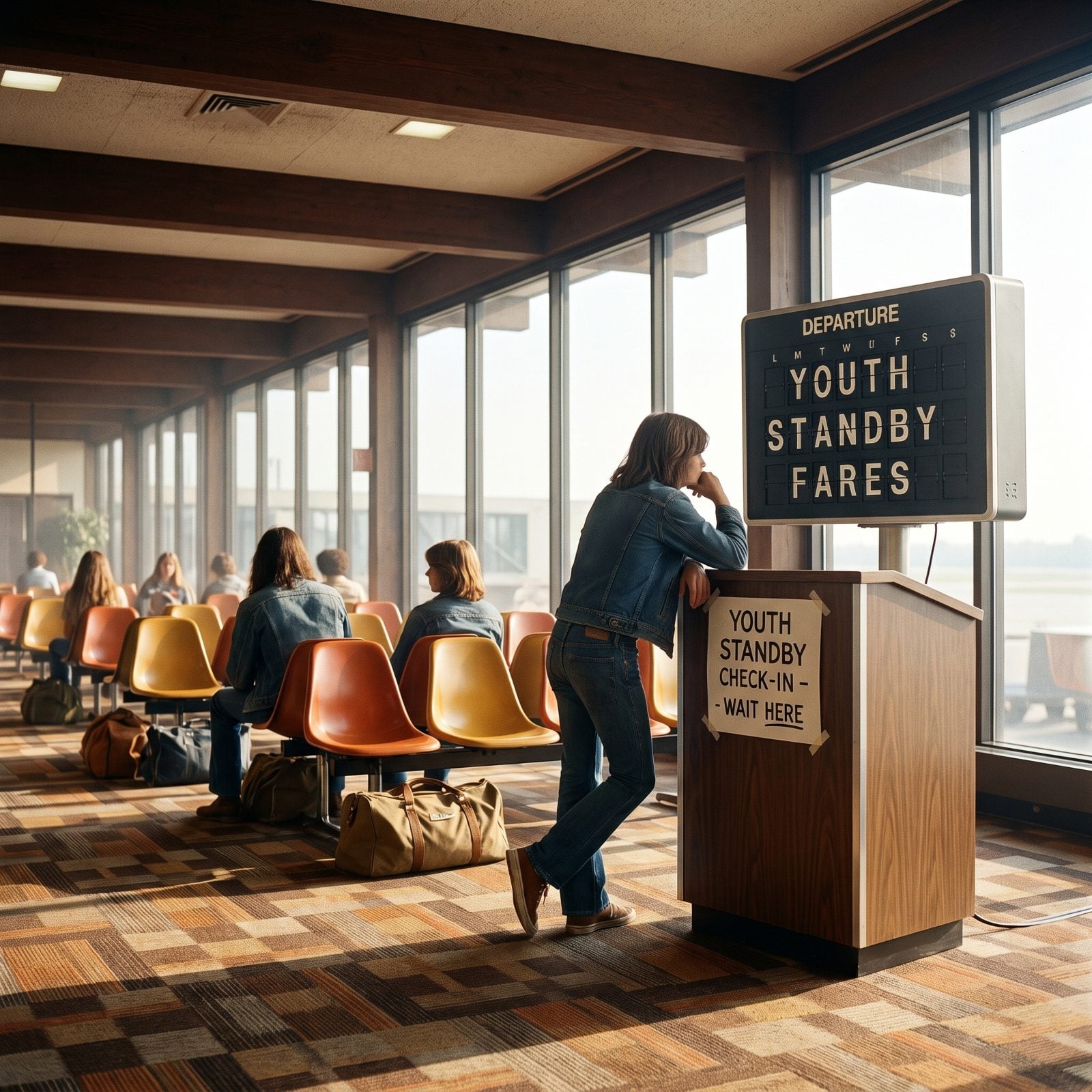
If you were under a certain age and flexible about everything, the country opened up for almost nothing. Youth standby fares let students and young travelers fly at a deep discount, with one string attached: you boarded only if a seat was still empty after everyone else sat down.
So you camped at the gate with a duffel and a paperback, eyeing the standby list, praying some no-show handed you a seat. Missed it? Try the next flight. Travel for the patient and the broke — and it threw a whole generation across the country on a shoestring.
Federal Regulators Deciding Which Routes an Airline Was Even Allowed to Fly
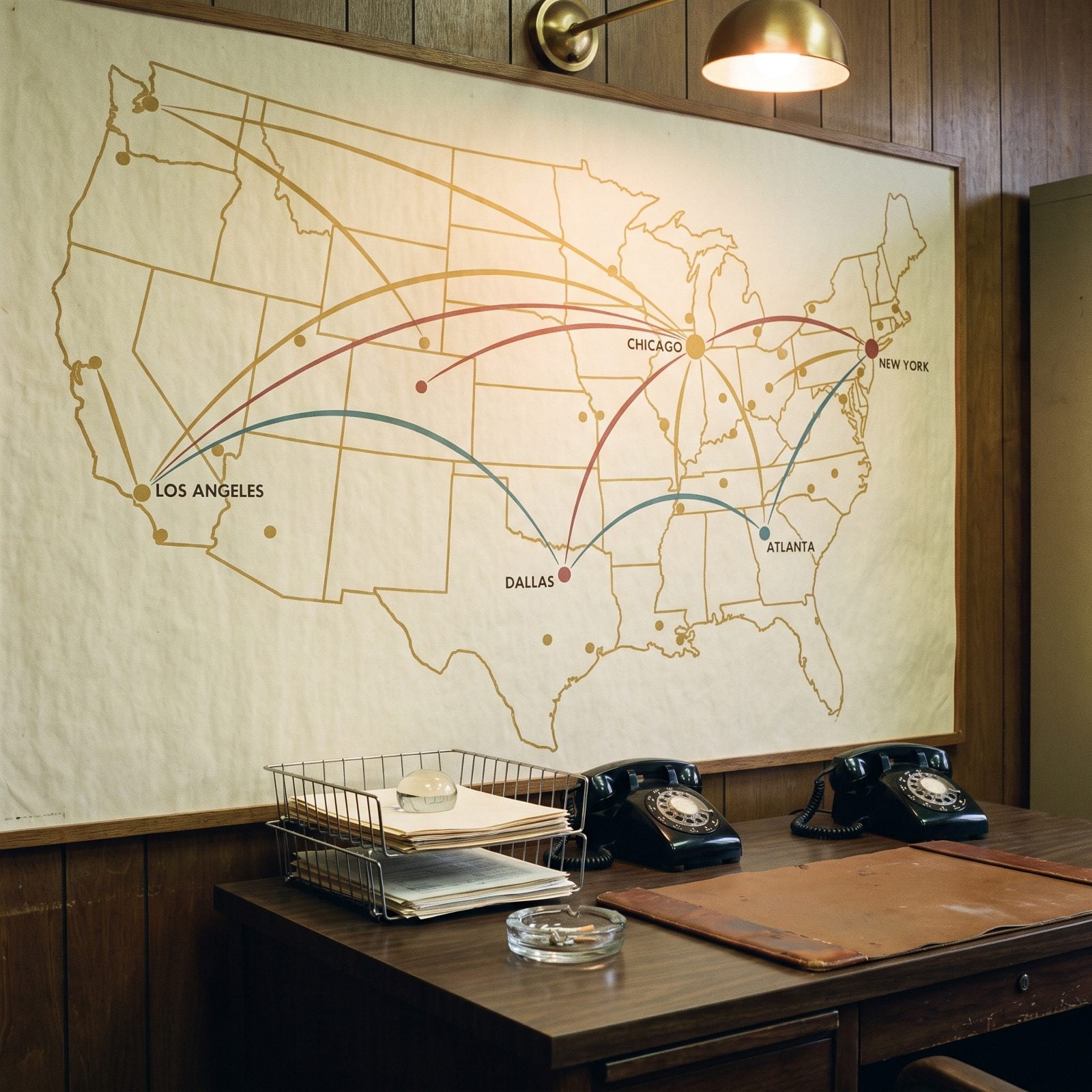
An airline couldn’t just add a route because customers wanted it. A federal board decided which carrier could fly between which cities, and winning permission to open a single new route could drag on for years of hearings.
The Civil Aeronautics Board held the keys. It carved up the map, shielded incumbents, and treated airline routes almost like public utilities. New competitors could barely wedge the door open. The whole structure held until deregulation blew it apart at the end of the decade, and the skies have never looked the same since.
Government-Set Fares That Forced Airlines to Compete on Steak Instead of Price
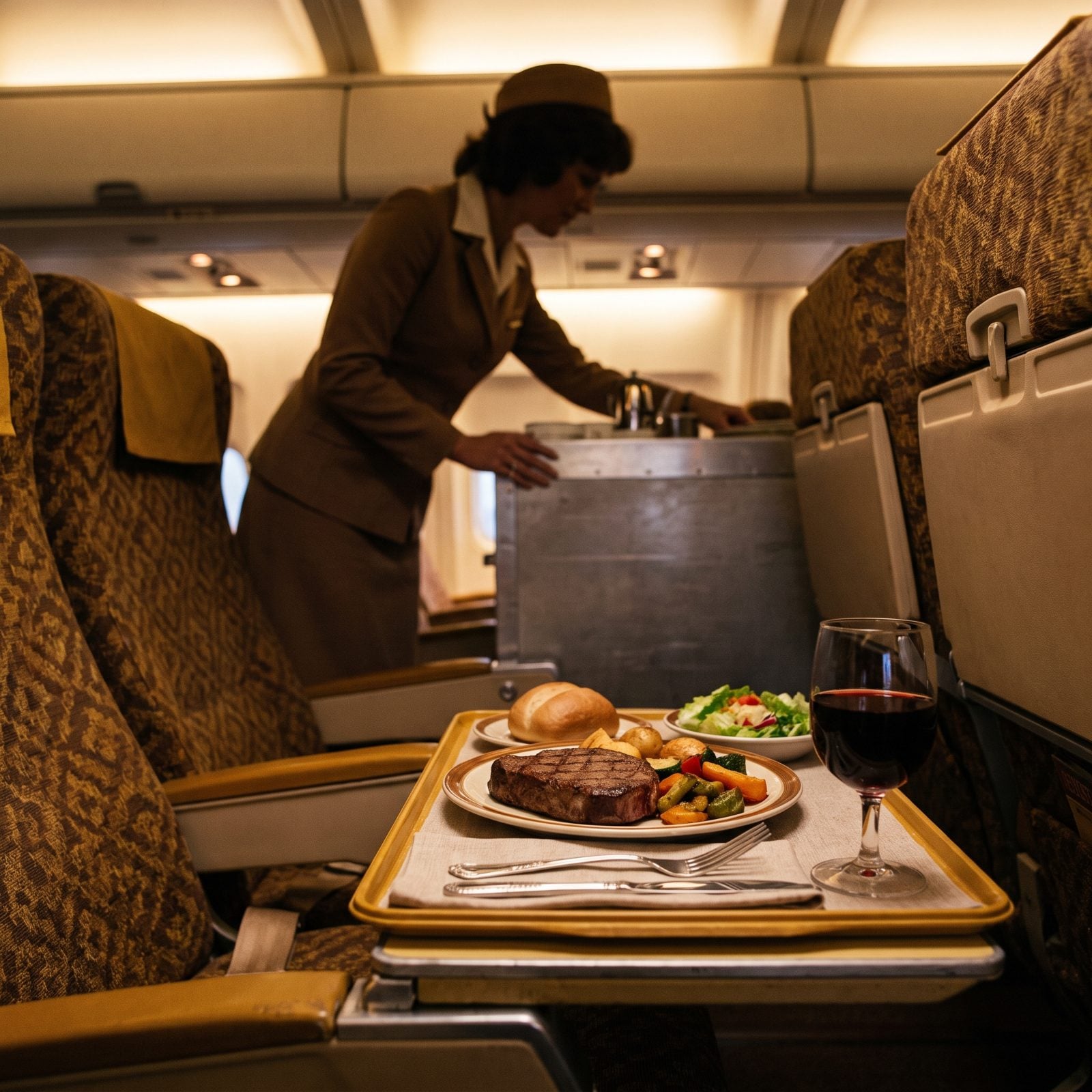
A real steak on actual china, even in coach. That was the logic of a system where the government fixed the fares and no carrier could undercut another by a dollar.
Same price everywhere meant the only battlefield left was the experience. So carriers poured money into meals, legroom, free drinks, attentive service. The seats got wider. The wine got poured. The tray got heavier.
Then deregulation ended the truce. Once airlines could fight on price, the steak quietly dwindled to a bag of pretzels. Cheaper tickets, sure — but we handed something over to get them.
The Weigh-Ins and Appearance Checks Female Cabin Crew Faced Before Every Trip
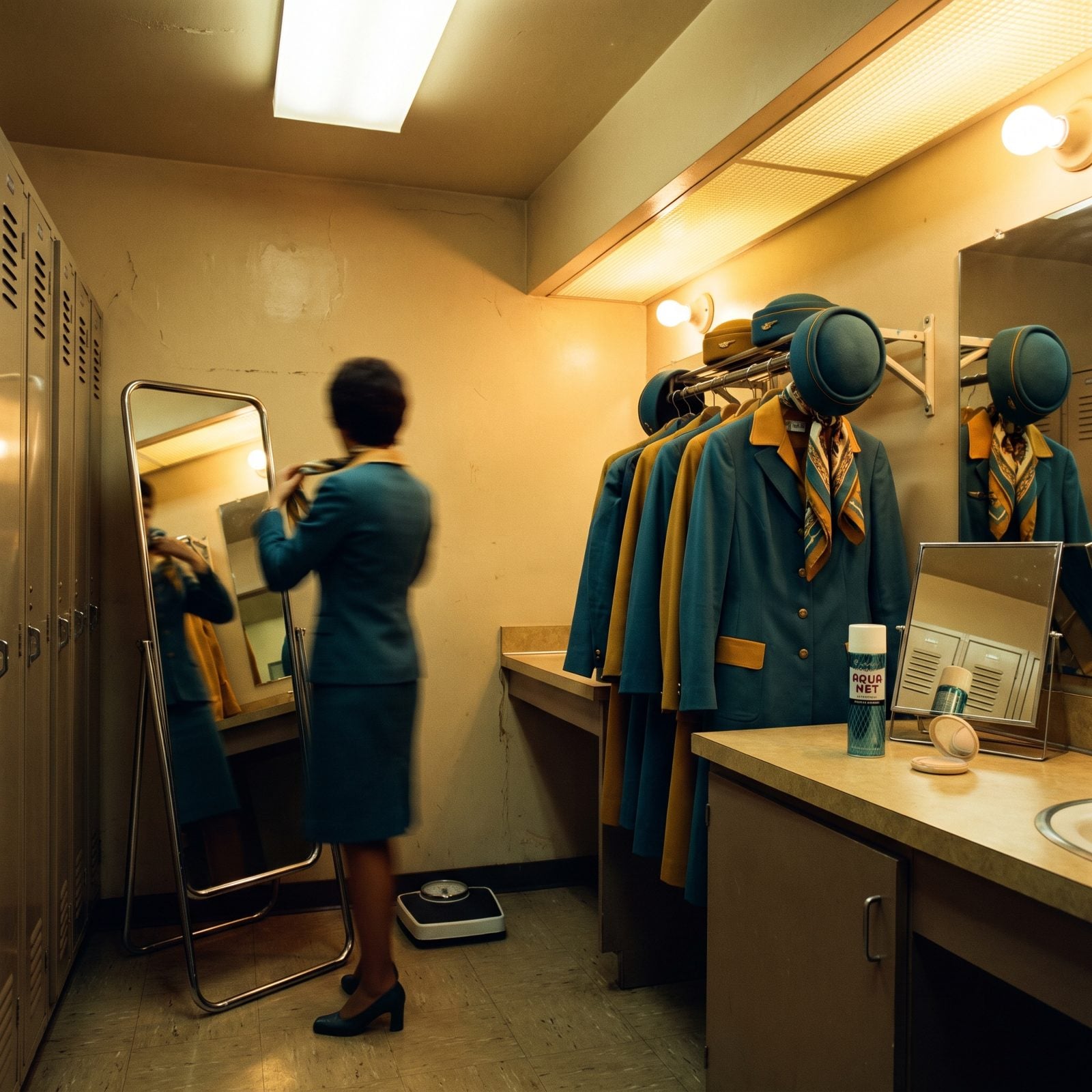
Before a trip a flight attendant might step on a scale and have a supervisor inspect her hair, her makeup, the fit of her uniform. Go over a posted weight limit and you could be grounded without pay until you dropped back under it.
The standards sprawled across company manuals — height ranges, weight charts tied to height, girdle requirements, the whole demeaning apparatus. Airlines sold the job as glamour, then policed the women doing it like products on a shelf. Dismantling it took lawsuits and organizing, and reading those old rules today lands like a slap.
The Slow Collapse of Marriage, Pregnancy and Age Bans on Stewardesses
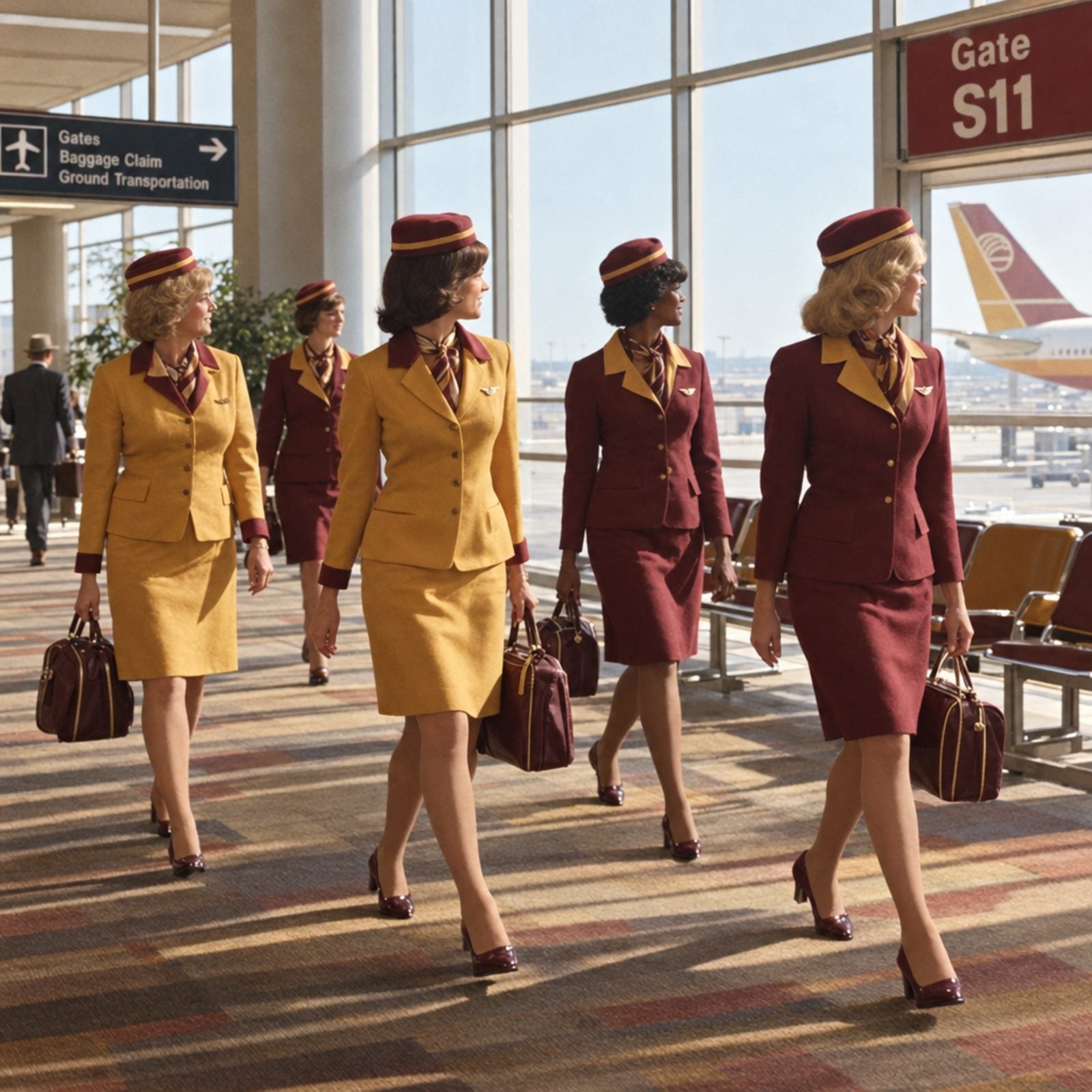
For years the job came stamped with an expiration date. Get married, get pregnant, or simply hit a certain age, and you were out. The work got treated as a young single woman’s brief adventure before real life began.
That scaffolding came down through the 1970s, piece by stubborn piece, under legal pressure and the women who flat refused to accept it. Marriage bans fell. Forced retirement at thirty-two fell. Pregnancy stopped meaning automatic dismissal. A temporary gig turned into a career you could actually keep, and the cabin finally held people who’d done the job for twenty years.
Calling the Airline 72 Hours Ahead to Reconfirm You Still Wanted to Fly
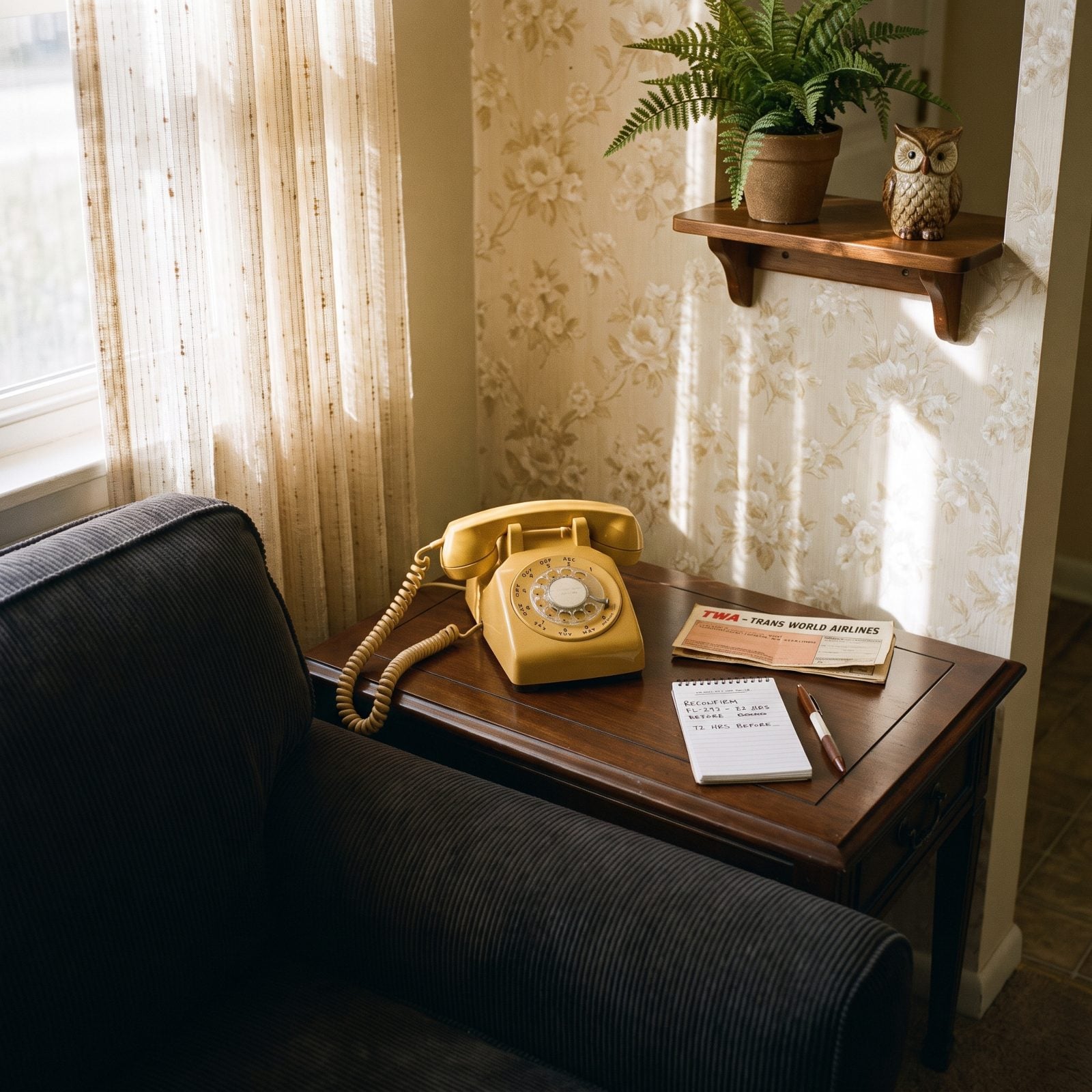
A ticket in hand didn’t guarantee you a seat. You were expected to telephone the airline a few days out, confirm you still meant to fly, then call again to lock in the return. Skip the call and they might hand your seat to someone else.
Reconfirming slotted into trip prep right alongside packing and arranging a ride. You’d dial the rotary, wait on hold, read your flight number off the paper ticket, and get a verbal yes. No app. No email. No automatic anything — just a phone call and the small relief of hearing you were still booked.
First-Class Passengers Eating Together at Full-Size Dining Tables
🔥 Would you like to save this?
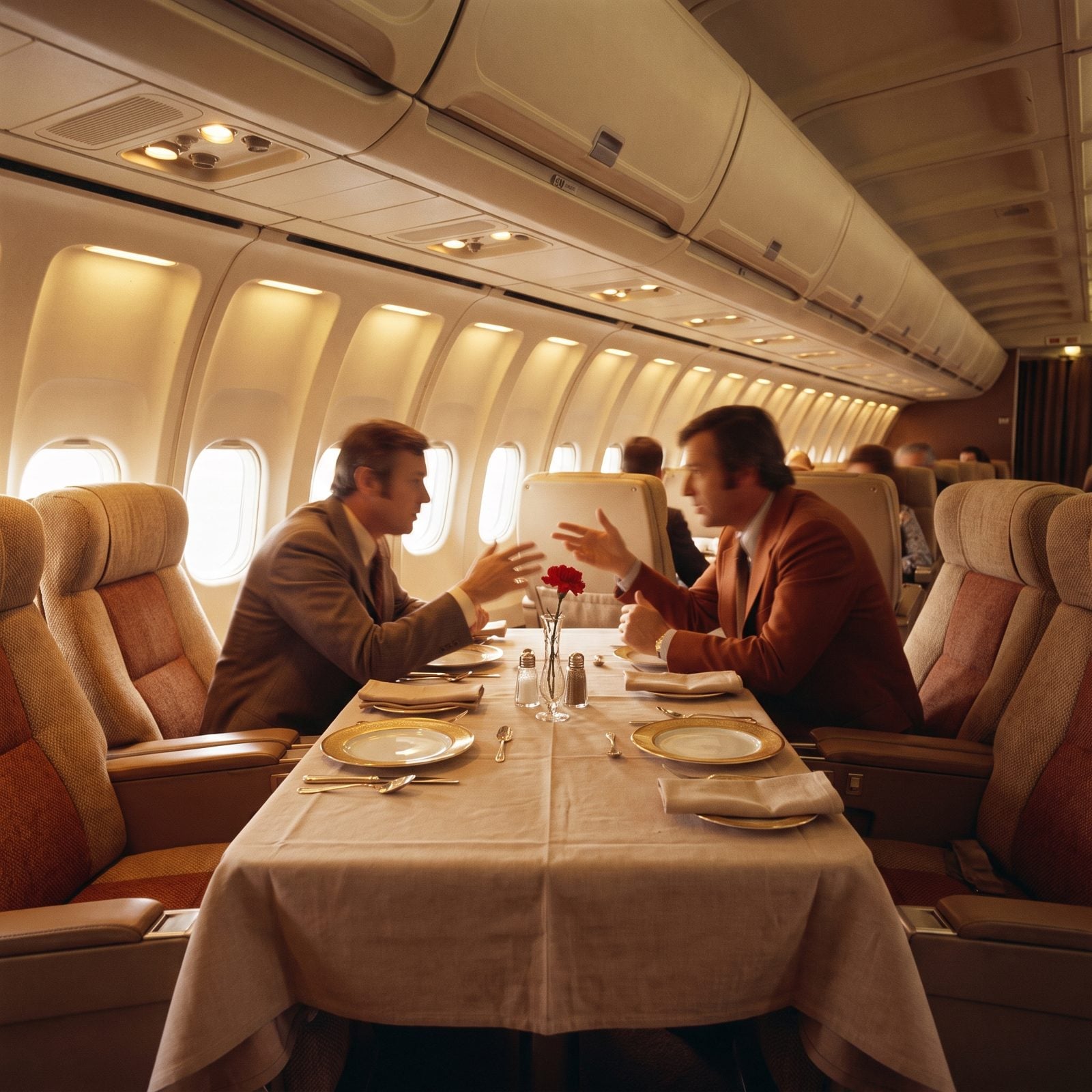
Start with the linen. A real tablecloth, pressed, laid across a table wide enough that two strangers could share a meal and actually see each other’s faces. First class in the 1970s wasn’t a wider seat with a better snack — it was a place you sat down to eat.
Airlines competed on the dining room, not the legroom. Facing seats, a table dropped between them, and the whole ritual of a proper meal unfolding seven miles up. People dressed for it. They lingered over it.
Roast Beef Carved Beside the Seat From a Rolling Trolley
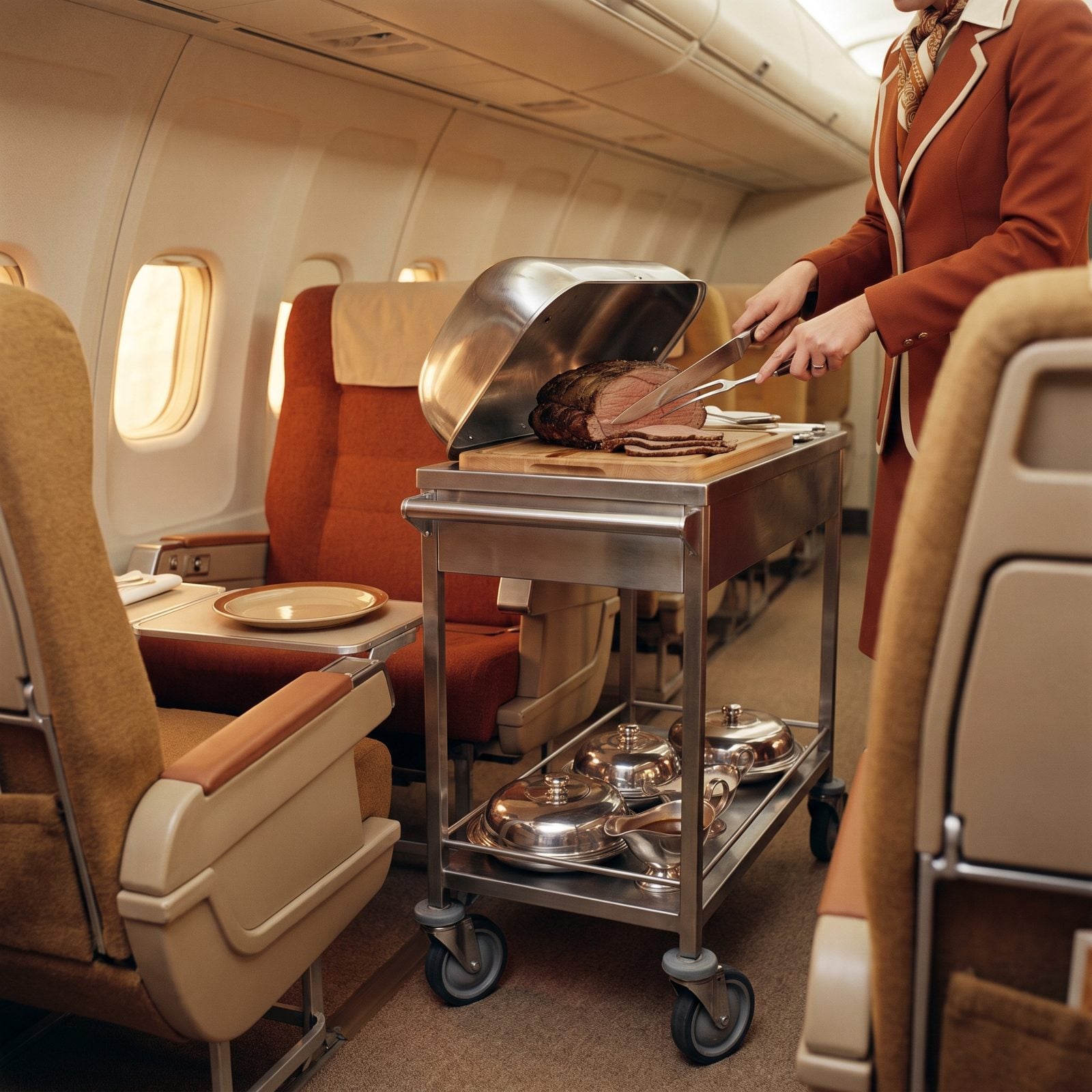
The cart rolled up the aisle like a dessert trolley at a steakhouse, except the showpiece was a whole roast under a warming dome. A flight attendant carved it to order right there beside your seat, asking how thin you wanted it.
Gravy from a boat, a spoonful of horseradish if you asked, and the smell of it drifting through the cabin while people back in coach caught a whiff and started recalculating their next ticket purchase.
Nobody was in a hurry. That was the point.
Multi-Course Coach Meals Served on China With Metal Cutlery
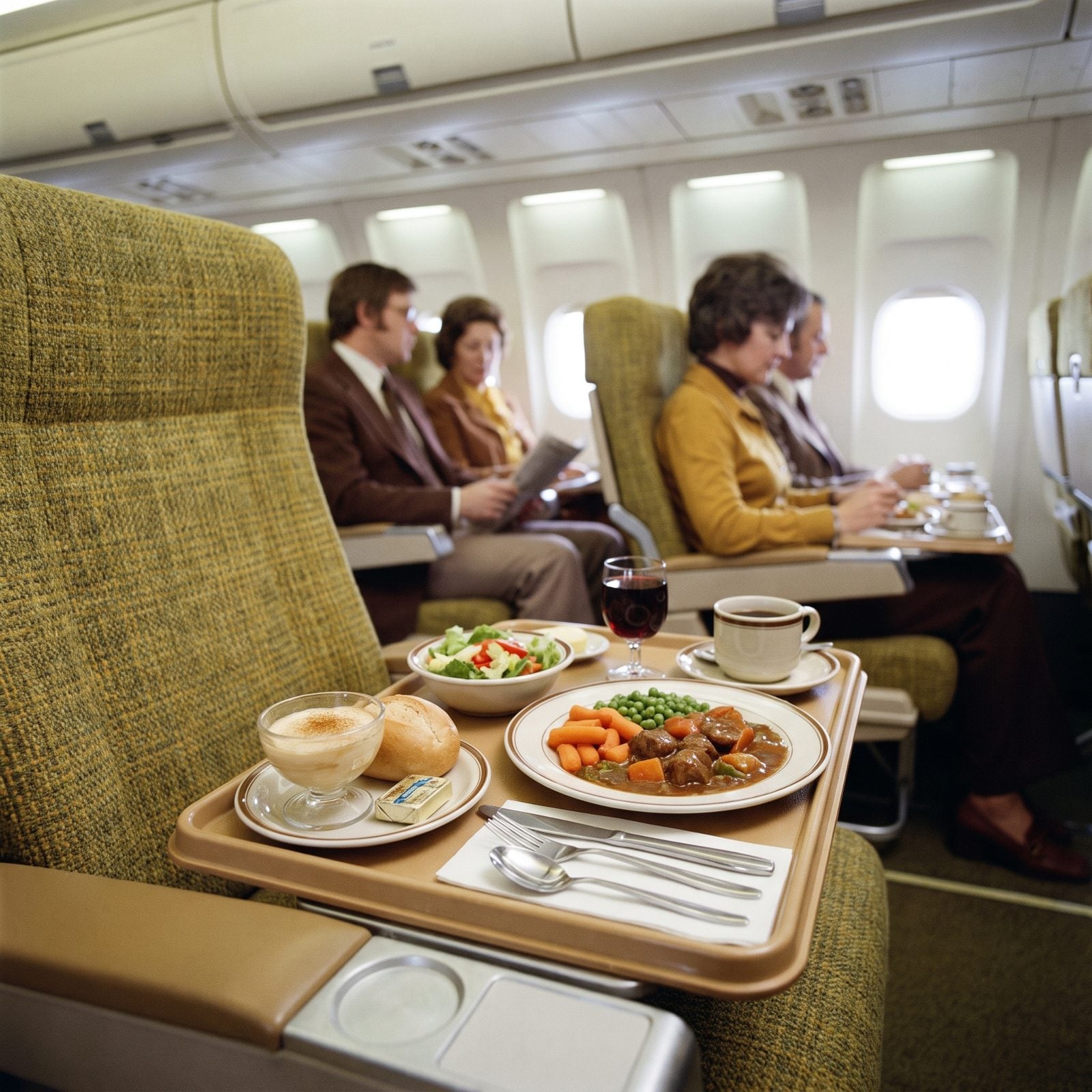
Coach ate well in the seventies. Not first-class well, but well. You got a hot entree on a porcelain plate, a roll with real butter, a little dessert, and metal cutlery you could actually cut with.
A spoon that held its shape. A knife that worked. Set that against the folding plastic fork that snaps on the first piece of chicken, and you start to understand what quietly disappeared somewhere along the way.
Caviar and Champagne Presented Tableside in First Class
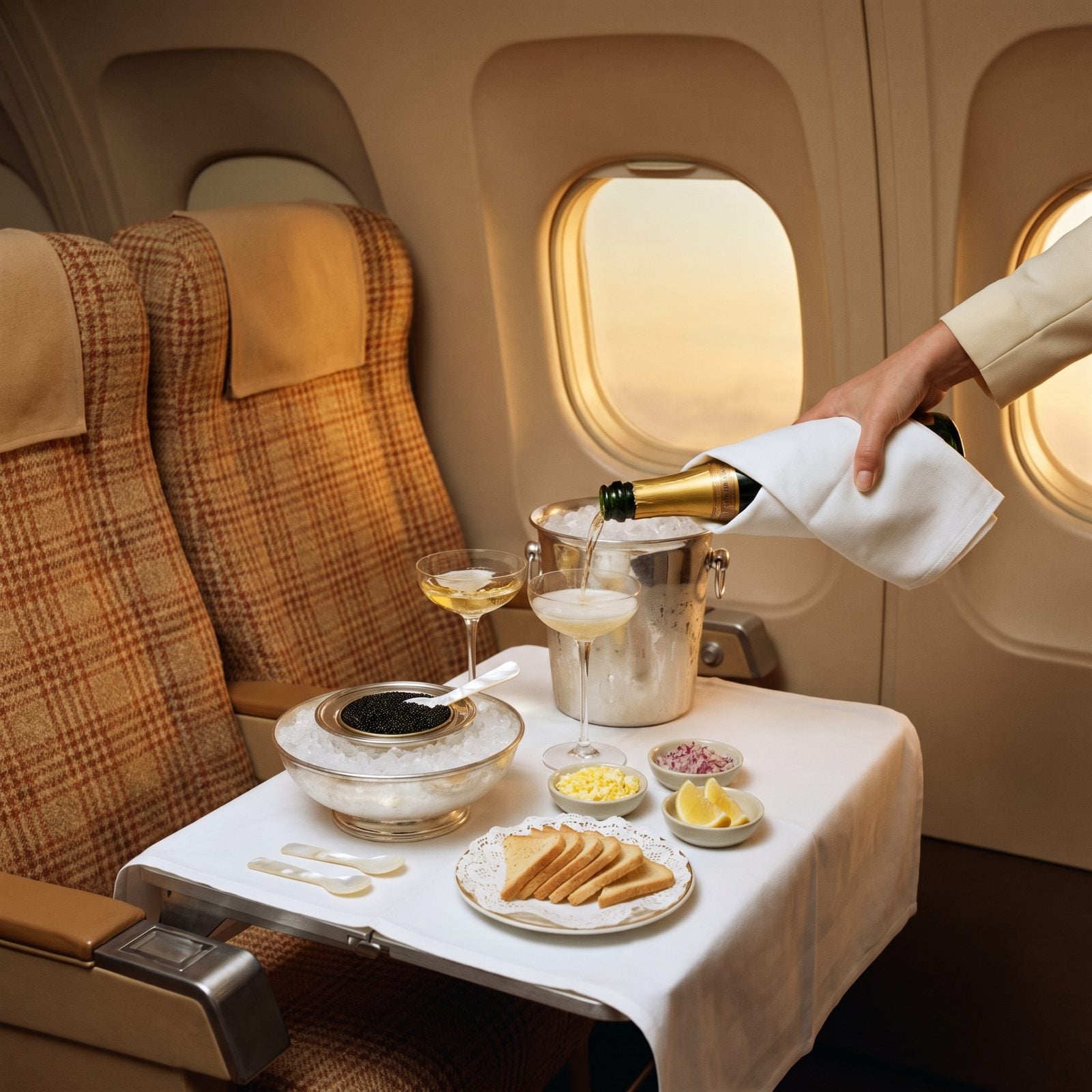
Crushed ice, a silver bowl, and a mother-of-pearl spoon — because metal spoons supposedly dull the flavor. The caviar arrived with the whole production around it: chopped egg, minced onion, lemon, toast points on a doily. Then came the champagne, poured at your elbow, cold enough to fog the glass.
Call it what it was. Marketing dressed up as hospitality, and it worked beautifully. A full-fare ticket up front bought you the sort of fuss a grand hotel saves for a honeymoon suite.
747 Upper Decks Furnished as Cocktail Lounges Instead of Seat Rows
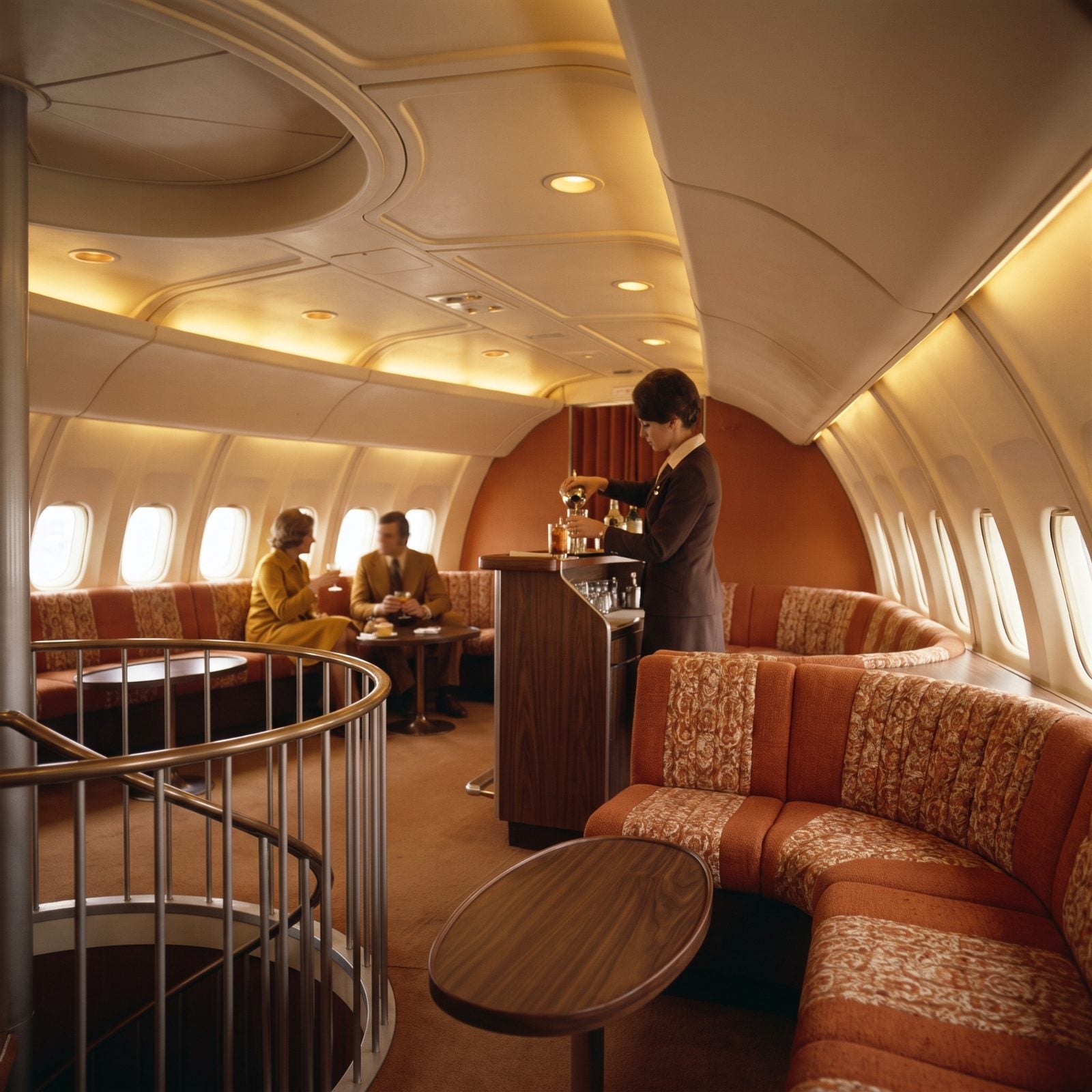
You climbed a spiral staircase to a bar. On the early 747s, the hump wasn’t crammed with seats — it was a lounge, with banquettes, cocktail tables, and a steward mixing drinks while the plane crossed an ocean.
People stood around holding highballs like they were at a party that happened to be airborne. A few airlines even put in a piano. The space that now sells as premium seating was once handed out free, as a room where strangers could mingle.
Open Cockpit Doors and In-Flight Visits With the Pilots
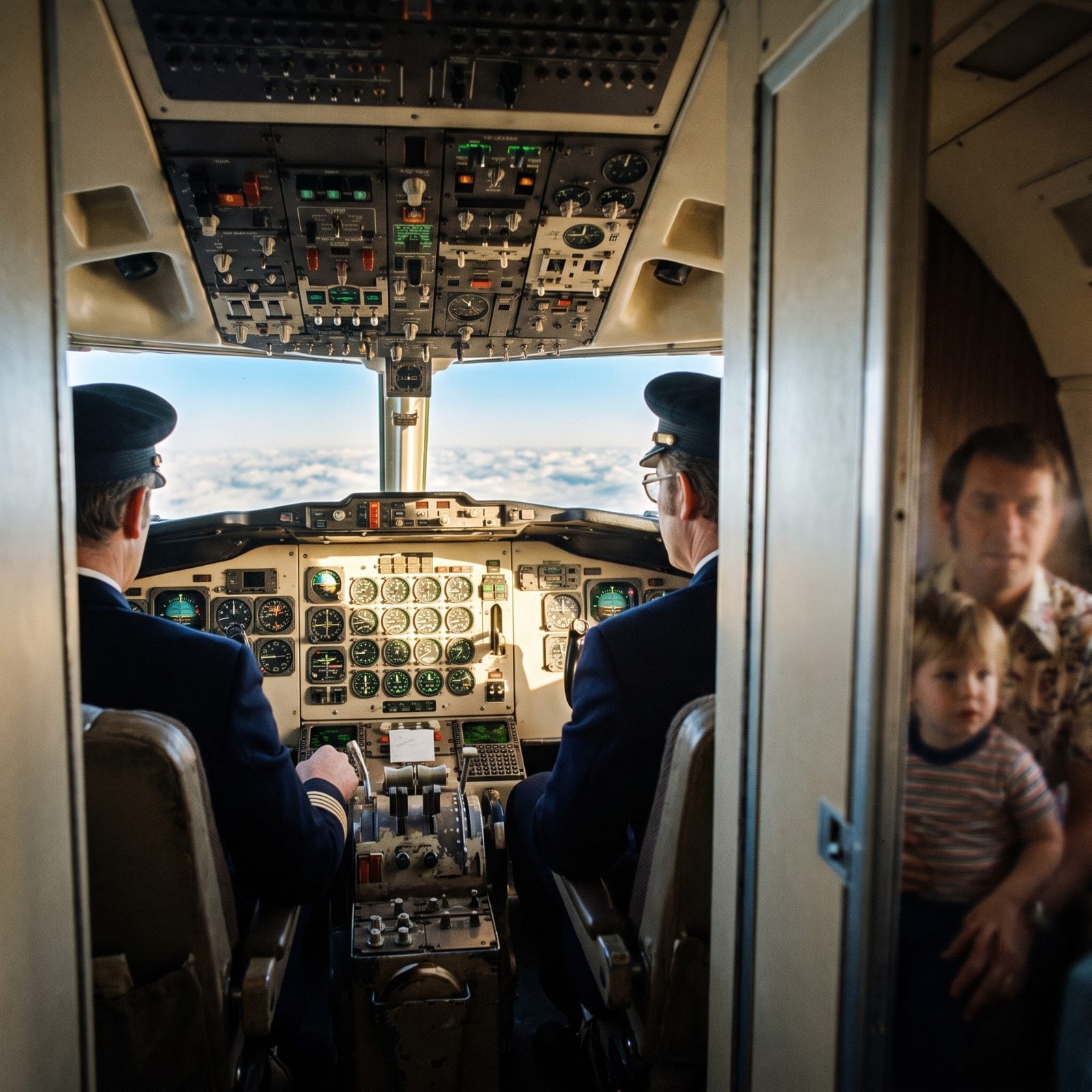
The door stood open. A flight attendant might walk a curious kid up front to meet the captain, who would turn around, explain a dial or two, and hand over a plastic set of wings to pin on a sweater.
Parents thought nothing of it. The cockpit was part of the tour, not a fortress.
That openness feels like another world now, and it is. The reinforced, locked, access-controlled door that replaced it tells you plenty about how the decades in between rearranged everything.
Airports Without Universal Passenger Screening at the Start of the Decade
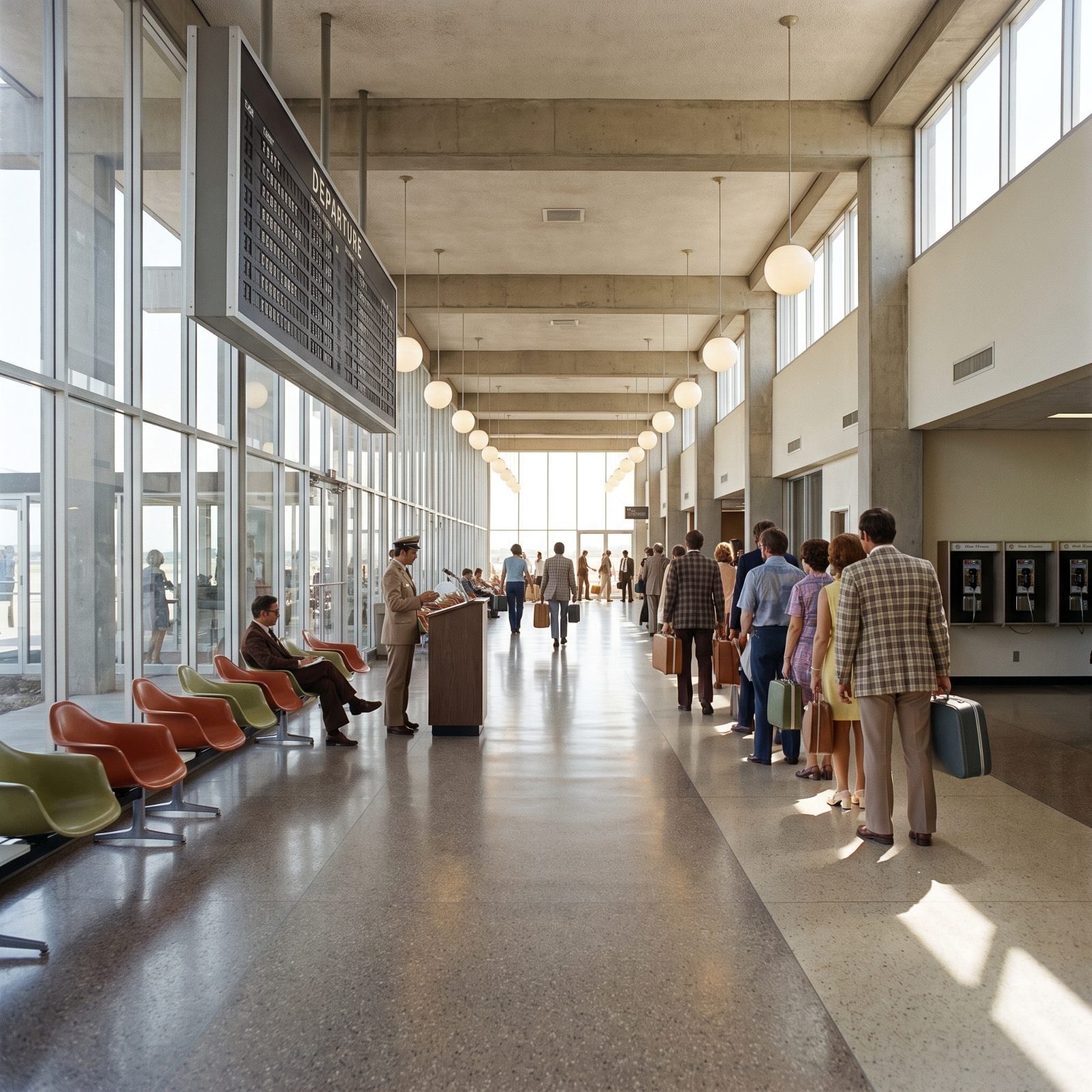
At the start of the decade you could walk from the curb to the gate without stopping once. No checkpoint, no line, no shoes off. You showed up and you walked on.
Universal screening arrived in 1973, a direct answer to a run of hijackings. Before that, the terminal felt closer to a train station than the fortress it is now — and sprinting straight from the parking lot onto a departing flight was a genuine possibility people pulled off all the time.
Domestic Passengers Commonly Boarding Without Showing Photo Identification
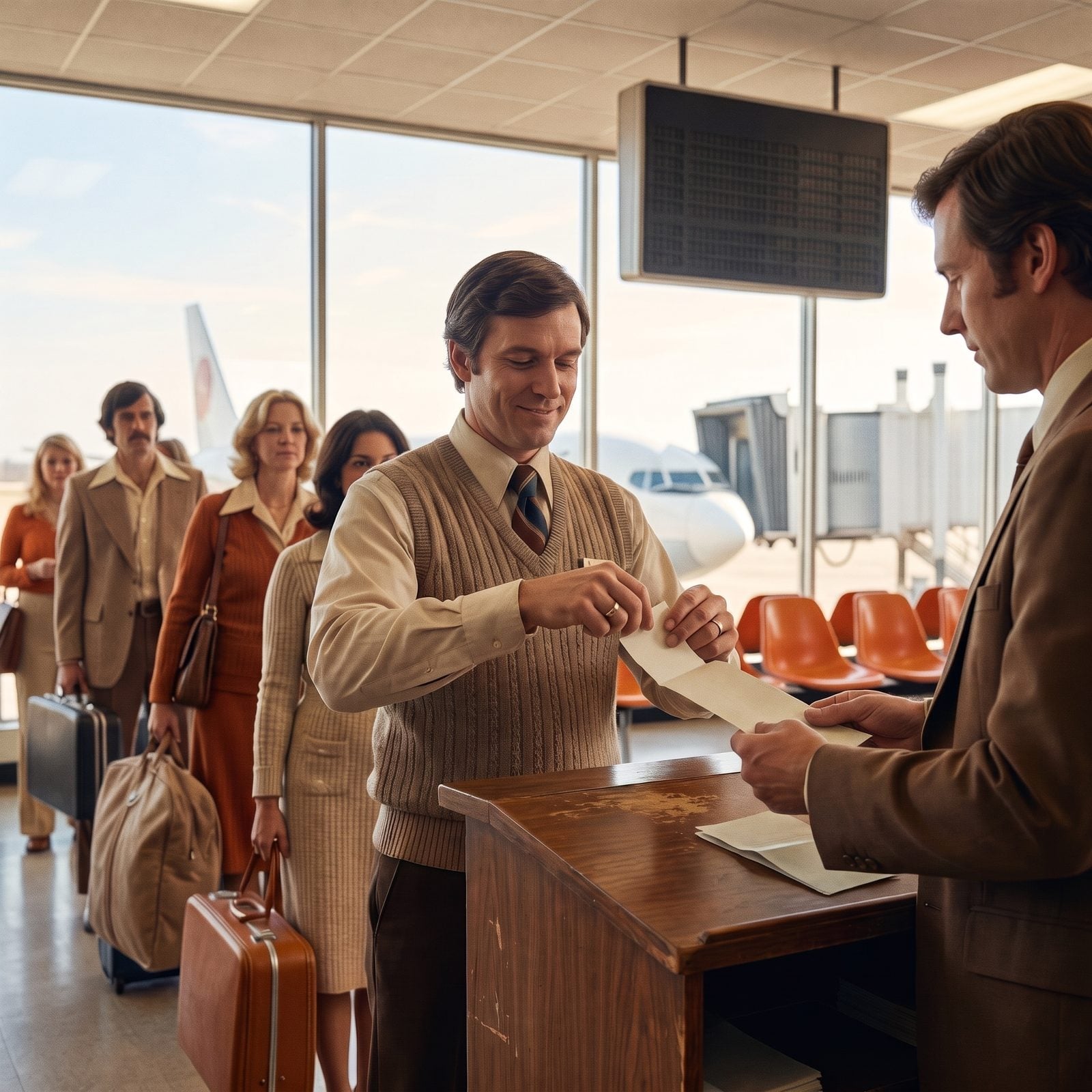
You handed over a paper ticket and walked on. Nobody asked for a driver’s license, nobody matched your name to a card, nobody cared whether the ticket said your name at all.
Tickets changed hands like cash. Buy one, change your mind, and pass it to a friend who then flew under a name that wasn’t his — simple as that.
Relatives and Friends Accompanying Travelers All the Way to the Gate
🔥 Would you like to save this?
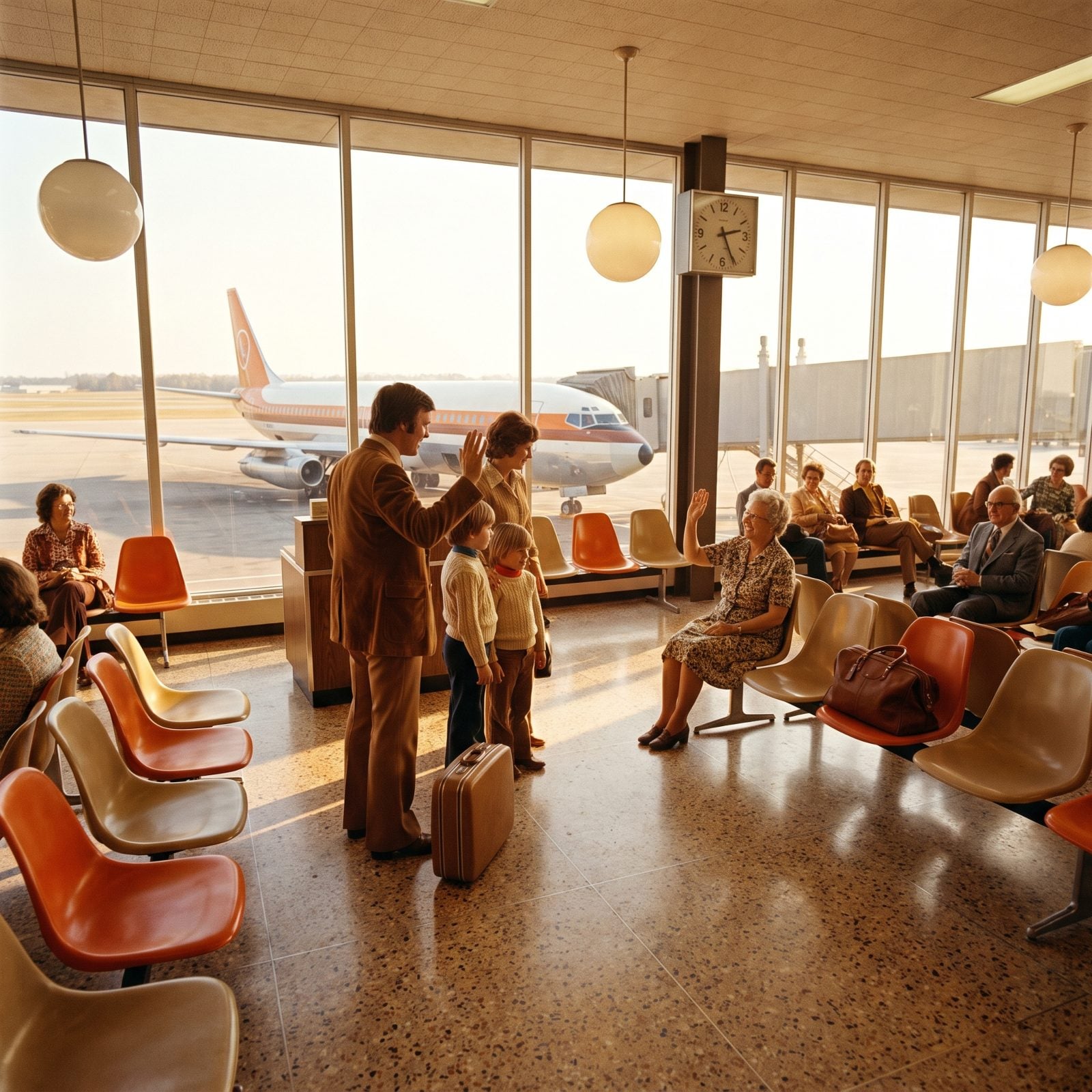
Seeing someone off meant going all the way to the gate. Grandparents, kids, a nervous new girlfriend — all of them walked right up to the window to watch the plane push back, waving until it vanished.
Gate areas filled with people who weren’t flying anywhere. They came to say goodbye properly, to press a face to the glass, to stand there one minute longer than they needed to.
The curbside goodbye that replaced it is efficient. It’s also a smaller thing.
Early Metal Detectors Paired With Manual Carry-On Bag Searches
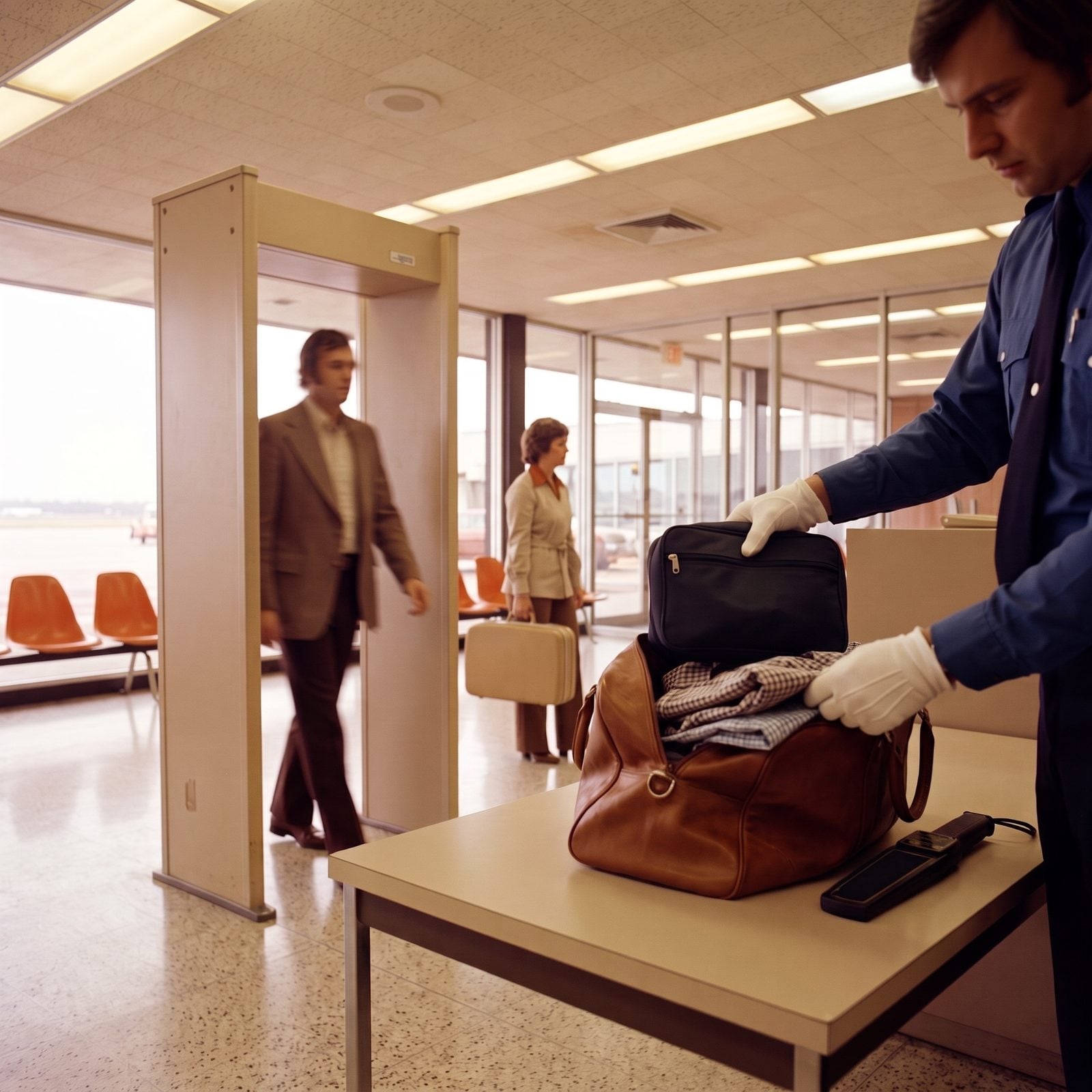
The first checkpoints were simpler than you remember. A plain metal archway you walked through, and if something beeped, a screener opened your bag and dug through it by hand.
No X-ray tunnel at first. No conveyor. Just a person lifting out your toiletry kit and your paperback and setting them back, with a handheld wand for a second pass if anything still nagged at them.
Small Pocketknives and Full-Size Toiletry Bottles Rode Along in Carry-Ons
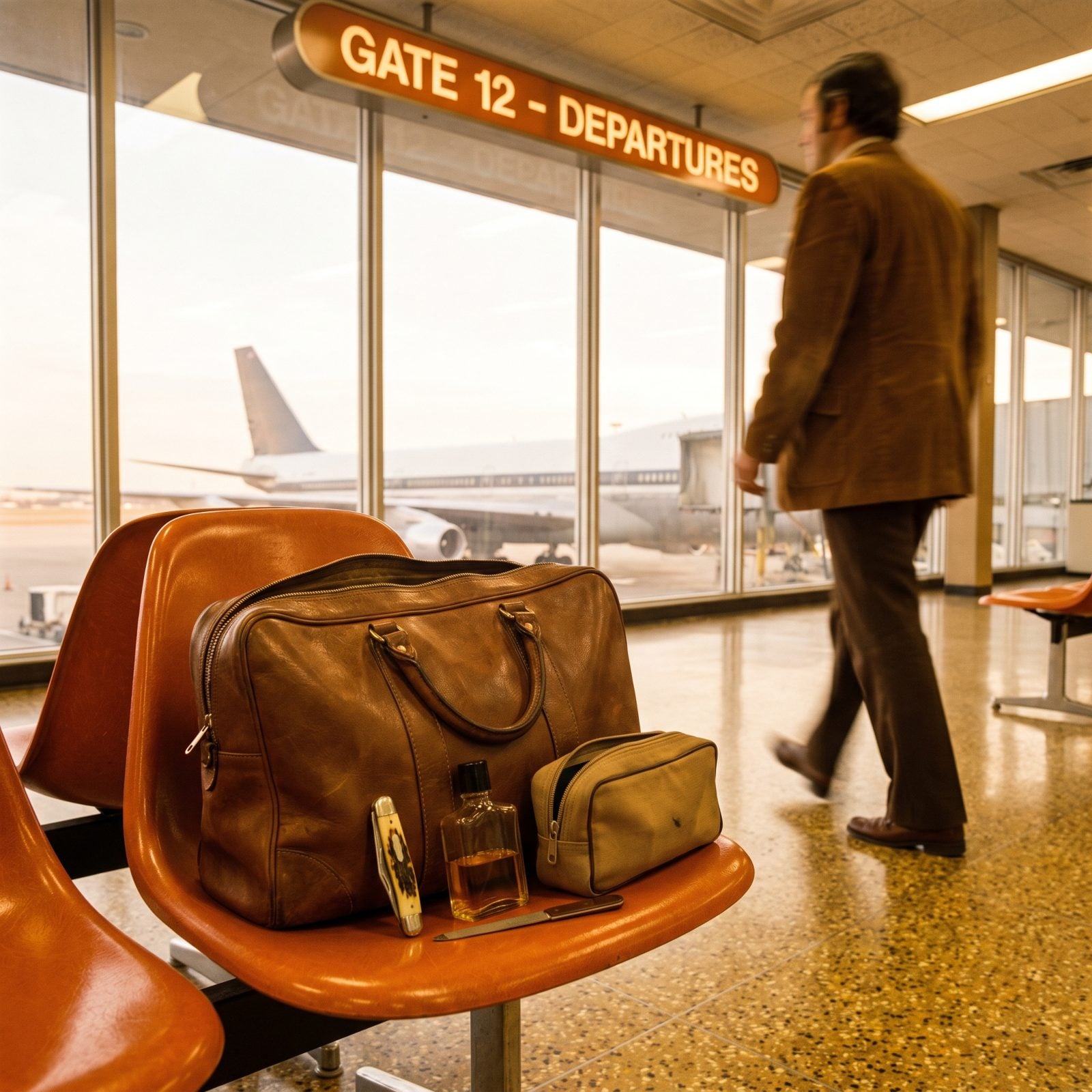
Nobody asked you to empty your pockets. You strolled to the gate with your house keys, a folding knife for cutting apples on the drive, and a full glass bottle of cologne tucked beside your socks — and a pair of scissors in your toiletry kit raised exactly zero eyebrows.
The whole security apparatus most travelers remember simply didn’t exist yet. Sure, metal detectors were creeping into airports by the early part of the decade, but the obsessive liquid-and-blade sorting ritual was decades off. You packed what you needed and brought it aboard. Done.
Hollow-Tube Headsets You Rented by the Dollar to Hear the Film
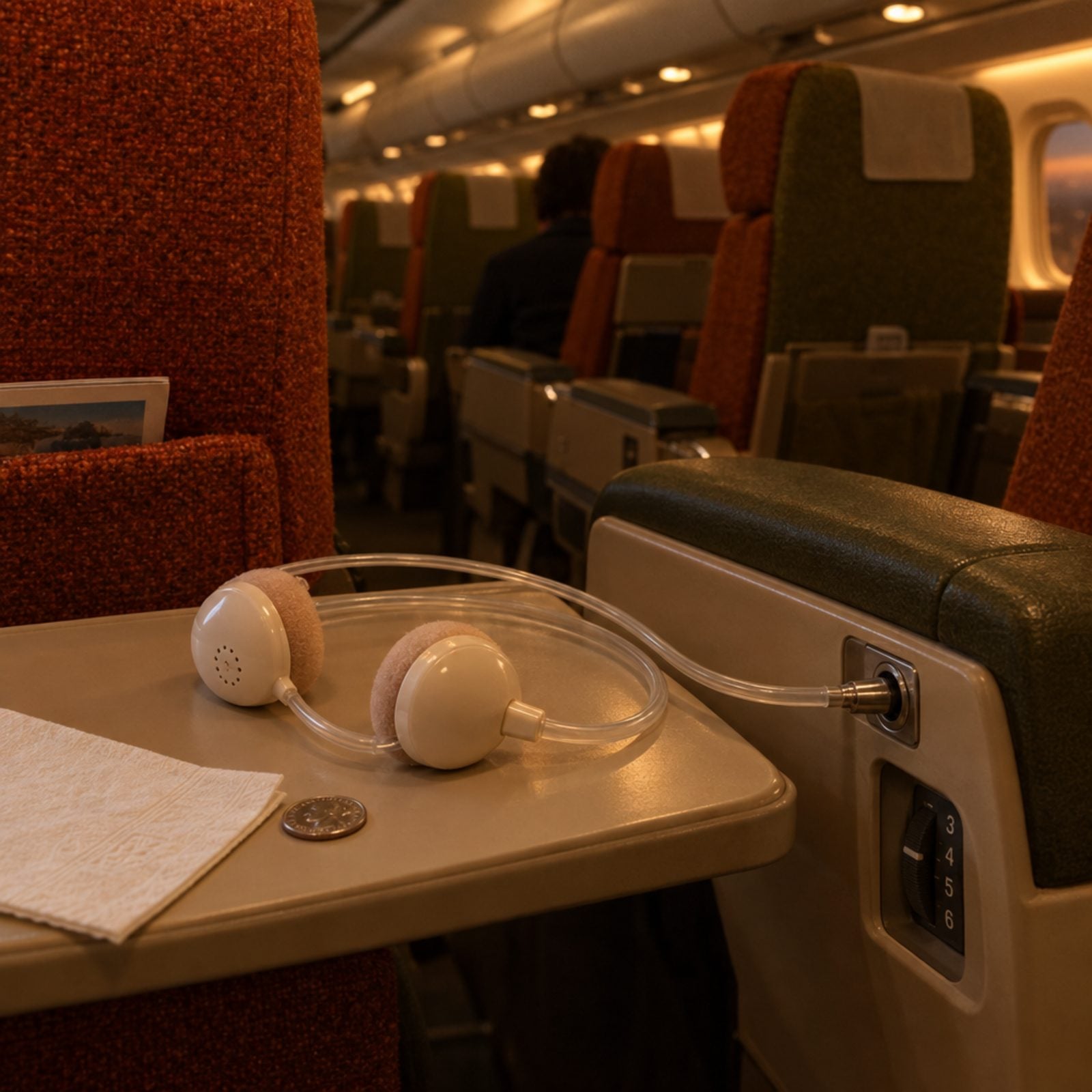
The sound arrived like a secret whispered through a garden hose. These were pneumatic headsets, not electronic ones. Two earpieces on a stethoscope-style band, their clear tubes ending in a plug that went into a socket in your armrest — tinny, faint, and somehow thrilling anyway.
A flight attendant worked down the aisle selling them for a dollar or two, dropped into a little paper envelope, and you twisted the dial on your armrest to pick a channel. Half the plane never bothered and just watched the picture in silence.
Cheap on purpose, of course. Nothing fancy, nothing to break, nothing worth stealing. The airline collected them at the end and ran them again on the next leg.
One Movie Screen for the Whole Cabin, Projected Onto the Bulkhead
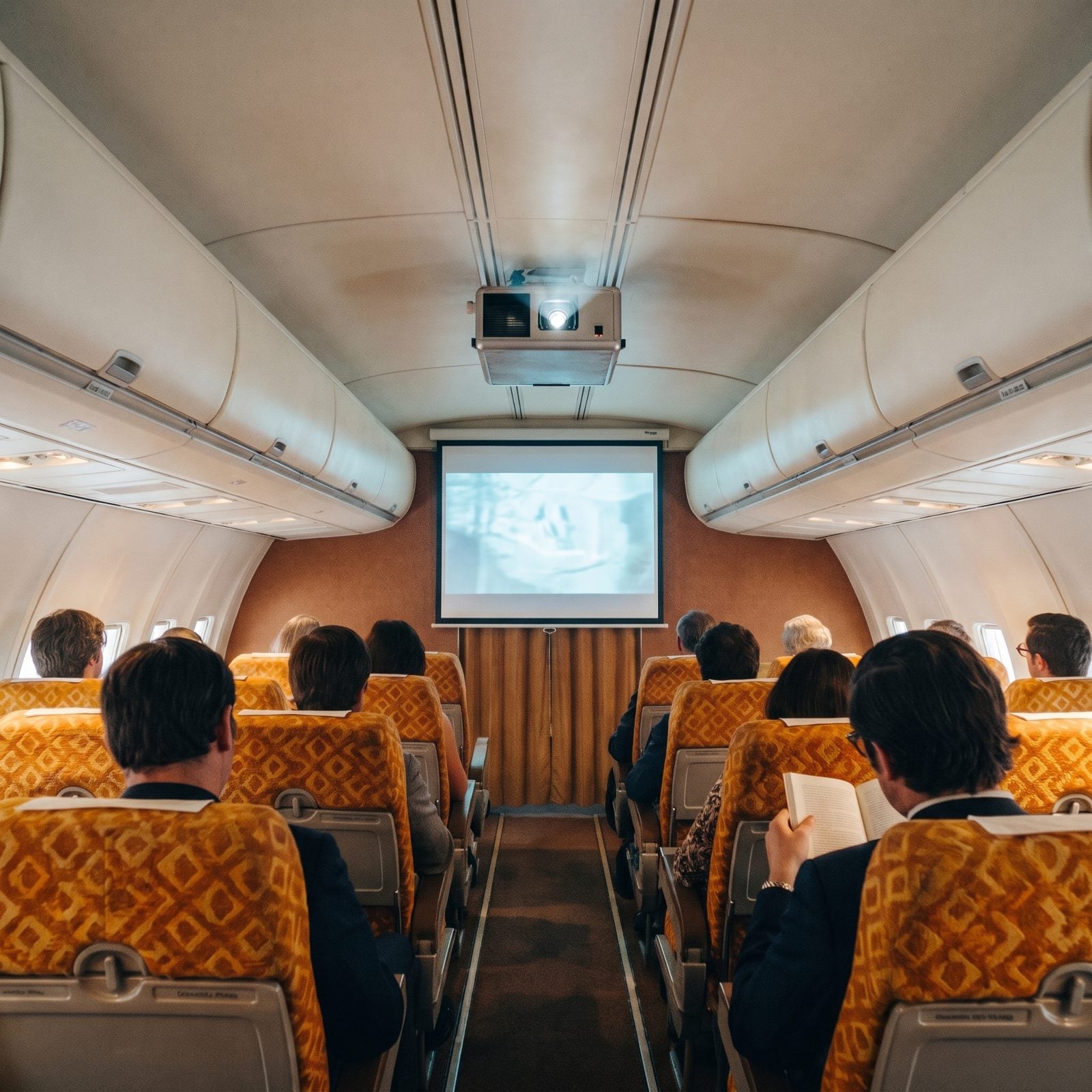
Everyone watched the same thing at the same time, like it or not. A single screen dropped down at the front of the cabin, a projector hung from the ceiling aimed at it, and the movie flickered to life for the whole plane like a drive-in you couldn’t leave.
No pausing. No picking. Doze off during the good part and it was gone for good. The person in 34C and the person in 11A were living through identical frames in identical seconds, which lent a long flight this strange sort of forced togetherness that nobody really minded.
Designer Stewardess Uniforms in Hot Pants and Go-Go Boots
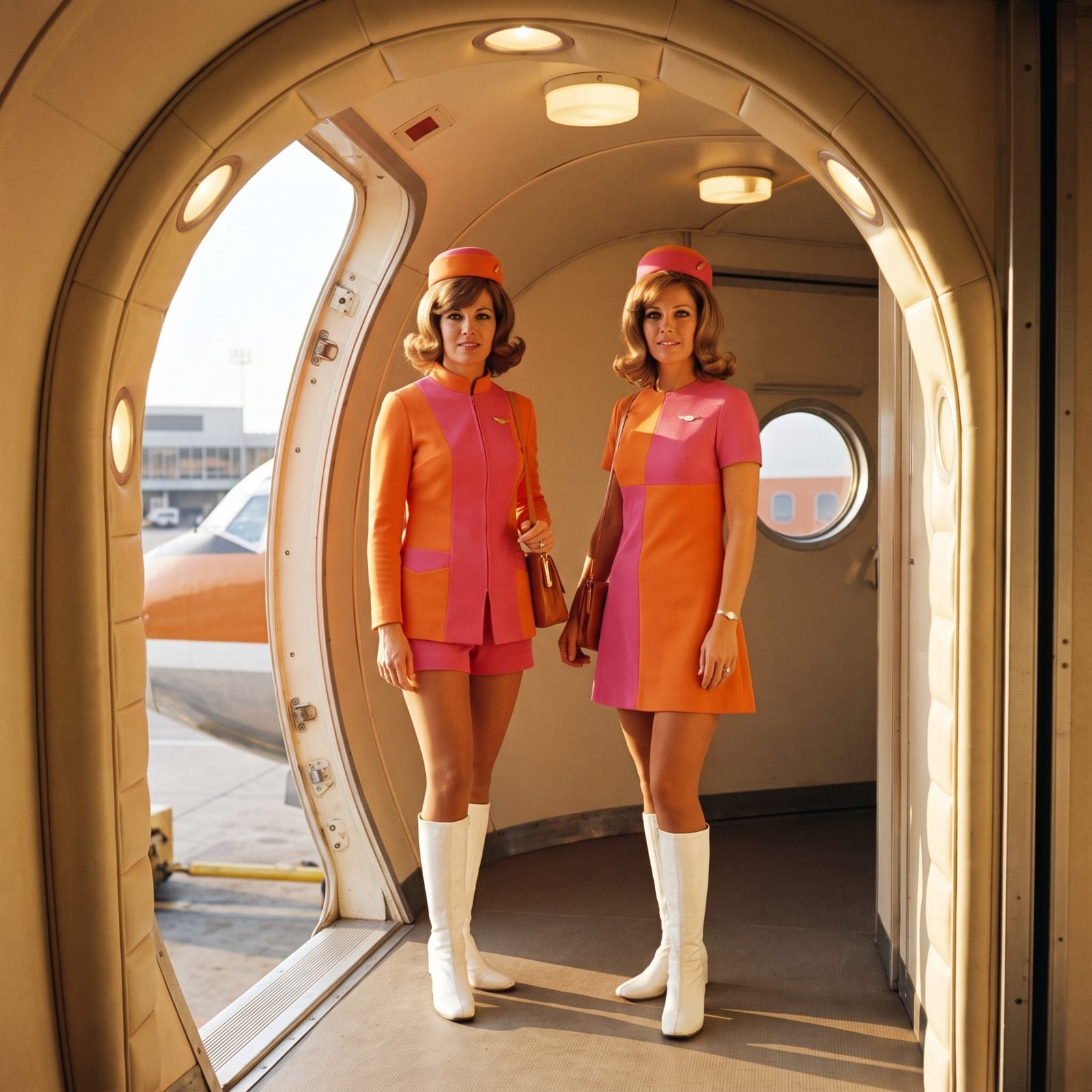
Color-blocked polyester in tangerine and hot pink. A hemline that stopped well above the knee, white go-go boots climbing to the calf, a jaunty little cap on top — and the whole ensemble was commissioned from the name fashion designers of the day.
Airlines treated cabin crew uniforms as marketing, plain and simple. The early 1970s shoved them straight into mod territory: mini-dresses, hot pants, bright geometric paneling that photographed beautifully in a glossy ad. The message was youth, speed, modernity — the idea that flying itself was the destination.
The color commitment is what carries the whole image. Head-to-toe saturated orange or pink reads as deliberate rather than loud, a uniform built to be spotted from across a crowded terminal. Costume and confidence in equal measure. And it dated fast once the decade drifted toward softer, more tailored lines.
Smoking Sections Divided From Nonsmokers by a Row of Seats and Nothing Else
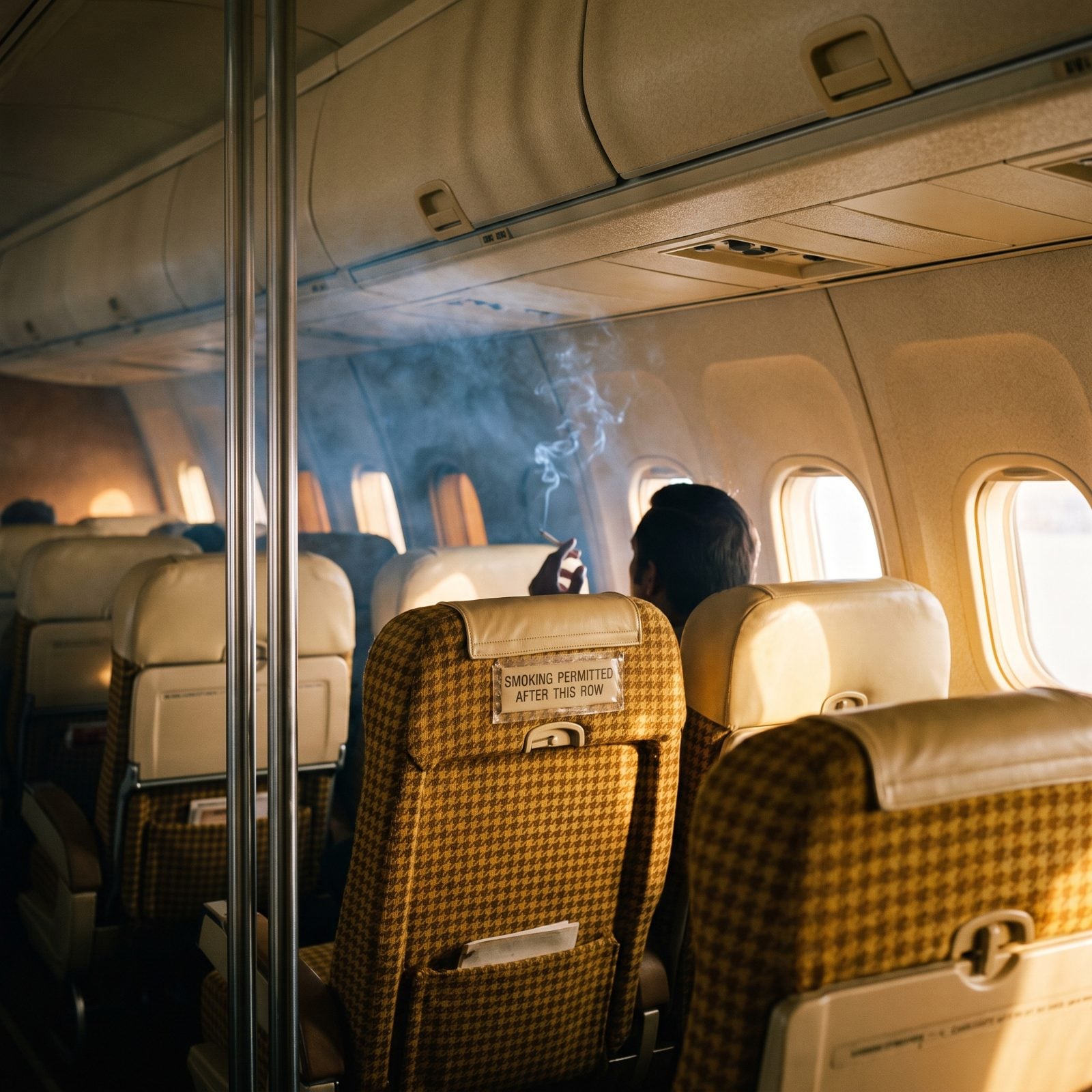
The barrier between smoke and clean air was exactly one row of seats. A little placard announced where nonsmoking ended and smoking began, as if cigarette smoke respected signage. It did not. It drifted forward, soaked into the fabric, and greeted you the moment you sat down.
Request a nonsmoking seat and you might land in row 19, with the smoking section kicking off at row 20 — same cabin, same recirculated air, same gray haze pooling near the ceiling by the time the beverage cart came rattling through.
Ashtrays Built Right Into the Armrest and the Lavatory Wall
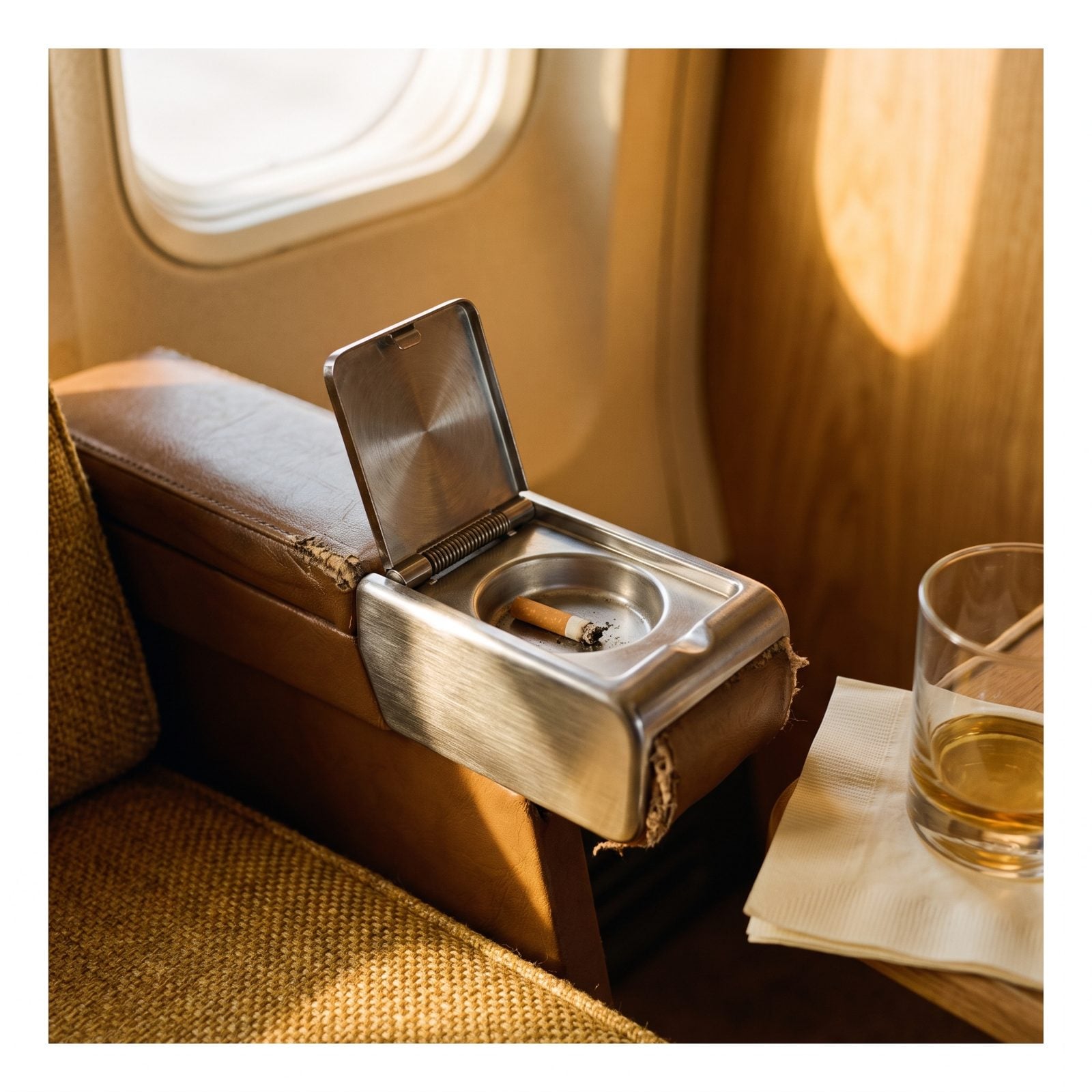
Flip the little chrome lid on your armrest and there it was — a shallow metal cup waiting for ash. Every seat had one. The lavatory had one bolted right beside the sink. Even after airlines began nudging people away from smoking, the ashtrays stayed put, because regulators figured a built-in tray beat a passenger stubbing out somewhere flammable.
That detail outlived smoking itself. For decades after the bans, aircraft lavatories still carried a required ashtray, a small brass holdover from a smokier era that mechanics kept bolting in simply because the rulebook said so.
Airline Matchbooks Handed Out Like Little Branded Keepsakes
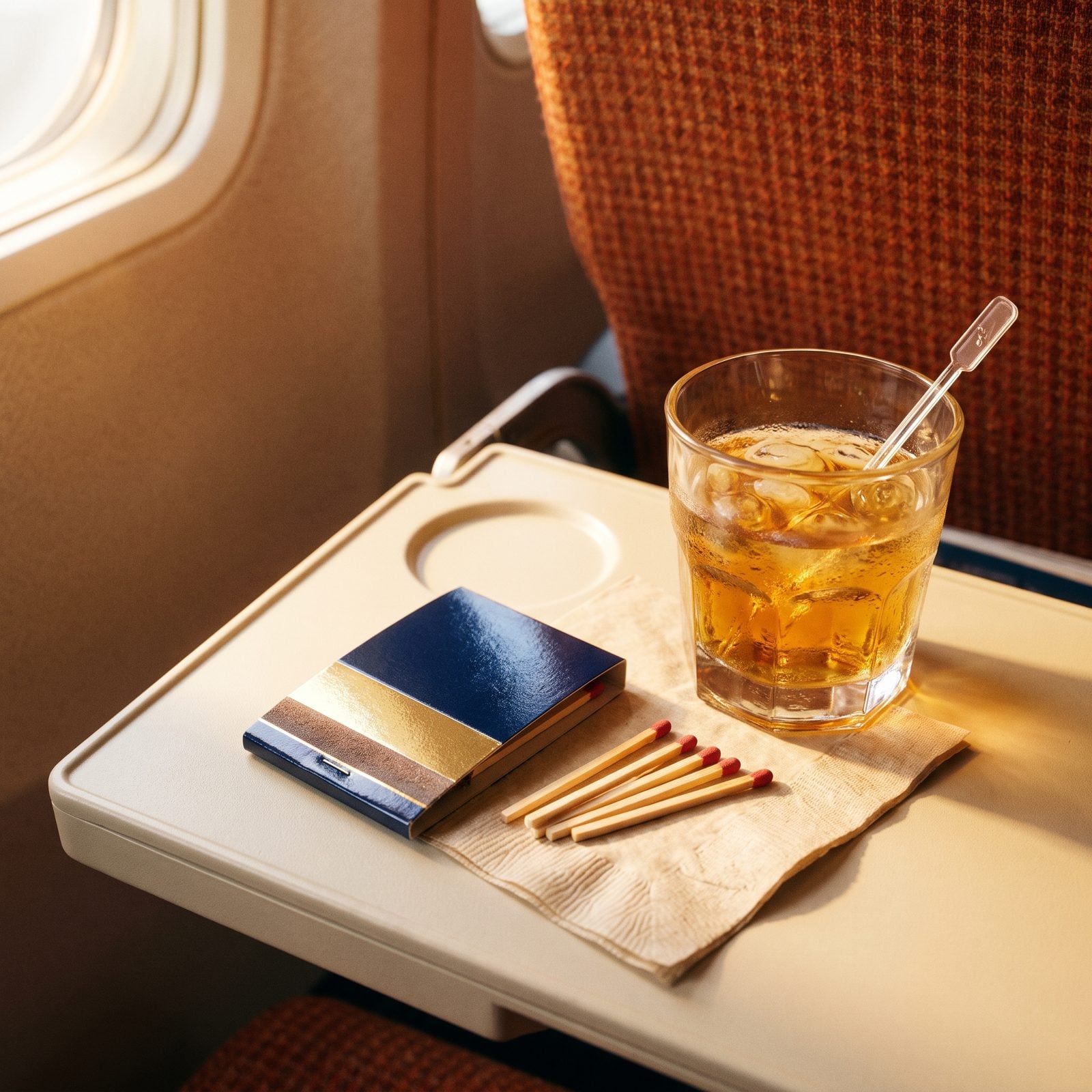
You pocketed them without thinking. A flight attendant left a matchbook on your tray beside the drink, its glossy cover striped in deep blue, gold and brown, and into your coat it went. Everybody smoked, so matches were genuinely useful — which made them the rare giveaway nobody threw away.
They piled up in kitchen drawers and ashtrays for years afterward, little souvenirs of trips half-forgotten. Collectors still hunt them down. A matchbook was a tiny printed snapshot of an era’s colors, a route, a moment when an airline wanted you carrying a piece of the trip home.
Duty-Free Cigarettes and Liquor Wheeled Down the Aisle on a Cart
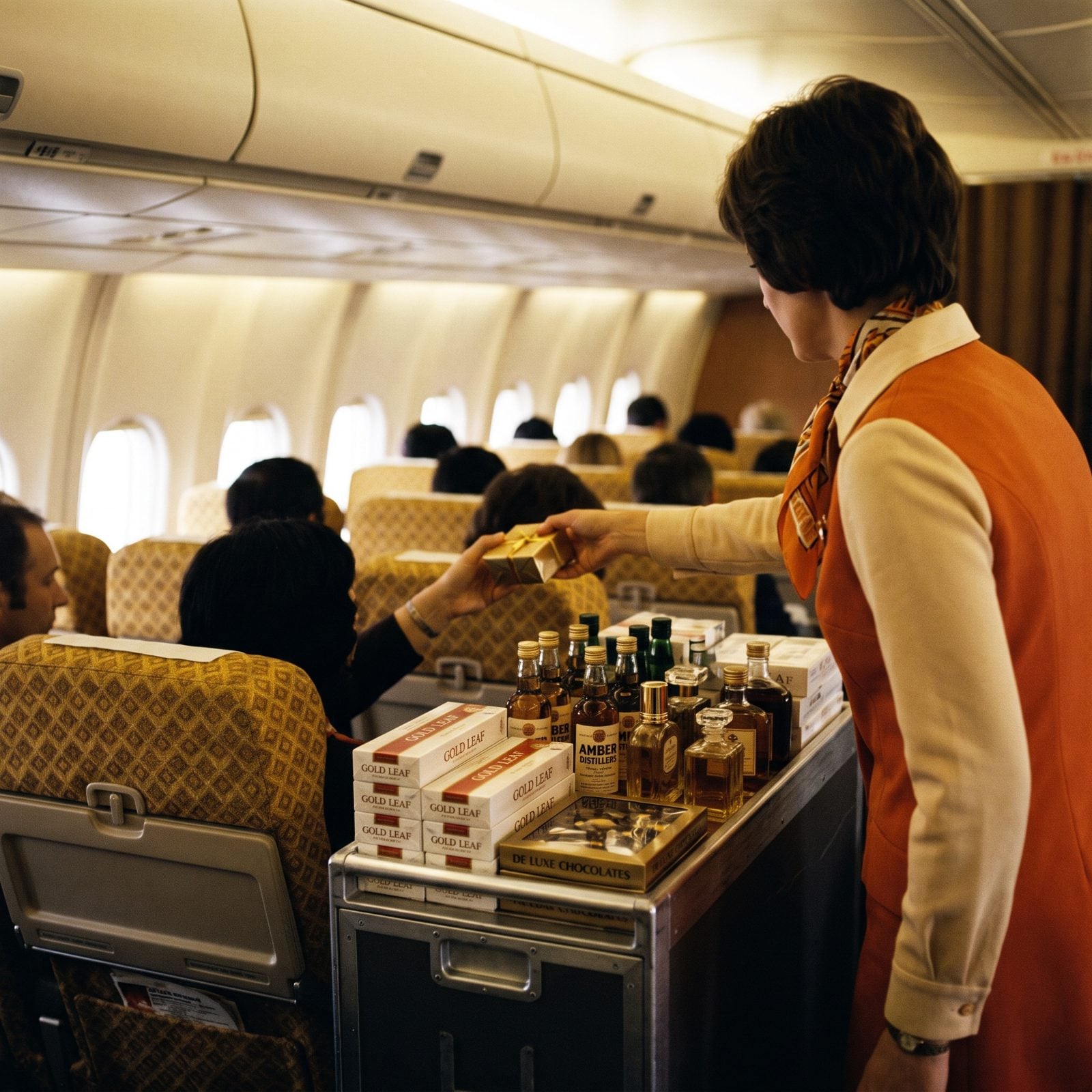
Somewhere over the ocean, a cart rolled down the aisle stacked with cartons of cigarettes, miniature liquor bottles, boxed perfume and chocolate. The duty-free run, and on an international flight it pulled the same crowd of eager faces as the meal cart.
You bought a carton tax-free, a bottle of scotch for someone back home, a small perfume as the apology gift for whoever drove you to the airport at dawn. The attendant made change from a little pouch and tucked your purchase into a branded bag.
Airline Stationery and Postcards Tucked in the Seat Pocket for Writing in Flight
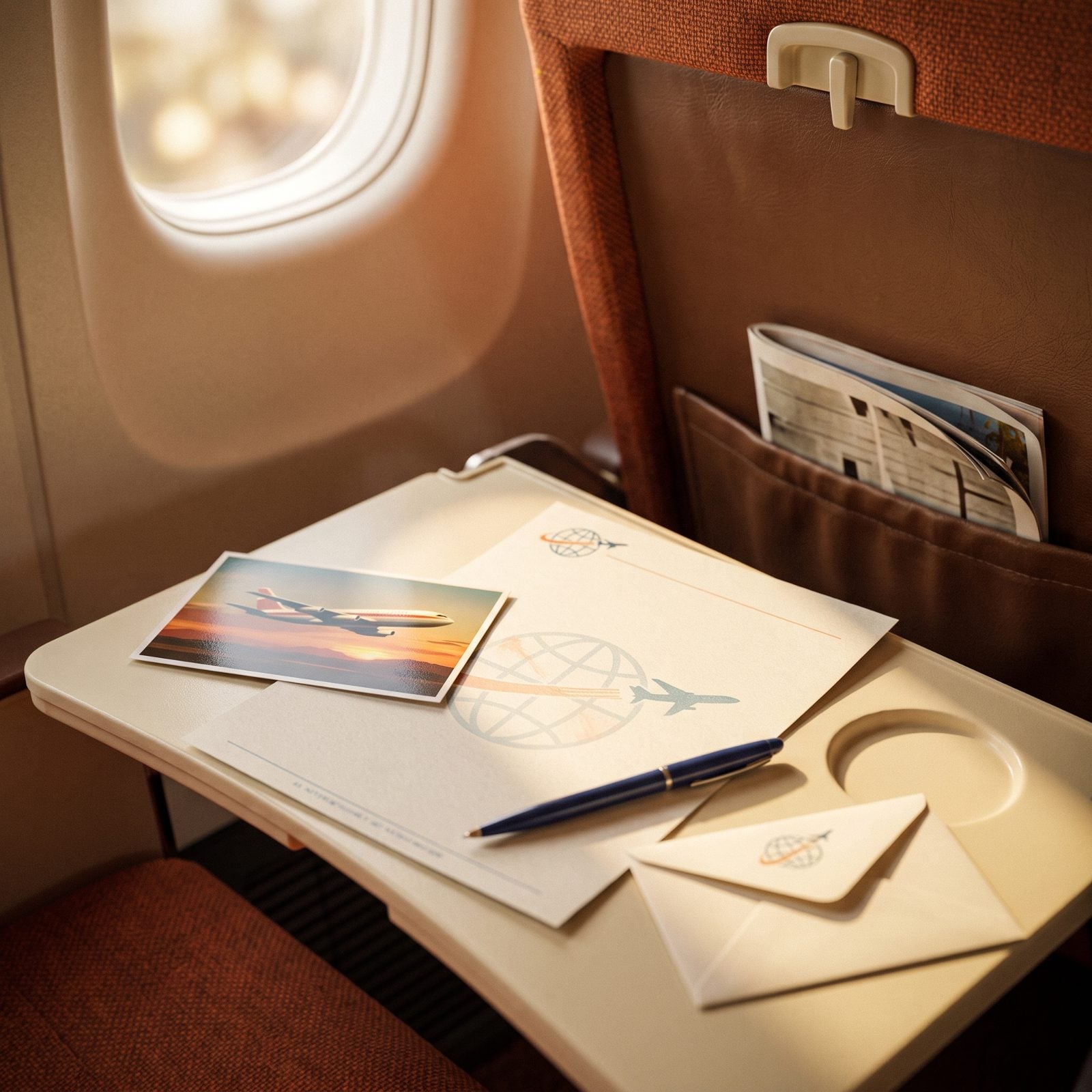
Reach into the seat pocket and you’d find more than a safety card. Airlines stocked branded letterhead, envelopes, and glossy postcards showing off their jets, and you were meant to use them. People wrote actual letters at 35,000 feet, dated them “somewhere over Kansas,” and dropped them in a mailbox the second they landed.
Call it a small gift of status. A postcard with the airline’s name told whoever received it exactly how you’d traveled. The stationery turned dead flight time into something worth doing — back when a handwritten note was the fastest way to tell someone you were thinking of them.
Paper Ticket Booklets Stuffed With Carbon-Copy Flight Coupons
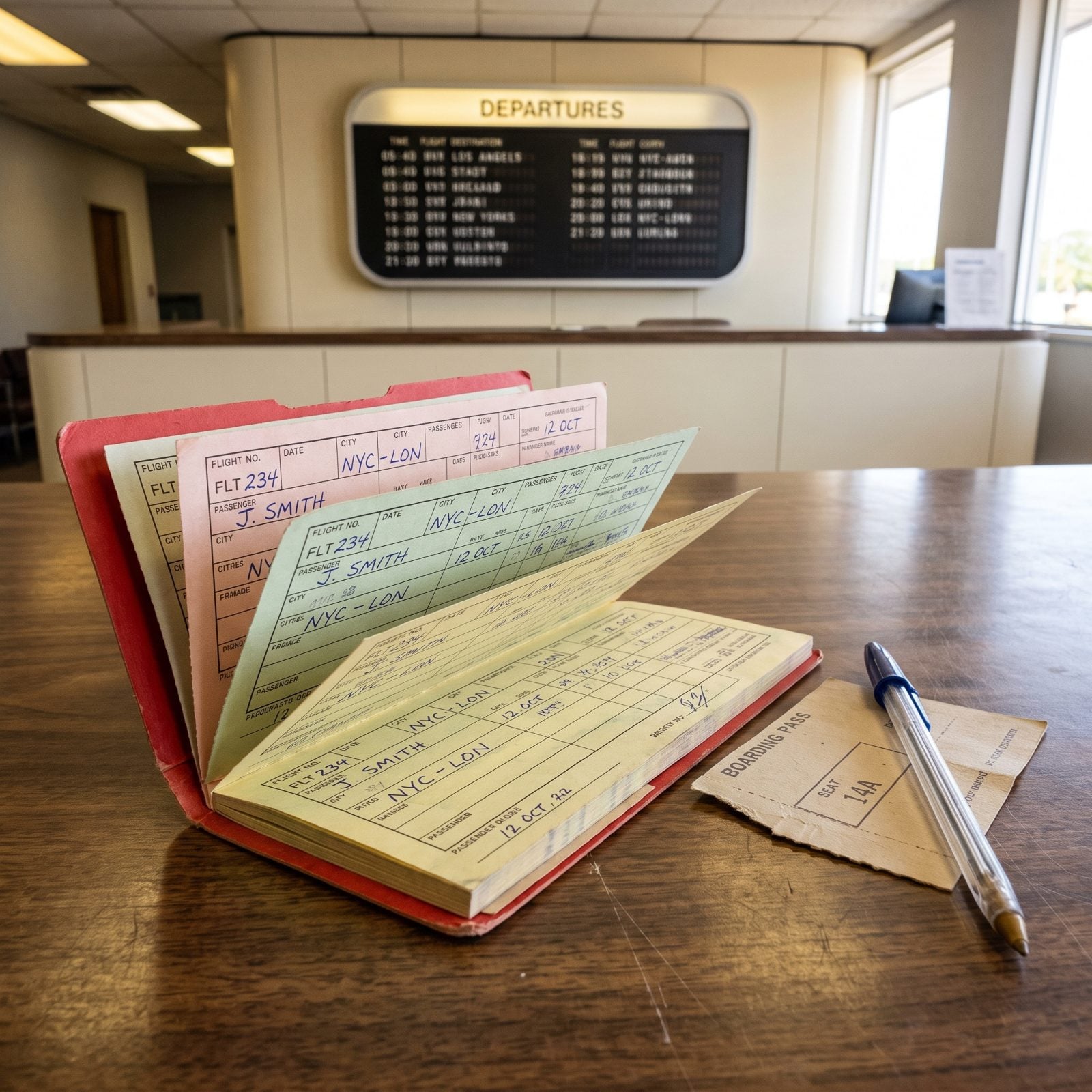
A ticket used to be a document you could hold, fold, and lose. It came as a booklet in a cardstock jacket, each flight segment its own carbon-copy coupon printed in faint reds and greens, filled in by hand or thumped out on an agent’s clattering machine.
The agent tore out the coupon for the leg you were flying and left the rest behind, so a multi-city trip meant guarding that booklet like cash. Lose it and you had a long conversation ahead of you — no record living on some server, just the paper in your pocket and your word for it.
The whole system felt permanent right up until it vanished. Electronic tickets took over through the 2000s, and the carbon coupon went the way of the typewriter, remembered mostly by the people who once sweated over a lost one at a gate.
Boarding Passes Written by Hand or Assembled With Seat Stickers
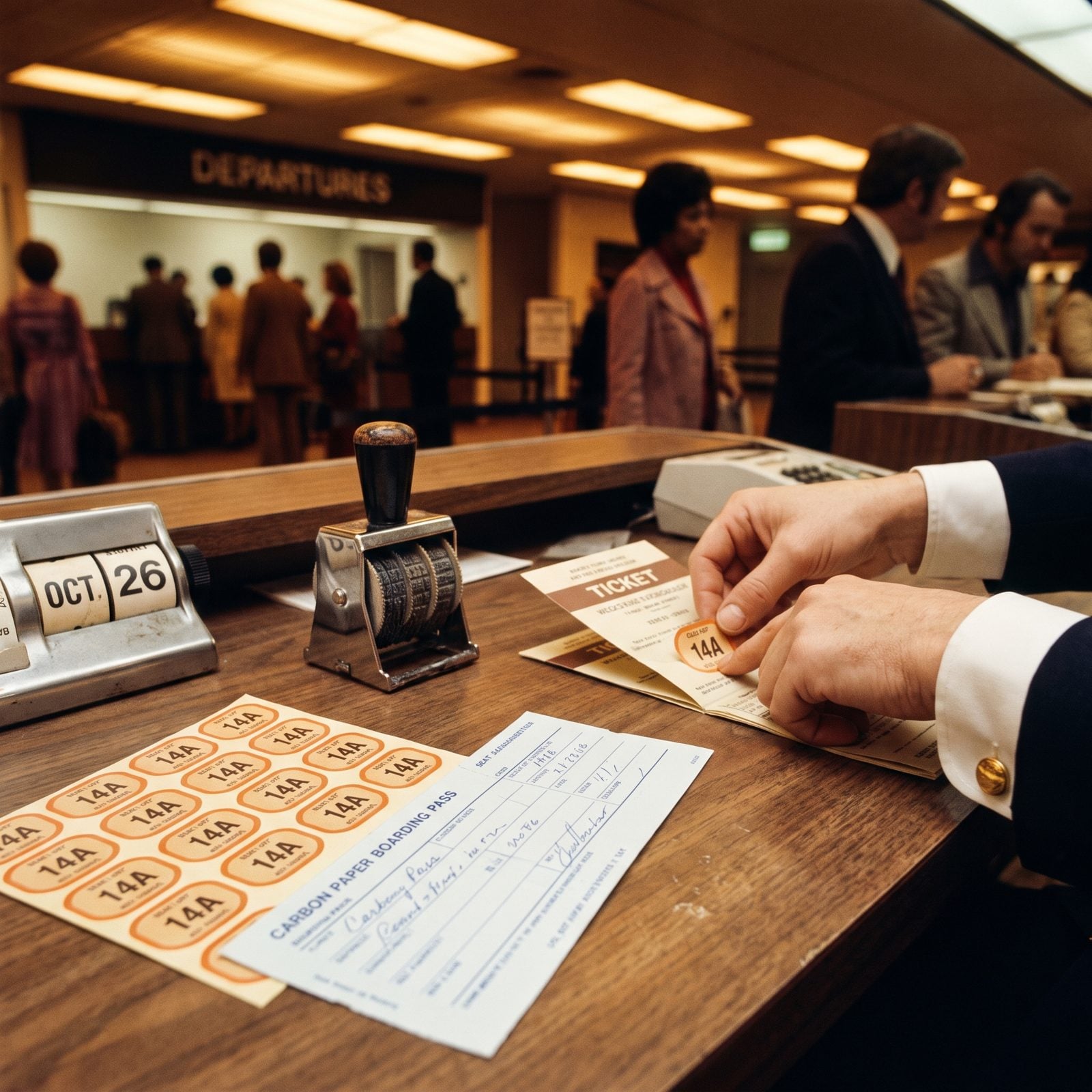
Before a magnetic stripe ever touched an airport, your seat was a sticker. An agent peeled it off a numbered sheet, pressed it onto your ticket jacket, and that was your spot on the plane. If the pen ran dry mid-stamp, she gave it a shake and kept writing.
Some flights skipped assigned seats entirely, so you took a boarding card, walked out, and grabbed whatever row you liked. The whole system ran on carbon paper, rubber stamps, and a human being who actually looked at you while she wrote your name.
Airline Ticket Offices in Downtown Shopping Districts
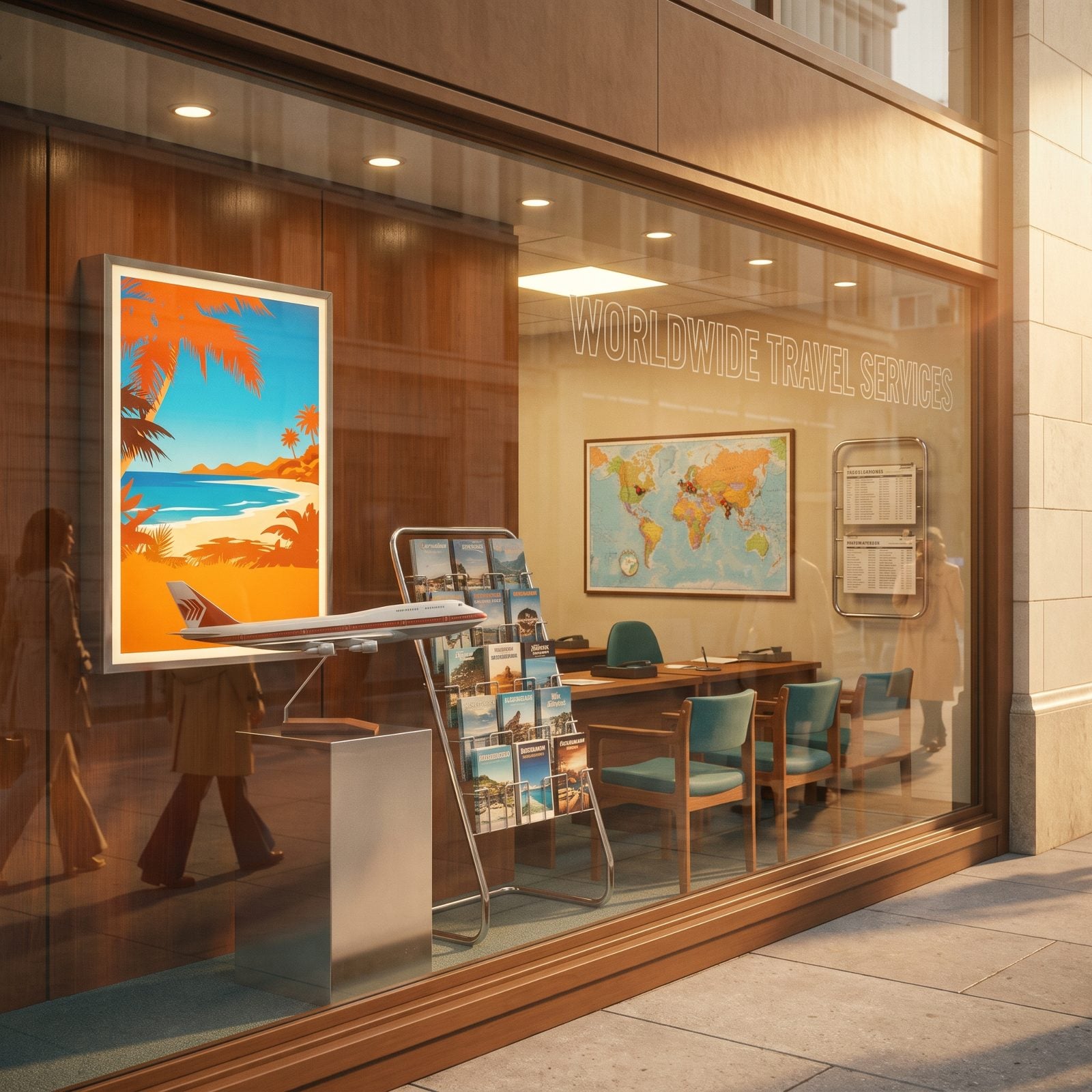
You bought a plane ticket the way you bought a hat. You walked into a storefront on Main Street, sat across a desk from an agent, and talked through your trip while a jet model perched on a pedestal in the window behind you, catching the afternoon light.
These offices were everywhere, wedged between department stores and lunch counters, hung with travel posters and brochure racks, staffed by people who knew the schedules cold. Booking a flight was an errand you ran downtown, same as the bank or the dry cleaner.
The internet killed them, of course. But there was something decent about planning a trip while a stranger pulled out a real map and started drawing on it.
Printed Timetables Displaying Every Flight, Aircraft Type and Meal Service
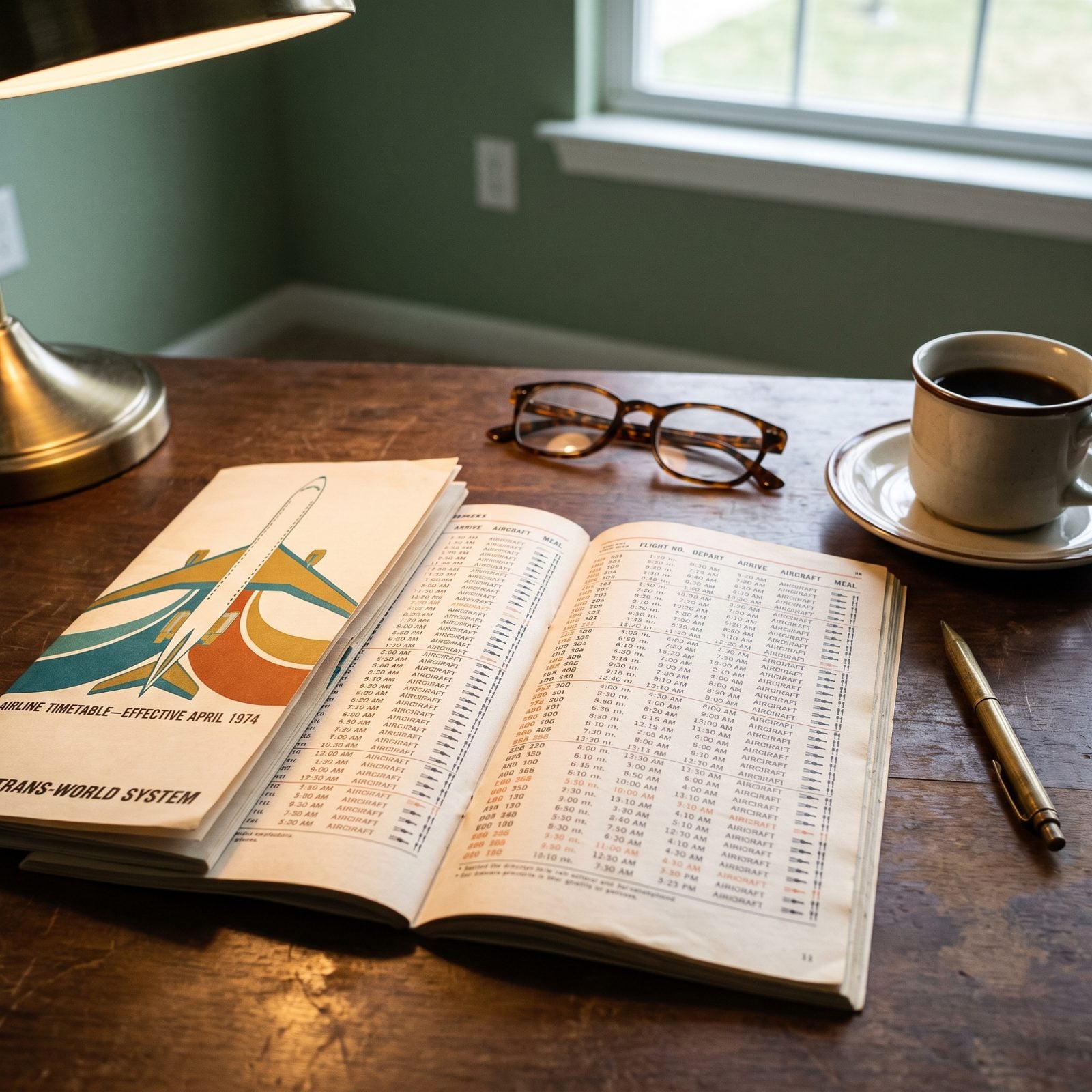
Pocket-sized, printed on cheap cream stock, dense as a phone book. The airline timetable packed column after column of departure times, flight numbers and codes into tiny type, along with city names, aircraft types and meal codes.
Meals mattered. Little fork-and-knife symbols ran down the meal column, showing which flights fed you and which didn’t. People booked around lunch. Travelers cared about the aircraft too; a widebody meant a smoother, roomier ride than a narrow DC-9 wedged with you and a hundred strangers.
Curbside Skycaps Checking Luggage Before Passengers Entered the Terminal
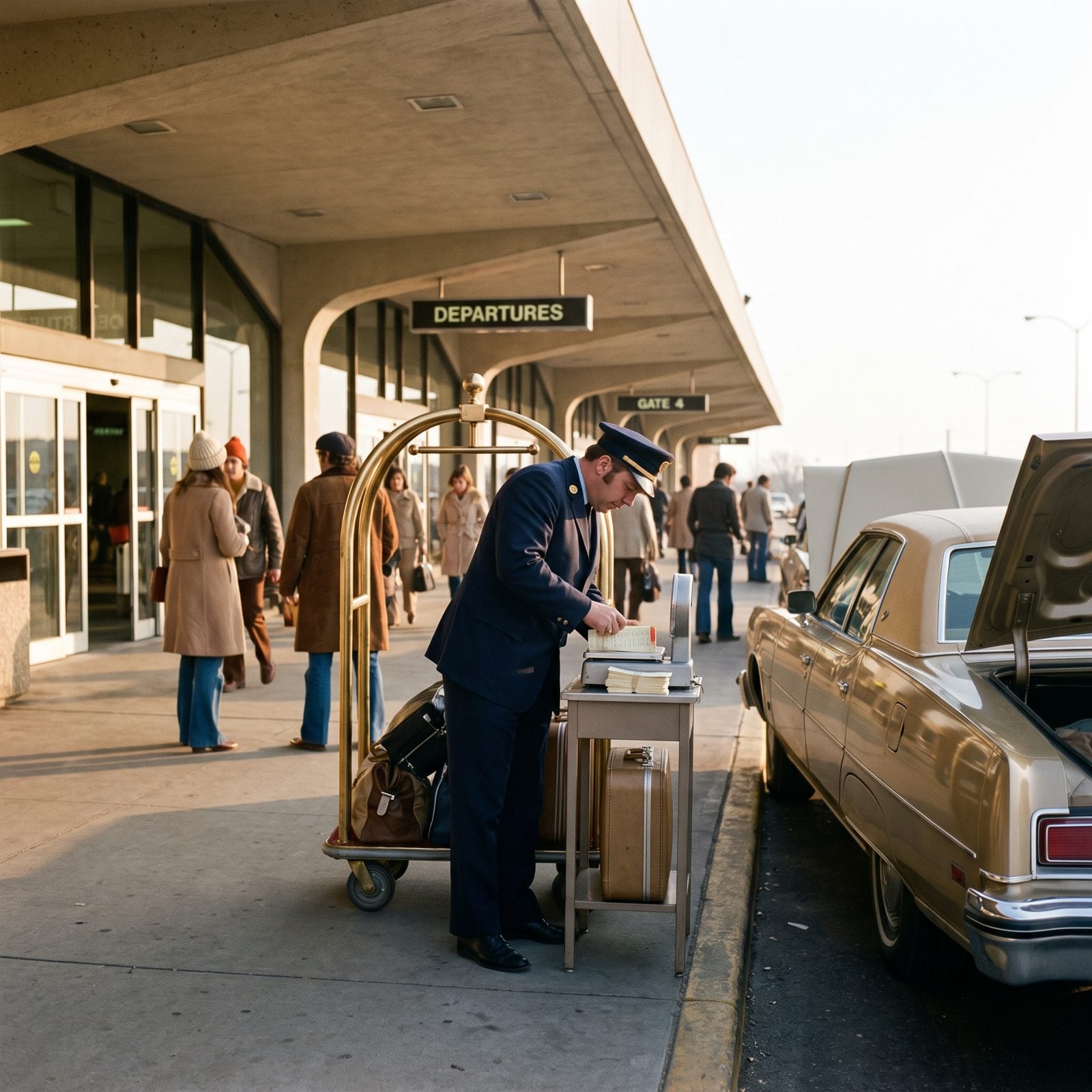
You never even went inside. You pulled up to the curb, popped the trunk, and a skycap in a sharp cap had your bags tagged and gone before you’d finished thanking him. A dollar or two changed hands, and your suitcase vanished into the building’s belly.
Fastest part of flying, hands down. No lines, no counter, just a man with a cart who did this a thousand times a day and made it look like nothing. You walked into the terminal carrying nothing but your coat.
Hard-Sided Suitcases Carried by Hand Because Wheels Were Uncommon
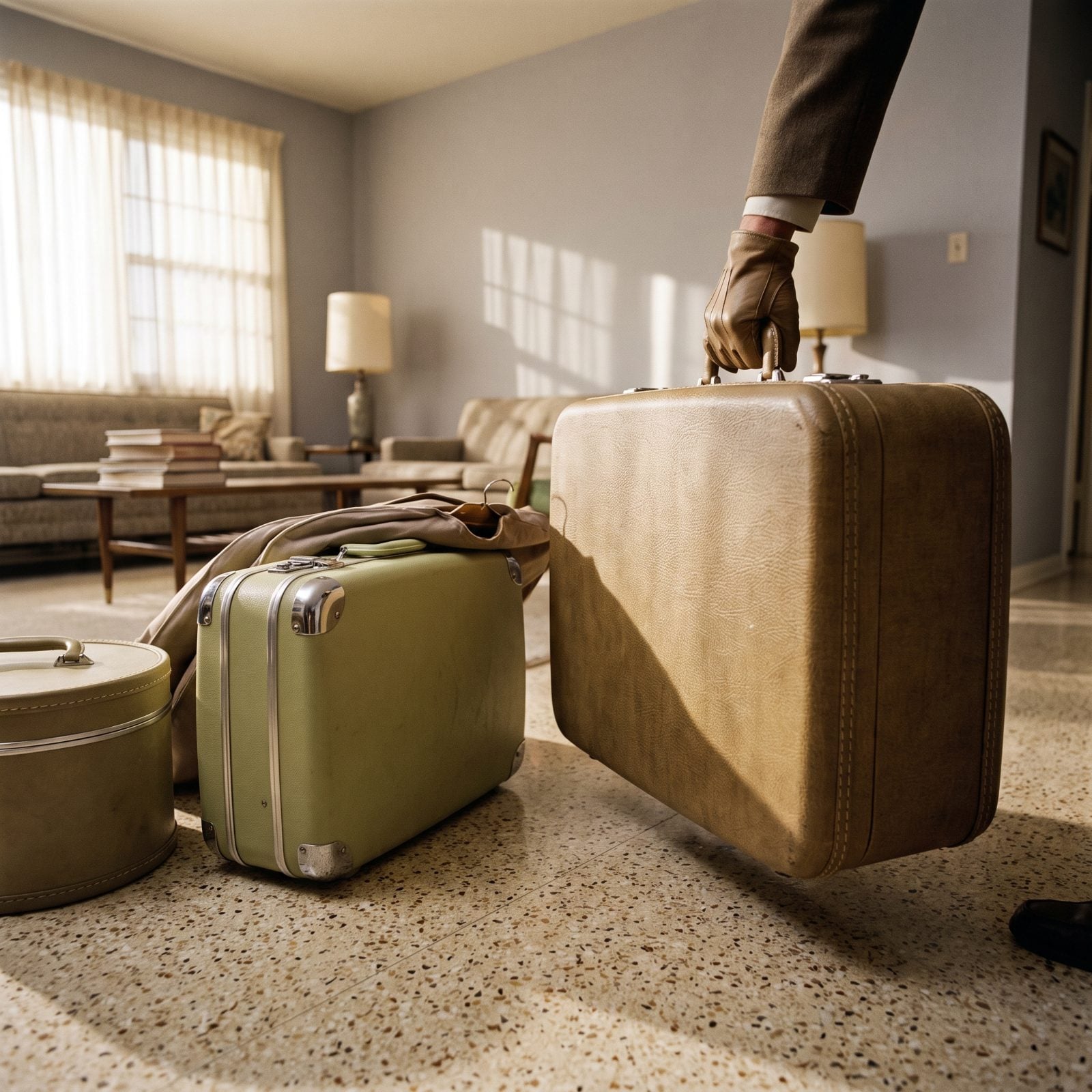
Luggage had muscle built into the memory of it. Suitcases were hard-shelled and square-cornered, heavy before you packed a single shirt, and you carried them by a stitched handle, one in each hand, the whole length of the concourse.
Wheels existed, barely. A clip-on folding cart was the gadget-lover’s trick, and rolling luggage wouldn’t go mainstream for another decade. So everybody hauled. You can still spot the people who grew up in that era — they grab a bag by the handle before they remember it has wheels.
Open Overhead Hat Racks Instead of Enclosed Luggage Bins
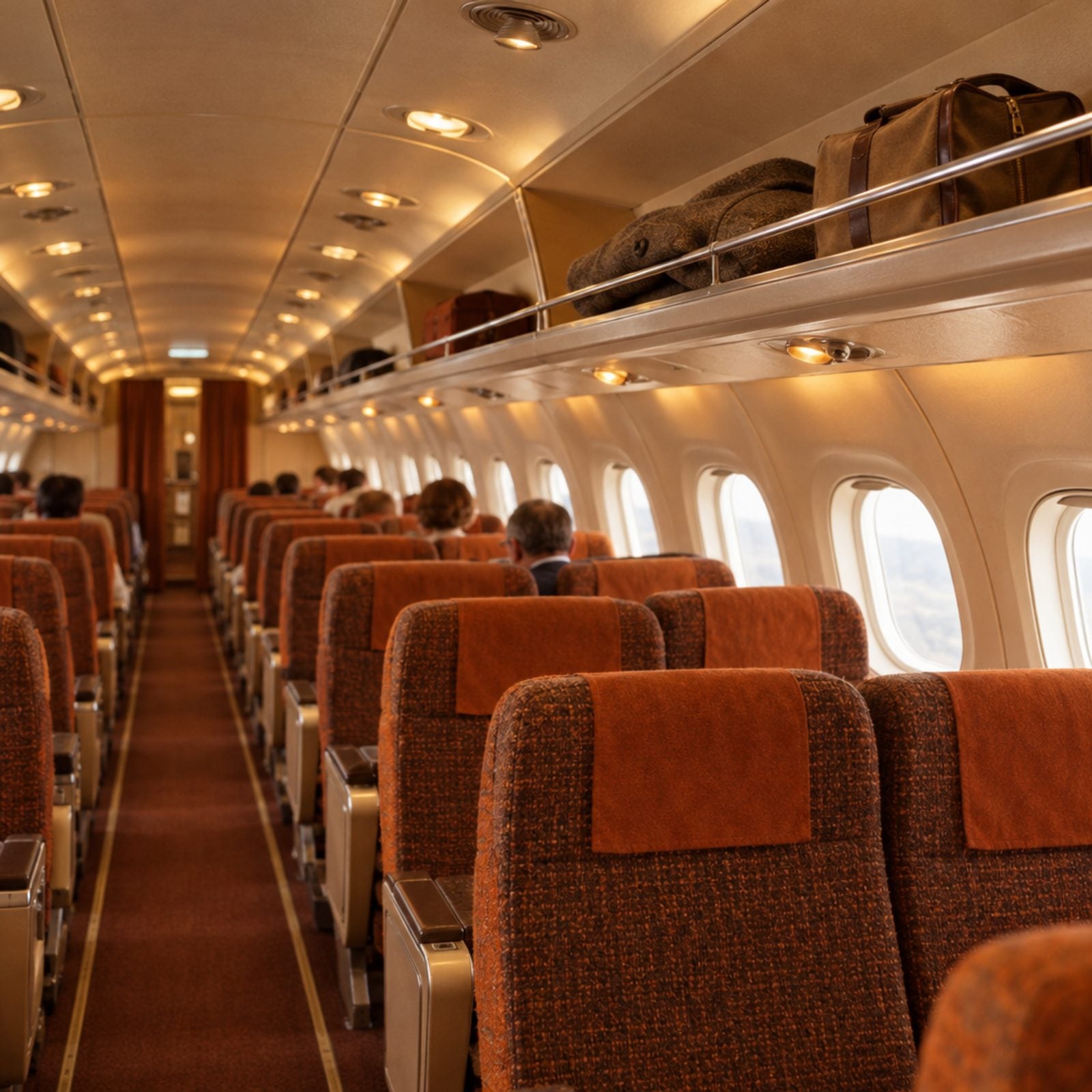
Look up above the seats on an old jet and you’d see slim open shelves running the length of the cabin, each a shallow rack behind a thin chrome rail, meant for coats, hats, and the kind of soft bag that wouldn’t slide off in turbulence. They were called hat racks, and people actually put hats up there.
Anything heavy went under the seat or down in the hold, because a bin that shallow can only hold so much. The deep, oversized bin we fight over today came later, when carry-on luggage ballooned and people stopped checking everything.
Early Widebody Coach Cabins With Lower-Density Seating and Frequent Empty Seats
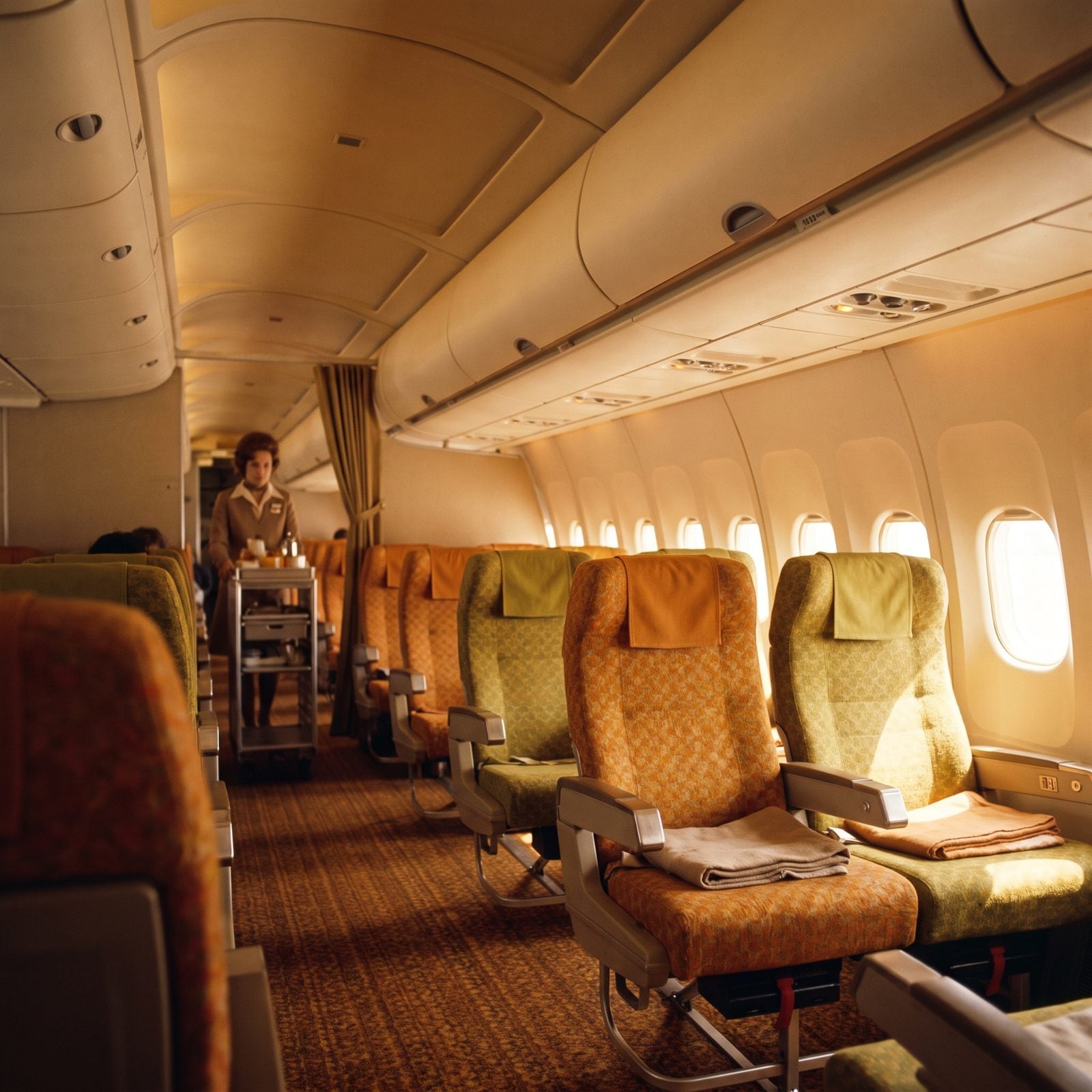
The first wave of jumbo jets had space nobody knew what to do with yet. Coach cabins stretched wide across two aisles, legroom ran generous, and on plenty of routes whole rows sat empty. People would wait until takeoff, then move to an empty seat with nobody beside them, recline, and sleep.
Some airlines even stuck lounges and standing bars on the lower deck. Nobody had yet figured out how to squeeze the last profitable inch out of every passenger.
You could pick an empty seat with nobody beside you, spread out, and arrive somewhere having actually slept. Try explaining that to anyone boarding today.
Coin-Operated Lockers Large Enough to Store Luggage Between Flights
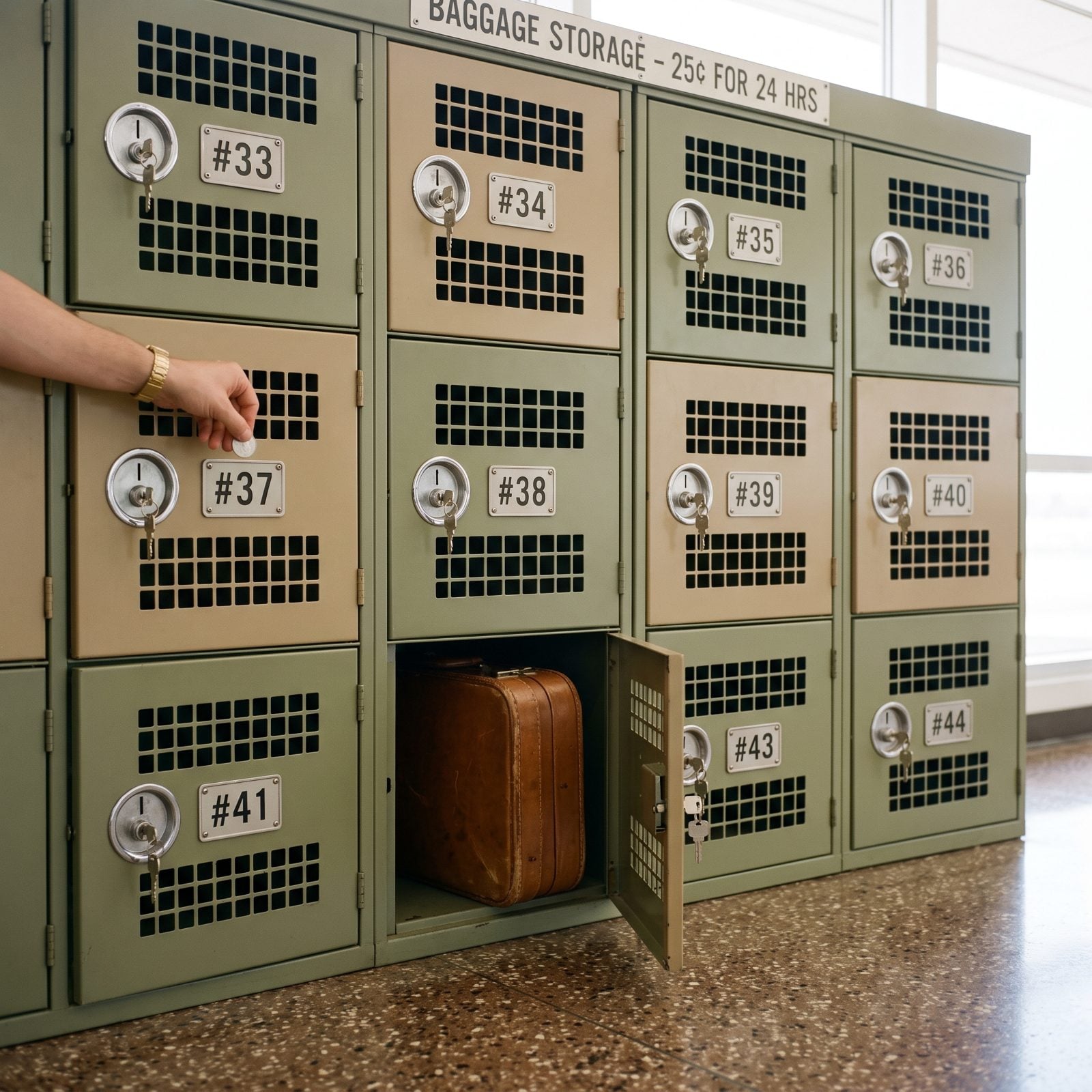
Long layover? You didn’t drag your bags around for six hours. You fed coins into a wall of metal lockers, turned the key, and walked off empty-handed to go see the city or just find a decent bar.
They came in sizes, some big enough to swallow a full suitcase, and the whole thing ran on quarters and trust. Security concerns and a few ugly incidents eventually emptied airports and train stations of them, which is a genuine loss. A locker was freedom for the price of a sandwich.
Open-Air Observation Decks Built Specifically for Watching Aircraft
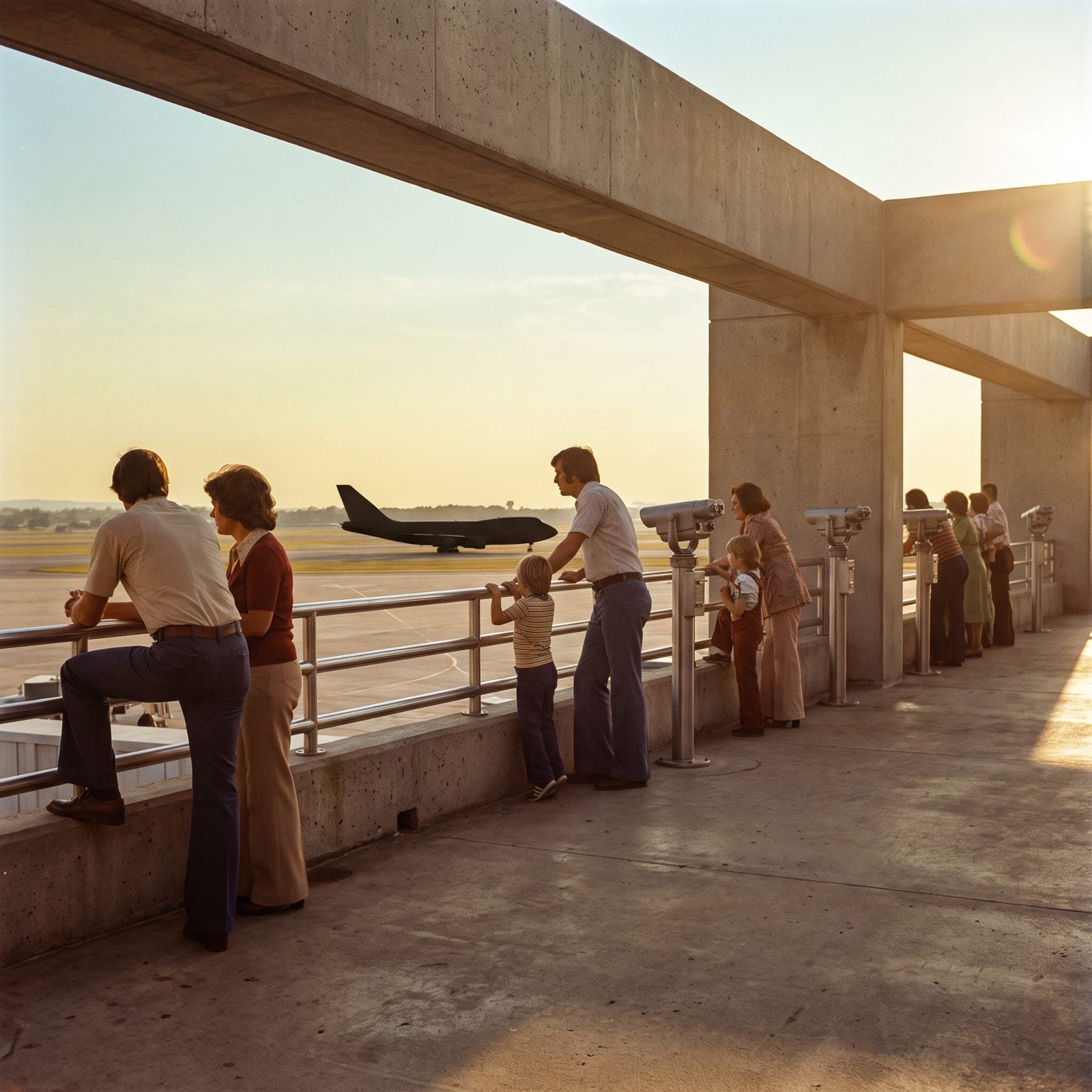
You didn’t need a ticket to go to the airport. You went to watch. Open-air decks ran along the terminal roof, with railings to lean on and coin-operated binoculars bolted to posts, and families burned whole Sunday afternoons up there.
Kids pressed against the rail counting tail fins while couples watched the sun drop behind a taxiing jet. Free entertainment, the whole thing — a place you took the family the way you’d take them to a park.
Mechanical Split-Flap Boards Clattering Through Flight Updates
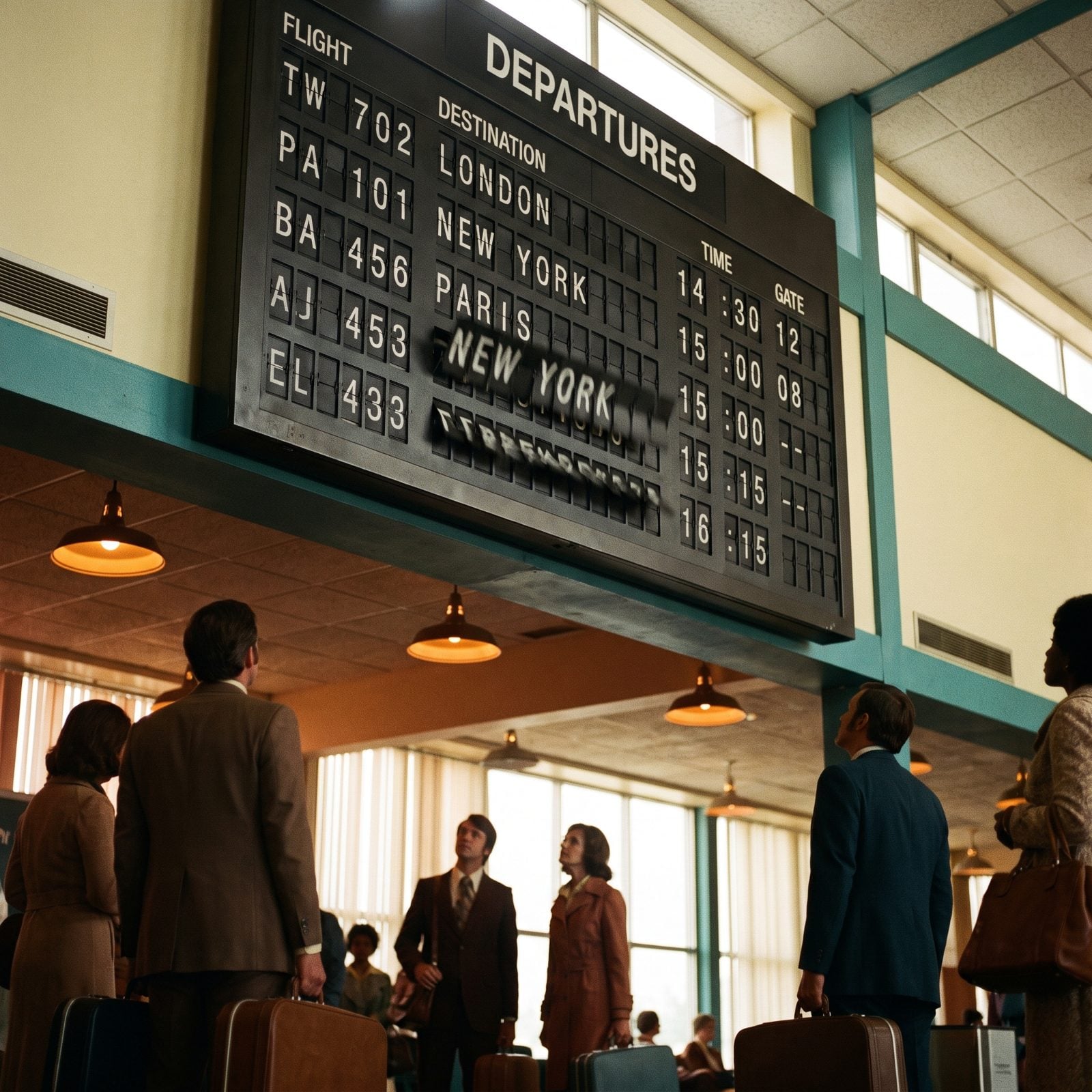
The sound came first. A rolling clatter would ripple across the whole board as hundreds of little flaps spun through letters and numbers, and every head in the terminal turned up at once to see what changed.
Loud, mechanical, strangely alive. You’d stand underneath waiting for your gate to flip into place, and when it finally did, that soft burst of clicking felt like the airport talking directly to you.
Digital screens replaced them because they were silent and cheap to update. Nothing about a glowing LCD makes you look up the way that sound did.
Rows of Payphones That Were Your Only Link to Home or the Office
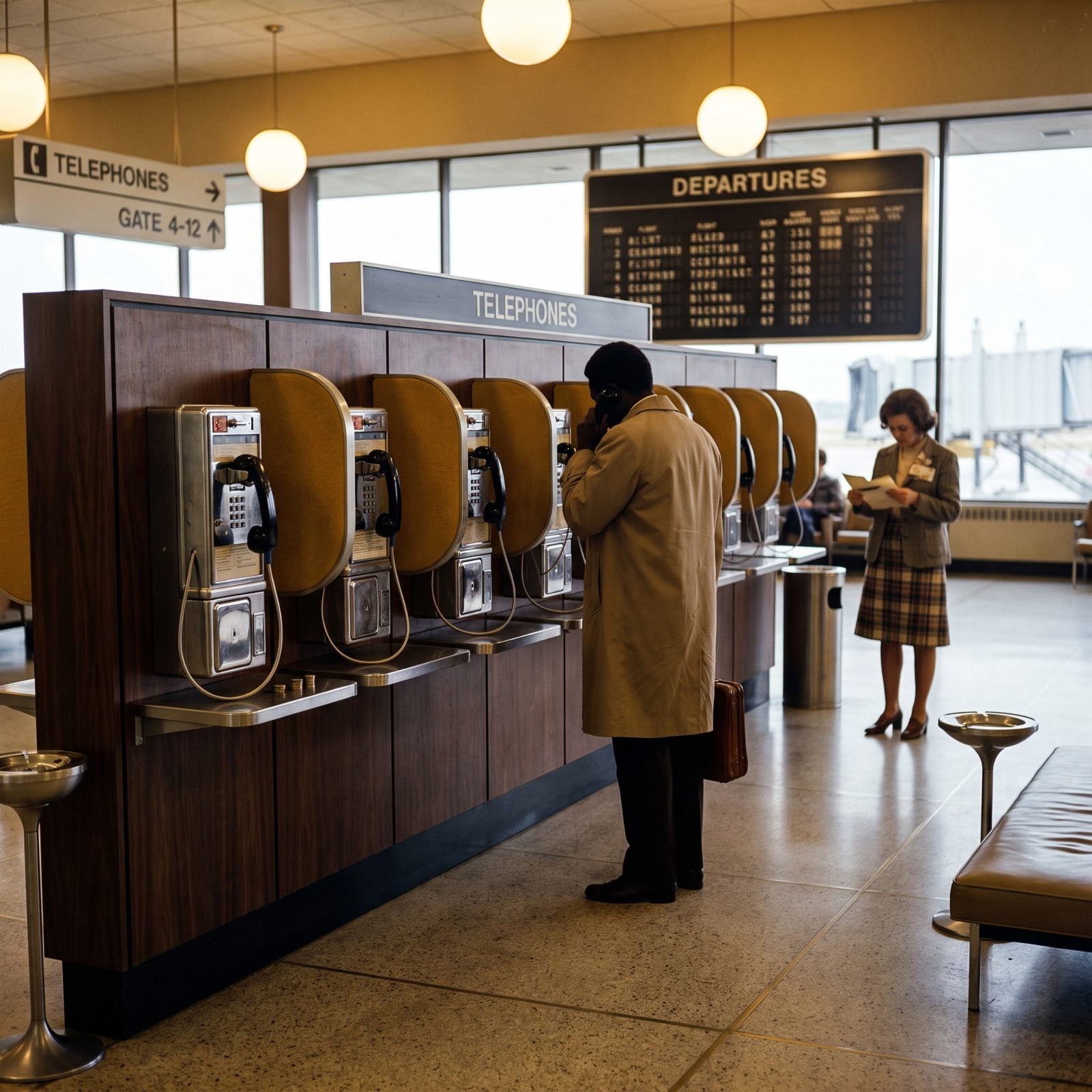
Before a plane boarded, there was the ritual of the dime. You hunted for the phone bank the second you cleared the concourse, fed coins into the slot, and shouted over the terminal din that you’d landed, or that the connection was running late and nobody should hold dinner for you.
These banks ran a dozen handsets deep near every gate, and the chrome shelf under each phone held your scattered change, your folded itinerary, a pen if you happened to be organized. Business travelers memorized the operator codes for collect calls. Parents promised to phone from the layover and actually did.
Walking Across the Apron and Climbing the Air Stairs to Board
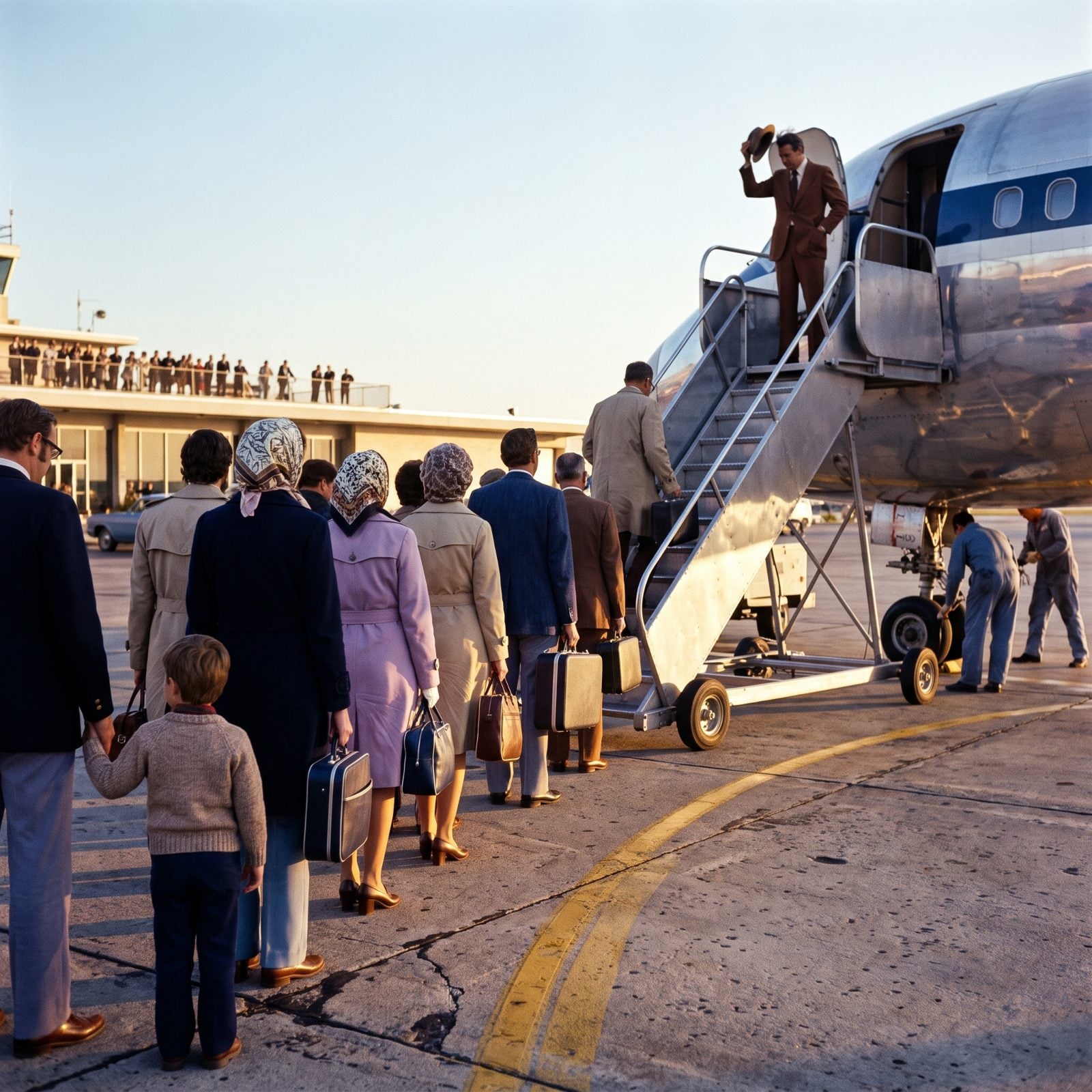
The door opened to weather. You walked down a flight of mobile stairs onto painted concrete, caught the jet wash and the smell of kerosene, then climbed another set of wheeled stairs into the cabin. Boarding was an event you felt on your face.
Loads of airports had no jet bridges at all back then, especially the smaller fields and the commuter routes. Rain meant an umbrella or a flat-out dash, and a stiff crosswind had you clutching your hat and your skirt at the same time. The folks up on the observation deck waved as you climbed, and you waved back, because you could actually see them.
Boarding meant stepping outside, feeling the wind, and knowing exactly what the sky was doing before you ever left the ground.
The gate agent tore your ticket right at the bottom of the stairs. No tunnel. No in-between. Just open air and the metal clang of your shoes on every step up.
Supersonic Concorde Service Crossing the Atlantic Starting in 1976
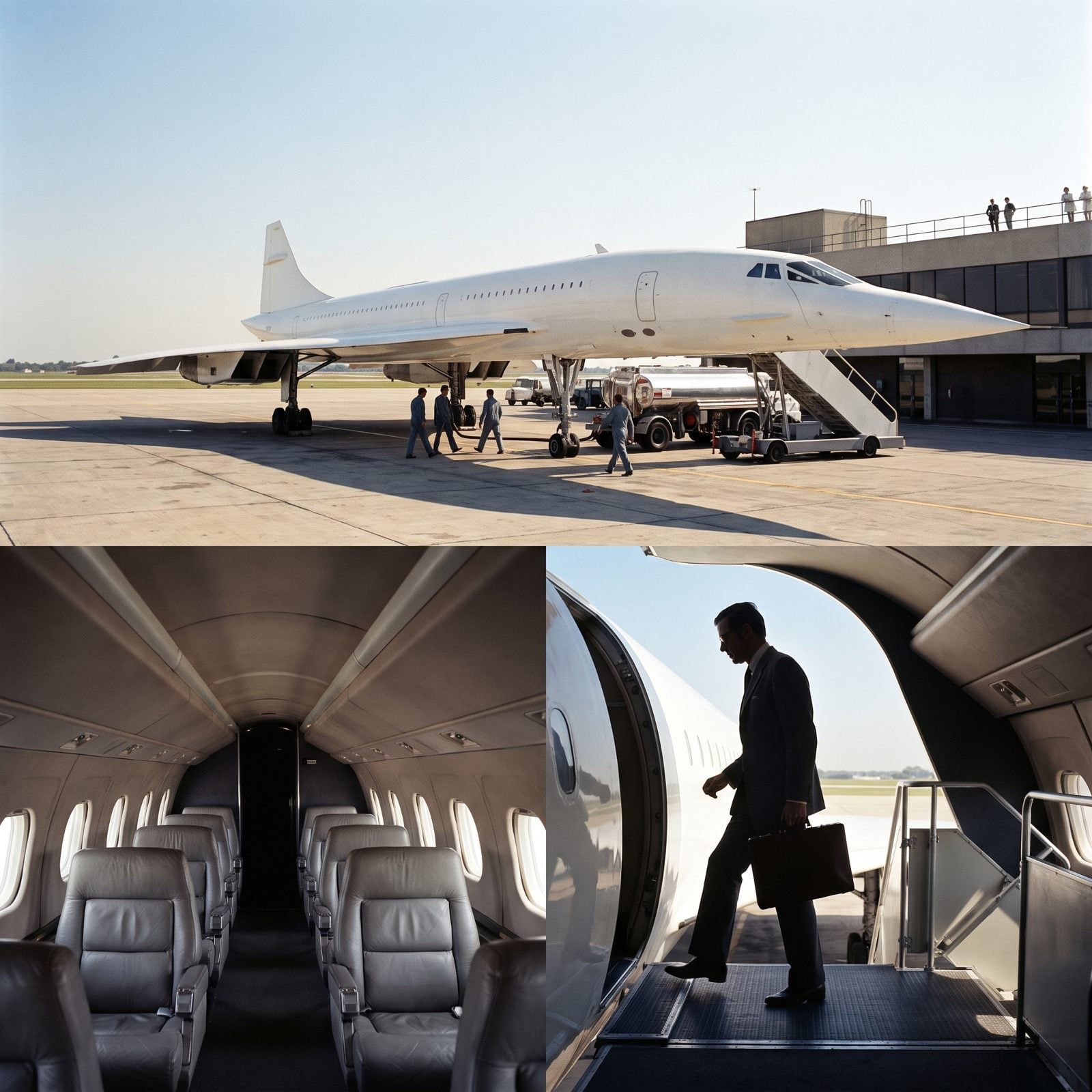
You could cross the Atlantic faster than the planet dragged the sun across the sky. Scheduled Concorde service began on January 21, 1976, and it upended what a transatlantic trip meant for the handful of people who could swing the fare.
London to New York in under three and a half hours. Cruising at twice the speed of sound and high enough that passengers could catch the curve of the Earth and the dark edge of space hanging above them. You’d leave London mid-morning and land in New York before you’d left, by the clock anyway.
The cabin surprised first-timers. Narrow, with small windows and seats closer to business class than any throne room. What you paid for was the speed, the champagne, and the fact that you were doing something almost nobody else alive could do.
A sonic boom trailed it over the ocean, and that’s precisely why overland supersonic routes stayed so restricted. Passengers never heard a thing. They just arrived, impossibly early, and stepped off into a day that had barely gotten started.
🔥 Would you like to save this?
Please note that some of the imagery in this article were created with the aid of AI image generators.