
🔥 Would you like to save this?
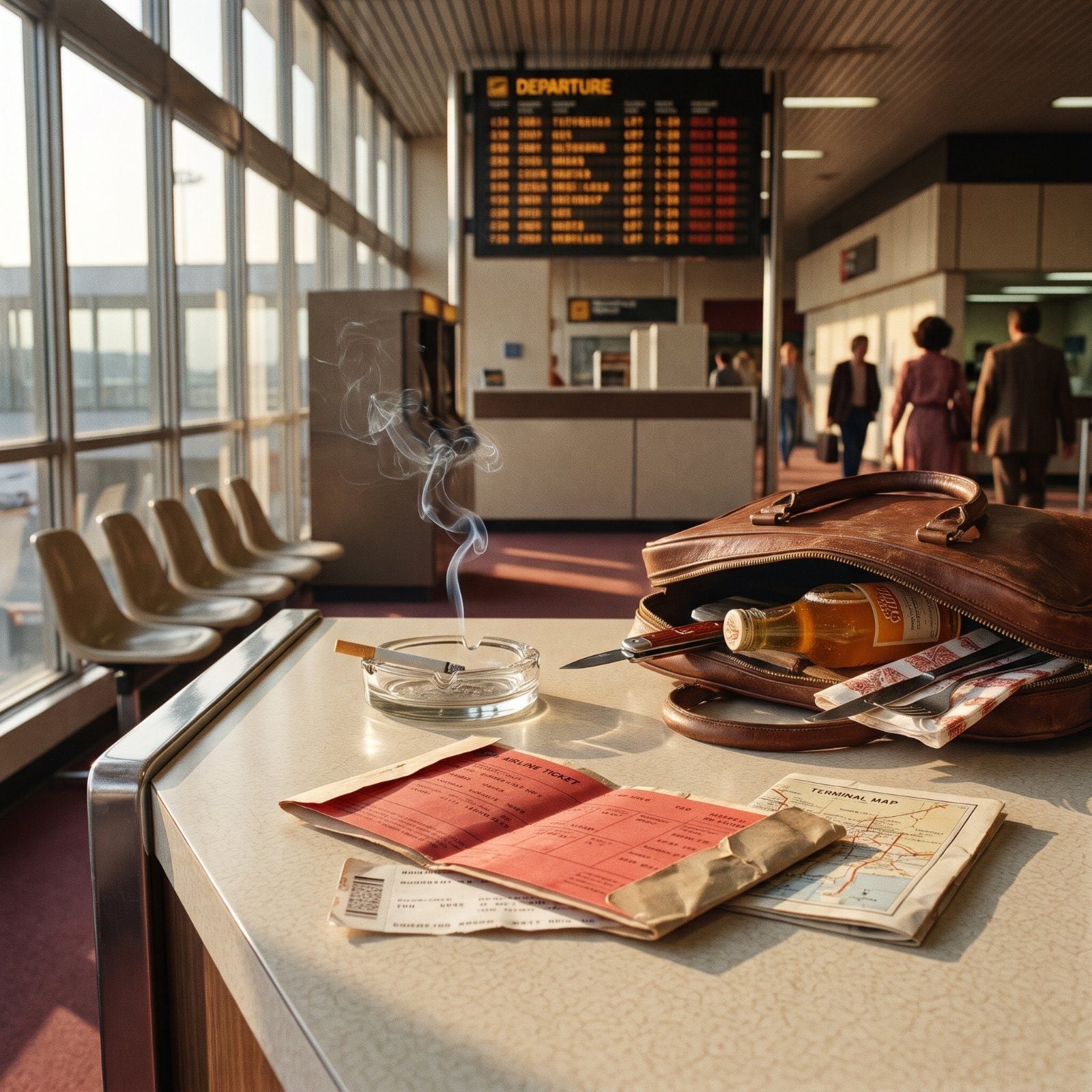
The last time you ran through a terminal to catch someone before they boarded, you probably didn’t know it was the last time. Gate 22, a paper ticket folded in a coat pocket, a pocketknife riding quietly in a carry-on that nobody questioned. Flying had a looseness to it, a trust baked into the whole operation.
Then one morning in September, all of it got packed away. The scenes below weren’t luxuries — they were just Tuesday at the airport. Here’s what we lost along the way.
29. Greeting Arriving Passengers Right at the Gate
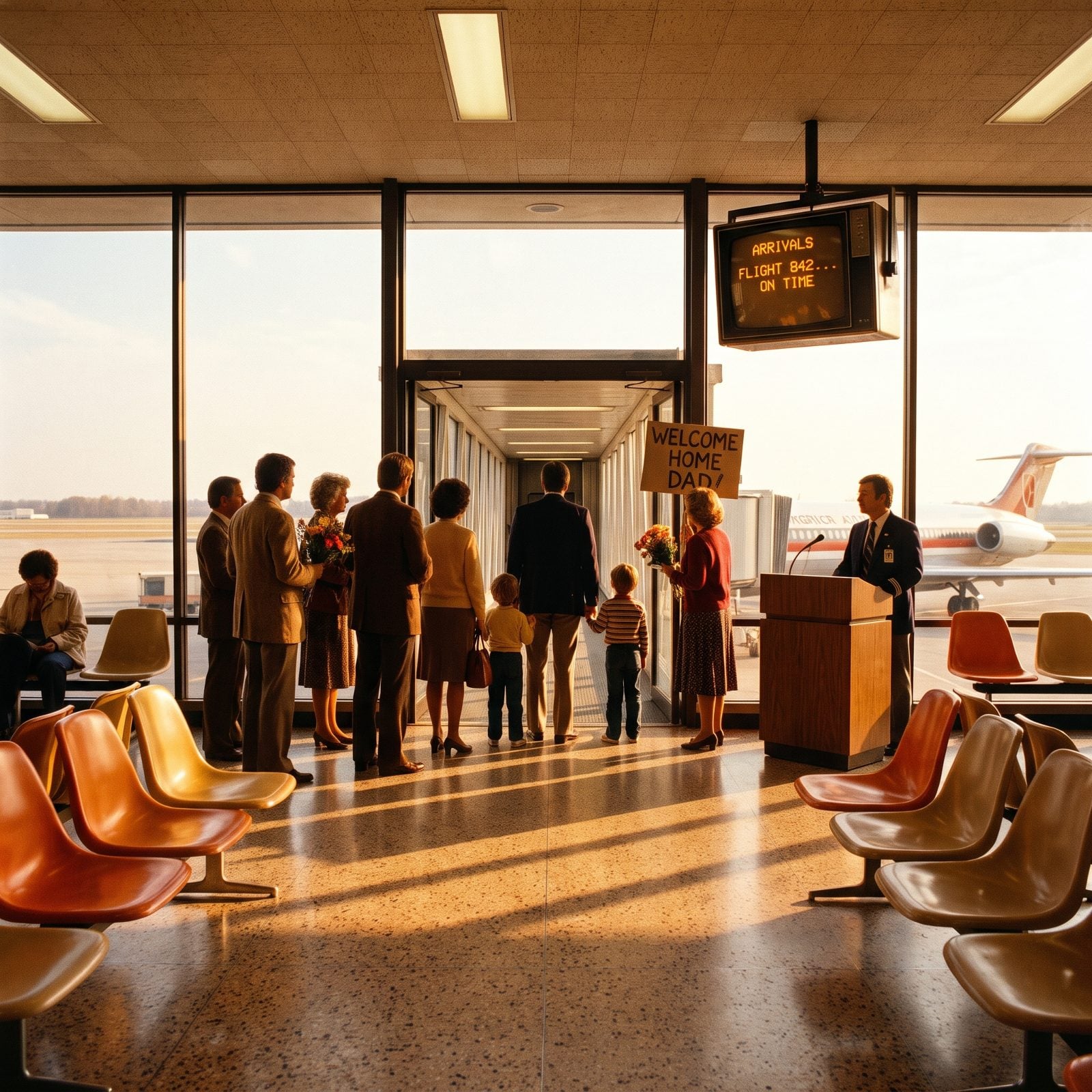
You stood right where the jetway spilled into the terminal, close enough to see your person before they saw you. The second their head came through the door, the whole little crowd leaned forward at once.
Nobody waited in a baggage-claim scrum under fluorescent lights. The reunion happened at the gate — flowers and all, sometimes a handmade sign — and grandparents got the first hug before the bags even came off the plane.
28. Walking Loved Ones to the Gate to See Them Off

The goodbye stretched all the way to the gate. You walked them past the shops, past the bar, right up to the door, and you stayed until the jetway swallowed them.
That final wave happened right at the gate, carry-on in hand, the plane waiting just beyond the window. It gave the parting some weight. Picture sending your college kid off at the end of a break — you got the whole concourse to say the last thing instead of a rushed hug at a rope line forty feet from where the real airport begins.
Now the goodbye happens at a checkpoint, and it always feels cut short.
27. No Need to Remove Your Shoes at Security
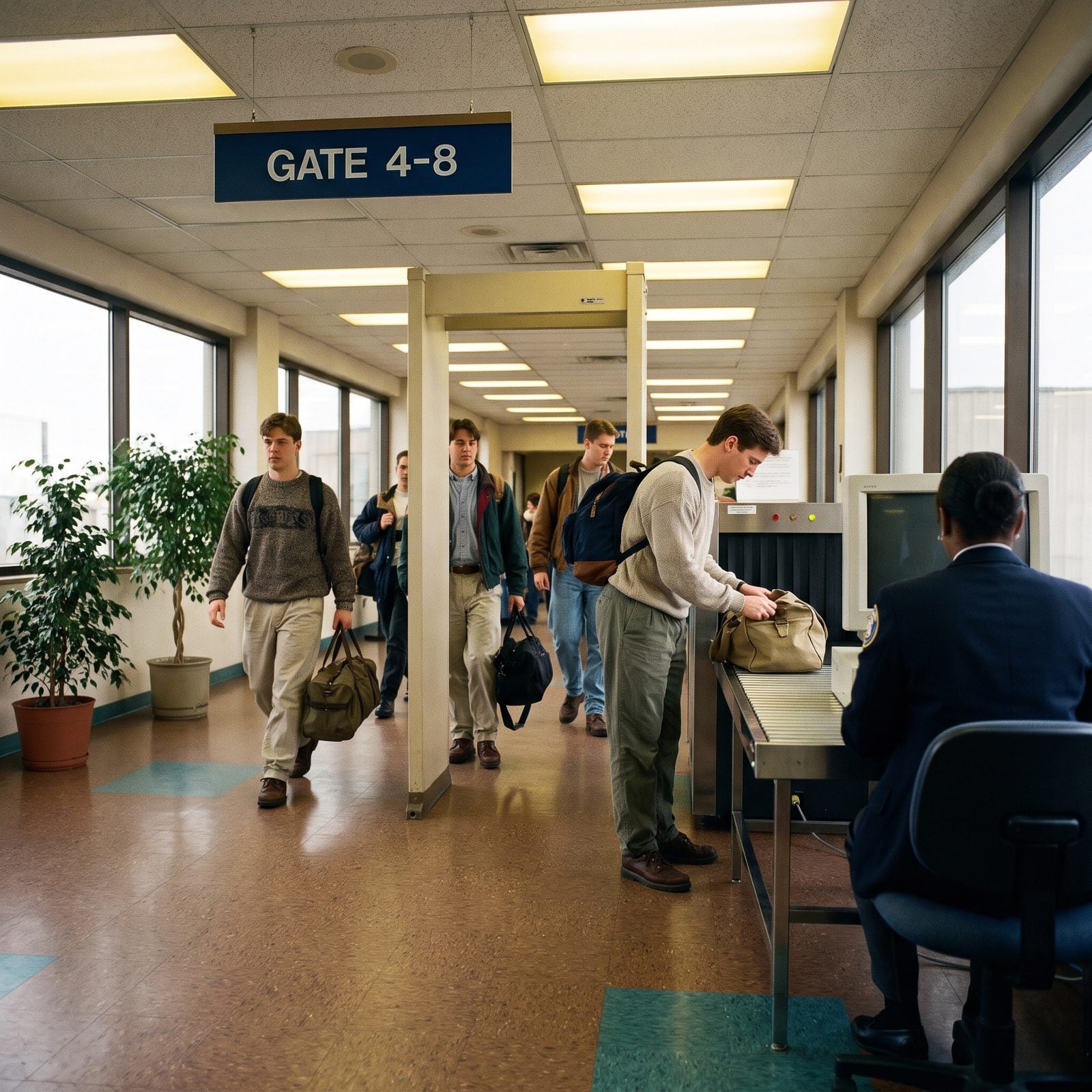
You strolled right past the metal detector archway in whatever you wore to the airport, bag in hand. Shoes on, belt on. The only thing you took off was maybe a watch, and even that was optional.
No gray bins, no stocking feet on a cold floor, no hopping around trying to re-lace your boots while the line stacked up behind you. The whole thing was over in a few seconds and you barely broke stride.
26. Keeping Your Full-Size Liquids and Water Bottle
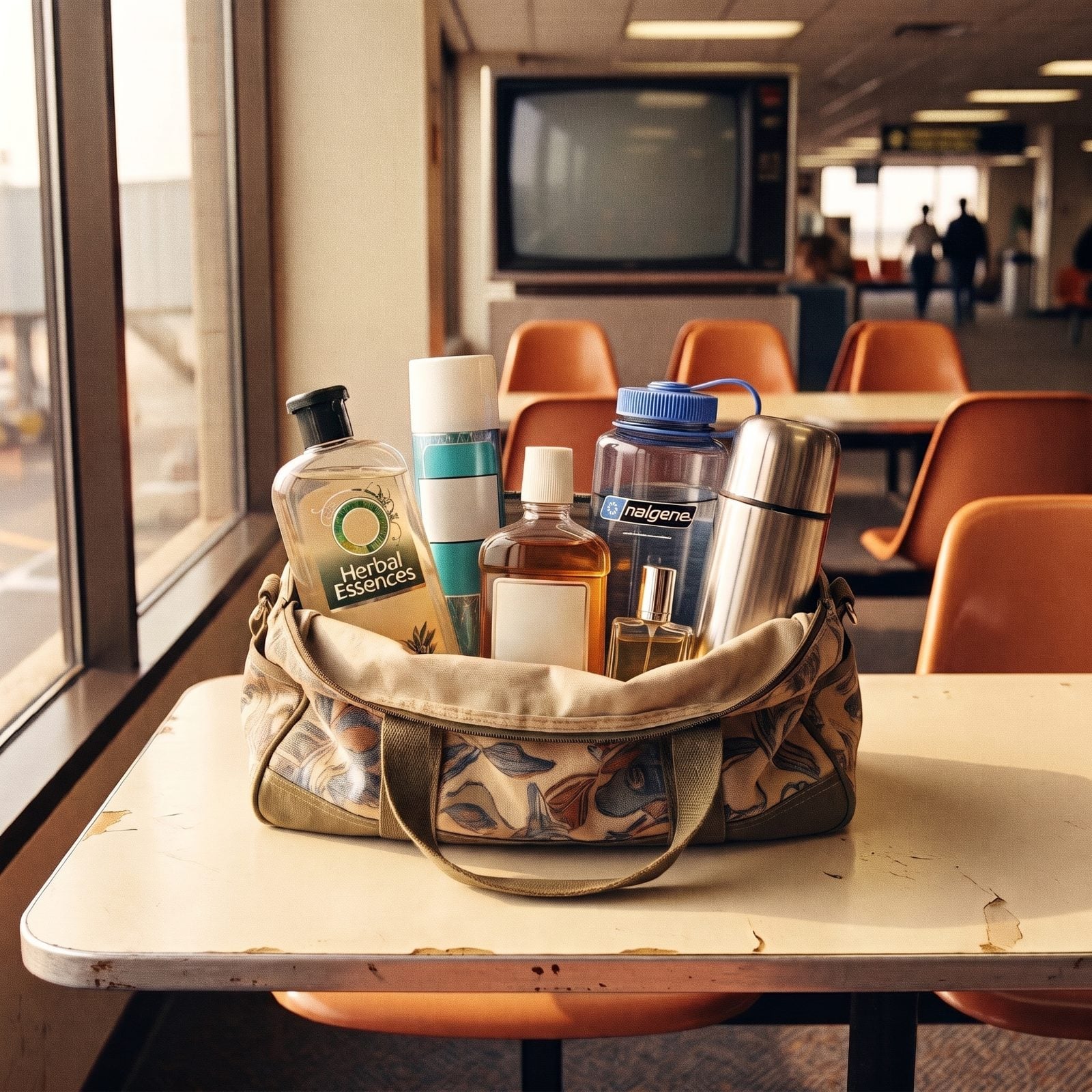
A full bottle of water walked through security without a second glance. So did your shampoo, your mouthwash, the big can of hairspray, a thermos of coffee you brought from home.
You packed your toiletries the way you packed them for any trip, in their regular sizes, and carried a drink right onto the plane. No quart-sized plastic bag, no three-ounce ceiling, no toss-it-in-the-bin ritual at the belt.
25. Smoking Sections in the Back of the Cabin
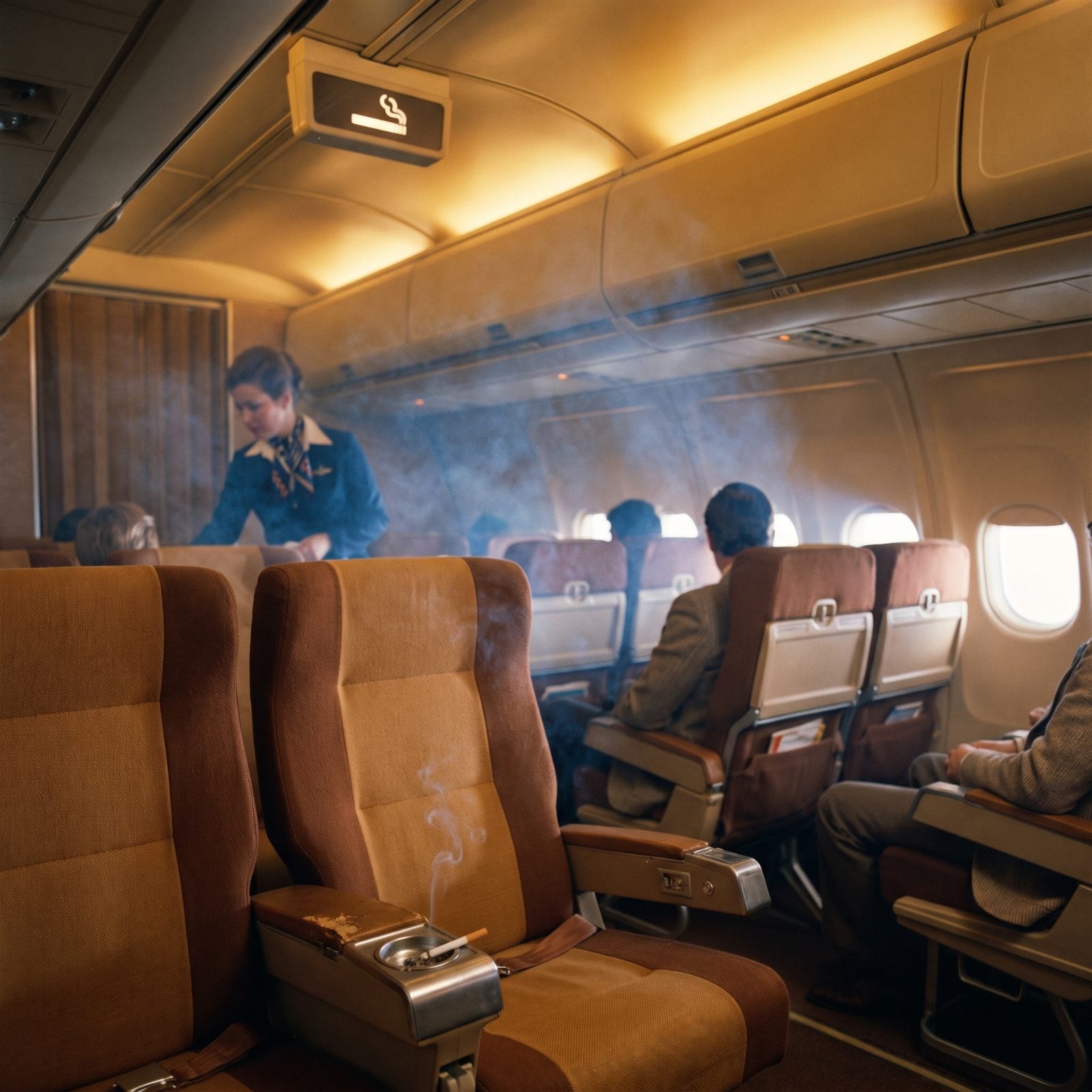
There was a line painted down the cabin, more or less, and behind it the air turned blue. The back rows were the smoking section, armrest ashtrays built right into the seat.
Get assigned row 28 as a non-smoker and you lived in the haze anyway, because the smoke never read the signs. Flight attendants walked the aisle handing out matchbooks. The whole plane smelled like it, and nobody thought much of it — at least until the bans of the late ’80s and ’90s cleared the air.
24. Showing Up 20 Minutes Before Your Flight
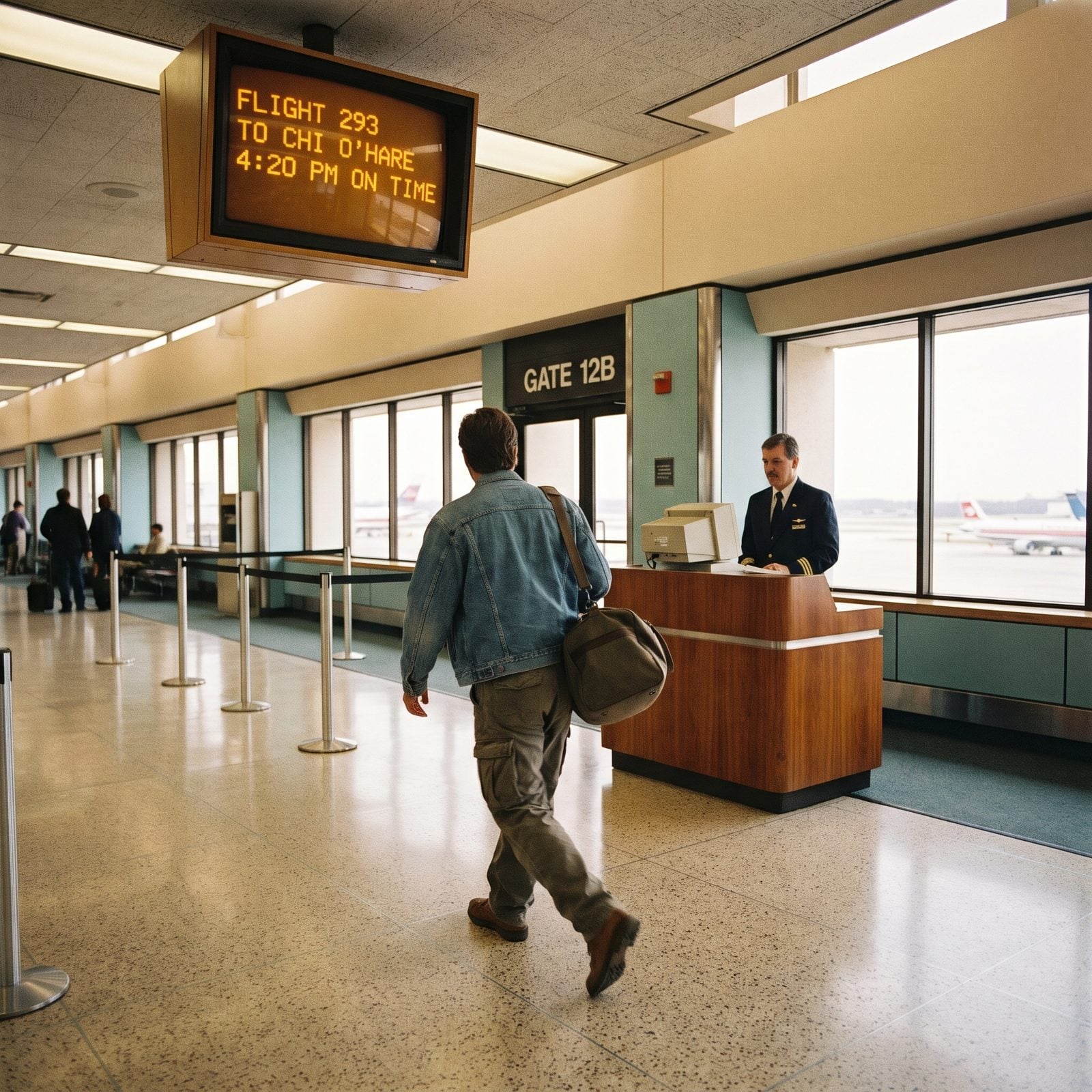
Twenty minutes was plenty. Park, walk to the counter, get your boarding card, stroll to the gate, done. People regularly made flights they were almost late for, because the airport didn’t fight you on the way in.
No security line stretching to the parking garage, no two-hours-early ritual, no live-tracking of wait times. You timed your arrival like you’d time a movie, and cutting it close was normal rather than reckless.
23. Paper Tickets Printed on Red Carbon Stock
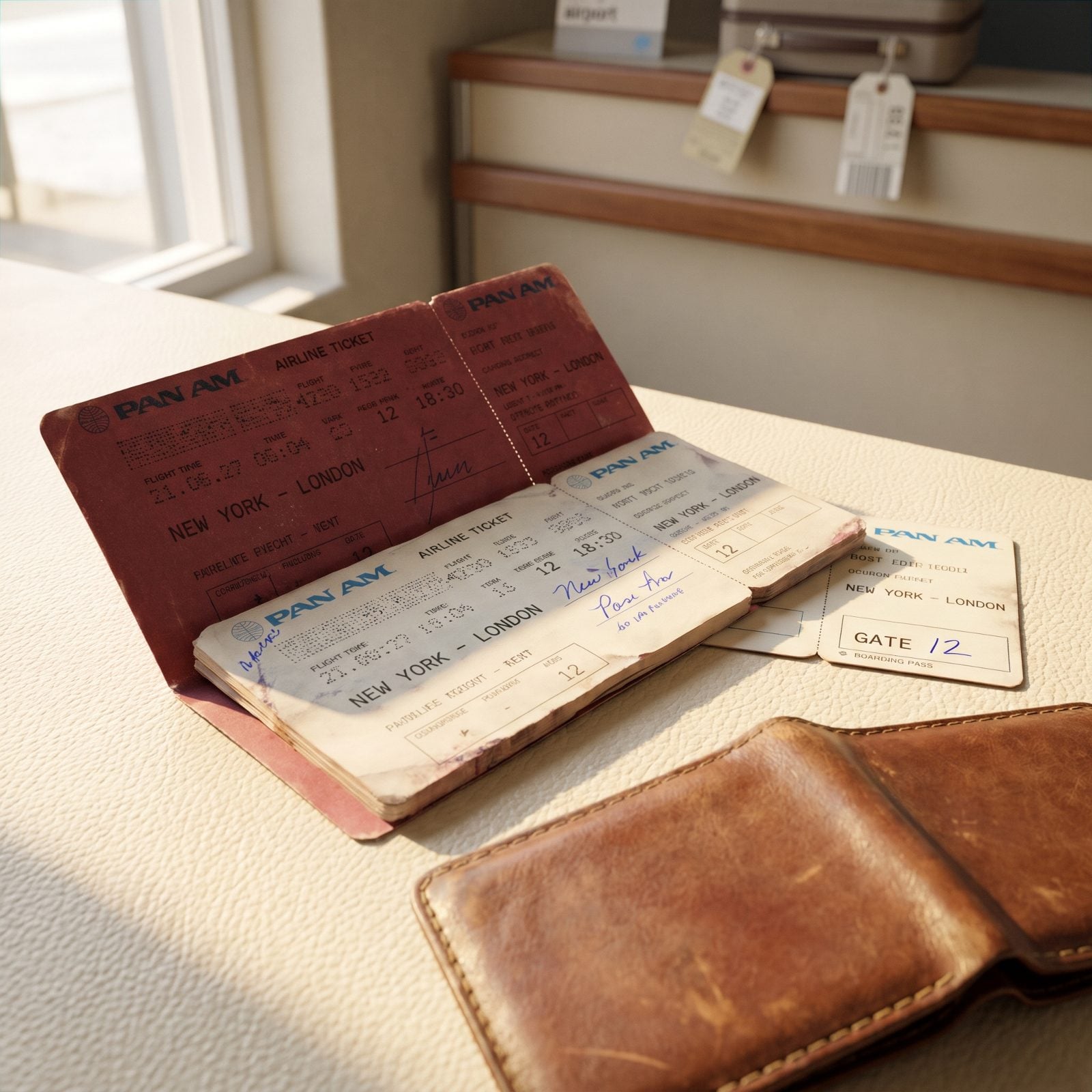
The ticket was a physical thing — a little booklet of red-carbon coupons bound in a paper jacket, one coupon torn off at each leg of the trip. You guarded it like cash, because it basically was.
Lose it and you were in real trouble. No printing another one at a kiosk. The agent wrote on it, tore the perforation, handed you back the stub, and that was your proof of the whole journey, folded into a coat pocket and soft at the corners by the time you landed.
22. No ID Required to Board a Domestic Flight
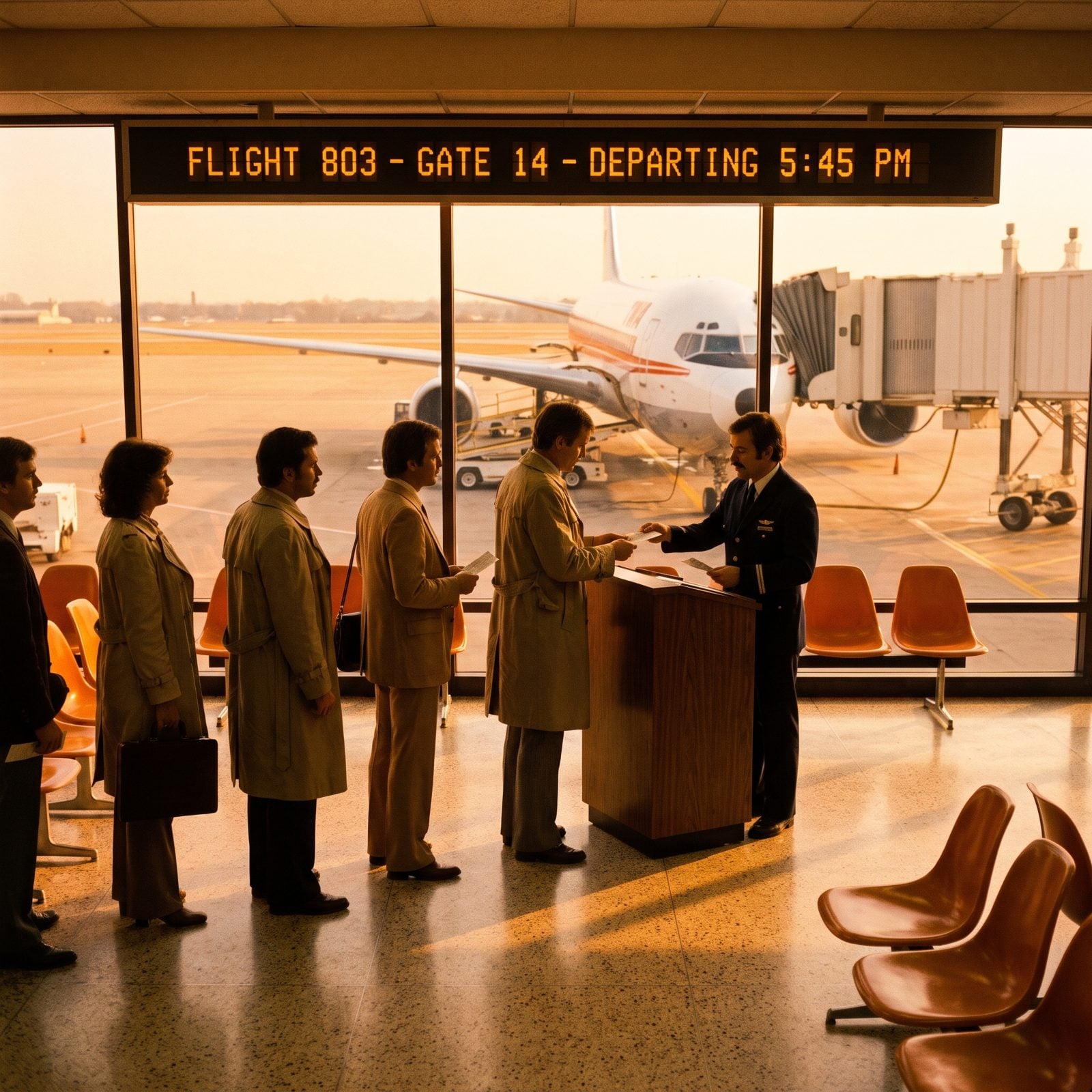
You handed over a ticket, not a photo ID. Your name could be anything. The ticket said you were going to Denver, and off you went.
People bought tickets for friends and handed them over at the curb, and a ticket with someone else’s name on it worked fine. For decades, the idea that the paper and the person had to match just wasn’t part of the deal, until ID checks began creeping in during the mid-1990s. A ticket was a ticket.
21. Carrying a Pocketknife in Your Carry-On
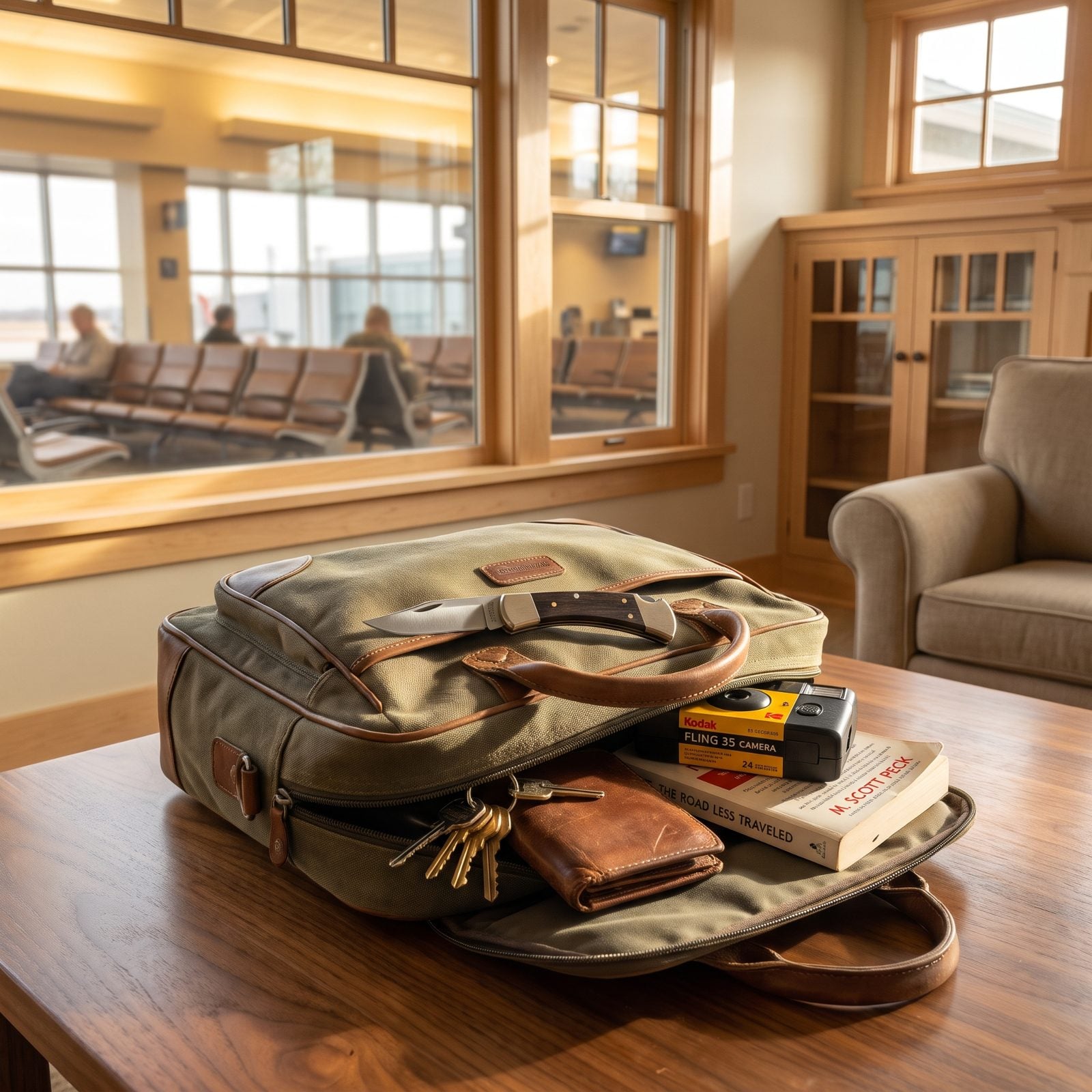
A small pocketknife lived in your bag the way a pen did. Blade under a certain length, folded shut, totally fine through the detector, and nobody blinked.
Plenty of men flew with the same knife in their pocket they used to open mail. It wasn’t a loophole or a risk anyone weighed — just a tool you happened to have on you, and the airport treated it like one.
20. Metal Cutlery Served With In-Flight Meals
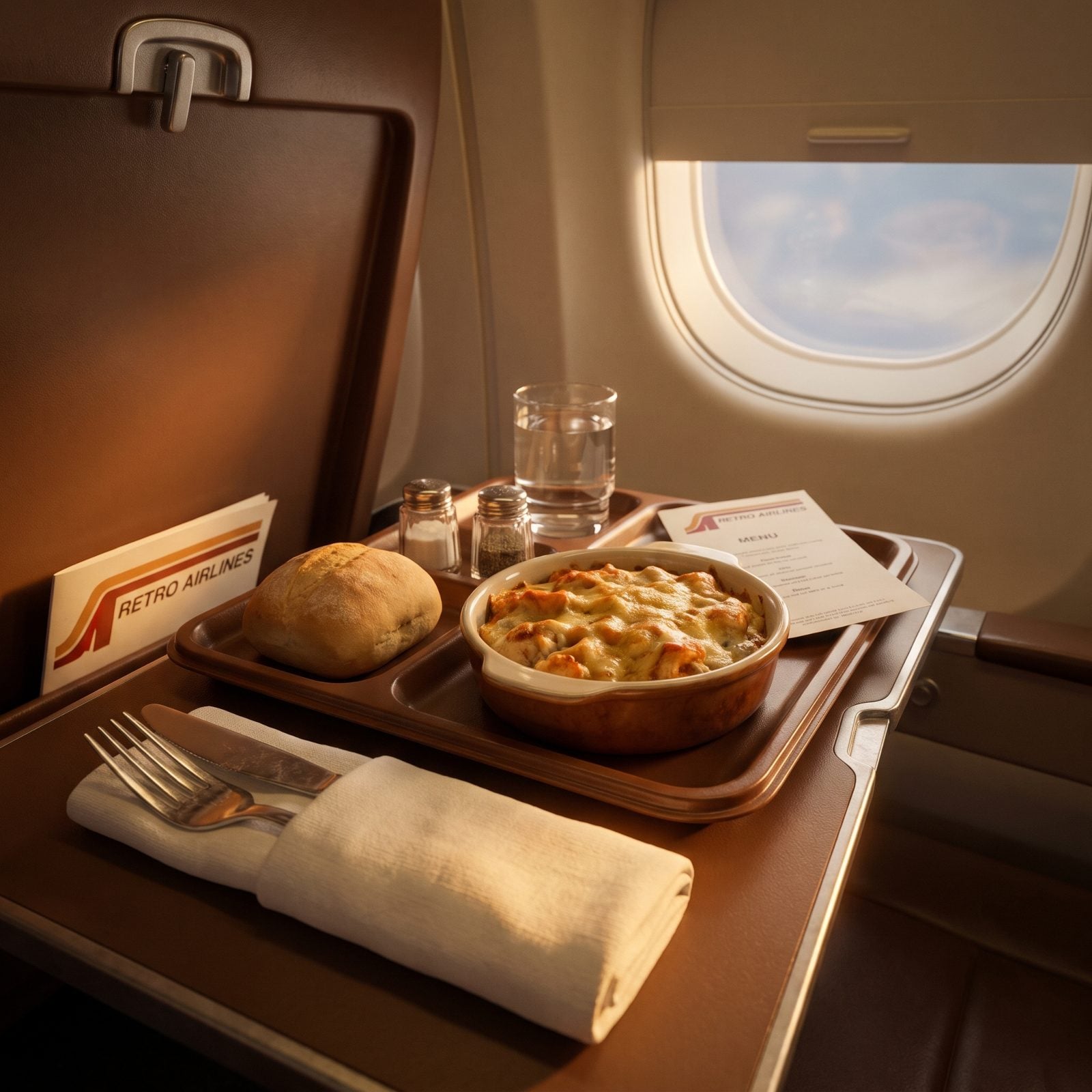
The meal came on a tray with a real fork and a real knife, stainless steel, wrapped in a cloth napkin. You could cut your chicken without the utensil folding in half.
There was something civilized about it, a small ceremony at thirty-five thousand feet. Even the salt and pepper came in tiny packets or little glass shakers. Then the knives got pulled, the plastic sporks moved in, and the whole meal got a little sadder and a lot flimsier.
19. The Free Hot Meal That Showed Up Even in the Back of the Plane
🔥 Would you like to save this?
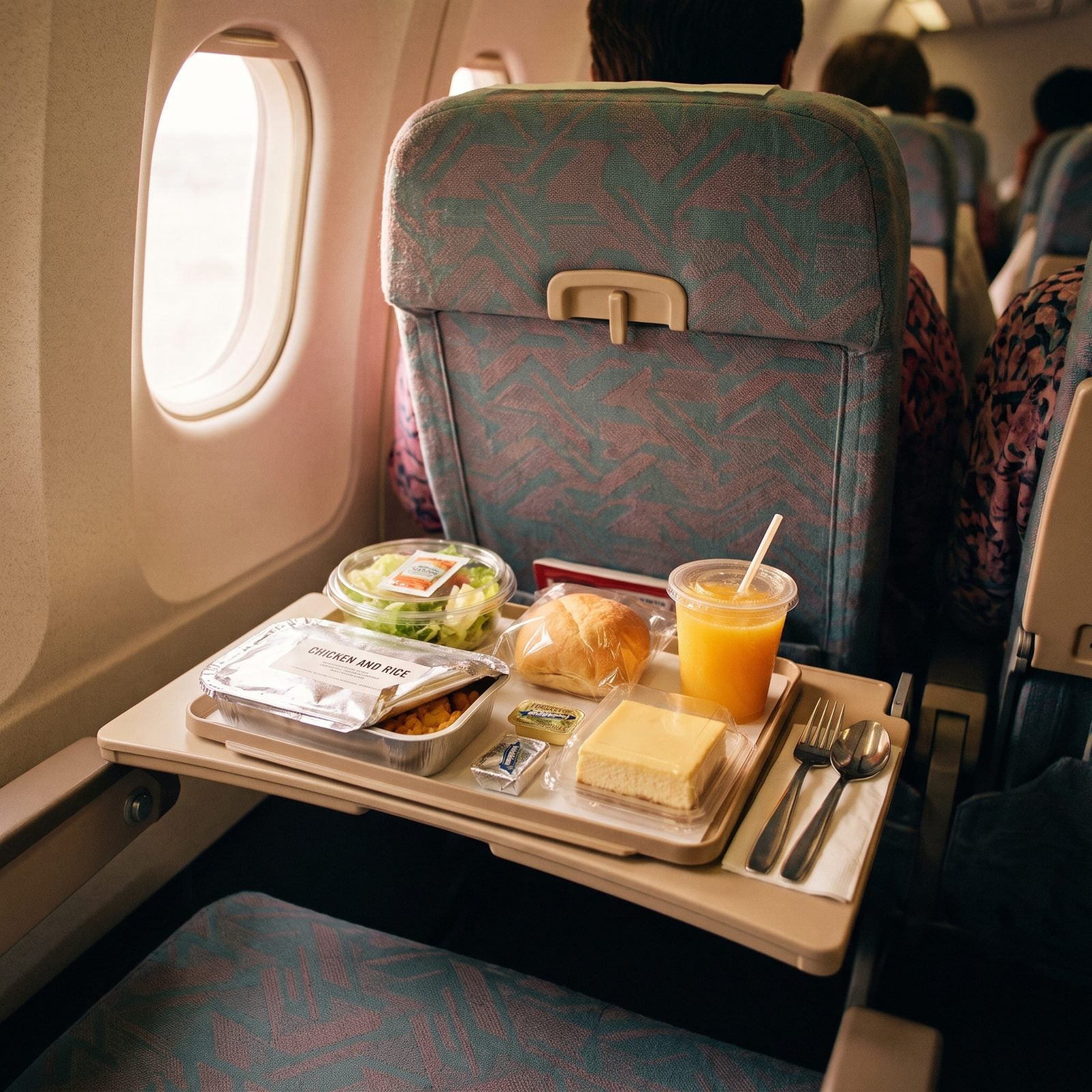
You knew the cart was coming because you could smell it three rows back — that warm, faintly salty aroma of reheated chicken and gravy drifting up the aisle while a stewardess worked her way toward you with a stack of foil-capped trays.
Economy got a real meal. Not a pretzel. A hot entree, a bread roll, a little salad, some variety of cheesecake or a brownie for dessert, and a tiny cup of coffee poured from a steel pot. You peeled back the foil and steam hit your face — on a two-hour flight, in coach, mind you.
Nobody thought it was a luxury then. It was just what flying was.
18. Getting Walked Into the Cockpit for a Pair of Plastic Wings
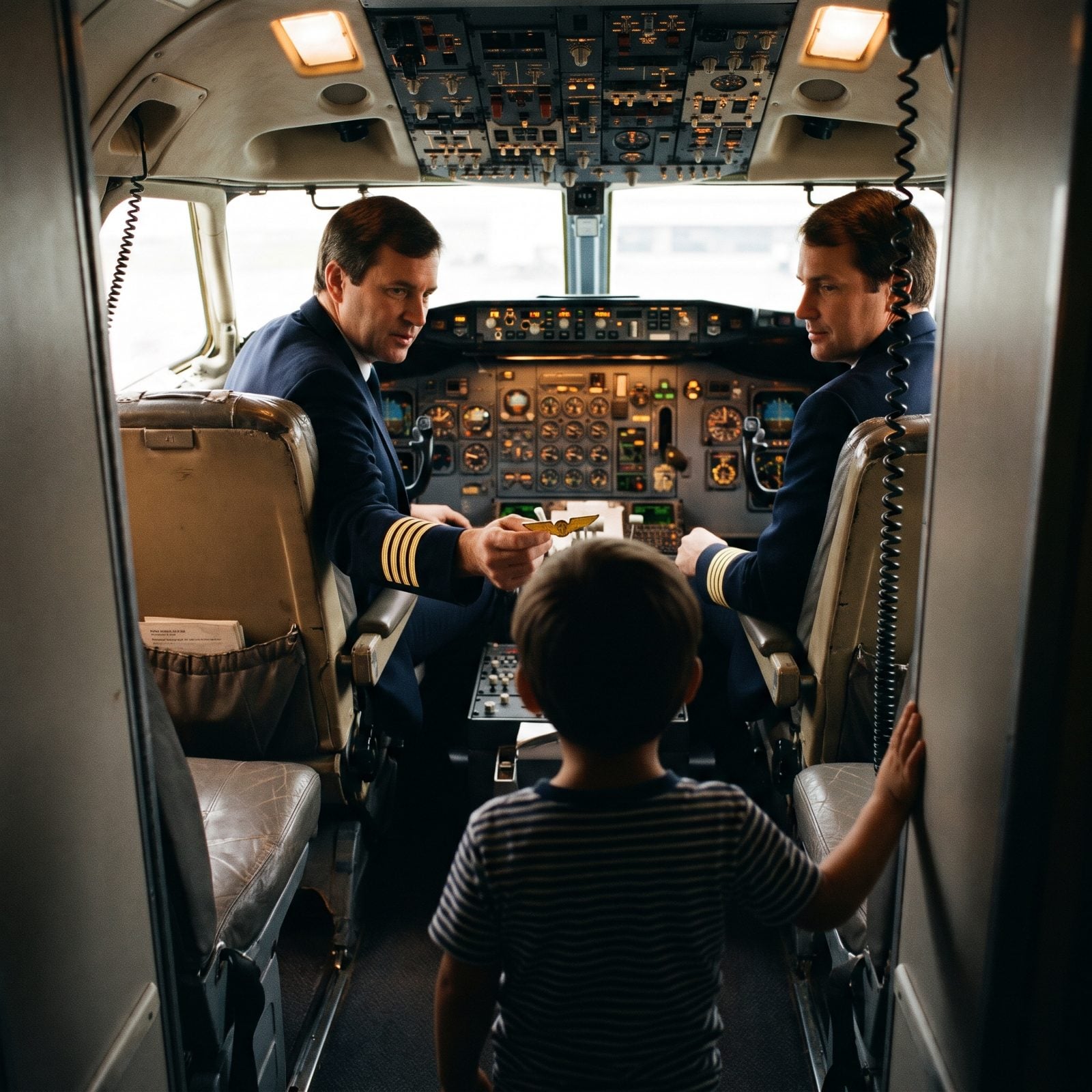
While the plane sat at the gate, a stewardess would lean down and ask if you wanted to meet the pilots. You walked up the aisle, past the galley, and someone opened the cockpit door for you.
Inside it was smaller than you expected and covered in switches. The captain would swivel around, ask how old you were, maybe let you look out the front window at the hangar outside. Then came the plastic wings, pinned to your shirt by an actual airline pilot, which you wore to school the next day like a medal.
That door is bolted and reinforced now. The whole ritual died in a single morning in September 2001, and there’s no version of modern flying where a stranger hands your kid a pin in the cockpit.
17. Checking as Many Bags as You Wanted, All of It Free
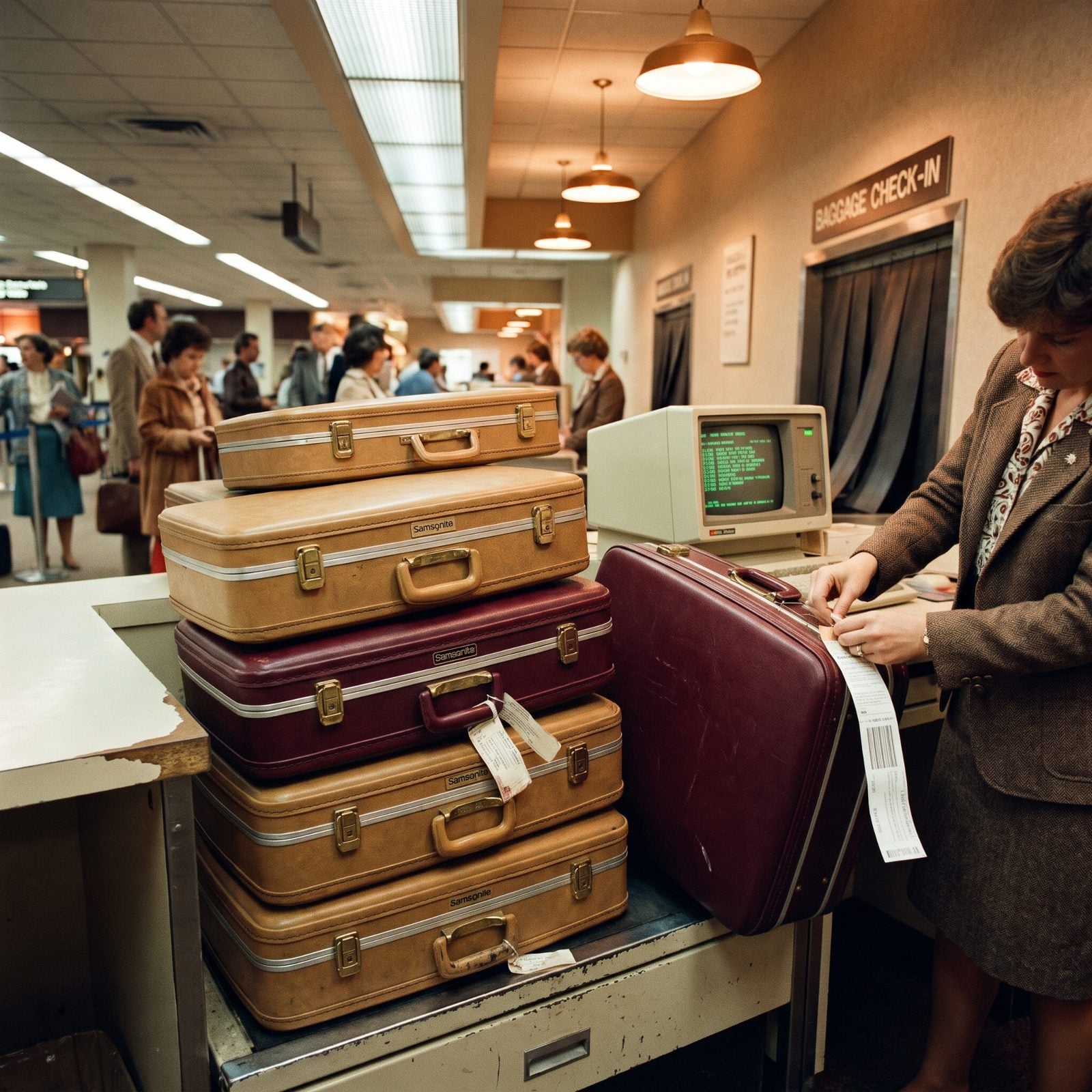
Two bags per person was standard, and nobody counted that closely. You showed up with the whole family’s luggage, a golf bag, a box of something fragile wrapped in a sweater, and the agent tagged all of it without blinking or reaching for a credit card machine.
The scale by the counter was mostly decorative. Overweight fees existed in theory, but a genial agent would wave a slightly heavy suitcase through with a shrug. Checking bags came with the ticket you’d already paid for.
I still get a small jolt of indignation every time a kiosk asks me for thirty-five dollars to put one bag in the hold. It used to be included. It used to be nothing.
16. Legroom You Could Actually Stretch Into
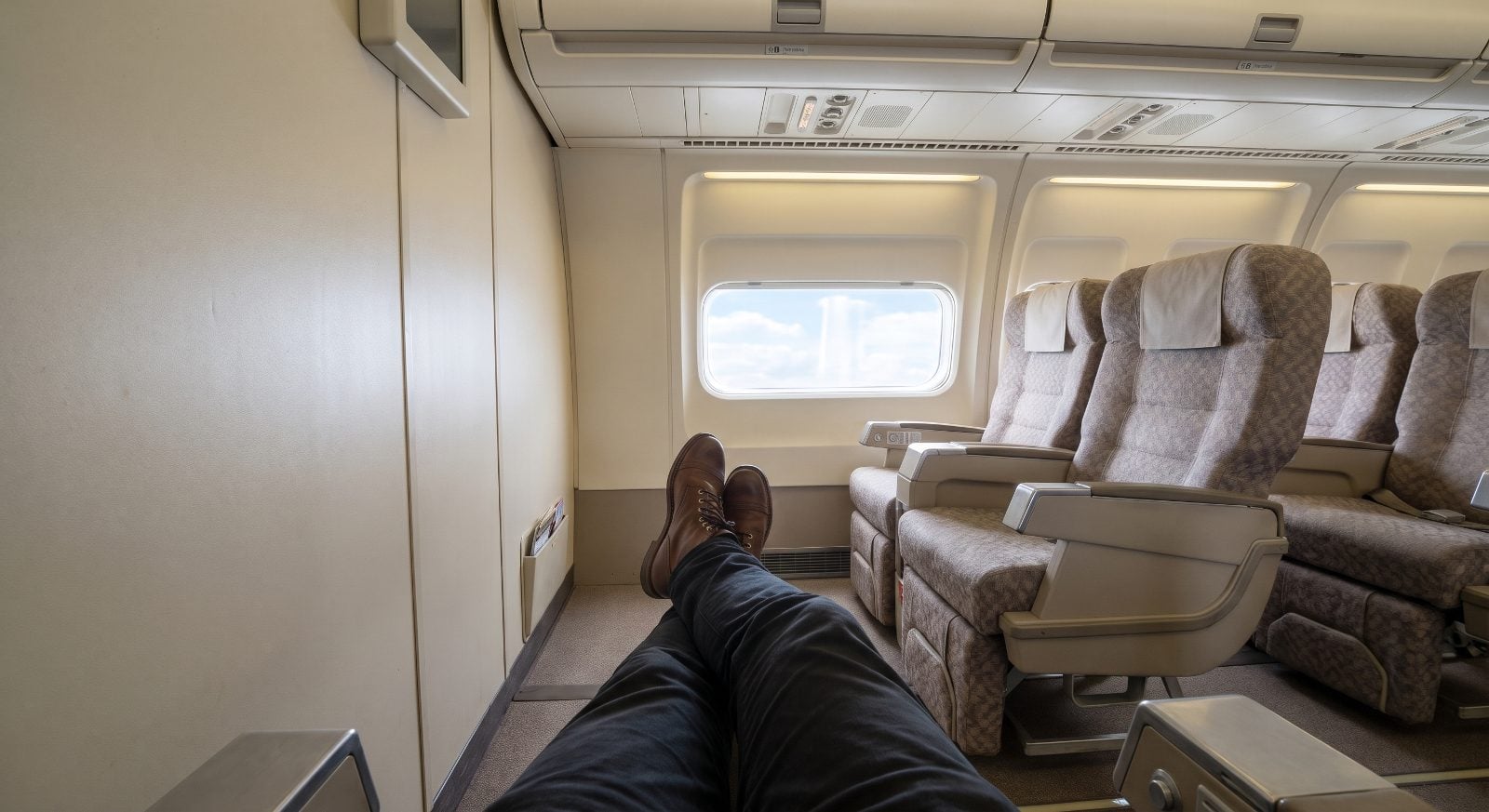
You could cross your legs. A six-footer sat down without his knees mashing into the seatback in front of him, and when the person ahead reclined it barely registered.
Seats ran wider too, before the industry figured out it could shave an inch off each one and cram another row into the fuselage. The armrests were broad enough that two adults weren’t quietly waging a border war the entire flight.
15. Stewardesses in Tailored Uniforms Who Made It an Occasion
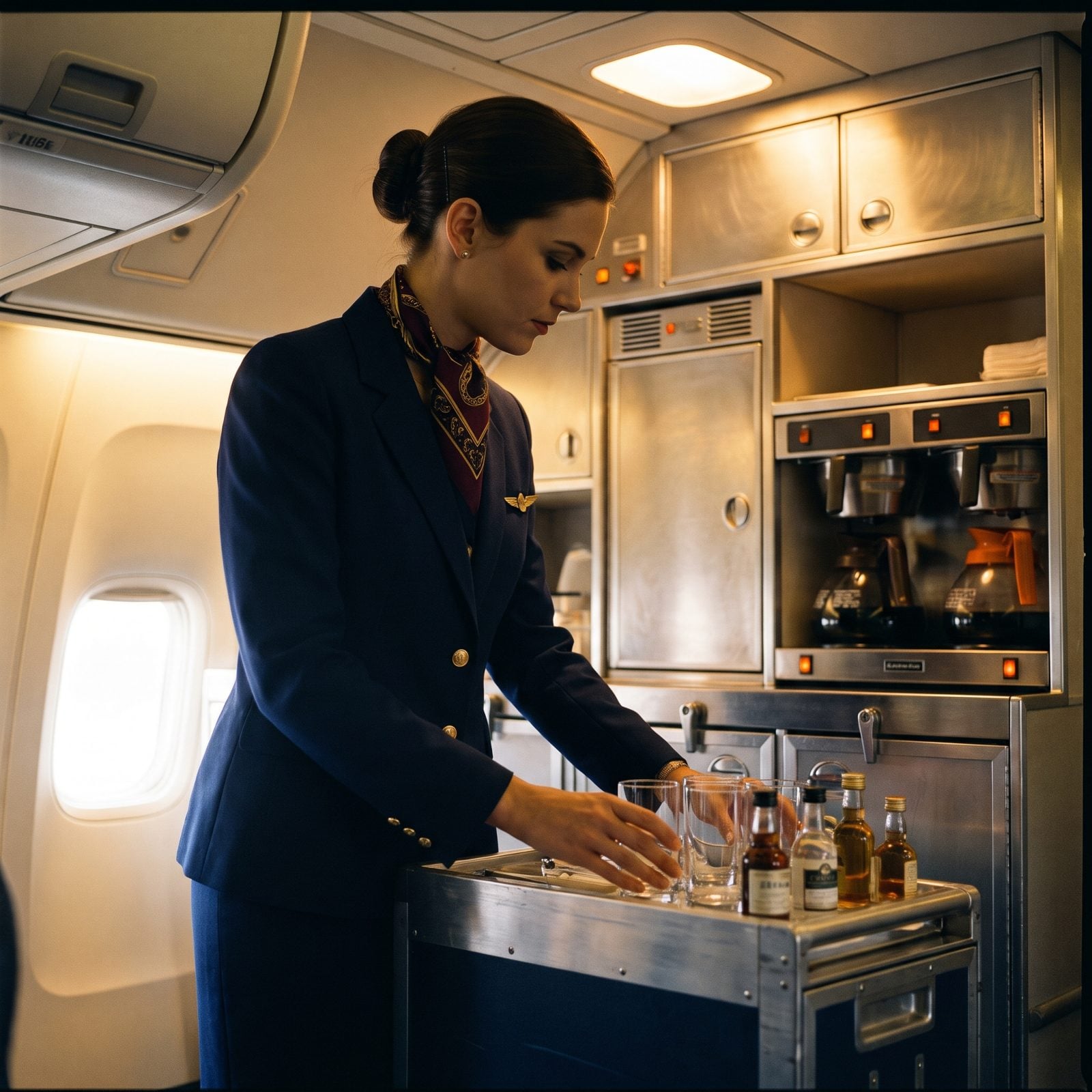
The uniform meant something. A fitted blazer, a pencil skirt, a silk scarf knotted just so, little heels, a winged pin on the lapel — every airline had its own color and cut, and you could tell who you were flying just by looking at the crew.
They called them stewardesses, and the service came with a formality that made boarding a plane feel like stepping somewhere slightly above your usual day. Lipstick on. Posture up. A level of polish the whole cabin seemed to rise to meet.
The word changed, the tailoring relaxed, the occasion faded. I’m not mourning the gender politics of it, believe me. But I do miss the sense that getting on a plane was worth dressing for.
14. Pillows and Blankets Handed Out Like It Was Nothing
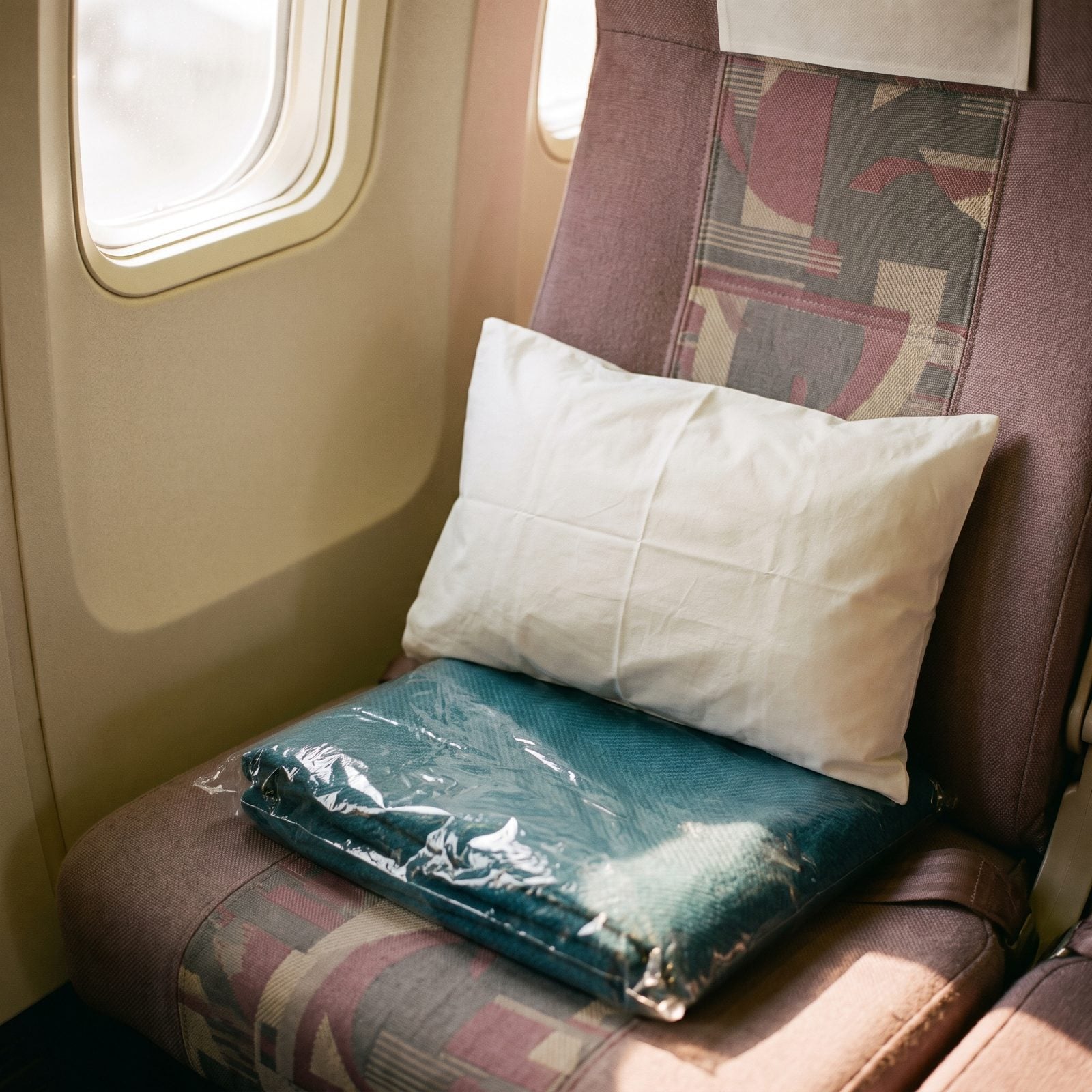
Every seat had one waiting, or a stewardess came by with an armful and dropped one in your lap — a small pillow in a clean paper case and a thin teal blanket, sometimes still sealed in its plastic wrapper.
You didn’t ask. You didn’t pay. On a late flight you’d tuck the pillow against the window, pull the blanket up, and be asleep before the wheels left the ground.
Now they’re rationed, sold in a kit, or gone entirely on short hauls. Somewhere along the way a blanket became a revenue stream.
13. Walking Across the Tarmac to Climb the Stairs
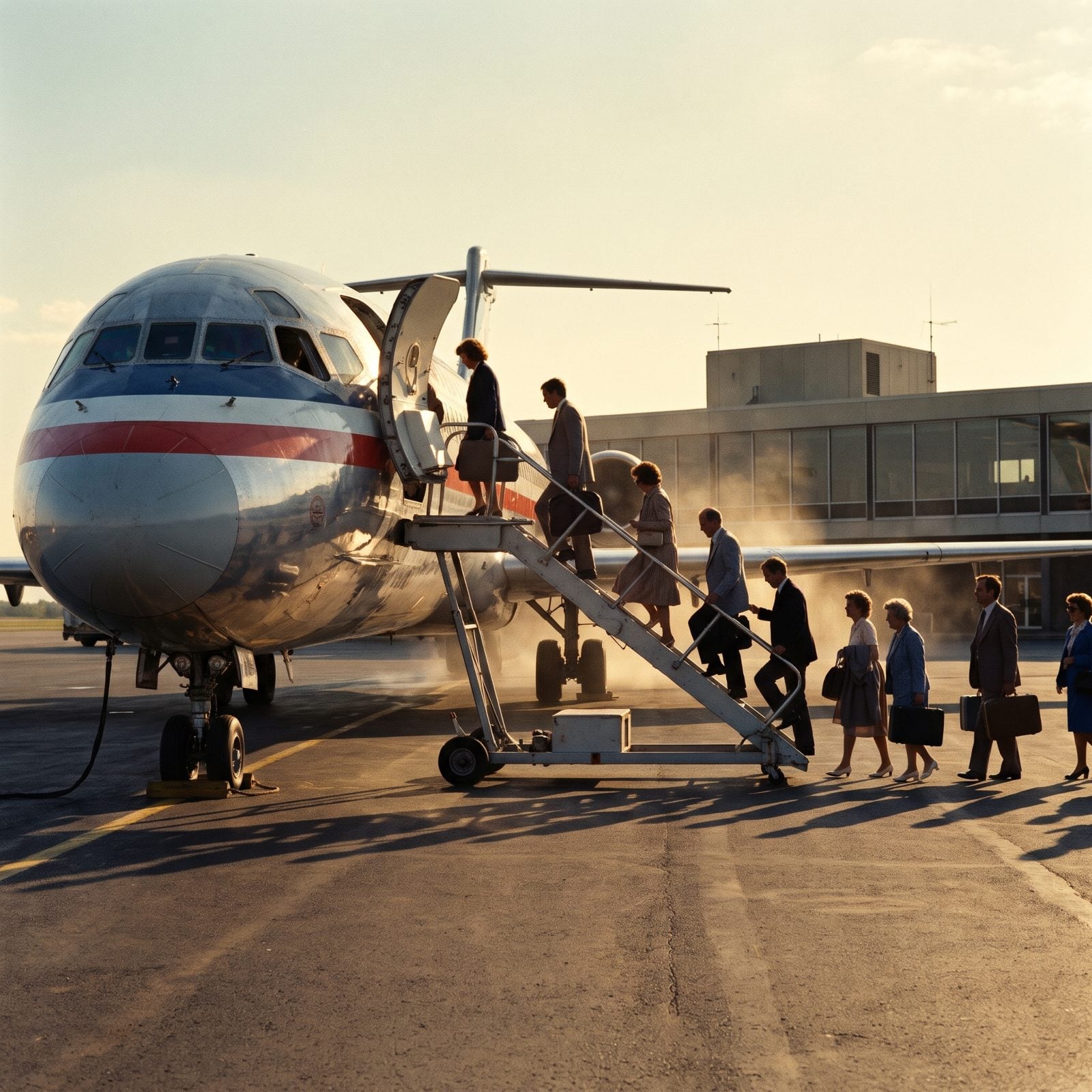
You didn’t tunnel into the plane through a sealed jet bridge. You walked out onto open tarmac and climbed a set of rolling metal stairs.
There was this moment at the top of the stairs — hand on the rail, wind shoving at you, engines whining nearby, the smell of warm asphalt and jet fuel in your nose. You’d turn and look back at the terminal before ducking inside. It felt like you were actually going somewhere.
Smaller airports still do it. Most don’t. The jet bridge is more comfortable and far less memorable, a trade the whole industry made without asking anyone.
12. The Agent Who Wrote Your Boarding Pass By Hand
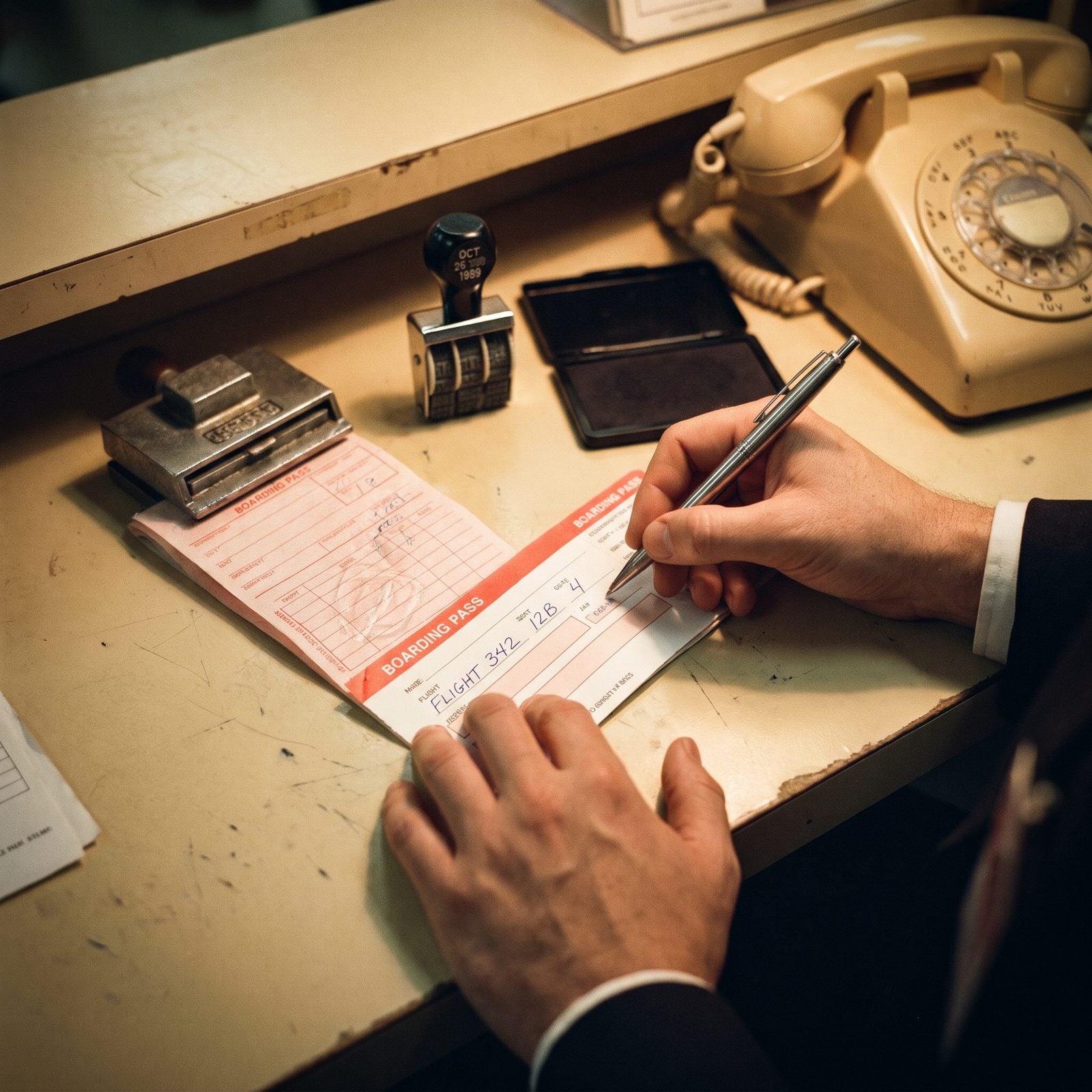
At the little regional fields there was no printer spitting out a scannable strip. The agent pulled a carbon-copy ticket stub, uncapped a pen, and wrote your flight number, your seat, and your gate by hand.
You could watch the ink dry. You’d fold the stub and slip it in your shirt pocket, and it felt oddly personal — like someone had signed you onto the flight themselves.
11. Airport Observation Decks Where Anyone Could Watch the Planes
🔥 Would you like to save this?
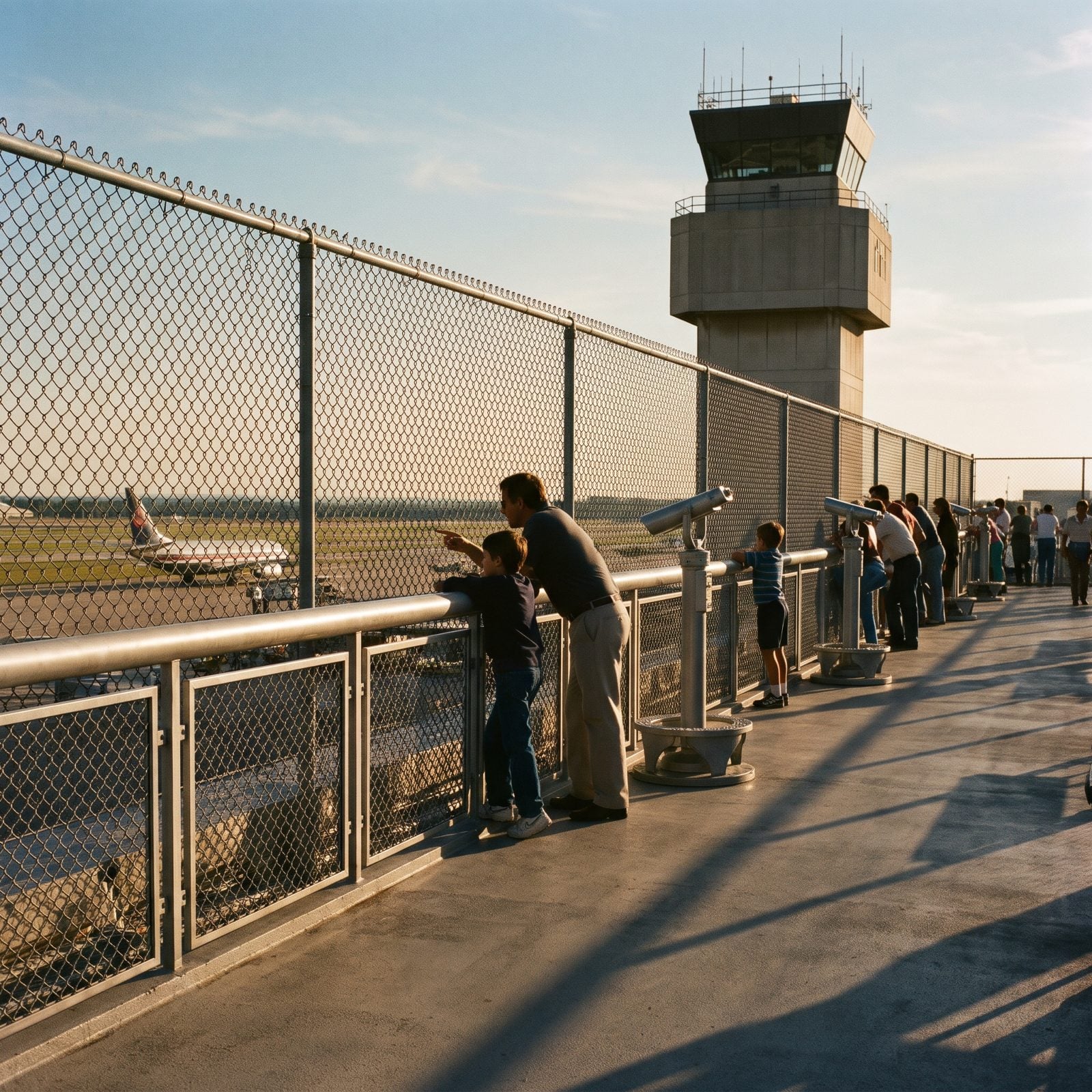
Families used to drive to the airport with no intention of flying anywhere. They came to watch.
Up on the observation deck, behind a chain-link rail, you’d stand with a crowd of strangers and feel the ground shake as a jet rotated off the runway. Coin-operated binoculars were bolted to the railing, kids pressed their faces to the fence, and people brought sandwiches like it was a ballgame.
An airport was a place you could visit for the pure spectacle of it, no ticket required. Then security concerns closed most of the decks, and the idea of airport-as-destination quietly slipped out of American life. A few old decks survive. Go stand on one if you can find it.
10. Curbside Check-In Where the Skycap Handled Everything
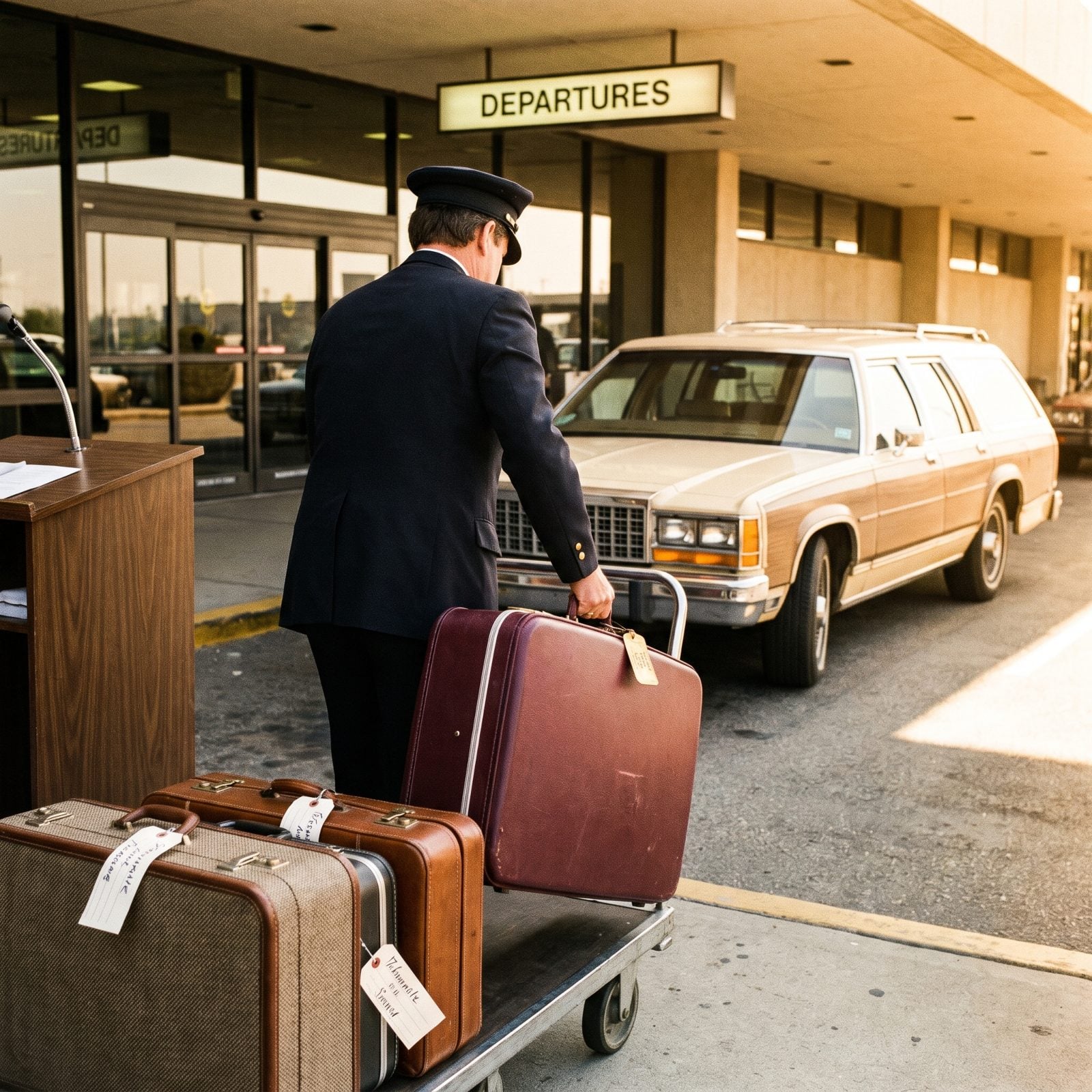
You pulled up to the curb, popped the trunk, and a skycap was already there. He tagged your bags right on the sidewalk, handed you your boarding passes, and told you your gate. You never set foot inside the terminal before you were already checked in.
A couple of dollars tip and you walked straight to the gate with nothing but a carry-on. No line, no counter, no standing in a maze of retractable belts.
It was the smoothest part of air travel, and it ran on human competence rather than a touchscreen. The whole system assumed people could be trusted, and for a long stretch of the twentieth century, that assumption was just how we flew.
9. Playing Cards and Actual Conversations With the Stranger in 23B
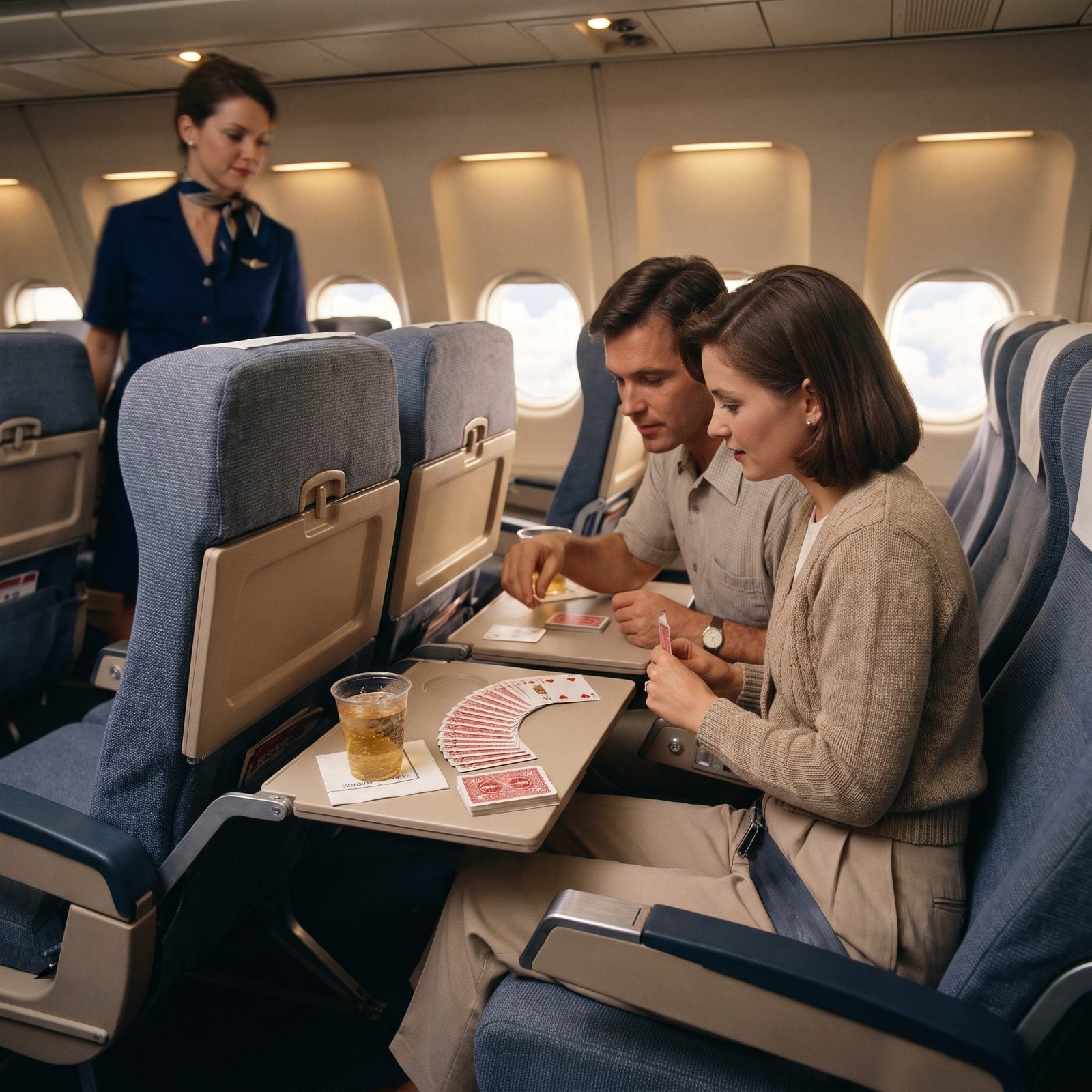
You’d settle into your seat, nod at whoever was next to you, and by somewhere over Kansas you knew where they were headed and why. Flying used to come with small talk you didn’t dread — no earbuds to hide behind, no glowing rectangle to vanish into.
Somebody always had a deck of cards, so gin rummy ran on the tray table while a game of hearts crossed the aisle, the snap of a shuffle competing with the engine drone. You learned names. You heard about the daughter’s wedding you were flying to, the new job in Dallas, the fishing trip gone wrong — all of it before the drink cart made a second pass.
8. The Complimentary Headset That Looked Like a Stethoscope
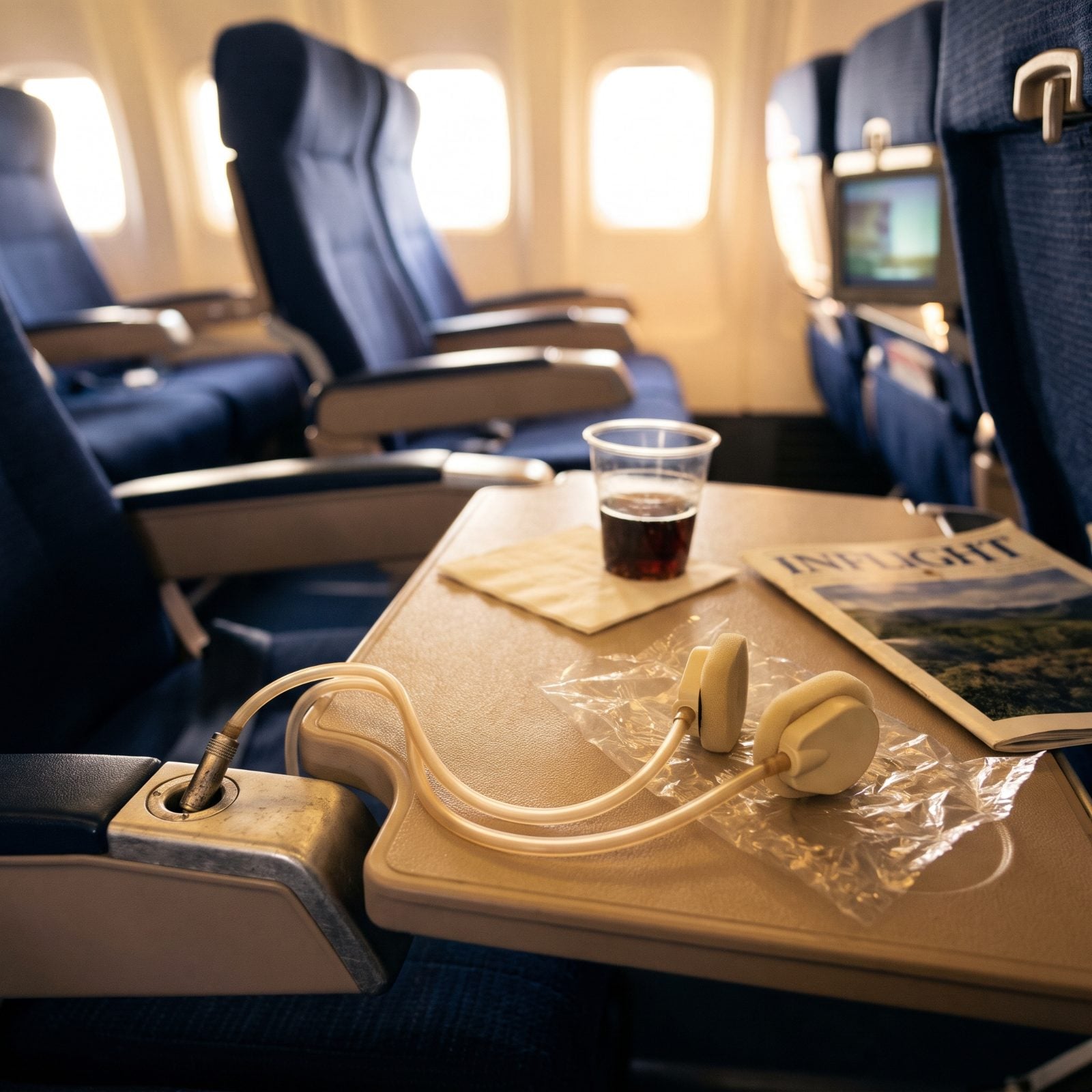
They weren’t headphones. They were air tubes.
The flight attendant walked the aisle handing out these sealed plastic bags, and inside was a beige contraption that piped sound through two hollow tubes straight into your ears. No wires. No speakers. Just air pressure carrying a tinny version of whatever movie was flickering on the little screen hanging from the ceiling a few rows up.
You jammed the silver plug into the armrest, fiddled with the little volume dial, and prayed you’d get both channels, because half the time one ear was just dead. The foam pads smelled faintly of plastic and recycled cabin air. When the movie ended you handed them back — or stuffed them in your carry-on, because free is free.
7. Smoking Lounges You Could Smell From the Jet Bridge
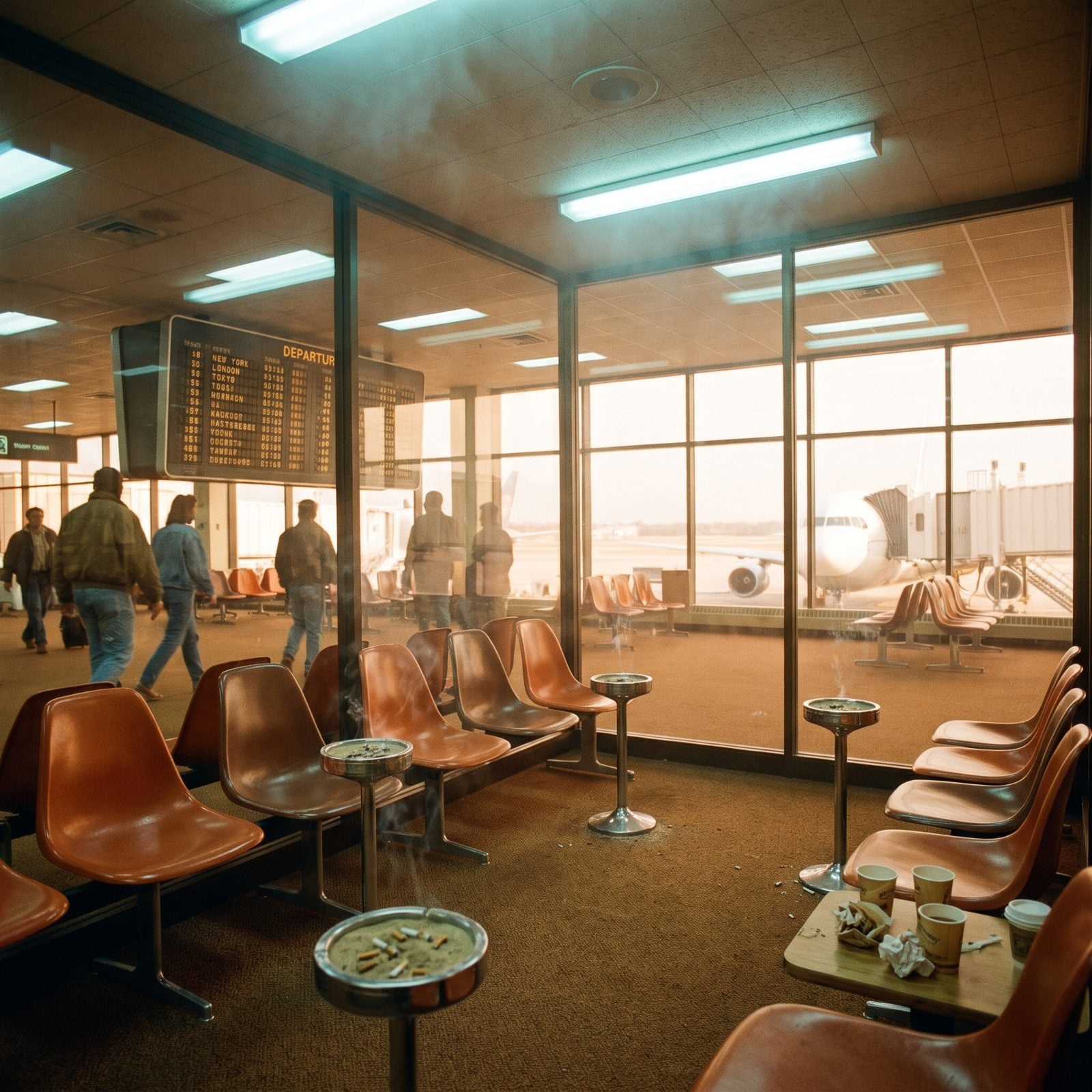
The haze hit you before the door did. Terminals had glass-walled smoking lounges tucked between gates, and you could smell them from twenty feet down the concourse — that sweet-sour fug of stale smoke baked into orange plastic chairs.
For a long stretch you didn’t even need the lounge. People lit up right at the gate, at the bar, in the restaurant, and ashtrays were built into the armrests of terminal seating. Whole sections of the plane were marked “Smoking,” as if the back six rows lived under a different sky.
6. Strolling Up to an International Flight With an Hour to Spare
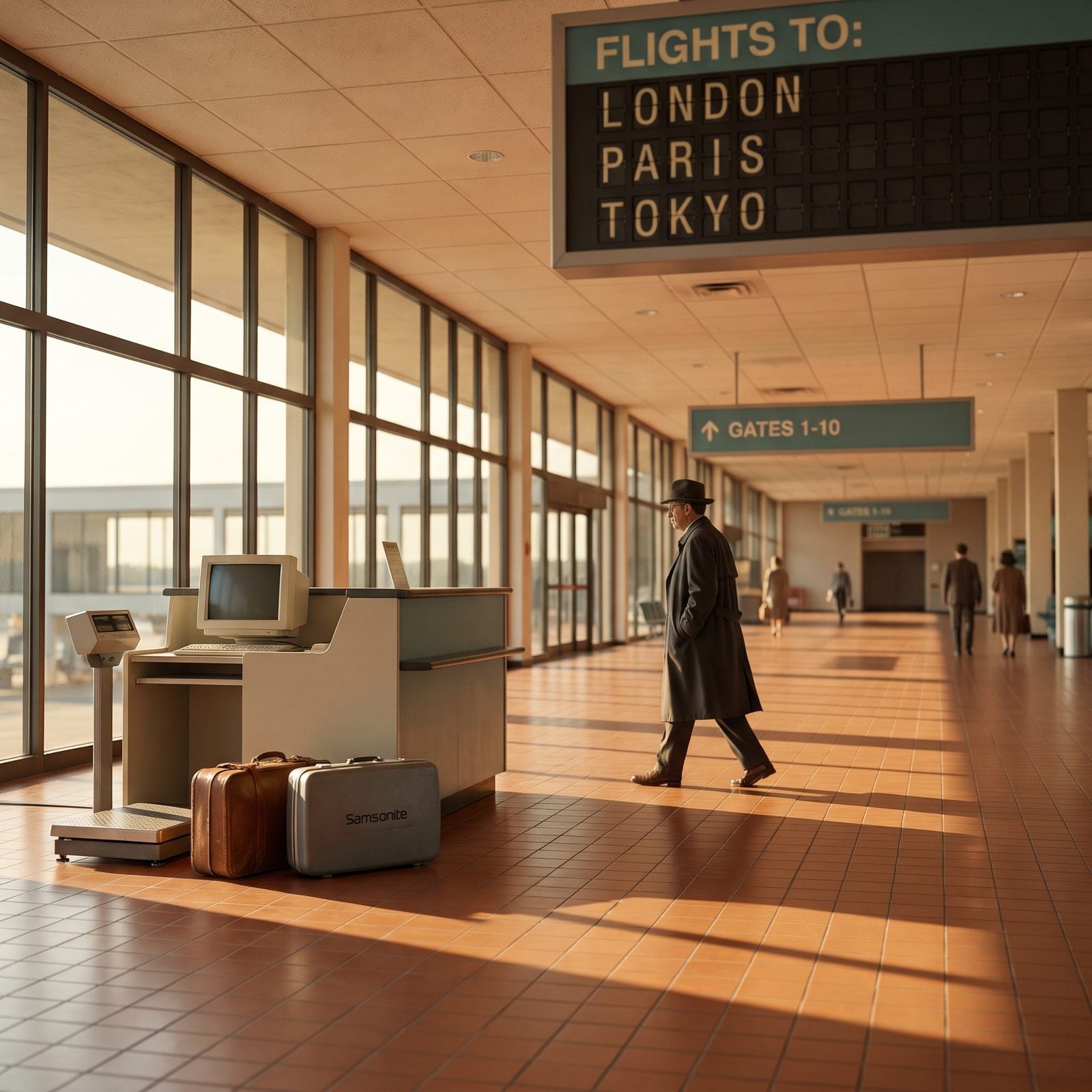
Sixty minutes. That’s all you needed, even flying to another continent. You’d get dropped at the curb, walk up to the counter, hand over your passport and ticket, check your bag, and still have time for a coffee and a magazine before they called your row.
No two-hour buffer. No security line snaking back on itself. No shoes off, belts off, laptop in a bin, hands up in a glass tube. The whole machinery of dread we now build into every flight simply didn’t exist yet.
You’d see people sprint through the terminal and make it. Try that today.
5. Calling Your Travel Agent to Book the Whole Trip
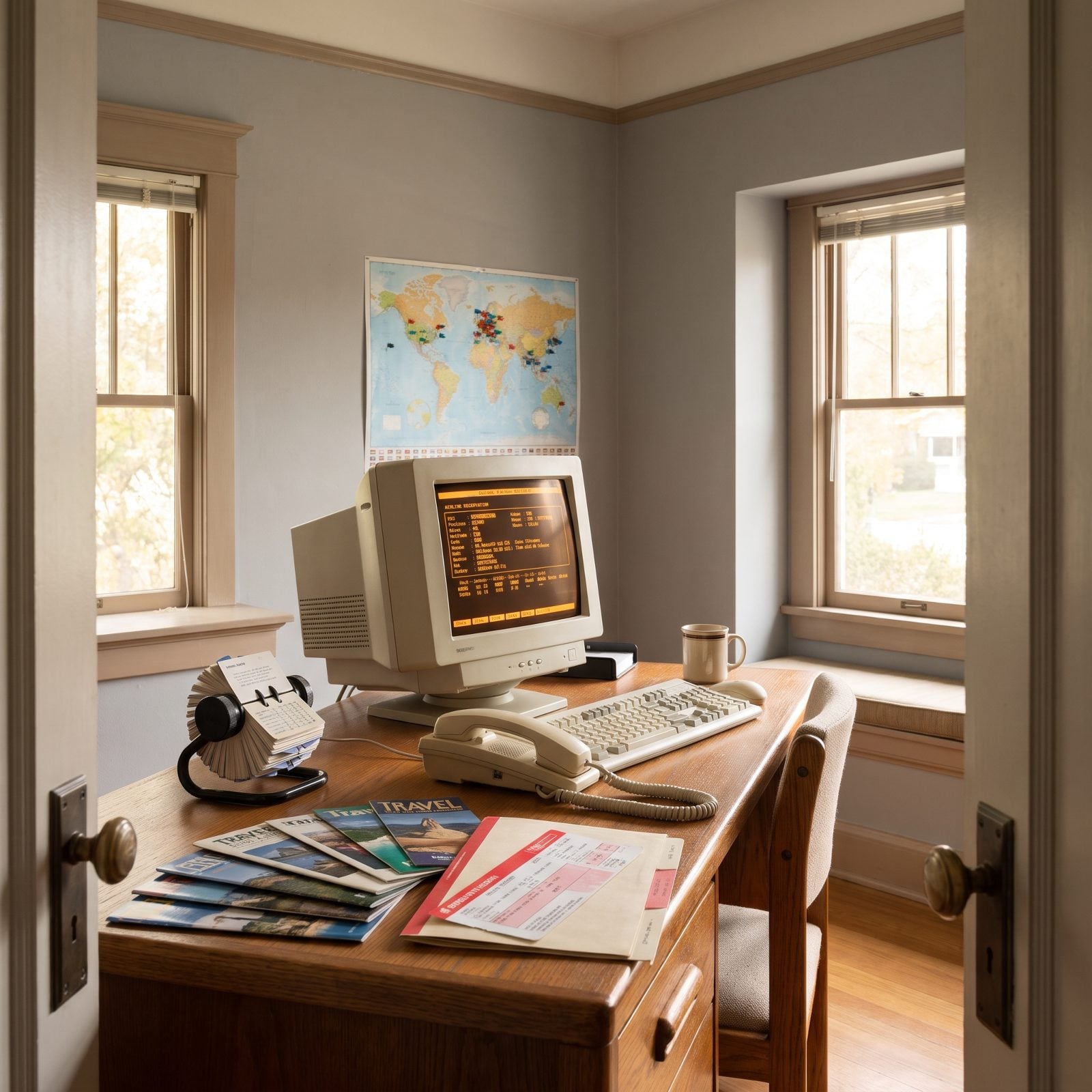
You didn’t shop for flights. You called a person who did it for you.
There was a woman at the travel agency who knew your name, your aisle-seat preference, and that you hated connecting through O’Hare. You’d call, describe roughly where and when you wanted to go, and let her work the mysterious green-screen system that only agents could see.
A few days later a stiff paper ticket arrived in the mail — carbon pages in a little folder, each flight segment printed in that dot-matrix font. You guarded it like cash, because losing it was a genuine disaster.
4. Picking Your Seat Right at the Gate, No Charge
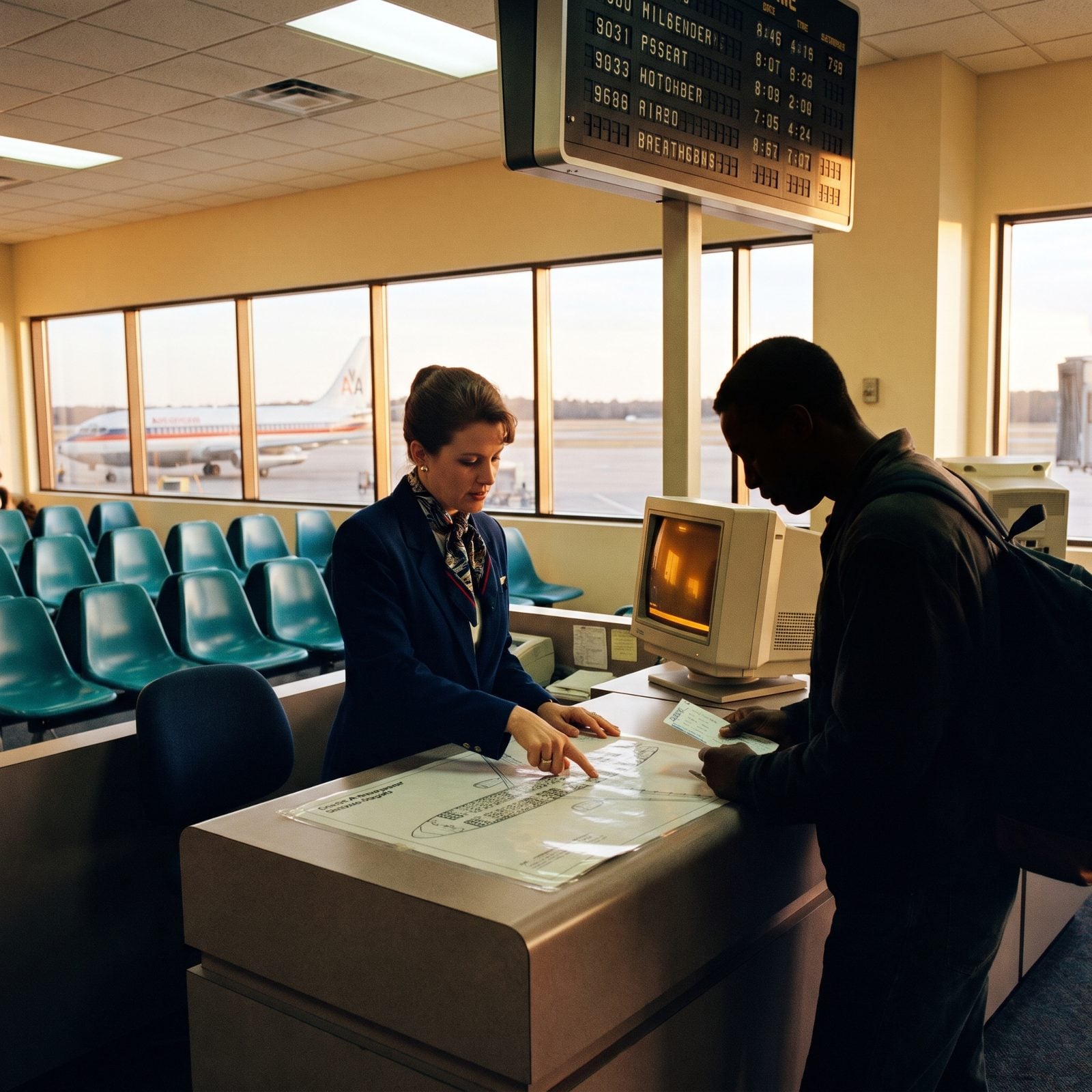
You’d walk up to the gate agent, say you’d like a window, and get a window. No app upcharge. No “basic economy” trap where your seat is a surprise and your overhead bin is forbidden. The agent slid a boarding pass across the counter with your seat penned in, and that was the transaction.
Families sat together without paying a premium for the privilege. Couples weren’t split across rows as a revenue strategy. The gate was a place you solved problems with a human being, not a kiosk designed to upsell you.
3. The Duty-Free Cart Clattering Down the Aisle
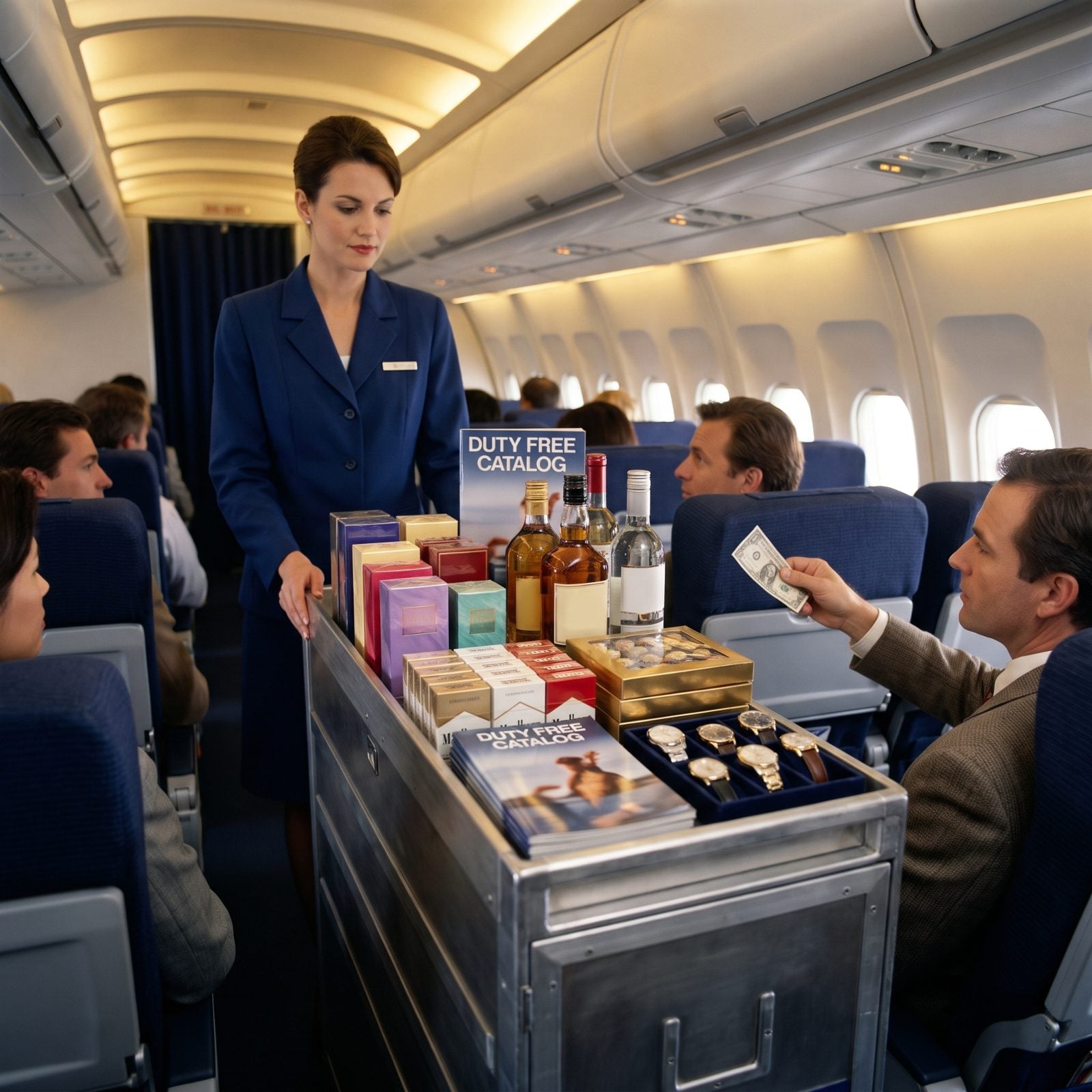
Mid-flight, usually somewhere over the ocean, the attendants would produce a gleaming metal cart stacked with perfume, Toblerone the size of a forearm, cartons of cigarettes, cognac, and the occasional wristwatch. Duty-free. Tax-free. Rolling right to your armrest.
You’d thumb through the glossy catalog in the seatback, do the mental math on exchange rates, and buy a bottle of something for whoever was picking you up. There was a small thrill to it — shopping at 35,000 feet, handing over a crumpled mix of dollars and francs.
It made the long haul feel like an event rather than endurance. Somewhere along the way the cart mostly disappeared, another ritual quietly retired.
2. Peanuts, Pretzels, and the Attendant Who Just Kept Coming Back
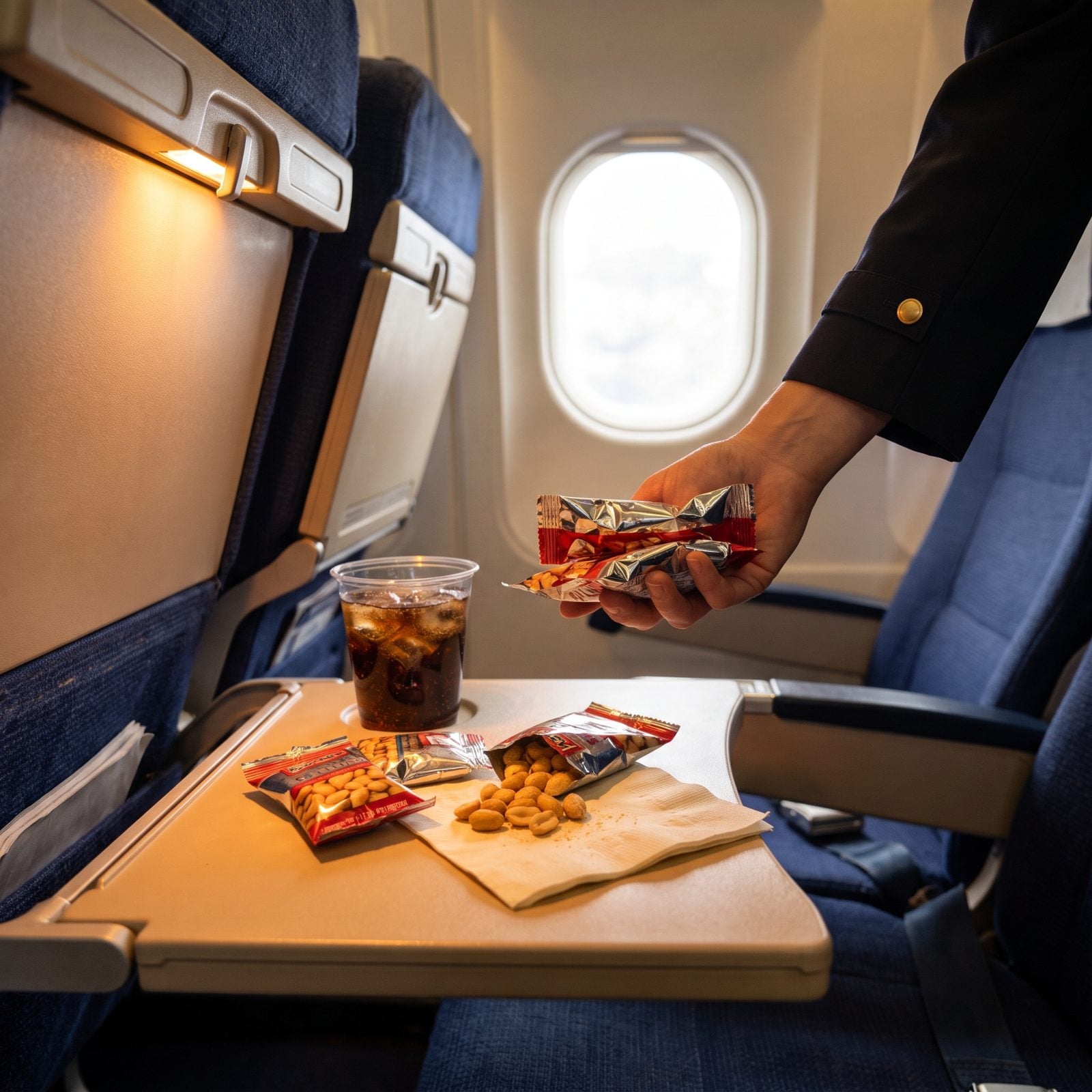
Nobody counted the peanuts.
They just kept coming. A little foil packet here, a bag of pretzels there, and if you looked hungry the attendant left you three. Short flight or long, you got fed something, and it felt generous instead of transactional.
That salted-peanut smell was the smell of flying. You tore the packet with your teeth, ate them over a napkin, washed them down with the full can of soda they’d leave behind. No “snack for purchase” menu. No tapping a card to buy a cookie.
1. The Seatback Magazine and the Route Map You Studied Anyway
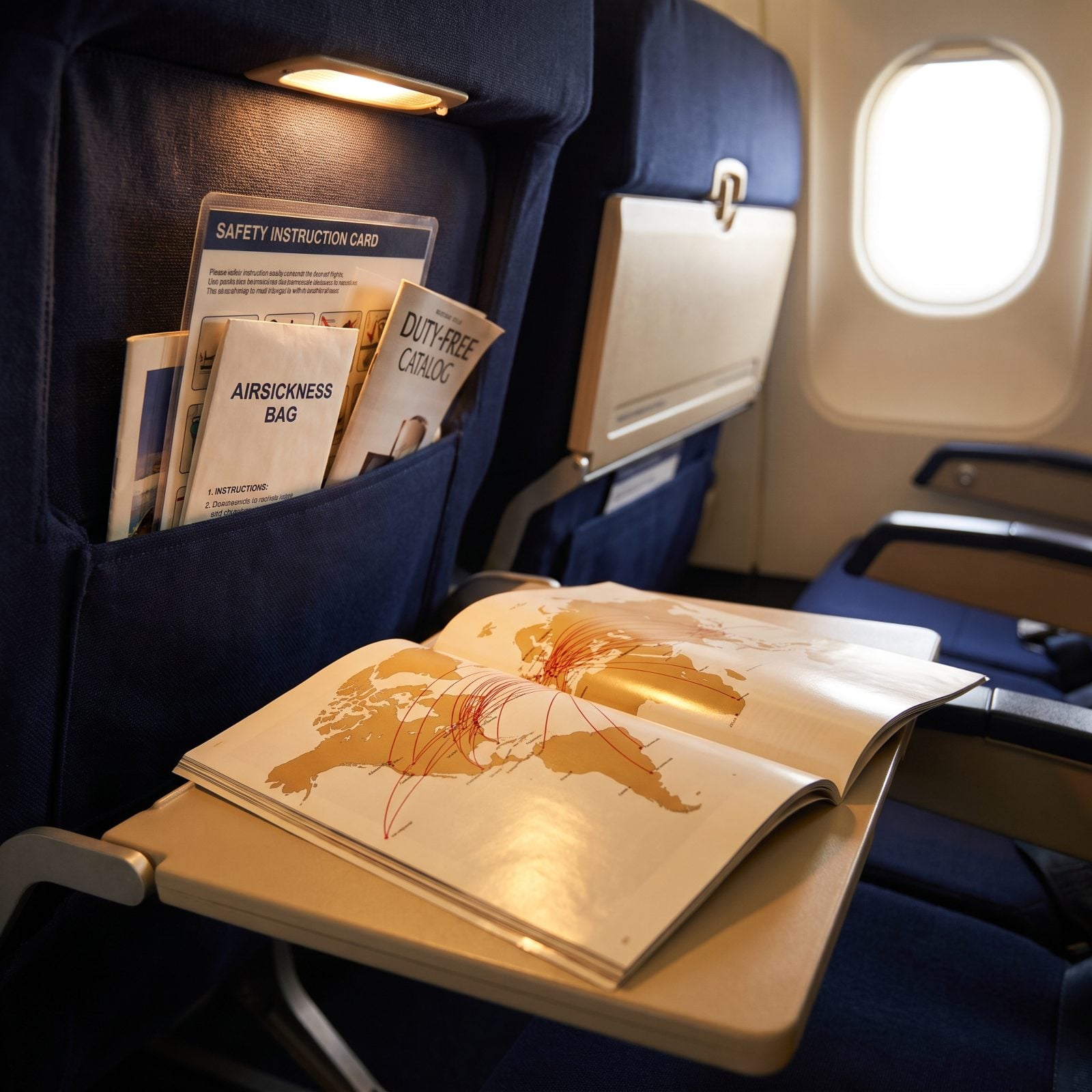
Every seatback pocket held the same glossy magazine, and somewhere in the middle, folded across two pages, was the route map: thin red arcs fanning out from the hub cities, connecting dots you’d never visit but studied anyway. You traced your own path with a finger. You read about cities you had no plans to see.
The articles were fluff — a profile of a chef, a travel piece on Prague, a crossword somebody had already half-filled in pen. Didn’t matter. It was yours for the flight, so you flipped it, read the ads for duty-free watches, and quietly pocketed the airsickness bag because it was the perfect size for something.
No glowing screen bolted to the seat in front of you. Just paper, a map, and your own imagination doing the rest.
🔥 Would you like to save this?
Please note that some of the imagery in this article were created with the aid of AI image generators.