
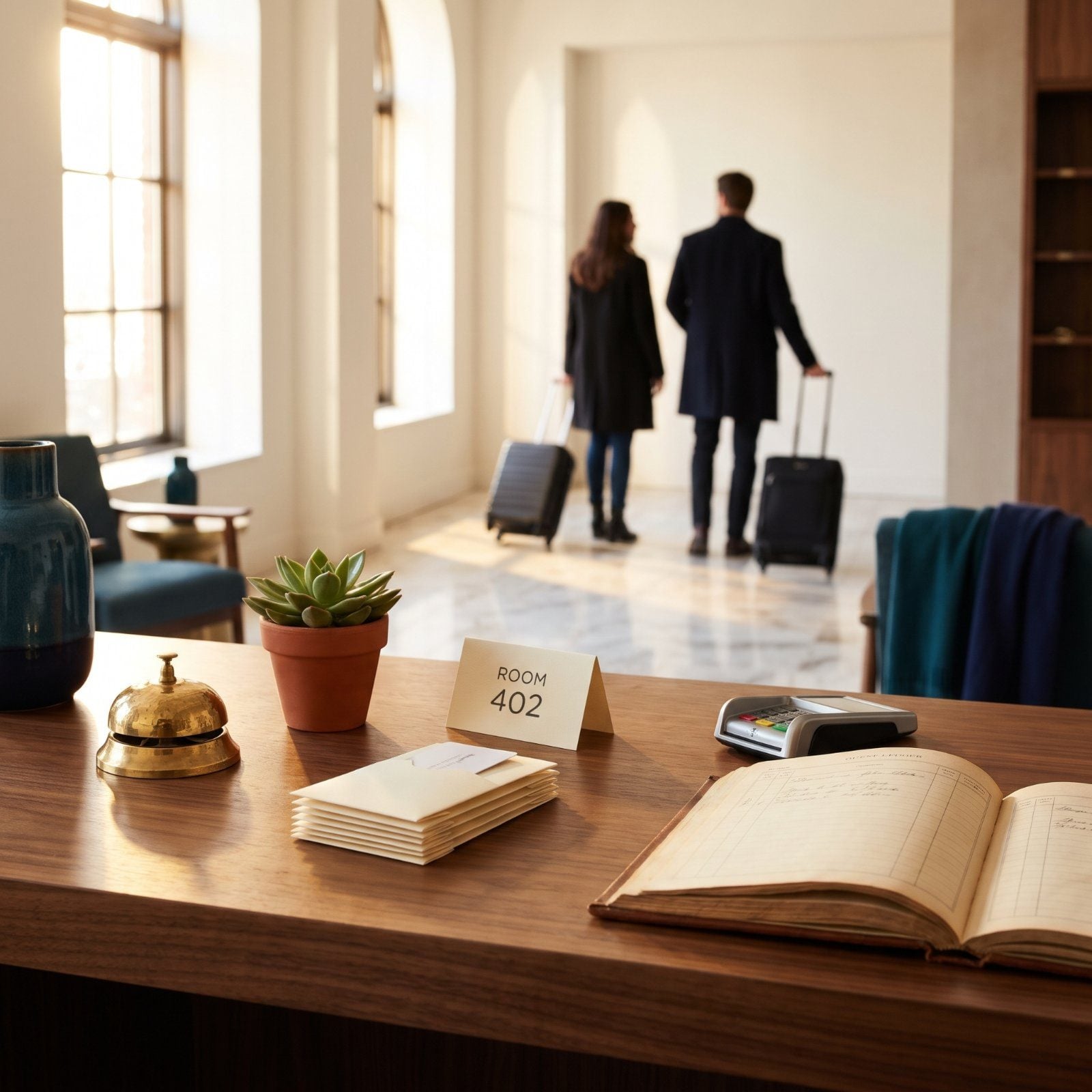
A good front desk agent is reading the lobby before your shoes hit the marble. Not in a suspicious way. It’s the way a bartender clocks a room or a teacher clocks a classroom on the first morning — pattern recognition built over thousands of check-ins. The best ones have already guessed half your story and started the right paperwork by the time you reach the counter. None of it is judgment. All of it is service. Here’s what those small, honest signals are actually telling the person about to hand you a key.
40. How Much Luggage You Brought
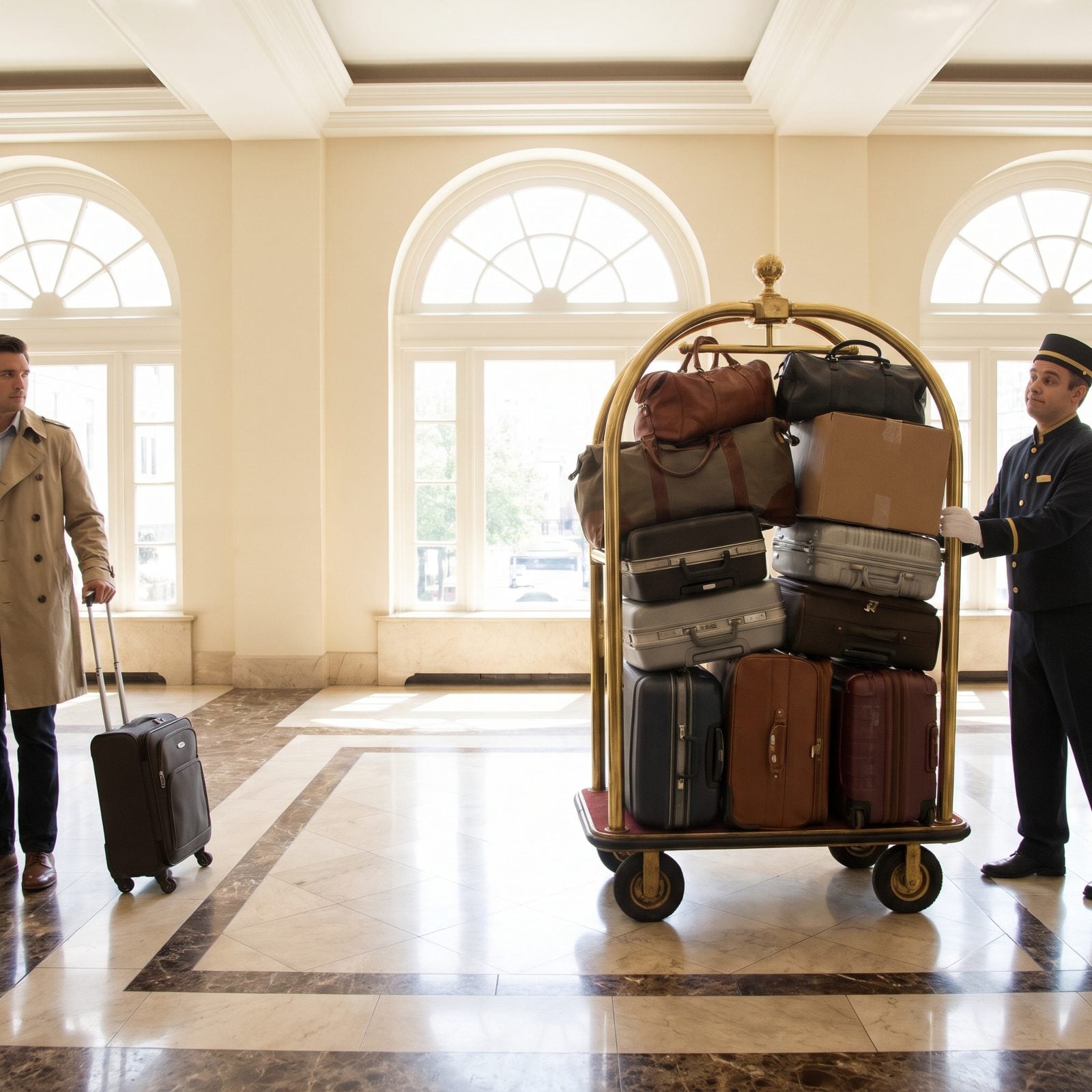
One carry-on means a quick night — probably a single traveler, likely in and out by morning. A cart stacked with three checked bags and a garment bag says you’re staying a while and you’ll want a room with real closet space. The agent isn’t sizing up your budget. They’re sizing up your week.
Watch an experienced one sometime. The bags register before you do, and the room assignment quietly shifts in their head before you’ve said hello. Light packers often get the quiet corners. Heavy packers land near the elevator, because nobody wants to drag four bags down a long hall.
39. Whether Your Identification Is Already in Hand
You pull out your ID before you’re asked, and the agent reads you instantly as a seasoned traveler. You know the dance. You’ve done it a hundred times, and the whole check-in speeds up because you removed the one step that usually stalls it.
Fumbling for a wallet isn’t a problem — nobody’s grading you. But the person with the license already out tells the desk this will be smooth, so the agent can ease off the pacing and spend the saved thirty seconds on something nice. Maybe a tip about the good coffee shop two blocks over.
38. What Is Displayed on Your Reservation Screen
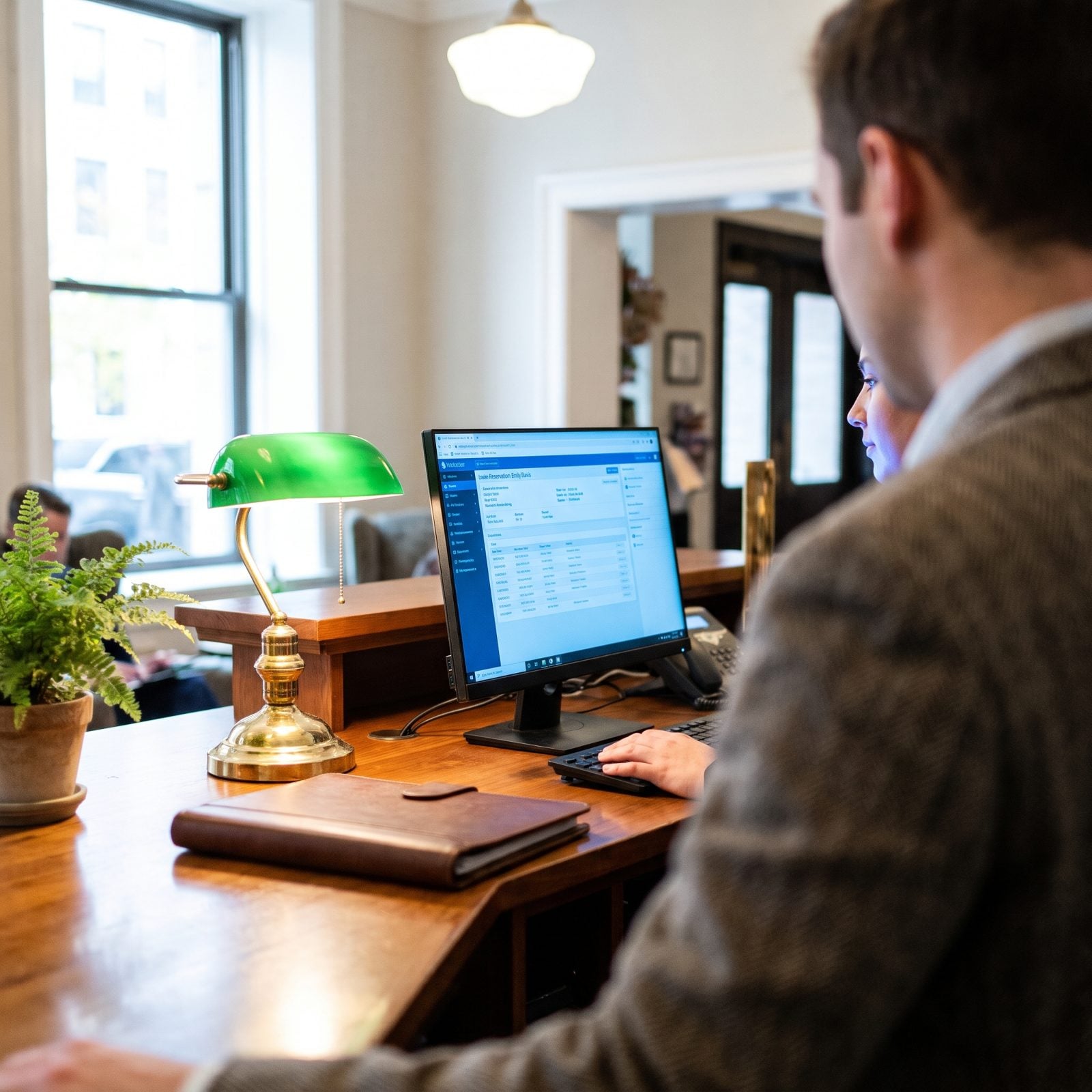
Before you finish your sentence, the agent already knows more than you’d guess. The screen tells them it’s your anniversary, that you requested a high floor, that you’ve canceled twice before, that the rate is a prepaid package or a flexible walk-up.
This is where service either gets personal or stays generic. A flagged special occasion is a quiet invitation, and the good ones act on it without making a show of it. That’s why a plate of something small sometimes arrives at the room and you never quite learn how they knew.
37. Whether You Have a Payment Card Ready
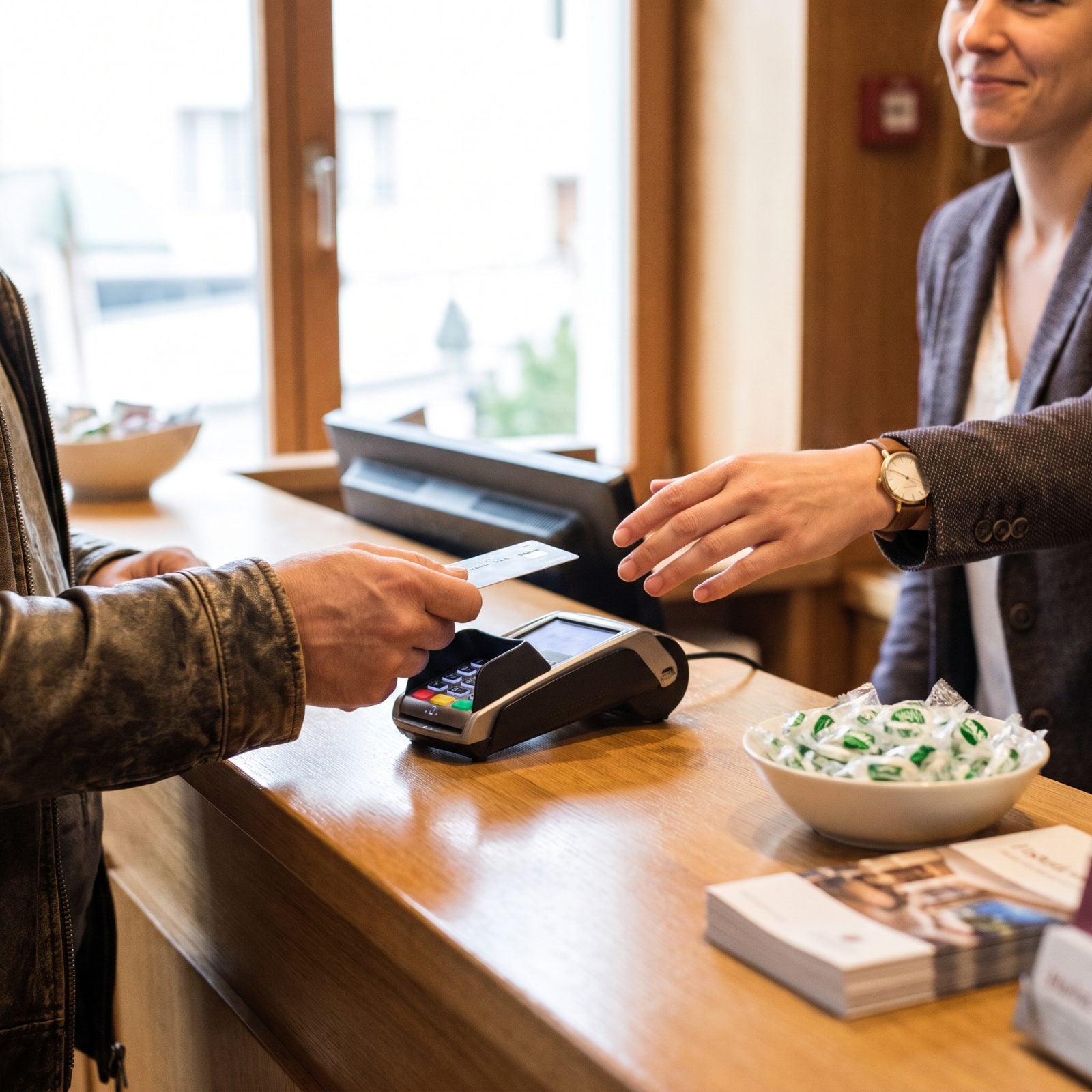
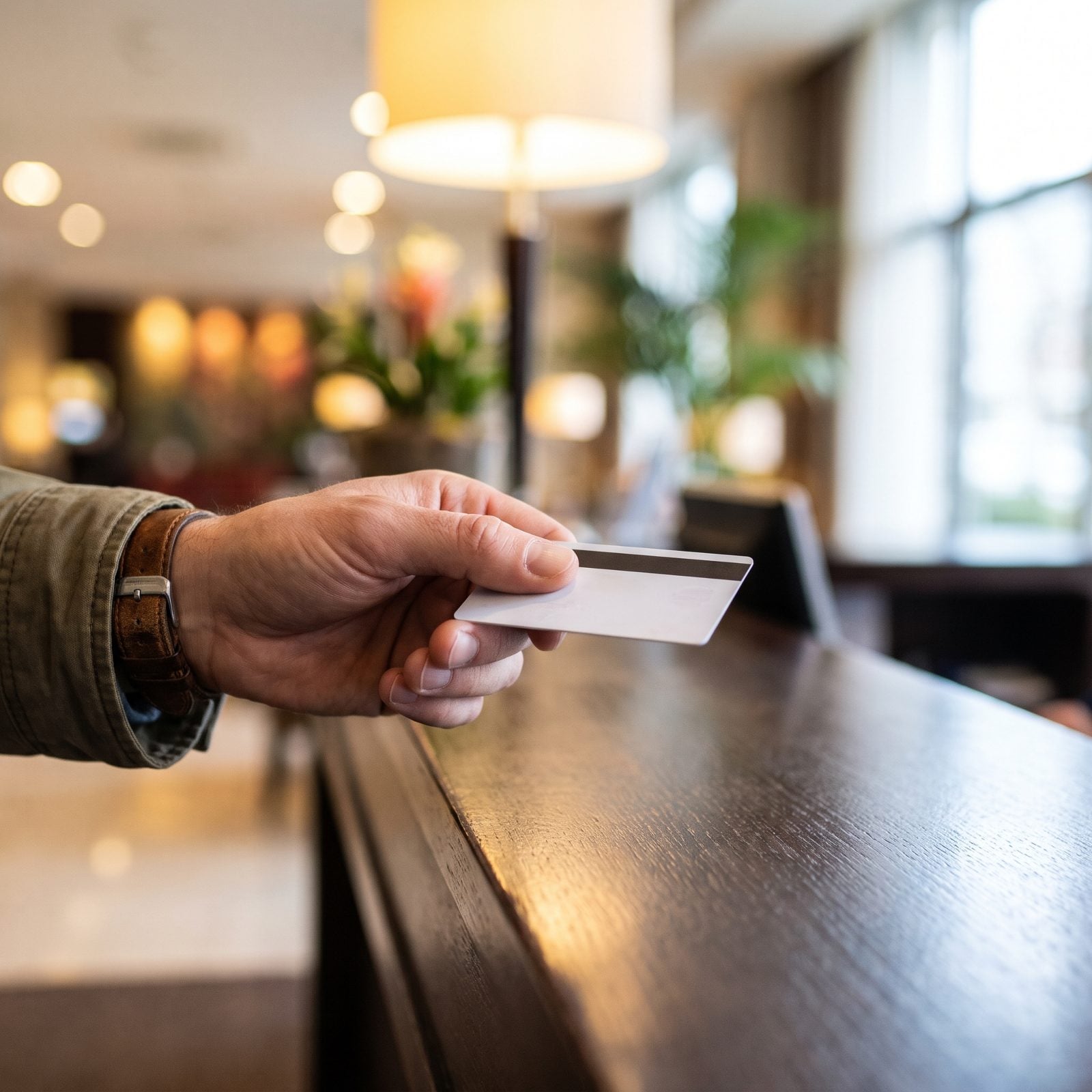
The card in hand reads as a frequent traveler who already knows about the incidental hold and isn’t going to argue about it. The stay is budgeted, planned, uncomplicated.
Here’s what most guests never clock. The deposit hold is routine, not personal, and the agent genuinely dreads the awkward pause where they have to explain it. A card produced early skips the one moment that can sour a friendly check-in. You’ve probably watched that pause happen to someone ahead of you in line — it helps nobody.
36. If You Display Hotel Loyalty Status

Loyalty status is one of the few cues that lives entirely on the screen rather than on your body, and it quietly rearranges priorities. A top-tier member isn’t treated as more deserving as a person. They’ve simply earned contractual perks the hotel has to honor — an upgrade, a late checkout, that kind of thing.
What a sharp agent actually reads from high status is experience. You know how hotels work. You won’t need the tour. So they skip the script and talk to you like a colleague who happens to be staying the night.
35. Whether You Are Holding an Existing Room Key
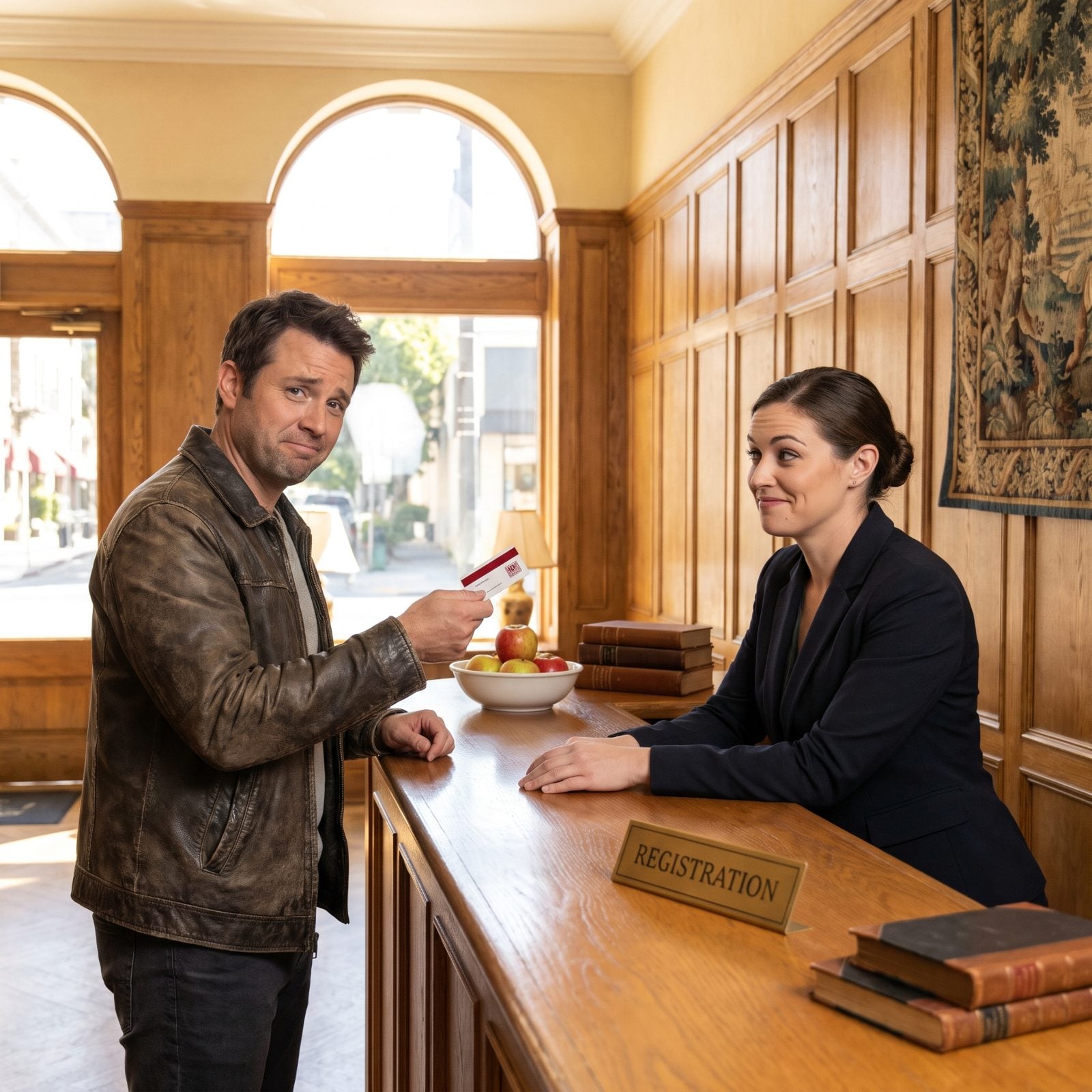
You walk up still clutching a keycard, and the agent immediately re-slots you. Not a new arrival. A current guest with a question, a problem, or a key that stopped working by the pool.
One little object changes the whole interaction — the check-in script gets shelved and the posture shifts to problem-solving mode. A demagnetized key is the single most common reason a staying guest comes back to the desk, and the good ones reach for a fresh one before you’ve even explained.
34. How Early or Late You Arrived
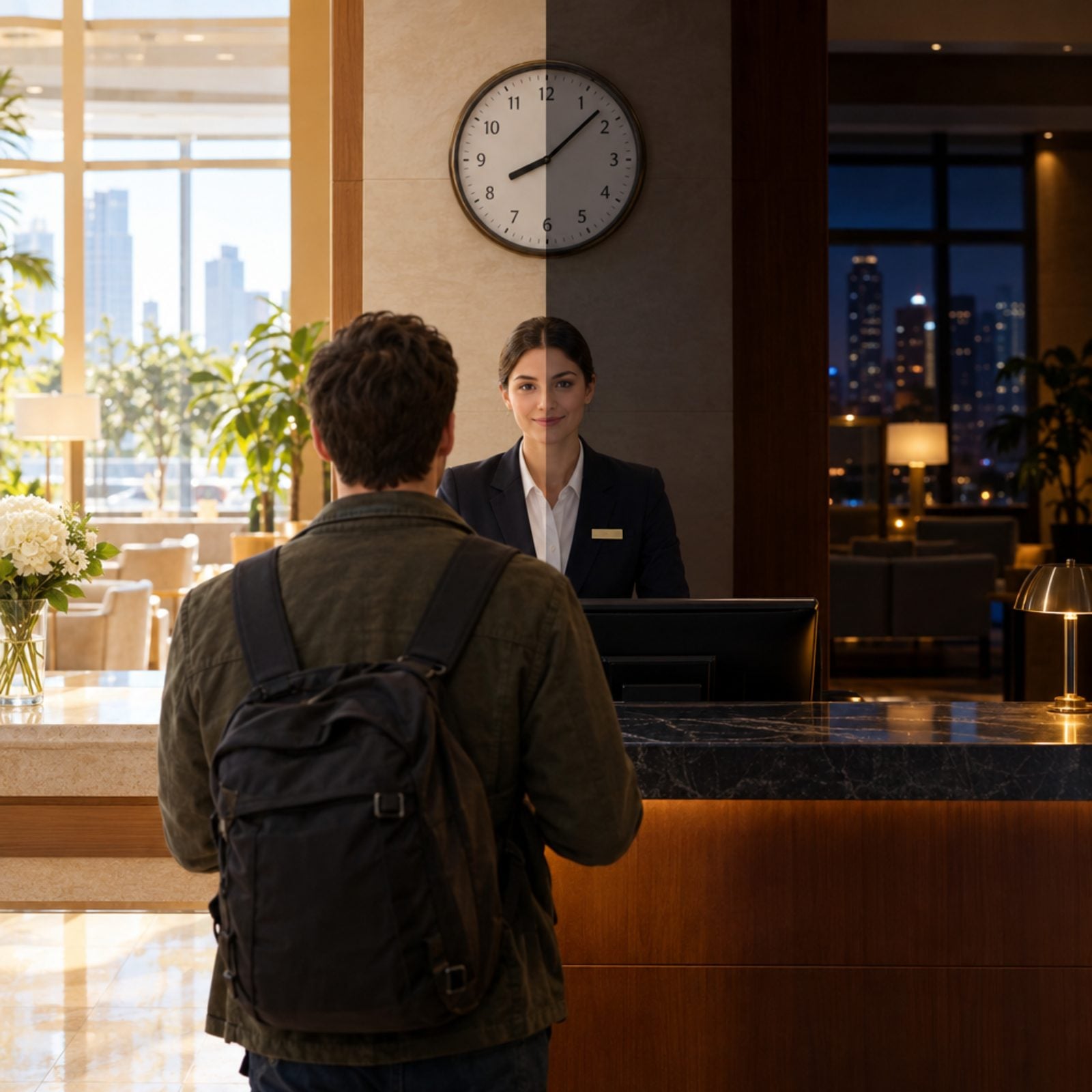
Arrive at eight in the morning and the agent knows your room almost certainly isn’t ready, so the conversation becomes about luggage storage and the nearest breakfast. Arrive at eight at night, bleary-eyed after a long day’s journey, and the read flips entirely.
Worn-out arrivals usually mean a long travel stretch — a red-eye flight, an overnight drive, a night that just wouldn’t end. The experienced agent softens the whole exchange: fewer questions, faster key, directions to whatever food is already open. Timing isn’t just logistics. It tells them what kind of day you’ve had, and the good ones adjust their energy to meet it.
33. The Conference Badge Around Your Neck
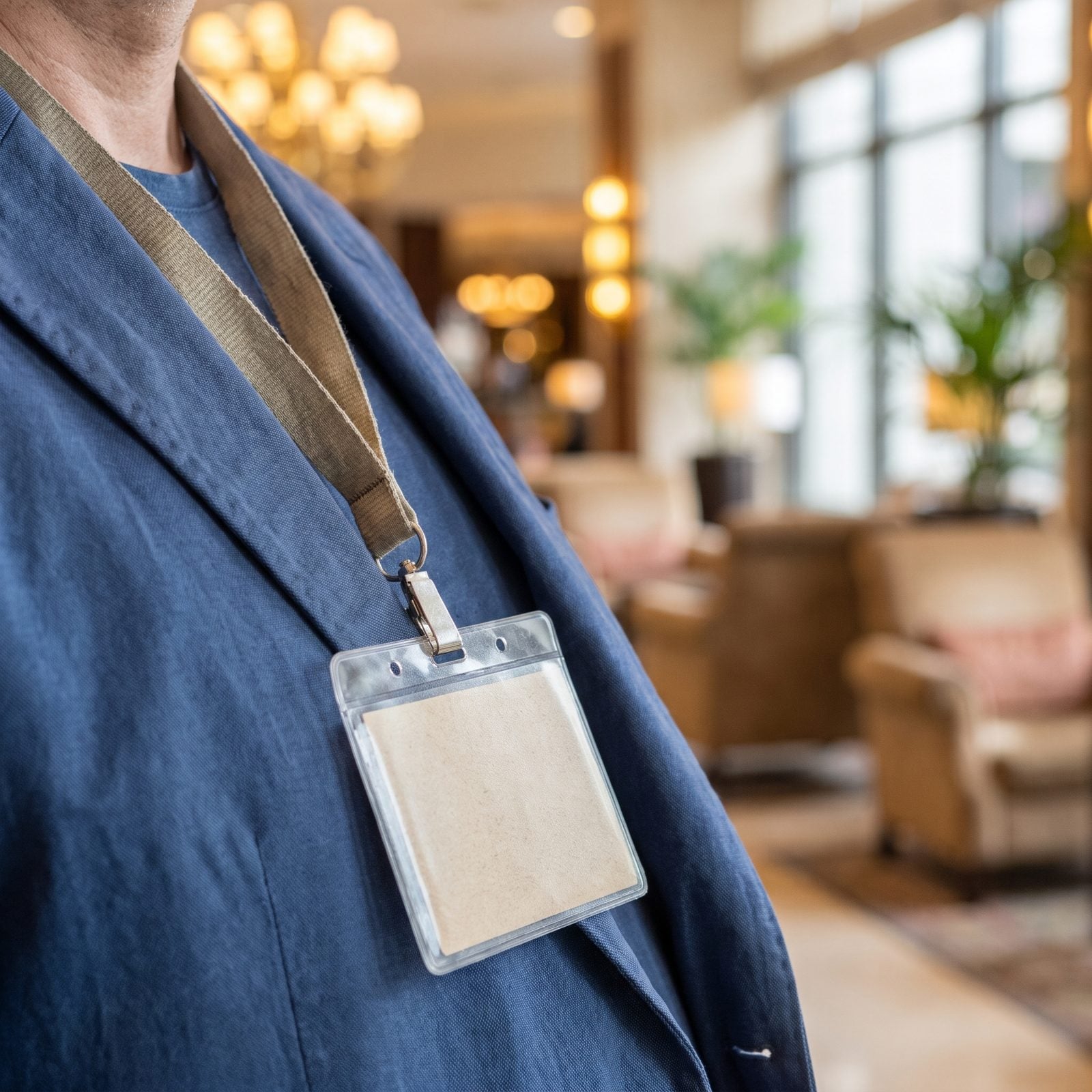
The badge does a lot of work before you speak. It tells the agent you’re part of the big group block, that your rate and room type are probably pre-set, and that the lobby is about to fill with five hundred more of you.
Conventions run on rhythm. An agent who spots a badge knows to point you toward the group’s dedicated check-in desk, the meeting room floor, the shuttle schedule. Nobody’s lumping you in. They’re saving you from standing in the wrong line — which, honestly, is the single kindest thing you can do for someone who’s been traveling since dawn for a 9 a.m. keynote.
32. Whether You Are Dressed for a Wedding
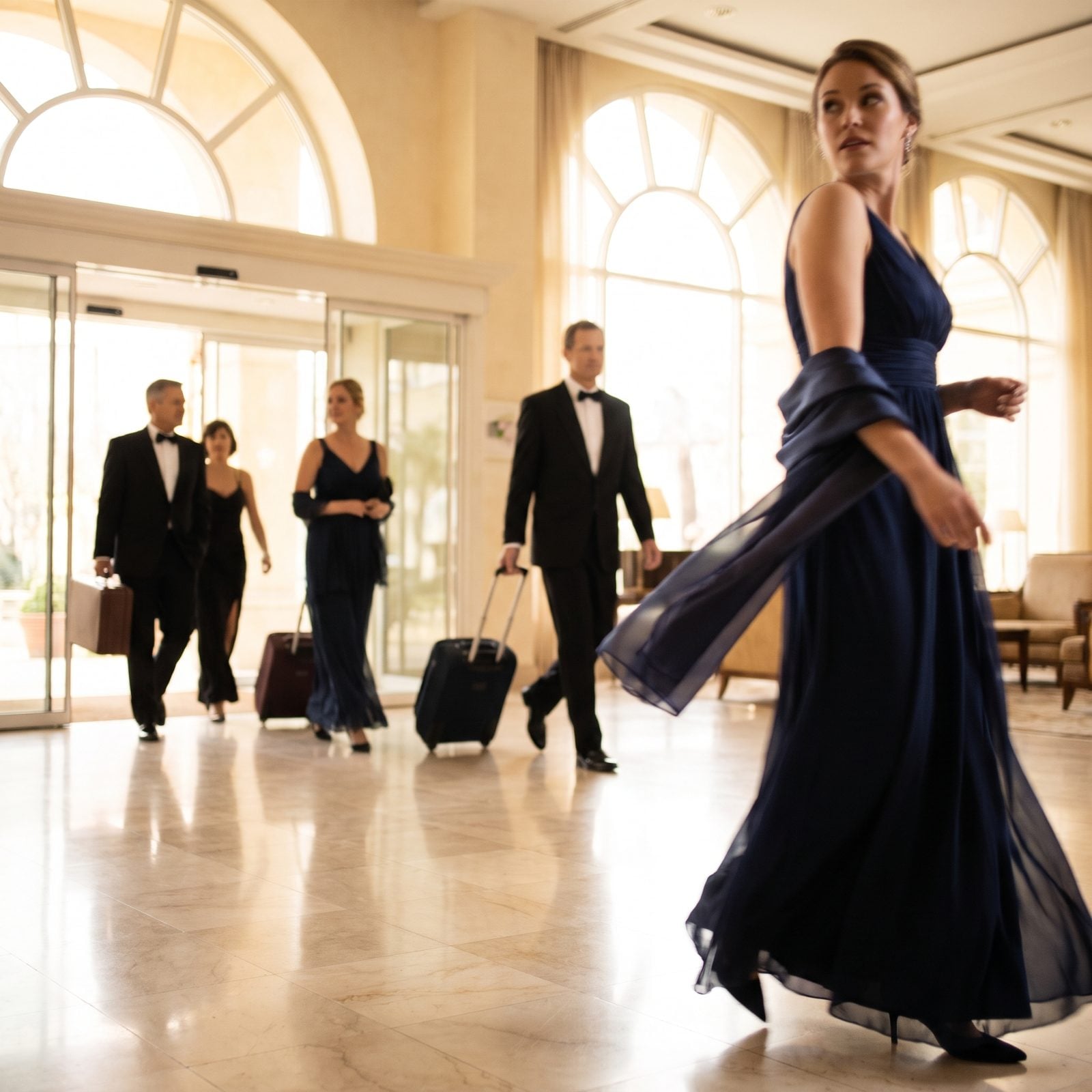
Formalwear walking through the lobby is a clock, not a costume. The agent reads a time-sensitive event and a guest who can’t afford a slow check-in — there’s a ceremony at four and you still need to steam that dress.
Smart desks lean into it. Quicker paperwork, an offer of an iron, directions to the ballroom, a gentle heads-up that the elevators get mobbed before big events. Weddings travel in packs, too, so the agent often guesses there are more of you coming and starts holding adjacent rooms together.
31. The Concert or Game Merchandise You Are Wearing
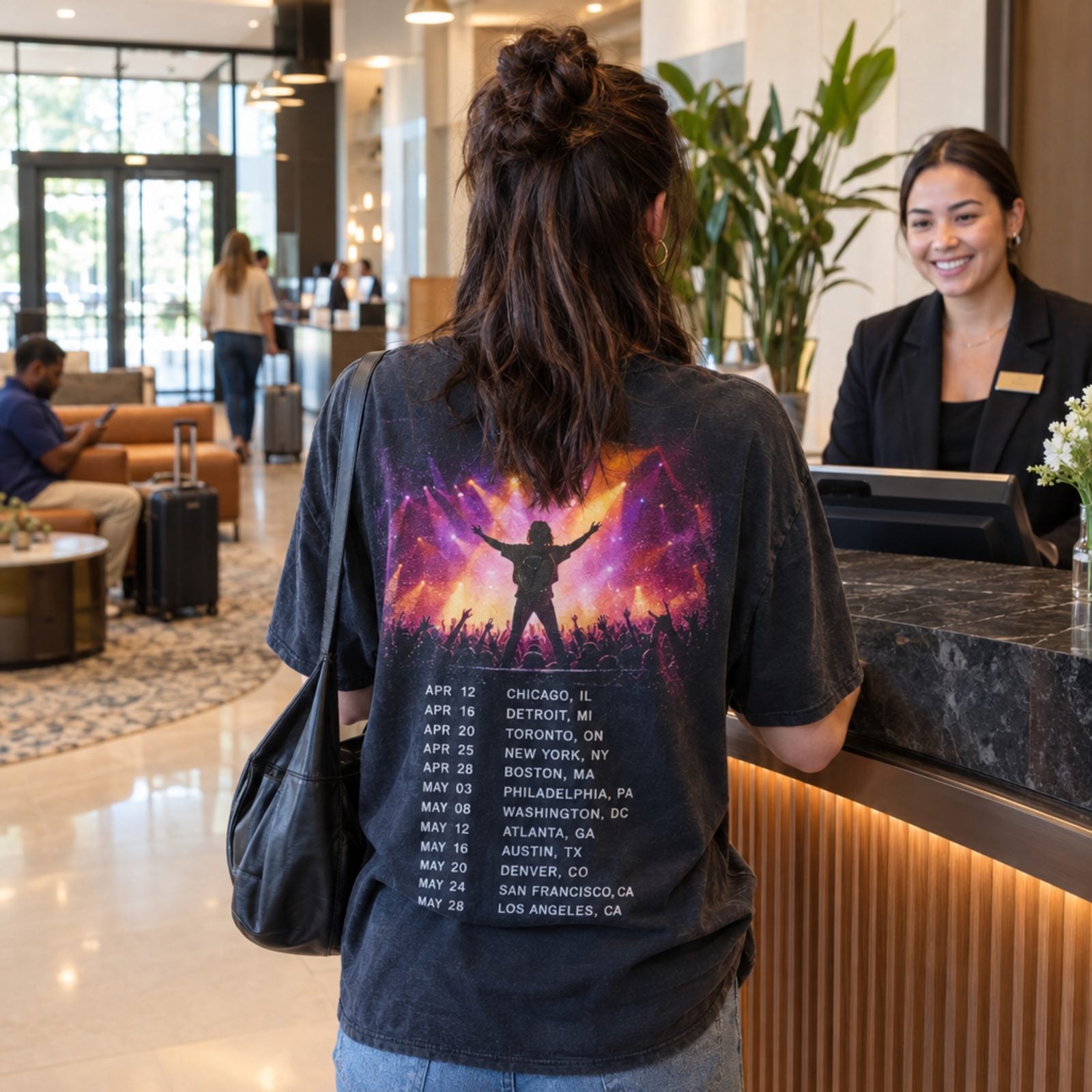
A tour shirt or a jersey tells the agent exactly why you’re in town, and that’s genuinely useful. It points to a venue, a timeframe, a crowd all heading the same direction after the show.
Here’s where local knowledge earns its keep. The agent who clocks the merch can tell you which exit to use, when the rideshare surge hits, that the kitchen closes before you’ll get back hungry. No judgment involved — it’s the whole reason a front desk still beats a search engine. You’ve stood at a counter and gotten directions no app would’ve handed you.
30. Whether You Look Like You Fly For a Living
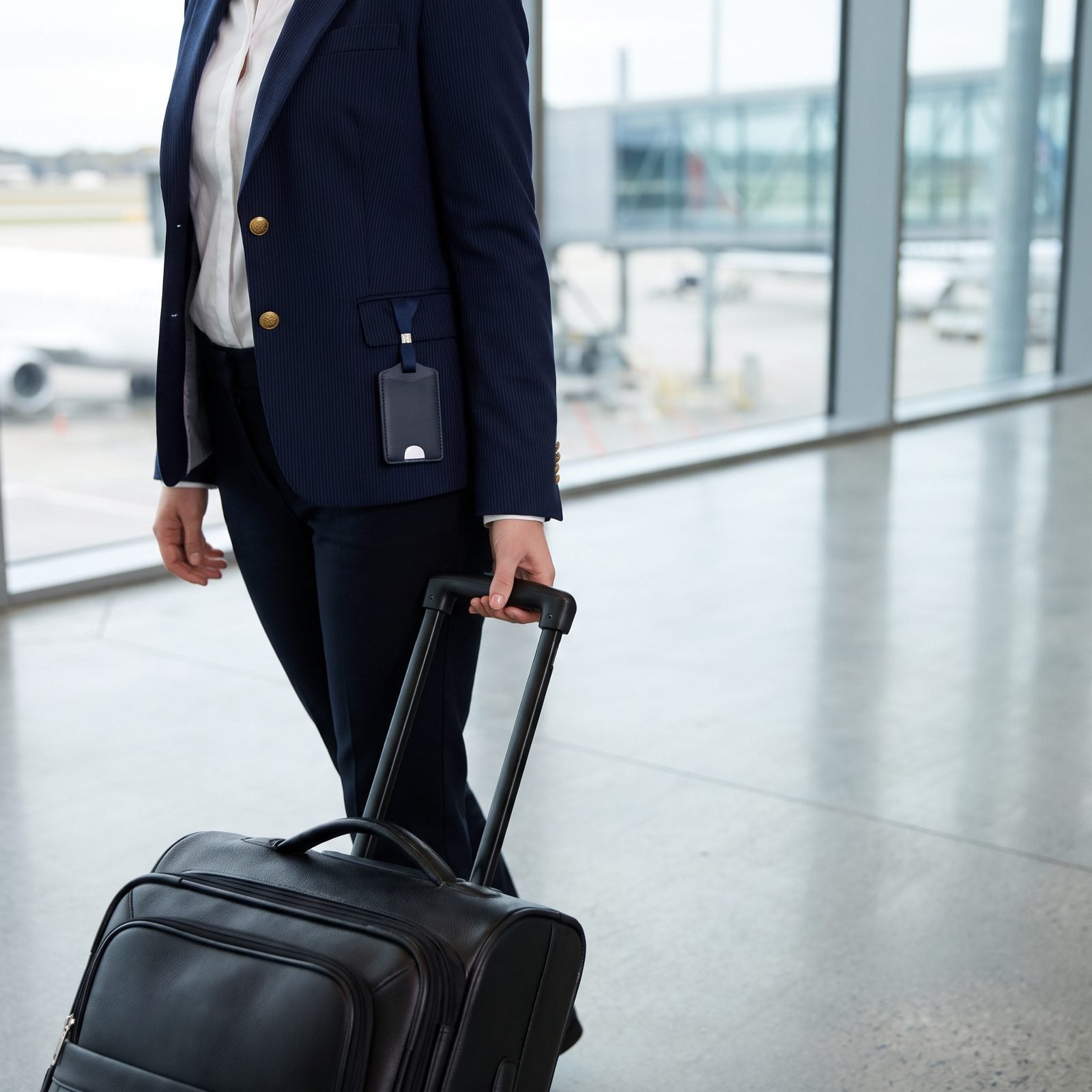
A single rolling bag, a buttoned navy blazer, a tag clipped to the pocket flap in plain sight. The agent isn’t guessing your profession for sport. Airport hotels run on fast turnarounds, and crew often arrive with blocked rooms, early departures, and quiet-floor requests already sitting on file — so spotting the pattern lets the whole exchange skip three questions.
You’ve seen it at a bleary pre-dawn check-in: the way someone glides to the desk like they’ve done it a thousand mornings. They probably have.
29. The Tools and Trade Gear in Your Hands
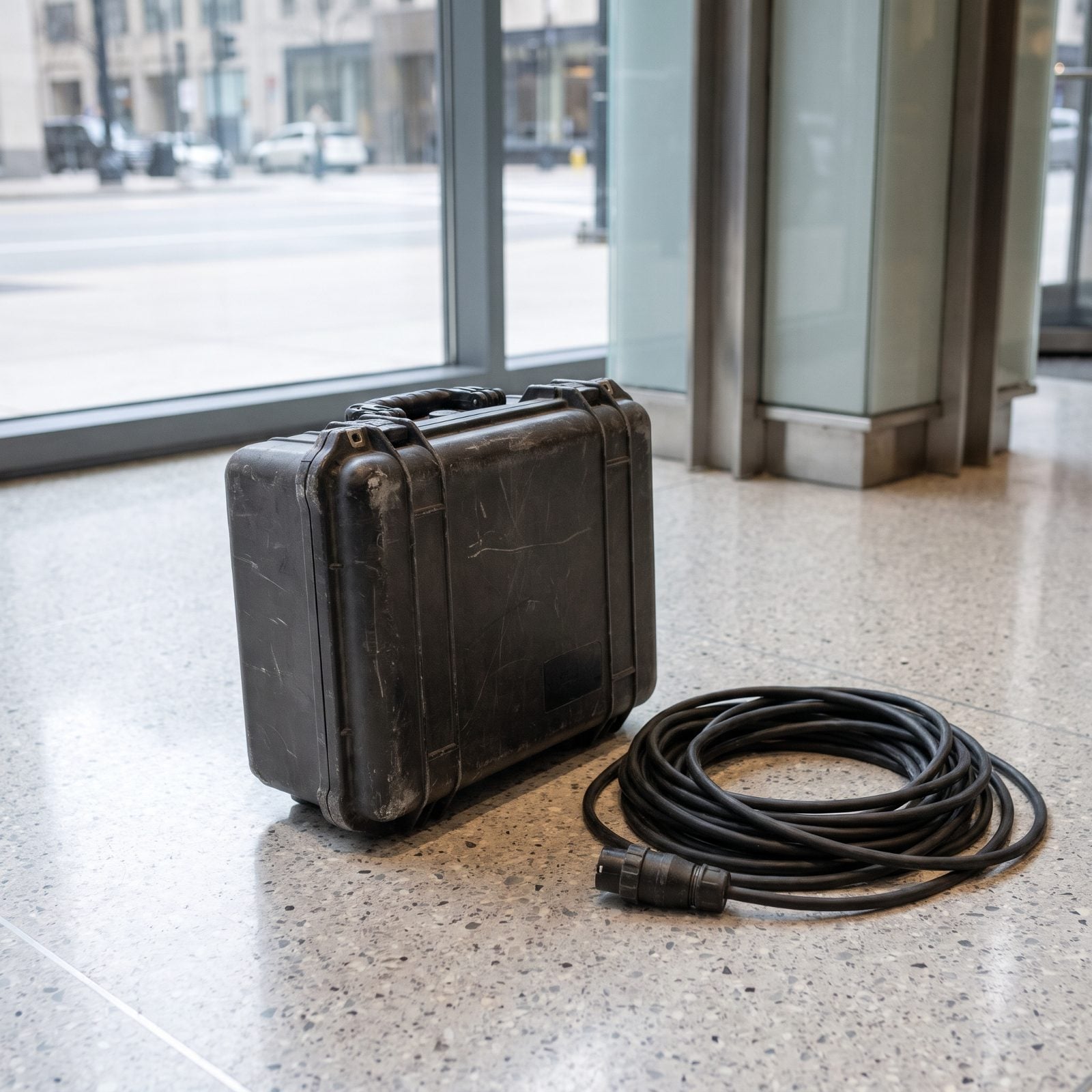
A hard case, a coil of cable, boots that have clearly been somewhere. The front desk notices trade gear mostly because it changes what room makes sense. Ground floor near the parking, so you don’t haul a kit up two flights. A room away from the pool wing, because you’re gone before anyone’s awake.
And honestly? The gear often tells the agent you’re in for several nights of work long before the reservation screen confirms it. Different towel schedule, different parking question, maybe a nod toward the room with the microwave. Nobody’s sizing you up. Somebody’s trying to spare you a trip to the car at midnight.
28. The Pet Carrier Set Down Beside You
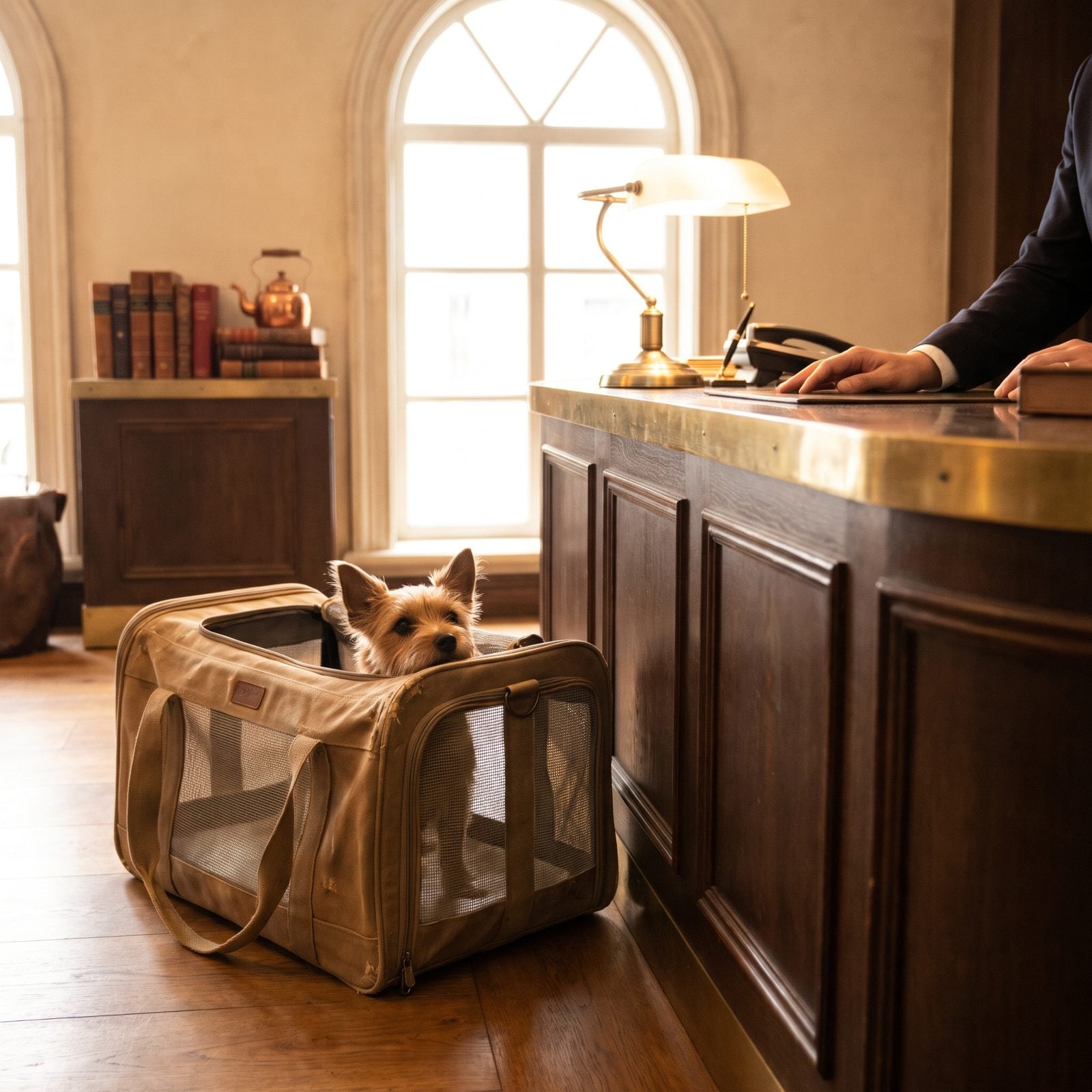
The carrier changes the math right away. Pet-friendly properties keep designated rooms, ground-floor exits, sometimes a small fee or a cleaning note to flag. Catch it early and the agent routes you toward the right floor instead of reassigning a key halfway through.
27. Any Mobility Aid You’re Traveling With
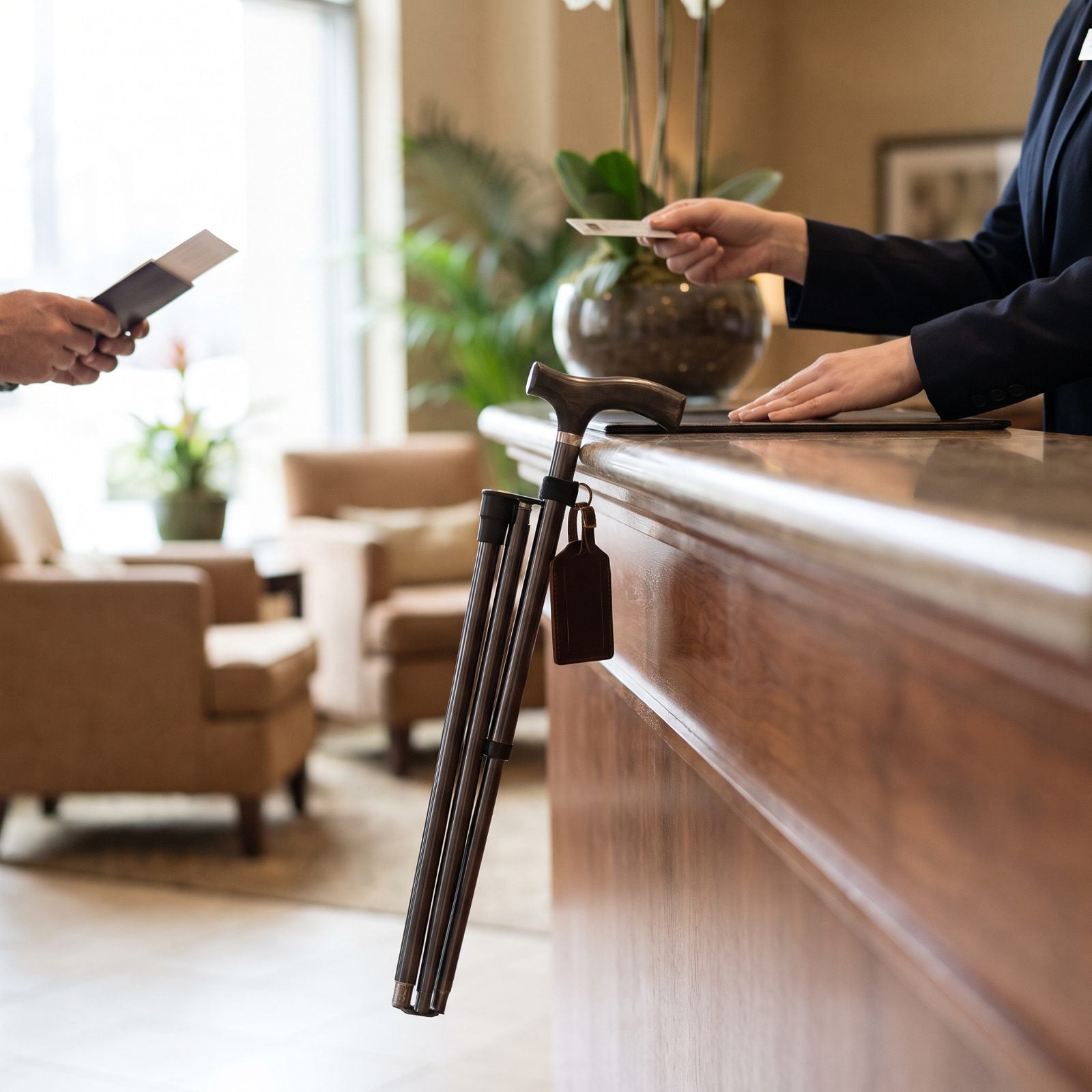
A cane, a folded chair, a walker parked by the counter. This one matters more than most, because the room’s layout can make or break the whole stay — accessible rooms, roll-in showers, proximity to the elevator, a door that’s actually wide enough. A good agent clocks the aid and quietly checks the room map before you ever ask.
Let me say this plainly. The best front desks treat it as logistics, never as a conversation about your body. The aid tells them which key to pull. That’s it. The warmth in the welcome doesn’t budge.
26. The Stroller and Baby Gear You’re Steering
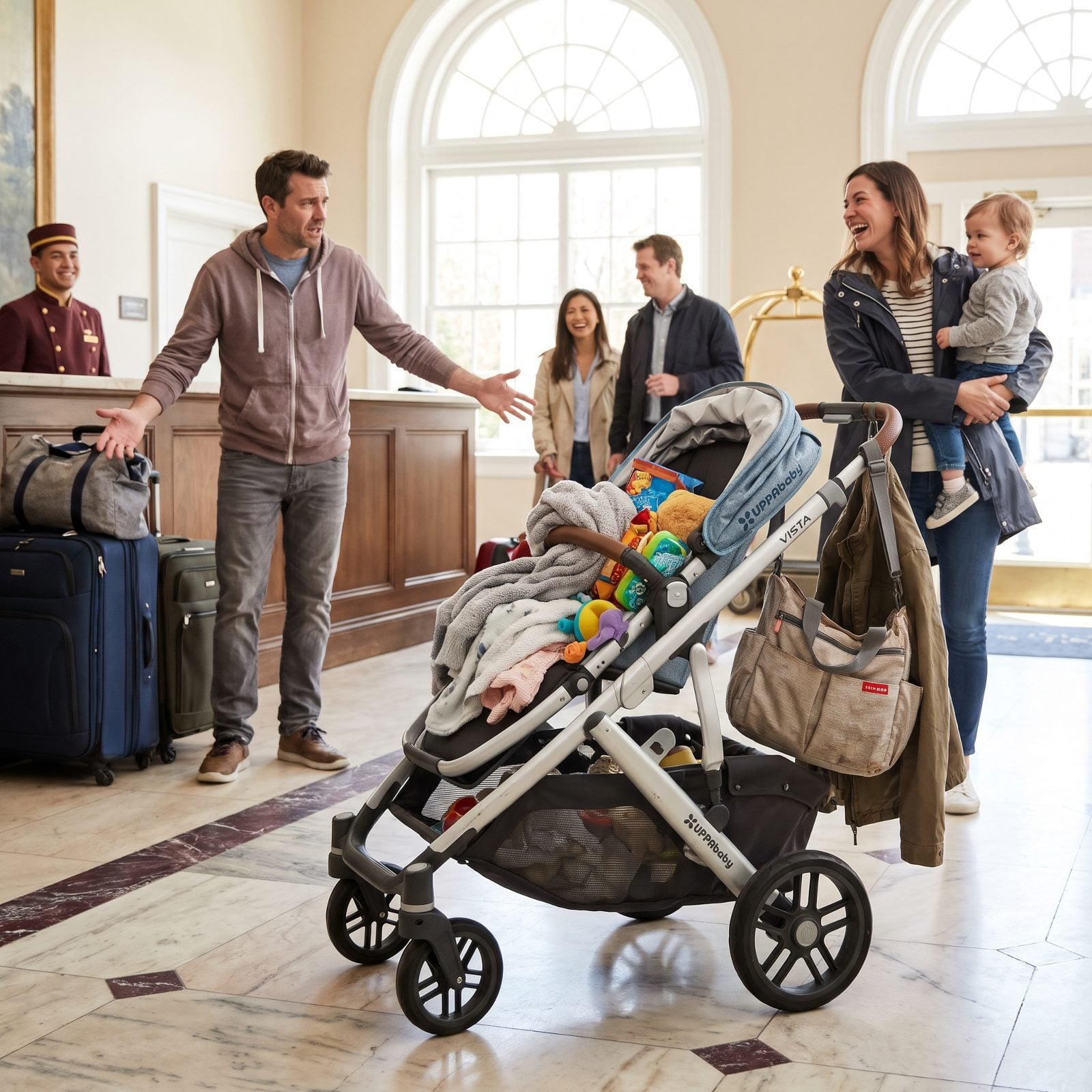
Stroller, car seat, diaper bag swinging off the handle. The agent reads all of it in half a second and starts solving: a crib, a room near the elevator, a quieter wing away from the late-night ice machine. Maybe a lower floor so the stroller doesn’t fight the elevator at nap time.
The sheer amount of gear hints at how long the day’s been, too. A fully loaded stroller usually means a family that’s been in the car since dawn and wants a key in hand right now — not a pitch about the spa.
25. How Tired or Wired Your Kids Look
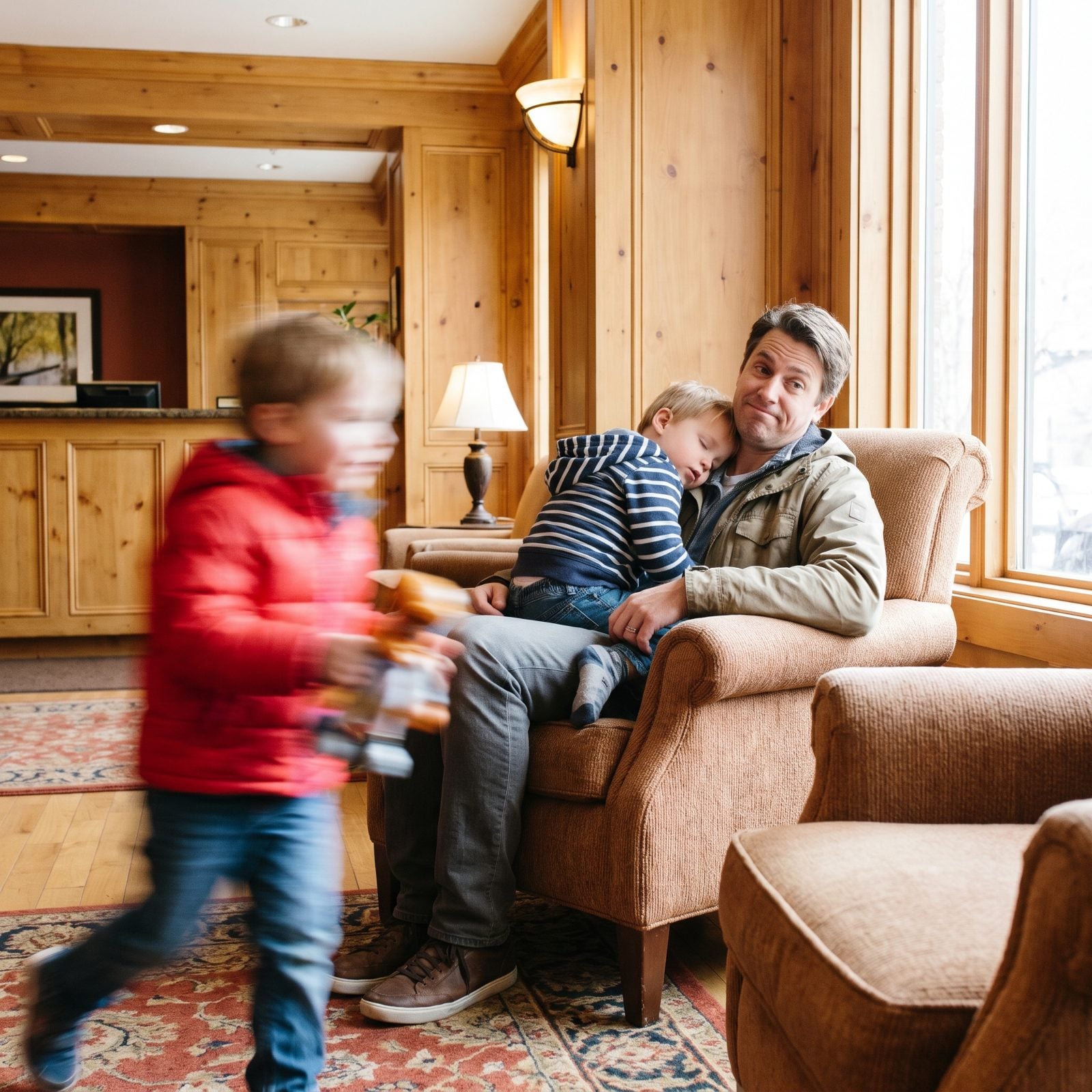
You’ve watched it in a hundred lobbies. One kid melting into a parent’s hip while another does laps around the luggage cart with no off switch. The front desk reads the energy because it tells them exactly how fast this family needs to vanish upstairs.
Overtired kids mean get them the key, skip the upsell, point to the elevator. A good agent speeds up on instinct. Anyone who’s worked a desk long enough knows a fast, smooth check-in for a frazzled family buys more loyalty than any welcome speech ever will.
24. The Size of the Group Stacking Up Behind You
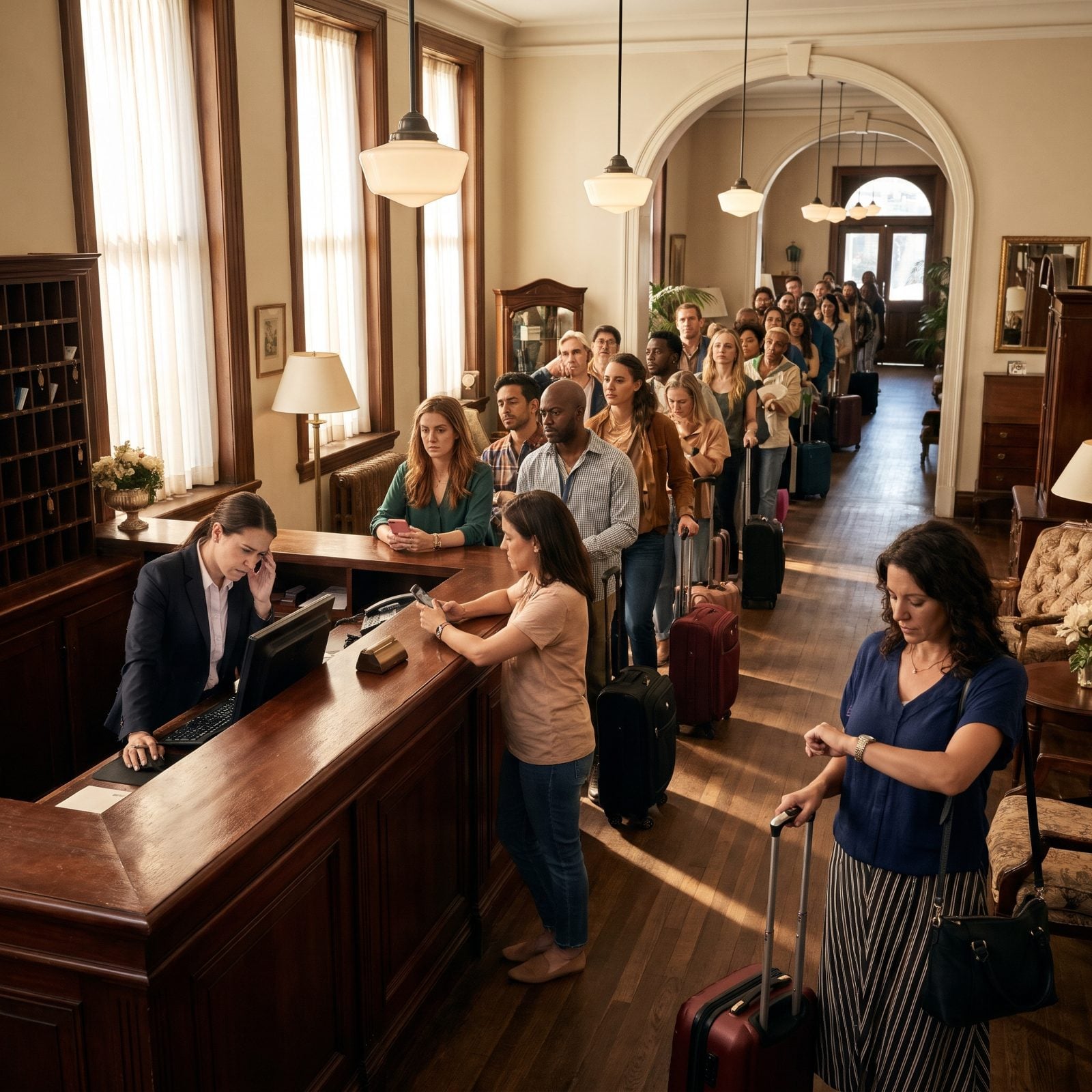
How many people are stacked behind you shapes the whole pace. A single traveler gets conversation. A line ten deep gets efficiency, and the agent shifts gears without you ever noticing.
Group size hints at something bigger, too — a block booking, a wedding party, a conference rush. The moment matching luggage or shared lanyards come into view, the agent starts wondering if you’re all under one reservation, which changes how they pull keys and whether they wave for backup at the next station.
23. Who in Your Party Naturally Steps Up First

Someone always steps up first. The one holding the folder, the one who says the name, the one the others glance at before answering. The agent locks onto that person fast, because the booking conversation needs a single point of contact — not a committee.
This has nothing to do with hierarchy or who’s in charge of anything that matters. It’s purely practical. Aim the questions at the person already leaning in and the check-in moves twice as fast. Aim them at the quiet one hanging back by the bags, and the whole party stalls at the counter.
22. The Quiet Signals Between You and Your Partner

Shoulder to shoulder, one hand resting on the other’s back, a wrapped bottle tucked in a bag. The desk picks up on these small signals because they usually mean the stay is an occasion — an anniversary, a honeymoon, a getaway someone planned for months.
Catch that early and the agent can check whether an upgrade’s free, slide in a late checkout, mention the quieter table at breakfast. The read is never nosy. It’s the gap between handing you a key and quietly setting up a weekend you’ll actually remember.
21. Whether You Ever Look Up From Your Phone

Eyes down, thumb scrolling, a distracted mm-hm without looking up. Agents notice this one constantly now, and not to take offense — it tells them how to pace the exchange. A guest buried in a screen wants the key, the WiFi code, the elevator direction, and nothing else.
So they trim the script. Facts only, clear, no small talk that’ll bounce off. The guest who looks up and makes eye contact gets the warmer version, dinner recommendation included. Both are right. The agent is just reading which conversation you’re actually available for and meeting you there.
20. If You Slip Your Headphones Off Before You Reach the Counter
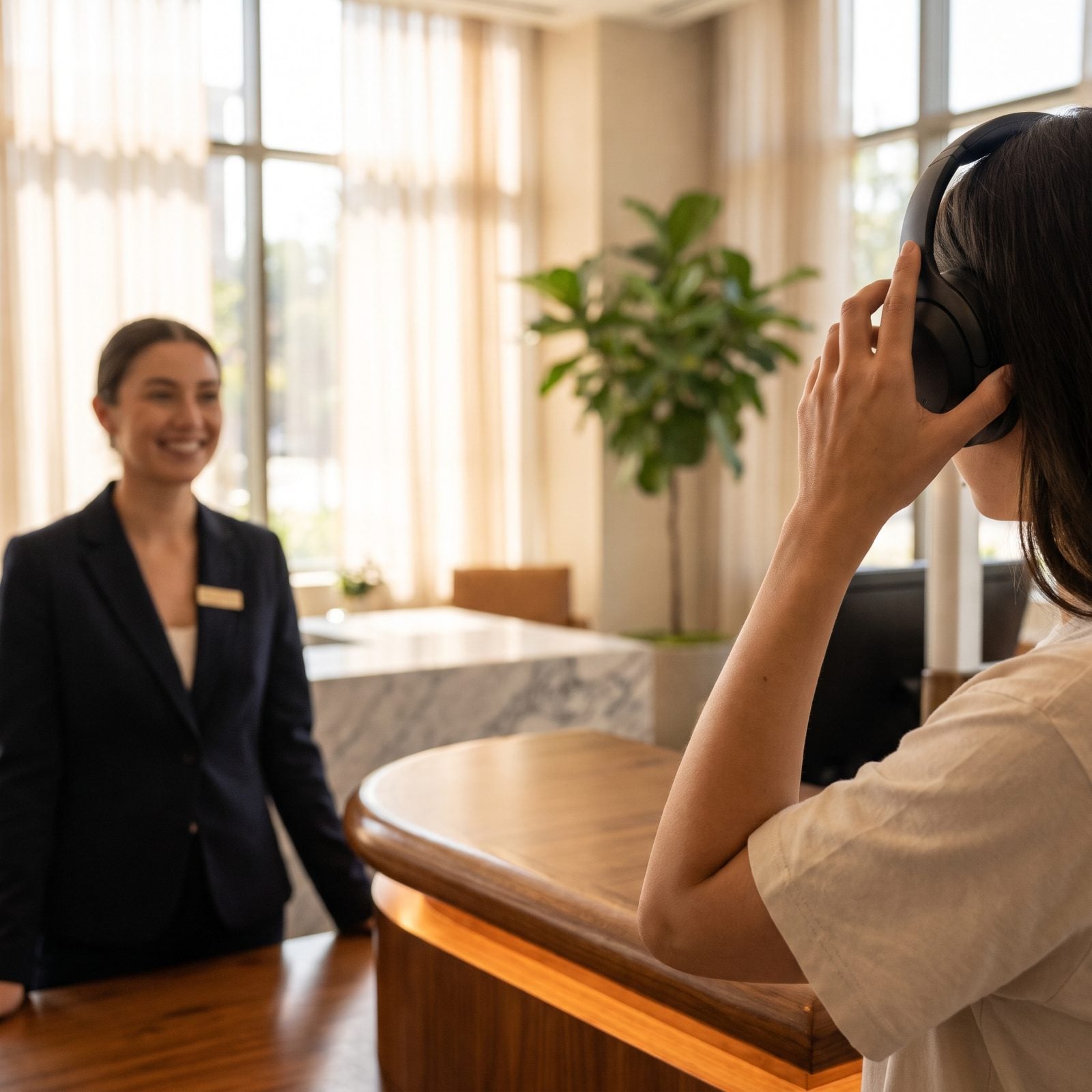
Taking your headphones off is the quietest handshake there is. It says you’re ready to hear them, that whatever you were listening to can wait. Nobody is marking you down for leaving them on — plenty of people roll up mid-podcast and check-in goes fine.
But an experienced agent reads the difference in half a second. Headphones off, and they can run through parking and breakfast hours once. Headphones on, and they’ll slow down, point more, and hand you the written version. Both get you your room. One just skips the second lap.
19. Whether You’re Recording the Whole Exchange on Your Phone
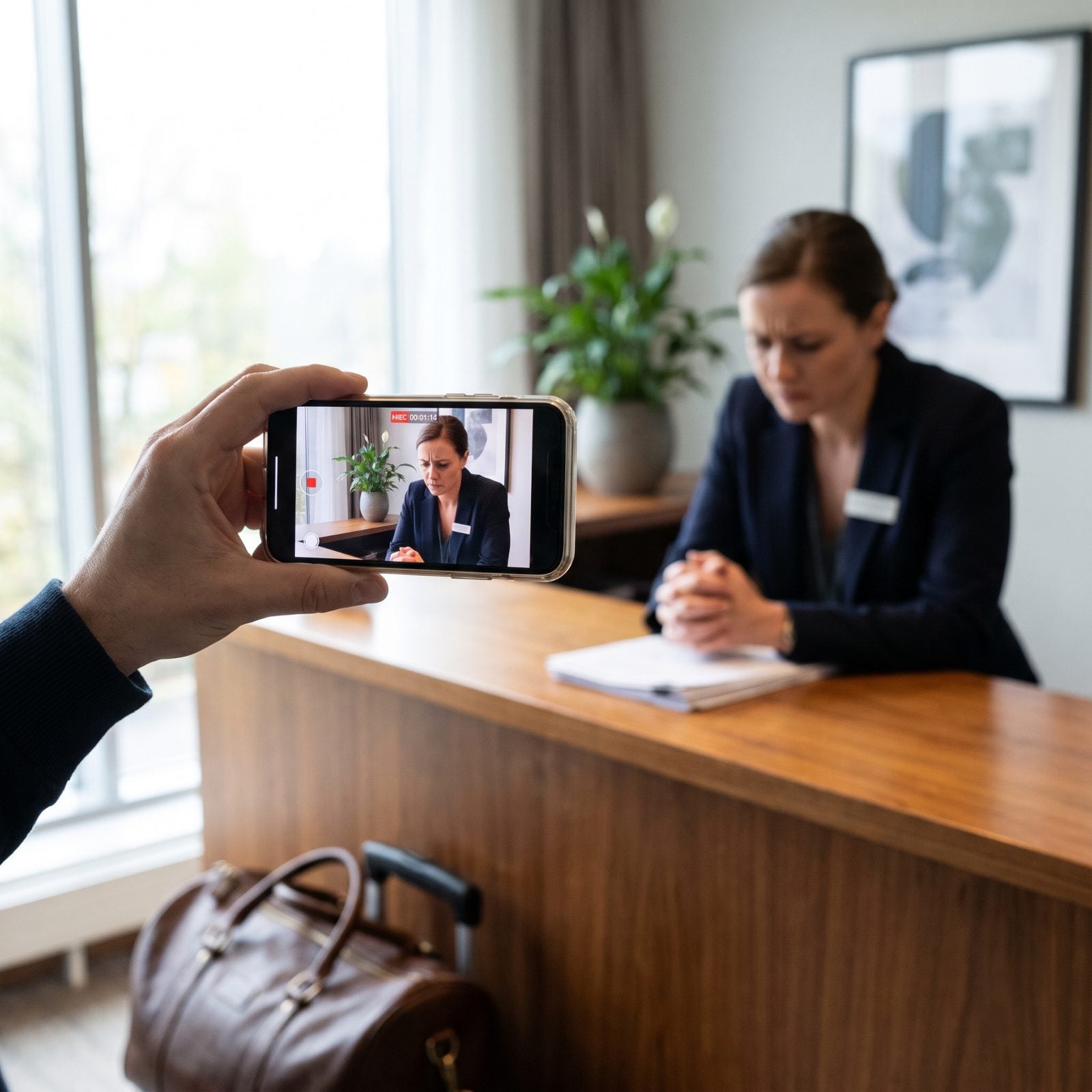
A raised phone changes the temperature of a room. The agent notices right away — not because anyone’s done anything wrong, but because people behave differently when they know they’re on camera. Agents are people too.
Most of the time the filming is harmless. A travel vlogger documenting the trip. A parent catching a kid’s first fancy hotel. Someone making a memory. The desk mostly carries on as normal.
A camera doesn’t make an agent suspicious. It makes them careful, which is a different thing entirely.
The honest read is that an open phone flips the whole thing into performance mode for both sides. Filming for fun? A quick heads-up turns a guarded exchange into a warm one. Say it out loud. Costs nothing, buys you a better clip.
18. The Expression You’re Wearing as You Cross the Floor

Faces arrive before words do. An agent isn’t analyzing your soul. They’re reading whether this is a two-minute check-in or a situation that’s going to need a manager and a calm voice.
A tight jaw usually means a long travel day, not a bad person, and a blank stare often means four hours of sleep. The skilled ones adjust the pace to match — no jokes for someone who looks wrung out, no over-explaining to someone who’s clearly relaxed and ready.
17. If You Keep Glancing at the Clock on the Wall

Clock-watching is one of the clearest tells on the floor. Repeated glances at the wall clock or a wrist say you’re on a schedule, and a good agent takes it as a cue to move.
They’ll skip the upsell, hand you the fastest route to your room, and save the spa brochure for later. That’s not judgment. That’s service reading the room correctly.
Say you’ve got a dinner reservation in twenty minutes and a line building behind you. The agent who catches your eyes flicking to the time can quietly flag your bags for later delivery and get you upstairs now. The one who misses it keeps going about the rooftop bar. Guess which agent you remember fondly.
16. Whether You Walk In Soaked, Snow-Dusted, or Dripping
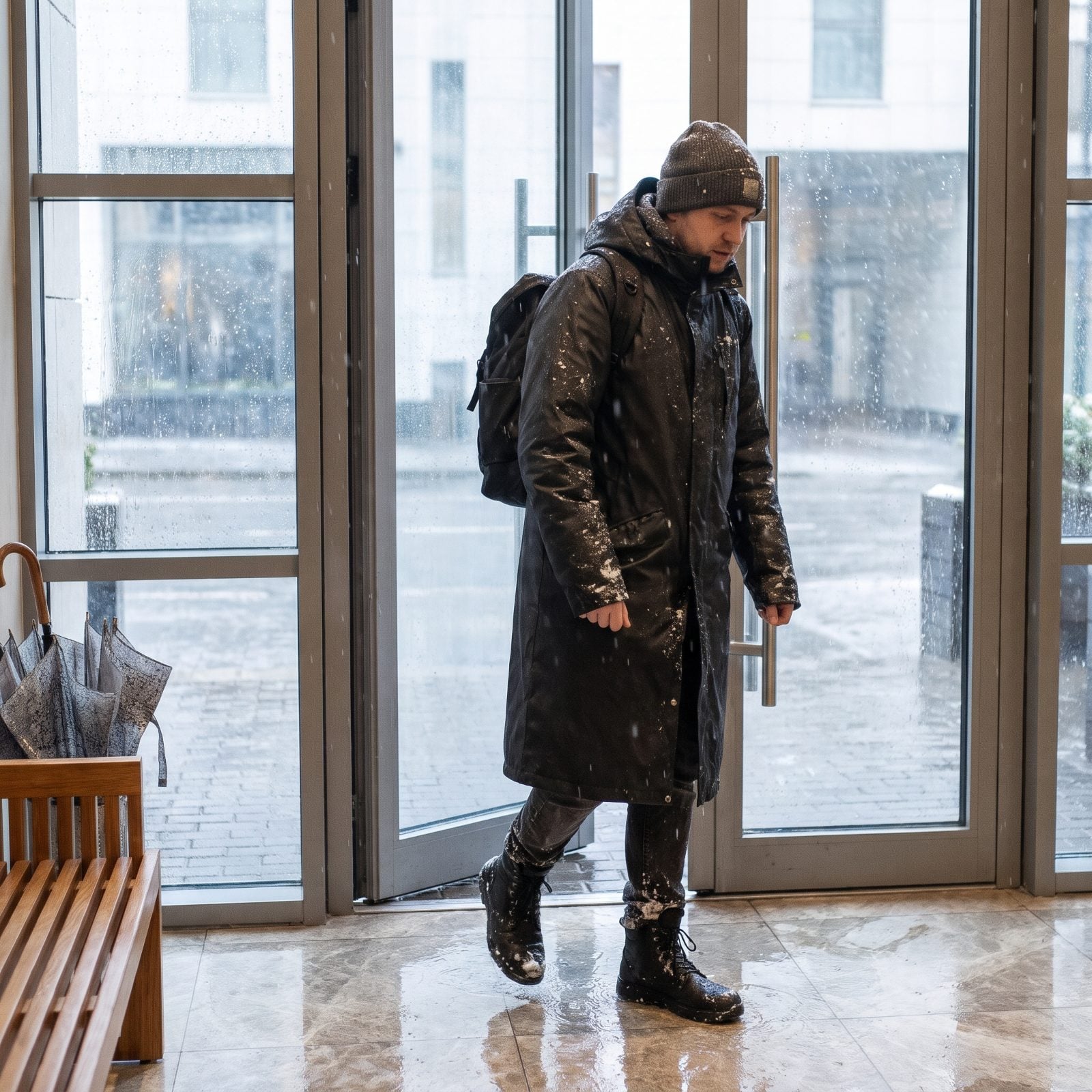
Weather walks in with you. A guest shedding water or stamping snow off their boots tells the whole story before a word — the drive was bad, the walk was worse, and comfort now beats everything.
Agents who do this job well keep towels within reach for exactly this. They’ll point to the dry spot on the mat, hold the small talk, and get you processed while you’re still catching your breath. A roadside inn in January practically runs on the instinct.
15. The Subtle Signs That You’ve Had a Few
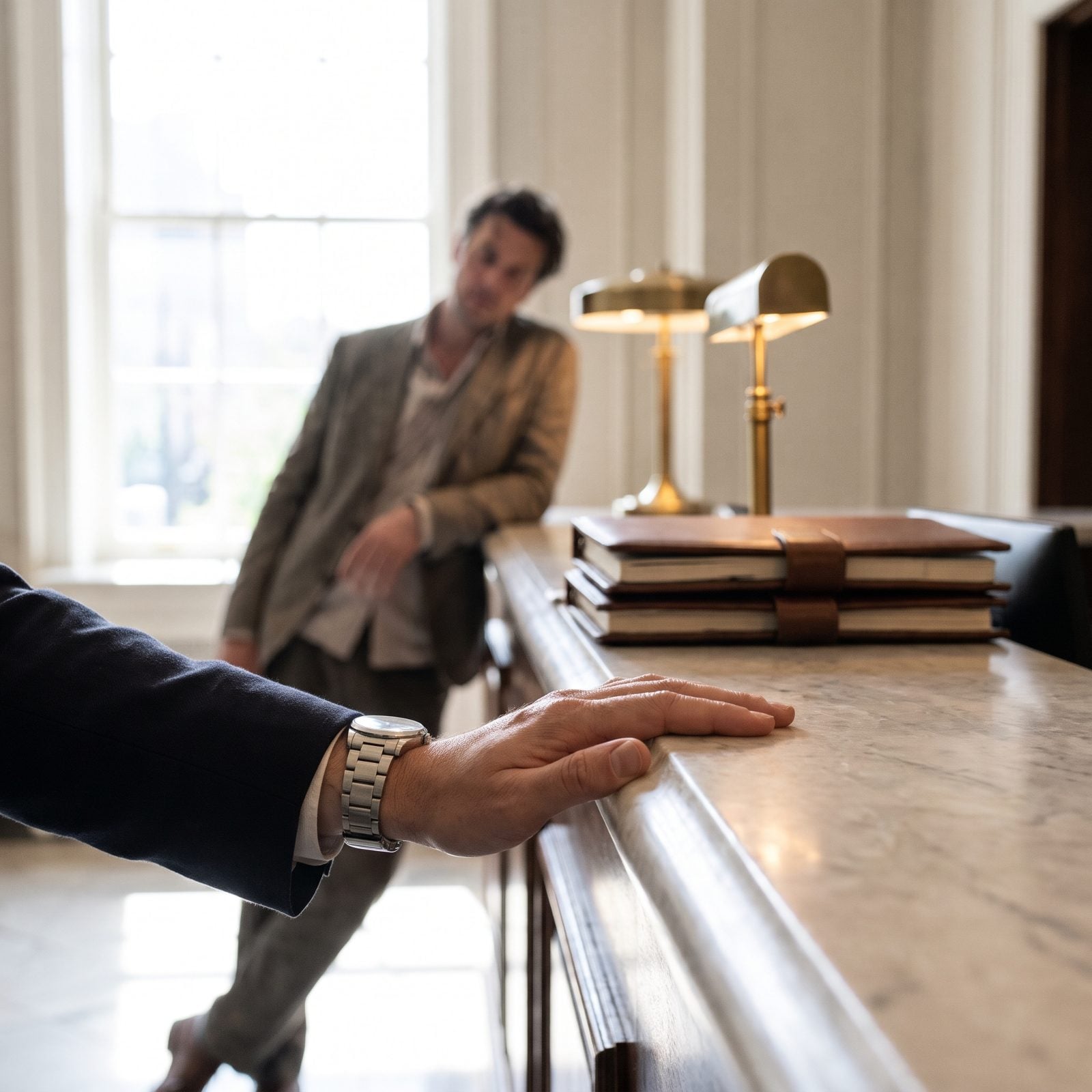
This one agents are trained to handle with care, because getting it wrong in either direction matters. A hand steadying on the counter, slightly slower speech, a longer pause finding a wallet. Observed, not scored.
It comes down to safety and liability. An agent needs to know whether a guest can get to their room safely and whether anyone else in the party needs looking after. Convention hotels near conference bars see this nightly and treat it as routine.
The good ones stay warm the whole time. A glass of water offered, a slower cadence, an escort to the elevator if it’s warranted. No lecture, no raised eyebrow. Just quiet competence making sure everyone gets upstairs fine.
14. The Open Coffee or Half-Eaten Something You Set Down
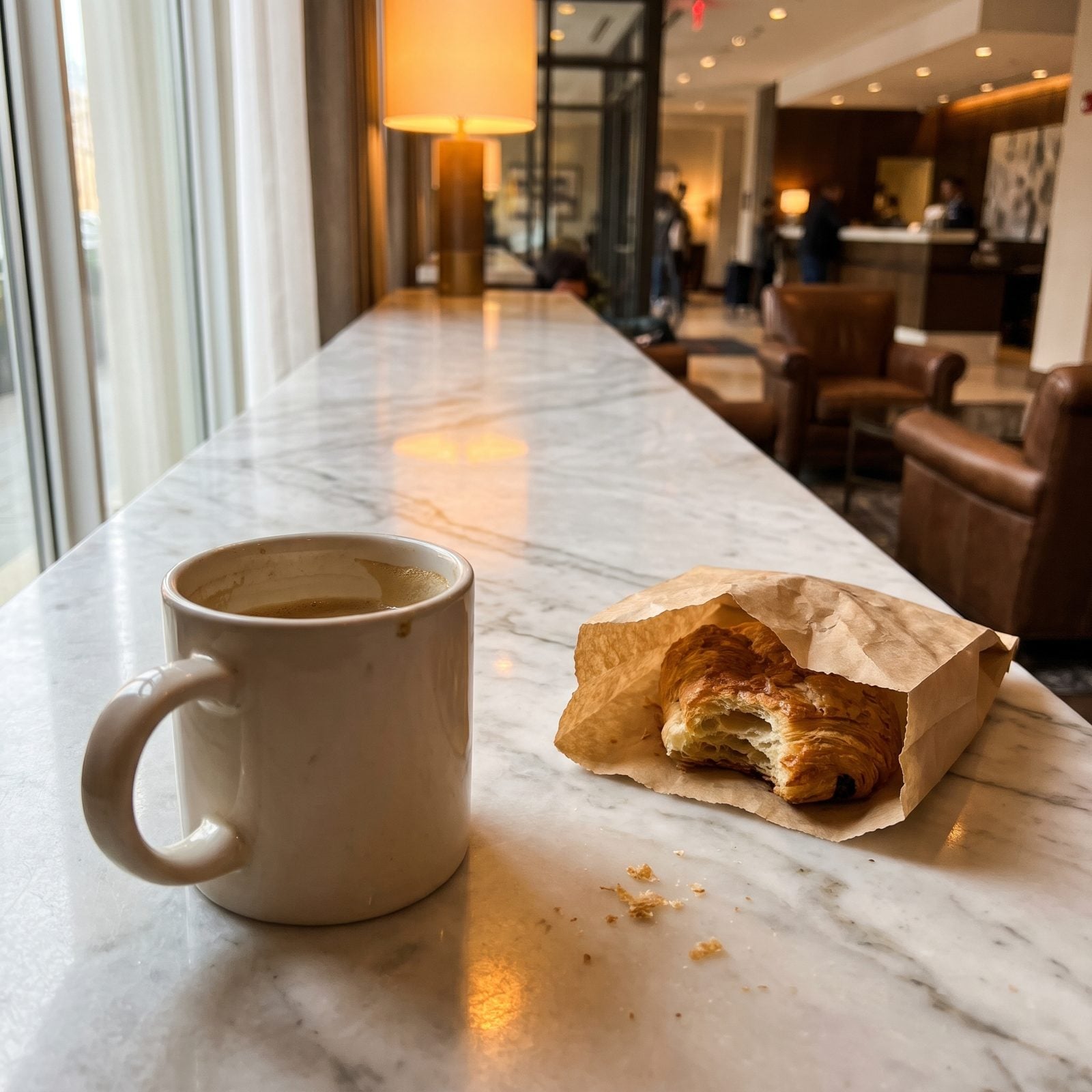
Open food on the counter isn’t a character flaw. It’s a logistics note. The agent clocks it because marble stains, keyboards hate crumbs, and a coffee ring on a leather guest book is a small tragedy.
Nobody minds you walking in mid-breakfast. What they’re quietly doing is sliding your paperwork clear of the cup and angling the pen away from the spill zone. Reflex at a luxury resort where the counter cost more than a car.
13. Whether You Mop Up Your Own Accidental Spill
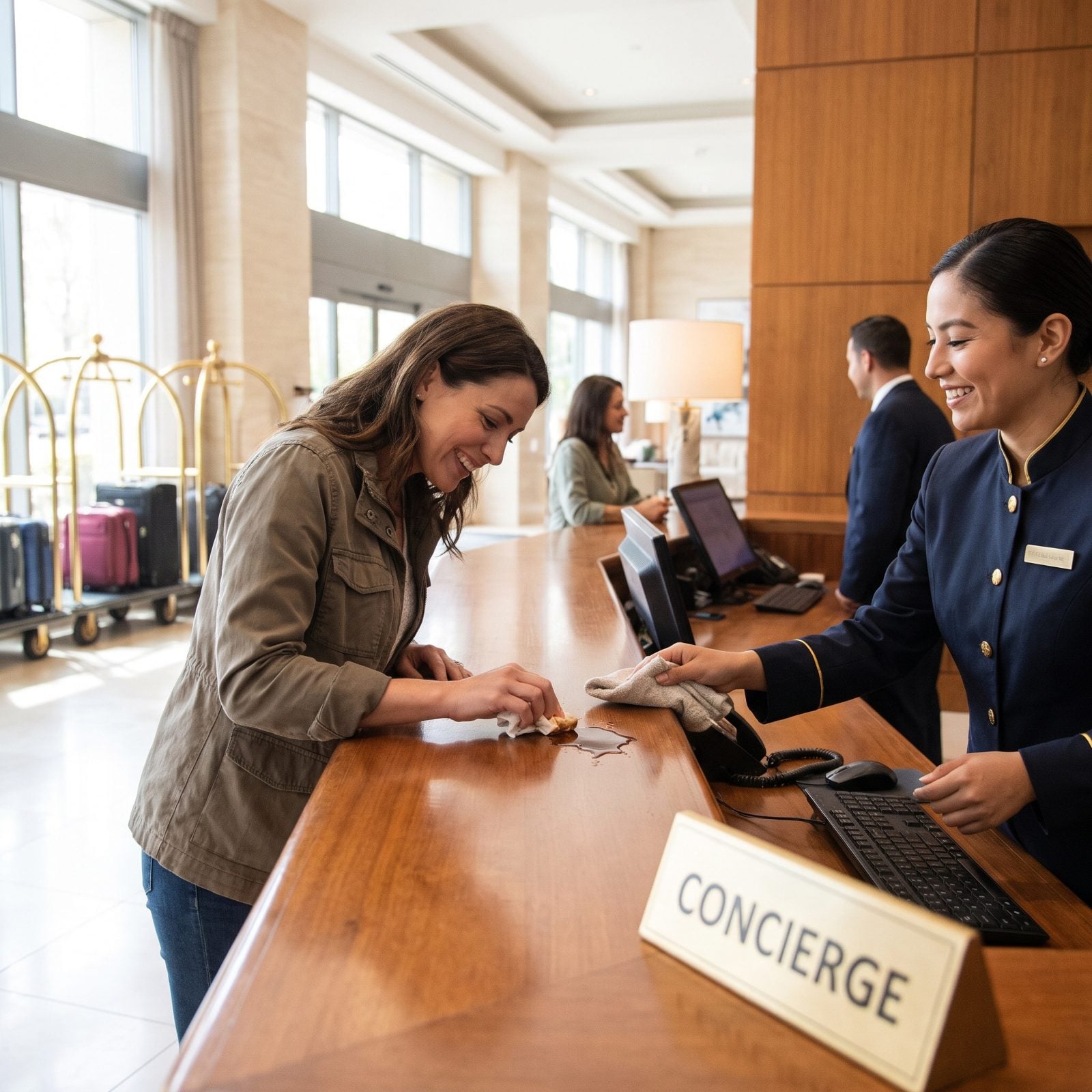
Accidents happen. Nobody expects you to travel without ever knocking over a juice box. What an agent notices is the instinct afterward — the reach for a napkin, the quiet “sorry about that.”
It isn’t a test you pass or fail. Agents clean spills all day and think nothing of a guest who leaves one. But the small move to tidy up registers warmly, the way holding a door does. Family-friendly hotels run on exactly this low-stakes grace, both directions.
12. The Flowers, Balloons, or Cake Balanced in Your Arms
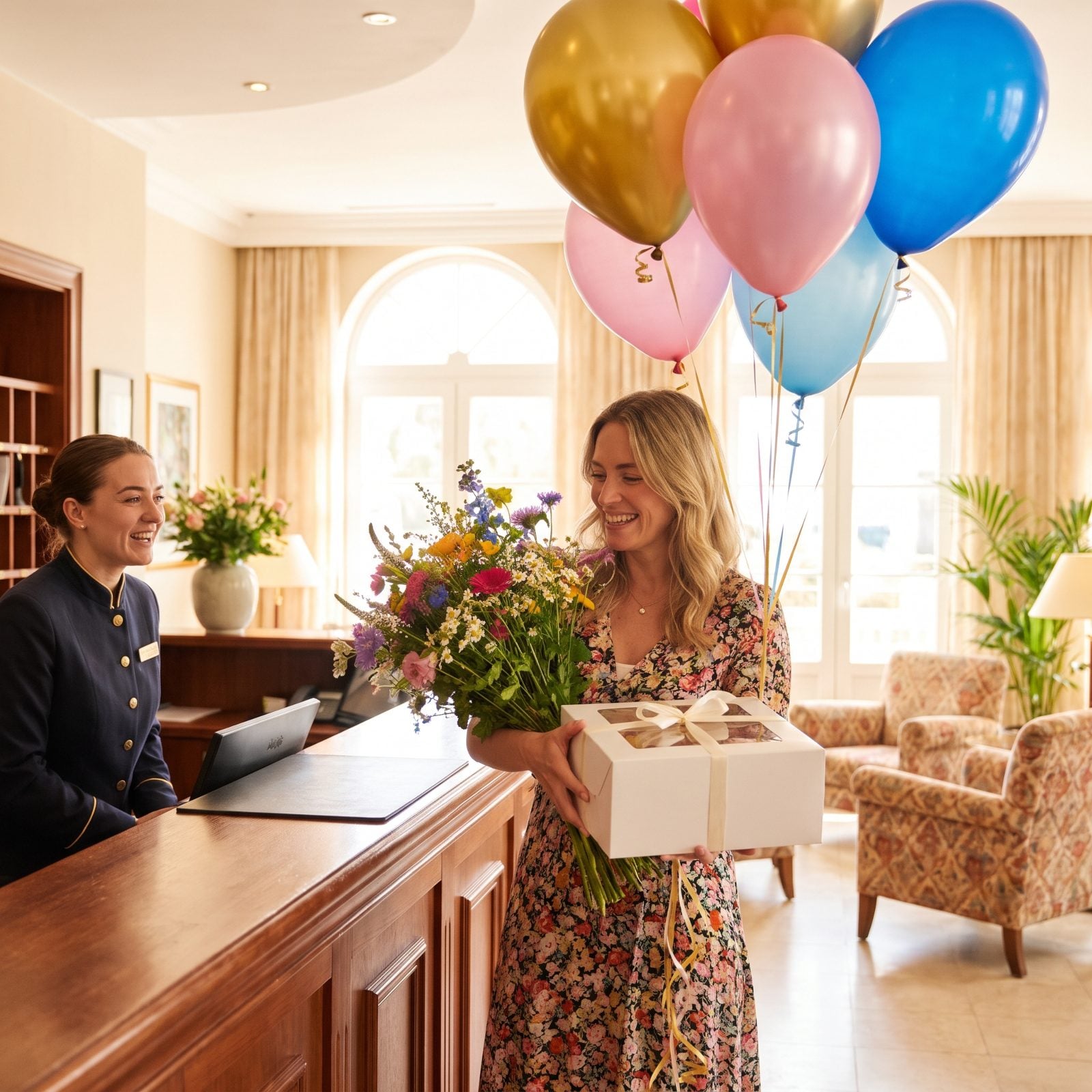
Flowers and a cake box change everything, and every agent worth their badge pounces on the opening. Something good is happening — an anniversary, a birthday, a proposal, a reunion. This is the cue they actually hope to see.
Suddenly there’s a cooler for the cake, a vase for the roses, maybe a quiet note to housekeeping about a turndown surprise. The whole desk leans in. Boutique hotels in particular live for it, because a celebration remembered well becomes the review that fills the place next year.
11. The Skis or Snowboard Traveling With You
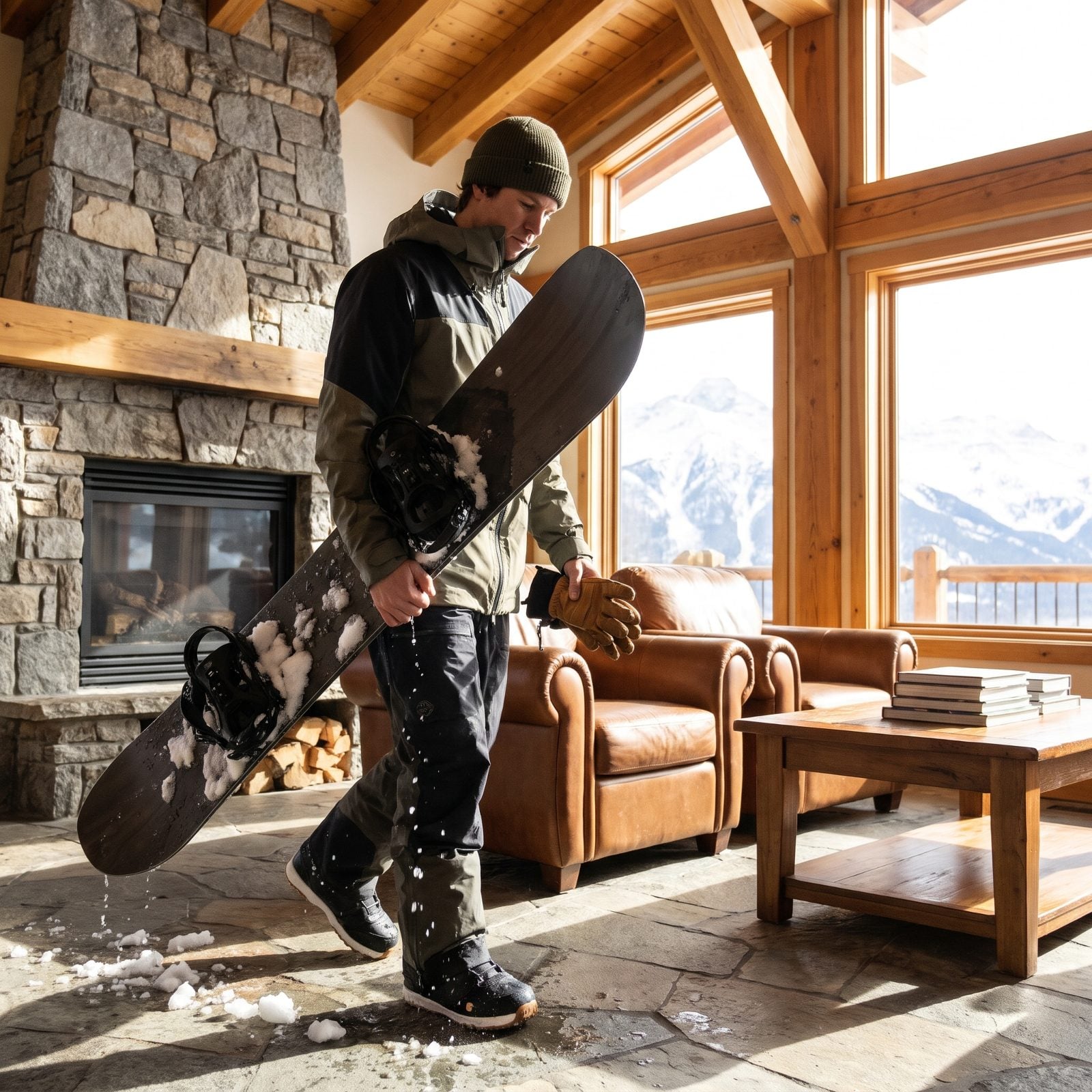
Skis say more than skis. The agent clocks the snow still melting off the bindings and knows you came straight from the mountain, not from the airport, and that changes the next two minutes. They’ll mention the ski locker before you ask, and they’ll check whether your room sits near the gondola side or the quiet side. The gear is a shortcut to what you actually need.
Wet boots on the lobby floor are a signal too, and nobody minds. It tells them the lifts just closed and a rush is coming. Good desks staff for exactly this.
10. The Hiking Pack on Your Back
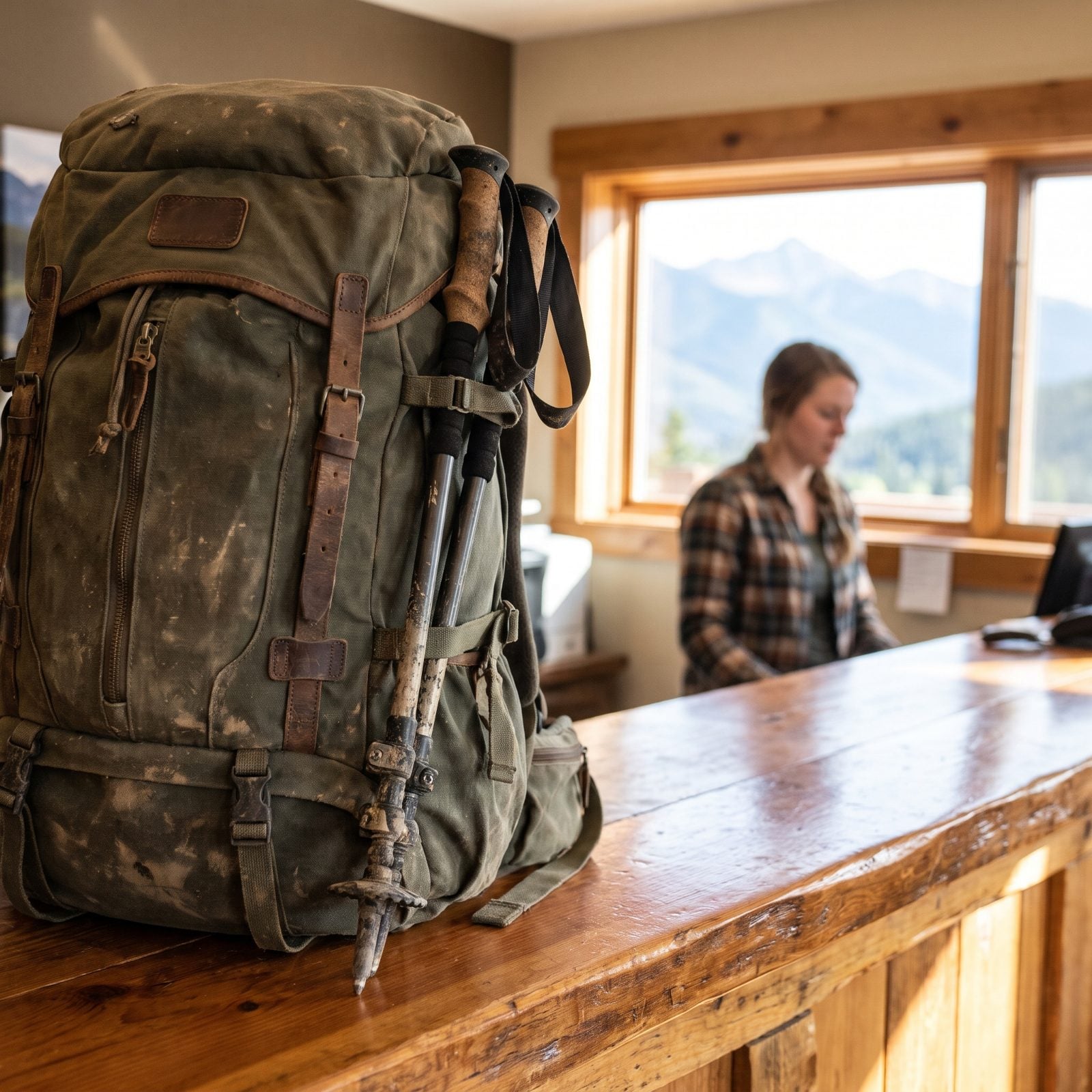
A loaded pack reads differently than a wheeled suitcase. Trail dust, trekking poles, a scuffed hip belt — the agent sees someone who’s been outside all day and is probably more tired than cheerful, so they slow down. They point you toward the water station before the registration spiel, and they mention the boot-wash station outside if there is one.
The size of the pack hints at how long you’re staying. A daypack means one night, maybe. A fifty-liter monster means you’re passing through on something longer. None of it is scrutiny. It’s just reading the room, and you are the room.
9. The Musical Instrument You Keep Close
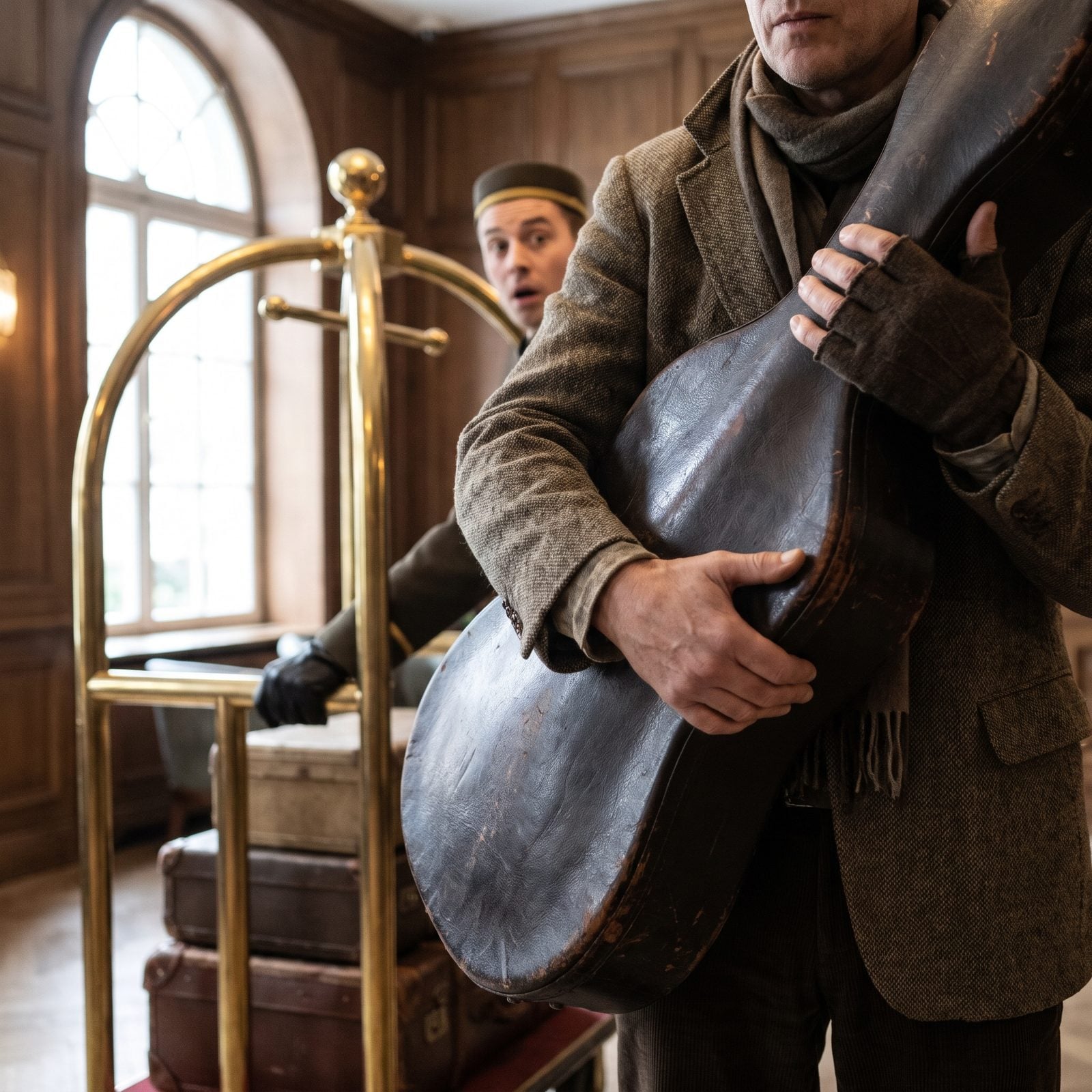
Watch how someone holds an instrument case. They keep it close, and they don’t let it ride the bellhop cart. That proximity tells the agent two things at once: this object matters, and it may need a conversation. Is there a room where you can play without a noise complaint? Can it be stored safely during an event?
Touring musicians read as touring musicians, and the good desks know the rhythm — late arrivals, early checkouts, odd requests. They’ve seen a cello buy its own airplane seat. A guitar in the lobby is a small flag that says plan around me a little.
8. Whether You Arrived With Groceries
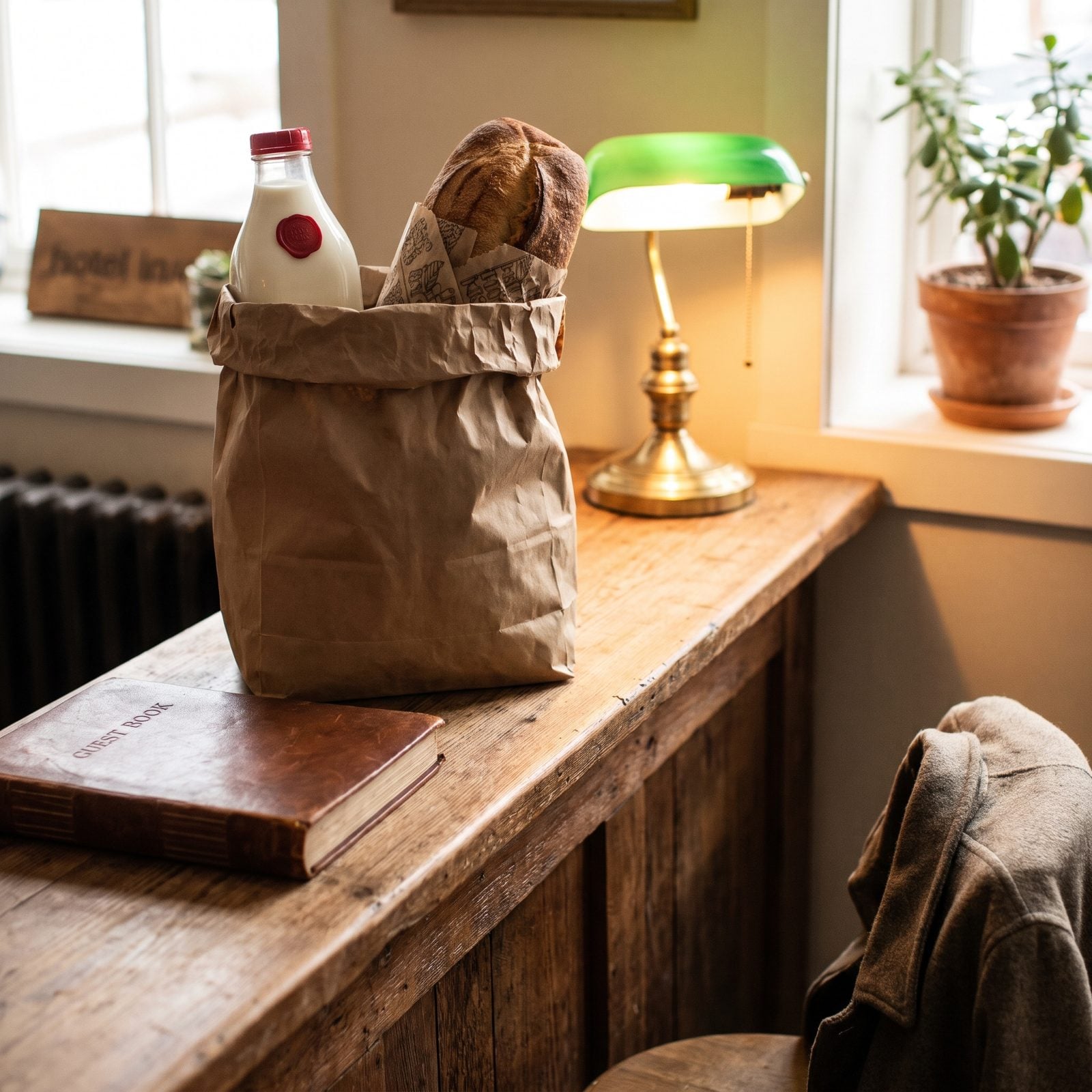
Groceries at check-in are a quiet announcement. Milk, bread, a bag with real food in it — the agent reads a longer stay and a kitchenette need before you’ve said your name. They’ll confirm the room has a fridge, point to the ice machine, and maybe warn you about the in-room stove quirks nobody mentions.
7. The Travel Pillow Still Around Your Neck
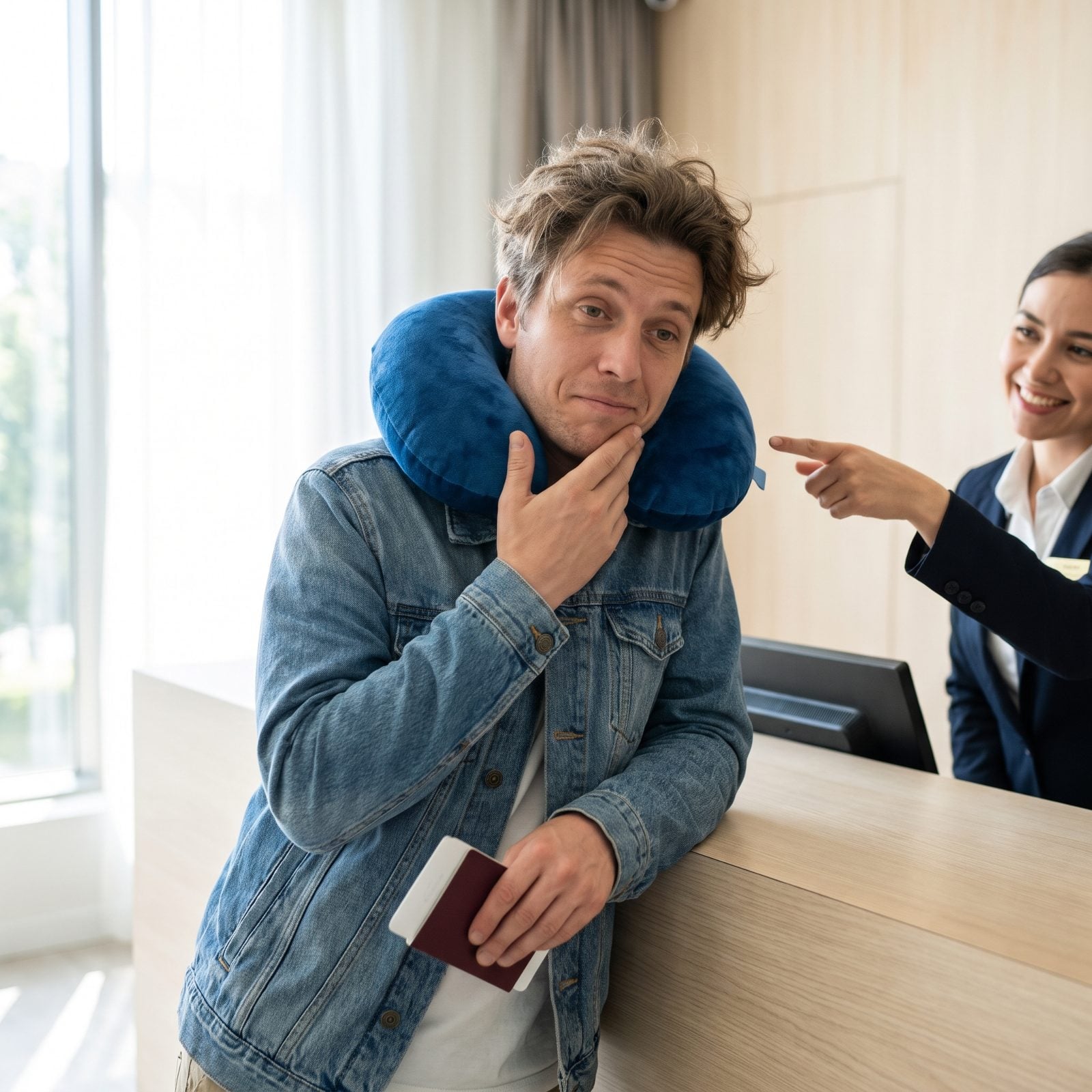
The pillow still looped around a neck is the clearest tell in the building. A long flight just ended and the body hasn’t caught up. The agent can’t help grinning and pointing it out — a little shared laugh before moving faster. Room key, elevator direction, breakfast hours, done.
Pair that pillow with a red-eye arrival time on the reservation and the whole approach shifts. A warm smile. Fewer upsell pitches. The kindest thing a desk can do for a jet-lagged guest is get out of the way.
6. The Flight-Cancellation Alert on Your Screen
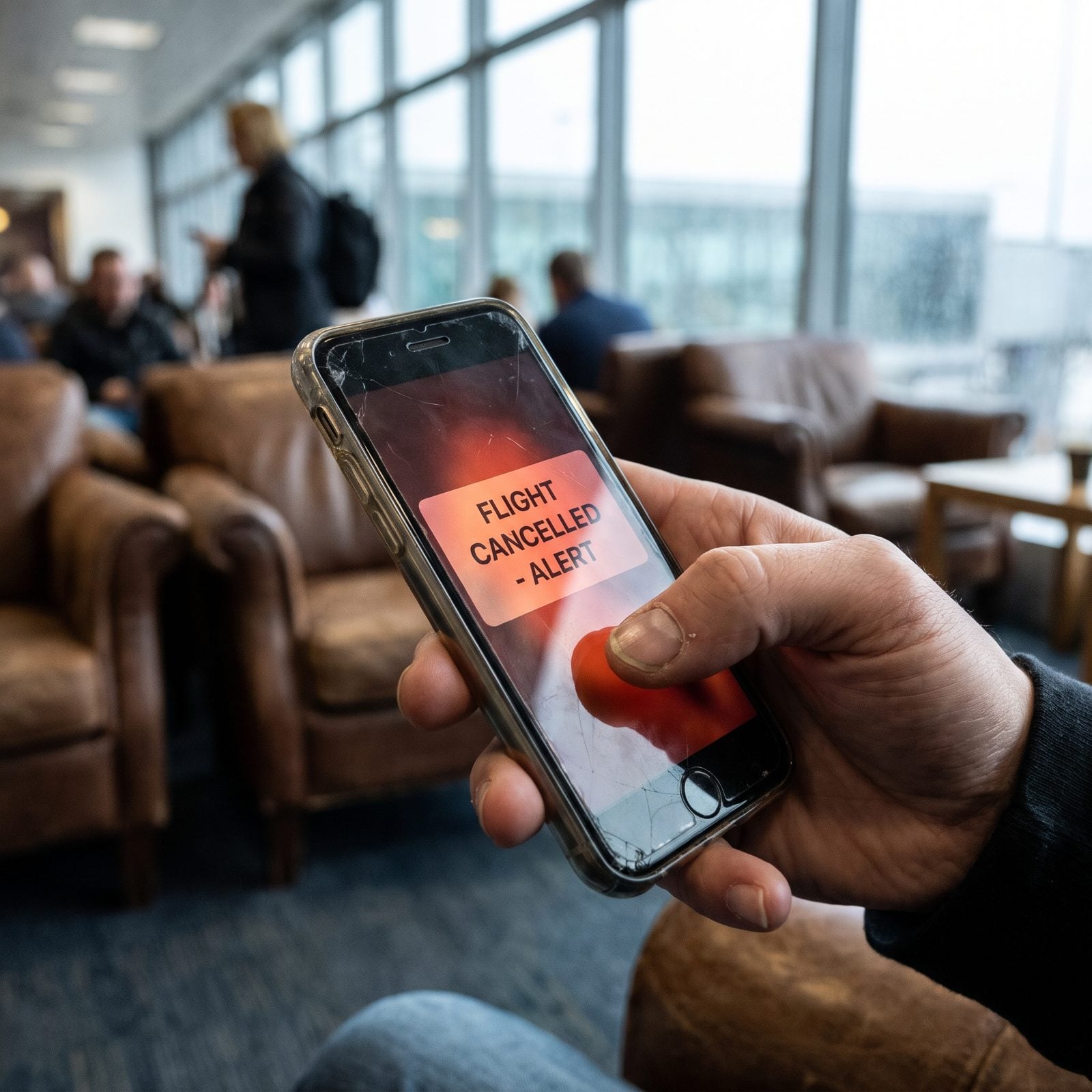
A phone held tight, screen up, thumb scrolling fast. The agent has seen this exact posture through every weather event and airline meltdown of the last decade, and it usually means a flight died and plans just got rewritten in real time. The desk doesn’t need the details. They need to be ready.
When a cancellation wave hits, the lobby fills with the same body language and the counter becomes triage — rooms, extensions, late checkouts, a working outlet. Nobody is at their best in that moment, and the sharpest agents treat the stress as information, not attitude.
5. The Missing-Baggage Report You Are Carrying
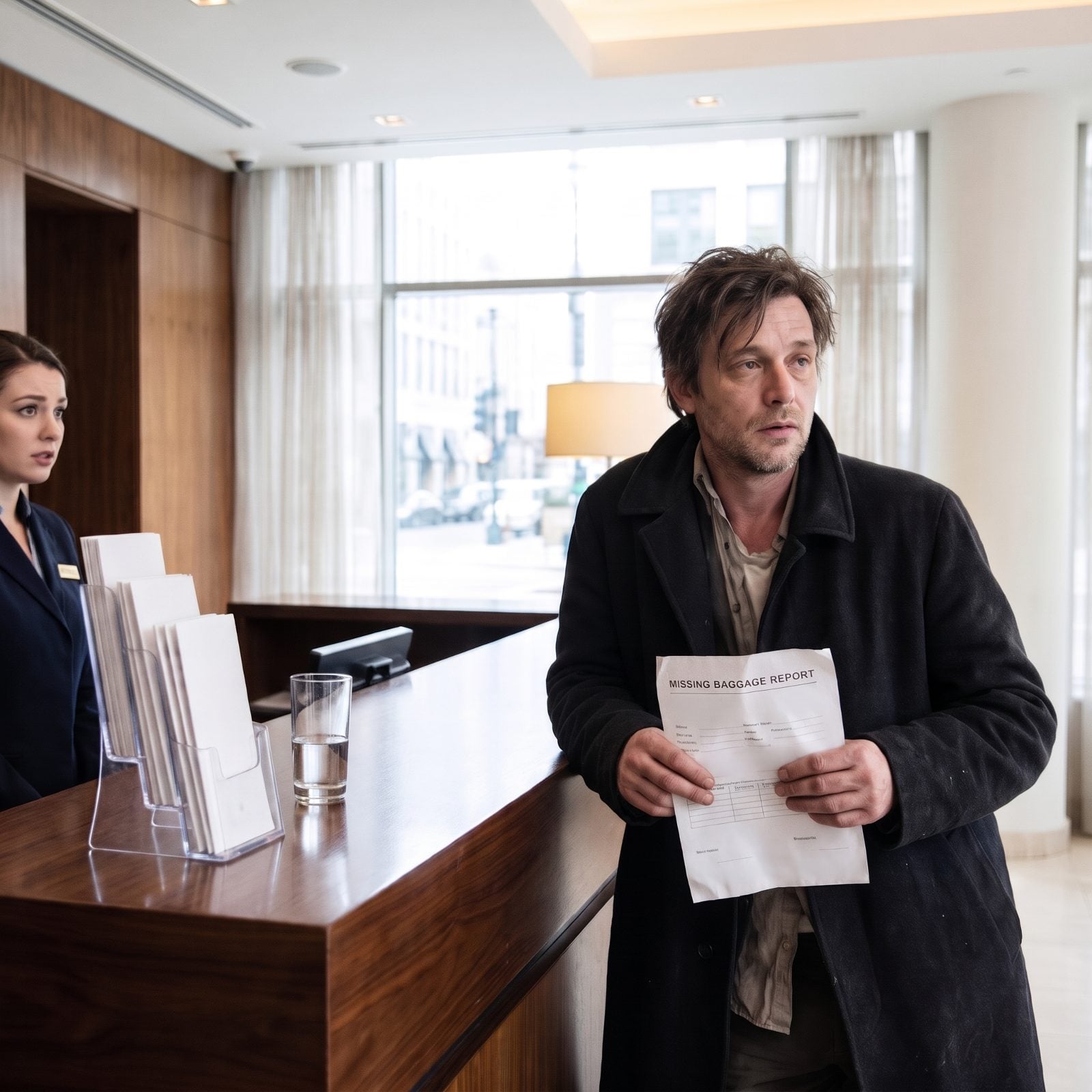
No suitcase. Just a crumpled airline form and the thousand-yard stare of someone whose bag is now in another country. The agent reads the missing luggage before you reach the counter, because the absence of luggage is itself the signal — a guest with no bag at an airport hotel almost always means one thing.
What happens next is quiet logistics. The toiletry kit from the back room, a note about the nearest pharmacy, confirmation that the airline can deliver to the lobby overnight. None of it fixes the day. All of it helps.
4. Whether a Translation App Is Open
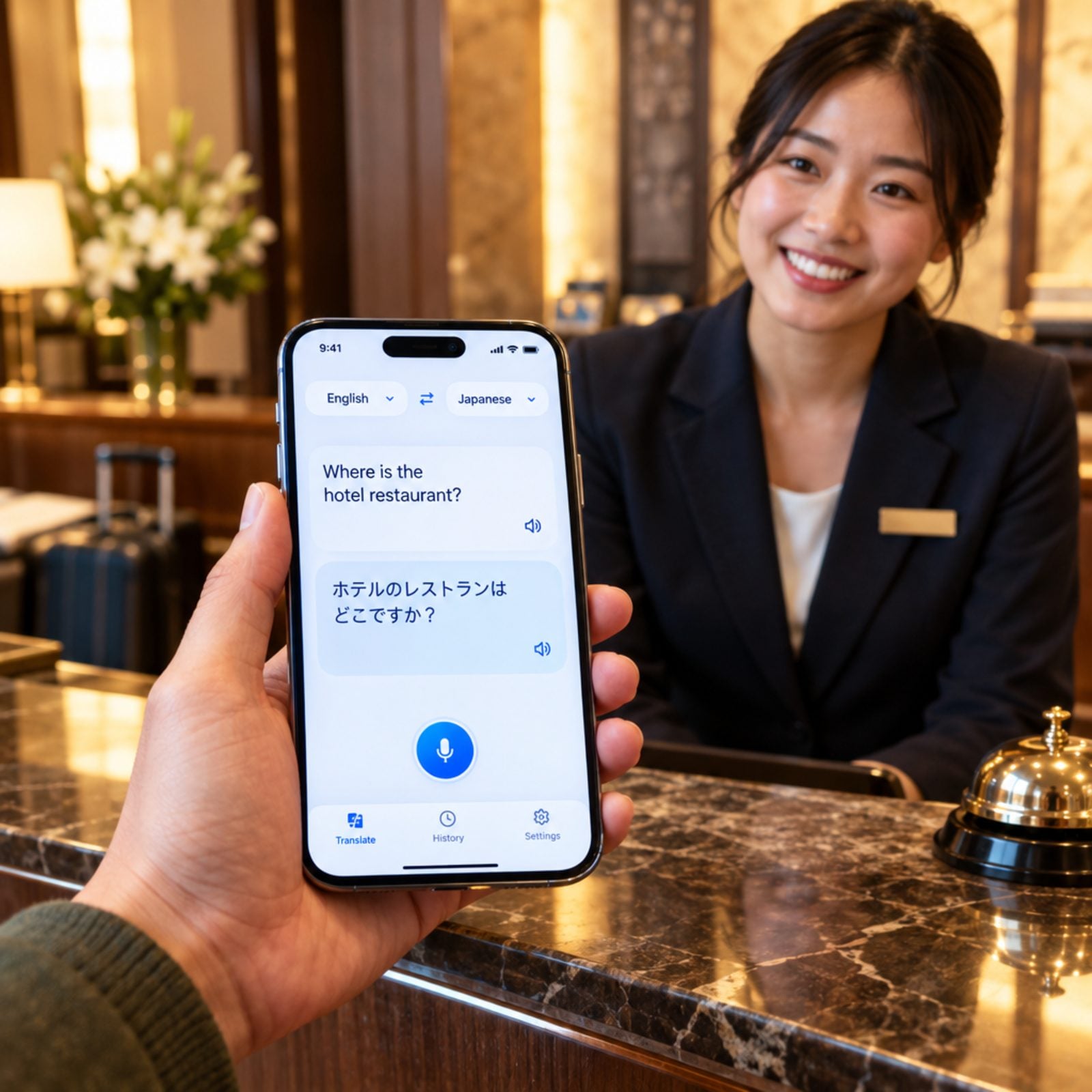
A phone held up with a translation app glowing is an invitation, not a problem. It tells the agent to slow the pace, drop the slang, and skip the rapid-fire checklist. Short sentences. Point to the map. Write the room number instead of saying it.
The good ones have a few phrases banked and a colleague on call who speaks more. They know the app is doing real work and the guest is meeting them halfway. Meeting them the rest of the way is the whole job.
3. How Openly You Are Carrying Valuables
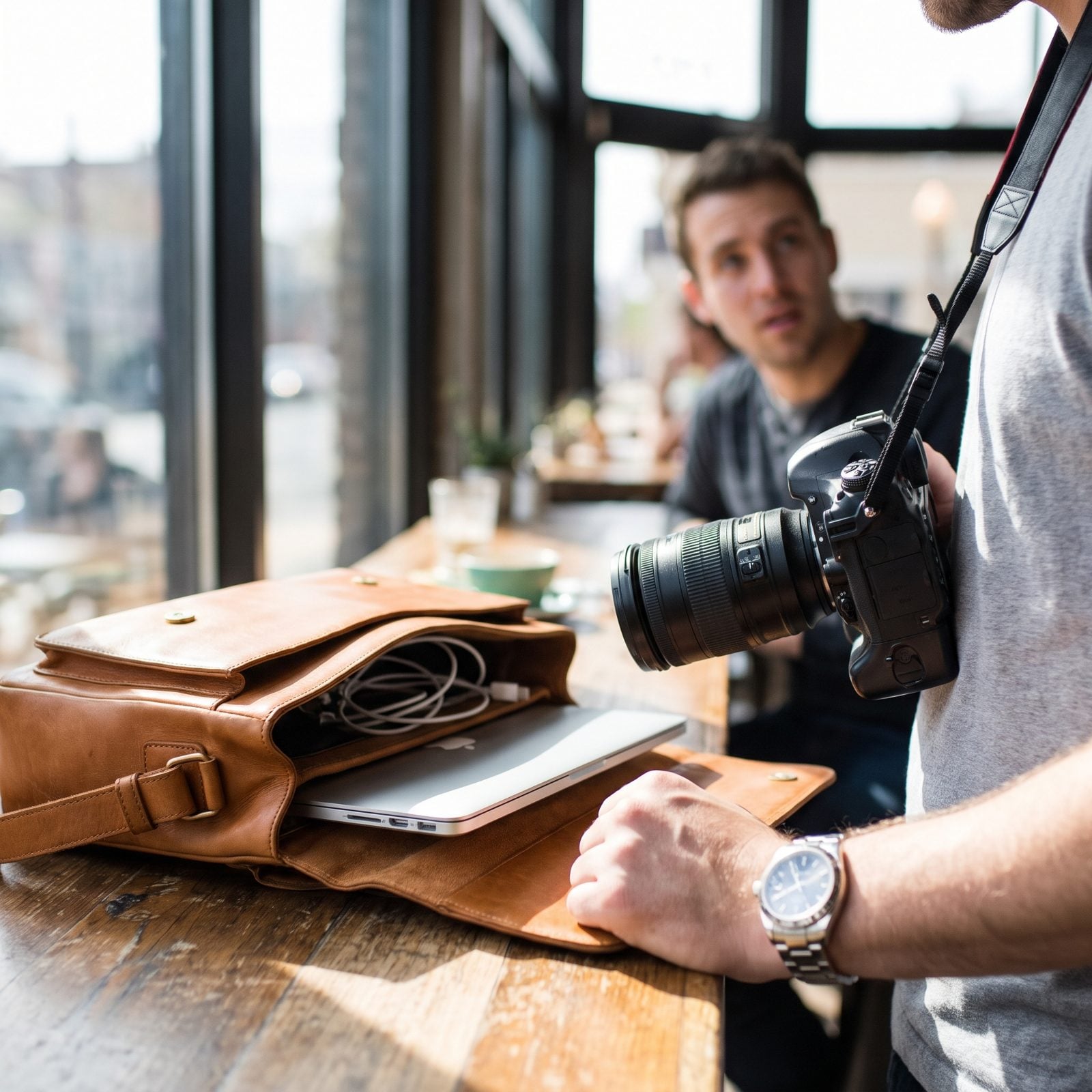
Camera gear on the shoulder, a laptop bag out in the open, a nice watch catching the light. The agent isn’t sizing up your net worth. They’re thinking about the safe in the room and whether to mention it, because a guest carrying obvious valuables usually wants to know where to lock them.
Discretion matters most here. The best desks never comment on what you’re hauling. They just quietly fold the in-room safe and the secure storage options into the standard walkthrough, same as the Wi-Fi password.
2. Whether You Wait Your Turn
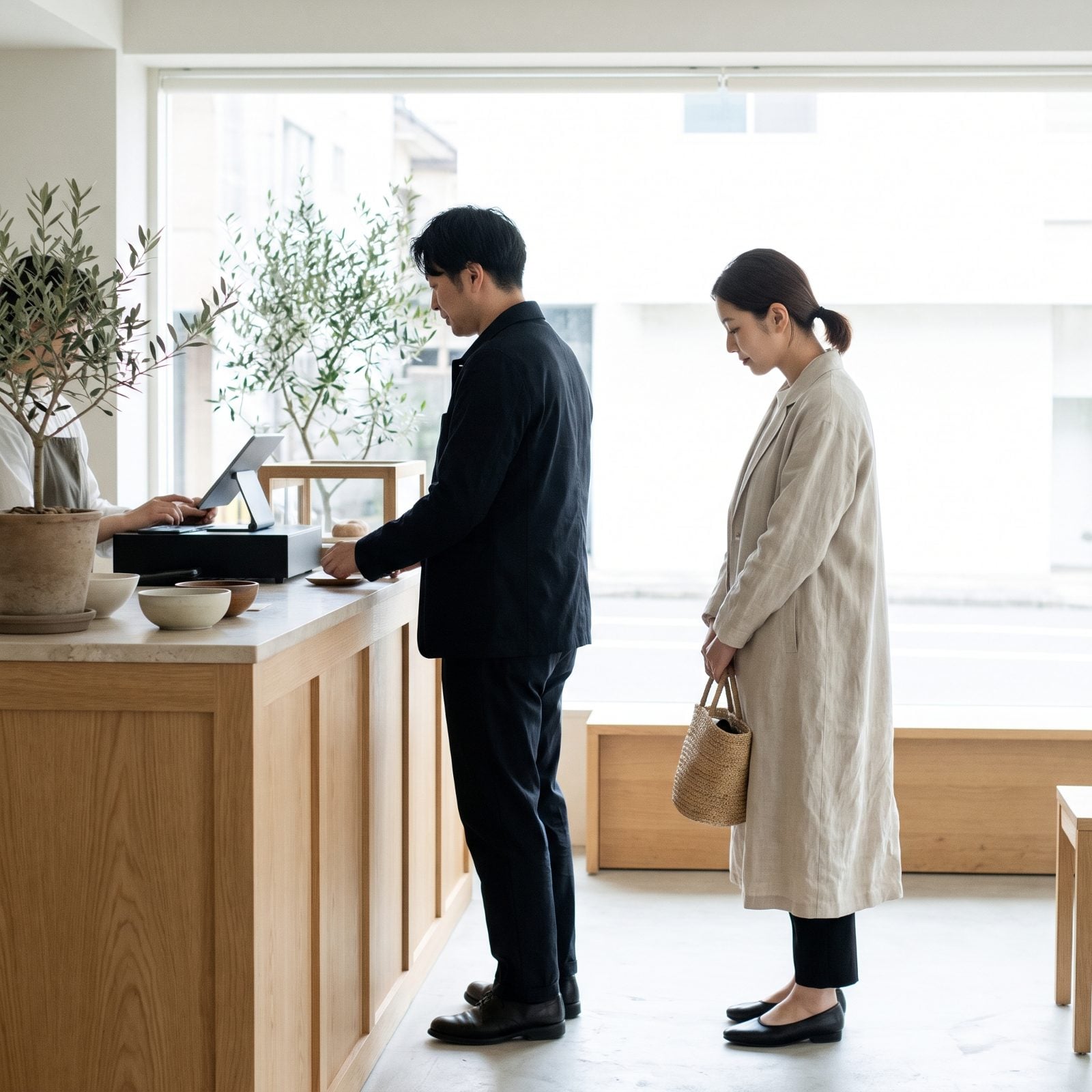
The oldest read in hospitality is also the simplest. Do you hang back a polite step while the person ahead finishes, or do you crowd the counter and start talking over them? The agent notices instantly — and it changes nothing about your service. It changes the pace they set to keep the whole lobby moving.
A patient line lets them give each guest a real minute. A crowded one makes them split attention and apologize more. You’ve stood in both kinds. The whole difference lives in how people hold the space, and the desk feels it before anyone says a word.
The front desk isn’t judging the line. It’s reading the tempo the line sets, and adjusting to it.
1. How You Treat the Bell Staff
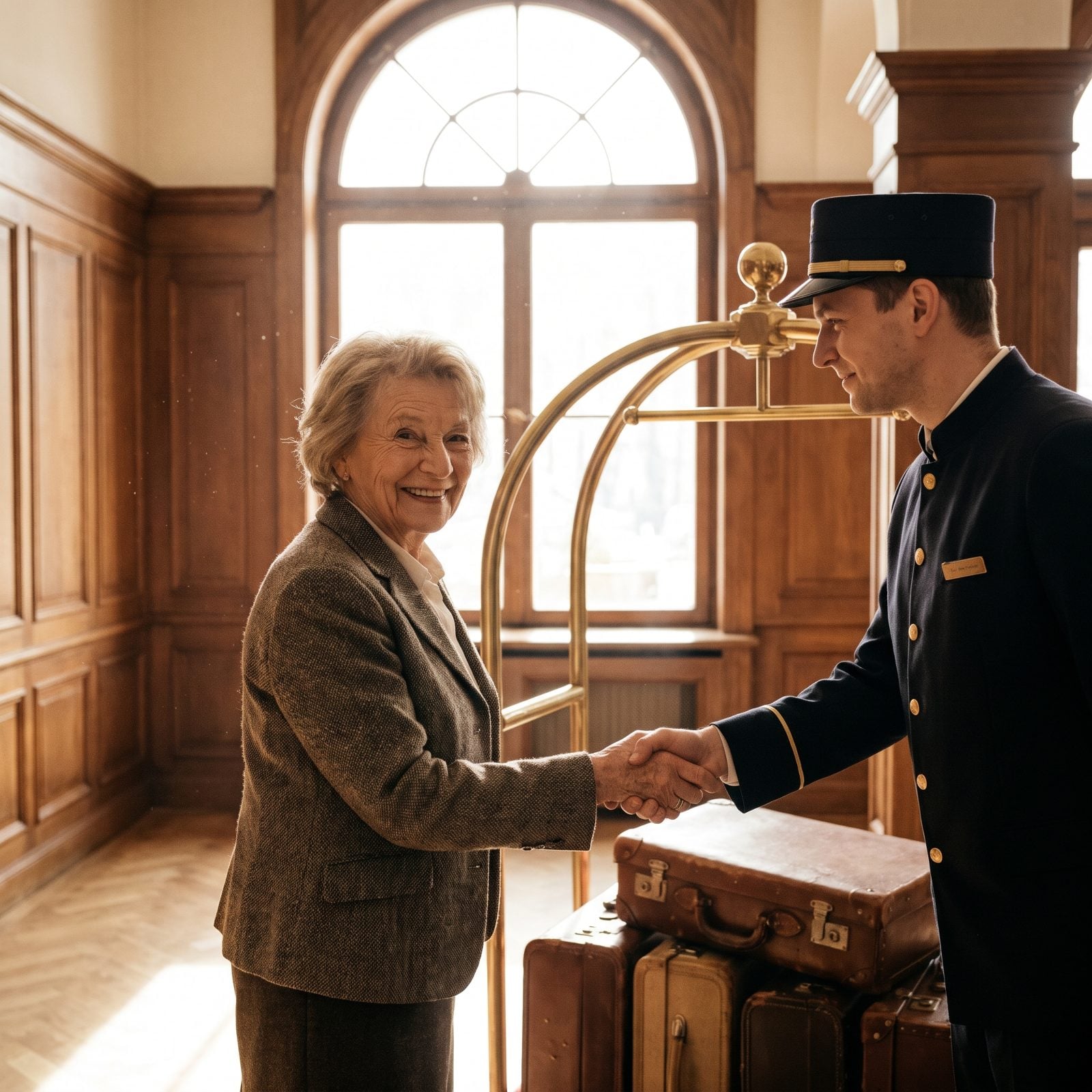
Watch the lobby for thirty seconds and you’ll learn more from the bell cart than you ever will from the registration screen. A guest who thanks the attendant by name, tips without making a production of it, and hands over the bags with a word instead of a grunt — that whole exchange happens before anyone reaches the counter. And the desk agent clocks every second of it.
This isn’t about judging anyone. Courtesy to the person hauling your suitcase tends to follow you right up to check-in, the same way a sour mood does. Treat the bell staff like furniture and you’ll probably treat the front desk that way too. Make eye contact, say thanks, and you’re already halfway to a smooth stay.
None of this is a verdict on your character. It’s a read on the next ten minutes, nothing more. A warm hello at the door usually means a warm hello at the counter, and the agent is just reading the weather you walked in with.
Please note that some of the imagery in this article were created with the aid of AI image generators.