
🔥 Would you like to save this?
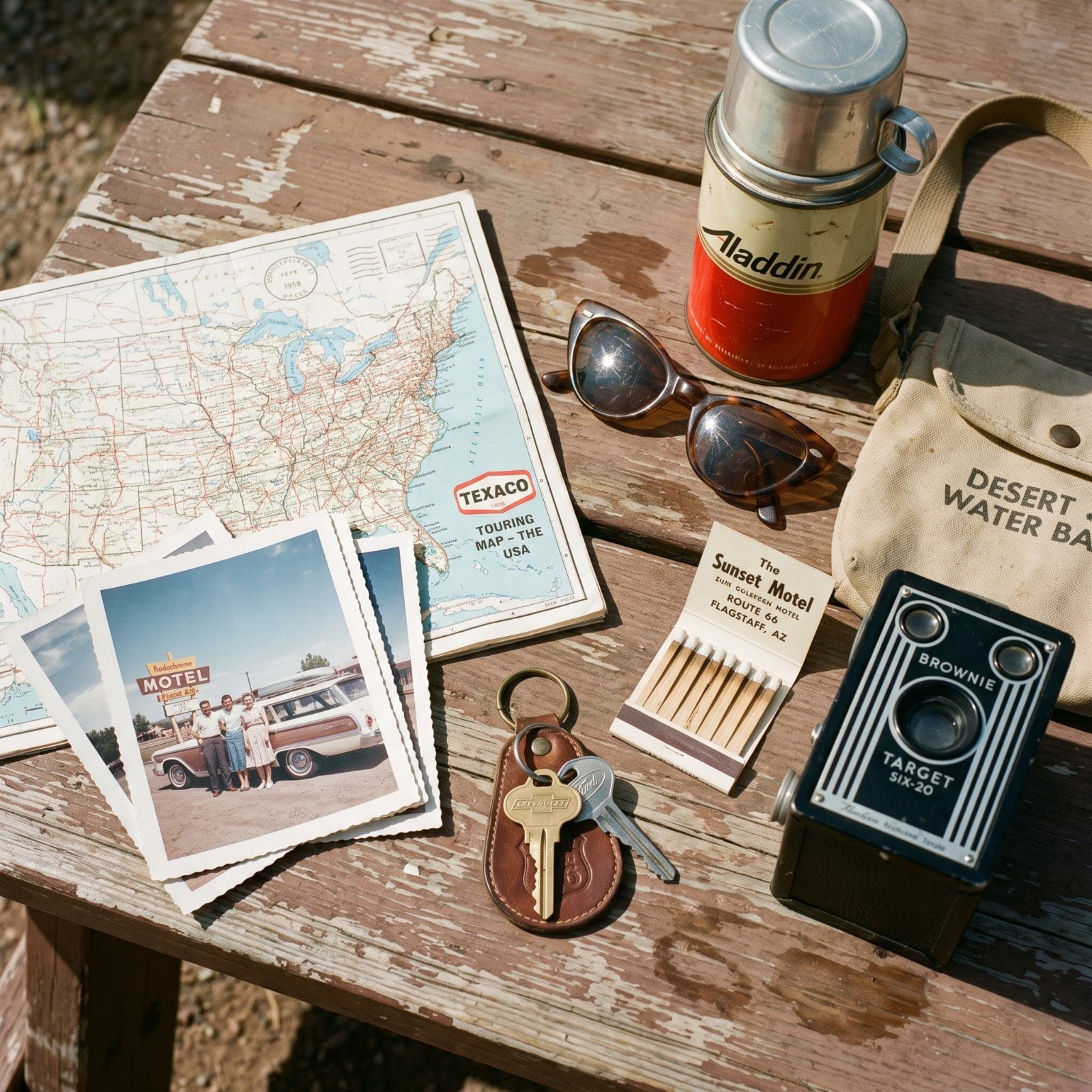
Look past the smiling faces. The real story of a 1958 vacation snapshot lives in the edges, the dashboard, the gravel shoulder, the thing clipped to the bumper that nobody would recognize today. These small details are a time capsule nobody meant to seal, and they tell you how people drove, where they slept, what they wore, and how long a trip actually took. Pull out the old shoebox of prints and look again. The details below are the ones most people scroll right past.
42. The Paper Road Map Spread Across the Hood
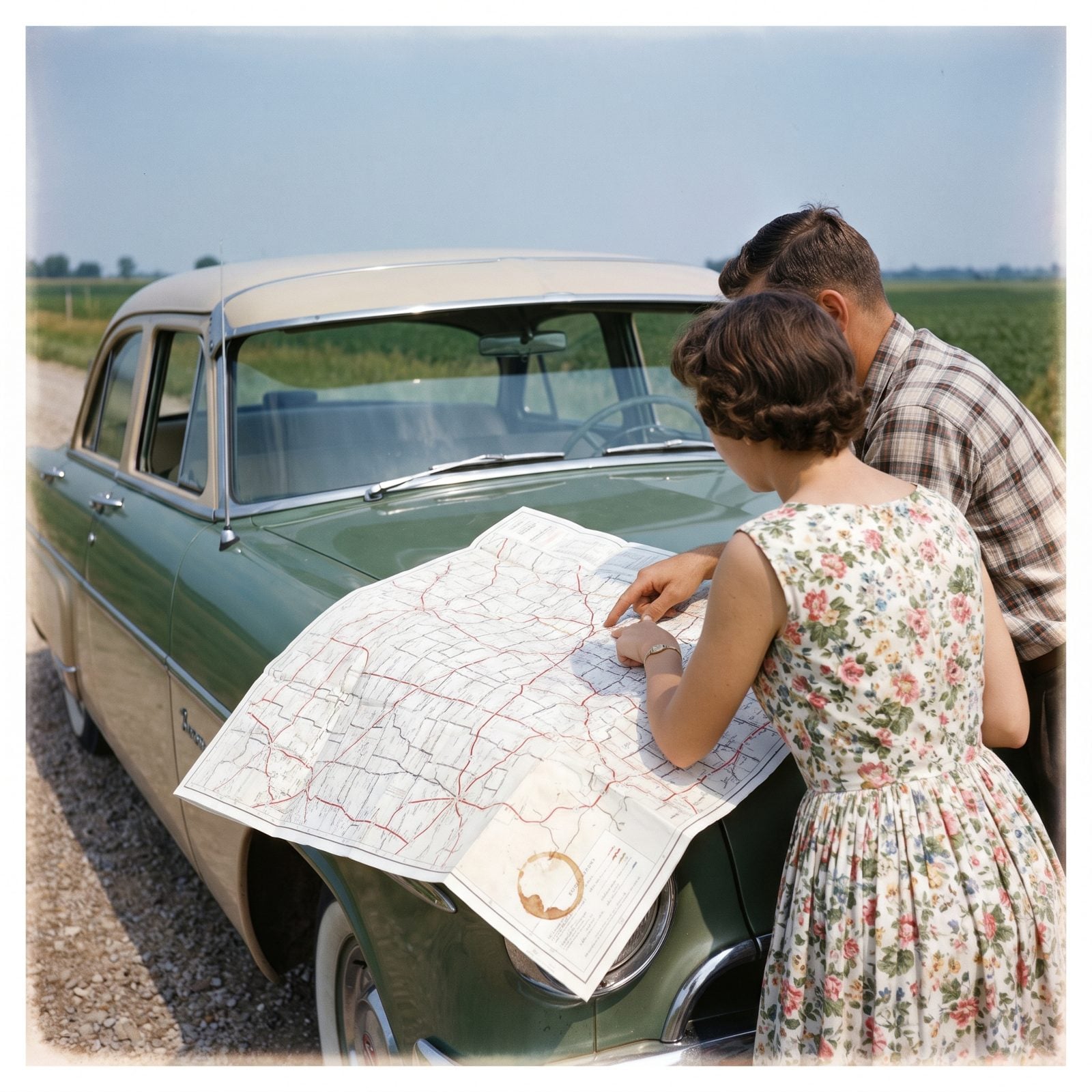
That map on the hood is the whole trip in one object. Nobody knew where they were, not exactly — they knew roughly, which was close enough, and they argued about it over a windshield caked with dead bugs.
What the photo really documents is that getting lost was part of the deal. A wrong turn cost you forty miles and a gas station conversation. You planned at the kitchen table with a fat atlas, then you prayed. No voice told you to make a legal U-turn.
41. Burma-Shave Signs Ticking Past the Window
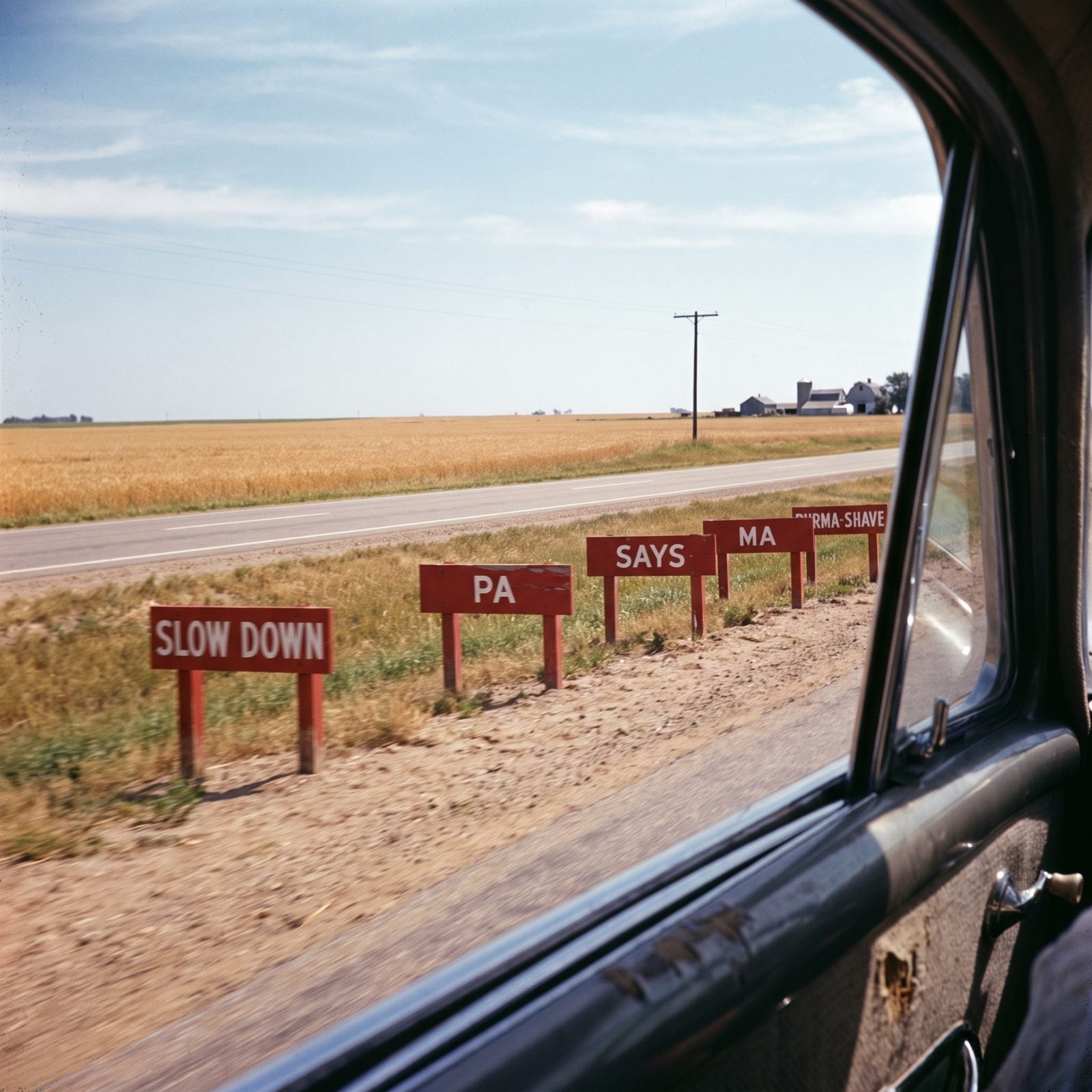
You read the road back then, not a screen. It talked to you one little red sign at a time, and the whole family chanted the lines out loud before the punchline arrived on sign number five.
Catch those signs in the corner of an old photo and you’ve captured something that’s completely gone: entertainment that required you to look out the window. The car was quiet except for the engine and whoever was reading ahead. Kids watched for the next set the way they’d later watch for a loading bar.
Burma-Shave made highway advertising into a group recitation, and then it just vanished when the interstates got too fast to read.
40. The Uniformed Attendant at the Pump
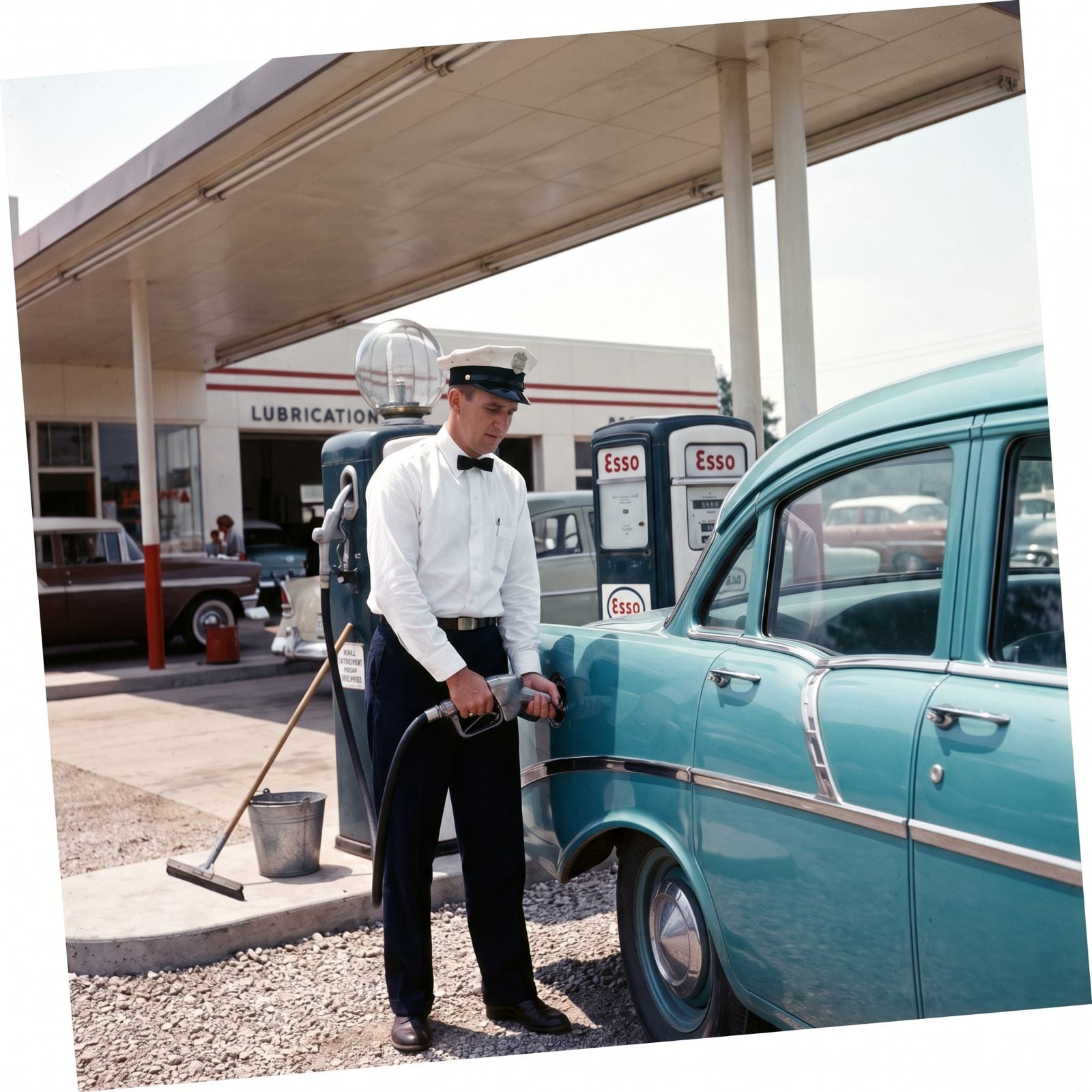
Notice who’s holding the nozzle. Not anyone from the family. A man in a pressed uniform and a cap, and while he filled the tank he also checked your oil, cleaned your windshield, and topped off the radiator. You never left the seat.
Service like that disappeared so gradually most people can’t name the year it went. The photo freezes the moment when buying gas was a small ceremony performed on your behalf — you rolled down the window, said “fill it up,” and that was your entire job.
39. The Family Lined Up Beside the Wood-Paneled Wagon
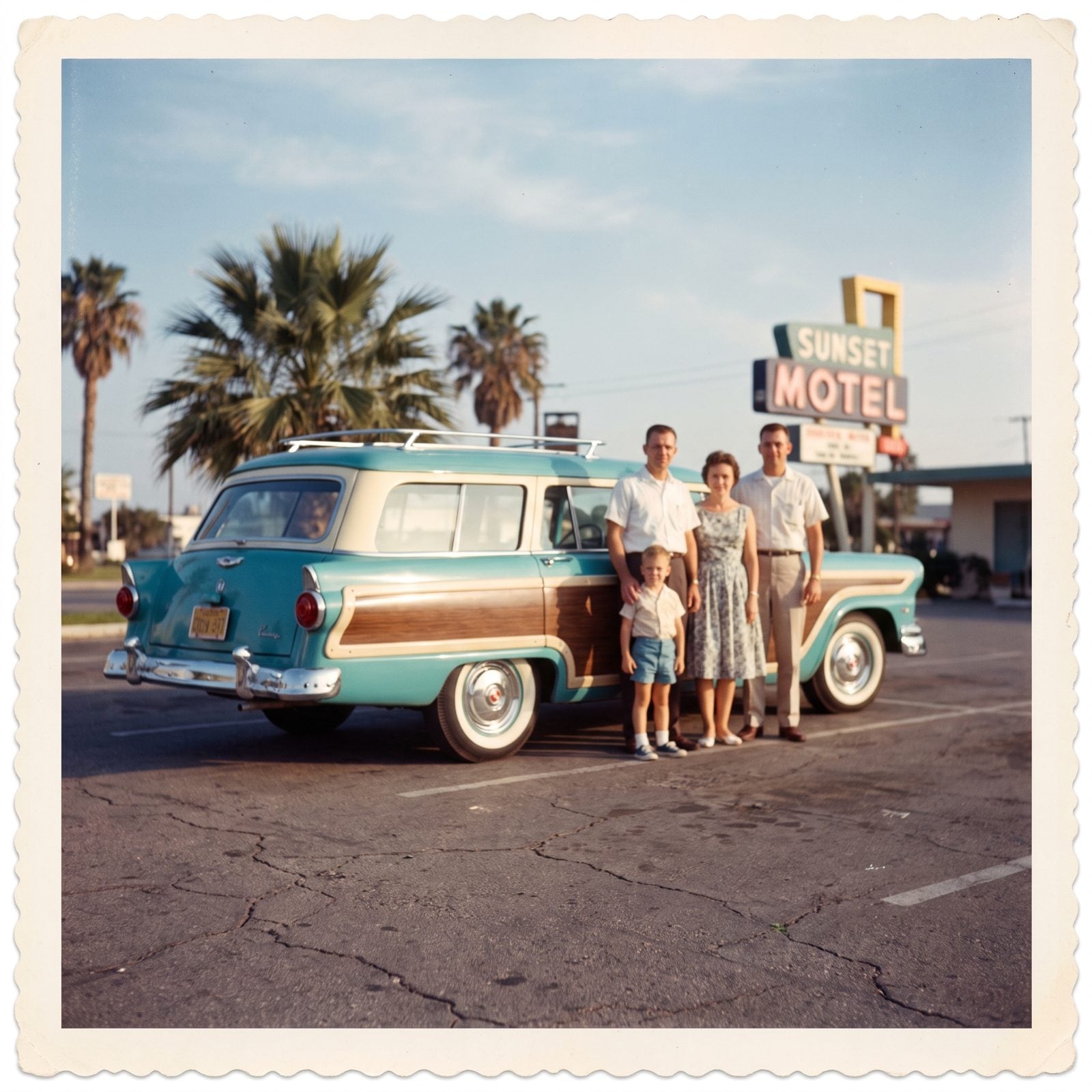
The wood paneling wasn’t wood. It was vinyl appliqué over steel, an idea borrowed from the real timber-bodied “woodie” wagons of the 1940s, and for a stretch there it was about the most American thing a family could own.
That lineup beside the car is the posed shot every family took. Everyone squinting, dressed nice because you dressed up to travel. What it really records is a vehicle built around the idea that a family moves as a unit — room in the back for coolers, suitcases, and two kids lying flat pretending to sleep.
38. Luggage Strapped Straight to the Roof
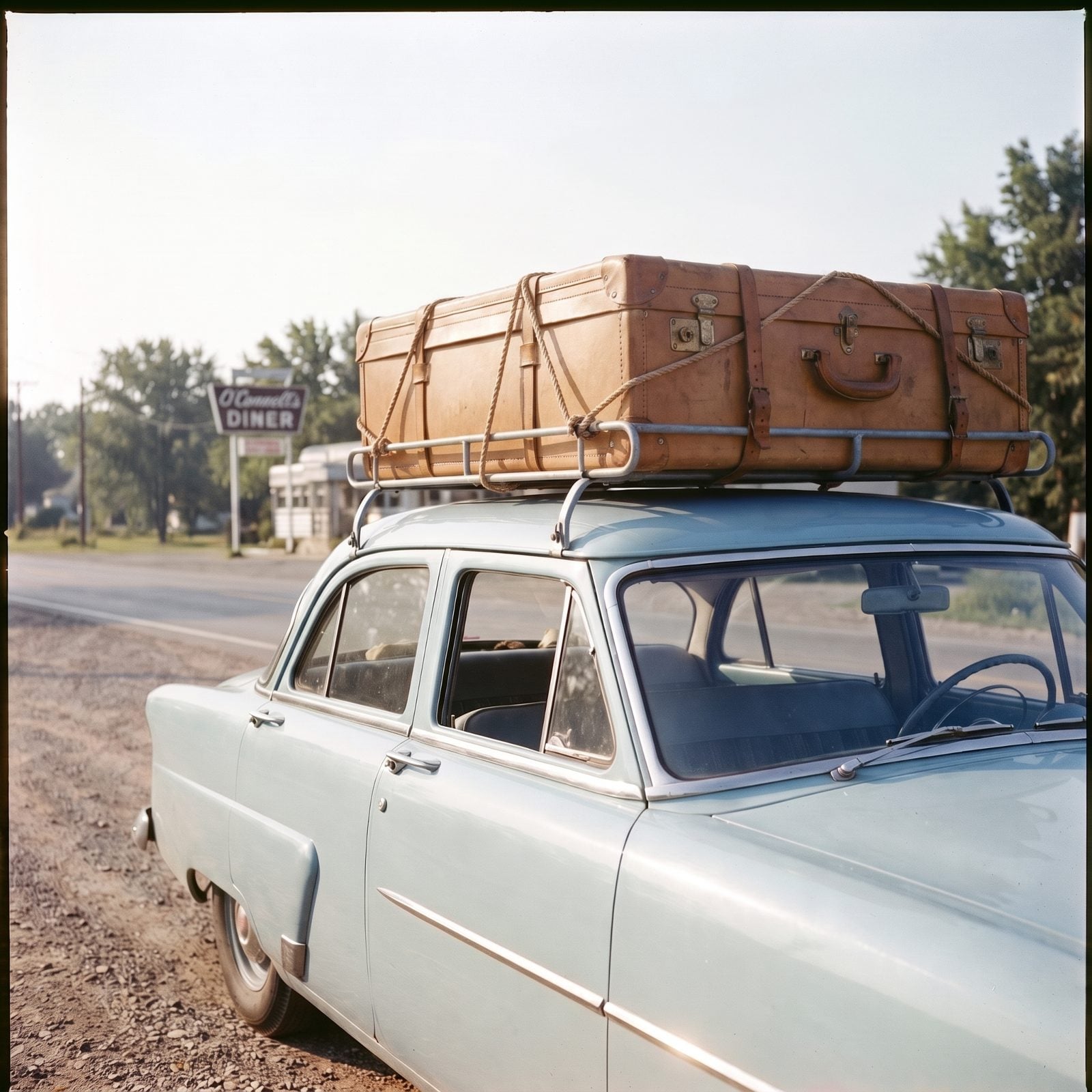
Look at how it’s hung. Rope. Leather straps. A chrome roof rack bolted to a pale blue 1950s sedan. No molded plastic box, no quick-release clamps — just one big leather suitcase knotted down for the road ahead.
That single big case reminds you trunks were small and families once lashed bags like this to the roof for two weeks away. The case is hard-sided and scuffed, its leather straps buckled tight, and the car sits parked on a gravel shoulder, rope crisscrossing the case and good knots keeping it all on the rack.
37. The Canvas Water Bag Swinging From the Bumper
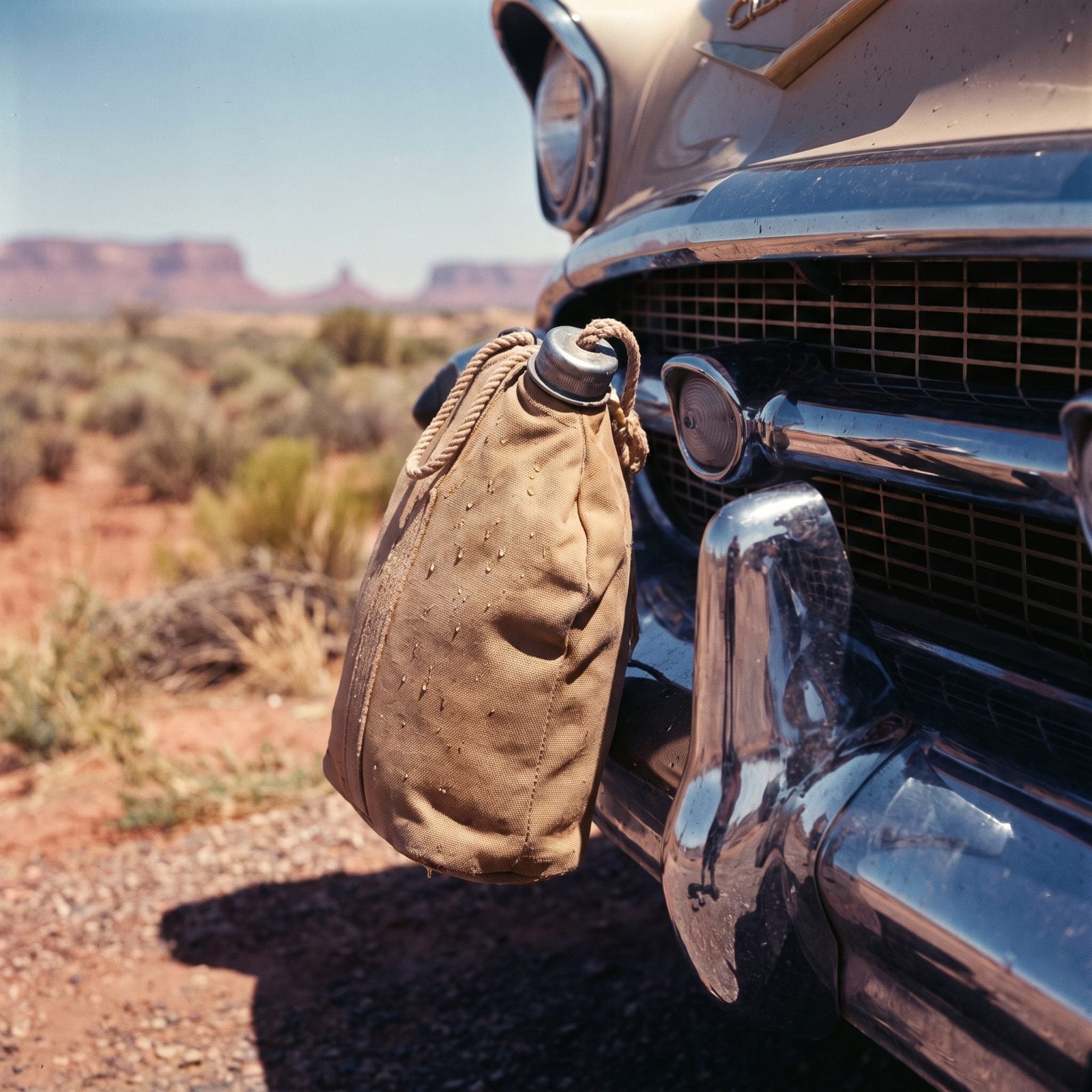
Most people under sixty have no idea what that sagging canvas bag on the bumper even is. It’s a water bag, and it hung there on purpose. The canvas sweated through, the breeze pulled the moisture off, and the water inside stayed cool straight across the Mojave.
It was insurance, too. Cars overheated crossing the desert, and a bag of water on the front end could mean the difference between a steaming radiator and a stranded family. Spot one in a photo and you’ve found proof the trip crossed real country, back when air conditioning was an option most cars skipped.
36. The Picnic Spread at a Highway Pull-Off
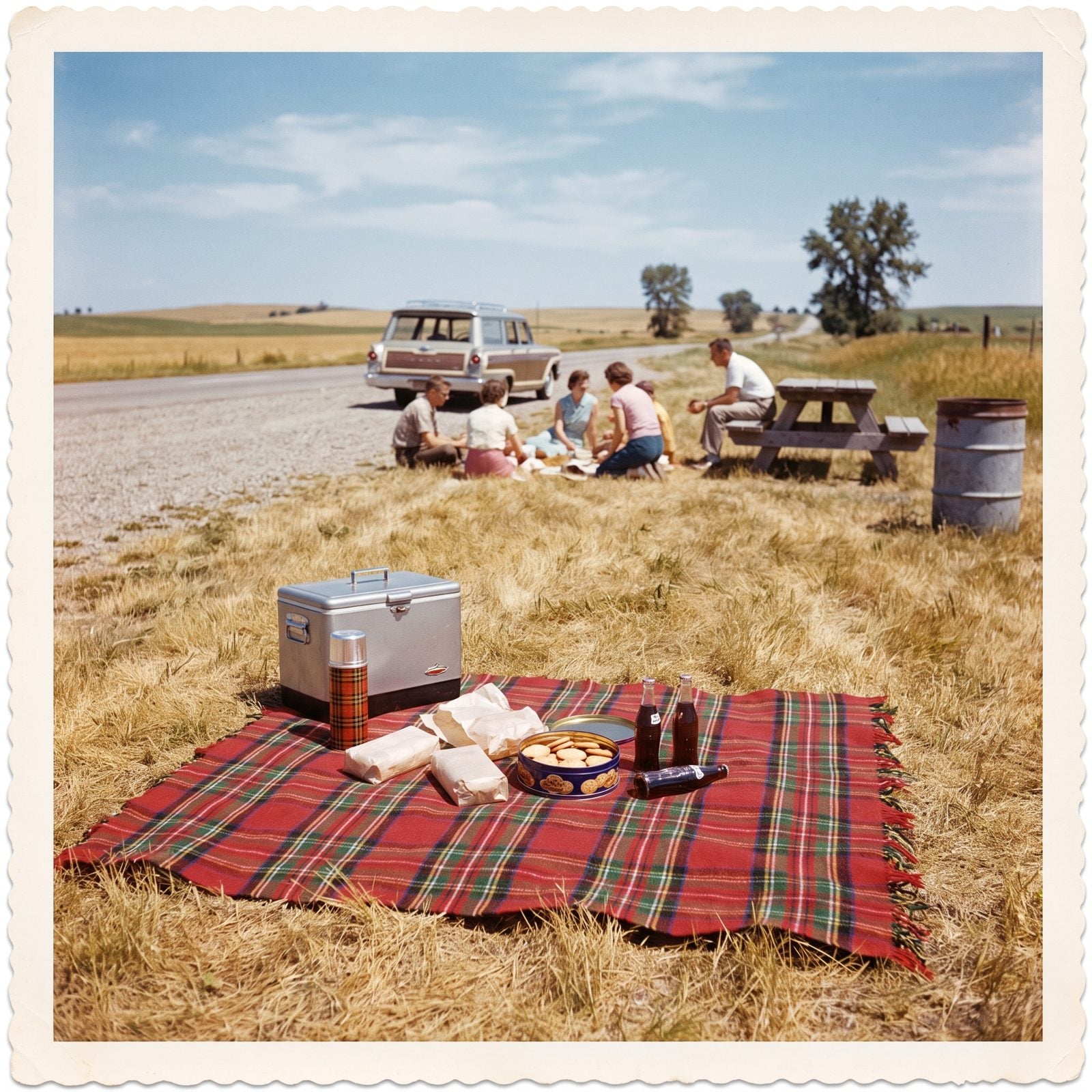
Nobody was looking for a drive-through. The cooler came from home, packed the night before, and lunch happened wherever there was a shaded pull-off and a patch of grass. Waxed paper, a thermos, bottles of soda going warm in the sun.
That blanket on the ground documents a vacation economy that ran on preparation instead of convenience. Fast food existed, but you didn’t trust it for a whole trip, and highway departments planted those roadside tables and trash barrels precisely because everyone ate this way.
Eating lunch on the side of the road wasn’t roughing it. It was just how you ate when the nearest restaurant was ninety minutes off.
35. Kids Rattling Around the Back Seat With No Restraints
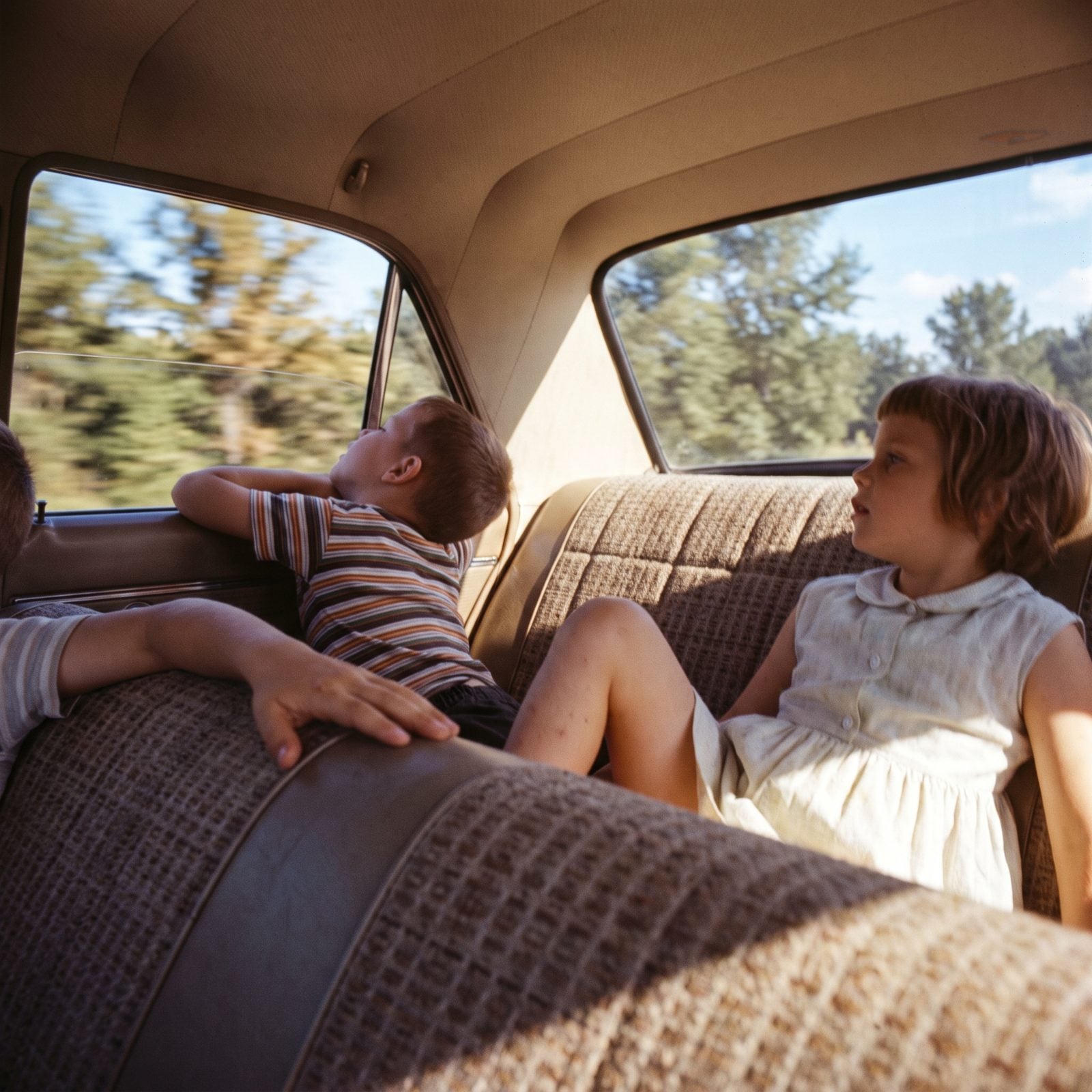
This one stops people cold. Kids sprawled across the back bench, one standing to see out the window, a toddler on an adult’s lap up front. No belts. No car seats. The rear window ledge was a bed.
It’s the detail that dates a photo instantly, and it reminds you how much quietly changed. Seat belts weren’t required equipment in American cars until the mid-1960s, and child seats as we know them came much later. The back seat was a living room on wheels, and nobody thought twice.
34. The Neon VACANCY Sign Glowing at Dusk
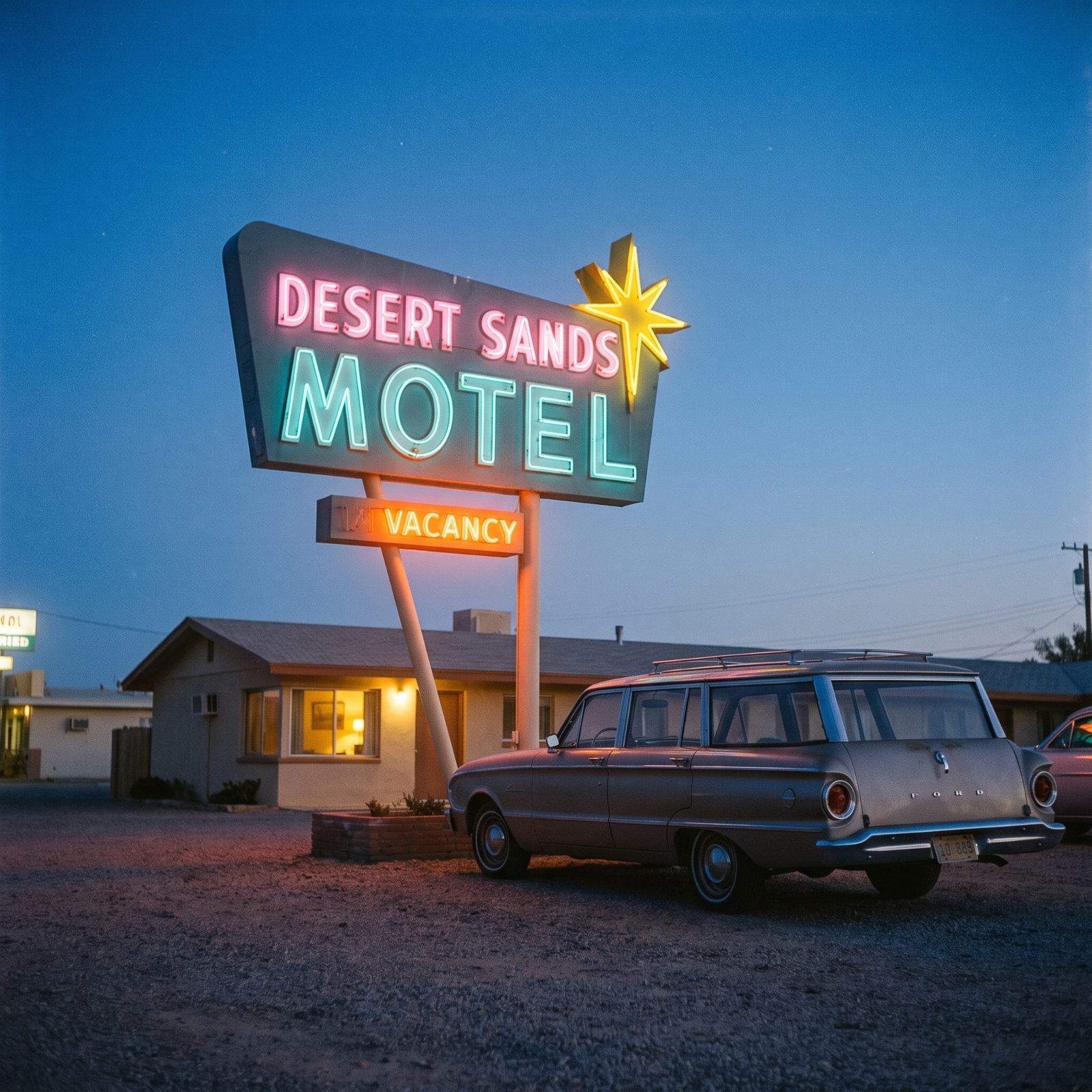
You didn’t book ahead. You drove until you were tired, then watched for that neon word lighting up in the dusk: VACANCY. If the NO was dark, you had a bed. If the NO glowed, you kept driving.
The sign in the photo is doing a job no website does now. It was the booking system, visible from a quarter mile out, built in loud neon to catch a tired driver’s eye. Families chose a motel by the look of its sign and whether it had a pool.
33. The Single-Story Motor Court With a Car at Every Door
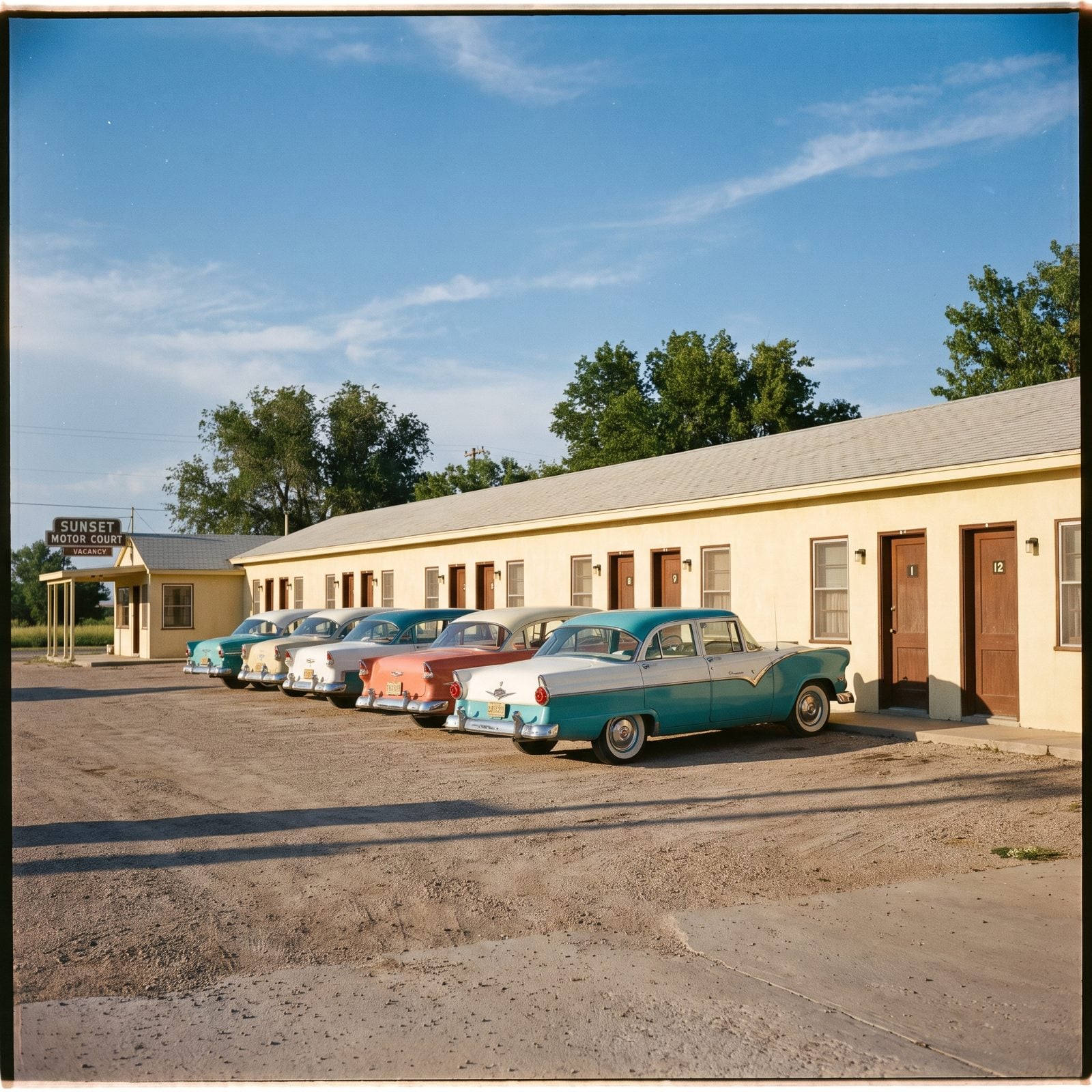
Count the doors, then count the cars. One each, parked nose-in, right outside your room. That was the entire selling point of the motor court: you pulled up, unloaded without a lobby or an elevator, and your car sat ten feet from your pillow.
The word “motel” is literally motor plus hotel, and this low single-story layout was built for the car first and the guest second. No corridors, no bellhop, no checkout line. You parked at your door and you were home for the night.
These spread across the country in the postwar boom, and then the interstates and the chains squeezed most of them out. A few survive, lovingly kept. The rest live on only in the corner of a vacation snapshot, cars lined up like they’re waiting for a trip that’s long over.
32. Metal Motel Keys on Oversized Plastic Fobs
🔥 Would you like to save this?
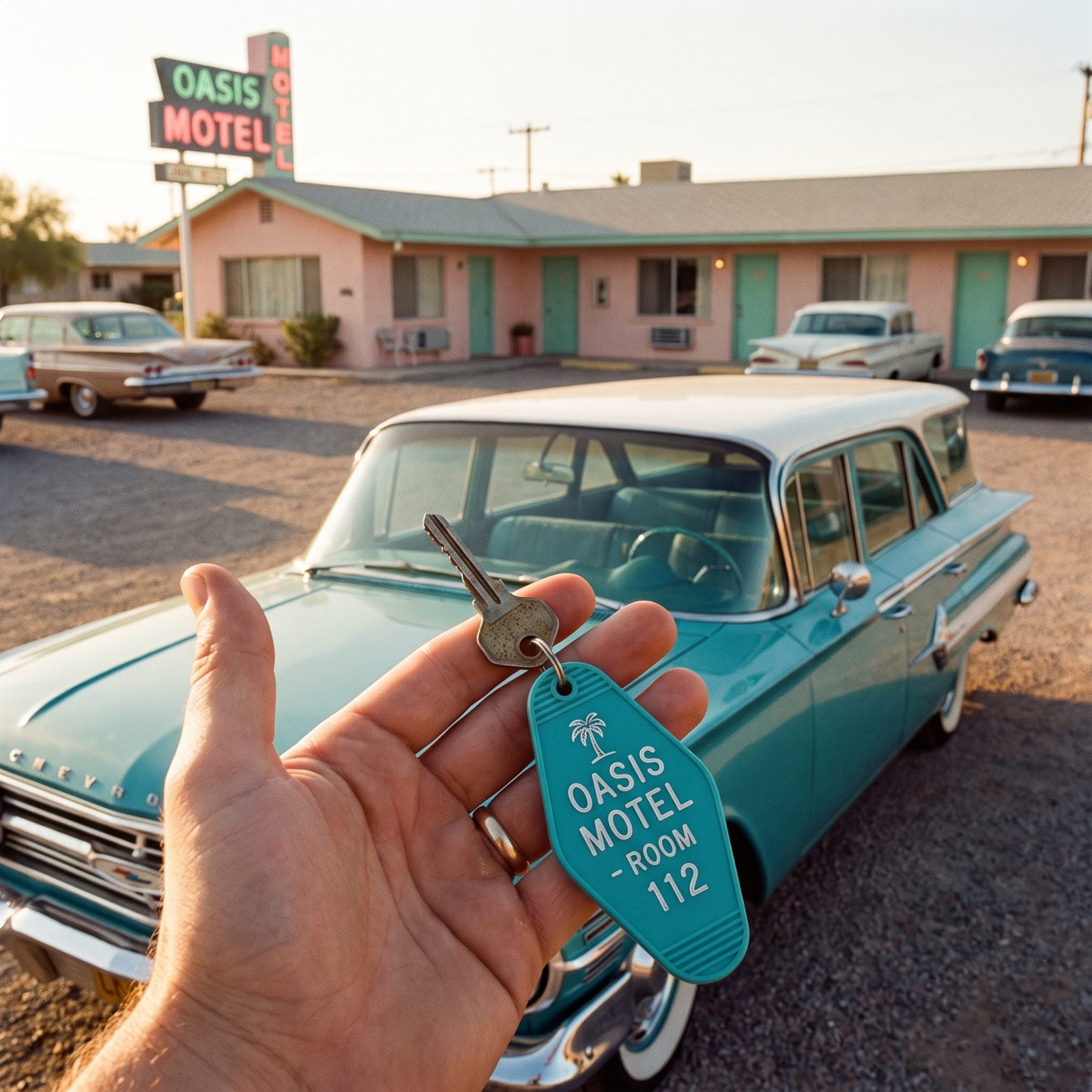
That hefty plastic diamond hanging off a brass key wasn’t a style choice. It was a guilt trip. Motels made the fob enormous and the room number impossible to hide, all so you’d remember to drop it at the front desk instead of pocketing it on your way out of town.
Look close at old lot photos and you’ll spot them dangling from a finger beside the car door. No plastic cards, no magnetic stripes, no app buzzing you into a numbered box. A real key, warm from someone’s palm, for a real lock.
31. Coin-Operated Magic Fingers Beds
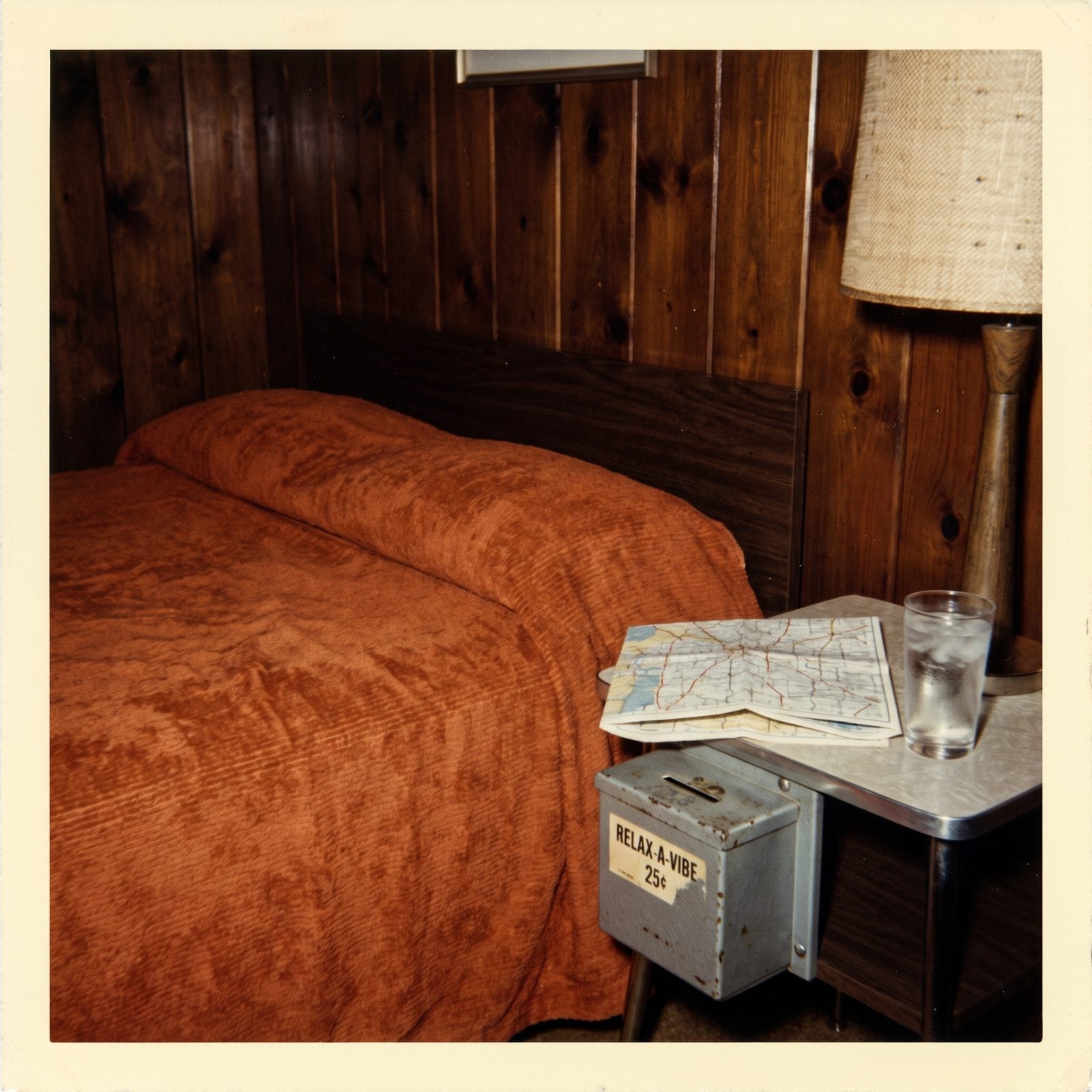
A quarter bought you fifteen minutes of a mattress that buzzed like a dryer with a shoe in it. Magic Fingers. The little coin box on the nightstand counted as in-room luxury once, and plenty of vacation photos caught it lurking beside the lamp without anyone meaning to document a thing.
Nobody installs these anymore. We traded the shimmy for a sound machine app and a mattress topper. But there’s something honest about paying a quarter to be rattled to sleep in a strange town.
30. Hotel Rooms With Heavy Rotary Telephones
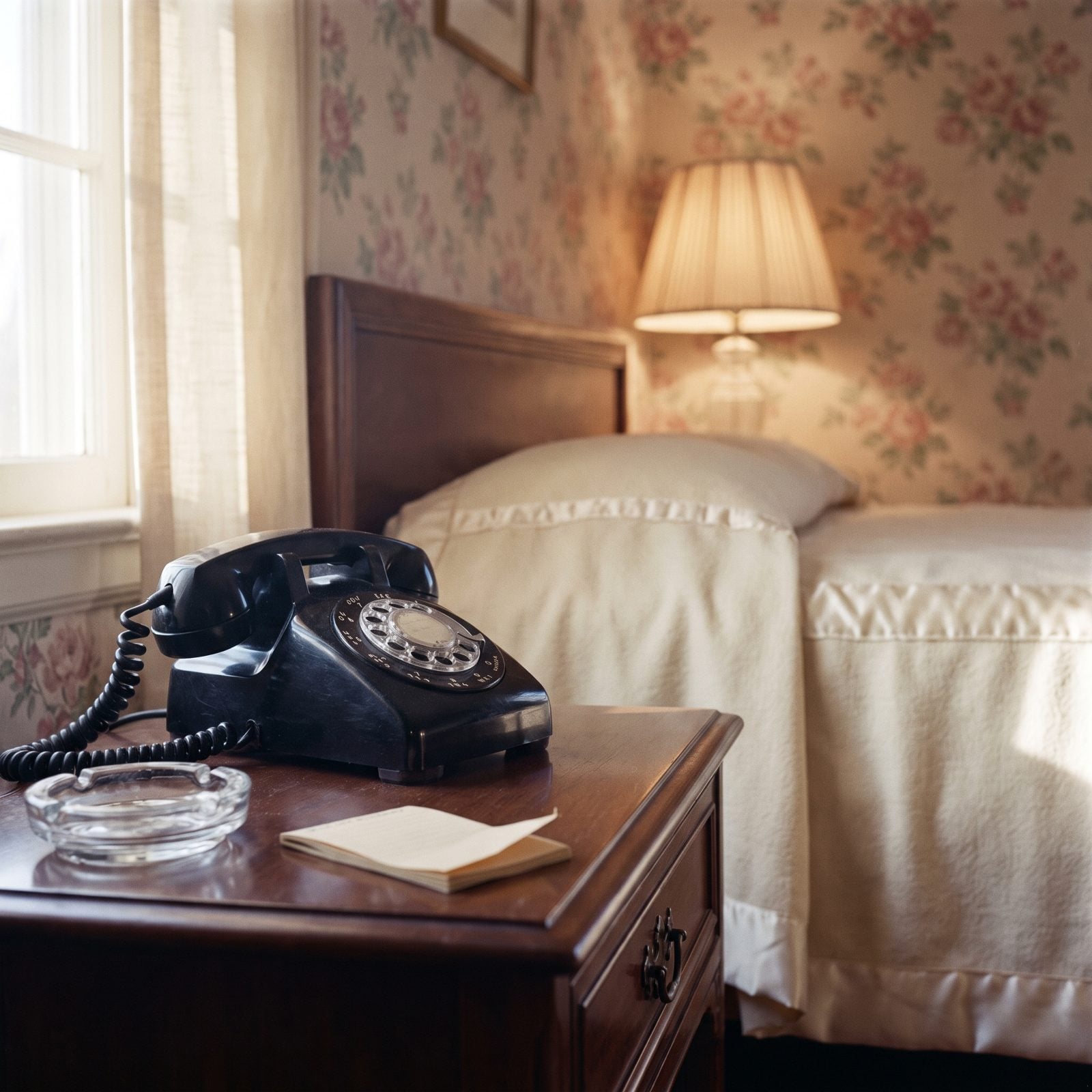
The phone weighed about as much as a bowling ball and lived bolted to the nightstand. In old room photos it sits there heavy and black, the coiled cord puddled on the wood, a little printed card tucked underneath telling you to dial 9 for an outside line.
You called the front desk for a wake-up. You didn’t carry the world in your pocket, and the room was a place you actually left. Hard to explain any of this to anyone who’s never heard a dial tone purr.
29. Train Porters in Pressed Formal Uniforms
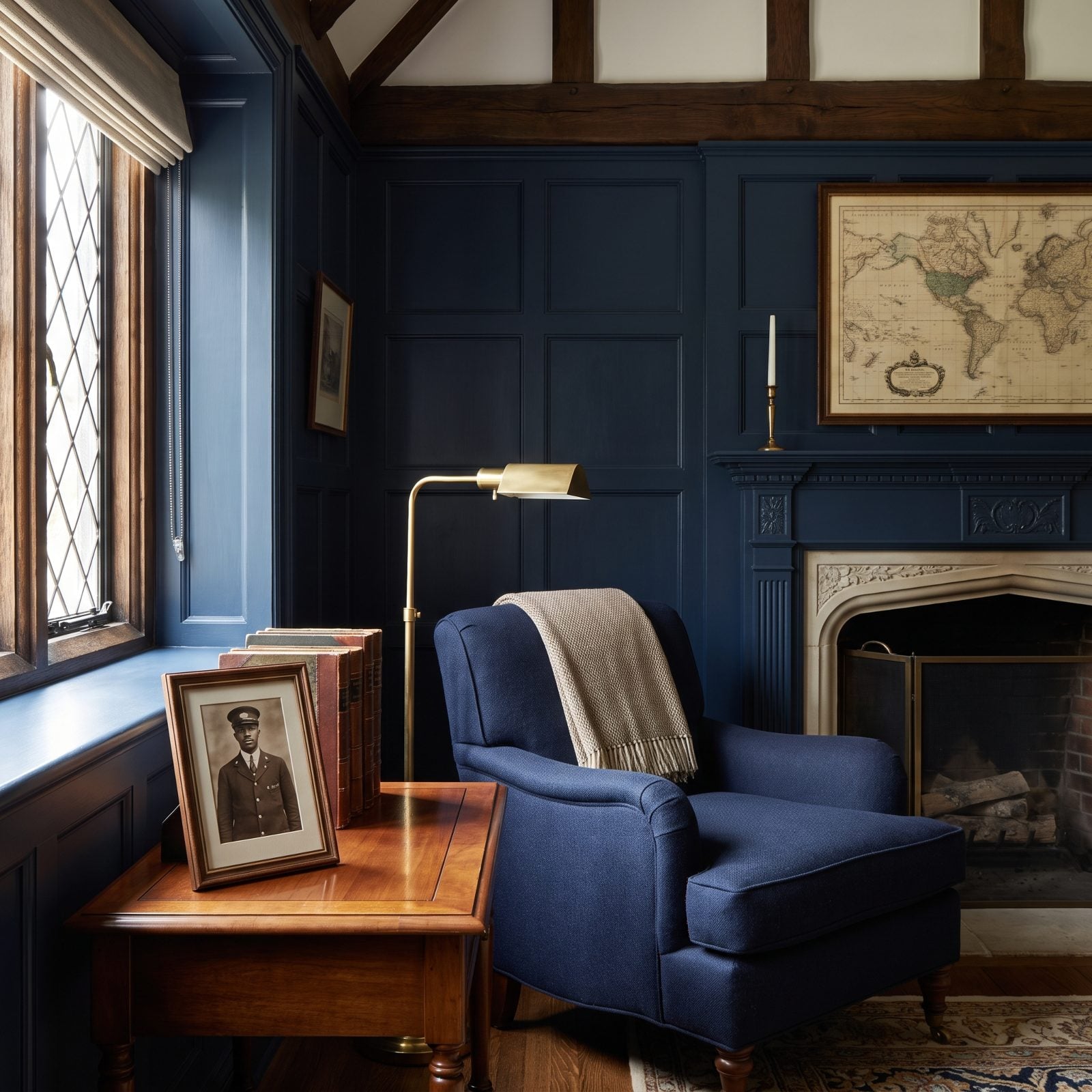
White gloves. A pressed jacket with brass buttons, a cap set exactly level. The porter who handed you up the steps and found your berth was part of the whole ritual of going somewhere, and plenty of family photos caught him mid-reach for a suitcase, half-turned and dignified.
We don’t dress service like an occasion anymore. The uniform said this trip matters, you matter, let me take that — a whole grammar of courtesy, pressed and starched, standing on a platform that mostly doesn’t exist now.
28. Dining-Car Tables Set With White Linen and Real China
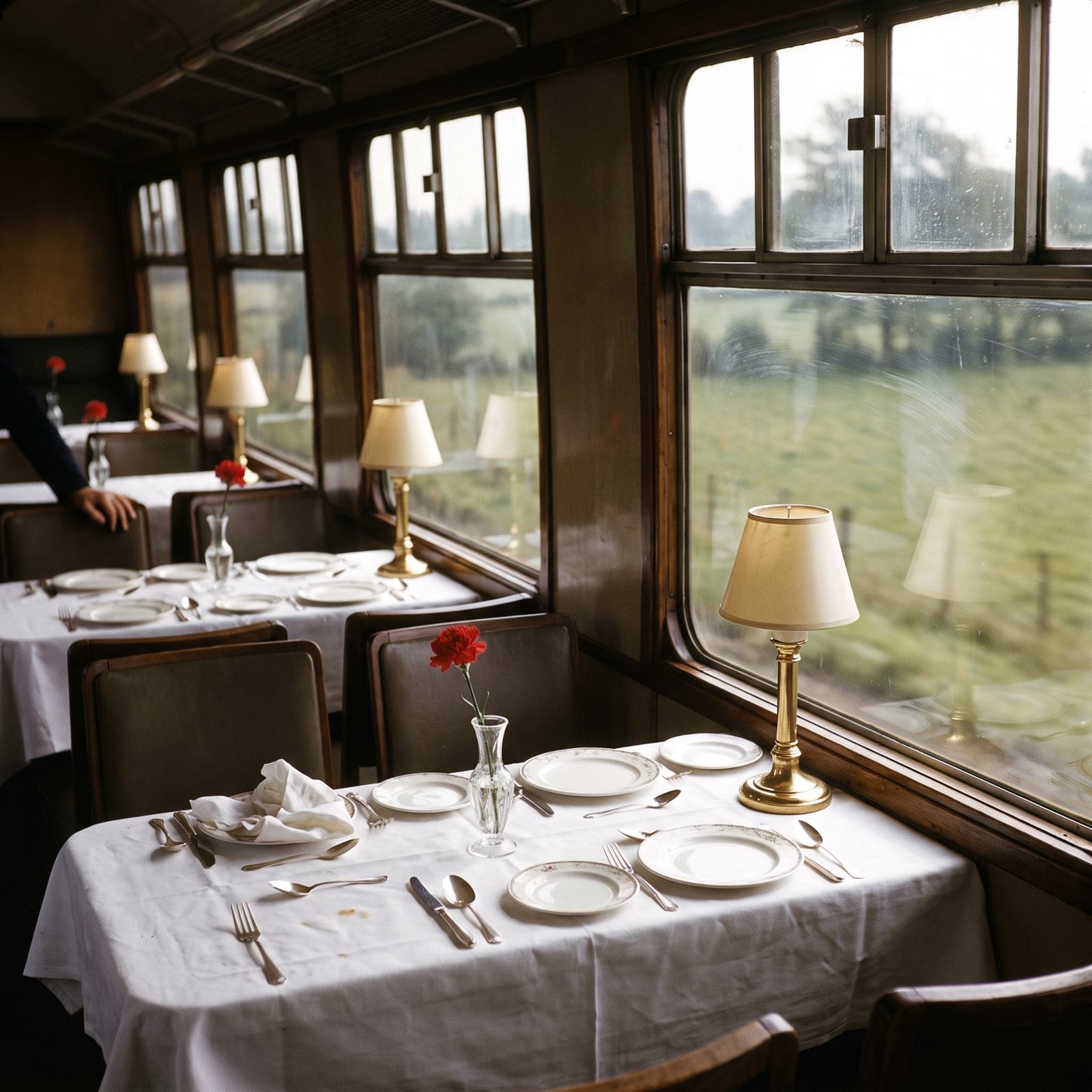
Linen on a moving table. China that didn’t slide, a fresh carnation in a bud vase while the countryside blurred past the window at highway speed. The railroad dining car treated a meal like it deserved cloth and silver, and the photos prove it wasn’t nostalgia inventing a golden age.
Compare that to a shrink-wrapped sandwich at a gate. I’m not saying everything got worse. But something got lost when eating on the move stopped being an event and started being a refueling stop.
27. Families Waving From Open Train Windows
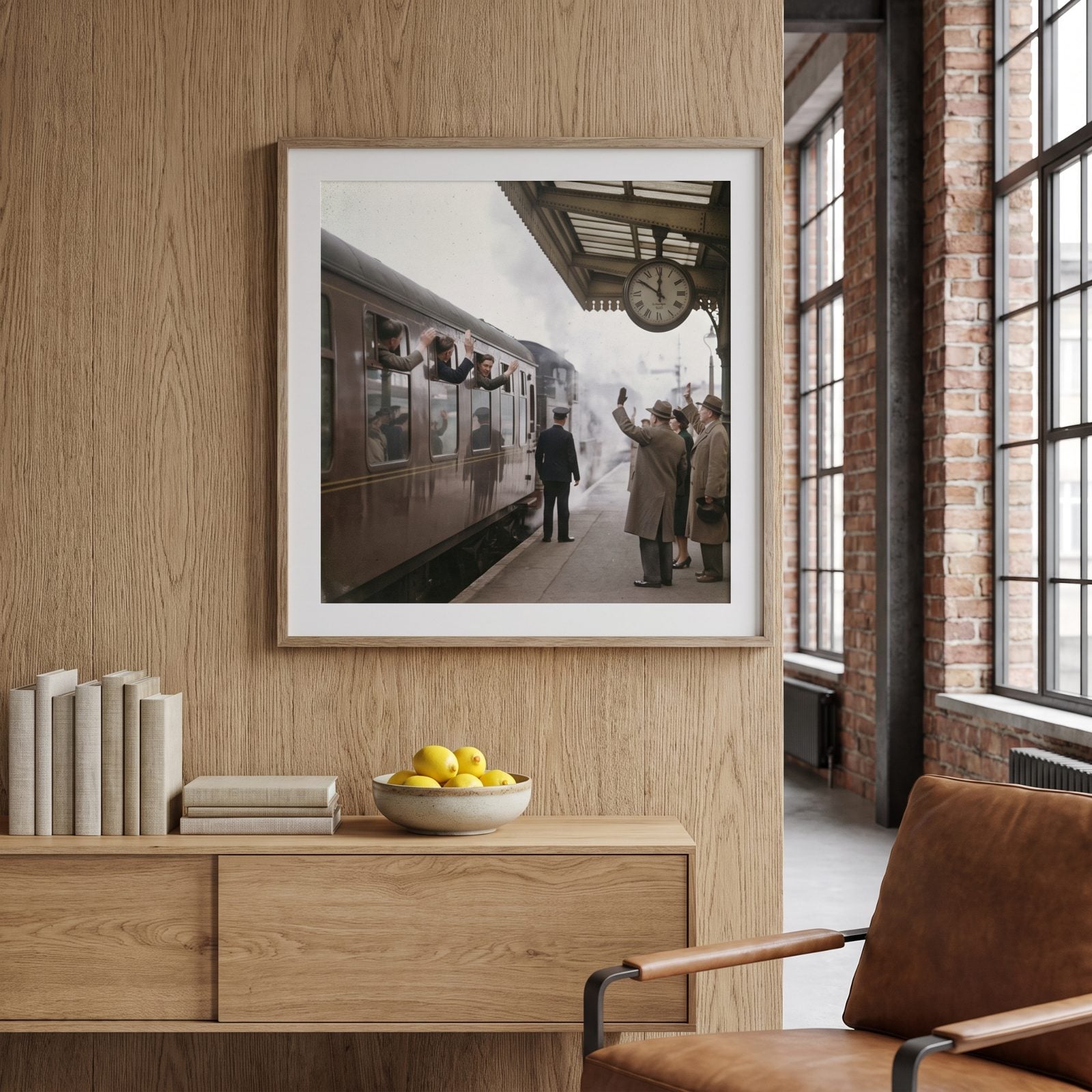
The window actually opened. You could lower it, lean out, and wave until the platform shrank to a dot. Half the goodbye snapshots from that era are blurred because the train was already pulling away when the shutter clicked.
Sealed cabins and pressurized air killed the leaning-out goodbye. Now you wave through tinted glass nobody can see through, then look at your phone. The open window made leaving physical — you felt the air change as the train found its speed.
26. Travelers Asleep in Pullman Berths
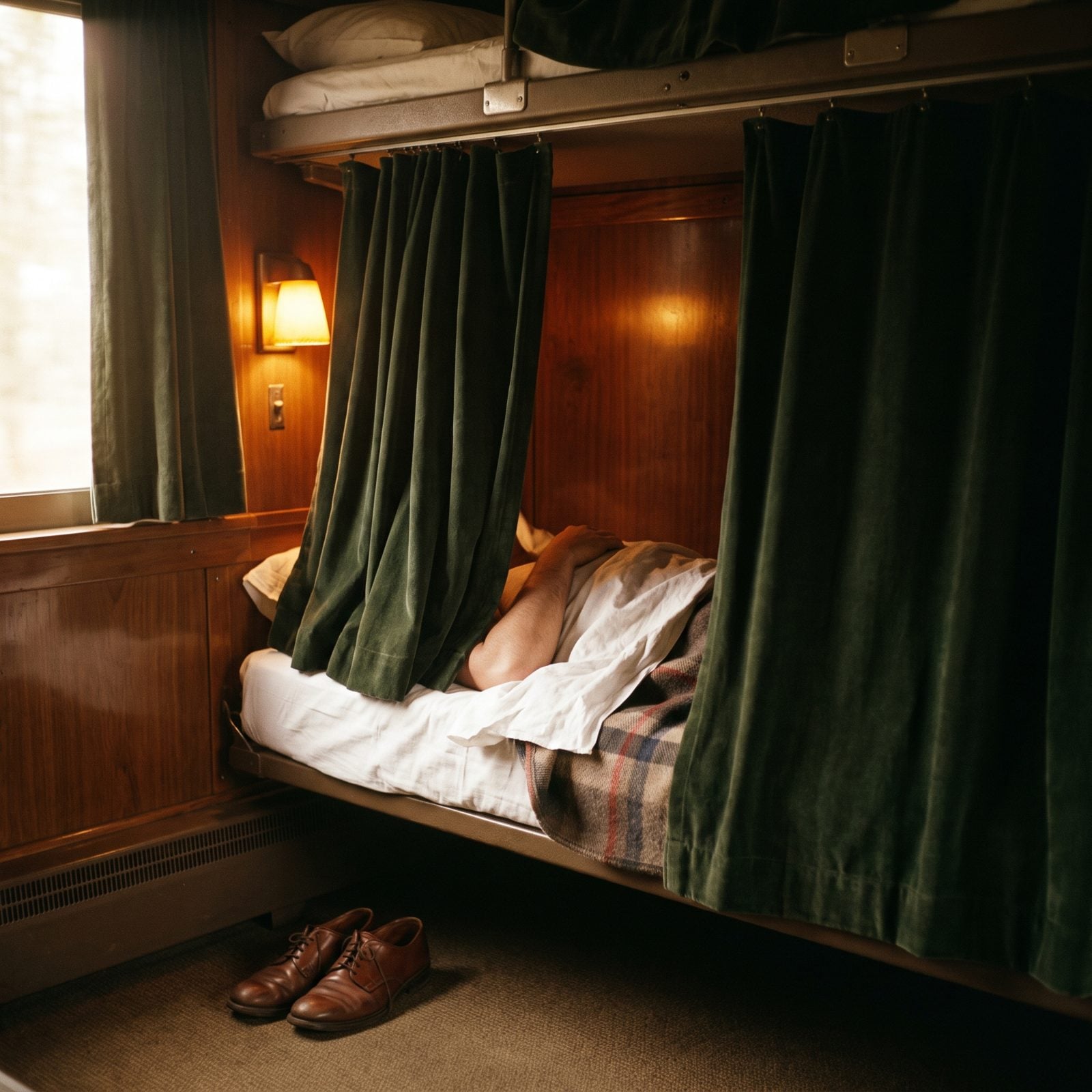
Heavy curtains, a narrow berth with real sheets, a little net hammock for your watch and glasses, and a reading lamp about the size of a teacup. You climbed in, pulled the curtain, and the train rocked you across three states while you slept.
Vintage photos of the Pullman berth feel almost secret, caught at night with a flash, shoes lined up on the floor below. We fly overnight now and call a cramped seat a win. The berth understood that getting there could be the good part.
25. Printed Rail Timetables Folded Into Coat Pockets
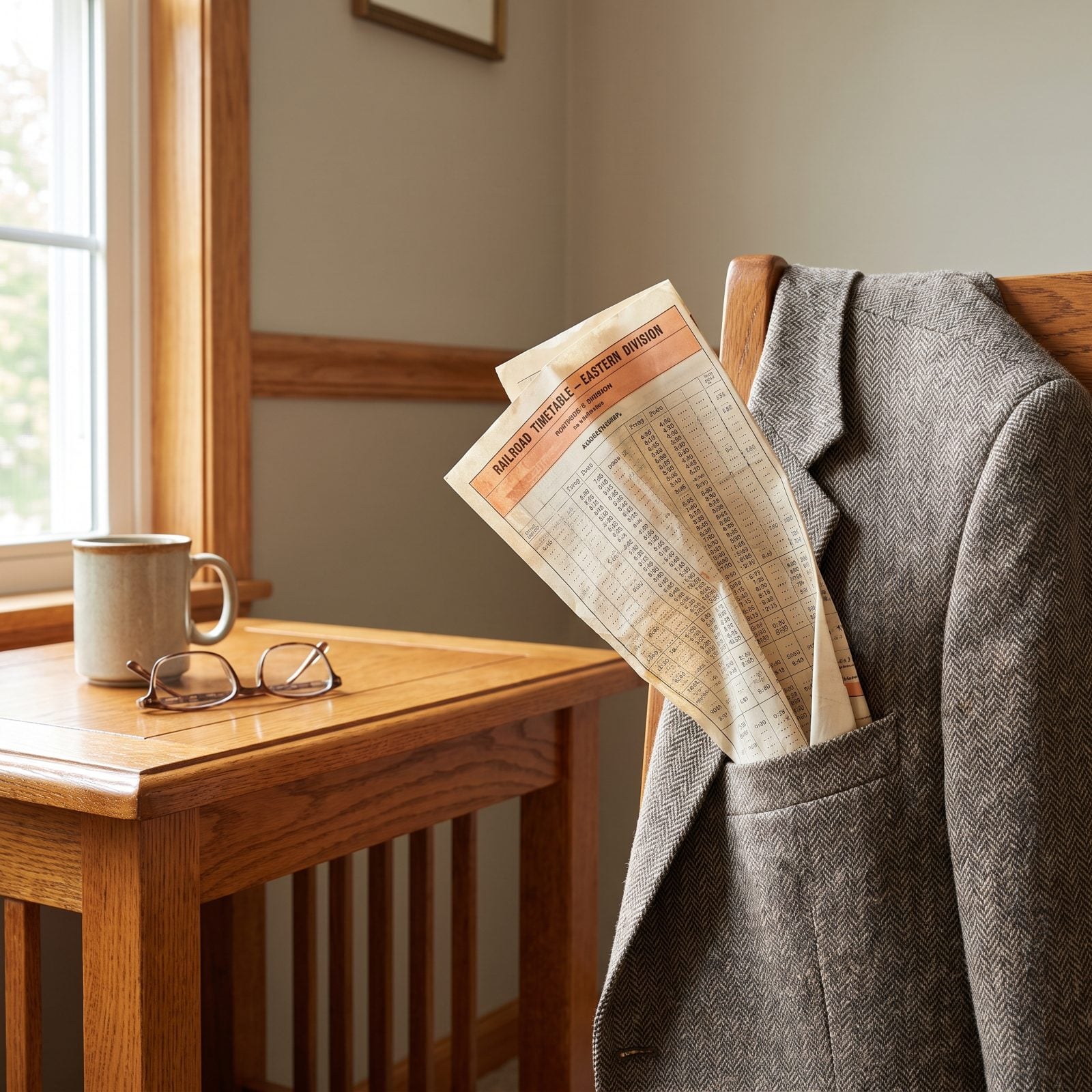
A folded paper schedule tucked in a breast pocket, soft at the creases from being opened a hundred times. You planned a connection by running your finger down a column of times, cross-checking the little footnote symbols nobody could decode without the key on the back.
No app refreshed it. No notification warned you. If the timetable said 4:12, you believed it and got there by four. We handed that whole skill over to a screen. The worn paper in old pocket shots was a kind of competence we gave away without noticing.
24. Observation Cars With Rear-Facing Lounge Seats
🔥 Would you like to save this?
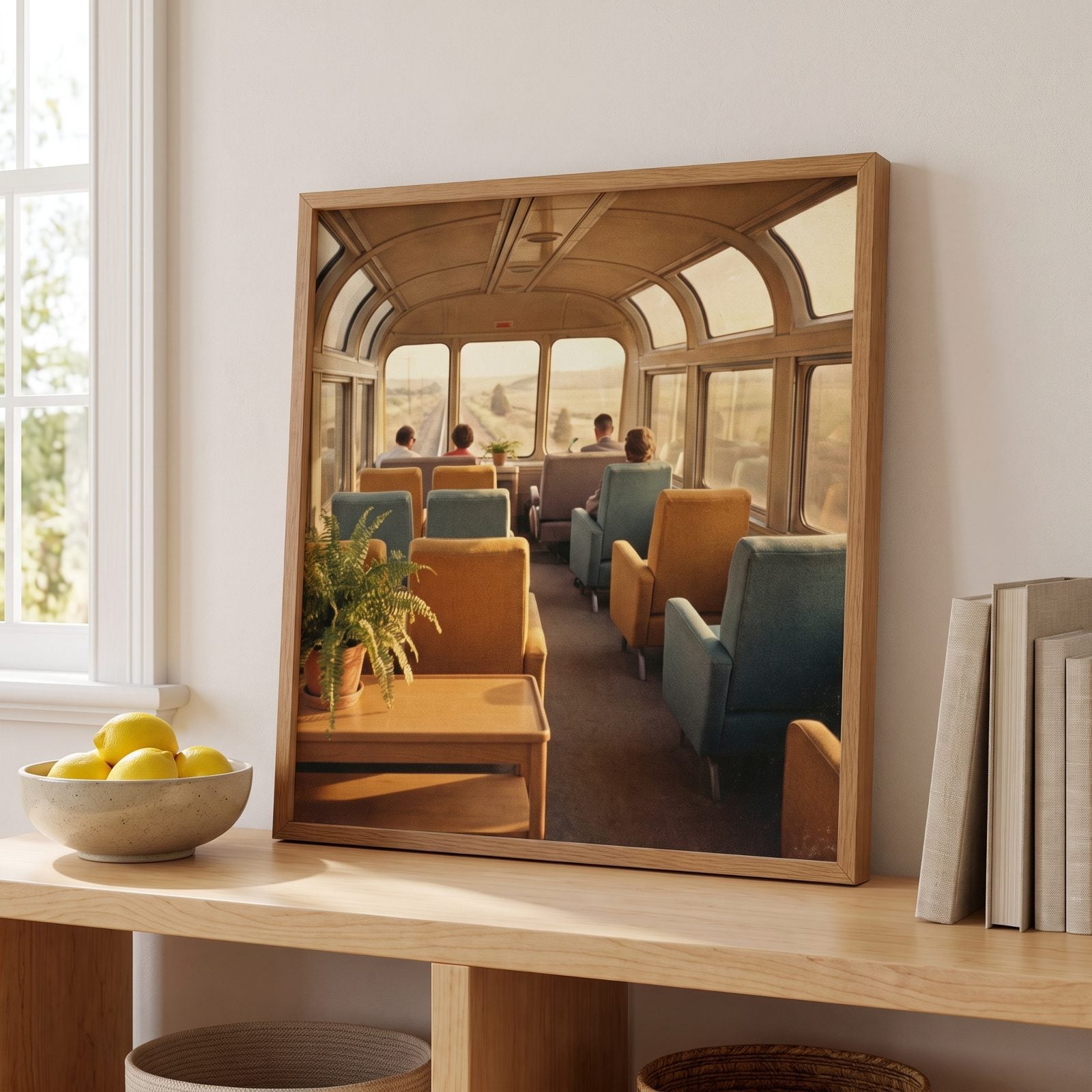
Chairs that faced backward on purpose. The observation car let you watch where you’d been unspool behind you, the two rails converging to a point on the horizon while people sat with a drink and simply looked.
There’s no equivalent now. We face forward, sealed in, racing to arrive. That rear-facing lounge understood a stranger idea — that the trip was worth watching even in reverse — and the snapshots from those glass-wrapped cars carry a calm you just don’t find in a departure-lounge photo.
23. Airline Passengers Dressed in Suits and Dresses
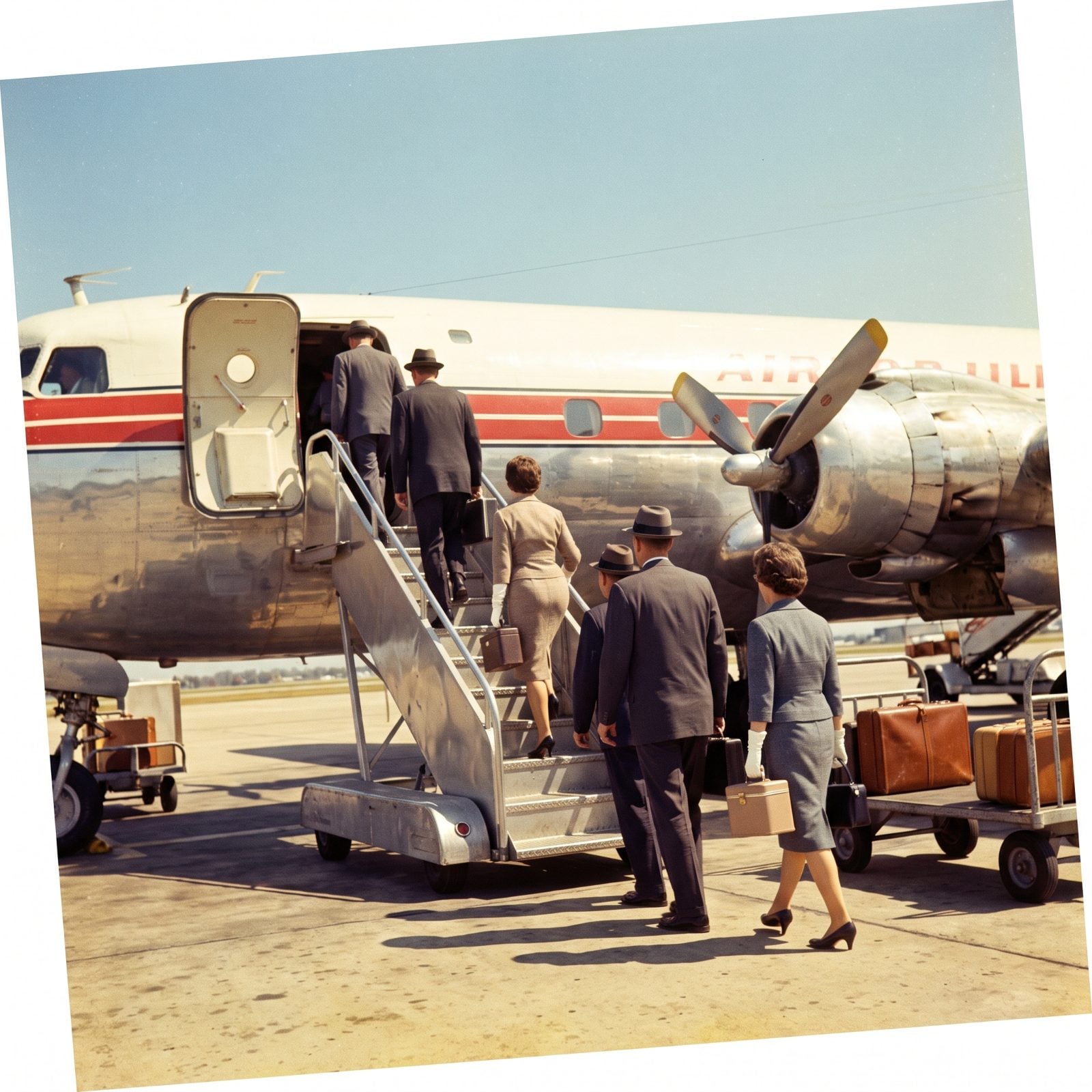
Tailored suit. Belted dress with gloves, polished shoes for a day spent sitting in a pressurized tube. Boarding a plane once meant dressing as if the flight itself were the destination, and the tarmac photos from that era read like a church crowd filing in.
Flying was rare and expensive, so you honored it by looking the part. There’s a real argument that dressing up made people behave better too. Hard to put your feet on the seatback in a good suit. We let the ritual go, and the cabin got exactly as casual as we did.
22. Paper Airline Tickets With Carbon-Copy Coupons
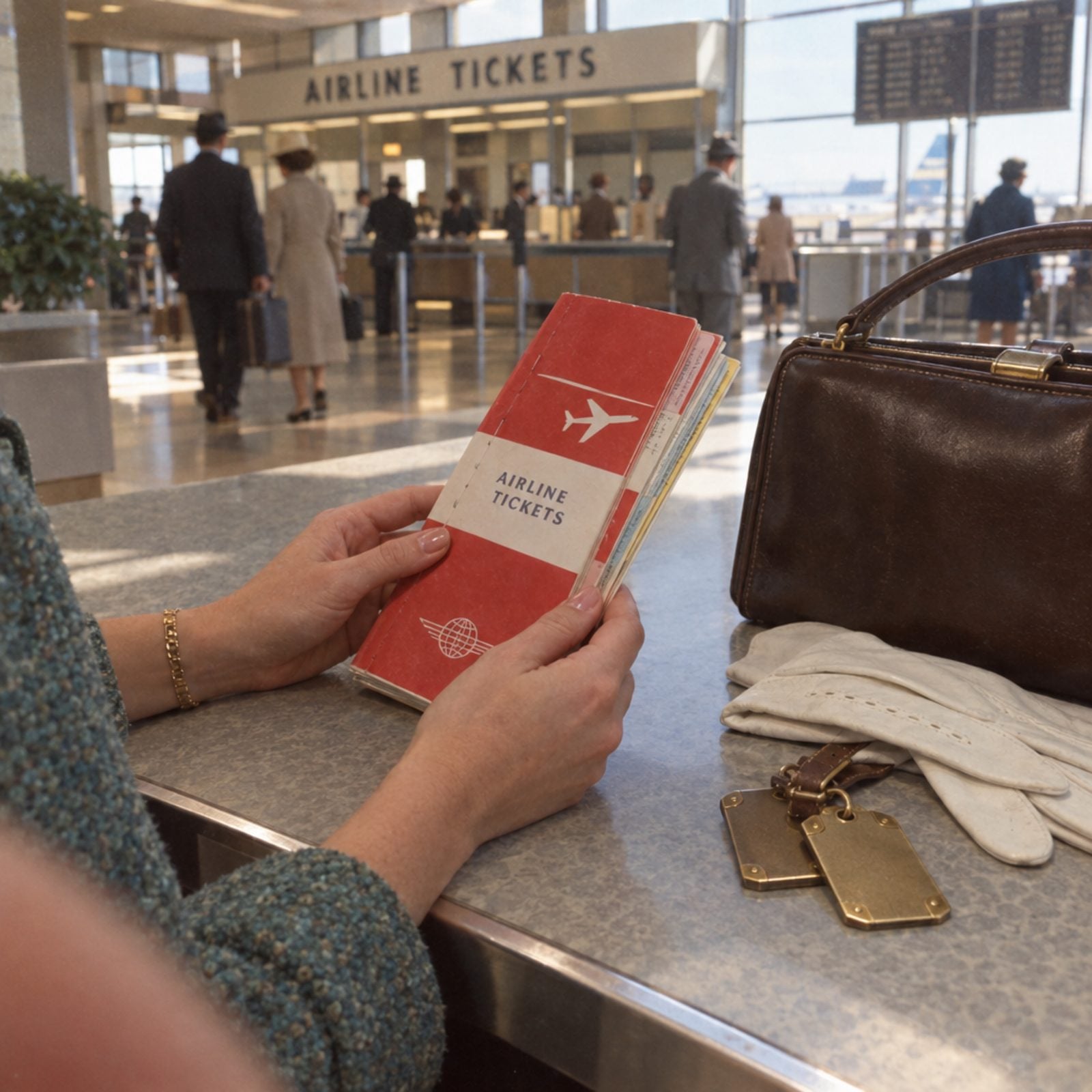
Look at the thickness of the thing. A flight ticket used to be a little booklet with each leg its own carbon coupon, and the agent tore one out as you went. Lose it and you had a real problem — no pulling it up on a phone, no reprint at a kiosk.
The photo captures something we forgot we had: the physical weight of a trip. You held your whole itinerary in your hands, smudged carbon and all, while the agent wrote your name by hand, stamped it, and stapled it together.
21. Airport Observation Decks Crowded With Spectators
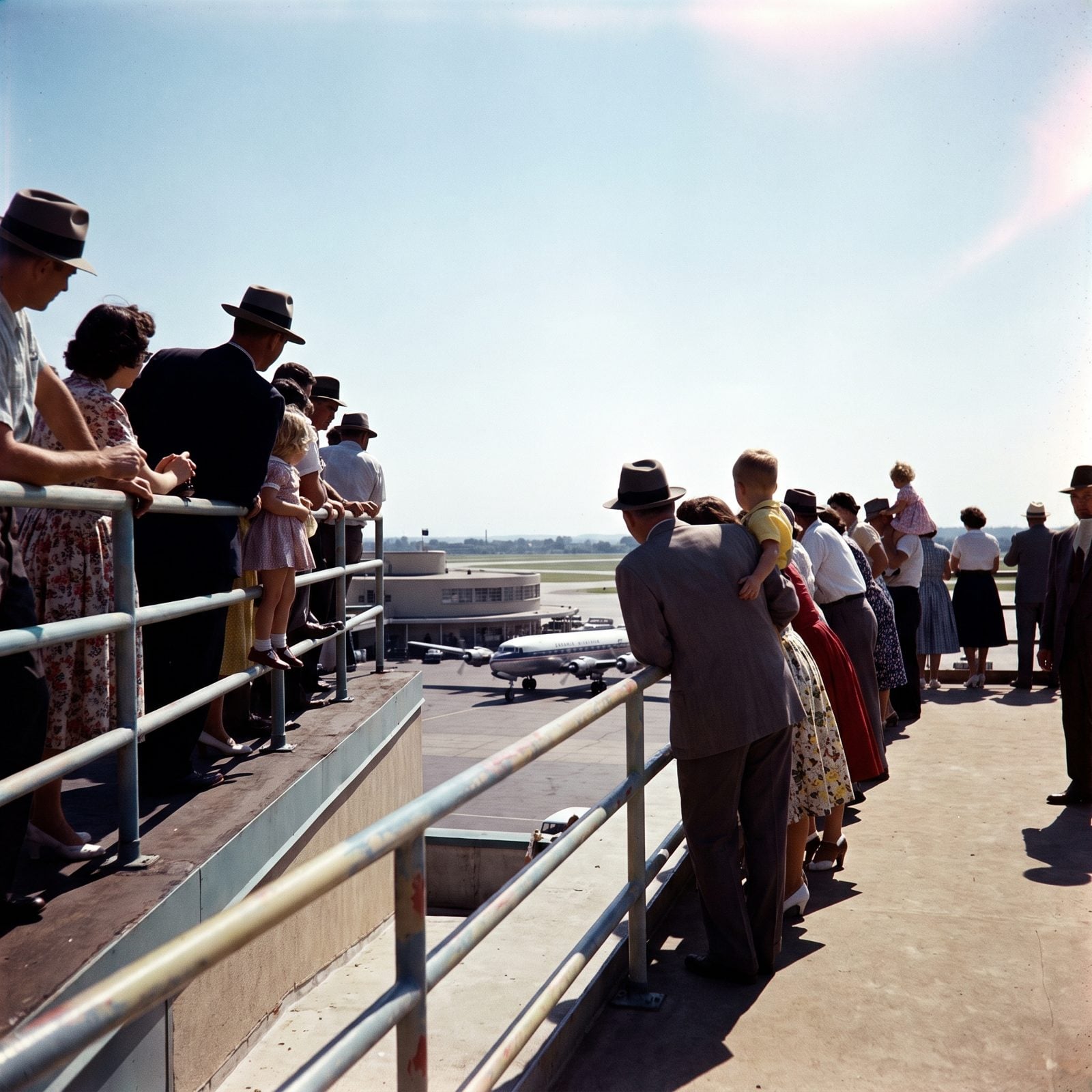
People drove to the airport for fun. No ticket, no flight, just a rooftop deck with a railing and a clear view of the apron where the planes came and went. Whole families would pack a thermos and make an afternoon of it, kids pressed against the rail, grown-ups pointing at tail numbers.
The deck itself tells you how we felt about flight back then. It was a spectacle worth the drive. Security killed most of these decks, and the handful that survived got fenced off and emptied of everything that made them fun.
20. Families Walking Across the Tarmac to Board
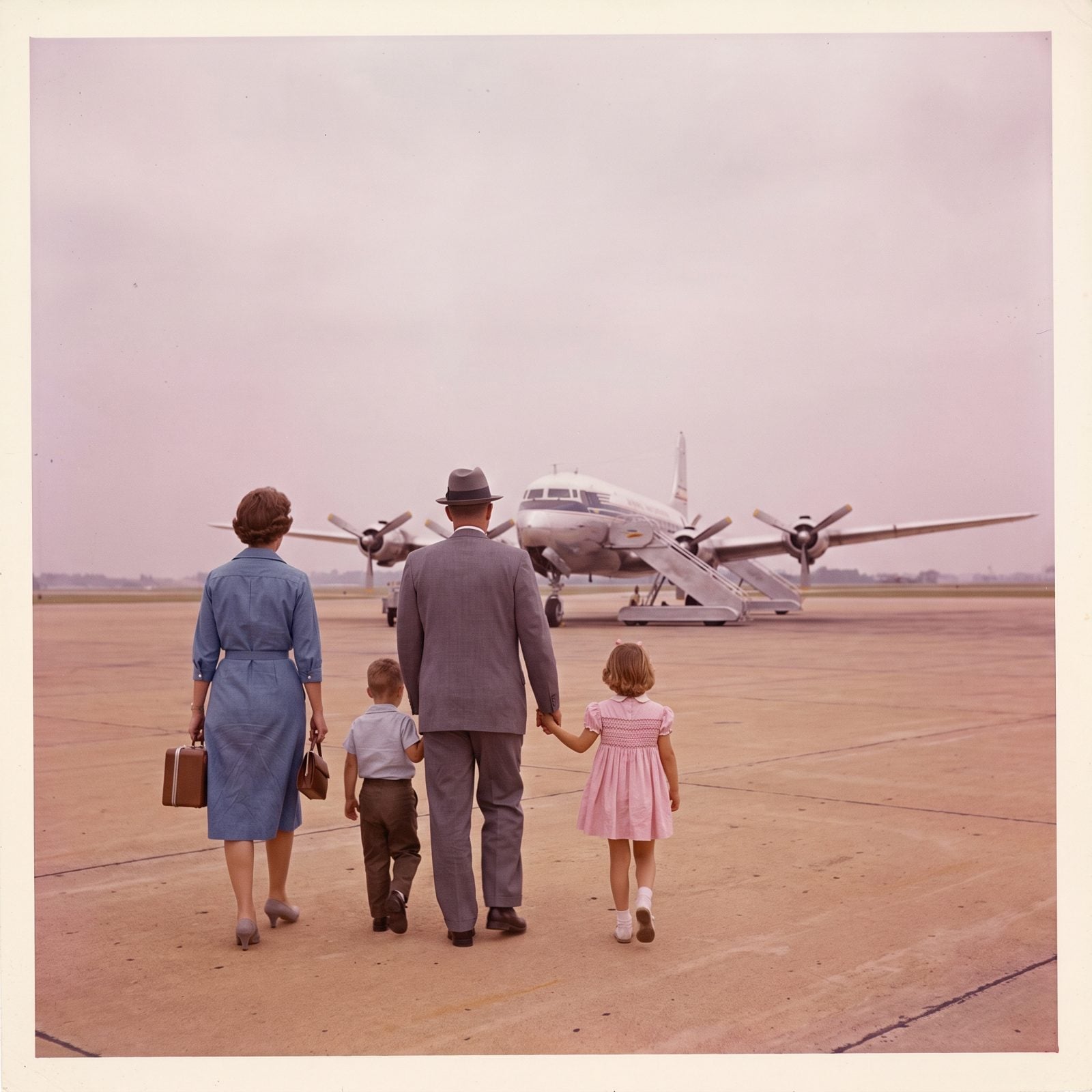
No jet bridge. You walked out the door, onto the open tarmac, into whatever weather the day handed you, and climbed a set of rolling metal stairs to the plane. Wind in your hair, the smell of fuel, the engines warming up right there in front of you.
That walk was the moment the trip got real — you could see the aircraft you were about to trust, up close, from the ground. The covered jet bridge gained us comfort and quietly took that away.
You met the airplane before you boarded it. That counts for something.
19. Propeller Airliners Outside Small Terminals
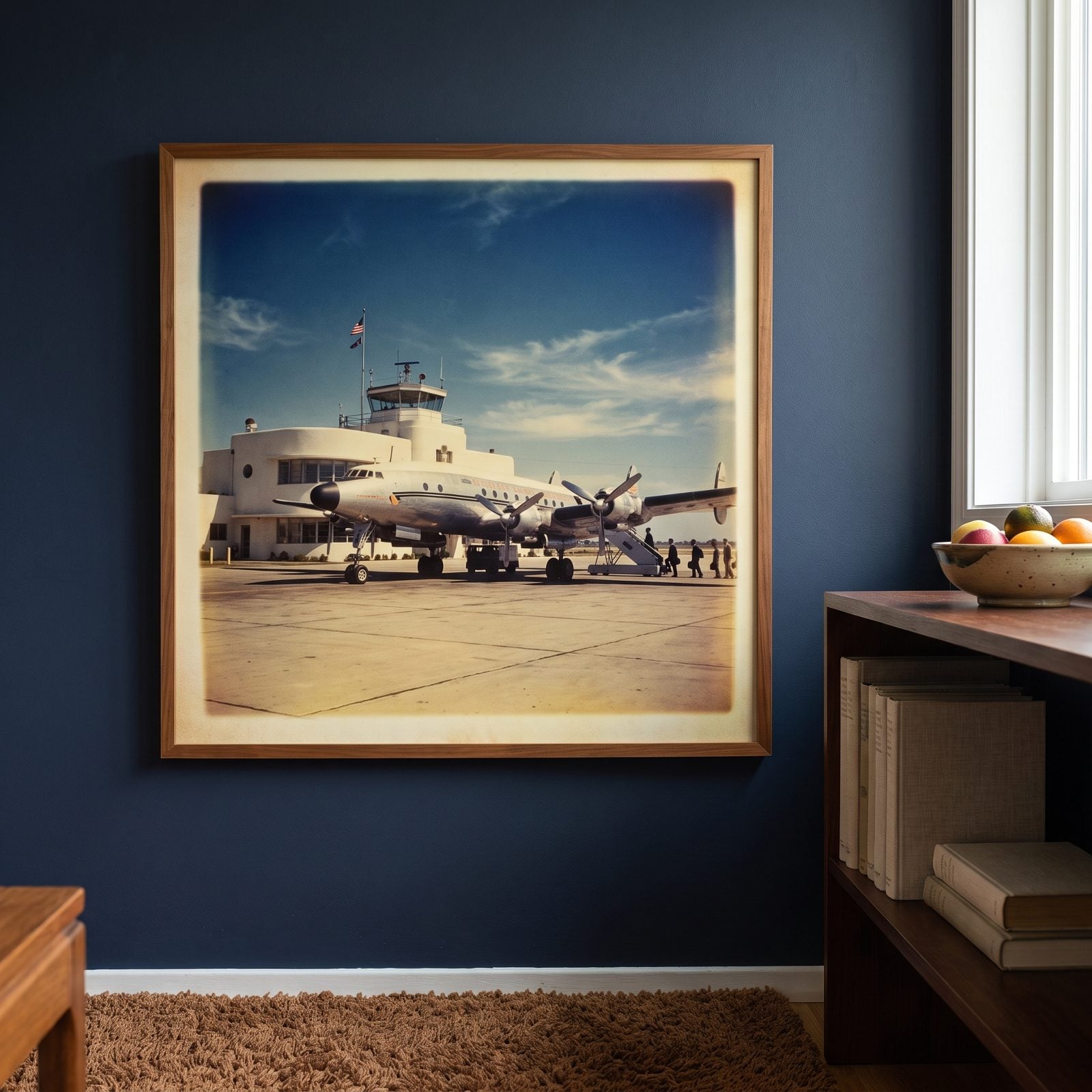
The airplane and the terminal in the same frame, almost touching. A twin-prop out on the apron, a low building with a flagpole and a little tower — and that’s the whole airport. You could see your gate from the parking lot.
Propeller airliners meant slower, lower, bumpier, and far more intimate flying. The DC-3, the Constellation, the Convair, hopping town to town. Then the jet age flattened all of it into hubs and spokes and terminals the size of small cities.
18. Full Airline Meals Served on Real Crockery
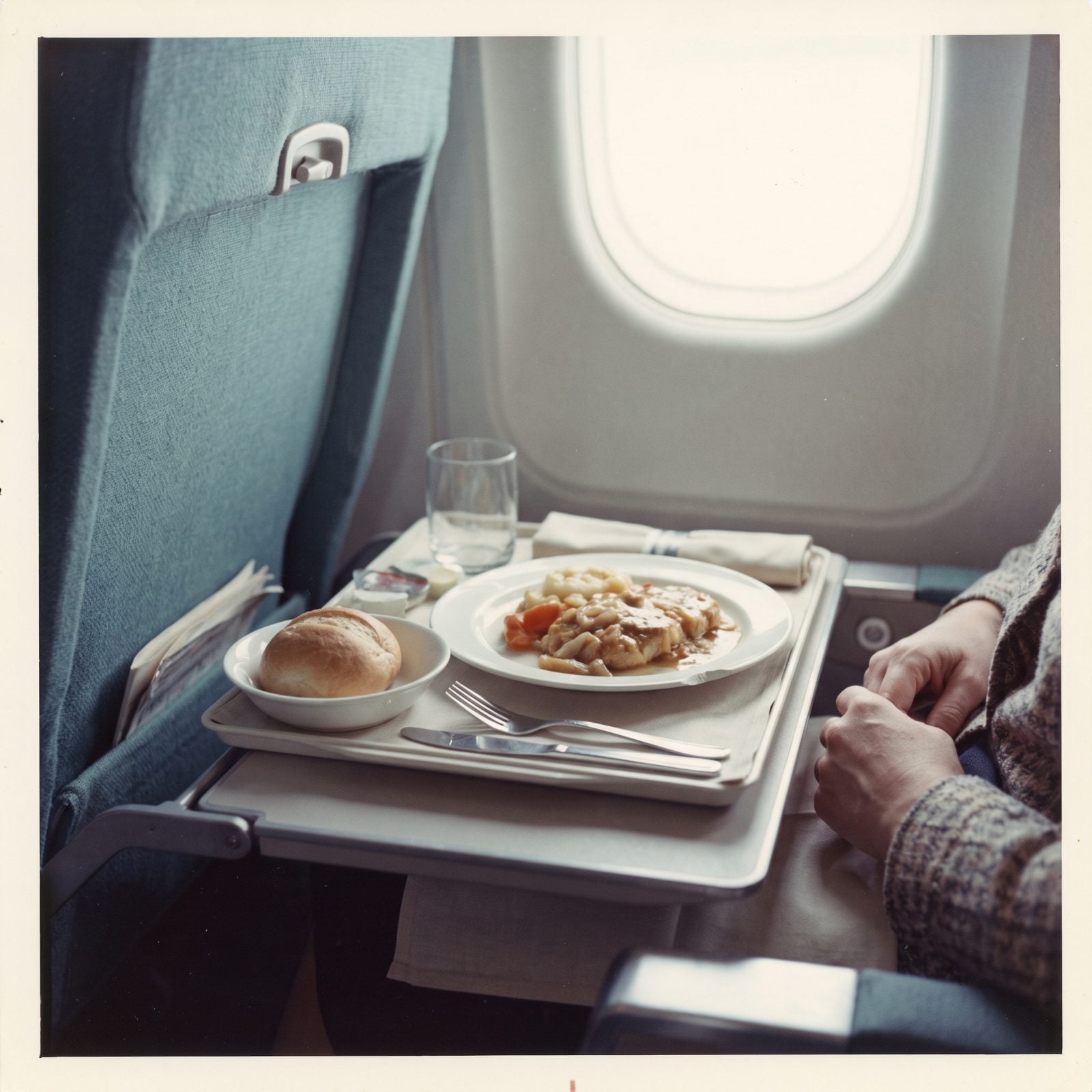
China. Actual china, with a metal fork, a cloth napkin, a glass tumbler, and a hot plated meal served in coach on a short flight. Nobody thought it was luxury. It was just how you fed people on an airplane.
The crockery in these photos records a whole philosophy of travel. Flying was an occasion, so you ate like it was one. The shift to plastic and then to nothing at all happened so gradually most of us barely noticed the table disappear from under us.
17. Smoking Sections Inside Aircraft Cabins
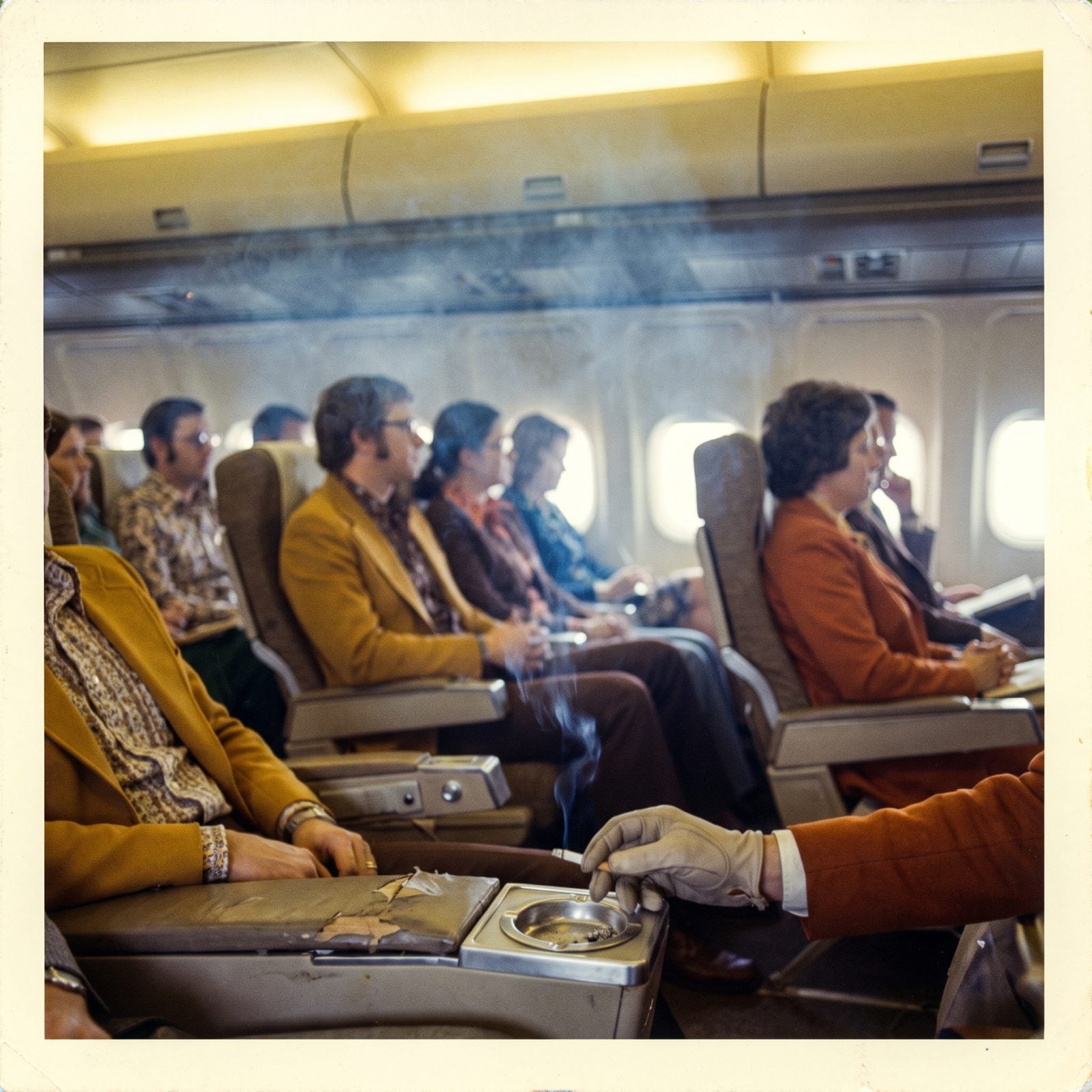
See the little square chrome ashtray built into the seat’s armrest? Every airplane seat once had one built right in. A smoking section on a plane was a polite fiction — a few rows back, as if the air somehow knew where to stop. The whole cabin breathed it together.
Old cabin photos date themselves instantly by the blue haze hanging over every row. The ban rolled out through the late 1980s and 1990s, and now the idea of lighting up at 30,000 feet sounds made up. The ashtray survives on some aircraft only because regulators insist, for the one fool who’d sneak one anyway.
16. Friends Greeting Passengers Directly at the Gate
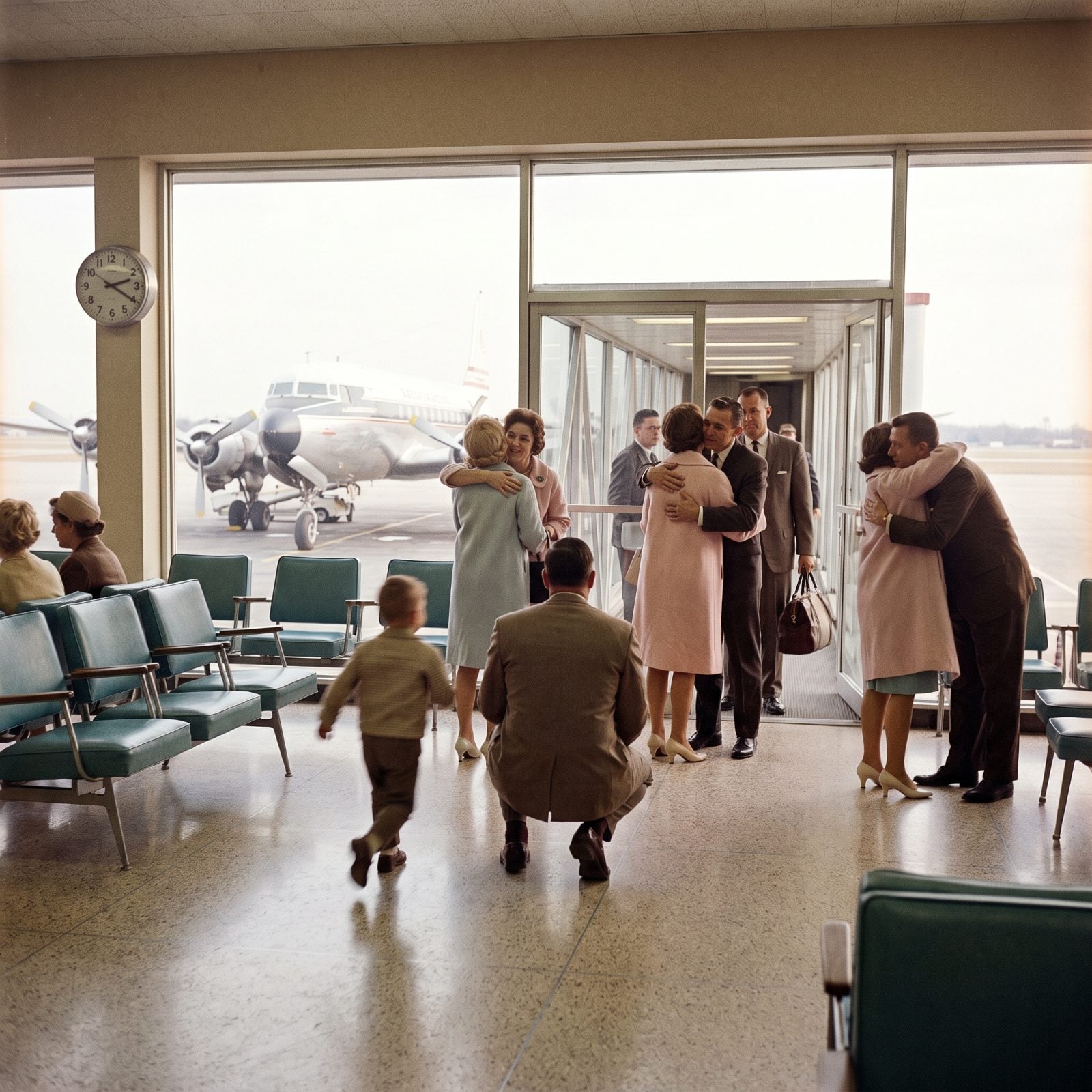
Someone ran to the gate to meet you. Not the curb, not baggage claim — right to the door you walked out of, no ticket required to get there. You could watch your flight land through the glass and be standing there the second the door swung open.
That greeting at the gate is gone, erased by the security line in a single autumn. The photo preserves a kind of welcome we traded away for good reasons and still miss.
15. Cruise Passengers Tossing Paper Streamers at Departure
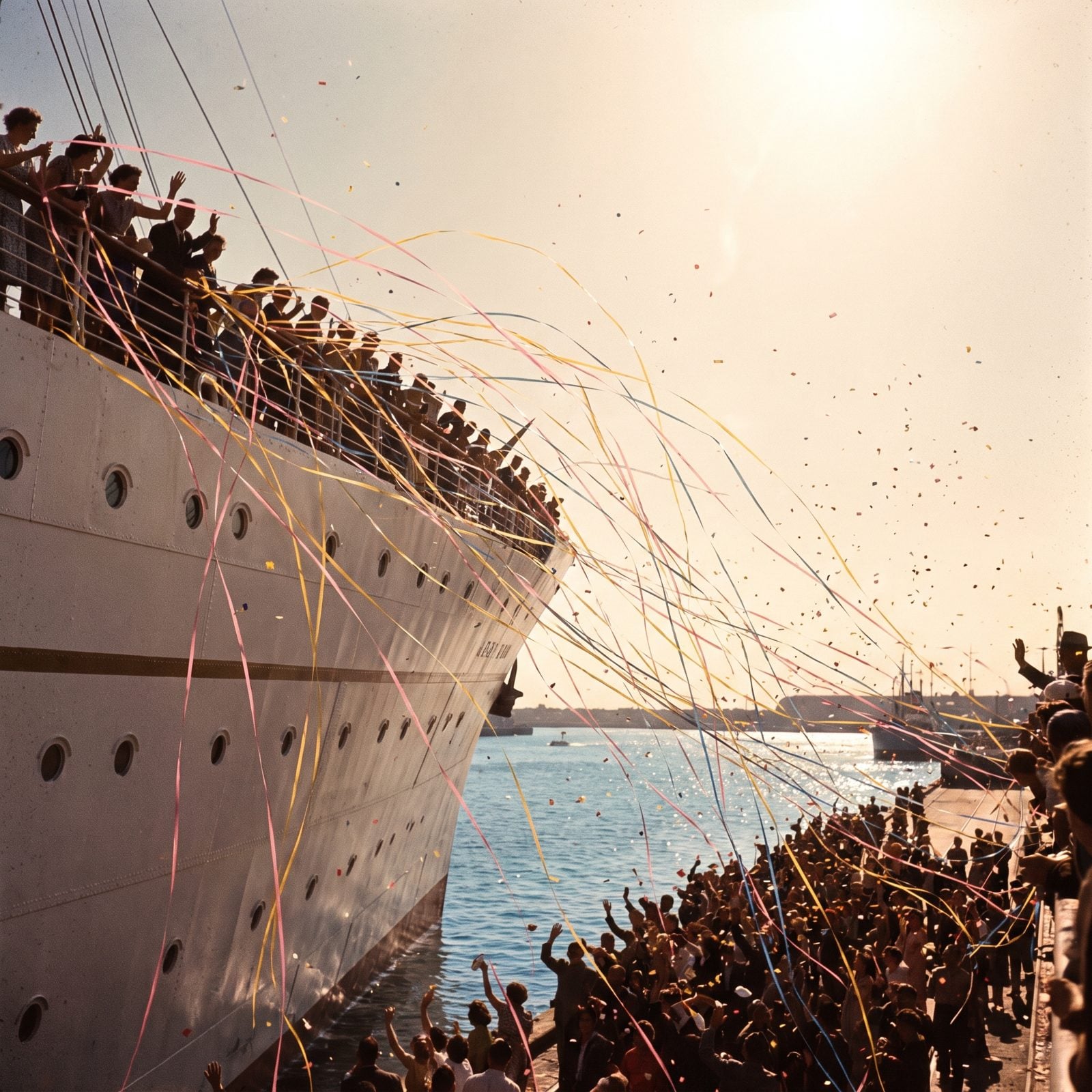
The whole air between ship and shore filled up with paper. Passengers up on deck held one end of a streamer, friends down on the pier held the other, and as the ship pulled away the ribbons stretched and snapped, one by one, until the last thread finally broke.
It was ritual, and it was a little heartbreaking by design. A sea voyage meant a real goodbye — weeks or months away, maybe a crossing that changed your whole life. The streamers made the distance visible as it opened up between you.
14. Steamer Trunks Lined Up Beside an Ocean Liner
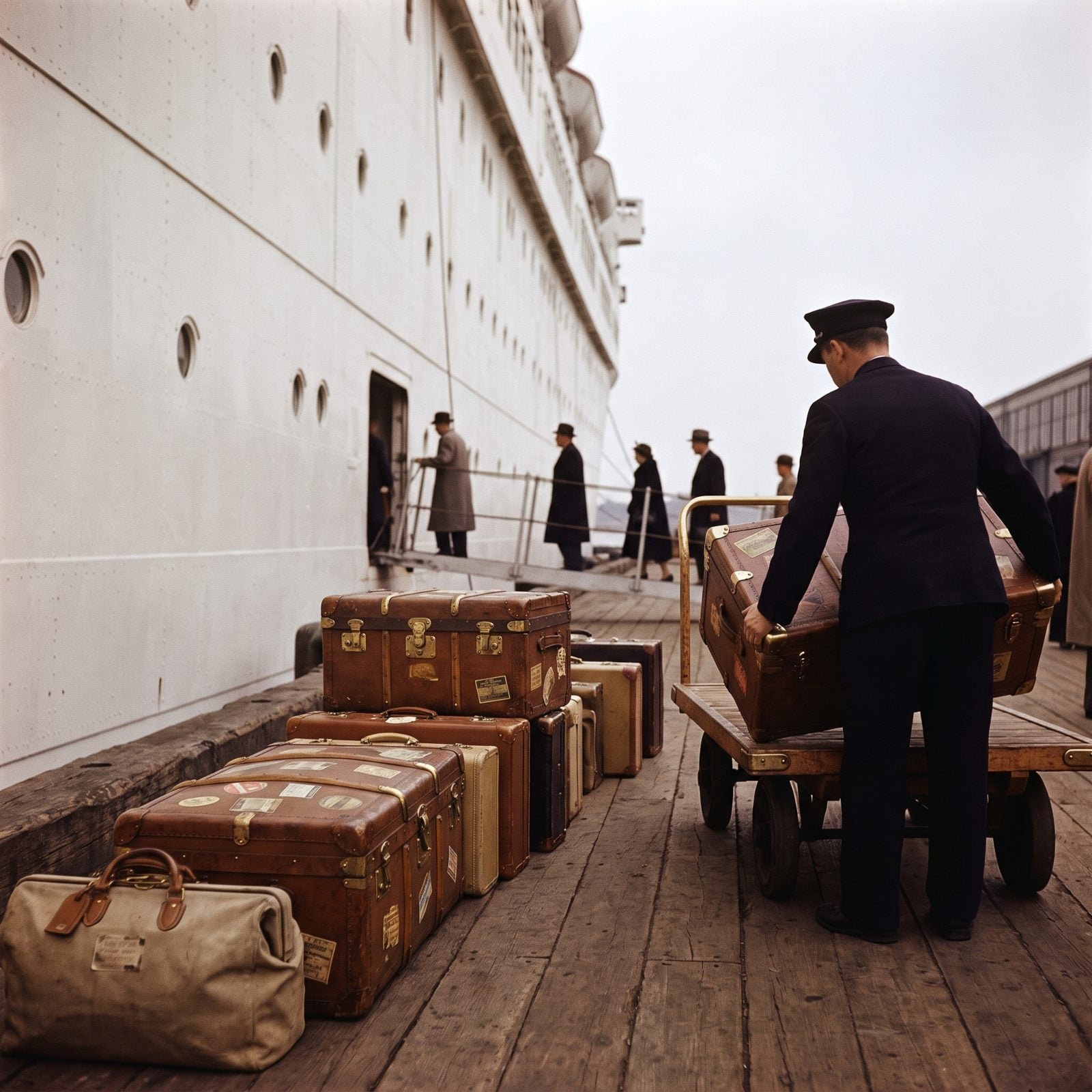
Count the trunks. A single family could travel with a wall of them, heavy boxes stacked two high along the pier, labels stuck on from every port. No wheels — you didn’t move these. Porters did.
The luggage tells you the trip was long. You packed for weeks aboard, formal nights and shore excursions and weather you couldn’t predict. Picture a rolling carry-on at the bottom of a gangway stacked with these monsters. It would have looked ridiculous.
13. Deck Chairs Arranged Along a Ship’s Promenade
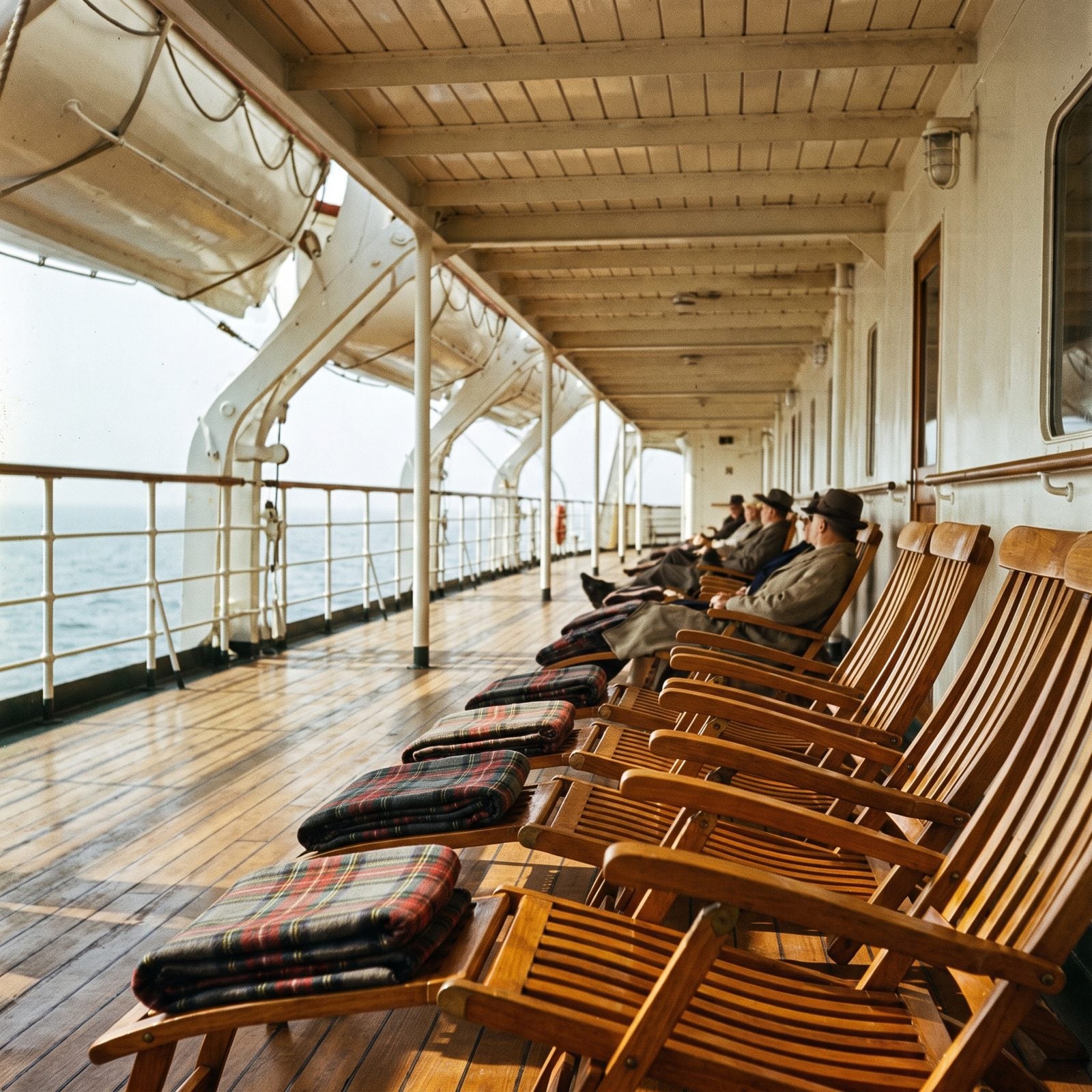
A whole afternoon with nothing to do but sit in a wooden deck chair with a tartan blanket over your knees and watch the ocean go by. The steward brought bouillon at eleven. You had a numbered chair that was yours for the entire crossing, and heaven help the stranger who took it.
Those chairs record a pace of travel that barely exists now. The passage itself was the point — days of slow water, not the destination waiting at the far end.
12. Formal Nights With Tuxedos and Long Gowns
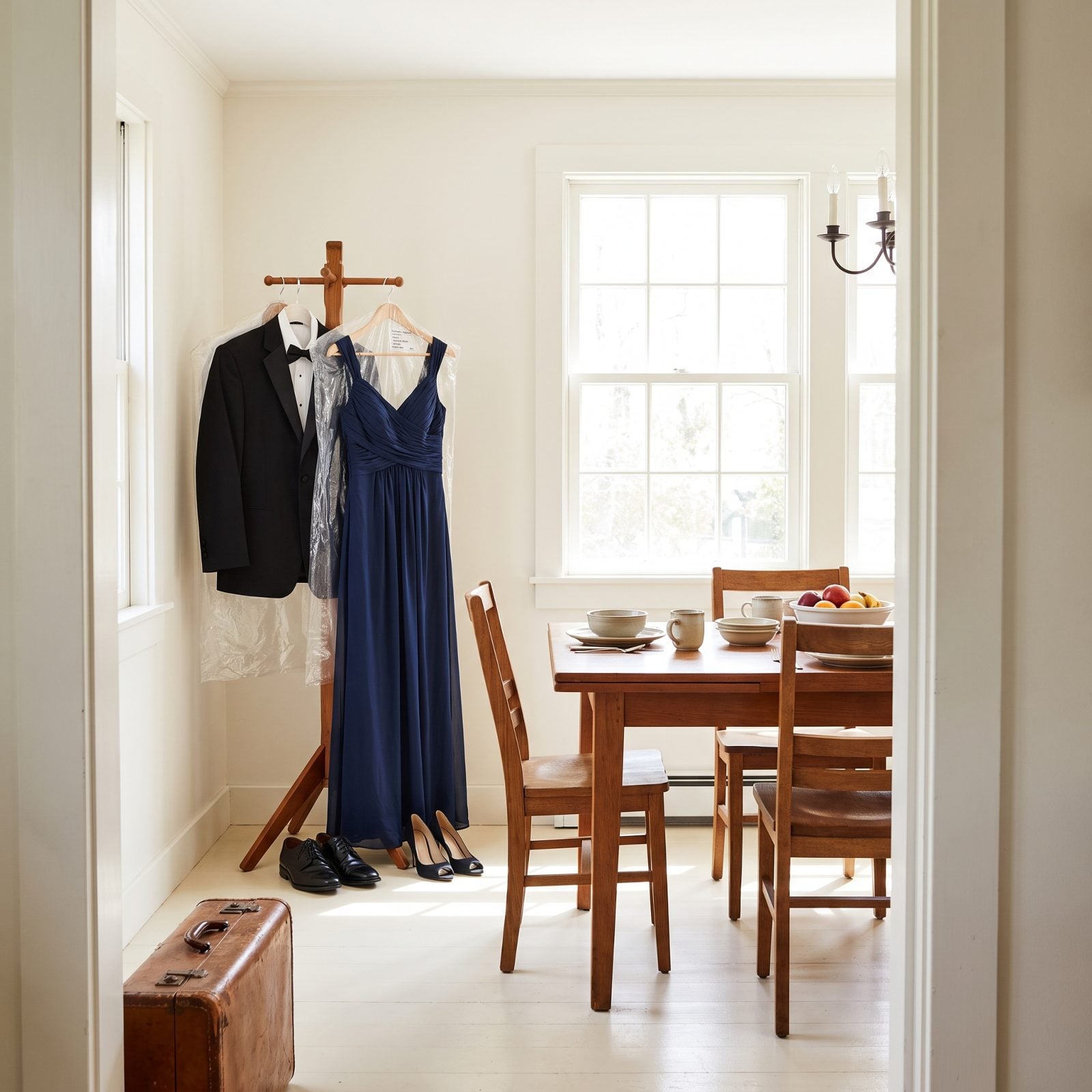
Dressing for dinner used to be the whole event. Open any shoebox of cruise or resort photos from the fifties and sixties and you hit a wall of tuxedos and satin. Nobody packed a formal gown for a casual week — they packed it because the ship expected it, and so did everyone at the next table.
What the photo quietly records is a vanished agreement: that leisure deserved effort. The dress code wasn’t a burden, it was the whole appeal. For one week you got to become a slightly grander version of yourself.
11. Canvas Tents Raised in Auto Camps
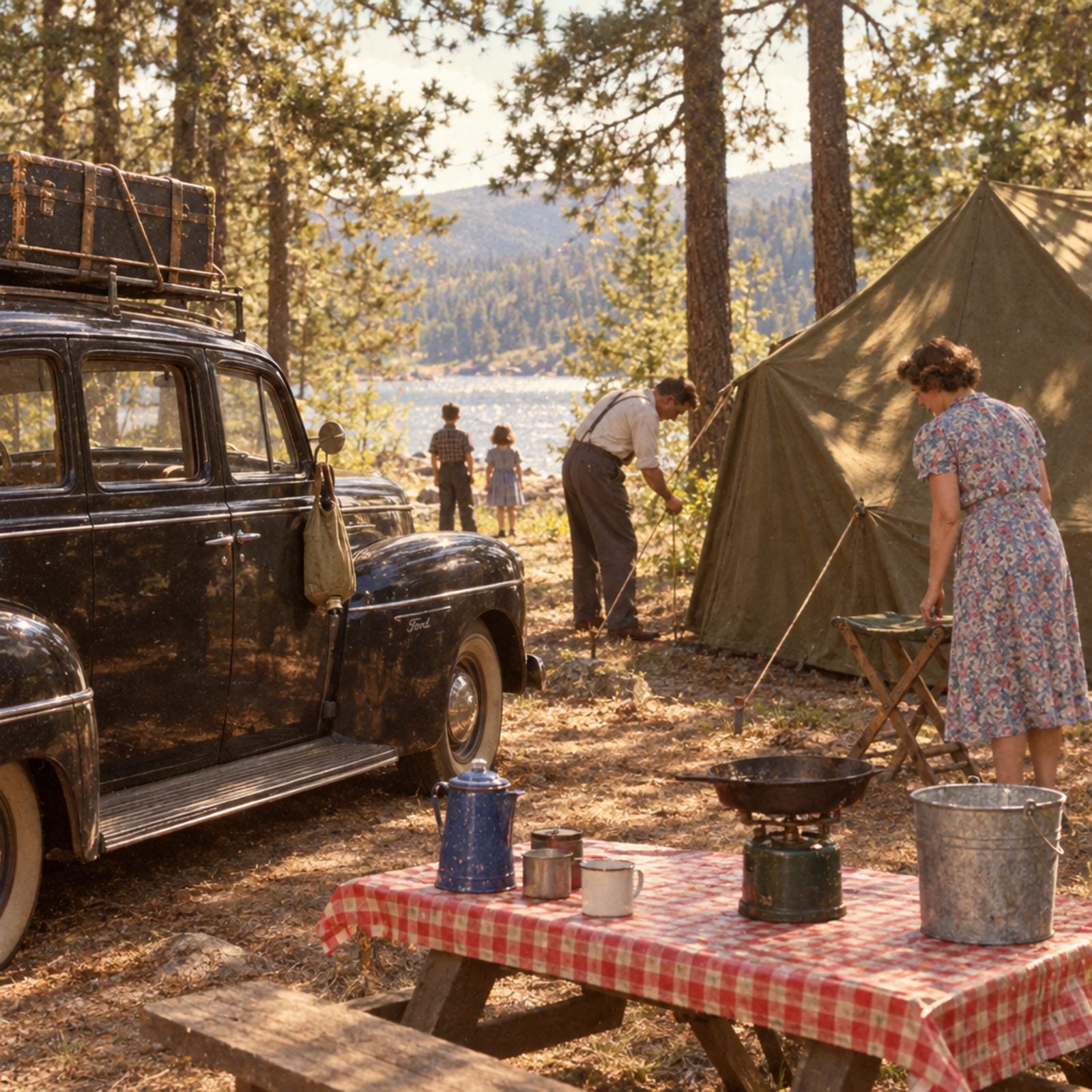
Before motels dotted every exit, families slept under canvas they hauled themselves. The auto camp was the budget answer to the open road: pull in, pay a quarter, pitch your tent on a numbered gravel pad next to a dozen strangers doing the same.
Look at the gear in these shots. Heavy waxed canvas, a camp stove that ran on the same gas as the car — no nylon, no aluminum poles, nothing that folded down to nothing. You carried your lodging on the roof rack and set it up by hand every single night, which tells you how much a family wanted to be out there to put up with all of it.
The photo documents an entire way of traveling that the motel quietly erased. By the mid-fifties, a clean room with a private bath cost about the same as the hassle. The tents went back in the garage and mostly stayed there.
10. Roadside Dinosaur Statues Before Interstate Bypasses
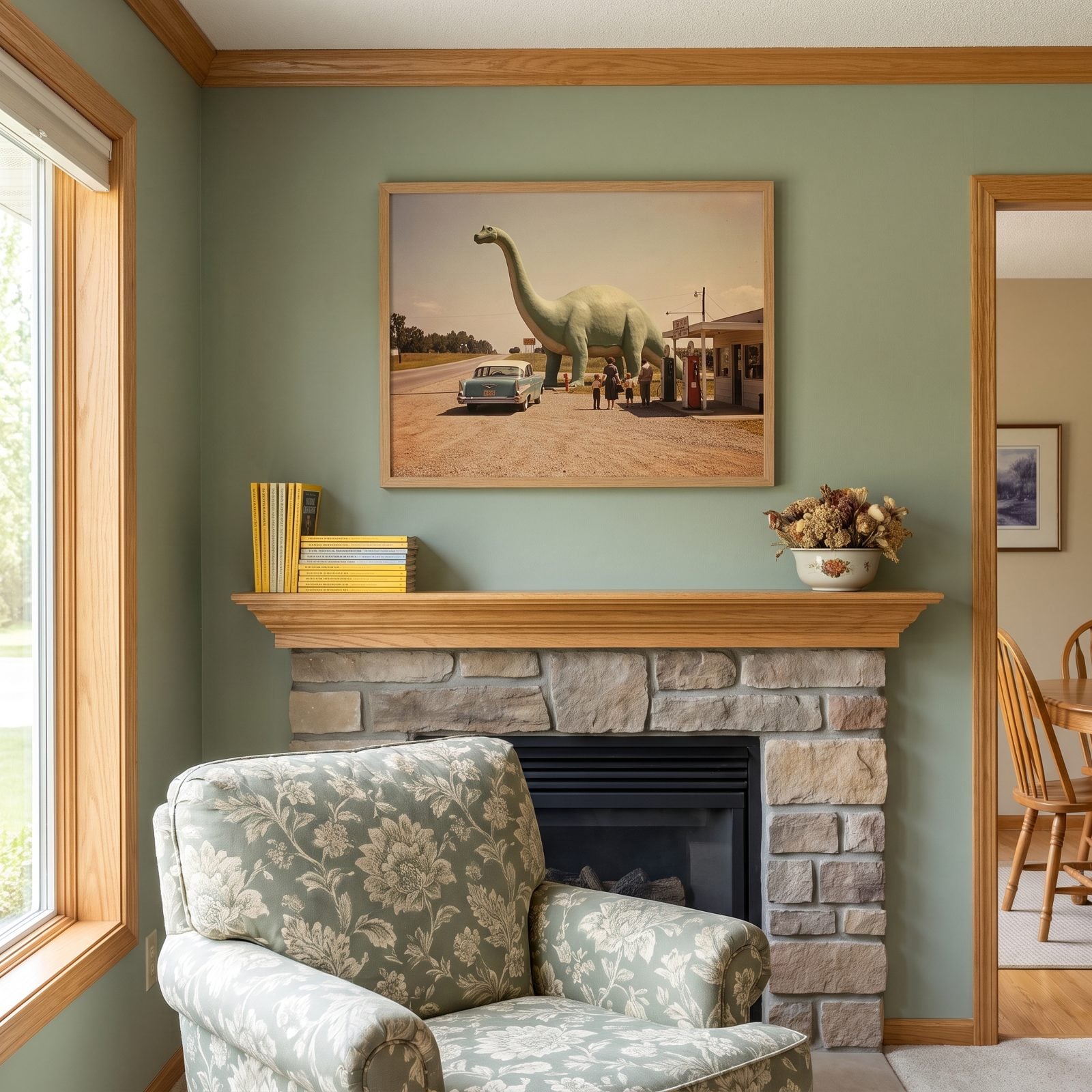
You’ve seen the giant concrete dinosaur looming over a gravel lot, built to make a station wagon stomp the brakes. These roadside beasts were pure commerce dressed up as wonder. A brontosaurus meant gas, cold pop, and a bathroom — and the kids did the rest of the selling from the back seat.
Then the interstate came through and routed the traffic a half-mile away. A road that bypasses your front door doesn’t just slow business. It ends it. Hundreds of these attractions went silent within a few years of the four-lane opening.
9. Children Collecting Travel Decals on Car Windows
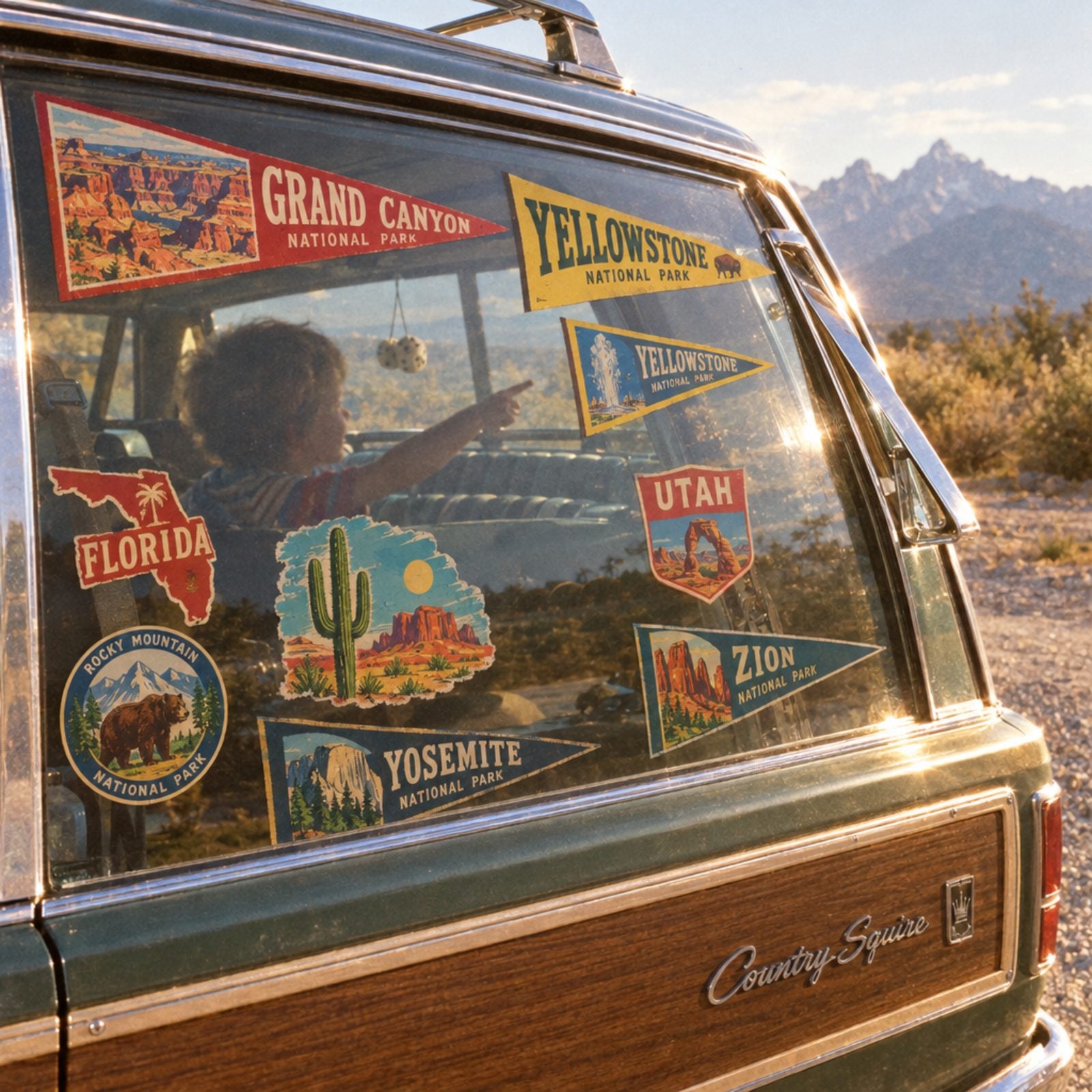
The rear quarter window was a trophy case on wheels. Every tourist trap sold a gummed decal, and the kids lobbied hard to stick each one on the glass. Grand Canyon. Yellowstone. Zion. Yosemite. The window slowly turned into a map of where the family had actually been.
What makes these photos worth a second look is the layering. You can read a whole summer in the overlap — which stops earned a decal and which lost out to a kid’s negotiation. Call it analog bragging, stuck to glass, aimed at the car behind you at every red light.
8. Travelers Mailing Postcards From Each Stop
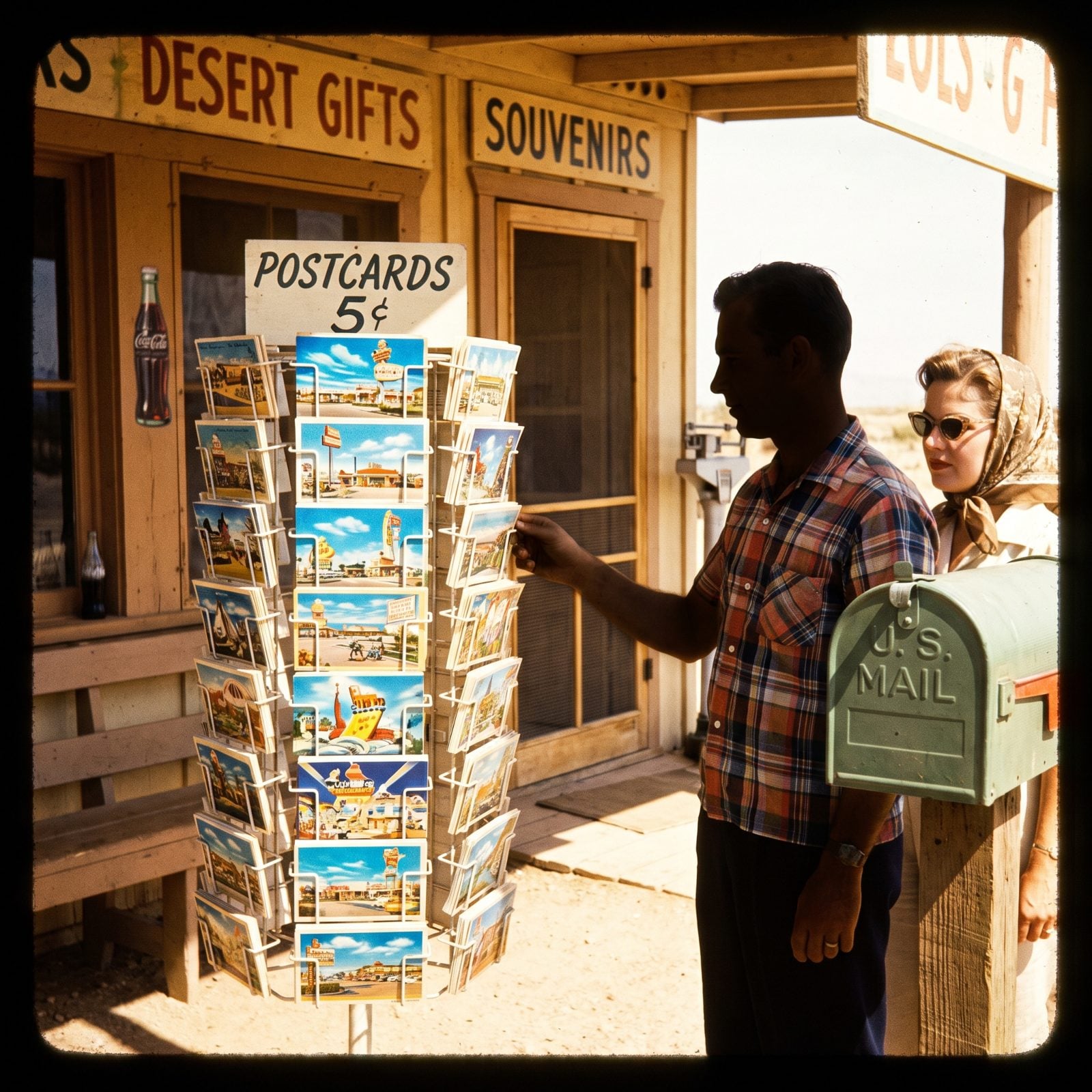
Every stop had a wire rack of postcards, and the ritual was non-negotiable. You bought three or four, found a shady bench, and wrote the same cheerful nonsense to your neighbors back home. “Weather beautiful. Food plenty. Wish you were here.”
The postcard pulled double duty. It proved you’d gone somewhere, and it kept a thin thread running back to the people who stayed. A card from the Painted Desert landing in a mailbox a week after you’d already unpacked? That was part of the deal.
A postcard was the slowest possible way to say “thinking of you,” and that slowness was the whole gift.
7. Pay Phones Used to Call Home From the Road
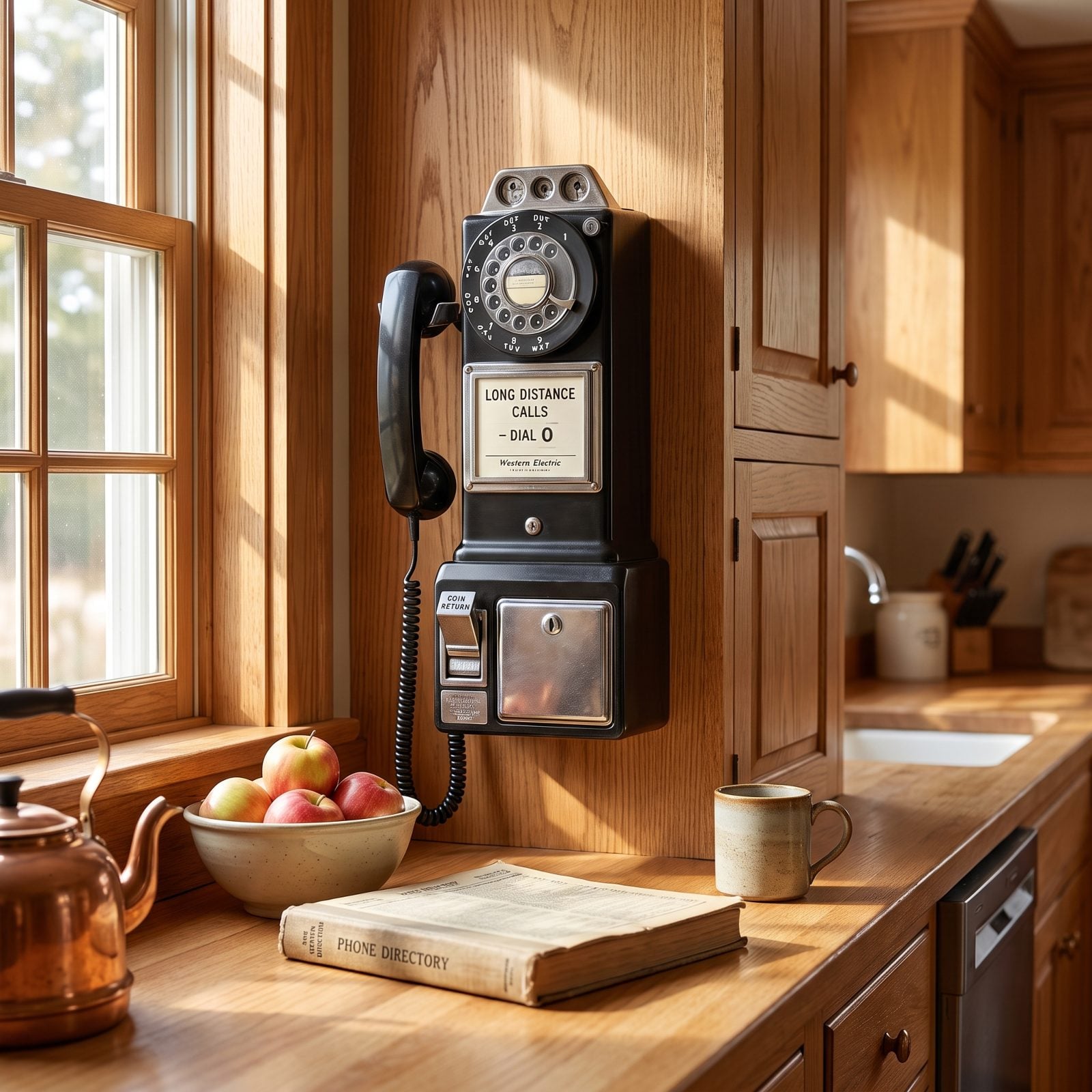
The black rotary pay phone, its chrome coin box scuffed and worn, was a lifeline nobody thinks about anymore. You fed it coins, dialed the operator, and shouted over the static to tell somebody you’d made it to Amarillo. Long distance cost real money, so you kept it short.
A pay phone in an old roadside snapshot captures a kind of distance that no longer exists. Being on the road once meant being genuinely out of reach. You called when you could, from wherever had a working phone, and then you were gone again — and nobody expected otherwise.
6. Film Canisters Packed Beside the Camera
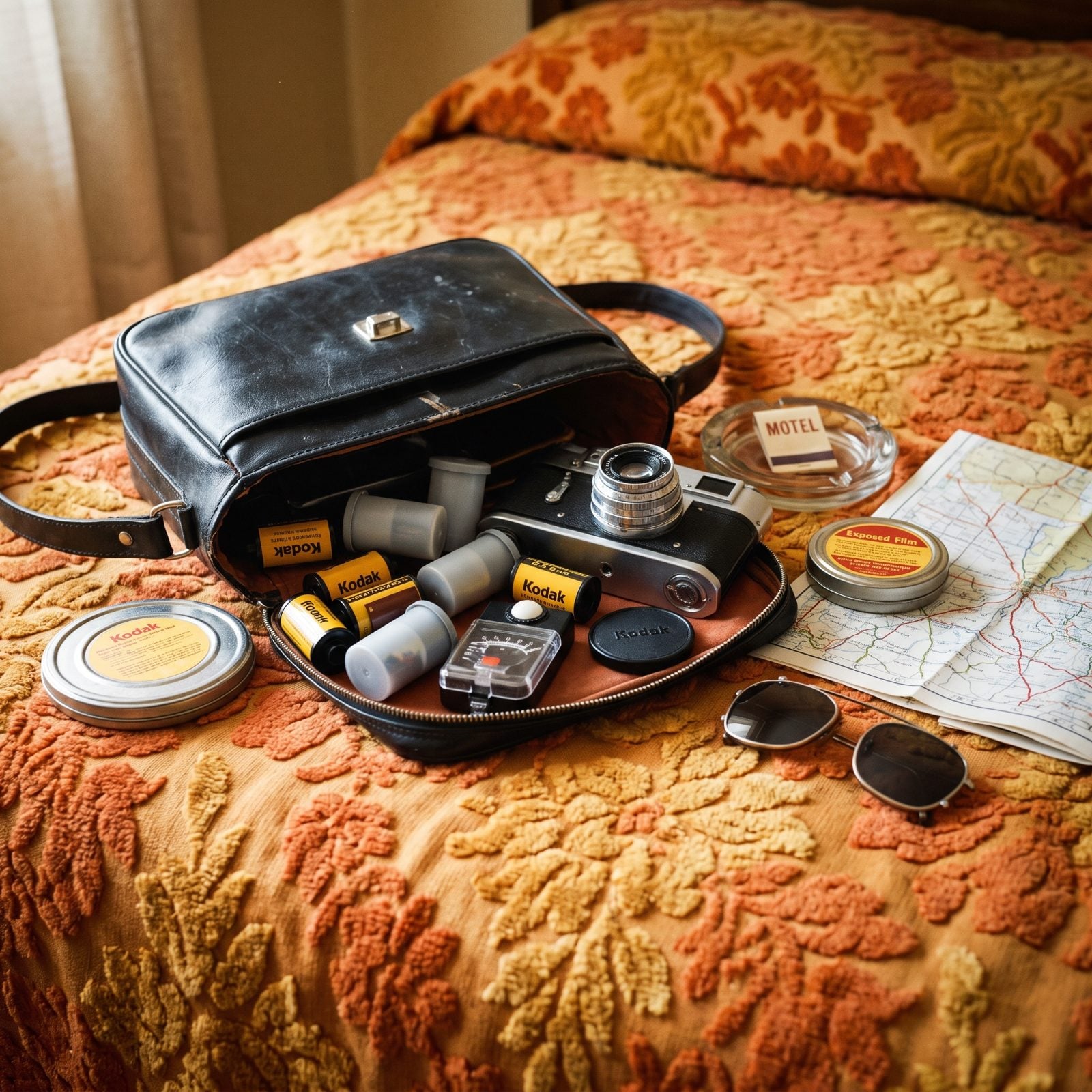
Film was precious, and packing it was its own small ceremony. You counted rolls before you left — twelve exposures, maybe twenty-four if you splurged. Every photo had a cost, so nobody fired off forty shots of the same canyon. You looked, you waited, you took one.
That scarcity shaped every vacation photo you now own. The blur you forgive, the thumb in the corner, the single shot of the whole family squinting into the sun. They survived because there was no second try and no delete button. You got what you got, and you didn’t find out until weeks later whether it worked.
5. Flashcubes Attached to Instamatic Cameras
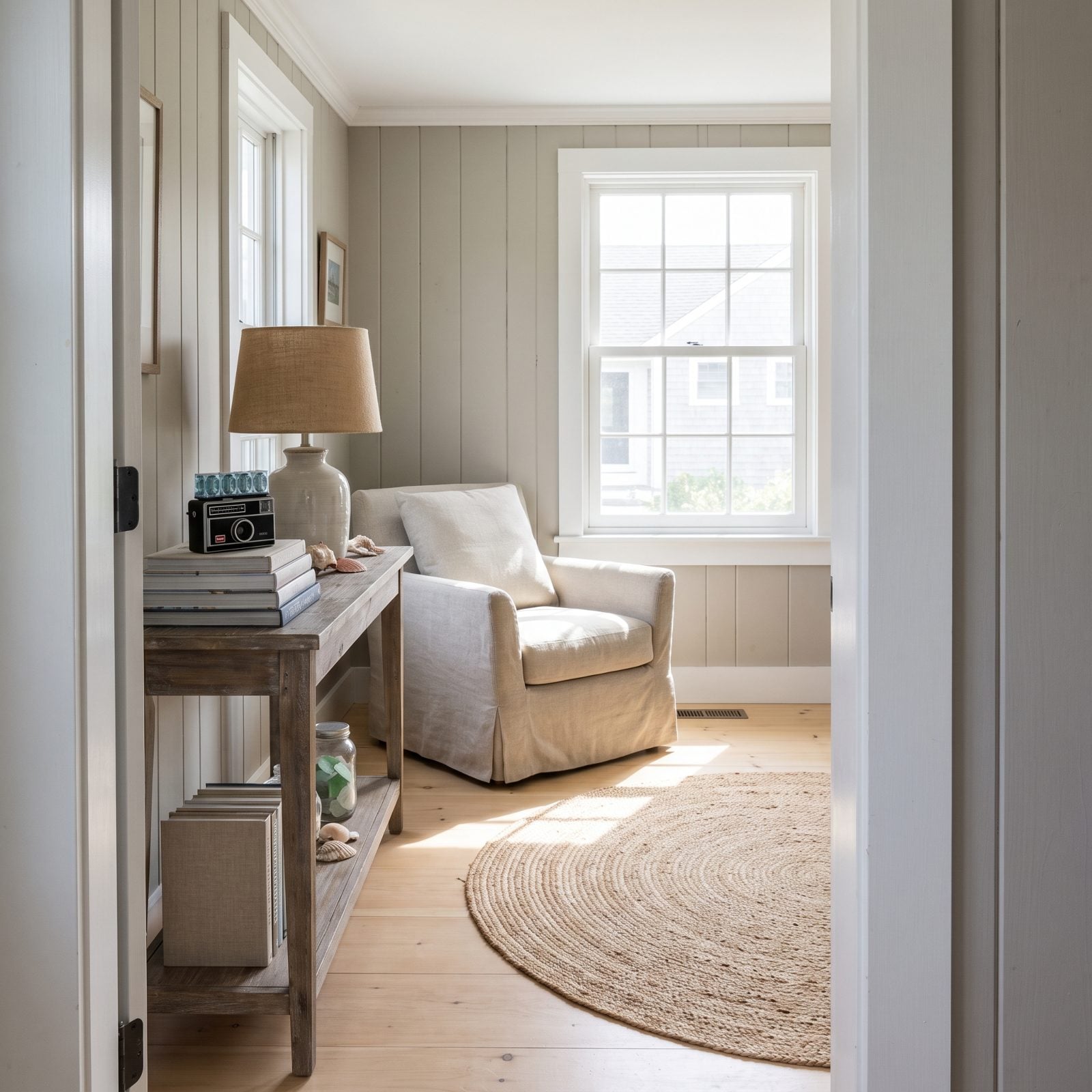
The flash sat on top of the Instamatic like a little row of teal glass, and it was gloriously single-use. Four bulbs in a cube, four shots, each one left spent, crackled and silver-burnt after it fired. When all four were gone you pulled it off and clicked on a fresh one.
You can date a photo by that hard, flat flash. It bleached faces white and threw a black shadow on the wall behind everyone. Red eyes, blinks, the whole family caught looking slightly alarmed. It wasn’t good lighting — it was the only lighting, and it gave an entire era of indoor snapshots their unmistakable look.
4. Photo Envelopes Stamped by Vacation-Town Drugstores
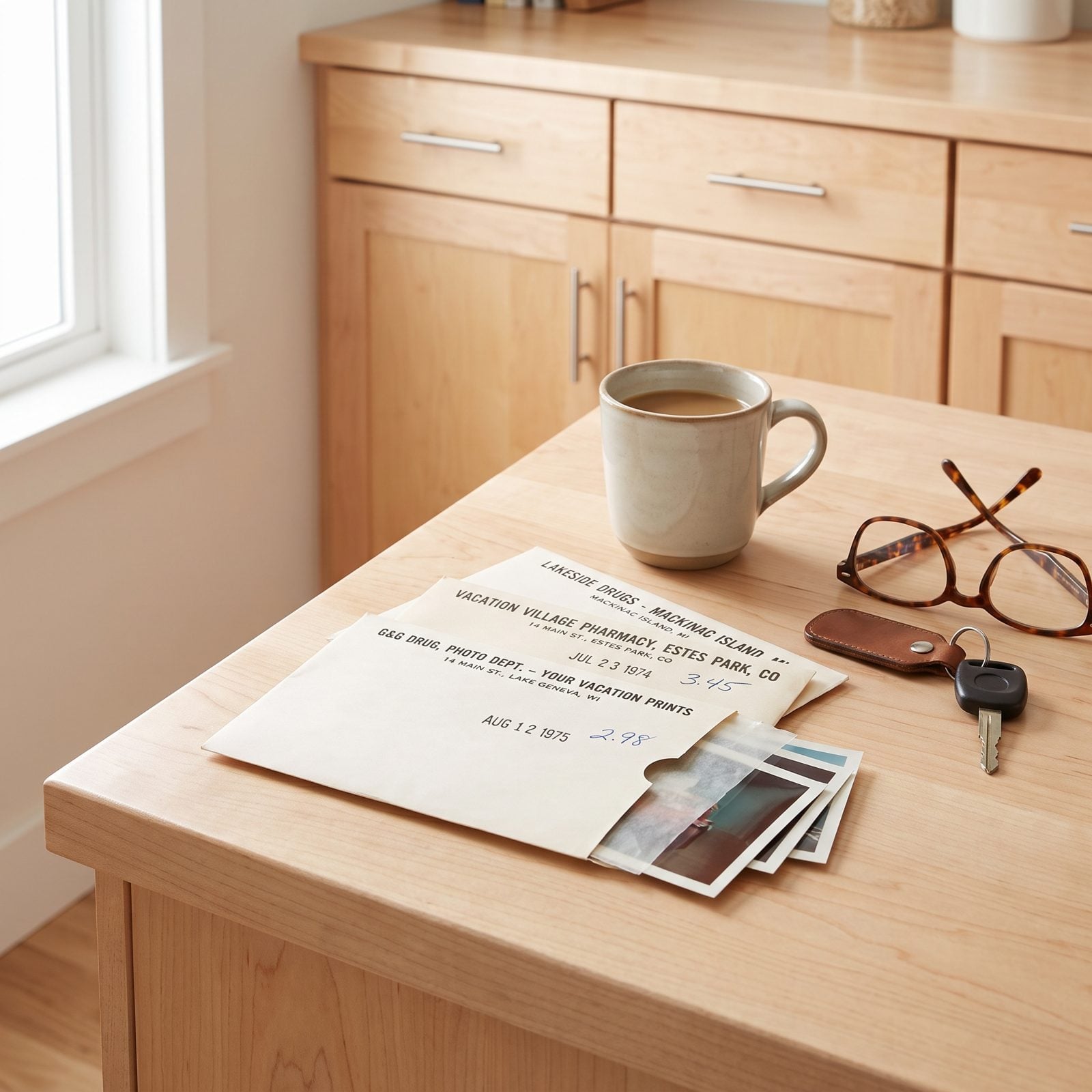
Here’s a detail the photos themselves can’t show, but the envelopes can. You dropped your film off at a drugstore in whatever town you happened to be passing through, and the prints came back tucked in a paper sleeve stamped with the store’s address.
Those envelopes are a travel log hiding in plain sight. A photo shop in Gatlinburg. A pharmacy in Rapid City. The dates and town names on the flap trace the whole route, sometimes more honestly than the pictures inside do.
3. Tourists Standing Beside Unfenced Scenic Overlooks
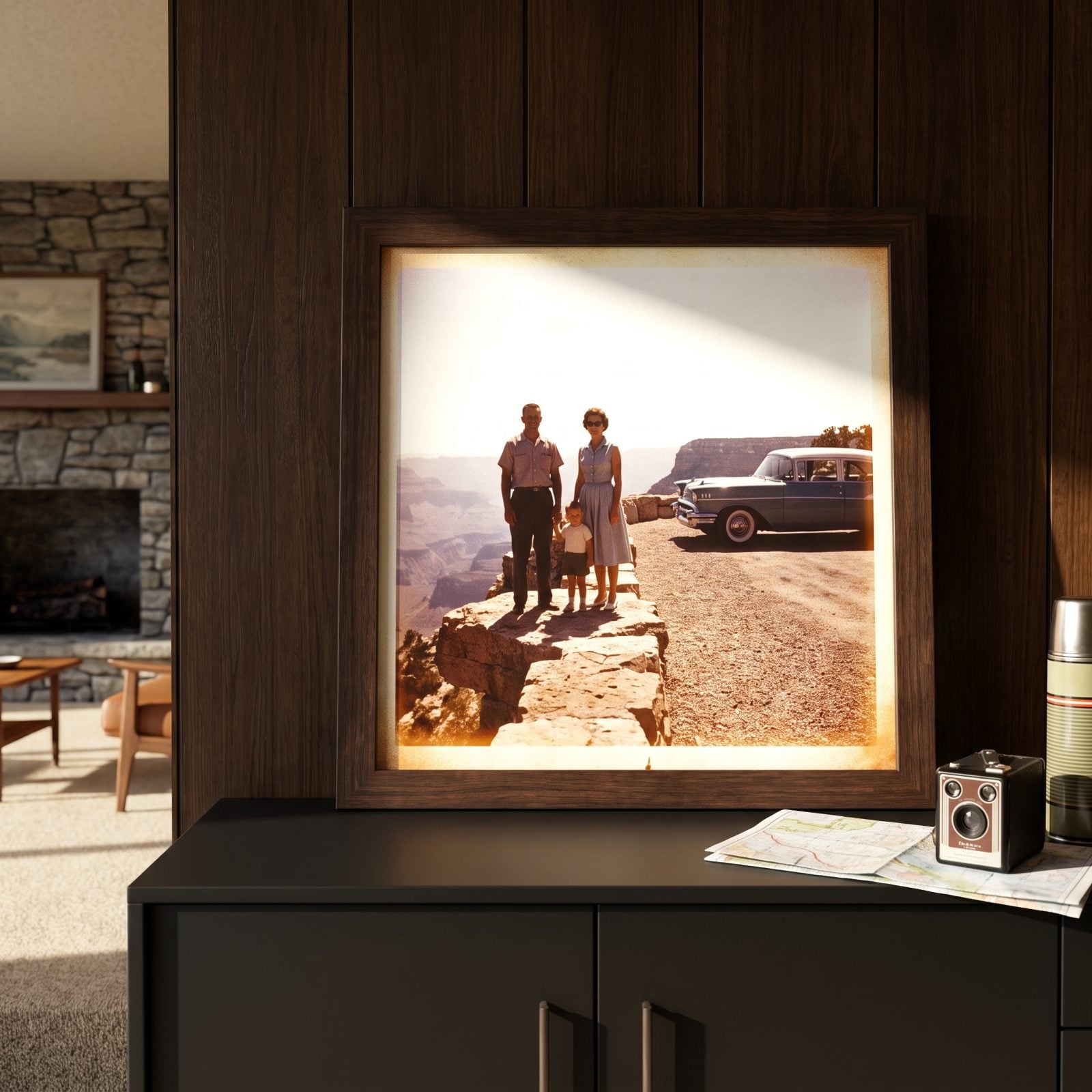
The thing that stops you cold in old overlook photos is what isn’t there. No railing. No fence. No warning sign. Just the family, the edge, and a thousand-foot drop a few feet behind the toddler. Everyone’s smiling.
These shots document a different relationship with risk. People drove to the brink, parked, and walked right up to it. Nobody engineered the view for liability, and the photograph treats the cliff as scenery rather than a hazard — which tells you more about the era than any gown or gas pump.
Walk up to that same overlook today and you’ll meet a steel guardrail, a paved path, and a plaque. Safer, certainly. But the old photo caught something the railing quietly ended: the view, and you, with nothing in between.
2. Cars Driving Through the Trunks of Giant Trees
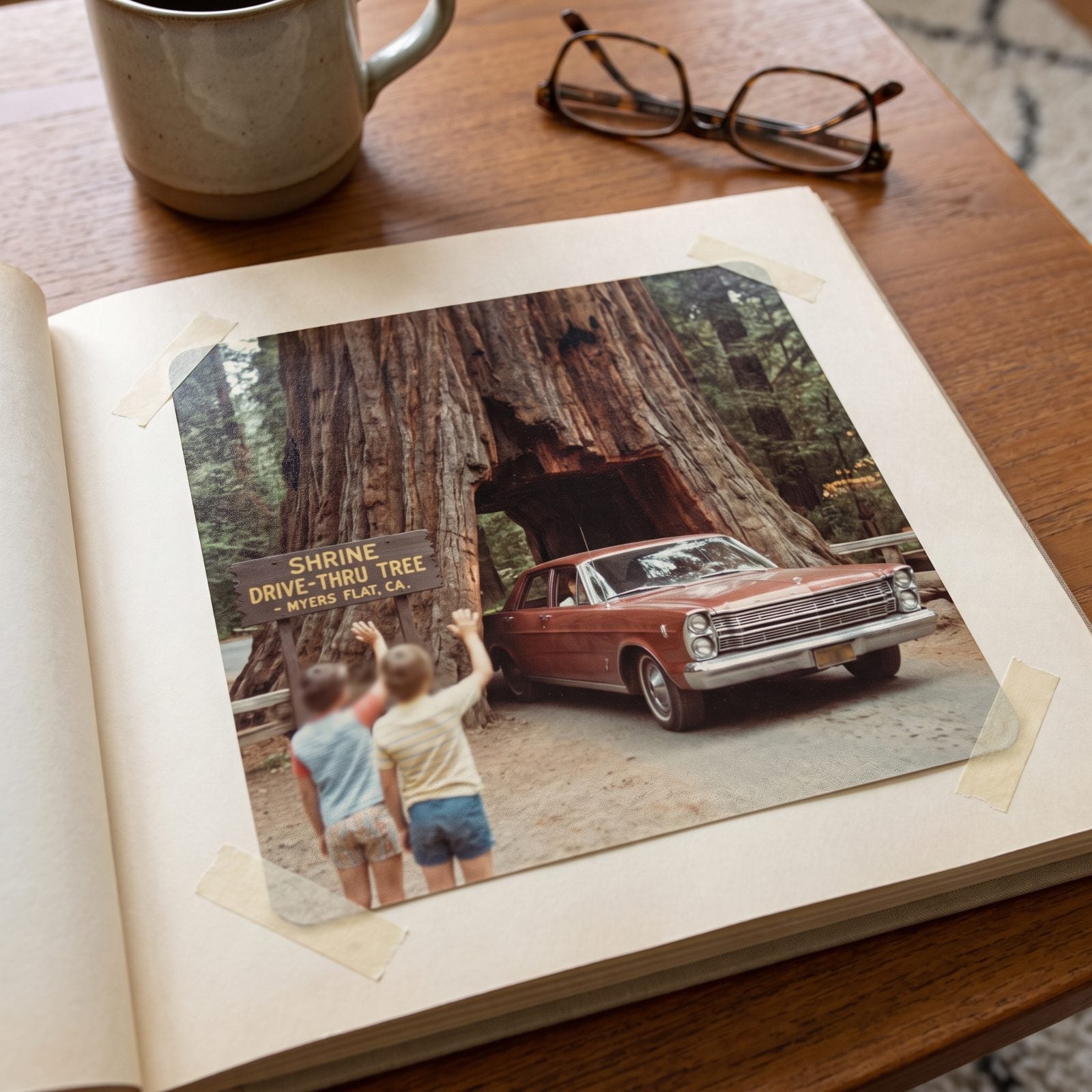
Look at that car wedged inside a living tree and you’re looking at a whole vanished idea of what nature was for. Back then, the giant redwood wasn’t something you tiptoed around — it was something you drove through, honked in, and photographed with the family Buick parked right in its heart.
The famous Wawona Tunnel Tree in Yosemite got carved in 1881, and it finally came down in 1969 under a heavy snow load, worn thin by nearly a century of traffic rolling through its middle. We quit cutting tunnels through old-growth giants once it became clear what that did to them. The drive-through trees you can still visit sit mostly up in Northern California, privately owned, their holes cut generations ago.
Same tree, completely different relationship. What the photo really captures is the slow shift from treating a redwood as a roadside stunt to treating it as something worth leaving alone.
1. National Park Visitors Feeding Bears From Cars
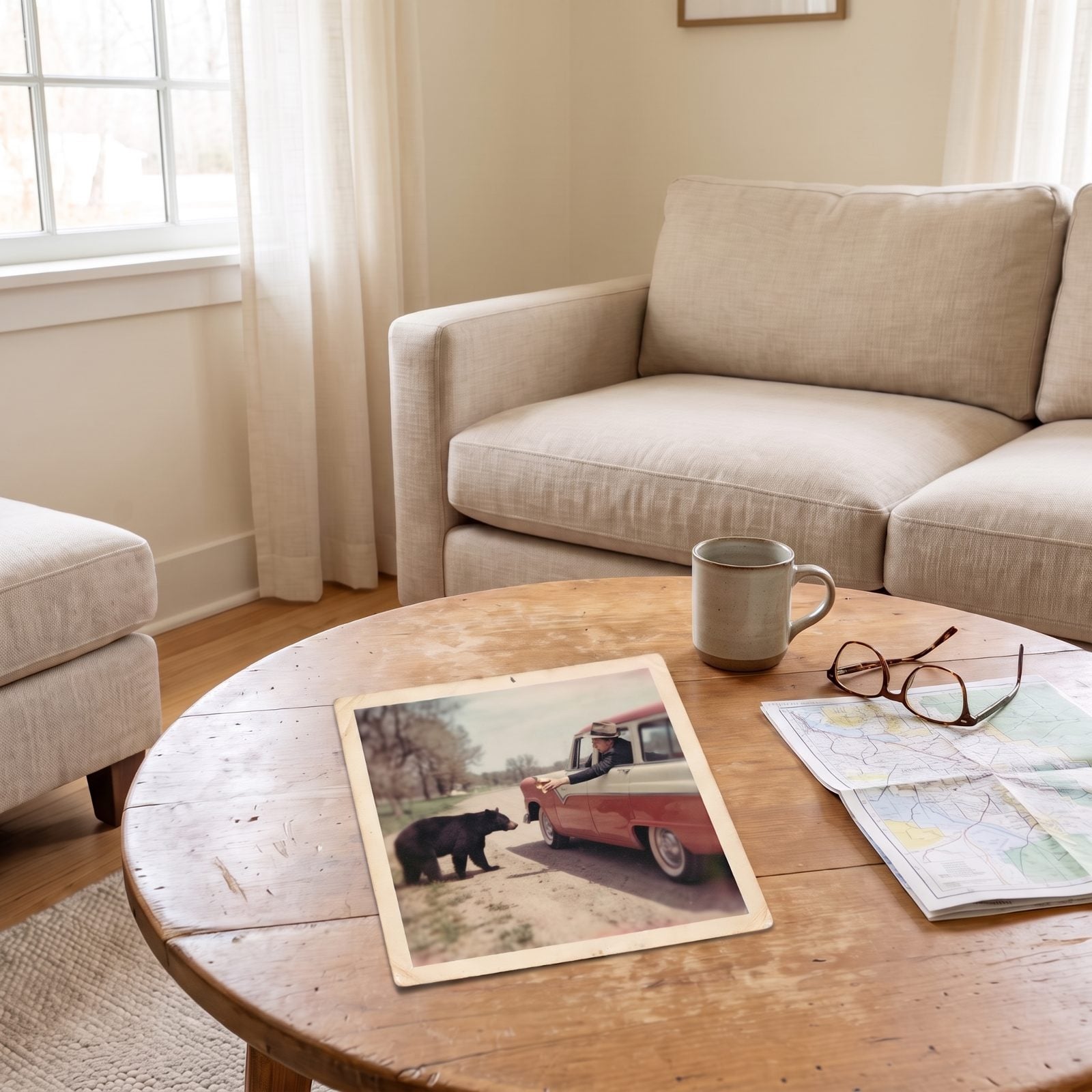
Someone in the family is leaning out the window handing a snack to a wild bear, and nobody in the car thinks twice about it. That scene — roadside, engine idling, the car pulled over for the show — was once the highlight of the entire trip.
Feeding bears along park roads was practically expected through the 1950s and into the ’60s. Some parks even ran open-pit garbage feedings as nightly entertainment. Bleachers and all. You can see the problem from here: bears that learned to connect cars with food got bold, got dangerous, and ultimately got shot. The same habit that made for a charming snapshot was a death sentence for the animal.
Yellowstone shut down its roadside feeding culture and cleaned up the dumps starting in the early ’70s. Those same bears keep their distance now, which is the whole idea.
Charming photo, grim ending — and that gap is exactly why it’s worth looking at. It freezes the moment when American vacation habits and wildlife conservation were still headed straight for each other.
🔥 Would you like to save this?
Please note that some of the imagery in this article were created with the aid of AI image generators.