
🔥 Would you like to save this?
The ice storm in Chicago has nothing to do with your flight out of Phoenix. Except it does, because the plane you’re waiting for is stuck on a ramp two time zones away. Most holiday travel disasters aren’t bad luck — they’re the predictable result of booking the way everyone else books. The seasoned travelers moving calmly through a packed terminal in late December know something the panicked crowd doesn’t. The moves below are what they know, and most of them cost you nothing but a little planning.
42. Book the First Flight Out of the Morning
The 6 a.m. departure is the one nobody wants. That’s exactly why you want it.
Here’s the mechanic that matters. The plane flying your afternoon route already flew three legs that day, and every delay stacked onto those legs lands on you. The first flight out slept at the airport overnight — it’s sitting there fueled and waiting, with no inherited problems. Morning flights also get re-booked first when things go sideways, so a bump at 7 a.m. leaves you a whole day of departures ahead instead of one last doomed scramble at 9 p.m.
Set the alarm. Pay the cab fare. Trade one groggy morning for a near-guarantee you land on the day you planned to.
41. Fly on the Actual Holiday, Not Around It
Everybody wants to arrive the night before. So the night before is a zoo, and the holiday itself is a ghost town.
Fly on Thanksgiving Day, on Christmas Day, on the morning of the 24th. The terminals empty out because almost everyone has already clawed their way to grandma’s house, and fares drop too — sometimes dramatically — because airlines can’t fill those seats. Security takes minutes, the overhead bins have room, and I swear the flight attendants are in a better mood than you’ve ever seen them.
You lose a few hours of the first day. You gain something that feels like the 1980s version of flying. Fair trade.
40. Pay Up for the Nonstop

A connection isn’t a stop. It’s a second chance for everything to go wrong.
Every connecting itinerary doubles your exposure. Two weather systems instead of one, two shots at a mechanical, two gate agents, two boarding processes, two opportunities for your bag to take a different flight than you do. During holiday weeks, when every plane is full and there’s no slack anywhere in the system, a missed connection doesn’t rebook you an hour later. It rebooks you tomorrow.
Say the nonstop costs ninety dollars more. Weigh that against a night in an airport hotel you didn’t plan for, a missed Christmas Eve, and the cab fare on both ends. The nonstop was never the expensive option.
39. Give Yourself a Buffer Day Before the Big Event

Flying in the morning of Thanksgiving dinner is a gamble you only notice when you lose it.
Arrive a full day early and the whole calculation changes. A delay becomes an inconvenience instead of a catastrophe. A canceled flight gives you a backup window instead of a ruined holiday. And you walk in rested instead of frazzled, there for the quiet part — the kitchen the night before, the cousins trickling in, the part that often beats the main event.
One extra day costs you a night’s lodging. It buys you insurance against missing the thing you traveled for entirely.
38. Fly Out of the Smaller Airport Nobody’s Thinking About

The big hub isn’t your only option, and during the holidays it’s often your worst one.
Most metro areas have a second or third airport within reasonable driving distance, and those smaller fields see a fraction of the holiday volume. Shorter security lines. Calmer gate areas. Fewer flights fighting for the same runway when weather rolls in. Sometimes the fare’s lower too, since the budget carriers often fly from the quieter airport.
Check what’s within an hour or so of you. A slightly longer drive to a sleepy terminal can save you two hours of standing in a check-in line that wraps the building.
37. Check Where Your Plane Is Coming From First

Your 3 p.m. flight has a secret life before it reaches you.
That same aircraft, same tail number, has been flying since dawn. If its morning legs are already running an hour behind because of fog in Denver, that delay rides along to your gate whether anyone’s announced it yet or not. A flight-tracking tool lets you follow the inbound aircraft and watch the day’s dominoes before you commit.
Comparing two similar flights? Pick the one whose plane has an easy day ahead of it, ideally one that starts its morning at or near your departure airport. You’re not reading the future — just the pattern that’s already forming.
36. Pick Routes With Plenty of Backup Departures
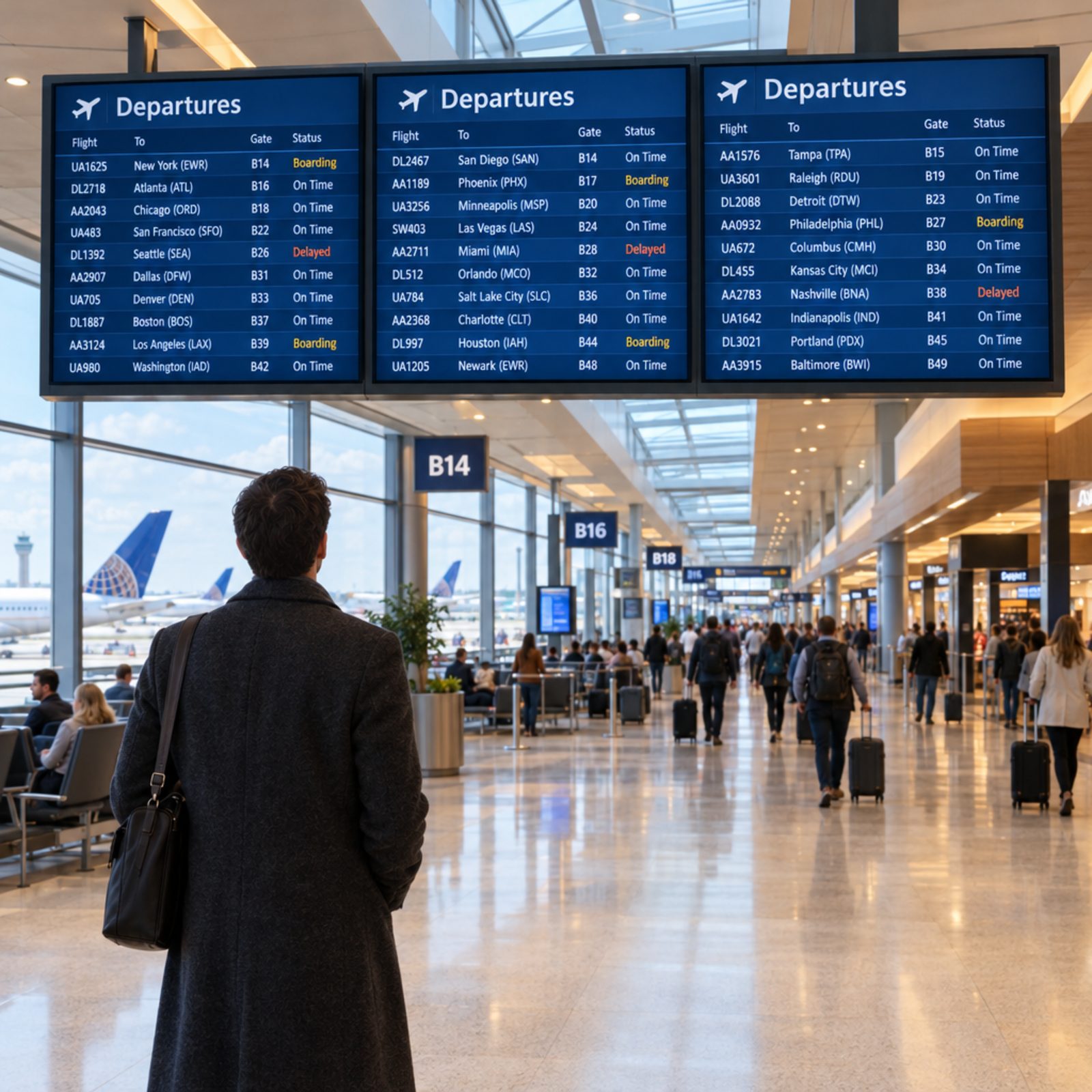
When your flight cancels, the only thing that matters is how many other ways out of there exist.
A route the airline flies five times a day is a soft landing — something goes wrong and you’re on the next one. A route flown once a day, on a small regional jet, between two secondary cities, is a trap. Cancel that one and the next available seat might be two days out, especially in packed holiday weeks when every flight is already sold.
So before you book, look at how often your airline runs the exact city pair you need. Frequency is your real insurance policy. Pick the thick route over the thin one, even if the timing is slightly less convenient.
35. Build In a Connection Longer Than You Think You Need

A 40-minute connection looks efficient on the booking screen. It looks very different when you’re sprinting through a terminal with your coat half on.
Tight layovers assume everything runs on time, which during the holidays it does not. Your first leg lands a little late, your arriving gate is a long walk from your departing gate, and suddenly you’re watching the jet bridge pull back. Give it room. A ninety-minute to two-hour connection lets the whole thing breathe — if your first flight is on time, you get a coffee and a bathroom you don’t have to run to, and if it’s late, you still make the second one.
Boring beats stranded. Every time.
The connection that looks too long on the booking screen is the one you’ll thank yourself for at the gate.
34. Route Through a Sunny Airport, Not a Snowy One

If you’re connecting in December, the hub you choose matters more than the departure time.
Routing through a northern hub in the dead of winter means betting against snow, ice, and the ground delays that come with them. Route the same trip through a warm-weather hub and you take weather almost entirely off the table. A connection in Phoenix, Dallas, Atlanta, or Charlotte is far less likely to strand you than one through Chicago, Denver, or the New York airports when a storm system is moving through.
When two itineraries are otherwise even, let the southern route break the tie. You can’t control the weather. You can control whether you’re standing in it.
33. Put the Whole Family on One Reservation
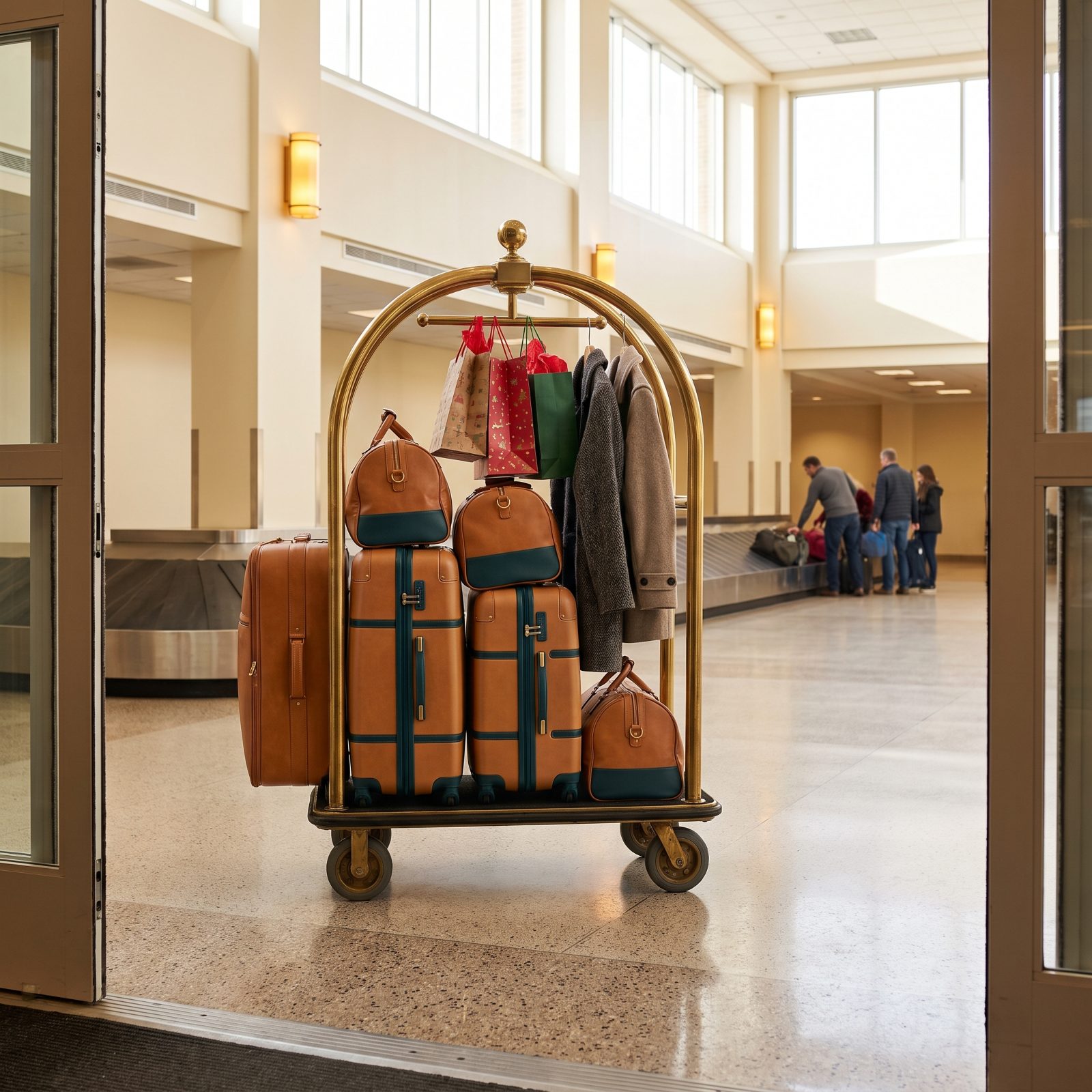
Booking the kids’ tickets separately to save a few dollars feels clever right up until something goes wrong.
When everyone’s on one reservation, the airline treats you as a group. A delay or cancellation gets everyone rebooked together, seats land near each other, and if a flight oversells, families on a single booking are far less likely to be split up. Book separately and the system has no idea you’re traveling together — grandma could end up on a different rebooked flight than the grandchildren she’s supposed to be chaperoning.
One reservation. One record. The airline keeps your party together because, as far as it’s concerned, you are a party.
32. Return Before the Sunday Travel Crush
🔥 Would you like to save this?
Everybody flies home Sunday. That’s the problem.
The last two days of a holiday weekend are when terminals fill and the overhead bins fight back, and a single weather cell three states away cascades into a board full of delays. You end up paying for the busiest, most fragile travel window there is.
So fly back a day or two earlier instead. Fares often dip, the lines thin out, and when something does go sideways there are empty seats on later flights to rebook you onto. Can’t get work to budge? Take the first flight out Sunday morning rather than the afternoon crush — earlier departures run before the day’s delays pile up.
31. Use the Airline App Instead of Waiting at the Counter
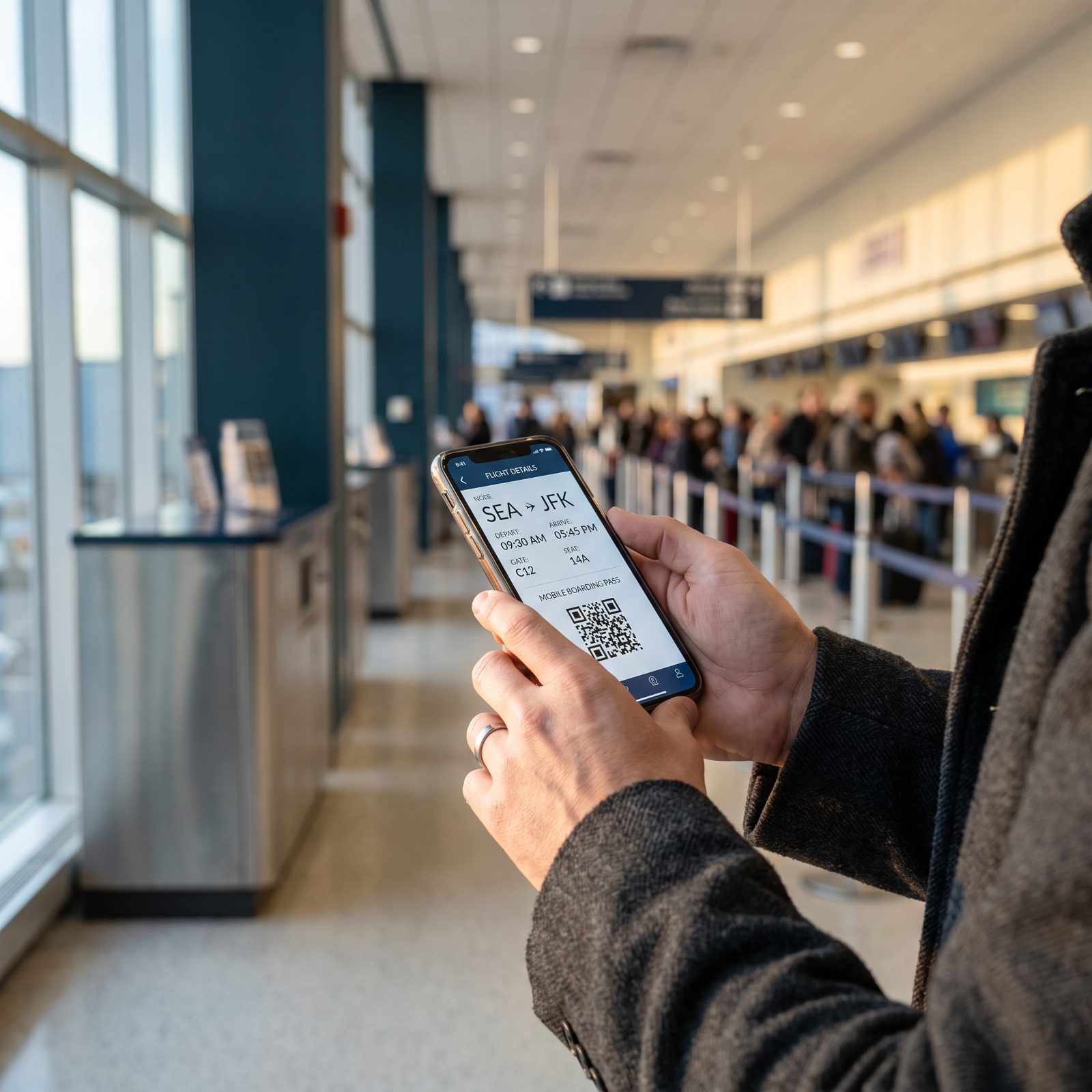
The counter line moves at the speed of the single family ahead of you with eleven bags and a rebooking dispute.
Most things that used to require a human agent now live in the airline app — seat changes, same-day standby, rebooking after a cancellation, baggage receipts, even upgrade requests. When a flight goes belly-up, the app often rebooks you before the counter agent has finished apologizing to the person in front.
Download your carrier’s app the night before. Log in, add your trip, and poke around so you know where the rebooking button hides. Keep the airline’s text line and phone number saved too. During a mass cancellation, calling and tapping at the same time is how you win.
30. Turn On Flight, Gate and Baggage Notifications
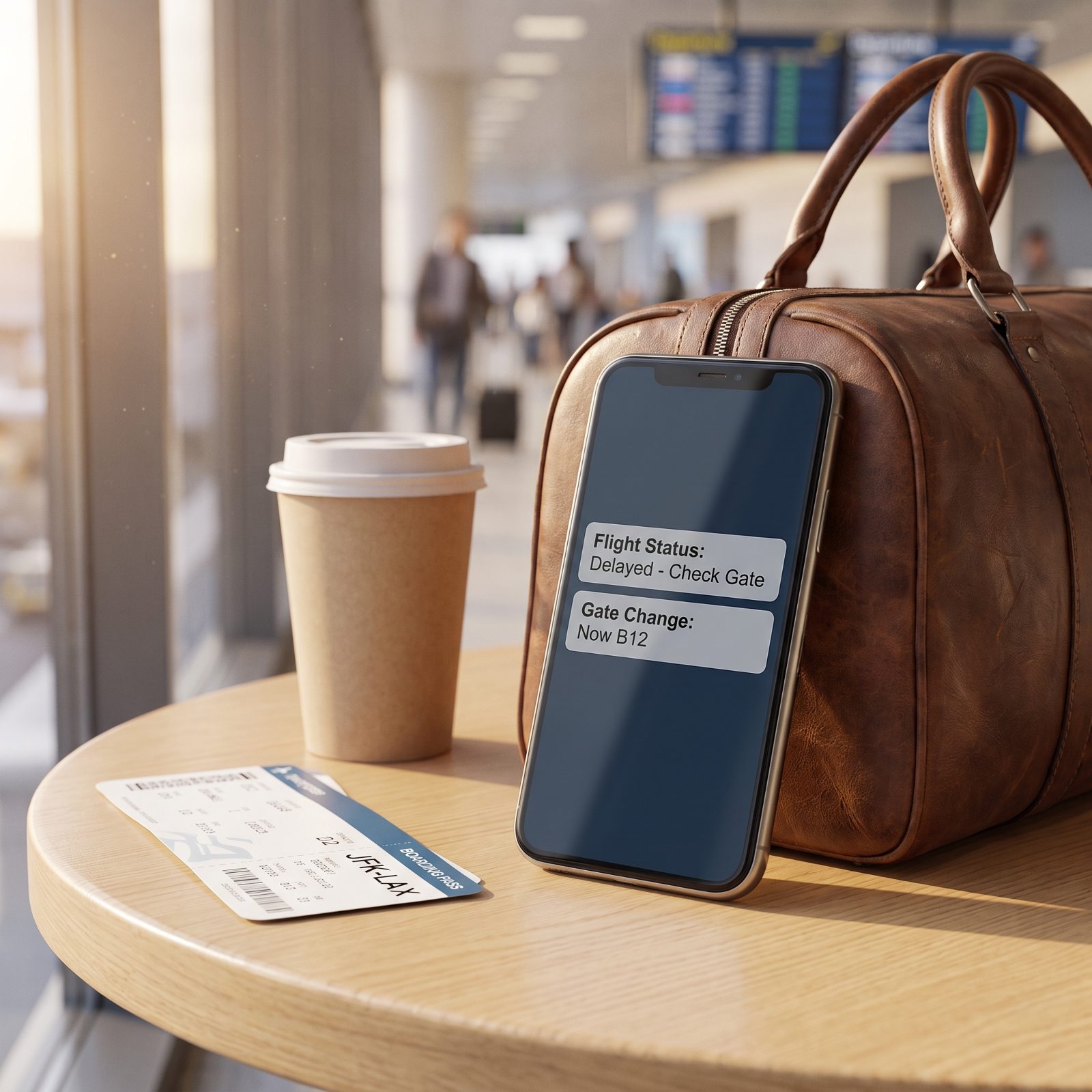
Gates change. They change quietly, on a screen you walked past twenty minutes ago.
If you’re not getting the update pushed to you, you find out when a gate agent announces it to a terminal that’s already half-emptied in the wrong direction. Notifications close that gap. The airline knows your flight slipped, your gate moved, your bag made the plane — and you ought to know it the same second they do.
In the app settings, switch on every alert they offer: departure time changes, gate assignments, boarding reminders, baggage status. Then turn on the airport’s own app notifications too for the terminal you’re flying out of. Belt and suspenders.
29. Complete Online Check-In the Moment It Opens

Check-in usually opens a full day before departure. Those first few minutes matter more than people realize.
On a packed flight, that’s when the better remaining seats get claimed, when overbooking bumps start sorting winners from losers, and when your boarding group locks in. Wait until morning and you take whatever’s left — which on a holiday flight means a middle seat near the lavatory and a boarding position that guarantees no bin space.
Set a phone alarm for the twenty-four-hour mark. Check in from your couch, pick your seat, and have the boarding pass loaded before you ever leave the house. Done beats scrambling every time.
28. Save Screenshots of Boarding Passes
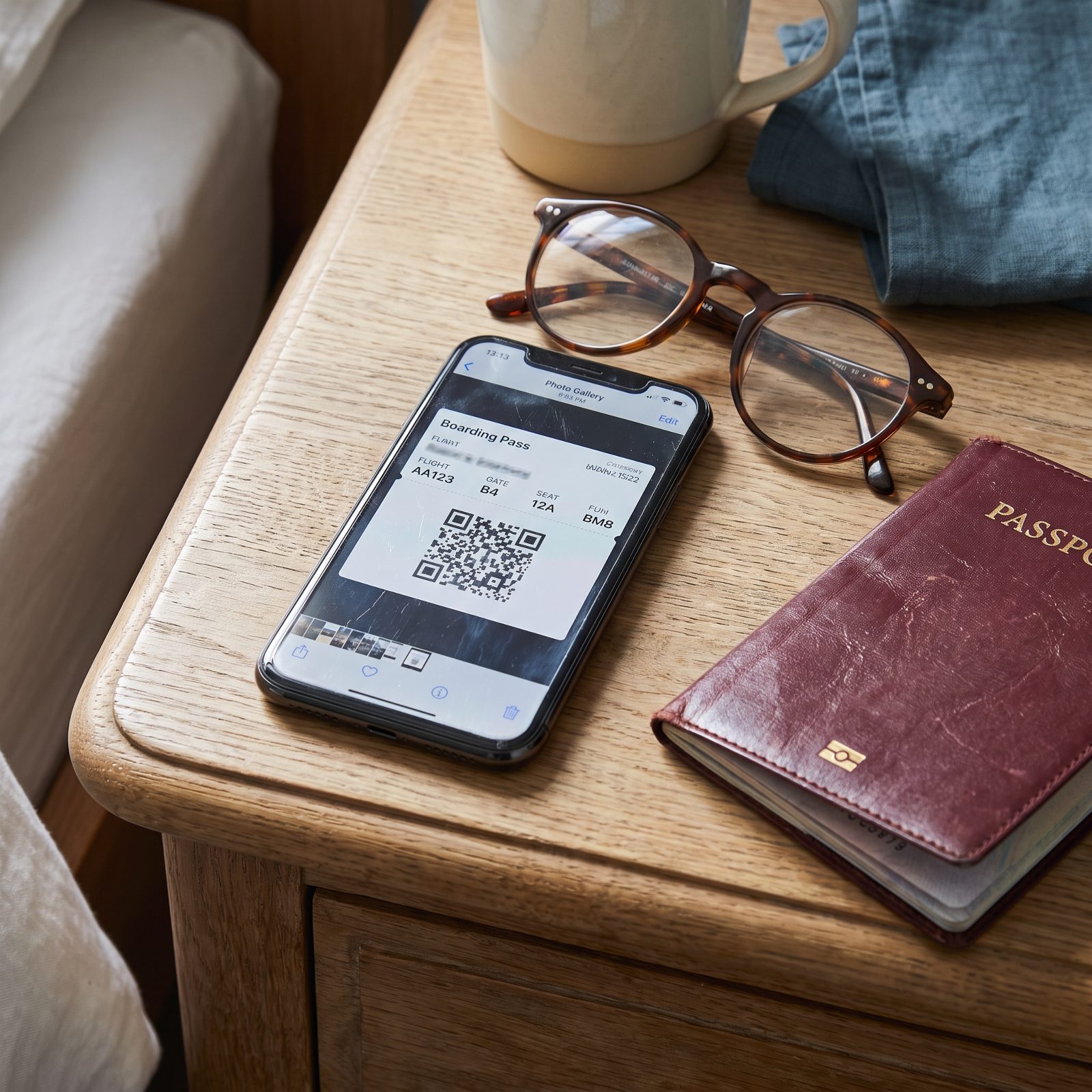
The moment you need your boarding pass is the moment the terminal Wi-Fi dies and the app spins forever.
Live passes depend on a connection and on the app not crashing, and both fail at the worst possible time — usually at the gate, with a line forming behind you. A screenshot doesn’t care about signal.
Once your pass loads, take a screenshot of each one and save it to your photos. Better yet, add the pass to your phone’s wallet, which stores it offline. Do this for every leg of a connection. Then, when the agent needs to scan and your app won’t cooperate, you just open your camera roll and breathe.
27. Reserve a Security-Screening Time Where Available
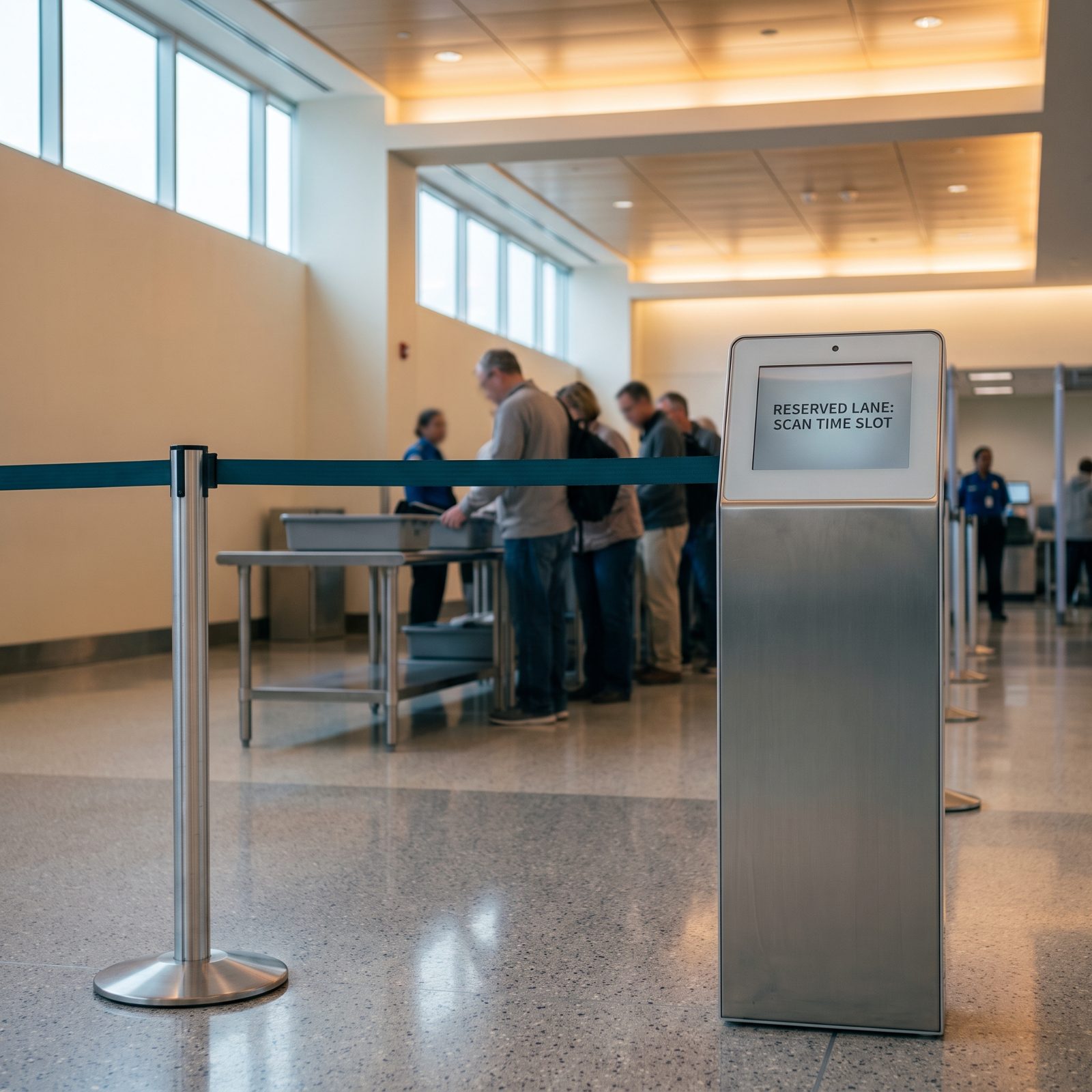
Security is where a comfortable buffer turns into a sprint to the gate.
A growing number of airports now let you book a free screening appointment ahead of time — a reserved window that routes you into a shorter dedicated lane. During holiday peaks, that can be the gap between a short wait and a long one. Not every airport offers it yet, so it slips past most travelers entirely.
Check your departure airport’s website a few days out and search for a reservation or expedited-screening program, then book the slot that lines up with your arrival. No program there? Lean on the trusted-traveler lines instead.
26. Use Curbside Bag Check When the Terminal Is Packed
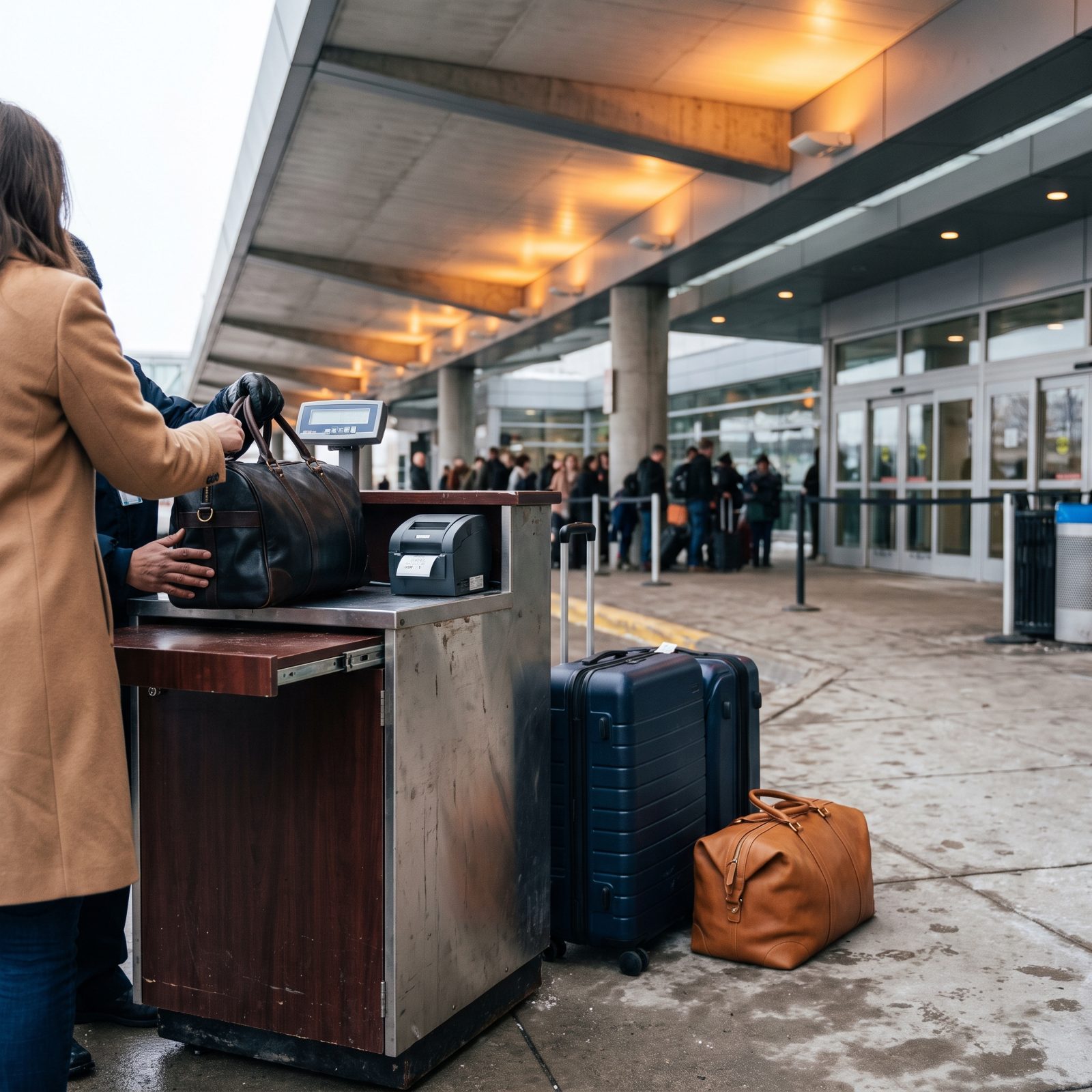
You’ve seen the check-in hall at peak holiday hours. One coiling line, strollers, ski bags, somebody’s grandmother asleep on a trolley.
Standing in that scrum to drop a single suitcase squanders the forty-five minutes you’ll wish you had for security. Curbside bag check sits right where the taxi drops you — hand over the bag, it gets tagged, and you walk straight to the checkpoint with nothing to wrestle.
Have your ID and boarding pass ready before you reach the podium, and carry small bills for the tip that keeps the service worth running. It isn’t offered everywhere, and some airlines charge a few dollars, but on a packed morning it buys back time you can’t get any other way.
25. Place Contact Details Inside the Suitcase

External tags tear off. That little paper loop is the first thing to go when a bag gets dragged across a conveyor at 2 a.m.
Once the outside tag vanishes, baggage handlers open the bag hunting for anything that says whose it is. If there’s nothing inside, your suitcase joins the sad gray room of the permanently unclaimed.
Drop a printed card right on top of your folded clothes with your name, cell number, email, and the address where you’re staying — not your home address, which just advertises an empty house. The destination contact is what reunites you fastest. Takes thirty seconds and costs a sheet of paper.
24. Remove Old Routing Stickers From Luggage
🔥 Would you like to save this?
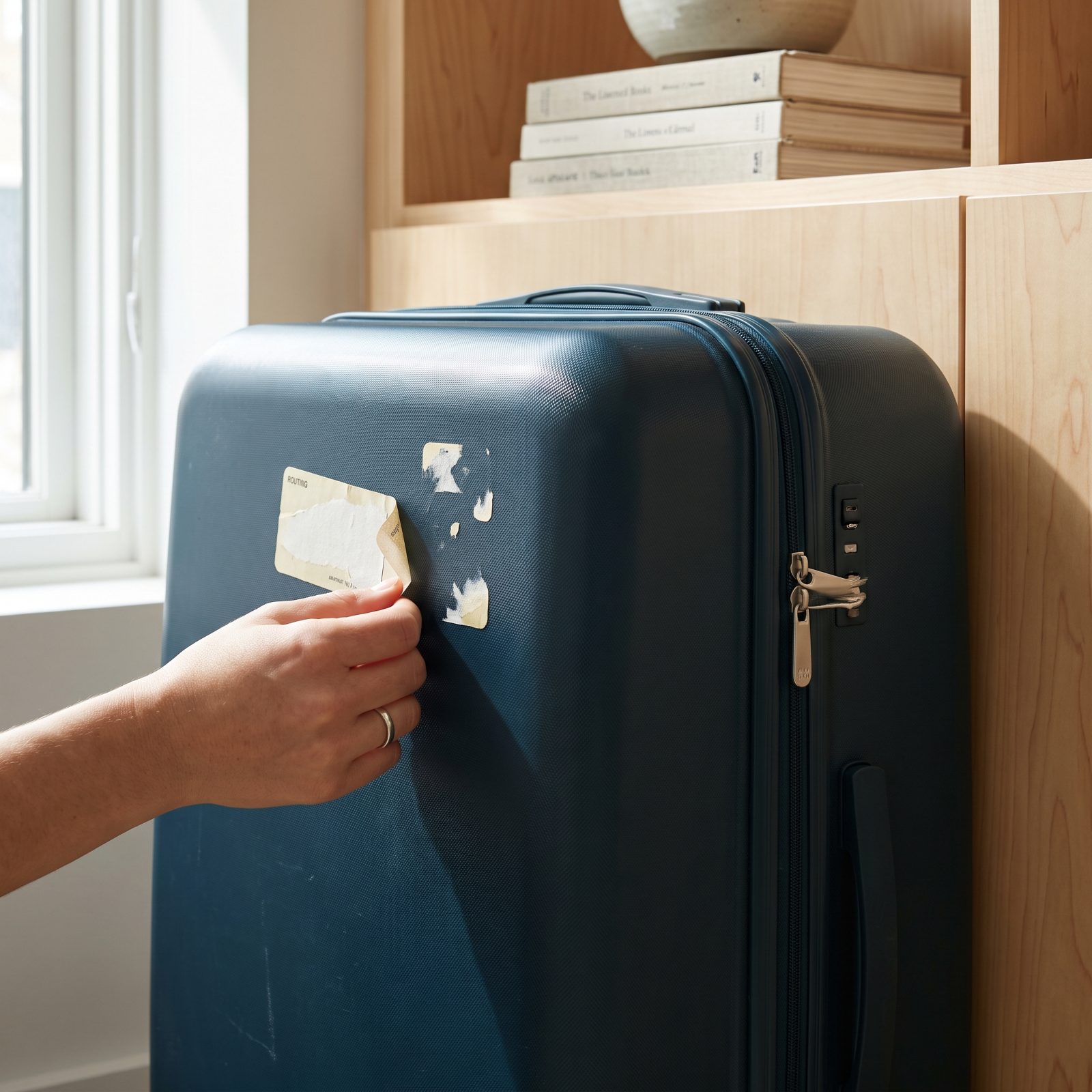
That barcode sticker from your last trip is still clinging to the handle. It’s not a souvenir. It’s a trap.
Automated sorting systems scan whatever barcode they find, so an old routing tag can send your suitcase cheerfully off toward the city you visited six months ago while you wait at the carousel for a bag that’s touring without you.
Before you leave, peel off every old airline sticker and tear tab. Check the handle, the side panel, and underneath where they hide. A quick pass with a cloth and a little rubbing alcohol lifts the sticky residue too. Clean bag, one barcode, one destination.
23. Track Checked Luggage With a Bluetooth Tag

There’s a particular helplessness in standing at an empty carousel while someone tells you your bag is “in the system somewhere.”
A coin-sized Bluetooth tracker ends the guessing. Drop one in your checked bag and your phone shows you where it actually is — still at your origin airport, sitting on the ramp, or riding a different carousel in a different terminal. You stop relying on the airline to tell you the truth and start knowing it yourself.
Toss an Apple AirTag or a Tile into an inside pocket before you zip up. When a bag goes missing, screenshot the tracker’s last location and show it to the baggage desk. Nothing speeds up a recovery like handing an agent the coordinates.
22. Pack One Complete Outfit in Your Personal Item

Your checked bag goes to Denver while you go to Chicago. It happens every December, and it always seems to happen to the person who packed everything they own in one suitcase.
When your luggage takes a detour, you’re stuck in the same clothes you flew in, shopping for socks in a strange city on Christmas Eve. Not the holiday anyone pictures.
So tuck one full change of clothes into the bag that never leaves your side — a sweater, clean underwear, socks, a shirt you wouldn’t be embarrassed to wear to dinner. It weighs almost nothing and buys you a day of dignity if the airline loses track of everything else.
21. Ship the Bulky Gifts Ahead Instead of Hauling Them

Picture yourself at the gate with a shopping bag of wrapped presents in one hand, a rolling carry-on in the other, and a boarding pass somewhere in your teeth. Now picture that same pile jammed into an overhead bin two rows back from your seat.
Dragging gifts through three terminals costs you overweight fees, battered packages, and the special misery of gate-checking something fragile. Boxes take abuse that people never see.
Ship them a week ahead. Ground shipping on a box of presents usually runs less than a second checked bag, it arrives before you do, and you stroll through the airport with your hands free. Your knees will thank you somewhere around concourse C.
20. Leave the Presents Unwrapped for Security
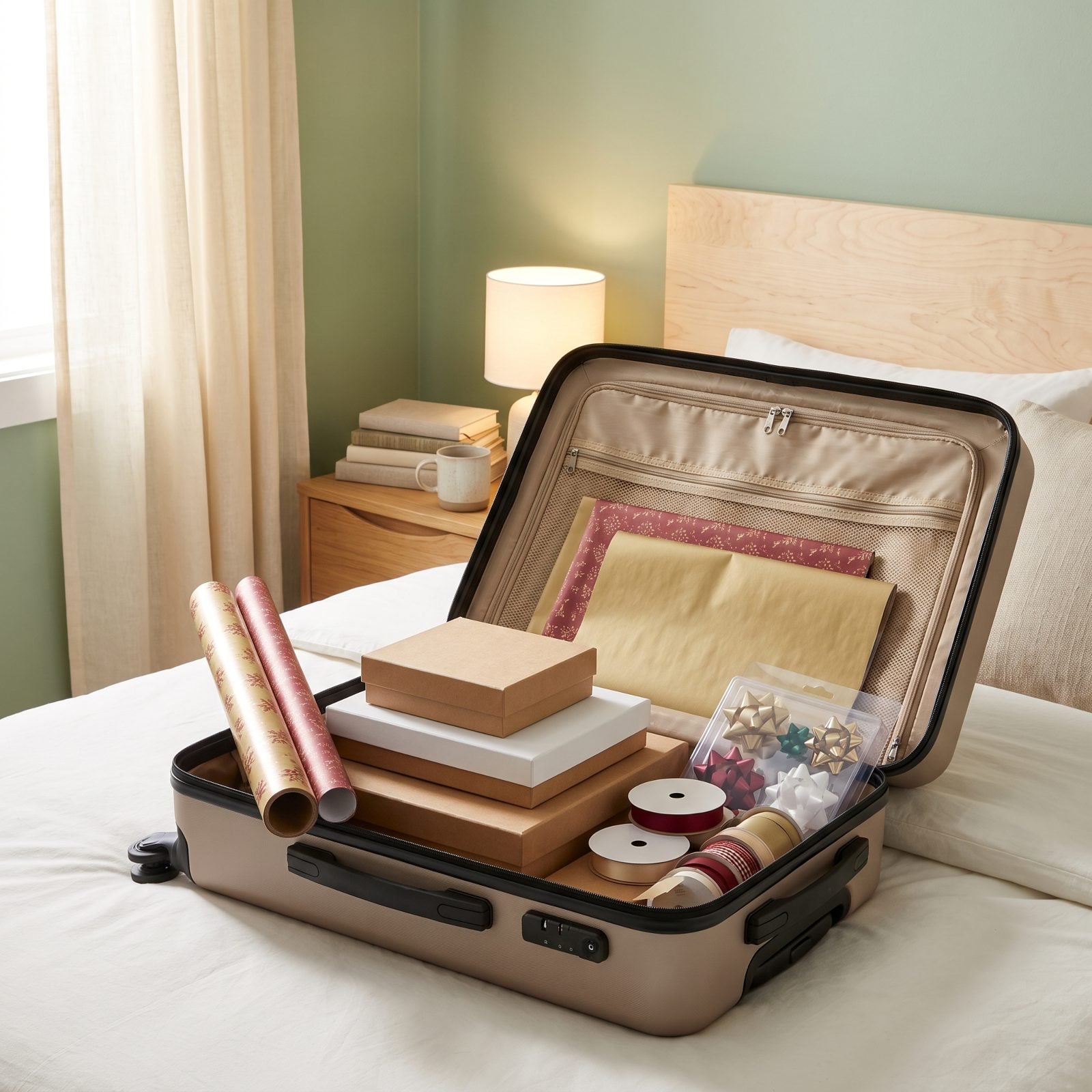
Wrap the gift and a screener may unwrap it for you. A dense wrapped box reads as a mystery on the X-ray, and the agent is well within their rights to tear the paper open and see what’s inside.
Nothing deflates a traveler like watching a carefully wrapped present get sliced apart on a stainless steel table while the line backs up behind them.
Pack the gifts unwrapped and bring the paper, ribbon, and tape in your bag, then wrap everything at your destination the night before. You lose twenty minutes at the kitchen table and skip the heartbreak at the checkpoint entirely.
19. Check the Airline’s Carry-On Size Before You Pack a Thing

Every airline draws its own line in the sand, and the budget carriers draw theirs in permanent marker. The bag that sailed onto one flight gets dragged to the sizer on the next.
Guess wrong and you’re paying a gate fee that costs more than the bag did, plus the indignity of being pulled aside in front of a full boarding line.
Pull up the exact carry-on dimensions for your specific airline before you start packing — not the morning you fly. A soft-sided bag with a little give beats a hard shell that refuses to compress by half an inch when it matters.
18. Carry a Portable Charger With Its Own Cable Attached
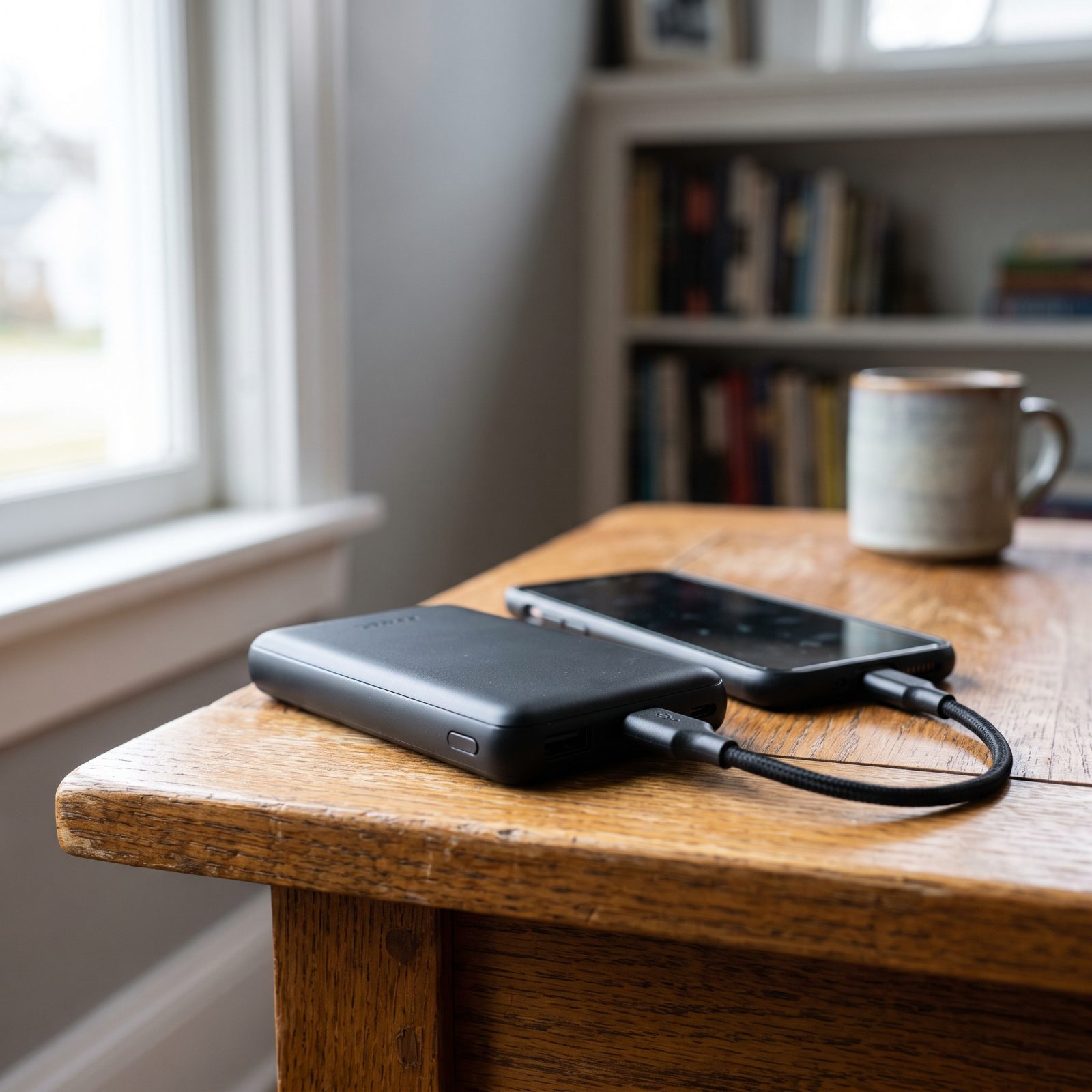
You remembered the power bank. You forgot the cable. Now you’ve got a fully charged brick and a dying phone, which is somehow worse than bringing neither.
A dead phone means no boarding pass, no gate-change alerts, and no way to call the rebooking line when your connection evaporates. During the holidays, that phone is your lifeline.
Buy a power bank with the cable built right in, or clip the cable to the charger with a short loop so they travel as one unit. Top it off the night before. One full charge on a modern bank refills most phones two or three times over, which covers just about any delay the season throws at you.
17. Download Your Movies and Music Before You Reach the Airport

Airport Wi-Fi during a holiday rush has the throughput of a garden hose with a kink in it, because everyone in the terminal is trying to stream the exact same thing you are.
Wait until you’re sitting at the gate and your download will crawl, stall, or quit entirely once the plane doors close and the signal vanishes for good.
Queue up your movies, shows, podcasts, and playlists at home on your own Wi-Fi the night before. A three-hour weather delay goes a lot easier with a full season downloaded and ready. Boredom is the one delay you can actually prevent.
16. Pack Food That Survives a Four-Hour Delay

You’ve stood in that terminal line at 9 p.m. — the one snaking out of the only open sandwich shop, every warm case picked clean except a sad egg salad nobody wants. That’s holiday travel dining when a delay hits.
Relying on airport food means paying triple for whatever’s left, if anything’s left, while hangry travelers circle the gate like it owes them money.
So bring food that keeps without refrigeration and won’t turn to mush at the bottom of your bag. Almonds, pretzels, a hardy piece of fruit, a couple of protein bars. Carry an empty water bottle through security and fill it at a fountain past the checkpoint. A fed traveler is a calm traveler.
15. Empty Your Pockets Into the Carry-On Before You Hit the Line
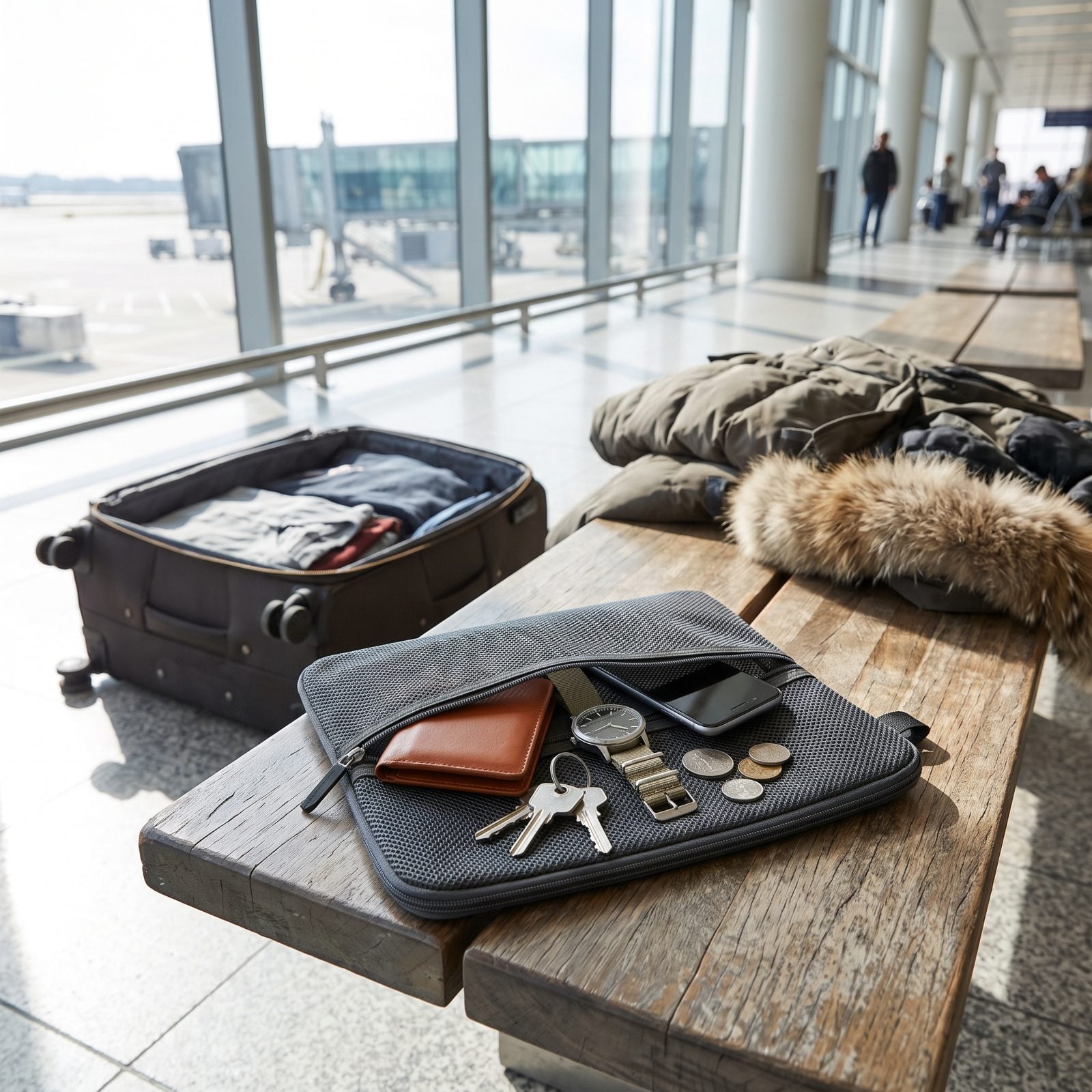
The checkpoint is where small items go to die. A single coin in your back pocket sends you right back through the scanner, and your reading glasses have a way of ending up in the wrong gray bin entirely.
Fumbling at the belt holds up everyone behind you and, worse, is how people leave the airport without their wedding ring.
Before you join the line, sweep everything out of your pockets into a zippered pouch tucked inside your carry-on — keys, wallet, watch, phone, loose change, all of it in one place. You walk through clean, grab your bag on the other side, and nothing goes rogue in a bin.
14. Pick the Checkpoint Everyone Else Is Ignoring

Big airports hide extra security checkpoints the way old houses hide back staircases. The main one by the food court draws every crowd, while a second lane three gates down sits half empty.
Herd instinct keeps everyone queued at the obvious entrance, trading twenty minutes of their life to stand where the signs point first.
Check your airport’s terminal map before you go, or ask an airport staffer which checkpoint runs lightest. Many terminals have a second or third lane near a different concourse that feeds the same secure area. Once you clear it, you’re inside, and you can walk to any gate you like.
13. Get Dropped at Arrivals When Departures Is a Parking Lot
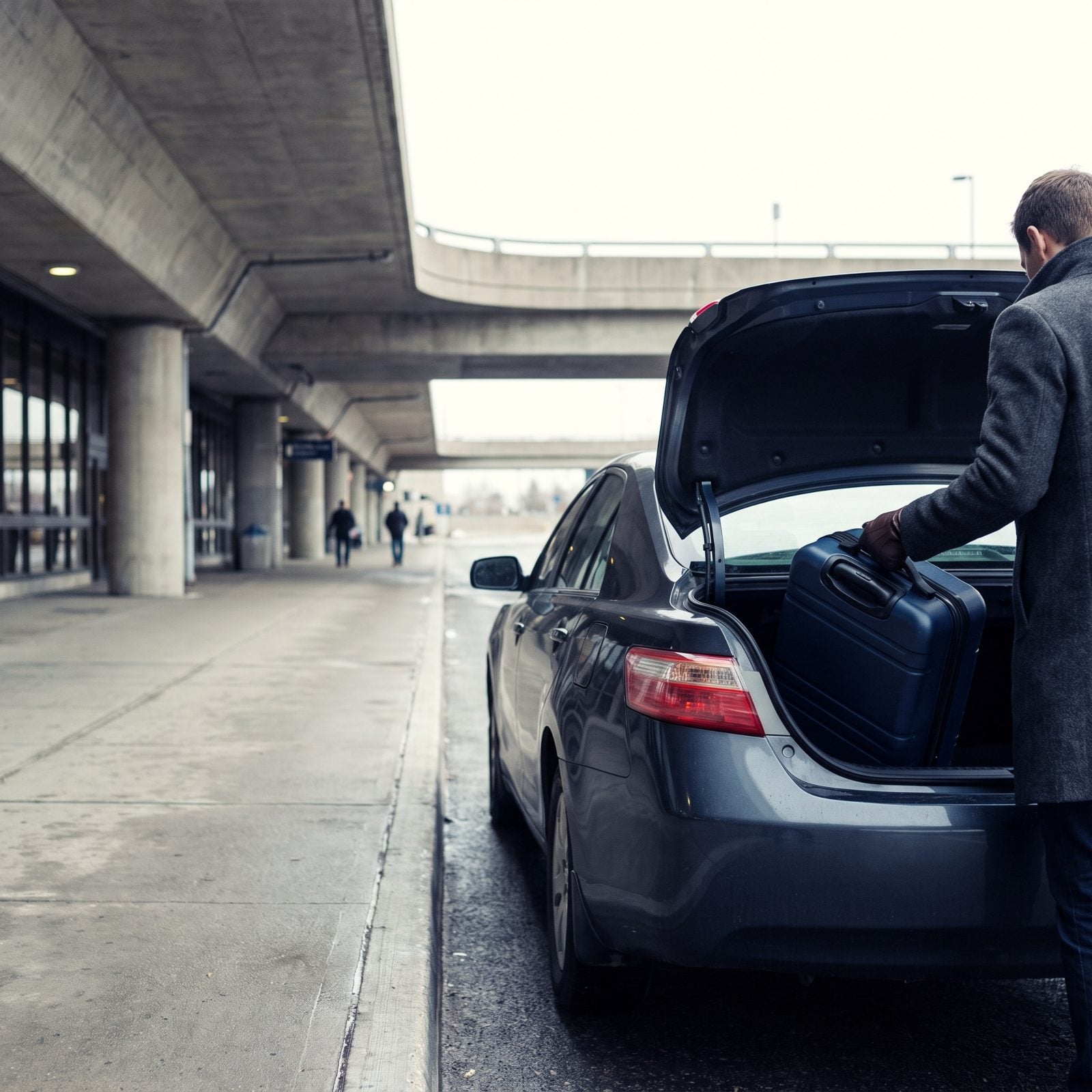
The departures level the week of Thanksgiving is a slow-motion demolition derby. Cars three deep at the curb, officers blowing whistles, nobody moving.
Sitting in that crawl while your boarding window ticks down is a special kind of helpless, and the person dropping you off is stuck in it twice as long trying to claw their way back out.
Have your ride drop you at the arrivals level instead. It runs quieter because it’s built for the people getting picked up, not the ones rushing to leave. A quick elevator or escalator ride puts you right at check-in with none of the upper-curb chaos — and it works just as well in reverse when someone’s collecting you.
12. Reserve Airport Parking Before Holiday Week Starts

The holiday parking scramble has a familiar shape. You pull into the economy lot at 5 a.m. and crawl aisle by aisle, watching your buffer time evaporate while the car ahead of you reverses into what turns out to be a cart return.
Full lots during peak week aren’t a maybe — they fill, they close, and the overflow shuttle runs on its own mysterious schedule. So you end up sprinting a concourse you meant to stroll.
Book the spot online a week ahead. Most airports and nearly every off-site lot will sell you a guaranteed space with a printed or scanned entry code, often cheaper than the drive-up rate. Ten minutes on your laptop buys a space with your name on it. Cheap trade.
11. Check the Lounge Access Already Hiding in Your Credit Card

You might already own a seat in a quiet room with free coffee and a working outlet. A lot of travel cards bundle lounge access, and the owner never once walks in.
During a holiday delay, a lounge versus the gate is the difference between a charged phone and a dead one, a real chair and a sliver of floor by the window. People pay forty bucks at the door for privileges they’re already carrying in their wallet.
Pull up your card’s benefits page this week. Look for Priority Pass, network lounges, or a day-pass credit, then download the card’s app, add your membership, and confirm which terminals have access before you fly.
10. Book an Airport Hotel the Night Before a Dawn Departure

A 6 a.m. flight means a 4 a.m. alarm, which really means a 3:30 wake-up, which means you barely slept because part of your brain stayed on sentry duty all night. Then you drive dark roads for forty-five minutes, running on fumes.
That groggy pre-dawn drive is where small mistakes get made — missed turns, forgotten boarding passes, a phone left on the kitchen counter.
Book an airport hotel with a park-and-fly rate instead. You sleep fifteen minutes from the terminal, leave your car on the property for the whole trip, and ride the shuttle in rested. Plenty run the shuttle every twenty minutes and let you stash the car for a week. The math often beats long-term parking on its own.
9. Ask the Gate Agent About Earlier Standby Flights
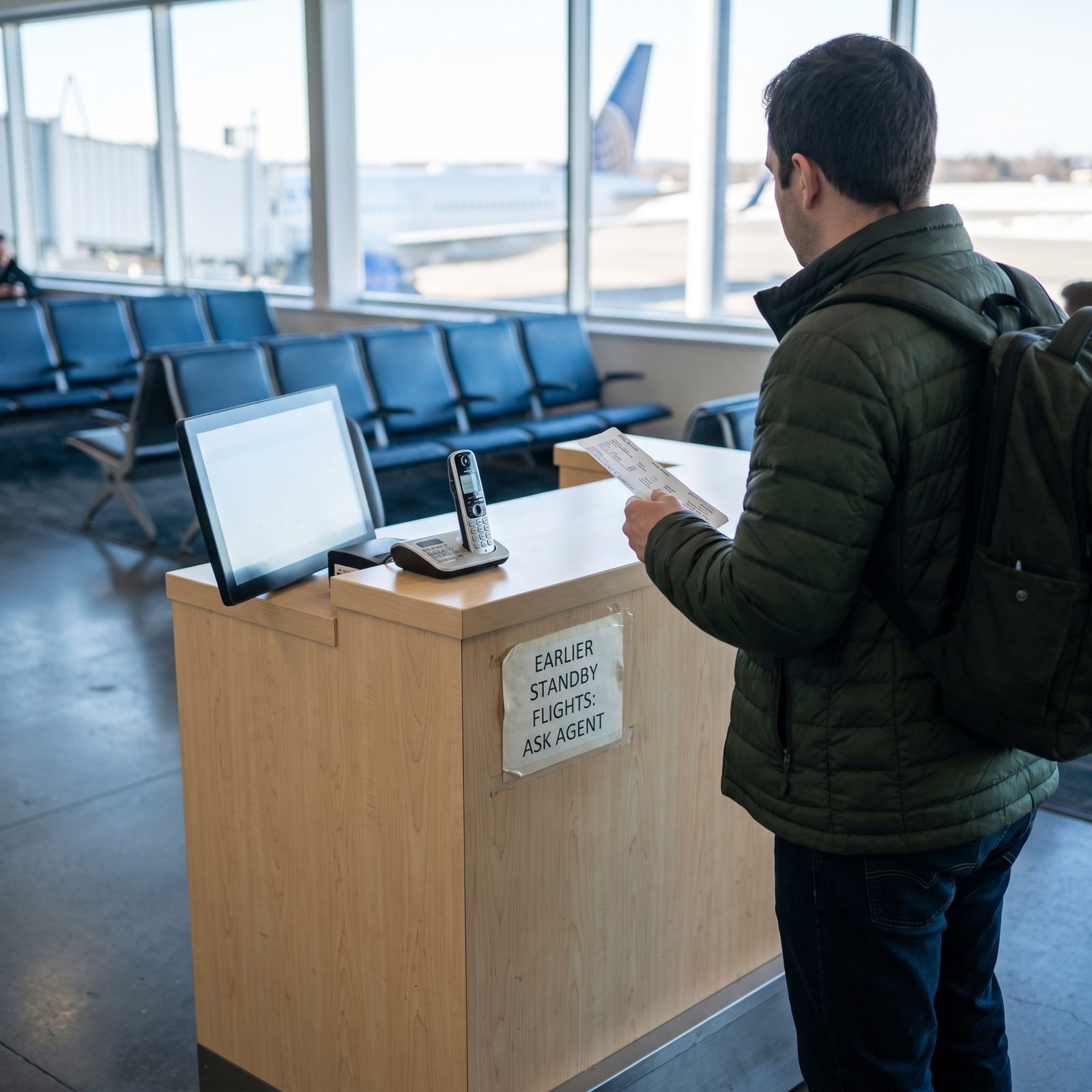
You’re booked on the 4 p.m. and you got here early. The 1:30 to the same city is sitting right there with empty seats. Most travelers never think to ask, because nobody ever told them they could.
Standby and same-day change rules vary — plenty of airlines wave the fee for elites or let you confirm an earlier seat for a modest charge. Getting home three hours sooner on a holiday is worth asking about every single time.
So walk up to the gate agent, be friendly, and ask the plain question: is there room on an earlier flight, and what would it take to get on it? Worst answer is no, and you’ve lost nothing.
The gate agent holds more power over your afternoon than the entire app does. Be the polite person they want to help.
8. Track the Inbound Aircraft Before It Even Lands

The board at your gate says ON TIME. The plane you’re supposed to fly on is still two states away, circling. Those two facts can coexist for an uncomfortably long time before the board catches up to reality.
Here’s the quiet trick seasoned flyers lean on: your departure is only as reliable as the inbound aircraft that arrives to become your flight. If it’s running late getting to you, your on-time board is fiction with an expiration date.
Free apps like FlightAware or the airline’s own app let you look up the inbound plane by flight number. See it delayed, and you’ve got a head start on everyone else at the gate — time to grab food, hit the restroom, start weighing a backup.
7. Board When Your Group Is Called, Not a Second Sooner
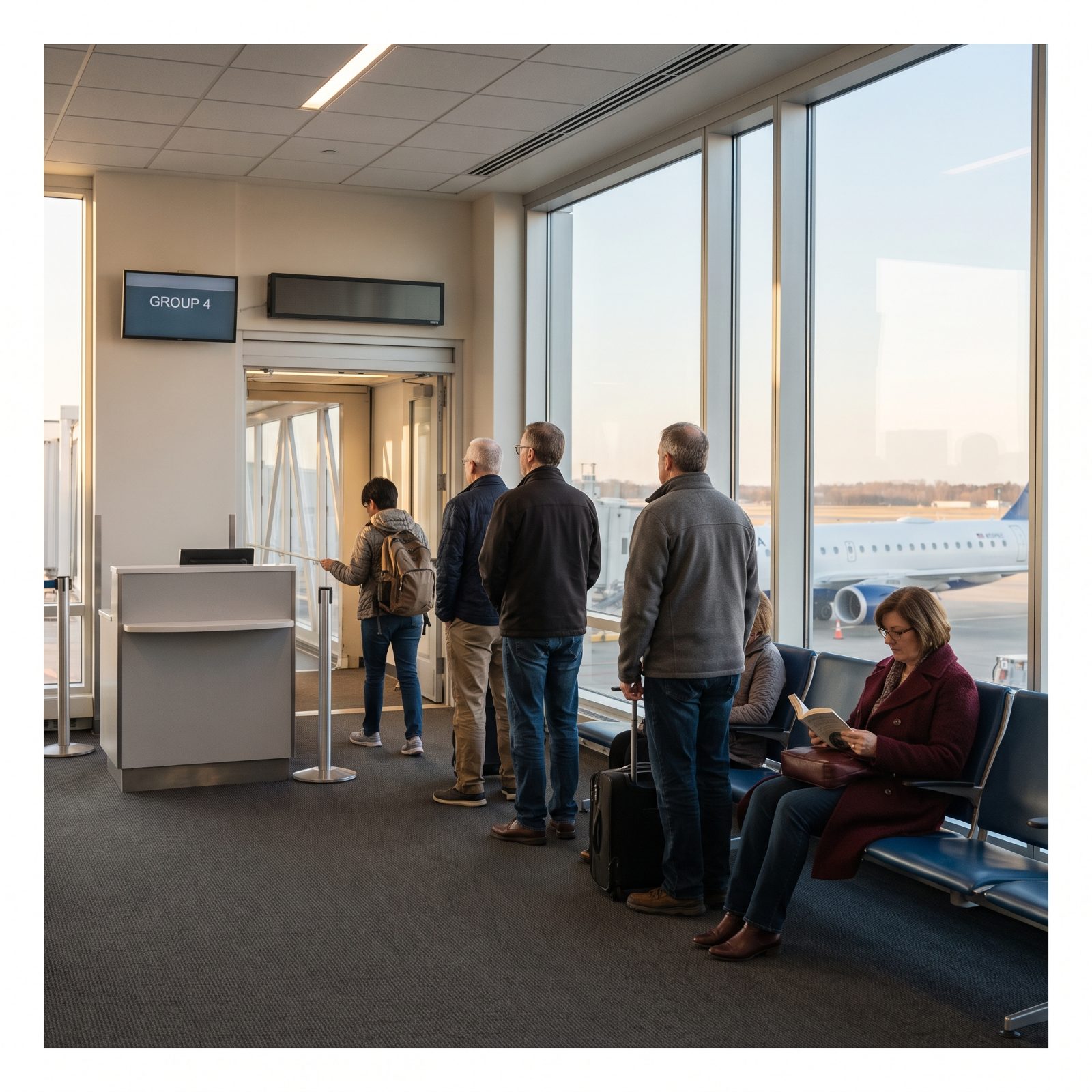
You know the scrum. The second any boarding begins, half the gate stands and clots around the podium like the plane might leave without them. Nobody gets on faster. Everyone just stands longer.
The gate crowd is pure theater. The plane boards by group, your seat is assigned, and the aisle bottlenecks no matter how early you join the pack — so you’ve traded a comfortable chair for ten minutes of standing in a human traffic jam.
Stay seated until your group is actually called. You’ll walk straight on, and your back and knees will thank you.
6. Hold Your Coat Until the Overhead Bins Are Settled
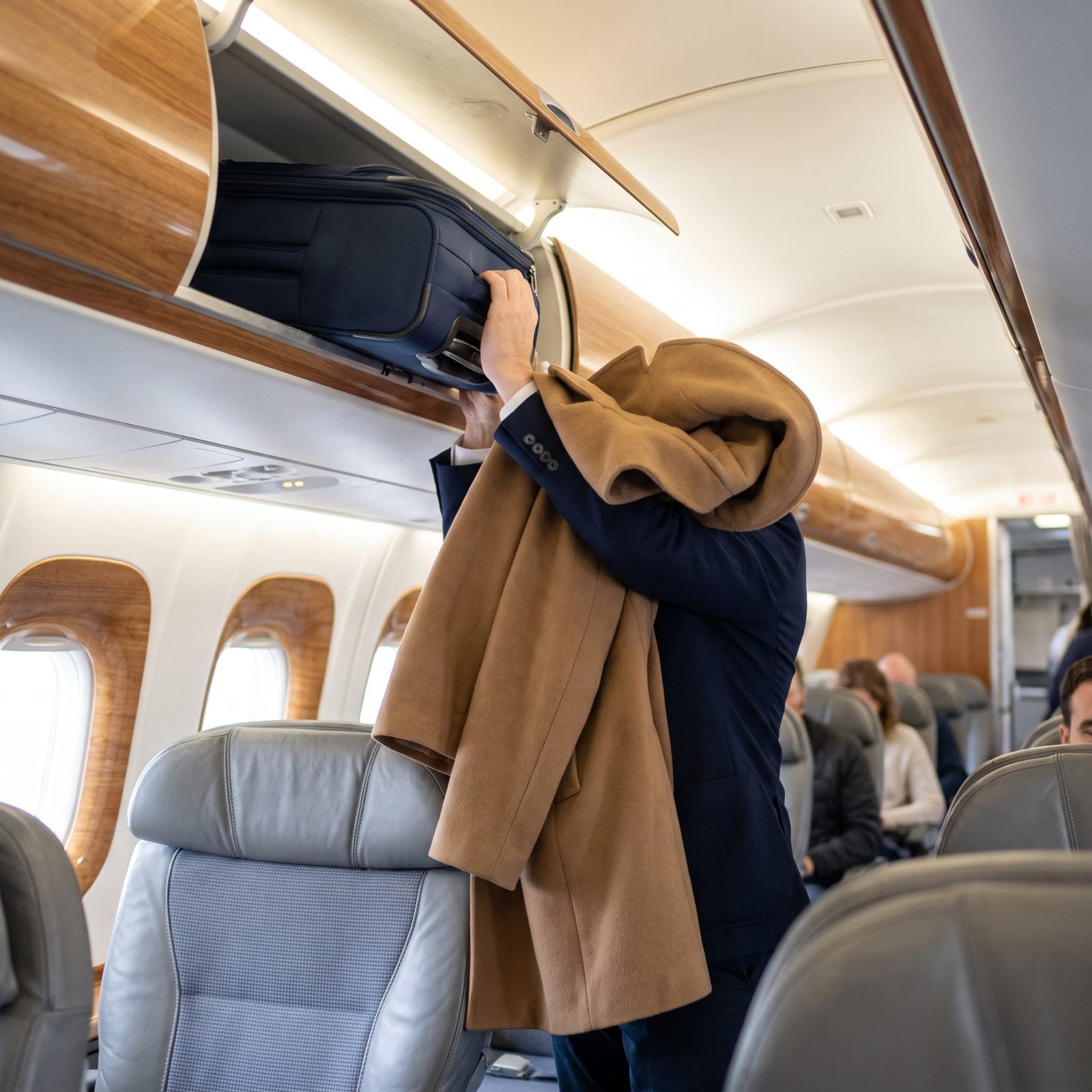
Everyone does it on instinct. You reach your row, jam your coat into the overhead first, then wrestle your bag up around it. Now the coat’s squashed, the bin’s half-full of air, and the person behind you has nowhere for their carry-on.
Coats are shape-shifters. They look big and compress to almost nothing. Bags don’t. Putting the soft thing in first is how bins fill up fast and how the last ten rows end up gate-checking luggage they planned to carry on.
Stow the hard-sided bag first, wheels in. Then lay your coat flat on top of it, or drape it over the bag in your lap. The bin holds more, your coat stays uncrushed, and nobody’s holiday gifts ride in the belly of the plane.
5. Study Your Connection While You’re Still in the Air
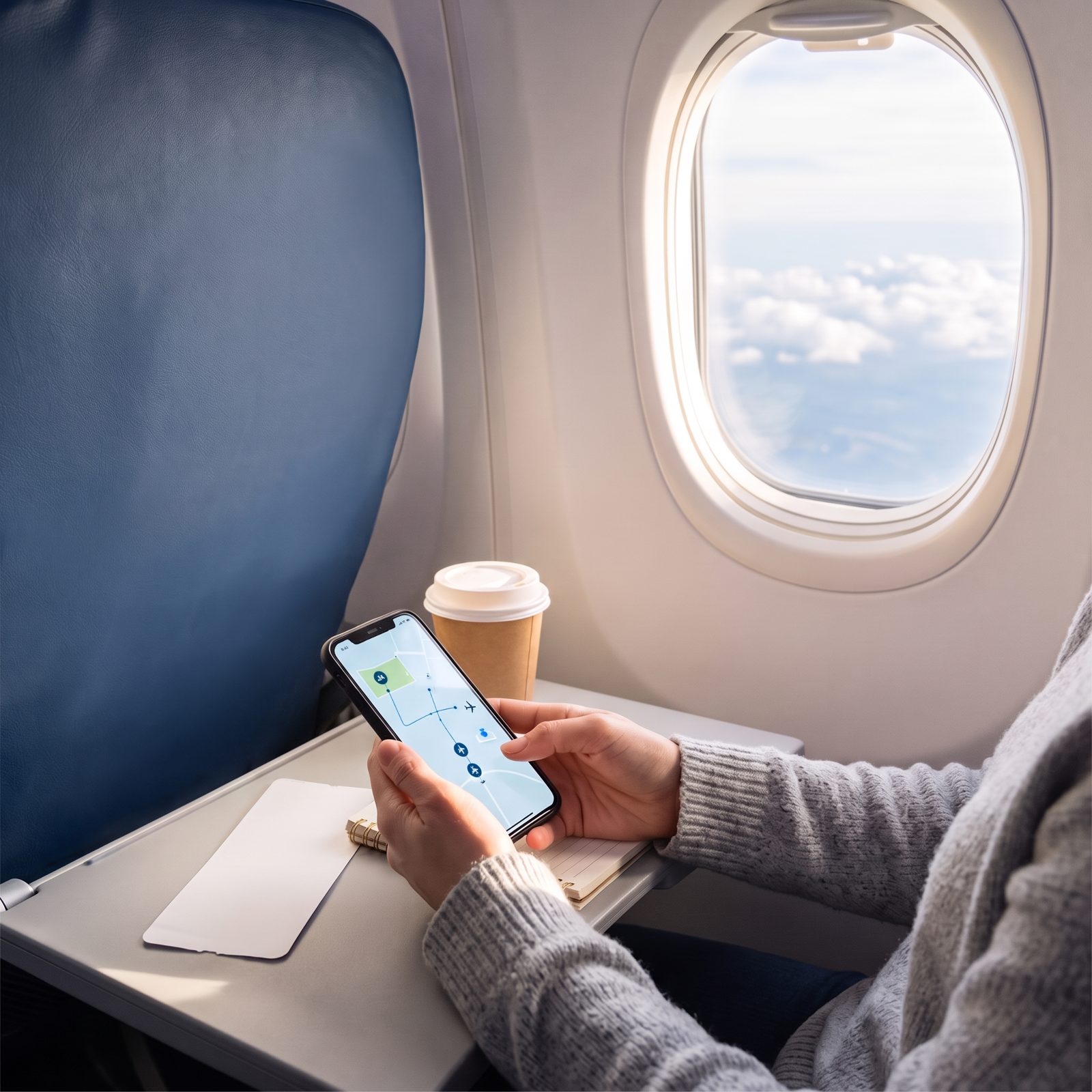
The tight connection is where holidays go sideways. You land, the clock has already eaten half your buffer, and you have no idea whether your next gate is next door or a train ride and two concourses away.
Panic is just unpreparedness arriving all at once. The travelers who sprint the wrong direction are the ones who waited until wheels-down to find out where they were headed.
Before you lose signal — or using the plane’s wifi — pull up the airport map and locate your connecting gate relative to your arrival gate. Note whether there’s an inter-terminal shuttle. Know your walk before you take your first step off the jet-bridge.
4. Recheck Your Gate the Second the Wheels Touch Down
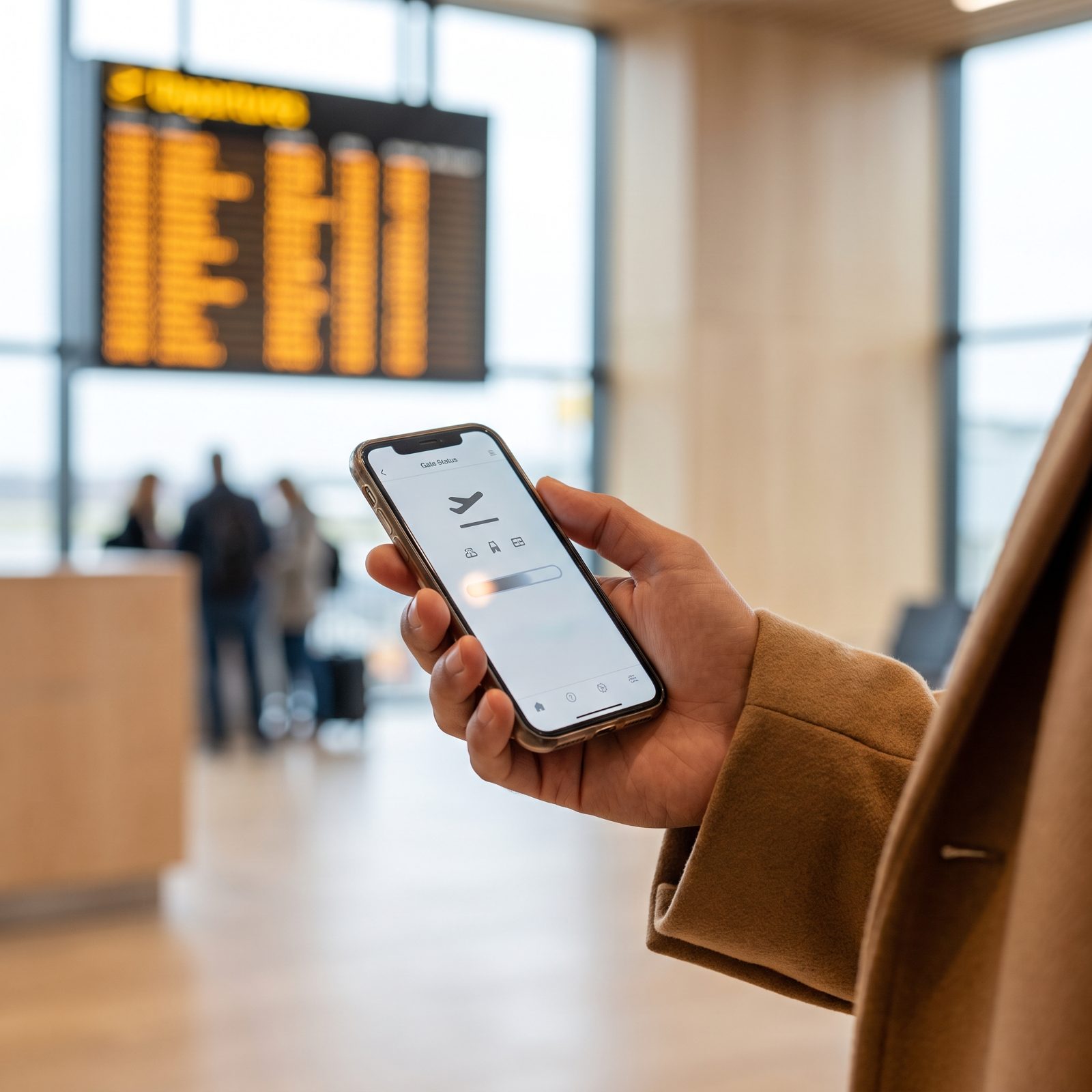
Gates change. Constantly. The gate printed on your boarding pass three hours ago is a suggestion, not a promise, and holiday operations shuffle them like a deck of cards.
Stride confidently toward the old gate without checking, and you can burn ten minutes discovering your flight now leaves from the far end of a different concourse. On a tight connection, ten minutes is everything.
So the instant you land, before you even stand up, check the app or a nearby monitor for your departing gate. Confirm it, then move. Two taps on your phone can save you a panicked, pointless hike.
3. Know the Rebooking Options Before the Cancellation Lands
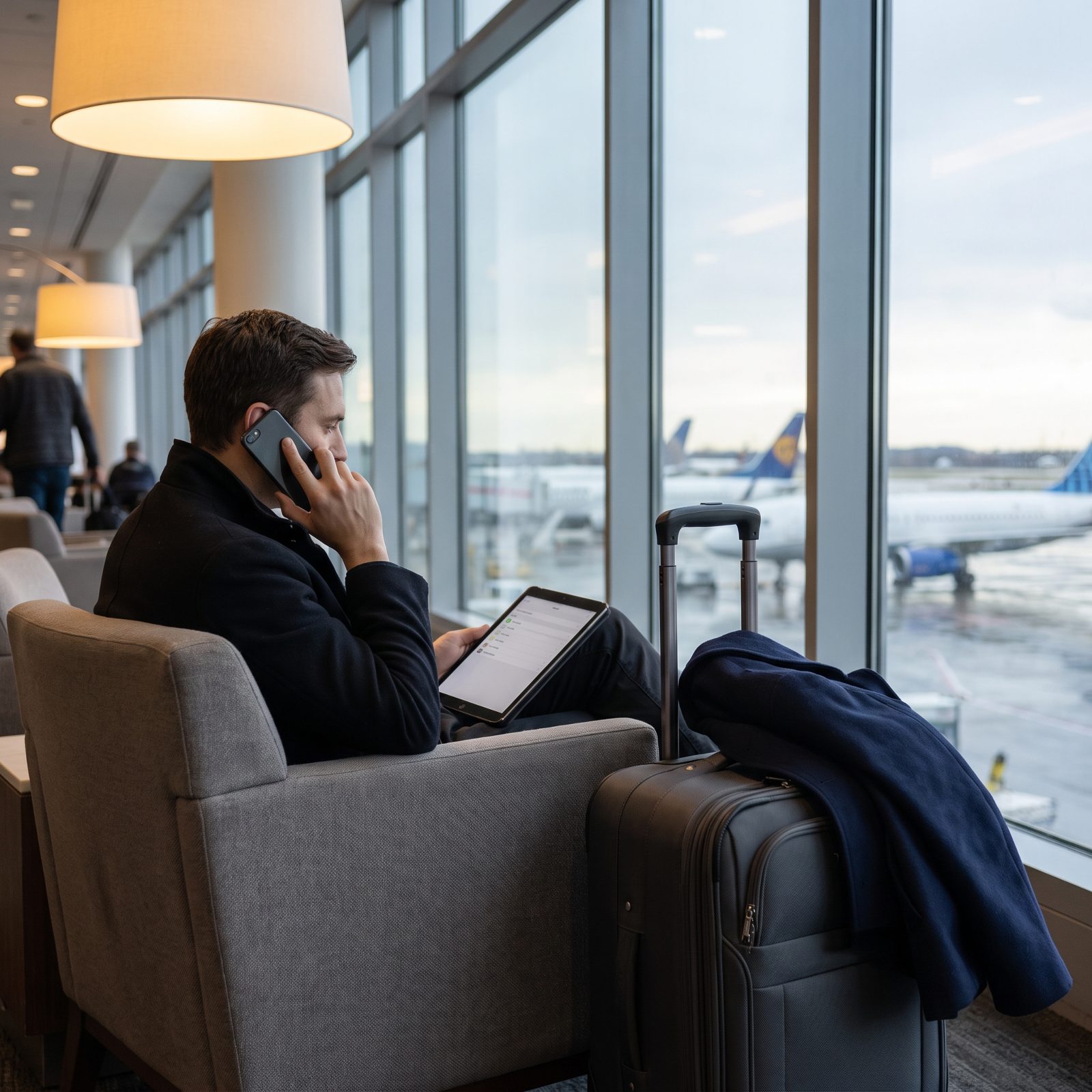
The cancellation notice pings everyone’s phone at the same moment. Within seconds, hundreds of people form the same thought and head for the same counter. The line becomes your whole evening.
Standing in a rebooking line that long during the holidays is a lesson in slow motion. By the time you reach a human, the good seats on the good flights are long gone — scooped up by the people who moved faster.
Know your tools before you need them. Many airlines let you self-rebook in the app the instant a flight cancels. Call the airline’s phone line while you stand in the physical line; whichever answers first wins. Learn whether your airline will put you on a partner carrier, and keep that number saved.
2. Search for Replacement Flights While You’re Still Standing in Line
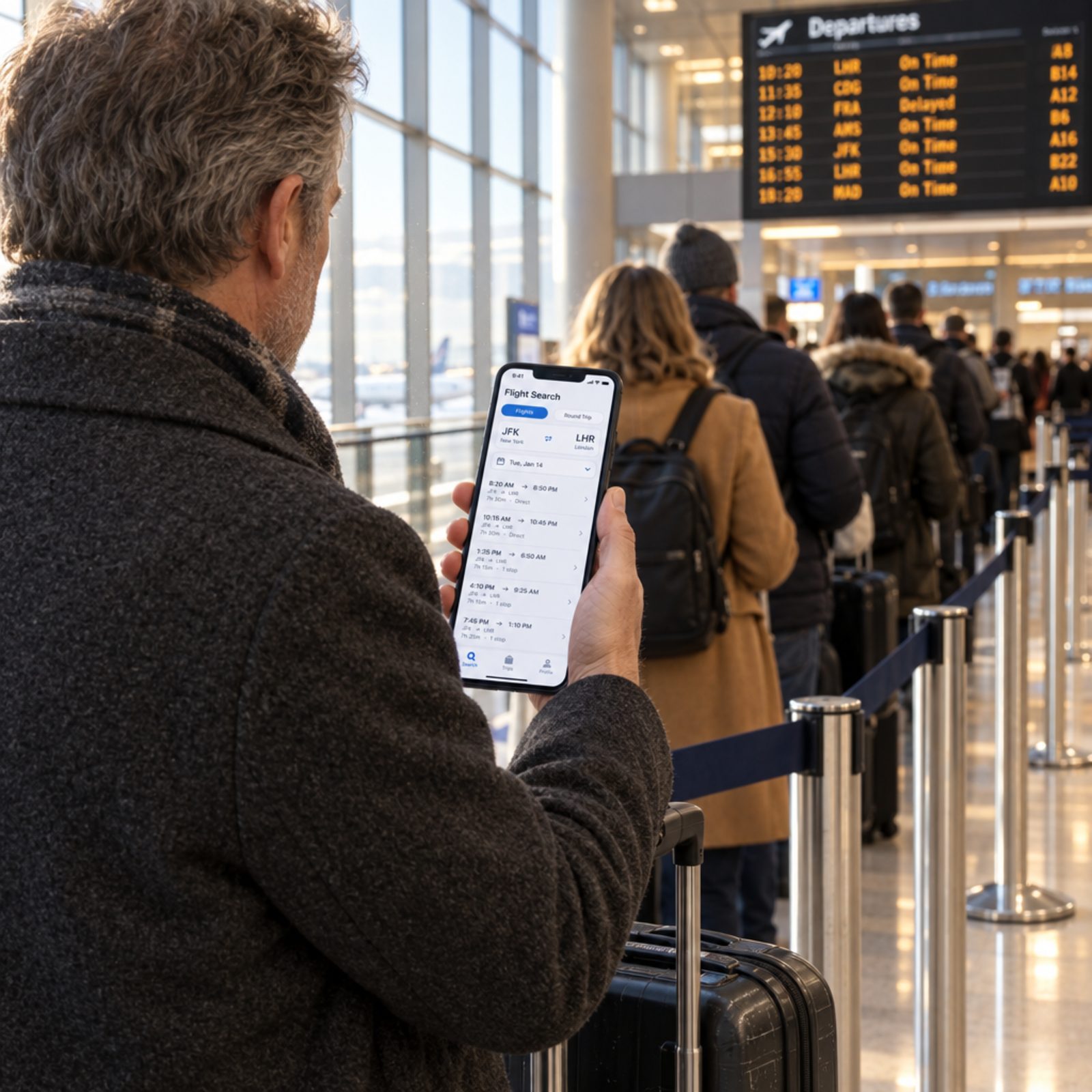
The line barely moves. Two desks down, an agent is stuck on the phone untangling somebody else’s rebooking, and you’ve got maybe forty minutes before the whole afternoon collapses into a night on a plastic chair. Most people just stand there and seethe, which is the mistake. The line is dead time, and dead time is where good seats go to die.
By the time you reach the counter, that agent is working with whatever’s left. So pull up the airline app or a flight search right there in line, find the exact flights you want, jot down the numbers, know your backups. Then you hand over a solution instead of a complaint.
Say you spot a 6:40 that still has aisle seats. You reach the desk and ask for it by number. The agent taps three keys instead of hunting around. You’re done before the person behind you has even explained their problem.
1. Work the Phone, the App, and the Desk Line All at Once

The trap is picking one lane and committing to it. Maybe you join the desk line and wait, or you call and sit on hold, or you fiddle with the app alone. Each one feels like progress. Each one is a single bet when you could be placing three.
The seat you want can vanish in the time it takes one channel to pick up. So run them all at once. Stand in the physical line, dial the phone number and tuck it in your pocket on speaker while it holds, and keep the app open refreshing available flights. Whichever connects first wins, and you walk away from the other two without a second thought.
Here’s a trick the seasoned travelers hoard. Airlines often run a dedicated overseas number with lighter call volume, so phoning the Canada or UK line for a US carrier can get you a human faster — and that human rebooks your domestic flight just the same. Feels like cheating. It isn’t. You’ve just found the short line.
🔥 Would you like to save this?
Please note that some of the imagery in this article were created with the aid of AI image generators.