

🔥 Would you like to save this?
A shoe left standing next to a hotel safe looks like carelessness. It’s the opposite. It’s one of the sharpest tricks going, invented by people who forgot a passport in a safe once and swore never again. Travelers who make it look easy past 60 aren’t luckier or richer — they’ve just collected a small bag of odd little moves that catch problems before problems catch them. None of it costs much. Every bit of it came from something going wrong exactly one time. Here are the ones worth stealing.
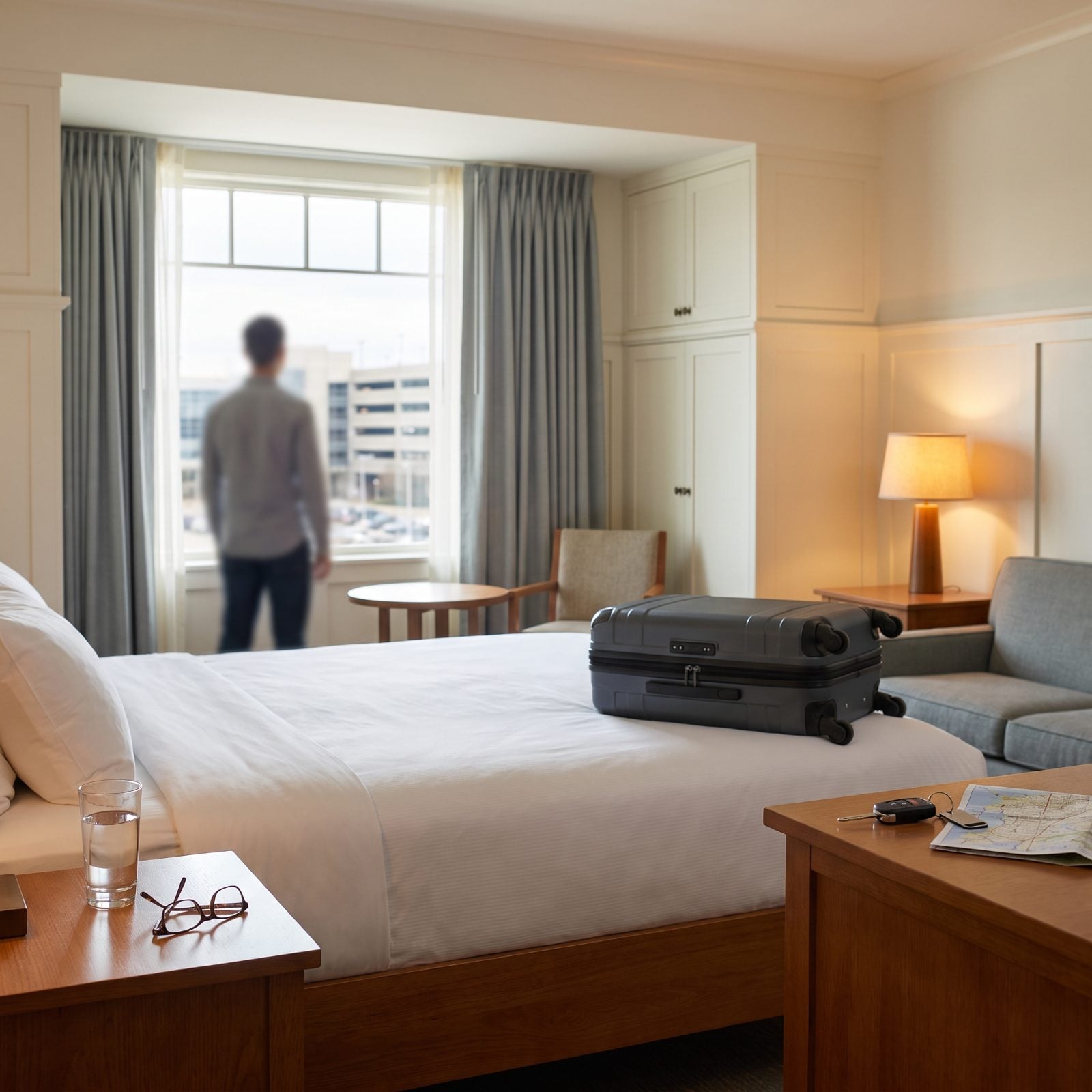
49. Stand One Departure Shoe Beside the Hotel Safe
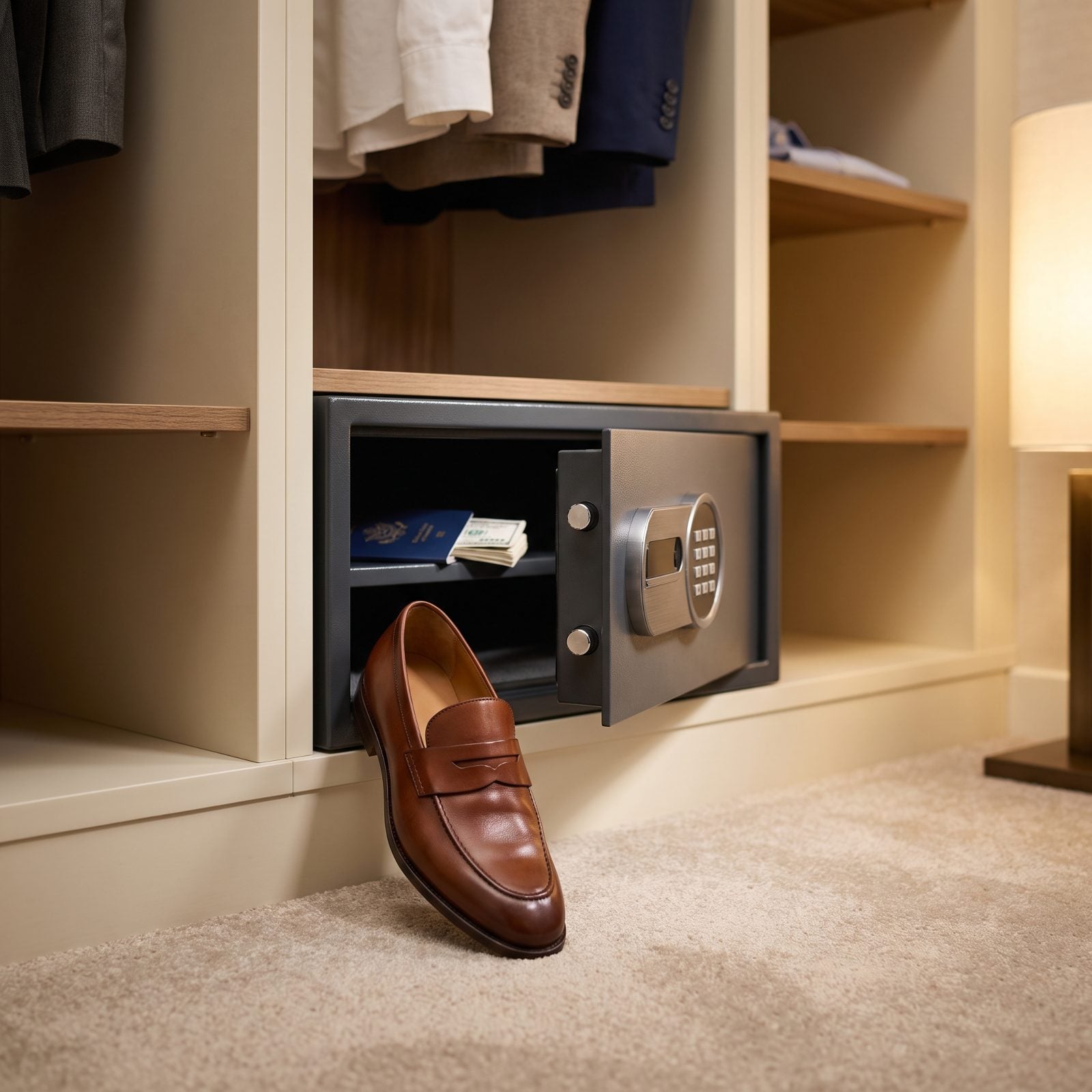
You can’t walk out of a room in one shoe. That’s the whole genius of it. The safe is where valuables go, and also where they get abandoned, because you open it in a rush and slam it shut on checkout day without a second look.
So the rule is simple. Whatever’s in the safe, one of your going-out shoes stands guard right in front of the door. You physically cannot leave until you deal with it — passport, backup cash, the good watch, all of it clears the safe before your foot does.
48. Pack a Thumb-Sized Fridge Thermometer for Medication
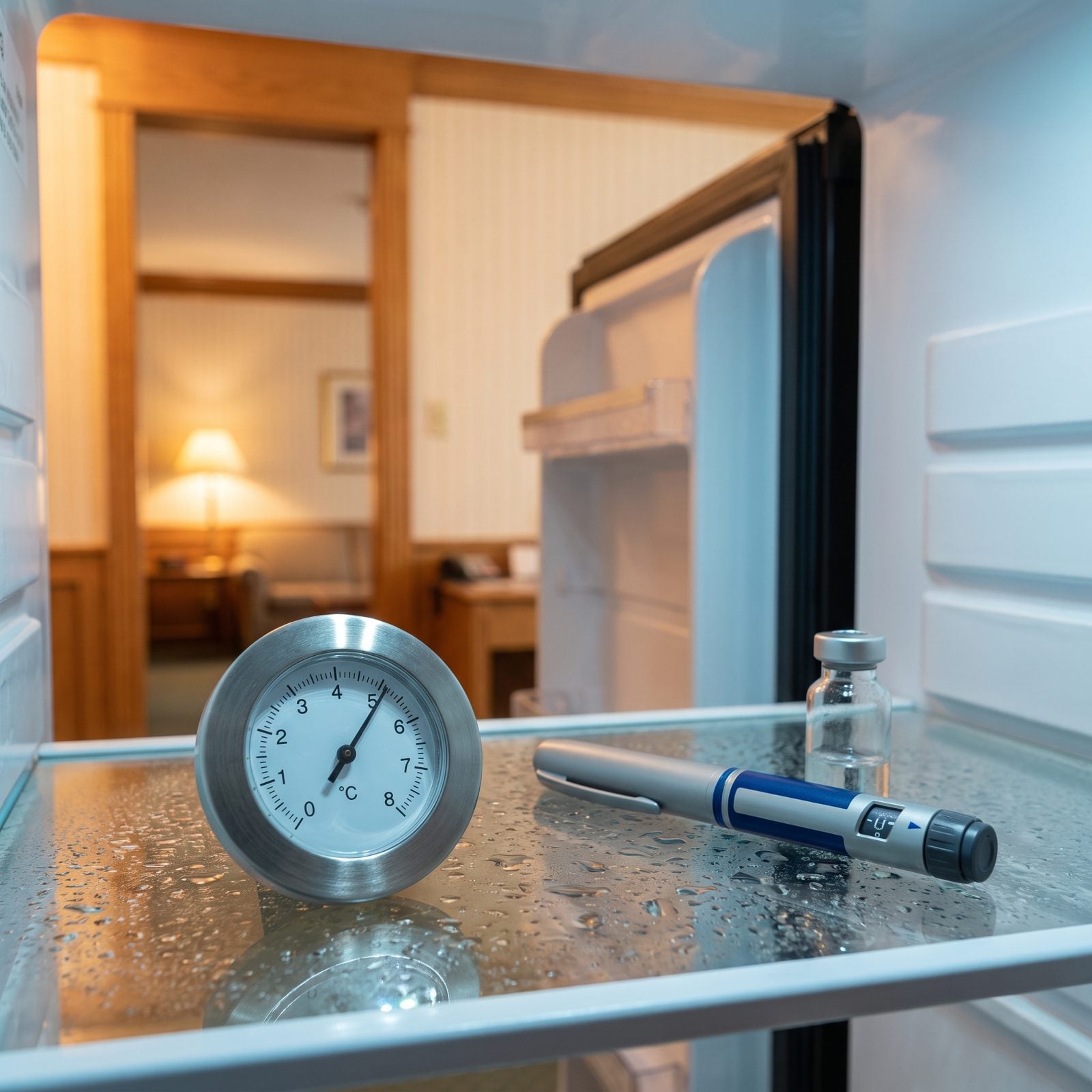
Hotel minibars are built to keep soda cool, not to keep medication safe. Plenty run several degrees warmer than a proper refrigerator, and some barely cool at all once the room warms up and the door swings open all day.
A fridge thermometer the size of a pocket watch settles the question. Drop it in with your medication the first night, check it in the morning, and if the number’s wrong you find out before the medicine does. Then you ask the front desk for a real refrigerator or a bucket of ice.
Nobody thinks about this until a ruined vial sends them hunting for a pharmacy in a town where they don’t speak the language. Spend the few dollars and skip that afternoon.
47. Carry Hearing Aids and Dental Appliances in a Bright Hard Case
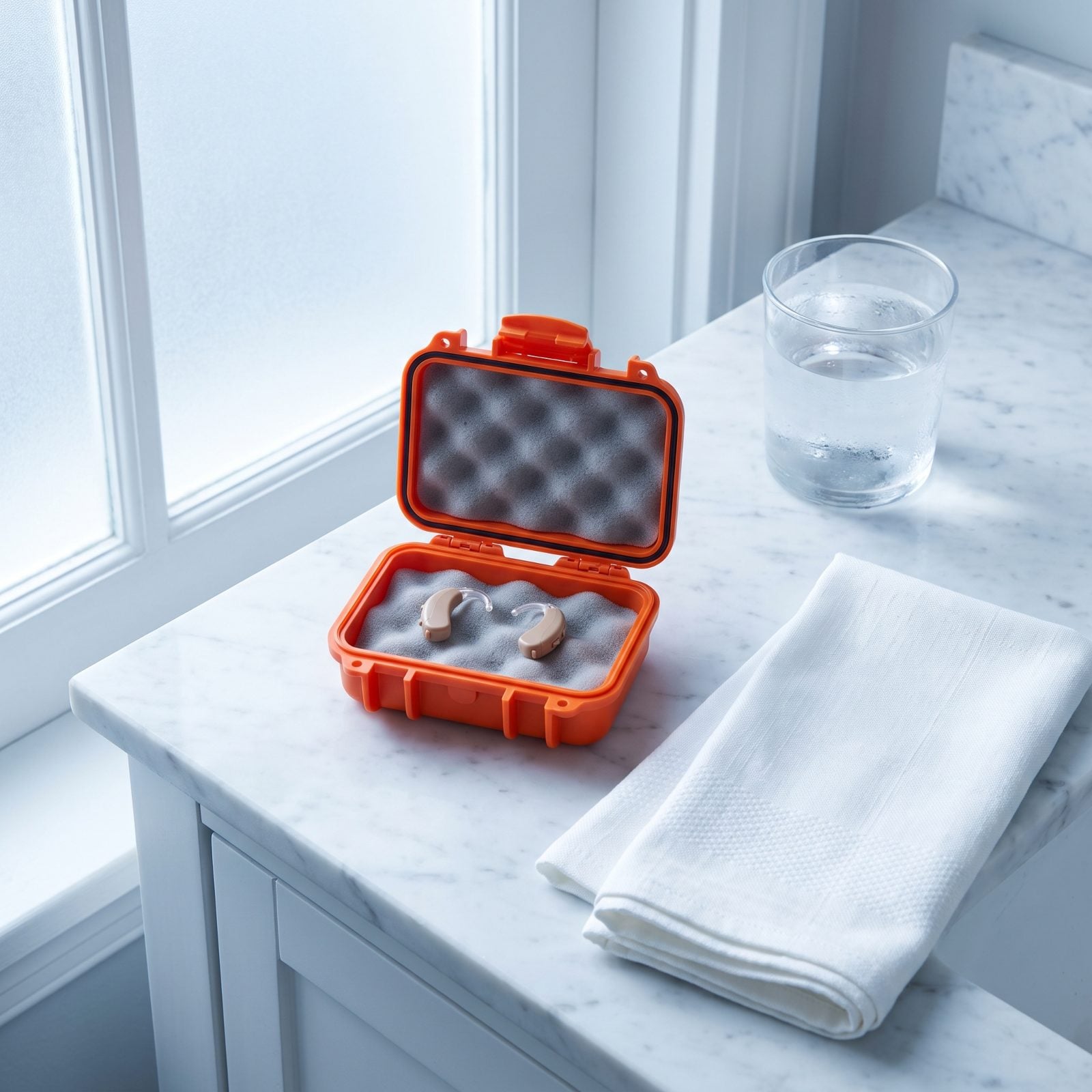
The costliest thing lost at a restaurant table isn’t a wallet. It’s a hearing aid or a partial denture wrapped in a napkin and swept straight into the bin by a busser who was only doing a good job.
A napkin is an accident waiting to happen. A bright hard case fixes that — orange, yellow, anything that announces itself. It survives a fall, a bag crush, a housekeeping sweep, and it never once reads as trash.
46. Keep One Watch on Home Time When Doses Matter

Crossing time zones scrambles medication more than it scrambles sleep. A dose meant to sit twelve hours apart suddenly lands four hours apart, or sixteen, because local time moved and your routine tried to chase it.
The move is to keep one watch — or a second clock on your phone — locked to home time until a doctor tells you otherwise. Doses stay spaced the way they were prescribed, whatever the hotel clock insists.
Small discipline, serious payoff for anything on a strict schedule. Blood thinners, heart medication, anything where the gap between doses is the whole point. Let your wrist do the math so your body doesn’t have to.
45. Count the Doors to the Fire Stairs Before You Settle In

Smoke takes the lights and the room numbers first. People don’t get lost in a fire because the exit is far. They get lost because they can’t see, and a hallway in the dark feels nothing like a hallway lit up.
So here’s the habit. Before unpacking, walk to the nearest fire stairs and count the doors between them and your room. Three doors left, then the stair. That number lives in your head and in your hand, and you can crawl it blind, feeling each frame, and arrive without a single glance.
You do not read the exit in smoke. You count to it.
Ninety seconds on arrival, and the single most useful ninety seconds of the whole trip.
44. Add Tactile Pulls to the Zippers That Really Matter
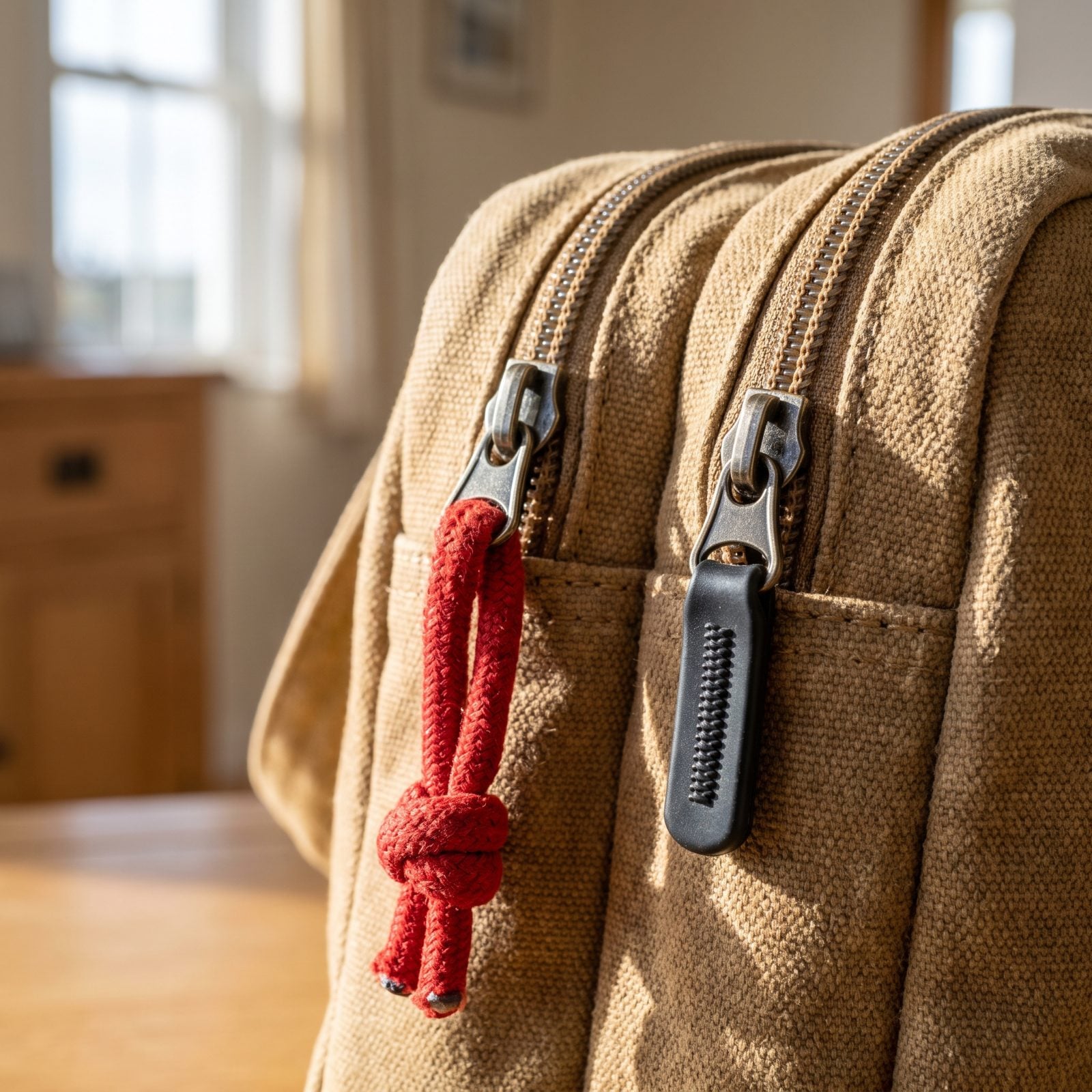
Every pocket on a bag feels identical in the dark, in a jostling train aisle, or when your hands are full and your reading glasses are somewhere else entirely.
Give the pockets that matter a signal you can feel. A knotted cord on the medication pocket, a ribbed rubber tab on the documents. Your fingers learn the difference in a day, and after that you never dig through the wrong compartment at a border crossing or a boarding gate again.
43. Ask for the Bed Height Before You Book the Accessible Room

An accessible room checks the boxes the law cares about. Grab bars, a roll-in shower, a wide door. What it doesn’t promise is a bed you can actually get into.
Tall luxury mattresses have crept into every category of hotel, and a bed that sits high off the floor quietly undoes every other accessible feature in the room. Getting in is awkward. Getting out at three in the morning is worse.
So ask the plain, specific question at booking: how high is the bed from the floor to the top of the mattress? A good property has the answer ready. A vague answer tells you plenty too.
42. Keep a Hotel Return Card in the Local Language
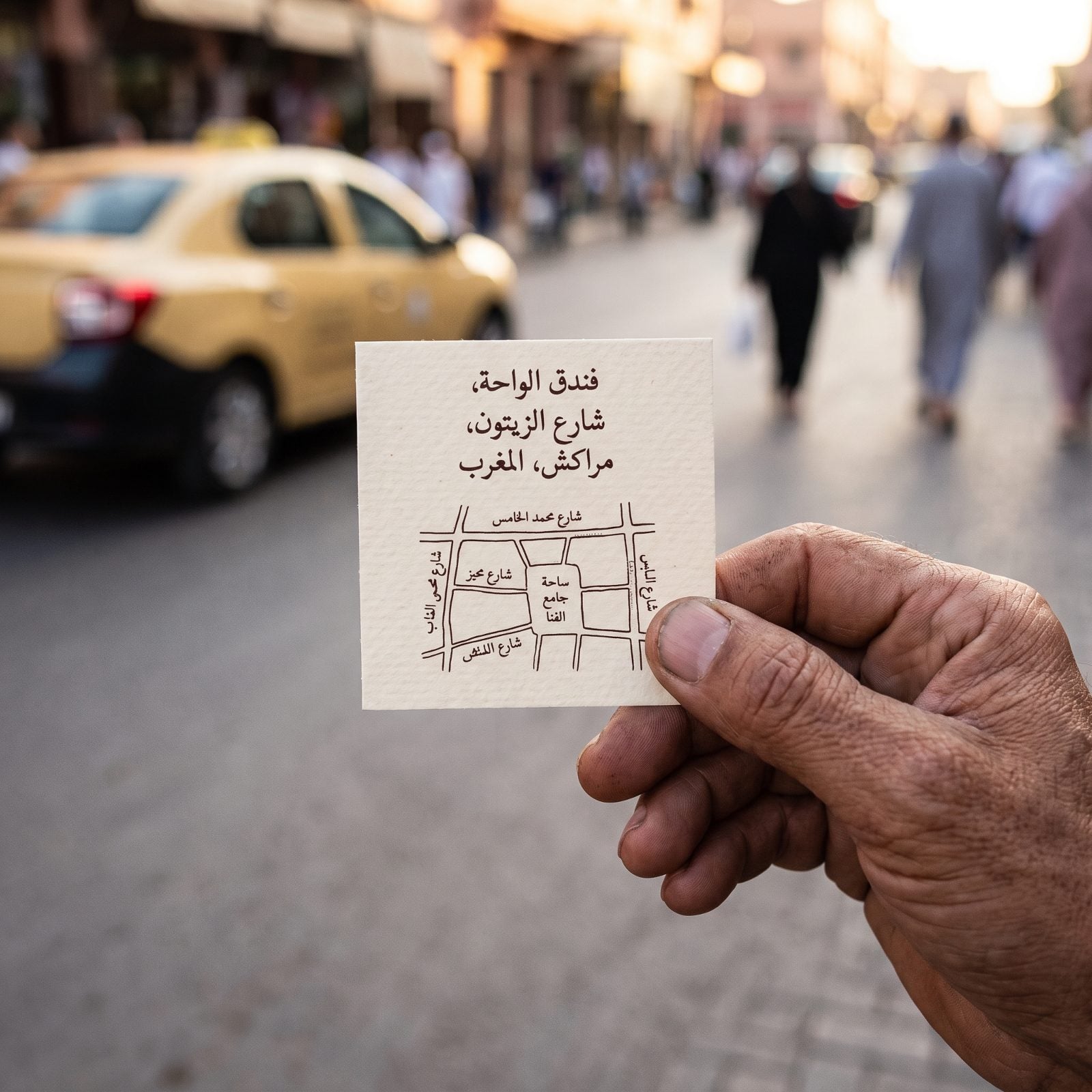
Phones die, signal drops, and the translation app freezes right when the taxi driver is waiting and the meter is running. The low-tech fix beats all of it: a card with the hotel’s name, address, and a small map, printed in the local language.
Hand it over and the driver reads it instantly, no battery required. The front desk prints these free if you ask, and most already keep a stack by the door. Slip one in your wallet and one in your bag.
41. Check Whether Your Train Splits Along the Way
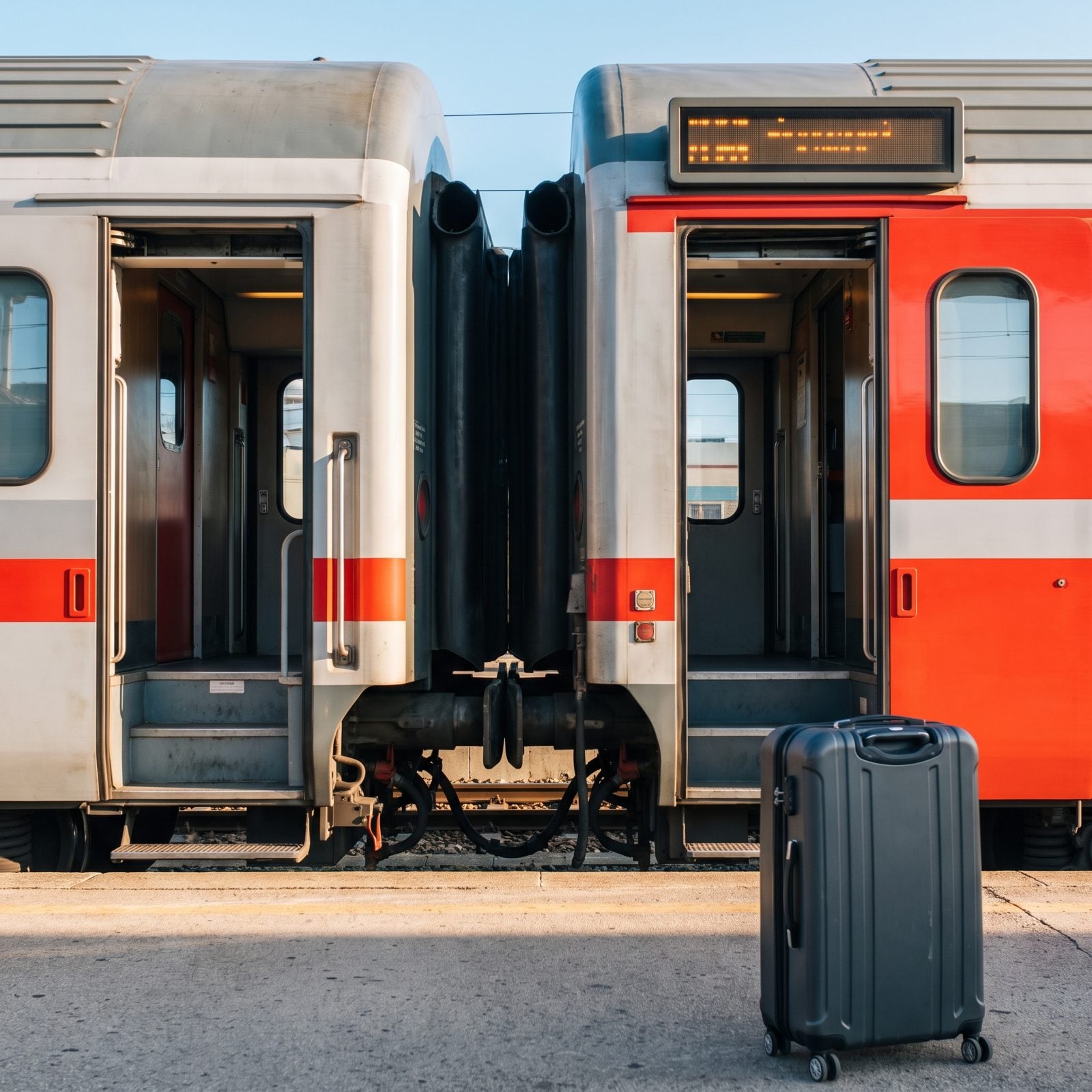
You board the right train. The sign says the right city. Hours later you arrive somewhere you never meant to go, because halfway along the route the train split in two and your carriage went the other way.
Splitting services run all over Europe and parts of Asia, and they’re almost never obvious to a visitor. The correct train can still carry you to the wrong place if you’re sitting in the wrong half of it.
One question before you board, or a careful read of the departure board: does this service divide, and which carriages go where? Then settle into a carriage that stays with you the whole way.
40. Keep Ship’s Time Separate From Local Port Time

A cruise ship keeps its own time, and it doesn’t always match the port it’s docked in. Cross a time-zone line during the sail and the ship may hold its clock steady while the town ashore has jumped an hour ahead.
That gap is how people get left on the dock. All-aboard runs on ship’s time, always. Run on the local clock instead and you can be a relaxed hour early for lunch and a panicked hour late for the gangway.
39. Test Unfamiliar Shower Controls Before Stepping In

🔥 Would you like to save this?
European and Asian mixer taps have a logic all their own, and it rarely matches the one back home. Stand to one side of the enclosure, well clear of the shower head, run the water onto your hand at arm’s length, and find the temperature before the spray reaches the rest of you. Scalds and falls happen in the same two seconds — usually when someone stands right under the head and then fumbles with a lever that works backwards.
Drop the bath mat first too. Foreign shower floors can be slick as a skating rink.
38. Request a Walk-In Shower With a Fixed Grab Bar

Nobody tells you this at booking. The word accessible covers a wide range of rooms, and plenty of them have neither a true walk-in shower nor a bar bolted into a stud. Some have a towel rail dressed up to look like a grab bar that will pull straight out of the wall the moment real weight lands on it — a nasty thing to discover mid-slip.
So call the property directly. Ask two separate questions. Is the shower curbless, and is the bar permanently fixed into the wall structure? Vague answers mean ask again.
37. Strip the Room Number Sleeve From Your Key Card
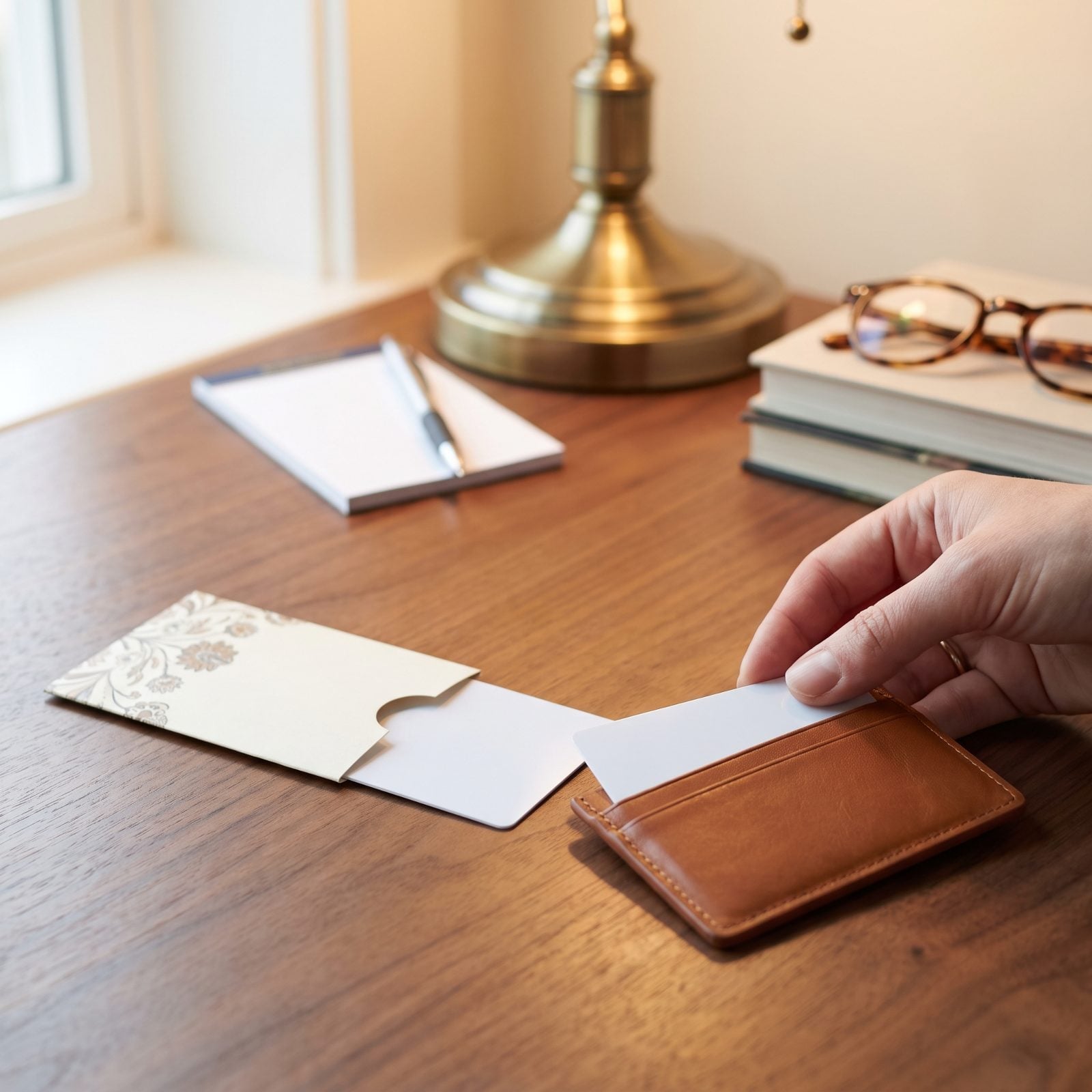
Hotels write your room number on that little paper folder for the front desk’s convenience, not yours. A lost card with the number attached is a map straight to your bed and your belongings. A bare card is just a plastic rectangle a stranger can’t place.
Slide it out, pocket the number separately, carry the card alone. Takes five seconds. Modern key cards don’t usually store the room number in readable form, so losing the card by itself gives up almost nothing.
36. Use Bank ATMs During Business Hours
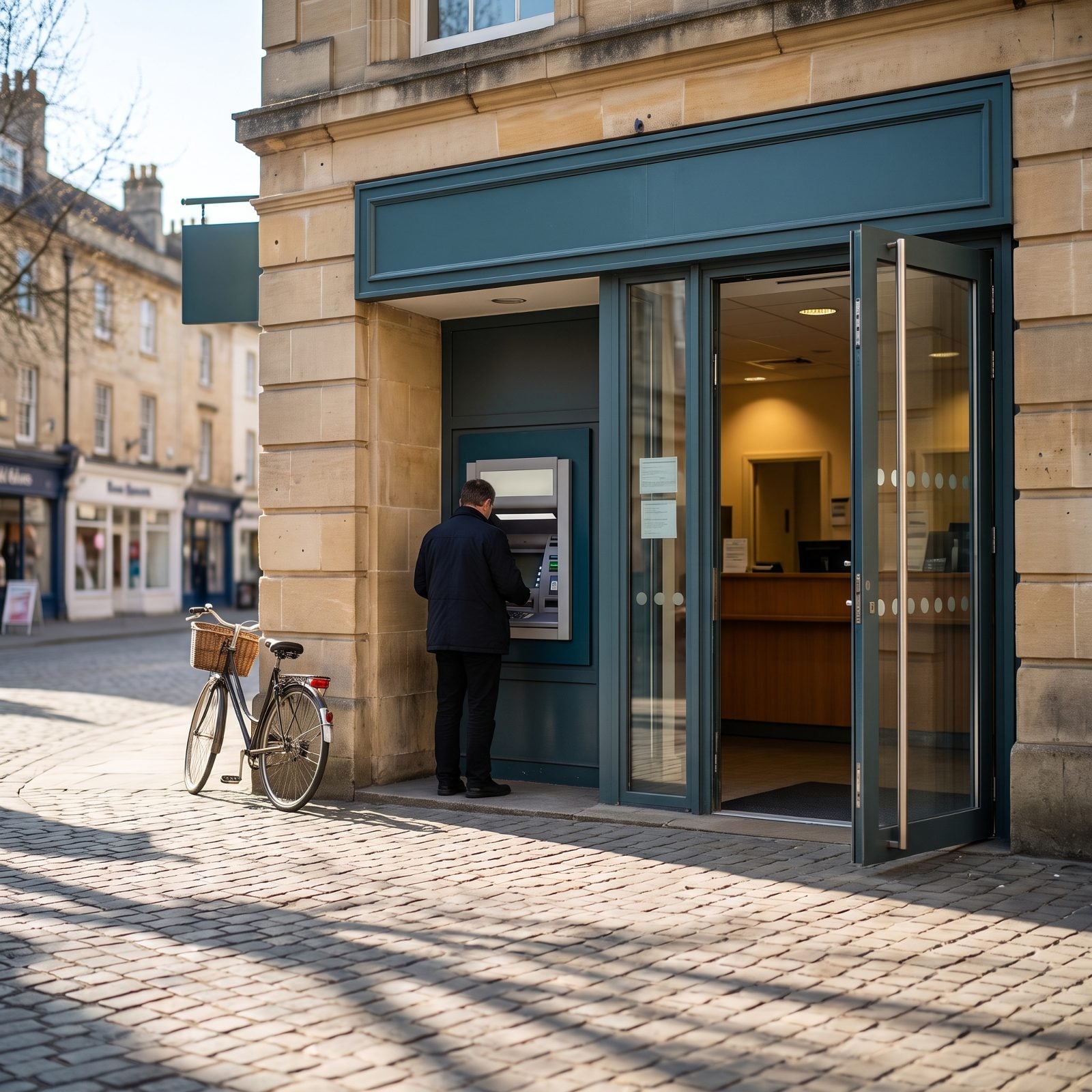
Freestanding ATMs tucked into convenience store corners charge more and offer nobody to help when the machine swallows your card. A bank ATM, used while the branch is open, means a human being is a few steps away the instant that slot locks up with your card inside.
It happens more than people admit. A retained card at nine in the morning is a form and a wait. The same thing at eleven at night is a ruined week and a long string of phone calls across time zones.
35. Decline Dynamic Currency Conversion at the Terminal
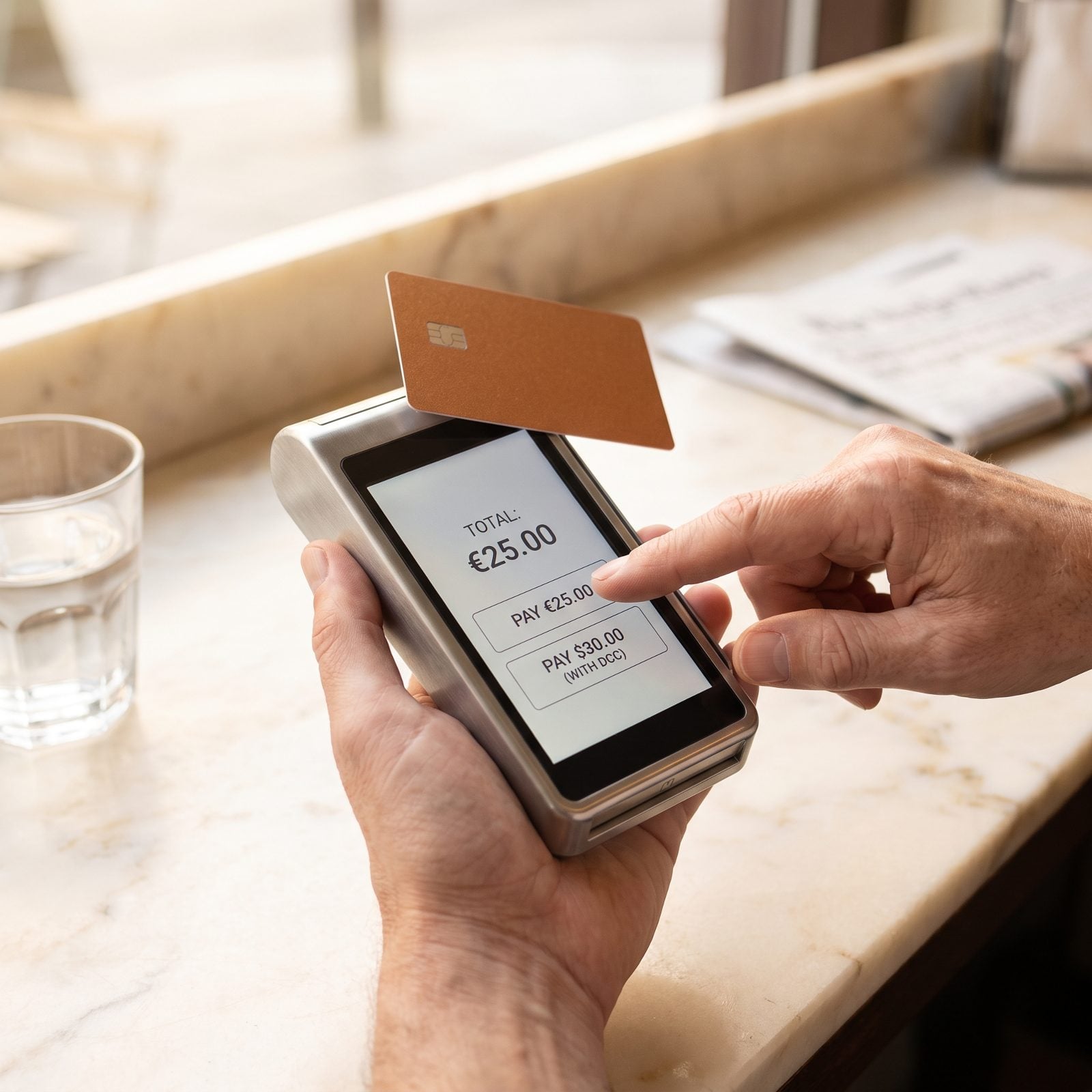
When the card machine abroad highlights PAY IN USD with a reassuring green checkmark, it looks like a courtesy. It’s a toll. That convenient home-currency figure comes with a markup baked into the rate, and that markup goes to the merchant’s processor, not back to you.
Skip that pre-selected button and choose the local currency, every single time. Let your own bank do the conversion. The savings per transaction look small. The savings across a three-week trip do not.
The friendly option on that screen is almost never the cheaper one.
34. Carry a Medication List Using Generic Drug Names
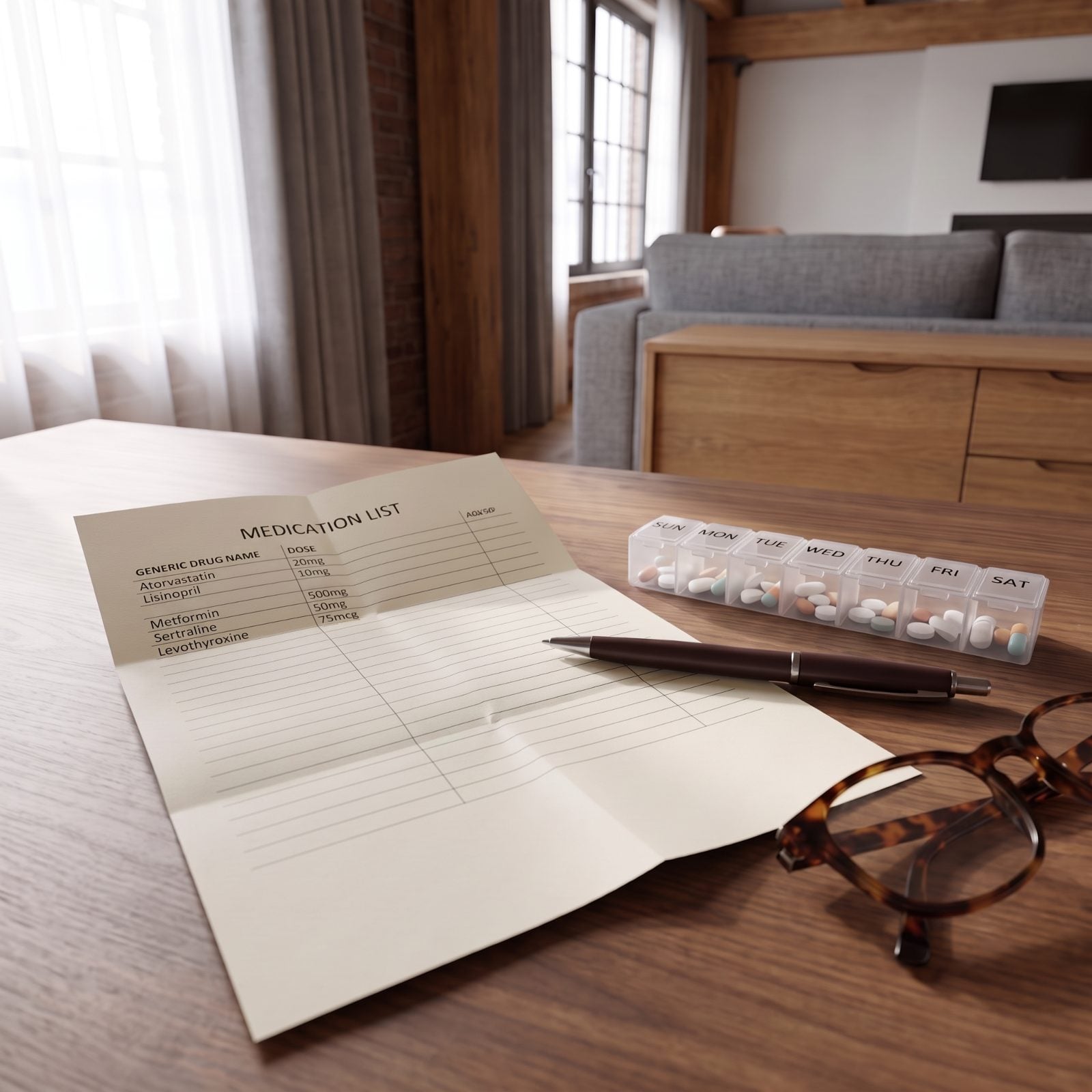
A doctor in Lisbon or Bangkok may never have heard of the brand name printed on your bottle. Brands shift from country to country. The generic name — the actual chemical — is universal medical language.
Write the list by generic name, with the dose. Keep one copy in your wallet and another in your bag. In a clinic where the staff speak little English, a list of generics does more work than any amount of frantic gesturing at a pill bottle.
33. Check Whether Every Prescription Is Legal at Your Destination
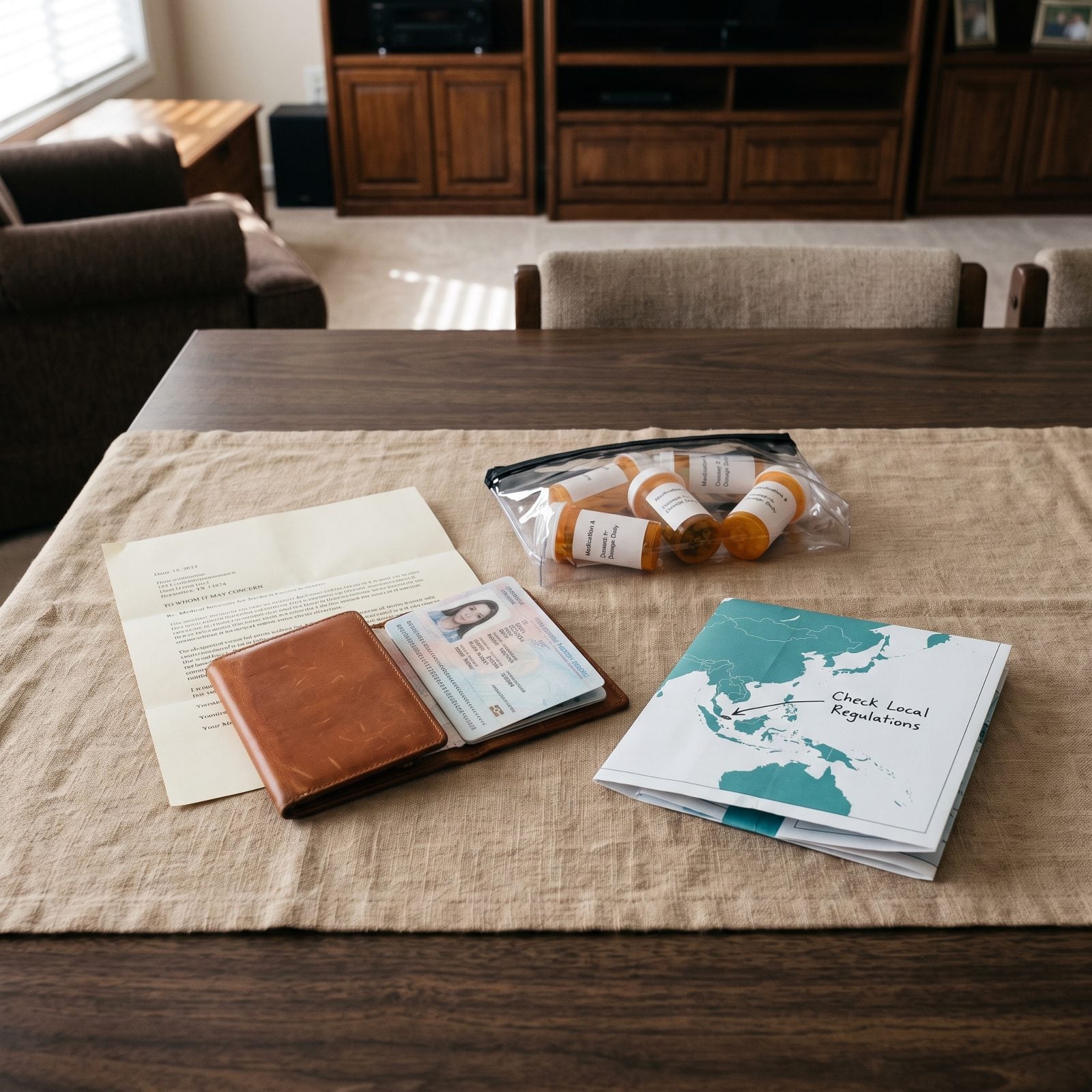
This one stuns people, and it should. Medicines that sit unremarkably in a bathroom cabinet at home can be tightly controlled or flat-out banned elsewhere. Certain strong painkillers, some sleep aids, even ordinary decongestants are restricted in parts of Asia and the Middle East. Bring them in without the right paperwork and you can land in real trouble at the border.
Check each country’s embassy guidance before you fly. Carry prescriptions in original labeled containers, plus a signed doctor’s letter stating what they are and why you need them.
32. Carry a Laminated Food-Restriction Card in the Local Language
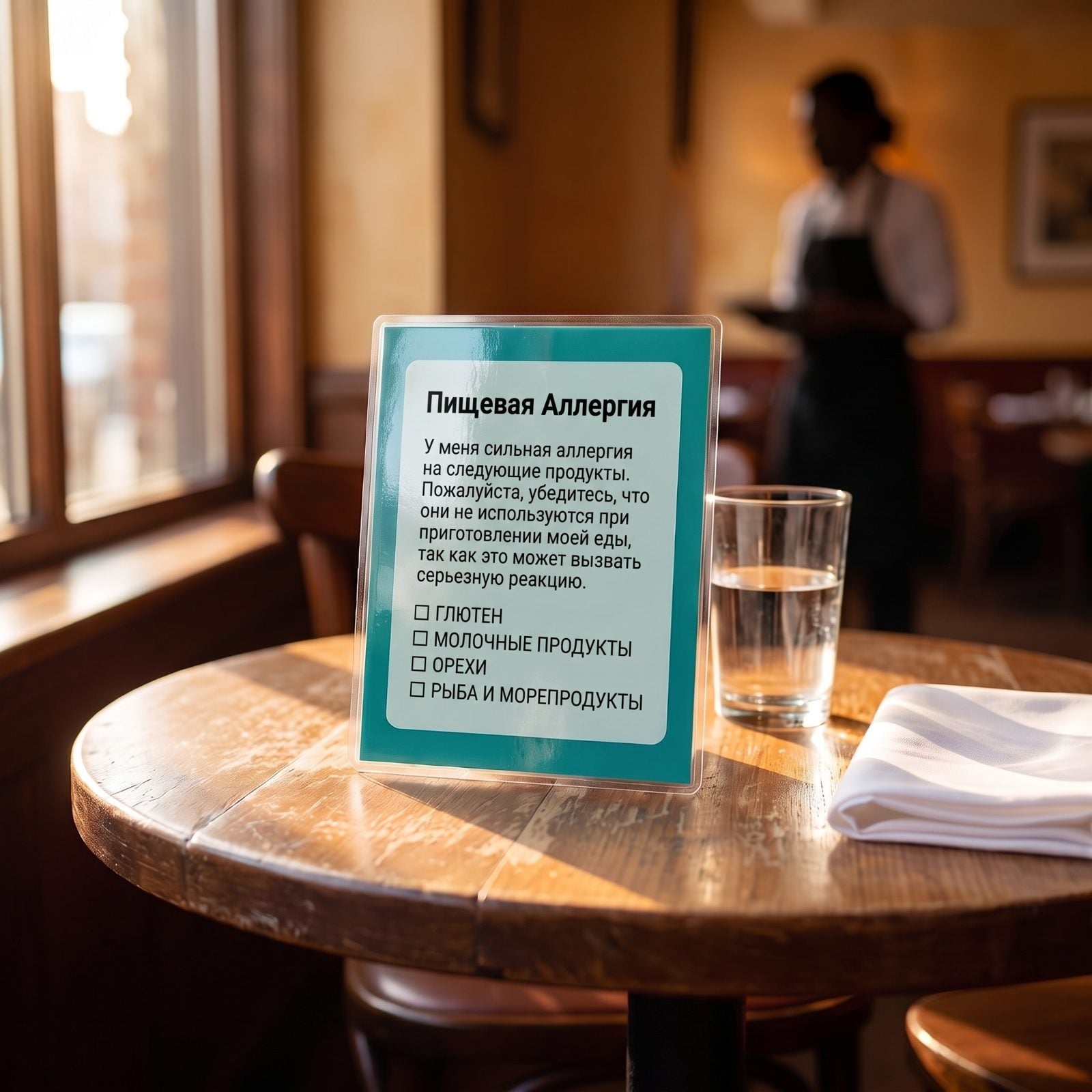
Trying to explain a shellfish allergy or celiac disease across a language barrier, mid-service, in a kitchen going full tilt — that’s exactly how mistakes get made. Hand the server a printed card in the local language to carry straight back to the cook, and the guessing disappears.
Laminate it so it survives a spill. Keep the wording precise and plain. The kitchen gets exact instructions instead of a hopeful thumbs-up and a dish that might still put you in bed.
31. Check Whether Any Medication Raises Your Sun Sensitivity

🔥 Would you like to save this?
Some common prescriptions — certain antibiotics, blood pressure drugs, diuretics — make skin burn far faster than usual. People find this out the hard way on day one of a beach holiday, lobster-red after twenty minutes they’d have shrugged off back home.
Ask your pharmacist before the trip whether anything on your list carries a photosensitivity warning. If it does, the whole schedule changes: more shade, a hat, long sleeves, and sunscreen reapplied far more often than your younger instincts ever suggested.
30. Pack Oral Rehydration Salts, Not Just Bottled Water
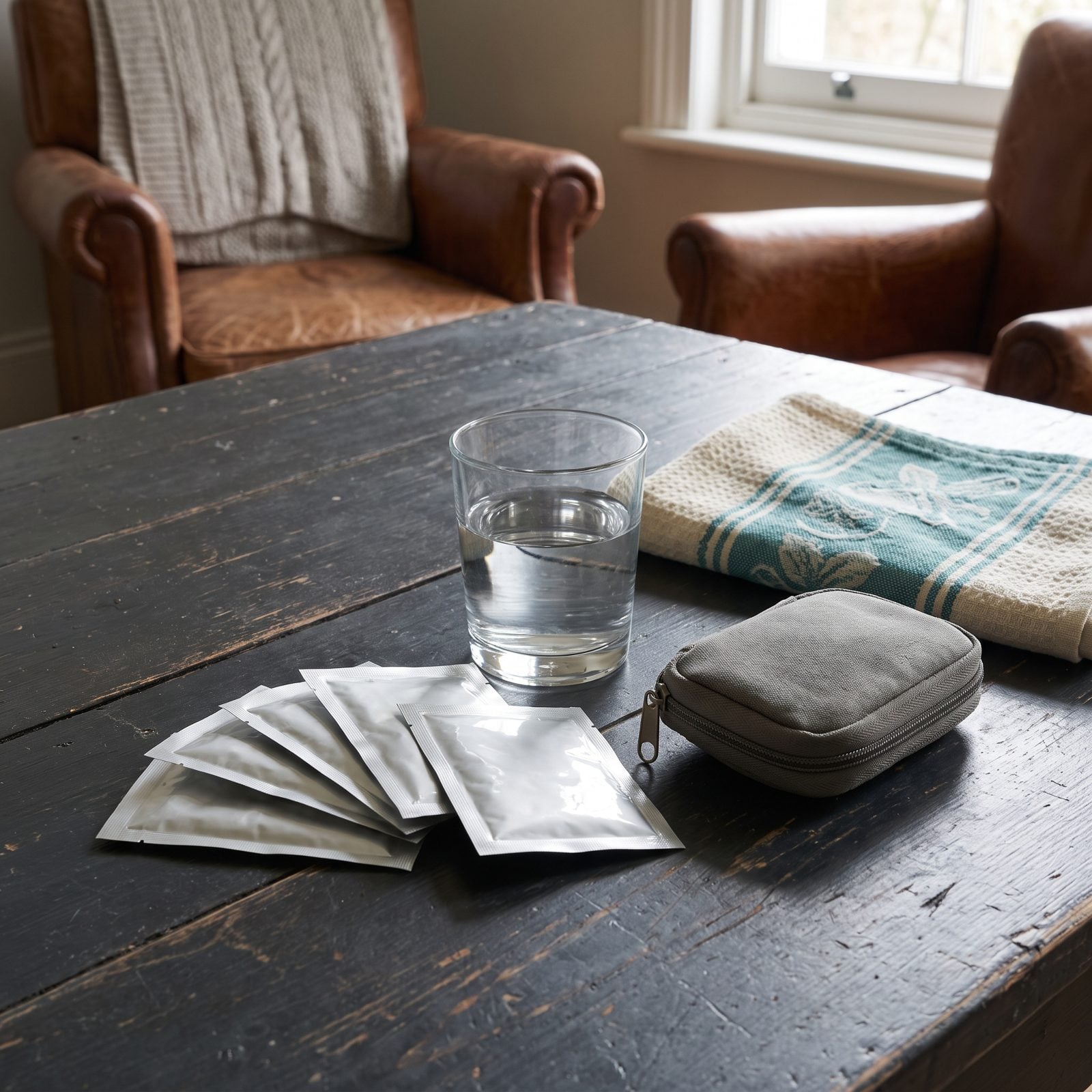
After a bout of food trouble or a hot day that got away from you, plain water simply isn’t enough. The body needs the right balance of salt and sugar to hold onto the fluid at all, and mixing it yourself tends to come out wrong.
Pre-measured sachets take the arithmetic out of it entirely. They weigh almost nothing, cost very little, and tuck into a corner of the toilet bag.
Here’s the part worth remembering: dehydration escalates faster as we age, and in real heat it can turn serious well before it feels serious. Keep the sachets on hand and you treat it early, right there in the hotel room, instead of waiting to see whether it passes on its own.
29. Buy Coverage Before the Preexisting-Condition Waiver Window Closes

Here’s the detail almost nobody reads until it costs them. Most travel insurance will cover a preexisting condition, but only if you buy the plan within a short window after making your first trip deposit. Miss that window, and the flare-up of something you’ve managed quietly for years becomes the one thing the policy won’t touch.
The window is usually a week or two. Not months. Experienced travelers book the trip and buy the coverage in the same sitting, before the deadline can slip past unnoticed.
28. Confirm the Medical-Evacuation Limit as a Line You Can Actually Read

Ordinary health insurance tends to stop at the border. What it rarely covers is the part that costs the most: an air ambulance home, a medical flight with a nurse aboard, the whole miserable business of getting an unwell traveler from a remote clinic to a proper hospital a long way off.
That transport can run into six figures. Seasoned travelers check the evacuation limit as its own number, separate from the general medical coverage, and they want to see it written in dollars, not vague reassurance. A policy that says “emergency transport included” without a figure attached is a policy hoping you won’t ask.
27. Pin the Right Hospitals on the Offline Map Before You Land

A sudden health scare is not the moment to start typing “nearest hospital” into a phone that suddenly has no signal. The travelers who’ve been caught out once never make that mistake twice.
They download the offline map of their destination and drop pins on two or three reputable hospitals near the hotel — ideally ones a local or the concierge has vouched for. Done at home with a cup of coffee, it takes ten minutes. Done in a crisis, in a language you can’t read, it becomes the longest ten minutes of the trip.
26. Carry a Printed Emergency Card That Speaks When the Phone Can’t
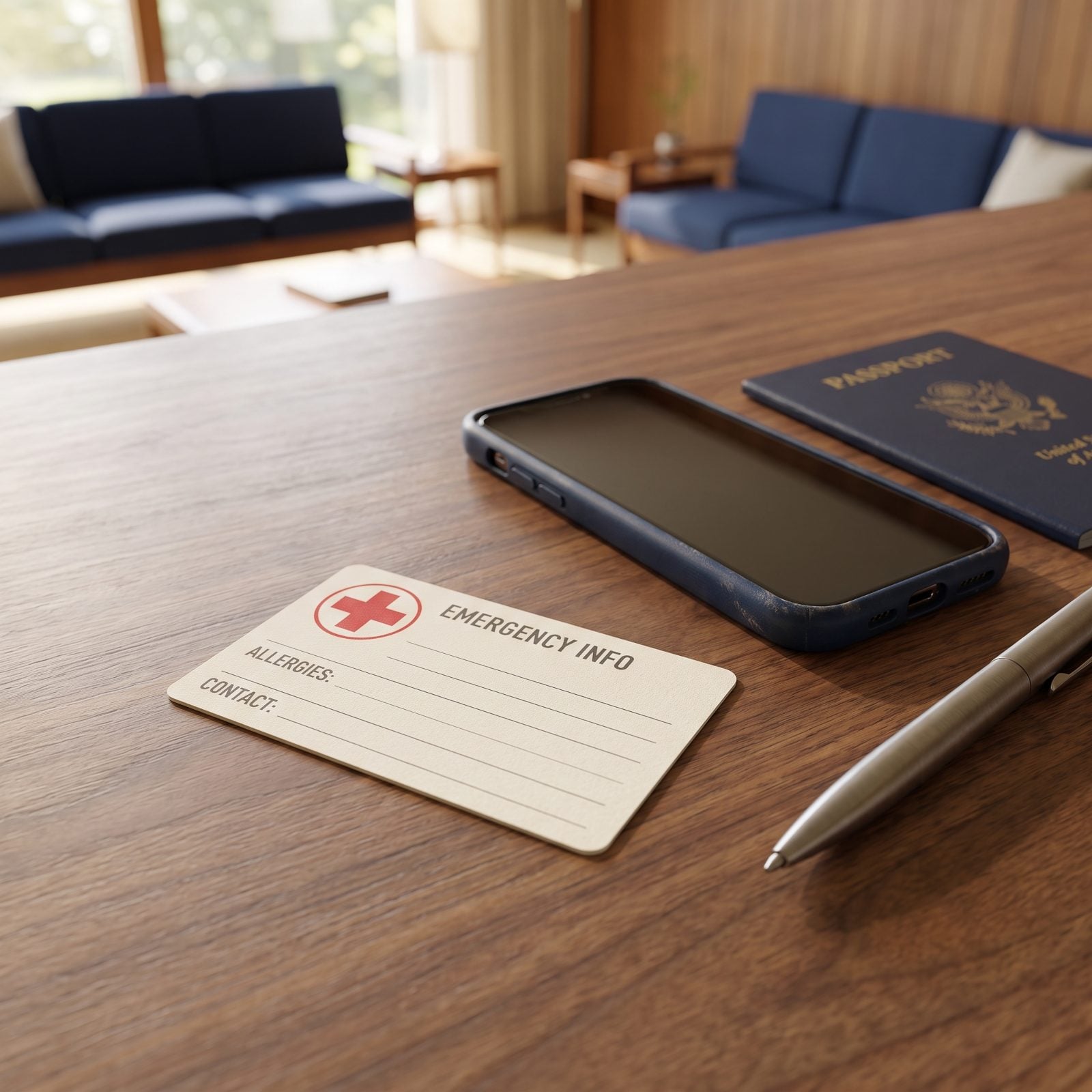
Picture a stranger trying to help you. They reach for your phone to find who to call, and the screen is locked. That’s where a lot of good intentions stall.
A folded index card in the wallet solves it: name, blood type if you know it, the medications you take, the allergies that matter, two emergency contacts with country codes. Add the name and strength of anything a paramedic needs to avoid giving you. Costs nothing, and a locked screen can’t erase it.
25. Keep a Spare Pair of Glasses On Your Body, Not in the Hold

Lose a suitcase and you lose clothes, toiletries, maybe a gift. Lose a suitcase that happened to hold your only spare glasses and you lose the ability to read a menu, a boarding pass, or the street signs leading back to the hotel.
The fix is small. A backup pair rides in the jacket pocket or the personal bag that never leaves your side — never in checked luggage an airline can misplace for three days. A missing bag should be an inconvenience, not a reason to squint through an entire vacation.
24. Pack a Full Day’s Essentials Under the Seat in Front of You
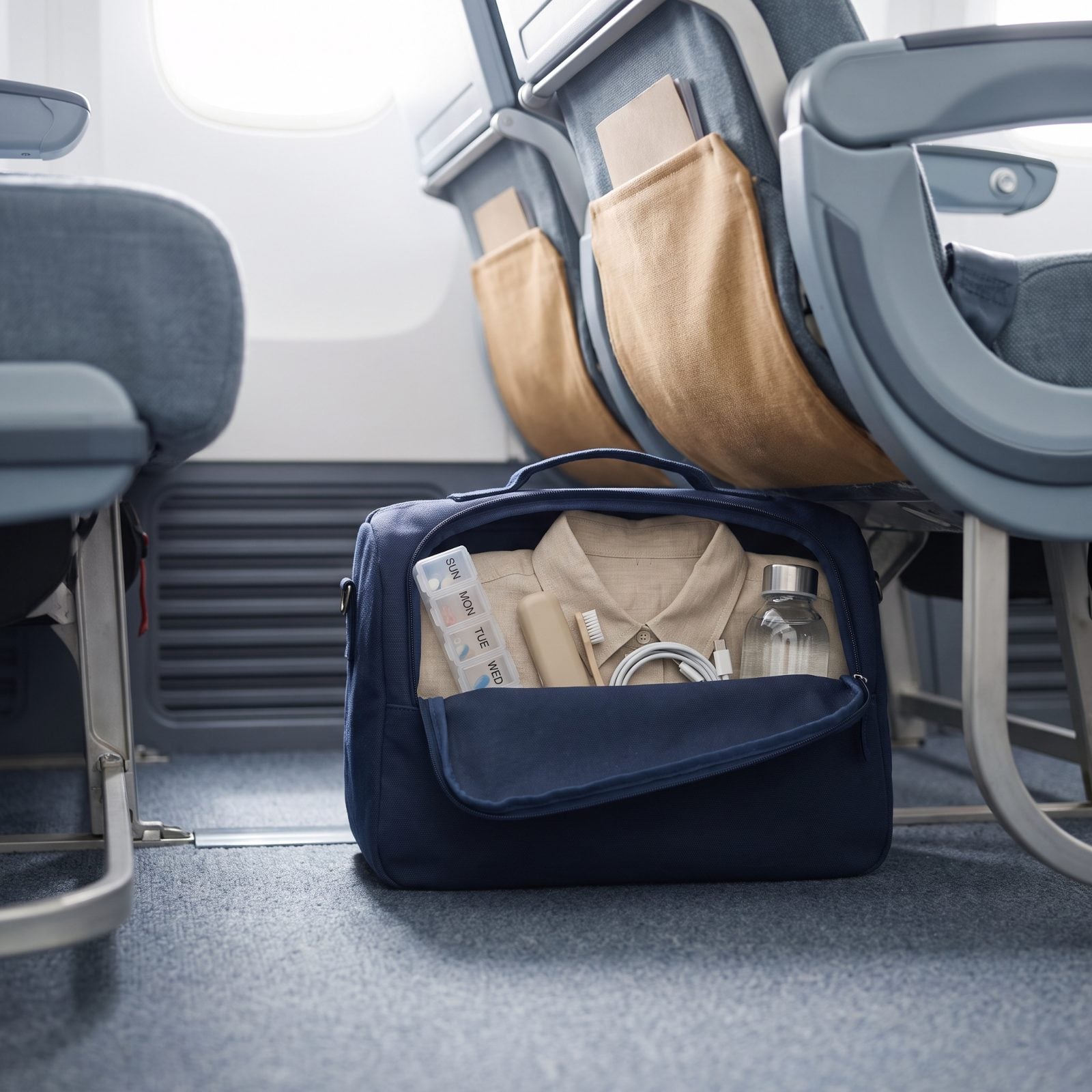
Overhead bins fill up, and when they do the gate agent starts checking carry-ons at the door. Suddenly the bag with your medication, your glasses, your phone cable and a clean shirt is riding in the cargo hold, out of reach for the whole flight and maybe longer.
Veteran flyers never let that happen to the things that matter. One day’s worth of essentials goes in the personal item that slides under the seat, where no bin shortage and no gate check can touch it.
23. Set a Weight Ceiling You Can Lift From the Floor Without Straining
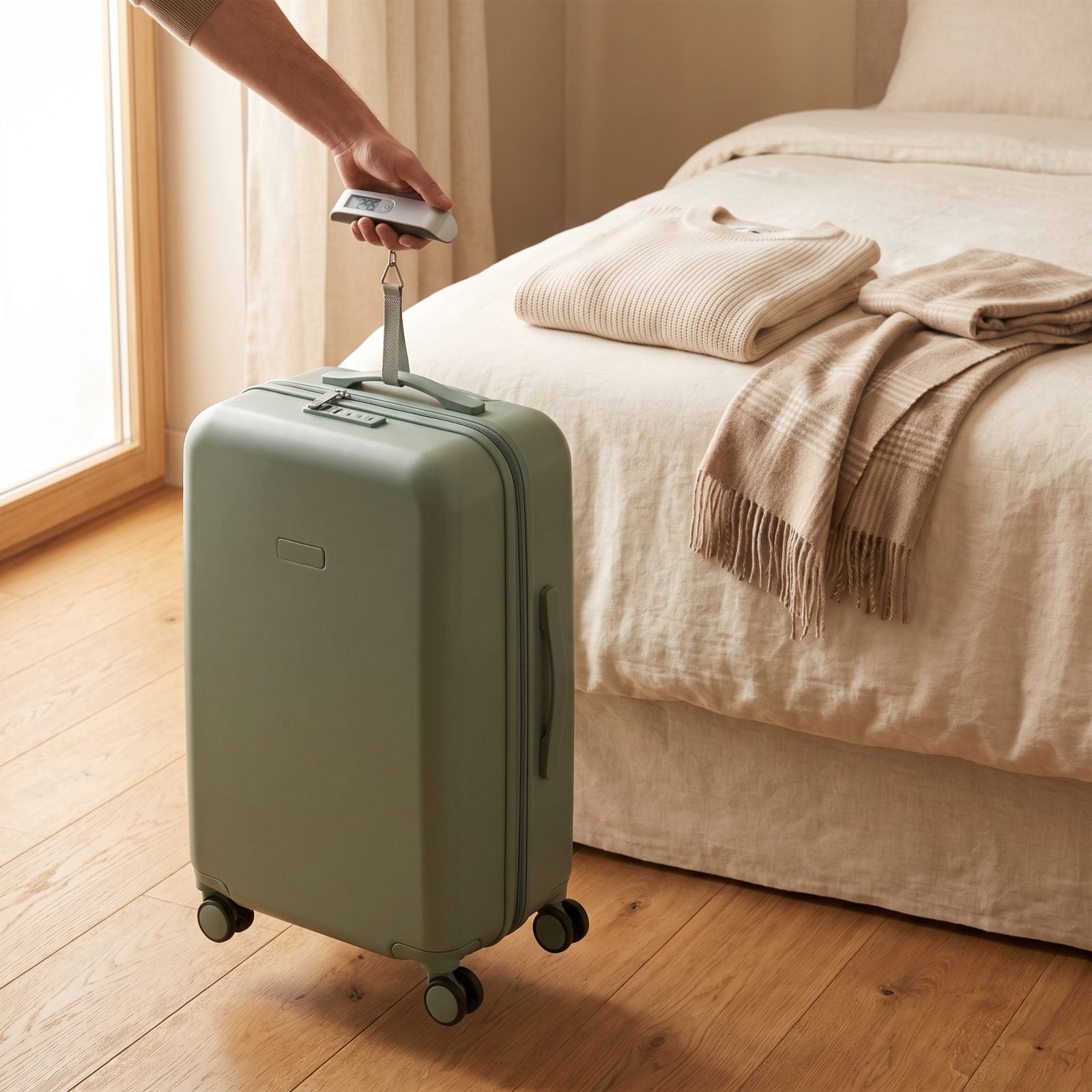
The airline’s weight limit protects the airline. It does nothing for your back. A bag can sit comfortably under the airline cap and still be one you can’t heave onto a train rack, into a car trunk, or up a flight of hotel stairs when the elevator’s out.
So smart travelers set their own ceiling, lower than the airline’s, based on one simple test. Can you lift it off the floor cleanly, without a grunt or a twinge? If not, something comes out. Porters aren’t always there, and a strained back is a terrible souvenir.
22. Bring a Motion-Activated Nightlight for the 3 a.m. Bathroom Trip
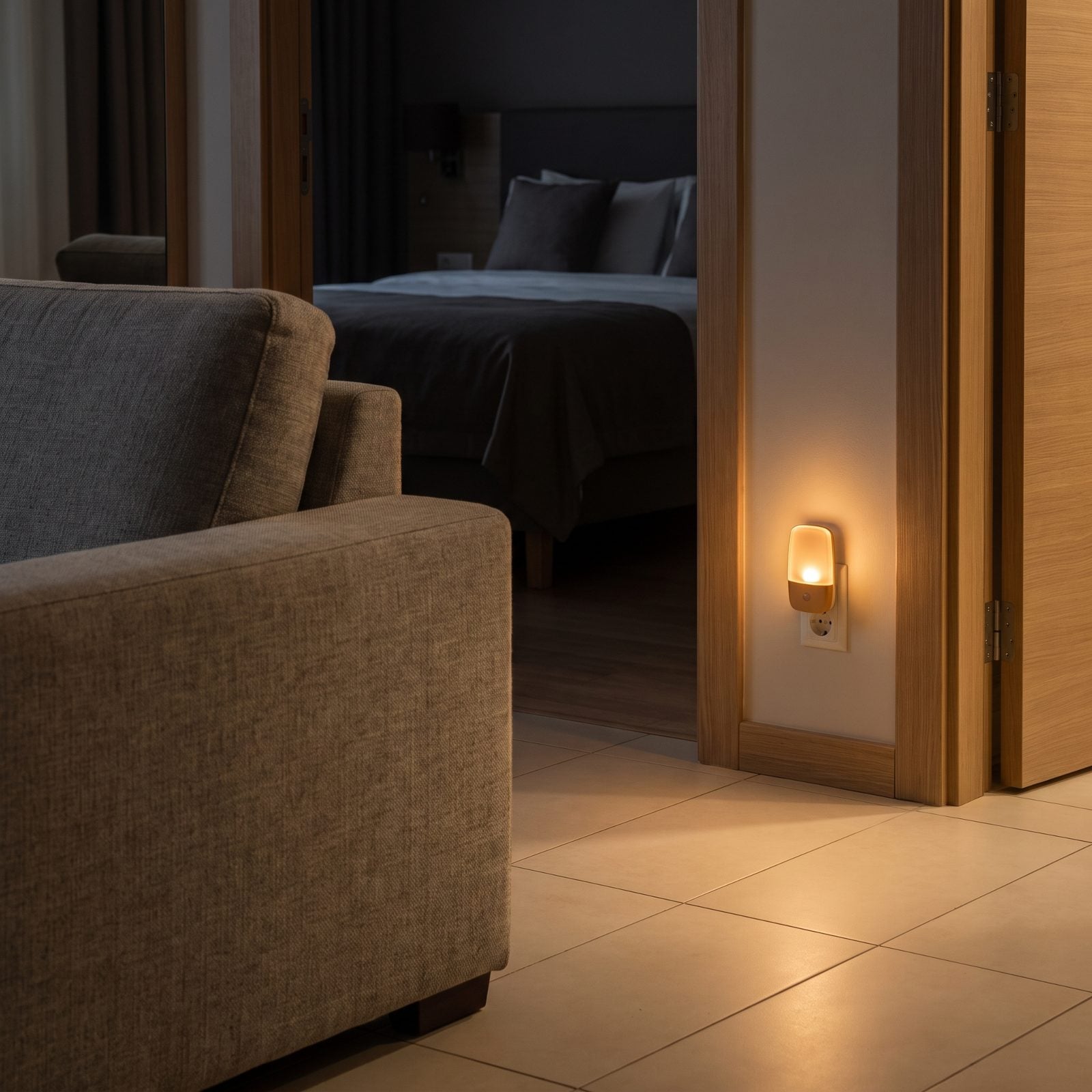
Hotel rooms are strangers in the dark. The furniture is in the wrong place, the bathroom sits three steps further than it does at home, and that low side table is exactly where a shin goes to find trouble.
A tiny motion-activated nightlight — the kind that plugs into any outlet and glows only when you move — turns an unfamiliar midnight route into a lit path. It weighs almost nothing and tucks into a shoe. Falls in hotel rooms are more common than anyone admits, and most happen on that first groggy walk across a room nobody’s brain has mapped yet.
21. Request Airport Assistance a Full 48 Hours Before You Fly
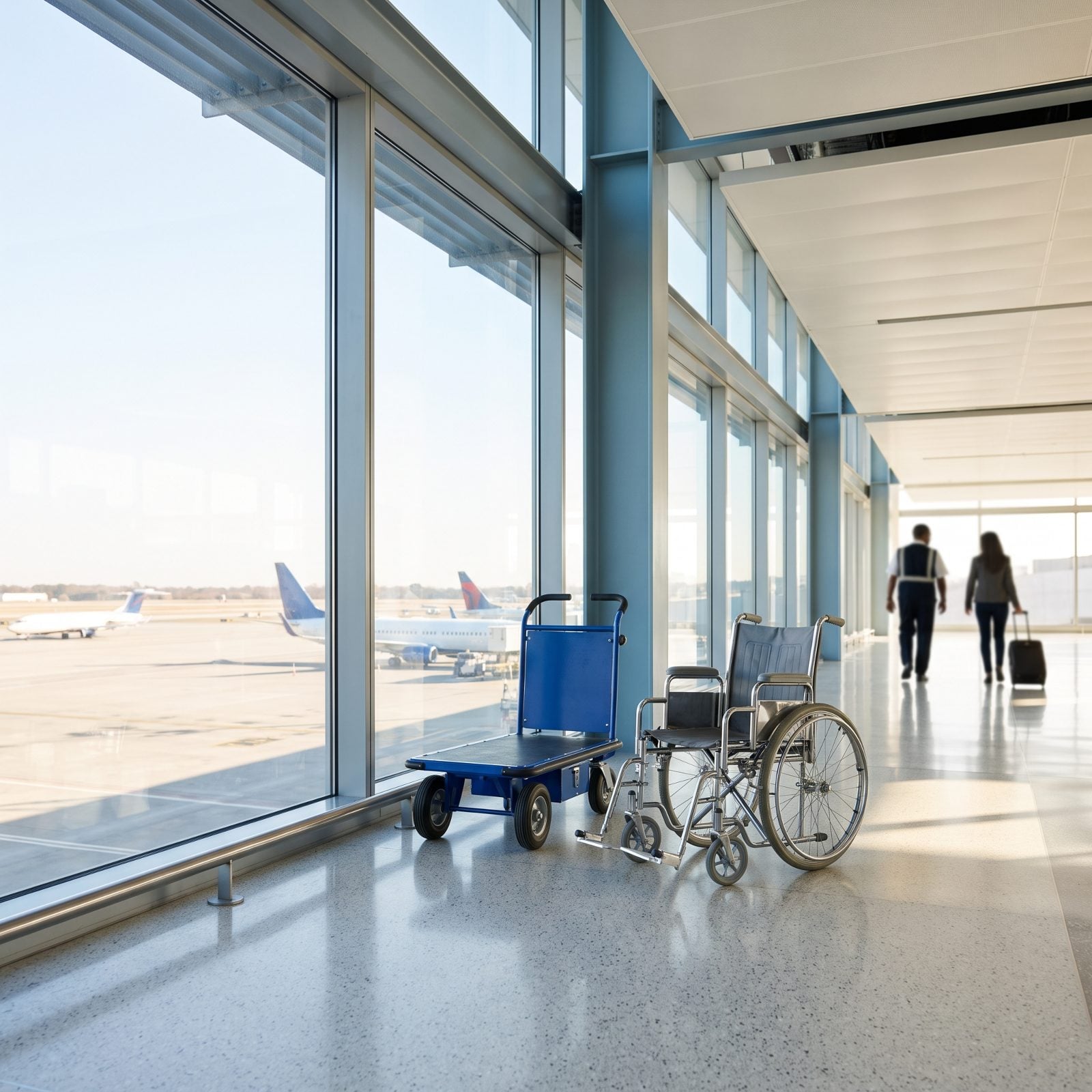
Airport assistance is free, and it’s one of the most underused services in travel. A ride through a sprawling terminal, help at security, priority at the gate, someone to shepherd you through a tight connection — all of it available just for the asking.
The catch is timing. Ask at the counter on the day, and you may wait while they scramble to find staff. Ask at least two days ahead through the airline, and a person is scheduled to meet you. Experienced travelers book it the moment they book the flight, even if they only suspect they might need it.
20. Choose an Aisle Seat Several Rows Clear of the Lavatory
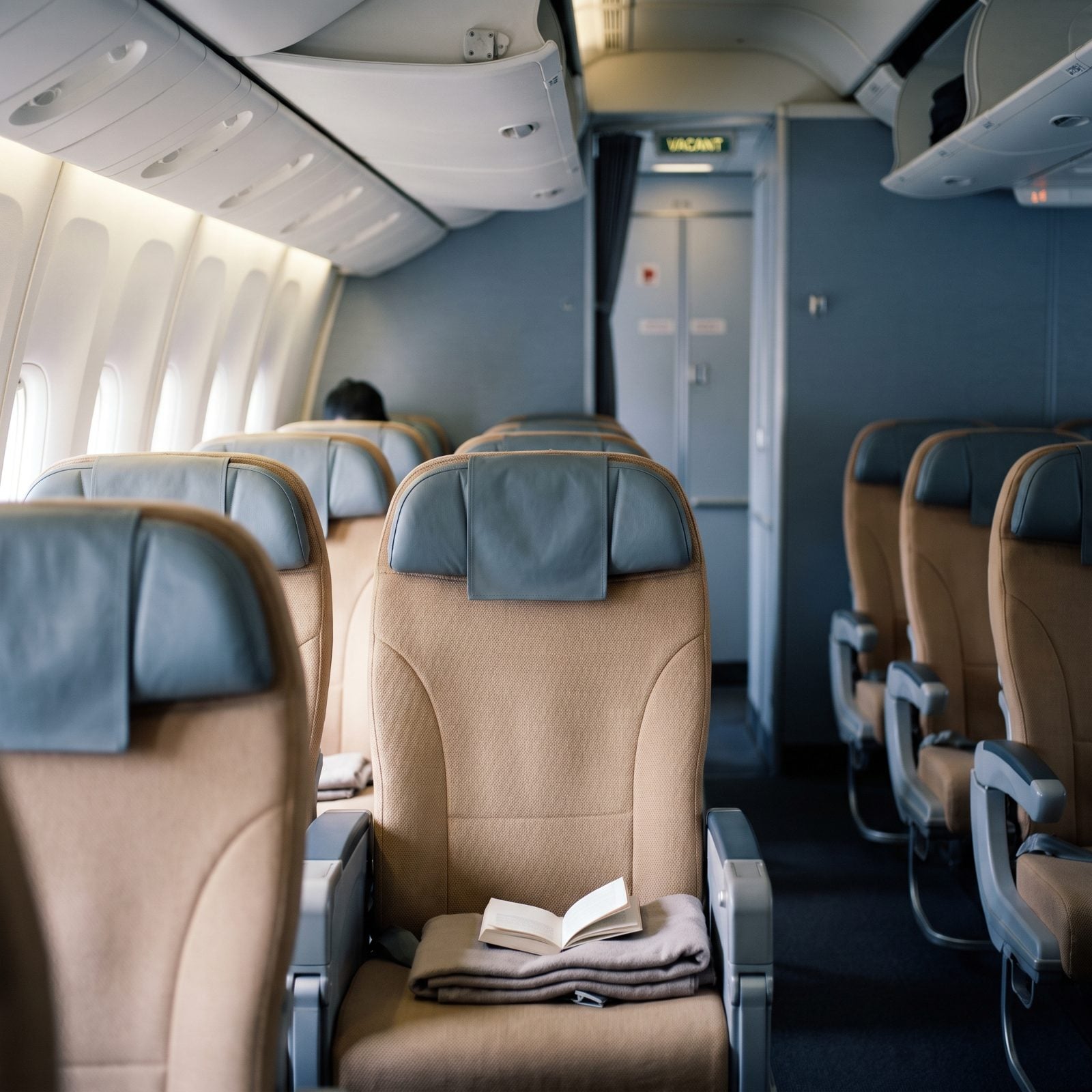
An aisle seat is the obvious choice for anyone who likes to stand and stretch on a long flight. What people miss is where that aisle seat sits relative to the lavatory.
Right beside it? You get a steady parade of fellow passengers, elbows, a door that bangs, and — let’s not be coy — the smell. A few rows forward keeps the easy aisle access without the traffic jam at your shoulder. Seasoned flyers pick the aisle for freedom of movement and the position for peace, then book early enough to land both.
19. Set a Calf-Movement Reminder for Every Hour of a Long Flight
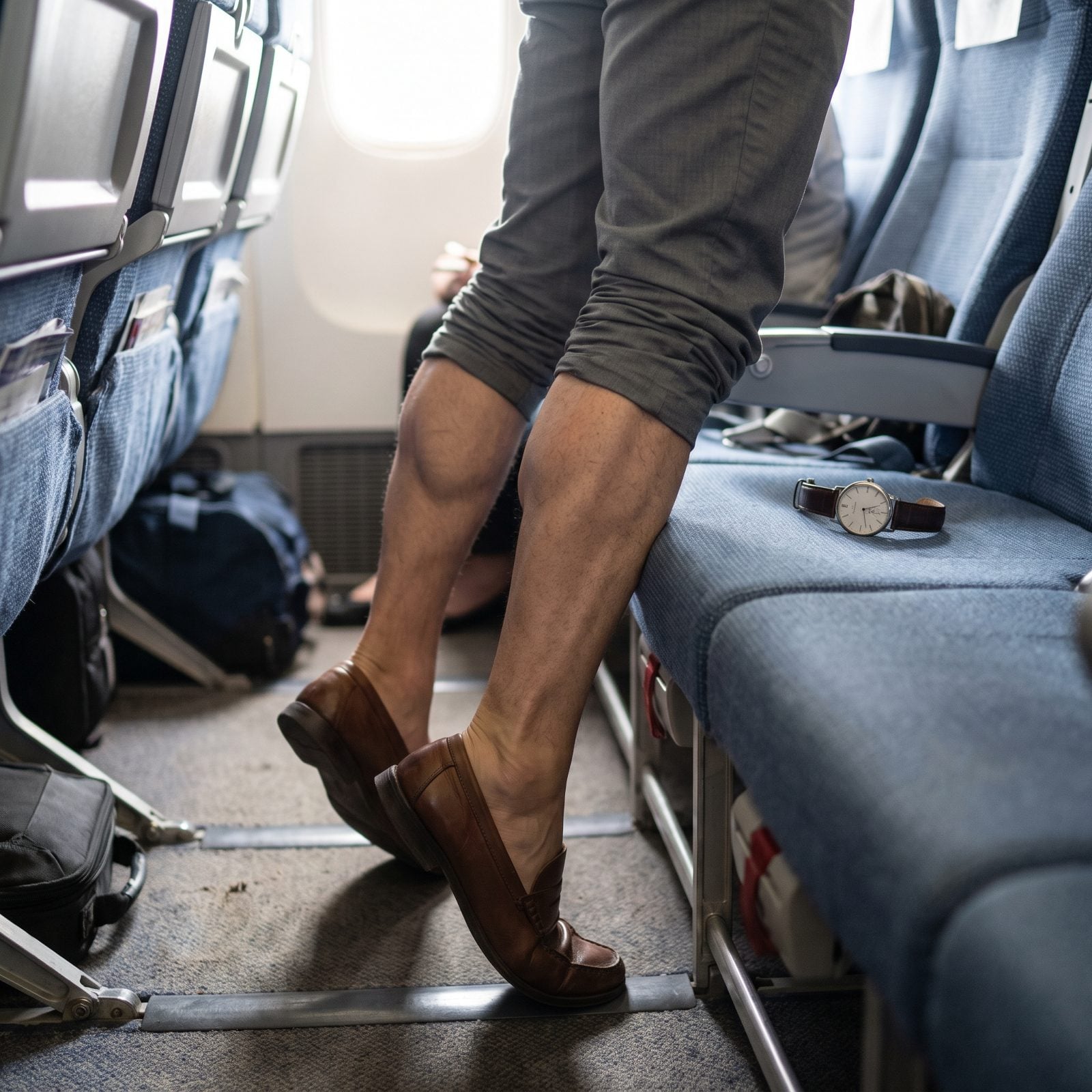
Sit still for eight hours and blood pools in your calves, which is where the trouble starts. The experienced traveler doesn’t rely on remembering to move. They set a repeating reminder, every hour, and do thirty seconds of heel raises standing right in the aisle beside the seat.
Steady yourself on the seat, rise onto your toes, lower, repeat. Just pumping the calf muscles, which push blood back up the legs, and it feels almost too simple to matter.
18. Ask a Clinician Before Buying Compression Socks, Not the Pharmacy Shelf
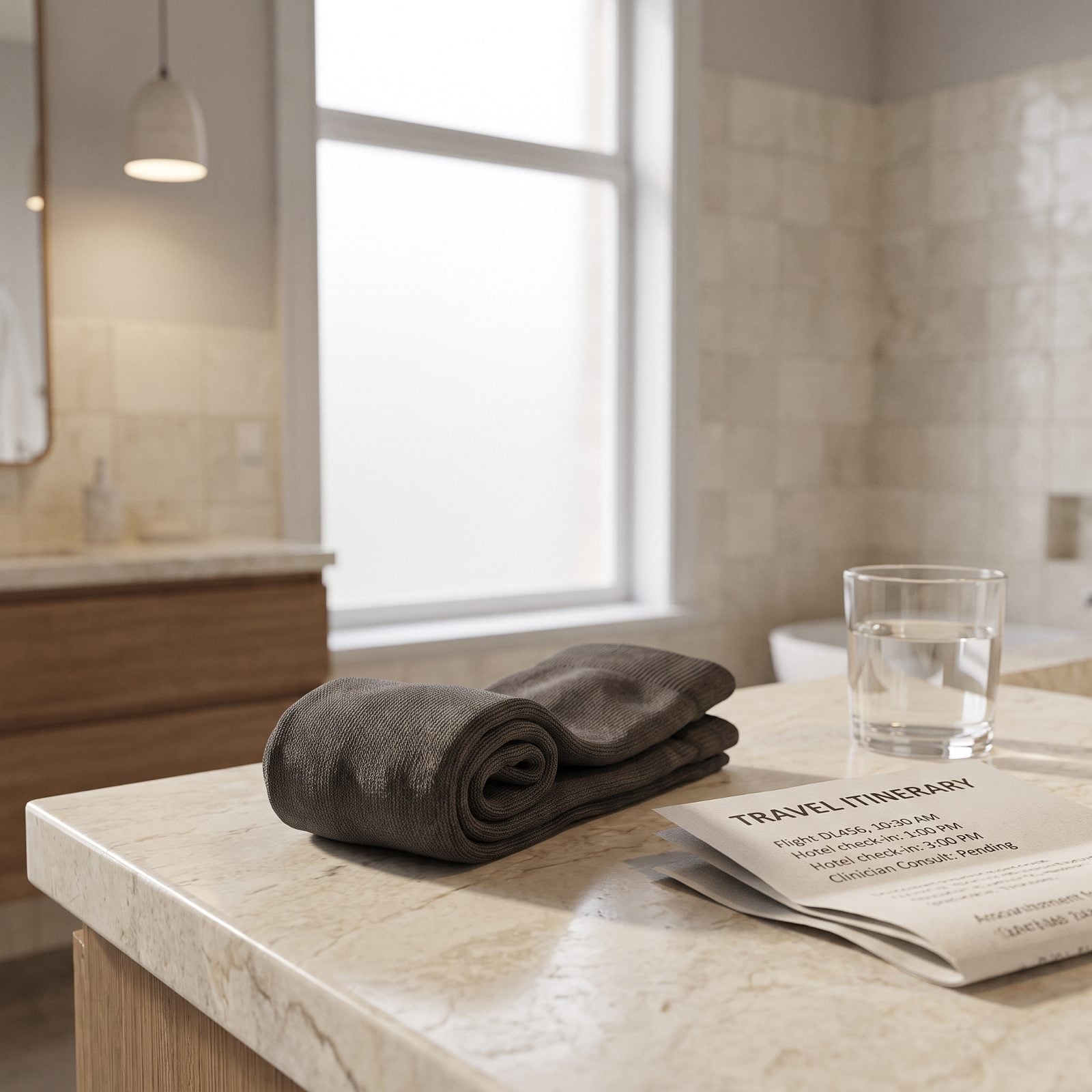
Compression socks get handed out like candy, and they are not right for everyone. Certain circulation conditions, some kinds of leg swelling, and specific heart issues make the wrong pressure genuinely unsafe.
So the careful traveler treats compression as a medical tool, because that’s what it is. A quick word with a doctor or pharmacist sorts out the correct pressure grade and whether to wear them at all. Guessing the strength off a packaging chart is where people get it wrong. The right pair protects your legs; the wrong pair can make things worse.
17. Validate the Paper Rail Ticket at the Machine Before Stepping Aboard
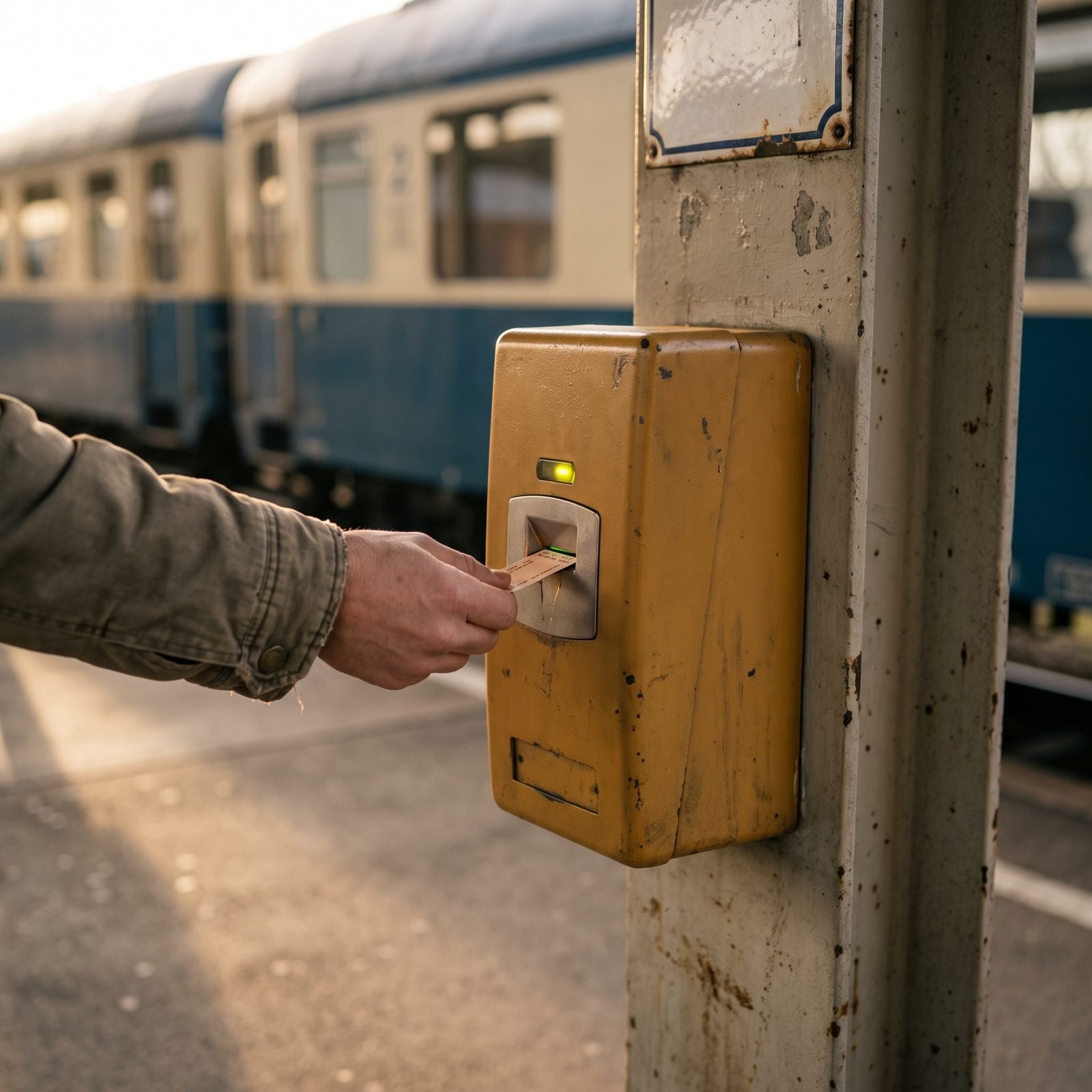
This one catches first-time Europe travelers constantly. In several countries a paper ticket isn’t valid until you stamp it in a small machine on the platform, and the ticket can look brand new and unused, which is precisely the problem.
An inspector sees an unvalidated ticket as no ticket at all. The fine lands on the spot, in cash, and no amount of explaining talks your way out of it.
16. Set an Alarm for One Stop Before Yours on the Train
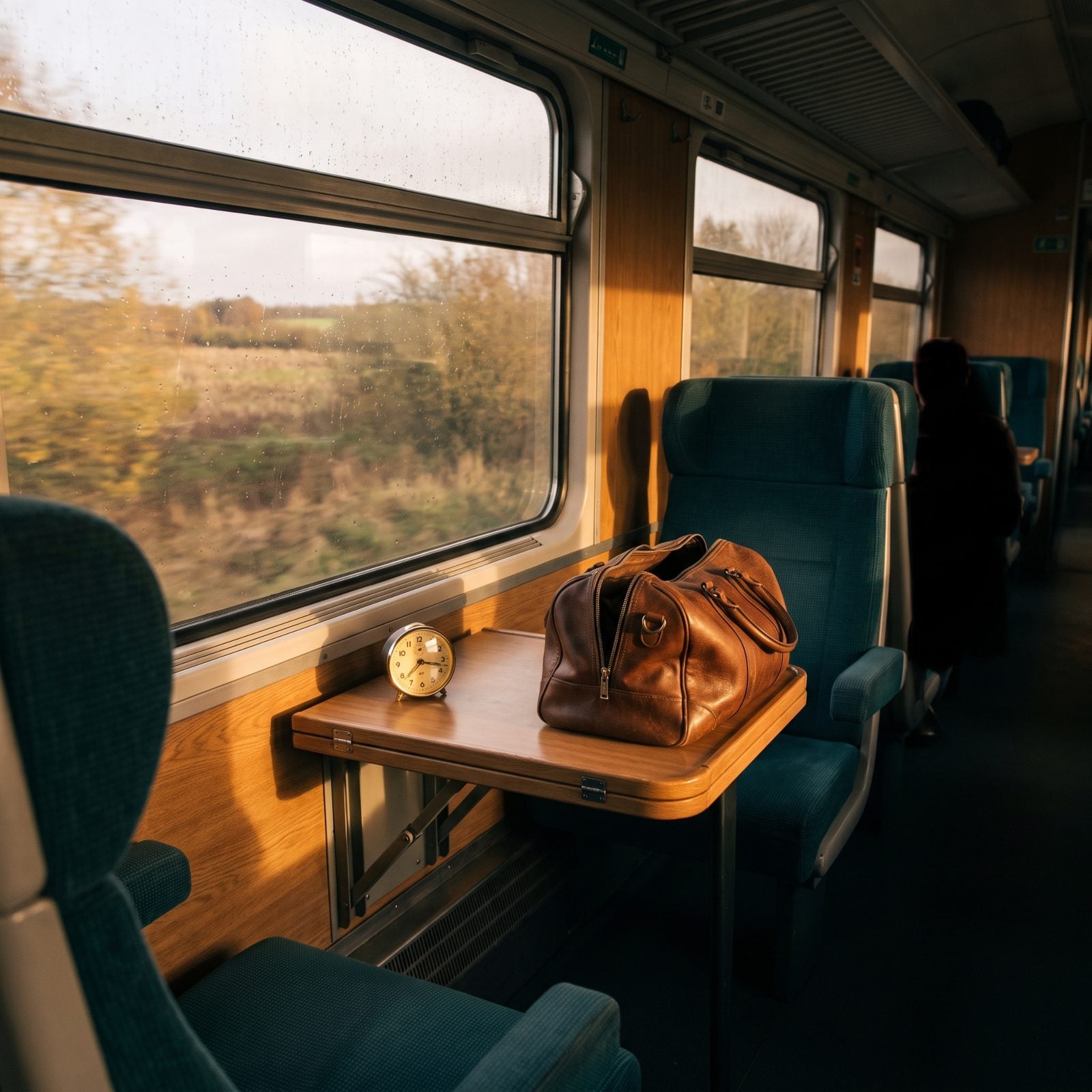
The last-second scramble is the enemy. Bags on the rack, a nap that ran long, and suddenly your station is sliding past the window.
The fix is quiet and a little genius: set a phone alarm for one stop before your destination. That gives you a full station’s worth of time to find your things, pull on your coat, and stand near the door before the train even slows. No panic, no bag forgotten on the overhead rack. You arrive already standing.
15. Live by the Cruise All-Aboard Time, Never the Sailing Time

The sailing time on the ship’s daily sheet is a trap for the unwary. The gangway closes well before the ship actually moves, and that earlier moment is the only one that counts.
Experienced cruisers read the all-aboard time and treat it as the true deadline, aiming to be back a comfortable margin ahead of it.
A ship does not wait. It leaves, and it leaves with your passport and your suitcase on board.
Miss the all-aboard and you’re chasing the vessel to the next port on your own dime. The margin is cheap. The mistake is not.
14. Keep Arrival Day Empty of Any Expensive Timed Booking

A delayed flight should cost you a few hours of patience, not a prepaid show you can never rebook. So the smart traveler leaves arrival day loose.
No nonrefundable timed museum slot the evening you land. No front-row opera the night a connection could strand you in another city. Save the highlights for day two or three, once you’re rested and actually there. Arrival day is for finding your feet and a good meal. Delays happen to everyone; the trick is making sure they never reach the thing you cannot replace.
13. Build a Full Recovery Day Into the Middle of a Busy Trip

Three big touring days in a row and the body sends the bill: sore feet, short temper, a cold coming on. The traveler who paces themselves plans for this before it happens, writing a full recovery block into the itinerary rather than leaving it to chance. A morning to sleep in. A slow lunch. Feet up by early afternoon.
Burn out on day four and the whole back half of the trip turns into a slog. Rest isn’t the opposite of adventure. It’s what pays for it.
12. Reach Any Unfamiliar Town Before the Light Goes

Arriving somewhere new after dark stacks every difficulty at once. House numbers vanish, curbs disappear, the rental car’s unfamiliar controls fight you, and the hotel entrance hides down a lane you cannot see.
So seasoned travelers plan driving legs and tricky arrivals to land in daylight. Signs stay legible, parking is obvious, and you can read a street and judge a neighborhood with your own eyes.
Darkness turns a simple arrival into a stressful one, and stress is when small mistakes get expensive. Give yourself the light. Everything is easier when you can actually see where you’re going.
11. Never Hang Your Night on the Last Bus, Ferry, or Train

The last departure of the day has no backup. Miss it and there’s nothing behind it but a problem.
Experienced travelers aim for the second-to-last option on purpose, and they’ll pay a little more for a daytime connection over a tight late one every time. A single cancellation then means a short wait, not a scramble for an overnight bed in a place you never meant to sleep.
10. Pad Your Connection Longer Than the Booking Site Ever Will
That “minimum connection time” the booking site quotes is a legal minimum, not a comfortable one. It assumes a jog, a short terminal, and nothing going wrong. Reality rarely cooperates.
The wise traveler adds a real buffer on top, especially when a change of terminal, passport control, or a security re-screen is in the mix. Long concourses eat time. Boarding at a measured pace eats more.
A missed connection cascades: lost nights, rebooking fees, a whole day spent in a help-desk line. That extra hour in the lounge with a coffee is the best money you never actually spend.
9. Skip the Rental-Car Dash Straight Off the Red-Eye
Overnight flights steal more than sleep. They quietly switch off the part of your brain that judges distance and reaction time, and the cruel trick is that you feel fine right up until you don’t. So the seasoned ones land, grab the bag, and absolutely refuse to merge onto a foreign highway in the same groggy breath.
Instead they book that first night near the airport, or ride the train in, or just park themselves over a coffee for a couple of hours until the fog burns off. A delayed drive beats a wrecked one. Nobody hands out a prize for reaching the hotel by noon.
8. Film the Rental Car Before the Keys Leave the Counter
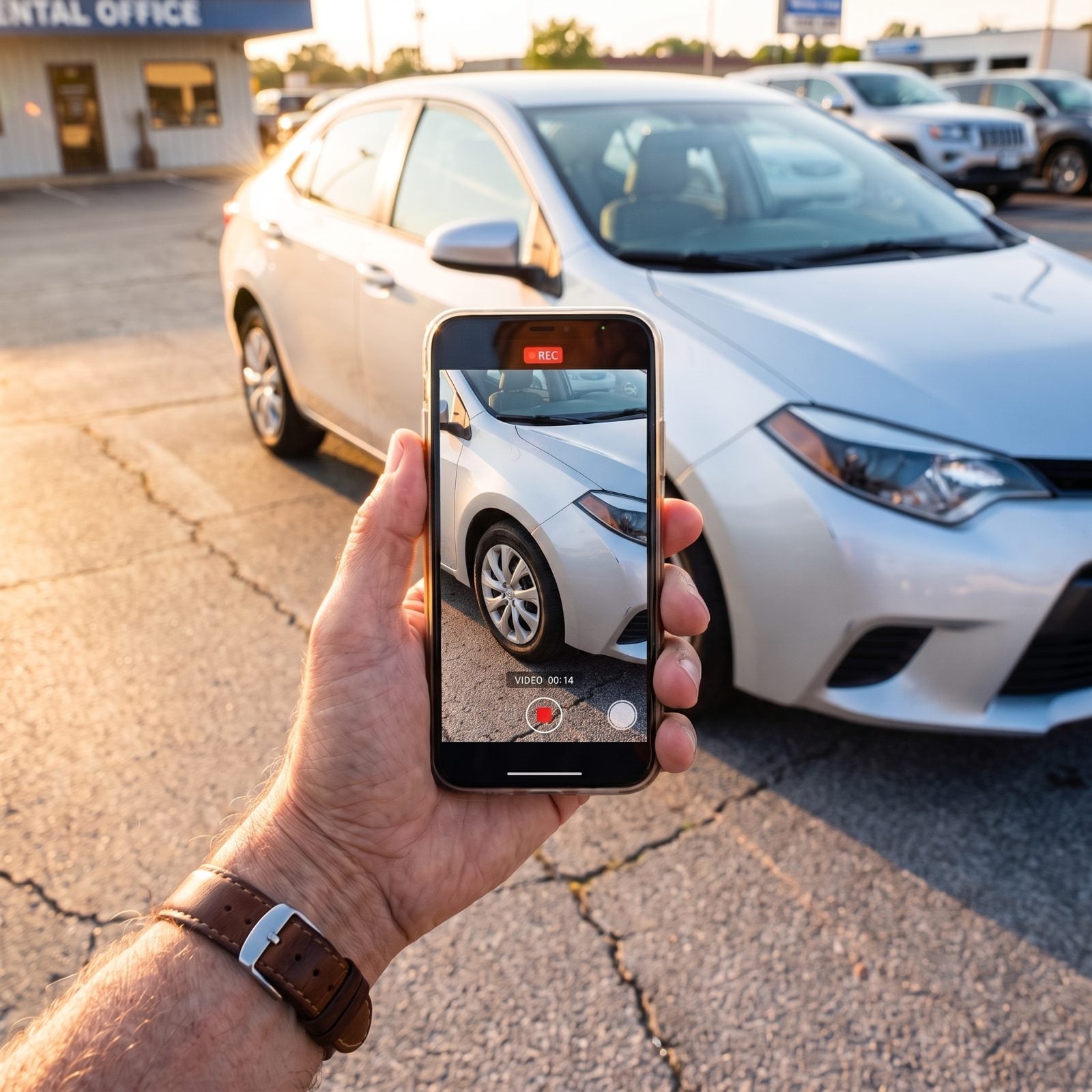
A rental counter dispute is just your word against theirs, unless you brought a witness. The witness is your phone.
One slow walk-around video at pickup catches every door ding, bumper scuff, and curb-rashed wheel, plus a tight shot of the fuel needle and the odometer. The time stamp does all the arguing for you down the line. When an agent points at a mark on return and reaches for your card, you’ve got the footage proving that mark was already sitting there the day they handed over the keys.
Ninety seconds, start to finish. It has killed more phantom-damage charges than any amount of polite protesting ever managed.
7. Top Off at Half a Tank Where the Map Goes Empty
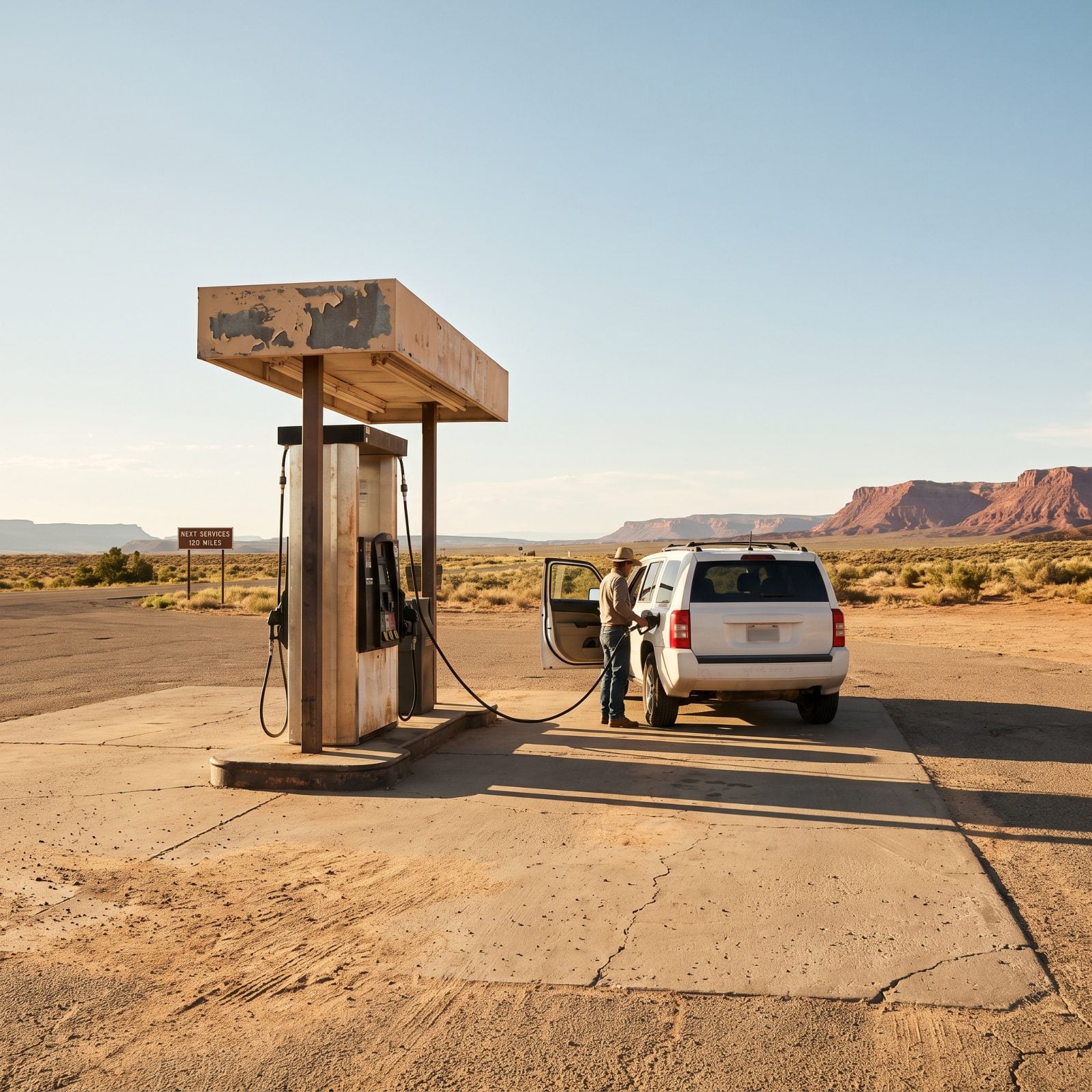
Half a tank is the new empty once the towns thin out. City drivers run the needle down to the last bar because the next station’s always three blocks away. Out in open country that same habit turns a routine fuel stop into a gamble.
Stations close early. Some close for good, and nobody bothers to update the map. A fifty-mile gap between pumps is nothing unusual on back roads, and a pump that reads “temporarily out” can be out all afternoon. Top off at half, though, and a closed station is a minor nuisance rather than a stranded phone call from a shoulder with no signal.
6. Put a Phone Number on the Luggage Tag, Never the House Number
A luggage tag is a tiny billboard. The only question is who’s reading it, and what you’ve handed them.
Scribble your full home address on there and every person who touches that bag now knows exactly which house sits dark and empty for the next two weeks. The careful crowd lists a mobile number, maybe an email, and stops. The airline can still track you down to reunite a lost bag. A stranger learns nothing about where your locked front door waits.
5. Carry One Visa and One Mastercard, Not Two of the Same

Two cards on the same network feel like a backup. They aren’t. If that network has an outage, and whole countries have watched one go dark for an afternoon, both your cards fail at the same terminal in the same second.
Carry one from each of two networks and a system-wide failure can only ever knock out half your spending power. The surviving card still works anywhere that accepts its network.
Stash the second somewhere separate, while you’re at it. Different network, different pocket. One small choice covers an outage and a pickpocket both.
4. Photograph the Open Suitcase Before You Zip It

The day you have to prove what was inside a lost or stolen bag is the exact day you realize you can’t recall half of it.
One overhead photo of the open, packed suitcase fixes that cold. Everything’s right there, dated, before the trip even begins. And if a claim ever lands on some insurer’s desk, you’re not scribbling a wishful list from memory. You’re attaching a picture.
3. Tuck a Tracker Into the Checked Bag
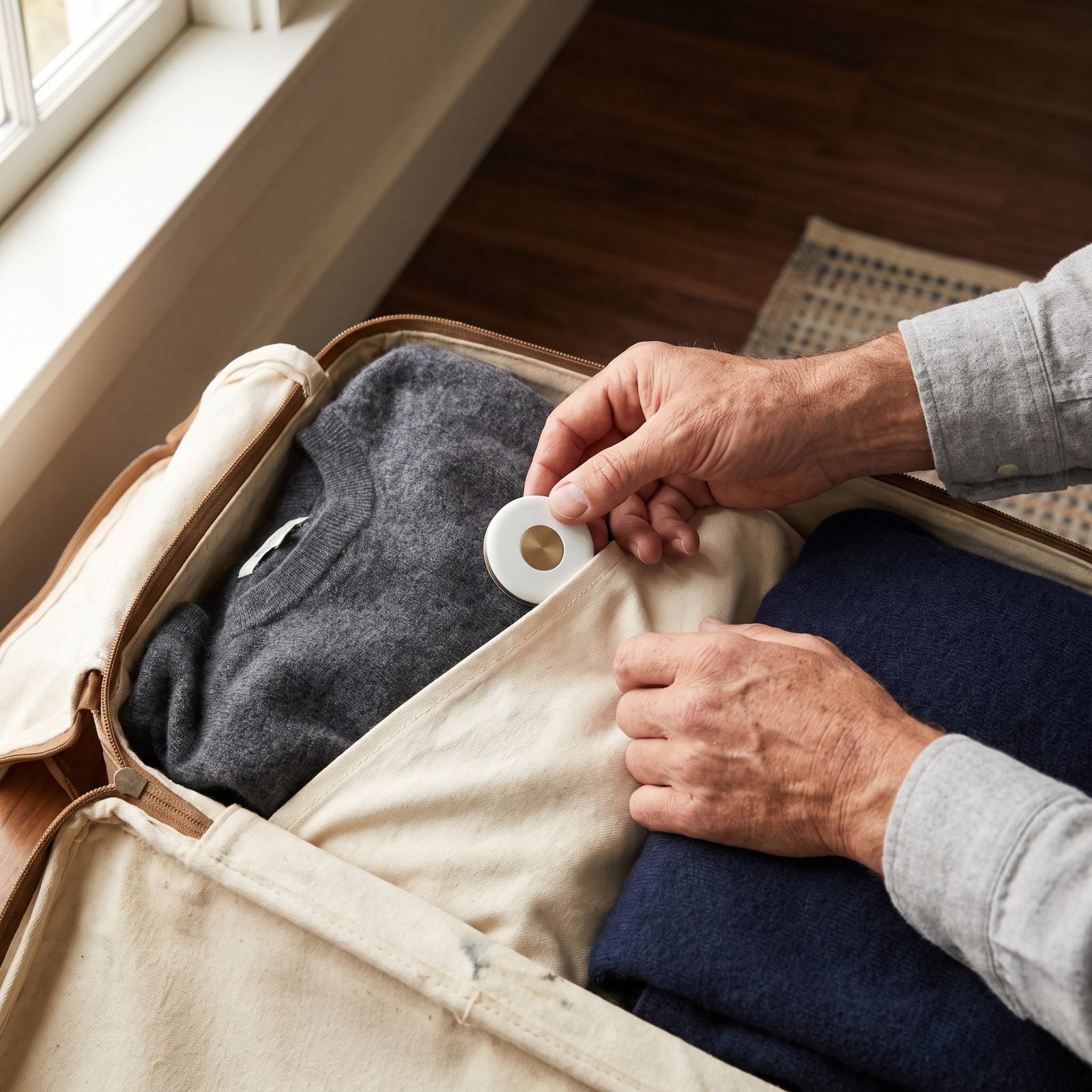
Airlines will cheerfully tell you your bag is “in transit.” What they won’t always mention is that it’s still sitting in the city you flew out of.
A small tracker buried in the checked bag hands you a second opinion. When the carousel empties and your suitcase is a no-show, a glance at your phone reveals it parked at the connecting airport, or never having left the origin at all. Suddenly a helpless shrug at the lost-luggage desk becomes a specific fact the agent can actually act on.
It won’t hurry the bag back to you. But knowing precisely where it sits beats swallowing whatever the last automated update claimed.
2. Screenshot Every Boarding Pass and Confirmation Code
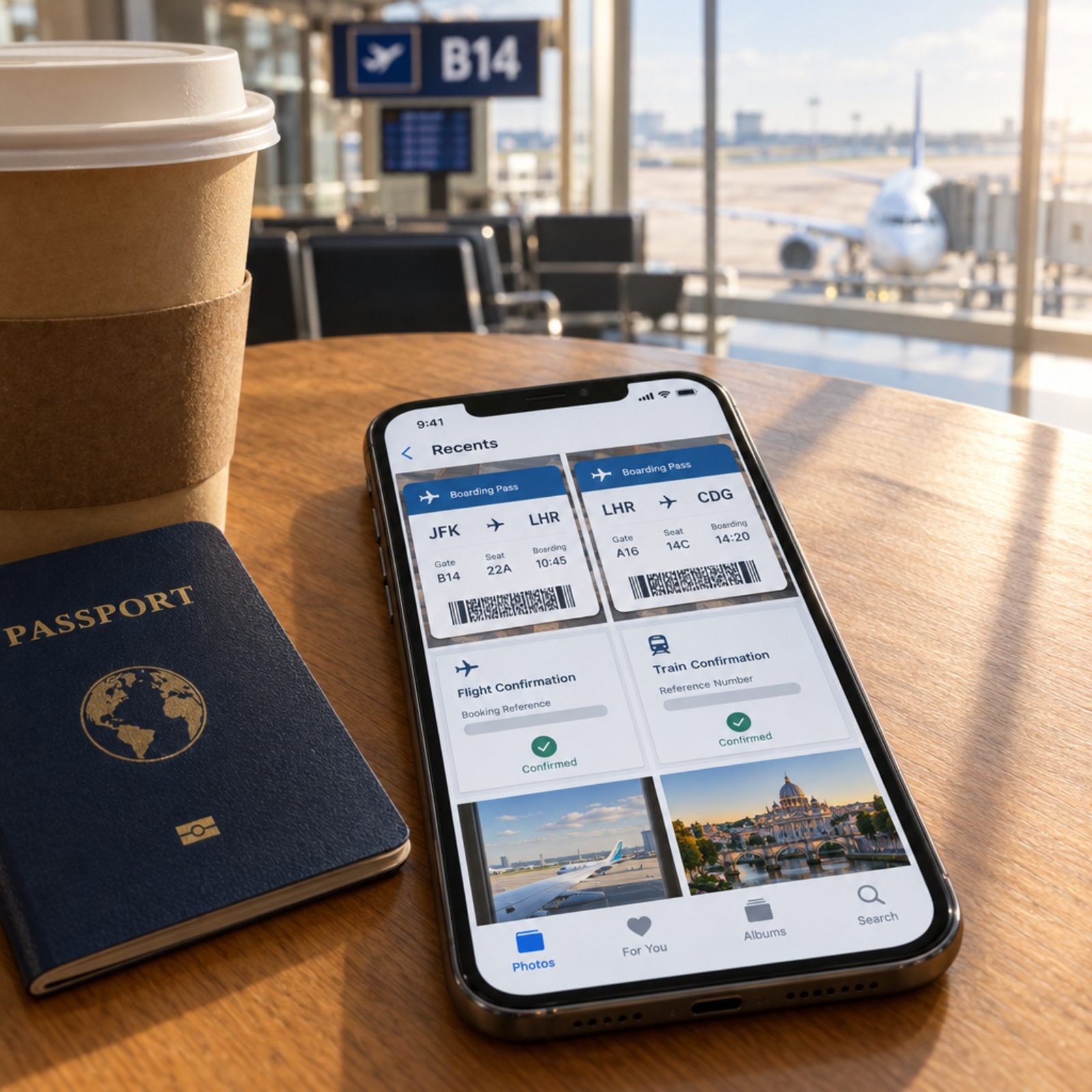
An app that won’t load at the gate is a special kind of helplessness. Terminal Wi-Fi’s buckling under the crowd, your data’s roaming and crawling, and that little spinning wheel couldn’t care less that your flight is boarding.
So experienced travelers screenshot it all, the boarding pass, the booking reference, the hotel confirmation, the whole bundle, and park it in the photo gallery where nothing has to phone home to anything. A saved image opens instantly, offline, every single time.
1. Pull Down Offline Maps While the Wi-Fi Still Works
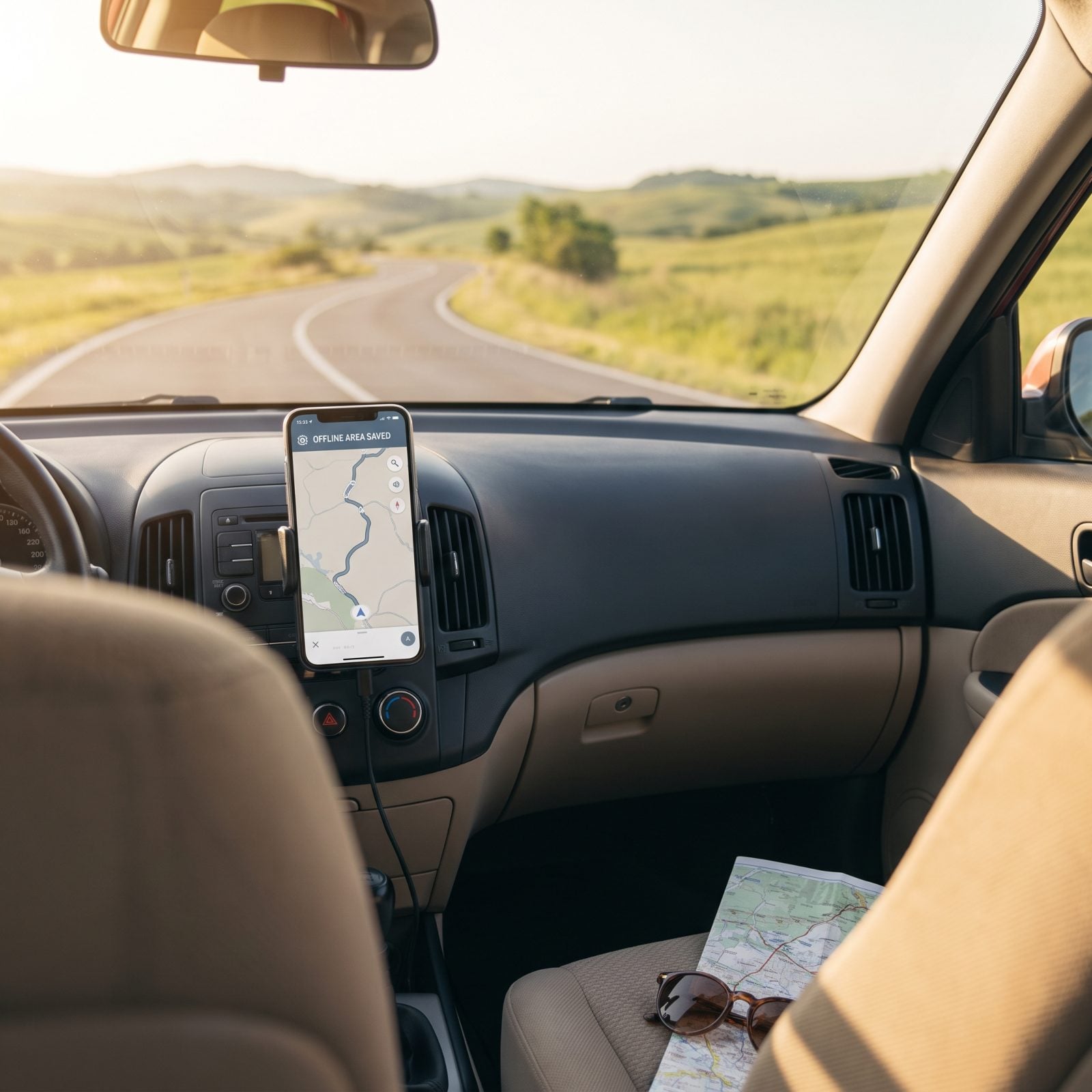
Navigation apps feel invincible right up until the road dips into a valley with no bars and no roaming agreement. Then the blue dot freezes, and you’re staring at a fork, guessing.
Download the map of your region before you leave decent Wi-Fi and the whole problem evaporates. Your phone still tracks your position off satellites, which keep working in dead zones and in foreign countries where your data plan quietly threw up its hands. No signal, no roaming charge, no panic at the unmarked intersection.
Do it the night before, on the hotel connection, while it’s still on your mind. The one trip you skip it is the one where you’ll be deep in a canyon with no bars. Download first. Drive later.
🔥 Would you like to save this?
Please note that some of the imagery in this article were created with the aid of AI image generators.