

The pattern shows up somewhere around hour six of a travel day. The flight is delayed, the gate changed twice, and one of you says something small and sharp that the other has heard a hundred times before. Vacations promise escape. What they actually deliver is a pressure cooker with a mini-bar. Strip away the usual routines, the separate work days, the friends who dilute the room, and what’s left is the two of you, tired and far from home, running the exact same scripts you run in the kitchen back home. Only now there’s nowhere to retreat — no hobby, no spare room, no errand to invent. These are the travel moments that pull the curtain back, and you’ve lived most of them. They tell you more than any quiet Sunday ever could.
18. A Flight Delay Turns Into the Blame Olympics
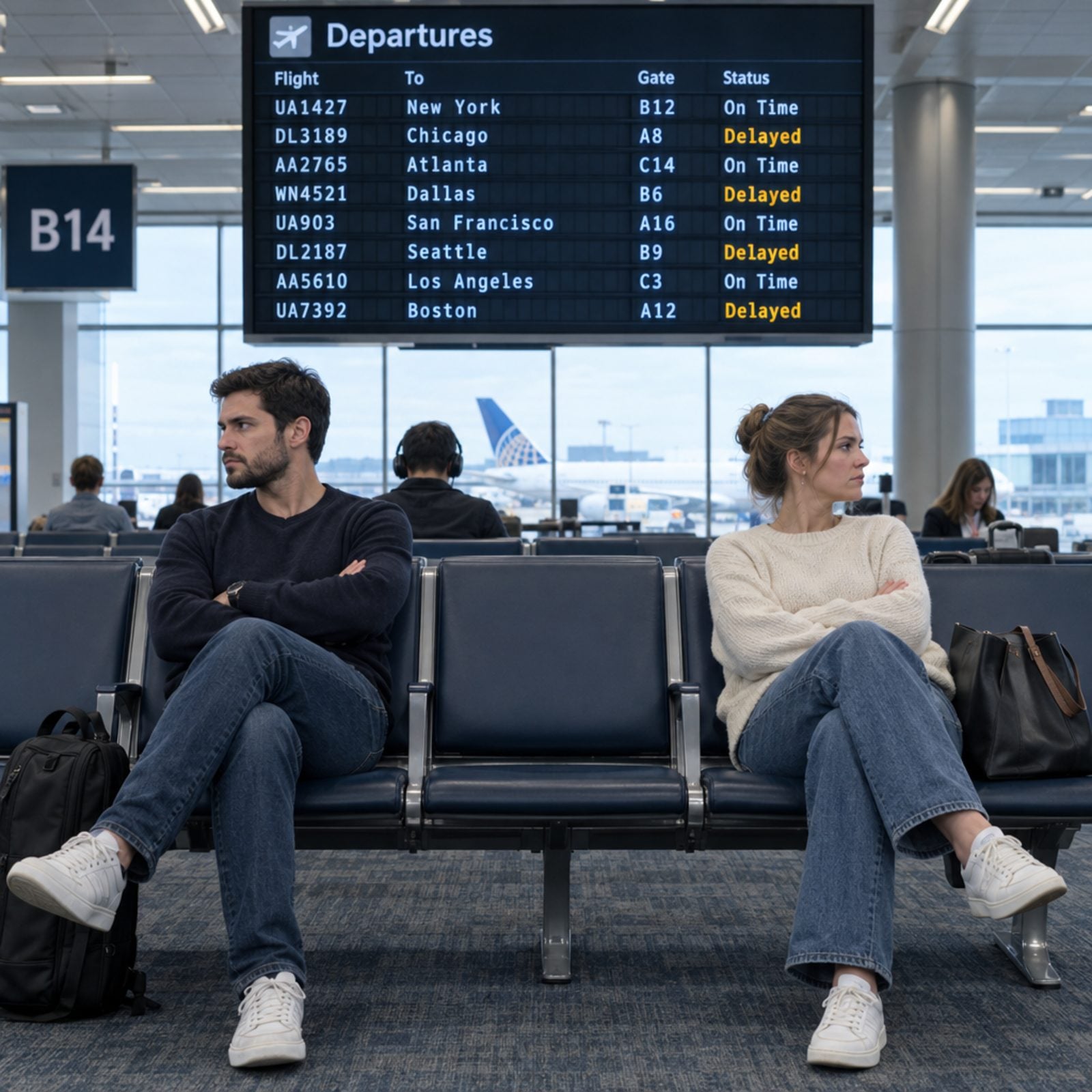
The board flips from On Time to Delayed and within ninety seconds you’re no longer discussing the flight. You’re discussing who insisted on the earlier airport leaving, or who dawdled over breakfast, or who booked the connection that was always too tight. The delay has one cause, and it’s the airline. Yet somehow the conversation lands on each other.
Call it blame-shifting under stress, the oldest script in the book. When something goes wrong and you can’t control it, the discomfort has to go somewhere. A faceless airline makes a terrible target. Your partner, standing right there, makes a convenient one. Psychologists call it displacement — you take the frustration you can’t aim at the real problem and point it at the person you can reach.
The tell isn’t the delay. It’s how fast you reach for an old grievance that has nothing to do with planes. If the fight sounds familiar, that’s because you’ve had it before — in a grocery store, over a late bill, in the car. Same mechanism. New gate number.
17. One Wrong Turn Reopens Every Unsettled Score

You miss the exit. One of you sighs, the other snaps, and the next thing you know you’re not arguing about a wrong turn forty minutes from the hotel. You’re arguing about the time three years ago, and the thing at the wedding, and the way one of you always, always does this.
A single mistake becomes a dossier. That’s kitchen-sinking — hurling every unresolved complaint into one fight because the current one cracked the door open. The wrong turn didn’t create the resentment. It uncorked it.
Now the uncomfortable part. If small navigation errors routinely detonate into a review of your entire shared history, the problem was never the GPS. It’s that the old grievances were never actually closed — set down, not resolved, waiting. A stressful drive is just the moment the lid comes off.
16. The Overstuffed Suitcase Reveals Who Carries the Load
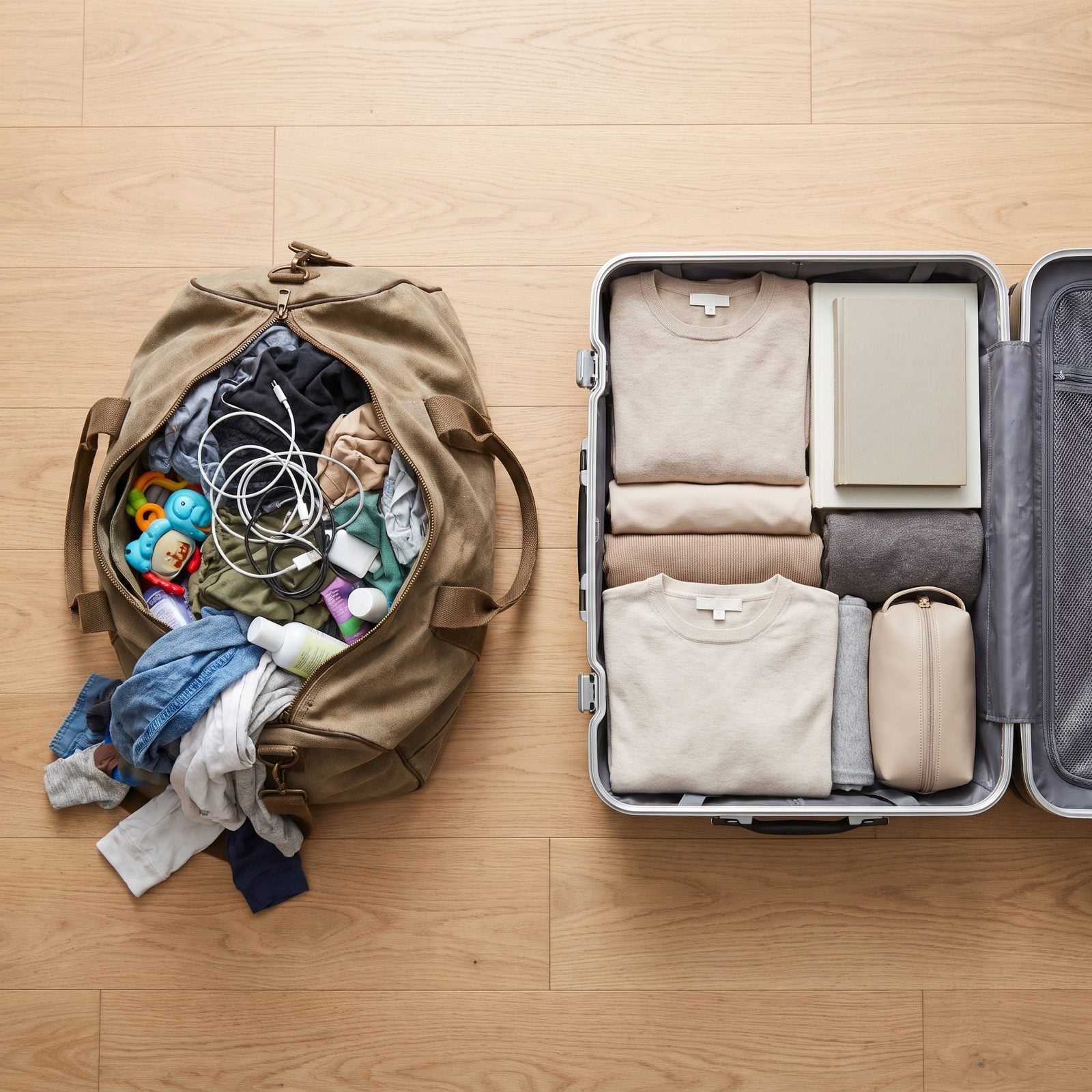
Open the suitcases and you can read the whole relationship. One is packed to bursting: a tangle of chargers, toiletry bottles, a jumble of shirts, shoes and spillover landing on the floor. The other is a tidy grid of rolled clothes and a zipped packing cube.
The contrast in the luggage is the imbalance in the labor. One person tends to run the invisible logistics of a trip — the mental checklist of what everyone will need — while the other shows up and gets handed a boarding pass. Researchers call this the mental load, and it rarely splits evenly.
Here’s what vacation drags into daylight: the load didn’t start at the airport. It’s the household pattern, just visible now because the packing happens all at once and in plain sight. The person who overpacks isn’t disorganized. They’re the one who’s been quietly tracking everyone’s needs the whole time, and the suitcase is simply the receipt.
15. Only One Person Gets a Vote on the Itinerary
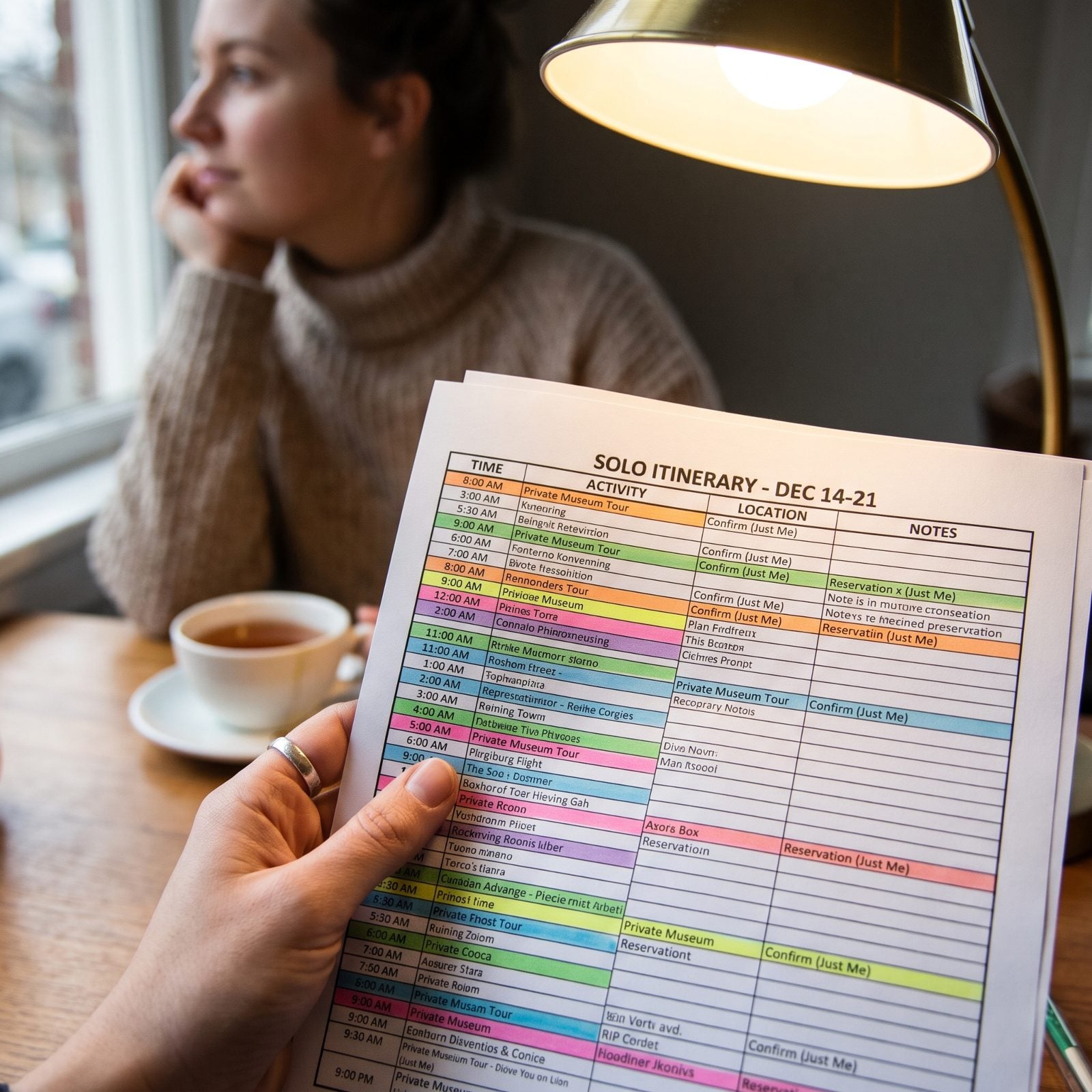
The itinerary arrives fully formed. Every hour accounted for, reservations confirmed, maybe a color-coded printout that might as well be titled “Solo Itinerary,” and when you float the idea of a lazy morning or a different museum, you get a polite smile and a reason why it won’t work. The plan was never a draft. It was an announcement.
One partner’s preferences become the trip, as if they were traveling alone. The other’s become suggestions that get overruled. This is control dressed up as competence, and it’s easy to miss because the planner genuinely believes they’re just being helpful and organized.
Watch what happens to the quieter partner over a few days. If they stop offering ideas entirely, that’s not agreement — that’s a learned response. When your vote never counts, you stop casting it. Same dynamic runs through restaurant choices and weekend plans at home, but on vacation, with every hour scheduled, it’s impossible to pretend both people are steering.
14. The Hotel Bill Exposes Your Opposite Money Personalities

Checkout is where the mask slips. The bill lands, and one of you is already mentally tallying every upsell — the minibar water, the resort fee, the breakfast that was supposed to be included. The other is reaching for the card without reading a line, because you’re on vacation and this is what vacations cost.
Spender and saver, meeting over a folio. These money personalities are usually set in childhood and run deeper than any budget conversation. One person treats money as safety. The other treats it as freedom. Neither is wrong, and that’s exactly why the fight never resolves.
The hotel bill just isolates it. At home the spending is spread across weeks and softened by routine. On a trip it arrives in a single itemized sheet, and suddenly you’re both staring at the clearest possible picture of how differently you value the same dollar.
13. Hunger Makes Your Usual Conflict Style Impossible to Miss

It’s two in the afternoon, you’ve walked miles, neither of you has eaten since a croissant at seven, and somehow the question of where to have lunch has become a referendum on your entire compatibility. Low blood sugar doesn’t create new personalities. It removes the filter from the one you’ve got.
When you’re depleted, your capacity for self-regulation drops. The polite editing you normally do — the pause before the sharp reply, the benefit of the doubt — runs on fuel you’ve burned off. What’s left is your raw conflict style, unmanaged.
So the hungry version of a fight tells you more than the well-fed one. Go cold and silent when depleted? That’s your default. Get loud and accusatory? Same. The hunger didn’t change who you are. It just stopped you from managing it, which is why so many travel arguments vanish the moment a plate of food arrives.
12. A Missed Reservation Shows Whether Disappointment Becomes Punishment

The reservation fell through. A mixup, a timezone error, a fully booked dining room — and the dinner you’d both looked forward to for weeks is gone. Now comes the real test, and it has nothing to do with dinner.
Does the disappointed partner let it be a shared loss, or does it curdle into punishment? You know the difference. One version is a sigh, a shrug, and a hunt for a backup place together. The other is a cold shoulder for the rest of the night, a withholding of warmth to make sure someone pays for the letdown.
That second move is emotional punishment, and it usually lands on whoever is nearest, deserved or not. What matters is whether your partner can hold disappointment without turning it into a bill someone else has to settle. Couples who repair well treat a ruined plan as something that happened to them. Couples who don’t treat it as something someone did.
A missed reservation is a small test of a large question: can we be disappointed together, or does one of us have to be punished for it?
11. You Post Smiles While Barely Speaking Offline

The photo is perfect. Arms around each other, sunset behind, caption about paradise. Then the phone goes back in the pocket and the two of you walk the beach in a silence that has teeth.
This is impression management — the gap between the performed relationship and the lived one. The posting isn’t lying exactly. It’s a highlight reel, and everyone knows highlight reels skip the fights. But when the gap between the feed and the reality grows wide enough, the posting starts doing something darker. It becomes a way to dodge the actual conversation by producing proof that everything’s fine.
Watch the timing. If the happiest posts tend to go up during the frostiest stretches of a trip, that’s no accident. It’s compensation. The smiling photo is doing the emotional work the two of you are refusing to do face to face. Nobody online can tell. Both of you can.
10. One Wants Pool Time; the Other Demands Togetherness

One of you wants to lie by the pool with a book and say nothing for three hours. The other reads that silence as rejection and keeps appearing, suggesting activities, asking if everything’s okay. By day two it’s a standoff over a question neither of you is actually naming: how much togetherness is the right amount?
This is the autonomy-connection tension, and every relationship negotiates it. One partner refuels alone. The other refuels through contact. Vacation strips away the natural buffers of a normal week — the separate commutes, the solo errands, the hours apart that nobody has to request. Suddenly you’re together constantly, and the difference in what each of you needs becomes impossible to ignore.
The trap is reading your partner’s need as a verdict on you. Wanting pool time alone isn’t a rejection. Wanting company isn’t neediness. They’re just different settings on the same dial, and the couples who travel well are the ones who learned to say the need out loud instead of turning it into a slight.
9. The Rental Car Exposes Your Backseat-Driver Communication Style
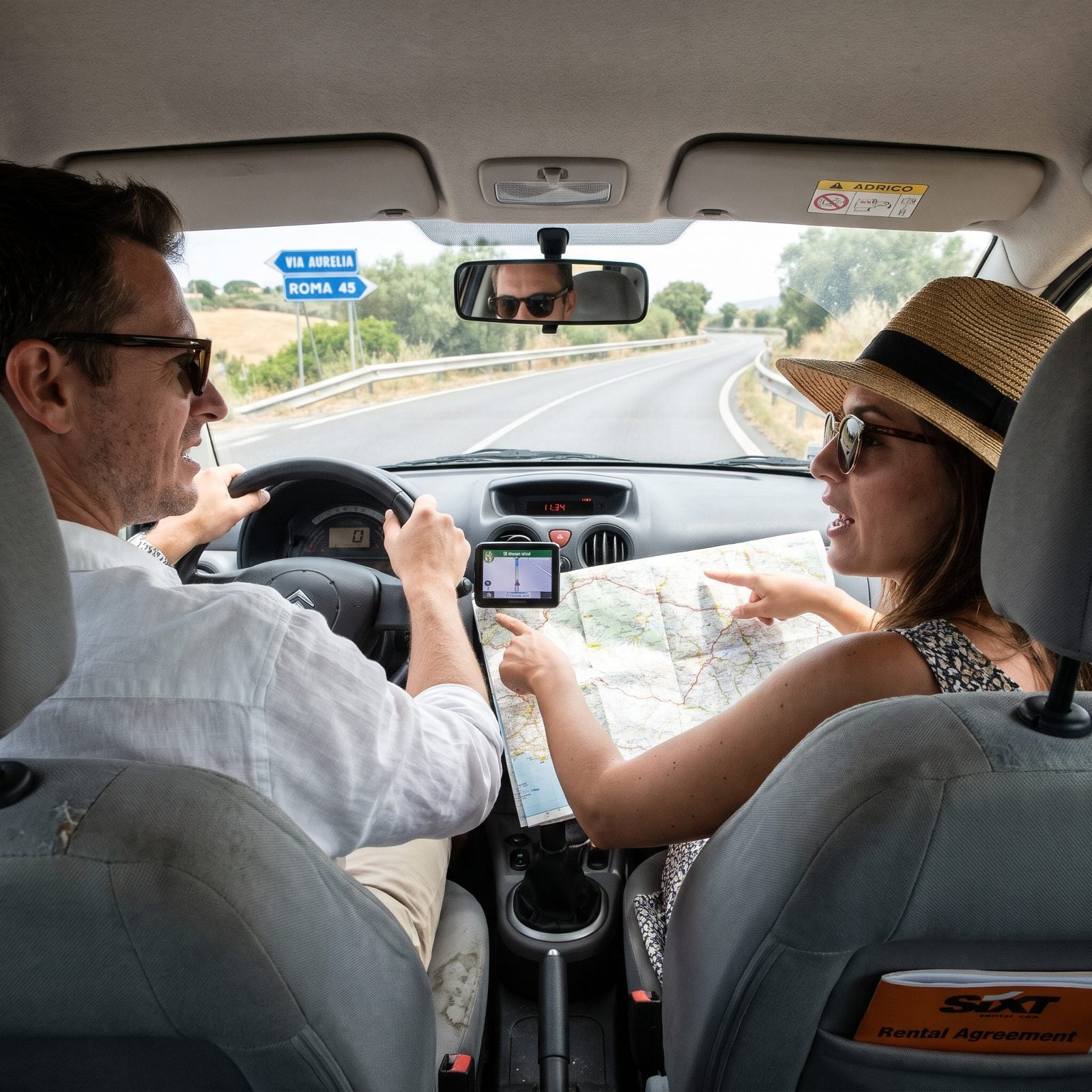
Put two people in a rental car in an unfamiliar country and the whole communication style surfaces inside ten minutes. One drives. The other narrates. Lane changes get announced, the turn gets flagged twice, and a gentle foot presses an invisible brake pedal over in the passenger seat.
Backseat driving is a control pattern that masquerades as helpfulness. The commentary says I’m just trying to keep us safe. What it often means is I don’t trust you to handle this without my oversight. And the driver hears exactly that, which is why a calm person can go stony after the third unsolicited instruction.
Here’s the useful part. How you two handle a wrong exit in a rental car is how you handle a thousand low-stakes moments at home. Does the driver snap, or ask for help? Does the passenger offer, or dictate? The car just concentrates it into a confined space with real consequences, where you can’t change the subject or walk into the next room. You either find a rhythm, or you learn something you’ll be chewing on long after you return the keys.
8. Your Phones Get More Attention Than the Ocean View

You flew six hours for a view that could stop traffic. And there you both sit, thumbs moving, faces lit by a four-inch screen while the Caribbean does its best work behind you.
Back home it’s the dinner table, the couch, the phone that comes out mid-sentence. The vacation just removes every excuse and leaves the behavior standing there naked. When your partner reaches for the screen while you’re talking, your brain reads it as a status report: the glowing rectangle outranks you.
This is the attention economy running inside your marriage. The phone offers tiny, reliable hits of novelty on demand, while a spouse offers familiarity — which the brain discounts the moment it feels safe. We adapt to the known and chase the new. That’s hedonic adaptation doing its ugly little job, and it’s why paradise can lose to a notification.
7. Choosing Dinner Becomes a Two-Hour Diplomatic Summit

“I don’t mind, wherever you want.” Famous last words. Forty minutes later you’re standing on a corner, hungry, mildly furious, and no closer to a table than when you started.
The restaurant standoff is never about the restaurant. It’s about who absorbs the risk of being wrong. Nobody wants to pick the place that turns out mediocre, because then it’s your fault the evening sagged — so you both play hot potato with the decision, each hoping the other commits first.
It’s the same loop that runs every shared choice at home: the house, the school, the Sunday plans. More options make it worse. More paralysis, more second-guessing after you finally decide. The couple that eats well on vacation isn’t the one with better taste. It’s the one where somebody is willing to say “this one” and own the outcome, good or bad.
6. A Tiny Hotel Room Tests How You Respect Space
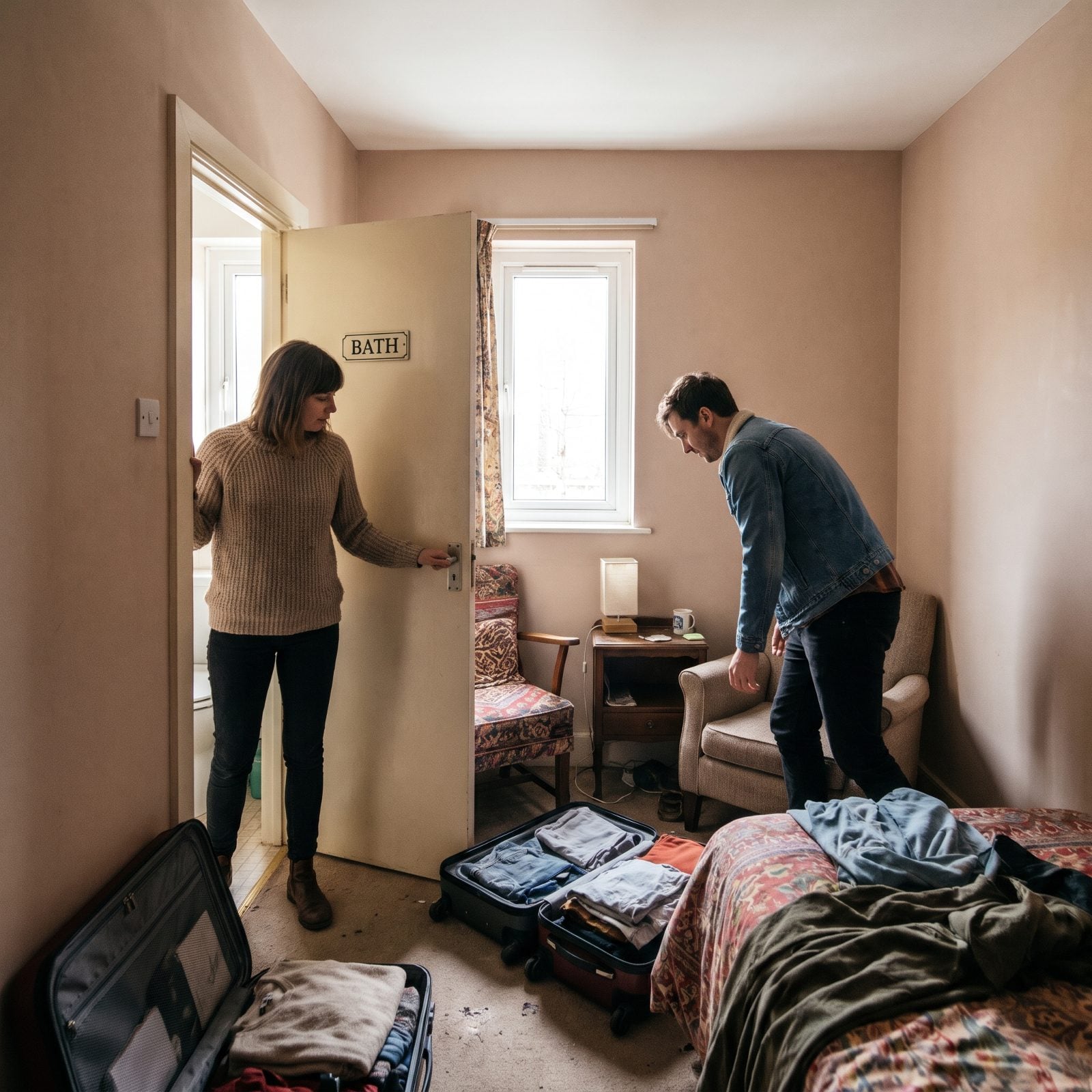
Back home you have whole rooms to retreat into. Here you have one bathroom, one of you opening its door while the other hovers a few feet away, and about forty square feet to split two ways. Suddenly the way one of you lets a suitcase sprawl across the only walking path feels like a declaration of war.
Shared space reveals the invisible contracts you never spelled out. Who gets the good side of the bed. Whose stuff is allowed to colonize the dresser. Whether someone can decompress in silence or needs to narrate every thought out loud.
Psychologists call it territoriality, and it’s not pettiness. Having a patch of control over your environment is a basic regulator for stress — strip it away and small irritations spike into fights. The travel partners who survive the tiny room aren’t the tidiest. They’re the ones who negotiate the borders out loud instead of waging a cold war over a damp towel.
5. Vacation Friends Bring Old Jealousies Through Customs

Traveling with another couple sounds like a bargain. Split costs, built-in company, someone else to blame for the itinerary. Then dinner three arrives, and old dynamics you thought you’d outgrown stroll back in.
One of you lights up a little too much around the other couple. A comparison starts running quietly in the background: their marriage looks easier, their banter looks warmer, their kid behaves. Suddenly you’re not just on vacation — you’re being graded.
Social comparison is automatic and relentless, and proximity turns up the volume. We measure our own relationship against the one across the table, and we tend to stack their highlight reel against our behind-the-scenes. The jealousy isn’t really about the other couple. It’s old insecurity that found a fresh audience and a few glasses of wine to loosen it.
4. You Treat Hotel Staff Better Than Your Partner

Watch the difference. “Oh, no worries at all, thank you so much!” to the front desk clerk who gave you the wrong room. Then, thirty seconds later, a clipped, flat tone to the person you married, for misreading a map.
We save our patience for strangers because strangers have no history with us and the stakes feel social. A partner gets the unfiltered version — the one with no performance in it.
There’s a cruel irony here. The person who’s seen you at your worst and stayed gets the least courtesy, precisely because you trust them to absorb it. Good manners are effortful, and effort gets reserved for the people we’re still auditioning for.
3. Calling Home Lets the In-Laws Join the Vacation

The quick “just checking in” call to the parents. Twenty minutes later, your mother-in-law has opinions on the hotel, the weather, and whether you two should really be spending this much. The vacation now has three people on it.
Every couple draws a boundary around the marriage, and vacations test how firm that line actually is. When one partner routes big feelings or small grievances back through a parent, the other one feels outnumbered. The outside voice becomes a referee who was never supposed to be in the game.
Family systems researchers call it triangulation — when two people can’t resolve tension directly, they pull in a third to stabilize it. Works short-term, corrodes long-term, because the real conversation never happens between the two people who need to have it. The healthiest couples let the phone stay a phone, not a hotline to reinforcements.
2. The Ruined Excursion Reveals Who Can Actually Apologize
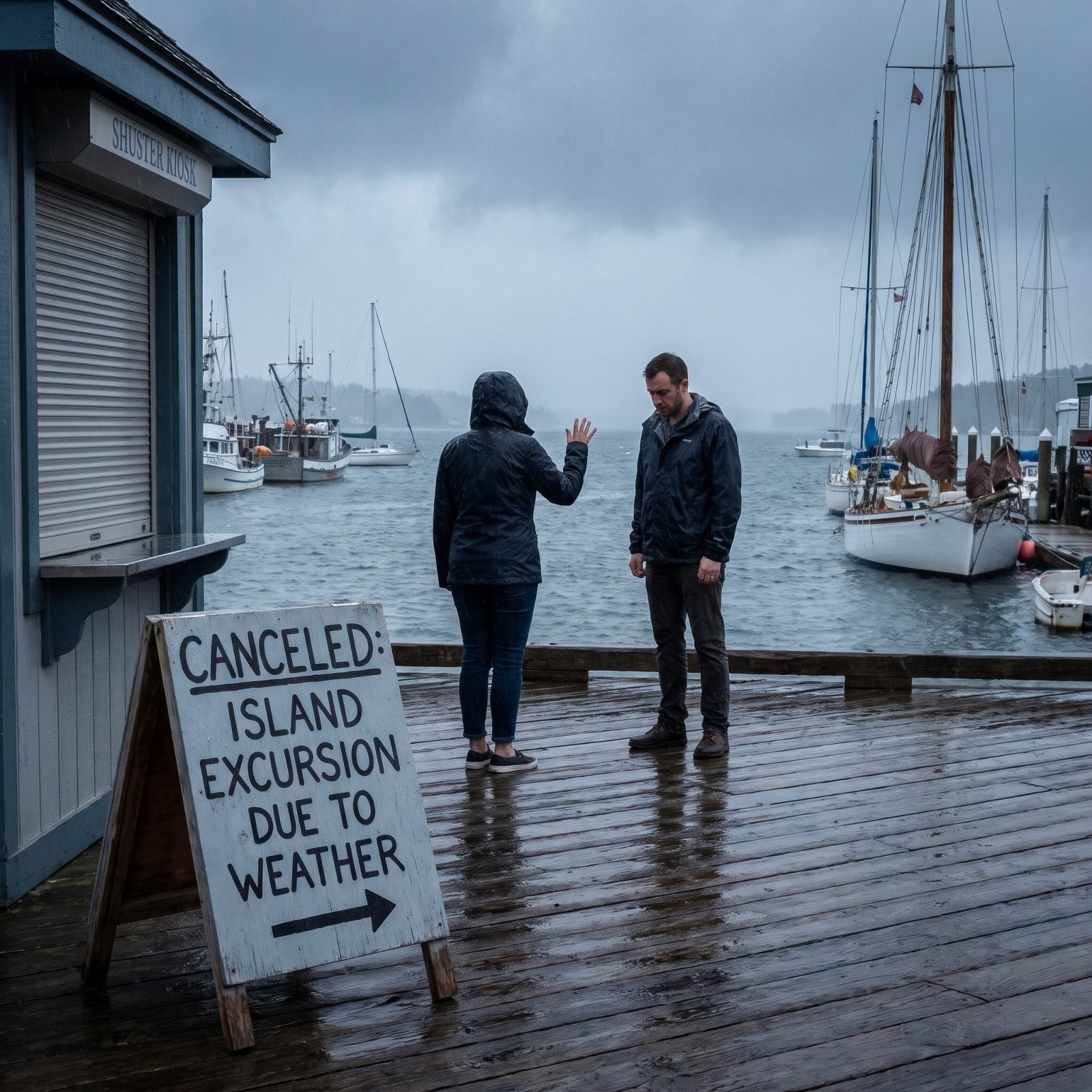
The excursion you booked months ago falls apart. The weather turns, the boat’s canceled, or somebody read the time wrong and you missed it. Now you’re standing in the wreckage of a planned good day, and the real test begins.
Not the disappointment. The recovery. Can one of you say a clean “I’m sorry, that was my mistake” without a buried “but”? Or does the apology arrive pre-loaded with blame, so it’s really an accusation wearing a nice coat?
Repair might be the single most predictive relationship skill there is. Every couple ruptures. The stable ones just repair faster and cleaner. A ruined excursion compresses months of ordinary friction into one afternoon and asks the blunt question: when it goes wrong, do you two turn toward each other or away?
The mistake never breaks a vacation. The inability to say sorry does.
1. Vacation Romance Buckles Under a Suitcase of Expectations

This was supposed to be the trip that reconnected you. Candlelit dinners, slow mornings, the spark everyone promised a change of scenery would rekindle. Then day two arrives tired, slightly sunburned, and resolutely ordinary, and the gap between the fantasy and the facts starts aching.
You packed more than clothes. You packed expectations, and they’re heavy. The brochure romance sets a bar that real intimacy — often quiet and unglamorous — can’t clear on command. When reality underperforms the story, somebody feels cheated, even if nothing actually went wrong.
This is affective forecasting failing us, as it tends to. We’re terrible at predicting how future events will make us feel, and we routinely overestimate the intensity. The vacation didn’t break the romance. The impossible script you handed it did.
Please note that some of the imagery in this article were created with the aid of AI image generators.