

Plenty of people book the same Caribbean island year after year and swear it’s the only place they can truly unwind, somehow skipping right past the mildewed bathroom, the two-hour taxi from the airport, and the restaurant that once left them clutching a toilet for a weekend. That isn’t a vacation story. It’s a relationship story, and most people never notice. We do the exact same thing with places that we do with people — fall for a face in a photo, excuse the flaws, keep coming back because once, early on, something felt like lightning. The wiring that drags you toward a destination you can’t quit is the same wiring that kept you parked in a situation you should have walked out of months ago. Below are the moments you’ll recognize, and the quiet reasons both keep happening.
15. The Resort Photos Have You Planning a Future Together

You haven’t even booked and you’re already mentally retiring there. The resort photos show a couple on a swing over clear water, a breakfast of tropical fruit arranged like a painting, and a sunset that looks edited because it absolutely was. Give it ten minutes and you’re imagining next winter, the winter after, maybe a little place of your own someday.
Same rush as a first spark with someone new. The imagination sprints ahead of the facts and builds a whole life out of a handful of flattering snapshots. Psychologists call it idealization — you fill the blanks with best-case guesses, and you do it most eagerly when you know the least, which is exactly backward from how it ought to work.
The resort counts on this. Every photo was shot in the twenty best minutes of the day by someone paid to make you dream. You’re not seeing a place. You’re seeing an audition for one, and you already handed it the part.
14. One Perfect Sunset Makes You Ignore the Awful Hotel

The room smells faintly of mildew and the air conditioner rattles like it holds a grudge, but then you look past the rusty railing to the big streaked window, the whole sky catches fire over the water, and none of it matters anymore.
You’ve pulled this move on a person too. One perfect evening, one moment of them being exactly who you hoped, and you quietly file away every warning from the week before. Psychologists call it the peak-end rule. Your memory weights the brightest moment far heavier than the daily slog, so a single magnificent sunset outvotes four nights of bad plumbing.
The trip, like the person, gets graded on its highlight reel instead of its average Tuesday. Generous, isn’t it? It’s also how you wind up defending a hotel you’d never recommend to anyone you actually like.
13. You Mistake Vacation Adrenaline for Genuine Island Chemistry

Your heart is still pounding after the zip line, the cliff jump, the moped ride down the coast road with no helmet and no sense whatsoever. The island feels electric. You think: this place does something to me.
It does. Just not what you think. There’s a famous study run on a wobbly suspension bridge, where men who’d just crossed a terrifying drop found themselves far more drawn to a woman waiting on the other side. Their bodies were buzzing from the height, and their brains quietly pinned the blame on her. The charge was real. The source was wrong.
Vacation runs on the identical mix-up. The novelty, the risk, the sleep you keep skipping — all of it floods you with a jittery high that has nothing to do with the destination’s actual character. You’re not falling for the island. You’re falling for your own racing pulse, and the island just happens to be standing nearby looking gorgeous.
12. The Harder It Is to Book, the More You Want It

Three flights, a ferry, and a six-month waitlist, and somehow the place that’s nearly impossible to reach becomes the one you want most. A resort with rooms open next Tuesday? You shrug. Booked solid until spring? Suddenly it’s the only trip worth taking.
People work the same way. The one who’s hard to pin down, slow to text back, always just slightly out of reach, tugs harder than the kind soul who’s available and genuinely glad to see you. Scarcity does the heavy lifting. Your brain treats difficulty as proof of worth, even though the two have nothing to do with each other.
And the effort you’ve already poured in becomes a trap. Once you’ve spent the money and the months, admitting the place was merely fine feels unbearable, so it can’t be merely fine. It has to be worth all that. It has to be the best trip of your life. It has to.
11. Everyone Else Loves Bali, So You Assume You Should

Everyone you know has been. Your feed is wall-to-wall rice terraces and sunrise yoga. So you book it, half-convinced the love is already yours before the plane has even touched down.
That’s social proof, the same force that makes a packed restaurant feel better than an empty one. When a crowd agrees, we stop asking whether a thing actually suits us and start assuming it must. You inherit the enthusiasm secondhand, like a hand-me-down coat that may or may not fit your shoulders.
The romantic version? Dating someone because everyone swears they’re a catch. Great on paper. Beloved by your friends. And somehow it never quite clicks for you, because being popular was never the same as being right for one specific person. A crowd can be completely correct about a place and completely wrong about whether it belongs to you.
10. You Keep Returning Because the First Trip Felt Magical

The first time was everything, so you’ve gone back six times chasing it, each visit a little flatter than the last, still booking the next one, still certain the magic is tucked in there somewhere if you just land on the right week.
But you’re trying to recreate a feeling that was never really about the place. It was about the first time — the newness, the version of your life you were living then, the person sitting beside you. None of that can be rebooked.
Relationships pull the same trick. People hang on for years trying to crawl back to how it felt in month one, confusing the memory for the reality staring them in the face. The place barely changed. You did. And no amount of returning will hand back the you who saw it fresh.
9. You Defend the Destination When Your Friends Spot Problems

Your friends come back and mention the crowds, the scams, the beach that turned out smaller than the photos promised. And you bristle. Out comes the explanation: they went at the wrong time, stayed in the wrong part, never gave it a fair shot.
Here’s what’s really happening. You’re not defending the place — you’re defending your choice to love it. Confirmation bias, dressed up as loyalty. Once you’ve decided something is wonderful, every criticism lands like an attack on your judgment, so you explain it away rather than let it in.
We guard our opinions about people this way too. Point out a partner’s glaring flaw and watch someone leap to its defense, not because the flaw isn’t real, but because admitting it would mean admitting they saw it and stayed anyway. The energy you burn defending a place is usually a decent gauge of how much you secretly suspect your friends are right.
8. A Bargain Flight Makes Every Red Flag Look Smaller

The flight was a steal — half what you expected. And just like that, the two layovers, the 2am arrival, the airline famous for losing bags, all of it shrinks in your head to tiny, forgivable inconveniences.
Price anchoring, that’s the culprit. The great deal becomes the headline and everything else gets filed under footnotes. You caught such a bargain that grumbling feels ungrateful, so you never quite let yourself notice how much the bargain is actually costing you in hours and aggravation.
The romantic twin is falling for someone because they tick one irresistible box — gorgeous, maybe, or rich, or wildly fun — and letting that single headline flatten every warning sign into something you’ll deal with later. The deal that’s too good usually isn’t. You just haven’t totaled up the fine print yet.
7. You Fall for Who You Become While You’re There

Something happens to you on that island. You’re relaxed. Funny at dinner. You read actual books, wake at six without an alarm, and somehow love it. You fly home convinced the place holds some private power, and you ache to go back and drink it in all over again.
But here’s the catch, and it’s a big one. The person you loved being wasn’t conjured by the island. The island just stripped away the job, the inbox, the carpool, the endless list. Take anyone, pull all their obligations off their shoulders, and they get interesting too. You didn’t fall for the destination. You fell for the version of yourself it finally let out of its cage.
This is the deepest layer of the whole pattern, the one people miss for years. We attach to places and to people because of who we get to be around them. That part is real, and worth chasing. Just be honest about what you’re chasing. It was never the beach.
6. Unpredictable Weather Makes the Good Days Feel Even Better

Three days of rain, and then the clouds break, the sun comes out, and that one clear afternoon feels like a gift from the heavens. If every day had been flawless, you’d have taken it for granted. The rain is what made the sunshine unforgettable.
This is intermittent reinforcement, the stickiest reward schedule going. A payoff you can’t predict hooks you far harder than one you can set your watch by. Slot machines run on it. So do the places — and the people — who turn wonderful just often enough to keep you coming back for the next good day.
The destination that’s gorgeous every single time fades into pleasant background. The one that makes you wait, tests your patience, then delivers heaven right after a stretch of misery? That’s the one you can’t stop replaying. Reliability is kind. Unpredictability is addictive. And we almost always mistake the second for passion.
5. You Research Paris Until It Starts Feeling Like Fate

You pick the city, and then the universe conveniently arranges itself around your choice. The bakery two streets from your rental is suddenly the best in the arrondissement, the weather for your exact week looks suspiciously perfect, and every blog you read agrees this is the one. You’re not gathering information anymore. You’re gathering evidence for a verdict you already reached.
Meeting someone works the same way when you decide, early, that they’re it. From that moment you read every shared song and lucky coincidence as a sign, and you stop noticing the parts that don’t fit because you’ve quit looking for them.
Call it confirmation bias doing its quiet work. Once the brain commits to a belief, it goes hunting for anything that confirms it and waves off the rest. Paris doesn’t become fate. You just decided it was, then spent three months proving yourself right.
4. One Gorgeous Beach Gives the Whole Town a Halo

The beach is unreal. Water so clear you can count your toes, sand like warm flour. And because of that beach, you decide the whole town is charming. The overpriced restaurant with the slow service becomes rustic, the grubby main drag turns into character, and the hotel pool going green at the edges? You barely notice, because the beach forgave it all in advance.
This is the halo effect, the oldest trick in attraction. One standout quality floods everything else with warmth. Someone has a great smile and suddenly you assume they’re kind, smart, and reliable too, none of which you’ve actually tested. A single strong trait becomes the color you paint the entire picture.
Beautiful beaches and beautiful faces run the same con, borrowing against the future. The beach can be a ten and the plumbing still a two, but your brain refuses to hold both numbers at once.
3. You Book Again to Justify What You’ve Already Spent

Here’s the quiet math nobody admits to. You’ve flown there four summers running, you know the owner by name, and you’ve got the routine down to the café where they already know your order. The trip stopped being fun around year three, but cancelling feels like admitting all those summers were a mistake. So you book again.
That’s the sunk-cost fallacy, and it keeps more bad relationships alive than love ever did. You stay because leaving would mean the years already spent were wasted. As if more time could somehow refund the time you already lost.
The money and the summers are already gone. Booking again doesn’t get them back. It just spends new ones chasing old ones.
The hard truth about any investment of the heart or the wallet: what you’ve already put in should never decide what you do next. Only what’s actually in front of you gets a vote. Most of us have ignored this advice and regretted it, which is why it bears repeating.
2. You Compare Every New Destination to Your Mediterranean Ex
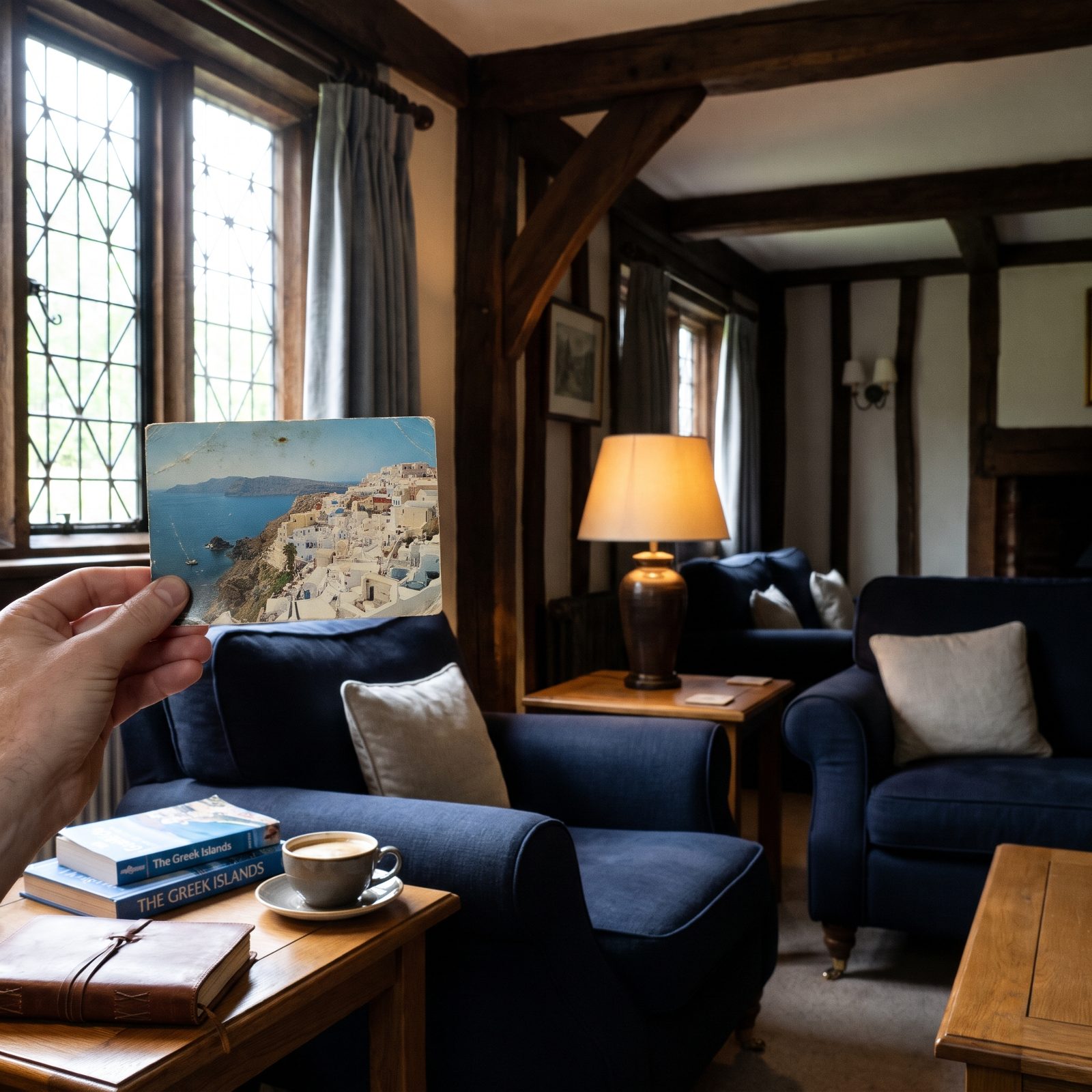
You go somewhere new and lovely, and within an hour you’re grading it against Santorini. The light isn’t quite the same. The tomatoes aren’t as good. The sea is the wrong shade of blue. You decided all of this before you’d even unpacked.
We all do it with a first great love. The next person walks in and gets held to a standard the old one never actually met in real time, only in memory. And that benchmark isn’t the real Santorini. It’s the polished, edited, grief-softened version your mind keeps on a shelf.
Nostalgia is a talented liar. It drops the sunburn, the crowds, and the night you got food poisoning, and keeps only the one perfect evening on the terrace. So you’re not comparing a new place to an old place. You’re comparing a real place to a highlight reel.
1. Shared Vacation Memories Keep You Loyal Past the Fun

The lake cabin isn’t what it was. The dock needs work, the good fishing spot got crowded, and the drive is longer than you remember. But you keep going back, because the kids learned to swim there, and you scattered a few things that mattered there, and the whole place is stitched through with twenty years of July.
Loyalty built on shared history is one of the strongest forces there is, in travel and in love alike. You’re not staying for what the place offers now. You’re staying for what it holds. The memories live in the location, so leaving the location feels like leaving the memories.
Psychologists call it the endowment effect: we value things more simply because they’re ours. A cabin you’ve loved for two decades stops being just a cabin. It’s a storage unit for your own history, and nobody wants to clear out the unit.
Which is lovely, until it quietly becomes the only reason you keep returning. The question worth asking, gently, is whether you still love the place or just love who you were there.
Please note that some of the imagery in this article were created with the aid of AI image generators.