
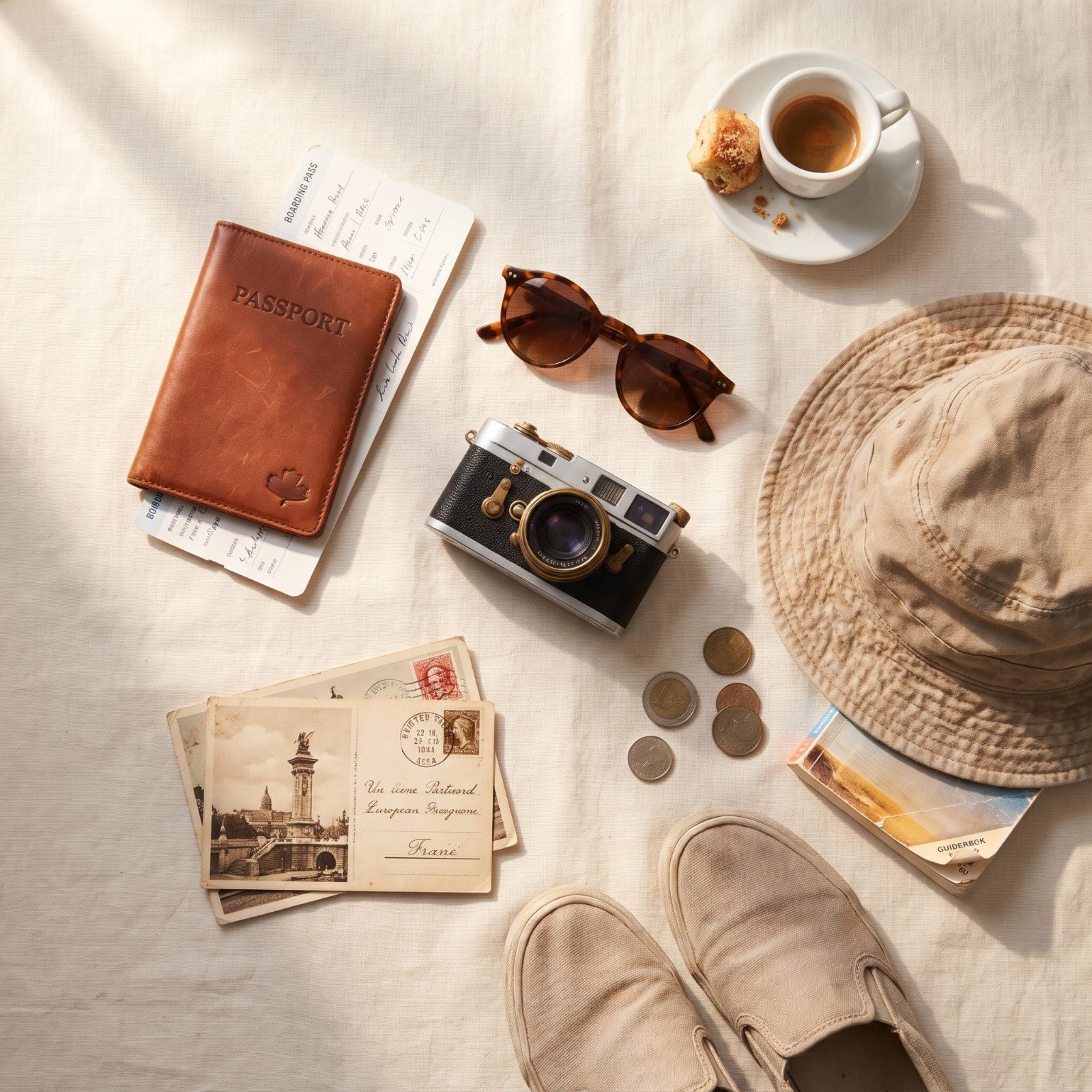
Somewhere over the state line, a stranger took over your body. This stranger talks to people in elevators, pays eighteen dollars for a sandwich and calls it fine, and wakes at 6 a.m. to watch fog lift off a harbor — the same person who hits snooze four times on an ordinary Tuesday.
We’ve all met this version of ourselves. The travel self. Looser, bolder, hungrier for the moment, oddly generous with money and time and small talk. It shows up the minute the familiar falls away and vanishes the second you’re back on your own couch.
What follows is a look at that transformation, point by point. The behaviors are ridiculous. The psychology behind them is real. And you’ll recognize yourself in nearly every one.
16. The Airport Outfit Becomes a Whole New Personality

You don’t dress like this for the grocery store. The matching knit set, the structured tote, the scarf you knotted three times in the mirror before leaving. Home, you’d throw on whatever was clean. At the gate, you’re auditioning for a magazine you’ll never appear in.
The airport is a stage, and you know it. Nobody there knows your real life, which means nobody can contradict the version of you stepping off that plane. So you dress for who you want to be when the doors open — not for who you were loading the dishwasher an hour earlier.
The outfit is a promise to yourself. Out here, you’re the kind of person who has it together.
15. You Chat With Strangers Before the Seatbelt Sign Turns Off
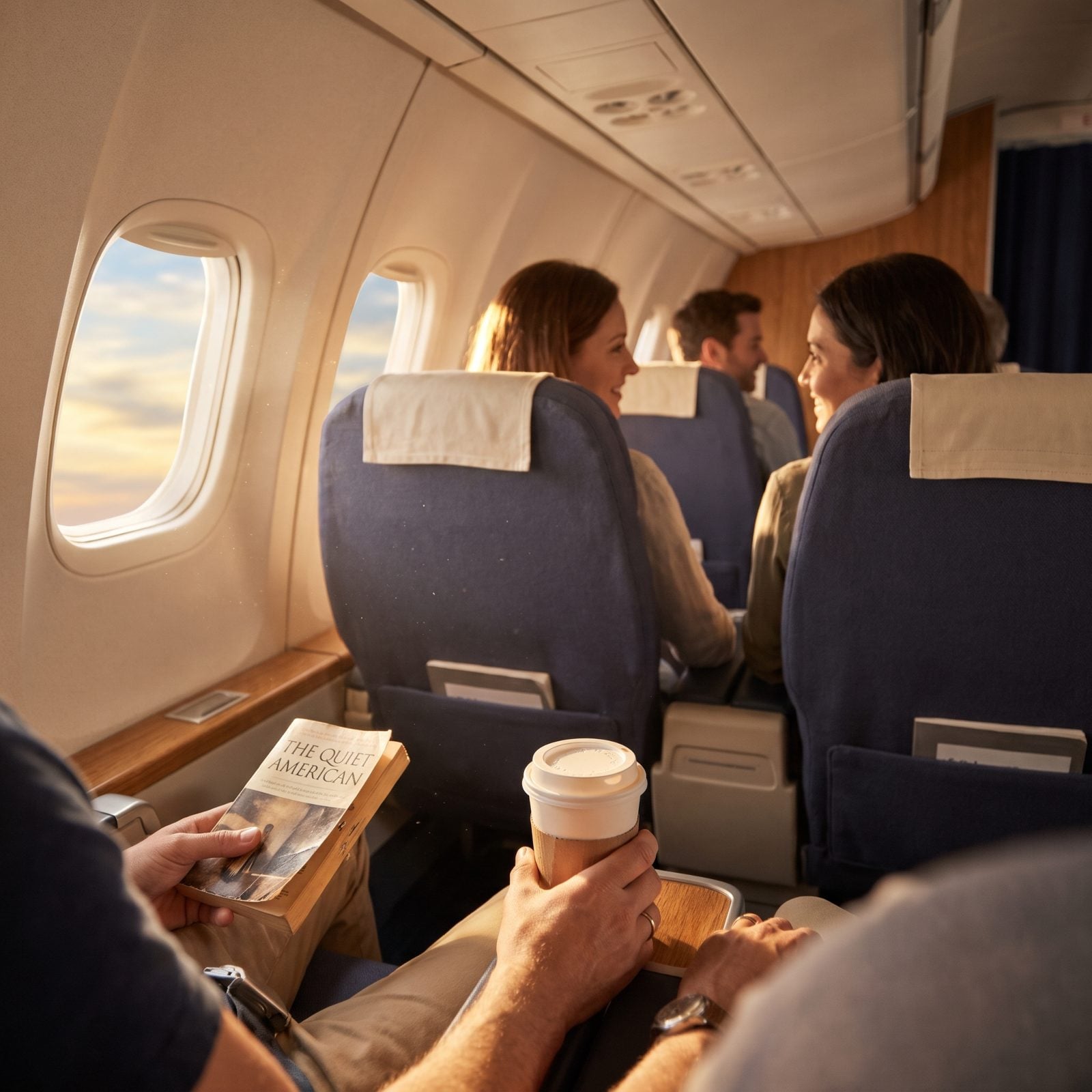
You have a strict no-small-talk policy at home. The checkout line, the elevator, the waiting room — all conducted in polite silence. Then you buckle into seat 14C and suddenly you know the life story of the retired teacher next to you, including her daughter’s divorce, before the plane even pushes back.
Why? You’ll never see this person again, and that one fact unlocks something. No reputation to protect, no awkward run-in at the supermarket next week, no social consequence that lasts past baggage claim.
Researchers call it the stranger-on-a-train effect. We open up more freely to people we’ll never encounter again, because the usual rules of self-protection switch off. The seat becomes a confessional with worse legroom. Honestly, some of the best conversations we’ve overheard started at cruising altitude and ended at the gate, never to be continued. And both parties walked away lighter.
14. You Spend Airport Money Like It Has Different Math
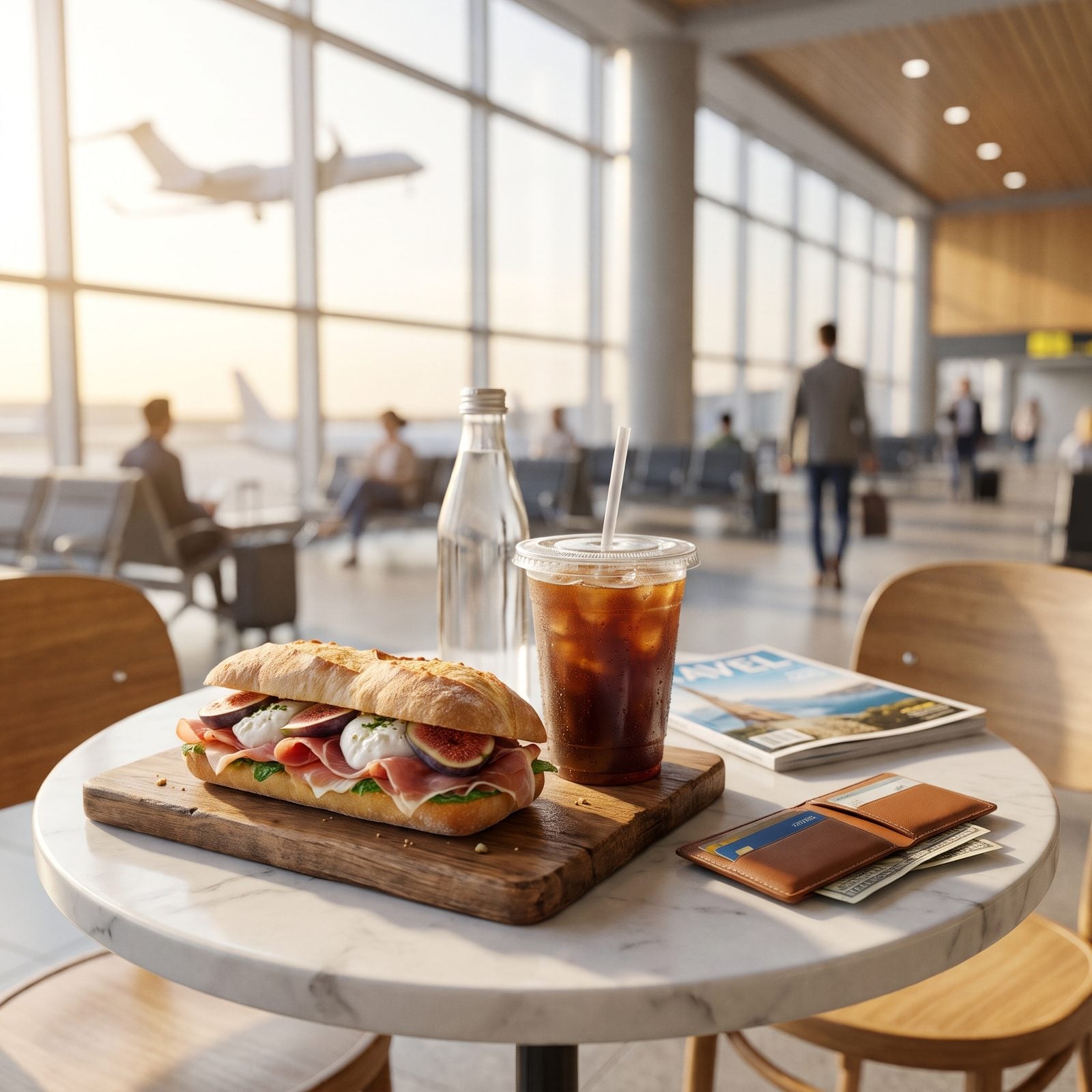
Twelve dollars for a bottle of water. You’d stage a revolt at home. In the terminal, you shrug, tap your card, and move on like currency works differently past security.
It sort of does, in your head. The vacation hasn’t technically started, you’re already out a fortune on flights and hotels, so what’s another overpriced sandwich in the grand scheme? That mental trick has a name.
There’s also the sunk-cost factor doing quiet work. You’ve committed to the big splurge already, so protecting your dignity over a few small purchases feels pointless once the real damage is done. You buy the fancy nuts. The neck pillow you’ll use once. The travel self has a very relaxed accountant.
13. You Wake Up Early for Views, Not Alarm Clocks
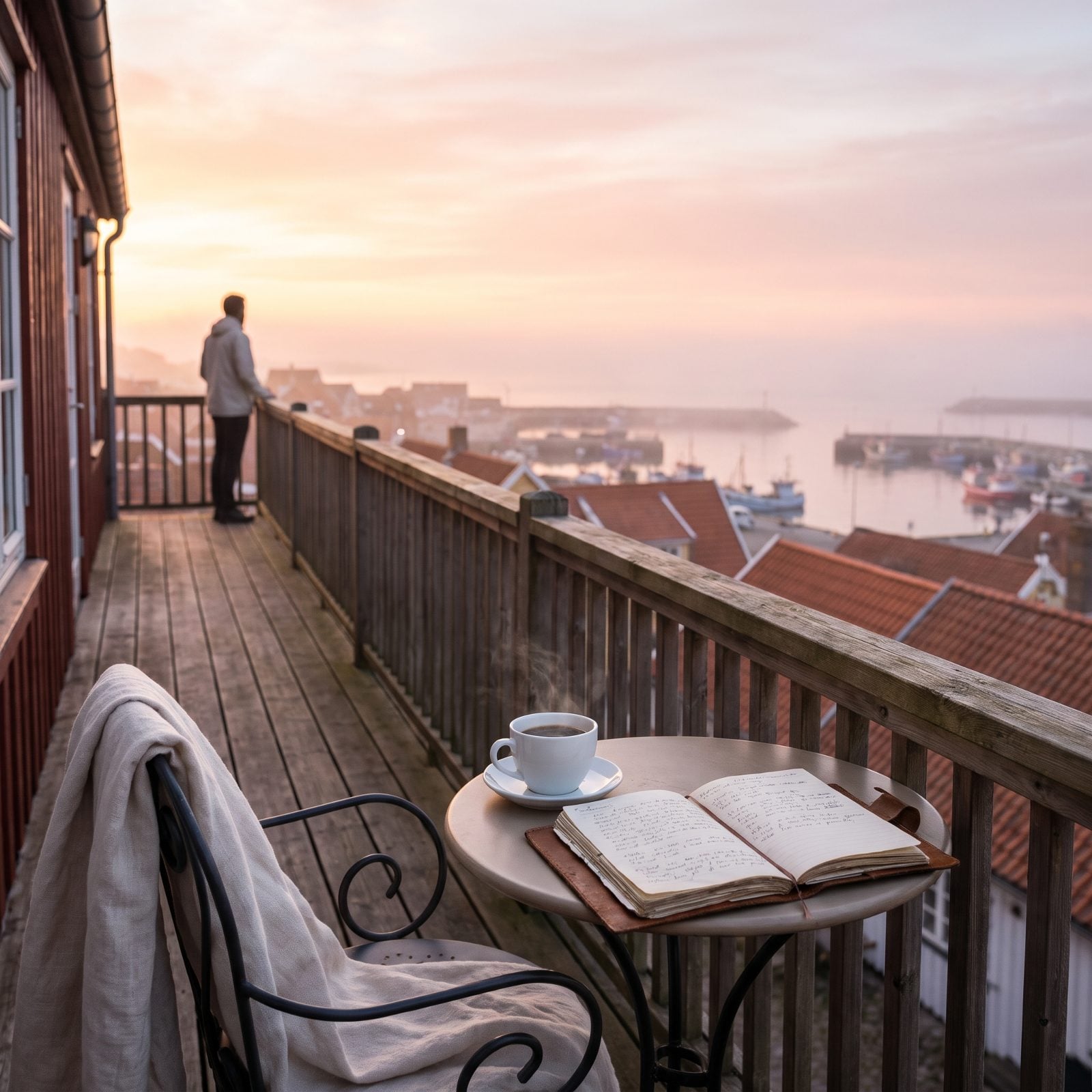
At home, dawn is a punishment and you negotiate with the snooze button like it owes you money. On vacation, you’re up before sunrise, wide awake, barefoot on a cold balcony with a coffee, waiting for the light to hit the water.
Same hour. Completely different person. What changed isn’t your body — it’s the payoff waiting on the other side of getting up.
Back home, the reward for waking early is more of the same: the commute, the inbox, the grind you’ve run a thousand times. On a trip, those early hours buy you something scarce and fleeting — a town before the crowds, a beach with no footprints, a view that won’t look like this again. Our brains are wired to chase novelty, and novelty makes effort feel like a gift instead of a cost. The alarm didn’t get easier. The thing on the other side got better.
12. Breakfast Dessert Suddenly Counts as Cultural Research
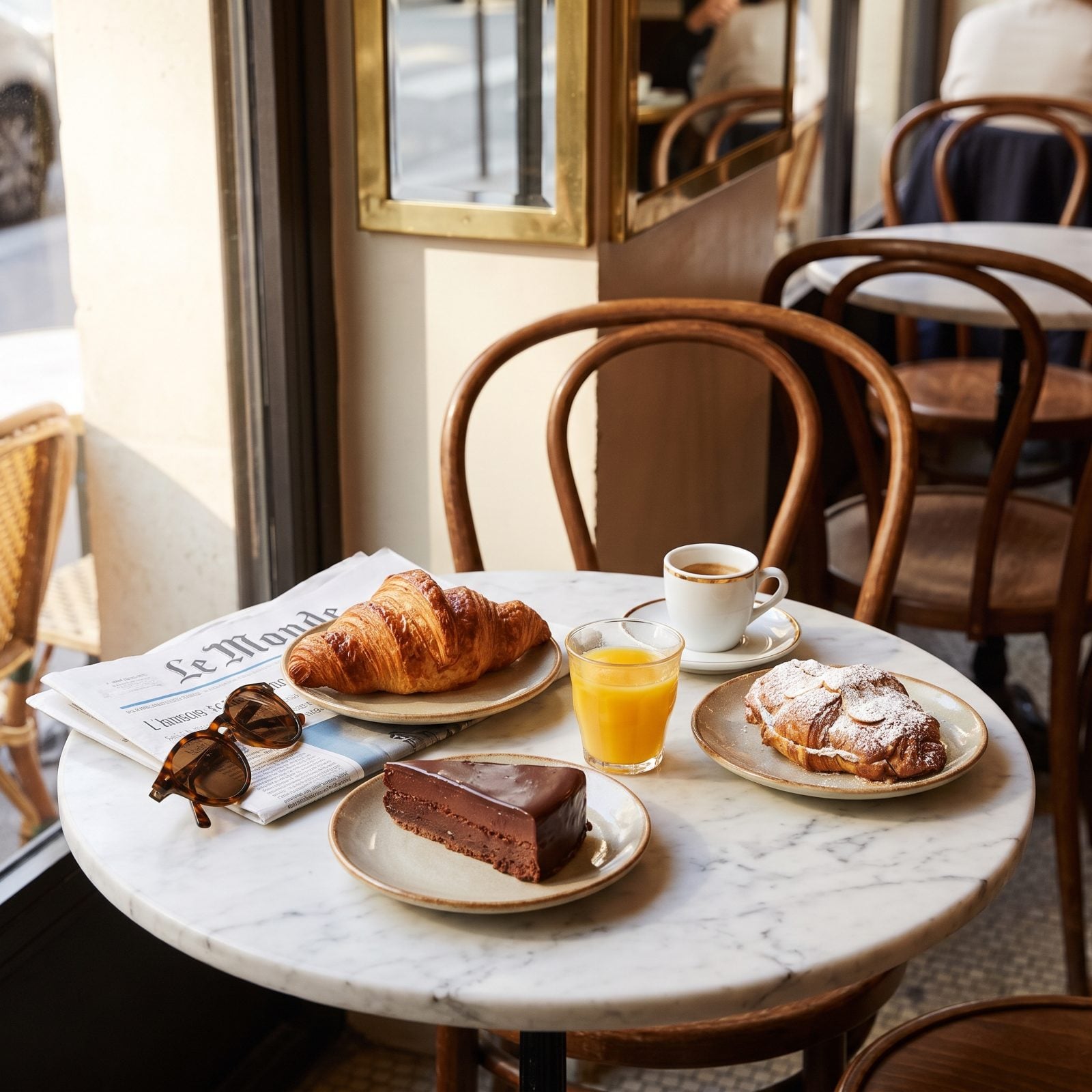
Cake. For breakfast. On a weekday. At home you’d call this a cry for help. Abroad, you call it experiencing the local culture, and you order a second slice to be thorough.
It’s a brilliant little bit of self-permission — you’ve reframed indulgence as education. That chocolate torte isn’t a diet crime, it’s anthropology, and who are you to refuse a nation’s heritage?
The real engine here is moral licensing. Do something we frame as virtuous — cultural immersion, trying new things — and we hand ourselves a pass to do something we’d otherwise judge. Travel supplies that license by the bucketful. The rules you live by at home go on holiday too, and they come back rested.
11. The Hotel Gym Inspires the Workout Home Never Gets

You pay for a gym membership at home you’ve visited twice this year. Then you walk past the hotel fitness room — two treadmills and a rack of dumbbells — and think: you know what, I should get a workout in.
That little room is objectively worse than your real gym, and yet it pulls you in. Part of it is the fresh-start feeling, the clean slate a new place hands you. You’re not the person who skips the gym here. You’re a traveler, and travelers are the disciplined, aspirational version of yourself you keep meaning to become.
Novelty does the rest. A new machine, an unfamiliar view out the window, the simple fact that it’s not the same room you’ve resented for years. We’ll do in a strange place what we avoid in a familiar one, because the familiar carries all our old excuses with it. We’ve laced up in hotel gyms we’d never set foot in twice. That’s not discipline. That’s a change of scenery doing the heavy lifting.
10. A Rental Car Makes Everyone Think They’re Adventurous
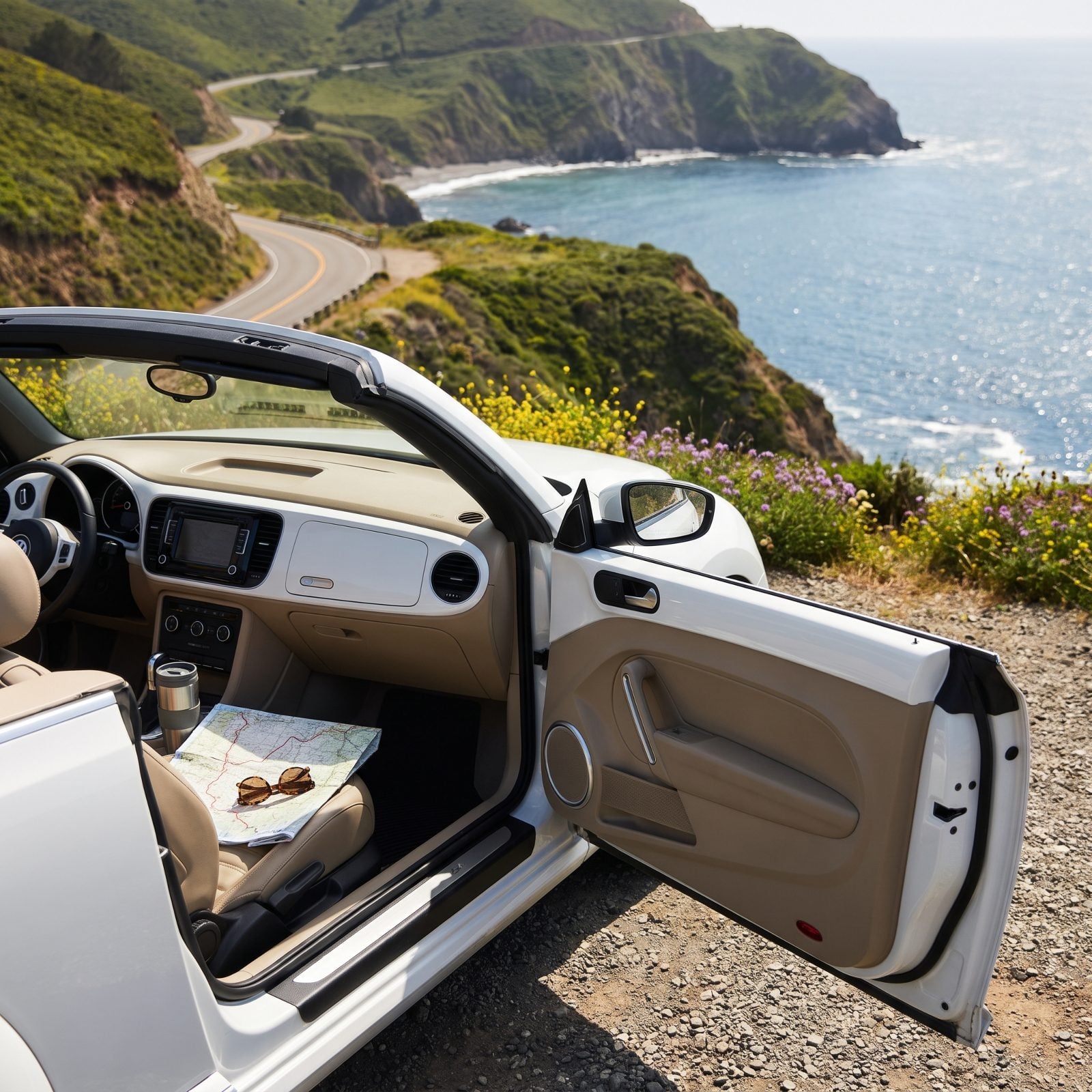
You drive the same four roads at home — work, store, school, home, on repeat for a decade. Hand you the keys to a rental in an unfamiliar country and suddenly you’re taking the coast road, the long way, the turnoff marked only by a weathered sign you can’t even read.
The rental car is a license to roam, literally. And something about it being temporary makes you braver, because no consequences follow you. Scratch it, get lost, drive two hours out of your way on a whim. None of it touches your real life back home.
There’s a freedom in a disposable identity. The car isn’t yours, this road isn’t yours, so the usual caution that keeps you boxed into routine loosens its grip. You become the kind of driver who says yes to the detour. For about a week, you’re a person who explores.
9. You Read Plaques You’d Ignore in Your Own City

There’s a plaque two blocks from your house marking something historical. You’ve walked past it a thousand times and never once stopped. On a trip, you stand reading every word on a monument to a battle you’d never heard of until this exact moment.
Curiosity isn’t the variable. Attention is. At home, familiarity has sanded everything smooth — you stop seeing what you see every day, and your brain files it as background noise. Scientists call it habituation, and it’s why your own city becomes invisible to you.
Strip away the familiar and the filter drops. Suddenly everything carries potential meaning. A doorway, a street name, a dented plaque on a stone wall — all of it reads as significant because you have no history telling you to ignore it. The traveler’s gift isn’t a better eye. It’s a reset one. And here’s the sad part: your own hometown is full of the same wonder, just waiting for you to look at it like a stranger would.
8. You Become Fluent in Gestures at the Café
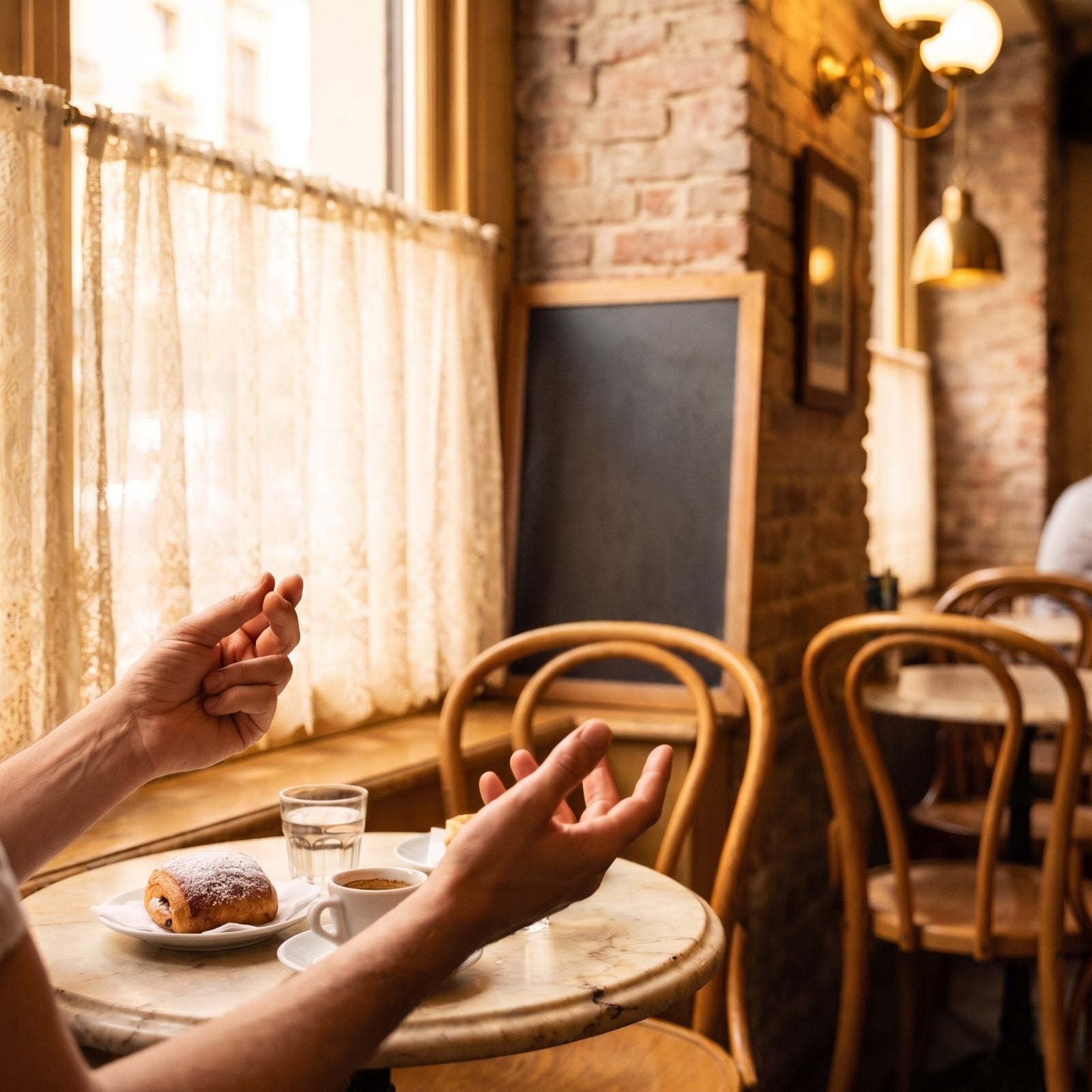
You don’t speak a word of the language. Doesn’t matter. Within an hour you’ve developed an entire pantomime vocabulary: the point-and-nod, the finger-count for two coffees, the universal shrug of I have no idea but I’m enjoying this anyway.
At home you’d be mortified to communicate like a game of charades. Abroad, it’s charming. You lean into it, laugh at your own fumbling, and the barista laughs too, and somehow an espresso arrives.
The deeper shift is that travel lowers your fear of looking foolish. Back home, competence is currency and you guard it. On a trip, nobody expects you to know anything, and that permission to be a beginner is strangely liberating. Being bad at something, out loud, in public, turns out to be its own small freedom.
7. One Wrong Turn Becomes the Story You Retell Most

The dinner that went perfectly to plan? You’ve already forgotten it. But the time you got hopelessly lost down a wrong alley, ended up at a tiny family restaurant that wasn’t in any guidebook, and ate the best meal of the trip — you’ve told that story at four dinner parties and counting.
At home, getting lost is a problem to solve, a delay, a frustration. On a trip, the wrong turn becomes the whole reason the day mattered. And here’s the strange part: in the moment it felt like a disaster. In the retelling, it’s the crown jewel.
Memory is a funny editor. We don’t remember experiences evenly — we remember the peaks and the surprises, and a plan that unfolds flawlessly offers neither. The detour, the mishap, the unexpected rescue. Those are the moments that spike and stick. The vacations we treasure aren’t the ones that went smoothly. They’re the ones that went sideways in exactly the right way.
6. You Learn Patience When the Train Board Changes Again
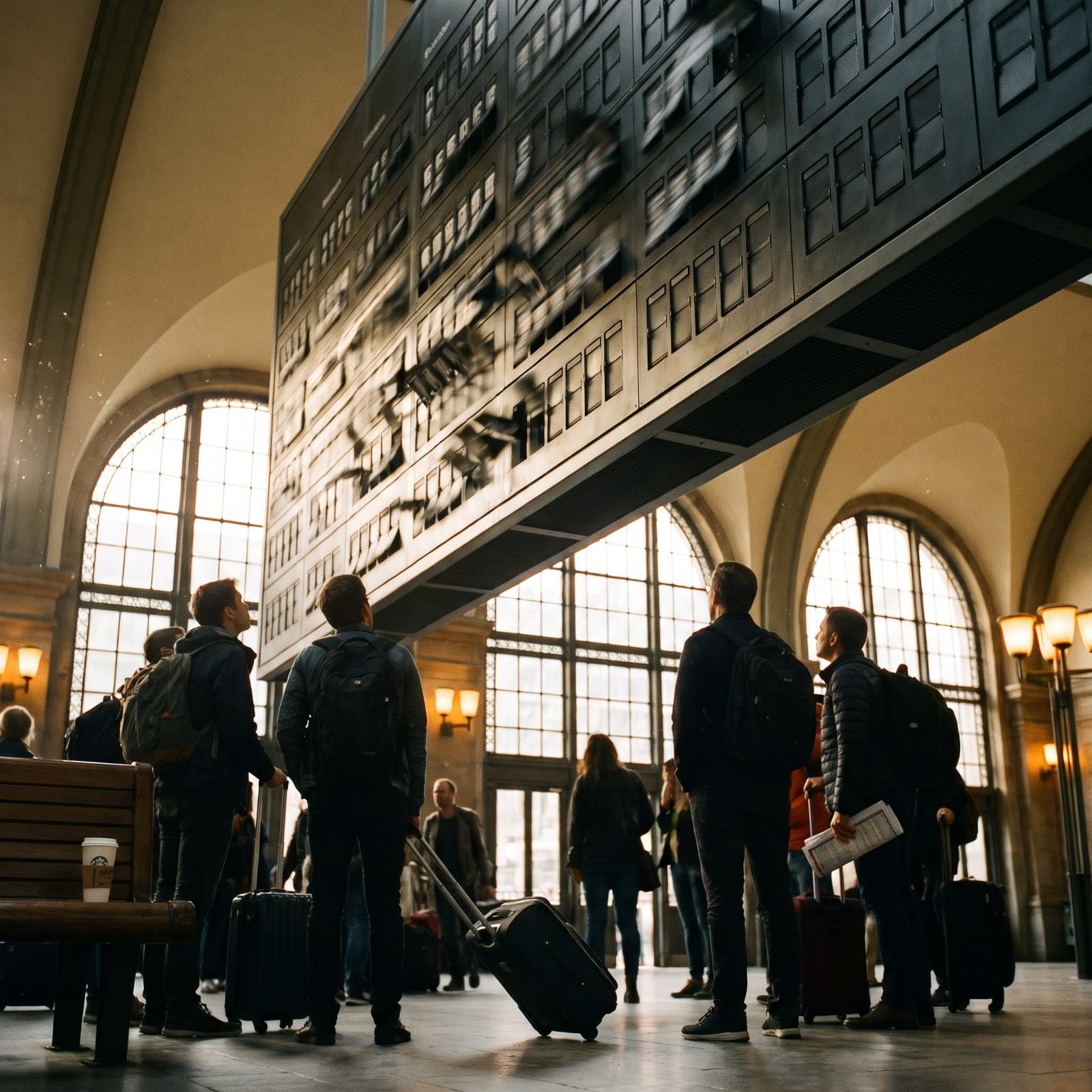
At home, a four-minute delay on your morning commute could ruin the whole day. You’d mutter, check your watch, and compose a complaint in your head you’d never actually send. But stand on a foreign platform watching the board flip from 7 to 11 to 7 again, and something strange happens. You shrug. You find a bench, buy a terrible espresso, and watch everyone else not-panic right along with you.
That’s not a personality upgrade. It’s the loss of control you’ve quietly agreed to. Psychologists call it learned helplessness in its gentlest form, except here it feels like relief. When you genuinely can’t fix a thing, your brain stops wasting fuel pretending it can. The timetable is in a language you half-read, the staff can’t be rushed, and so the irritation that powers your home life has nothing to grab onto.
Come home, and the four-minute delay ruins your day again. The patience was never yours. It belonged to the trip.
5. You Let the Tour Guide Decide Your Entire Day
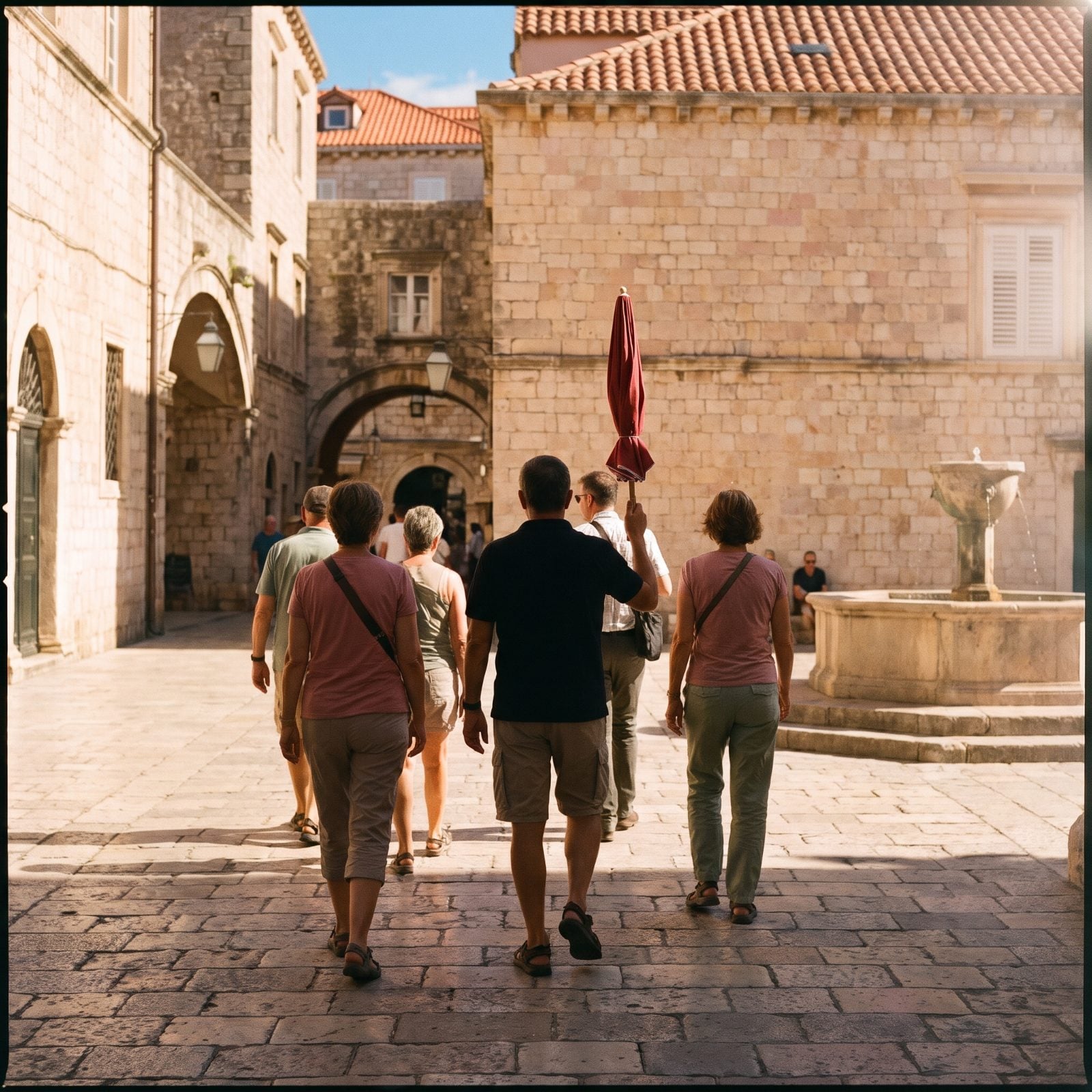
You research. At home you read three reviews before choosing a sandwich, and you have strong opinions about parking. Yet here you are, trotting behind a stranger with a raised dark-red umbrella, going wherever it goes, eating lunch at whatever place he points at, boarding a bus you never once vetted.
The relief is enormous, and it has a name. Decision fatigue is real, and travel floods you with choices you have no shortcut for. Which neighborhood is safe? Which ruins are worth the climb? Your usual mental filing system is useless in a city you’ve known for two days. So you outsource. You hand the whole exhausting business of deciding to someone who does this for a living, and your shoulders drop three inches.
The person who won’t let their spouse pick a restaurant at home will follow a stranger with an umbrella into a cave.
It’s the same wiring that makes a good doctor’s confidence so soothing. We trust the person who seems to know, especially when we’re lost. The guide isn’t smarter than you — he just has the map, and for one blissful afternoon that’s enough to make you obedient.
4. Your Travel Companion Gets Assigned a Permanent Department
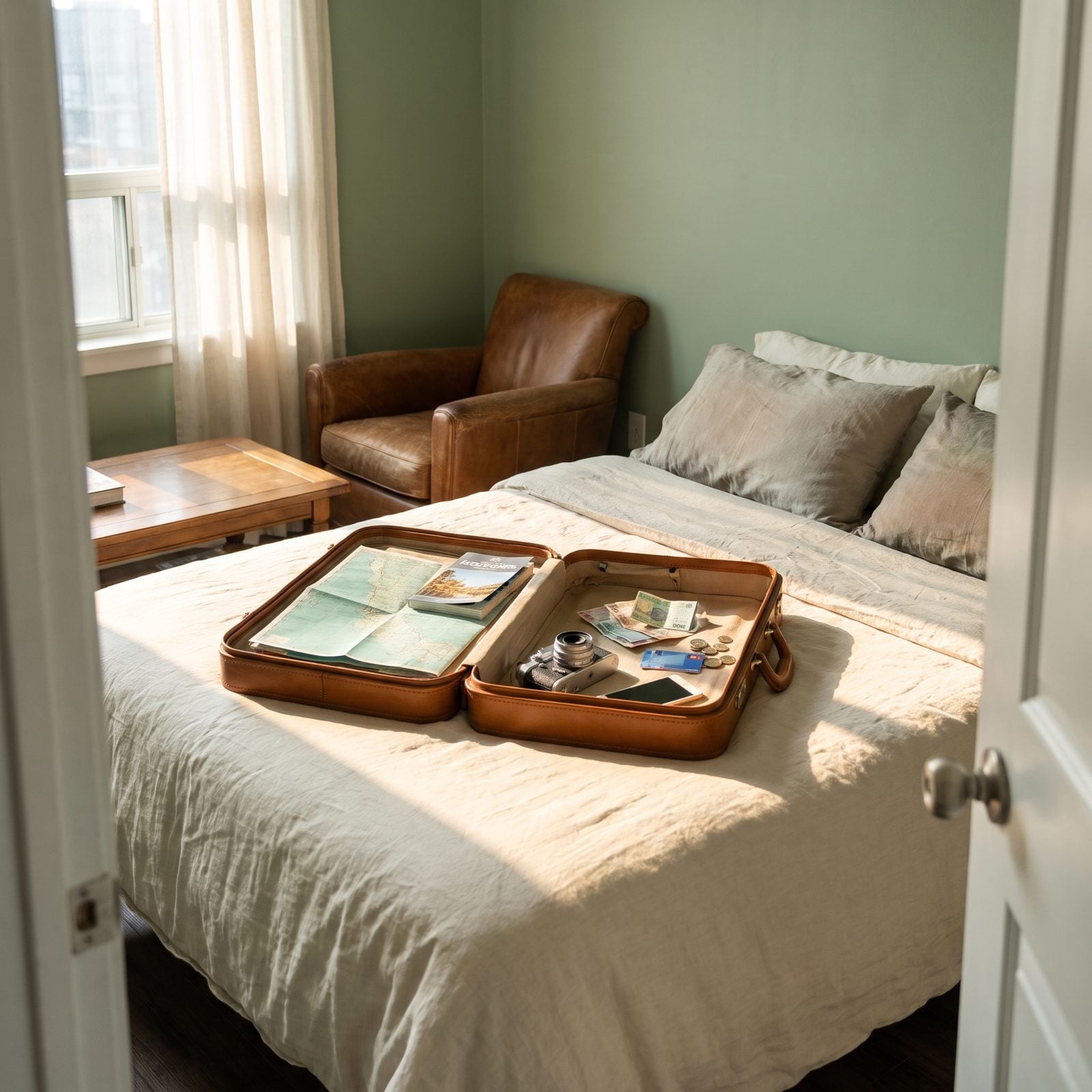
Three days into any trip, a quiet reorganization has happened. One of you is now Director of Navigation. The other has been made permanent Keeper of Snacks and Reservations. Nobody held a meeting, nobody applied, and the roles just congealed — so that now, if the map-reader gets you lost, it somehow counts as a betrayal of their entire office.
At home your division of labor is blurry and flexible. On the road it hardens fast, because travel is a tiny high-stakes operation and your brains crave efficiency. Specialization reduces friction. If both of you try to read the metro map, you argue. If one owns it, you move. So you silently negotiate departments the way any small startup does under pressure.
The funny part is how the titles outlast the trip. You come home and one of you is still, inexplicably, in charge of directions in your own town. The department never got dissolved.
3. The Hotel Room Turns Neat People Into Tornadoes
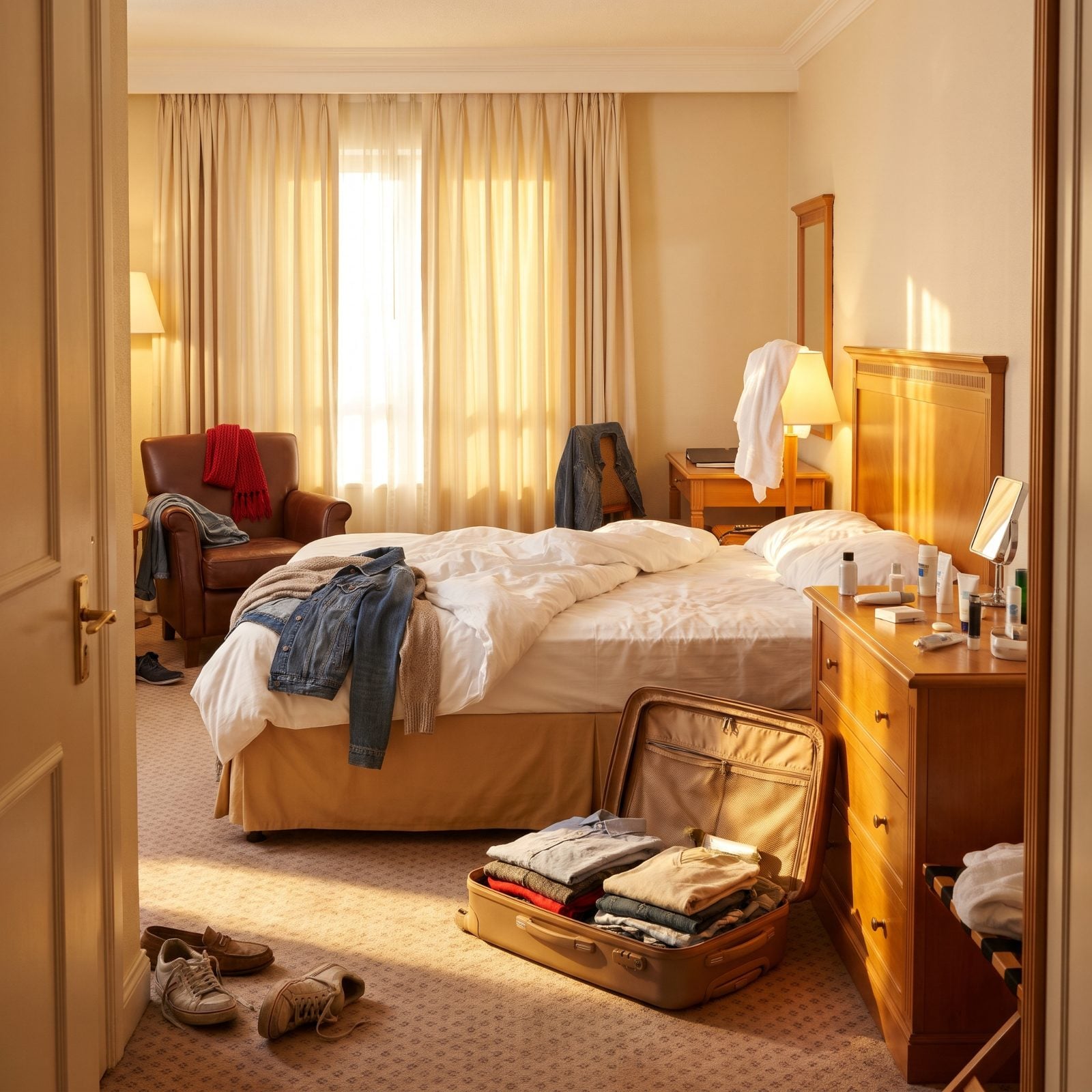
You fold grocery bags. Your sock drawer could pass inspection. Then you check into a hotel room, and by the second night it looks like a suitcase exploded and nobody survived — wet towel on the chair, three pairs of shoes abandoned like evidence, coins and receipts breeding on the nightstand.
Why do tidy people go feral in hotels? Partly because the mess has no future. At home, a dropped shirt is a chore you’ll pay for later. Here, someone resets the room every morning, so the usual consequence that keeps you neat has simply vanished. Your tidiness, it turns out, was never virtue. It was dread of the cleanup.
Then there’s the anonymity. No neighbor will see this room, no guest will judge it, and the social mirror that keeps your home presentable isn’t watching. Behavior loosens the instant the audience leaves.
It’s a harmless little vacation from your own standards, and honestly, you’ve earned it. Just don’t be shocked when the housekeeper’s face says otherwise.
2. You Guard a Pool Chair Like an Inherited Estate

Seven in the morning. The pool deck is deserted. And yet the best lounger already wears a navy-striped towel and a paperback, planted hours ago by someone who is, at this very moment, still fast asleep in their room. You march out with your own towel, pass a long row of perfectly empty chairs, and still feel a flare of indignation so pure it startles you. Over a plastic chair. In the sun. On a holiday.
The pull is the endowment effect wearing swim trunks. The moment you imagine that lounger as yours, losing it feels like losing something you already own. You’ll fight harder to keep a thing than you ever would to get it, which is why a perfectly relaxed person turns territorial over furniture they’ll abandon by noon.
Scarcity invented out of nothing, defended with towels. We are not calm creatures. We’re just creatures who found a beach.
1. You Lose Track of Weekdays but Remember Every Sunset

Ask someone on day five of a good trip what day it is and watch them stall. Tuesday? Friday? They genuinely don’t know, and they don’t care, and that same fog would terrify them at home, where missing Wednesday means missing a deadline. Yet they can tell you, in vivid detail, about the sunset two nights ago. The exact color. Where they were standing. What was in the glass.
Home time is measured in obligations, which is why it blurs into a gray smear of identical weeks. Vacation time is measured in experiences, and experiences carve deep memory. Your brain files the novel and the vivid and tosses out the routine — which is also why trips fly by while you’re on them but feel long in the rearview.
You forget what day it is because, for once, nothing you’re doing is scheduled to repeat.
The weekday structure was never holding your life together. It was just holding your life in place. Take it away, and you don’t fall apart. You remember sunsets instead. That tells you something worth bringing home.
Please note that some of the imagery in this article were created with the aid of AI image generators.