
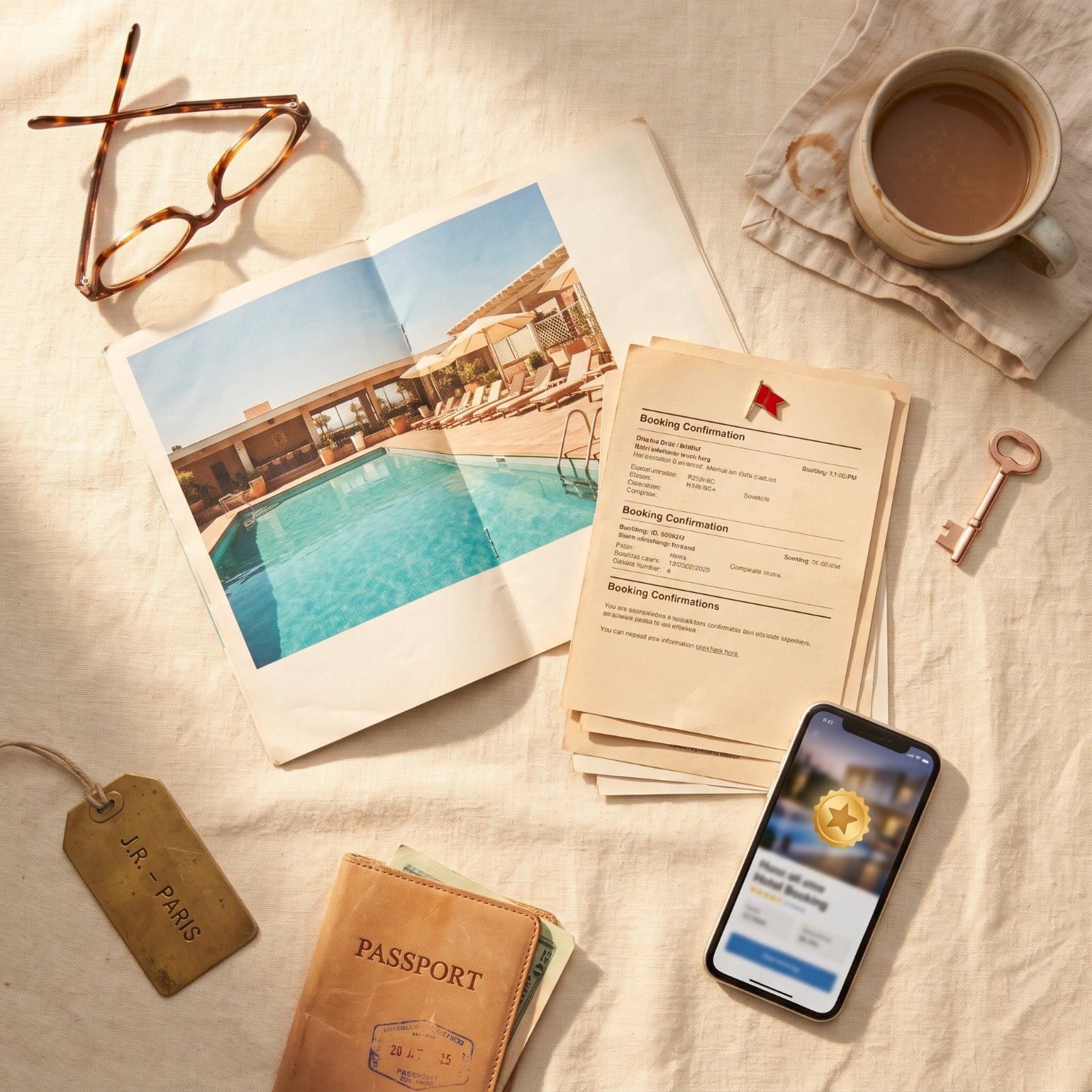
Your cursor hovers over Book Now. The little voice says something is off, and the louder voice says look at that pool. You book it. You always book it.
We do the same thing with people. A warning sign waves, and we hand it a towel and ask it to relax. A hotel with one gorgeous photo and forty furious reviews is a person who looks great at the party and never texts back. Same wiring, same sweet lie we tell ourselves about how it’ll all work out once we’re there.
What follows is a tour of the exact mental tricks that get us to overlook the obvious — in booking engines and in love alike. You’ll see yourself in at least three of these. Possibly on your last trip. Possibly on your last date.
18. You Let Rooftop Photos Distract From the Neighborhood

The listing opens with the rooftop. Always the rooftop. Infinity pool, skyline, a drink sweating on marble — and you’re sold before you even scroll. What the photo politely declines to mention is the twenty-minute walk from anything, down a street that goes quiet in a way you’ll notice at night.
Call it the halo effect, the thing that lets one dazzling quality paper over a dozen question marks. One great trait becomes a character reference for the whole operation. He’s funny, so surely he’s kind. The pool is gorgeous, so surely the location is fine. We let the shiniest detail vouch for everything we never actually checked.
The fix is dull and reliable. Drop the address into a map, switch to street view, and walk the block from your chair. The rooftop can’t lie about what’s downstairs if you go look.
17. You Read Past Every Review That Spoils the Fantasy
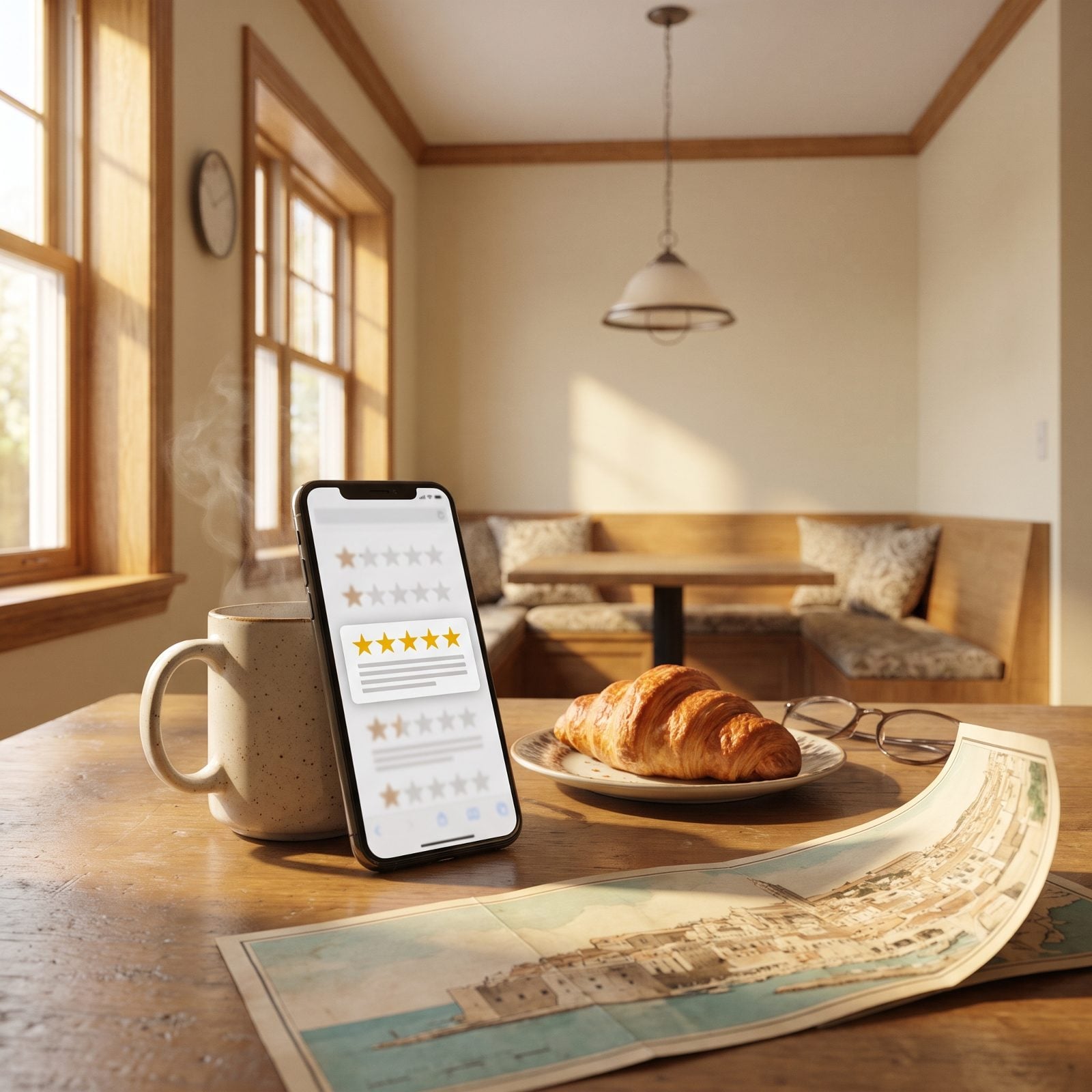
There are forty reviews. Most of them mention the smell. You scroll until you find the one that says charming and historic, and you let that one speak for the group.
Confirmation bias, doing its tidy little job. Once you’ve decided you want the trip, your eyes go hunting for proof you were right and quietly skip the proof you weren’t. We make the exact same move with a new love interest — the friend who gently mentions his ex still lives with him gets waved off, while the one compliment about his charm gets framed and hung over the mantel.
You weren’t reading the reviews. You were auditioning them for the role of agreeing with you.
The cure feels backwards: read the one-star reviews first, before the fantasy sets. If the complaints are all weather and personal taste, book it with a clear heart. But if three strangers independently describe the same broken thing, believe the strangers. They have nothing to sell you and no crush to protect.
16. You Believe the Room Will Look Better in Person
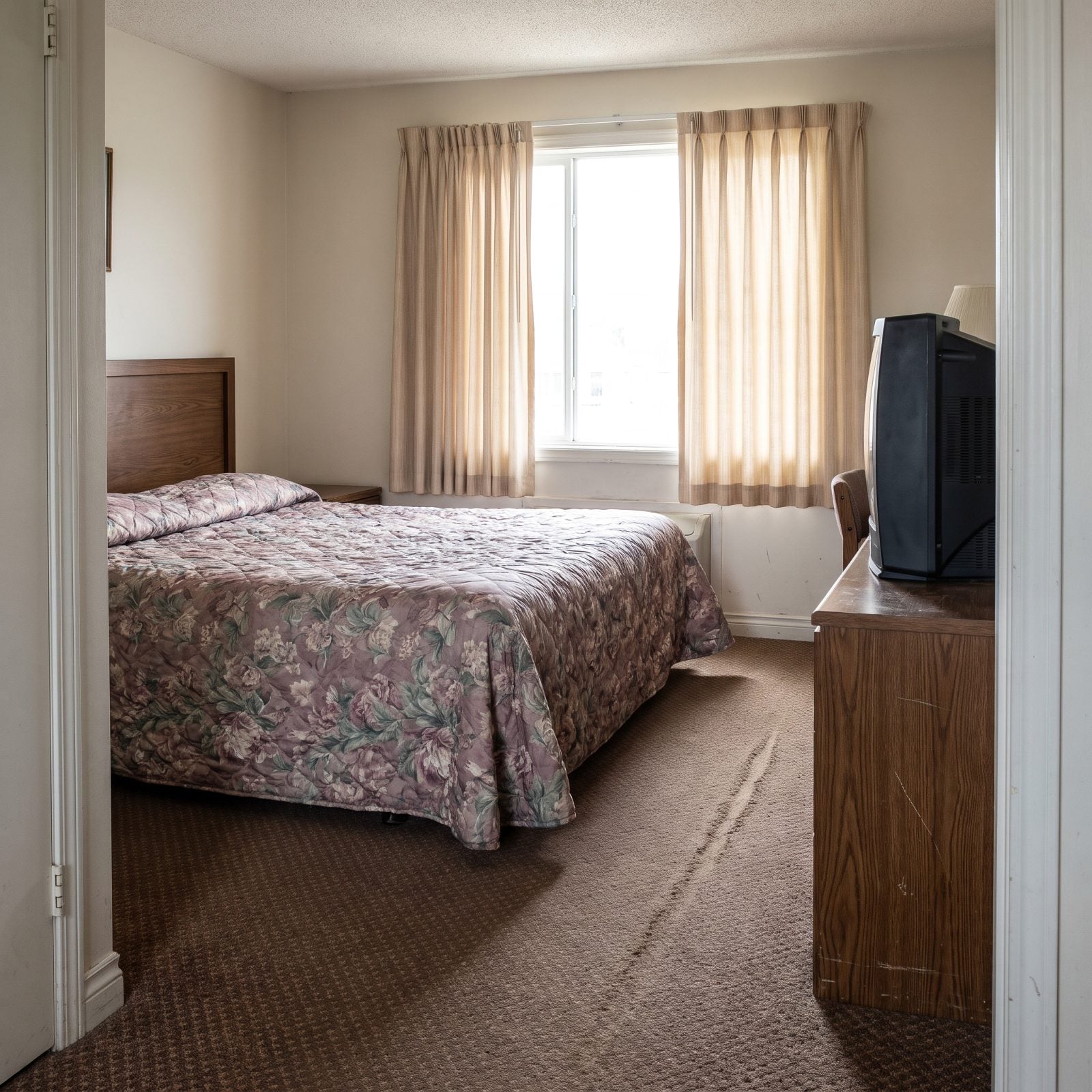
The photo had a wide-angle lens and a generous photographer. You noticed the tight framing, the suspicious lack of a single shot showing the whole room, and you told yourself it’ll feel bigger when I’m standing in it. Reader, it does not feel bigger when you are standing in it.
Optimism bias — the stubborn belief that things will turn out better for us specifically than the evidence suggests. We extend this generosity to cramped rooms and to people with obvious limitations alike. He’ll open up once he’s comfortable. The room will feel cozy once I unpack. We’re not judging what’s there; we’re dating the potential.
Potential is a lovely thing to fall for and a terrible thing to pay a deposit on.
15. You Explain Away a Host Who Stops Answering

You messaged the host two days ago about the check-in code. Silence. They’re busy, you decide, probably in a different time zone, probably just bad at phones — and you build this alibi out of thin air because you’ve already paid and you need them to be good.
We do this exact rationalizing in the early days of a relationship. A slow reply gets explained into innocence. We mistake their silence for a personality quirk instead of a data point. It’s the fundamental attribution error, flipped in their favor: when they go quiet we invent kind reasons, and when a stranger does it we assume the worst.
Here’s the flat truth. How a host communicates before your money is confirmed is the best mood they will ever be in. If they’re slow and vague now, during the honeymoon, picture them when the AC dies at midnight. A ghost before arrival is a ghost after. Book the ones who answer like they want you there.
14. You Call the Nonrefundable Deposit a Reason to Stay

You found a better hotel. Cheaper, closer, newer, with actual natural light in the photos. And then you remember the deposit on the first one, the money already gone, and somehow that lost money becomes the argument for throwing good vacation after bad.
The sunk cost fallacy, wearing a vacation hat. The deposit is spent whether you go or not, yet we treat it like a leash. The same trap keeps people in relationships long past their expiration date. Five years in, you don’t stay because it’s good — you stay because leaving would waste the five years, as if staying a sixth somehow refunds them.
A sunk cost is not a reason. It’s a receipt. Frame it on the wall if you like, but don’t let it pick your hotel.
13. You Stay Because Finding Another Hotel Sounds Exhausting

The room is mediocre and you know it’s mediocre. But rebooking means forty more tabs, comparing a wall of near-identical options, decoding another round of cleaning fees — and honestly the mattress isn’t that bad. So you stay. Not because it’s right. Because the alternative involves effort.
Choice overload is the villain here. When the options multiply past a certain point, the brain stops optimizing and starts settling, because the search itself becomes the thing you want to escape. The famous jam study found shoppers faced with two dozen jams bought far less than those shown a handful. Too many choices doesn’t free us; it paralyzes us into keeping whatever we already have.
It’s the quietest reason people stay in a merely okay relationship, too. Not devotion. Depletion. The devil you know requires no new profile, no new small talk, no forty tabs.
Settling out of exhaustion is still settling. Give yourself a hard cap: twenty minutes, three real options, pick one. The search is not the vacation.
12. You Stop Complaining After Posting the Vacation Countdown

You posted the countdown. Two weeks until paradise, beach emoji, the works. A few hundred people liked it. And then something strange happens: you stop letting yourself notice the bad reviews, the weather warnings, the friend who said that resort went downhill. You’ve announced it. Doubting it now would mean doubting yourself in public.
This is commitment and consistency, one of persuasion’s oldest hooks. Once we say a thing out loud, especially to an audience, we work hard to stay consistent with it — even when new facts show up saying we shouldn’t. The louder and more public the declaration, the harder it is to walk back.
The countdown wasn’t a celebration. It was a trap you set for your own future judgment.
People do this with engagements, with new jobs, with homes they already told everyone they loved. Announcing a decision quietly recruits your ego to defend it. So the move is simple and unglamorous: keep the big calls private until you’ve actually looked hard at them. Praise is cheap. Consistency pressure is expensive.
11. You Assume Friends Just Don’t Understand This Destination

Everyone you trust raised an eyebrow at the destination. Too rough, too far, too known for the wrong reasons. And instead of hearing them, you decided they simply don’t get it. They’re not adventurous like you. They’d never understand this place the way you do.
Special pleading — the move we reach for when the crowd disagrees with something we’ve fallen for. Rather than weigh the warnings, we disqualify the warners. It’s identical to the way a smitten person dismisses every concerned friend as jealous, closed-minded, or just not able to see him the way I do.
Sometimes your friends really are overcautious. But when every single one lands on the same worry independently, the odds that they’re all wrong and you alone are enlightened get slim. Love for a place is real. So is a chorus you keep explaining away.
10. One Free Upgrade Erases Five Broken Hotel Promises

The shuttle never came, the wifi was a rumor, and the pool closed early three days running without a word of warning. Then, on the last morning, the front desk hands you a free suite upgrade and a bottle of something fizzy — and suddenly you’re telling everyone back home what a lovely hotel it was.
Welcome to the peak-end rule. We don’t remember experiences as an honest average. We remember the most intense moment and the ending, and we let those two points speak for the whole stay. One generous finale can overwrite a week of small betrayals.
It’s precisely how a grand romantic gesture rehabilitates a partner who disappointed you five times that month. The flowers at the end rewrite the story backwards. Daniel Kahneman’s work on this is genuinely unsettling: the ending doesn’t just color the memory, it practically becomes the memory.
So when you’re reviewing a place, or a person, do the thing memory won’t do for you. Count the whole ledger, not just the last entry. Five broken promises and one upgrade is still five broken promises. The fizzy wine was lovely. It wasn’t a correction.
9. You Mistake a Chaotic Tour for Spontaneous Adventure

The guide got lost twice. The itinerary changed three times. Lunch happened at 4pm in a town that wasn’t on any plan. And somewhere in the mess you decided this isn’t disorganized — this is authentic. This is adventure.
A reframe your mind performs to avoid admitting it got a dud. When reality doesn’t match what we paid for, we don’t always get angry. Sometimes we rewrite the disappointment as a feature so we don’t have to feel the sting of a bad call. Chaos becomes charm. Neglect becomes freedom.
People do it with partners who can’t be relied on. He’s not flaky, he’s free-spirited. She’s not inconsistent, she keeps me on my toes. The instability gets rebranded as excitement because the alternative is admitting you picked wrong.
Real spontaneity is a choice someone makes. Chaos is the absence of a choice anyone made. One feels like the wind in your hair. The other is just the wind — because the roof blew off. Learn which one you booked before you call it a feature.
8. You Blame Jet Lag for Your Bad Gut Feeling

Your stomach drops the second the door clicks shut. Something is off — the hallway was too quiet, the clerk didn’t quite meet your eye, and the price was a touch too good. So what do you tell yourself? You’re just tired. It’s the time change. You’ll feel better after a nap.
It’s the same reflex that makes someone excuse a date’s coldness as “a long week at work.” We reach for the explanation that lets us keep going, not the one that asks us to stop.
Psychologists call this motivated reasoning. When a conclusion would be expensive or embarrassing, the mind quietly hunts for a softer story. Jet lag is a gift here — a real, invisible force you can pin anything on. Your intuition is often picking up genuine signals your conscious brain hasn’t named yet, and fatigue is the easiest way to tell it to hush.
7. You Follow the Crowd Past the Closed Trail Sign
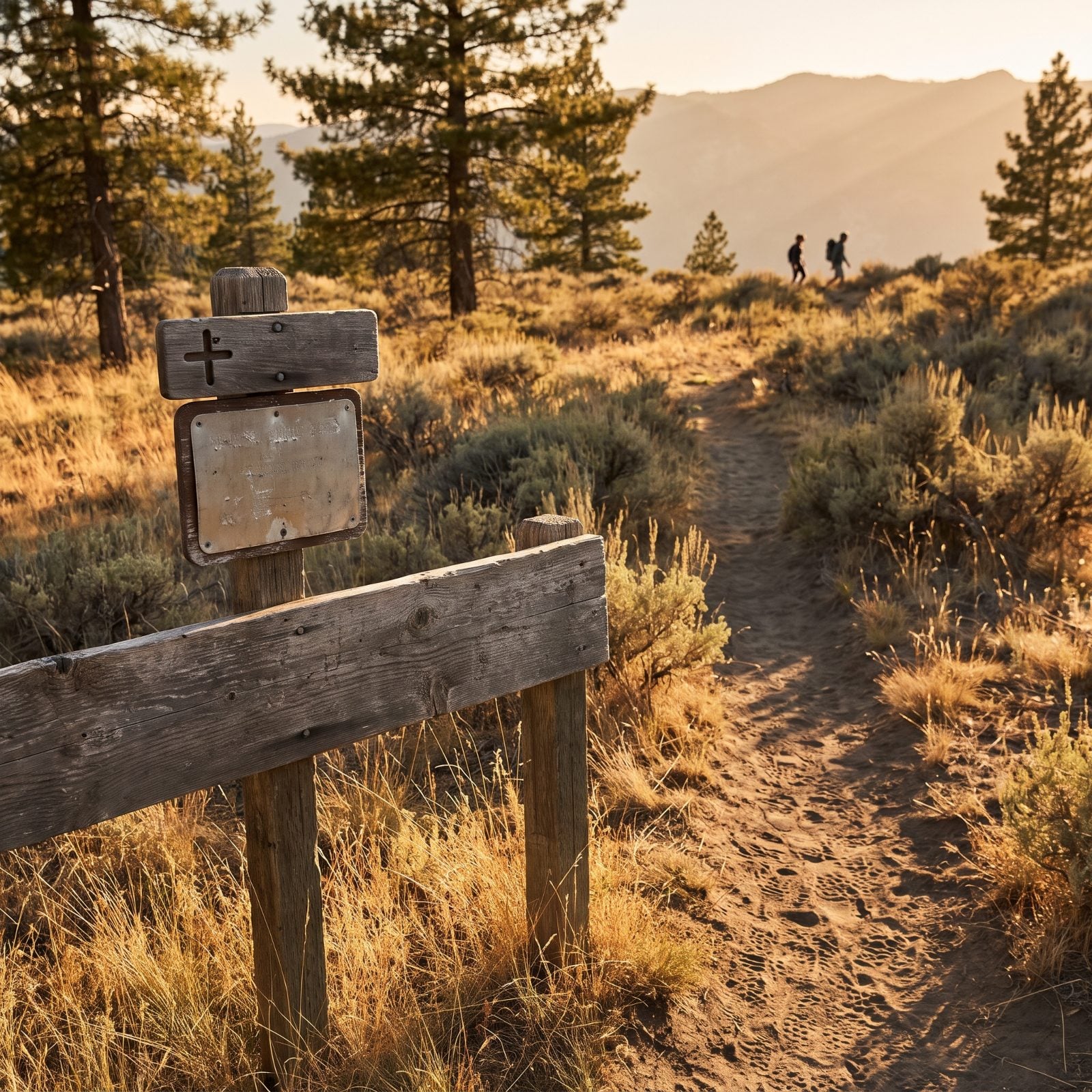
The sign says closed. The footpath worn around it says everyone ignores that. Two other hikers are already far up the path, walking on without a second glance. So the sign must be old, or overcautious, or for other people. You step around it too.
This is social proof, pure and plain. We read a crowd as information. If everyone’s doing it, we figure they know something we don’t — even when the only thing they know is that someone else went first.
It’s the exact logic that keeps people in situations their friends would flag in a heartbeat. “It can’t be that bad, look how many others are fine.” The herd feels like safety. Sometimes the herd is just a line of people who each assumed the person ahead had done the thinking.
6. Each Surprise Resort Fee Feels Too Small to Fight

A twelve-dollar “amenity fee.” A six-dollar “wellness surcharge.” A resort fee you never agreed to that shows up anyway. Each one on its own feels too petty to argue about — not worth the awkward conversation, not worth looking cheap at checkout.
That’s exactly how it works. No single charge crosses the line where you’d push back. Together they’d have changed your mind if you’d seen them upfront.
Relationships erode this way too. One small compromise, then another, each too minor to make a scene over, until you look up and the whole arrangement has quietly shifted against you. Behavioral economists call it incremental commitment, and the fees are built around it. The pain of fighting each one feels bigger than the fee itself, so you pay, and pay, and pay. Death by a thousand reasonable-sounding line items.
5. “Only One Room Left” Suddenly Sounds Like Destiny

Up until that red banner appeared, you were on the fence. The reviews were mixed, the photos fine but not great. Then: “Only 1 room left at this price. 14 people are looking right now.” And suddenly this mediocre hotel is the one that got away.
Scarcity rewires desire instantly. The moment something might vanish, we want it more, and we stop asking whether we wanted it at all. The clock does the deciding.
It’s the same jolt behind the person who only becomes irresistible once they start pulling away. Nothing about them improved. Their availability dropped, and your brain mistook that drop for value.
Scarcity doesn’t make the thing better. It makes you worse at judging it.
Half those urgency banners are theater anyway — counters that reset the second you reload the page. But it almost doesn’t matter whether it’s true. The feeling hits before the fact-check does.
4. You Compare the Moldy Rental to Somewhere Even Worse

There’s mildew climbing the bathroom grout. The couch has a permanent dent. But you know what? Remember that place in Lisbon with the broken AC and the party downstairs? At least this one has a fridge that works. At least it’s not that.
Downward comparison is a comfort drug. When reality disappoints, we reach for something worse and feel instantly, falsely reassured. “It could be worse” is true of nearly everything, which is exactly why it settles for so little.
People do this to stay in relationships that aren’t working, measuring the current one against their worst ex instead of against what they actually want. The bar sinks to whatever keeps you where you are. A place shouldn’t clear the bar of “better than the worst night of my life.” That’s a low bar. You paid real money to crawl over it.
3. You Keep Smiling So Nobody Calls You Difficult
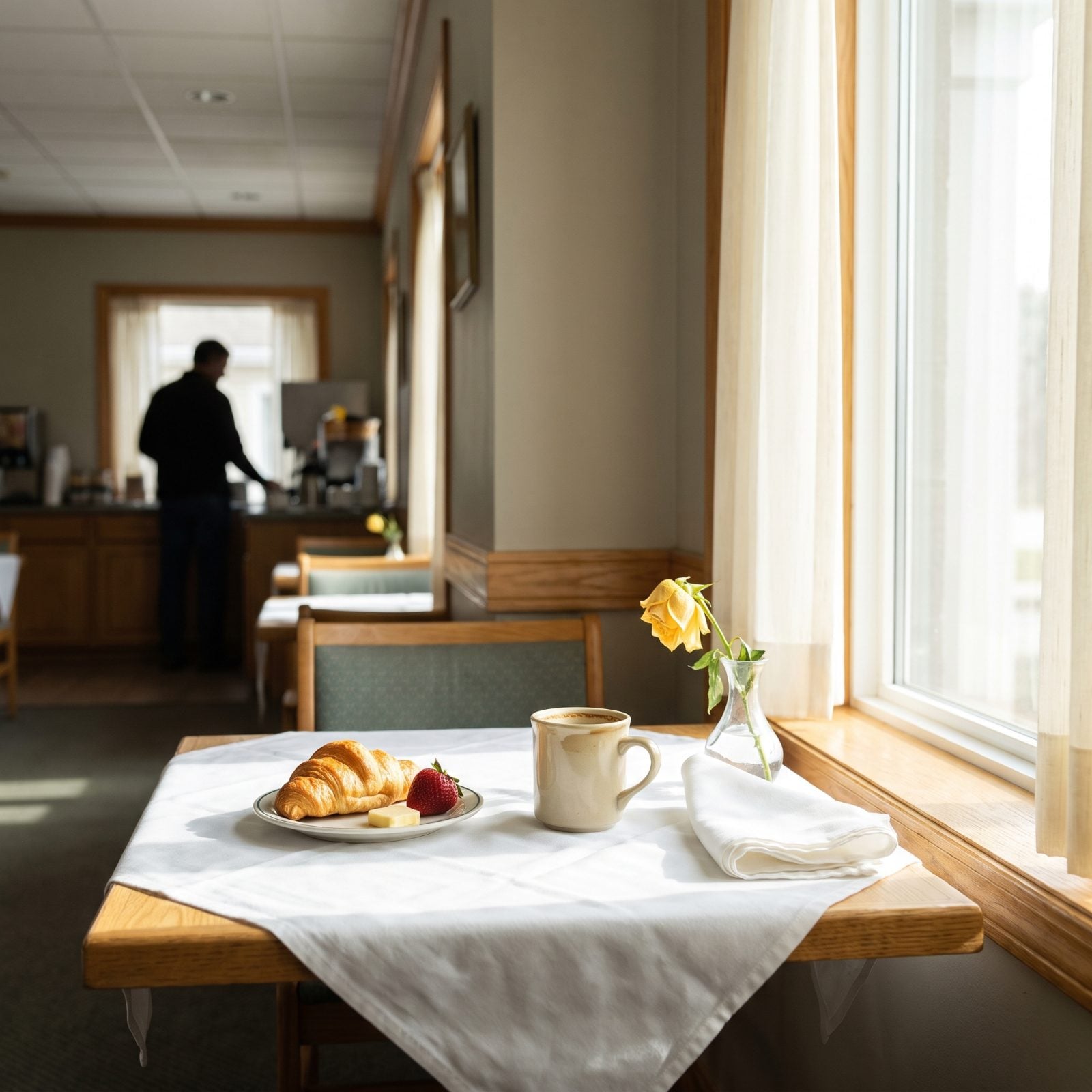
The room they gave you faces the dumpsters, and breakfast ended ten minutes before they told you it would. Then the clerk asks, chirpy, “Everything good?” — and you hear yourself say, “Great, thanks!” You go back upstairs and stew.
We’d rather absorb a bad experience than risk being seen as the demanding one. The fear of the label outweighs the cost of the problem. So we smile, we accommodate, we don’t rock the boat, and we call it being easygoing.
Same instinct keeps people from naming what bothers them at home — swallowing it to dodge the fight, until the swallowing becomes the whole relationship. Being “low-maintenance” gets praised right up until it means you never get your needs met. Politeness and self-abandonment are not the same thing, though they wear awfully similar outfits.
2. Today’s Beach Weather Makes Tomorrow’s Storm Feel Imaginary

The forecast says a storm system rolls in tomorrow afternoon. But right now sunlight is pouring through the window, the wood floor is warm, and the city outside is bright and still. So you leave the umbrella behind and don’t reschedule your plans. Tomorrow’s weather feels like a rumor. Today is a fact.
This is present bias — our built-in tendency to weight the vivid now far more heavily than the abstract later. The sunshine in front of you is real and immediate. The storm is just a radar map on a screen, easy to wave off.
People lean on it constantly in love, ignoring a pattern because the good moment right now feels more true than everything that came before. The present always argues loudest. It has the sun on its side. The storm shows up anyway, right on schedule, not caring one bit how nice today was.
1. You Treat a Charming Host Like a Safety Inspection

The host left a note, local wine, fruit from their own garden. They even texted to make sure your flight landed okay. So you don’t check whether the smoke detector works, or where the fire exit is, or whether the gas heating is vented. Someone this kind surely wouldn’t let anything be unsafe.
Warmth and safety are two different things, but the brain files them in the same drawer. We assume good people run good operations — that a generous host is automatically a careful one. The fruit basket becomes a substitute for the inspection you never did.
It’s the oldest red-flag blind spot there is. Charm is not character, and kindness is not competence, yet we let the first stand in for the rest. The nicest person alive can still have a heater that leaks. Admire the wine. Then go find the smoke detector.
Please note that some of the imagery in this article were created with the aid of AI image generators.