

🔥 Would you like to save this?
There’s a particular silence on the drive back from a vacation you didn’t really enjoy. Nobody says the quiet thing, because you already know where you’re going next year — same airport, same rental, same beach chair that scorches a sunburn into the exact same stripe. It was fine, you tell yourself. Mostly fine. And some part of you knows that if a friend described this exact arrangement in a relationship, you’d gently suggest she think it over. The wiring that keeps us flying back to places that stopped delivering is the same wiring that keeps people folding laundry in houses they’ve privately given up on. Memory, pride, sunk cost, and raw terror of the unknown — that’s the fuel. The scenes below will feel uncomfortably close. That’s the point.
16. You Remember One Perfect Sunset, Not Five Bad Dinners

You can describe that one sunset in detail — the way the water went copper, how the whole terrace hushed for a minute. What you can’t recall nearly as sharply: the overpriced seafood, the hotel room that smelled of someone else’s vacation, the two days it rained sideways. The brain files the trip under that single golden evening and quietly shreds the rest.
People do the same with a marriage. The anniversary where everything clicked gets replayed a hundred times, while the ordinary gray years that outnumbered it ten to one somehow never make the highlight reel.
Call it the peak-end rule. We don’t average our experiences — we remember the most intense moment and how things wrapped up. One spectacular high can outvote weeks of flatness. So you book the same place again, chasing a feeling that happened once and may never come back.
15. Being a “Paris Person” Became Half Your Personality

Somewhere along the way the trip stopped being a trip and became a label. You’re a Paris person now. It shows in how you order coffee, the scarf you reach for, the way you pronounce the arrondissement you “always” stay in. To admit the city bores you a little these days would mean admitting something about yourself.
And that same trap holds people in a marriage long after the warmth left. “We’re the couple who” hardens into an identity, and walking away doesn’t just end the relationship — it dismantles who you’ve told everyone you are.
Identity signaling is stubborn like that. We’ll keep doing a thing that no longer delivers because stopping would crack the story we’ve built around ourselves. The destination isn’t the hook anymore. The version of you it lets you perform is.
14. Everyone Loves That Island, So You Question Yourself

You stood on the famous beach, looked at the water everyone raves about, and felt nothing much. Then the doubt kicked in. All those glowing reviews can’t be wrong. The group chat lost its collective mind over this place. Maybe you’re the problem. Maybe you just weren’t present enough.
It’s the exact thought that keeps someone in a marriage friends keep calling “goals.” Everyone says you’ve got a good thing. Who are you to argue with the consensus?
This is social proof overriding your own gut. When a crowd signals that something is wonderful, we distrust our private verdict and assume the fault is ours. But a place can be objectively lovely and still leave you cold. Your reaction is data too. Don’t let the reviews talk you out of what you actually felt standing there.
13. You’ve Defended That City Online Too Much to Backtrack

You’ve been the loud advocate — the one who corrects people when they dismiss the place, who posts the sunrise shots, who talks friends out of their “overrated” reviews. So when the shine wears off, you keep going back partly to prove you were right all along.
People do this in marriages they’ve publicly championed. After years of telling everyone how lucky you are, quietly admitting otherwise feels like confessing, out loud, that you misjudged your entire life.
Welcome to commitment and consistency, one of the stickiest biases we’ve got. Once we take a public stance, we feel pressure to keep acting in line with it even when the evidence turns. Changing course doesn’t just mean changing your mind. It means telling everyone you were wrong, and that’s the part we duck.
12. After Three Flights, You Need the Destination to Deliver

Three legs. A missed connection in Atlanta. A middle seat next to a man who treated the armrest like contested territory. By the time you land, you’ve sunk so much misery into getting there that the place simply must be worth it. You’ll convince yourself it is, because the alternative is unbearable.
Here’s the trap in a marriage. The more years, the more sacrifice, the more you’ve poured in, the harder it gets to call it — all that cost has to have bought something.
That’s the sunk-cost fallacy, pure and plain. We treat what we’ve already spent — money, hours, effort — as a reason to keep spending, when it’s gone no matter what we do next. The flights are over. They don’t owe you a good trip, and no destination is obligated to justify them.
11. The Familiar Hotel Annoys You Less Than Booking Blind

You know the quirks. The AC rattles, the elevator crawls, the breakfast is fine but never good. And yet you book it again, because at least these are problems you’ve already solved. A new hotel might be worse, and the not-knowing is its own kind of dread.
Same math keeps people in a lukewarm marriage. The flaws are familiar, almost domesticated. Starting over means inviting a whole fresh batch of unknowns, and unknowns feel scarier than the disappointments you’ve learned to live with.
This is status quo bias leaning on loss aversion. We overweight what might go wrong with change and underweight how much the current setup already costs us. Familiar bad usually wins over possibly-better, simply because it’s familiar.
10. Hotel Points Make Breaking Up Feel Far Too Expensive

A mountain of points. Diamond status that took years to earn. Free night certificates that vanish if you stray. You stay loyal to the brand not because the rooms thrill you but because leaving would mean torching a balance you worked hard to build.
There’s a version of this in marriages, too — the shared house, the retirement accounts, the tangle of a life financially stitched together. People stay partly because the untangling looks so costly it’s easier not to look at all.
This is the endowment effect dressed up in a rewards program. Once we own something — points, status, a joint future — we value it far above what we’d pay to acquire it today, and we’ll tolerate a lot to avoid forfeiting it.
Loyalty programs aren’t selling you better rooms. They’re selling you a reason not to leave.
9. The Annual Beach Week Runs Entirely on Family Autopilot

Nobody decided to go back this year. It simply happened, the way it has for a decade — same week, same rental, same drive, same bickering over who forgot the beach chairs. The tradition carries so much weight now that questioning it would feel like betraying the whole family.
Marriages coast on this current too. Routines calcify into obligation, and you stay not because you chose it this morning but because the machinery of a shared life keeps running whether or not anyone’s steering.
Call it the default effect. When a choice is pre-made and repeated, we stop treating it as a choice at all. The path of least resistance isn’t quite inertia — it’s a thousand tiny non-decisions adding up to a locked-in pattern.
8. You Blame the Itinerary Instead of the Destination
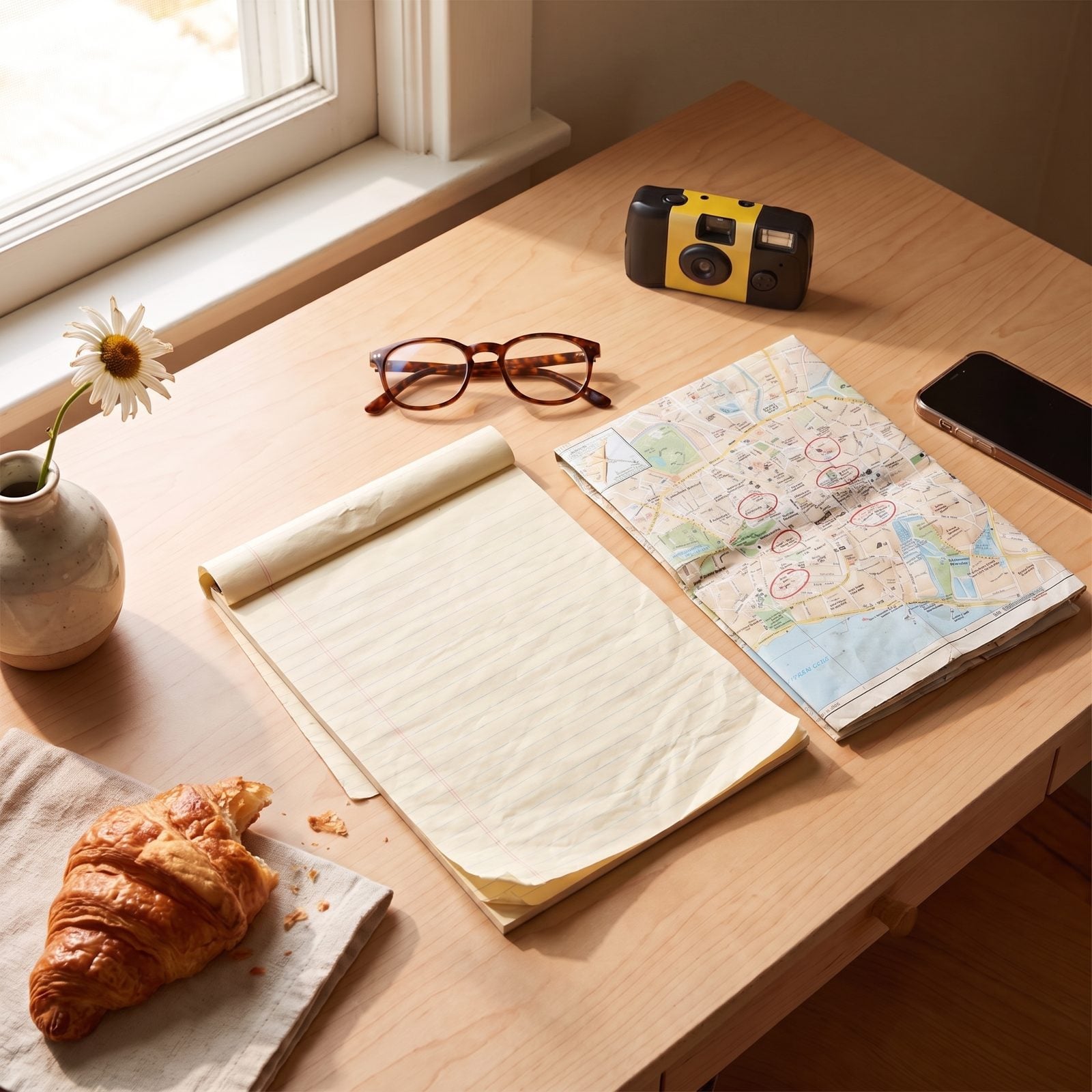
The trip disappointed, so you launch the postmortem. Wrong hotel. Bad timing. Should’ve gone in May. Too many days, or too few. You’ll redesign the entire itinerary before you’ll entertain the thought that maybe you’ve simply outgrown the place.
Spot the mirror. In a strained marriage it’s “we just need a date night,” “things will ease up after the move,” “once work calms down.” Always a fixable circumstance, never the thing itself.
This is confirmation bias guarding a belief we’re attached to. You want the destination to still be right, so you scan for any explanation that keeps that belief intact. Tweaking the plan feels productive. It also conveniently spares you the harder question about whether the plan was ever the problem.
7. Each New Restaurant Makes You Swear the City Has Changed

You find one new restaurant — great cocktails, a chef doing something interesting, a buzz you hadn’t felt here in years. And suddenly the whole city is redeemed. “It’s changed,” you tell everyone. “There’s a whole new energy.” One good night rewrites the entire verdict.
People grab the same lifeline in a marriage running cold. One good weekend, one real conversation, and hope floods back in. See, it’s not over. Things are turning around.
This is the recency effect teaming up with hope. The most recent good experience looms larger than the accumulated pattern, and we desperately want it to signal a trend rather than a blip. Sometimes it does. Often it’s just a good night in a place, or a relationship, that’s otherwise exactly where it was. One new restaurant doesn’t make a new city. It makes one good dinner — and that’s allowed to be enough on its own.
6. That One Beloved Café Keeps Excusing the Whole City

🔥 Would you like to save this?
You know the café. Tiny marble tables, a waiter who remembers your order, the whole thing. You went there on your first morning years ago and fell hard, and ever since you’ve booked the entire trip around it. Never mind that the rest of the city has gone gray on you. Never mind the crowds, the construction, the overpriced everything. You’ve got your café.
Married people pull the same move with a single good trait. He makes incredible coffee on Sunday mornings. She still laughs at the same old joke, and somehow that one bright spot gets stretched thin enough to cover a lot of dark ground.
Psychologists call it the halo effect. One strong positive impression bleeds outward and tints your judgment of everything near it, so a great café doesn’t stay a great café in your head — it quietly vouches for a whole city it has nothing to do with.
5. You Compare the Resort Only With Somewhere Even Worse

Ask anyone defending a resort they’ve outgrown and listen to the comparison they reach for. Not a better place. A worse one. “At least it’s not like that chaotic one we tried in 2019.” “Remember the dump with the broken AC? This is paradise next to that.”
Catch the sleight of hand. The bar isn’t “somewhere I’d actually love.” The bar is “somewhere that was bad.” Clear that and you win every argument with yourself.
People stay in flat marriages this exact way. “My friend’s husband is so much worse.” “At least we don’t scream at each other.” The comparison always points down, never sideways at what you might have had.
Welcome to the contrast effect, one of the sneakier tricks your mind runs. We don’t judge things against what’s possible — we judge them against whatever example happens to be parked next door. Line your tired resort up beside a disaster and it suddenly looks like a win. But the disaster was never the real question.
4. The Proposal Spot Gets a Lifetime Pass on Everything

There’s a place that could be sliding into the sea and you’d still defend it, because something happened there. A proposal. A honeymoon. The trip where everything finally clicked. The overlook is crumbling now and the town around it has turned into one long souvenir carousel, yet you go back anyway, every few years, like a pilgrimage you can’t bring yourself to skip.
The spot isn’t earning its spot anymore. The memory is paying its way.
Call it the sunk-cost fallacy in its most romantic outfit. We stay invested because of what we’ve already poured in, not because of what we’re getting now, and couples do it with the years. “We’ve been through so much together” stops being a description of the past and becomes a reason to stay.
Here’s the uncomfortable part. A good memory doesn’t need a return trip to stay good. You can love what happened there and still admit the place has changed — two different things we keep gluing together because prying them apart feels like betrayal.
3. When Locals Recognize You, Trying Elsewhere Feels Strangely Personal
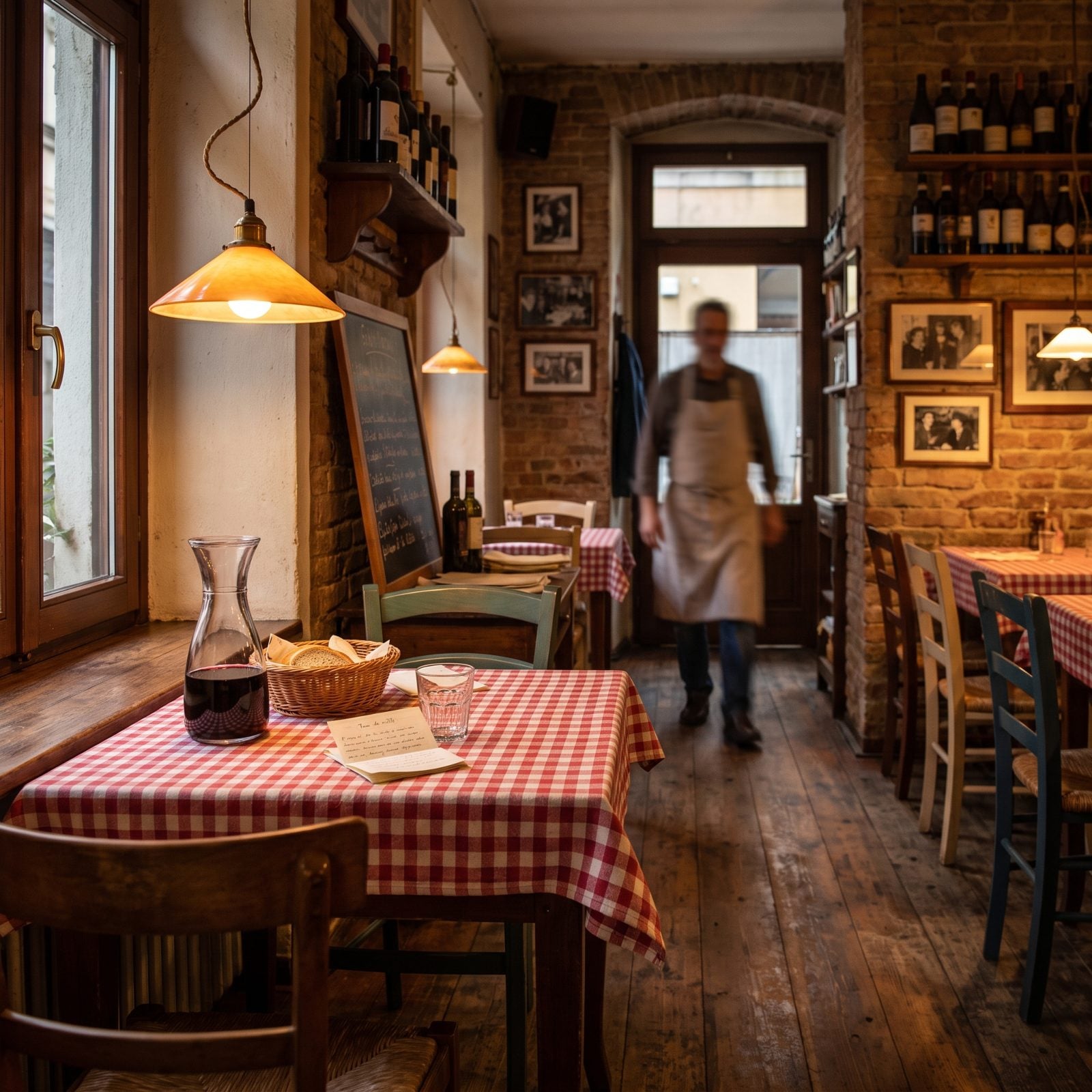
The owner waves before you’ve sat down. The waiter brings your usual without asking, and somewhere in the kitchen someone’s already started your dish because they spotted you walk in. Just like that, the thought of trying the new place across the square feels like treason. You’d have to start over. You’d be a stranger again.
Being known is a powerful drug. It keeps us returning to tables long after the food stopped being any good.
People stay in marriages for this reason more than they’ll admit. Being fully known — flaws and history and shorthand jokes and all — is brutally hard to walk away from, because starting over means explaining yourself from scratch to someone who doesn’t yet get the reference.
We overweight belonging. The hunger to be recognized and welcomed runs so deep we’ll choke down a mediocre meal to protect it. Being a regular feels like being chosen. Trying elsewhere feels like confessing the chosen thing wasn’t enough.
2. The Destination Disappoints, but Your Travel Group Never Does

Year after year you book the same lackluster spot and come home swearing it was wonderful. Then you try to pin down what, exactly, was so wonderful, and it keeps circling back to the people. The late dinners. The card games on the porch. The in-jokes that only land with this exact crew.
The destination was never the thing. The company was. But the destination hogs all the credit because it’s the part with a name on the itinerary.
This is where a lot of marriages quietly live. The relationship itself is flat, but the life built around it — the kids, the friends, the worn-smooth routines — runs warm and full, and we hand the marriage credit for warmth the surrounding life actually makes.
Misattribution of arousal, the researchers call it. In plainer words: we feel good and we blame the nearest obvious thing. You felt alive on that trip, and the place just happened to be standing there when you did.
1. You Lower the Bar From Amazing to “At Least Easy”

Somewhere along the way the question changed. It used to be “where will blow my mind?” Now it’s “where do I already know the parking, the check-in, the good breakfast spot?” You stopped booking for wonder and started booking for the absence of friction, and a trip that asks nothing of you begins to feel like a trip that’s handing you something.
It isn’t. Easy and good are not the same word.
This is the bargain that keeps unhappy marriages running on fumes. The spark left, but the logistics are seamless. You know each other’s routines, nobody has to explain anything, nobody has to be impressed, and comfort gets mistaken for contentment because the two dress alike.
Hedonic adaptation is the engine underneath. We get used to anything — the thrilling and the dull alike — until our baseline resets and “amazing” quietly slumps into “fine, and I didn’t have to think about it.” The danger was never the easy trip. It’s forgetting there was ever a different standard.
Easy is a wonderful thing to have. It’s a terrible thing to settle for.
🔥 Would you like to save this?
Please note that some of the imagery in this article were created with the aid of AI image generators.