
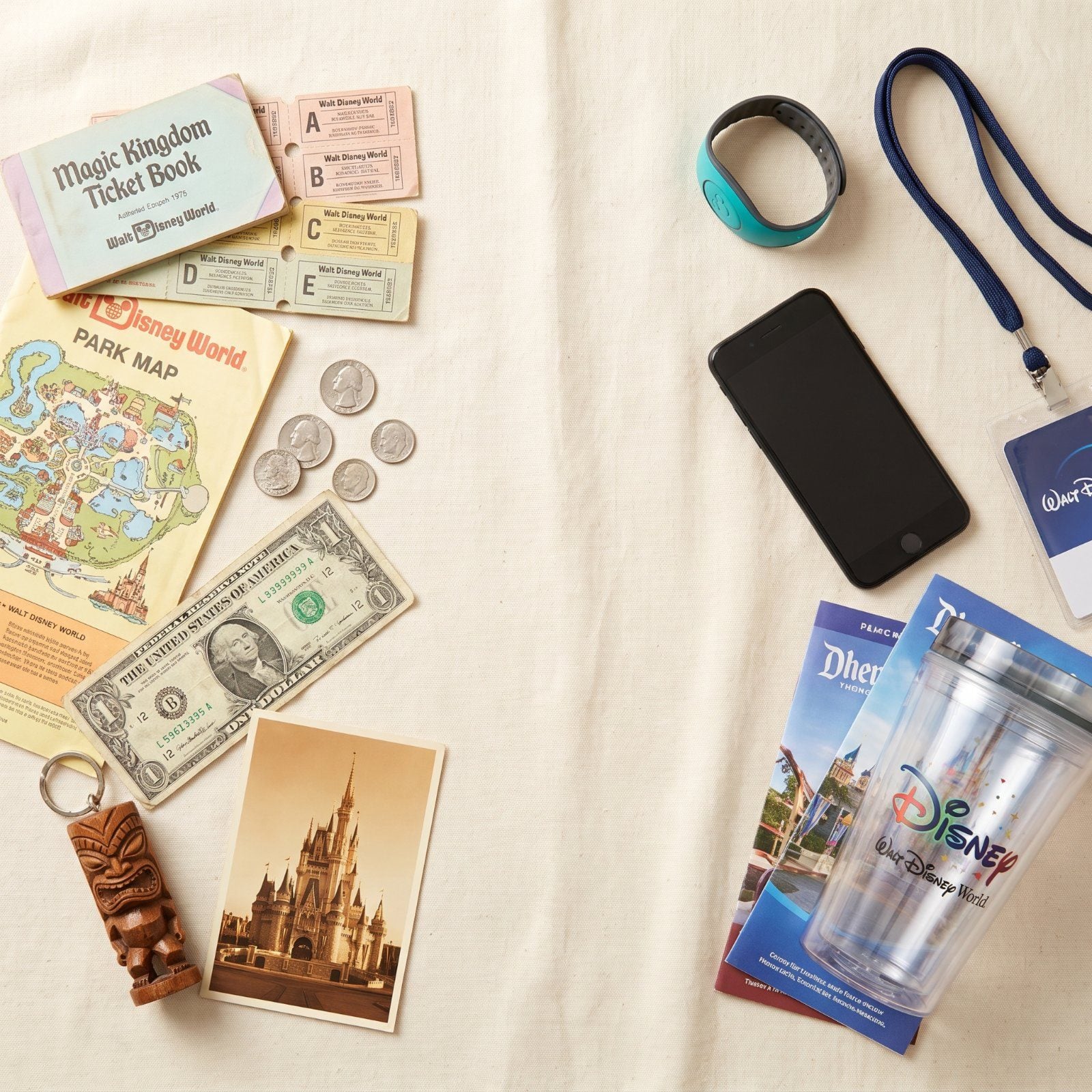
In 1975, you could buy a book of attraction tickets at the Magic Kingdom and still have folding money left over for a chocolate-dipped frozen banana on the way out. A family of four walked through the turnstiles for less than the price of one parking spot today. The park was four years old. Space Mountain had just opened, and the whole thing felt like the future arriving early.
Wages were smaller too, so nobody was living like royalty. But the numbers below still land like a joke told with a straight face. Here’s what each piece of that week actually cost, then and now.
44. Magic Kingdom Admission for a Family of Four: Around $20 in 1975
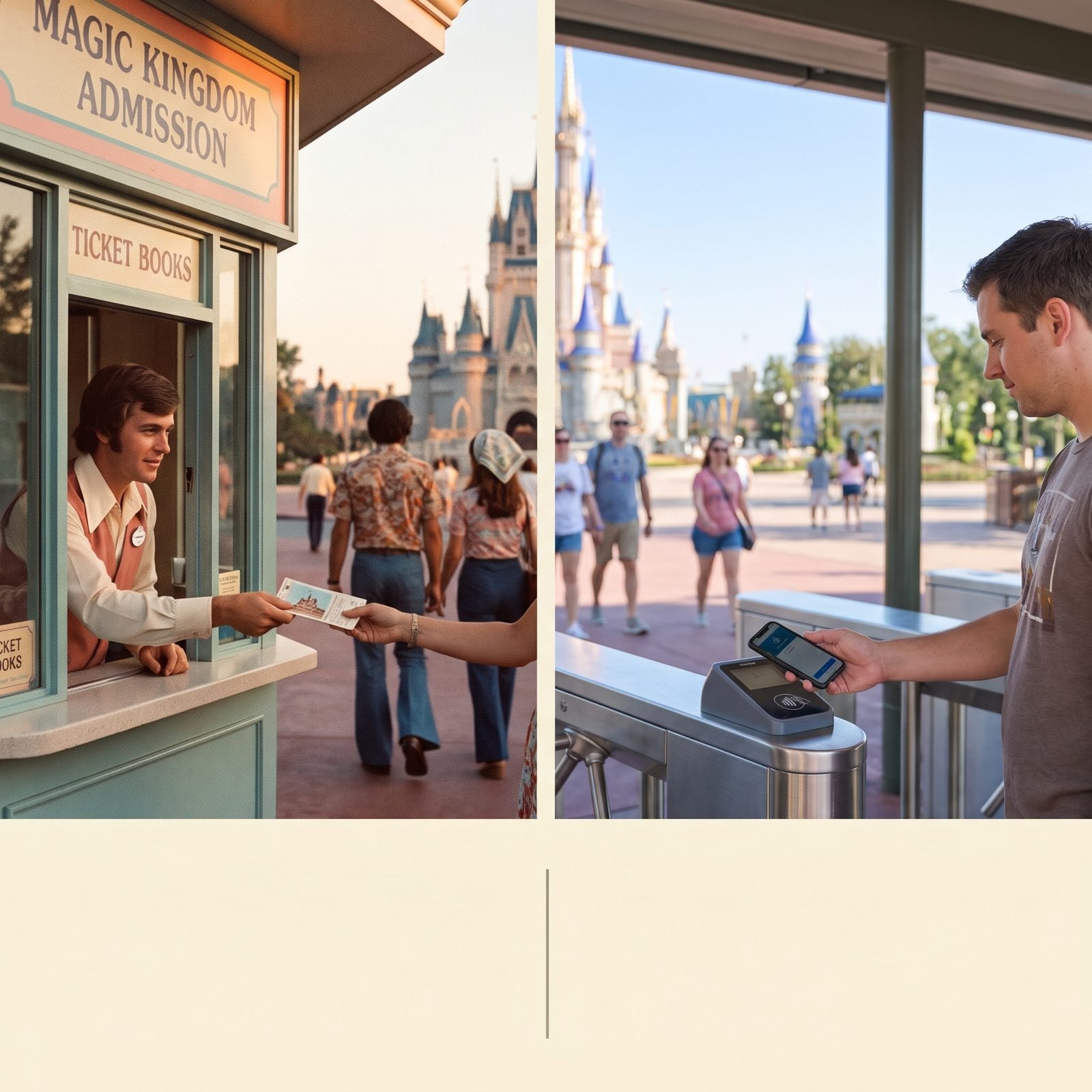
A general-admission ticket book in 1975 ran a few dollars a head, so four people could pass through the turnstiles for roughly twenty bucks total. That bought admission plus a handful of ride coupons — the A through E lettered tickets that have since become folklore.
A typical factory wage sat around four dollars an hour. So a day at the Magic Kingdom cost a working parent about five hours of labor for the whole family. Nobody called it cheap at the time. They called it a splurge they’d been saving for.
43. An Extra E-Ticket Coupon: About 85 Cents in 1975

The famous E-ticket — reserved for the headliners like Space Mountain and the Haunted Mansion — cost under a dollar as an add-on coupon. Call it eighty-five cents. That’s the one everybody remembers, because the E meant the ride was worth lining up for.
“An E-ticket ride” wormed its way into the language as shorthand for anything thrilling, and it stuck long after the coupons disappeared. The genius was psychological. Pay by the ride and every coupon you tore felt like a tiny decision, so the big ones felt earned.
42. A Second Day at the Magic Kingdom: Roughly $6 a Person in 1975
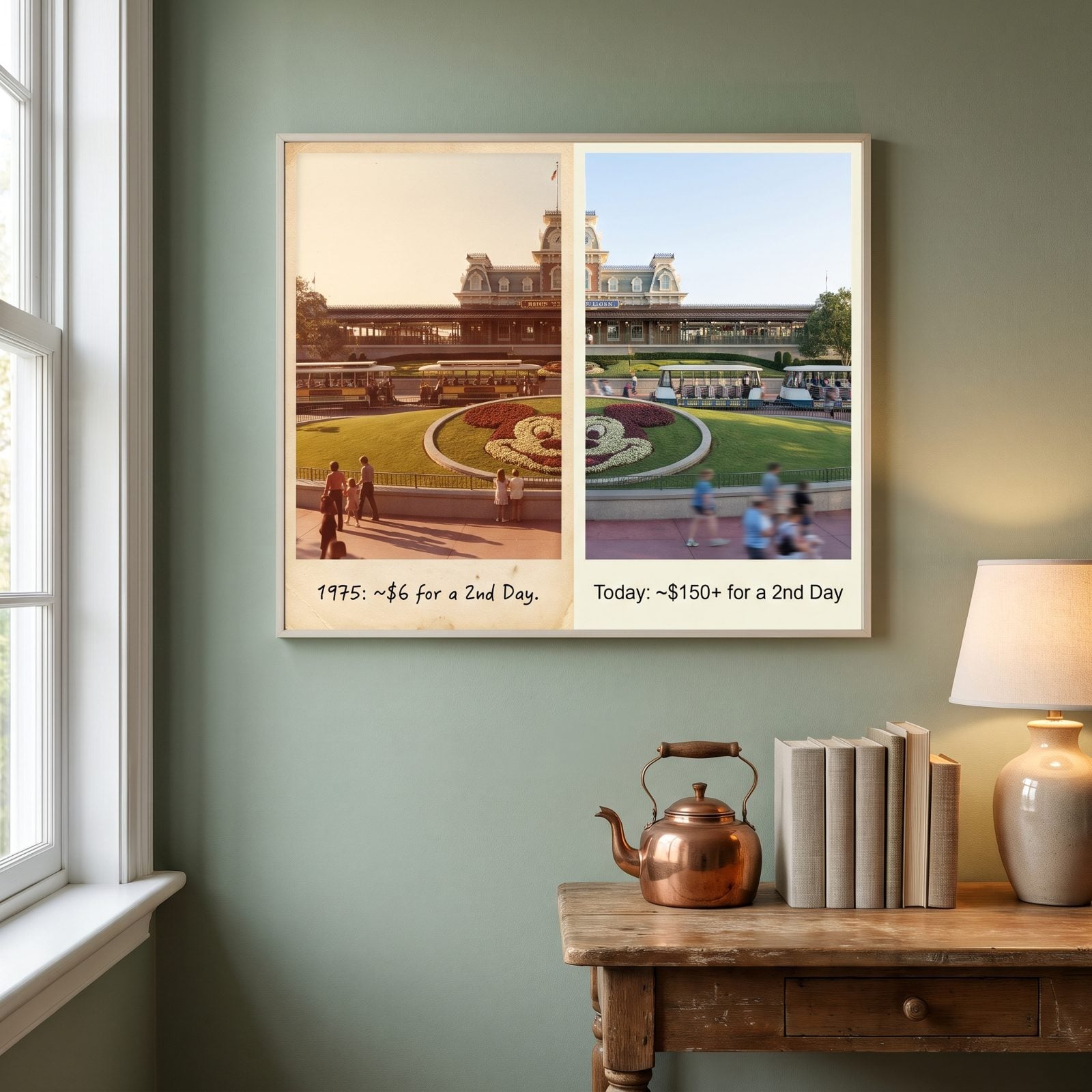
Coming back the next day wasn’t bundled into a multi-day pass the way it is now. You bought another day of admission and tickets, and once you’d already made the trip down, a second day ran about six dollars per person.
That was the whole pitch to families driving in from three states over. You’re already here. Stay another day. And it worked, because the drive was the expensive part, not the gate.
41. Magic Kingdom Parking for a Day: Around 50 Cents in 1975
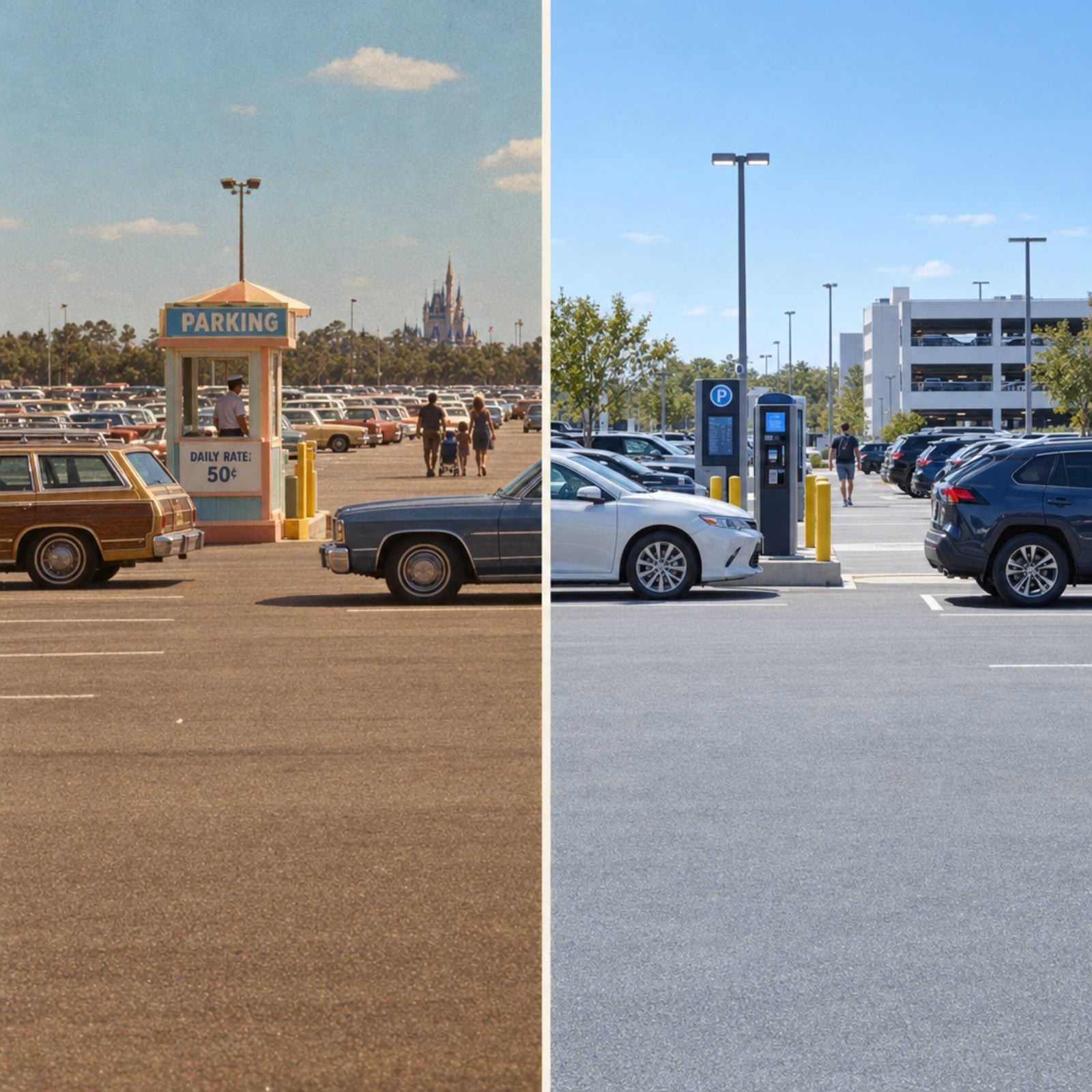
Parking the station wagon for a full day cost about fifty cents. You’d drop two quarters, get waved in by an attendant in a white cap, and ride the tram to the ferry. The arrival was part of the show.
Fifty cents in 1975 was pocket-change territory. Today’s parking fee at the same resort is a line item people actually gripe about on the drive home. And honestly, that’s the part that gets folks the most — paying real money just to set the car down.
40. A Stroller Rental at the Park: About 50 Cents in 1975
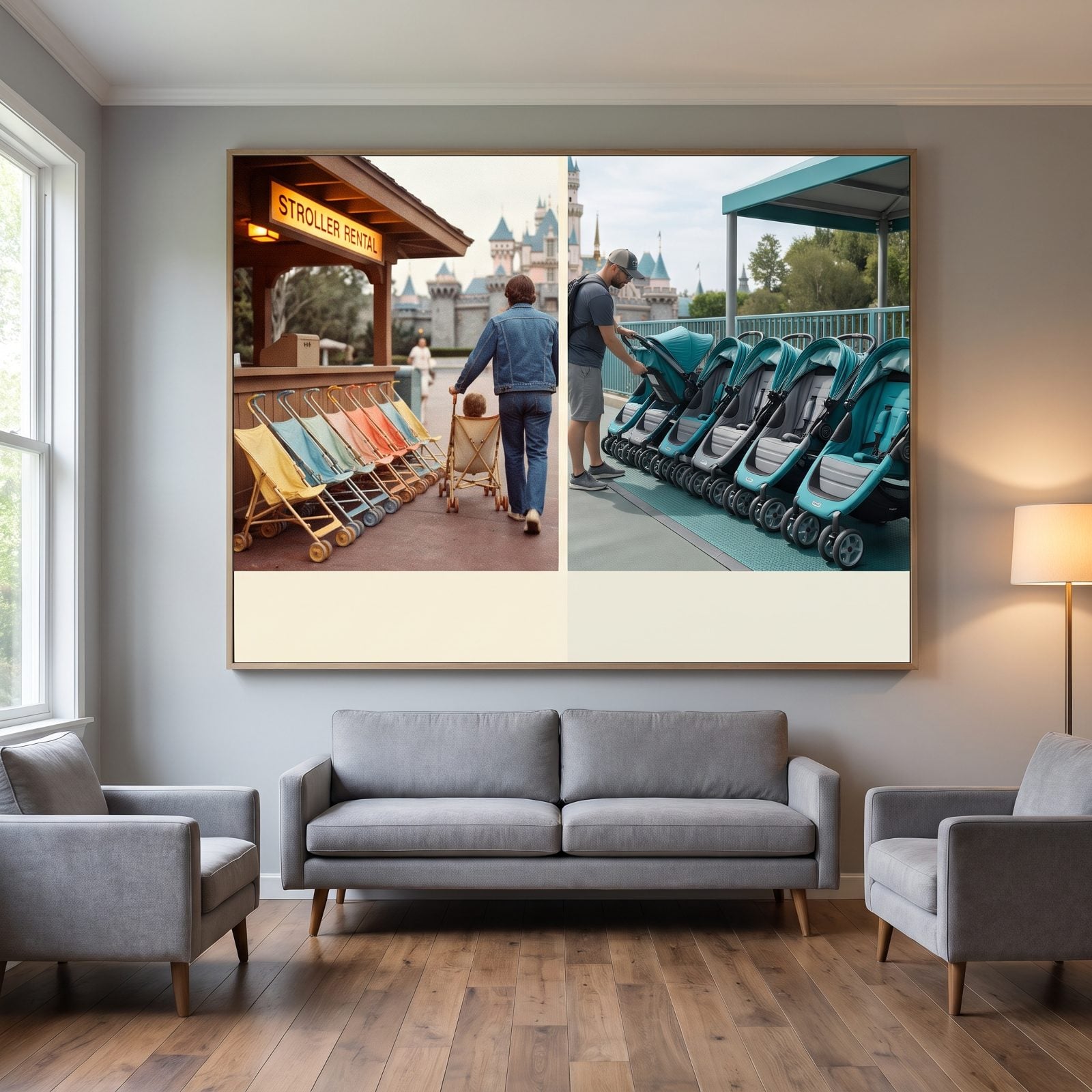
Renting a stroller set you back around fifty cents for the day — simple canvas-and-wood umbrella strollers, nothing fancy, just enough to haul a tired toddler and a bag of melted crayons from Fantasyland back to the parking tram.
Small detail, but telling. In 1975 the little conveniences were priced like afterthoughts. You didn’t budget for a stroller. You found the change in your pocket. The modern rental costs more for a single day than four people paid to get in.
39. A Main-Entrance Locker Rental: A Dime or Two in 1975
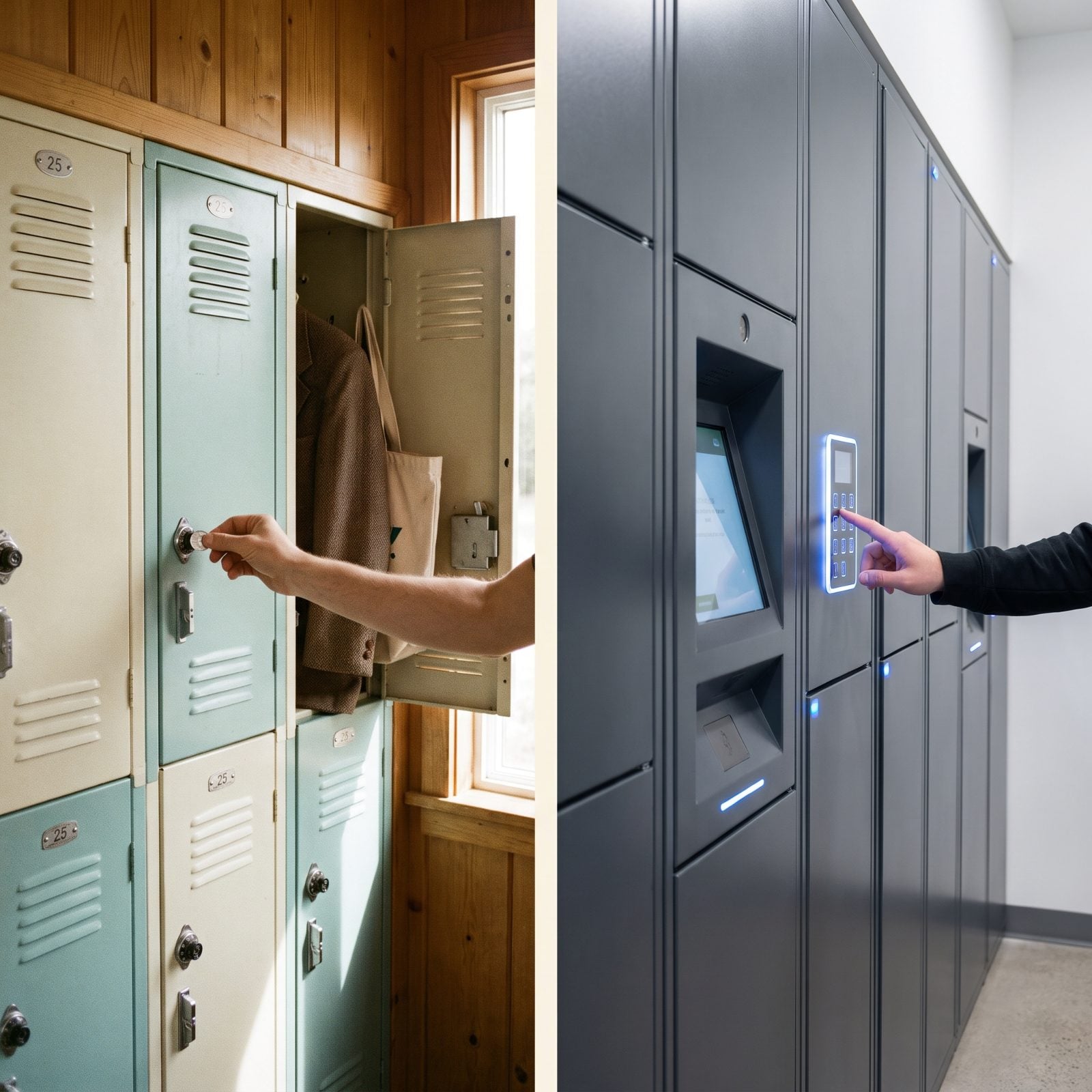
A metal locker to stash your jacket and souvenir sack cost a dime, maybe a quarter for the bigger ones. You paid your dime, spun the combination dial, and lifted the latch handle, then repeated the numbers to yourself so you wouldn’t forget them on Space Mountain.
We have a soft spot for these. There’s something honest about a locker that costs what a locker should cost. The modern electronic version charges several dollars and somehow feels less trustworthy than a dented metal box with a combination dial.
38. A Night at the Polynesian Village: Around $40 in 1975
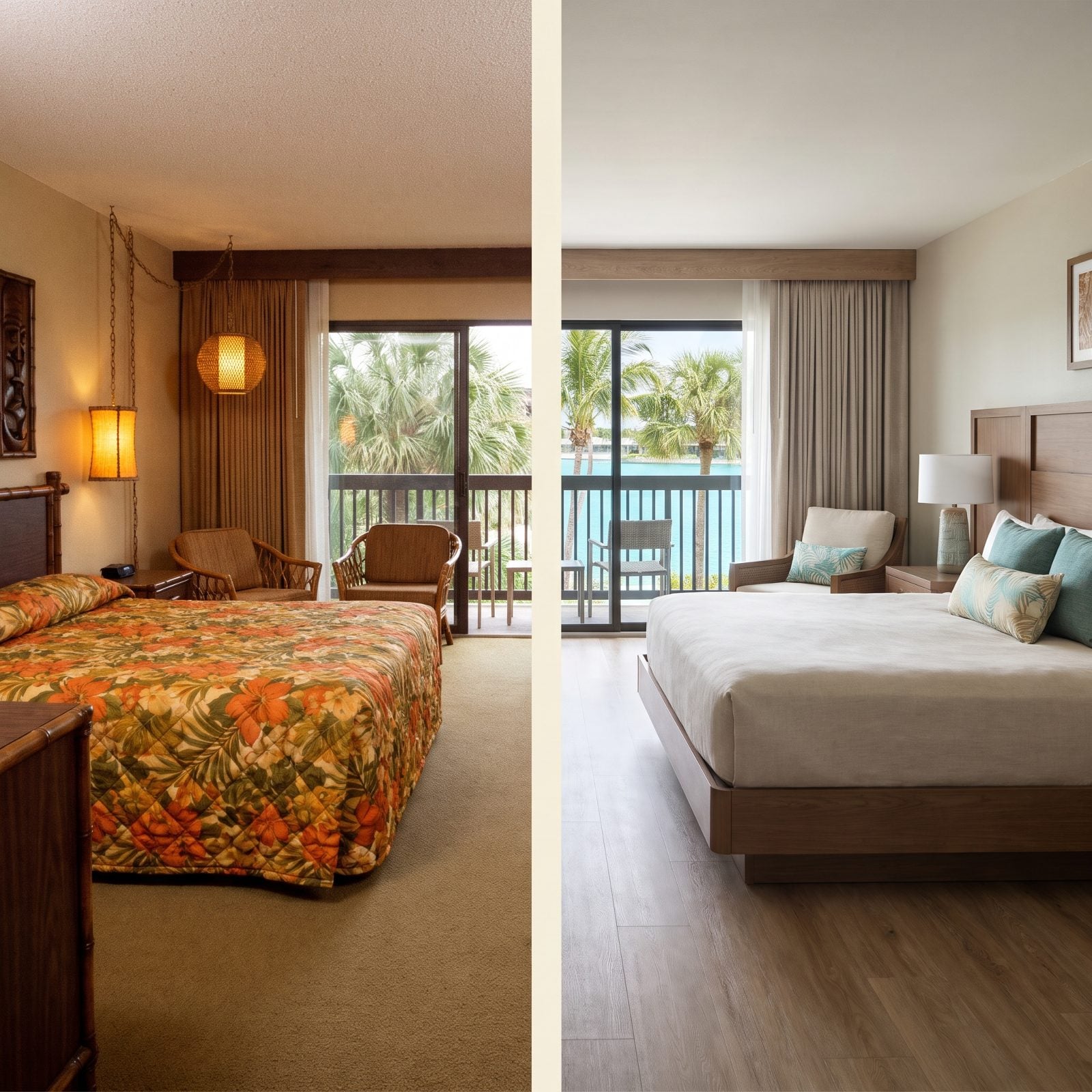
A standard room at the Polynesian Village, one of the two original resorts when the park opened, ran somewhere around forty dollars a night. For that you got tiki torches, a monorail stop right at the lobby, and a bedspread loud enough to wake you up on its own.
Forty dollars was real money in 1975, close to a factory worker’s full day of pay. This was the top shelf — the place you booked for the honeymoon or the once-a-decade big trip.
37. A Night at the Golf Resort: Roughly $30 in 1975
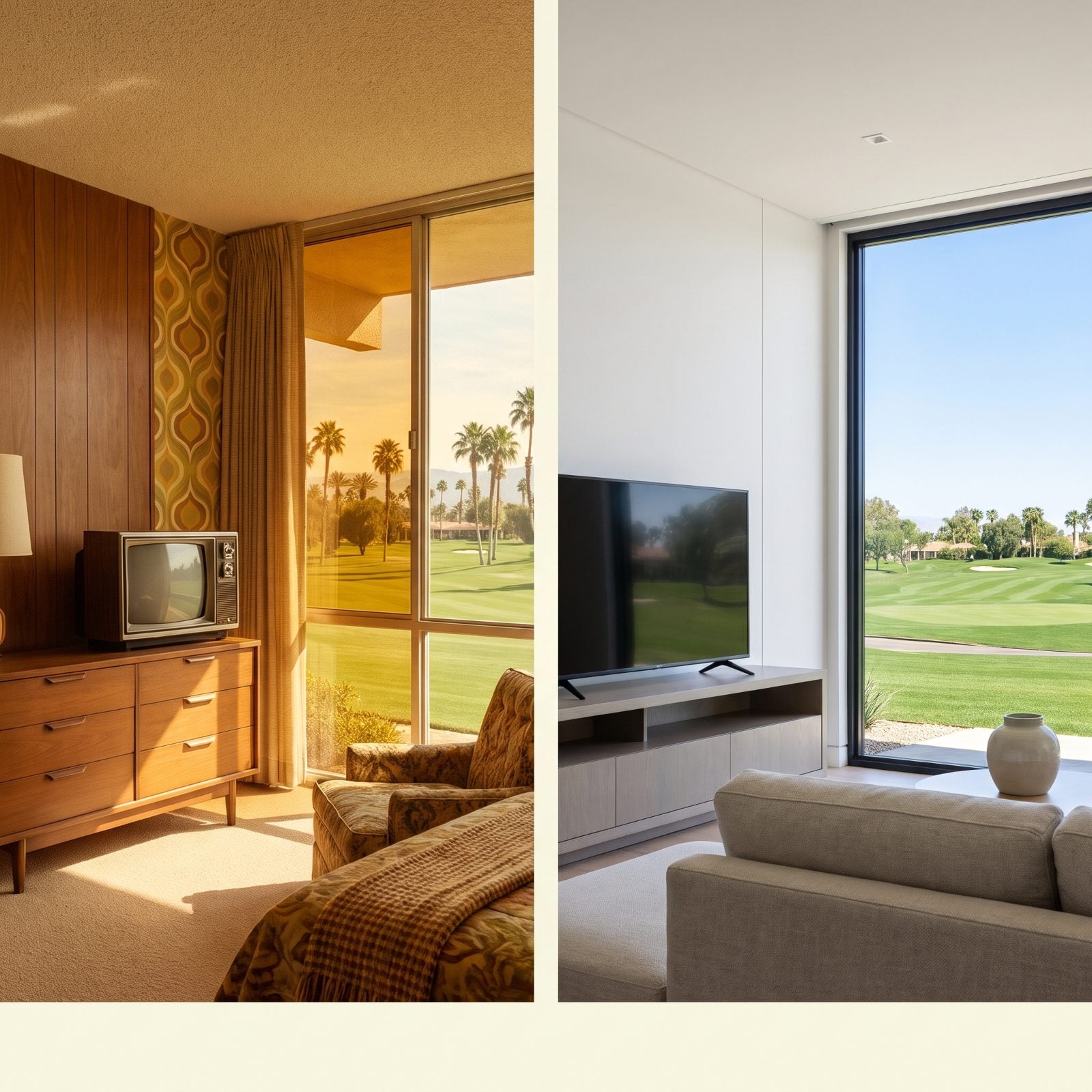
The resort built around the golf course offered a quieter, slightly cheaper stay at roughly thirty dollars a night. Same monorail-era optimism, a little less tiki, a fairway outside the window instead of a lagoon.
This was the sensible choice for the family that wanted to be on property without paying the Polynesian premium. Ten dollars a night was a meaningful gap back then. You could feed everyone a diner breakfast on that difference.
36. A Fort Wilderness Tent Campsite: About $11 a Night in 1975
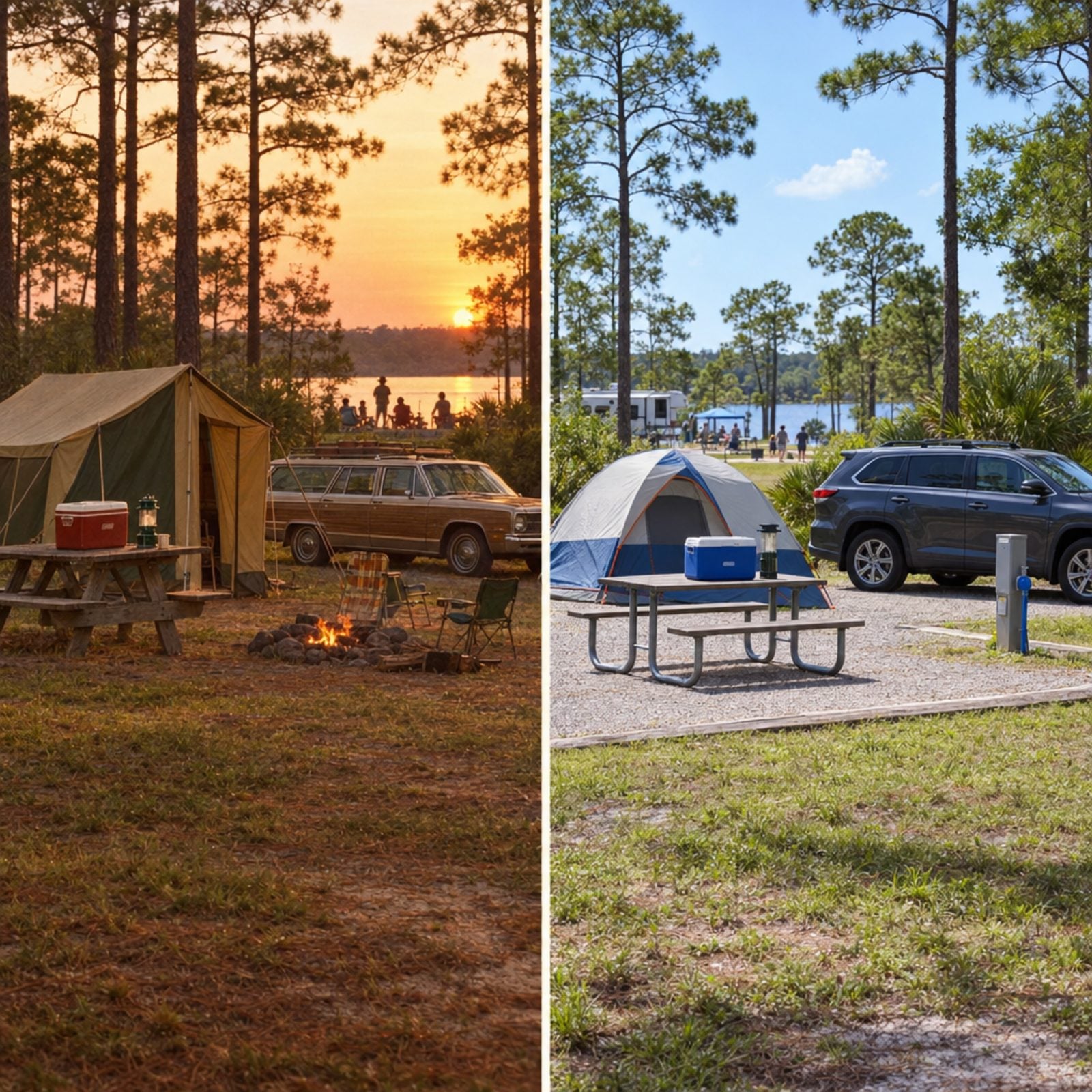
For the family willing to pitch a tent, Fort Wilderness charged around eleven dollars a night for a campsite. Drive in with the station wagon, unload the canvas tent, set out a lantern, and you had yourself a Disney vacation for pocket change.
This was the democratic option, and a smart one. The camp had its own transportation to the park and a genuine woodsy quiet after the gates closed. Families who couldn’t swing a resort room could still wake up on Disney property, which was the whole dream.
35. A Budget Motel Room Near the Park: Around $15 in 1975
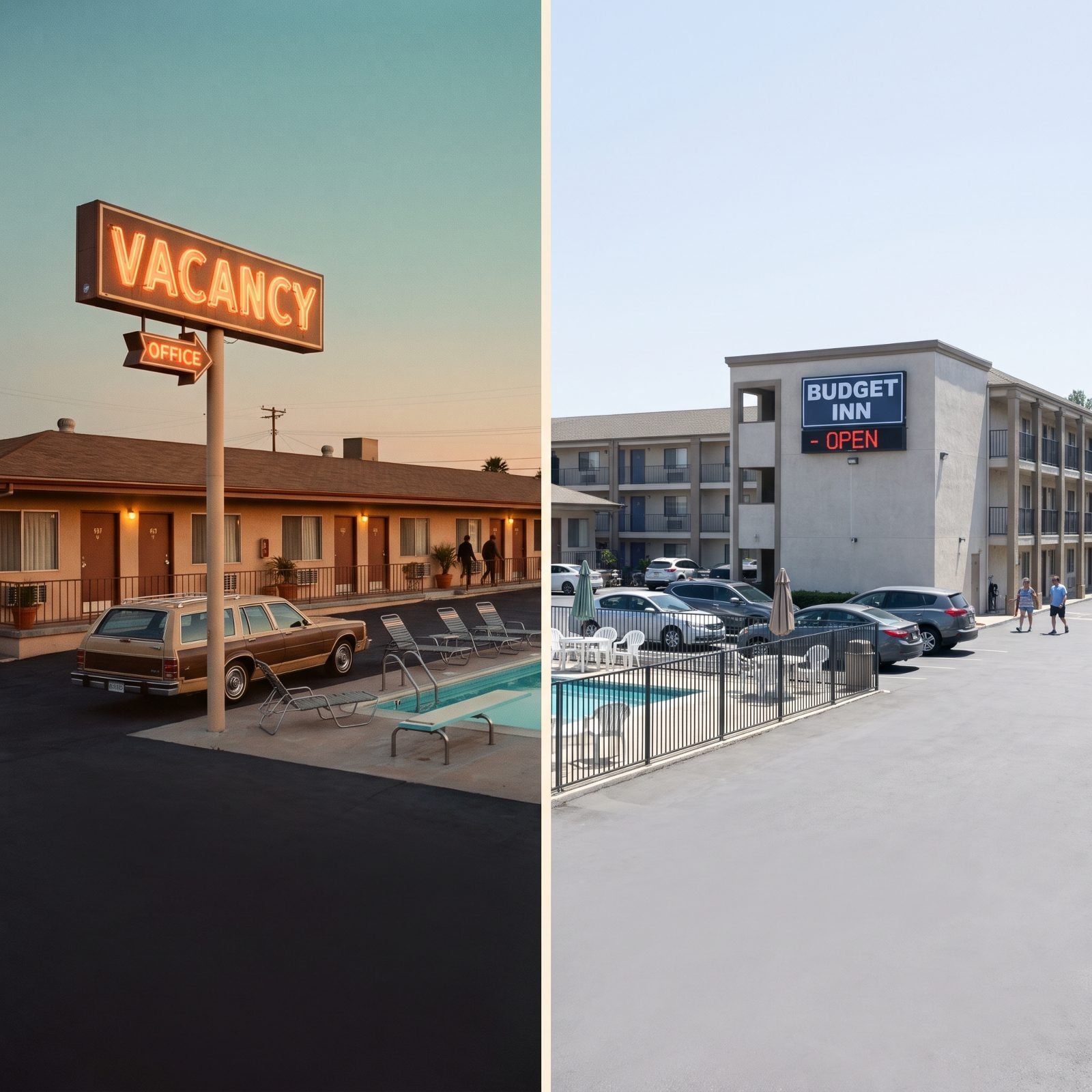
Skip the resort entirely and a budget motel out on the highway ran about fifteen dollars a night. Numbered doors, a pool with a diving board nobody used, a neon VACANCY sign buzzing in the Florida dark. This is how a lot of families actually did Disney.
You slept off-property, drove in each morning, and spent the savings at the park. Fifteen dollars for a clean bed and a working air conditioner felt like a steal even then. Those motels still line the same roads. The sign is LED now, and the rate has a different number of digits.
34. A Hotel Rollaway Bed for a Child: About $5 a Night in 1975
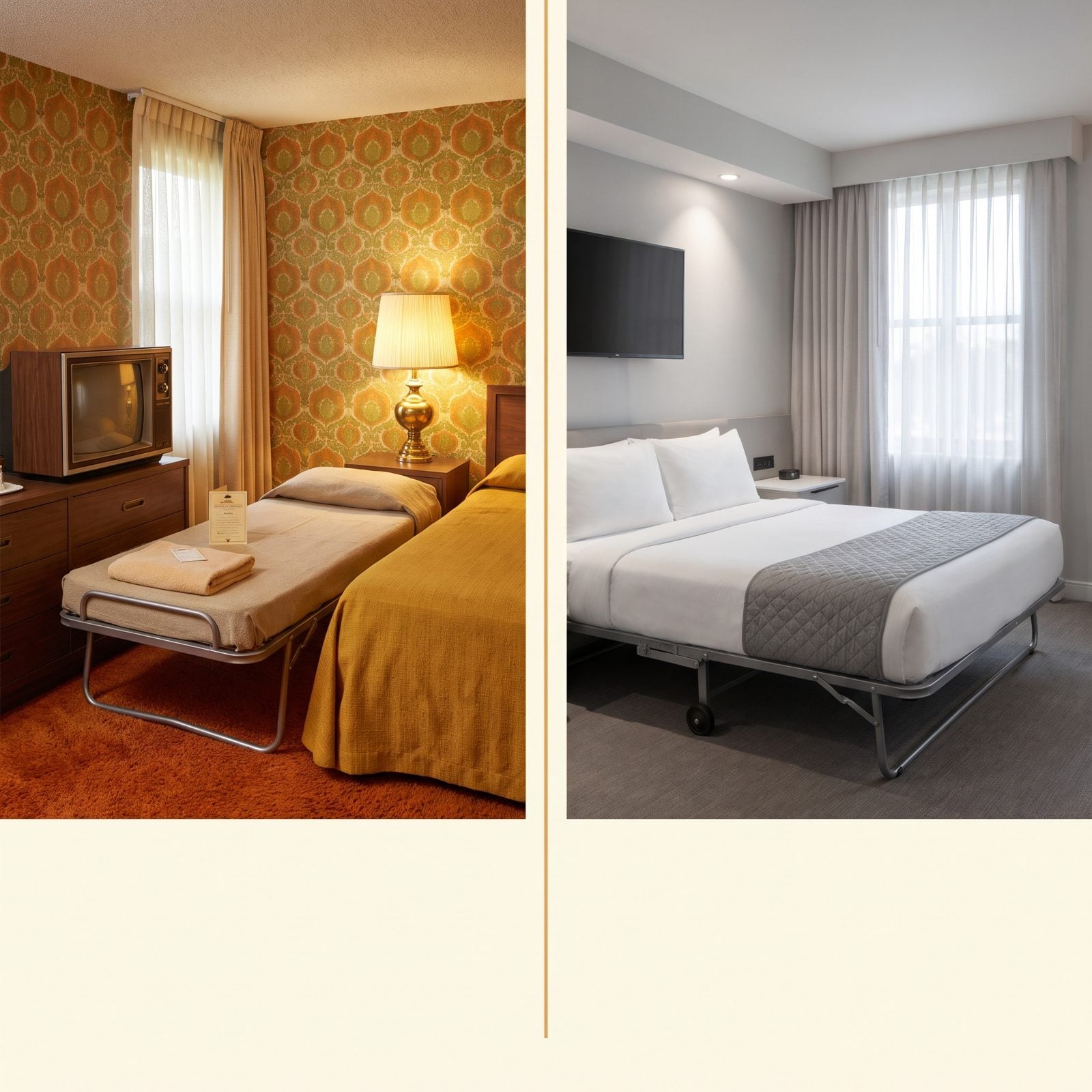
Back in 1975 a hotel would wheel a rollaway into your room for a kid for something like five bucks a night. Sometimes they’d just do it for free if the front-desk clerk liked your face.
Five dollars then was a couple hours of work at the going wage, so it wasn’t nothing — but it bought you a tired child asleep three feet away instead of a second room down the hall. Today’s rollaway is a full-size double bed, pillows, runner and all, on a folding wheeled frame, and it shows up as a line item, often north of twenty or thirty dollars a night. And good luck getting it comped.
33. Round-Trip Airfare, New York to Orlando: Roughly $180 in 1975
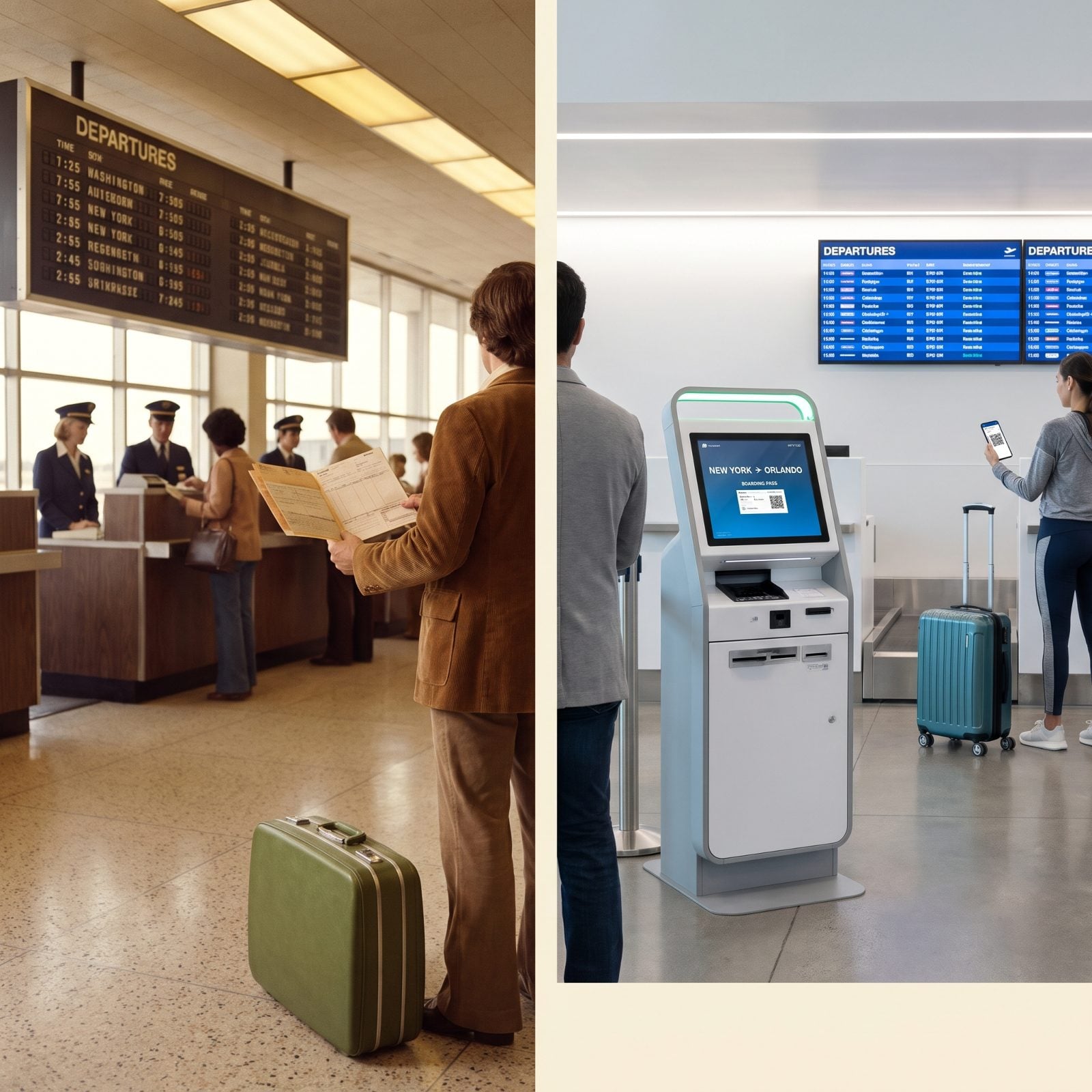
A round-trip coach seat from New York to Orlando in 1975 ran somewhere around $180, and that was in regulated-airline dollars, before anybody had heard the word “deregulation.”
Sounds friendly until you remember the median weekly paycheck was under $200. You were handing over most of a week’s pay for one seat. But the ticket came with a real meal on a real tray, legroom you could actually cross your legs in, and a stewardess who called your kids “sir” and “miss.” Run it through inflation and that same fare lands well past a thousand dollars today — which is the weird part. The cheap-seat era we love to gripe about is, somehow, the bargain.
32. Checked Luggage for the Whole Family: Free in 1975
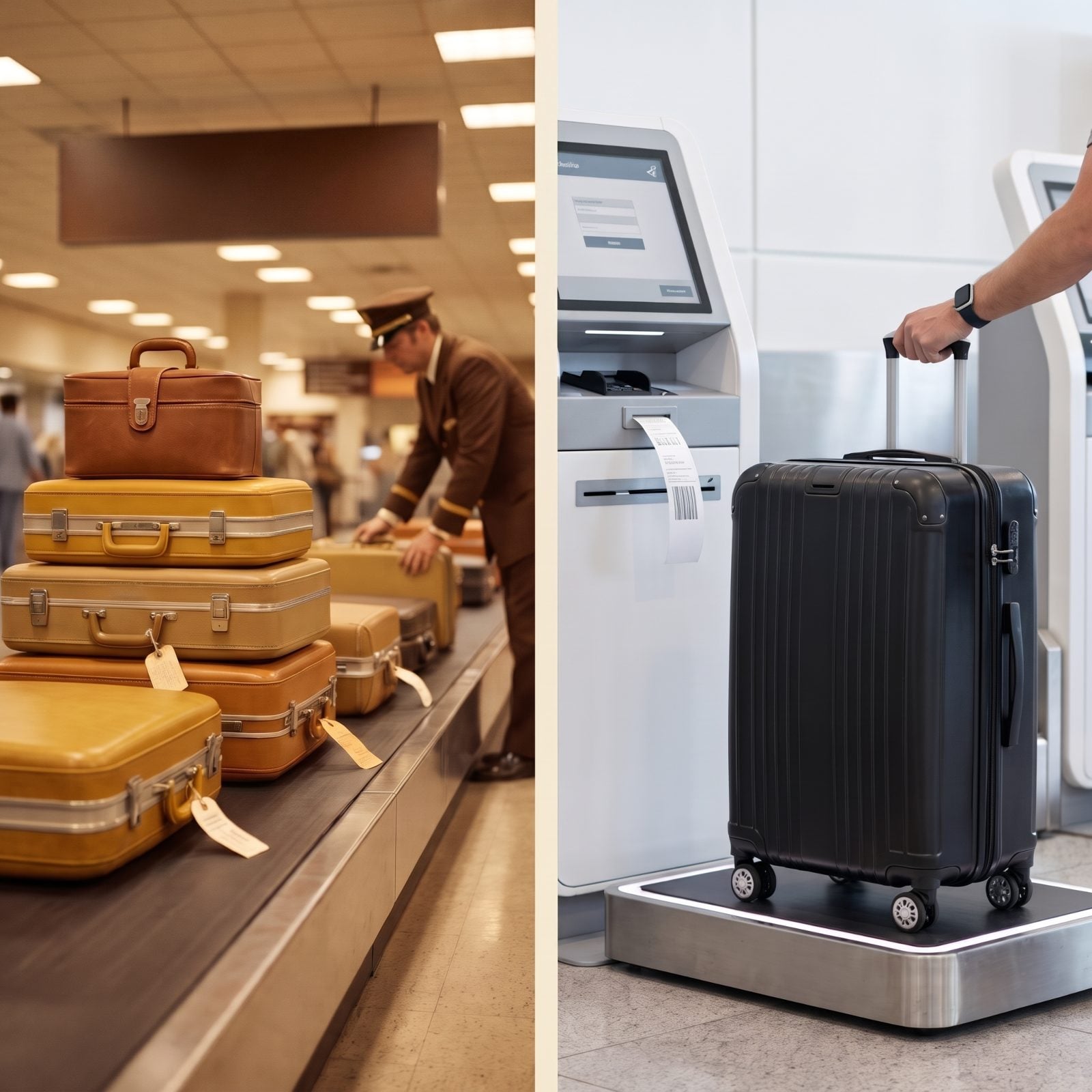
Here’s the one that stings. In 1975 you checked your bags and nobody charged you a dime — two per person, sometimes more, and the porter who wrestled them onto the belt expected only a tip.
The whole notion of a bag fee would have gotten you laughed out of the terminal. Checking luggage was just part of flying, same as the wings on the plane. Now a single checked suitcase runs thirty to forty dollars each way, and a family of four can watch two hundred bucks evaporate before they even board. The bag didn’t get heavier. The math did.
31. A Taxi From Orlando Airport to the Magic Kingdom: Around $12 in 1975
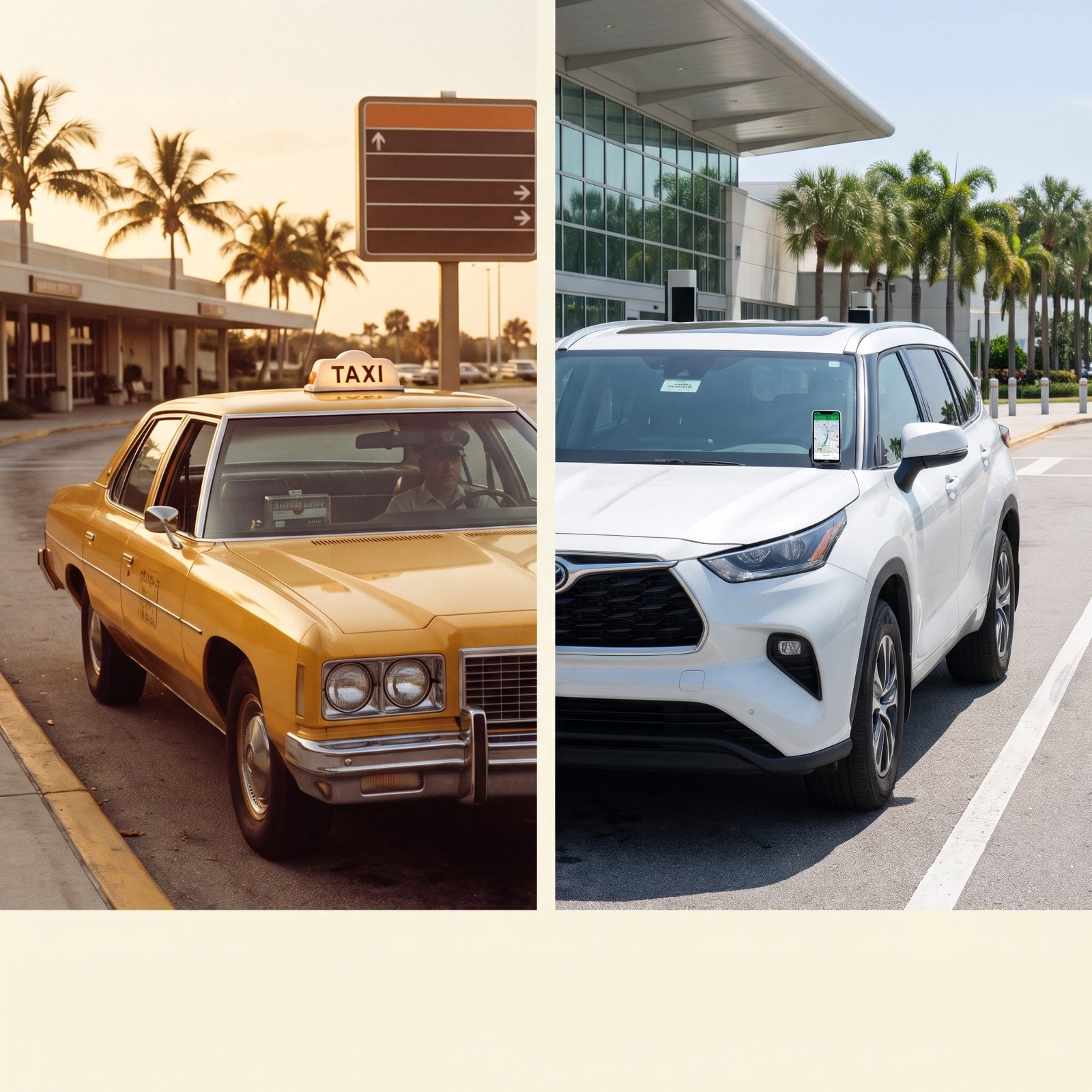
A metered cab from the Orlando airport out to the brand-new Magic Kingdom cost you roughly twelve dollars in 1975, maybe fifteen with the tip and a chatty driver who took the scenic way.
Disney World had only opened in late 1971, so the ride was mostly flat two-lane through orange groves and not much else. Twelve dollars was real money, but it was one clean transaction. Today the same trip by rideshare swings wildly with demand and surge, and a holiday-weekend fare can shame that old meter without blinking. The groves are gone. So is the simplicity.
30. A Weeklong Compact-Car Rental: About $60 in 1975
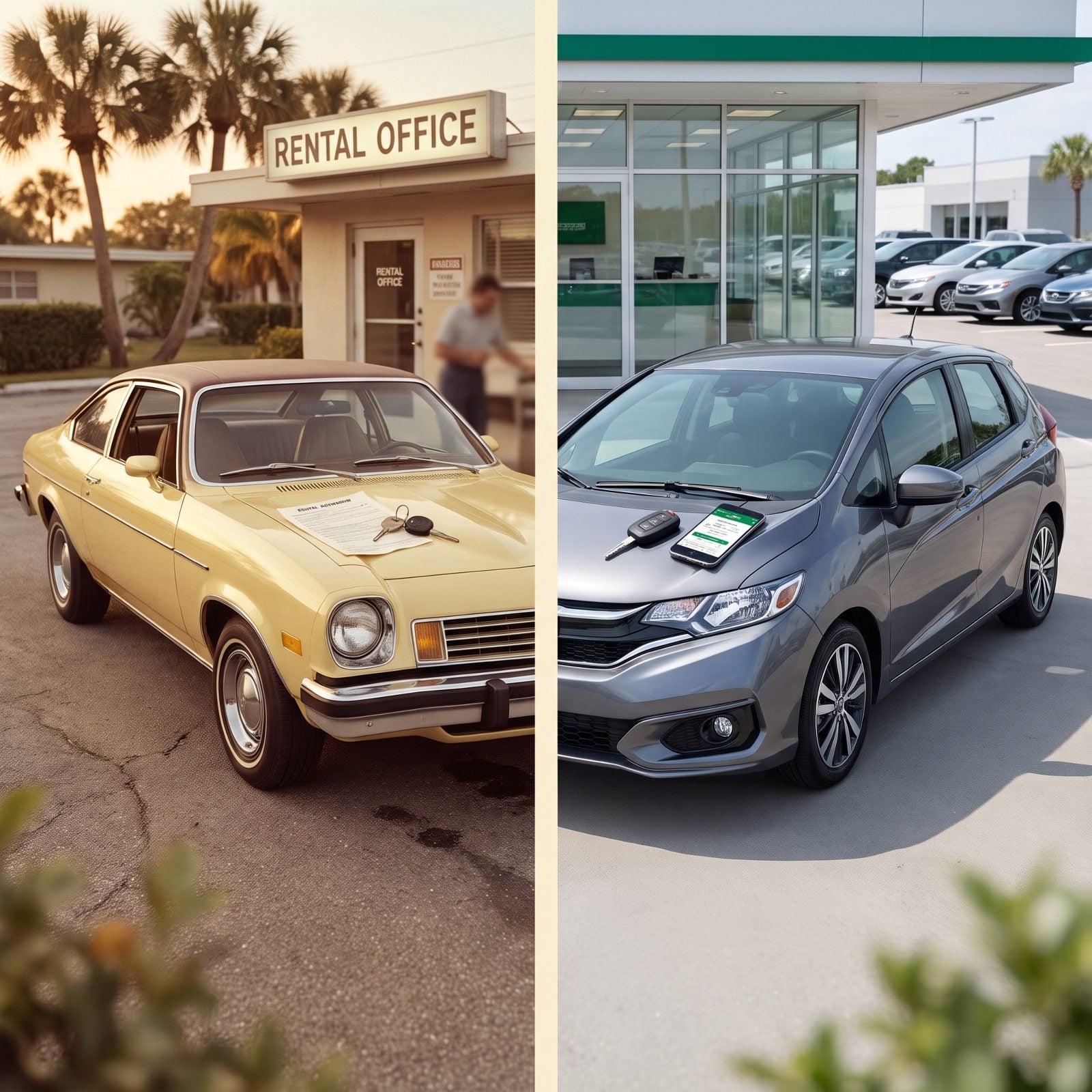
Renting a little economy car for a full week in 1975 set you back around sixty dollars, sometimes less with unlimited mileage thrown in as a selling point.
The car itself was spartan — vinyl bucket seats, AM radio, crank windows, an ashtray that saw use. But sixty dollars for seven days of freedom to roam central Florida felt like a steal even then. Today a week in a comparable compact, once you tack on the insurance upsell, the airport concession fee, and the surcharge for daring to be under 25, runs around three hundred fifty dollars. The vinyl seats are gone. So is the deal.
29. A Gallon of Regular Gasoline: Roughly 57 Cents in 1975
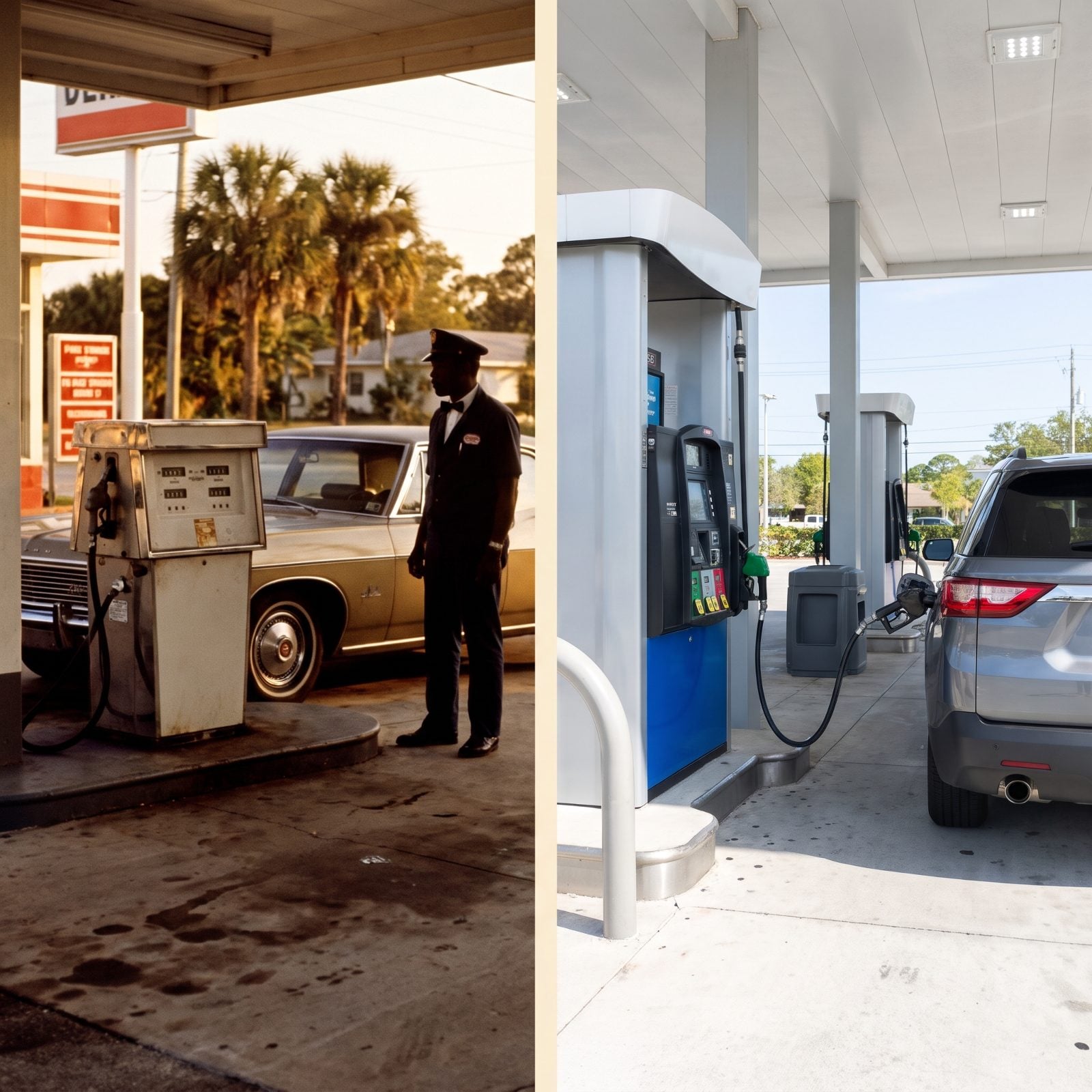
Gas ran about 57 cents a gallon in 1975, and even that felt outrageous to people who remembered paying a quarter.
The oil embargo had just rattled everyone, so drivers were already grumbling. Fill the rental tank for your Disney week, though, and you’d spend a few dollars at most. An attendant pumped it, checked your oil, and squeegeed the bugs off the windshield without being asked. Now you pump your own, pay several dollars a gallon, and nobody’s coming anywhere near your windshield. Here’s the part nobody expects: adjusted for inflation, that old 57 cents is actually in the same ballpark as what we pay today.
28. A Week of Airport Parking at Departure: About $14 in 1975
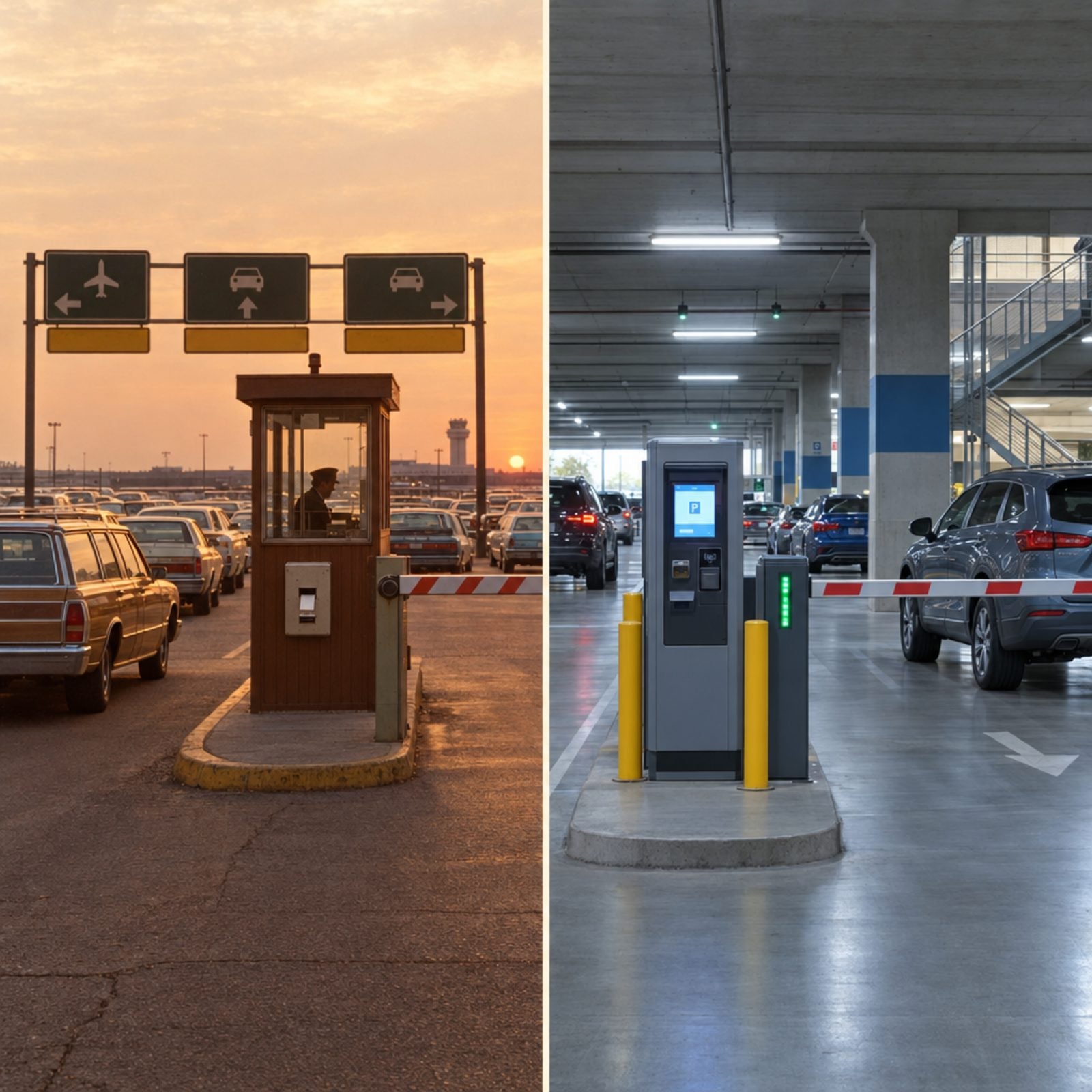
Leaving the family car at the departure airport for a week cost around fourteen dollars in 1975 — roughly two bucks a day in an open lot that baked in the sun.
You took a paper ticket from a man in a booth, tucked it in the glove box, and prayed you’d remember your row. Fourteen dollars for a week barely registered on the vacation budget. Now? A week of airport parking, even in the “economy” lot that makes you ride a shuttle, can run past a hundred dollars, enough that people genuinely agonize over whether to park or just get dropped off. The booth attendant is a memory. The sunburned dashboard is forever.
27. A Coffee-and-Pastry Breakfast at the Resort: Around $1.25 in 1975
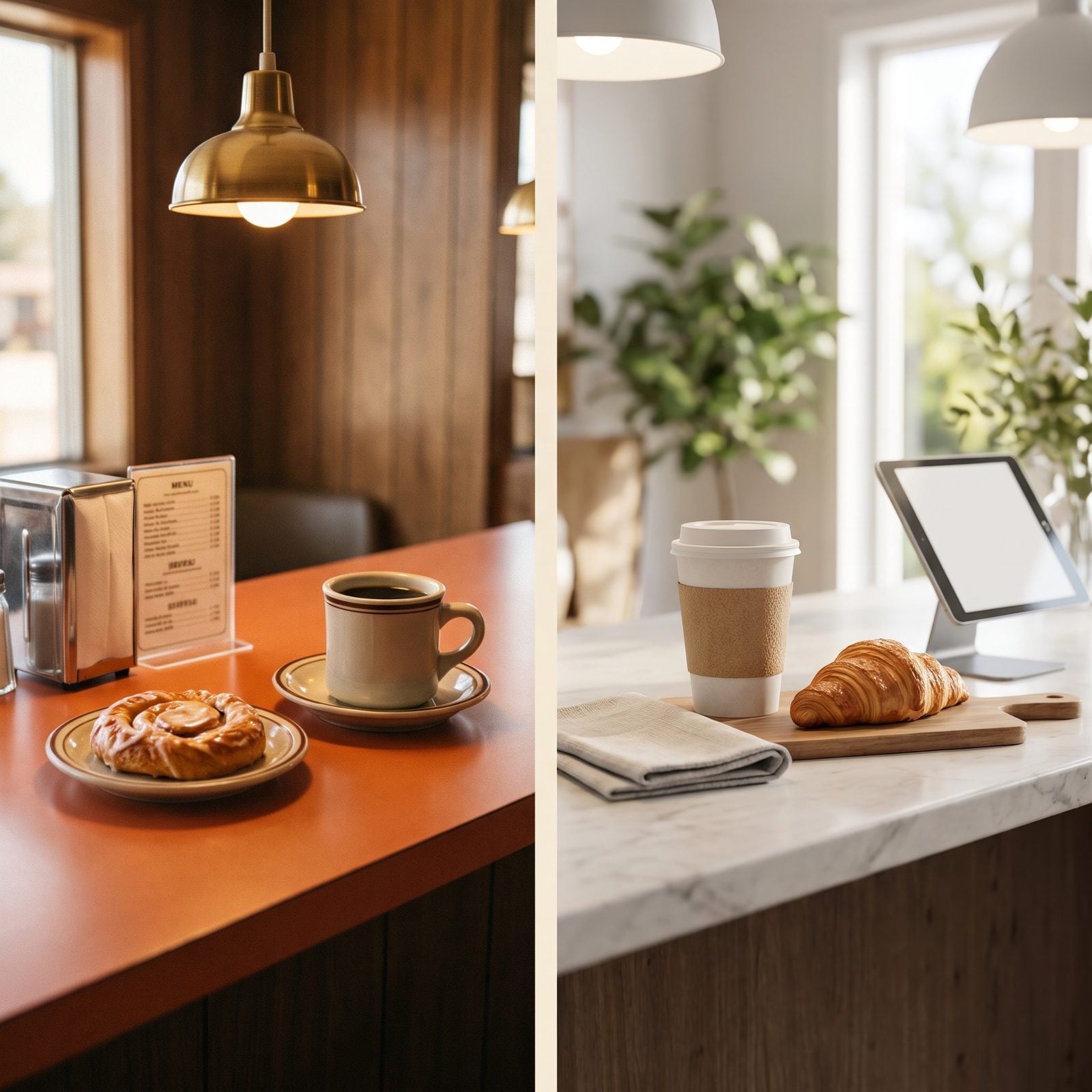
Coffee and a pastry at a Disney resort coffee shop in 1975 came to something like a dollar and a quarter, and the coffee got refilled without you asking.
A buck twenty-five was pocket change, the kind of thing a dad paid without reading the check. Heavy ceramic mug, warm Danish, and a counter stool instead of balancing a cup while you walked. The same morning stop now — a to-go coffee and a croissant inside the Disney bubble — slides past eight or nine dollars without trying. The refill costs extra. The saucer is gone.
26. Lunch at the Crystal Palace: Roughly $3.50 in 1975
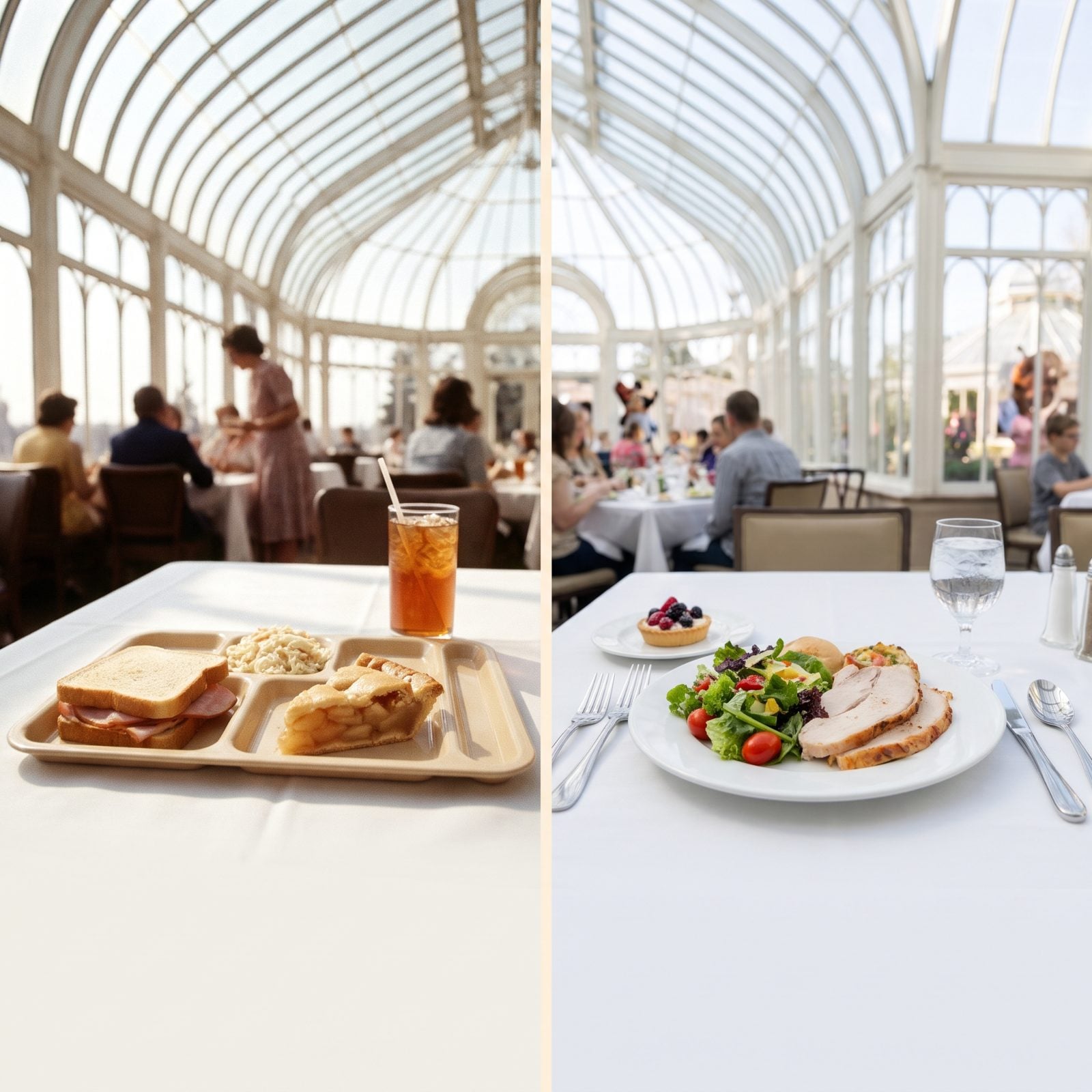
Lunch at the Crystal Palace in 1975 would run you about three and a half dollars, served cafeteria-style under that soaring Victorian glass roof.
You slid a tray along a rail, pointed at whatever looked good, and carried it to a white-clothed table while the Florida sun poured through the panes. Three-fifty for a full midday meal in the prettiest building in the park was more than fair by the standards of the day. The Crystal Palace is now a reservation-only character buffet, and a single adult lunch can cross fifty or sixty dollars. The glass roof still glows. The tray rail went extinct years ago.
25. Dinner at King Stefan’s Banquet Hall: About $6 in 1975
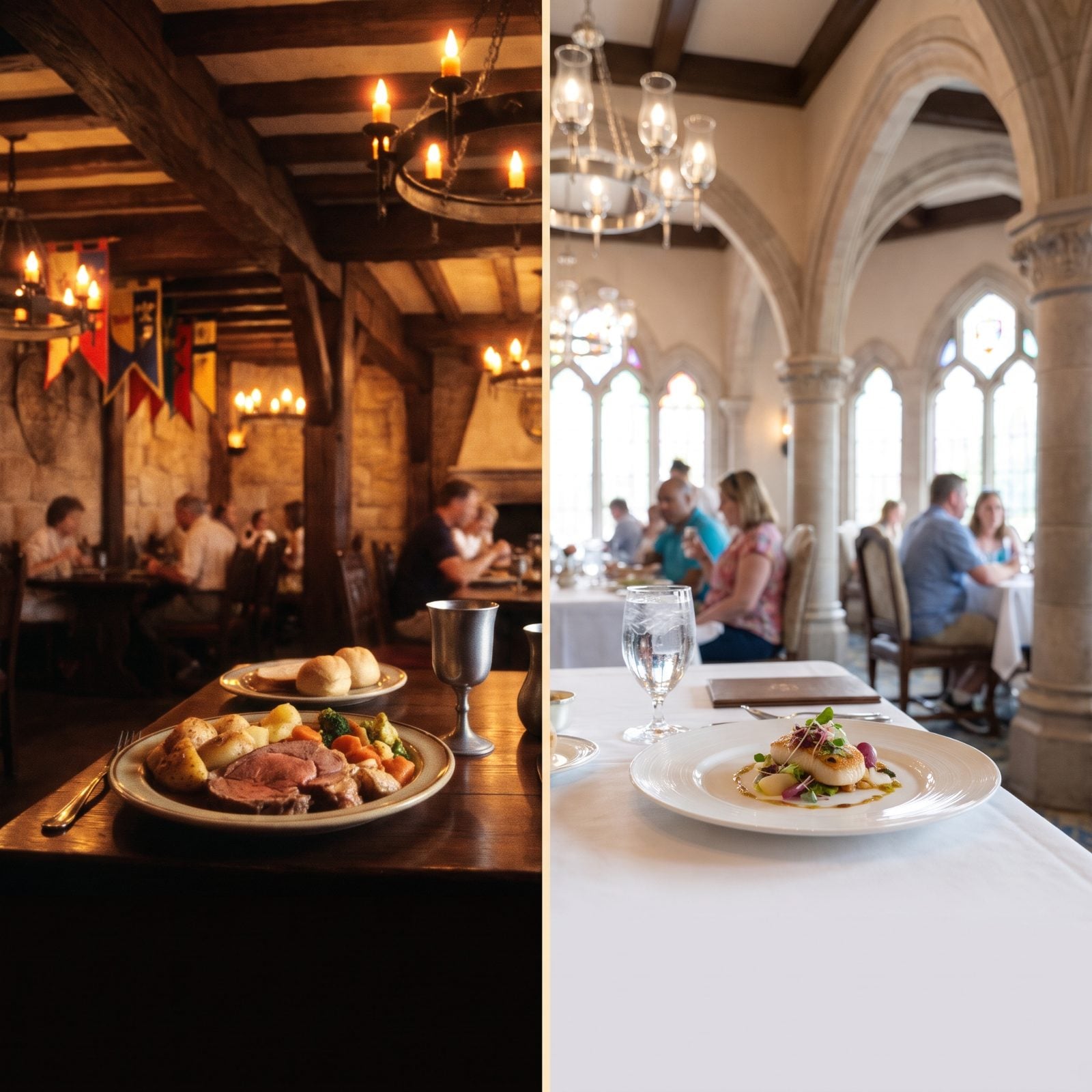
Dinner inside the castle at King Stefan’s Banquet Hall ran about six dollars a head in 1975, a splurge and a treat rolled into one.
You were eating inside Cinderella’s castle, under timber beams and iron chandeliers, and for six bucks that was the fanciest a family vacation got. The roast came plated, the goblets had heft, and the kids behaved because the room felt like a fairy tale. Its modern successor is Cinderella’s Royal Table — a prix-fixe character dinner you have to book months out, well over sixty dollars per adult. The room has changed — Gothic stone arches, stained-glass windows and a single water goblet where the timber beams, rough stone walls and pewter goblets used to be. So has the check.
24. Dinner at Liberty Tree Tavern: Around $5 a Plate in 1975
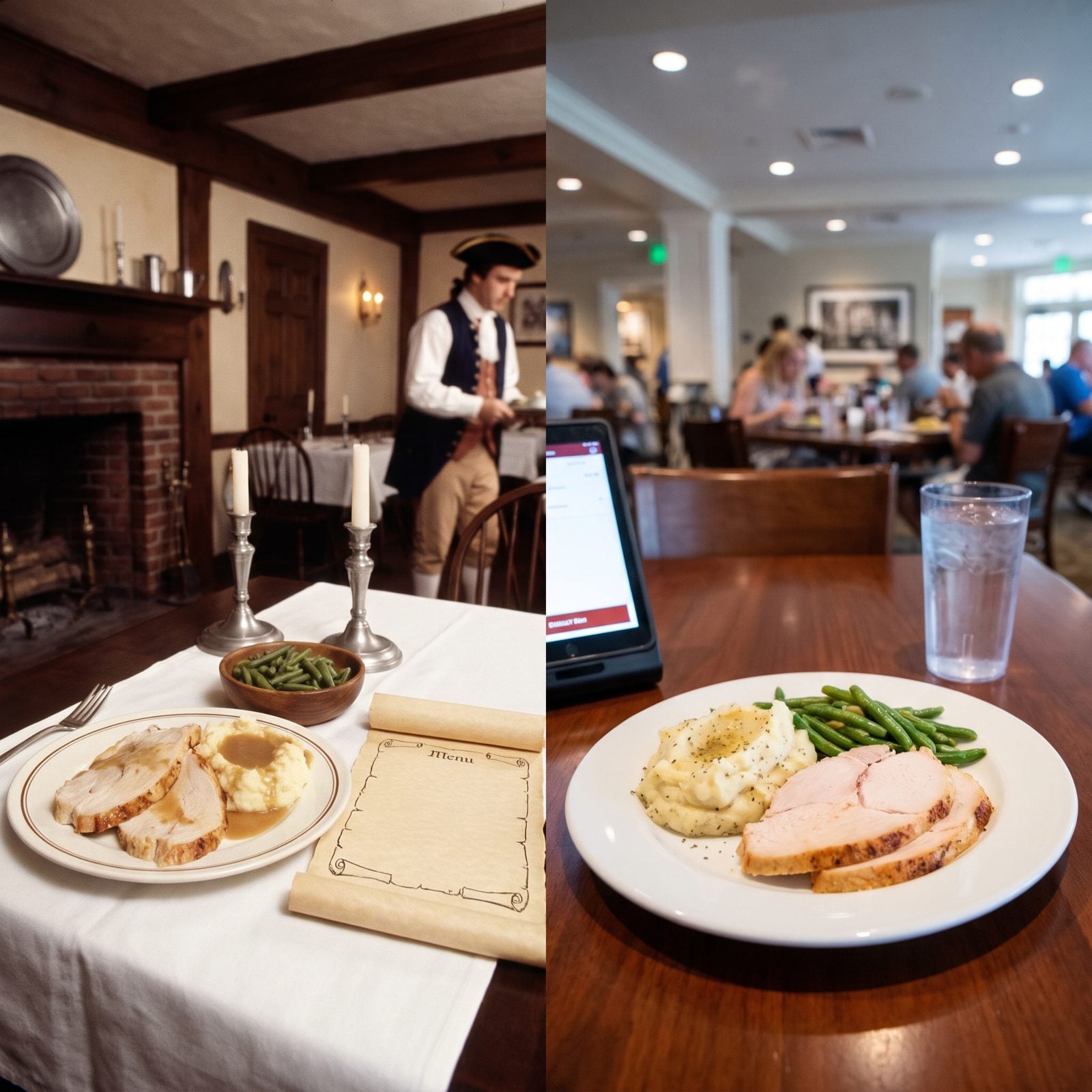
Dinner at Liberty Tree Tavern ran somewhere around five dollars a plate in 1975. You sat in a dining room dressed up like colonial Philadelphia, with pewter, plank floors, and fireplaces, and ate roast turkey, pot roast, or something else your great-grandparents would have recognized.
For a family of four, that was a twenty-dollar dinner. With a typical wage around four dollars an hour, it was a real night out but not a reckless one. Today dinner arrives as an all-you-care-to-enjoy family-style platter, and one adult price costs more than that whole 1975 table, often several times over once tax and tip land. The turkey is still there. The math around it is not.
23. The Pecos Bill Burger Basket: Roughly $1.50 in 1975
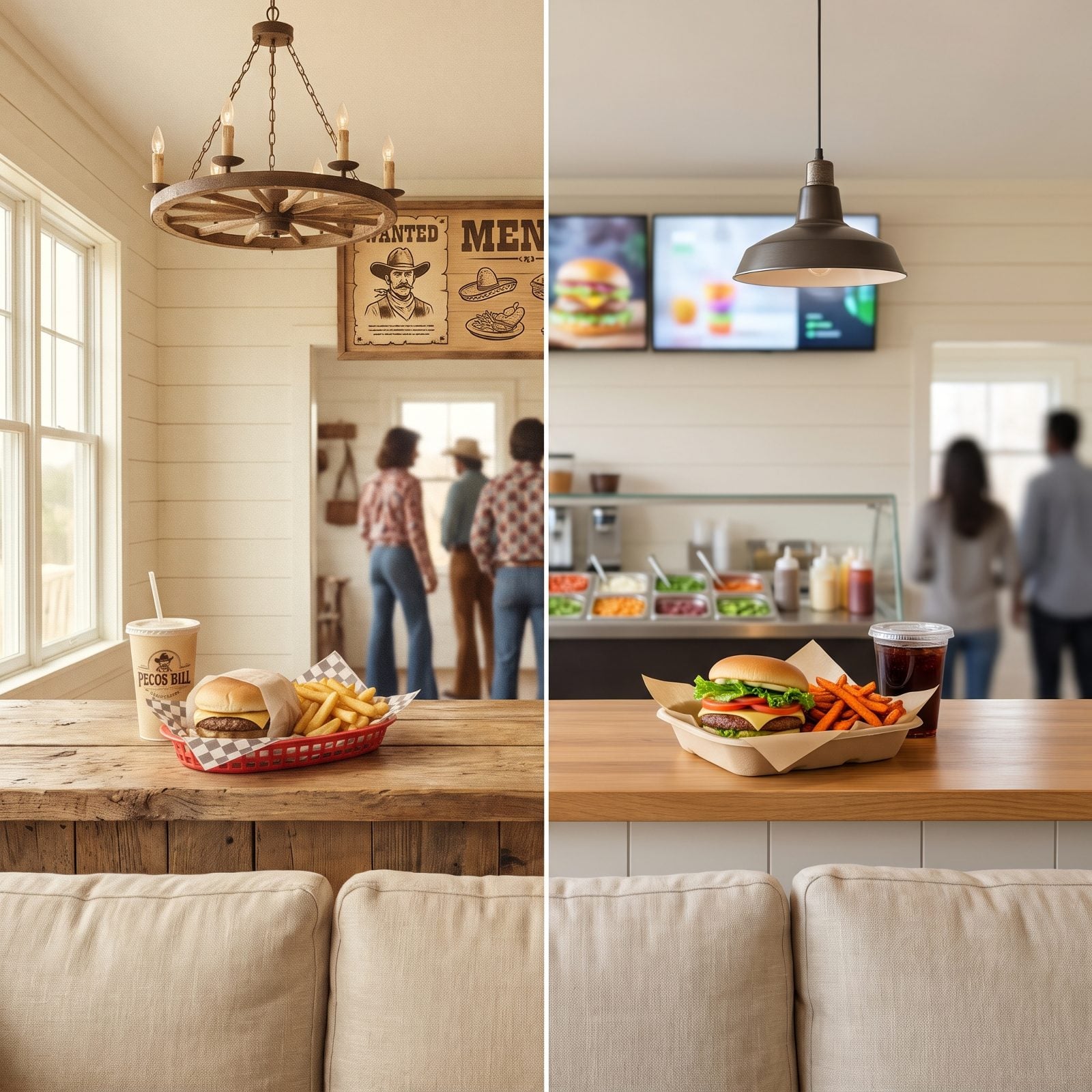
Over in Frontierland, the Pecos Bill Café would hand you a burger, fries, and a cold drink for about a buck fifty in 1975, going by the hand-lettered menu board. You loaded up at the fixings bar, found a seat under the cowboy decor, and had change left from a five for your kid’s lunch too.
That was fast food at fast-food prices, which sounds obvious until you see today’s menu. A burger meal at a modern counter-service shop now runs well into the teens, and nobody gets change back from a five for anything. The fixings bar survived. The buck-fifty basket did not.
22. Top of the World Dinner at the Contemporary: About $9 to $12 in 1975
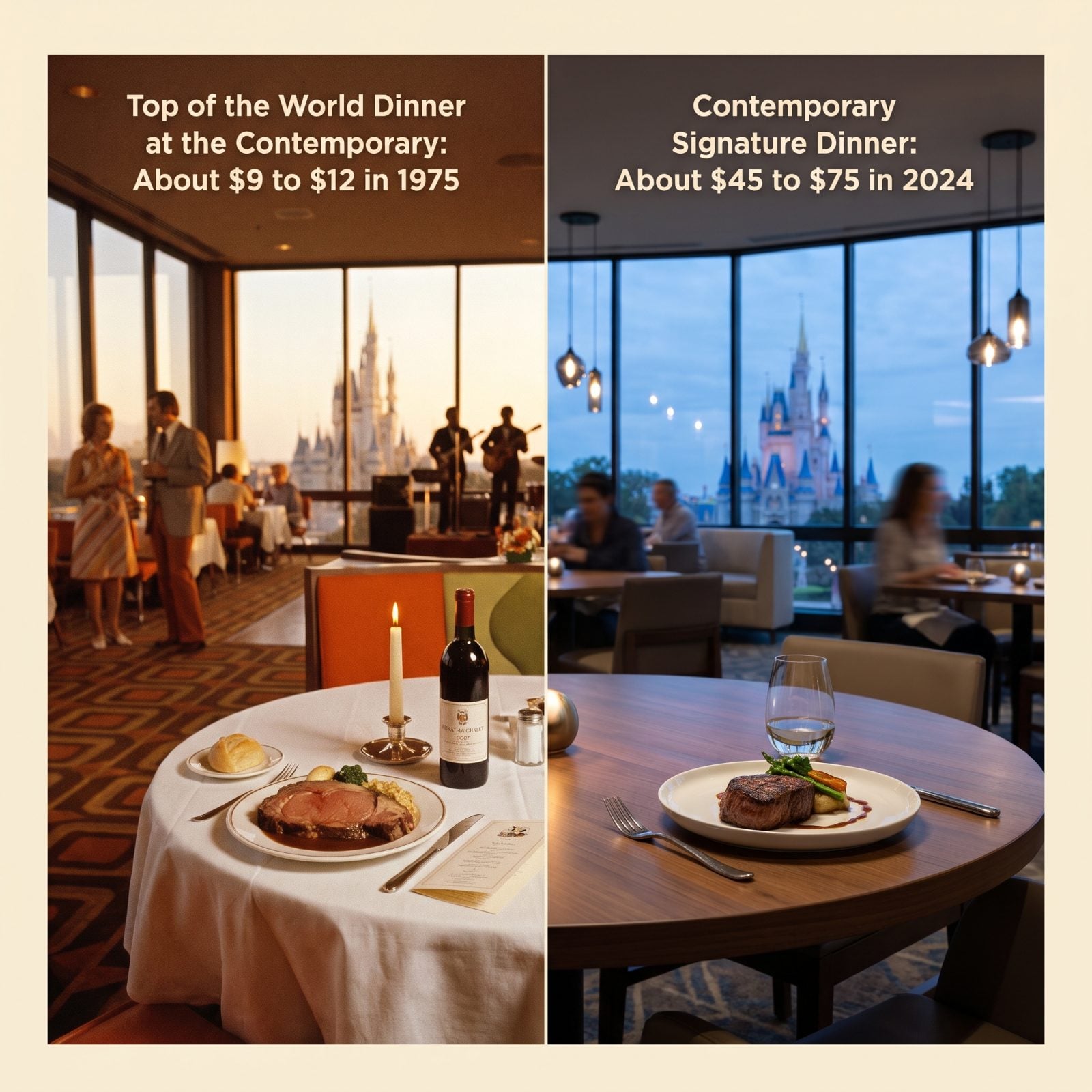
Top of the World sat on the Contemporary’s top floor, looking out over Bay Lake and the Magic Kingdom. Dinner up there in 1975 cost about nine to twelve dollars a person, and that included a show. It was the fanciest seat on property, the one you dressed up for.
Twelve dollars then was most of a day’s pay at minimum wage, so this was the anniversary dinner, not the Tuesday dinner. The room eventually became California Grill. Today a single entrée there can cost more than four times what a whole 1975 evening up top did, before you even look at the wine list. The view from the top floor is the one thing that hasn’t gotten more expensive.
21. The Polynesian Luau Dinner Show: Around $12 a Head in 1975
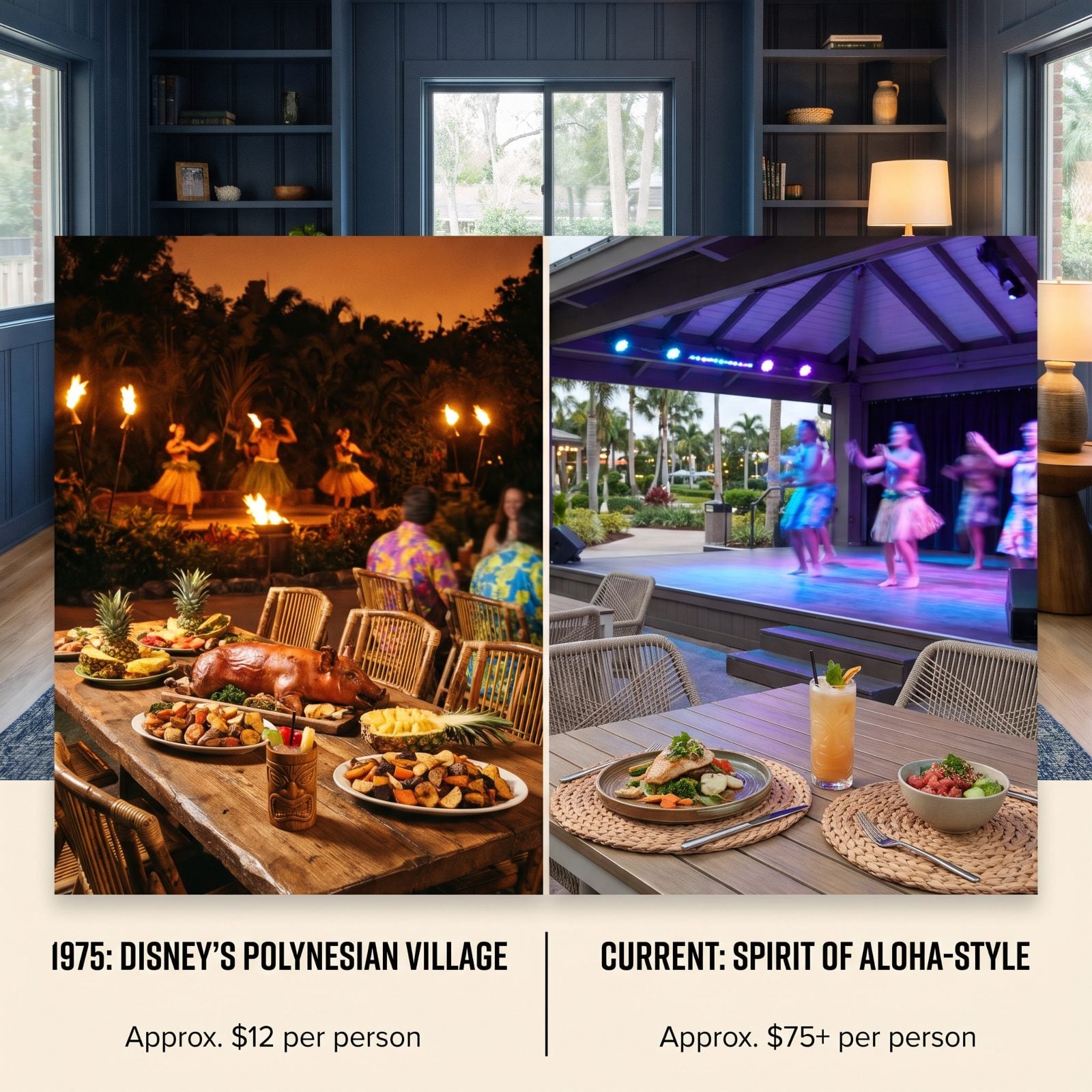
The Polynesian’s beachside dinner show cost around twelve dollars a head in 1975. You got a heaping spread of roast pork, pineapple, and island-inspired sides, plus fire-knife dancers and hula on an open-air stage, with the lagoon going dark behind them.
For a family of four, that came to nearly fifty dollars, real money when the minimum wage was $2.10 an hour. People saved for it. Today a single adult seat at a Disney dinner show can top what that entire 1975 family spent, and the kids’ tickets aren’t far behind. The fire-twirling was worth it then. It had better be worth it now.
20. Room-Service Breakfast at a Disney Resort: Roughly $3 to $4 in 1975
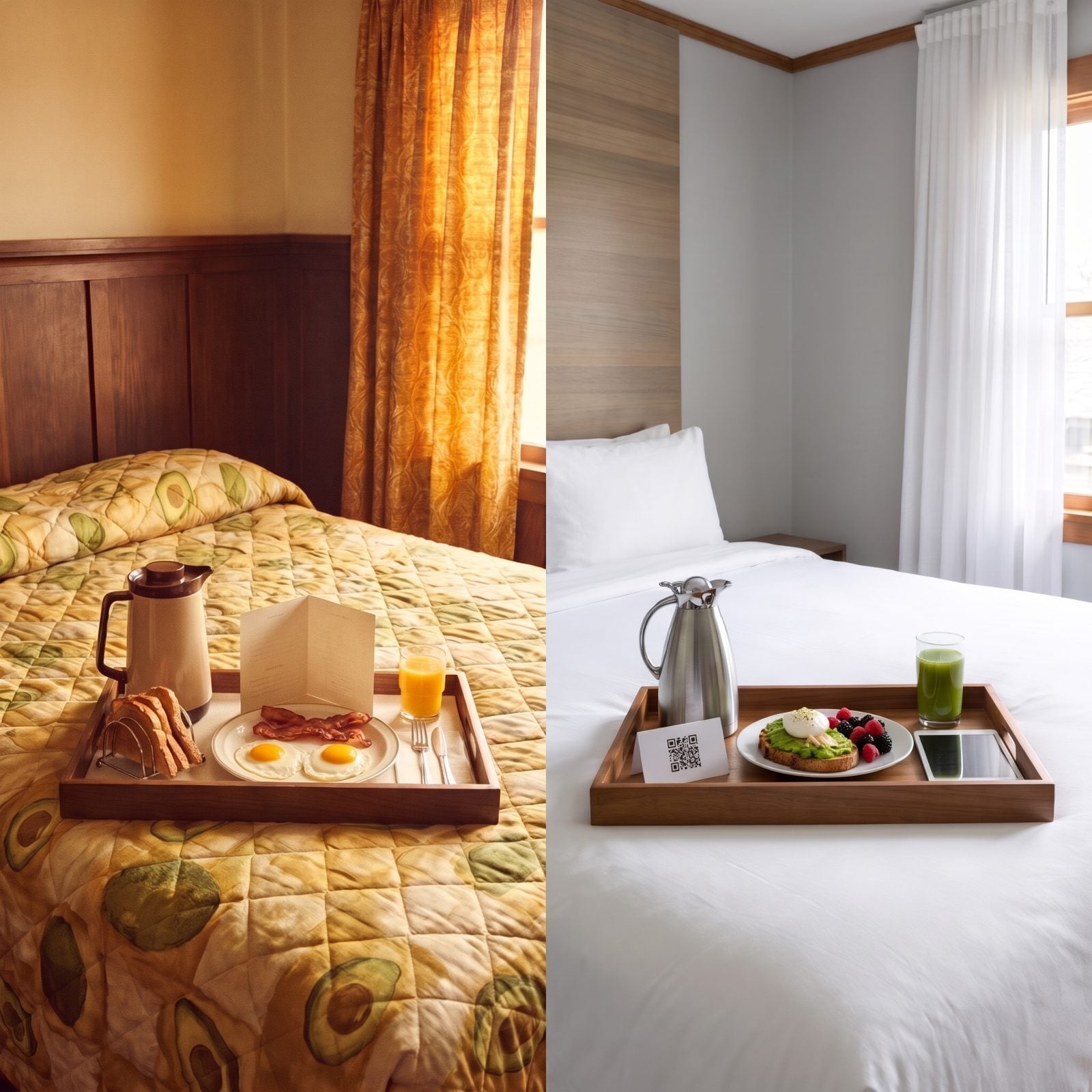
Ordering breakfast to your Disney resort room in 1975 cost roughly three to four dollars. Eggs, toast, coffee, and juice arrived on a tray set right on the bed, and you ate it in your bathrobe while the kids watched cartoons.
That felt like a luxury, and it was priced like one. Next to a $1.25 coffee-and-pastry breakfast downstairs, you were paying a premium to stay in your pajamas. These days, between menu prices, delivery charges, and gratuity, the same tray can easily push past thirty or forty dollars for two. Some things were always a splurge. This one just got a lot more splurgy.
19. A Box of Fresh Popcorn: About 35 Cents in 1975
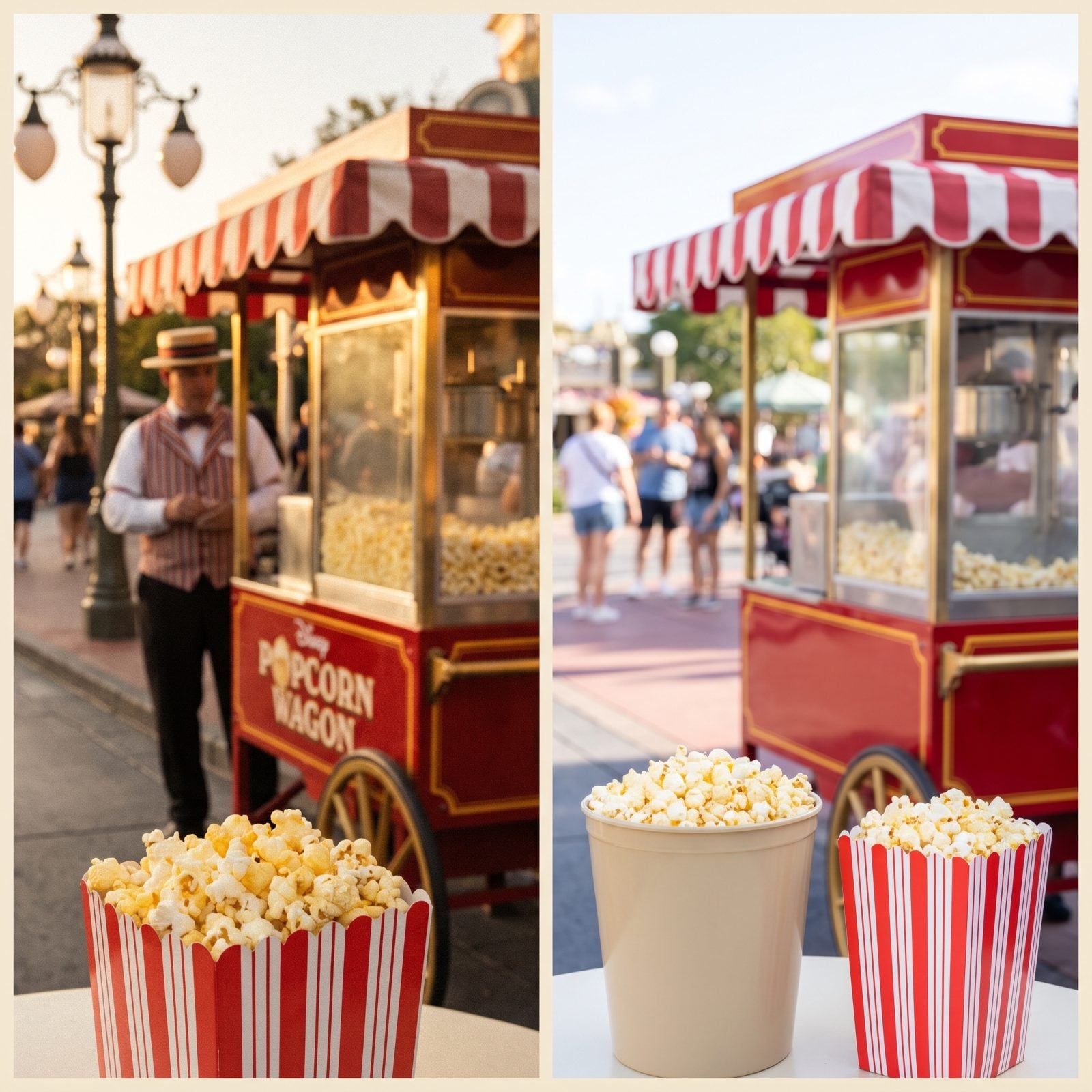
A box of fresh popcorn cost about 35 cents in 1975. The carts popped it right on Main Street, and the smell drifted across the whole hub, which was the point. Nobody walked past that smell with their wallet closed.
Thirty-five cents was a few minutes of work. Today a regular box runs several dollars, and the refillable souvenir buckets cost even more up front. Same kernels, same butter-flavored salt, same cart. The smell is still free, at least.
18. An Ice-Cream Cone in the Park: Around 30 Cents in 1975
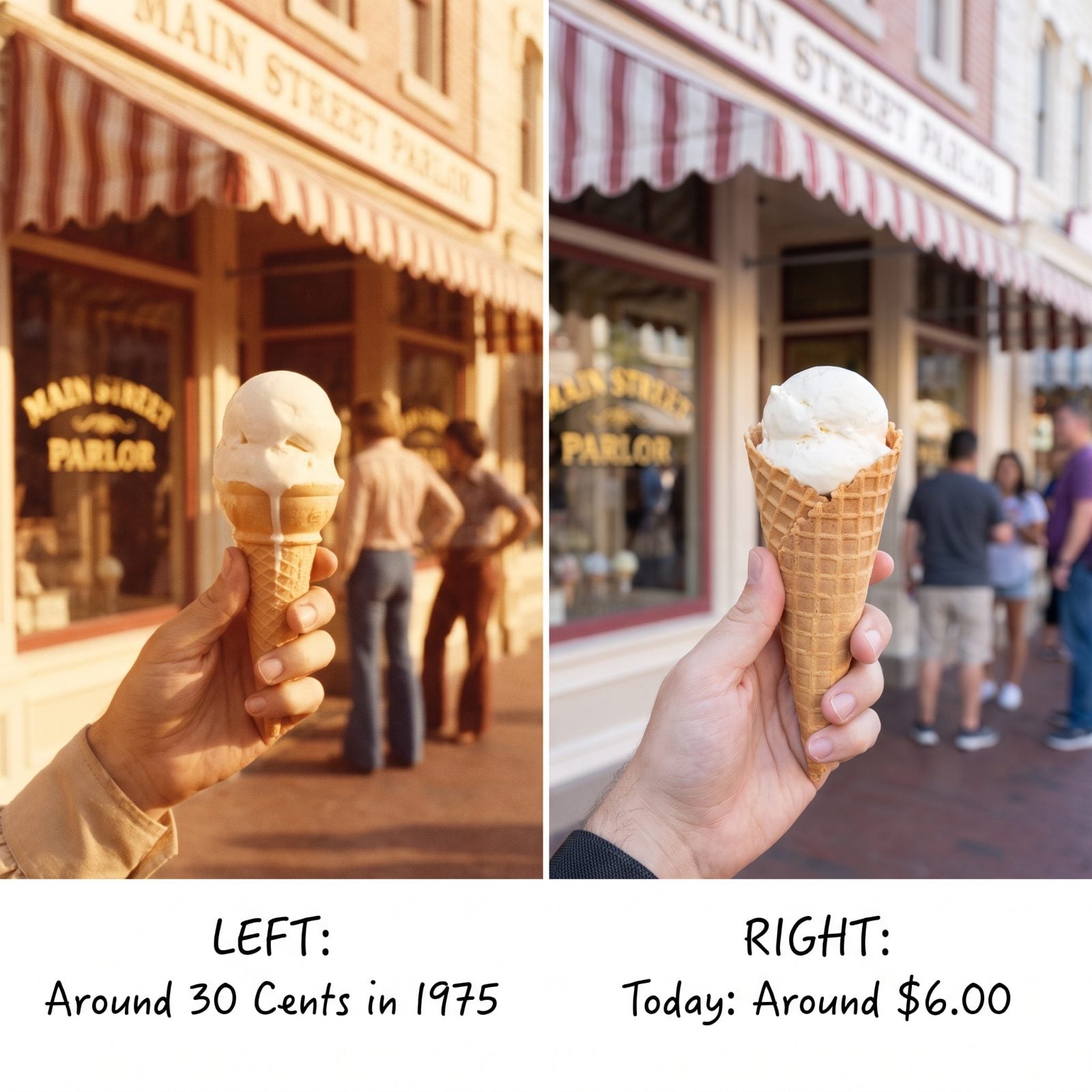
An ice-cream cone in the Magic Kingdom ran around 30 cents in 1975. You could hand each kid one on a hot Florida afternoon and spend barely more than a dollar for the whole crew.
That price made ice cream an impulse buy, not a decision. Now a single scoop or a frozen novelty runs several dollars, and four of them is a real line item on the day’s budget. The ice cream melts just as fast down your wrist as it did then. It just costs about twenty times more to make that mess.
17. A Fountain Soft Drink: Roughly 25 Cents in 1975
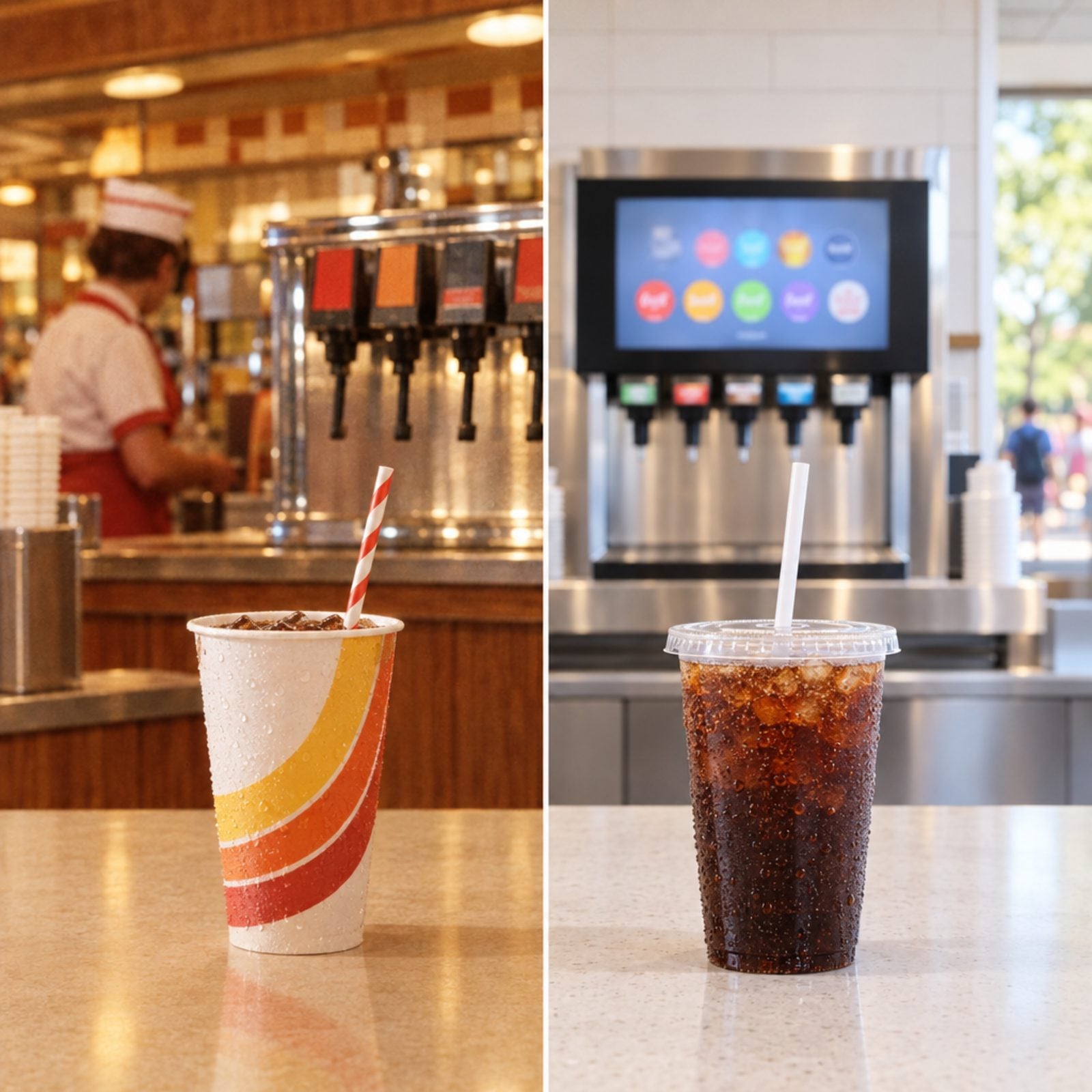
A fountain soft drink in the park cost roughly a quarter in 1975. A paper cup, a striped straw, and an ice-cold cola over ice for the price of a single coin. That was the whole transaction.
Today a fountain drink inside the parks runs several dollars, and the refillable mugs are sold as a deal because the single-cup price makes them look like one. A family of four now spends more on one round of sodas than that 1975 family spent on parking, a stroller, and drinks combined.
16. Personalized Mouse Ears: About $2.50 in 1975
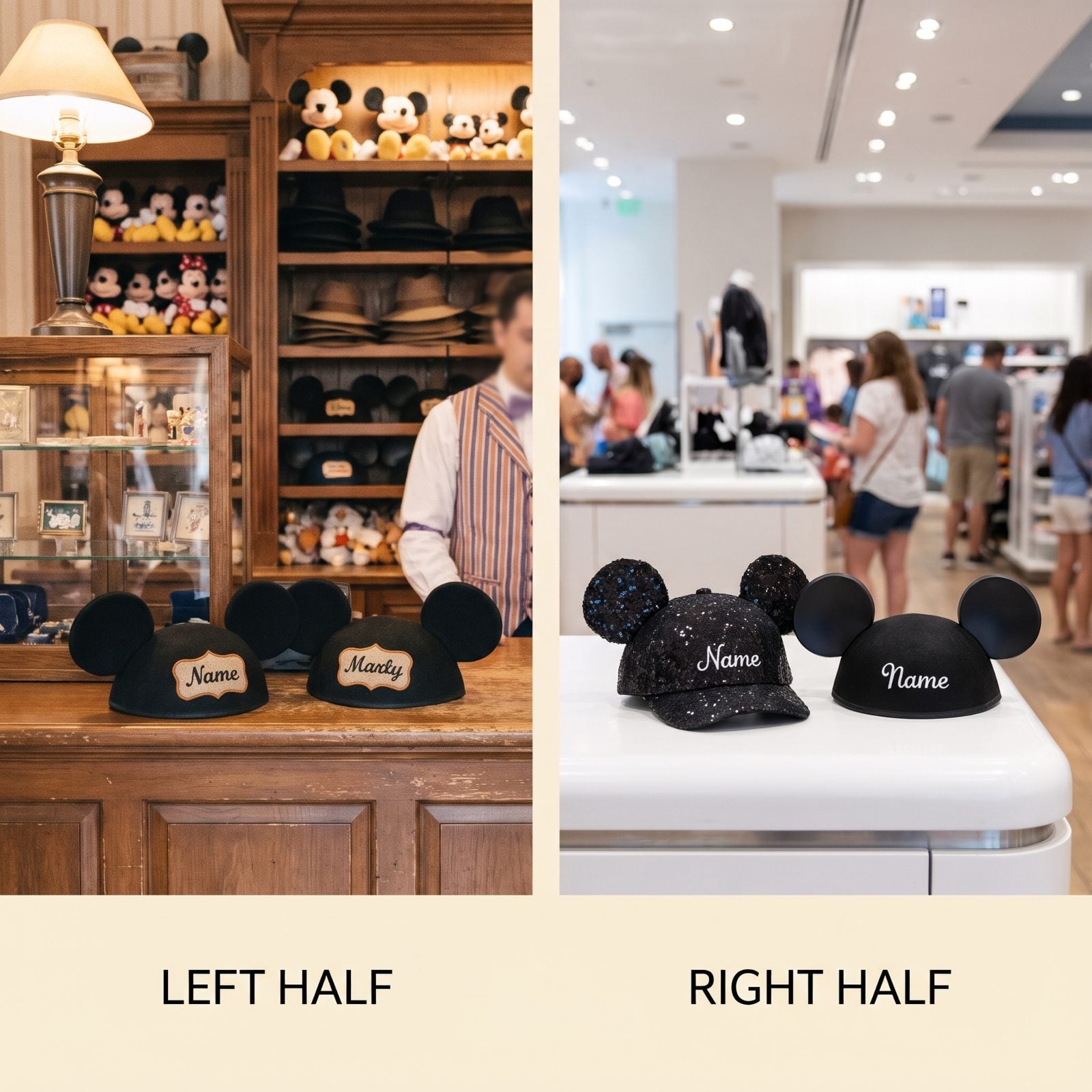
A pair of mouse ears with your name stitched across the back cost about two and a half dollars in 1975. You picked the hat, told the clerk the spelling, and watched while it was embroidered in a curly script.
That was a couple of dollars for a souvenir a kid would wear until it fell apart. Today a basic ear hat costs many times that, and the personalized versions run higher still. The embroidery is still done right there in the shop, and the line to get it still snakes out the door.
15. A Disney Autograph Book: Roughly $1.25 in 1975
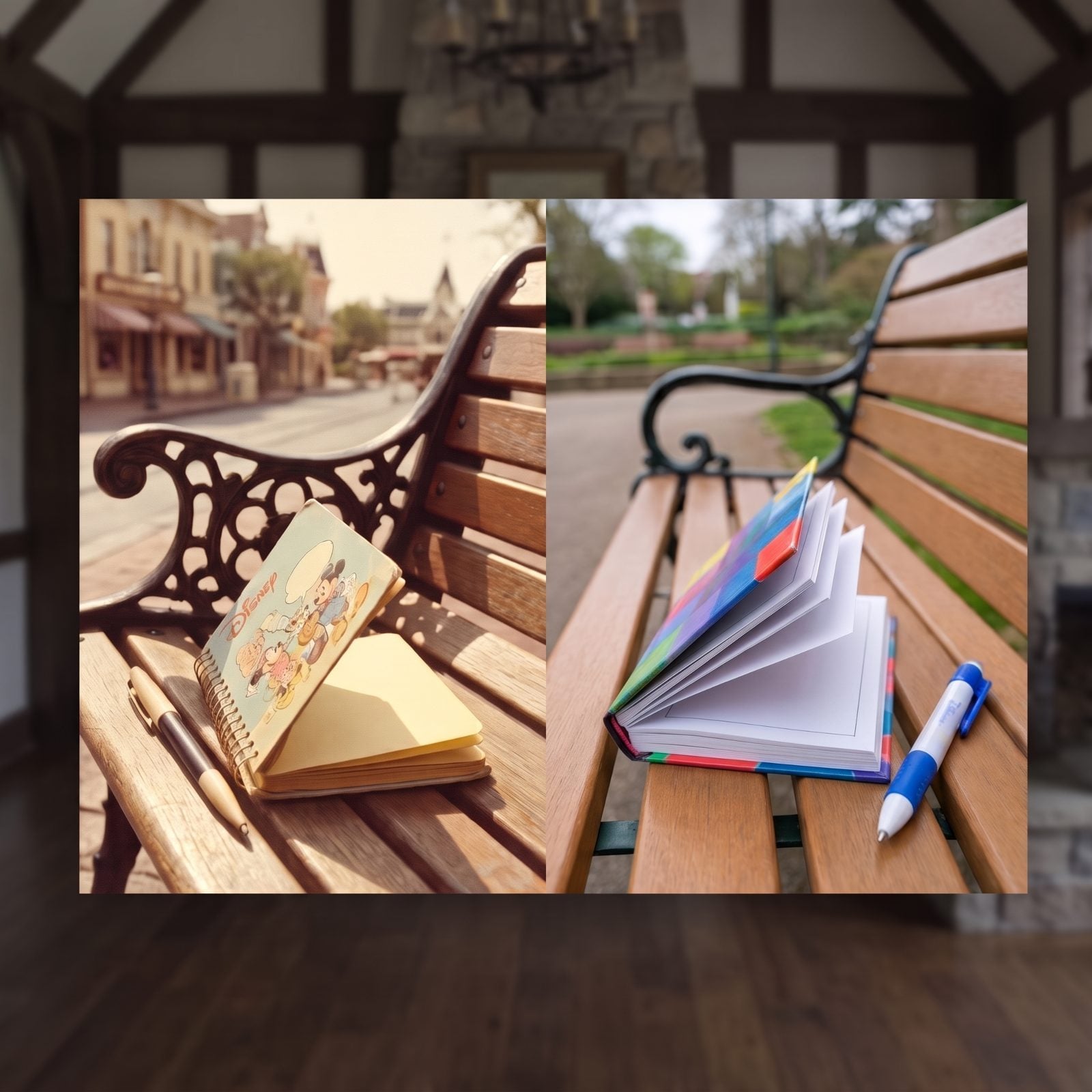
A Disney autograph book cost roughly a dollar and a quarter in 1975. A small spiral-bound book, a pen, and a plan: get Mickey, Goofy, and as many princesses as the day allowed.
A buck and change was nothing for a souvenir that turned into a full day’s mission. Today the official books cost many times that, plus you’ll want the fat pen the character gloves can actually hold. Those old books still turn up in attics, signatures faded but legible. Turns out the cheapest thing you bought that week was the one you kept the longest.
14. A Pack of Walt Disney World Postcards: About 50 Cents in 1975
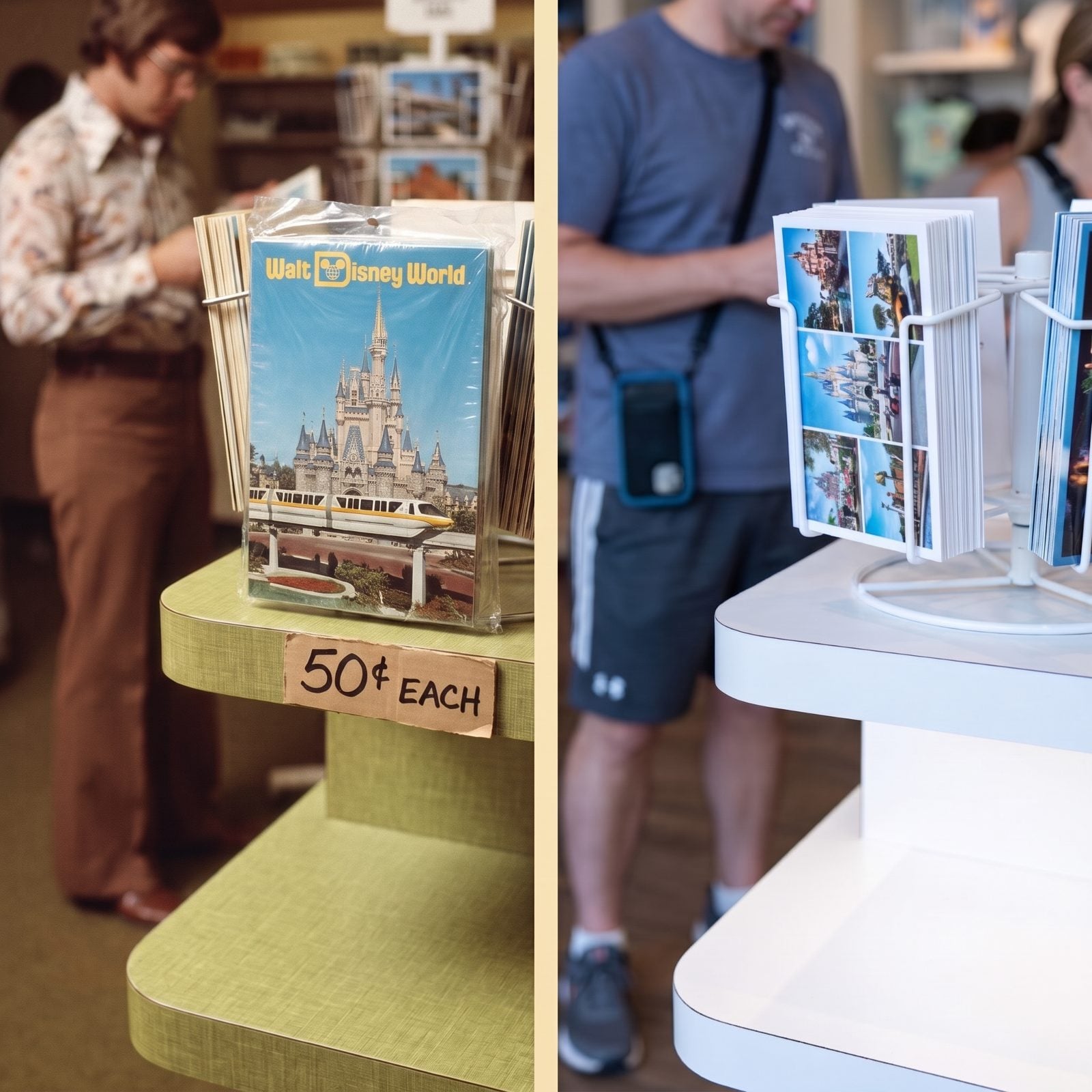
Walt Disney World postcards ran about 50 cents a pack in 1975, according to the handwritten sign on the shelf. Wages averaged a few dollars an hour back then, so a pack cost you only a few minutes at work.
The math was simple. You bought the castle, the monorail, the Tiki Room, and mailed them home to people who had never seen color like that. Postcards were the Instagram of the station-wagon era, except they showed up four days late and smelled faintly of a mailbox.
A single Disney postcard runs a couple of dollars now, and a pack costs more than that whole 1975 shop run. But nobody mails them. We buy them, haul them home, and stumble on them in a drawer years later.
13. A Plush Mickey Mouse: Around $4 to $6 in 1975
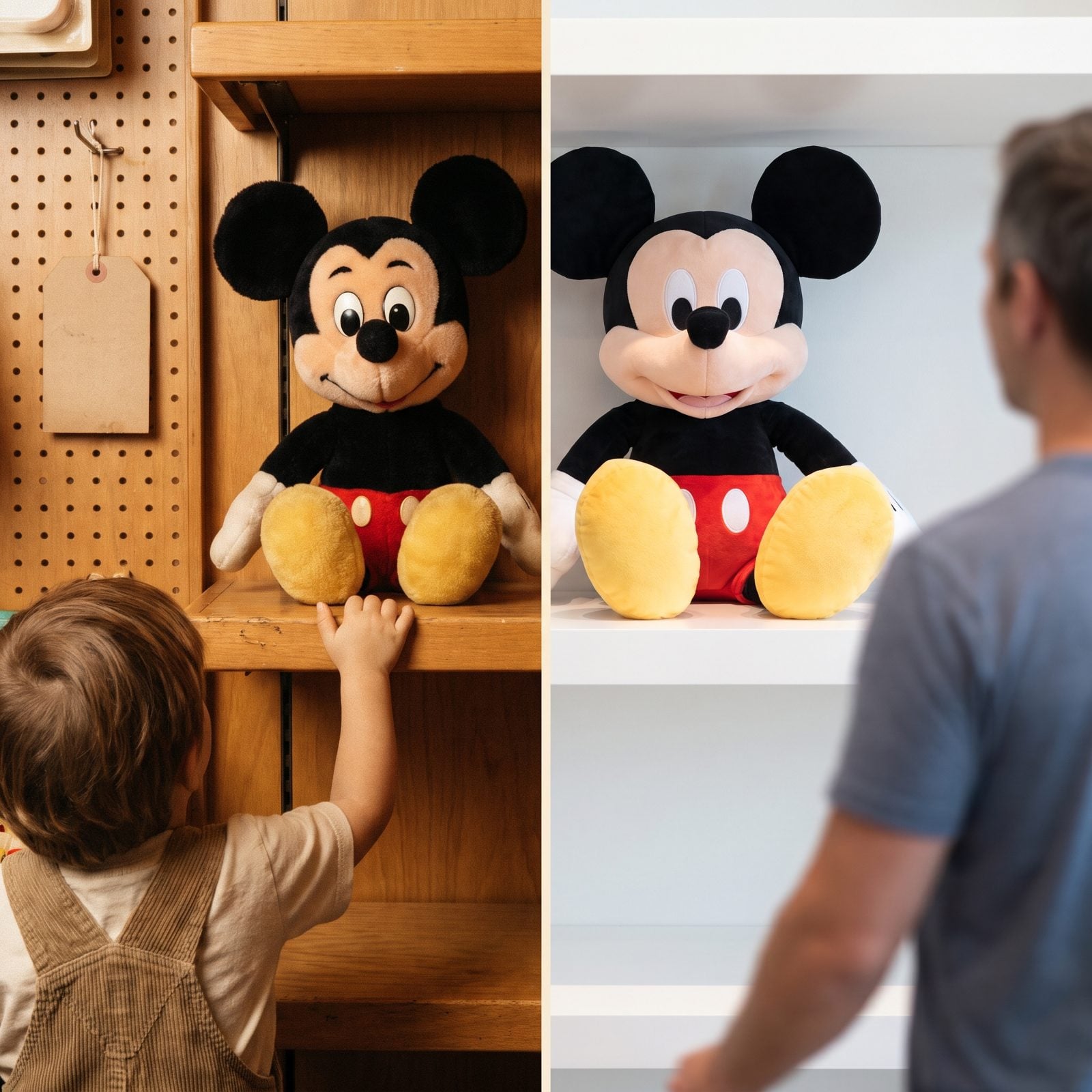
A plush Mickey Mouse cost somewhere around $4 to $6 in 1975, depending on size. For a family stretching a one-week budget, that was a real decision, not some impulse grab at the register.
The 1975 Mickey was a different animal. Short felt arms, eyes that felt like bottle caps, stuffing packed firm enough to prop a door. Cuddly it was not. This thing was built to survive a cross-country drive wedged against the back window, and survive it did.
The modern version is huge, embroidered, marshmallow-soft, and it costs many times what the old one did even after you adjust for inflation. More mouse per square inch, sure. Whether it holds up to forty years in an attic is another question entirely.
12. An Official Park Souvenir Photograph: Around $3 to $5 in 1975
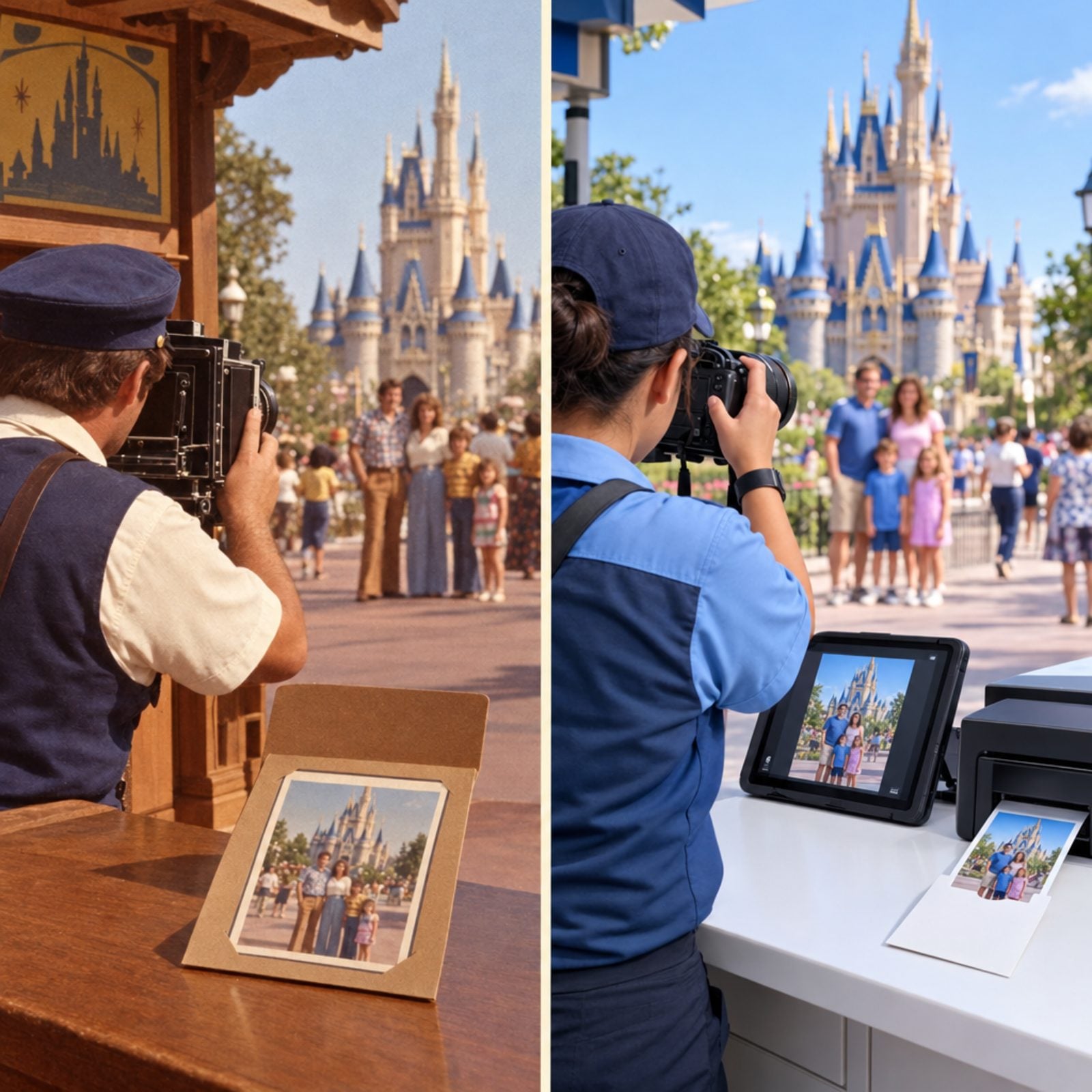
An official souvenir photograph, posed in front of the castle and handed to you in a cardboard folder, ran about $3 to $5 in 1975. A photographer snapped it, you came back later, and there you were in all your polyester glory.
This was the splurge version of the vacation photo. You already had your own camera, so why pay? Because this one came back sharp and framed, and you didn’t have to wait two weeks and pray the exposure came out.
Now it’s PhotoPass: digital, unlimited shots, castle photos you can pull up on your phone from your own living room, and a price that makes the old cardboard folder look like pocket change. The print quality is unrecognizable. The impulse behind it, proof you were really there, is identical.
11. A Roll of Color Camera Film: About $2 to $3 in 1975
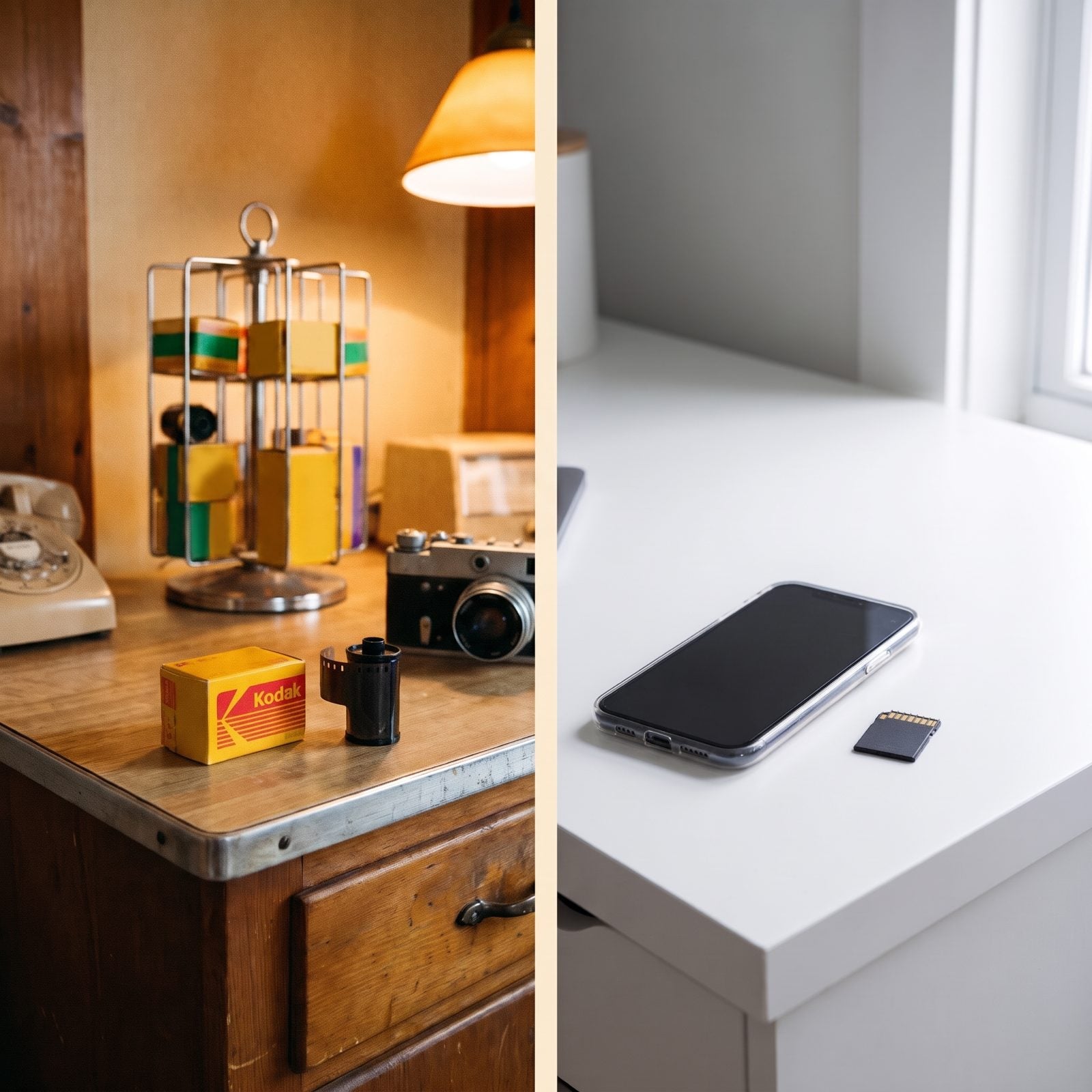
A roll of color film held 24 or 36 exposures and cost roughly $2 to $3 in 1975. Which meant every single shot had a price on it, and you felt that price in your thumb before you pressed the shutter.
Nobody took a hundred pictures of the castle. You took one, maybe two if you were feeling reckless, because film was finite and every frame was money. That scarcity made people compose. You lined everyone up, waited for the kid to stop squinting, and got it in one.
Now the roll of film is a free app on a phone you already own, and you can fire off three hundred shots of a churro without a second’s thought. More pictures, less looking. Draw your own conclusions on which era paid attention better.
10. Developing and Printing Vacation Photos: Around $4 to $6 a Roll in 1975
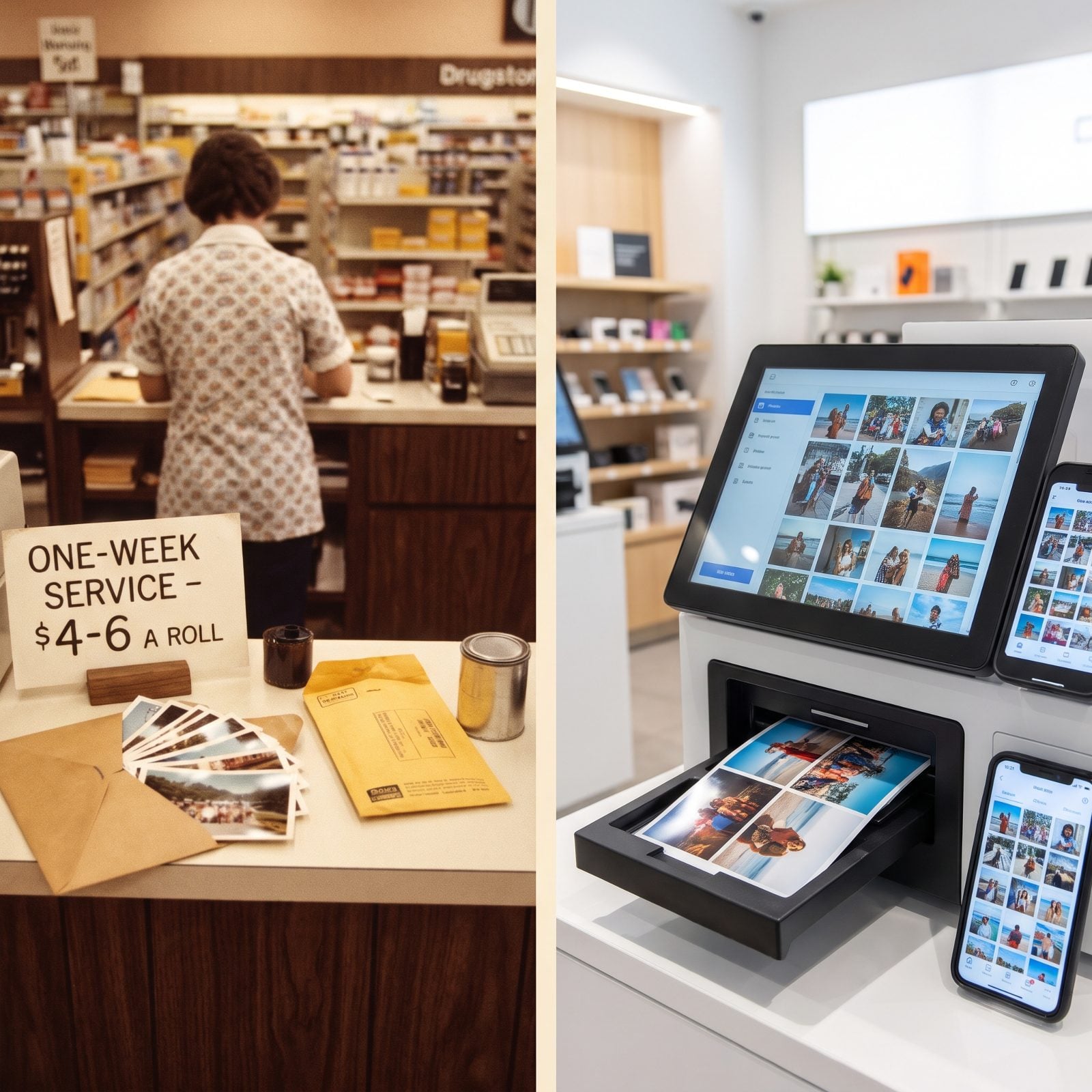
Getting that film developed and printed cost about $4 to $6 a roll in 1975, and it took a week or more. You dropped the canister at the drugstore, drove home, and then you waited.
The wait was the whole experience. You’d forget half of what you shot, then the envelope came back and you flipped through it right there at the counter, sometimes delighted, sometimes staring at a flawless photo of your own thumb. A third of every roll came back blurry, over-exposed, or showing a stretch of carpet nobody remembered aiming at.
There’s no clean modern equivalent, which is exactly the point. Photos are free now. You can print them for pennies or never print them at all. We gained infinite pictures and lost the envelope, the drive, and the surprise of seeing your own week for the first time.
9. A Walt Disney World Souvenir Guidebook: About $1 to $2 in 1975
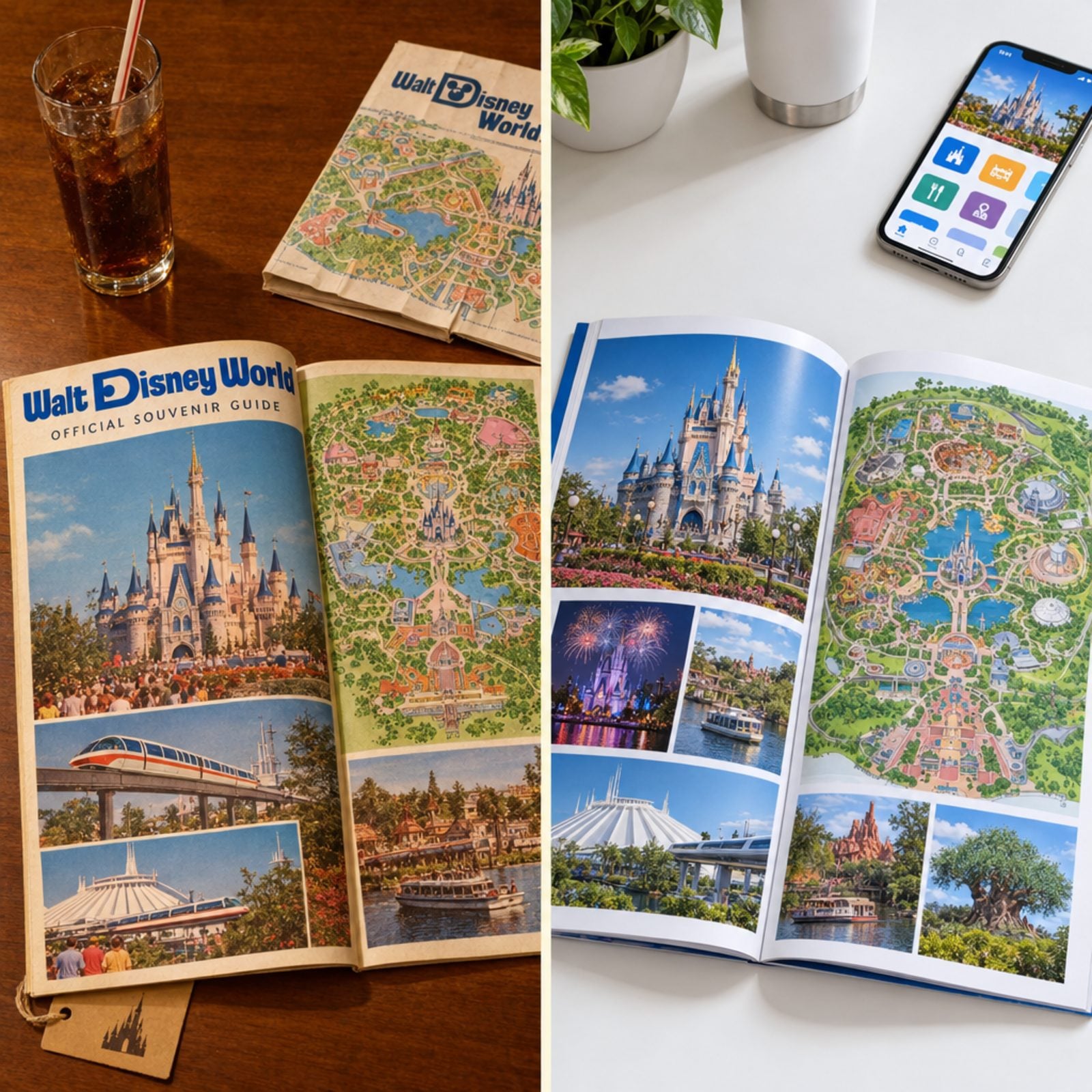
The glossy souvenir guidebook, the thick keepsake one with the full-page color photos, cost around $1 to $2 in 1975. Not the free park map. This was the book you brought home and actually kept.
It sat on the coffee table for a decade. People flipped through it at Thanksgiving. Part photo album, part brag, part proof that yes, the family really did pile into the car and drive all the way to Florida that summer.
Today’s version is a handsomely printed glossy softcover that costs real money, and most people buy it rather than take their own notes, because the official photos beat anything a phone grabs mid-crowd. The price climbed. The keepsake instinct behind it hasn’t budged since the first one came off the press.
8. A Round of Golf at the Resort: Roughly $8 to $12 in 1975

A round of golf at the resort course ran somewhere around $8 to $12 in 1975. Disney built championship-caliber courses early, and for a dad who wanted one afternoon that wasn’t a teacup ride, this was the escape.
Picture it. The family’s off doing Fantasyland. He’s out on the fairway in plaid slacks you could spot from space, carrying a leather bag and a thermos, having the best two hours of the week and telling absolutely nobody about it.
Greens fees at a Disney resort course today are a different conversation entirely, often well into the triple digits with a cart. Golf got expensive everywhere, not just here. The quiet eighteen holes away from the crowds, though, that’s still the exact same purchase it always was.
7. A Fort Wilderness Horseback Trail Ride: About $4 to $6 in 1975
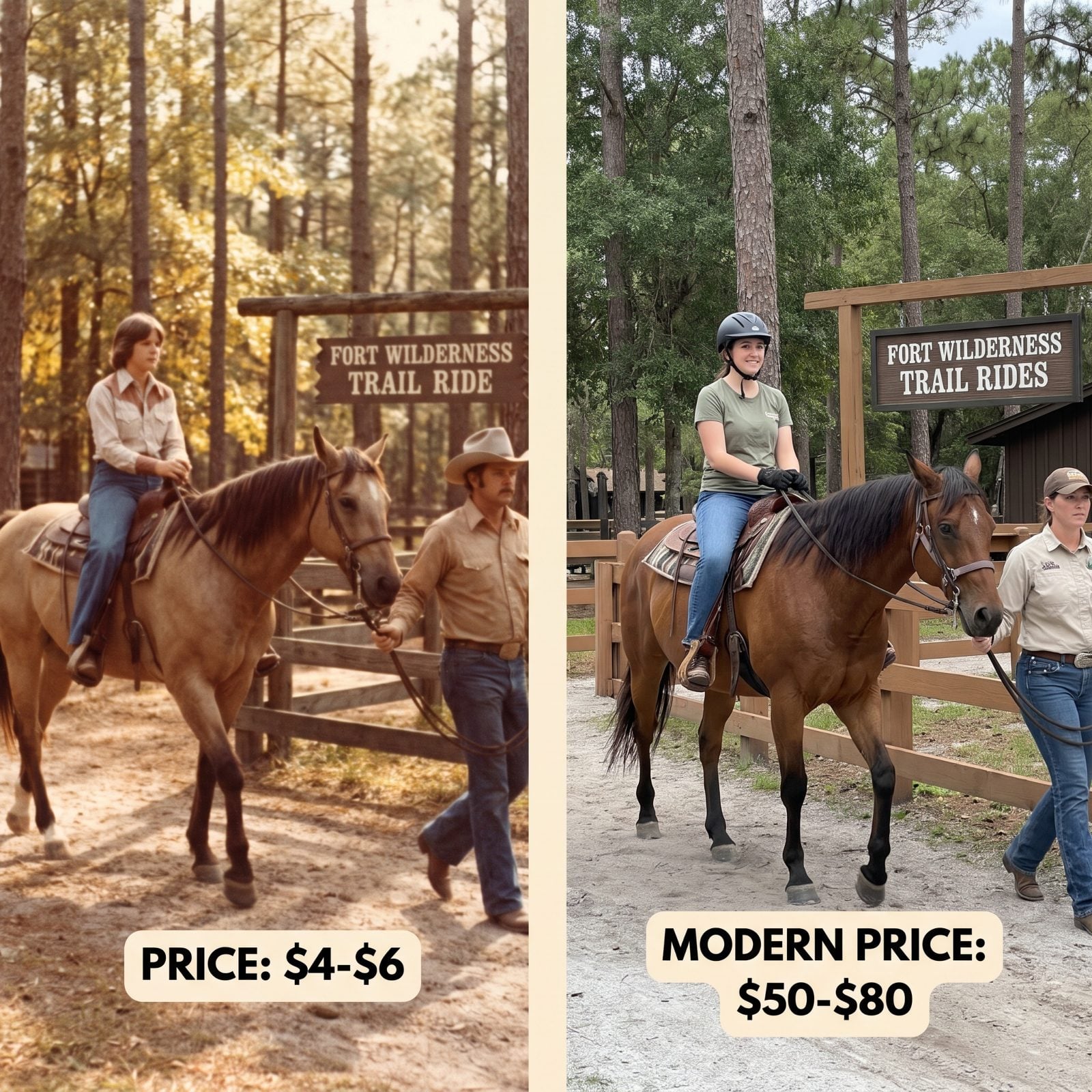
A guided horseback trail ride at Fort Wilderness cost roughly $4 to $6 in 1975, a slow amble through the Florida pines that felt a thousand miles from the monorail even though it wasn’t.
This part of the week didn’t feel like Disney at all, which was exactly why people loved it. No lines, no crowds, no spinning anything. Just a patient horse, a dirt trail, and the smell of pine and saddle leather.
The modern trail ride costs many times that now, helmet required, booked in advance, still beautiful, still quiet. It’s the one activity here where the appeal was never about the magic. It was about escaping it for forty-five minutes, and that has never gone out of style.
6. A Small-Boat Rental on Seven Seas Lagoon: Around $4 an Hour in 1975
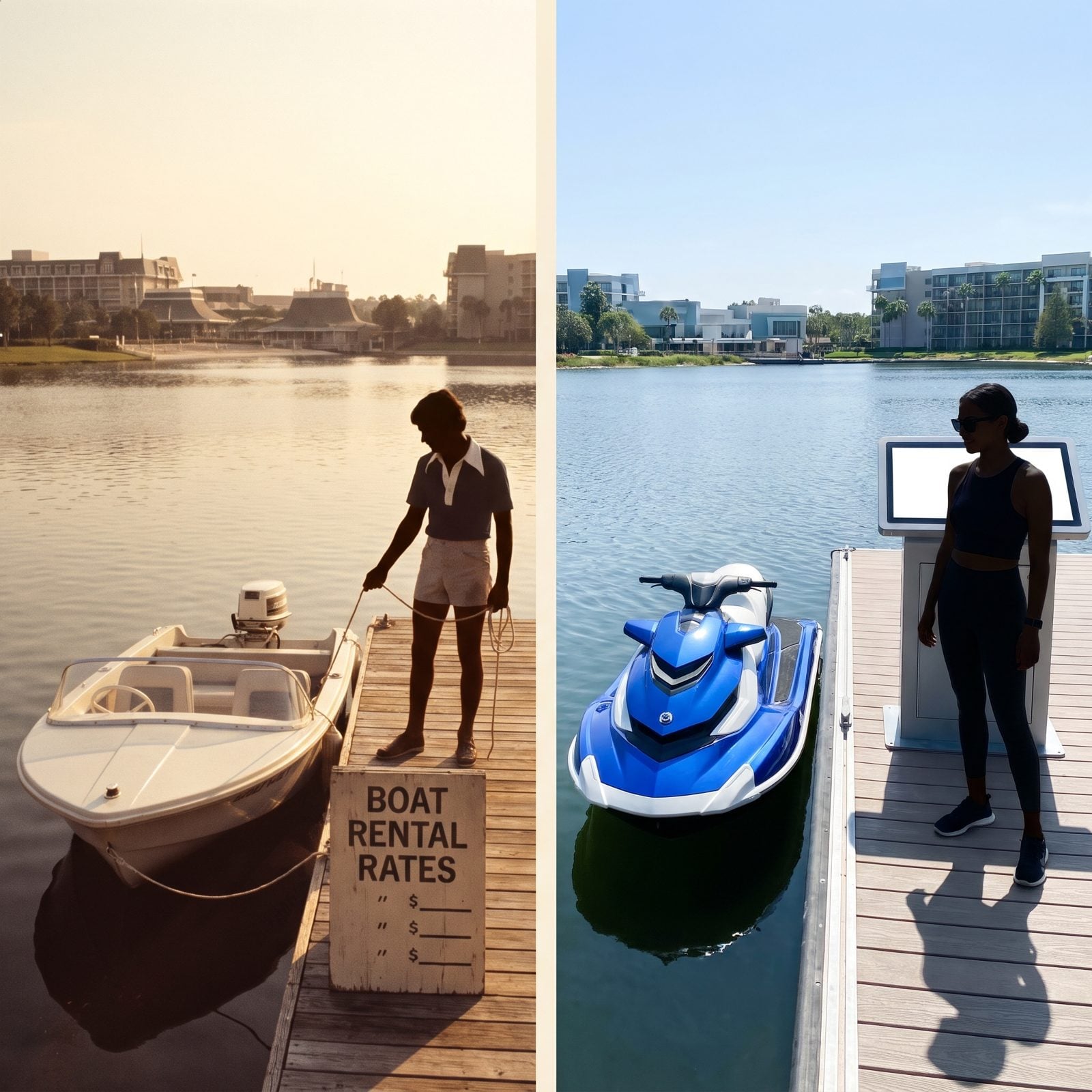
For around four dollars an hour in 1975, you could rent a little boat at a resort marina and putter across Seven Seas Lagoon with the castle on one side and the Polynesian’s torches on the other. No reservation app, no safety video on a loop. You signed a slip, grabbed a life vest, and pushed off.
With wages at a few dollars an hour, that hour on the water cost about one hour of work. Families did it on a whim between the park and dinner. Today’s marina rentals still exist, but they’re priced by the half hour and can run well beyond what that 1975 family spent on boats, gas, and ice cream for the week. The view hasn’t changed much. The meter has.
5. A Water-Skiing Session at the Resort: Roughly $10 in 1975
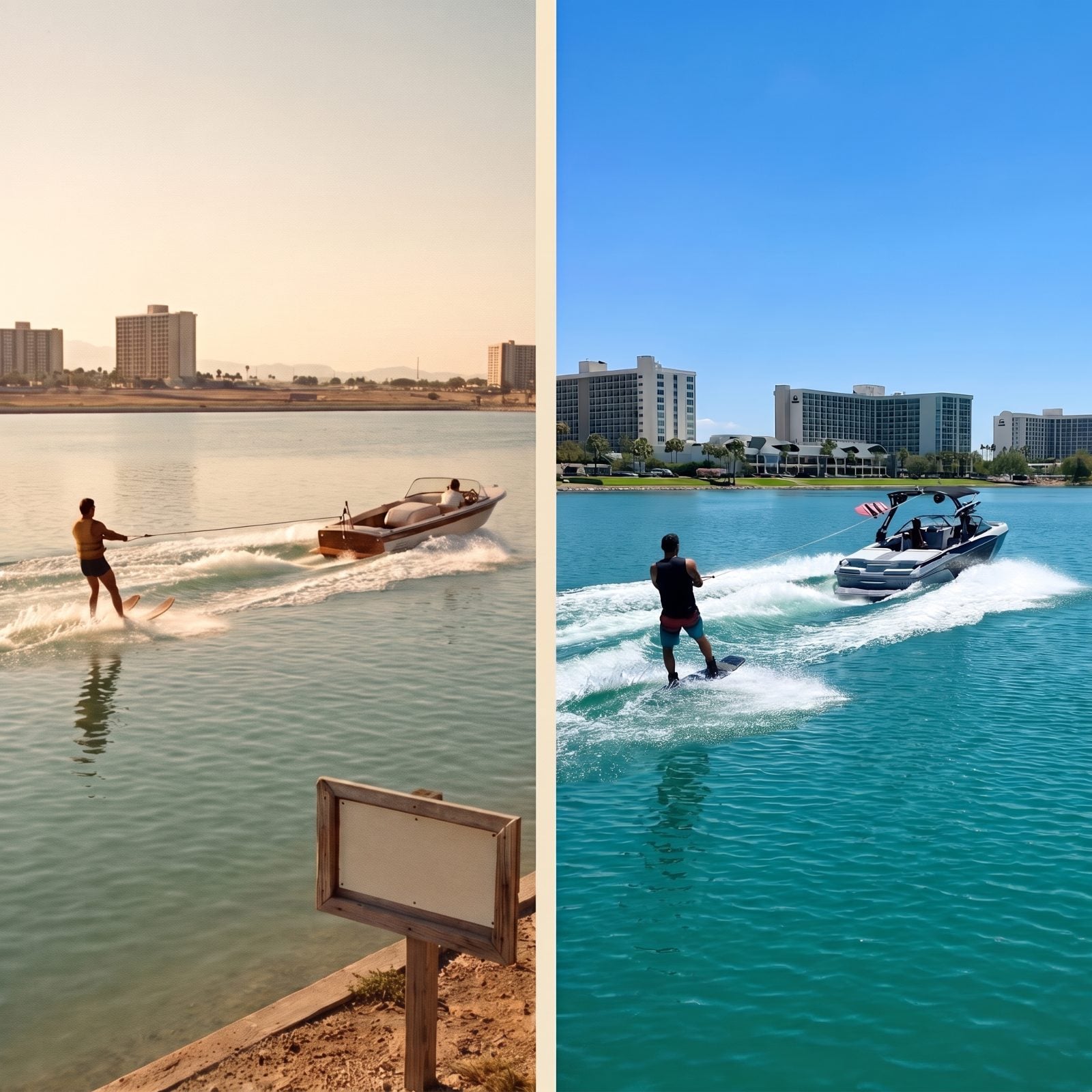
Water-skiing was part of the Florida resort fantasy in 1975, and at a lakeside resort lined with palms and hotel towers roughly ten dollars got you a boat, a driver, and a turn behind the wake. For a lot of visitors from landlocked states, it was the first time they’d ever tried it.
Ten dollars wasn’t pocket change. It was a few hours of pay for a typical worker, so this was the treat one family member talked everyone else into. But it was within reach. Today a session behind a towboat at the resort can climb past a hundred dollars, which puts it firmly in the honeymoon-splurge category instead of the why-not-on-a-Tuesday one.
4. An Evening of Hotel Babysitting: About 75 Cents an Hour in 1975
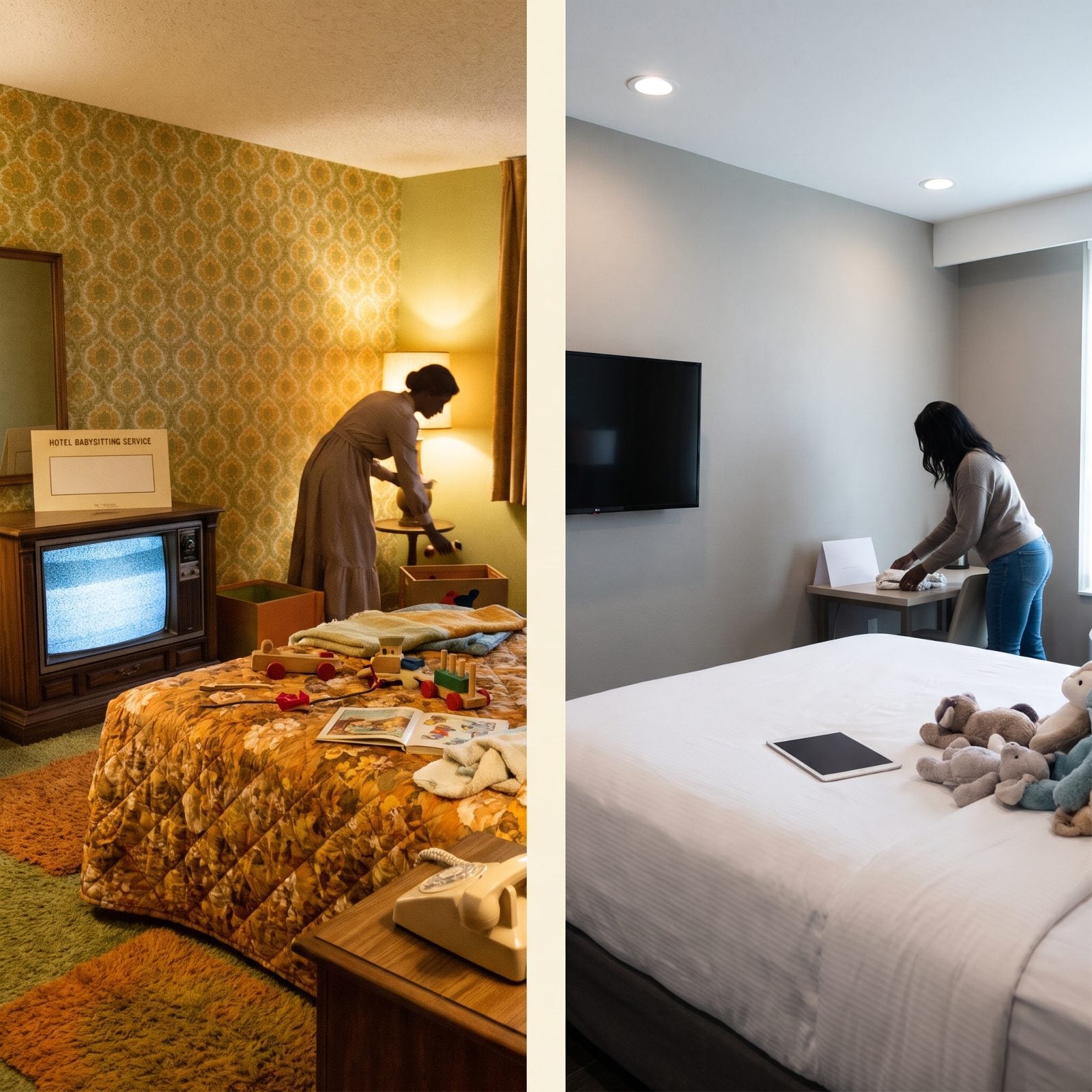
Parents in 1975 could book a sitter through the hotel for about 75 cents an hour. Four hours of grown-up dinner and a stroll past the lagoon cost roughly three dollars in childcare. Even at the wages of the day, that was less than an hour’s work for a whole night out.
It was usually arranged with a phone call to the front desk and a name on a slip of paper. Today in-room sitters come through vetted agencies, with background checks, booking fees, and hourly rates that commonly start around twenty dollars and climb from there. The safeguards are better. The date night costs about as much as the dinner.
3. A Night in a Contemporary Resort Standard Room: Around $44 in 1975
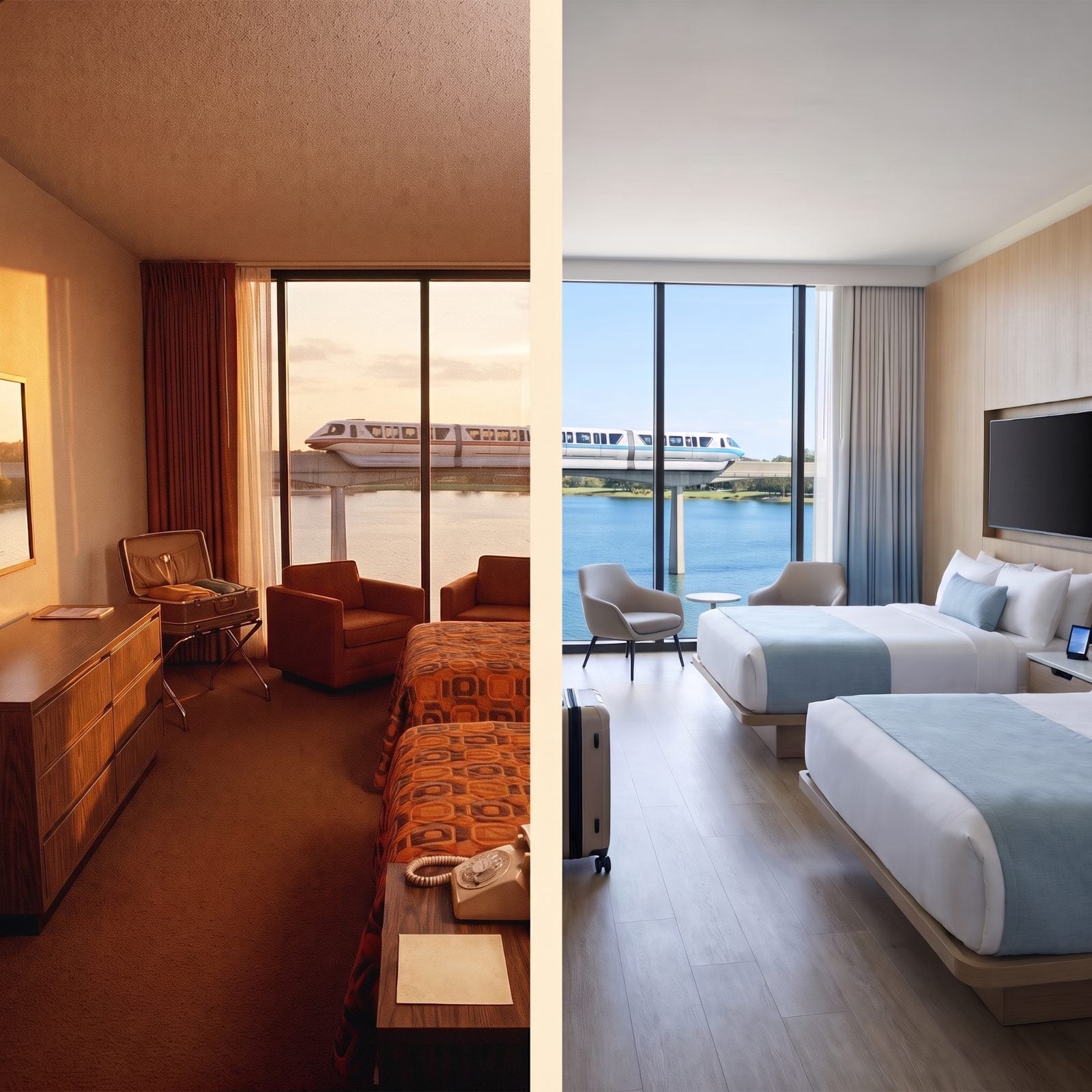
A standard room at the Contemporary Resort ran around $44 a night in 1975. For that, you slept in a building the monorail glides straight through, a few minutes from the Magic Kingdom gates. It was the most futuristic hotel most Americans had ever seen, and it still looks like a model of tomorrow from a world’s fair.
Forty-four dollars was a real chunk of money when wages sat at a few dollars an hour, so plenty of families picked a motel down the road instead. Today, though, a standard room at the Contemporary regularly costs several hundred dollars a night, and during holidays it pushes higher still. That 1975 nightly rate wouldn’t cover the resort’s daily parking and a couple of coffees.
2. A Wheelchair Rental at the Park: About 50 Cents a Day in 1975
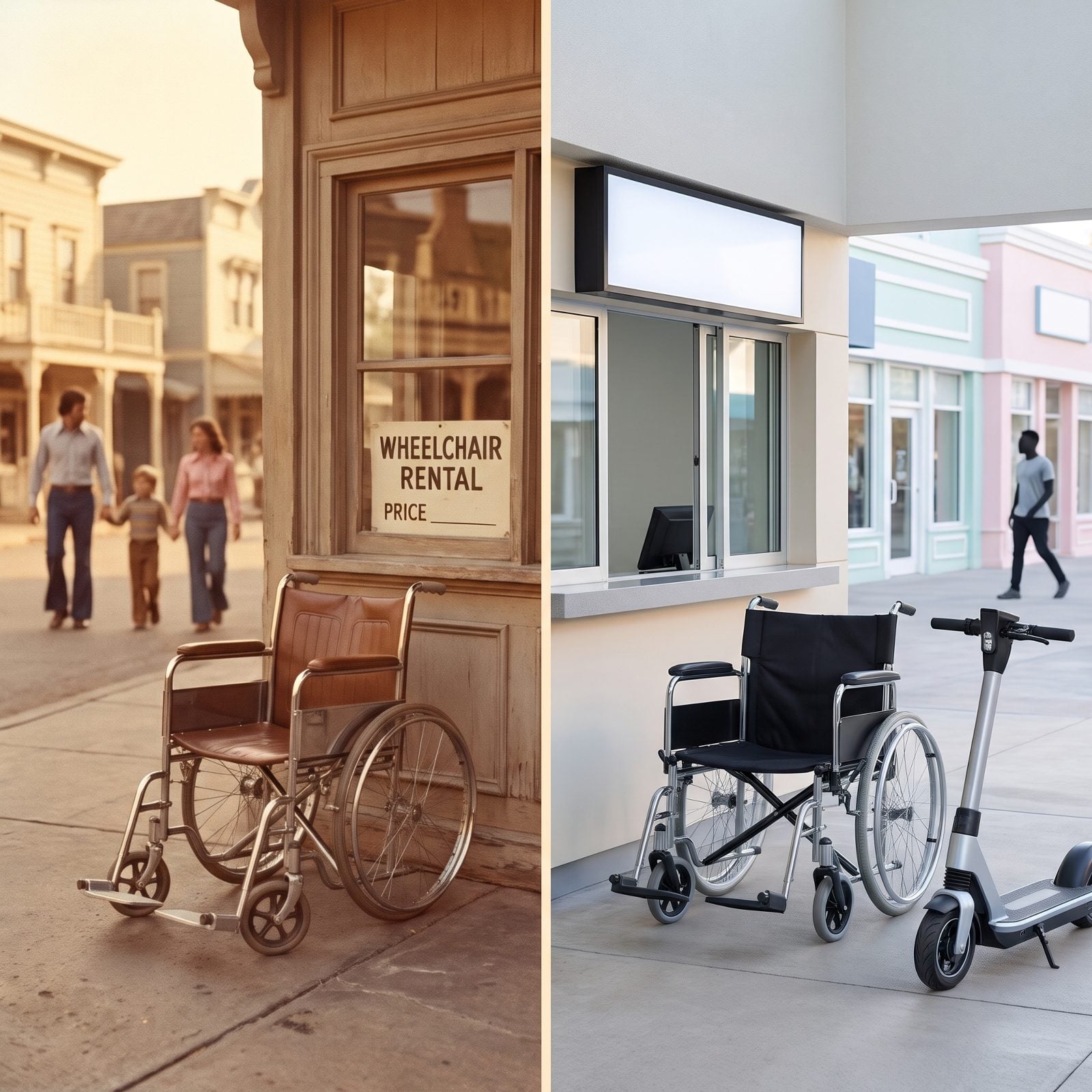
A wheelchair at the park entrance cost about 50 cents a day in 1975, the same as a stroller. You paid the coin, left a deposit or an ID, and rolled out. Grandparents who couldn’t manage a full day of walking didn’t have to stay back at the motel.
Today a standard park wheelchair rents for somewhere around a dozen dollars a day, and the motorized scooters many guests now rely on cost several times that. It’s still one of the more reasonable prices in the park. But the jump from two quarters to double digits says plenty about how every small convenience got its own line on the bill.
1. A Long-Distance Call From the Hotel Room: Steep Per-Minute Rates in 1975
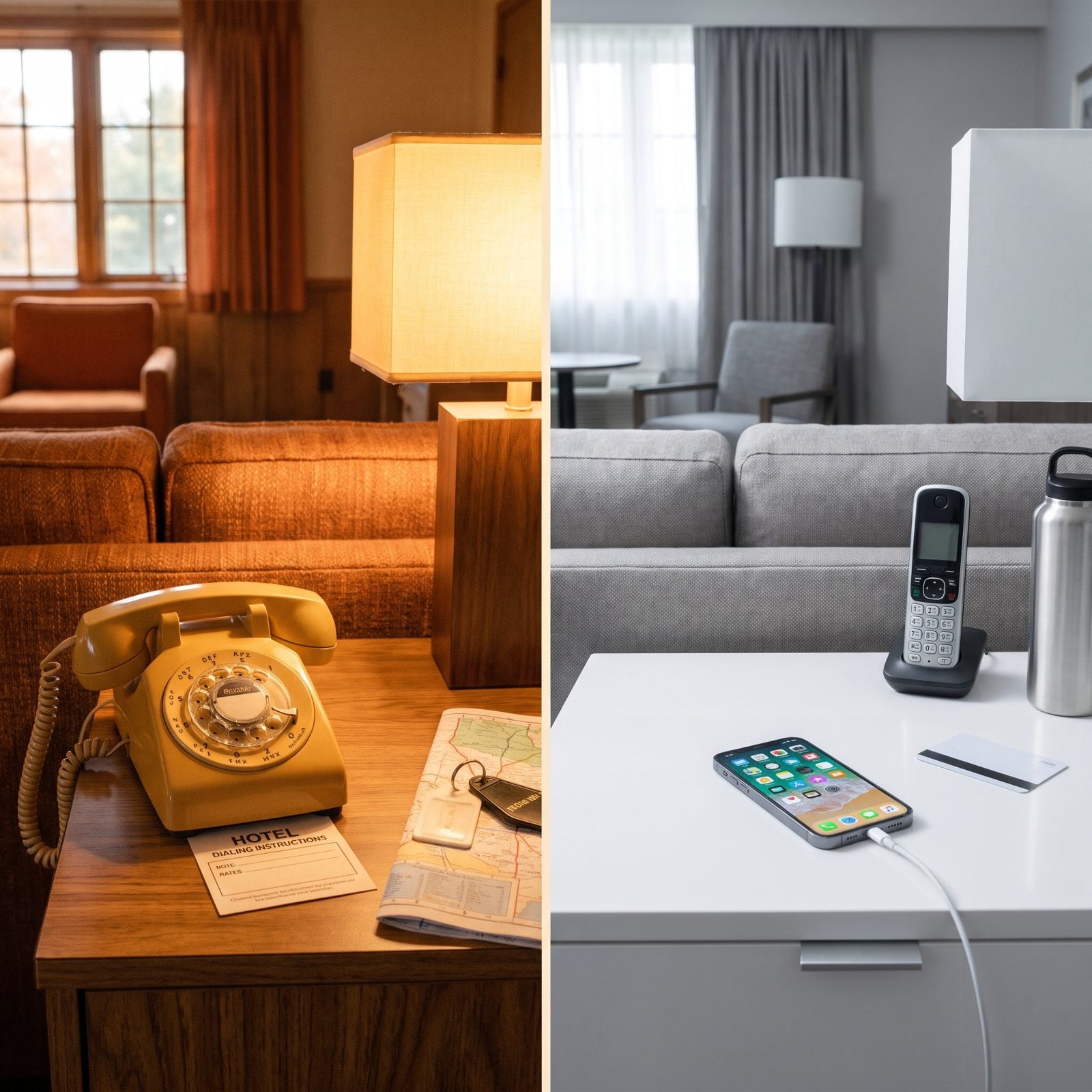
Calling home from your Disney hotel room in 1975 meant long-distance rates set by the phone company, often with a hotel surcharge stacked on top. A few chatty minutes telling Grandma about Space Mountain could add a surprisingly painful line to the checkout bill.
So people kept it short. You called to say you’d arrived safe, maybe one more time midweek, and talked fast while someone watched the clock. Now you can video-call from the teacups at no extra cost, and the hotel room phone mostly sits there collecting dust. One item on this list that genuinely got cheaper is talking to the people back home.
Please note that some of the imagery in this article were created with the aid of AI image generators.