
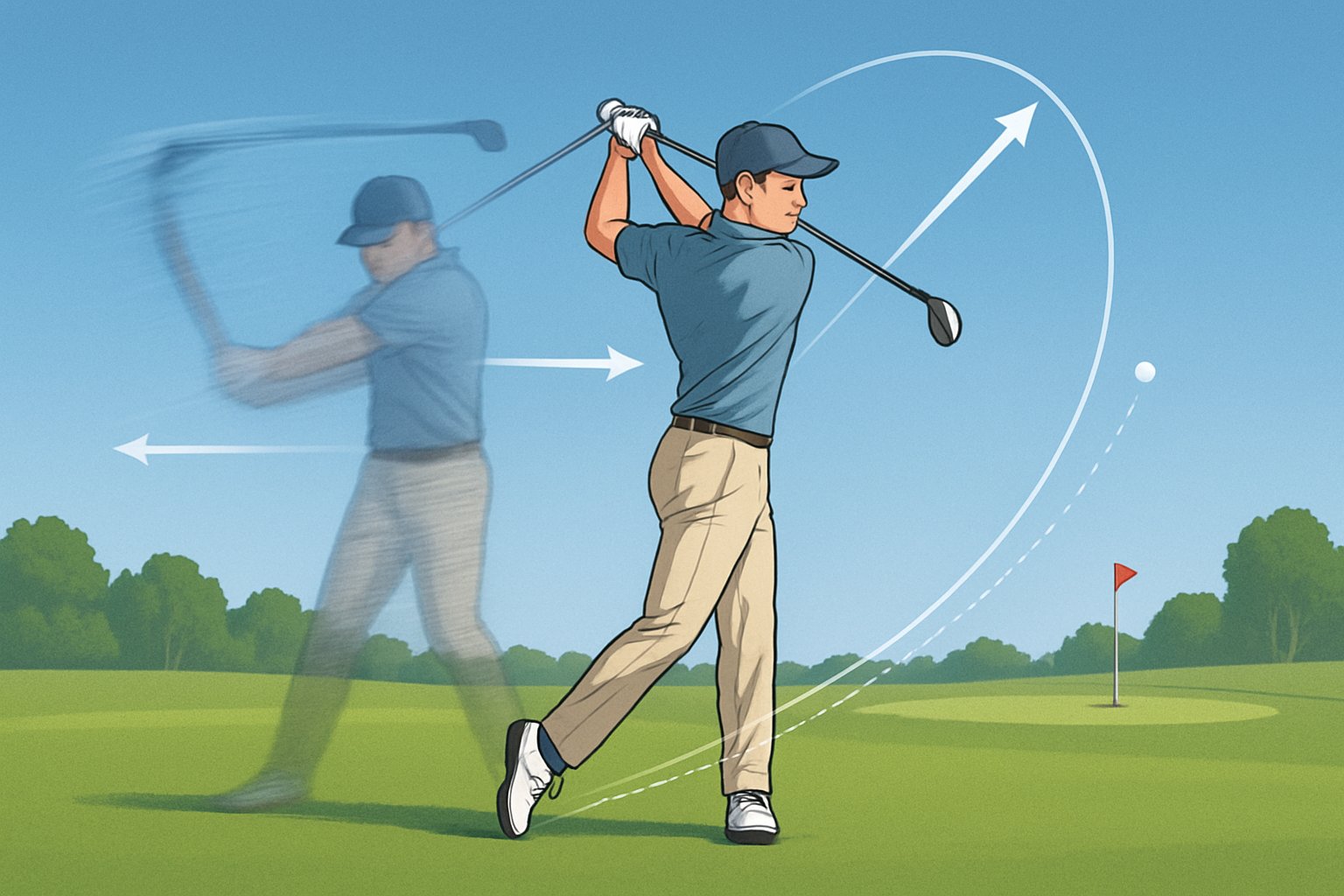
Most golfers think they need to swing harder to hit the ball farther, but that idea usually backfires with shorter, wilder shots. The odd truth? Swinging slower can actually lead to hitting the ball further because you strike the ball better and compress it more. When you focus on controlled tempo instead of pure speed, you get cleaner contact, more accuracy, and—believe it or not—often more distance.
Ever watched the pros on TV? They look like they’re barely trying, yet their drives rocket past 300 yards. It’s not just brute force or crazy acceleration. They’ve figured out that efficient movement patterns outperform brute force for power and distance.
Swing speed and distance don’t have a simple relationship. Sure, clubhead speed matters, but so do strike location, swing path, and timing. If you get these right, suddenly you’re swinging smarter, not harder, and that’s where the distance magic happens.
Understanding Swing Speed and Distance
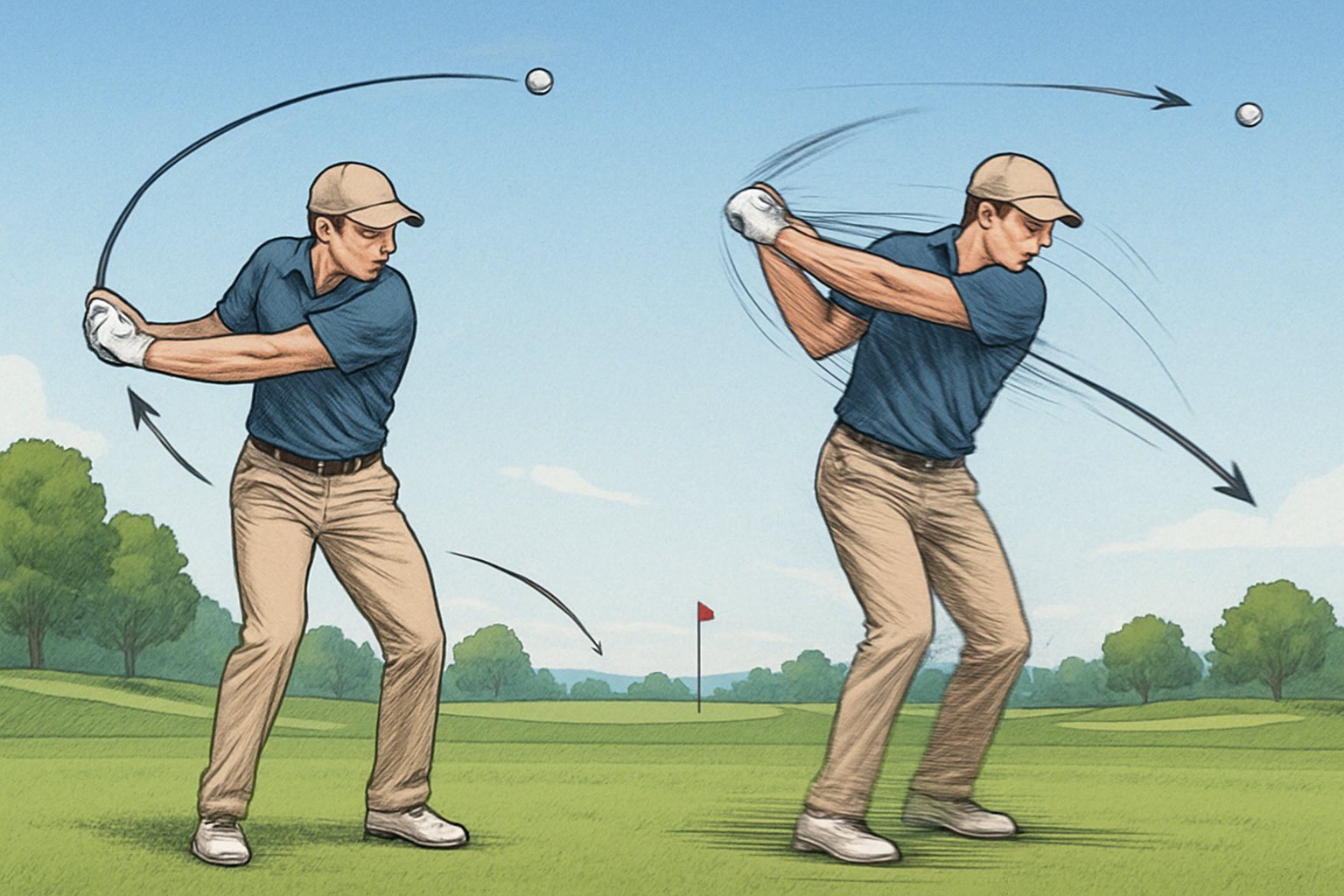
It’s tempting to believe swinging harder always means hitting farther, but reality is messier. Swing speed affects both distance and accuracy in ways that might surprise you.
What Determines How Far You Hit a Golf Ball
Distance is a cocktail of physics, technique, and equipment. Yes, clubhead speed at impact matters—but it’s just one ingredient.
Ball speed is the real star. It’s all about how well your clubhead transfers energy to the ball. Someone swinging at 95 mph with a perfect strike can easily outdrive someone at 110 mph with a mishit.
Launch angle is critical. For drivers, the sweet spot is usually between 12–15 degrees, depending on your swing speed. Too low and you’re hitting worm-burners; too high and you’re ballooning shots that drop short.
Spin rate can help or hurt. Backspin gives lift but also adds drag. Swing speed, launch angle, and ball selection all tweak your spin.
Contact quality always beats raw speed. Smack the center at 90 mph, and you’ll outdistance a toe hit at 105 mph.
Breaking Down the Mechanics of Swing Speed
Swing speed isn’t just about how fast you move the club—it’s about when and where you hit top velocity.
Find the Next Perfect U.S. Golf Course to Play
Get up to 3 AI-powered personalized golf course recommendations
The number that counts is your clubhead speed at impact, not at the top of the backswing or during the follow-through. Timing your speed release changes everything for both distance and accuracy.
Kinetic chain sequencing is the secret sauce. The swing starts from the ground up: feet, hips, torso, arms, then hands. Each part adds to the next, creating that whip-like effect.

Flexibility and strength help, but technique is usually the difference maker. Some golfers look effortless yet bomb it because they sequence and time their moves just right.
Lag angle matters, too. Keeping the angle between your lead arm and the club shaft until late in the downswing stores energy that explodes at impact.
Gear plays a role. Club length, shaft flex, and grip size all affect how fast you can swing without losing control.
The Role of Clubhead Speed Versus Swing Tempo
Here’s the twist: clubhead speed and swing tempo aren’t the same. You can have a smooth, steady tempo and still generate big clubhead speed.
Tempo is about the rhythm and timing of your swing. Consistent tempo makes for repeatable, solid contact. Many pros take their time going back, then smoothly accelerate through impact.
Clubhead speed is just the number at impact. Research shows swinging optimally beats just swinging faster.
So what’s the trick? Find your optimal speed—the fastest you can go while still:
- Making solid contact
- Staying on plane
- Keeping your balance
- Predicting your ball flight
For a lot of folks, that’s about 85% of their all-out effort. At that pace, you’ll probably strike it better and more consistently.
Check out swing speed charts to set realistic distance goals and pick gear that matches your speed.
Why Slowing Down Can Lead to Greater Distance
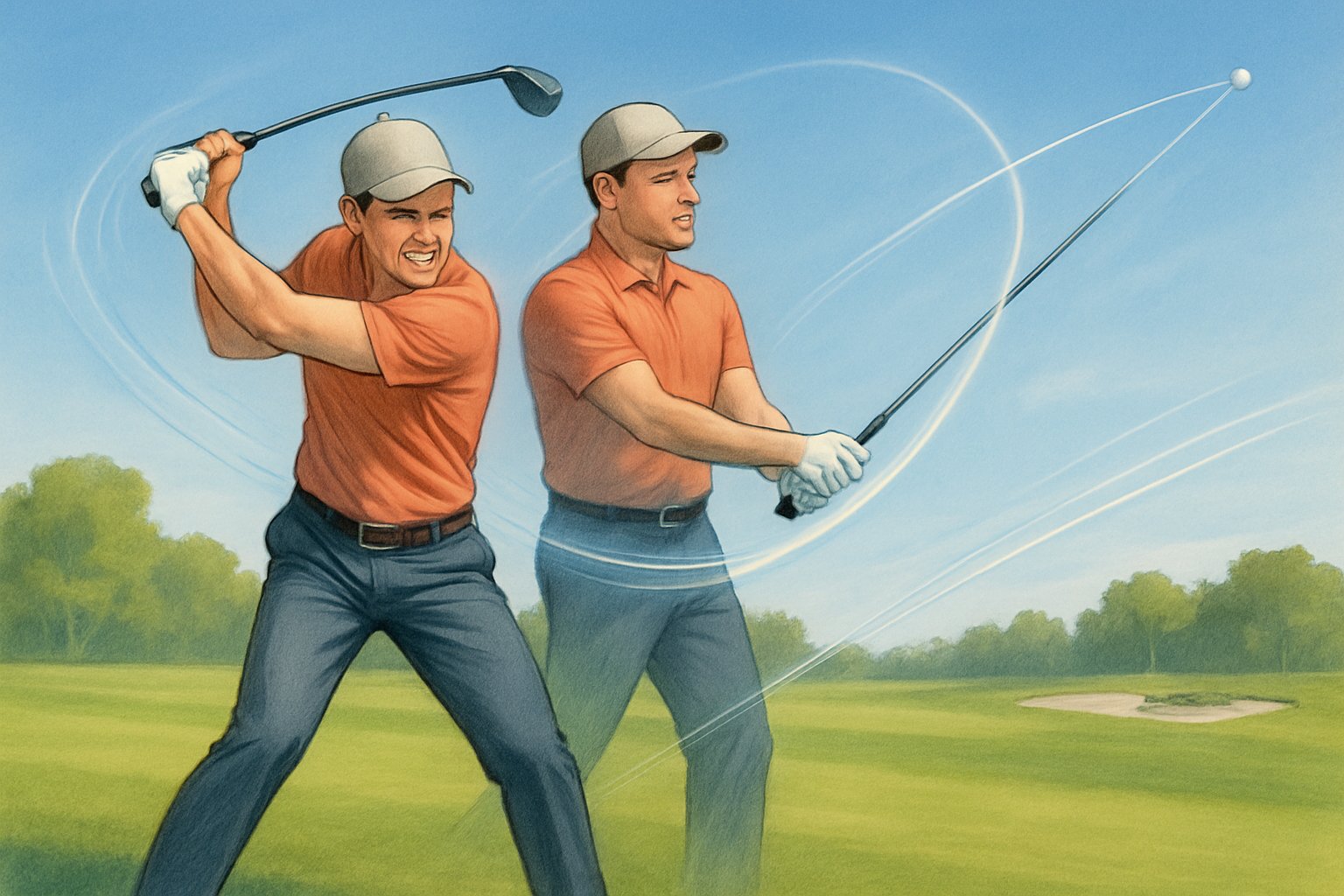
Here’s the weird part: dialing back your swing speed often gets you more distance by improving your contact, energy transfer, and ball flight. Most golfers chasing speed end up losing yards because they sacrifice accuracy and consistency.
The Science Behind Slower Swings
When you swing slower, you set up better energy transfer. It’s simple physics—solid contact beats swing speed every time.
A controlled swing lets your body sequence properly: hips start the downswing, then torso, arms, and finally the club. This chain reaction puts max clubhead speed right at impact, not before.
It’s like cracking a whip. The first motion is slow, but energy builds through the sequence. Golf swings work the same way—smooth tempo, explosive result.
Why slower swings work:
- You stay balanced
- You control the clubface
- Your strikes get more consistent
- Less tension, less wasted effort
Energy Transfer and Timing Benefits
Centering your contact gives you max energy transfer, sending the ball farther than wild, off-center hits at higher speeds. Slowing down boosts your odds of finding the sweet spot.
A slower backswing gives you time to set the club. The downswing becomes more deliberate, letting you release your wrists at just the right moment.
Impact Quality Comparison:
| Swing Speed | Contact Quality | Distance Result |
|---|---|---|
| Fast/Rushed | Toe/Heel Hits | 180-200 yards |
| Controlled | Center Contact | 220-240 yards |
Your muscles work better at moderate speeds. Swing too hard and tension creeps in, actually slowing you down through impact.
How Swing Tempo Influences Ball Flight
Controlled tempo leads to better accuracy. Steve Stricker’s slow, steady swing is a textbook example—he looks relaxed but delivers consistent results.
Proper tempo helps you compress the ball. The clubface stays square longer, creating ideal launch conditions. Expect higher ball speeds and less spin, which means more carry and roll.
Optimal Tempo Looks Like:
- 3:1 ratio—backswing is three times longer than downswing
- Smooth acceleration through the ball
- Balanced finish with weight forward
Rush the tempo, and you lose lag. Your hands release too early, killing loft and producing weak, low shots.
Slower swings also mean straighter shots. More fairways, more greens, and—hey—lower scores.
Common Mistakes When Swinging Faster
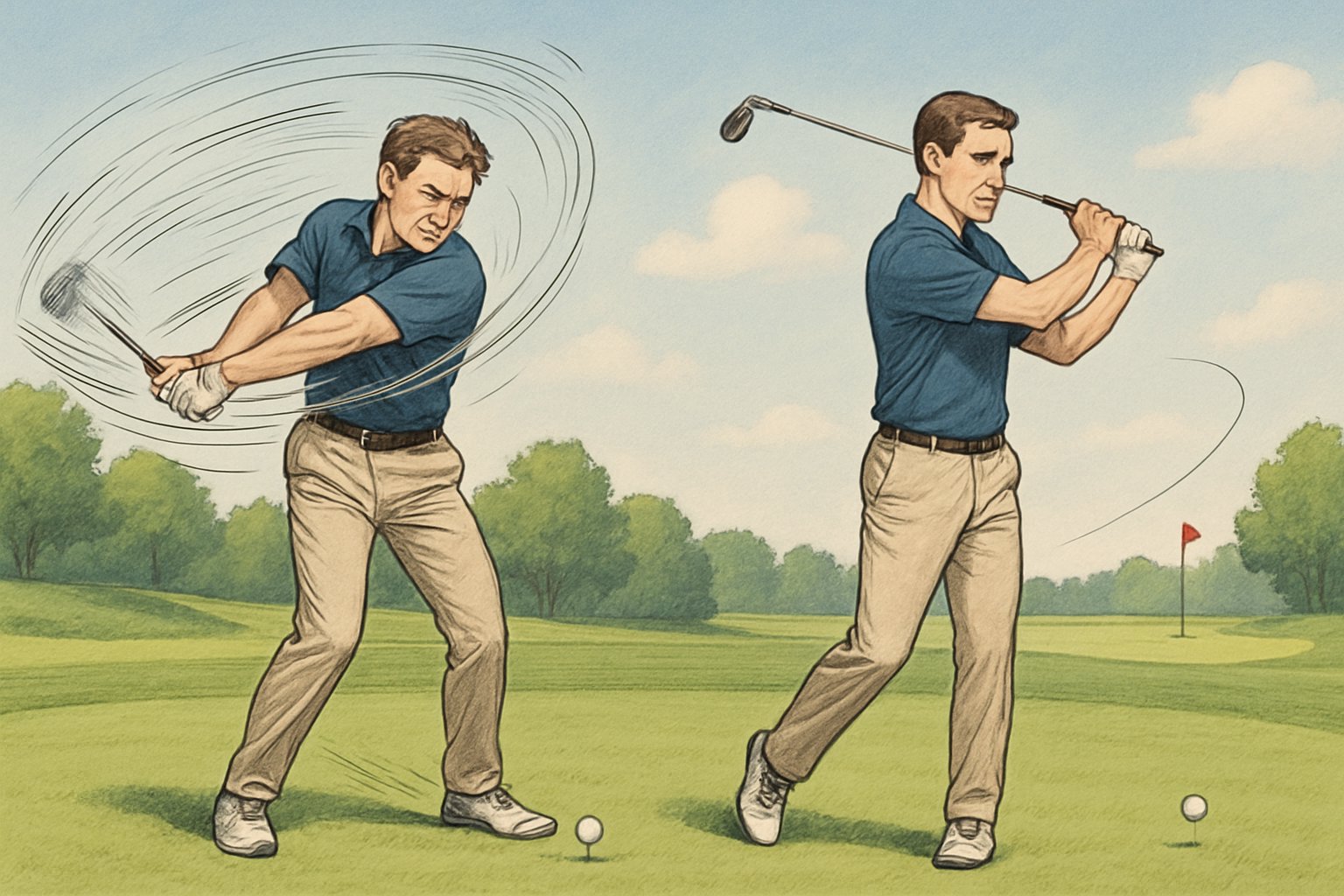
Chasing more clubhead speed often leads to classic blunders that kill distance. People trade control for the illusion of power, mess up their swing sequence, and lose the crisp contact they really need.
Loss of Control and Balance
Your body has a built-in speed limit. Push past it, and your swing turns into chaos. Swinging too hard throws off your balance, especially during the downswing.
This loss of balance means your arms overcompensate to square the clubface, and your legs scramble to stay stable.
Big balance killers:
- Lifting your front heel early
- Sliding hips instead of rotating
- Rushing from backswing to downswing
Ironically, swinging harder can slow you down. Tensed muscles resist the very motion you want to speed up.
Grip pressure spikes when you swing faster. That tension runs up your arms and shoulders, making your swing stiff and robbing you of the snap you need for real speed.
Timing and Sequence Errors
The golf swing runs on a tight schedule—every part fires in order. Swing too fast, and the sequence falls apart.
When you chase speed, your arms usually take over. Instead of letting your body start the downswing, your hands and arms jump the gun, wasting the power from your core and hips.
That early release—often called “casting”—means your wrists unhinge before you reach the ball, so you lose clubhead speed right where you need it.
How it should go:
- Hips start the downswing
- Torso follows the hips
- Arms drop into the slot
- Wrists release through impact
Most swing mistakes come from breaking this order. The body knows how to create speed, but forcing it just messes up the process.
Diminished Ball Striking Consistency
Faster swings mean bigger mistakes. The clubface doesn’t have time to square up, so you mishit more and lose distance.
Your swing path goes haywire at higher speeds. You might come over the top one shot, then swing too far inside the next—cue the frustration.
How impact suffers:
- Thin shots from standing up
- Fat shots from early weight shift
- Toe hits from pulling up through the ball
The sweet spot feels like it’s moving around when your speed jumps all over. Even pros struggle with consistency when they swing too fast for their natural tempo.
Ball speed relies more on solid contact than just swing speed. A perfect strike at 95 mph beats a mishit at 105 mph, but most golfers chase the bigger number instead of focusing on contact.
Your clubface angle at impact changes more with faster swings. Tiny timing errors turn baby draws into hooks or gentle fades into wild slices.
Optimizing Your Swing for Maximum Distance

The real secret to distance? It’s all about finding the balance between tempo, your natural strength, and consistency. Swing speed matters, but what really counts is how efficiently you deliver the clubhead to the ball.
Finding Your Ideal Swing Tempo
Your natural swing tempo is a bit like your golf DNA—it’s yours, and you can’t really fake it. Most golfers assume faster always means farther, but swinging the club slower can create better tempo for more distance.
The real magic? It’s in the backswing pace. When you take the club away with control, your body gets a chance to sequence everything on the way down. Imagine you’re winding up a spring—the smoother you go, the more energy you can unleash.
Try practicing with a 3:1 tempo. Count “one-two-three” on the way back and “four” as you swing through. This timing helps you stay balanced and lets you build speed right where you want it.
Key tempo checkpoints:
- Take the club back smoothly—no rushing
- Pause briefly at the top
- Accelerate gradually into the ball
- Hold a balanced finish
Your ideal tempo should give you max clubhead speed at impact, not all the way through the swing. You know those golfers who seem to hit it miles with barely any effort? They’re ramping up speed at just the right moment.
Matching Swing Speed to Your Personal Strength
Your body and fitness level shape your best swing speed way more than some cookie-cutter advice. If you try to swing like a tour pro with weekend flexibility, you’re just asking for inconsistency—or worse, an injury.
Swing speed affects a bunch of things: energy transfer, ball compression, club choice, you name it. Usually, a smooth swing at about 85% effort beats wild, max-power hacks.
Physical factors that affect your ideal speed:
- Core stability and strength
- Shoulder flexibility
- Hip mobility and rotation
- Overall fitness
Find the speed where you feel balanced and can hit the center of the clubface over and over. Try swinging at 100% but focus on center contact. As you get better, you’ll bump up your max effort without losing control.
Your strength profile also guides your equipment choices. Slower swing speeds do better with higher loft drivers—they help you get both carry and roll.
Importance of a Proper Pre-Shot Routine
A steady pre-shot routine clears out the mental clutter that messes with your swing. The routine should relax your mind and prep your body.
Good routines mix physical and mental checks. Stand behind the ball, picture your target line, and take a couple of practice swings that match your intended tempo.
Essential pre-shot routine elements:
- Pick your target and align yourself
- Two practice swings with the same tempo you want to use
- Deep breath to shake off tension
- One positive swing thought
Keep your routine timing steady, no matter if you’re on the first tee or facing a pressure shot. The same steps help you keep your rhythm.
Ball position can make or break your distance. Double-check it as part of your routine for solid contact and a good launch.
Mental prep matters just as much as how you stand. Pick one swing thought that helps your tempo, and stick with it.
Drills and Techniques for a Smoother Swing
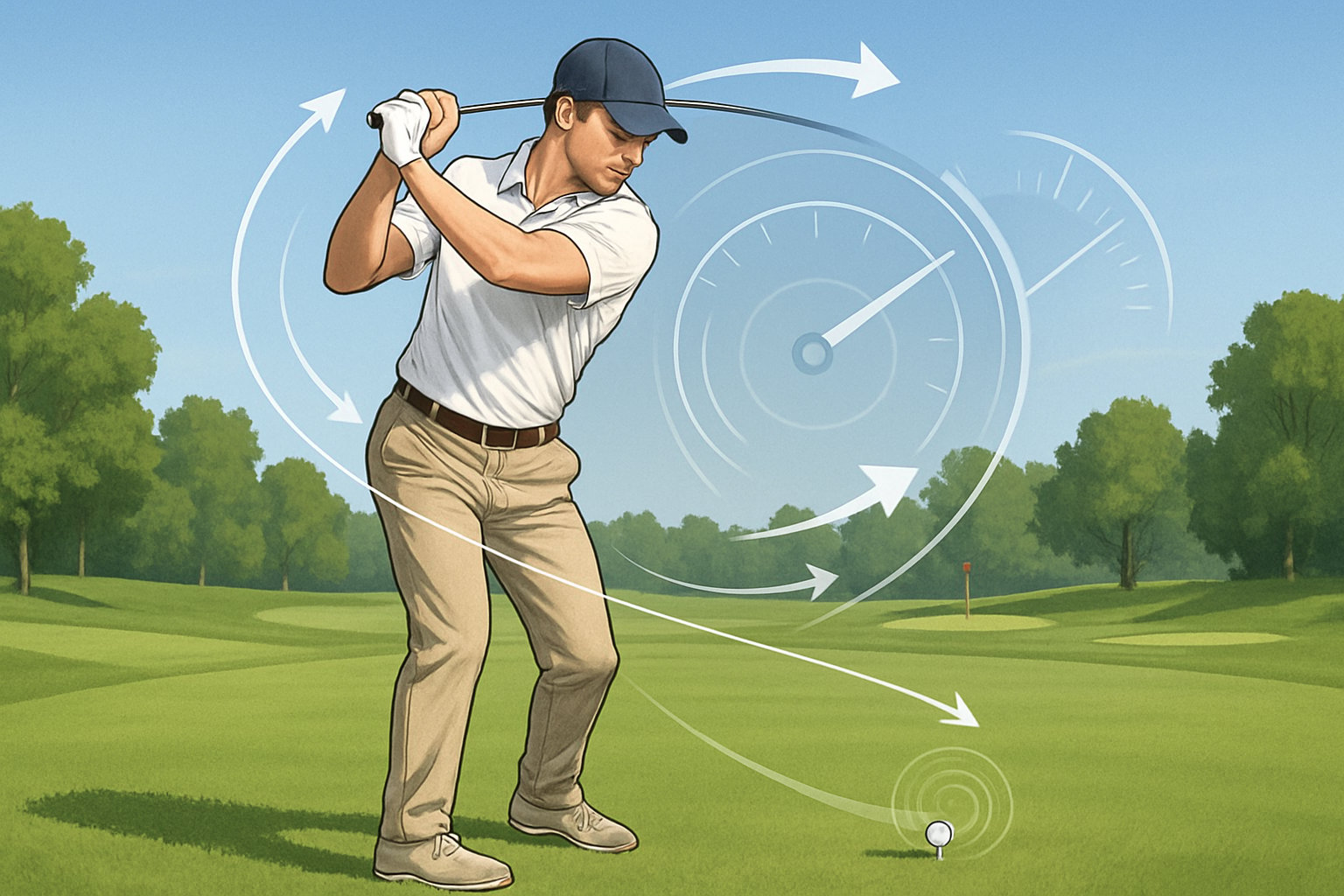
Getting a smoother, more controlled swing isn’t just about talent—it’s about how you practice. The right drills help your body move with better rhythm and tempo, building muscle memory and feel over time.
Tempo Practice Drills
The metronome drill is a classic for a reason. Set it to 60 beats per minute, then swing so your backswing lasts two beats and your downswing just one.
Start with slow swings, no ball. Match your rhythm to the metronome’s beat. Make sure your backswing feels steady, not hurried.
Golf tempo drills point out that tempo is your swing’s pace, while rhythm is how you transition from hips to arms. They’re not quite the same but work together.
Try the “swoosh” drill—flip your driver upside down, swing, and listen for the swoosh after impact. If you hear it then, you’re accelerating through the ball, not before.
Practice the 3-to-1 tempo often. Backswing for three counts, downswing for one. It’s simple, but it works.
Slow Motion Swing Training
Slow motion training helps your brain and muscles learn the right moves. Take practice swings at about a quarter of your normal speed. Zero in on the details.
Slowing down your golf swing often leads to better contact and straighter shots. When you practice slow, your body figures out the right order.
Film yourself in slow motion with your phone. Watch for any jerks or rushed spots. Your arms should swing like pendulums—smooth and steady.
Try the “pause drill.” Stop at the top of your backswing for a couple of seconds. It kills the urge to rush and helps you feel the right transition.
Pay attention to grip pressure during these slow swings. Keep it light—tight hands add tension and ruin the flow.
Visualization Strategies for Rhythm
Mental pictures set the stage for your swing. Before each shot, imagine your swing as a smooth pendulum.
Think about golfers like Ernie Els or Fred Couples. Their swings look effortless. Picture their tempo and try to feel that same rhythm.
Use a “clock face” in your mind—backswing to 9 o’clock for a half swing, 11 for three-quarters, 1 o’clock for full.
Practice breathing for rhythm. Take a deep breath at address, let it out during your backswing, and breathe naturally through impact.
Build rhythm visualization into your pre-shot routine. Two practice swings focused on tempo, then step up and try to copy that same feel with the ball.
Equipment Factors Affecting Distance
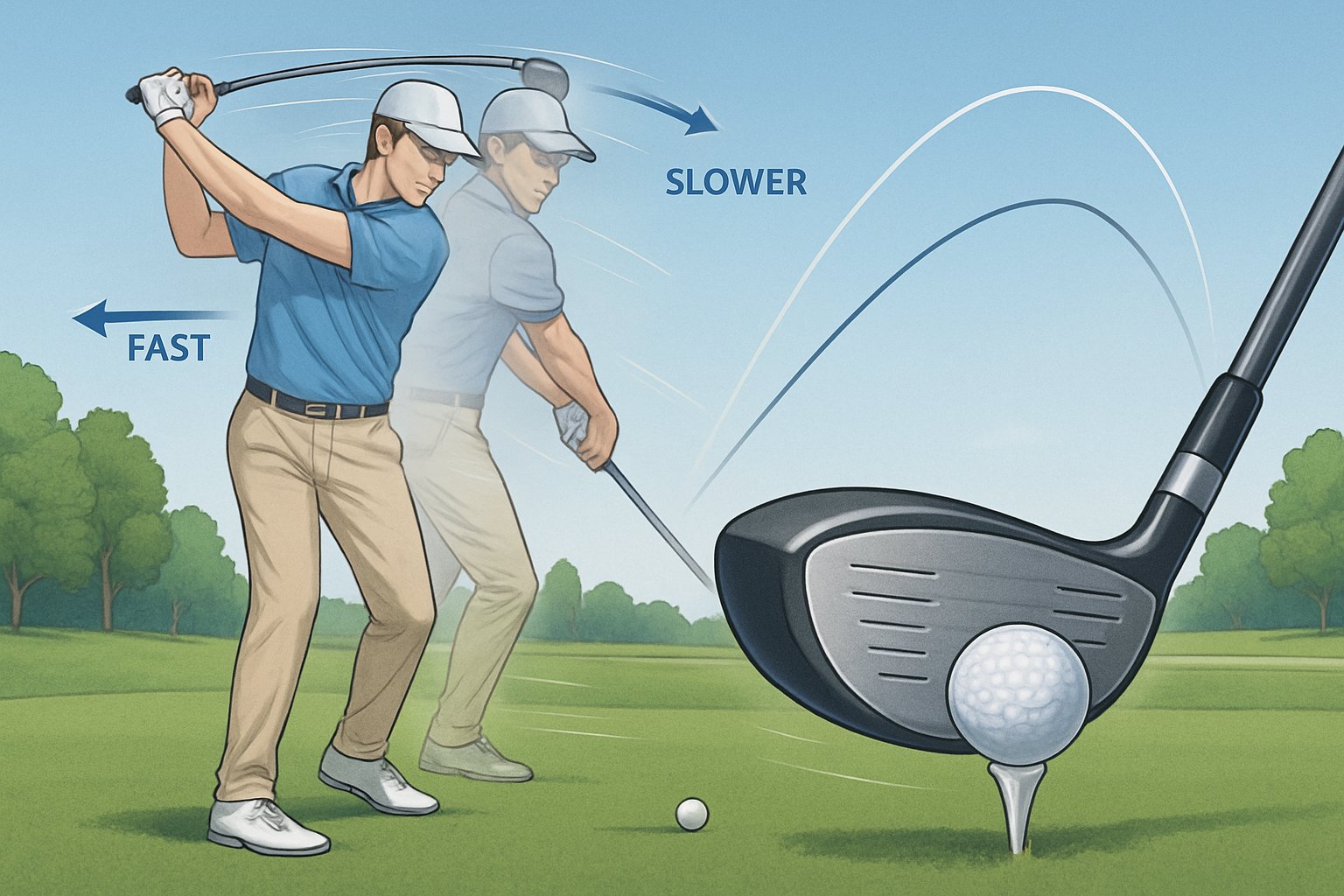
Your equipment choices can make or break a slower swing approach. Getting the right shaft flex and a proper club fitting is even more important when you’re focused on tempo, not just speed.
How Shaft Flex Impacts Swing Tempo
Shaft flex works like a spring in your swing. If you swing slower, you need a shaft that still stores and releases energy at your tempo.
Regular or senior flex shafts usually suit slower swings better than stiff ones. These flexes bend more, giving you a whip-like boost at impact.
Timing matters a lot here. Too stiff, and the shaft won’t load right—costing you distance. Too soft, and you’ll fight timing issues and lose consistency.
Check out these swing speed and equipment relationships:
| Swing Speed | Recommended Shaft Flex |
|---|---|
| Under 85 mph | Senior (A) |
| 85-95 mph | Regular (R) |
| 95-105 mph | Stiff (S) |
Kick point matters too. A lower kick point helps get the ball up with slower swings, which can add carry.
Club Fitting Considerations for Slower Swings
Club fitting isn’t just for the pros—if you’re swinging with more control, it’s even more important. Your equipment setup needs to work for you, not against you.
Loft adjustments can be a game-changer. You might need more loft on your driver for better launch, even if it feels weird at first. Less loft doesn’t always mean more distance—sometimes, it’s the opposite.
Lie angle fitting gets more precise as your tempo improves. With a steadier swing, the right lie angle means more consistent contact and better distance.
Clubhead weight matters too. Perimeter weighting can help you keep speed through impact, and adjustable weights let you tweak the feel.
Don’t forget about grip size and texture. With a slower swing, your hands play a bigger role, so the right grip helps you transfer power more reliably.
Swinging Smarter: Lessons From Tour Pros

Pros show us that easy-looking swings can launch the ball a mile, and coaches will tell you: controlled tempo beats brute force. The real secret is knowing when to speed up—and keeping your rhythm all the way.
PGA Tour Examples of Slower, Longer Swings
Watch Ernie Els and you’ll see why they call him “The Big Easy.” He creates huge speed with what looks like a lazy swing.
Fred Couples is another master of tempo. His backswing almost seems slow-motion, but the ball rockets off the clubface.
Louis Oosthuizen? His tempo never changes, whether it’s a 7-iron or a driver. That smooth rhythm lets him deliver max speed right at impact.
These guys prove that timing beats trying. They know it’s clubhead speed at impact that matters, not how hard you yank it back.
What separates pros from the rest of us? They accelerate through the ball, not to it. Their swings build speed gradually, peaking at the perfect moment.
Advice From Golf Instructors on Tempo
Golf instructors almost always say start at 70% effort to get your mechanics right, then add speed as you get comfortable. This way, you find your rhythm without losing control.
Start with these tempo basics:
- Take practice swings at three-quarter speed
- Focus on a smooth transition from backswing to downswing
- Keep your rhythm steady
- Let the club do the heavy lifting
PGA pros often point out that slower backswings create better tempo and, in the end, more distance. The myth that swinging harder means more distance? It’s wrecked more swings than a rainstorm at a picnic.
Your muscles work together better when you’re not trying to crush the ball. Relaxed swings help with muscle coordination and club path awareness.
Think of your swing like cracking a whip—the real power comes from smooth acceleration, not brute force.
Final Thoughts on Swing Tempo and Distance

Tempo and distance in golf aren’t about chasing some universal “right” speed. Honestly, it’s all about finding your rhythm—whatever that looks like.
Nick Price’s swing? Fast as lightning, and he absolutely hammered the ball. Ernie Els? He looked like he was swinging through molasses, but the ball still soared. There’s no single formula here, and that’s kind of the beauty of it.
Good tempo affects the golf swing by helping you keep better timing throughout the whole motion. The backswing, transition, and downswing need to blend together, not fight each other.
Some real perks of dialing in your tempo:
- You’ll control the clubface better at impact
- Ball striking gets more consistent
- Weight transfer just feels easier
- There’s less of that ugly casting or early release
The magic? It usually shows up when you stop trying to crush the ball. Swinging through, not at, your target smooths out a lot of the issues that steal your distance.
Tempo’s a bit like a metronome, if you think about it. Doesn’t matter if it’s set fast or slow—rhythm’s what counts. You can swing slow and smooth and still rip it, or go quick without losing control.
Your natural tempo’s already there. Don’t fight it—just tweak it. The golf ball? It couldn’t care less how hard you try. It only reacts to efficient energy transfer. Maybe that’s worth remembering next time you tee it up.
Find the Next Perfect U.S. Golf Course to Play
Get up to 3 AI-powered personalized golf course recommendations
Please note that some of the imagery in this article were created with the aid of AI image generators.